Health insurance providers in California have been warned by an insurance commissioner they cannot deny gender-affirming surgery for young trans people based on their age.
Ricardo Lara, California’s insurance commissioner, took the step to ensure that trans youth are not denied gender-affirming surgery after reports that insurance companies were using the age of trans patients to refuse treatment.
On 30 December, Lara directed the Department of Insurance to issue a General Counsel Opinion Letter clarifying that under state law, insurance companies cannot refuse to cover gender-affirming top surgery based on a patient’s age.
“For far too long, individuals diagnosed with gender dysphoria have had to battle a host of challenges to get access to gender-affirming care in order to be their true selves,” Lara, who is gay, told the Bay Area Reporter.
“Social stigma, misconceptions about gender dysphoria and its treatment, and outdated medical criteria create barriers to necessary medical care that can lead to tragic results for individuals with gender dysphoria, especially for our transgender youth,” he said.
The clarification issued to insurers states that under-18s who have been referred for gender-affirming surgery by their medical team should not be denied coverage, but instead that the insurance company should consider patients – and their specific clinical situation – on a case-by-case basis.
According to the state agency, health insurance companies should avoid needlessly delaying or interfering with healthcare recommended by a patient’s doctor.
Lara’s move comes after TransFamily Support Services, an organisation that supports young trans people and their families through medical transition, contacted the state department to report that under-18s had been refused cover for gender-affirming healthcare by their insurance companies.
“TransFamily Support Services is proud to partner with the California Department of Insurance to remove the age barrier for gender-affirming care,” said Kathie Moehlig, the agency’s executive director.
“This barrier was discriminatory and detrimental to the lives of trans youth. To have to navigate the overwhelming barriers to health care should not be a part of their experience. Transgender youth already face so many challenges from unsupportive families, bullying at school, social stigmas, and even violence.”
The World Professional Association for Transgender Health states that gender-affirming surgeries can be offered to under-18s “depending on an adolescent’s specific clinical situation and goals for gender identity expression”.
Queer MPs such as Charlotte Nichols, Nadia Whittome and Olivia Blake reflect a Britain where young people feel comfortable with and empowered by expressing their identities.
In December 2019, three more MPs in the House of Commons came out as lesbian, gay, bisexual, pansexual or queer, bringing the total number of out LGB MPs to a remarkable 56. Of course, Britain is still without its first transgender MP.
The Labour MPs Nadia Whittome (Nottingham East), Charlotte Nichols (Warrington North) and Olivia Blake (Sheffield Hallam) came out as queer and bisexual. At 24, 28 and 30 years of age, they represent a new Britain where rapidly growing numbers of young people, in particular young women, now feel they have the space to identify as queer, bi or pansexual.
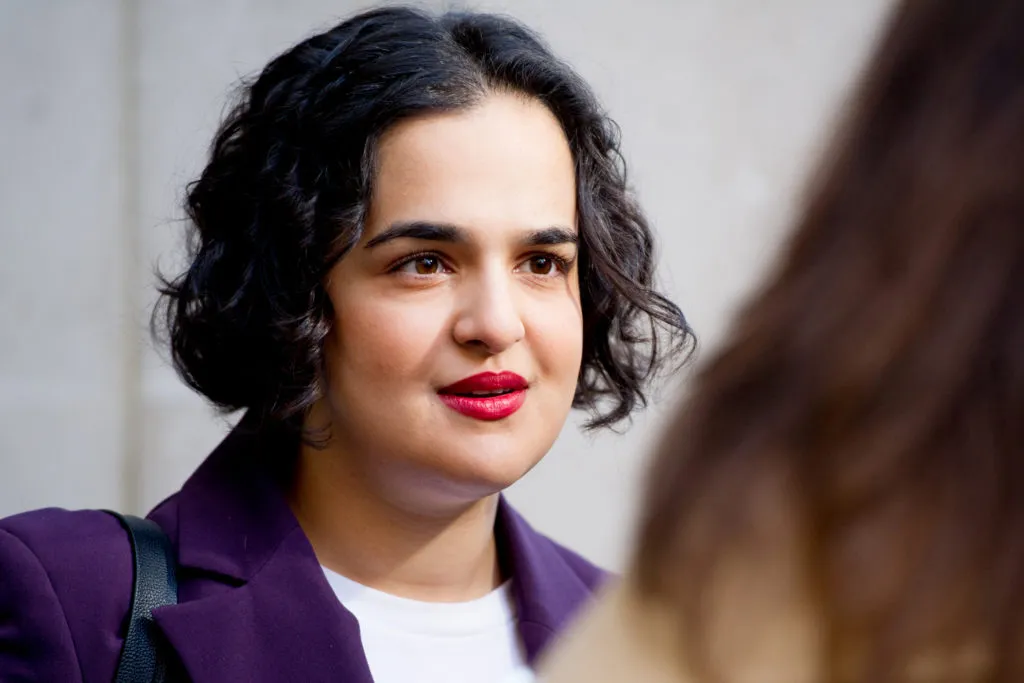
Labour MP for Nottingham East Nadia Whittome. (Ollie Millington/Getty Images)
The average age of an MP is 52, but the average age of an queer MP is 45. Today, nine per cent of the 650 MPs identify as LGB+ but a remarkable 21 per cent of the 130 MPs aged 40 or younger say they are gay, lesbian, bisexual, pansexual or queer. When it comes to the 20-somethings who were elected in the general election of 2019 the proportion is one-third.
In contrast, only five per cent of MPs over 50 identify as queer.
This level of representation may seem surprisingly high but it reflects British society today.
Westminster is becoming a place where politicians, young and old, can express their identities honestly.
A June 2020 Ipsos-Mori poll found eight per cent of UK citizens 18 and above said they were only attracted to the same sex (gay or lesbian), three per cent said they were mostly attracted to the same sex, while four per cent were equally attracted to both sexes.
Another eight per cent said they were mostly attracted to the opposite sex but not uniformly. In sum at least 15 per cent of Britons identify as lesbian, gay or bisexual, alongside another eight per cent who, in theory, could because they acknowledge their own same-sex attractions.
The growing number of people saying they are same-sex loving is driven by a younger generation who have found space to honestly express their identity.
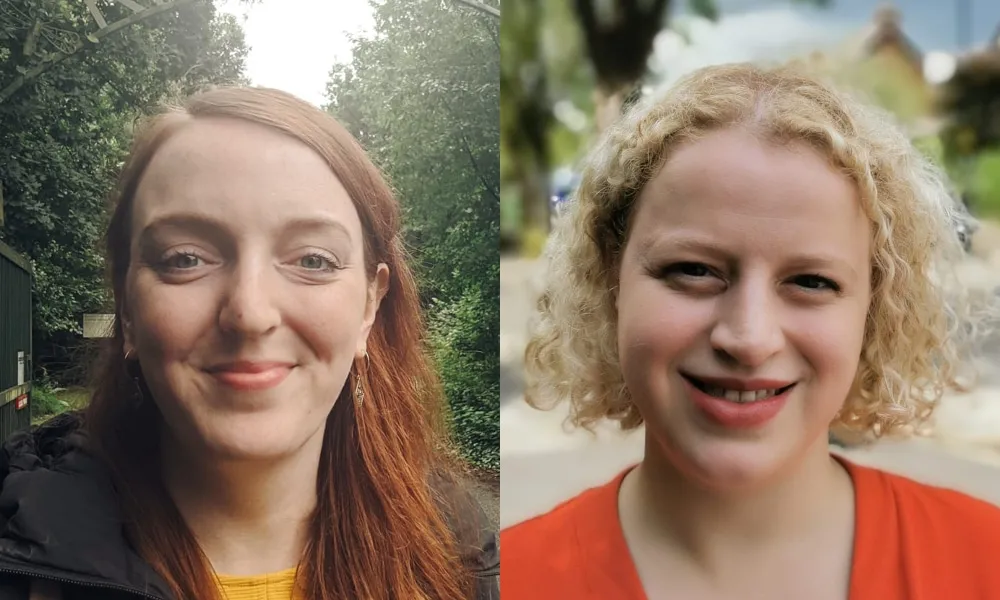
Openly queer Labour MPs Charlotte Nichols (L) and Olivia Blake. (Facebook)
The 33 per cent of MPs 30 years old or younger mirrors the 25 per cent of 18-30 Brits who say they are only attracted to the same sex (eight per cent), mostly attracted to the same sex (five per cent) or equally attracted to both sexes (12 per cent).
In 2020 just three-quarters of Generation Z (18-24) identify as heterosexual. Similarly, the 21 per cent of MPs under 40 who say they are LGBT+ matches the 22 per cent of Brits 18-40 who say they are same-sex attracted.
The 56 queer MPs represent parties across the political spectrum: 24 Conservatives, 21 Labour, 10 Scottish Nationalist and one Liberal Democrat.
All parties with multiple queer MPs have a broad mix of young and old but all the women MPs are Labour, SNP, or Liberal Democrat. Since Justine Greening and Margot James left the House at the last election, the Tories are without a woman in their LGBT+ caucus.
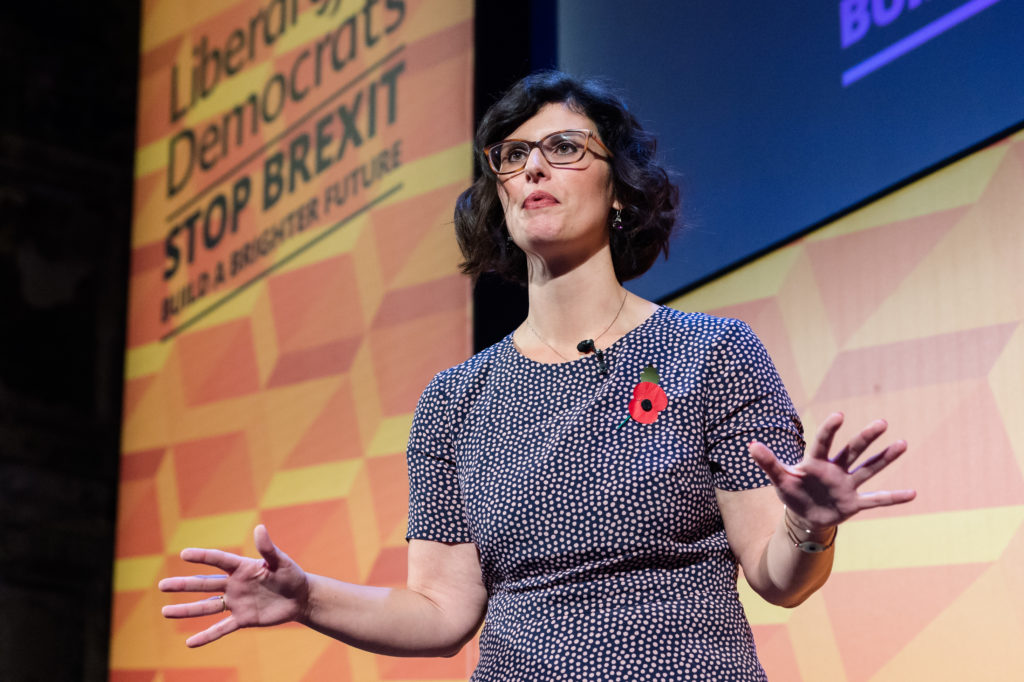
Layla Moran. (WIktor Szymanowicz/NurPhoto via Getty Images)
Whittome, Nichols and Blake illustrate something more about the politics of queer youth. There is evidence that bisexual/pansexual Brits are more left-wing than their gay and lesbian counterparts.
In the Ipsos-Mori 2020 poll, the gay and lesbians split equally into thirds between Tory and Labour voters and others including the Lib Dems, SNP and Greens.
But nearly half of all voters who expressed a degree of same-sex attraction (bisexual/pansexual) went for Labour and only 25 per cent for the Tories. Similarly, gay and lesbians were split 50/50 on how they voted on Brexit, half voting to remain, half voting to leave, but bisexual voters went 57 per cent for remain against only 43 per cent for leave.
Meet the 56 LGBT+ MPs sitting in the House of Commons.
Nadia Whittome, Labour, 24 Mhairi Black, SNP, 26 Jacob Young, Conservative, 27 Charlotte Nichols, Labour, 28 Elliot Colburn, Conservative, 28 Olivia Blake, Labour, 30 Antony Higginbotham, Conservative, 30 Gary Sambrook, Conservative, 31 Paul Holmes, Conservative, 32 William Wragg, Conservative, 33 Angela Crawley, SNP, 33 Dan Carden, Labour, 34 Lloyd Russell-Moyle, Labour, 34 Stewart McDonald, SNP, 34 Cat Smith, Labour, 35 Mark Fletcher, Conservative, 35 Kieran Mullan, Conservative, 36 Hannah Bardell, SNP, 37 Wes Streeting, Labour, 37 James Murray, Labour, 37 Chris Clarkson, Conservative, 38 Layla Moran, Liberal Democrat, 38 Stephen Morgan, Labour, 39 Luke Pollard, Labour, 40 Stephen Doughty, Labour, 40 Damien Moore, Conservative, 40 Lee Rowley, Conservative, 40 Rob Roberts, Conservative, 41 Stuart McDonald, SNP, 42 Peter Gibson, Conservative, 45 Alyn Smith, SNP, 47 Conor Burns, Conservative, 48 Daniel Kawczynski, Conservative, 48 Iain Stewart, Conservative, 48 Mark Menzies, Conservative, 49 Stuart Andrew, Conservative, 49 Martin Docherty-Hughes, SNP, 49 Peter Kyle, Labour, 50 Gerald Jones, Labour, 50 Kate Osborne, Labour, 54 Joanna Cherry, SNP, 54 Neale Hanvey, SNP, 56 Steve Reed, Labour, 57 David Mundell, Conservative, 58 Chris Bryant, Labour, 58 Angela Eagle, Labour, 59 John Nicolson, SNP, 59 Ben Bradshaw, Labour, 60 Crispin Blunt, Conservative, 60 Mike Freer, Conservative, 60 Nick Gibb, Conservative, 60 Nigel Evans, Conservative, 63 Nia Griffith, Labour, 64 Nick Brown, Labour, 70 Michael Fabricant, Conservative, 70 Clive Betts, Labour, 70
Andrew Reynolds teaches politics and public policy at Princeton University and is director of Queer Politics at Princeton.
A transgender woman was found gunned down on a Chicago street in a shocking Christmas day slaying, a national advocacy group said Wednesday.
Officers found a body near 900 E. 82nd Street, in the South Side neighborhood of Chatham, at about 8:35 p.m. on Friday with an “open wound to the left side” of the victim’s head, police said in a statement.
The victim was pronounced dead at the scene.
Chicago authorities appeared to misgender the victim, as the Human Rights Campaign identified her as Courtney “Eshay” Key, a 25-year-old Black transgender woman.
“HRC has now tracked at least 43 deaths this year of transgender and gender non-conforming people,” the LGBTQ advocacy group said in a statement. “We say ‘at least’ because too often these deaths go unreported — or misreported.”
A police spokesman on Wednesday stopped short of calling this a hate crime and instead said: “At this time, the incident is being investigated as a death investigation.”
Key is survived by her mother and two siblings, childhood friend Beverly Ross said.
Ross said that Key frequently faced harassment on the streets and didn’t hesitate to fight back.
“(Key) was a girl who was not going to take s— from anybody,” Ross said.
On October 6, lesbian, gay, bisexual and transgender (LGBT) activists in Tunisia raised their voices and banners in the street, amid the hundreds of demonstrators who were peacefully protesting a draft law that would drastically limit criminal accountability for the use of force by the security forces. By a cruel irony, police attacked the demonstrators, including LGBT activists, and arbitrarily arrested them.
The proposed law, if passed, would embolden security forces in their use of excessive force and send an alarming message to Tunisians, especially members of marginalized groups, already vulnerable to police misconduct, that they will not be protected from police violence.
For LGBT people, who are often excluded from government protection, the passage of this law is terrifying. Here’s why:
On August 5, Ahmed El-Tounsi, a transgender Tunisian man and founder of the trans rights organization OutCasts, thought he would bleed to death on the street.
El-Tounsi and other trans activists were walking near the French Embassy in Tunis when police officers guarding the embassy approached them and asked for their IDs. When the officers saw the mismatch between their IDs and their gender expression, and after a verbal altercation, the police physically and verbally assaulted them, the activists said.
Bloodied and humiliated, they tried to run, but additional police officers arrived and beat the activists, while inciting bystanders to join in – cursing, hitting, and dragging the activists by their clothes on the street, they told me.
“Kill them, they are sodomites,” the officers told bystanders, El-Tounsi said.
“They [private individuals] followed us into alleyways and beat us unconscious,” he said. “They snatched our phones to delete evidence of the assault, and said, ‘We will slaughter you,’ It felt like our entire country beat us that day.”
When he sought medical care at Habib Thameur Hospital, El-Tounsi was denied treatment based on his gender expression. “The doctor said, “You’re a special case, I can’t treat you here. Go somewhere else,”” El-Tounsi said.
“My chest was swollen from the beatings, I couldn’t breathe, I was bleeding profusely, I could barely stay conscious,” he said. When he went to Charles Nicole Hospital, administrative staff refused him entry after seeing his ID, and referred him to a women’s hospital, despite his self-identification as a man.
Activists took El-Tounsi to Wassila Bourguiba Hospital, which specializes in women’s health. “I’m bleeding, I’m going to die, please treat me,” El-Tounsi pleaded, but the doctor responded, “You look like a man, this is a women’s hospital.”
After he waited for hours and negotiated with the doctor, she checked El-Tounsi’s injuries while seven nurses stood around him, interrogating him about his gender identity, and addressing him with female pronouns. “They mocked me. They didn’t treat my injuries. They didn’t even give me a medical report.”
Activists turned to the courts and filed a complaint, seeking to hold police and embassy officers accountable. Several lawyers involved in the case told me that the head of a first instance court in Tunis dismissed the request to review camera footage near the embassy, which lawyers said would show the officers’ role in the assaults. The lawyers appealed in late October and await a decision.
Saif Ayadi, a social worker at Damj, a Tunis-based LGBT rights group, was there during the attacks on trans activists in August, and was among those arbitrarily arrested and beaten at the protest in October. He spoke to me about the increasing police violence against LGBT people in Tunisia, and the insurmountable dangers that would accompany the passage of the draft impunity law.
Ayadi said that in 2020, Damj provided legal assistance to LGBT people at police stations in 75 cases and responded to 98 requests for legal consultations. “These figures are five times higher than those we recorded in 2019, indicating an alarming increase in persecutions of LGBT people during the Covid-19 pandemic,” he told me.
Ayadi said that between March and September, his organization recorded 21 cases of violence against trans people in public, 10 torture cases, and 2 cases of bullying by security officers against trans people in detention facilities. There were also 12 prison sentences against trans people and gay men under articles 230, 225, and 125 of Tunisia’s penal code, which criminalize “sodomy,” “indecent behavior in public,” and “insulting a public officer,” respectively.
Tunisian law does not provide a clear or accessible path to legal gender recognition for transgender people, who face systemic discrimination compounded by the incongruity between their official documents and gender expression.
Amal Ayari, a prominent advocate for women’s and LGBT rights in Tunisia, told me, “Tunisia is considered a country where rights and freedoms are protected, but such flagrant violations of citizens’ rights show that this discourse is just slogans, and is an attempt to whitewash Tunisia’s international image.”
Instead of granting more power to the police, the Tunisian government should decriminalize same-sex conduct and protect LGBT people from discrimination and police violence. The proposed bill, Number 25/2015, a shameful step backward, should not pass.
When Jeff Taylor, a longtime AIDS advocate and survivor, learned about clinical trials for the new Covid-19 vaccine in his hometown, Palm Springs, California, he leapt at the opportunity to participate.
“I always want to be the first person to try something,” he said.
But Taylor’s enthusiasm was short-lived. As soon as he told a recruiter over the phone that he was HIV-positive, Taylor was informed that he was ineligible to join.
“I argued with him, but he said: ‘I don’t make the rules. This is what our sponsor told us to do,'” Taylor, 58, said.
Taylor understood, in a sense, why they were rejecting him. As head of the HIV + Aging Research Project-Palm Springs, he had read plenty of studies that excluded people who were immunocompromised or on immune-modularity drugs.
“It’s something that happens all time,” Taylor said.
A study published this year in the Journal of Clinical Oncology found that 73 percent of over 1,090 analyzed cancer immunotherapy trials specifically excluded patients with HIV.
Not including a sample for the estimated 1.2 million HIV-positive people in the U.S. in the most significant vaccine trial in a generation seemed to him unwise. On July 18, Taylor notified a private listserv for HIV activists and researchers called IBT-Cure. Shortly thereafter, he got a response from Lynda Dee, executive director of AIDS Action Baltimore, another heavyweight in the HIV advocacy world who has been agitating for an AIDS vaccine since the 1980s.
Dee immediately recognized that someone running the trials had failed to include people with HIV. But, having long been an advocate for more inclusive medical trials, she also knew that the experiments were sprawling operations with plenty of opportunities for routine error.
“Vaccine protocols change, and there are usually 20 iterations before they actually get sent to the FDA for approval,” she said. “Someone must have stuck [the HIV exclusion] in there.”
She speculated that researchers didn’t want to include a population that they thought could compromise their results.
“Somebody must have thought: ‘Well, this is about immune systems. I don’t want to confound the data by including someone with HIV,’” she said. “They had no idea what something like that looks like and what hell they were going to get from people like us.”
Lynda Dee is an attorney and the executive director of AIDS Action Baltimore. Courtesy Lynda Dee
Alarmed by Taylor’s story, Dee put together a group of activists — including representatives from the Latino Commission on AIDS and the National Minority AIDS Council — and sent a letter to Dr. Francis Collins, director of the National Institutes of Health.
Written with a palpable urgency and more than a whiff of anger, the letter, which the activists also posted to Change.org, said the agency was shooting itself in the foot by excluding HIV-positive people from Covid-19 vaccine trials. Black and Latino residents of the U.S. had been disproportionately affected by both HIV/AIDS and Covid-19, the letter said, and now both communities were the most likely to express skepticism about the coronavirus vaccine.
The activists also pointed out that people with HIV who were responding well to antiretroviral therapy weren’t considered so “immunodeficient” that they were barred from getting other vaccines. (The Centers for Disease Control and Prevention doesn’t recommend certain live vaccines for people with HIV whose CD4 white blood cell count is below 200.)
Dee said she also reached out to her contacts in the U.S. government, including Carl Dieffenbach, director of the Division of AIDS at the National Institute of Allergy and Infectious Diseases. She said Dieffenbach was able to quickly begin discussions with Moderna, because the drugmaker was using government-run clinical trial networks to test its vaccine. (Pfizer didn’t rely on funding from the U.S. government’s Operation Warp Speed.)
Dieffenbach did not respond to a request for comment.
On Aug. 5, about eight days after Dee posted the letter on Change.org, Moderna changed course and announced plans to drop its exclusions. Moderna recruited 176 people living with HIV out of 30,000 participants, according to data on the FDA’s website. Of those with HIV, one who received the placebo and none who received the vaccine developed Covid-19, according to the data.https://platform.twitter.com/embed/index.html?creatorScreenName=NBCNews&dnt=false&embedId=twitter-widget-0&frame=false&hideCard=false&hideThread=false&id=1291056643464192001&lang=en&origin=https%3A%2F%2Fwww.nbcnews.com%2Ffeature%2Fnbc-out%2Finside-fight-include-hiv-positive-people-covid-19-vaccine-trials-n1252458&siteScreenName=NBCNews&theme=light&widgetsVersion=ed20a2b%3A1601588405575&width=550px
Pfizer made a similar announcement a day later and ended up enrolling a relatively small number of HIV-positive people — 120 out of 43,000 participants — in the last phase of its trials, according to information on the FDA’s website. An efficacy rate for the HIV-positive participants in Pfizer’s vaccine is not yet available.
The CDC’s website says people with HIV “may receive the vaccine” but notes that the safety data specific to this population “is not yet available.” The agency adds that people with weakened immune systems “should also be aware of the potential for reduced immune responses to the vaccine, as well as the need to continue following all current guidance to protect themselves against COVID-19.”
Even though Dee was able to exert pressure on much of the hulking bureaucracy that decides who gets injected first, she still laments that it took so long for the vaccine makers to change their rules.
“We got ’em in,” she said, “but my God, what a mistake,” she said of the initial exclusion of those with HIV.
Neither Pfizer nor Moderna responded to multiple requests for comment.
Dr. Larry Corey, a virologist who was chosen by Dr. Anthony Fauci, director of the National Institute of Allergy and Infectious Diseases, to run vaccine testing operations for Operation Warp Speed, said the pressure on Pfizer and Moderna has been immense, “similar to playing Wimbledon Center Court.”
“I think there were an overwhelming number of priorities and things to do, and it just fell off the radar,” he said.
Corey said there was never “any worry” in the advocacy world that people successfully managing their HIV infections on antiretroviral therapy would have bad responses to the Covid-19 vaccine. Other experts at the Joint U.N. Program on HIV/AIDS, the British HIV Association and Aidsmap have also said the Covid-19 vaccine should be considered safe and effective for people with HIV.
Now, Dee and others are working to amend CDC guidelines and prioritize HIV-positive people for vaccination after the elderly and essential workers, as Germany has done. Some data have emergedthat suggest that people living with HIV are also at an increased risk of severe Covid-19 (although more research is needed), and nearly half of Americans who are HIV-positive are over age 50 and thus more likely to live with co-existing conditions that can complicate the course of the illness, like diabetes or cardiovascular disease.
Dee, who watched all of her friends die of AIDS in the ’80s, said she’s ready for this next fight.
“I’m a pushy old broad, and I’ve been doing this for 33 years,” she said. “People know me, they trust me, and they’re often a little afraid of me because I’m this East Coast battle-ax, and I say what I think.”
A police officer caught in a Christmas Day bombing incident in Nashville has spoken about hoping to make it home to her wife ahead of the explosion.
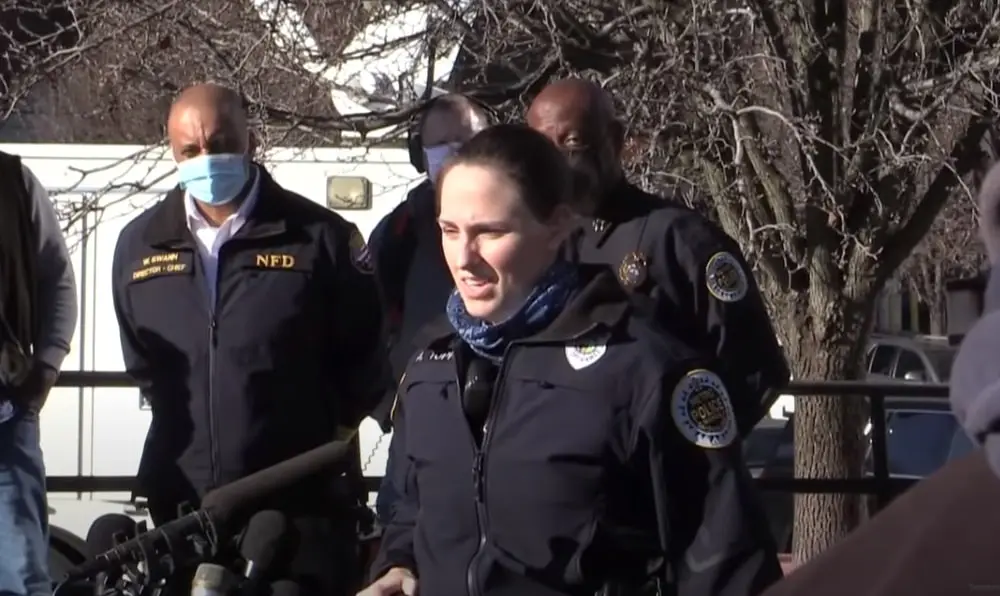
Officer Amanda Topping is among six officers from the Metro Nashville Police Department who have earned praise for their actions preventing casualties on 25 December after a camper van exploded on Second Avenue in downtown Nashville.
Bombing suspect Anthony Warner, 63, is believed to have died in the blast, which occurred after police were called to the scene – with the vehicle rigged to play an ominous automated message and the vintage song “Downtown” as it counted down to the detonation.
Three civilians were hurt in the explosion, with Topping and her colleagues hailed as “heroes” by local officials for their quick work to prevent further casualties by evacuating the area.
Speaking at a press conference on Sunday, Topping spoke about being called to the incident after an “odd” call on Christmas morning.
Topping, who has been with the department for two years, said: “We were sitting [in the station], and my wife had just called because it was toward the end of our shift, so she was seeing what time I was coming home.
“I’m talking to her, and I told her, ‘We’re about to head to this call, it’s a little strange.’ I hung up with her, and we get there but we didn’t really know. too much about it.”
After getting to the scene, she recalled: “I heard what the RV was saying, and it’s stuff that I’ll never forget – it was a female voice saying, ‘Your primary objective is to evacuate. Evacuate now.’
“I was pacing back and forth, having to turn pedestrians around… you just have a feeling, ‘Something’s not right.’ You just don’t get stuff like that.
“I was standing there by my car, and I heard [another officer] say that music just came on. I was about to get on the radio and say, ‘I know it’s not my place, but everybody’s getting out of the buildings, right?’
“I was getting really antsy… I had talked to my wife again and told her things were really strange.”
Nashville police officer Amanda topping is being hailed as a hero for saving lives after explosion (YouTube/The Tennessean)
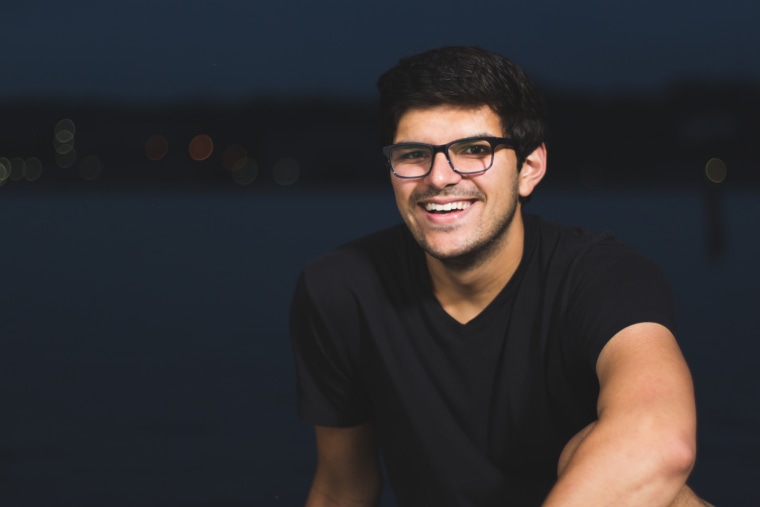
A gay Black man in Boston, Massachusetts, who was stabbed and left in a coma for four days, is living in fear knowing his attackers are still “out there”.
Anthony Crumbley was walking home from a bar in South Boston at about 10.45 pm on 18 December when he was attacked, according toCBS Boston.
The 25-year-old said: “The two males and a female approached me and two males attacked me and stabbed me in my neck and in my stomach, and pretty much ran and left me there.”
Suffering life-threatening injuries and left the bleed out on the ground, Crumbley was taken to Boston Medical Center where he spent four days in a coma in the hospital’s ICU.
Police have released a CCTV photo of people they would like to speak to in connection with the attack, but reportedly said they have no reason to believe the stabbing was a hate crime.
Crumbley insisted: “I believe it was an attack that had to do with gay hate because, you know, I dress very femme and I’m a very outspoken person.”
Still recovering in hospital, the young gay man said he is living in fear and struggling to make ends meet after being stabbed.
He wrote on a GoFundMe page: “No one has been arrested for doing this to me and I’m scared, truthfully, knowing they are still out there on the streets and could do this to me again at anytime.
“This traumatising situation has left me hopeless, after waking up from being in a coma for four days in the ICU at Boston Medical and I’m STILL here in the ICU now writing this on my birthday, December 26th.”
Crumbley’s mother passed away one year ago, and he is the legal guardian of his 12-year-old sister.
He continued: “Before all this happened I was very energetic and outgoing, always doing what was needed to make ends meet for me and my younger sister. I just don’t know how I’m going to make ends meet now with this gained disability from my attackers.”
He said that after the attack, his left arm is now not functional because of “the severed nerves in my C6 section of my shoulder”.
He continued: “I have to figure out how I’m going to ever finish raising my sister the way she deserves and give her everything I never had… Working won’t be an option for me at the moment until I can fully recover, so even though this hurts me and is so embarrassing to say I’m asking for help from anyone and everyone who knows me personally or who this even touches the slightest.”
Anyone with information is asked to call Boston Police at 617-343-4742.
California is now reporting the highest number of new daily COVID-19 cases per capita in the country.
Last week, the state reported the nation’s fourth highest number of daily COVID-19 cases per 100,000 residents over a seven day period, but California jumped to first place when the U.S. Centers for Disease Control and Prevention updated its case per capita tracker Saturday.
According to the CDC update from Saturday, California has reported an average of 100.5 daily COVID-19 cases per 100,000 residents over the past seven days, which places it comfortably ahead of second-place Tennessee, which saw an average of 89.6 daily cases per 100,000 residents over the same time period.
California’s daily case-per capita figure is actually down from the 109.3 mark it was at last week, which is likely due to reporting delays caused by the Christmas holiday. For reference, Oklahoma recorded the worst spread in the country last week with an average of 151.4 daily COVID-19 cases per 100,000 residents, and Tennessee was the second-worst with an average of 138.
California’s number has risen dramatically in recent weeks. To put the surge in perspective, when SFGATE last reported on California’s case rate in comparison to other states on Nov. 17, the Golden State was recording 21 new daily cases per 100,000.
The Golden State is in the midst of its worst surge ever, and last week the test positivity rate — another key data point for measuring the pandemic — hit 12%. That’s more than double what it was a month ago. In California’s summer surge, the positivity rate peaked at 7.6%.
To show how the pandemic in California compares with what’s unfolding in other states, we’ve put together a list of the 10 states with the highest case rates, using data from the Centers for Disease Control and Prevention and the number of total cases and deaths from state public health departments. See data on all 50 states at COVID.CDC.gov.
LGBT+ campaigners have claimed a victory over Donald Trump, after the president sought to ban forms of diversity training among federal contractors and grantees.
Under the controversial executive order signed by Trump in September, organisations in receipt of federal funds are prohibited from training involving so-called “divisive concepts such as critical race theory, white privilege, systemic racism, or implicit or unconscious bias”.
As Trump issued the order, the White House lashed out at a “destructive ideology… grounded in misrepresentations of our country’s history and its role in the world”, as it barred federal contractors from teaching that white people bear collective responsibility for slavery.
Subsequent guidance issued by the Trump White House instructed federal agencies to clamp down on training about intersectionality – the idea that the intersections of race, class, gender and sexual orientation create intersecting layers of privilege and discrimination.
Judge hits pause on Donald Trump’s diversity training ban
While the executive order is already likely destined for the bonfire when Joe Biden and Kamala Harris take office next month, a challenge brought by LGBT+ groups has secured a preliminary injunction to prevent the Trump administration from implementing it and cutting funding for federal contractors.
District court judge Beth Labson Freeman ruled on 22 December that a challenge on the grounds of free speech was likely to succeed, noting that “the executive order restricts a federal contractor’s ability to use its own funds, to train its own employees, on matters that potentially have nothing to do with the federal contract”.
The Trump administration had sought to argue it would be in the “public interest” to ban such training, but the judge hit out their claims as a “gross mischaracterisation of the speech [the groups] want to express and an insult to their work of addressing discrimination and injustice towards historically underserved communities”.
The challenge was brought by a coalition of LGBT+ and civil rights groups, including the the Los Angeles LGBT Center, the Santa Cruz Diversity Center, the AIDS Foundation, and LGBT+ elder advocacy group SAGE.
Injunction will allow LGBT+ groups to continue providing diversity training
“This injunction could not come at a more crucial time,” said SAGE CEO Michael Adams. “We have already had trainings cancelled because of the threat of this executive order, trainings that are integral to SAGE’s ability to do its work on behalf of LGBT+ older adults in a meaningful and impactful way that recognises explicitly the impact of systemic racism, sexism, and anti-LGBT+ bias on our communities and the country writ large.”
Dr Ward Carpenter of Los Angeles LGBT Center said in a statement: “President Trump’s executive order struck at the very heart of our country’s core principles, limiting freedom of speech and curtailing efforts to explore root causes of inequality.”
Ward added: “We applaud the court’s decision to halt this mean-spirited and destructive executive order, and we look forward to a new administration that will actually support efforts to address systemic discrimination and promote equality.”
A new pilot study funded by the Food and Drug Administration could be the first step toward lifting restrictions on blood donations by gay and bisexual men.
The program, called Assessing Donor Variability and New Concepts in Eligibility (Advance), has been launched by three of the nation’s largest blood centers — the American Red Cross, Vitalant and OneBlood.
Approximately 2,000 men who have sex with men (MSM) will be recruited at community health centers in San Francisco; Los Angeles; Memphis, Tennessee; Atlanta; Orlando, Florida; Miami; Washington, D.C.; and Baton Rouge, Louisiana. Participants must be 18 to 30, have had at least one male sex partner in the last three months and be willing to donate blood. The results could ultimately determine whether the FDA changes its blood-donor history questionnaire, asked of all potential donors to assess risk factors for infection by transfusion-transmissible diseases such as HIV and Hepatitis B.
“If the scientific evidence supports the use of the different questions, it could mean men who have sex with men who present to donate would be assessed based upon their own individual risk for HIV infection and not according to when their last sexual contact with another man occurred,” a statement on the Advance website reads.
Restrictions on certain blood donors date to the early 1980s, during the height of the AIDS epidemic in the United States, when the FDA instituted a lifetime ban on any man who had had sex with another man since 1977. That rule, intended to keep HIV out of the blood supply, was replaced in 2015 with a year-long abstinence requirement.
After the 2016 Pulse nightclub massacre in Orlando, more than 100 members of Congress — including Sens. Tammy Baldwin, D-Wis., Elizabeth Warren, D-Mass., and Bernie Sanders, I-Vt. — signed letters urging then-FDA Commissioner Dr. Robert Califf to eliminate the deferral policy.
“We can’t say some people can give blood, other people can’t based on their sexual orientation,” then-Rep. Alan Grayson, D-Fla., who represented Orlando at the time, told reporters, according to The Washington Blade.
Gay, bisexual and other men who have sex with men are the group most affected by HIV in the U.S., according to the CDC: In 2018, they accounted for 69 percent of the nearly 38,000 new HIV diagnoses across the country.
In April, as coronavirus lockdowns caused donations to plummet, the FDA quickly lowered the eligibility requirement for MSM to just three months.
The pandemic’s impact on available blood was swift and severe: By mid-March, the American Red Cross had canceled some 2,700 blood drives, resulting in 86,000 fewer donations. In April, donations at the New York Blood Center were down from an average of 9,500 a month to fewer than 2,000, according to New York state Sen. Brad Hoylman, who is gay and was initially rejected as a donor despite meeting the new criteria. “A regular month they host about 600 blood drives,” Hoylman told NBC News in May. “Last week, they hosted two.”
The three-month deferral also affects women who have sex with MSM, sex workers, injection drug users and those with recent tattoos or piercings.
In an April letter to the FDA, two New York Democrats, Rep. Carolyn B. Maloney, chair of the Committee on Oversight and Reform, and committee member Rep. Alexandria Ocasio-Cortez, called the change “a good first step” but urged the agency to move toward assessing potential donors by individual risk.
“A policy that fails to do this perpetuates stigma and falls short of ensuring that every person who can safely donate blood in the United States has the opportunity to do so,” they said.
The Red Cross, which had encouraged the FDA to adopt the three-month deferral model, also called it “a scientifically based interim step” toward abolishing restrictions altogether.
“Blood donation eligibility should not be determined by methods that are based upon sexual orientation,” the relief organization said.
Jay Franzone.Reubelt Photography
Jay Franzone, an LGBTQ advocate who remained abstinent for a year to donate blood in January 2017, said the Advance study is long overdue.
“Italy, Spain and other nations modernized their donor policies years ago, before the U.S. even ended its lifetime ban,” he told NBC News.
More than a dozen nations — including Argentina, Brazil, Mexico and Colombia — have adopted a risk-based questionnaire in place of a blanket policy based on sexual orientation. Earlier this month, the U.K. became the latest.
Franzone said he’s confident the Advance study will bear out what advocates like him have been saying all along: “Individual, risk-based assessment is safer for recipients of lifesaving blood.”
Jason Cianciotto, senior managing director of institutional development and strategy at New York’s Gay Men’s Health Crisis, said it’s exciting to reach this point after more than a decade of advocating for policy change.
He did have concerns about the Advance study, though, saying 2,000 individuals “is not a representative sample,” especially as no health centers in Chicago, New York, Boston or other Northeastern cities are involved.
He speculated that the pilot study, like the three-month deferral, was spurred by the pandemic.
“When we’ve lobbied the FDA in the past, their statements showed they didn’t really see an imperative” to change the current policy, Cianciotto told NBC News. “Even though we explained the ban contributed to stigma against people with HIV.”
A 2014 study by UCLA Law’s Williams Institute found that fully repealing restrictions on gay and bisexual donors could add over a half million blood units annually, increasing the available blood supply by 2 to 4 percent.
But when advocates had mentioned gay and bisexual donors could help alleviate blood shortages, Cianciotto said, the FDA has always claimed it didn’t really have any. “Of course, no one could have predicted a nationwide shortage of blood and blood products caused by a pandemic,” he added.
That the program has started under the Trump administration, which has been accused of rolling back LGBTQ rights, increases the likelihood that it was being driven by necessity, he said.
An FDA spokesperson told NBC News that the agency “remains committed to considering alternatives to time-based deferral by generating the scientific evidence that is intended to support an individual risk-assessment-based blood donor questionnaire.”
The spokesperson indicated there is no announced timeline for the study’s completion, although ABC News reported that researchers aim to present their findings by late 2021.
Cianciotto said he hopes the program is completed and implemented before the next election.
“In a Biden administration, we’ll have an advocate like we had in the Obama administration — in fact, one who actually was in the Obama administration,” he said. “But we can’t risk this becoming a campaign issue.”