California Governor Gavin Newsom has issued a statewide moratorium on eviction orders for residents affected by the COVID-19 crisis.
The order lasts through May 31, and requires tenants to declare in writing they cannot pay parts or all of their rent. Tenants will still be required to pay their rent “in a timely manner” at a later date, and could still face eviction once the order expires.
We may have to stay home, but our minds can soar to new worlds when you order books through copperfieldsbooks.com.
Our website offers an extensive array of books that we will ship directly to your home, so you can stay home & shop local. Visit our webpage and click “Shop Books” to browse dozens of genres you and your family will love!
In addition, we’ve reduced our shipping prices, making it easier to support your local independent bookstore.
I hope you are all safe and warm, and finding ways to keep yourselves entertained. As you know, OCA has put all of its activities on hold for the duration of the County’s shelter-in-place order. So far, we have rescheduled all ticketed events through May, and will resume small classes and group meetings as soon as the authorities deem it safe to do so. We’ll all miss getting together for the Fool’s Parade, now cancelled as well, but we look forward to lots of clever foolishness in 2021. In the meantime, there is an abundance of art and music being shared online, including free virtual tours of museums and galleries around the world, free streaming concerts, and more.
Below you’ll find links to websites and video recordings of some of our performers who’ve been rescheduled this season. You can use the links to enjoy a “couch tour” of live and recorded performances while we keep our safe distances.
We’re also sharing below some of the incredible artwork in our “She Persisted” exhibit, honoring the achievements of women throughout time.
We hope you enjoy the artwork and music, and that you will plan to see some of these wonderful performers later this year at OCA.
Even though our activities are on hold, OCA’s overhead expenses continue to accrue. With no event revenue we are facing challenges with our financial commitments including the upcoming property tax bill. If you are able, this is a great time to make a donation to OCA and show your support for our community venue. You can make a secure contribution online with this link.
Your support for OCA is greatly appreciated and will help ensure that we can continue bringing quality artistic and musical programs to West County.
We’ll update you again soon, and remain hopeful that our vigilance with social distancing is effective in suppressing the spread of COVID19. As always, feel free to reach out if you have any questions, comments or concerns.
I hope you enjoy the images from our exhibit, and use some of the links below to lift your spirits, take a break from the news media, and enjoy a musical or artistic interlude. You’ll be glad you did! Sincerely,
“She Persisted” Art ExhibitionScroll down to see more images from the exhibit.
“Honoring Jane Lathrop Stanford” by Lesley Pickford. Oil on Canvas, $600.“Sarah Grimske Suffragette” by Johanna Regan. Oil on Canvas, $600.
Livestream Concert: Dirty CelloThursday, March 26th at 8 PM
Join Rebecca Roudman and crew for a live performance – direct to your living room! Brought to you via Bandsintown. Click here to RSVP. Rebecca’s Klezmer band SF Yiddish Combois currently being rescheduled at OCA. Check out more of their great music on their website.
Sarah Baker & FriendsSoul Blues with a Blues Rock Twist Check out videos from Sarah’s new album “Baker’s Dozen” on Sarah’s YouTube channel. Sarah’s performance at OCA is currently being rescheduled.
Mariah Parker’s Indo Latin Jazz Ensemble This supergroup of Bay Area musicians includes Paul McCandless, Matthew Montfort, Brian Rice, Kash Killion, Ian Dogole, Duru Demetrius, Debopriyo Sankar and Fred Randolph. Check out the ensemble and other great performances by Mariah on herYouTube channel. Mariah and friends have been rescheduled to perform on September 12, 2020 at OCA.
As households across the United States start to receive their 2020 census packets, LGBTQ advocacy groups are ramping up efforts to ensure lesbian, gay, bisexual, transgender and queer people living in the country are counted and understand what’s at stake when it comes to the decennial survey.
“We want LGBTQ folks to know that census data are used to allocate political power,” said Meghan Maury, policy director of the National LGBTQ Task Force, which runs the Queer the Census campaign. The drive, formed just before the 2010 census, works to raise LGBTQ awareness and participation in the population count.
The organization’s efforts are increasingly important as the coronavirus pandemic sweeps the globe and upends the daily lives of people across the U.S. and beyond. This public health crisis has complicated the Census Bureau’s plans to deliver by year-end an accurate count of every person living in the country.
How are LGBTQ people counted?
As required by the Constitution, the census every 10 years will count all people living in the United States on April 1, 2020, and for the first time, same-sex couples are being explicitly counted.
The 2020 census asks respondents about their relationship to the person with whom they share their home, and now includes “‘opposite-sex husband/wife/spouse,” “same-sex husband/wife/spouse,” “opposite-sex unmarried partner” and “same-sex unmarried partner.” In previous surveys, the options were “husband and wife” or “unmarried partner.”
Data on same-sex cohabiting couples, however, only provides a partial snapshot of the country’s LGBTQ community, as many individuals do not live with a same-sex partner.
“The data we get from the census won’t be representative of everyone in our community,” Maury said, who along with her organization has been advocating for higher LGBTQ participation in the count.
According to NBC News’ reporting from 2017, LGBTQ advocates pushed to add an explicit question about sexual orientation and gender identity, and they briefly rejoiced when a draft of the census was leaked in 2017 showing such a question. But soon after, the Census Bureau issued a statement saying that the question had been a “mistake.”
Even so, the LGBTQ data the 2020 census does collect will be useful, according to advocacy groups. Knowledge about the “number of same-sex couples that are raising kids, the geography of where same-sex couples live, and the race and ethnicity of people in same-sex couples” will all help policymakers better understand at least the cohabiting part of the LGBTQ community, Queer the Census said in a statement.
What’s at stake?
Census data is used to help allocate more than $675 billion in federal funding each year on everything from infrastructure to job training services, according to the Census Bureau. The data also helps determine a community’s emergency readiness needs and how many seats each state has in the House of Representatives.
This information is also used to disburse funds for programs such as the Supplemental Nutrition Assistance Program (SNAP), Medicaid and public housing, all of which Maury said “LGBTQ people are disproportionately likely to use.”
Maury said one of her organization’s biggest efforts revolves around educating LGBTQ people about the census. She said at-risk communities — including LGBTQ people, people of color, immigrants, those experiencing homelessness and people with low incomes — are “overwhelmingly undercounted in the census.”
The National LGBTQ Task Force has found that not only are at-risk communities undercounted, but also “privileged” and wealthy people are overcounted, which “reinforce[s] systems of power and oppression in this country.”
Where can I fill out the 2020 census?
All home addresses in the U.S. should soon receive a packet that contains a private code, which can be used to fill out the survey online at my2020census.gov. Those who are unable to fill out the questionnaire online, which the Census Bureau says will take 10 minutes on average, can request a paper questionnaire.
Households that do not fill out the census as required by law will be visited by an in-person census taker. Due to the coronavirus pandemic, however, the Census Bureau is delaying certain aspects of its survey collection and counting process. While online and mail collections are proceeding normally, census takers won’t go out into the field until May to knock on doors of homes whose residents haven’t yet filled out the survey. And the deadline for counting everyone in the U.S. has been delayed by two weeks, moving from the end of July to mid-August.
Data from the 2020 census is expected to be available to the public beginning in December 2021.
For as long as he can remember, Jaceon Cornado has dreamed of having a flat chest.
When he turned 18 in the spring of 2017, the transgender teen eagerly started planning his surgical transition.
”This surgery is something I need to continue to get up in the mornings every day,” Cornado told NBC News.
Just six months after his 18th birthday — and a year after the Obama administration lifted the transgender military ban (which would later be reversed by the Trump administration) — Cornado joined the U.S. Army in a combat role. He decided to surgically transition while in the military, because doing so beforehand would have delayed his enlistment by at least 18 months. Two weeks after arriving at his base in San Antonio, he informed his superiors of his plan.
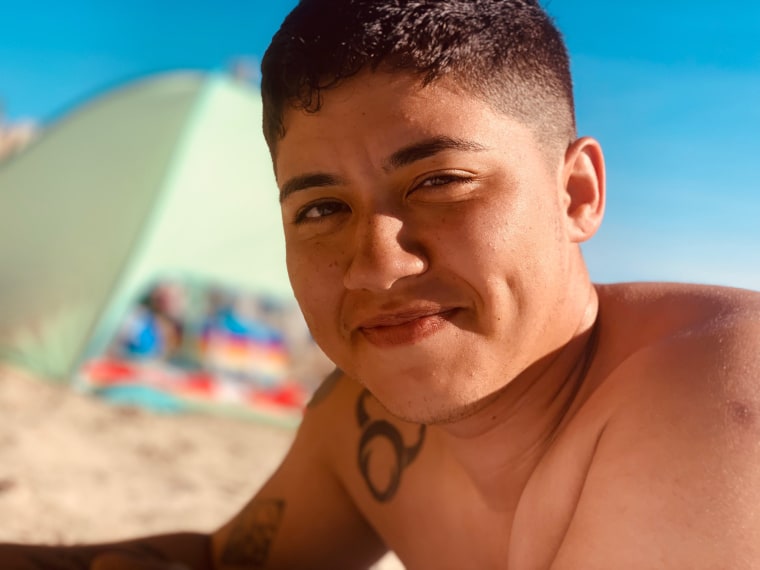
Jaceon Cornado on Westcott Beach in Henderson, N.Y., on July 7, 2019.Courtesy Jaceon Cornado
After a year of paperwork, psychological evaluations, medical intakes, hormone treatments and having his wife prepare to oversee his postsurgical care, Cornado was finally given the green light in July 2019 to undergo top surgery, a masculinizing procedure to remove breast tissue.
This long-awaited surgery, which Cornado describes as the most significant step in his medical transition, was scheduled for March 23. Last week, however, he received a call from the hospital informing him that the procedure had been postponed indefinitely due to the coronavirus pandemic. They said it would be six to eight weeks before they could even discuss rescheduling. He said the call “completely crushed my hopes.”
“I was really mad in the beginning,” Cornado, 20, told NBC News. “It took so much for me to get approval for the surgery, and now I just feel like it’s been yanked away.”
As the coronavirus pandemic has insidiously crept its way around the globe over the past several months, the daily lives of people from Beijing to Berlin to Boston have been upended. And with hospitals scrambling to deal with the influx of COVID-19 patients, surgeries deemed “nonessential” or “elective” have been canceled or postponed indefinitely. Among those surgeries put on the back burner are gender-affirming procedures, which can be lifesaving for transgender people.
Some trans individuals who have had their surgeries canceled or postponed, like Cornado, say they are now facing debilitating levels of gender dysphoria on top of the anxiety and uncertainty spawned by the global health crisis.
“This surgery is not elective for me,” Cornado said. “It’s something that I need to continue to get up in the morning and live a normal life.”
Consequences of delayed treatment
While most health insurance carriers in the U.S. currently consider gender-affirming procedures to be “cosmetic” — with over 30 states allowing providers to exclude transition-related care from coverage— such a distinction is inaccurate, according to Laura A. Jacobs, a licensed clinical social worker, psychotherapist and board chair atCallen-Lorde Community Health Center, a New York-based LGBTQ health center.
“For many trans folks, existing daily in a body that doesn’t match your sense of self isn’t just uncomfortable, it’s traumatic,” Jacobs explained. “There’s a lot of research that shows that delaying treatment for trans people increases levels of depression, anxiety and suicidal ideation.”
A study published in October in the American Journal of Psychiatry found gender-affirming surgical procedures yield long-term health benefits for transgender individuals. Among those who had surgery, the longer ago their surgery, the less likely they were to suffer from anxiety, depression or suicidal behaviors during the study period, the researchers found.
Along with psychological repercussions, Jacobs said, surgical delays can also cause physical repercussions for trans people, including elevated levels of smoking, obesity and substance abuse.
‘It’s not a vanity thing’
Katalina Murrie, a 31-year-old transgender woman living in Ottawa, Ontario, said there is “a clear misunderstanding about the urgency of trans health care.”
“Once this year, I had to take an ambulance to the hospital due to anxiety I’ve been experiencing because of dysphoria,” she said.
Gender dysphoria is a diagnosis that “involves a conflict between a person’s physical or assigned gender and the gender with which he/she/they identify,” according to the American Psychiatric Association. The association notes this type of dysphoria can result in distress, anxiety and impaired daily functioning.
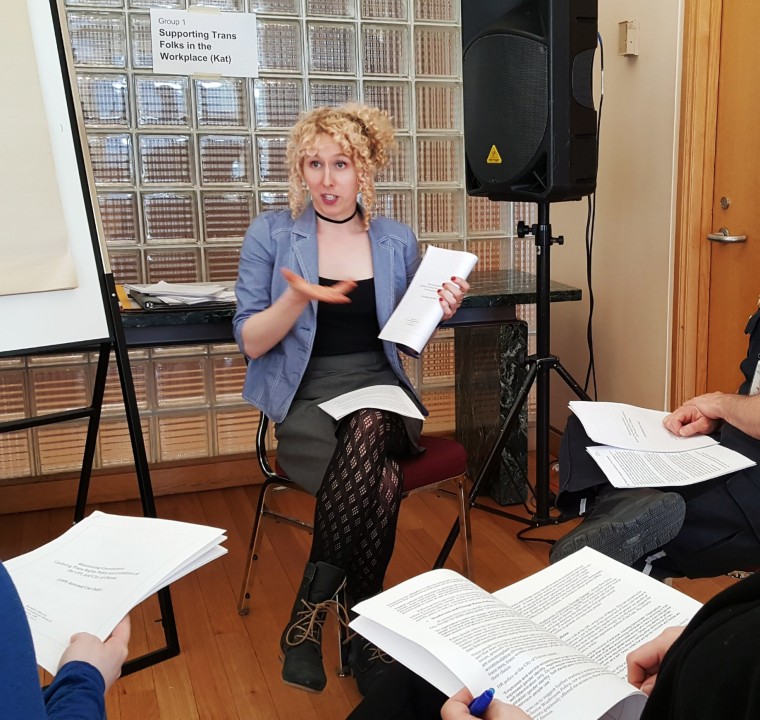
Katalina Murrie speaks to government employees about how to respect transgender people in the workplace at Ottawa City Hall in 2019.Courtesy of Katalina Murrie
For several months, Murrie had been excitedly preparing to undergo facial feminization surgery, a set of procedures intended to soften one’s facial features and bone structure. Murrie said for her, the surgery is a matter of life and death.
“I’m not gonna last to my 40s if I don’t have this surgery,” she said.
Since gender-affirming surgeries are often not covered by health insurance, many trans people travel internationally in order to access different procedures and to save on out-of-pocket costs. This reliance on international travel complicates matters further for those seeking this type of care — and it certainly has done so amid this current pandemic, which has drastically limited both domestic and international travel.
Although Canada’s national health system covers some gender-affirming procedures, including sex-reassignment surgery, facial feminization is typically not covered. As a result, Murrie had scheduled the procedure for March 27 with a surgeon in Guadalajara, Mexico, where the cost of surgery is lower. Once news of COVID-19 became an impending reality, however, she began to wonder whether her surgery was still going to be a possibility as she would have to travel abroad from Canada.
“What if all the borders closed around the world and I am stuck in a foreign country?” Murrie recalled asking herself. “My face would be covered in stitches. I’d have to travel through popular airports where there have been confirmed reports of staff members with COVID-19. My dream surgery all of a sudden became very stressful.”
Eventually, her surgeon offered her the choice of a refund or a date change at no additional cost; she chose the latter. While Murrie is confident she will be able to undergo the procedure at some point in the future, she is still disappointed that surgeries like hers are not considered essential.
“It’s not a vanity thing,” Murrie said. What makes this worse, she added, is that it is just the latest in a long list of obstacles she has faced along her transition journey, which have included gender dysphoria, anxiety and red tape in order to legally change her name and acquire hormone therapy.
‘It’s about being comfortable enough to function’
For Ashton Onion, a 22-year-old nonbinary transgender man living in New York City, simply finding a doctor able and willing to provide gender-affirming care was a daunting task.
“I did all this research and finally found a doctor I was comfortable with,” Onion told NBC News. “There’s a type of security you look for in all of this.”
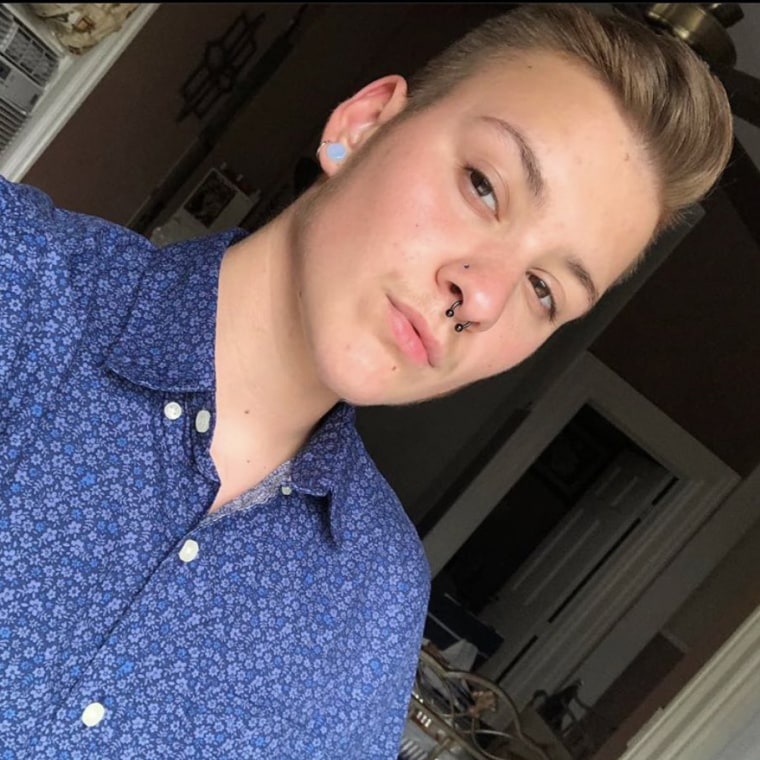
Ashton Onion in Staten Island, N.Y., in September 2019.Courtesy Ashton Onion
Onion is not alone in being cautious when it comes to finding an affirming health care provider. A 2016 report from the National Center for Transgender Equality and the National Gay and Lesbian Task Force found that 28 percent of trans and gender-nonconforming respondents reported being subjected to harassment in medical settings, and 19 percent said they have been refused care outright due to their gender identity or expression.
Onion, who said he has been eagerly awaiting top surgery since he was 13, finally had a consultation scheduled with a surgeon for March 19. He received a call three days before the scheduled appointment informing him the consultation would be canceled for the foreseeable future due to the COVID-19 pandemic.
“To have it taken away makes me uneasy,” Onion said of his long-awaited appointment. Like Cornado and Murrie, Onion said a gender-affirming procedure is much more than “cosmetic” for him.
“Growing up in a Catholic space, I was very religious,” he said. “I remember growing up praying I wouldn’t develop a chest.”
When Onion began to grow breasts during puberty, he initially turned to nonsurgical methods of body modification, including chest binding. Onion said that while binding was helpful in the interim, it has caused physical pain and stress on his body that is not sustainable, including back pain, skin irritation and breathing problems.
“It’s always me deciding which kind of toll I want to experience today,” he said. “A physical pain when I wear the binder or a mental toll when I don’t wear one.”
Onion, who has found support from his girlfriend and among friends in his trans-masculine support group, said moving forward he hopes the broader health care system will begin to recognize the urgency of trans care.
“People don’t realize the daily challenges trans folks have to endure,” he said. “This surgery isn’t cosmetic — it’s about being comfortable enough to function. It’s necessary.”
Amid concerns a lack of federal protections leaves LGBTQ people open to discrimination, a group of 87 House Democrats are calling on Dr. Deborah Birx to affirm anti-LGBTQ discrimination will be prohibited in coronavirus relief efforts.
The March 26 letter, coordinated by Rep. Deb Haaland (D-N.M.), Rep. Sharice Davids (D-Kansas) and the LGBTQ Equality Caucus, draws on the assertion LGBTQ people are disproportionately vulnerable to the coronavirus.
“We call on you to keep these considerations in mind as you develop solutions and we ask you to be proactive by publicly asserting that any programs or initiatives that assist the American people during this crisis must be conducted without discrimination against any community, including the LGBTQ community, and that there are no grounds by which this type of discrimination is acceptable,” the letter says.
LGBTQ people are disproportionately vulnerable to the coronavirus, the letter says, because that have high reported rates of discrimination in the health care system; have greater rates of smoking, cancer and depression; and are disproportionately affected by HIV/AIDS, which can depress immune systems and make patients vulnerable to disease.
Older people are vulnerable to the coronavirus, and LGBTQ elders even more so, the letter says, because they “grew up in an era where asserting an LGBTQ identity was difficult to impossible” and now have limited social support.
Birx, named the White House Coronavirus Response Coordinator, has become a rising star as result of her diplomatic approach to answering questions during the daily White House briefings on the pandemic.
As the House Democrats’ letter notes, Birx also has a history in fighting the HIV/AIDS epidemic. Since 2014, she has served as ambassador-at-large and U.S. Global AIDS Coordinator since 2014, which makes her responsible for the President’s Emergency Plan for AIDS Relief, or PEPFAR.
“Based on your many years of service in the fight against HIV/AIDS, we take comfort knowing that you are in this leadership position and have been, and will continue to be, an ally to the LGBTQ community,” the letter states.
Birx has compared the coronavirus pandemic to the fight against HIV/AIDS in the early days of the epidemic during a White House briefing in the Rose Garden earlier this month.
“We had another silent epidemic: HIV,” Birx said. “And I just want to recognize the HIV epidemic was solved by the community: the HIV advocates, and activists who stood up when no one was listening and got everyone’s attention. We’re asking that same sense of community to come together and stand up against this virus.”
House Democrats write the letter in the aftermath of the Trump administration declaring it will refuse to enforce an Obama-era rule barring anti-LGBTQ discrimination among federal grantees, such as taxpayer-funded adoption agencies and medical care providers. The Department of Health & Human Services had implemented the rule in December 2016 just before Obama left the White House and Trump took office.
Faced with calls to lift the rule from religious-affiliated non-profits, including Catholic Social Services, the Trump administration announced late last year it would not only the start the rule-making process to lift the regulation, but cease enforcing it immediately.
Earlier this month, a trio of LGBTQ legal advocacy groups filed a lawsuit against the decisionto stop enforcing the rule in court, citing the discrimination LGBTQ people may face in social services, such as meals on wheels, without the implementation of the rule.
Although House Democrats don’t explicitly mention the rule or the lawsuit, they cite many of the same concerns expressed in the lawsuit against the Trump administration.
“For every community impacted by coronavirus, you will often see ways in which the LGBTQ populations within those communities face harsh realities,” the letter says. “Young people whose colleges are closing may not have supportive families who will take them in. LGBTQ people who lose their jobs may have a harder time finding new work based on pre-existing patterns of discrimination against LGBTQ job-seekers. Those LGBTQ people in prison or who are navigating the immigration system already face unique challenges, including vulnerability to violence, which can be made worse during a crisis such as this.”
When Rocio Marquez lost her job cleaning offices about two years ago, she took a leap of faith and started her own business.
A former Monterey County strawberry picker who moved to Sonoma County six years ago, Marquez had always dreamed of being her own boss and wanted to see if her entrepreneurial skills could mean a boost in income, she said.
Over the course of several months, she and her husband scraped together enough money to open Pupusas y Tacos “Marquez,” a green food cart parked on the Whiskey Tip lot at the edge of Santa Rosa’s Roseland neighborhood. Marquez put in long hours to keep it running, slowly building her business with the patronage of hungry workers who stopped at her Stony Point Road location for a bite to eat before work or for lunch.
But the coronavirus pandemic and county and state orders for people to stay at home have upended her business, depleting the steady stream of customers that once frequented her cart as more are out of work and strapped for cash, Marquez said.
“I’m going to wait to see what happens but right now I’m not making enough to pay rent, to cover the cost of food,” Marquez said, though she remained hopeful. “Really, there’s nothing to do. We’re just in the hands of God.”
The slowdown has meant one or two customers every few hours, spoiled meat that she’s had to throw away and lingering fears about how she’ll pay for the small group of employees that help run her business.
Marquez is not alone. Latino entrepreneurs across Sonoma County are struggling to keep their businesses afloat as a local order for residents to stay at home that went into effect March 18 has curtailed or halted most economic activity for the sake of minimizing the virus’ spread, said Herman J. Hernandez, the president of the Sonoma County Latino leadership group Los Cien.
The order has sent shock waves throughout the local Latino community, particularly among undocumented workers and low-income families — two groups who are more likely to be living paycheck to paycheck and who can have a hard time recovering from financial and psychological blows, he said.
“It’s kind of a shock and unbelievable that you’re in a situation like that,” Hernandez said. “When you look at the Latino community, at times at the top of the list is ‘How am I going to continue to support my family?’ ”
Answers to those immediate concerns were a primary focus for Sonoma County Supervisor James Gore, who volunteered to work as the Sonoma County Board of Supervisors’ liaison to the Latino community during the pandemic because of his ability to speak Spanish and his prior collaboration with the community during the Tubbs and Kincade fires, he said.
Conversations with dozens of local Latino-serving nonprofits and organizations made it clear that basic necessities like food, housing and cash, as well as accurate information about the virus, was in high demand, he said.
To address that information gap, Sonoma County supervisors have set aside over $25,000 to boost the public awareness of the coronavirus within Spanish-speaking communities, a strategy intended to make sure the community understands the threat of the virus and local stay-at-home orders, Gore said. The campaign includes paid radio public service announcements that launched Monday and Tuesday across six local stations after starting on one station last week. How frequently the radio station plays the announcements, and during which hours, varies from station to station, county spokeswoman Melissa Valle said.
Supermarkets across Sonoma County last week began playing informational video or audio messages about the virus as part of the outreach plan. Gore and a team of Spanish-speaking county officials on Tuesday also went live on KBBF, a local bilingual radio station, to take questions from Sonoma County residents about the virus. The radio station hosted a similar segment with Gore last week.
“It requires an intentional effort,” Gore said of the county’s outreach to Spanish-speaking residents. “You can’t just put out translated documents and expect it’s going to hit folks in a targeted way.”
The timing of the county’s efforts received some criticism among some local Latino group leaders, who said the county waited too long to actively inform the community about the virus. That included Zeke Guzman, president of the nonprofit group Latinos Unidos del Condado de Sonoma County, who last weekend spoke to a handful of farmworkers who described the virus as nothing more than a cough, Guzman said. He and another community organizer also witnessed several Latino families at local parks who weren’t following social-distancing guidelines required by the county’s order.
“I don’t want to knock on anyone, this is a crisis,” said Guzman, who hopes to secure grants that will allow KBBF to launch more in-depth announcements about the coronavirus. “But we also want to look at how effective what we’re doing is and who it’s going to reach.” Gore acknowledged the frustration over the timing of the county’s effort, but added that county staff members are tasked with dealing with solutions to both short and long-term problems that will arise from the pandemic.
“We have to attend to the present, but we also have to reach into the future to think about how we’re going to get ahead of this,” Gore said.
At the Graton Day Labor Center, recent phone check-ins with the center’s roughly 200 members show only about 10% are working, most of them farmworkers whose employers aren’t covered by the shelter-in-place order that restricts or bans all but nonessential businesses including agriculture, said the center’s executive director, Christy Lubin
The rest of the members, whose jobs range from day laborers to domestic workers and nannies, are struggling to find work. Some are single parents who can’t leave their homes because schools stopped classroom instruction and there’s no one else to care for their childen, Lubin said.
Confirmed coronavirus cases are increasing faster than initially expected, California officials said, indicating the much-anticipated surge may be on the way.
“We originally thought that it would be doubling every six to seven days. We see cases doubling every three to four days,” California Secretary of Health and Human Services Dr. Mark Ghaly said at a news conference Wednesday. Ghaly said at that rate, he expects hospitals will see a surge in one to two weeks.
As of Thursday morning, California has over 3,000 confirmed cases, far behind the U.S. coronavirus epicenter of New York. New York City alone has over 21,000 cases and the state is reporting nearly 400 deaths as hospitals reportedly face “apocalyptic” conditions. Ghaly said, at this rate, California now is on pace to match New York’s numbers.
Preparing for the worst-case scenario is on the minds of California politicians, who are warning residents to stay vigilant.
“The worst days are still ahead,” Los Angeles Mayor Eric Garcetti said on Wednesday.
In a press conference yesterday, San Francisco Mayor London Breed and Dr. Grant Colfax, the city’s public health director, said San Francisco hospitals need 1,500 more ventilators and 5,000 additional hospital beds to prepare for a potential influx of serious coronavirus cases in the city.
Breed said she reached out to Vice President Mike Pence and the Trump administration about securing additional resources.
“I hope they will deliver for the people of this state and the people of this country,” she said. “Time cannot be wasted on interactions that don’t lead to the kinds of results we need.”
Colfax spoke to the measures San Francisco has already taken, noting that the city has hired 80 new nurses, begun preparing non-hospital locations for patients, continued to obtain additional personal protective equipment supplies, and decreased the number of in-hospital visits for non-critical cases.
The city is preparing for “a scenario like what is playing out in New York this very day,” Colfax said.
The record-setting $2 trillion deal Congress reached on Wednesday to stimulate the economy amid the devastation of the coronavirus pandemic contains $155 million to bolster HIV programs serving the nexus of communities affected by both diseases.
For the Ryan White HIV/AIDS Program, the deal includes $90 million for existing contracts under the law and the Public Health Service Act. At the same time, the deal appropriates $65 million for the Housing Opportunities for Persons with AIDS, or HOPWA, to maintain operations and provide rental assistance amid the coronavirus crisis.
In both cases, the money must be used by Sept. 30, 2022, although appropriations for HOPWA afford some additional flexibility. The money is on top of the $330 million Congress appropriated in December 2019 for Ryan White and other initiatives in fiscal year 2020 as part of the Trump administration’s initiative to beat HIV by 2030.
The money for the HIV programs is geared toward ensuring recipients — which include cities, states and community health centers — can continue and expand those services as the coronavirus pandemic complicates efforts to address HIV.
Rachel Klein, deputy executive director of the AIDS Institute, said the additional money for Ryan White programs, which provides care to low income people with HIV, is essential for HIV-positive people trying to obtain services amid the coronavirus pandemic.
“The program itself needs to be able to adapt to provide care in different ways,” Klein said. “People are trying to avoid sitting in public meeting rooms unnecessarily right because they don’t want to be exposing themselves potentially to a new virus. The programs are going to need to be able to be flexible, to find creative ways to ensure that people are able to still get the care that they need, and that’s going to come with some costs.”
There are mixed opinions about whether people with HIV are more at risk for COVID-19. On one hand, HIV if left untreated will depress a patient’s immune system and make them more susceptible to disease, but Dr. Susan Henn, chief medical officer for the D.C.-based Whitman-Walker Health, has told the Blade for people with well-managed HIV, the increased risk would only be “very slight.”
Lauren Killelea, director of public policy of the National AIDS Housing Coalition, said money for HOPWA is needed because people with HIV without access to housing “are less likely to be virally suppressed and therefore more susceptible to COVID-19.”
“HOPWA is uniquely situated to be a great, flexible resource for low-income people living with HIV during the coronavirus pandemic,” Killelea said. “HOPWA can not only provide permanent housing but also short-term assistance as well as critical supports like access to transportation and nutrition services.”
After failed votes in the U.S. Senate and negotiations throughout the week, congressional leaders had announced Wednesday morning they had reached a deal on Stage 3 for congressional action in response to the coronavirus crisis.
A vote was expected earlier Wednesday after the Senate returned from recess, but proceedings were halted over objections from a small cadre of Republicans — including Sens. Tim Scott (S.C.), Ben Sasse (Neb.) and Lindsey Graham (S.C.) — over language they say could lead to the exploitation of unemployment benefits. After leaders agreed to an amendment to appease these lawmakers, the Senate voted to approve the measure 96-0.
The next step is House approval for the stimulus package and President Trump signing the package into law, both of which were expected to happen expeditiously.
A number of parties had pressed Congress for the HIV funds in the stimulus package. Last week, AIDS United and a coalition of 90 HIV/AIDS and LGBTQ groups, including GLAAD, the Human Rights Campaign, Whitman-Walker Health, NMAC, NASTAD, NCSD and the AIDS Institute, sent a letter to every member of Congress urging them to consider people with HIV and “craft a relief package that takes the unique needs of this population into account.”
In a letter to Congress dated March 17 and obtained by the Blade, the White House Office of Management & Budget sought money in the stimulus package for Ryan White and other health programs to the tune of $1.336 billion. An attached request from Health Resources & Services Administration makes that request for “health centers to expand triage and treatment capacity and telehealth, rural hospital technical assistance and the Ryan White HIV/AIDS Program, in response to coronavirus.”
The request, however, makes no mention of HOPWA funds, which the Trump administration sought to cut earlier this month in its budget request for fiscal year 2021. OMB didn’t respond to the Blade’s request to comment on whether it welcomes the HIV money appropriated in the stimulus package.
Killelea said the HOPWA money was inserted by the Transportation and Housing & Urban Development Act appropriations staff headed by Sens. Susan Collins (R-Maine) and Jack Reed (D-R.I.) and Reps. David Price (D-N.C.) and Mario Diaz-Balart (R-Fla.). (Diaz-Balart was the first member of Congress confirmed to test positive for the coronavirus.)
Congress makes the appropriations at the same time the Trump administration has made a pledge to beat HIV in the United States with a PrEP-centric plan that aims at reducing new infections by 75 percent in five years and 90 percent by 2030.
Carl Schmid, executive director of the HIV & Hepatitis Policy Institute and co-chair of Presidential Advisory Council on HIV/AIDS, told the Blade the extra money is needed because the coronavirus threw a “monkey wrench” in the HIV plan.
“I was just talking today to someone at the CDC that several people from the center for that are working on HIV are being used to address COVID-19, and it’s a significant amount of their staff, because they all have the expertise in infectious diseases, and the doctors, too, in the field,” Schmid said. “That’s why I can see a lot of this 90 million being used to, for the doctors in the workforce.”
As Congress advances the deal, the Health Resources & Services Administration’s HIV/AIDS Bureau was set to have a phone conference with grant recipients and stakeholders across the country on Thursday at 3:30 p.m., according to a notice shared with the Washington Blade.
Around two in 10 queer people would consider hooking-up with someone even as measures to curb the coronavirus pandemic includes strict social distancing.
While the virus’ death toll bears down on all, around 28 per cent of LGBT+ people would still consider going out on dates, according to a report published Tuesday by Queer Voices Heard.
Queer community ‘pessimistic’ about how coronavirus pandemic will impact them, researchers say.
Survey takers for the social enterprise group described the “genuine fear” the community feels about the viral outbreak, with 57 per cent of participants feeling their lives will be worse off in six months time as a result.1 Simple Trick To Cut Your Electric Bill By 90%Promoted by Okowatt
“COVID-19 poses a real threat to our physical health, mental health, the relationships that we have with others, and our way of life,” lead researcher Max Willson said, reiterating the fears of LGBT+ people.
Around 72 per cent reported being concerned about the coronavirus’ impact on their lives, with a third fearing the outbreak will have a negative impact on their physical health due to existing mental health conditions.
“This sense of pessimism about the future is consistent across all gender and sexual identities,” the report stated.
Three-quarters of LGBT+ support Pride events being cancelled, but yearn for alternatives.
LGBT+ health authorities have echoed the government in urging queer people to practise social distancing, coming as countless Pride organisers cancel their parades, leaving summertime calendars barren.
Indeed, queer folk themselves overwhelmingly support such waves of cancellations, the findings suggest, as three quarters believe organisers were right to cancel or postpone.
Nevertheless, nearly one in four LGBT+ people would consider swinging by a queer event or social function in order to meet and see other people.
“At a time where the UK government continues to call for stringent social distancing and are exploring stronger ways to enforce this,” the report stated, “it’s clear more needs to be done to communicate the importance of social distancing measures to support the efforts of flattening the curve.”
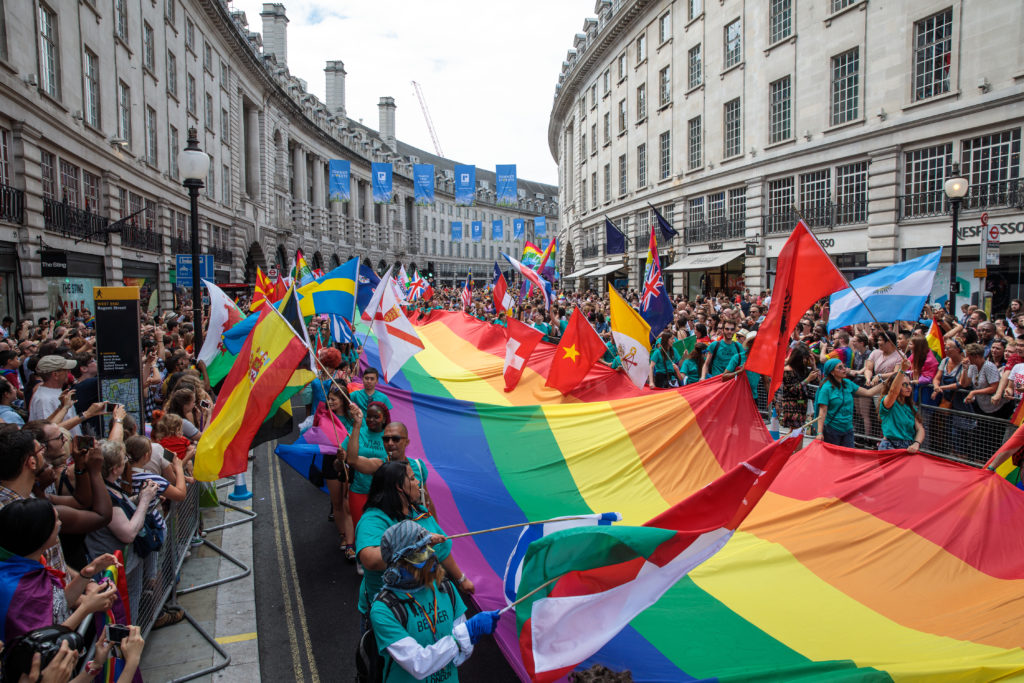
Pride in London parade in 2017 (Jack Taylor/Getty)
But it is this gap left in queer people lives that, researchers suggest, is leading to LGBT+ people to still consider going out and hooking-up.
Survey participants said that Pride organisers should offer alternative ways for the community to, even in the midst of the throws of the pandemic, still feel connected.
Online, televised or a series of streamed activities were suggested by participants.
Queer Voices Heard co-founder Stu Hosker said: “When mental health and social isolation already disproportionately affects our community than the general population, it’s vital that we listen to the voices in our community who are most vulnerable – physically, mentally, and socially – and address how we keep their best interests in mind during this unprecedented health emergency.”