Australia’s national men’s football team, the Socceroos, just became the first FIFA World Cup side to collectively speak up on human rights issues in Qatar. In a powerful video released on October 27, sixteen current and former Australian players, supported by the broader playing group, expressed their solidarity with migrant workers and LGBT people, making it clear that “universal values like dignity, trust, respect and courage should define football values.”
Players correctly assessed the situation in Qatar, where important reforms have been introduced but require better implementation. More importantly, they acknowledged that the decision to host the World Cup in Qatar resulted in preventable suffering and harm to “countless migrant workers,” who are not covered by recent reforms.
FIFA did not require Qatar to make labor rights commitments for the millions of migrant workers that FIFA knew Qatar would need to build the World Cup infrastructure.
“These migrant workers who suffered are not just numbers. Like the migrants that have shaped our country and our football, they possessed the same courage and determination to build a better life,” said president of the players union and former Socceroos player Alex Wilkinson
In the video, the Socceroos strongly endorsed an effective remedy for migrant workers who have been denied their rights, supporting a migrant workers center and the decriminalization of all same-sex relationships.
Qatari authorities responded to the video insisting that “no country is perfect,” and that “Protecting the health, safety, security and dignity of every worker contributing to this World Cup is our priority.” But they fell short of committing to set up a remedy fund for workers who faced abuses because reforms came too late or were weakly implemented.
In May, Human Rights Watch, Amnesty, and a global coalition of rights groups, unions, and fans, launched the #PayUpFIFA campaign, demanding FIFA provide financial compensation for serious abuses against migrant workers, including deaths, injuries, unpaid wages, and exorbitant recruitment costs.
Unprecedented, bold acts of solidarity by both current and former Australian football players have set an important example. FIFA should follow up by announcing it will make right the abuses it has both enabled and will profit from.
The “New Ideas” government of President Nayib Bukele appears to be ignoring the potential of sexuality education to foster understanding and reduce violence against sexual and gender minorities. This is not an innovative approach, but rather an antiquated, prejudiced idea.
El Salvador’s Education Ministry recently fired the director of the National Institute of Teacher Training and announced a “restructuring” of that institution. The reason? The Institute had greenlit a segment of Let’s Learn at Home—a remote education television show initiated during the pandemic—that explained the concept of sexual orientation.
The ministry said the information was not “in adherence with [Salvadoran] reality.” Subsequently, the Institute’s website became inaccessible and currently displays an error message.
The segment, which targeted eighth grade students, who are about 14 years old, featured animations of children playing, riding scooters, and listening to music. The narrator defined heterosexuality, homosexuality, and bisexuality in basic, age-appropriate terms. Indeed, the program did nothing more than provide the most elementary information about natural variations in human sexuality.
Despite the ministry’s attempt to erase lesbian, gay, bisexual people, they are very much a part of the “Salvadoran reality.” President Bukele acknowledged as much when, in 2014, he described himself as a “hetero ally” and the fight for lesbian, gay, bisexual, transgender (LGBT) rights as “the civil rights struggle of our time.” Furthermore, the Supreme Court held that the constitution protects against discrimination based on sexual orientation in 2009 and gender identity in 2022.
Why then has the government decided to censor essential information about sexual orientation? This makes little sense given the potential of such education to reduce the high levels of violence that LGBT people face in El Salvador.
In January 2021, Human Rights Watch published a report on the violence and discrimination against LGBT people that limits their life choices and leads them to flee El Salvador. The organization COMCAVIS TRANS previously found that this insecurity also leads to the internal displacement of LGBT people. Transgender people are especially vulnerable.
Comprehensive sexuality education, to which children have a right, could contribute to reducing this violence if it is age-appropriate and rights-based. It can equip young people with the skills to develop a positive view of different sexualities, both their own and their peers’. Experts have found that this kind of education can contribute to preventing discrimination and violence against sexual and gender minorities.
Unfortunately, the Salvadoran authorities seem to lack interest in realizing education’s full potential. In addition to the government’s censorship of Let’s Learn at Home, the Legislative Assembly explicitly omitted any substantive reference to sexual orientation and gender identity in the recently approved “Grow Together” Law, which governs the rights of Salvadoran children and adolescents.
The legislature also watered down that law’s article on comprehensive sexuality education by noting that families have “a fundamental and primary role” in providing this type of education, a setback to an earlier draft in which “the family, society, and the state” shared this role. Assigning the family the “primary” responsibility to teach comprehensive sexuality education is setting up families to fail, if taken to its logical conclusion. Some families may lack the time, training, and information to impart such education.
Censoring information on sexual orientation and gender identity is not a “new idea”: it is an old, tired idea rooted in prejudice. El Salvador’s authorities should fulfill their international responsibility to educate young people about sexuality and gender, not burden parents with the “primary” role to do so. This information can help reduce violence against LGBT people by fostering tolerance and acceptance. This is what the Salvadoran reality requires.
The British government has committed to a 10-year strategy to end discrimination against “female same-sex couples” seeking fertility services.
The first ever Women’s Health Strategy For England, published by the UK’s Department of Health and Social Care, includes language supporting reproductive rights for lesbian, bisexual and queer (LBQ+) women. It commits the government’s health department to improving transparency and removing discriminatory policies to ensure “female same-sex couples are able to access [National Health Service] NHS-funded fertility services in a more equitable way.”
In October, 2021, campaigners Megan and Whitney Bacon-Evanslaunched a legal case against their local NHS board, stating that its fertility policy discriminated against lesbians. In their postcode, same-sex female couples seeking one cycle of NHS-funded in vitro fertilization (IVF) are required to prove infertility by self-funding 12 rounds of artificial insemination, including 6 in a clinical setting, costing approximately £26,000. For heterosexual couples, the requirement to prove infertility is attestation of two years of unprotected sex.
The new strategy removes the requirement for self-funding, and states that female same-sex couples can expect NHS coverage to start with 6 cycles of artificial insemination.
Still, there is little clarity as to when the strategy will take effect. “Some queer couples told us this week they have already been put on fertility waiting lists for 2023, others were told they still don’t qualify,” Bacon-Evans told Human Rights Watch.
Also, the strategy is silent on “single women who want to start a family,” an issue highlighted by experts who submitted to the strategy process, which could potentially discriminate against both heterosexual and queer single women. As the strategy commits the department to administer care for women regardless of non-clinical factors, such as relationship status, single women should be covered.
The strategy also does not define “same-sex” or “couple.” It remains unclear if partners must be married or in a civil partnership, and if treatment will be available to LBQ+ couples in which one or both partners are transgender, non-binary, or gender non-conforming.
Authorities should extend non-discriminatory access to fertility treatment to single women and all LBQ+ couples, regardless of gender identity or expression. They should also be protected from non-clinical barriers to fertility services. One immediate opportunity comes as the National Institute for Health and Care Excellence updates its fertility assessment and treatment guidelines.
In the last three decades, protections for LGBT people’s rights have advanced rapidly in many countries and regions. However, rising populist authoritarianism poses a significant threat to this progress because abolishing sexual freedom is often at the heart of repressive political projects. The progress and backsliding in my home country, Colombia, illustrates the process of using democracy to erode rights.
In 2016, Colombia seemed like a legislative paradise for LGBT people. That year, a pinnacle of legislative success was a Constitutional Court ruling that secured a range of family rights for same-sex couples, including marriage and adoption, and protection of LGBT students in schools. But toward the end of the year, there was another exceptional event. In an effort to end a brutal, decades-long armed conflict, the Andean country held a plebiscite on a peace agreement between the Colombian government and the Revolutionary Armed Forces of Colombia (FARC) guerrillas. Unexpectedly, a small majority of 50.2 percent rejected the agreement after a bitter and polarizing campaign.
A key issue that mobilized the “no” electorate was the moral panic generated by the inclusion of gender, women rights, and LGBT-related provisions in the peace agreement, including a definition of gender and the explicit recognition of these populations as victims of the armed conflict. Extremist groups decried these provisions as imposing a “gender ideology,” tapping into a recent controversy about gender and sexuality education in schools.
Following the suicide of a queer student who had experienced severe bullying and discrimination in school, the Constitutional Court directed the government to carry out an existing law detailing measures to protect LGBT students from discrimination and to recognize diversity in sexual orientation and gender identity as a principle of comprehensive sexuality education. Conservative groups attacked this decision as imposing “gender ideology” on children, and social media became a battleground where the fate of Colombia’s peace was intertwined with the fate of LGBT people.
Many Colombians followed the conservative groups’ reasoning and conflated the peace agreement and the Court’s decision, believing the peace deal itself advanced “gender ideology” through gender and LGBT inclusive provisions. Again, social media—this time coupled with ballots—was the site of this mobilization. Political actors disseminated outrageous falsehoods regarding the peace agreement on social media networks, including WhatsApp, Facebook, and Twitter, all of which impacted the public perception of the plebiscite. Notably, several fueled the idea that if the peace agreement were approved, “gender ideology” would be included in the Constitution and society would be “homosexualized.”
This juxtaposition between success in court and the mobilization of anti-LGBT sentiment on the streets left me questioning the efficacy of using law reform as a primary strategy to advance LGBT rights. Six years after the rejection of the peace agreement referendum, I can see that what happened in Colombia was not an isolated incident; instead, it has now formed an integral part of a new authoritarian playbook that manipulates democratic institutions to undermine the rights of women and LGBT people.
Anti-LGBT movements develop national, regional, and global strategies that rely on political authoritarianism, the spread of misinformation, and grassroots mobilization. A notable rhetorical feature of the anti-gender movement is its use of human rights language to undermine LGBT rights, for example, by using religious freedom or parental rights as a basis for attacking minority rights. This political homophobia approach is the major threat to LGBT rights worldwide.
In many parts of the world, as never before, the legal recognition of the rights of LGBT people is gaining ground, and the long arc of history shows rapid progress, primarily triggered by democratic institutions such as elected officials or independent judges. One benchmark is the gradual decriminalization of same-sex conduct, another is the extension of marriage equality. However, this legal evolution coexists with threats such as those witnessed in Colombia. Well-organized groups mobilize around abstract and unfounded fears, articulating their conservative agendas in the frame of “gender ideology” that would somehow undermine the family and corrupt children, exploiting polarized elections, constitutional changes, or institutional crises.
Moreover, these actors are often aligned with authoritarian political projects that use social media to spread misinformation and smear campaigns. They instrumentalize anxieties around children and their welfare to garner popular support, invoking inveterate, dangerous stereotypes of LGBT people as immoral corrupters of children. In some contexts, these actions usher in anti-LGBT legislation and, at the same time, bolster the political fortunes of authoritarian leaders.
This new form of anti-LGBT sentiment is codified in legislation that focuses on censoring public expressions of identity, including speech on sexual orientation and gender identity, justified under the pretext of “protecting children.” The Russian “gay propaganda” law is a classic example of political homophobia that curbs the rights of LGBT youth and has a broader, stifling effect on the public expression of identity.
In recent years, Hungary has enacted laws banning discussions on LGBT issues, ended legal gender recognition for transgender and intersex people, and amended the constitution to define marriage as a heterosexual union and to functionally prohibit same-sex adoption. Seeking to justify its homophobic rhetoric the government held a homophobic referendum coinciding with national election day in April.
Poland, and more recently Romania, have taken steps to adopt comparable legislation. A bill before the Ghanaian parliament that forbids any form of support or speech regarding LGBT rights similarly discriminates against LGBT people.
In the Americas, lawmakers have increasingly proposed anti-LGBT legislation, such as in the United States where in the last five years there has been a spate of laws primarily targeting trans and non-binary youth in states including Texas, Oklahoma, and South Dakota. And in Brazil, Human Rights Watch analyzed 217 bills and laws that restrict comprehensive sexuality education, including information on sexual orientation and gender identity, or ban alleged “indoctrination.” In Guatemalaand Perú lawmakers have proposed bills with similar terms, though in Guatemala the bill was withdrawn.
We should view the struggle for LGBT rights as part of a broader struggle against authoritarianism: a political regime founded on the erosion of human rights and freedoms, particularly of the most vulnerable groups. We should invest more in understanding the tactics that pro-authoritarian groups use, especially on social media. We should also develop recommendations and strategies to end the harmful misuse of social media and hold tech companies accountable for allowing the spread and amplification of damaging, bigoted messages.
Finally, any legal actions and progress should continue building on the grassroots mobilization of LGBT people and our allies. As is, law without social mobilization is vulnerable to authoritarian backlash.
On September 4, members of the Kurdistan Regional Government in Iraq proposed an odious bill to Parliament that, if passed, would punish any individual or group who advocates for the rights of lesbian, gay, bisexual, and transgender (LGBT) people. The bill is reportedly gaining momentumamong parliament members.
According to the “Bill on the Prohibition of Promoting Homosexuality,” anyone who advocates for LGBT rights or “promotes homosexuality” would face imprisonment up to one year, and a fine of up to five million dinars (US$3,430). The bill would also suspend, for up to one month, the licenses of media companies and civil society organizations that “promote homosexuality.”
If passed, the law would endanger free expression in the Kurdistan Region of Iraq (KRI) and eradicate public discussion around gender and sexuality. Even as LGBT people across Iraq have faced egregious violence, including murder, over two decades, the KRI was a comparatively accessible space for activism.
The proposed bill comes amid a heightened crackdown on free assembly and expression in the KRI, where just last month security forces arrested dozens of journalists, activists, and politicians in advance of planned protests over worsening corruption, poverty, and unemployment.
The new law would make a bad situation worse for LGBT people in Iraq, who can already be arrested under a range of vague penal code provisions aimed at policing morals and limiting free expression. In June 2021, police in the KRI issued arrest warrants under a “public indecency” provision against 11 LGBT rights activists who are either current or former employees at Rasan Organization, a Sulaymaniyah-based human rights group. As of September 2022, the case remained open pending investigation, though authorities had not detained the activists.
Advocates who support LGBT rights and document abuses against them should not fear reprisals for speaking up. The Kurdistan Regional Government should immediately quash the proposed bill and publicly guarantee the right to free expression, including around the rights of LGBT people.
Vietnam’s Health Ministry officially confirmed on August 3, 2022, that same-sex attraction and being transgender are not mental health conditions, Human Rights Watch said today. The decision brings Vietnam’s health policy in line with global health and human rights standards.
Vietnam’s new directive states that “the American Psychiatric Association and the World Health Organization (WHO) have confirmed that homosexuality is entirely not an illness, therefore homosexuality cannot be ‘cured’ nor need[s] to be ‘cured’ and cannot be converted in any way.”
“The Vietnamese Health Ministry’s recognition that sexual orientation and gender identity are not illnesses will bring relief to LGBT people and their families across Vietnam,” said Kyle Knight, senior health and lesbian, gay, bisexual, and transgender (LGBT) rights researcher at Human Rights Watch. “LGBT people in Vietnam deserve access to health information and services without discrimination, and the Health Ministry’s new directive is a major step in the right direction.”
Vietnam has made some progress on LGBT rights in recent years, Human Rights Watch said. In 2013, the government removed same-sex unions from the list of forbidden relationships, but the update did not allow for legal recognition of same-sex relationships. In 2015, the National Assembly updated the civil code to make it no longer illegal for transgender people to change their first name and legal gender, but the revisions did not create a legal gender recognition procedure.
In 2016, Vietnam, while a member of the United Nations Human Rights Council, voted in favor of a resolution on the need for protection against violence and discrimination on the basis of sexual orientation and gender identity. The delegation made a statement of their support before the vote, saying “the reason for Vietnam’s yes vote lay in changes both in domestic as well as international policy with respect to LGBT rights.”
However, as Human Rights Watch documented in a 2020 report, factual misunderstandings and negative stereotypes help fuel human rights abuses against LGBT people in Vietnam. The belief that same-sex attraction is a diagnosable, mental health condition is pervasive in Vietnam. This false belief is rooted in the failure of the government and medical professional associations to effectively communicate that same-sex attraction is a natural variation of human experience.
Researchers have written that Vietnam never officially adopted the initial position of the WHO, which introduced a diagnosis for homosexuality in 1969. Since the homosexuality diagnosis appears to have never officially been on the books in Vietnam, therefore the government never officially removed the diagnosis, as many countries around the world did when the WHO declassified it in 1990. The government’s treatment of homosexuality as deviant behavior, combined with prominent medical figures promoting this view, fueled the widespread belief that same-sex attraction was pathological.
Pervasive myths about homosexuality have an impact on children and youth. “There’s a lot of pressure on kids to be straight,” a school counselor in Hanoi told Human Rights Watch. “It’s constantly referenced that being attracted to someone of the same sex is something that can and should be changed and fixed.”
The anthropologist Natalie Newton wrote in a 2015 article that, “Vietnamese newspaper advice columns have also featured the opinions of medical doctors and psychologists who have written about homosexuality as a disease of the body, a genetic disorder, hormonal imbalance, or mental illness.”
International health bodies and a growing number of national health authorities and health professional associations around the world have issued policies to affirm that sexual orientation and gender identity are not illnesses, as well as LGBT nondiscrimination policies. These include Thailand’s Public Health Ministry, which stated in 2002 that “persons loving the same sex are not considered mentally abnormal or in any way ill.” National health professional associations in Hong Kong, the Philippines, and India have affirmed that position and supported nondiscriminatory health rights for LGBT people.
The Health Ministry issued the following instructions for all medical centers across Vietnam:
Enhance information propagation and dissemination so that the medical doctors, staff, and patients at medical examination and treatment centers have a correct understanding about homosexuality, bisexuality, and transgender people.
While administering medical examination or treatment for LGBT patients, health workers need to ensure gender equality and respect to avoid discrimination and prejudices against these groups.
Don’t consider homosexuality, bisexuality, and being transgender an illness.
Don’t interfere nor force treatment upon these groups of patients, if any, it must be in the form of psychological assistance and performed only by those who understand sexual identity.
Enhance internal review and inspection efforts for medical examination and treatment centers and practitioners to ensure compliance with the professional codes in medical services according to the law.
The directive follows a civil society-run petition that garnered more than 76,000 signatures and a letterfrom the WHO’s Vietnam office confirming that the “WHO firmly holds the view that any effort to convert the sexual orientation of a non-heterosexual person lacks medical justification and is morally unacceptable.”
“Vietnam now joins the growing number of governments around the world affirming that same-sex attraction and gender identity are both natural variations of human experience,” Knight said. “Vietnam’s Health Ministry has boosted fundamental rights with this directive, and LGBT people now have increasingly firm grounding for expressing themselves without fear of negative reactions.”
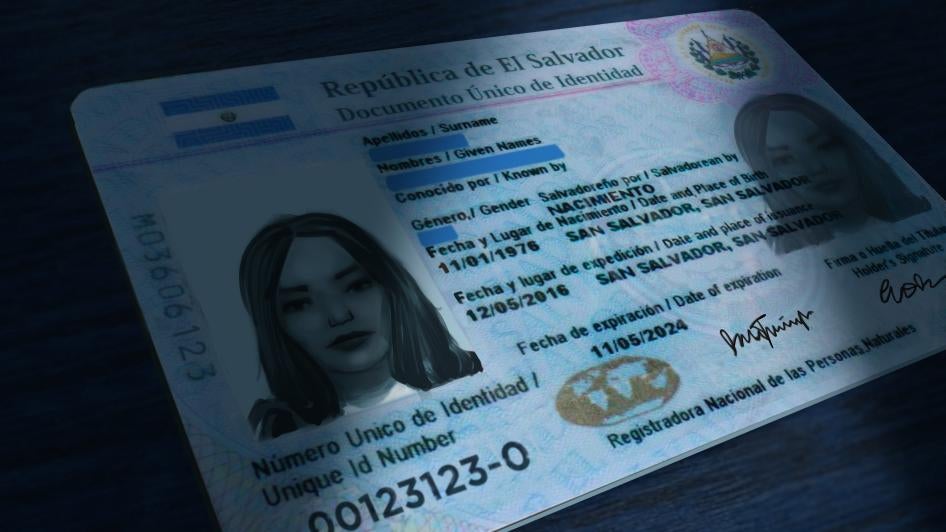
Transgender people in El Salvador experience significant discrimination in daily life because there is no procedure for legal gender recognition, Human Rights Watch and COMCAVIS TRANS said in a report released today. The Legislative Assembly should comply with a recent Supreme Court ruling and create a simple, efficient procedure to allow trans people to accurately reflect their self-declared gender identity on identity documents.
The 40-page report, “‘We Just Want to Live Our Lives’: El Salvador’s Need for Legal Gender Recognition,” exposes the pervasive discrimination that trans people experience due to a mismatch between their gender and their identity documents. The researchers focused on discrimination in four key areas: health, employment, voting, and banking. Human Rights Watch and COMCAVIS TRANS found that a lack of accurate documents, often in combination with anti-trans bias, seriously impedes the realization of these rights for trans people.
“El Salvador’s Supreme Court has made patently clear that trans people have a right to their identity, and now the Legislative Assembly should comply with the ruling and ensure the rights of trans people,” said Cristian González Cabrera, LGBT rights researcher at Human Rights Watch. “Without such legislation, trans people will continue to be disadvantaged in society, exacerbated by the generalized violence and discrimination they face in all aspects of life.”
In February 2022, the constitutional chamber of El Salvador’s Supreme Court ruled that the constitution prohibits discrimination based on gender identity and gave the legislature one year to create a procedure so that trans people can change their names in identity documents. To fully comply with international human rights standards and minimize discrimination, the Legislative Assembly should also allow trans people to modify the gender markers in their documents, via a simple, efficient, and inexpensive administrative procedure based on self-declaration.
To understand and document the harm related to a lack of legal gender recognition in El Salvador, Human Rights Watch and COMCAVIS TRANS interviewed 43 transgender people in San Salvador, San Luis Talpa, Santa Ana, Santa Tecla, La Unión, and Zacatecoluca, as well as remotely.
In August 2021, lawmakers, in collaboration with trans organizations, introduced a draft Gender Identity Law that would create a legal gender recognition procedure, but members of the parliamentary Committee on Women and Gender Equality have not yet discussed it. In May 2021, the same committee blocked a similar bill introduced in 2018 in the previous legislature, along with 29 other bills on various other subjects calling them “not in accordance with reality.” Trans activists sharply criticized the move.
Most trans people interviewed told researchers that they experienced discrimination when they visited public healthcare facilities. They said that clinic staff exposed them as transgender by calling out their legal names in waiting rooms, subjected them to onerous questioning about their identities, and humiliated and mocked them.
People interviewed also described their experiences seeking jobs, with potential employers realizing the interviewees were trans when they looked at their documents. In some cases, potential employers explicitly told trans people they would not be hired because they are transgender.
Most of the trans people interviewed said that they faced obstacles accessing bank deposits and remittances from family living abroad, with bank employees questioning their identity because it didn’t match their documents.
Many of the people interviewed said they faced no impediment to their right to vote in the February 2021 elections. But two trans women said that they were not allowed to vote because their identity document did not match their gender, while several others said they were allowed to vote but faced questioning that left them feeling humiliated.
A growing number of countries in Latin America have created procedures for legal gender recognition, such as Argentina, Chile, Colombia, Costa Rica, Mexico, and Uruguay, providing for simple administrative processes based on self-declaration. The president of neighboring Honduras recently announced that country would make the necessary reforms to allow for this right, in compliance with a 2021 Inter-American Court of Human Rights landmark ruling in a case involving Honduras.
In 2017, the Inter-American Court, which is charged with interpreting the American Convention on Human Rights, affirmed that states must establish simple and efficient legal gender recognition procedures based on self-identification, without invasive and stigmatizing requirements.
The International Covenant on Civil and Political Rights (ICCPR), to which El Salvador is also a party, provides for equal civil and political rights for all, everyone’s right to recognition before the law, and the right to privacy. The United Nations Human Rights Committee, in charge of interpreting the ICCPR, has called on governments to guarantee the rights of transgender people, including the right to legal recognition of their gender.
In 2017, the Salvadoran government acknowledged in a report that LGBT people face “torture, inhuman or degrading treatment, excessive use of force, illegal and arbitrary arrests and other forms of abuse, much of it committed even by public security agents.” A 2021 Human Rights Watch reportconfirmed the Salvadoran government’s assessment and found that social and economic marginalization further increase the risk of violence, making trans people especially vulnerable to abuse.
“El Salvador has a historic debt to the trans community, which the creation of a legal gender recognition procedure can begin to address,” said Bianka Rodríguez, executive director of COMCAVIS TRANS. “We will continue to be objects of violence and discrimination in society until our self-determination, dignity, and freedom are recognized.”
The soccer governing body, FIFA, knew this in 2010, when it awarded Qatar the football tournament, one of the world’s most widely viewed sporting events. FIFA’s own governing statutes, in force at the time, ban LGBT discrimination of the kind Qatar enshrines in its national laws, and FIFA’s due diligence to enforce its own policies around the world has been ineffective.
In 2016, FIFA adopted the United Nations Guiding Principles on Business and Human Rights, which require it to “avoid infringing on the human rights of others and address adverse human rights impacts.” It requires FIFA to take adequate measures for the “prevention, mitigation, and remediation” of human rights impacts.
To meet this responsibility for the Qatar World Cup, FIFA should have introduced concrete policies and a human rights due diligence process with regular reporting. But less than five months ahead of the football tournament, and despite FIFA’s recent celebration of Pride month, it is clear that it is failing to live up to its promises.
In March, an international coalition of groups noted FIFA’s and Qatar’s lack of progress in implementing civil society recommendations on LGBT rights made to the country’s Supreme Committee, including legal reform and free expression guarantees.
But despite Qatar’s dismal human rights record, including around the rights of migrant workers, severe restrictions on free expression and peaceful assembly, state policies that discriminate and facilitate violence against women, and a repressive environment against LGBT residents and visitors, Qatar remains the tournament host and has not changed its ways.
In 2020, Qatar assured prospective visitors that the kingdom will welcome LGBT visitors and that fans will be free to fly the rainbow flag at the games. But it begged the question: what about the rights of LGBT residents of Qatar?
Suggestions that Qatar should make an exception for outsiders are implicit reminders that Qatari authorities do not believe that its LGBT residents deserve basic rights. It risks erasing the lived repressive reality of LGBT residents of Qatar.
On May 20, at a news conference in Berlin, the Emir of Qatar, Sheikh Tamim bin Hamad al-Thani, responded to a question about the rights of LGBT visitors by repeating that, “We [Qatar] welcome everybody, but we also expect and want people to respect our culture.”
Qatar’s steady reference to “culture” to deny LGBT people’s rights deflects responsibility away from abusive state systems. “Culture” should not be used as a cover for discourse, practices, and legislation that have effectively excluded content related to sexual orientation and gender identity from the public sphere.
Qatari authorities censor mainstream media related to sexual orientation and gender identity. And people who have experienced government repression have told us that the government surveils and arrests LGBT people based on their online activity.
In April, Major General Abdulaziz Abdullah Al Ansari, a senior Interior Ministry official overseeing security for the football tournament, said that rainbow flags may be confiscated from prospective visitors “for their protection.” Al Ansari added: “Reserve the room together, sleep together — this is something that’s not in our concern.”
It certainly should be a concern. A recent survey by a Scandinavian media group showed that 3 of the 69 hotels on FIFA’s official list of recommended accommodations would deny entry to same-sex couples. It found that only 33 did not object to booking same-sex couples, while 20 others said that “they would accommodate same-sex couples as long as they did not publicly show that they were gay.” FIFA responded, warning that it will terminate any contracts with hotels that discriminated against same-sex couples.
Qatar’s hardening position may be connected to its improving geopolitical standing in light of Russia’s invasion of Ukraine, especially in Europe where Qatar’s liquefied natural gas is viewed as an alternative to Russian energy.
Journalists, human rights organizations, and football associations have widely criticized allowing Qatar to host the World Cup in the first place. FIFA has a responsibility to hold host authorities accountable to an international rights-respecting standard, including on LGBT rights.
Long-term legal reform should prioritize the realities of LGBT residents of Qatar, including by introducing legislation that protects against discrimination on the basis of sexual orientation and gender identity, online and offline. The Qatari government should repeal all laws that criminalize consensual sexual relations outside of marriage—before the World Cup begins this fall.
Lebanese authorities have unlawfully banned peaceful gatherings of lesbian, gay, bisexual, transgender and intersex (LGBTI) people, theCoalition to Defend Freedom of Expression in Lebanonsaid today. The ban violates LGBTI people’sconstitutional rights to equality, free expression, and free assembly and Lebanon’s obligations under international law and comes during an economic crisis and a worsening climate for the rights of LGBTI people in the country.
On June 24, 2022, Interior Minister Bassam al-Mawlawi sent an urgentletter to the directorates of Internal Security and General Security instructing them to ban any gatherings aimed at “promoting sexual perversion.” The letter includes vague and overly broad grounds, citing no legal basis, to determine that such gatherings violate “customs and traditions” and “principles of religion.” The interior minister said this decision was in response to calls to his ministry from religious groups to “reject the spread of this phenomenon.” The letter is understood to refer to gatherings by LGBTI groups, citing a message circulated on social media that detailed plans for activities organized by LGBTI activists.
“The Interior Ministry’s unlawful decision to ban events promoting LGBTI rights alarmingly indicates the deterioration of human rights and freedoms in Lebanon,” said Tarek Zeidan, executive director of Helem. “The ban tells LGBTI people that the government is willing to throw away their fundamental rights if others want them to.”
A wave of anti-LGBTI hate speech on social media byindividuals and somereligious groups, followed the ministry’s letter, includingincitement to violence, death threats, andcalls to ban the scheduled events by force. Several parliament members also made statements condemning the “promotion of homosexuality.” Activists who had planned and publicly announced a peaceful march on June 26 against the ban said they indefinitelypostponed the protest due to threats of violent counter-protests and fears that the security forces would not protect them.
The same day the ministry sent its letter, officers from General Security, Internal Security, and the Internal Security’s information branch questioned both LGBTI and feminist activists at a cultural center about a planned private seven-person workshop, telling them to cancel the event or apply for a permit. Since then, activists said, they have received repeated calls from the Internal Security’s information branch inviting them “for a chat over coffee,” which the activists declined, and indicating that they were monitoring the activists’ social media accounts.
Activists said the security forces attempted to justify their interference by claiming that the organizers “failed to obtain prior approval from the authorities,” citing the 1911 Lebanese Law on Public Meetings. However, that law only applies to public meetings. The security forces’ reasoning contravenesinternational guidance on freedom of assembly under human rights law, which excludes notification requirements where the impact of the gathering can be expected to be minimal, which would be the case for a small workshop held in private.
The interior ministry’s decision comes at a time when more than 80 percent of the country’s residents do not have access to basic rights, including health, education, and an adequate standard of living, according to the United Nations.
Since 2017, Lebanese security forces haveregularly interfered with human rights events related to gender and sexuality. On September 29, 2018, General Security forces raided and unlawfullyattempted to shut down an annual conference that advances LGBTI rights andissued entry bans for the non-Lebanese participants. In 2021, the State Council, the highest administrative court, annulled the entry bans and stated that participation in a conference related to LGBTI rights falls under freedom of expression guaranteed by article 13 of the Lebanese Constitution.
Such disruptions are contrary to Lebanese jurisprudence on same-sex conduct as well as international human rights law. In July 2018, a Lebanese appeals courtissued a groundbreaking ruling that same-sex conduct is not unlawful, dismissing charges brought against people under article 534 of the penal code, which criminalizes “any sexual intercourse contrary to the order of nature.” The judges denounced the law’s discriminatory intrusion into people’s private lives and declared that homosexuality is not “unnatural.” The ruling followed four judgments from lower courts since 2009 declining to convict gay and transgender people under article 534.
In 2021, during its Universal Periodic Review (UPR) at the UN Human Rights Council (UNHRC), Lebanon accepted recommendations to ensure the rights to peaceful assembly and expression for LGBTI people. Lebanon’s constitution guarantees freedom of expression “within the limits established by law.” The International Covenant on Civil and Political Rights, which Lebanon ratified in 1972, provides that everyone shall have the right to freedom of expression and freedom of assembly and association. The UN Human Rights Committee (HRC), which interprets the covenant, has madeclearthat it is prohibited to discriminate based on sexual orientation and gender identity in upholding any of the rights protected by the treaty, including freedom of expression, assembly, and association.
“The interior minister should immediately annul this discriminatory and unlawful decision and instruct the security agencies to robustly protect LGBTI people from violence and abuse,” Coalition Coordinator Najah Itani said. “Instead of using the rights of LGBTI people as a scapegoat, Lebanese authorities should be directing their attention to carrying out reforms to mitigate the impact of the economic crisis.”
Members of the coalition: Act for Human Rights (ALEF) Amnesty International Alternative Media Syndicate DARAJ Media Helem Human Rights Watch Lebanese Association for Democratic Elections (LADE) Legal Agenda Maharat Foundation Media Association for Peace (MAP) Samir Kassir Foundation SEEDS for Legal Initiatives Social Media Exchange (SMEX) The Lebanese Center for Human Rights (CLDH)
The High Court of Justice for Antigua and Barbuda struck down discriminatory legal provisions that criminalized same-sex relations in a landmark ruling on July 5, 2022, Human Rights Watch said today. The court found that such laws violated the right to liberty, protection of the law, freedom of expression, protection of personal privacy, and protection from discrimination.
Antigua and Barbuda’s Sexual Offences Act of 1995 sanctioned “buggery,” defined as “sexual intercourse per anum by a male person with a male person or by a male person with a female person,” with up to 15 years in prison. The act also penalized “serious indecency,” defined as “an act, other than sexual intercourse (whether natural or unnatural), by a person involving the use of genital organ for the purpose of arousing or gratifying sexual desire,” with up to five years’ imprisonment. “Serious indecency” explicitly excluded heterosexual sex.
“The High Court’s landmark ruling is a beacon for LGBT people in Antigua and Barbuda and other Caribbean nations, whose rights and freedoms have been stymied by these punitive laws,” said Cristian González Cabrera, LGBT rights researcher at Human Rights Watch. “Laws criminalizing same-sex conduct, which are in still in force in eight other Caribbean nations, reinforce and tacitly permit discrimination, violence, and prejudice against LGBT people.”
The High Court held that Antigua and Barbuda’s constitutional provision prohibiting sex discrimination also prohibits discrimination based on “gender identity, sexual character, and sexual orientation,” which may expand nondiscrimination protections for LGBT people in various areas of life.
The court’s decision follows civil society efforts to challenge anti-LGBT legislation in the Eastern Caribbean region, spearheaded in part by the Eastern Caribbean Alliance for Diversity and Equality(ECADE). Claimants in this case included a gay man, whom the court recognized as being affected by the discriminatory laws, and Women Against Rape, a civil society organization from Antigua and Barbuda that provides information, education, general support, and direct services to the LGBT community.
In the Caribbean, the Belize Supreme Court became the first Commonwealth Caribbean Court to hold that laws criminalizing same-sex intimacy were unconstitutional in 2018. Trinidad and Tobago’s High Court followed suit later that year.
However, eight countries in the Caribbean still have versions of “buggery” and “serious indecency” law on the books – relics of the British colonial period. Barbados, Dominica, Grenada, Guyana, Jamaica, Saint Kitts and Nevis, Saint Lucia, and Saint Vincent and the Grenadines are all are outliers in the Western Hemisphere, where most countries have decriminalized same-sex conduct. At least 68 countries in the world still criminalize gay sex.
In a December 2020 decision, the Inter-American Commission on Human Rights called on Jamaica to repeal laws prohibiting consensual same-sex conduct, but the country has yet to do so.
While laws criminalizing LGBT intimacy in the Caribbean are rarely enforced, they are broad in scope, are vaguely worded, and serve to legitimize bias and hostility toward LGBT people. A 2018 Human Rights Watch report documented discrimination, violence, and prejudice against LGBT people in seven island nations in the Eastern Caribbean, including Antigua and Barbuda.
Matters of sexual orientation and gender identity, including consensual sexual relations, are protected under the human right to privacy and the human right to be protected against arbitrary and unlawful interference with, or attacks on, one’s private and family life and one’s reputation or dignity. Criminalizing same-sex intimacy violates these international norms and standards, as affirmed by the UN independent expert on sexual orientation and gender identity.
The Organization of American States has urged countries “to adopt the necessary measures to prevent, punish, and eradicate” discrimination based on sexual orientation and gender identity. Core treaties like the International Covenant on Civil and Political Rights; the International Covenant on Economic, Social and Cultural Rights; the American Convention on Human Rights; and a variety of other international instruments have been interpreted by courts and authoritative treaty bodies to ban such discrimination.
“Countries in the Caribbean and beyond that still criminalize same-sex conduct should follow in the footsteps of Antigua and Barbuda and repeal all legislation that discriminates on the basis of sexual and gender identity,” González said. “The Americas should become a region where consensual intimacy and identities are never criminalized, and LGBT people enjoy the same respect for their rights as everyone else.”