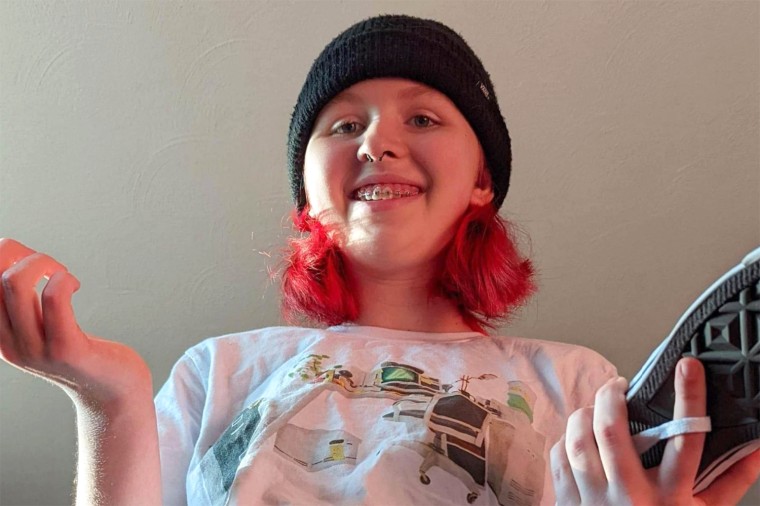
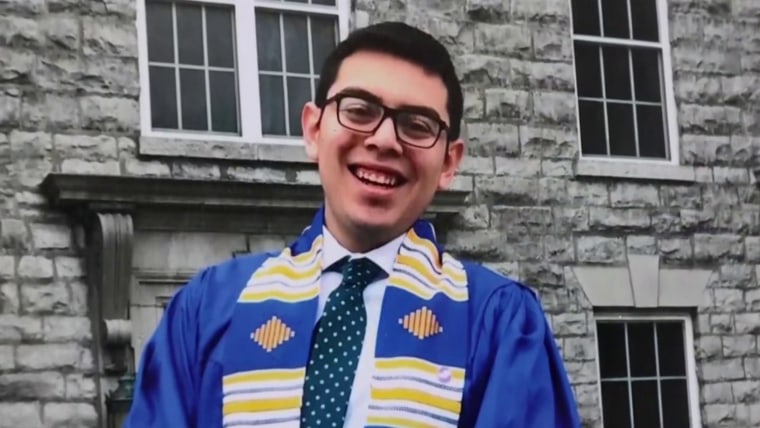
Many in the transgender community are mourning the death of British teenager Brianna Ghey, a trans girl who was stabbed to death Sunday.
Ghey, 16, was found dead in a park in Warrington, England — roughly 16 miles west of Manchester, England — with visible stab wounds, British authorities said. Police said they have arrested two teenagers, both 15 years old, on suspicion of the murder.
Ghey’s family released a statement through local authorities, saying Ghey was “a much loved” and “larger than life character who would leave a lasting impression on all that met her.”
“The loss of her young life has left a massive hole in our family, and we know that the teachers and her friends who were involved in her life will feel the same,” Ghey’s family wrote.
According to authorities, at this time there is no evidence to suggest Ghey’s murder was “hate-related.” This did little to quell discontent among trans activists regarding larger transphobic sentiments they say permeate throughout the U.K.
In a tweet that has accrued over 872,000 views as of Monday afternoon, a user slammed trans-exclusionary radical feminists, or TERFs, in the name of Ghey’s death.
The climate in the U.K. has grown increasingly hostile for trans people over the last few years. For example, J.K. Rowling, the author and creator of the Harry Potter saga, has become an outspoken critic of trans rights. In a nearly 4,000-word blog post in 2020, the bestselling author said that allowing trans women to use women’s bathrooms and changing rooms would make cisgender women “less safe” — an anti-trans talking point that has been debunked by research.
Simultaneously, in recent years trans activists have accused the British press of stoking or abating anti-trans sentiments.
Notably, the BBC was slammed by LGBTQ activists last year after publishing an article that many critics said painted all transgender women as sexual predators. The British broadcaster defended its piece — titled “We’re being pressured into sex by some trans women” — arguing that it went through a “rigorous editorial process.”
The outcry against the media grew louder among trans activists on Monday, after British newspaper The Times “deadnamed” Ghey, that is, it published the name Ghey went by prior to her transition.
“I will be writing to @thetimes and @IpsoNews regarding this,” British MP Charlotte Nichols wrote on Twitter on Monday, referring to The Times and British media regulator Independent Press Standards Organisation.
The Times did not immediately respond to NBC News’ request for comment. A spokesperson for IPSO declined to comment.
Following Ghey’s death on Sunday, some trans activists also chided the government for a lack of a nationwide law that would allow trans people in the U.K. to change their gender without a medical diagnosis of gender dysphoria, which is the distress caused by a sense of conflict between an individual’s sex assigned at birth and their gender identity. Last month, the British government blocked a similar “self-identify” law from being implemented in Scotland.
Throughout her 30 years as a teacher, Patricia Nicolari said she faced repeated harassment from students due to her sexuality. Some left notes on her desk asking if she is a lesbian. Others called her a “dyke” under their breaths. And one day, students carved “Lez” into her car.
“At the time, I remember thinking, ‘I’m going through so much anxiety as a teacher. I can’t imagine what our students go through questioning themselves and how unsafe it is for them to come out,’” Nicolari said.
Years later, Nicolari is done imagining. Instead, she’s taking action.
In September, she plans to open a private school in Connecticut that’s designed to be an oasis for LGBTQ students. PROUD Academy, which stands for Proudly Respecting Our Unique Differences Academy, will prioritize what Nicolari saw lacking in the U.S. education system: a safe, affirming and bully-free academic environment for LGBTQ students.
The private school’s curriculum aims to includeeducational basics like math and science classes, rigorous courses at theAdvanced Placement and honors levels, and lessons that touch upon LGBTQ history and literature. In addition to fostering a queer-friendly environment, Nicolari said she wants to hire mental health counselors who can cater to the specific challenges of these youths.
When Nicolari first set out to launch PROUD Academy, she planned to only enroll students in grades seven through 12. But since word about the school has spread, Nicolari said, there’s been a strong demand from parents with younger children as well, and she now plans to accommodate these families.
The interest in PROUD Academy has even crossed state borders. At least two families from out of state — including one from Florida, where LGBTQ issues have become a political lightning rod — plan to relocate to the solidly Democratic Connecticut and send their kids to the school this fall.
“Some parents are just saying, ‘I just want my child to be happy again,’” Nicolari said. “And if we can offer that to a family? That’d be priceless.”
While the school doesn’t have a set location yet, Nicolari said it will be in or near the city of New Haven, where Yale University is, and she hopes to start the school from grade three.
Research has long shown that LGBTQ youths suffer from disproportionate rates of bullying and mental health issues.
Just over 83% of LGBTQ students said they experienced in-person harassment or assault at school, according to a 2021 survey by GLSEN, an advocacy group that aims to end LGBTQ discrimination in education. And nearly 1 in 3 respondents said they missed at least one day of school in preceding month as a result of feeling unsafe.
A survey released last year by LGBTQ youth suicide prevention group The Trevor Project found that nearly half of queer youths in the United States had “seriously considered” suicide within the 12 months prior to being surveyed. Respondents who were accepted for their LGBTQ identities at home or at school were less likely to have attempted suicide in the prior year, the survey also showed.
Melissa Combs’ transgender son currently attends a middle school in Farmington, Connecticut. Combs, who is working as a fundraiser for PROUD Academy, said her son is regularly bullied for his gender identity and was physically assaulted last year during Pride Month in June.She said sending her son to a school like PROUD Academy will be “life-changing.”
“This means that I won’t knowingly send my child into a hostile environment every day,” Combs said. “It means that my kid will get to be who he is 100% of the time.”
PROUD Academy will join a handful of other LGBTQ-centered schools — including Alabama’s Magic City Acceptance Academy and Ohio’s Albert Einstein Academy — that have opened within the last handful of years, as the nation’s culture wars over LGBTQ issues have intensified.
Within the last year alone, school officials in states across the country have banned books about gay and trans experiences, removed LGBTQ-affirming posters and flags, and disbanded Gay-Straight Alliance clubs. Simultaneously, conservative lawmakers have introduced hundreds of anti-LGBTQ bills, with many seeking to limit the rights and representation of queer students in U.S. schools.
Of the more than 200 anti-LGBTQ bills introduced so far this year, about half restrict the rights of trans students in schools, according to the American Civil Liberties Union. Among the large cohort of bills is legislation that would force teachers to disclose trans students’ gender identities to their parents, restrict bathroom access for trans and nonbinary kids, and ban trans children from playing on sports teams that correspond with their gender identities.
Nicolari reasoned that the recent legislation explains why the majority of the roughly 30 parents who have inquired about enrollment at PROUD Academy have trans or nonbinary children.
“The political climate absolutely accelerated the need for a PROUD Academy and a need for PROUD Academies across the United States,” Nicolari said. “Our kids matter. Their lives matter. Their education matters. Their mental health matters. And we can’t have our students and families be bullied into being less than they’re capable of being.”
NFL Hall of Famer and NBC Sports analyst Tony Dungy is facing renewed criticism for his history of anti-LGBTQ statements after he tweeted an anti-transgender conspiracy theory last week.
Dungy shared a debunked myth to his nearly 950,000 followers that U.S. schools are providing litter boxes for students who identify as cats. His tweet was in response to an article regarding a Mississippi state bill that would mandate menstrual products in boys bathrooms.
“That’s nothing,” the former Indianapolis Colts head coach wrote in the since-deleted tweet. “Some school districts are putting litter boxes in the school bathrooms for students who identify as cats. Very important to address every student’s needs.”
Following widespread online criticism, Dungy apologized on Twitter later, writing: “I saw a tweet and I responded to it in the wrong way. As a Christian I should speak in love and in ways that are caring and helpful. I failed to do that and I am deeply sorry.”
Dungy’s apology did little to quell critics, who were quick to castigate the sports analyst — who was inducted into the Pro Football Hall of Fame in 2016 — for making repeated homophobic remarks over the years. (NBC Sports and NBC News are both owned by NBCUniversal.)
In an email to NBC News on Tuesday, an NBC Sports spokesperson stated: “NBC Sports does not support or condone the views expressed in the tweet and we have made that clear to Tony. Our company has long and proudly supported LGBTQ+ rights and works hard to ensure that all of our employees are seen, acknowledged, recognized and respected.”
Dungy could not be reached for comment.
Since Dungy’s controversial tweet,several op-eds published in prominent media outlets, including The Washington Post and The Guardian, have criticized the former NFL player and ex-Indianapolis Colts head coach, with the Post accusing him of using “religiosity as deodorant for a theme of intolerance.”
For followers of Dungy on Twitter, the cat litter tweet came as no surprise. NBC News found at least a dozen tweets from Dungy’s account, from 2012 to 2022, that are critical of same-sex marriage, homosexuality and the LGBTQ “lifestyle.”
“No one is saying God will only banish homosexuals to hell,” Dungy wrote on Twitter last June, which was LGBTQ Pride Month. “Jesus said anyone who is not born again by accepting Him as their savior will not enter the kingdom of heaven. That’s the criteria for avoiding hell.”
His remarks regarding gay and transgender people are not just relegated to social media. In 2014, he made headlines for controversial remarks on the drafting of the league’s first openly gay player, Michael Sam.
“I wouldn’t have taken him,’’ Dungy told the Tampa Tribune at the time. “Not because I don’t believe Michael Sam should have a chance to play, but I wouldn’t want to deal with all of it. It’s not going to be totally smooth . . . things will happen.’’
Cyd Zeigler, an LGBTQ advocate and a co-founder of the LGBTQ sports site Outsports.com, has been raising the alarm bells on Dungy’s anti-LGBTQ sentiments for years. Just ahead of NBC’s NFL playoffs coverage, in which Dungy had a major part, Zeigler published a lengthy op-ed on Outsports.com this month, outlining his nearly two-decade pattern of homophobia.
“I’ve never called for Tony Dungy to be fired or lose his job or his ability to provide for his family,” Zeigler said. “What I’ve always asked for is that he and NBC explain themselves.”
On Saturday, NBC Sports Chairman Pete Bevacqua and NBC Sports Executive Producer and President Sam Flood sent an email to staffers, which was shared with NBC News. In the memo, the executives acknowledged that Dungy shared a tweet that “perpetuated a debunked myth belittling to transgender people” and noted that the tweet was deleted and that Dungy apologized directly to his NBC Sports production team.
Shefik Macauley, an NBC Sports employee who is among the leaders of NBC Universal’s LGBTQ employee resource group, said NBC Sports’ response has been, overall, “favorable” to him and other LGBTQ staffers. However, he noted that he unsuccessfully tried to get the company to have Dungy apologize on air.
An NBC Sports spokesperson confirmed Macauley’s request for an on-air apology.
“Leadership agreed that the apology was best delivered on the platform where Tony had made the mistake — on Twitter,” the spokesperson said.
“If someone is empowered to be on camera and be the face of whatever platform that is, then we should be able to address it with that same audience that we’re empowering that person to be in front of,” Macauley said.
Zeigler said he isn’t convinced that Dungy’s anti-LGBTQ rhetoric would stop anytime soon.
The deadly attack at an LGBTQ club in Colorado last month — where a shooter turned the venue’s “Drag Divas” night into a massacre — has made an already harrowing year for drag performers worse. Eight of the country’s top drag queens told NBC News that the current environment has subdued their larger-than-life personas, prompting four of them to increase security at their events in recent weeks.
The Nov. 19 shooting at Colorado Springs’ sole LGBTQ nightclub, Club Q, left five people dead and 17 others shot and injured. The 22-year-old suspect is being held without bond on suspicion of murder and hate crimes, though a motive has not been shared by authorities.
This attack comes on the heels of widespread anti-LGBTQ rhetoric, over 100 protests and threats directed at drag events and several pieces of novel legislation seeking to restrict drag shows.
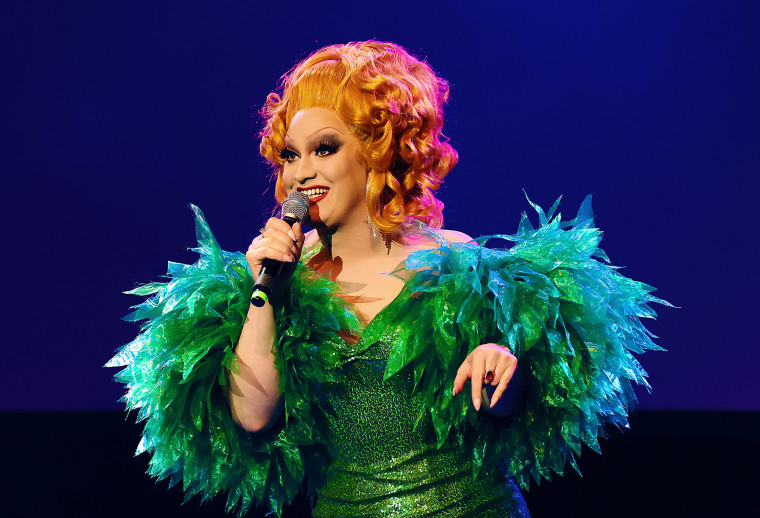
Drag queen Jinkx Monsoon.Curtis Brown
“We’re trying to smile and make people happy for the holidays, and in the back of our heads we’re thinking, ‘I hope I don’t get shot,’” said Jinkx Monsoon, winner of “RuPaul’s Drag Race” season five and “RuPaul’s Drag Race All Stars” season seven.
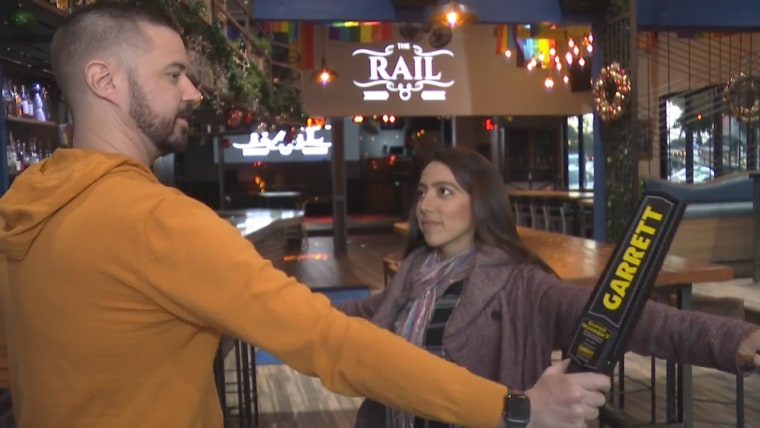
Monsoon, who is set to make her Broadway debut in “Chicago” next year, said that over the past several months, she had been using metal detectors and creating venue escape routes for her U.S. events. Since the Club Q shooting, however, she has hired armed guards and has started to ban re-entry following the start of her performances.
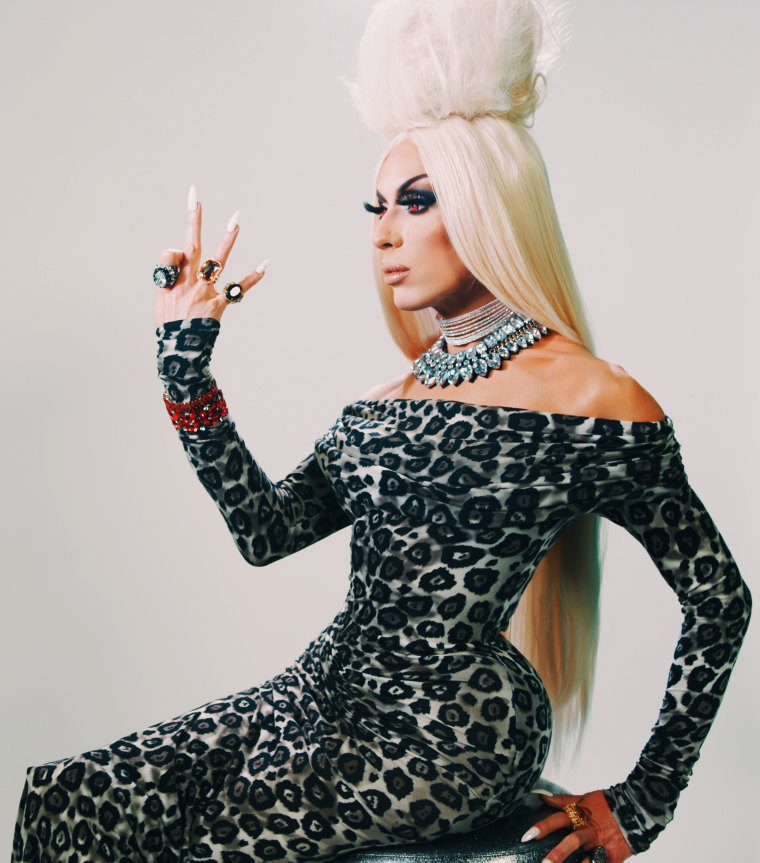
Drag superstar Alaska Thunderf— 5000, winner of “RuPaul’s Drag Race All Stars” season two and co-host of the popular drag podcast “Race Chaser,” said that in the days following the Club Q shooting, she sat down with her staff to plot out escape routes for each venue remaining on her current nationwide tour.
Drag queen Alaska.Ken Phillips Group
At a couple of her gigs this week, police squad cars havebeen stationed down the block from the venues, she added.
“It’s mortifying that we even have to think about these things for something as joyous and celebratory as a drag show,” Alaska said. “Why do we have to be worried about where the exits are and where a safe route to get to safety is? It’s terrifying, but that’s the reality of it.”
Bigoted rhetoric and violence
The Club Q shooting, while the most high-profile and deadly attack affecting the LGBTQ community this year, followed a string of attacks on the queer community — particularly transgender people and drag performers (many of whom identify as gay men or trans women offstage).
For months, many right-wing lawmakers, media personalities and activists have accused LGBTQ people — and drag performers in particular — of “grooming,” “indoctrinating” and “sexualizing” children.
The word “grooming” has long been associated with mischaracterizing LGBTQ people, particularly gay men and transgender women, as child sex abusers, and advocates have warned recently that its resurgence could lead to real-world violence.
The day after Florida Gov. Ron DeSantis, a Republican, signed the Parental Rights in Education law — or what critics have dubbed the “Don’t Say Gay” bill — the word “grooming” was mentioned on Twitter nearly 8,000 times, compared with just 40 times on the first day of this year, according to Alejandra Caraballo, a clinical instructor at Harvard Law School’s Cyberlaw Clinic.
Even in the days following the Colorado Springs shooting, some right-wing figures doubled down on the rhetoric.
Last week, Fox News host Tucker Carlson was joined by the leader of Gays Against Groomers, a self-described “coalition of gays against the sexualization, indoctrination and medicalization of children,”who said shootings would continue to happen “until we end this evil agenda that is attacking children.” Neither a representative for Fox News nor Gays Against Groomers immediately responded to NBC News’ requests for comment.
Monsoon told NBC News that online trolls have flooded two of her old music videos over the past two weeks with disparaging comments accusing drag queens of sexualizing children. The music videos featured hired teen and child actors, dancing innocently and attending a backyard birthday party.
“Because they can’t call us ‘faggots,’ because we have enough support behind us, they call us ‘groomers’ and ‘pedophiles’ instead,” Monsoon said.
Aside from the surge in trope-laced rhetoric, LGBTQ Americans have also been subjected to threats or acts of violence.
A report released by LGBTQ media advocacy group GLAAD days after the Club Q shooting found that drag events faced at least 124 protests and significant threats in 47 states so far this year. In Tulsa, Oklahoma, for example, a doughnut shop was vandalized and firebombed by a Molotov cocktail in two separate incidents after it hosted a drag event in October, according to KFOR and KJRH, NBC affiliates in Oklahoma.
Yvie Oddly, winner of “RuPaul’s Drag Race” season 11, said her management company sent her and other drag performers an email Tuesday, saying they had requested extra security staff at their shows and will have the security teams check patrons for guns.
“It is unfortunate that the world has come to this, but your safety and that of the communities you visit is the priority,” the email, which Oddly shared with NBC News, says.
On Wednesday, the Department of Homeland Security in a terrorism advisory bulletin raised concerns about potential threats to the LGBTQ, Jewish and migrant communities from violent extremists inside the U.S. The bulletin said some extremists have been inspired by recent attacks, including the Colorado Springs shooting.
An old art form meets new opponents
Drag has been an art form since at least the 16th century, and in its modern form, with individual performers building up their own fan bases, since the early 1900s. However, the art form has only recently been thrust into the center of the latest American culture war.
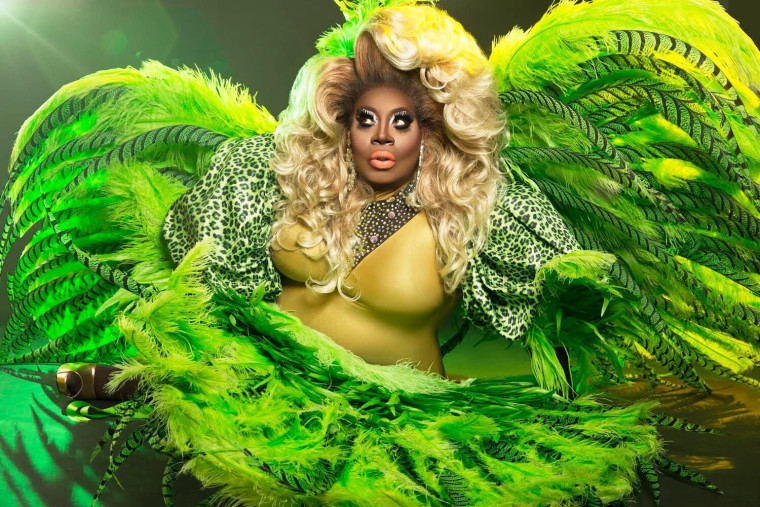
Latrice Royale, who has appeared on both “RuPaul’s Drag Race” and “RuPaul’s Drag Race All Stars,” reasoned that the backlash is due to the greater visibility of drag brought on by the global success of the RuPaul-led competition shows, which have spinoffs in at least 16 other countries. Since it launched in 2009, “RuPaul’s Drag Race” has become a global phenomenon, giving mainstream legitimacy to a nightclub art form and transforming small-town performers into worldwide celebrities.
Latrice Royale.Handout Photo
“Back in the day, before drag was so mainstream and on every television channel and all of the media and daytime, we were underground,” Royale, 50, who has been doing drag for over 30 years, said. “Everything happened at night, at nightclubs, in the wee hours of the morning. It was not accessible to the mainstream of the world.”
Drag’s move from queer nightclubs to prime-time television brought it — and its over-the-top characters and costumes — legions of new fans, including children.
“I don’t like parents bringing their kids to meet me, because I don’t want to be seen next to a kid, because I don’t want to be labeled a pedophile,” Monsoon said. “You start to mistrust yourself for no other reason than this language is just being put on you constantly. It is dehumanizing. It makes you feel insane to just be yourself.”
So far this year, at least eight bills have been proposed seeking to restrict drag, according to GLAAD. Last month, for example, a bill was introduced in Tennessee that would ban drag queens from performing on public or private property in the presence of a minor. If signed into law, repeat offenders would be charged with a felony and could face up to six years in prison.
At least two members of Congress, Reps. Marjorie Taylor Greene of Georgia and Lauren Boebert of Colorado, have spoken out against children being at drag performances, with Greene saying, in part, “It should be illegal to take children into Drag Queen shows.” Neither Greene nor Boebert immediately responded to NBC News’ requests for comment.
Shea Coulee.Handout photo
The eight drag queens who spoke with NBC News all agreed that not every drag performance is appropriate for minors — just like not every television show or movie is meant for children. These performers said when their shows incorporate adult material, they include parental advisory warnings on their tickets and show advertisements. However, they added that because not all drag is appropriate for children does not mean it should be banned entirely or face draconian restrictions.
“People need to look at us like they look at any other profession or art forms,” Oddly said. “There are some things that are not going to be made for the youth, but that does not mean that all of us are out here, like people seem to think we are, trying to ‘convert’ or ‘groom’ or whatever.”
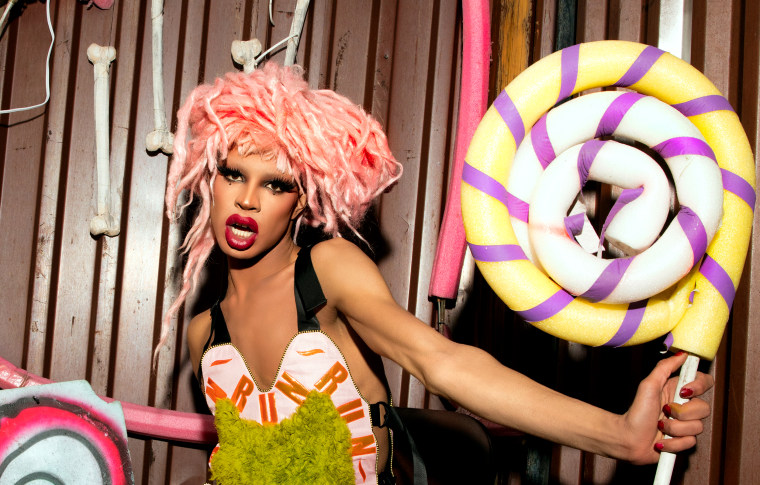
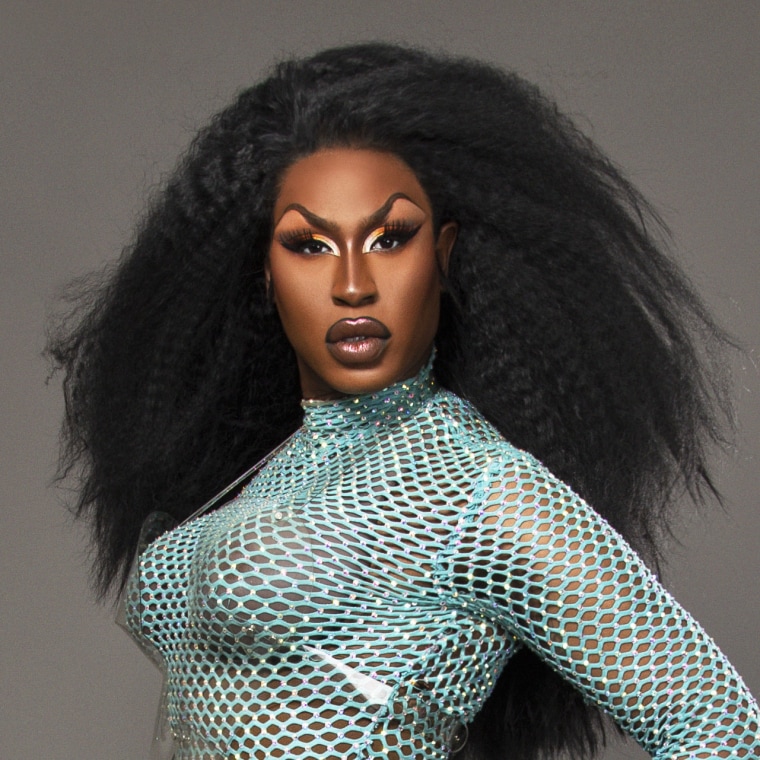
Despite the challenges for the drag industry in recent months, Shea Couleé, who won the fifth season of “RuPaul’s Drag Race All Stars,” cautioned young performers not to live in fear.
“You can’t shake a b—- that’s not afraid of you,” Couleé said. “I can get maybe a disapproving glance, but the moment I look them deadass in the eye and make eye contact, who do you think is the one looking down at the ground first? Them.”
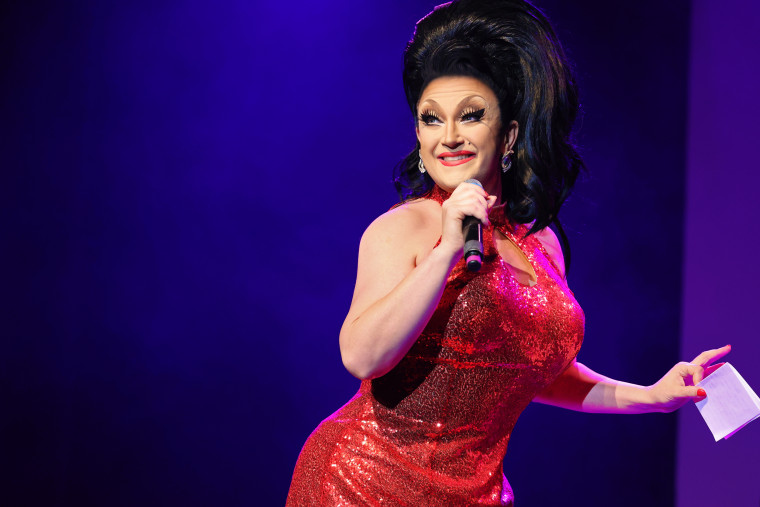
BenDeLaCreme, who appeared on the sixth season of “RuPaul’s Drag Race” and the third season of “RuPaul’s Drag Race All Stars,” shared a similar sentiment.
The cases were weeks apart and eerily similar: Two young men at popular New York City gay bars. They each left with at least one mysterious person. They were both found dead. Both of their bank accounts were drained.
And they may not be the only ones.
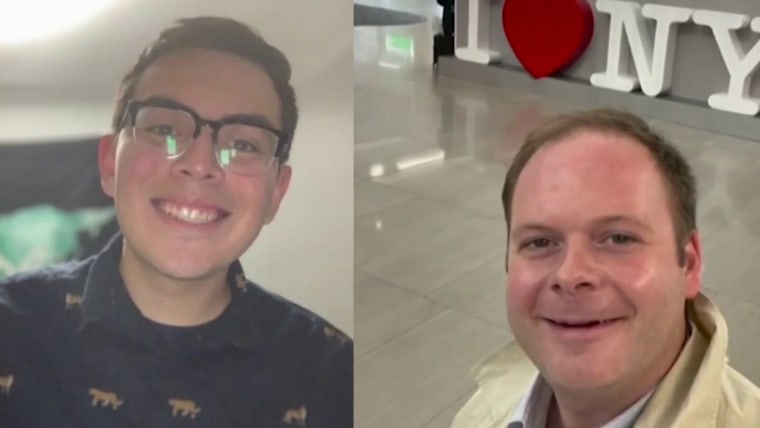
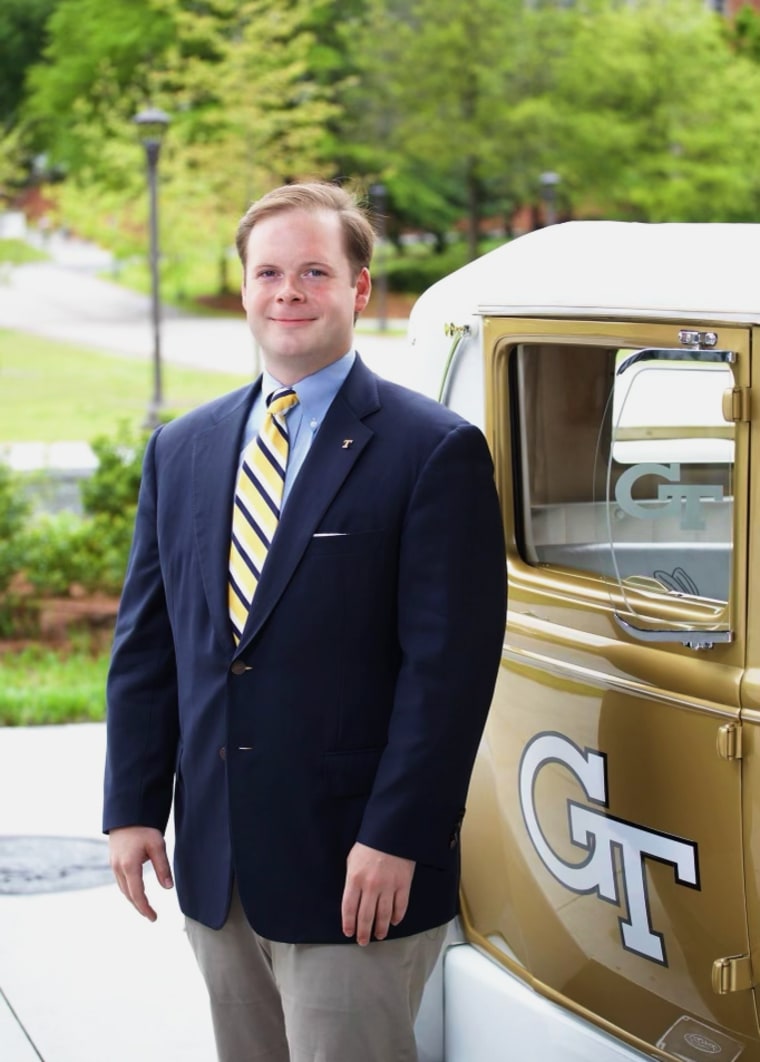
More gay New Yorkers are coming forward for the first time with accounts that share notable similarities to the unexplained deaths this spring of Julio Ramirez, 25, a social worker, and John Umberger, 33, a political consultant.
The biggest difference so far: They survived.
NBC News spoke to two people who described harrowing experiences that seem to broadly fit the pattern of what happened to Ramirez and Umberger.
“It sounded so eerily similar to what happened to me,” Tyler Burt, 27, said about Ramirez’s death. “I was like, ‘I’m lucky to be alive.’”
Burt and a student at New York University believe they fell victim to a larger string of robberies and assaults that police are investigating. Their stories also mirror a troubling detail that Ramirez’s and Umberger’s families have only suspected — that they felt like they were drugged before they were robbed.
The New York City Police Department said that the city’s medical examiner is still determining the official causes of Ramirez’s and Umberger’s deaths. There have been no arrests. Police would not confirm whether Burt’s or the student’s cases were a part of their ongoing investigation.
John Umberger was found dead in New York City in May and his bank accounts were drained.Linda Clary
The NYPD provided a statement on Friday reiterating that police and the district attorney’s office are investigating “several incidents where individuals have been victims to either robberies or assault,” in which some but not all are members of the LGBTQ community. NBC News could not verify that the men’s experiences were connected to the string of robberies and assaults.
Meanwhile, the gay community in the country’s largest LGBTQ city awaits answers.
John Pederson, 55, says he was robbed in similar circumstances in 2018 and, combined with the recent reports, the experience has left him shaken.
“Part of it’s like, am I crazy?” Pederson said. “Women are so aware of this as a thing that happens. I don’t think gay men would ever suspect that this could be done to them.”
No memories and emptied bank accounts
In December, Burt — who reached out to NBC News on social media after recent reports regarding the two deaths — was walking home from a night out with friends when he stopped at The Boiler Room, a popular gay bar in Manhattan’s East Village, for one last drink by himself. Sitting alone at the bar was the last thing Burt says he remembers before waking up the next morning in his apartment confused.
Burt said he woke up lying on top of his bed with all of his clothes and shoes on and his phone missing. He then noticed that his personal laptop, iPad, headphones and wallet were also missing. Using his work laptop, he discovered that was just the beginning of what would amount to roughly $15,000 of stolen belongings and funds. The person or people who robbed him accessed his checking account, overdrafting it to pay off his credit cards and then using them to buy three new iPhones that morning.
Burt, who reported the incident to the police the day after the encounter, said he believes an assailant used his unconscious face to unlock his iPhone and bank accounts using the Face ID feature. He said he believes that the person or people who robbed him also slipped him some sort of drug, knocking him unconscious and causing him to black out.
Tyler Burt said he was robbed of $15,000 worth of belongings and funds after he blacked out.
“I don’t think I was drinking nearly enough to have zero recollection. Also, that’s never happened to me before,” Burt said, adding that he had a total of three to four drinks over the course of four hours. “I’ll go out and I’ll get home and be like, ‘Oh, gosh, I don’t remember getting home,’ or, ‘I don’t remember leaving,’ or something like that because I drank a lot, but I don’t remember anything. I don’t remember a single thing after I had that drink, which has just never happened to me in my life before.”
The father of a New York University student, who spoke to NBC News on the condition that his name not be published out of fear of putting his son in danger, said that his 21-year-old son also believes he was targeted by men with similar motives on April 8, less than two weeks before Ramirez’s death.
He said that his son, who also requested that his name not be published, told him he was leaving The Q bar in Hell’s Kitchen, the same bar Umberger was last seen at, with three men he had just met that night. The four of them, he said, had planned to go back to his son’s apartment to meet a friend who was already there. The man — who connected with NBC News through Linda Clary, Umberger’s mother — said his son and his son’s friend believe they were drugged at some point after returning to the apartment with the three unidentified men. The father said that his son and his son’s friend believe they were drugged because of the sudden nature of their blackouts and loss of memory coupled with the robbery.
When the two gained consciousness, the father said, his son’s phone was missing, his bank accounts were emptied using cash apps and his credit cards were maxed out. In total, the man said, about $5,000 worth of cash and items were stolen from his son. Similarly to Burt, the college student’s father said his son believes the assailants used his unconscious face to unlock his iPhone and bank accounts using Face ID. His son’s friend, he said, had her wallet stolen. The father of the college student said that his son filed a police report and that his case is still being investigated. NBC News was not able to independently verify the son’s account.
Pederson, a freelance computer consultant who reached out to NBC News on social media after recent reports regarding the two deaths, said that on Nov. 16, 2018, he also had a similar encounter. Pederson said he was heading home from Tribeca after attending a large private party, where he had three to four drinks over several hours. While alone and hailing a cab, he said he suddenly and uncharacteristically blacked out on the street corner and was robbed.
He regained consciousness momentarily, waking up to a man shaking him violently in the back seat of an unfamiliar car, yelling, “What’s the PIN number? What’s the PIN number? If you just give us the PIN number, we’ll take you home,” he said. The next thing he remembers is being dropped off in front of his apartment building before waking up the next morning with a bloodied face and his bank account wiped out.
Pederson said that he was not feeling heavily intoxicated before abruptly blacking out, nor did he have a hangover the next morning, which he said is common for him on the rare occasions he drinks too much alcohol.
‘You would not want to wish this on anyone’
Although traumatized, Burt, the father of the NYU student and Pederson said they look back on the incidents today with gratitude that they weren’t fatal.
It took Burt about a month after the encounter before he felt comfortable sleeping in his apartment again, he said, adding that the incident prompted him to go to therapy.
“It took me a while to really process what had happened to me and how terrifying it was,” Burt said. “And then seeing stuff that’s come out — like that kid who died in May — that really could have been me. It was just one small move away from that happening to me.”
“There’s a lot of ‘what ifs,’ that I’ve gone through in my head, which is, you know, not fun to think about,” he added.
Less than two weeks after the college student’s alleged encounter in early April, Ramirez was found dead in the back of a taxi. His body was discovered an hour after he was seen leaving the Ritz Bar and Lounge with three unidentified men, according to the NYPD. His family previously told NBC News that approximately $20,000 had been drained from his bank accounts.
Linda Clary is pressing the NYPD to further investigate the death of her son, John Umberger.Linda Clary
Roughly a month later, Umberger was found dead after he and two unidentified men left another popular Hell’s Kitchen gay bar, The Q. The unidentified men transferred about $20,000 out of Umberger’s bank accounts and maxed out his credit cards, according to Clary, Umberger’s mother.
“The pain and sorrow and horror is like nothing else,” Clary said. “You would not want to wish this on anyone.”
Burt, Pederson, Clary and the college student’s father all said they felt the NYPD did not initially take their cases as seriously as they had hoped and were, at times, unresponsive.
“It seemed like he was being reluctant to do anything that required a little bit of extra work,” Burt said of the detective on his case. “It just felt like it was not a priority at all and I was the one following up, bugging this guy, time and time again and I was just getting nowhere.”
The father of the college student who was allegedly robbed said that police stopped returning his phone calls until recently, months after the deaths of Ramirez and Umberger.
New York City Council member Erik Bottcher, whose district includes Hell’s Kitchen, told NBC News in a phone call that his office has been in contact with the NYPD and the Manhattan district attorney’s office on a weekly basis since reports surfaced in May about Ramirez’s death. His office has sought to ensure that appropriate resources have been dedicated to the investigation, he added.
“It’s horrifying and infuriating that people are being preyed upon and victimized in New York City in this way,” Bottcher said. “Whoever’s doing this needs to be brought to justice.”
While the NYPD only confirmed it was looking into “several” other potentially related incidents, Clary said she was told there were at least a dozen other cases included in the investigation. She spoke highly of the current detective on her son’s investigation. But her message to the police and public officials was clear: “People, do your job.”
“Thank you for the work you do,” she added, but “I need you to work harder, and I need you to do more for the sake of your great city and for the sake of citizens that are counting on you.”
The New York City Police Department confirmed Monday that it is investigating a string of robberies and assaults that may be connected to the deaths of two gay men earlier this year shortly after they left gay bars in Manhattan’s Hell’s Kitchen neighborhood.
In an emailed statement, Julian Phillips, a spokesperson for the NYPD’s Office of the Deputy Commissioner, Public Information, confirmed that the deaths of Julio Ramirez and John Umberger are being investigated among “several incidents where individuals have been victims of either robberies or assault.” No arrests have been made in Umberger’s death, which remains under NYPD investigation, according to a department official.
In April, Ramirez, a 25-year-old social worker, was found dead in the back of a taxi an hour after being seen leaving the Ritz Bar and Lounge with three unidentified men. His family previously told NBC News that approximately $20,000 had been drained from his bank accounts and that they believed he was drugged.
About a month later, Umberger, a 33-year-old political consultant, was found dead after he and two unidentified men left another popular Hell’s Kitchen gay bar, the Q. The unidentified men transferred about $20,000 out of Umberger’s bank accounts and maxed out his credit cards, according to Umberger’s mother, Linda Clary, who also believes her son was drugged.
Get the Morning Rundown
Get a head start on the morning’s top stories.SIGN UPTHIS SITE IS PROTECTED BY RECAPTCHA PRIVACY POLICY | TERMS OF SERVICE
The NYPD spokesperson said the city’s medical examiner is still determining the official causes of deaths for Ramirez and Umberger and added that some, though not all, of the victims in their investigation are believed to be part of the LGBTQ community.
Over the weekend, New York City Council member Erik Bottcher, who represents a swath of Manhattan’s West Side that includes Hell’s Kitchen, released a statement on Instagram saying that his office has been in contact with the NYPD and the New York County District Attorney’s Office regarding the investigation.
“The monsters responsible for these crimes need to be apprehended and prosecuted to the fullest extent of the law,” he wrote, adding that “significant resources” are being dedicated to the case.
A representative for Bottcher’s office did not immediately provide a comment. A representative for the New York County District Attorney’s Office did not respond to a request for comment.
Democrat Becca Balint is the winner of Vermont’s at-large Congressional District race, NBC News projected. She is the first woman and the first LGBTQ person elected to Congress from the state.
With 72% of precincts reporting Tuesday night, Balint had 61.5%, while her Republican opponent, Liam Madden, had 28.8%.
On Tuesday evening, Balint thanked her supporters in an Instagram post with a caption saying: “Today, we reaffirmed that Vermont, and this nation, is still a place where anything is possible. We’re still capable of change and progress.”
She added, “Tonight, after 231 years, Vermonters are sending a woman and openly gay person to Congress for the first time.”
Balint’s win against Madden, an Iraq War veteran, was widely expected. Vermont has not sent a Republican to Congress since it re-elected former Sen. Jim Jeffords in 2000.
Madden took to Twitter on Tuesday evening to congratulate Balint on her historic feat.
“Congratulations to @BeccaBalintVT for being Vermont’s first woman Congressional Representative,” he wrote. “Well Done.”
Although it was anticipated, Balint’s win was long awaited for women’s rights advocates around the country. Her victory ended Vermont’s status as the only state never to have sent a woman to Congress.
“The future of LGBTQ equality and women’s rights were on the ballot — and Vermonters delivered tonight,” Annise Parker, the president and CEO of the LGBTQ Victory Fund, which works to increase the number of LGBTQ elected officials across the U.S., said in a statement. “For nearly a decade, Becca led efforts to pass meaningful legislation to increase fairness and equity within Vermont. Now, she is ready to do the same in Congress.”
Democrat Maura Healey is the winner of Massachusetts’ gubernatorial race, defeating Republican Geoff Diehl and making history as the first out lesbian to be elected governor, NBC News projected.
Healey is the state’s attorney general, and Diehl is a former state representative who co-chaired former President Donald Trump’s 2016 campaign in Massachusetts.
Addressing her supporters at a victory rally in Boston on Tuesday evening, Healey dedicated her win to “every little girl and every young LGBTQ person out there.”
“I hope tonight shows you that you can be whatever, whoever you want to be,” she said to a roaring crowd. “And nothing and no one can ever get in your way except your own imagination, and that’s not going to happen.”
Healey’s win was a long-awaited victory for LGBTQ advocates who have been trying to elect a lesbian to the highest office in state government for decades.
Annise Parker, the president and CEO of the LGBTQ Victory Fund, which helps queer candidates get elected to public office, said Healey’s historic win will help send a message that “LGBTQ people have a place in American society and can become respected public leaders.”
“We are confident that under Maura’s leadership, Massachusetts will reach new heights as one of the most inclusive states in the country,” Parker said in a statement.
Healey will follow two other out LGBTQ Democrats who have been elected to lead their states: Oregon Gov. Kate Brown, who is bisexual, became the first openly LGBTQ person to be elected governor in 2015, and Colorado Gov. Jared Polis became the first openly gay man to be elected governor in 2018. (Former New Jersey Gov. Jim McGreevey was not out when he was elected to office in 2001; he came out as gay in his 2004 resignation speech.)
One other LGBTQ Democrat, out lesbian Tina Kotek, could join Healey in her history-making feat. Kotek is in a competitive three-way gubernatorial race in Oregon.
Healey’s victory with running mate Kim Driscoll will also mark the first time in U.S. history that women will serve as both governor and lieutenant governor of a state, according to the Center for American Women and Politics at Rutgers University. Sarah Huckabee Sanders, the projected winner of Arkansas’ gubernatorial race, is poised to join Healey in this historic feat, as the two candidates in Arkansas’ lieutenant governor’s race are both women.
Healey is no stranger to shattering glass ceilings for LGBTQ Americans.
In 2009, Healey led the country’s first successful challenge to the Defense of Marriage Act, a 1996 law that prohibited federal recognition of same-sex marriages. And in 2014, she broke barriers again, becoming the country’s first out lesbian to be elected state attorney general.
In the last leg of what has been a heated midterm election cycle, some conservative groups have ramped up misleading or inflammatory campaign ads targeting transgender rights, which have become an increasingly partisan and divisive issue.
A radio ad from America First Legal, a conservative group founded by Stephen Miller, who served as a top adviser to former President Donald Trump, accused President Joe Biden and “progressive leaders” of pushing children to take hormones and undergo surgery “to remove their breasts and genitals.”
“Not long ago, everyone knew that you’re either born a boy or a girl,” the narrator says over ominous music. “Not anymore. The Biden administration’s pushing radical gender experiments on children.”
America First Legal did not respond to NBC News’ request for comment.
Within the last several weeks, the American Principles Project aired campaign ads in six battleground states, the group wrote on Twitter. One of the TV ads, which it released in Arizona, accuses Sen. Mark Kelly, an Arizona Democrat, and President Biden of “pushing dangerous transgender drugs and surgeries on kids — taking away parental rights.” Simultaneously, the group launched an ad in Wisconsin accusing Democratic candidates of supporting legislation “that would destroy girls’ sports.”
Terry Schilling, president of American Principles Project PAC, told NBC News that the “explosion of gender ideology” is “one of the biggest threats” to American families.
“Our goal with our ads is to ensure American voters across the political spectrum understand what’s really happening on these issues (despite the media gaslighting) and that Democrats like Joe Biden and his allies are responsible for it,” he said in an email.
Citizens for Sanity, another group formed by former Trump administration advisers, has released ads addressing immigration, criminal justice, gender identity and other issues in such battleground states as Nevada, Arizona and Georgia. One of its ads accuses Biden and Democrats of telling children “boys are girls and girls are boys” and promoting “surgery to remove body parts.”
Citizens for Sanity did not respond to NBC News’ request for comment.
The Human Rights Campaign, the country’s largest LGBTQ advocacy group, estimates these groups have spent at least $50 million on such ads across at least 25 states, though NBC News could not independently confirm this finding.
Transgender advocates have slammed the advertisements as misleading and dangerous, and have pointed to the medical community’s support of gender-affirming care for trans youths.
Major medical associations, including the American Medical Association, the American Academy of Pediatrics and the American Psychological Association, have supported such care for transgender minors. In a June 2021 statement, the American Medical Association reinforced its opposition to restrictions on transgender medical care and denounced “governmental intrusion into the practice of medicine that is detrimental to the health of transgender and gender-diverse children and adults.”
Adolescents generally cannot receive gender-affirming surgery until they are 18, but in rare circumstances some surgeons may perform a double mastectomy, also known as top surgery, on teens under 18 “who are able to fully understand the risks and benefits,” according to the Endocrine Society. The effects of a more common treatment for transgender minors, puberty blockers, are reversible, the society says.
Justin Unga, the director of strategic initiatives for the Human Rights Campaign, said ads targeting transgender rights can have real-world ramifications.
“The lies that they’re telling really illustrate the sickening length that some people will go to animate the most extreme and dangerous elements of their base regardless of the consequences,” Unga told NBC News. “And we have seen what these consequences are.”
The ad blitz in the last leg of the 2022 election cycle comes as transgender issues — and to an extent LGBTQ issues more broadly — have increasingly become a wedge issue in the nation’s culture wars.
A record 346 anti-LGBTQ bills have been filed in state legislatures around the country this year, including 145 that restrict transgender rights, according to the Human Rights Campaign. Many of the bills aim to restrict gender-affirming care for trans minors; prohibit trans girls and women from competing on girls’ sports teams in school; and bar the instruction of topics relating to sexual orientation or gender identity at school. This year alone, at least12 bills restricting transgender rights have been signed into law, according to the American Civil Liberties Union. And on Friday, two Florida medical boards effectively banned gender-affirming care for trans minors who are not already undergoing treatment.
Homophobic and transphobic slurs and rhetoric have also had a resurgence within the nation’s political discourse this year. Conservative lawmakers and pundits have repeatedly accused supporters of LGBTQ rights, critics of legislation like Florida’s Parental Rights in Education law (dubbed the “Don’t Say Gay” law) and drag performers of trying to “groom” or “indoctrinate” children.
The word “grooming” — which has appeared in several of the recent election ads — has long been associated with mischaracterizing LGBTQ people, particularly gay men and transgender women, as child sex abusers. On March 29, the day after Florida’s pejoratively dubbed Don’t Say Gay bill was signed into law, the word “grooming” was mentioned on Twitter 7,959 times, compared with 40 times on the first day of this year, according to data pulled from Twitter by Alejandra Caraballo, a clinical instructor at Harvard Law School’s Cyberlaw Clinic.
The record-number of bills and surge of charged rhetoric has also coincided with a wave of acts and threats of violence against the LGBTQ community across the country. More than 1,300 hate-based incidents against Americans were motivated by their sexual orientation or gender identity in 2020, accounting for 16% of all biased-fueled encounters that year, according to the FBI’s most recent hate crime data.
“These targeted ads are taking place in swing states. Even convincing a relatively small number of voters to show up could be enough for some elections to change the results.”
GABRIELE MAGNI , LOYOLA MARYMOUNT UNIVERSITY
Perhaps most notably so far this year, police arrested 31 people at an annual LGBTQ Pride event in Coeur d’Alene, Idaho, in June on charges of suspicion of conspiracy to riot. Those who were arrested went to the event with gas masks and shields. And just last month, a man lit and threw a molotov cocktail inside a doughnut shop in Tulsa, Oklahoma, after the shop hosted a drag event.
Gillian Branstetter, a communications strategist at the American Civil Liberties Union, said the ads are meant to boost turnout of conservative voters, particularly in battleground states.
“Broadly speaking, rhetoric and messaging against transgender rights are aimed at people who are already convinced that transgender people are a great evil to society,” she said. “All these ads are meant to do is to activate them and remind them to go vote on Tuesday.”
Gabriele Magni, an assistant professor of political science at Loyola Marymount University in Los Angeles and director of the school’s LGBTQ Politics Research Initiative, said that although the ads are polarizing for most voters, they could be quite effective.
“These targeted ads are taking place in swing states,” Magni said. “Even convincing a relatively small number of voters to show up could be enough for some elections to change the results.”
A poll released by the Pew Research Center in June found that a rising share of Americans say a person’s gender is determined by their sex assigned at birth. The survey of more than 10,000 adults, which was conducted from May 16 to 22, found that 60% of respondents said a person’s gender is determined at birth, up from 56% in 2021 and 54% in 2017.
The same poll also highlighted the country’s partisan divide over gender-affirming care, specifically, 72% of Republicans surveyed said it should be illegal for medical providers to provide this type of treatment to minors, compared with 26% of Democrats.
Many of the recent campaign ads targeting transgender rights were directed at Black and Latino voters, according to the Human Rights Campaign. Unga said this was a tactic to divide groups of voters who traditionally share common goals of achieving equality.
“This practice of ‘othering,’ of weaponizing marginalized people, feels all too familiar in these political spaces,” he said. “My warning for anyone who tries it is that you’re playing with fire.”
“Successful political movements,” he said, “are about addition, not division.”
Branstetter said the ads underscore the importance of turning out voters who are in favor of transgender rights.
“If trans people are going to be a priority for our enemies, we absolutely have to be a priority for our friends,” she said.
In the fews days since Elon Musk closed his deal to buy Twitter, far-right users have started to celebrate what they hope will be the ability to freely use homophobic and transphobic rhetoric and make threats on the social media platform.
On Saturday, former UFC fighter Jake Shields, who has over 340,000 Twitter followers, appeared to be testing the boundaries of the company’s moderation apparatus by posting a photo of a drag queen smiling at a young drag performer with the caption, “This is a groomer.”
Shields added, “I was suspended for this exact tweet a month ago so we will see if Twitter is now free.”
The word “grooming” has long been associated with mischaracterizing LGBTQ people, particularly gay men and transgender women, as child sex abusers.
On Friday, conservative podcaster Matt Walsh, who describes himself as a theocratic fascist, lauded Musk’s acquisition of the company and encouraged his over one million followers to start misgendering trans people.
“We have made huge strides against the trans agenda,” Walsh tweeted. “In just a year we’ve recovered many years worth of ground conservatives had previously surrendered. The liberation of Twitter couldn’t have come at a more opportune time. Now we can ramp up our efforts even more.”
“Laws are changing and public opinion is changing,” Walsh, who held an anti-trans protest in Nashville, Tennessee, attended by thousands last month, continued. “We have done all of this intentionally. It was all part of the plan we laid out and executed.”
The day before, within hours of Musk’s Twitter acquisition, the far-right account Libs of TikTok — which has over 1.4 million Twitter followers and has largely built its following by mocking liberals — tweeted out a post with the word “groomer” written over a dozen times.
When asked by NBC News to comment on the post, Libs of TikTok said in message: “Hi Matt, unfortunately you have pronouns in your Twitter bio which automatically tells me I can’t take you seriously. Good luck with your story!”
The far-right celebration comes as homophobic and transphobic slurs and rhetoric have had a resurgence within Republican politics this year. Conservative lawmakers and pundits have repeatedly accused supporters of LGBTQ rights, critics of legislation like Florida’s Parental Rights in Education law (dubbed the “Don’t Say Gay” law) and drag performers of trying to “groom” or “indoctrinate” children.
Twitter did not immediately respond to a request for comment concerningseveral of the more high-profile tweets that included anti-LGBTQ slurs or sentiments.
Since the start of his takeover bid in April, Musk has emphasized that he will allow forlooser rules over what people can say on the platform. In May, he announced that he would repeal the permanent ban on former President Donald Trump’s account. (The former president was banned from the site in the days following the Jan. 6, 2021, attack on the U.S. Capitol.)
For Alejandra Caraballo, a clinical instructor at the Harvard Law School Cyberlaw Clinic who is trans and has over 57,000 Twitter followers, the effects of Musk’s takeover were immediate. Caraballo said she and several of her friends received a flood of transphobic messages within hours of Musk’s takeover Thursday.
“You have several multimillion-follower accounts basically declaring open season on trans people,” Caraballo said. “They’re immediately taking glee and joy in the fact of bullying trans people on the site, and they think that, that’s going to be OK now because Elon’s in charge.”
“This was never about free speech,” she added. “This is literally about their ability to bully people on the site, harass them and then direct their followers who they know are going to launch death threats.”
LGBTQ people already face disproportionate rates of online harassment. Roughly 1.5 million, or 15 percent, of 10 million online posts analyzed between 2016 to 2019 were transphobic, according to a 2019 report by anti-bullying organization Ditch the Label and its analytics partner, Brandwatch.
The report did, however, find that larger social platforms like Twitter and Instagram had the “lowest ratio of abuse to general discussion around trans issues, suggesting that people are using these platforms to spark a conversation and educate.” For Twitter specifically, the report found 12% of the discussion volume was transphobic, compared to 78% for YouTube.
Google, YouTube’s parent company, did not immediately respond to a request for comment.
Researchers from the Anti-Defamation League found that throughout 2020 and 2021, 64 percent of LGBTQ respondents said they experienced online hate and harassment, compared to 46 percent of Muslims, 36 percent of Jews and about a third of Black, Latino and Asian American respondents.
Caraballo admitted that “there really hasn’t ever been great moderation on Twitter.” However, she added, the company has better policies than most social media companies, including Gab and Parler, which are popular among conservatives.
“My worry is what we’ll see a gradual degradation of the moderation policy,” she said. “Even if nothing formal is changed, I can imagine in coming weeks or so it starts to get increasingly worse as changes and policies are starting to be implemented internally.”
Despite concerns, Musk vowed on Thursday that he would prevent Twitter from becoming a “free-for-all hellscape” and make it “warm and welcoming to all.” Musk also announced on Friday that the company would be “forming a content moderation council with widely diverse viewpoints” and will make “no major content decisions or account reinstatements” before the council convenes.
By Sunday, however, he tweeted and deleted what many described as an anti-LGBTQ conspiracy theory about the attack on House Speaker Nancy Pelosi’s husband. The unfounded theory, which originated from a website that has a history of publishing false information, suggested that Pelosi’s assailant was actually a “male nudist hippie prostitute.”
Caraballo said that going forward, her biggest fear is that most Americans will become “exhausted” by what she predicts will become a “nonstop drumbeat” of anti-LGBTQ tweets.
“In a lot of ways, apathy is probably the most dangerous emotion at this point,” she said.