Leaders of the United Methodist Church, the second-largest Protestant domination in the nation, announced on Friday a plan that would formally split the church after years of division over same-sex marriage.
Under the plan, which would sunder a denomination with 13 million members worldwide, a new “traditionalist Methodist” denomination would be created, and would continue to ban same-sex marriage as well as the ordination of gay and lesbian clergy.
A separation in the Methodist church had been anticipated since a contentious general conference in St Louis last February, when 53 percent of church leaders and lay members voted to tighten the ban on same-sex marriage, declaring that “the practice of homosexuality is incompatible with Christian teaching.”
The plan, referred to as “Protocol of Reconciliation & Grace Through Separation,” would need to be approved by the 2020 General Conference later this year before taking effect.
The church hopes that by splitting into two denominations, it can end or greatly reduce its decades-long struggle over how accepting to be of homosexuality.
“It became clear that the line in the sand had turned into a canyon,” said New York Conference Bishop Thomas Bickerton, who was among the diverse group of 16 church leaders who worked on the proposal. “The impasse is such that we have come to the realization that we just can’t stay that way any longer.”
There are almost no differences between young trans kids and young cis kids when it comes to the strength of their gender identity, new US research shows.
This finding, from researchers at the University of Washington, was true even for trans kids who have only recently come out and socially transitioned (changed their name, pronouns and gender presentation in terms of clothes and hair).
The researchers found that children who identify with the gender that they were assigned at birth (cisgender children) tend to gravitate towards toys, clothing and friendships that are stereotypically associated with their gender. And in the same way, regardless of how long they have lived as their gender, trans kids also gravitate towards the toys, clothes and friends associated with their gender.
“Trans kids are showing strong identities and preferences that are different from their assigned sex,” said lead author Selin Gülgöz, who did the work as a postdoctoral researcher at the UW and will start a new position this winter as an assistant professor at Fordham University. “There is almost no difference between these trans- and cisgender kids of the same gender identity — both in how, and the extent to which, they identify with their gender or express that gender.”
The research was published in the journal Proceedings of the National Academy of Sciences, and followed more than 300 trans children in the US, as well as nearly 200 of their cisgender siblings and about 300 unrelated cisgender children as a control group.
“While in both groups there were, for example, some tomboys, on average, most transgender girls, like their cisgender counterparts, wore stereotypically feminine clothing, chose toys such as dolls to play with, preferred playing with female playmates, and identified themselves clearly as girls, and not boys,” said Kristina Olson, the study’s senior author.
“Thus the transgender group looked similar to the cisgender group in both the range of responses and the most common responses.”
The similarities among trans and cis children on the various measures were somewhat surprising, the researchers said, because trans children, unlike their cis counterparts, were for at least some of their life treated as a gender other than the one they currently identify as.
“We’re not seeing any increases or decreases over time in how strongly transgender children identify with their current gender,” Gülgöz said.
The study adds to previous research in this area that shows that a trans child’s gender identity is strong and consistent, whether it’s tested before or after the child has socially transitioned.
“Our data thus far suggest that the act of transitioning probably isn’t affecting gender identity one way or the other,” Olson said.
However, non-binary children were not accounted for in this study, and nor were trans people who come out later in life. The study also only included trans children who had at least some family support of their trans identity.
Whether these findings would extend to trans children whose parents refuse to affirm their gender is currently unknown, Olson cautioned.
Facebook has quietly started removing some misleading ads about HIV prevention medication, responding to a deluge of activists, health experts and government regulators who said the tech giant had created the conditions for a public-health crisis.
The ads at issue — purchased by pages affiliated with personal-injury lawyers and seen millions of times — linked drugs designed to stop the spread of HIV with severe bone and kidney damage.
LGBT advocates long have said such claims are “false,” pointing to multiple studies showing the class of medication, known as PrEP, is safe.
GLAAD reacts via press release:
“It’s gratifying to see one of Facebook’s fact-checkers backing up the overwhelming consensus of AIDS, LGBTQ, and HIV medical groups that these ads are misleading. But the question remains – why is Facebook taking money from these ambulance-chasing law firms for ads that are helping the spread of HIV?” said Peter Staley, a cofounder of the PrEP4All Collaboration.
“Removing select ads is a strong first step, but the time is now for Facebook to take action on other very similar ads which target at-risk community members with misleading and inaccurate claims about PrEP and HIV prevention,” said Sarah Kate Ellis, GLAAD President and CEO.
“Dozens of organizations have told Facebook that the safety and effectiveness of PrEP to prevent HIV transmission is unequivocal. The pervasiveness of these ads and the subsequent real world harm should be catalysts for Facebook to further review how misleading and inaccurate ads are allowed to be targeted at LGBTQ and other marginalized communities.”
Instead of relying on hearsay and anecdotes from other travelers, we took a deep look at LGBTQ+ rights, country by country. We’ve gathered data from a variety of trusted international sources to create a “LGBTQ+ Danger Index” that will help you find the worst (and safest) countries for LGBTQ+ travel.
Legalized Same-Sex Marriage (0 to +50 Points) — Is same-sex marriage legal and equal under the law in this country? If marriage is not equal, are civil unions legal? If not, does the country legally recognize foreign LGBTQ+ marriages? We ranked the scores for this metric based on how many years same-sex marriage has been legal in this country. Civil unions and other types of partnerships received half points and were also ranked by number of years they have been legal.Source: Recognition of same-sex relationships – Human Rights Watch
LGBTQ+ Worker Protections (0 to +50 Points) — For the people living in that country, are there legal protections against discrimination in the workplace? Full points were awarded for both sexual orientation and gender protection; half points were awarded for sexual orientation protection only.Source: LGBTQ+ Worker Protections – The World Policy Center
Legal Protections Against Anti-LGBTQ+ Discrimination (0 to +50 Points) — Are there either constitutional or broad legal protections of LGBTQ+ people in this country? Constitutional protections were awarded full points; broad protections were awarded half points.Source: Sexual Orientation Laws 2019 – ILGA
Criminalization of Hate-Based Violence (0 to +50 Points) — Is anti-LGBTQ+, hate-based, or homophobia-inspired violence considered a hate crime in this country? Is hate-based, anti-LGBTQ+ speech considered hate speech? The existence of hate crime penalties received full points; incitement-only punishments received half points.Source: Criminalization of Hate-Based Violence 2017 – ILGA
Adoption Recognition (0 to +50 Points) — Is joint adoption and/or second-parent adoption legal in this country for same-sex parents? The recognition of both joint and second-parent adoption received full points, while only second-parent adoption recognition received half points.Source: Adoption Recognition 2017 – ILGA
Gallup Poll Scores (0 to +100 points) — In a 2018 Gallup poll, individuals were asked, “Is the city or area where you live a good place or not a good place to live for gay and lesbian people?” The percentages represented and used in our metrics include those who said “good place” for that country. We gave this factor a double weighting because it gives a very good pulse on the general attitude towards LGBTQ+ people in that country.Source: Gallup World Poll (2018 Data)
Negative factors
Illegal LGBTQ+ Relationships and Acts (0 to -100 Points) — Can “sodomy,” “indecent acts,” or “buggery” result in punishments under the law such as physical violence, a fine, or prison time? Any possible death sentences or life-in-prison sentences under the law receive the maximum -100 safety penalty. All other punishments were ranked by severity. We gave this factor a negative double weighting because the fact that homosexuality is illegal and can receive the death sentence means that the laws of these countries are definitely not favorable to LGBTQ+ people.Source: Global Anti-LGBTQ+ Laws – Human Rights Watch
Propaganda/Morality Laws (0 to -50 Points) — Are there laws sanctioned by the state to prevent the dissemination or publication of information about queer culture? Are there laws affecting the creation of LGBTQ+ advocacy groups and non-governmental organizations (NGOs)? This metric was graded based on the severity of the punishments.Source: State Sponsored Homophobia 2017 – ILGA
To measure LGBTQ+ safety abroad, one cannot look only at data on whether or not same-sex marriage is legal and if anti-LGBTQ+ discrimination laws are in place. It also depends on the general attitude of the culture, minutiae of the legal system, and oppression of LGBTQ+ rights. These issues can affect everything, from your ability to show public displays of affection to being able to share a hotel room bed to the capacity at which you can use dating apps without being caught by the local police. A few items on our list, such as adoption recognition and worker protections may not affect LGBTQ+ travelers directly, but these factors are a good indication of overall attitudes within the culture.
Where are same-sex relationships illegal?
There are some places on the planet where it’s perfectly ordinary to kiss or hold hands with a same-sex partner in public, but in other places, that action could result in fines, imprisonment, hard labor, whipping, or, in some cases, death. These countries where homosexuality is illegal are also often severe human rights violators, usually penalizing male/male sexuality and/or trans women most harshly.
Unfortunately, some countries where it’s illegal to be gay or trans also happen to be popular vacation spots. For instance, it’s illegal to be gay in Jamaica; the “buggery law,” which is leftover from the colonial era, allows for a sentence of up to 10 years in prison including hard labor. Jamaica was called “the most homophobic place on Earth” by Time magazine in 2006. That label has clung to Jamaica ever since, and with good reason. In a 2013 survey of 71 LGBTQ+ people conducted by Human Rights Watch, more than half said they had been victims of homophobic violence. Non-violent discrimination is even more pervasive, with bullying and exclusion faced in education, healthcare and within local communities. Although there is some light at the end of the tunnel for Jamaica since there are signs that it’s moving toward reform.
Those looking for trans- and gay-travel-safe countries should reconsider popular vacation destinations like Malaysia, Singapore, Saudi Arabia, Morocco, Myanmar, and Egypt as well as some of the more popular beaches in the Caribbean, like Saint Lucia and Barbados.
The following countries are not in the top 150 most visited by international tourists, so they have not been included in our LGBTQ+ Danger Index graphic above. However, same-sex relationships are illegal:
The following countries are not in the top 150 most visited by international tourists, so they have not been included in our LGBTQ+ Danger Index graphic above. However, same-sex relationships are illegal:
The following country is not in the top 150 most visited by international tourists, so it has not been included in our LGBTQ+ Danger Index graphic above. However, same-sex relationships are illegal:
The following countries are not in the top 150 most visited by international tourists, so they have not been included in our LGBTQ+ Danger Index graphic above. However, same-sex relationships are illegal:
As noted, an asterisk next to the country names in the above list means that it was a former British colony. A whopping 47 of the 70 countries that have illegal same-sex relationships were part of the British Empire. That is 67%! This isn’t a coincidence. In almost all cases, the laws outlawing consensual gay sex were put into place under British rule and were left in place following independence.
India is an example country that has only in 2018 managed to annul Section 377, a British colonial-era law prohibiting “unnatural acts,” in order to legalize consensual gay sex. Ancient Indian literature such as the Mahabharata and Ramayana have many references to LGBTQ+ heroes including transgender warriors and two queens who made love in order for one queen to get pregnant with an heir for their kingdom. Long story short, this points to the fact that it was likely the British influence that largely led to Indian homophobia in the first place.
Which are the top 25 safest countries for LGBTQ+ travelers?
Being born this way can be rough, but one thing should not give you anxiety when you’re trans, bi, lesbian, queer, or gay: travel. Europe, North America, Oceania, Africa, Asia, and South America all have LGBTQ-safe countries where it’s OK to just be you. These are some of the best places for LGBTQ+ travel enthusiasts to go, where queer and trans individuals have important basic rights and protections like marriage equality, constitutional protections, and hate-crime punishments for targeted violence. By looking at the legal rights of each country, we found these top 25 LGBTQ-friendly countries, which often serve as the top gay vacation destinations for travelers the world over:
As of now, 27 countries have marriage equality (which will soon be 28 once it becomes legal in Costa Rica), and 11 countries provide civil unions or partnerships. Two countries — Bulgaria and Israel — do not allow marriage equality for their citizens but formally recognize marriages overseas (Armenia will as well soon). See a list of same-sex-marriage countries and their laws to see when those laws were enacted and how each country’s laws work.
Countries with marriage equality laws are often great spots for LGBT+ vacations, but be aware that gay travel to rural or fundamentalist communities can be dangerous in almost any country — definitely don’t make assumptions when visiting smaller towns and communities.
What other countries might be a problem for LGBTQ+ international travelers?
Sixty-four of the 150 most-visited countries offer at least some form of legal protection for LGBTQ+ people, but 47 of the 150 countries penalize either sexual acts or the dissemination of information about their rights. That leaves roughly 39 of the most-visited countries with no legal language for or against trans and queer people. This creates a gray area where it’s not quite safe to be out but not immediately threatening.
But the conversation about danger is a little bit different than the question of which countries do not allow gay marriage. Japan is rarely dangerous, with 35% of locals saying Japan is a “good place” for gay people to live, while Russia frequently polls at only 9%. Countries like Armenia (at 3%), Kyrgyzstan (4%), and Mongolia (6%) all may be bad places to go as well, despite not having any formal anti-LGBTQ+ legislation that could harm travelers.
Beyond gay-marriage-illegal countries, here are some real problem places among the list of most-visited countries in the world:
China — China’s relationship to LGBTQ+ culture is dubious to say the least. Homosexuality is no longer considered a mental disorder as of 2001, and the consensus is that homosexuality is legal and that most locals won’t care so long as you find the right bar to hang out in. At the same time, groups and events have frequently been banned, and censorship laws have frequently been used to ban LGBTQ+ content online in China. LGBTQ+ travel is possible, but only with an extreme amount of caution.
Iraq, Mozambique, and Bahrain are also examples of countries where same-sex relations are not illegal in the traditional sense but expression of LGBTQ+ sexuality has been suppressed and may still be considered “indecency” with legal consequences, depending on the circumstance.
If the country you want to visit is in one of those gray areas, consider reading more about it, talking to fellow travelers, or doing a bit more research before booking a flight.
37 safety tips shared by four LGBTQ+ travel experts
As one can plainly see, LGBTQ+ travel safety varies a great deal, from relative comfort to the real possibility of danger. We looked at the specific legal status of rights abroad as well as polling information to create our LGBTQ+ travel index, but the on-the-street experience can be much more nuanced. Because anti-LGBTQ+ crime and harassment is rarely reported, especially not on an international scale, it’s hard to find data to inform travelers of what walking the streets might be like. Beyond our list, ask other queer people and allies there before you go. Make an online friend, do your research, and take your time.
Want to get tips from our four LGBTQ+ travel experts?
Keep reading!
8 tips from a trans travel expert
Aaron Edwards, an FTM trans travel blogger, shares the following helpful tips on staying safe while traveling.
1. Remember to bring all your documents
If possible, try to travel with documents that reflect who you currently are. (Or as close as you can be given the laws where you live) Photo, name, gender marker, etc. AT MINIMUM, make sure your photo reflects how you currently look.
2. Research your destination thoroughly
Read up on local laws regarding LGBTQ+ people. Some places are much more restrictive than others and it is better to know your rights and not need them than to be stuck in a jail cell somewhere.
3. Knowing your next bathroom stop is must
Always know where your next bathroom stop will be or have a backup bathroom plan in case you are not comfortable with the situation.
4. Some destinations are best to avoid
Do your research and know which locations are best to avoid.
5. Have a letter from your doctor handy at the airport
If you are on HRT (hormone replacement therapy), always try to bring a doctor’s note to keep with your medication in your bag in case you have issues with airport security.
6. You will probably be questioned
Brace yourself to be questioned. A lot of cultures are known for their bluntness. Even people who pass extremely well can get stopped and asked questions based on documents, appearance, etc.
7. If possible, travel with a friend or a group
When in doubt, be with people. There is safety in numbers, especially if they are your friends and people who will stand up for you if it is needed.
8. Network via LGBTQ+ Facebook groups
Join transgender or LGBTQ+ related Facebook groups. It is an easy way to find other trans people who LIVE where you are traveling. They can give you their personal experiences, ideas of places to go, or even offer to hang out with you and give you a local tour.
12 travel safety tips from a gay couple
Derek and Mike are an American couple living in Europe and are the authors of Robe Trotting. They have written the following useful tips.
1. Check out Misterbnb
Try Misterbnb for LGBTQ+ friendly accommodations. The service is similar to Airbnb, but it caters to the LGBTQ+ community. Hosts are usually members of the community themselves and can offer great tips on where and how to safely experience their city and its gay community. The site itself maps out the gay nightlife areas where applicable. There are hosts available in most destinations, even in countries where the LGBTQ+ community is less visible. Misterbnb also includes rooms available at LGBTQ+ friendly hotels and resorts, so it’s a fantastic resource for finding the best gay lodging.
2. Bring copies of your important documents
All travelers should carry backup copies of their passport and other personal information, but there are some extra considerations that LGBTQ+ travelers should consider. It isn’t fun to think about, but Healthcare Power of Attorney and Hospital Visitation Authorization documents are essential. This is because domestic partnership and same-sex marriage laws differ widely around the world. We carry these documents on a flash drive and our attorney has prepared laminated wallet-sized Hospital Visitation Authorizations. This is something we hope to never use, but we feel better having when we travel.
3. Know your rights
Transgender and gender non-conforming travelers face higher levels of marginalization than other “LGB” travelers. For trans and gender non-conforming travelers, it’s important to know your rights, especially in airports. There are legal protections in the EU, UK, and USA to protect trans and gender non-conforming air travelers. Do some additional research when traveling outside of America, the UK, and Europe. In this travel zone, here are a few tips and expectations.
4. Select the gender that appears on your Government ID
When booking tickets, indicate the gender that appears on your government-issued identification. Sometimes this is different than the gender you present, but the legal requirement is only for the names on your ID and travel documents to match. You should never be questioned or forced to further prove your gender based on your gender presentation.
5. Pat-downs are based on the gender you present, not your ID
If a security pat-down is required, it must be completed by security personnel of the same sex as the passenger. In a pat-down situation, it will be based on the gender that the passenger presents and not their government-issued ID.
6. Body scanners don’t actually show your body
For trans and non-binary travelers worried about body scanners, the countries mentioned do not display the actual scan of your body to security personnel. In fact, all passenger images are displayed as generic body forms on the screens visible to staff. The screen does identify areas that should be screened more closely, but it uses a generic body form. For example, there would be a highlighted box around the midsection of the form if a traveler forgets to remove their belt. It does not show any details of the body or anatomy.
7. Wearing a prosthetic device or binder can lead to further questioning
Trans and non-binary travelers should be prepared for additional questioning if wearing prosthetic devices or binders. These travelers are not required to show, remove or lift clothing to reveal these devices. Simply answer any questions in a straight-forward manner and speak to a supervisor if any of those described situations should arise.
8. Consider LGBTQ+ tours
We all find safety in numbers, so consider LGBTQ+ tours that will specialize in gay travel. Similarly, consider booking a traditional tour company where you will have a local guide who is familiar with customs, speaks the language and can advise you on how to stay safe while exploring the world. Many tour companies display their credentials in serving the LGBTQ+ community on their websites. You can also contact their customer service staff with additional concerns or specific questions on travel to certain destinations.
9. Know the local laws in the country you plan to visit
Do some research on the laws that exist in each country you plan to visit. Specifically, look up how often they’re enforced and when the laws were written. For example in Africa, many laws are left-over colonial-era codes that were put in place by other powers and are not enforced or are selectively enforced. For example, Morocco only sporadically enforces its anti-LGBTQ+ law and does not enforce it in resort towns like Marrakech. It’s mostly a law that still exists because of Islamic morality. Morocco even has an LGBTQ+ rights group and is largely viewed as tolerant. Some nations, like Uganda, are actively creating and expanding laws that target the LGBTQ+ community with penalties of death. Make a distinction between countries like Morocco and Uganda when considering your travels.
10. Remember to enjoy the local historic sites and cuisines
Focus on what you can do, and not what you can’t. Many countries will have a less visible LGBTQ+ community and social scene. Sometimes, this can be a blessing in disguise because it frees up your trip for other meaningful activities. Travel should be more than gay bars and night clubs. Focus on what you can do like touring historic sites, visiting museums and trying new cuisines. It can be tough for a couple to resist public displays of affection, but no laws will be able to keep you from building travel memories, and you can make it up with extra private displays of affection.
11. Be careful with the location feature of dating apps
On gay apps like Grindr and Scruff, turn off the location feature. Even in countries where your rights are protected, gay-bashing can be an issue. In the Ukraine, for example, the “how far away” location feature is disabled nation-wide because of past incidents. Still, there is a thriving gay culture and plenty of gay locals. Always exercise caution and meet strangers in public spaces.
12. Always be culturally aware
Be culturally aware when you’re traveling anywhere. In many nations, public displays of affection from any couple, same or differing sex, are a taboo. Comply with these customs without feeling singled out. It may still be upsetting, but know that different-sex couples are also conforming their behavior to local norms. Similarly, some conservative destinations will have different norms on appearance and dress. It can be triggering to change your appearance, clothing, mannerisms, and behavior if you are LGBTQ+. Previous life experiences like bullying can bring up tough emotions but know that it’s most often local customs and not bigotry that require cultural conformity. I realize that for some individuals that will be easier than for others. My advice comes from a point of privilege as a masculine cis-gendered male, but I truly feel that certain sacrifices are worth it to travel.
9 safety tips from a traveling lesbian couple
Meg and Lindsay Cale are the creators of Dopes on the Road which is a website dedicated to inspiring and equipping LGBTQ+ travelers to live a life of adventures. They shared the following tips.
1. Cisgender people will most likely have fewer issues
Are you passing? It’s shitty I even have to go here, but it’s a reality of the world. Those who pass as straight and cisgender will have far fewer issues while traveling. If you can pass as a binary gender you may be safer in some regions of the world. This detail may help you determine what countries you’re more comfortable traveling around.
2. Respect local customs
Be aware of local gender expectations. Are women supposed to be covered, wear headscarves or avoid certain activities? Try to respect local customs and blend in as much as possible.
3. Have someone you trust know your itinerary
Be sure to leave your itinerary and contact information with someone you trust. It’s always a good idea to have someone back home who has an idea of what you’re up to and where you plan on heading. It doesn’t have to be a minute to minute break down, contact information of hotels and flight numbers will work just fine.
4. Find LGBTQ+ friendly businesses before you leave
Consider using the International Gay and Lesbian Travel Association as a resource for finding LGBTQ+ owned and affirming businesses in countries where you may have more concerns. Knowing that a business is owned by LGBTQ+ people or specifically seeks out LGBTQ+ accreditation may offer some peace of mind.
5. Be careful with PDA’s in certain countries
Be mindful of public displays of affection, in some locations like Russia or Morocco, mundane actions like holding hands, requesting a double bed at a hotel, casual touching, and kissing can be considered public displays. In some countries these actions are illegal and the consequences can be anything from a fine to imprisonment to being punishable by death. Not to be overly sensationalist here, there are lots of people who have traveled in anti-LGBTQ+ countries and have been just fine. There are also people who have not. It’s a case by case situation.
6. Be sure that sex toys are legal
In some countries, traveling with sexually explicit material can be used as evidence of sex work which may result in you being detained while traveling. Transgender and gender nonconforming people are often unfairly targeted, be aware that in recent years there have been a few instances where people have used sex toys to victimize LGBTQ+ travelers. One couple was the victim of an alleged hate crime by TSA agents and another couple was arrested in Malaysia for being in possession of a sex toy. Keep in mind that traveling with these items into some countries is illegal. Be very cautious and do your homework before crossing borders with anything you think could be questionable.
7. Consider who you disclose your identity to
Consider who you disclose your identity to while you are traveling in countries that are not as LGBTQ-affirming as your home country.
8. Walk with confidence
Appear confident while walking in public areas. The more afraid and buckled over you look, the more of a target you’ll appear to be.
9. Invest in your personal safety
When in doubt invest in personal safety, if taking the more expensive cab ride over the bus ride seems like the safer option for you, do it.
8 tips from a gay travel expert
Andrew Dobson runs Dobbernationloves, an LGBTQ+ travel blog based in Toronto and shares these very helpful tips on international travel safety.
1. Take precautions with dating apps
Be wary of who you trust on dating apps in countries like Egypt, where police have been known to create fake accounts to “catch” LGBTQ+ travelers looking to engage in “illegal activity.” It’s best to request social media accounts like Instagram to verify the persons identity before you agree to meet them to ensure your safety.
2. Use the geo search to research your destination prior to leaving home
Use the geo-search feature on dating apps like Scruff and Grindr before you depart for your trip. You can ask locals about what the most popular gay bars and businesses are before you even arrive. Many destinations have suffered from gay bar closures so weekly or monthly LGBTQ+ parties are the norm and locals are always in the know.
3. Connect with the locals before you arrive
Use gay dating apps to connect with locals before you arrive and you’ll find friendly folks keen to show a tourist around. This is particularly helpful if you’re visiting a country like Germany where bartenders may not speak English.
4. Keep spots you discover confidential in sensitive destinations
If you’re visiting places like Egypt or Jordan where the LGBTQ+ community is largely underground for safety reasons, be sure to keep the spots you discover confidential to protect the local LGBTQ+ community. Posting about a popular gay coffee shop hangout in Cairo on TripAdvisor, for example, is a no-no.
5. Negative LGBTQ+ laws may not reflect tourist areas
Remember that just because a country’s government may have negative LGBTQ+ policies, doesn’t mean it isn’t a great gay holiday destination. The Maldives, for example, has laws in place for locals but during our visit to the Four Seasons Maldives, a majority of the guests at the resort were gay couples. Research the hotel and resort brands you’re planning on staying before you book to ensure they are LGBTQ+ friendly.
6. Certain regions may be very LGBTQ+ friendly within a conservative country
Indonesia is largest known as a conservative Muslim country but ironically the island of Bali is considered to be one of the best LGBTQ+ destinations in Asia. There can be significant tolerance differences based on each region you visit. Many hotels host luxurious gay honeymoons in Bali
7. Do your research on festival dates
Research the annual LGBTQ+ festivals to determine when the destination is likely to offer the most fun on holiday. In North America, we’re familiar with Pride parades but in Europe, the annual festival is referred to as CSD Celebrations or Christopher Street Day. LGBTQ+ festivals vary based on the culture of a place and its people. North American and Europe are known for flashy parades and all-night parties, where some smaller towns or more reserved countries focus on political protest, poetry readings or events centered around theatre and film.
Contact your hotel ahead of time
If you’re traveling with a same-sex friend or partner we always suggest contacting your hotel in advance to confirm what sort of bedding they offer. In some countries, two men will always be booked into a room with separate beds. In other countries, they’re happy to provide one bed for two men but you’d have to specify that in advance as they’ll automatically assume you’re traveling friends.
Why we wrote this article and did this research
Lyric at age 2 singing with her mom, Karla DeVito Photo credit:Us WeeklyGrowing up, Lyric’s favorite person in the universe was her “Uncle”. Magical, loving, kind, and the best storyteller around, he was her parents’ best friend and one of the most influential people in her life. He also happened to be gay.
Lyric grew up in Hollywood surrounded by actors, producers and what she thought was a very open and accepting community for LGBTQ+ individuals. It wasn’t until she was 13, when she overheard her Uncle explaining that he was concerned he would be fired from an acting job if they found out he was gay, that she realized even one the most liberal US communities were still plagued with homophobia.
Since then, LGBTQ+ rights have been in the forefront of Lyric’s awareness. She wondered how safe the US was for the LGBTQ+ community vs the rest of the world after hearing stories from other travelers. We then decided to dive deep into the subject and what we found was shocking.
So many questions entered our minds. For example, “Is it safe to travel to countries where the death penalty or life imprisonment is still a sentence for being openly gay?”
As travel journalists, we wanted to help the LGBTQ+ community educate themselves on the very complex and layered world of staying safe during international travel. But also, to try to bring more awareness to the often horrific treatment of LGBTQ+ people in many parts of the world. And hopefully this will bring about change, acceptance, and love for all people regardless of their orientation.
How can you help bring about change?
Are you an ally and upset by this information? Here are two obvious ways you can help:
1. Share this article. Bringing awareness to a problem is the first step to fixing it. Share it on social media, send it to your loved ones and anyone you think should see it.
Hotel giant Marriott has issued an apology after a same-sex couple were told to take their wedding booking elsewhere.
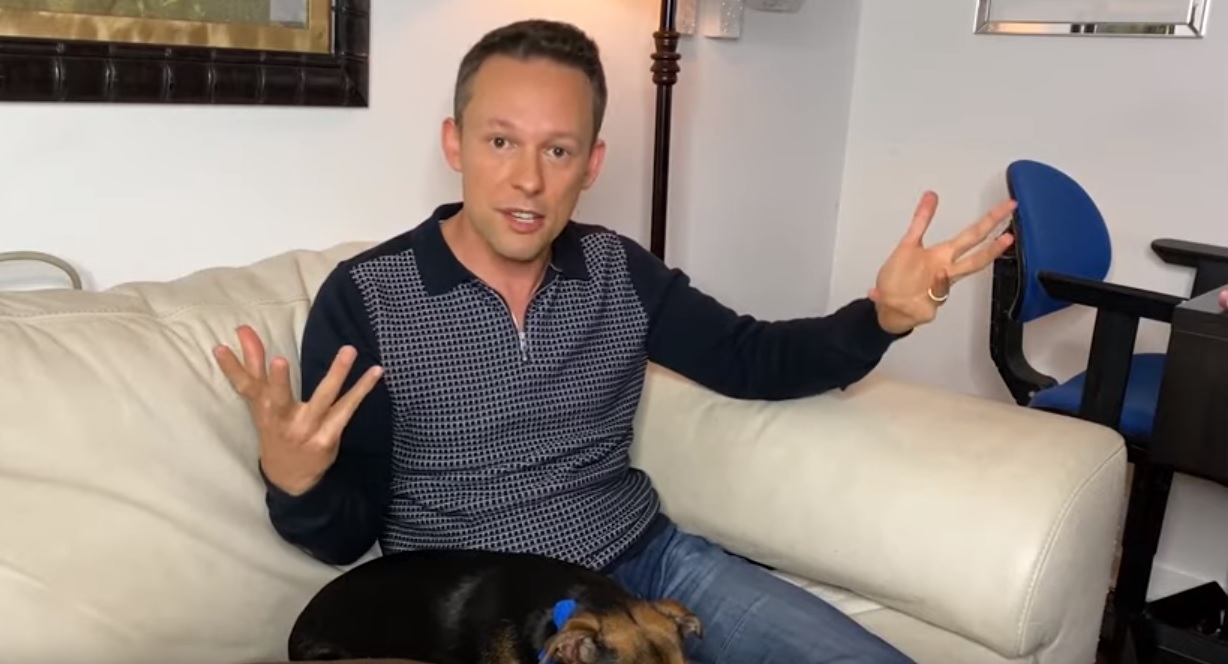
Travel YouTuber Josh Rimer and husband-to-be Heath spoke out after booking a wedding at the Marriott-owned Sheraton Buganvilias Resort and Convention Center in the gay-friendly city of Puerto Vallarta, Mexico.ADVERTISING
Hotel claimed it is ‘not specialised’ to carry out gay weddings
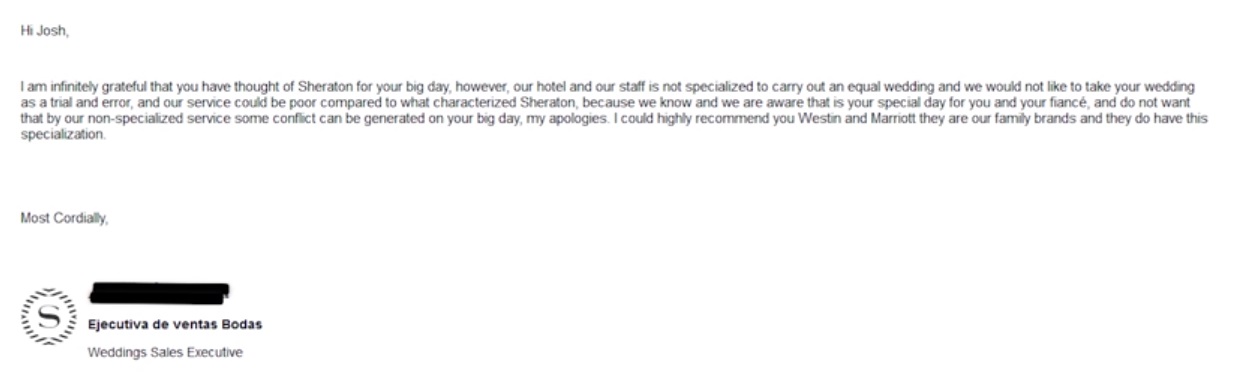
Rimer explained that while making arrangements for the wedding, he had mentioned to staff that the couple would not need a bridal bouquet – only to later be told via email that the hotel “is not specialised to carry out” a same-sex wedding.
The email from resort staff directed the couple to seek an alternative venue.
The email told Josh Rimer to seek another venue elsewhere
In a YouTube video, Rimer said it was “probably the most homophobic experience I’ve ever encountered in my entire life.”
He said: “What do you mean specialise? Why do you need to specialise in gay weddings?
“There’s not much to specialise, other than it’s going to be a groom and a groom instead of a bride and a groom.
“I don’t know if she thinks we’re going to show up in speedos with go-go dancers, and we expect the officiant to be wearing leather chaps? This is just a normal wedding, it just happens to be with two guys.”
While Rimer later received an apology from Marriott head office, he has had no further contact from the resort itself – and said he is still unhappy with how the company handled the situation.
He said: “Even if they were just like, ‘we’re going to sponsor an LGBT+ event or donate to an LGBT+ charity in Puerto Vallarta to make a public statement’, it would have nipped this in the bud.
“A phone call apologising and saying you’ll look into it is literally the least you could do.”
Hilton steps in to save couple’s Puerto Vallarta wedding
However, the story has a happy ending after the incident caught the attention of rival hotel brand Hilton – which offered to host Rimer’s wedding for free at its neighbouring Hilton Puerto Vallarta property.
The company is arranging to make the couple’s big day truly special, with wedding vendors stepping up to provide complimentary services.
Josh Rimer was not impressed by Marriott’s attempt to apologise
Rimer said Hilton has offered to host “the wedding of my dreams,” adding: “They are putting out the red carpet for us.
“When they sent us the write-up of everything that’s going to be included, everything said ‘groom and groom’. Hallelujah!”
He quipped: “I wonder what kind of special training they had to do that.”
In early October, the United Kingdom’s SkyNews ran a story about the “Detransition Advocacy Network,” a new charity founded by Charlie Evans, a former transgender man who detransitioned in 2018. Evans told SkyNews that “hundreds” of young trans people were seeking her help to return to their sex assigned at birth, and she said more resources are urgently needed for people experiencing post-transition regret.
“I’m in communication with 19- and 20-year-olds who have had full gender reassignment surgery who wish they hadn’t, and their dysphoria hasn’t been relieved, they don’t feel better for it,” Evans told SkyNews. “They don’t know what their options are now.”
Following SkyNews’ interview with Evans, news outlets across the U.K. and the United States covered the phenomenon of detransitioning. The BBC dedicated an hour to the topic on two of its flagship programs in late November, and right-wing outlets such as The Daily Wire and Breitbart covered the topic with an explicitly transphobic spin. New York magazine published a piece last month about another advocacy group for ex-trans people where one interviewee expressed concern that “many teenage women … have been convinced too quickly that the only solution is to change their sex.”
No one disputes that transition regret does exist and that there are trans people who return to the sex they were assigned at birth. However, trans advocates say some of the recent coverage around the topic portrays detransitioning as much more common than it actually is, fueling misconceptions about the gender transition process and painting trans people as just temporarily confused or suffering from a misdiagnosed psychological disorder. This misleading information, they say, can have serious real-world consequences, from misguided policy proposals to social stigma.
“I think the reason why detransition stories are popular in this given time is because it neatly fits into this idea that young people especially are being made to be trans,” Lui Asquith, a legal counselor for U.K.-based LGBTQ group Mermaids, told NBC News. “The media are conjuring up a panic about trans lives, and the first victims of that panic are the young people who are indirectly being told that they’re a phase.”
How common is ‘transition regret’?
There are an estimated 1.4 million transgender adults in the U.S., according to the Williams Institute at the UCLA School of Law, and the U.K.’s Government Equalities Office “tentatively” estimates there are between 200,000 and 500,000 trans people in Britain and Northern Ireland.
While the information regarding how many trans people detransition is sparse, those who work with the trans community say it is uncommon. “The actual numbers around them are significantly low,” Asquith said.
“Are there risks to getting gender affirming care? Maybe. But are there risks for not getting gender affirming care? Definitely. And the risks of the latter usually outweigh the former.”
DR. JACK TURBAN
The information that does exist appears to corroborate Asquith’s claim. In a 2015 survey of nearly 28,000 people conducted by the U.S.-based National Center for Transgender Equality, only 8 percent of respondents reported detransitioning, and 62 percent of those people said they only detransitioned temporarily. The most common reason for detransitioning, according to the survey, was pressure from a parent, while only 0.4 percent of respondents said they detransitioned after realizing transitioning wasn’t right for them.
The results of a 50-year survey published in 2010 of a cohort of 767 transgender people in Sweden found that about 2 percent of participants expressed regret after undergoing gender-affirming surgery.
The numbers are even lower for nonsurgical transition methods, like taking puberty blockers. According to a 2018 study of a cohort of transgender young adults at the largest gender-identity clinic in the Netherlands, 1.9 percent of adolescents who started puberty suppressants did not go on to pursue hormone therapy, typically the next step in the transition process.
Misinformation about the transition process
Stories about detransitioning often include misinformation not only about the prevalence of transition regret, but also about transitioning itself, according to transgender health experts and LGBTQ advocates. They say misconceptions about the gender transition process — including at what age different procedures are even considered — are widespread.
“We have people that are using media to educate themselves, and media is picking and mixing what they want to highlight and what they want to conflate or exaggerate,” Asquith said. “It’s incredibly unhelpful.”
Dr. Stephen Rosenthal, medical director for the University of California, San Francisco, Child and Adolescent Gender Center, said before the onset of puberty, there’s “no role” for medical intervention in a person who might be transgender, something that is not always made clear in media coverage.
For a child who has not yet reached puberty, trans health experts recommend seeking mental health support, because even prior to disclosing a gender identity that is different than the one they were assigned at birth, trans youth can experience symptoms including depression, social isolation and suicidal ideation. While medical guidelines advise that prepubescent children do not undergo hormone interventions, they state that allowing trans youth to “socially transition,” which can include taking on a new name and wearing a different style of clothing, can greatly benefit a child.
“It’s letting your child be themselves and loving them for who they are,” transgender advocate Gillian Branstetter said of the guidelines regarding children who haven’t reached puberty.
Once the child starts to experience puberty, health experts — including those at the U.K.’s National Health Service and the American Academy of Pediatrics — recommend a puberty blocker, as experiencing puberty when suffering from gender dysphoria can be traumatic for trans youth. With age, gender-expansive youth can explore other options such as gender-affirming hormones and surgery.
There have also been misconceptions surrounding the safety and lasting impact of nonsurgical transitioning steps, like puberty blockers. In September, a false news story linking the use of puberty blockers to “thousands of deaths” went viral, thanks in no small part to the signal boosting of right-wing media outlets like The Daily Wire.
Dr. Jack Turban, a resident physician in psychiatry at Massachusetts General Hospital who researches the mental health of trans youth, told NBC News that puberty blockers are actually a pretty low-risk way to provide care for gender dysphoric youth.
“Puberty blockers put puberty on hold so that adolescents have more time to decide what they want to do next. This is important because, while pubertal blockade is reversible, puberty itself is not,” he said. “It’s much more common to regret not getting puberty blockers than it is to regret getting puberty blockers.”
“With any intervention there are risks and benefits,” Turban said. “Are there risks to getting gender affirming care? Maybe. But are there risks for not getting gender affirming care? Definitely. And the risks of the latter usually outweigh the former.”
The consequences of misleading coverage
Advocates say that media coverage around transgender issues, and the public discourse it generates, can have a real-life impact on the lives of transgender people.
Branstetter, who as the former spokesperson for the National Center for Transgender Equality spent years speaking to the press and following coverage about transgender issues, said the media too often focuses on the “debate” over trans people’s validity, and does not pay enough attention to the struggles and joys of the trans experience.
“Decisions about newsworthiness are too often pinned to skepticism about trans people, or an assumption that your readers are more interested in whether trans people exist and not the actual experiences of trans people,” she said.
Asquith said coverage that questions the existence of trans identities can be particularly harmful to trans youth, an already vulnerable group that has an alarmingly high rate of attempted suicide and is subjected to disproportionately high rates of bullying and harassment. According to a 2017 National School Climate Survey by GLSEN, 44 percent of LGBTQ students reported feeling unsafe at school because of their gender expression.
“If one’s gender identity is different than that assigned at birth, if parents are being made to feel like that’s wrong,” Asquith said, “that is not OK.”
“The media need to take responsibility for that,” she added.
Misleading coverage has also provoked misguided policy proposals and political maneuvers disguised as genuine concerns for children’s health, according to LGBTQ advocates. Branstetter pointed to recent coverage about two Texas parents involved in a bitter divorce who disagreed over whether their 7-year-old is transgender. Following claims by the father that the child’s mother, a pediatrician, was trying to “chemically castrate” their child, Republican lawmakers in the state inserted themselves into the matter Gov. Greg Abbott ordered an investigation into the family, and Sen. Ted Cruz, R-Texas, went so far as to call parents who support their trans children “child abusers.”
Branstetter said that media coverage is tied to the bigotry that transgender people face in their daily lives. She pointed to the recently proposed bills in Texas, Georgia and Kentucky that would ban access to trans health care for minors, such as puberty blockers and hormone replacement therapy, and said that media coverage has played a large role in making anti-trans proposals like them politically fruitful.
“Those very proposals, should they be enacted into law, have a body count,” she said. “It would be restricting health care as prescribed by doctors, it would be people crossing state lines in order to get the health care they need. It would not merely destroy lives, it would end lives. And all of that is based on false myths about who trans people are and what our health care entails.”
‘Wedge issues’
Some advocates say the burst of detransition stories is just the latest in a cycle of media narratives that, intentionally or not, fuel misconceptions and stir up anti-trans sentiment.
Tea Uglow, creative director for Google’s Australia-based Creative Lab, is one of those advocates. Earlier this year, she debuted a project titled “Yours Sincerely, The Fourth Estate,” an archive of headlines and articles containing the word “transgender” from various U.K. and Australian news outlets between August 2018 and August 2019. Uglow told NBC News that stories about detransitioning and transition regret are the latest example of a broader trend.
“What is very obvious over the last few years is how there have been different wedge issues at different points, like the bathroom debatesand then this very interesting thing about trans women in sports,” Uglow said. “It’s a pernicious cycle.”
In 2016, following North Carolina’s reversal of a Charlotte city ordinance permitting transgender people to use bathrooms that align with their gender identity, the debate over which restroom trans people should use was covered widely, with some of the coverage veering transphobic. As recently as November 2018, the trans bathroom debate was still being used in political ads. More recently, a slew of national victories by transgender athletes prompted a call for trans women to be banned from participating in women’s sporting events over concerns that they would make the playing field uneven.
Less than one-quarter (24 percent) of Americans report having a close friend or family member who is transgender, according to the Public Research Religion Institute. This means for most people in the U.S. — and likely beyond — media coverage is the primary way they’re receiving information about the community. This is part of the reason Asquith said media outlets should be more aware of the impact their coverage could have on the trans community.
“It’s about media taking responsibility for the repercussions of the rhetoric that is out there,” Asquith said. “It is fueling hate.”
Turban has a prescription for those disseminating misleading information about trans people: Talk to the experts.
“What would be useful is if journalists and politicians reached out to doctors and physicians and researchers, people who actually know about this issue, rather than cisgender political pundits and people who don’t care for trans youth,” he said.
Being a longtime nurse Karl Neumann of Norfolk, Va., understands just how critical it is to have a robust community blood supply available. However, as a sexually active gay man, he is banned from donating blood because of a federal law.
“It’s frustrating that there are shortages of blood, but certain people are still restricted from giving blood at a time when modern medicine can easily test for diseases.”
Karl worries confusion or resentment regarding the “blood ban” might prevent gay men from realizing that they have another opportunity to heal and save lives – by registering to be organ donors.
“I’ve worked in transplantation most of my career and there are not enough organs available for the number of people waiting for a transplant. Unfortunately, I’ve had several patients that I cared for die because the organ they needed was not donated in time.”
Currently, more than 113,000 people in the United States are waiting for a lifesaving transplant, and that staggering number is one of the reasons why Karl, who is HIV-positive, decided to donate his kidney as a living donor.
In 2013, the HIV Organ Policy Equity Act(HOPE Act) was signed into law allowing HIV-positive patients on the national transplant waiting list to receive organs from HIV-positive donors who are living or deceased. Unbeknownst to Karl, his decision would be very significant, as he would become only the second living person with HIV to donate a kidney in the U.S., and the first HIV-positive gay man to be a living donor.
“It gave me pause being one of the first people but then I realized what a great opportunity it was. We are still in the research phase of transplanting organs HIV-to-HIV, and the more procedures that have a successful outcome means more lives saved.”
Last summer, Karl traveled to Duke Health in Durham, N.C., to donate his kidney to an anonymous HIV-positive recipient. He is hopeful the recipient is regaining his or her health and enjoying an improved quality of life post-transplantation.
Karl says regardless of the myths and misconceptions that exist, everyone can register to be an organ donor regardless of gender identity or expression, choice of sexual partner or HIV status.
“Donating a kidney with HIV is normal and it can happen,” said Karl. “Being HIV-positive does not put me in danger or make me ill. I am healthy and will likely live a longer life than most people, and for that I am grateful. The least I could do was pay it forward and give life to another human being.”
As of September 2019, 160 HIV-positive organs have been donated and transplanted, including 116 kidneys from deceased donors, 2 kidneys from living donors and 42 livers from deceased donors. December is AIDS Awareness Month and Karl wants to spread awareness that HIV-positive patients can give and receive the gift of life.
For more information or to register to be an organ donor, visit BeADonor.org.
Washington Regional Transplant Community is the non-profit organ procurement organization for the metro D.C. area responsible for recovering and distributing organs and tissues used in lifesaving and life-enhancing transplants. WRTC serves approximately 5.5 million people, 44 hospitals and six transplant centers. Visit BeADonor.org for more facts and information that can help you make a legal and informed decision about donation.
When HIV first tore into America’s gay male community in the early 1980s, quotidian questions of sex, love, lust and trust transformed into weighty decisions with potential life-or-death consequences.
The decision to stop using condoms with a serious partner? Only as reliable an HIV-prevention method as your partner’s fidelity. A single instance of cheating? An indiscretion that carries the risk of an incurable and deadly disease. A random hookup? A nagging sense that, perhaps, this time was the time.
Todd Faircloth, 52, remembers those days well. In 1987, when gay men were still dying from AIDS in large numbers, Faircloth moved to New York City from North Carolina to start his big, gay life. He was just 17.
“I didn’t know anyone that lived past the age of 30, I didn’t anticipate anyone was going to live that long,” Faircloth, who now lives in Georgia with his husband, said. “It got to the point where people just assumed they all had a death sentence over their heads.”
He said he endured “hundreds” of AIDS funerals with a lot of dark humor, but still, “it was really scary to be out there.”
Amidst all the death, the human immunodeficiency virus caused understandable fear and anxiety among gay men, and Faircloth said this even influenced the relationships people entered into. “If you meet someone, you got with them, you were more likely to want to stay with them, not because you wanted to be with them, but because you’re scared to go back out,” he said.
Today, more than three decades after Faircloth moved to New York, HIV is controllable with medication and need not lead to death. In addition to condoms, first approved to stop HIV in 1987, people at risk of acquiring HIV today can take medications like Truvada to prevent the virus’ transmission, namely pre-exposure prophlyaxis (PrEP), and post-exposure prophylaxis (PEP), which are taken before and after sex, respectively, to prevent HIV transmission. And for those who already have the virus, treatment as prevention, or TasP, makes it impossible to transmit the virus in sex when taken regularly, according to the Centers for Disease Control and Prevention.
One unintended benefit of this new array of pharmaceutical prevention options, according to a new study, is a reduction in “HIV anxiety.” Anxiety about HIV transmission, which the study’s authors describe as a “common” experience of gay and bisexual men — especially those who, like Faircloth, lived through the darkest days of the AIDS epidemic — can compromise their “emotional well-being and create barriers to HIV testing.”by TaboolaSponsored StoriesTHE MOTLEY FOOL5 Stocks that Could Set You Up for Life2019 GIFT GUIDE27 Christmas Gifts That Are Selling Like Hot Cakes
Fifteen years ago, if the condom broke, I would be freaking out about it, and there really wouldn’t be anything you could do for three to six months except just passively hoping you don’t get HIV.
TIM PETLOCK THE OLD DAYS
“For many men, fear of HIV transmission led to anxiety about sex with other men, even in situations where transmission was impossible,” the authors note. Half of respondents worried about whether their sexual encounters were “safe,” and thought about HIV before sex, while a full quarter of study respondents, all of whom were HIV-negative, reported thinking about contracting HIV during sex. And the study found that taking PrEP “was independently associated with lower levels of HIV anxiety.”
The study suggests that this PrEP-associated reduction in HIV anxiety could “be promoted as part of demand creation initiatives to increase PrEP uptake,” a key goal of the U.S. government as it seeks to end the HIV epidemic by 2030.A sea change
Tim Petlock, 49, a gay man living near Dallas, said that so much has changed since he came out as gay in the early 1990s.
“Fifteen years ago, if the condom broke, I would be freaking out about it, and there really wouldn’t be anything you could do for three to six months except just passively hoping you don’t get HIV” Petlock told NBC News, referring to the monthslong window of early HIV tests.
“Now, you can go to treatment the day after to reduce the risk,” he said of post-exposure prophylaxis, or PEP. And today’s HIV tests can tell if a person is infected in about seven days. “You know that much sooner, whether you’ve got it or not, so it does kind of change the calculus of the whole thing.”
Today, Petlock takes PrEP and said that he worries much less about contracting HIV than he used to. Now he’s more focused on avoiding sexually transmitted bacterial infections, such as syphilis and chlamydia, which are on the rise in America.
“I know there’s some risk, but it’s likely not going to be life-altering,” he said.Ghosts of the epidemic
While PrEP has been shown to reduce HIV anxiety in some gay and bisexual men, the unease has by no means dissipated among this population.
“When you are bombarded your adult life with HIV and seeing death, I don’t care how much we advance biomedical technologies — that emotional reaction to the disease is still going to be the same,” Perry Halkitis, dean of the Rutgers University School of Public Health and author of “Out in Time,” told NBC News. “I unfortunately think that the way we deal with HIV in this country still to this day is very rooted in the responses from AIDS.”
It got to the point where people just assumed they all had a death sentence over their heads.
TODD FAIRCLOTH SURVIVING THE EPIDEMIC
One of the people for whom the memory of the epidemic’s darkest days is still fresh is Craig Lenti, a New York City-based media producer.
Lenti moved to Manhattan in 1996 at age 18 to attend college, one year after AIDS deaths peaked in the United States. He said he learned about homosexuality and AIDS at the same time, and during his late teenage years, AIDS was the top killer of young American men.
“They were always, for me, intrinsically linked,” Lenti said. “That was what I had in my head. That is what the media told me. And so from that point on, there really was no way of disconnecting those two concepts.”
For years, Lenti avoided taking an HIV test because of his fear that it would return positive.
To this day, Lenti said, it is hard for him to take an HIV test and to trust potential partners because of his fears from the epidemic’s early days.
“It was a foregone conclusion that I would become infected,” Lenti said of his thinking at the time. Yet despite all that worrying, he remains negative.
“I think the biggest fear that I had about HIV was not the fear of being sick. It was always the fear of dying alone,” Lenti said. “It’s just very hard for me to trust people, and I think you could argue that a lot of that stems from my fear of becoming infected, even though now there’s so many different ways to combat that.”‘I don’t think it just changes overnight’
While Lenti no longer takes Truvada for PrEP because he suffered from its rare gastrointestinal side effects, he said he counsels many of his friends to take the daily medication.
“If you can take a pill that has a 99 percent effective rate, why wouldn’t you do that?” he said.
Levi, a 19-year-old college student in Ohio, is among the nearly 1 million Americans recommended to take, but not taking, PrEP. Because he’s a man who has sex with other men and is 28 or younger, he’s considered at high risk of contracting HIV, according to the CDC risk assessment worksheet for doctors (the worksheet is based on a point system and uses a variety of risk factors).
Levi is no stranger to HIV anxiety. He recalled a recent incident after he performed oral sex where he began to worry, “Do I need to get a test?”
“I spent the night basically in a hypochondriac fit running around looking if there are any sort of symptoms I should be looking for,” he said, telling an all-too-common tale. However, he needn’t have worried, as there is “little to no risk” of acquiring HIV through oral sex, according to the CDC.
Levi, who asked not to have his full name printed because he is still on his parents’ insurance and worries they would object to PrEP, said he’s just starting to think about taking the HIV prevention pill. He said the man he is dating is HIV-negative, and even though they plan to be monogamous, he doesn’t know if he can fully trust him, because the stakes are so high.
“Is there anything that I could even ask for?” Levi wondered. “Could you show me a paper or something? And could I even believe that?”
Levi’s struggle to answer this question is as old as the virus, Halkitis said.
“You have two sets of problems: a generation that has no clue and hasn’t seen death,” he said, “and a generation that is older that is completely bombarded.”
“I think there’s a whole negotiation morphing period going on right now as we get embedded in these technologies more and more,” Halkitis continued, referring to HIV prevention medications. “I don’t think it just changes overnight.”
The Hallmark Channel said Sunday that it would “re-establish” its relationship with the wedding company behind a same-sex commercial, just days after Hallmark pulled the ad amid pressure from a conservative advocacy group.
In a statement Sunday, the president of Hallmark Cards, Mike Perry, said Hallmark’s parent company, Crown Media Family Networks, had been “agonizing” over its decision to remove the ad and the “hurt it has unintentionally caused.”
Hallmark added that it would work with an LGBTQ advocacy group, GLAAD, to “better represent … the community” while working to reinstate the commercials.
After Hallmark’s reversal, GLAAD’s president, Sarah Kate Ellis, said the company’s decision sent an important message to LGBTQ people and signaled a “major loss” for “fringe organizations” that aim to “hurt families like mine.”
The announcement Sunday came after Zola, a popular online wedding planning company, said it would no longer advertise with Hallmark after the channel refused to air commercials that included same-sex couples. Mike Chi, Zola’s chief marketing officer, said in a statement that “all kisses, couples and marriages are equal celebrations of love.”
Before Hallmark reversed course, Chi had said: “The only difference between the commercials that were flagged and the ones that were approved was that the commercials that did not meet Hallmark’s standards included a lesbian couple kissing. Hallmark approved a commercial where a heterosexual couple kissed.”
The Zola ad was mentioned in a blog post by One Million Moms, which bills itself as a group of parents who are working to stop the “exploitation of children” by entertainment media. The group claimed in the post that the channel had a history of “family friendly” content but that “parents can no longer trust Hallmark.”
“Shame on Hallmark for airing commercials with same-sex couples and even considering movies with LGBT content and lead characters,” One Million Moms said.
Hallmark was the target of petitions from One Million Moms and LifeSiteNews, a right-wing Catholic news organization. The LifeSiteNews petition said: “Hallmark would be offending Christian viewers and Christian parents BIG TIME, by experimenting with homosexual themes, and, or cooperating with the LGBT indoctrination agenda.”
The initial decision to pull the ads was criticized on social media. Talk show host Ellen DeGeneres tweeted: “Isn’t it almost 2020?@hallmarkchannel, @billabbottHC… what are you thinking? Please explain. We’re all ears.”
“@billabbottHC” is Bill Abbott, chief executive of Crown Media Family Networks.
Netflix also weighed in by posting screenshots of content on its streaming service that includes two women kissing.
“Titles Featuring Lesbians Joyfully Existing And Also It’s Christmas Can We Just Let People Love Who They Love,” Netflix tweeted.
In an interview with The Hollywood Reporter last month, Abbott said the network was open to “any type of movie of any type of relationship in any space.”
Michelle Vicary, Crown Media’s executive vice president, echoed Abbott in a statement to The Wrap.
“We are continuing to expand our diversity,” Vicary said. “We are looking at pitches for LGBTQ movies … and we are looking to expand and represent the United States as a whole.”
Of Hallmark’s 40 original holiday-themed movies this season, none include an LGBTQ main character, The Wrap reported.
NBC News’ parent company, NBCUniversal, and Comcast Ventures are investors in Zola.
Before coming out as transgender, Nicole Garcia prayed daily that God would “fix” her. When her prayers weren’t answered and the feeling in her gut didn’t go away, she gave up on religion.
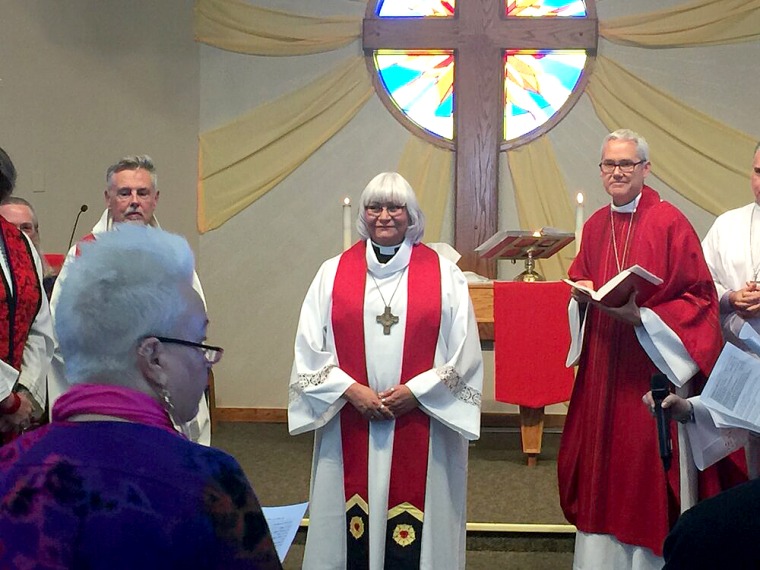
Now, nearly four decades later, Garcia stands behind the pulpit at Westview Lutheran Church in Boulder, Colorado, and delivers weekly sermons to a congregation of more than 100 faithful as their ordained pastor.
“Nobody can question my faith, my devotion to Christ, my devotion to the church. That’s why I’m the pastor here,” Garcia,who turned 60 Thursday, told NBC News. “Being trans is secondary.”
Pastor Nicole Garcia had her first service on Dec. 1, 2019.Courtesy Westview Church
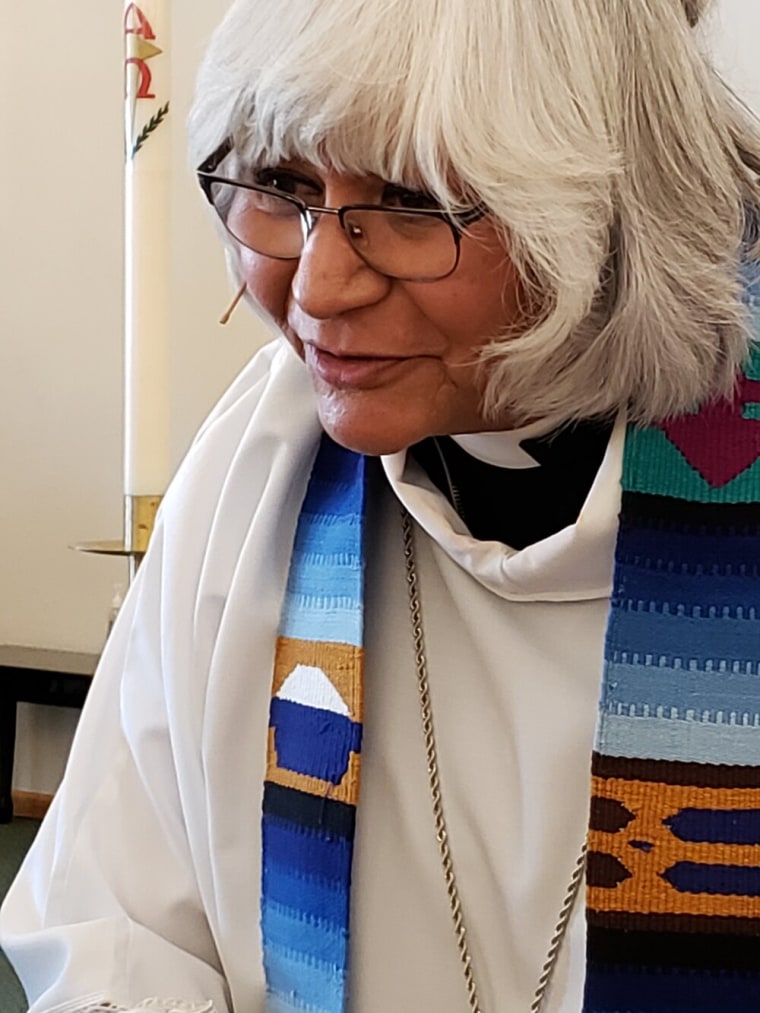
Garcia, who delivered her first sermon at Westview earlier this month, is the first known transgender Latina to serve as a pastor within the 4 million-strong Evangelical Lutheran Church in America — an unanticipated position for someone who grew up in the Roman Catholic Church and left religion entirely for nearly 20 years.
‘I had never felt comfortable in my own skin’
One of Garcia’s earliest memories is of her grandmother kneeling on the cold kitchen floor of her Colorado farm, praying the rosary in Spanish while the voice of Francisco “Paco” Sanchez buzzed through the radio. She still has the worn black rosary that her grandmother gave her when Garcia was just five years old.
Growing up in the ‘60s, Garcia said she had a traditionally paramount role as the “oldest son” in a devoutly Roman Catholic Latino family. She went to church two to three times each weekend and played guitar in the choir. But she said something about her life was off-kilter.
As she got older, an uncomfortable feeling loomed over her, though she struggled to put a finger on exactly what it was. As a teenager, Garcia recalled, she loved to dress up in women’s clothing. She’d even stash outfits in hidden spots around her house to make sure that side of her stayed secret.
“I had never felt comfortable in my own skin. I had always been chastised for doing the wrong thing,” Garcia said. “Everything just felt wrong. I did everything my male cousins would do, but it was just awkward and it didn’t come naturally.”
She said she prayed every day that God could take those uncomfortable feelings away, but her prayers continued to go unanswered. In 1982, in her early 20s, Garcia left the church.
For the next few years, Garcia descended into a spiral of alcohol abuse and partying, which she said became her excuse for “dressing up” and dating men. But after years of heavy drinking and hopping between low-paying retail jobs, she found herself living in a cousin’s trailer in Boulder and going through alcohol withdrawals.
“I realized something had gone terribly wrong,” she said. “I decided it was time to change my life.”
‘I had my come-to-Jesus moment’
Garcia moved out of the trailer and into an apartment in nearby Longmont, where she met a woman at karaoke night. The two dated for a year before they married at a Catholic church in 1994. They eventually bought a house in downtown Denver, and Garcia found a new career as a corrections officer.
From the outside, it looked like Garcia had turned her life around. However, she still felt like she didn’t belong in her body. Every morning before work, Garcia said, she wanted to put on women’s clothes, and when it came time to put on her corrections uniform, it felt like a costume.
“As soon as I got home and I took off the uniform, I was exhausted. All my energy was used just to perform that day,” she said. “I’d drink a pint of Jack Daniels and three or four beers just to be able to calm down and relax.”
Garcia’s marriage crumbled after 8 years, and her wife asked for a divorce in 2002. After they separated, Garcia was sitting at her kitchen table, wondering why she had thrown away what seemed like an ideal life.
“I had my come-to-Jesus moment. It wasn’t one of those, “Oh please, oh please, help me,’” she explained. “It was more, “Alright you son of a b—h, if I’m going to come back, you better step it up this time.’”
‘I’ve always been Nicole’
In a fortuitous turn of events, just two days after her “come-to-Jesus moment,” Garcia received a message offering free therapy sessions for corrections officers. After only a few appointments, Garcia unearthed the uneasy feeling she had struggled with her whole life.
“Within a month or so, I told her my deepest, darkest secret: That for my entire life, as long as I can remember, I have always loved wearing women’s clothing,” she said. “I realized in that moment that I’ve always been Nicole; I’ve always been a woman.”
“I knew at that point I had to transition,” Garcia added. “I could finally put a name on what I was going through.”
Garcia’s therapist recommended she visit the Gender Identity Center of Colorado. It was there that she met another transitioning law enforcement officer who encouraged her to attend a service at the Saint Paul Lutheran Church in Denver.
“I was sure I would walk in and they’d say, “Look at that man in a dress,” but they didn’t,” Garcia recalled. “They were lovely; they embraced me. I just felt at home.”
Nicole Michelle Garcia was officially ordained as Pastor Nicole Garcia on Nov. 23rd, 2019 at Christ the Servant Lutheran Church in Louisville.Courtesy Westview Church
In 2003, shortly after she started her transition, she became a Lutheran, and soon after began working with an organization called Reconciling in Christ, which works toward full acceptance of the LGBTQ community within the Lutheran denomination. Five years later, Garcia was elected to the group’s national board of directors as their transgender representative, and in that position she continued to campaign for the advancement of LGBTQ people into pastoral positions.
While Garcia immediately felt accepted by the Lutheran congregation early in her transition process, she said her mother had a harder time accepting that the “oldest son” in their Roman Catholic family wanted to transition to a woman. For the first few months, she said her mother stopped speaking to her entirely. When they finally reconciled, it was under the pretense that Garcia had to present as male in their home, combing her long hair back into a ponytail and wearing her corrections officer uniform.
During her yearslong transitioning process, Garcia helped take care of her stepfather, Joe Mayes, who had terminal bone cancer. Garcia said Mayes, who died of cancer in 2005, immediately accepted her as Nicole.
“I would ask him, ‘Papa, why were you so accepting and loving?’” she recalled. “He said, ‘Because I finally saw you happy. For so many years you were morose, you were drunk, you were angry, and now you look happy.’”
Pastor Nicole Garcia had her first service on Dec. 1, 2019.Courtesy Westview Church
Though it took nearly a year for Garcia’s mother to accept her as Nicole, her mother was happy to see her child had returned to the church.In 2013, a decade after she started her transition and found her way back to Christianity, Garcia left her position as a corrections officer to attend seminary school.
During her years at seminary, Garcia became the director of congregational care at Mount Calvary Lutheran Church in Boulder, and her presence in the community became even more formidable. At her ordination in November of this year, over 200 people came to celebrate her trailblazing service as an advocate and leader among Lutherans.
Garcia was then asked to step in at the newly formed Westview Lutheran Church in Boulder as their pastor. The church’s first service was Dec. 1, and Garcia stood before the congregation, a vibrant red stole draped over her shoulders.
Garcia said she hopes her presence behind the pulpit encourages other LGBTQ people and people of color to step forward through faith.
“As a transgender Latina, I bring a breath of fresh air into all the places I walk into,” she said.