A Texas appeals court on Friday upheld a lower court’s injunction blocking the state from investigating parents who provide their transgender children with gender-affirming medical treatments, which Gov. Greg Abbott has called abusive.
Abbott, a Republican, had ordered the state Department of Family Protective Services to carry out child abuse investigations into families whose children were receiving puberty-blocking treatments in February 2022.
A month later, a district court judge imposed a statewide temporary injunction on such investigations, saying the probes endangered children and their families.
The appeals court in Austin upheld the district court judge’s injunction in a pair of rulings on Friday, delivering a victory to LGBTQ groups, medical professionals and civil liberties advocates opposing moves by conservative politicians in dozens of states to criminalize the provision of gender-affirming treatments for trans youth.
“This is a much-needed victory for trans youth and those who love and support them,” the American Civil Liberties Union said on X on Friday.
Representatives for Abbott and the DFPS did not immediately respond to a request for comment.
The ACLU and Lambda Legal challenged Abbott’s order on behalf of the family of a 16-year-old transgender girl targeted for investigation.
The child had taken puberty-delaying medications and hormone therapy. Her mother was a DFPS employee and was put on paid administrative leave after asking what Abbott’s directive would mean for her family.
In 2022, the district court judge said the governor’s order could cause “irreparable injury” to families, given the stigma attached to being targets of a child abuse investigation, as well as the loss of livelihood.
Texas restricted gender-affirming care for youth in 2023, making it one of more than a dozen states that currently bars young transgender people from receiving certain puberty-blockers and hormone therapies, according to the Human Rights Campaign.
A Texas appeals court on Friday upheld a lower court’s injunction blocking the state from investigating parents who provide their transgender children with gender-affirming medical treatments, which Gov. Greg Abbott has called abusive.
Abbott, a Republican, had ordered the state Department of Family Protective Services to carry out child abuse investigations into families whose children were receiving puberty-blocking treatments in February 2022.
A month later, a district court judge imposed a statewide temporary injunction on such investigations, saying the probes endangered children and their families.
The appeals court in Austin upheld the district court judge’s injunction in a pair of rulings on Friday, delivering a victory to LGBTQ groups, medical professionals and civil liberties advocates opposing moves by conservative politicians in dozens of states to criminalize the provision of gender-affirming treatments for trans youth.
“This is a much-needed victory for trans youth and those who love and support them,” the American Civil Liberties Union said on X on Friday.
Representatives for Abbott and the DFPS did not immediately respond to a request for comment.
The ACLU and Lambda Legal challenged Abbott’s order on behalf of the family of a 16-year-old transgender girl targeted for investigation.
The child had taken puberty-delaying medications and hormone therapy. Her mother was a DFPS employee and was put on paid administrative leave after asking what Abbott’s directive would mean for her family.
In 2022, the district court judge said the governor’s order could cause “irreparable injury” to families, given the stigma attached to being targets of a child abuse investigation, as well as the loss of livelihood.
Texas restricted gender-affirming care for youth in 2023, making it one of more than a dozen states that currently bars young transgender people from receiving certain puberty-blockers and hormone therapies, according to the Human Rights Campaign.
The pace of anti-transgender legislation has slowed in recent weeks, with several states, known for previously targeting transgender individuals, failing to pass any such laws. However, a different dynamic is emerging across the Gulf South, where three states are advancing bills that would cease the legal recognition of transgender individuals, potentially having significant repercussions for their trans residents. Louisiana, Mississippi, and Alabama are introducing bills to define sex in a manner that excludes transgender individuals, potentially affecting birth certificates, driver’s licenses, bathroom access, and more.
The bills, dubbed the “Women’s Bills of Rights” by their supporters, fall far short of actually protecting women’s rights. They fail to protect access to birth control or abortion, do not ensure equitable pay, neither allocate funds for nor promote women’s athletics, and lack any provisions designed to curb violence against women. Instead, they categorize sex based on reproductive capabilities and ends legal recognition of transgender individuals’ gender identities.
In Louisiana, House Bill 608 was introduced with a staggering 63 Republican co-sponsors, signaling a strong opposition to any efforts to lobby against the bill. While its primary focus seems to be on restricting bathroom access in schools, prisons, and shelters, a particular section of the bill indicates that “any provision of law enacted by the legislature or any rule adopted by a state agency or other entity subject to the Administrative Procedures Act when applicable to an individual’s sex shall apply those definitions provided in R.S. 9:58.” This provision could lead to the banning of changes to birth certificates and driver’s licenses, effectively ending all legal recognition for transgender individuals. The bill has not yet been scheduled for a hearing, but given the substantial support it has garnered, its progression through the legislative process is anticipated to be swift once it begins.
In Mississippi, Senate Bill 2753 and House Bill 1607 have successfully passed their respective chambers. House Bill 1607 defines sex based on reproductive capacity, and puzzlingly states that for transgender individuals, “equal” does not mean “same” or “identical.” Notably, the bill does not provide a definition for “equal,” a term also left undefined in similar legislation in other states. This ambiguity sparked debate over a comparable bill in Iowa, which is currently stalled in the legislature there in part because of disagreements over that line. As for Senate Bill 2753, it would ban bathroom access for transgender individuals in publicly owned facilities, such as rest stops and the Jackson airport.
In Alabama, House Bills 111 and 130 similarly target transgender individuals. House Bill 111 specifies sex based on reproductive capacity for all vital statistics purposes. Meanwhile, HB 130, although not directly defining sex, will reportedly be amended to add language that extends “Don’t Say Gay” legislation to Space Camp. This addition comes after conservative media expressed outrage over a transgender individual being employed at the state’s renowned Space Camp and could be used to target transgender employees in state facilities.
So far, only five states have passed similar legislation: Kansas, Montana, North Dakota, Tennessee, and Utah. In Kansas, a judge has recently ruled in favor of Attorney General Kris Kobach that drivers licenses and birth certificates must contain transgender people’s old assigned sex at birth, citing the law there. Meanwhile, although such a law does not exist in Florida, rule changes have resulted in a lack of ability for transgender people to change their drivers licenses; reportedly, Florida residents are unable to change their birth certificates as well. Additionally, Oklahoma and Nebraska have executive orders defining sex similarly.
Should these bills become law, an increasing number of states will not legally recognize transgender individuals. The implications of such legislation are profound: individuals who have long since updated their identity documents may face the reversion of those documents back to their assigned sex at birth. These state-issued identification documents could then be employed to enforce additional anti-transgender laws, including bathroom bans. Moreover, these restrictions are bound to create complications for transgender individuals who have legally updated their federal documents to align with their gender identity, as these documents would conflict with their state-issued ones.
There have been calls for a federal legal response to bills that outlaw gender markers and refuse legal recognition to transgender people. For instance, in Florida, the entire Democratic congressional delegation asked the Biden Administration to use the Real ID act, which mandates “gender” be listed on drivers licenses. There has been no response to that request as of Monday.
Multiple lawsuits are underway trying to reverse the laws in court where they have passed, but the legal outcomes are currently pending.
Davids is currently fighting to win her fourth term this November — a tough battle, as her district’s demographics have changed to become less Democratic-leaning, andRepublican opponents are lining up to challenge her. But she has also been fighting another very important battle: the fight for increased access to mental health care.
Davids has co-sponsored bipartisan legislation to fund mental health programs in local clinics, schools, and law enforcement centers, as well as a bipartisan bill tohelp people recovering from substance abuse reenter the workforce. She has also supported dozens of bills to bring down the costs of health care and prescription drugs and introducedthe Pride in Mental Health Act — legislation that would improve data collection and resources for at-risk queer youth.
For Davids, mental health strikes an especially personal chord since she’s part of two distinct groups with disproportionately high rates of suicide: Native Americans and young LGBTQ+ people. Native Americans die from suicide at higher rates than any other racial or ethnic group, according to a 2022 reportfrom the Centers for Disease Control and Prevention (CDC). Another recent CDC study found that LGBTQ+ young people are over four times more likely to attempt suicide than their cisgender and heterosexual peers.
Davids believes increasing access to mental health care isn’t merely “putting a Band-Aid on a broken arm.” Rather, she sees such access as an integral part of improving people’s overall emotional well-being.
“I think it’s like an all-of the-above approach, where we do need to be thinking about the most severe and sometimes acute issues happening around mental health or mental illness,” Davids says, “but we also need to be doing that long-term work that helps prevent things like bullying, helps prevent things like young people who are in the foster care system not having anyone around who understands, who has never gotten the training to understand what they’re going through as part of the LGBTQ+ community.”
“If what we’re doing over time is helping people understand how to cope, how to recognize the impacts of trauma, or help people interact with people who are experiencing those things,” she continues, “then I wouldn’t call that a Band-Aid. I would call it the necessary work for keeping people healthy and safe.”
Because many Americans have loved ones who have struggled with mental health, she’ll often watch her conservative colleagues’ committee hearings or press conferences to listen for an opening to reach across the aisle and engage them on this issue.
“There are folks who care about youth mental health and emotional well-being in a way that it probably just doesn’t cross their mind to think about the LGBTQ+ impact,” she says. Some of her conservative colleagues are “often surprised” when they find out about the aforementioned CDC statistics. These discussions can sometimes lead to larger conversations about LGBTQ+ civil rights.
Praising David’s bill to improve data collection on the mental health of queer youth, Melanie Willingham-Jaggers, executive director of the LGBTQ+ student advocacy organization GLSEN, said, “Being excluded, erased, and further stigmatized — by discriminatory policies, peers, and by adults who should protect young people — harms LGBTQI+ youth’s mental health and overall well-being.”
Related:
Davids says, “A lot of times, [my conservative colleagues] might not be aware of how often discriminatory practices [against LGBTQ+ people] are allowed under the law. It’s not right, and it’s not fair, and it doesn’t align with the values that, as Americans, we want to see and that we’re all constantly striving for,” she says.
The mental health disparities facing the LGBTQ+ community are just one part of the institutionalized discrimination experienced by queer people.
Studies suggest that when queer people have the same legal protections as their cisgender and heterosexual peers, their mental health improves, alleviating the anxiety and depression that otherwise accompany worries about discrimination. When Davids points out to colleagues that people can be rejected from a jurybased on their sexual orientation or denied housing based on their gender identity, she notes that she’s not trying to give “special rights” to people based on their unique identities — she’s just trying to make sure that all individuals are afforded the same rights, protections, and responsibilities as other citizens under the law.
Questioning the 2024 election’s long-term impact
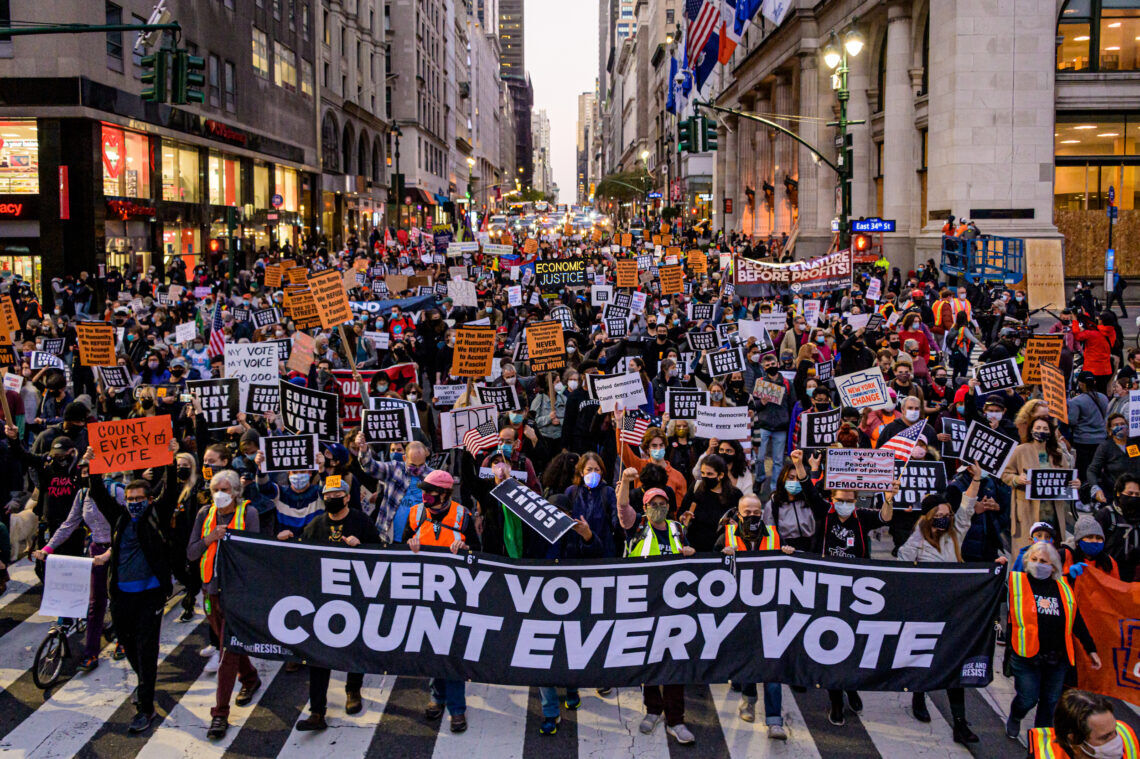
The NYC Protect the Results Coalition gathered for a rally and march to demand that every vote be counted before a state can be “called” for a candidate, after Trump’s alleged intention to claim a victory before the results were tabulated. November 4, 2020. Photo by Erik McGregor/LightRocket via Getty Images.
Since arriving in Congress, Davids has noticed Republicans increasingly targeting LGBTQ+ rights amid their attacks on diversity, equity, and inclusion (DEI) initiatives.
Last year, Rep. Marjorie Taylor Greene (R-GA) and members of the far-right Freedom Caucus demanded the removal of LGBTQ+-inclusive DEI policies from 12 appropriation bills to effectively fund all U.S. government agencies. She and other Republicans claimed that policies are “woke,” are anti-American, waste taxpayer money, and make the nation less safe.
Similar criticisms have especially accelerated now that it’s an election year.
“There’s a shift, we’ve seen it, and we’re also seeing it in state legislatures that there’s a ‘two steps forward, one step back,’ ” she says. “There’s a ‘one step back’ happening in quite a few places on a number of different types of issues.”
“We have responsibilities to the people who come after us, but also to the people who came before us.”Rep. Sharice Davids
Polls have indicated that voters aren’t enthusiastic about a rematch between President Joe Biden and former President Donald Trump. Davids urges voters to not only consider the immediate issues facing their communities but also the long-term impacts of the policies we support, something her Native American identity as a member of the Ho-Chunk Nation has taught her to do.
“I ask questions about the long-term impacts — not for political purposes, but because it’s just kind of how I think about things,” she says. “We have responsibilities to our family, to our community, to our tribe; we have responsibilities to our country; and we have responsibilities to the people who come after us, but also to the people who came before us.”
Editor’s note: This article mentions suicide. If you need to talk to someone now, call the Trans Lifeline at 877-565-8860. It’s staffed by trans people, for trans people. The Trevor Project provides a safe, judgement-free place to talk for LGBTQ youth at 866-488-7386 or text “start” to 678-678. You can also call the National Suicide Prevention Lifeline at 988.
Nex Benedict’s death in Oklahoma has shined the spotlight on anti-trans rhetoric in politics in other conservative states. After the transgender teenager lost his life following a school bathroom attack, North Carolina’sRepublican Lt. Gov. Mark Robinson has come under intense scrutiny for his anti-transgender rhetoric.
Robinson is running for governor. As the state’s primary elections loom Tuesday, Robinson’s views have ignited a firestorm of criticism, not least because of his recent endorsement by former President Donald Trump, who called Robinson “better” than Martin Luther King Jr.
Robinson has repeatedly expressed views that are antagonistic toward transgender individuals. In one of his Facebook posts, he shared a magazine cover featuring a transgender child, labeling them as “sick” and “demonic.” He went on to claim that the nation would not “survive God’s wrath” if it continued to accept transgender children.
His stance on transgender rights is not new. Records from his Facebook show that as far back as 2016, he suggested that transgender people should relieve themselves “outside,” a stance that aligns with his support for policies that restrict bathroom use based on the sex listed on a person’s birth certificate.
Robinson recently repeated the claim that transgender women should be “arrested” for using women’s bathrooms. Instead, he said they should “find a corner outside somewhere.”
His suggestion that transgender individuals should find alternatives to using public restrooms that align with their gender identity has been met with accusations of promoting discrimination and undermining the progress made in LGBTQ+ rights.
Robinson’s stance has not only sparked a debate within the state but has also caught national attention, mainly as it follows in the footsteps of previous controversial bills like North Carolina’s infamous 2016 “Bathroom Bill” or House Bill 2, which restricted bathroom use. Critics of Robinson argue that his rhetoric could encourage policies that marginalize transgender individuals, echoing the economic and social turmoil that followed the Bathroom Bill backlash. In 2017, the bill was repealed after organizations and businesses pulled their support from the state.
In light of Benedict’s death in Oklahoma, the conversation about the safety and rights of transgender individuals has become even more urgent. Robinson’s comments are seen by many as out of step with the growing need for policies that protect rather than harm vulnerable students in schools across the country.
Robinson’s comparison of transgender identity to “sick, demonic behavior” on social media has been widely condemned.
His detractors are concerned that his potential election as governor could signal a step backward for North Carolina, threatening the civil liberties of the LGBTQ+ population.
The upcoming primary elections in North Carolina are thus seen as a critical juncture for the state’s LGBTQ+ community and their allies. Voters will decide Tuesday whether Robinson’s views represent the future they want for North Carolina or whether they will choose a different path that embraces equality and respect for all individuals, regardless of gender identity.
Google has partly disabled its artificial intelligence (AI) image generator Gemini after the software produced racially diverse and historically inaccurate images of Black Vikings, female popes, and people of color as the United States “founding fathers.”
Gemini produced these images without being prompted by users, leading right-wing critics to blast the software as “woke.” However, the incident revealed not only a technical problem but a “philosophical” one about how AI and other tech should address biases against marginalized groups.
Related:
“It’s clear that this feature missed the mark. Some of the images generated are inaccurate or even offensive,” Google Senior Vice President Prabhakar Raghavan wrote in a company blog post addressing the matter.
He explained that Google tried to ensure that Gemini didn’t “fall into some of the traps we’ve seen in the past with image generation technology,” such as creating violent or sexually explicit images, depictions of real people, or images that only show people of just one type of ethnicity, gender, or other characteristics.
“Our tuning to ensure that Gemini showed a range of people failed to account for cases that should clearly not show a range,” Raghavan wrote. “[This] led the model to overcompensate in some cases … leading to images that were embarrassing and wrong.”
He then said that Gemini will be improved “significantly” and receive “extensive testing” before generating more images of people. But he warned that AI is imperfect and may always “generate embarrassing, inaccurate, or offensive results.”
While some right-wing web commenters, like transphobic billionaire Elon Musk, accused Gemini of being “woke,” this sort of problem isn’t unique to Google. Sam Altman, the gay CEO of OpenAI, acknowledged in 2023 that his company’s technology “has shortcomings around bias” after its AI-driven ChatGPT software generated racist and sexist responses. Numerous kinds of AI-driven software have also exhibited bias against Black people and women, resulting in these groups being falsely labeled as criminals, denied medical care, or rejected from jobs.
Such bias in AI tech occurs because the technology makes its decisions based on massive pre-existing data sets. Since such data often skews in favor of or against a certain demographic, the technology will often reflect this bias as a result. For example, some AI-driven image generators, like Stable Diffusion, create racist and sexist images based on Western stereotypes that depict leaders as male, attractive people as thin and white, criminals and social service recipients as Black, and families and spouses as different-sex couples.
“You ask the AI to generate an image of a CEO. Lo and behold, it’s a man,” Voxtech writer Sigal Samuel wrote, explaining the dilemma of AI bias. “On the one hand, you live in a world where the vast majority of CEOs are male, so maybe your tool should accurately reflect that, creating images of man after man after man. On the other hand, that may reinforce gender stereotypes that keep women out of the C-suite. And there’s nothing in the definition of ‘CEO’ that specifies a gender. So should you instead make a tool that shows a balanced mix, even if it’s not a mix that reflects today’s reality?”
Resolving such biases isn’t easy and often requires a multi-pronged approach, Samuel explains. Foremost, AI developers must premeditate which biases might occur and then calibrate software to minimize them in a way that still produces desirable results. Some users of AI image generators, for example, may actually want pictures of a female pope or Black founding fathers — after all, art often creates new visions that challenge social standards.
But AI software also needs to give users a chance to offer feedback when the generated outcomes don’t match their expectations. This gives developers insights into what users want and helps them create interfaces that allow users to request specific characteristics, such as having certain ages, races, genders, sexualities, body types, and other traits reflected in images of people.
Sen. RonWyden (D-OR) has tried to legislate this issue by co-sponsoring the Algorithmic Accountability Act of 2022, a bill that would require companies to conduct impact assessments for bias based on the code they use to generate results. The bill wouldn’t require companies to produce unbiased results, but it would at least provide insights into the ways that technology tends to prefer certain demographics over others.
Meanwhile, though critics blasted Gemini as “woke,” the software at least tried to create racially inclusive images, something many other image generators haven’t bothered to do. Google will now spend the next few weeks retooling Gemini to create more historically accurate images, but similar AI-powered image generators would do well to retool their own software to create more inclusive images. Until then, both will continue to churn out images that reflect our own biases rather than the world’s true diversity.
In response to a formal complaint the Human Rights Campaign lodged last week regarding the handling of sex-based harassment incidents, the U.S. Department of Education’s Office for Civil Rights has initiated an investigation into Owasso Public Schools. The investigation, announced late Friday, aims to address the Oklahoma school district’s response to harassment that may have contributed to the tragic death of Nex Benedict, a 16-year-old transgender student of Choctaw heritage.
HRC President Kelley Robinson spearheaded the complaint to U.S. Secretary of Education Miguel Cardona last week, urging the department in a letter to use its enforcement mechanisms to prevent future tragedies and hold those responsible for Benedict’s death accountable. “Nex’s family, community, and the broader 2SLGBTQI+ (two-spirit, lesbian, gay, bisexual, transgender, queer, and intersex+) community in Oklahoma are still awaiting answers following their tragic loss,” Robinson said in a press release announcing the investigation. “We appreciate the Department of Education responding to our complaint and opening an investigation—we need them to act urgently so there can be justice for Nex and so that all students at Owasso High School and every school in Oklahoma can be safe from bullying, harassment, and discrimination.”
The Department of Education’s letter to Robinson highlights the serious nature of the allegations against Owasso Public Schools, indicating a thorough examination of whether the district failed to appropriately respond to reported harassment, in line with Title IX, Section 504 of the Rehabilitation Act of 1973, and Title II of the Americans With Disabilities Act of 1990.
This federal investigation follows a distressing incident in which Benedict was reportedly assaulted by three older students in a school restroom, leading to widespread outcry over the safety and treatment of transgender, nonbinary, and gender-expansive students within the education system. Benedict died the day after the incident, but the cause of the youth’s death remains undetermined. Despite Owasso Public Schools’ claims of following district protocols and intervention by students and staff during the altercation, the community, and Benedict’s family seek accountability and substantive action to prevent similar incidents.
Body camera footage from the Owasso Police Department revealed a conversation between Nex and School Resource Officer Caleb Thompson, providing critical context to the altercation. Nex explained that the conflict arose “because of the way that we dressed,” leading to bullying. Nex recounted being jumped by three girls after retaliating against their harassment by squirting water at them. Officer Thompson’s response in the footage highlighted the complex dynamics of school bullying, suggesting that Nex’s defensive action could be perceived as part of a “mutual fight,” thereby complicating the legal implications of the altercation.
Amid the investigation and heightened public scrutiny, Robinson has also reached out to Attorney General Merrick Garland, requesting a Department of Justice investigation into Benedict’s death, and to Margaret Coates, superintendent of the Owasso School District, advocating for the implementation of HRC’s Welcoming Schools program to foster an inclusive and safe environment for LGBTQ+ students.
In addition to local advocacy groups and HRC, GLAAD had a team on the ground in Oklahoma to ensure that Benedict’s story was accurately represented in the media.
Chair of the Congressional Equality Caucus U.S. Rep. Mark Pocan, a Democratfrom Wisconsin, expressed his gratitude for the probe.
“I am grateful to the Department of Education for opening up an investigation into Owasso Public Schools,” Pocan said in a statement. “Nex Benedict deserved to go to school without fear of bullying and should be alive today. No investigation will ever be able to make up for the loss of Nex’s life, but this investigation is an important step toward ensuring that all students in Owasso Public Schools can learn free from discrimination or harassment. As this investigation continues, we can all honor Nex’s life by fighting against the wave of anti-trans bills and rhetoric sweeping the country.”
The investigation by the OCR signifies a critical step toward addressing systemic issues related to bullying, harassment, and discrimination in schools, reflecting a broader effort to ensure a safe and supportive educational landscape for all students, regardless of their gender identity or sexual orientation.
The heart of this investigation centers around the events leading to the death of Nex Benedict, who was initially identified as nonbinary, utilizing they/them pronouns. However, during a vigil held in his memory, friends clarified that Nex preferred he/him pronouns and identified as transgender.
Texas Attorney General Ken Paxton faces a lawsuit after he demanded an LGBTQ group turn over all records related to its support of Texas families seeking transition-related medical care for their transgender youths.
PFLAG, a national group that supports the families of LGBTQ people, sued Paxton on Wednesday night, calling his demand “a clear and unmistakable overreach” in retaliation for two other lawsuits PFLAG is involved in regarding minors’ access to gender-affirming care in the state.
Paxton’s demand for the records, the group said, is part of the state’s “relentless campaign to persecute Texas trans youth and their loving parents.”
The PFLAG lawsuit asks Travis County District Court to issue a temporary restraining order against the attorney general’s officeand to permanently block Paxton’s demand, alleging it violates PFLAG’s and its members’ “rights to freedom of petition, speech and assembly and to be free from unjustified searches and seizures.”
“This mean-spirited demand from the Attorney General’s Office is petty and invasive, which is why we want the court to put an end to it,” Brian K. Bond, the CEO of PFLAG National, said in a statement.
“Across races, places, and genders, our families and communities are stronger when we are free to come together,” Bond said. “PFLAG National, our chapters, and our entire community will continue leading with love as we have for the last five decades, providing support, education, and advocacy to ensure every LGBTQ+ person in Texas and beyond is safe, celebrated, empowered, and loved.”
Paxton did not immediately respond to a request for comment.
Paxton’s office served a demand letter on PFLAG on Feb. 9 to hand over records related to a sworn statement Bond made in Loe v. Texas, a lawsuit PFLAG is involved in against SB 14, a state law barring gender-affirming medical care for minors.
In another demand letter included in PFLAG’s latest lawsuit, Paxton’s office said the records were related to its “investigation of actual or possible violations” of the Texas Deceptive Trade Practices-Consumer Protection Act. His office said it was specifically investigating allegations of “misrepresentations regarding Gender Transitioning and Reassignment Treatments and Procedures and Texas law.”
The demand letters request all documents and communications related to parts of Bond’s affidavit in Loe v. Texas, including a part where he says PFLAG families have had to develop “contingency plans” in case they lose access to care, such as moving out of the state. The demand letters also request communications and chapter meeting minutes related to Bond’s statement that PFLAG families have asked Texas chapters for “alternative avenues to maintain care in Texas.”
Paxton’s office also requested “all recommendations, referrals, and/or lists of pediatric and/or ‘health care providers’ in Texas that PFLAG (or any of its representatives) has created, maintained, received or distributed since March 8, 2023.”
The Texas Supreme Court allowed SB 14 to take effect on Sept. 1 while the Loe v. Texas case continues.
PFLAG said in its suit that Paxton is trying to go around the process for presenting evidence in Loe v. Texas and PFLAG v. Abbott, the group’s other lawsuit, which aims to prevent the state from investigating members who have been suspected of providing their trans children with gender-affirming care.
Through the demands, the attorney general’s office “seeks to circumvent the normal discovery process along with its attendant protections, and in so doing, seeks to chill the ability of PFLAG and its members to exercise their free speech and associational rights and avail themselves of the courts when their constitutional rights are threatened,” PFLAG said in its new lawsuit.
Paxton’s request for records from PFLAG is the latest development in years of efforts by his office and other state officials to restrict access to transition-related care for minors. In February 2022, after the Legislature failed to pass a law banning such care, Paxton issued a nonbinding legal opinion declaring gender-affirming medical care, including puberty blockers, hormone therapy and surgery, child abuse underexisting state law.
PFLAG, among other LGBTQ legal organizations, filed PFLAG v. Abbott in June 2022 to stop investigations into its members. In September, a judge blocked the department from investigating PFLAG members. Paxton appealed the decision, which remains in effect as the suit continues.
On Friday, Texas Health and Human Services will put a new rule into effect restricting gender-affirming care for adults on Medicaid. The rule will prohibit Medicaid coverage of “hormonal therapy agents” for any adult who has been diagnosed with gender dysphoria within the last 730 days.
Elishea Jones has lived in Alabama her entire life, but since the state’s highest court ruled that embryos are legally children last week and three major fertility clinics halted in vitro fertilization procedures because of the potential legal liability, Jones is questioning everything.
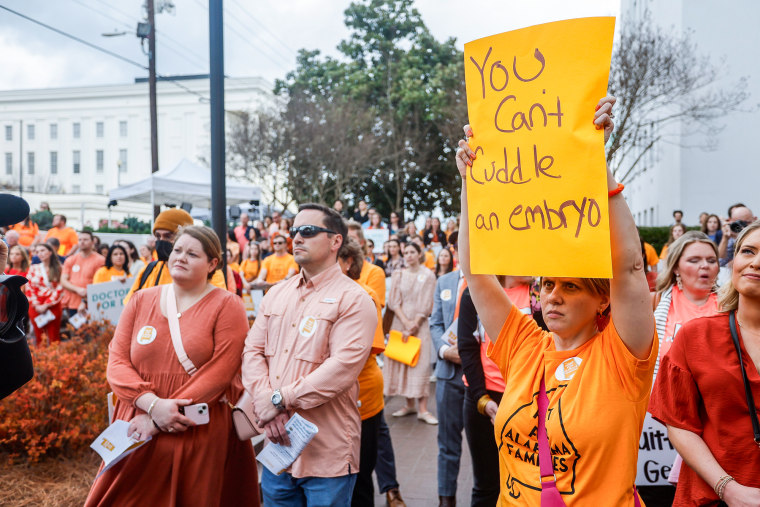
“It’s not a political issue. They claim that we’re about saving the babies and what’s good for the children. This is what makes children happen for some families,” said Jones, who attended a rally outside Alabama’s State House on Wednesday to advocate for IVF protections.
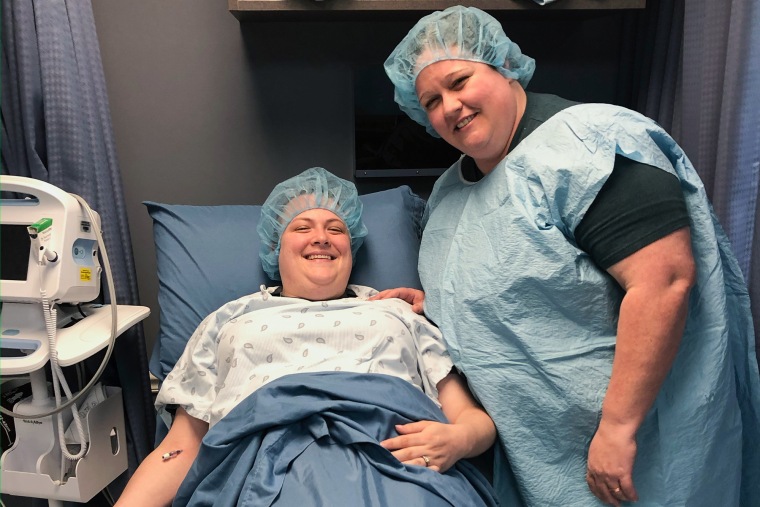
Jones, 34, and her wife, Paige, 41, live in Alabaster with their 4-year-old son, Fendley. The couple conceived Fendley through IVF in 2020 and froze three more embryos in the hope of having another child in the future.
Elishea Jones, left, and her wife, Paige, after Elishea’s egg retrieval on Oct. 21, 2019.Courtesy Elishea Jones
Last week, Katherine Robertson, the chief counsel for Alabama Attorney General Steve Marshall, said in a statement that Marshall “has no intention of using the recent Alabama Supreme Court decision as a basis for prosecuting IVF families or providers.”
Jones said the statement did not give her much comfort: “I don’t trust that.”
One day after the attorney general’s assurance, an explosive device detonatedoutside Marshall’s office. No one was hurt, but Alabama authorities released a video of the suspect Wednesday in an effort to identify them.
For many same-sex couples, the events of the last week have felt deeply unsettling.
While IVF and other assisted reproductive technology procedures are not unique to same-sex couples, such couples rely on them more than heterosexual couples if they are trying to conceive children biologically.
“Making IVF services off-limits or of uncertain legality disproportionately affects LGBTQ parents,” said Mary Ziegler, a professor at the University of California Davis School of Law whose expertise includes the history and politics of reproductive rights.
Research published in the American Journal of Obstetrics & Gynecology in 2019 — which reviewed pregnancies of more than 230,000 women in same-sex and opposite-sex marriages from 2012 to 2016 — found 34% of women in same-sex marriages used assisted reproductive technology, including IVF, compared to only 4% of women in opposite-sex marriages.
The IVF process for Jones — including sperm, medications and her egg retrieval procedure — cost upward of $25,000 and took a significant toll on her body.
“It was one of the toughest things I’ve ever been through, like mentally, physically,” she said, but she said with a shrug, “It was the only way to have kids.”
Jones has explored moving the embryos out of state but worries about the legal implications.
“Could I get in trouble if I try to move them?” she asked. “As soon as I can get them out of the state, I will.”
Carrie McNair, of Mobile, holds a sign at a rally advocating for IVF rights outside the Alabama State House in Montgomery on Wednesday.Stew Milne / AP for The National Infertility Association
Polly Crozier, the director of family advocacy for GLAD, an LGBTQ legal rights group, said the Alabama Supreme Court’s ruling adds to the many challenges already facing LGBTQ parents in the state.
“It is an environment where it is difficult to protect your legal parent-child relationship, even when your children are born,” she said. “So I think that LGBTQ people see a ruling like this, and I think it really strikes terror in their hearts.”
“This IVF case is obviously a very clear sign that the anti-abortion movement really has its sights set much broader than abortion,” Crozier added. “For some out-there activists, the vision is the only real family is a mother and a father who have created their children through sexual intercourse and are genetically related to them.”
On Thursday, the state House and the state Senate passed bills that would grant legal protections to IVF providers and patients. Both chambers of the Legislature would need to vote on a unified bill before it could make its way to Gov. Kay Ivey. Critics say the bills fail to address whether or not an embryo created via IVF should be considered a child under state law, the core issue raised by the state Supreme Court ruling.
Caroline Veazey is not waiting to see what happens with the state legislation. Veazey, 30, went through one unsuccessful round of IVF last year before she tried again and successfully froze six embryos last summer. The process cost her over $20,000.
When the Supreme Court decision was reported, she launched a GoFundMe campaign and started frantically searching for ways to transport her embryos out of state.
“I literally Googled ‘how to move embryos out of a state’ or ‘how to ship embryos’ and started getting quotes,” said Veazey, who splits her time between Birmingham and Woodstock, Georgia. “You can prepare for all the money for IVF; you cannot prepare for ‘Oh, my gosh, I need to get my embryos out of Alabama immediately.’”
Kandis Pulliam, left, and her fiancée, Caroline Veazey, after Veazey’s egg retrieval on July 20.Courtesy Caroline Veazey
For Veazey, becoming a mother would be a dream come true. “As someone who identifies as a lesbian, I knew at some point — partner or no partner — that I was going to go through IVF,” she said.
“I have a really rough relationship with my mother, who is unaccepting of my sexuality,” said Veazey, a licensed counselor with many LGBTQ clients. “And I could only hope and dream of having a baby who I could give complete acceptance and support to. That is my goal. It’s what I’ve always wanted.”
Though moving the embryos to a storage facility near Woodstock would seem like a natural solution, Veazey is not confident something similar would not happen there. “Georgia is a red state. It can go both ways, and I need to get them to a safe state,” she said.
On Wednesday, Veazey signed paperwork waiving her IVF clinic’s liability so it can release the frozen embryos to a company that will transport them to a storage facility in Washington state.
Former state Rep. Patricia Todd, who in 2006 made history as the first openly gay lawmaker elected to the Legislature, worries about Alabama’s future.
“I think that a lot of younger same-sex couples will decide to leave Alabama,” said Todd, who now works on LGBTQ advocacy across the state. “They don’t want to live in a state that’s this regressive.”
Moving is something Elishea Jones has begrudgingly started to question. Vermont is too cold. Colorado is too far from family. She gets emotional thinking about how she will explain all of this to her son one day.
“I fought so hard to have him, so I’m going to fight for him. If s— goes down, we’re gone,” she said, wiping away a tear, and then laughed. “I’ll protect his embryo-siblings.”
Churches, synagogues, and other places of worship have found themselves in the crosshairs while in the pursuit for LGBTQ rights and safety. According to new findings from GLAAD and the Anti-Defamation League Center on Extremism, from June 2022 – January 2024, researchers documented at least 66 incidents in which religious institutions were targeted over their perceived support for and inclusion of LGBTQ people in the US. These incidents included arson, property theft and destruction, and threatening letters, emails, and phone calls — illuminating that religious institutions are not immune to the alarming rise of anti-LGBTQ hate sweeping the US.
Places of worship from all faith traditions, including churches, synagogues, mosques, gurdwaras, and Buddhist temples, are increasingly showing supportfor LGBTQ equality. These same acts – from the flying of rainbow banners, to Pride month services, to LGBTQ youth groups – are also garnering the attention of anti-LGBTQ extremists, making supportive religious institutions a target right alongside drag shows and health care clinics that serve transgender people .
GLAAD and ADL’s new findings include a number of high-profile cases, including the recent 18-year sentencing of Aimenn Penny, an alleged associate of the white supremacist “White Lives Matter” network, for his attempt to firebomb a church in Chesterland, Ohio in March 2023. According to police reports, Penny was angered by the church’s upcoming drag shows and sought to “save the children,” echoing familiar and false anti-LGBTQ tropes.
The rising number of attacks against affirming religious institutions reflects growing research about the ways longtime extremist groups are attempting to expand their reach by targeting LGBTQ people and allies. These particular acts of extremism do not reflect a larger reality in faith communities. Research shows people of every faith support LGBTQ people, and a majority of LGBTQ people consider themselves religious. In recent weeks as well, Pope Francis has spoken up for LGBTQ people and relationships to be recognized, and stated that transgender people can be baptized, be godparents, and witness weddings. The Pope has also urged Catholic parents to accept their LGBTQ children.
“For years, anti-LGBTQ activists relied on the stereotype of LGBTQ condemnation from religious figures,” said Ross Murray, Vice President of the GLAAD Media Institute and ordained deacon.
“Now that religious communities are faithfully coming to the conclusion that the LGBTQ community should be safe from violence and welcomed into faith communities, anti-LGBTQ activists are turning to violence and intimidation on those faith communities. Faith leaders cannot back down or allow their voices to be silenced by a radical fringe, but must continue to stand for the safety and welcome of LGBTQ people.”
Here are a few examples of incidents tied to extremist groups targeting LGBTQ-inclusive religious institutions:
March 2023: A synagogue in Nashville, Tennessee, reported that individuals associated with the white supremacist Active Club network placed anti-LGBTQ stickers on their doors which read: “F*ggots not welcome.”
June 2023: 11 individuals associated with the antisemitic extremist group Goyim Defense League (GDL) demonstrated outside Temple Beth Israel in Macon, Georgia. Protestors shouted antisemitic and racist slurs, distributed flyers spreading false conspiracy theories about Jewish power and control, and even hung an effigy of a gay Jewish man outside the temple.
October 2023: Individuals from a variety of white supremacist groups — including GDL, the Order of the Black Sun (OBS), and the American National Socialist White Workers Party (ANSWWP) — protested outside the Cathedral of Hope United Church of Christ in Dallas, Texas. Protestors waved swastika-covered flags, held signs reading “Protect white children” in rainbow lettering, and declared: “Sodom and Gomorrah were your warning,” referencing a Biblical passage many believe condemns homosexuality.
Places of worship have also reported a number of threatening incidents from individuals with no known connections to extremist groups. For instance, in October 2023, an unknown person drove their car through six rainbow-colored doors displayed as part of a Pride exhibit in front of the United Christian Church in Renton, Washington. In another such example, someone set fire to a Pride flag hanging outside a Buddhist temple in Pasadena, California in April 2023 — destroying a hand-painted banner that flew undisturbed for years to represent the temple’s “fundamental commitment to nondiscrimination.”In June 2023, unknown individuals stole two Pride flags and a Black Lives Matter flag from the Veradale United Church of Christ in Spokane Valley, Washington. That same day, the church’s reverend found the words “Lev 2013” written in diesel fuel on the church’s lawn, making reference to a Bible verse in Leviticus which has been used to condemn homosexuality. That same month, the First Baptist Church in Jamaica Plain, Massachusetts reported anti-LGBTQ graffiti on the church’s steeple, which stated that all LGBTQ people “should die.”
These incidents come amidst a previous report by GLAAD and ADL that documented over 700 anti-LGBTQ hate and extremism incidents in the year following the tragic attack at Club Q in Colorado Springs.
The full Anti-LGBTQ+ Incidents Targeting Religious Institutions data set can be requested here.
The research in this article was made possible thanks to a partnership between ADL and GLAAD focused on countering anti-LGBTQ extremism and hate. Learn more about this critical partnership.