Hundreds of Black trans people lost to violence have been honoured in a powerful street mural painted by local artists in Chicago.
The words ‘Black Trans Lives Matter’ stretch across the street in Catalpa Avenue, Andersonville. It was created by 22 artists or art groups, with the help of neighbours who donated $4,000 to pay the artists for their time and materials.
Last weekend the whole community came together to add names and portraits to the artwork, giving faces to those who have died.
“It is vital that when folks see that Black Trans Lives Matter [mural] they understand the context of why it matters,” said David Oakes of the Andersonville Chamber of Commerce, speaking to Block Club Chicago.
Each participating artist decorated an individual letter in the mural. One artist, Bailey Funk, painted the words “say their names” in the letter B, prompting the chamber to consider giving more prominence to the names of the dead.
Now the names encircle the mural, each one colour-coded to give context to the deaths.
The names in pink are people whom police killed in the last five years, while the names in yellow identify unarmed people of colour killed by police since 1975. More names are being added this week, according to the chamber.
Among those honoured in portraits are Merci Mack, a Black trans woman killed by a gunshot to the head, Tony McDade, a Black trans man shot by police, and Marsha P Johnson, a Black queer rights activist instrumental in the Stonewall uprising of 1969.
“Transgender women of colour were leaders in LGBT+ activism and throughout time, but they have been erased,” Laura Austin, associate director of the Andersonville chamber, said in a statement.
“We wanted to give them space. We wanted to make them a priority. It is long overdue.”
The Black Lives Matter movement gave rise to several memorials to the trans community, including a huge art installation on Hollywood Boulevard. Last week it was announced that the huge letters reading ‘All Black Lives Matter’ will remain there permanently.
Two transgender teenagers are suing Arizona over its blanket ban on paying for transition-related healthcare for Medicaid recipients.
The claimants, 17-year-old D.H. and 15-year-old John Doe, are bringing a class-action lawsuit alleging that their civil rights are being violated by Arizona’s prohibition on transition-related surgeries.
Arizona is one of 10 states that explicitly bans coverage for transition-related treatments to transgender Medicaid recipients, according to Metro Weekly.
The National Center for Lesbian Rights filed the complaint against the Arizona Health Care Cost Containment System on August 6.
“D.H. and John bring this lawsuit on behalf of themselves and similarly situated individuals to challenge Arizona’s categorical prohibition of coverage of medically necessary treatments for gender dysphoria, specifically, male chest reconstruction surgery,” the complaint reads.
The pair argue that top surgery is a medically necessary treatment for their gender dysphoria and that by denying them this healthcare, Arizona is causing them physical and psychological harm.
The National Center for Lesbian Rights argues that given the Supreme Court’s recent historic decision making it illegal to fire workers for being gay or trans, Medicaid’s ban on transgender healthcare constitutes sex discrimination.
The lawsuit comes a year after a Wisconsin judge ruled that Medicaid must cover transgender healthcare, including hormone therapy and gender confirmation surgeries such as chest surgery.
The US district judge made the ruling in the case of four trans Wisconsin residents, who were challenging a 1997 provision that excluded coverage of “transsexual surgery” for Medicaid recipients.
The judge ruled that the provision was discriminatory.
Lawsuit against Arizona’s Medicaid ban on transgender healthcare.
Both of the claimants in the case against Arizona currently wear binders.
D.H. started wearing a binder to flatten his chest aged 12. He says this helps with his gender dysphoria but significantly impairs his ability to function, with the pain and discomfort caused by wearing the binder interfering with his ability to focus on school and homework.
Both D.H.’s paediatrician and his therapist have recommended he get top surgery, but this was denied by Medicaid because in Arizona, there’s been a categorical ban on transition-related coverage since 1982.
John also wears a binder to alleviate his gender dysphoria, which according to the lawsuit is “tight and restrictive”.
“Even with the binder, John feels uncomfortable being outside without layers of clothing. He wears a hooded sweatshirt nearly every day, including in the summer.
“John’s chest also hinders his social interactions. For example, John wears his binder and a t-shirt when at the pool, often having to answer uncomfortable questions about why he insists on wearing a t-shirt in the water.”
John’s healthcare team have also recommended he get top surgery, which again he can’t because of Arizona’s ban on transition healthcare.
The lawsuit says: “Arizona disregards the transition-related health care needs of Medicaid’s transgender beneficiaries. In doing so, Arizona exposes transgender people to significant and avoidable harms to their health and well-being, in violation of the US Constitution and federal law.”
It alleges that Arizona’s ban violates two provisions of the Medicaid Act: that states must provide “early and periodic screening, diagnostic and treatment’ for individuals under 21 before medical conditions become more complex and treatments become more costly; and the act’s comparability requirements, which say that any medically necessary treatment that would be given to one individual cannot be arbitrarily denied to another.
The National Center for Lesbian Rights is asking for the state to pay for the pair’s top surgeries now, before the court case begins.
An Idaho judge has granted an injunction against enforcement of the state’s discriminatory law excluding trans athletes from the student sports teams corresponding to their true gender.
The anti-trans bill, HB500, was signed into law by Republican governor Brad Little in the midst of the pandemic in March, alongside its sister bill HB509 that bars trans people from changing the gender marker on their birth certificate.
In June, a judge ruled that HB509 is a violation of transgender people’s constitutional rights, in a lawsuit filed against Idaho by LGBT+ advocacy group Lambda Legal.
And on Monday (August 17), another lawsuit against the anti-trans laws saw victory as a judge granted an injunction against enforcement of HB500 pending a case against it being heard in court.
District court judge David Nye said that the state’s interest was not justifiable but rather “an invalid interest of excluding transgender women and girls from women’s sports entirely”.
Nye’s order recognises that both HB500 and HB509 were not motivated by legitimate policy goals but purely “motivated by a desire for transgender exclusion”, said the Human Rights Campaign, one of the organisations fighting Idaho’s laws in court.
“Today’s decision is a huge, positive step forward for transgender athletes in Idaho and around the country,” said Alphonso David, president of the Human Rights Campaign.
“Everyone should be able to play sports, and gender identity should not be a barrier to participation.
“We’re hopeful that the court will ultimately make the right decision to strike down HB500 in totality, so that athletes such as Lindsay Hecox and others can continue to excel at the sports they’ve poured themselves into, without having their identities used as a wedge against them.”
Idaho anti-trans laws would put athletes at risk of genital exams.
HB500 would place an outright ban on trans girls and women playing on female sports teams, and would place all female athletes at risk of invasive genital examinations to “prove” that they are not trans before being allowed to play.
Judge Nye’s decision comes as athletes in Idaho begin preparing for the sports season ahead – including Lindsay Hecox, a cross-country runner on Boise State University’s women’s track team and one of the plaintiffs suing Idaho over its anti-trans law.
Before the judge granted the injunction against HB500, Hecox would have been prohibited from participating in the upcoming athletic season.
This would have put Idaho in conflict with the National Collegiate Athletic Association’s own trans-inclusive policy.
As the judge noted, HB500 puts Idaho in “stark contrast to the policies of elite athletic bodies… which allow transgender women to participate on female sports teams once certain specific criteria are met”.
Idaho is the first and only state to categorically ban trans women from participating in women’s sports.
Idaho officials’ latest attempt to ban transgender people from changing the gender on their birth certificates violates a court order issued two years ago, a federal judge said.
U.S. Magistrate Judge Candy Dale first ruled in 2018 that a law barring the birth certificate changes was unconstitutional, and she banned state officials from implementing it. Earlier this year, Republican lawmakers passed new legislation that did largely the same thing.
That law signed by Republican Gov. Brad Little went into effect on July 1. It set strict criteria for changing gender on a birth certificate, including a requirement that a person first obtain a court order, and only allowed people to seek the court order if the sex listed on their birth certificate was mistakenly entered, entered fraudulently or under duress.
As a result, the state Department of Health and Welfare created procedures to implement the new law, including revising an application form and the department’s instructions for changing the sex listed on a birth certificate.
In her order Friday, Dale said the new procedure does the same thing as the old one by effectively preventing transgender people from changing the sex on their birth certificates.
“The plain language of the statute, as quoted, forecloses any avenue for a transgender individual to successfully challenge the sex listed on their Idaho birth certificate to reflect their gender identity,” Dale wrote.
Lambda Legal represented two transgender women who filed the original lawsuit that led to Dale’s first ruling. The advocacy group successfully argued the state’s ban on birth certificate changes for transgender people violated their constitutionally protected right to privacy, liberty and freedom from compelled speech.
“It is astonishing that the Idaho Legislature and Gov. Little plowed forward with resuscitating this dangerous and archaic ban in direct defiance of multiple court orders that repeatedly ordered the government to stop discriminating against transgender people,” said Nora Huppert, an attorney with Lambda Legal. “What was discriminatory in 2018 remains discriminatory today.”
Spokespeople with the Department of Health and Welfare and the governor’s office did not immediately respond to requests for comment.
Another anti-transgender law passed this year also is being litigated. It bars transgender and intersex girls and women from competing in women’s sports. Boise State University student Lindsay Hecox is suing the state in federal court, contending the law is discriminatory and would prevent her from trying out for the women’s cross country team because she is transgender.
Two transgender teens sued Arizona’s Medicaid agency Thursday, alleging their civil rights are being violated by the state health insurance program’s ban on gender-affirming surgeries.
The suit, filed Thursday in an Arizona federal courthouse, seeks to establish a class action on behalf of the teens — known only as John Doe, 15, and D.H., 17, and other transgender Arizonan Medicaid recipients under age 21 who seek chest reconstruction as treatment for a diagnosis of gender dysphoria. The complaint estimates there are at least 100 Arizonans who would be affected by the suit.
The suit defines the class as “individuals who have been unable and will be unable” to obtain coverage through the Arizona Health Care Cost Containment System “for medically necessary male chest reconstruction surgery because of the [ban], and as a result, have faced or will face delayed or denied access to these medically necessary treatments.”
The claims say the state’s 1982 ban on “gender reassignment surgeries” violates the Affordable Care Act’s anti-discrimination provisions, the Medicaid Actand the Equal Protection Clause of the 14th Amendment to the U.S. Constitution.
According to the suit, the two came out as transgender years ago and since then have faced significant challenges as puberty began to change their bodies. It also states the reliance on chest binders to create a more masculine appearance forced D.H. to abandon his beloved hobby of dance and resulted in John Doe wearing a heavy hoodie through Arizona’s sweltering summers.
Both teens’ physicians recommended chest reconstruction surgery, and the state’s 1982 ban on Medicaid funding for “gender reassignment surgeries” means that as Medicaid recipients, they are ineligible for the medically necessary surgery even if a doctor recommends it, according to the suit.
Arizona is among 10 states across the U.S. that explicitly ban transgender health care coverage for Medicaid recipients, according to Movement Advancement Project, an LGBTQ think tank. Twenty-two states and Washington, D.C., explicitly cover this type of care, while 18 states have no explicit policy regarding trans health coverage.
Asaf Orr, an attorney working on the case and the director of the National Center for Lesbian Rights’ Transgender Youth Project, said there is “no legitimate justification for Arizona’s refusal to provide this critical care to transgender Medicaid recipients.”
“Instead, excluding that care creates unnecessary barriers that prevent transgender young people from thriving in every aspect of their lives and can cause lifelong harms,” he said in a statement.
In June’s landmark Supreme Court decision Bostock v. Clayton County, Georgia, the high court found that the Civil Rights Act’s ban on employment discrimination “on the basis of … sex” also bans employment discrimination on the basis of sexuality and gender identity.
“In Bostock, the United States Supreme Court unequivocally held that the definition of ‘sex’ under federal law includes discrimination against transgender people,” Orr wrote in an email to NBC News. “By maintaining and enforcing a categorical exclusion for surgical treatment for gender dysphoria, AHCCCS is impermissibly discriminating against transgender Medicaid recipients on the basis of sex and, as a result, the Court should enjoin AHCCCS from denying coverage under that exclusion.”
The suit notes that Medicaid requires that recipients under age 21 receive “Early and Periodic Screening, Diagnostic and Treatment” so that major “medical, vision, dental, and hearing” problems are diagnosed and treated early in life. It then states that “[s]urgery to treat gender dysphoria, including male chest reconstruction surgery” is such a service.
Heidi Capriotti, a spokesperson for the Arizona Health Care Cost Containment System, declined to comment.
Trans prisoners in a New York county were delivered a stunning victory Wednesday (August 5) when a roster of LGBT+ activist organisations secured them a vital but simple right: To be incarcerated as the correct gender.
The landmark legal settlement was described by activists as having secured some of the most “robust policies in the country” to better protect trans folk in custody in the western Steuben County.
The case was brought forward after 43-year-old trans military veteran Jena Faith was sentenced to a month in Steuben County Jail in 2019. While initially kept in the women’s division of the jail, she was later transferred to the men’s where she experienced weeks of verbal and physical humiliation and abuse from inmates and guards alike.
Trans woman tossed in men’s jail: ‘No one should ever be subjected to the cruelty and harassment I endured.’
Faith filed a lawsuit with the TLDEF after her rattling experience in a men’s facility. Trapped in the tight, cramped cells with male prisoners, she detailed in a report to the American Civil Liberties Union (ACLU) how inmates harassed her, guards misgendered her, and told of how she was denied hormone therapy.
As a result of the settlement, the county will now commit itself to a package of policy changes designed to treat trans, non-binary, gender non-conforming and intersex folk with dignity and respect.
These range from housing inmates in line with their gender identities and training prison staff to respect inmates’ pronouns to giving access to clothing, toiletry and grooming products and appropriate medical care.
Transgender Legal Defense & Education Fund (TLDEF) and the New York Civil Liberties Union hope that the new policies will offer a blueprint for other prisons across the state and the US.
“No one should ever be subjected to the cruelty and harassment I endured.
“Everyone housed in detention facilities deserves to be treated with dignity and respect, including transgender people. I hope my case will help others, not only in Steuben County, but also across New York and beyond.”
Efforts by the Obama administration to ensure trans convicts were protected from sexual abuse and assault were unwound by president Donald Trump in 2018.
Rosa Diaz and her daughter were riding their motorcycles through rural Brawley, California, this year when they noticed a young person who appeared lost walking down the town’s main street. Diaz, who runs the only LGBTQ resource center for miles, sensed that the person might be in need of support.
She told her daughter to continue ahead, and Diaz made a U-turn.
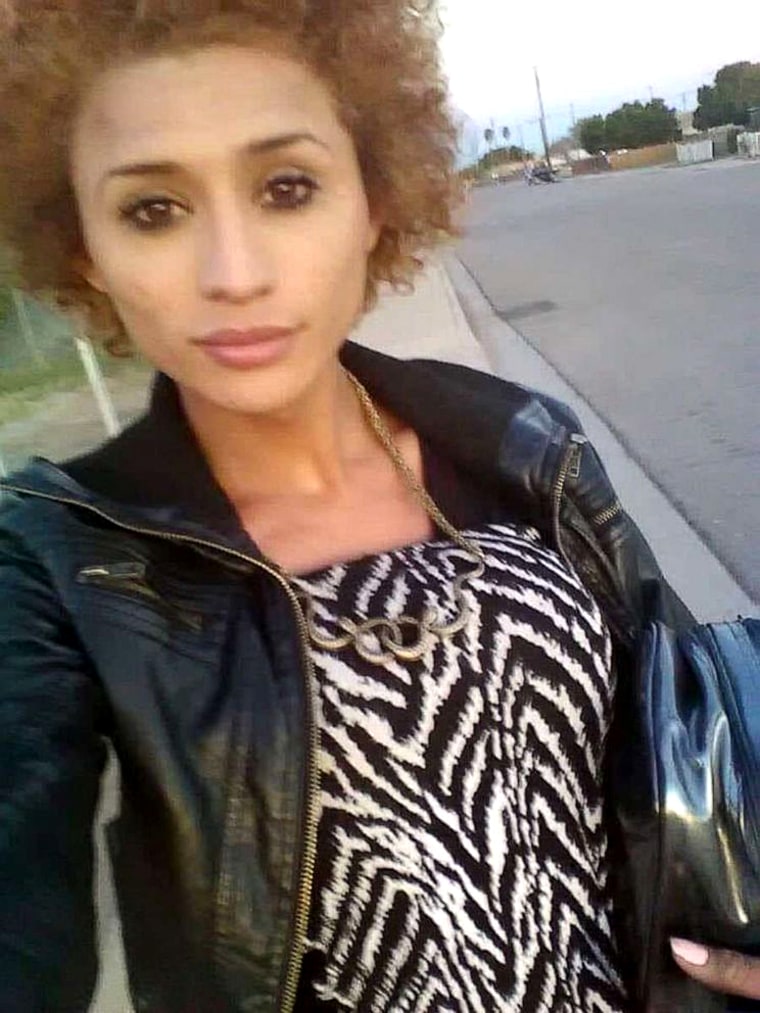
Marilyn Cazares, 22, was found dead in an abandoned building in Brawley, Calif., last month.via GoFundMe
“I asked her for her name,” and the person shared a male name, Diaz said in an interview. “I said, ‘Is there another name that you prefer?’ And that’s when she told me, ‘Well, I like Marilyn.'”
Diaz asked her whether she needed anything. “I need a new wig,” Diaz recalled Marilyn saying, gesturing to her worn clothes and hairpiece. Diaz gave her a business card, and Marilyn promised to call her after the weekend. Diaz’s team found her a wig, but the call never came.
“I didn’t know about Marilyn again until I was called regarding her death,” Diaz said.
Marilyn Cazares, 22, was found dead last month in an abandoned building in Brawley, about a half-hour north of the Mexican border. It has been a particularly deadly year for trans people — especially trans women of color. In 2019, 27 trans people died because of violence in total. In 2020, the number has already reached 25, according to the Human Rights Campaign.
In July alone, there were six violent deaths of trans and gender-nonconforming people across the U.S. — all but one of them trans Black or Latinx women — making it the deadliest month so far for this vulnerable community.
In the weeks following her encounter with Cazares in February, Diaz and her small team at the Imperial Valley LGBT Resource Centertried to reach out to Cazares. But they didn’t have her last name or any other information about her. Since her death, family and friends have spoken out about a young woman who lived her truth despite being bullied, ridiculed and violated by members of her community. Her family said they believe her death was a hate crime.
Brawley police are investigating Cazares’ death as a homicide, and Diaz said the community is hungry for answers.
Mindy Garcia, Cazares’ aunt, told NBC affiliate KYMA of Yuma, Arizona, which serves the Brawley area, that her niece was “very brave,” “very outspoken” and “very loved.”
“She was very beautiful,” Garcia added.
An openly hostile environment
Diaz, who grew up in Imperial County, where Brawley is located, came out as lesbian in her 40s. She describes the area as one that at best lacks LGBTQ resources and at worst is an environment that’s openly hostile to lesbian, gay, bisexual, transgender and queer residents.
She started a support group in 2014 after she had nowhere else to turn for a sense of community — and people began turning up in large numbers.
“People who came to this group were telling me, ‘You know, we appreciate what you’re doing, but I need counseling, I need hormone therapy, I need artificial insemination,'” she said. “I wasn’t prepared for all of that.”
But within six months, she had founded the Imperial Valley LGBT Resource Center. She said she has had to “tread lightly” for it to be viewed as a reputable community organization. It’s still the only LGBTQ center in Imperial County, which includes seven cities and about 180,000 residents.
“This is where I began to hear stories,” Diaz said of the center. “Those who were a little flamboyant and very comfortable with themselves … they were considered to be crazy, weird, even evil to some extent.”
She said she’s certain Cazares experienced that kind of treatment in her short lifetime.
“According to what I heard from the family — and because I know my community — Marilyn or anybody that could appear as if they’re one gender but identify as another gender are ridiculed,” she said. “They are seen as people with a mental illness, or, you know, people that are not right.”
She said LGBTQ people in Imperial Valley are pushed out of their families, their churches and their communities. She also said Cazares’ death marks the second high-profile homicide of a Latina trans woman from Brawley, after the murder of trans teen Gwen Araujo in 2002.
“The community is angry, of course, because we know that trans women are being killed all over,” Diaz said. “A lot of people believe that these things only happen in big cities, and here, it has hit home.”
Download the NBC News app for breaking news and alerts
Diaz emphasized the need for LGBTQ education in communities like Brawley, where, she said, many residents are unaware of how their LGBTQ neighbors might struggle. Since her death, Cazares has been misgendered in the media — even by members of her family. But Diaz said her goal is to lead with education and information rather than attacks, especially for working-class people who are still learning.
“It’s a sad event,” Diaz said. “But it’s also an opportunity to really honor Marilyn and to let the family know: ‘We remember her like this, because this is who she was.'”
A prominent children’s hospital publicly apologized Thursday for performing cosmetic genital surgeries on intersex infants and pledged to end the practice.
“We recognize the painful history and complex emotions associated with intersex surgery and how, for many years, the medical field has failed these children,” the Ann & Robert H. Lurie Children’s Hospital of Chicago said in a statement. “We empathize with intersex individuals who were harmed by the treatment that they received according to the historic standard of care, and we apologize and are truly sorry.”
The apology, signed by the hospital’s CEO and three head physicians, comes after activists, over a yearslong campaign, called on the institution to ban cosmetic genital surgery on intersex infants, which is irreversible. The signatories also committed to “evolving” their policies going forward and stated that the hospital would not perform such surgeries unless medically necessary or with willful consent from fully informed patients.
“Historically care for individuals with intersex traits included an emphasis on early genital surgery to make genitalia appear more typically male or female,” the statement, published Tuesday, continued. “As the medical field has advanced, and understanding has grown, we now know this approach was harmful and wrong.”
“Intersex” is an umbrella term that refers to individuals born with sex traits or reproductive anatomy that do not fit the conventional categories of male and female. Approximately 1.7 percent of the population fits into this broad category, according to research cited by the intersex advocacy group InterACT.
Intersex activists have long advocated for a ban on medically unnecessary genital surgery for intersex infants. They have argued that the historically common practice — intended to “help” these individuals better fit into society — denies them the legal right to consent to the procedure. According to the Human Rights Watch, 1 in every 2,000 children “is different enough that doctors may recommend surgical intervention to make the body appear more in line” with a conventional male or female.
Along with intersex justice organizations, multiple civil and human rights organizations, like Human Rights Watch and the ACLU, have long condemned these procedures as unnecessary, saying that there is no evidence such practices help individuals better function in society.
Many who were forced to undergo these surgeries report lifelong harm, including higher risks of scarring, loss of sexual sensation and psychological trauma.
While the hospital has not disclosed how many such procedures had been performed over the years, it did state that it had not performed a clitoroplasty on a child or infant in five years.
Intersex activist Pidgeon Pagonis, who was subjected to cosmetic genital surgery at the Lurie Children’s Hospital, was in disbelief after hearing the news.
“Today, what matters is the autonomy of future intersex people and patients,” Pagonis said at a virtual news conference on Thursday. “We couldn’t do the whole country, we couldn’t get Congress to agree with us, but we knew that we could do it at one hospital where it happened to me and so many other people.”
“I’m here to say that we did that, we did that!” Pagonis said.
Pagonis, who identifies as nonbinary and intersex, founded the activist group Intersex Justice Project with fellow intersex activist Sean Saifa Wall. One of the project’s goals was to end these practices across the country, specifically at the Lurie Children’s Hospital, where Pagonis underwent a clitorectomy as a child.
Three years ago, the organization launched a campaign demanding the hospital end this practice, staging multiple protests at its front doors, starting the social media hashtag #EndIntersexSurgery, and organizing phone and emailing campaigns to express members’ concerns.
This watershed moment is only a taste of victory, Wall said Thursday at the news conference.
“We are one step closer to ensuring a world where intersex children can live free from harm,” he said.
Two more Black trans women have been murdered in the US this week, and reports have emerged that a Black trans man was killed in June.
Their deaths mean there have been at least 25 trans people murdered in the US in 2020, just over halfway into the year. The Human Rights Campaign tracked 27 violent fatalities throughout all of 2019.
According to local New York TV station WPIX, 32-year-old Tiffany Harris was stabbed to death in her Bronx apartment early Sunday morning (July 26).
She was initially deadnamed and misgendered by the police and the media, but was correctly identified by people in her community as well as a trans rights group.
NYPD officers responded to a 911 call just after 1.30am and discovered Harris with a stab wound to her chest in the hallway of her building. She was rushed to hospital but was pronounced dead at around 2.20am.
Her death is not being investigated as a hate crime. A man caught on CCTV is wanted for questioning, and is believed to have been in a relationship with Harris.
On Monday (July 27) afternoon, a second Black trans woman was found dead in Baton Rouge, Louisiana.
According to local news outlet The Advocate, Queasha D Hardy was just 24 years old and had been shot in broad daylight. She was found just after 1pm lying in the street with multiple gunshot wounds and passed away at the scene.
Hardy was also misgendered and deadnamed by police and the media after her death, and her next of kin reportedly demanded that she be identified as male despite her living openly as a trans woman.
A Black trans man was murdered last month.
Reports have recently emerged that a Black trans man, Brian Powers, was murdered in Akron, Ohio, on June 13.
According to the Akron Beacon Journal, Powers was killed by a single gunshot and was found on the street outside a church.
Police said they have no leads, but the man’s friends and family believe his death is not being treated seriously because he was Black and transgender.
Powers’s friend Steve Arrington, who works at the Akron AIDS Collaborative, said: “I’m kind of disturbed when they say ‘Black Lives Matter’.
“I say: ‘Whose lives, my life? Or just heterosexual Black people’s lives? What about my LGBTQ brothers and sisters? They’re Black. Do their lives matter?’”
After Harris’ death, Human Rights Campaign said in statement: “There are currently very few explicit federal legal protections for transgender or gender-expansive people.
“Nationally, despite some marginal gains in state and local policies that support and affirm transgender people, recent years have been marked by anti-LGBTQ attacks at all levels of government.
“We must demand better from our community, peers and elected officials and reject harmful anti-transgender legislation appearing at the local, state and federal levels.
“It is clear that fatal violence disproportionately affects transgender women of colour. The intersections of racism, transphobia, sexism, biphobia and homophobia conspire to deprive them of necessities to live and thrive.
“This epidemic of violence that disproportionately targets transgender people of colour — particularly Black trans women — must cease.”
Following the deaths of four trans people – three of whom were Black trans women – in a single week at the start of July, HRC said it has “never seen such a high number at this point in the year” since they began tracking this data in 2013.
Black trans army veteran Jamel Young is suing the New York Police Department for their “dehumanising” treatment of him during what began as a routine traffic stop in 2019.
Young, 33, had driven to New York from Atlanta, with his girlfriend, in March 2019.
His ordeal began when, after dropping his girlfriend at a friend’s apartment, he began looking for somewhere to park.
When an unmarked NYPD car pulled him over, Young said he didn’t panic.
“I’m feeling like, OK, I didn’t do anything wrong, whatever this is I’ll take care of it,” Young toldBuzzFeed News.
But the US citizen said was still aware that as a Black man in the Bronx late at night, he needed to be careful. “The only thing on my mind is to comply,” he said.
It was after he disclosed to the police officers that he is transgender that the problems began.
According to Young’s lawsuit against the corrections department and the NYPD, filed last month, the police then misgendered, assaulted and sexualised him. Officers also dismissed his fears for his safety and failed to provide for his basic needs, Young alleges.
His case comes one year after New York City was sued over the death of Layleen Polanco, the Afro-Latinx trans woman who died in solitary confinement in Rikers Island prison.
After asking him “basic traffic stop questions”, police asked Jamel Young if he had a gun on him. He did – and though it was registered, what Young didn’t know was that he needed a separate license to take it out of Georgia.
He also didn’t know whether the gun was in the car with him or if it was in the bags he’d dropped with his girlfriend at his friend’s house. He says he also didn’t know that you need a different license to carry a gun on your person and in your vehicle.
The police – who arrest hundreds of tourists every year for bringing firearms to New York, which has some of the strictest gun laws in the country – placed him under arrest.
“I didn’t know or think that I was doing anything wrong, I thought I was doing everything completely, 100 per cent right,” Young said.
As police pulled him from his car, he panicked and told them he’s trans – hoping they’d be respectful. But instead, several officers grabbed his chest and crotch like they were “trying to confirm” that he’s trans.
Young also alleges another officer sexually assaulted him while transporting him to the police station.
His lawsuit also alleges that police officers joked about him being trans and called him “he, she, her, him, miss and sir” at various points in the night.
Young was taken to prison, where his problems continued. He said he feared for his life, and that when he asked his legal-aid lawyer what to do, he was told to tell officers that he was female.
“I felt worthless,” he told BuzzFeed News. “I felt like all those triggers that trans people try so hard to manage throughout the transition, all of it just exploded.”
The NYPD said in a statement: “NYPD recognises and supports the rights and dignity of transgender and gender non-conforming persons. We endeavour to treat all individuals with the utmost respect.
“This lawsuit will be reviewed in the normal course when service is effected.”
Jamel Young said he’s suing because he wants to see changes that will ensure the safety of transgender people in custody.
“I’m not asking for anything special. I don’t think I need to get coffee three times a day. I literally just need my safety,” he said.