A young gay couple in Armenia tragically took their own lives because of “intolerance towards them”, according to an LGBTQ+ group.
The couple, reportedly named Tigran and Arsen, posted a series of Instagramphotos of themselves on Thursday (20 October) before their tragic deaths.
The photos showed the two kissing and appearing to show off engagement rings.
“Happy ending. The decisions about sharing the photos and our next steps were made by both of us,” the harrowing caption read.
The two then ended their lives in the country’s capital, Yerevan, reports Armenian LGBTQ+ group Pink Armenia.
The post has since been flooded with tributes and kind words to the pair.
Pink Armenia said in a statement: “The young men still had many years of life ahead of them, but because of intolerance towards them, they took such a tragic step.
“LGBT people are very familiar with the feeling of isolation and misunderstanding of family and society. This tragic incident proves once again that LGBT people in Armenia are not safe and not protected by society or the state.”
The organisation added that it provides professional support for LGBTQ+ people in crisis.
“Remember, you are not alone,” it said.
No protection from discrimination in Armenia
Homosexuality has been legal in Armenia since 2003, however as of 2022 the country is still sitting close to the bottom of the annual Rainbow Map ranking the best nations for LGBTQ+ rights in Europe.
At the bottom along with Azerbaijan and Turkey, Armenia was considered to have scored just an eight per cent safety score for LGBTQ+ people, with the scale considering equality, hate crime, legal gender recognition, and more.
As of 2022, there is no legislation protecting LGBTQ+ people from discrimination in Armenia.
ILGA Europe, which conducts the Rainbow Map, said: “There remain significant gaps in terms of fundamental protection against discrimination and violence in nearly half of the countries.
“Currently, 20 countries out of 49 still have no protection against hate crime based on sexual orientation, while 28 countries have no protection against violence based on gender identity.”
Readers who are affected by the issues raised in this story are encouraged to contact Samaritans on 116 123 (www.samaritans.org), or Mind on 0300 123 3393 (www.mind.org.uk).
Readers in the US are encouraged to contact the National Suicide Prevention Line on 1-800-273-8255, or The Trevor Project which provides 24/7 crisis support, 365 days a year. Text START to 678-678, or call: (866) 488-7386.
Lawmakers in the border state of Tamaulipas voted Wednesday night to legalize same-sex marriages, becoming the last of Mexico’s 32 states to authorize such unions.
The measure to amend the state’s Civil Code passed with 23 votes in favor, 12 against and two abstentions, setting off cheers of “Yes, we can!” from supporters of the change.
The session took place as groups both for and against the measure chanted and shouted from the balcony, and legislators eventually moved to another room to finish their debate and vote.
The president of the Supreme Court of Justice of the Nation, Arturo Zaldívar, welcomed the vote. “The whole country shines with a huge rainbow. Live the dignity and rights of all people. Love is love,” he said on Twitter.
A day earlier, lawmakers in the southern state of Guerrero approved similar legislation allowing same-sex marriages.
In 2015, the Supreme Court declared state laws preventing same-sex marriage unconstitutional, but some states took several years to adopt laws conforming with the ruling.
A former standup comedian who became president of Ukraine, Volodymyr Zelensky is a Jewish man who has become a global hero for standing up to a tyrant. Against all odds, Zelensky has led his nation to successfully rebuff the efforts of a world superpower bent on assassinating him and taking political control of his country.
In refusing to surrender to Russia, he inspired his fellow Ukrainians (including 90-year-old grandmothers) to take up arms. His rousing speeches in defense of democracy, peace, and equality have moved the international community to support his cause with billions of dollars of military and humanitarian aid. His insistence that war crimes be documented in real time (and the power of social media during war time) is forcing us all to confront the horrors that can be committed in the name of nationalism and the whims of a despot.
Admittedly, the majority of Ukrainians didn’t support LGBTQ+ rights before the war (according to a 2019 Pew Research Center survey, 69 percent said homosexuality should not be accepted). But as Ukrainians unite to defend their nation, things are changing rapidly. One recent petition calling on Zelensky to legalize same-sex marriage received 28,000 signatures. He’s moved to consider more rights for LGBTQ+ Ukrainians, many of whom have been enlisted in the battle to defend the country.
“In the modern world, the level of democracy in a society is measured, among other things, by the state policy aimed at ensuring equal rights for all citizens,” Zelensky wrote in response to the call for marriage equality. However, he pointed out that the Ukrainian constitution defines marriage “based on the free consent of a woman and a man,” and the constitution cannot legally be altered during wartime. In the meantime, Zelensky said he supports a civil partnership law to get rights rolling.
This story is part of The Advocate’s 2022 People Of The Year issue, which is out on newsstands Nov. 1. To get your own copy directly, support queer media and subscribe — or download yours for Amazon, Kindle, Nook, or Apple News.
Serious, standing upright and dressed in long gala dresses – despite the midday Cuban heat – Lisset and Liusba quietly walk up the ten steps of the notary office, their hands clenched and shaking. Less than a few feet ahead walk their two young daughters.
Nearly an hour later, when they walked out of the doors, the tension on their faces was replaced by smiles. From that moment, they were wives.
It became a possibility just three weeks before on the island when Cuba’s new Family Code – opening up everything from equal marriage to surrogate mothers – came into effect. The couple, which has been together for seven years, is one of the first to make the decision to get legally married in Cuba.
Odessa Kelly is the archetype of a grassroots community advocate turned politician. Her long, wavy locs frame the kind of smile that will lend you a cup of sugar or invite you to an impromptu backyard barbecue just because. Kelly speaks like someone who has been in the trenches, can relate to all our struggles, and is authentically rooting for our successes.
A native of Nashville, Kelly grew up on the east side of the city in a poor working class neighborhood riddled by poverty and gun violence. An active and creative child, Kelly played Amateur Athletic Union (AAU) basketball and used her Barbie dolls as hostages in her imaginative G.I. Joe schemes.
“Even though I’m from the hood and we weren’t rich by any means, I had a very blessed childhood,” Kelly said. “I grew up in a house with both of my parents and had a very solid foundation.”
After graduating from Stratford High School (now Stratford STEM Magnet School), Kelly attended Tennessee State University, where she earned a bachelor’s degree in business administration, and later, Cumberland University, where she earned a master’s degree in public service.
Kelly is running against a Trump ally, incumbent Rep. Mark Green (R), for Tennessee’s redrawn seventh congressional district, a formerly Democratic-majority district ruptured by Republican-led gerrymandering that echoes the South’s history of political turmoil.
If elected, Kelly would make history on multiple fronts — she would be the first out Black woman elected to represent Tennessee, the first out Black lesbian to serve in the U.S. House and the sixth openly gay woman to serve in Congress. (Former Rep. Barbara Jordan was revealed to be in a same-sex domestic partnership in her obituary.)
And Kelly is ready to make history along with her state next month, as long as all eligible Tennesseans get out and vote.
“2020 showed us that Tennessee is not a red state, it’s a non-voting state,” Kelly told the Blade in an interview.
Kelly credits the Justice Democrats for being unrelenting supporters of her campaign.
Surprisingly, Kelly was unaware of the history she would make as the first openly gay Black woman to be elected in Tennessee.
“It didn’t hit me until after I decided to run and I was literally reading the prospectus that was put together for me,” Kelly said.
For more than a decade, Kelly worked in the Nashville Department of Parks and Recreation as the leader of the Napier Community Center and executive director of Stand Up Nashville.
In 2018, when Kelly learned the city awarded a $275 million bond to billionaire John Ingram for the construction of Geodis Park, a stadium for the city’s new major league soccer team Nashville SC, Stand Up Nashville got to work securing a community benefits agreement (CBA) with Ingram.
The unprecedented agreement secured affordable housing, a $15.50 an hour minimum wage for all stadium workers, affordable childcare and workforce development.
“That CBA was our pride and joy,” Kelly said.
But Kelly recalls her proudest moment as the time she overheard a group of teenagers she was working with at Napier Community Center discuss how they don’t have to worry about what will happen to them after graduation because they have the community benefits agreement.
“You preach some of these things so much the kids just roll their eyes because they hear it 24/7, but at that point, I knew every bit of stress was worth it,” Kelly said.
Kelly’s love for her city and community didn’t stop with Stand Up Nashville. Now, Kelly channels that same energy and hard work into her campaign to stand up for Tennessee in Washington.
Kelly is a self-proclaimed Blue Dog Democrat whose platform includes Medicare for all and the Green New Deal, which focuses on combating climate change by moving away from fossil fuels and creating millions of high-paying jobs.
“The Green New Deal is me thinking about pathways out of poverty,” Kelly said.
Outside of the political arena, Kelly is a mother of two and a foodie who enjoys gaming, sports, and listening to music. Running for public office can be frenetic, but when Kelly needs to refocus and take a deep breath, she turns on her go-to song, Meek Mill’s “Amen.”
“I’m from the South so I like soulful rap and anything that has a good beat,” Kelly said.
When asked about her plans if she doesn’t win her election, Kelly said she is still considering all options.
“I’m gonna need a minute to make a decision about what I do next. All I want to do is try to win this race,” Kelly said. “And I hope I’m showing up well and speaking to the urgencies of the majority of you out there.”
Growing up gay in Rwanda was like “living in prison” for Innocent.
As a child, he was singled out by children and adults alike because he was seen as “feminine”. Teachers who should have tried to put a stop to homophobic bullying instead encouraged it, saying Rwandan culture didn’t accept queer people.
Innocent fled Rwanda and arrived in the UK as a refugee. He’s built a new life for himself as an openly gay man. For the first time, he feels free.
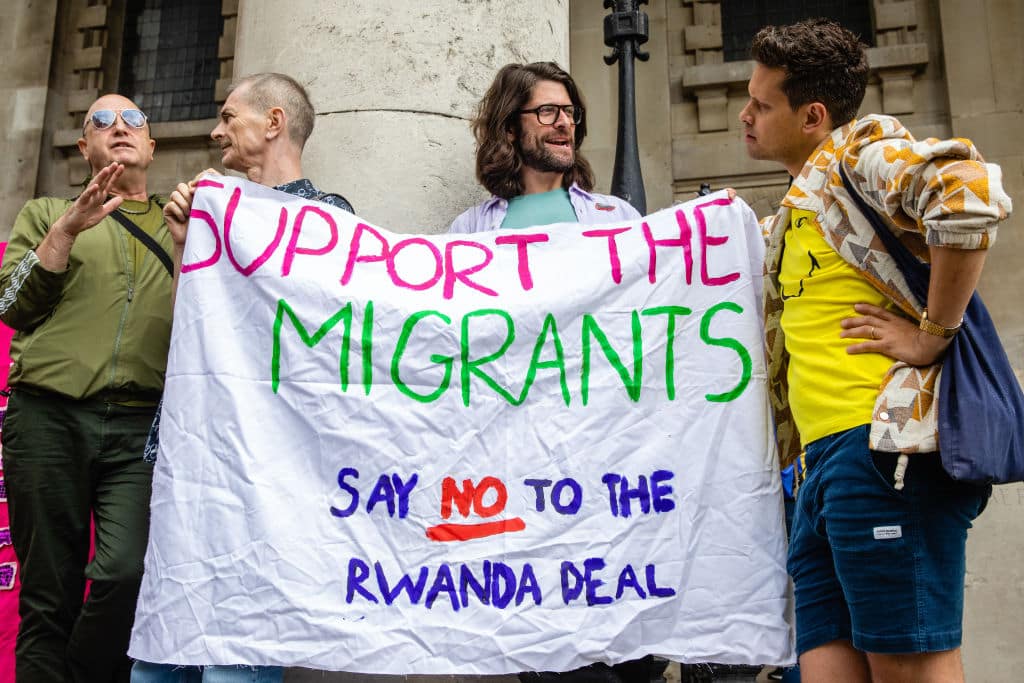
That’s why he was so shaken when he heard that the UK government is planning to deporting asylum seekers it deems “illegal” to Rwanda. The plan, launched by previous home secretary Priti Patel, has been denounced as unnecessary, inhumane, racist, and a recipe guaranteed to result in the deaths of LGBTQ+ asylum seekers.
It has been met with legal challenges – including those that grounded the first scheduled deportation flight – but a change in leadership hasn’t stopped ministers from pushing ahead. Patel’s successor Suella Braverman has been slammed for saying it’s her “dream” and “obsession” to get the plan up and running.
It’s a bitter pill to swallow for LGBTQ+ Rwandans like Innocent – his experience of growing up in the country proved to him how dangerous it can be for queer people.
You feel like no one cares about your life – even God doesn’t like you, even God doesn’t love you.
Innocent knew he was gay by the time he was 13.
“Emotionally it was really challenging because all I wanted was just to change it,” he explains.
As a teenager, Innocent went to a priest to seek guidance about his sexuality. He hoped he would get support, but the response he received was “devastating”.
“At church they were preaching that God is love. I was naive and I was thinking, if God is love and this is a man of God, he’s going to be able to accept it – to at least see me as a human being.”
LGBT+ campaigners join Gay Liberation Front (GLF) veterans to mark the 50th anniversary of the first UK Pride march in 1972. (Mark Kerrison/In Pictures via Getty)
But the priest had the “opposite reaction” – he told Innocent that his feelings were sinful and that he must change if he wanted to avoid burning in hell.
“You feel like no one cares about your life – even God doesn’t like you, even God doesn’t love you. I felt powerless.”
At that time, Innocent was still reeling from the trauma of living through the Rwandan genocide. Over just 100 days in 1994, around 500,000 to 662,000 people – mostly from the Tutsi minority ethnic group – were murdered – Innocent’s parents were among them.
Because he was an orphan, Innocent was eligible to go to the UK as a refugee at the age of 16. He knew moving away would give him the chance to live openly as a gay man – something he would never be able to do in Rwanda.
“When I arrived in Europe, it was like getting out of hell,” he says.
Innocent has built a life for himself in the UK – he is now an out and proud gay man. He still keeps his sexuality from some of his relatives back home because he knows that attitudes have not changed.
That’s why he was “horrified” when he discovered the UK government was planning on deporting some asylum seekers to Rwanda.
“I was just wondering how that could happen,” he says.
“There’s a lot of evidence that sexual orientation and gender identity is still taboo and the government doesn’t want to do anything about that.
“People are still being bullied, being put in prison, being tortured almost, and rejected by the community wherever they go. That is how it is now for LGBT people who live there.”
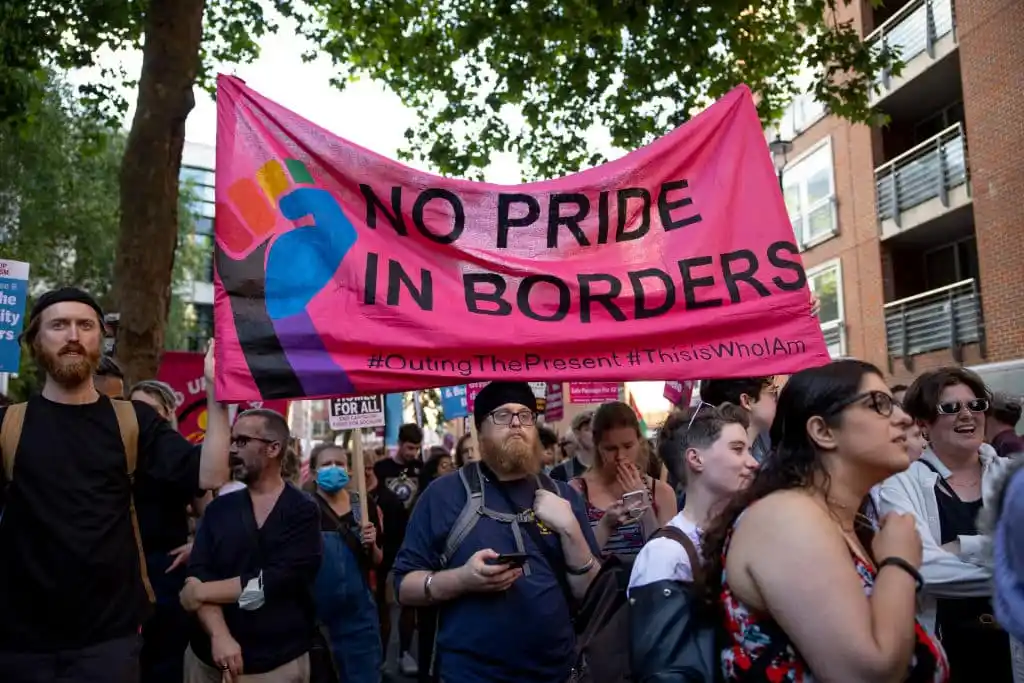
Protesters from the LGBTQ+ group hold a banner during the demonstration at Home Office. (Hesther Ng/SOPA Images/LightRocket via Getty)
If he had a chance to sit down with the prime minister and the home secretary, his message to them would be simple.
“The policy has to change,” Innocent says.
“You can’t do it. You can’t just send people to a place where they will face discrimination. They will be seen as criminals.
“What I would say is just do more research, understand how the LGBT community live in that country. Most of the people there – even some of my friends who are still there – they don’t exist. They live a lie, they get married, they have to lie to the police, they have to lie to their wives. You live a lie your entire life.”
He doesn’t think it’s right for asylum seekers to be sent away as part of the government’s wider effort to deter immigration.
“Even if it worked, do we really want to compromise human rights just to prevent people from coming to the UK? For me, that doesn’t sound like the UK values that I know.”
Rwanda refugee plan carries ‘disproportionately higher risk for LGBTQ+ people’
A spokesperson for Rainbow Migration, an LGBTQ+ asylum advocacy group, noted that the UK government’s plan to deport asylum seekers to Rwanda has been held up by legal challenges – but it is still planning flights for this year.
“We see that the risk is disproportionately higher for LGBTQI+ people, as Rwanda is a country from which people like Innocent flee and claim asylum because they are persecuted for their sexual orientation or gender identity,” the spokesperson said.
While homosexuality is no longer criminalised in Rwanda, same-sex sexual relations is still seen as a taboo issue – public attitudes towards LGBTQ+ people are not kind.
Even the UK government’s own website acknowledges that homosexuality is “frowned on” by many in Rwanda and that LGBTQ+ people may experience “discrimination and abuse, including from local authorities”.
In June, a gay man from Uganda told Africa Newsthat he was “beaten terribly” in Rwanda for king gay, while a trans woman told the publication: “I cannot go anywhere or apply for a job. Not because I am not capable of that, but because of who I am.”
A spokesperson for Rainbow Migration said there is “not much of a screening process that takes place” within the Home Office when a person’s asylum claim is being considered.
“This creates a high risk that they could be sent to Rwanda if the plan is eventually allowed to proceed.”
When approached for comment, a spokesperson for the Home Office said its Rwanda scheme is a “world-leading” programme which will “see those who make dangerous, unnecessary and illegal journeys to the UK relocated to Rwanda”.
“Our assessment concluded that LGBT+ people did not face a real risk of persecution,” the spokesperson said.
“The overall findings were that Rwanda is fundamentally a safe and secure country with a track record of supporting asylum seekers, including working with the UN Refugee Agency which said the country has a safe and protective environment for refugees.”
The “New Ideas” government of President Nayib Bukele appears to be ignoring the potential of sexuality education to foster understanding and reduce violence against sexual and gender minorities. This is not an innovative approach, but rather an antiquated, prejudiced idea.
El Salvador’s Education Ministry recently fired the director of the National Institute of Teacher Training and announced a “restructuring” of that institution. The reason? The Institute had greenlit a segment of Let’s Learn at Home—a remote education television show initiated during the pandemic—that explained the concept of sexual orientation.
The ministry said the information was not “in adherence with [Salvadoran] reality.” Subsequently, the Institute’s website became inaccessible and currently displays an error message.
The segment, which targeted eighth grade students, who are about 14 years old, featured animations of children playing, riding scooters, and listening to music. The narrator defined heterosexuality, homosexuality, and bisexuality in basic, age-appropriate terms. Indeed, the program did nothing more than provide the most elementary information about natural variations in human sexuality.
Despite the ministry’s attempt to erase lesbian, gay, bisexual people, they are very much a part of the “Salvadoran reality.” President Bukele acknowledged as much when, in 2014, he described himself as a “hetero ally” and the fight for lesbian, gay, bisexual, transgender (LGBT) rights as “the civil rights struggle of our time.” Furthermore, the Supreme Court held that the constitution protects against discrimination based on sexual orientation in 2009 and gender identity in 2022.
Why then has the government decided to censor essential information about sexual orientation? This makes little sense given the potential of such education to reduce the high levels of violence that LGBT people face in El Salvador.
In January 2021, Human Rights Watch published a report on the violence and discrimination against LGBT people that limits their life choices and leads them to flee El Salvador. The organization COMCAVIS TRANS previously found that this insecurity also leads to the internal displacement of LGBT people. Transgender people are especially vulnerable.
Comprehensive sexuality education, to which children have a right, could contribute to reducing this violence if it is age-appropriate and rights-based. It can equip young people with the skills to develop a positive view of different sexualities, both their own and their peers’. Experts have found that this kind of education can contribute to preventing discrimination and violence against sexual and gender minorities.
Unfortunately, the Salvadoran authorities seem to lack interest in realizing education’s full potential. In addition to the government’s censorship of Let’s Learn at Home, the Legislative Assembly explicitly omitted any substantive reference to sexual orientation and gender identity in the recently approved “Grow Together” Law, which governs the rights of Salvadoran children and adolescents.
The legislature also watered down that law’s article on comprehensive sexuality education by noting that families have “a fundamental and primary role” in providing this type of education, a setback to an earlier draft in which “the family, society, and the state” shared this role. Assigning the family the “primary” responsibility to teach comprehensive sexuality education is setting up families to fail, if taken to its logical conclusion. Some families may lack the time, training, and information to impart such education.
Censoring information on sexual orientation and gender identity is not a “new idea”: it is an old, tired idea rooted in prejudice. El Salvador’s authorities should fulfill their international responsibility to educate young people about sexuality and gender, not burden parents with the “primary” role to do so. This information can help reduce violence against LGBT people by fostering tolerance and acceptance. This is what the Salvadoran reality requires.
A “radicalized teenager” shot dead two people outside a gay bar in Slovakia’s capital, Bratislava, Prime Minister Eduard Heger said.
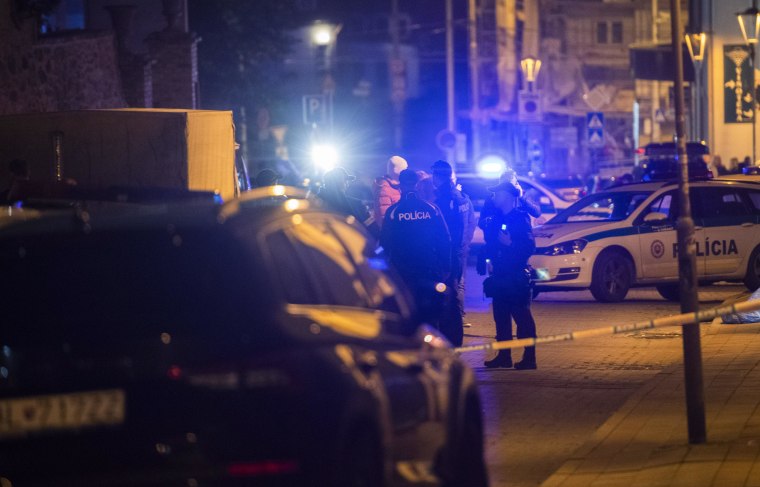
The gunman killed two people and wounded another near the Teplaren bar in the city center Wednesday evening, police said. The suspected attacker was found dead Thursday morning, officers added.
“I strongly condemn a murder of two young people shot dead in Bratislava last night by a radicalized teenager,” Heger wrote on Twitter.
“No form of white supremacy, racism and extremism against communities, incl. LGBTI, can be tolerated,” he added.
Police said they have not yet determined the motive behind the shooting and asked the public for patience as they looked into the possibility that it was a hate crime.
Police seal Zamocka Street in Bratislava after Wednesday’s shooting.Jaroslav Novak / AP
Get the Morning Rundown
Get a head start on the morning’s top stories.SIGN UPTHIS SITE IS PROTECTED BY RECAPTCHA PRIVACY POLICY | TERMS OF SERVICE
Slovak media reported the main suspect had posted messages with the phrases “hate crime” and “gay bar” hashtagged on Twitter. The Dennik N news website said the attacker had posted a manifesto against the LGBT and the Jewish communities before the killings.
The Duhovy Pride Bratislava group said it was shocked by the attack, while Slovak President Zuzana Caputova offered her support to the LGBT community.
“I want to say to the LGBT community, it is not you who don’t belong here, it is not you who should be afraid to walk in the streets. It is hate that does not belong in Slovakia,” she told reporters after visiting the scene of the attack.
European Commission President Ursula von der Leyen said her thoughts were with the families of the victims.
“These abhorrent murders are a threat to our societies built on respect and tolerance. The E.U. is committed to helping fight hate crime and speech in all form. We must protect the LGBTIQ community,” she added.
Mexico’s senate has voted to ban all conversion therapy that aims to alter sexual orientation, gender identity and gender expression – putting the UK to shame.
On Tuesday (11 October), 69 lawmakers voted for the bill, with two against and 16 abstentions. It will now head to Mexico’s chamber of deputies for a final vote.
The vote has been years in the making, with the bill first introduced by senators from the parties Citizen Movement, Morena and the Green Party in October 2018.
LGBTQ+ human rights organisation Yaaj Mexico said in a press release: “The eyes of the world are today on this historic advance in human rights, hoping that it will become an international benchmark.”
The group said that conversion therapy’s “main victims are young LGBTQ+ people, causing irreparable damage to their mental health throughout their adult life and in the worst cases, driving them to suicide”.
“For the survivors of these practices who have raised their voices, making the political personal, this legislative advance it means the integral reparation of the damage that was once done to them.”
In its press release, Yaaj noted that if the bill passes in the chamber of deputies, Mexico would join countries around the world in legislating against the abhorrent practice, including Germany, Malta, Canada, Australia and Ecuador.
One country notably not mentioned was the UK.
The Conservative Party had been promising a UK conversion therapy ban since 2018, and last year finally produced a consultation document.
However, the consultation was littered with red flags, comparing affirmative medical treatment for trans kids to conversion therapy, providing religious exemptions, and even stating that adults could freely consent to conversion therapy.
The comprehensive report was welcomed by the LGBTQ+ community, centering survivors in all areas, and laying out key principles for legislating against conversion therapy.
These included a future ban which must cover any treatment, practice or effort that aims to change, suppress or eliminate a person’s sexual orientation, expression of sexual orientation, gender identity or gender expression, and providing specific guidance on the experiences of LGBTQ+ people of colour – and survivors from minority ethnic faith groups.
A young gay man has been shot dead by the Taliban in Afghanistan because of his sexuality.
Hamed Sabouri, from Kabul, was killed in August, local activists have told PinkNews. He was just 22.
He was reportedly kidnapped by the Taliban and a video showing his murder sent to his family days later.
Bahar, another gay Afghan who knew the victim personally, told PinkNews Sabouri had dreams of becoming a doctor, but his hopes were stolen from him when the Taliban seized power in August 2021.
He described Hamed as a “shy” gay man with an infectious laugh.
“Life is hell for every LGBT Afghan,” Bahar said.
“Taliban terrorists are worse than wild animals.”
Bahar, who is a member of Afghanistan’s growing LGBTQ+ organisation the Behesht Collective, deleted all the pictures and videos he had of Sabouri on his phone after he learned of his murder.
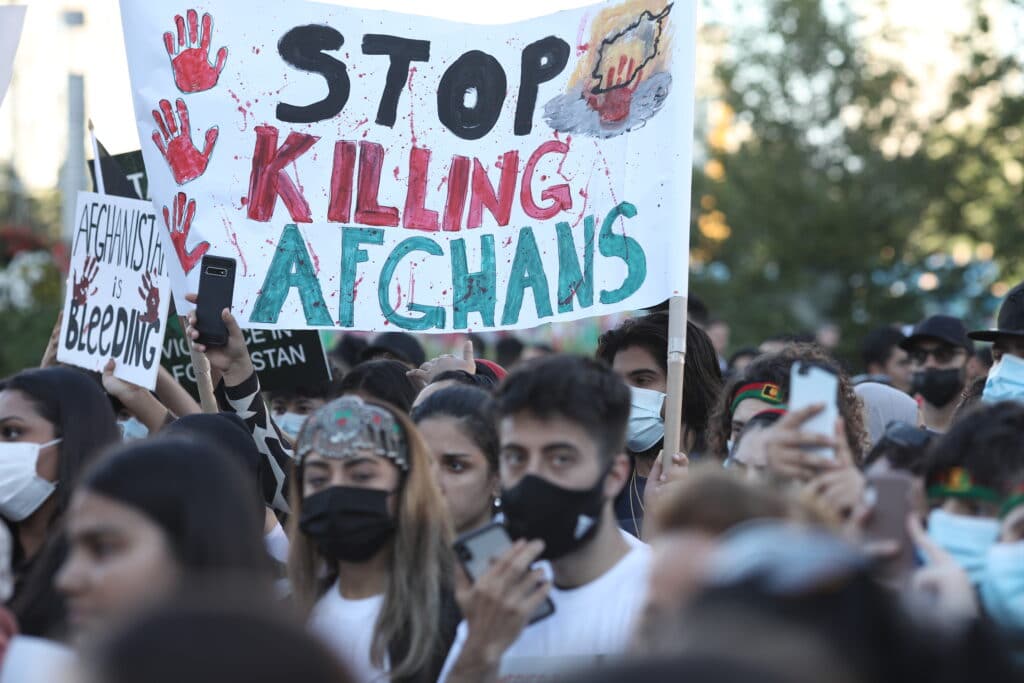
Protesters hold a sign that reads “stop killing Afghans” at a demonstration in Canada. (NurPhoto via Getty/ Sayed Najafizada)
Bahar lives in fear of being stopped and searched by the Taliban – he’s afraid that he would also be killed if they found out about his sexuality.
Since the Taliban seized power in Afghanistan in August 2021, PinkNews has spoken to a number of LGBTQ+ Afghans who have had their phones searched by the Taliban.
Many have resorted to deleting their social media accounts in a desperate bid to stay safe, while many others have crossed the border into Pakistan where they are less likely to be killed.
Taliban wants to ‘eradicate’ LGBTQ+ people
Nemat Sadat, an Afghan activist who is fighting to have LGBTQ+ people evacuated from the country, told PinkNews that Sabouri’s death is the result of inaction from western governments, many of which have failed to take in adequate numbers of fleeing Afghans.
Afghan activist Nemat Sadat. (Provided)
“The death of Hamed Sabouri is further proof that the Taliban will not stop until they eradicate all gay people from Afghanistan,” he said.
“His execution was deliberate and outside of any legal framework. I don’t understand how people in good conscience around the world sit idle while the Taliban continue to rule with a total disregard for human life.”
Sabouri’s killing is just the latest blow to Afghanistan’s embattled LGBTQ+ community.
Since the Taliban seized power, reports have circulated about queer people being beaten, raped and murdered as the regime ramps up its persecution of those who fall foul of Sharia law.
Most recently, it was reported that the Taliban had started using the monkeypox outbreak to harass and detain LGBTQ+ people.