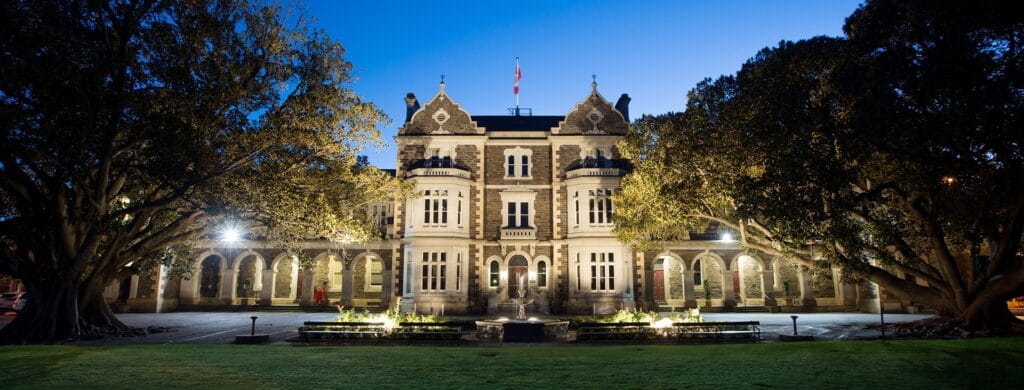
An all-boys school in Adelaide, Australia has given its full-hearted support to a student who came out as trans, and is even designing a special uniform for her.
Headmaster of the private Prince Alfred College, Bradley Fenner, said in a letter to parents on Tuesday that the girl’s fellow students were “respectful and supportive”, The Advertiser reported.
The headmaster added that the student, named Alice, asked to remain at the all-boys’ school herself, and has received support from both students and professionals.
Fenner wrote: “This morning, a student who has been at Prince Alfred College since the Early Learning Centre has told her peers that she is transgender, identifies as a woman and henceforth will be known as Alice.
“The response from the Year 12 cohort was, as we would have hoped and expected, both respectful and supportive.
“Alice has been dealing with gender dysphoria for some time and has been well-supported in her journey by a range of professionals, both within and outside the College.”
The headteacher added that Alice has come out to her peers, which he described as “very powerful”
“She is a living embodiment of our college motto… which is: do brave deeds and endure, and that’s exactly what she’s done,” he told ABC Adelaide.
All-boys’ school designs special uniform after student comes out as trans (Prince Alfred College)
Parents told The Australian that her fellow students have been “so welcoming”, but that the school would have to figure out a few accessibility requirements, as Alice is Prince Alfred College’s first trans student.
One parent said: “I think it is great that the boys have been so welcoming and accepting, and apparently the process by which she explained her new life was very moving and they are all supporting her.
“It does raise a few logistic questions, though, around things like the use of the toilets and so on in what has only ever been a boys’ school.”
Research by LGBT+ young people’s charity Just Like Us found that 55 per cent of teachers in England have at least one pupil who has come out as transgender, and 78 per cent say they would like more resources supporting them.
“Trans young people across the country are in schools with teachers who are crying out for the right resources to support them,” said Dominic Arnall, chief executive of Just Like Us.
“With a small but vocal minority of anti-trans individuals, it’s often a tough and terrifying time for young people growing up trans.
“It’s very encouraging to see that the majority of their teachers want to support their pupils to be themselves and feel safe while learning.”
Chile’s Javier Silva and Jaime Nazar became the first two men to tie the knot in the South American country’s history on Thursday after a law allowing same-sex marriage went into effect.
In December, Congress approved legislation guaranteeing legal rights for same-sex couples in a milestone for the conservative nation after a decade-long battle by LGBTQ communities and rights groups.
“Being the first couple to get married in Chile for us is an honor, something to be proud of,” Silva told reporters after the civil ceremony. “We did it! It’s something we didn’t think could happen.”
Get the Evening Rundown
A rundown of the day’s top stories and headlines.SIGN UPTHIS SITE IS PROTECTED BY RECAPTCHA PRIVACY POLICY | TERMS OF SERVICE
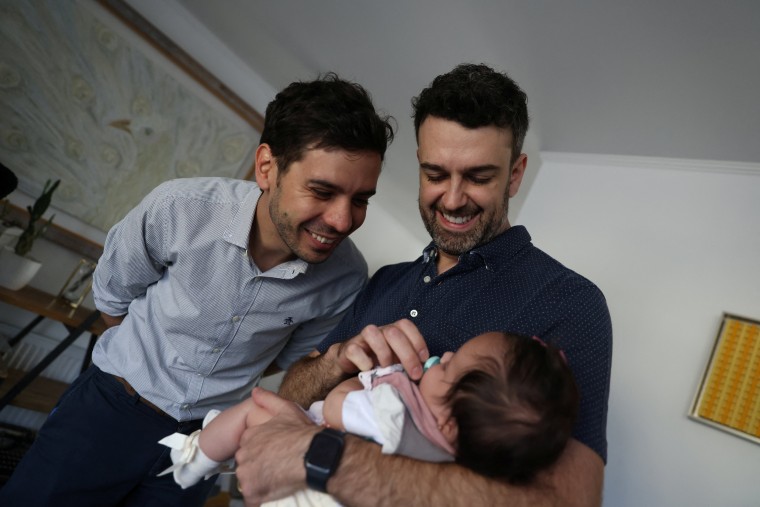
Silva and Nazar have been together for seven years and have two young children. They have had a civil union for the last three years, but marriage is a significant step forward for their whole family.
“Now our children have the same rights (as other families) and they will be able to have, we hope, a better future, that they will not be discriminated against for having two parents who love each other,” Silva added.
Chilean couple Javier Silva and Jaime Nazar prepare their daughter to take a nap, a day before their wedding, as the same-sex marriage law goes into effect in Santiago, Chile, on March 9, 2022.Ivan Alvarado / Reuters
Despite its long conservative tradition, Chile has been making progress in recent years in recognizing LGBTQ rights.
“My congratulations to Jaime and Javier for being the first couple to marry under the new #EqualMarriage law. To continue advancing for a Chile with equal rights and freedoms for all people,” President-elect Gabriel Boric, who takes office on Friday, said on Twitter.
Same-sex marriage legislation was first discussed in 2017 and pushed by former President Michelle Bachelet, but was delayed until last year.
Before that, starting in 2015, same-sex couples were able register a Civil Union Agreement (AUC), which allowed some legal benefits.
“I think we’re putting ourselves at the level the rest of the world is living in, which is great,” Nazar said. “I know our society is very conservative, but I also know we have a promising future as a country.”
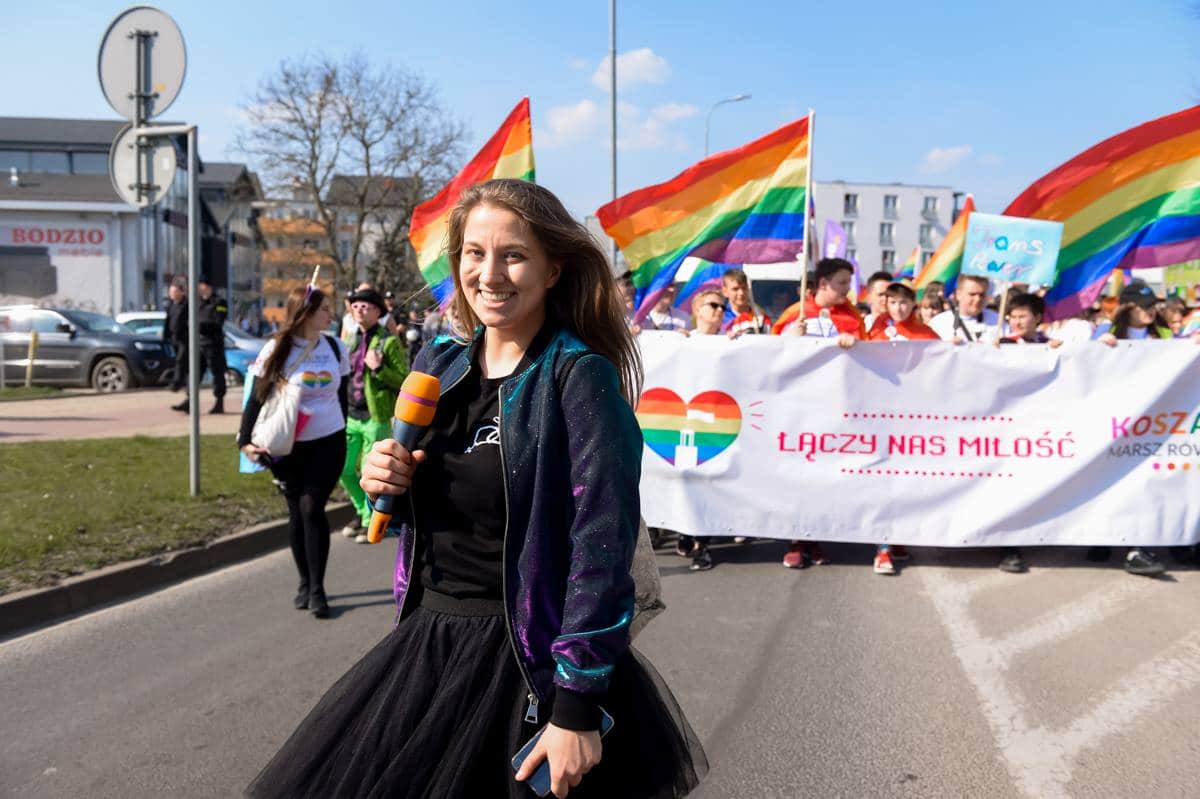
Julia Maciocha is exhausted – she’s been keeping busy making sure trans people in Ukraine can still access medication even as war breaks out across the country.
It’s an all-consuming job, but Julia – who serves as chairwoman of Warsaw Pride in Poland – didn’t have to think twice about doing it. Like many other LGBT+ people, she has watched in horror over the last couple of weeks as Russia invaded Ukraine, unleashing war and prompting a mass exodus in the process. So far, two million people have fled Ukraine, with half of those crossing the border into Poland.
Julia and the Polish LGBT+ activists she works with at Warsaw Pride quickly leapt into action. They knew there was a great deal of work to be done, from arranging suitable, safe housing for queer people crossing the border to organising much-needed medication for those who remain in Ukraine.
These are the everyday realities of war that most people don’t think about. At the end of the day, trans people will still need hormones and those with HIV will still need access to antiretroviral drugs. Air strikes and curfews have made those things most of us take for granted an impossibility for queer Ukrainians.
LGBT+ people who remain in Ukraine still need access to medical supplies
“I look like s**t,” a tired-looking Julia jokes when we speak over Zoom. She and other activists involved with Warsaw Pride learned over the weekend that they could transport vital medical supplies to LGBT+ people in Ukraine. They worked tirelessly through the weekend to get supplies together, which they did with some help from Fundacja Interakcja, a Polish foundation that helps intersex people.
Finally, on Monday night (7 March), they sent the medical supplies to Ukraine. Dedicating themselves to the task has helped Julia and other Polish activists feel useful in a difficult, turbulent time.
Julia Maciocha at Warsaw Pride. (Provided)
“This is something that I feel is helpful to get through – we have a task, we are doing it, we are not thinking too much about it,” Julia says.
“If somebody is crossing the border and is already in Poland then we can do everything, but we still have people in Ukraine who don’t want to leave or who can’t leave. They need food, they need medical supplies, they need their basic needs to be met.”
It just hurts to know that they could be hurt at any time.
For Julia, their efforts to help out Ukraine’s LGBT+ community is at the very core of what the Pride movement means. The activists involved with Warsaw Pride have worked closely with Kyiv Pride for some time, and Julia considers them friends. She becomes emotional when asked what it felt like to wake up on 24 February to the news that Russia had invaded Ukraine.
“I’m always crying when I think about it,” she says. “I still have friends there. I have friends who have decided to stay – I understand their decision, they’re doing amazing work, but it just hurts to know that they could be hurt at any time. They are struggling so much.”
Many queer Ukrainians won’t want to stay in Poland because of the country’s homophobia
While some queer Ukrainians have decided to stay, others have made the difficult journey to safety in Poland. The country has won praise from governments across the world for its open-armed approach to Ukrainian refugees, but Julia points out that the country is also one of the most homophobic places in Europe. That presents challenges when finding safe accommodation for LGBT+ refugees.
“I know that right now, any Polish person is opening their hearts to anyone, but it’s still not an ideal position for LGBTQ people to feel safe,” Julia explains. “We want to house them with people that understand their needs and their struggles. We want to focus on help that is sensitive to the needs of LGBTQ people. Right now, people are in huge trauma, they don’t know what to do, they’re in shock.”
Because of the trauma they’ve been through, many of those crossing the border are struggling to adjust, Julia says.
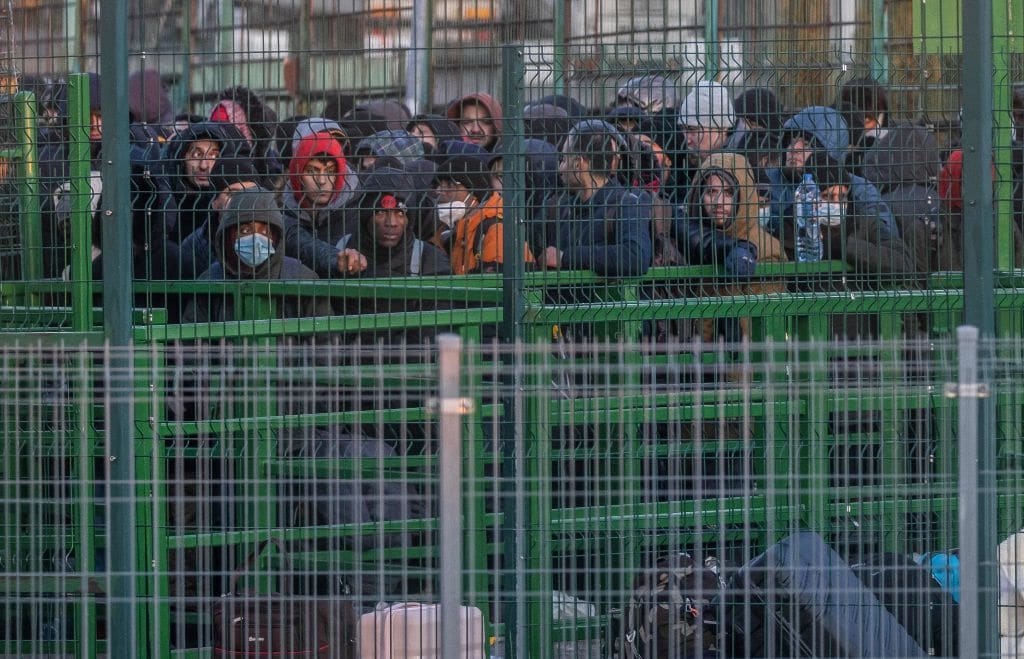
Refugees from Ukraine line up to get in to Poland on border crossing in Medyka, in eastern Poland on February 28, 2022. (WOJTEK RADWANSKI/AFP via Getty)
“They still can’t believe that everything here is given to them for free,” she says. “They can’t believe that they can get housing for free, food, clothes, everything. I’m also surprised that my society, my community in Poland, has decided to help them so much.”
Most refugees are just trying to hold it all together, Julia says – but that’s not easy when you find yourself plunged into uncertainty in a new country, away from family and friends.
I don’t think [Poland] is a great place to stay and to start a new life or to continue living
“I would say that most of these people are just trying to survive the day. Most of them are sleeping for at least two days after staying at the border. It’s very cold – at the beginning there was no humanitarian aid on the side of Ukraine so many people had to stand there for two days without food, without water. Right now we are focusing on giving them time to rest and then we will figure things out.”
The long term outlook is uncertain. Julia anticipates that many of the LGBT+ Ukrainians crossing the border won’t want to stay in Poland long term because of the country’s troubling lurch into homophobia and transphobia in recent years.
“We are in contact with other neighbouring countries to provide them with support after they leave our country. It’s wonderful what Poland is doing now for people, but we still have to remember that we are the most homophobic country on the ILGA ranking, so I don’t think it’s a great place to stay and to start a new life or to continue living.”
Long term solutions are needed if Ukrainian refugees are to be adequately cared for
Poland has won praise from the likes of the United Nations and from Pope Francis over the last couple of weeks for welcoming Ukrainians who are fleeing war with open arms. Julia isn’t “proud” of her country – she doesn’t believe in “countryism”, but she says she is proud of Polish society for responding in the way it has.
“To see ordinary people spending their weekends driving people from the border or spending their evenings making sandwiches for people coming to our cities is beautiful, but we have to remember that it isn’t going to be enough.”
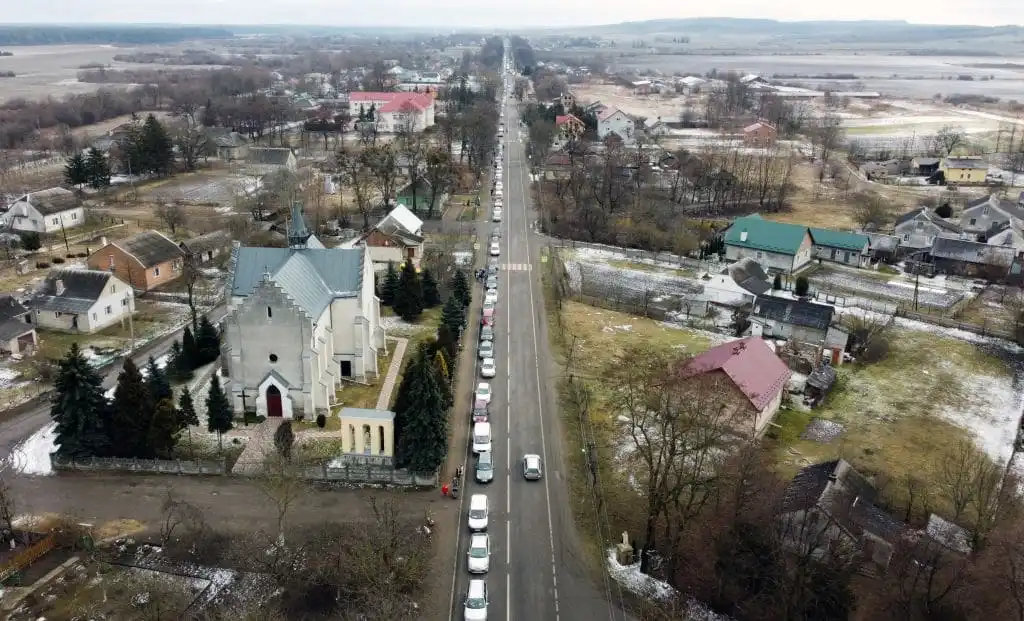
This aerial picture taken on February 28, 2022 shows cars stuck in traffic as families fleeing the conflict drive towards the Medyka-Shehyni border crossing between Ukraine and Poland. (DANIEL LEAL/AFP via Getty)
Julia says the Polish government needs to “step up” and put in place systems to cater correctly for Ukrainian refugees.
“This is not something society can do. We need our government to step up, and right now our government is just taking praise from the leaders of other countries.
“I’m really proud of Poles, I’m proud of all my friends that are hosting people, that are spending their time volunteering, but I wouldn’t say I’m proud of the country.”
An organization that provides suicide prevention and crisis intervention services to thousands of young LGBTQ people in the United States announced on Wednesday that it is expanding its services to Mexico.
The Trevor Project — named after “Trevor,” an Academy Award-winning short film about a gay teenager who attempts suicide — estimates that more than 745,000 Mexico-based LGBTQ youths ages 13 to 24 are in crisis each year, though it notes that figure is a rough approximation due to the “severe lack of data.” It also estimates that over 40 million queer youths worldwide seriously consider suicide annually.
To counter the harrowing numbers, the group said that it will offer its round-the-clock digital services — including text and online chat suicide prevention and crisis services — for LGBTQ youths in Mexico by the end of 2022. The expansion into the U.S.’s southern neighbor is the first time the group will offer its services abroad since its founding in 1998.
“LGBTQ young people everywhere deserve not just to survive, but to thrive,” The Trevor Project CEO Amit Paley said. “We don’t think that just because you happen to have been born in one country that means you are more or less deserving of critical, lifesaving services and affirmation.”
The nonprofit has been pivotal in providing LGBTQ youths in the U.S. with mental health services, where it estimates 42 percent of LGBTQ youths and more than half of trans youth seriously considered suicide last year.
It hopes to replicate its efforts in Mexico, where its services will be available in Spanish, in addition to English. The group also said in a statement that it will be collaborating with local organizations throughout the country “to build on the progress they’ve already made.”
Get the Evening Rundown
A rundown of the day’s top stories and headlines.SIGN UPTHIS SITE IS PROTECTED BY RECAPTCHA PRIVACY POLICY | TERMS OF SERVICE
LGBTQ rights have had several advancements in Mexico within the last two decades.
In 2009, Mexico City became the first city in Latin America to legalize same-sex marriage. Since then, same-sex marriage has been legalized in at least a dozen of Mexico’s 32 states, according to the international advocacy group Human Rights Watch.
And beyond same-sex marriage, 19 Mexican states also have legal gender recognition procedures, allowing individuals to change their gender identity on their official documents, according to the advocacy organization.
However, Cristian González Cabrera, who researches LGBTQ rights in Latin America for Human Rights Watch, said there’s still “a lot to be done” and that The Trevor Project’s expansion in Mexico will be “very welcome.”
“Legal advances don’t always translate to social or lived progress for LGBTQ people in the region,” Cabrera said. “Mexico remains a conservative country in certain aspects and regions, and LGBTQ people continue to experience all sorts of discrimination in all sectors of life, whether that’s education, health care, in the job market, et cetera.”
Research has also shown that LGBTQ people living in Mexico are more prone to violence.
At least 79 LGBTQ people were killed in Mexico in 2020, more than six a month, according to the Mexican LGBTQ rights group Letra Ese.
Through its research in the United States, The Trevor Project has also found that LGBTQ youths who reported having at least one LGBTQ-affirming space had lower rates of suicide attempts.
The group hopes that by expanding its services to Mexico, it can help to create supportive spaces for the country’s LGBTQ youths and save lives as a result, Paley said.
“Mexico is going to be the first country we’re launching in, but it will not be the last,” he said.
If you or someone you know is in crisis, call the National Suicide Prevention Lifeline at 800-273-8255, text HOME to 741741 or visit SpeakingOfSuicide.com/resources for additional resources.
Last week a court in Cameroon handed down a 6-month prison sentence and fine of 650,000 CFA (US$1,106) to one of the perpetrators of a violent attack on an intersex person last year in Yaoundé, Cameroon’s capital. The court’s decision reflects growing recognition of the fundamental rights of lesbian, gay, bisexual, transgender, and intersex people in Cameroon, including their right to be protected from violence.
In the aftermath of the attack, police arrestedone man, but released him without charge after 48 hours. No other arrests were made. On November 16, 2021, the Cameroonian Foundation for AIDS (CAMFAIDS), a human rights organization advocating for LGBTI people, filed a complaint with the police on behalf of Sara as a victim of assault, battery, and inhuman and degrading treatment.
In a positive move, police responded to CAMFAIDS’s complaint and opened a fresh investigation into the attack. That investigation led to the arrest and prosecution of the suspect who was convicted and sentenced in Yaoundé on February 25.
Even though it is unlikely the other perpetrators will ever be caught or face jail time, Sara’s lawyer, Michel Togue, made the point: “It sends a strong message that violence against people because of their sexual orientation is wrong and leads to consequences for the perpetrators.”
Sexual relations between people of the same sex are criminalized in Cameroon and punished with up to five years in prison. In a November 26, 2021 press conference, Said René Emmanuel, Cameroon’s communication minister, condemned violence against LGBTI people, breaking the silence which has for too long surrounded attacks like the one against Sara. The minister’s statement coupled with this important court decision represent small but meaningful steps in acknowledging that LGBTI people’s lives are valued and the state has an obligation to protect them.
As Cameroon’s authorities are slowly recognizing these obligations, they should repeal the law criminalizing same-sex conduct and protect the rights of Cameroon’s LGBTI population on an equal basis with others and in line with international standards.
Gay dating app Romeo received an “incredible response” after it asked users to help people in Ukraine who may be fleeing the country.
The app launched a group called Shelter for Ukraine last week after Russia invaded the country, which quickly gained thousands of members.
Aimed at connecting those who “can offer shelter and assistance” to refugees fleeing the country, Romeo users began offering up their spare rooms or homes across Europe, from Czechia to Italy.
There have been offers from users willing to travel miles to the Italian border to collect those in need of shelter, as well as offers of sanctuary to Russians “who oppose the war and/or are fleeing from Putin’s government as a result”.A spokesperson for Romeo, which was launched in Germany in 2002, told Queerty: “When we heard the news of the invasion of Ukraine, like many, we wanted to do something to help.
“We are an international team, with people from all over the world. Many of us have experienced war and oppression.”Connecting people is what we do, so we looked at how we could use the platform to connect people in need, with our users who are willing to help.”
The app added that as many men in Ukraine have been forced to stay in the country and fight, the offer of shelter is “not only for men, it is for their parents, sisters, children.”Since Russia invaded Ukraine in February, those in the country have faced the horrific decision of whether to flee the country, or stay and fight, with one queer teen telling PinkNews: “I don’t want to leave Ukraine… it’s my country, it’s my people.”Oleksandra – whose surname was withheld to protect his identity – added: “When this started, I was in shock… I didn’t know what to do, where to flee, would I even be able to flee, what would happen to my friends.”He explained that Russia’s invasion of Ukraine could cause the country’s sparse, but hard-won LGBT+ rights to be jeopardised.
“I genuinely believe that it will keep getting better (for the LGBT+ community) in Ukraine,” he said. “I was thinking about moving to another country a few years ago but right now, I don’t want to leave Ukraine – even if it’s difficult, because it’s my country, it’s my people. I have friends here.”
He added: “Russia is also an incredibly queerphobic country – that’s a fact. When the invasion started, my flatmate said I would be more afraid about you if Russian people came here because they will kill your people first.
“It’s horrible, but we will make it. Queer people in Ukraine will have it better. I’m horrified, I’m anxious, but also I feel hope for my country.”
Lenny Emson, director of Kyiv Pride, told PinkNews that LGBT+ people, and wider Ukrainian society, is prepared to “step forward against the aggression”.
“On this point we are united,” Emson says. “It doesn’t matter what your gender identity is, your sexual orientation – all together, we are stepping forward.”
A judge has ruled that two women who called the president of a Canadian medical imaging centre’s slur-filled tweets “homophobic and transphobic” was a “fair comment”
One of the top judges in Ontario, Canada, tossed two $6 million lawsuits launched by Probhash Mondal and his company, Guelph Medical Imaging, that sought damage costs against Stephanie Marie Evans-Bitten and Kathryn Evans-Bitten.
Justice E Morgan of the Ontario Superior Court dismissed Mondal’s claims for failing under the Strategic Litigation Against Public Participation, intended to prevent people from wielding the justice system like a club to silence fair comment in matters of public interest.
Morgan wrote in his decision Tuesday (1 March) that the married couple calling out Mondal’s tweets, which included an “offensive, derogatory slur” and referring to prime minister Justice Trudeau as “defiling” the national flag by waving one with a rainbow on it, was in no way an “overreaction”.
After all, Morgan reflected, Twitter is a “medium where outlandish criticism is the norm,” where calling out prejudiced comments is fair comment.
“There is nothing said by the Defendants that, in context, is harsher than, or is an overreaction to, the language of Mr Mondal’s tweets themselves,” he wrote.
“What the communications in issue amount to is a set of polar opposite views on cultural politics, gender politics, and Politics with a capital ‘P’.
“Mr Mondal jumped into the turbulent river of Twitter commentary with some vulgarly worded observations that touched a nerve with the Defendants.
“He got it back as good as he gave it, and got wet in the process.”
According to Guelph Today, Mondal said he plans to “clear his name” by appealing the decision.
“I wish to clear my name because, really, I have never been against the LGBTQ2S+ community,” Mondal said in a statement.
LGBT+ people need to be able to ‘able to talk frankly’ in the face of hatred, says lawyer
Mondal had tweeted on two of his professional Twitter accounts, Guelph Medical Imaging (@GMImaging) and United Brotherhood of Medical Imaging Clinics in Ontario (@UBMICO1), the transphobic slur “t****y,” among other tweets, the defendants argued.
He also tweeted at Trudeau, writing: “That which he waves is NOT our national flag. Please do not defile our flag.”
In another tweet referencing a news story about Toronto mayor John Tory attending a drag show in the Church-Wellesley Village, Mondal wrote: “Where’s the tr***y, John Tory’s got some benjamins for your thong!!!”
According to the judge, Stephanie had seen the tweets and “read and understood [them] being homophobic and transphobic”.
“On #ComingOutDay2020 I’m sad that I have to travel outside of my hometown of #Guelph #Ontario to receive medical imaging care because the CEO of our monopolized imaging health care here calls people ‘trannies’ and hates gay pride.. this is #Canada,” Stephanie tweeted on October 2020.
So Mondal sued both Stephanie and Kathryn for “defaming” him, seeking $5 million in general damages and $1 million in punitive damages, aggravated and exemplary damages.
But the judge dismissed Mondal’s suits, which, if they had gone the other way, could have raised questions on how freedom of speech can collide with the rights of minority groups, Stephanie’s lawyer, Marcus McCann, told The Star.
“I was concerned when I first saw this case that if it was allowed to proceed it could seriously restrict what queer and trans people say in public and on the internet,” McCann said.
“If there was a threat of a lawsuit every time someone called out something they perceive to be hurtful or inappropriate in some way, you could see a lot less of that in the public sphere.”
“It’s an important decision,” McCann added.
“LGBTQ communities have an interest in being able to talk frankly — even when they get it wrong — about matters of discrimination, homophobia, and disrespectful or hurtful language.
“If advocates regularly faced lawsuits when they raised these difficult and thorny topics, they would do so less often, if at all.”
Many trans women are not being permitted to flee Ukraine, it has been reported, with one woman describing Russia’s invasion as a “war within a war” for trans folk.
Kyiv’s mayor said Wednesday (2 March) that Russian forces are gathering “closer and closer” to the capital – but that “Kyiv stands and will stand”.
One citizen who remains in the capital is Zi Faámelu, a musician best-known in Ukraine for competing in the competition show Star Factory. She has been hiding in her Kyiv apartment as gunfire and missiles get closer.blob:https://www.gaysonoma.com/8970d02c-4d1b-4aed-adc7-f9c106da0c82
She is starting to run out of food, she told CBS News, but is scared to leave home not just because of war – but also because she fears for her safety as a trans woman. Faámelu described life as a trans person in Ukraine as “bleak” and fears that the violence could easily turn transphobic.
“Many people have guns and weapons… It can be an excuse for violence,” she said. “This is a very scary situation.”
Faámelu fears that even if she managed to reach the Ukrainian border, she would not be allowed to cross because her passport does not align with her gender.
Activists on the ground told the TGEU (Transgender Europe) network that trans people with documents that don’t their gender “cannot pass internal check-points”, and that trans women of fighting age with a male gender marker on their passport are being made to stay in the country as potential recruits.
“This is not a very rainbow-friendly place… Lives for trans people are very bleak here,” Faámelu added.
“If you have a male gender in your passport, they will not let you go abroad. They will not let you through… [It’s] a war within a war, truly.”
However, she added that she still has faith that Ukrainian forces can defeat Russia.
She said: “There’s something about Ukrainians, they are very optimistic and joyful people… They never give up.
“You don’t know if you’re going to be alive the next morning. So what are you going to do? I just prefer to dance in the kitchen, to be honest.
Because if this is the last moment of my life, I just want to celebrate. I just want to dance.”
Until 2017, Ukraine required a diagnosis of “transexuality” for trans people to change their legal gender. This meant spending a month in a psychiatric hospital so a board of mental health professionals could make the diagnosis.
Although the process has since been simplified, it is far from easy. Being trans is still considered a psychiatric disorder, and a diagnosis through outpatient appointments is still required.
A rush of LGBT+ volunteers in Ukraine are preparing for combat after the Russian invasion.
Veronika Limina, from Lviv, has been running a camp which teaches volunteer LGBT+ cadets basic combat and paramedic skills, the Daily Beast reports.
Limina, who works for an NGO promoting equal rights for LGBT+ people in the military, told the news outlet that she has signed up for Lviv’s territorial defence force and is prepared to fight as Putin’s forces move into the west of the country.
“I am angry… We will kill Putin,” she told the Daily Beast.
Andrii Kravchuk works at the Nash Svit Cente in Kyiv. He said a Russian occupation of the country could lead to “total lawlessness and repressions”, and that he knows of many LGBT+ people who are joining the territorial defence forces, as well as LGBT+ veterans who are returning to service.
He told the Daily Beast: “Now we have only two options: either we defend our country, and it will become a part of the free world, or there will not be any freedom for us and will not be Ukraine at all.
“LGBT+ people who served in the army and military volunteers are ready to come back to their service. We are doing the same as the rest of the nation.”
The threat of Russian occupancy brings an additional danger to queer Ukrainians: Putin and his regime are intensely and violently anti-LGBT+, and reports suggest LGBT+ people are among those whose names are on “kill lists” drawn up ahead of the invasion.
South Korean activists and Ukrainians attend a rally against Russia attacking Ukraine (Chung Sung-Jun/Getty Images)
A Ukrainian delegation is due to meet Russia on Monday morning (28 February) after a terrifying and uncertain weekend of fighting, which saw Vladimir Putin moved Russia’s nuclear deterrent forces to high alert.
Though not a declaration of intent to use nuclear weapons, Putin’s latest escalation has been forcefully condemned and was followed by a new raft of EU sanctions.
The Guardian reports 352 Ukrainian civilians have been killed since Russia’s invasion of the country.
According to the UN, at least 368,000 people have fled the country with many thousands more displaced internally.
However, there have been widespread reports of Black people, including African migrants, encountering racism as they attempt to flee.
Videos shared on Twitter appear to show Ukrainian officials blocking Black people from boarding trains to leave the country, while a group of 24 Jamaican students were forced to walk 20km to Poland after being denied entry to a bus. At the border, there have been reports of Polish official refusing Black people asylum.
In the UK, Boris Johnson is facing increasing pressure to waive visa rules for Ukrainians. Over the weekend the government announced that family members of Brits will be able to apply for a free visa, however the scheme only covers spouse and civil partners, unmarried partners of at least two years, children under the age of 18, parents or their children if one is under 18, and adult relatives who are carers.
Speaking with LGBT+ radio station GlitterBeam, director of Kyiv Pride Lenny Emson said the situation in Ukraine is one of “panic” and “anxiety”, urging listeners to provide “international political support”
“Of course, there is some anxiety, there is some panic, we’re all people, but first of all, we’re angry and we’re ready to fight. We want this to end. We want peace,” he said.
Emson explained that while “we would not say that we [the LGBT+ community in Ukraine] are totally fully accepted in society”, the country has made progress in terms of LGBT+ rights, which an invasion by Russia could strip back.
“We understand that LGBT+ Pride will be the first target for Russia… but we believe in the Ukrainian army that has been fighting already for 24 hours holding Russia back. We want to hope and we want to believe that the international community will stand up and help us in this fight.
“We don’t want to believe that Ukraine will be Russia. There is no space for human rights in that country. We don’t want Ukraine to be the same, and we are going to fight against it.”
Singapore’s highest court on Monday upheld a lower court’s decision to dismiss three challenges to a law that criminalizes sexual relations between men.
While delivering the judgment, given by a bench of five judges, Chief Justice Sundaresh Menon of the Singapore Court of Appeal said that the appeals are not about “whether (Section) 377A (of the penal code) should be retained or repealed, that being a matter beyond our remit.”
“Nor are they about the moral worth of homosexual individuals,” said Menon. “In the words of our prime minister, Mr. Lee Hsien Loong, homosexual individuals are ‘part of our society’ and ‘our kith and kin.’”
The appeal court went ahead and said the appeals are also “not about the fundamental nature of sexual orientation, whether immutable or not, which is an extra-legal question well beyond the purview of the courts.”
The court also suggested that political resolution of the issue is more appropriate than litigating it. The chief justice said that the advantage of the political process is its ability to accommodate divergent interests and opinions, while litigation is “not a consultative or participatory process.”
“This is so for good reason because litigation is a zero-sum, adversarial process with win-lose outcomes,” said Menon. “The political process, in contrast, seeks to mediate — it strives for compromises and consensus in which no one side has to lose all.”
The chief justice also said that it is “unnecessary” for the court to address a constitutional issue.
“They do not face any real and credible threat of prosecution under 377A at this time,” said Menon while delivering the judgment. “Therefore, (they) do not have the standing to pursue their constitutional challenges to that provision.”
“We, as organizations advocating for LGBTQ+ equality in Singapore, are disappointed with the Court of Appeal’s landmark ruling on Section 377A, which comes as a setback for all who were hoping for a resounding conclusion to this decades-long fight for equality,” said Ready4Repeal, a Singapore-based LGBTQ rights group, in a press release. “Despite recognizing the current situation as deeply unsatisfactory for the LGBTQ+ community, the Court of Appeal has still decided to retain the law, albeit with legal assurances on its unenforceability.”
Last year, three men, DJ Johnson Ong Ming, retired general practitioner Roy Tan Seng Kee, and Bryan Choong Chee Hoong, the former executive director of Oogachaga, an LGBTQ non-profit organization, decided to appeal against a Supreme Court’s decision to dismiss their cases against Section 377A.
“While this is a small step in the right direction, this simply does not go far enough to provide real protection to the LGBTQ+ community, who continue to be impacted by the cascading effects of Section 377A,” said Ready4Repeal. “The judges themselves acknowledged that even with the assurance of unenforceability, homosexual men will still be left open to police investigations as if a crime had been committed.”
Ready4Repeal started a petition in 2018 to pressurize the Singaporean government on repealing the colonial-era law. The petition has received 51,047 online signatures.
Section 377A is a highly debated law in Singapore that prohibits sexual relationships between two men. According to the law, any man in public or private who commits an act of gross indecency with another male shall be punished with to years in prison.
Last year, Home Minister Affairs K Shanmugam said that everyone in Singapore will be protected regardless of community and social, religious, or sexual beliefs. He also said that the government’s position is clear. He also said that amendments to the Maintenance of Religious Harmony Act make it an offense to urge violence on the grounds of religion or religious belief against any person or group.
Finance Minister Lawrence Wong last year reiterated that different sections of the society have valid concerns, and it needs to be addressed.
“Tribalism is inherently exclusionary, and it’s based on mutual hate: ‘us’ versus ‘them,’ ‘friend’ vs ‘foe,’” said Wong. “Once this sort of tribal identity takes root, it becomes difficult to achieve any compromise. Because when we anchor our politics on identity, any compromise seems like dishonor.”
Ankush Kumar (Mohit) is a freelance reporter, who has covered many stories for Washington Blade and Los Angeles Blade from Iran, India, and Singapore. Recently covered story for The Daily Beast. He can be reached at mohitk@opiniondaily.news.