Sonoma County is unlikely to end its current stay-at-home order when it is set to expire the night of Jan. 9, Health Officer Dr. Sundari Mase said during her final public briefing of 2020.
As coronavirus spreads locally at the highest rate of the pandemic while parts of the state are struggling to provide enough hospital beds for patients, it’s no shock that Mase is less than optimistic about reopening in a week and a half.
That order, announced by California Gov. Gavin Newsom Dec. 3, ties the ability to gather in backyards and eat outdoors at restaurants to a region’s ICU bed availability. On Dec. 10, Sonoma and 10 other Bay Area counties preemptively adopted a collective stay-at-home order as the region approached the 15% availability threshold established by Newsom.
It’s hard to gain an accurate read on ICU capacity, a measure that can be fluid based on staffing and contingency plans. But the most up-to-date data from the California Department of Public Health shows Sonoma County with 20 available staffed ICU beds as of Tuesday. The county is licensed for 77 ICU beds, though that number can be lower based on available staffing.
Twenty available beds would put local hospitals above the 15% mark. But Mase said the overall Bay Area availability rate is at 7.5%, giving Sonoma and the other 10 counties little chance of escaping what many refer to as a “lockdown.”
While Sonoma County hospital officials insist there are no current shortages of beds or staffing at their facilities, most of the metrics have gotten considerably worse since Mase issued the local order three weeks ago. In the 19 days following her announcement on Dec. 10, the county reported 3,170 new coronavirus cases, or 16.8% of all cases since the start of the pandemic. The daily average since Dec. 10 has been 242. Before then, Sonoma County exceeded that number just two days in seven months.
Even the good news is being tempered. One positive note through most of December has been the absence of fatality clusters at local skilled nursing centers and other congregant living sites for seniors. But as the county acknowledged Wednesday, that doesn’t mean the virus isn’t infiltrating local nursing homes again.
Kate Pack, health program manager of Sonoma County’s epidemiology team, said that since Dec. 8, 44 elder care facilities have reported at least one case among staff or residents, with 24 categorized as outbreaks — defined as three or more cases among staff, or one COVID-positive resident if the infection is determined to have been acquired on-site. Pack cited a total of between 243 and 249 cases here during the month in senior homes, including 137 in Santa Rosa and 59 in Petaluma.
California surpassed 25,000 coronavirus deaths since the start of the pandemic and officials disclosed Thursday that three more cases involving a mutant variant of the virus have been confirmed in San Diego County.
The grim developments came as an ongoing surge swamps hospitals and pushes nurses and doctors to the breaking point as they brace for another likely increase after the holidays.
“We’re exhausted and it’s the calm before the storm,” said Jahmaal Willis, a nurse and emergency room leader at Providence St. Mary Medical Center in Apple Valley. “It’s like we’re fighting a war, a never-ending war, and we’re running out of ammo. We have to get it together before the next fight.”
Public health officials continued to plead with residents just hours before the start of 2021 not to gather for New Year’s Eve celebrations.
In Los Angeles County, where an average of six people die every hour from COVID-19, the Department of Public Health tweeted out snippets every 10 minutes on lives that have been lost.
“The hair stylist who worked for 20 years to finally open her own shop.”
“A grandmother who loved to sing to her grandchildren.”
“The bus driver who put her daughter through college and was beaming with pride.”
The tweets, which included messages to wear a mask, physically distance, stay home and “Slow the spread. Save a life,” came on a day when the county reported a record 290 deaths. That would be a rate of one death every five minutes, though it included a backlog.
Los Angeles County, which has a quarter of the state’s 40 million residents, has had 40% of the deaths in California, the third state to reach the 25,000 death count. New York has had nearly 38,000 deaths, and Texas has had more than 27,000, according to a tally by Johns Hopkins University.
Infections are spreading rapidly. San Diego County confirmed Thursday that it had found a total of four cases of the virus variant that appears to be more contagious. A 30-year-old man tested positive for the variant on Wednesday and three more men — two in their 40s and one in his 50s — also have been confirmed to have the strain. Other cases involving the variant have been confirmed in Florida and Colorado.
At least two of the men in San Diego County hadn’t traveled outside of the country and none had “any known interaction with each other,” the county said. Officials believed many more cases will surface.
San Diego County also reported a record high number of new deaths in a single day at 62, well over the previous record of 39 reported only a week earlier.
Hospitals, particularly in Southern California and the agricultural San Joaquin Valley in the middle of the state, have been overrun with virus patients and don’t have any more intensive care unit beds for COVID-19 patients.
In Los Angeles County, hospitals have been pushed “to the brink of catastrophe,” said Dr. Christina Ghaly, health services director. “This is simply not sustainable. Not just for our hospitals, for our entire health system.”
Cathy Chidester, director of the county’s Emergency Medical Services Agency, said hospitals are facing problems with oxygen with so many COVID-19 patients needing it because they are struggling to breathe. Older hospitals are having difficulty maintaining oxygen pressure in aging infrastructure and some are scrambling to locate additional oxygen tanks for discharged patients to take home.
Ambulances are being forced to wait in bays as long as eight hours before they can transfer patients inside hospitals — and in some cases, doctors are treating patients inside ambulances, she said.
At Providence St. Mary Medical Center, about 60 miles (100 kilometers) east of Los Angeles, there is a cacophany of alarms that sound when a patient’s heart stops and a constant hiss from the oxygen keeping so many alive, Willis said. The hospital has filled the triage area with beds and is assessing new arrivals in the parking lot. Three dozen patients were waiting to be admitted.
“We’re overflowing,” Willis said. “We’re treating patients in chairs, we’re treating patients in the hallways.”
In Santa Clara County, home to Silicon Valley, only 8% of ICU beds were available, which is better than many places. Hospitals are still “stretched to the limit,” said Dr. Ahmad Kamal, county director of healthcare preparedness.
Two months ago, the county had 4.5 cases per 100,000 people. Now it has 50 cases per 100,000.
“What we are seeing now is not normal,” Kamal said. “It is an order of magnitude more than we saw just two months ago. We are not out of the woods. We are in the thick of the woods. And we all need to redouble our efforts.”
Kamal said the one bit of good news was that hospitals hadn’t felt the additional pressure of new cases after Christmas that they did after Thanksgiving, which has led to the current surge.
But public health officials fear a double-whammy from people who gathered at Christmas and New Year’s will create a surge upon a surge. They made their final pleas to persuade people to stay home on what is typically one of the biggest party nights of the year.
“We recognize the temptation and the frustration,” Los Angeles County Public Health Director Barbara Ferrer said. “You may simply want to stray for one night to celebrate with friends. However, all it takes is one slip to have one exposure and the coronavirus has found another host, another victim, and our dangerous surge continues.”
Most of the state is under a 10 p.m. curfew and newly extended restrictions that have closed or reduced capacity of businesses. People people are being urged to stay home as much as possible to try to slow the spread of infections.
Police in Los Angeles will be patrolling streets and looking to shut down large New Year’s Eve gatherings, Mayor Eric Garcetti said. San Diego Mayor Todd Gloria issued an executive order directing stricter enforcement of state and local public health rules.
Health insurance providers in California have been warned by an insurance commissioner they cannot deny gender-affirming surgery for young trans people based on their age.
Ricardo Lara, California’s insurance commissioner, took the step to ensure that trans youth are not denied gender-affirming surgery after reports that insurance companies were using the age of trans patients to refuse treatment.
On 30 December, Lara directed the Department of Insurance to issue a General Counsel Opinion Letter clarifying that under state law, insurance companies cannot refuse to cover gender-affirming top surgery based on a patient’s age.
“For far too long, individuals diagnosed with gender dysphoria have had to battle a host of challenges to get access to gender-affirming care in order to be their true selves,” Lara, who is gay, told the Bay Area Reporter.
“Social stigma, misconceptions about gender dysphoria and its treatment, and outdated medical criteria create barriers to necessary medical care that can lead to tragic results for individuals with gender dysphoria, especially for our transgender youth,” he said.
The clarification issued to insurers states that under-18s who have been referred for gender-affirming surgery by their medical team should not be denied coverage, but instead that the insurance company should consider patients – and their specific clinical situation – on a case-by-case basis.
According to the state agency, health insurance companies should avoid needlessly delaying or interfering with healthcare recommended by a patient’s doctor.
Lara’s move comes after TransFamily Support Services, an organisation that supports young trans people and their families through medical transition, contacted the state department to report that under-18s had been refused cover for gender-affirming healthcare by their insurance companies.
“TransFamily Support Services is proud to partner with the California Department of Insurance to remove the age barrier for gender-affirming care,” said Kathie Moehlig, the agency’s executive director.
“This barrier was discriminatory and detrimental to the lives of trans youth. To have to navigate the overwhelming barriers to health care should not be a part of their experience. Transgender youth already face so many challenges from unsupportive families, bullying at school, social stigmas, and even violence.”
The World Professional Association for Transgender Health states that gender-affirming surgeries can be offered to under-18s “depending on an adolescent’s specific clinical situation and goals for gender identity expression”.
Queer MPs such as Charlotte Nichols, Nadia Whittome and Olivia Blake reflect a Britain where young people feel comfortable with and empowered by expressing their identities.
In December 2019, three more MPs in the House of Commons came out as lesbian, gay, bisexual, pansexual or queer, bringing the total number of out LGB MPs to a remarkable 56. Of course, Britain is still without its first transgender MP.
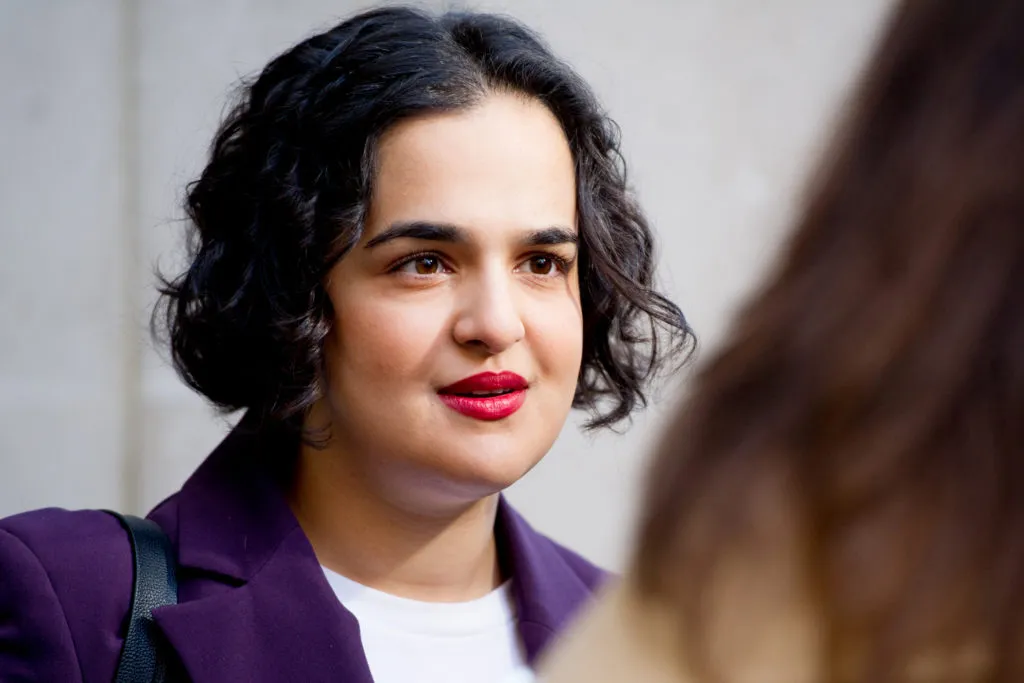
The Labour MPs Nadia Whittome (Nottingham East), Charlotte Nichols (Warrington North) and Olivia Blake (Sheffield Hallam) came out as queer and bisexual. At 24, 28 and 30 years of age, they represent a new Britain where rapidly growing numbers of young people, in particular young women, now feel they have the space to identify as queer, bi or pansexual.
Labour MP for Nottingham East Nadia Whittome. (Ollie Millington/Getty Images)
The average age of an MP is 52, but the average age of an queer MP is 45. Today, nine per cent of the 650 MPs identify as LGB+ but a remarkable 21 per cent of the 130 MPs aged 40 or younger say they are gay, lesbian, bisexual, pansexual or queer. When it comes to the 20-somethings who were elected in the general election of 2019 the proportion is one-third.
In contrast, only five per cent of MPs over 50 identify as queer.
This level of representation may seem surprisingly high but it reflects British society today.
Westminster is becoming a place where politicians, young and old, can express their identities honestly.
A June 2020 Ipsos-Mori poll found eight per cent of UK citizens 18 and above said they were only attracted to the same sex (gay or lesbian), three per cent said they were mostly attracted to the same sex, while four per cent were equally attracted to both sexes.
Another eight per cent said they were mostly attracted to the opposite sex but not uniformly. In sum at least 15 per cent of Britons identify as lesbian, gay or bisexual, alongside another eight per cent who, in theory, could because they acknowledge their own same-sex attractions.
The growing number of people saying they are same-sex loving is driven by a younger generation who have found space to honestly express their identity.
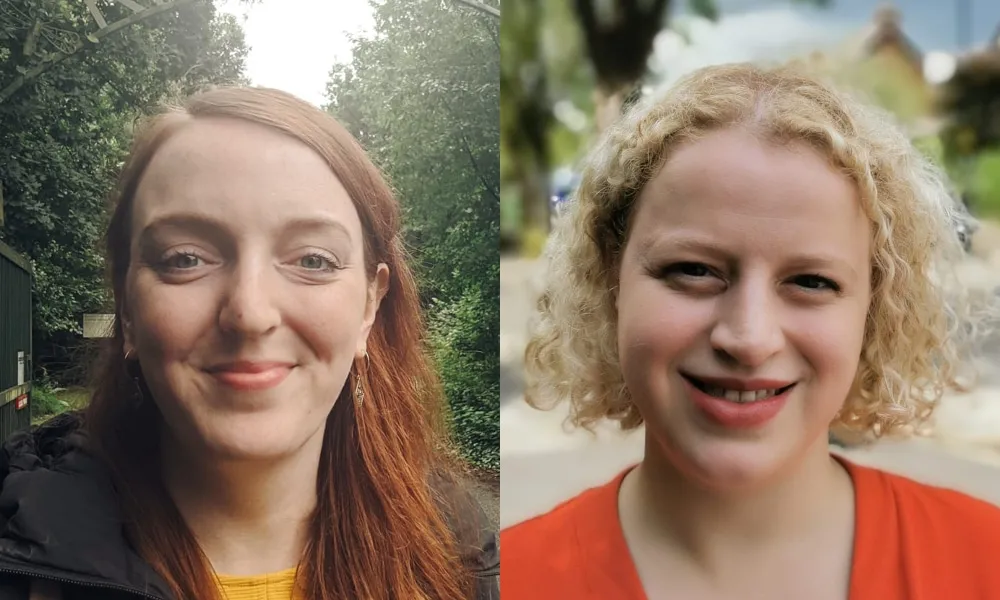
Openly queer Labour MPs Charlotte Nichols (L) and Olivia Blake. (Facebook)
The 33 per cent of MPs 30 years old or younger mirrors the 25 per cent of 18-30 Brits who say they are only attracted to the same sex (eight per cent), mostly attracted to the same sex (five per cent) or equally attracted to both sexes (12 per cent).
In 2020 just three-quarters of Generation Z (18-24) identify as heterosexual. Similarly, the 21 per cent of MPs under 40 who say they are LGBT+ matches the 22 per cent of Brits 18-40 who say they are same-sex attracted.
The 56 queer MPs represent parties across the political spectrum: 24 Conservatives, 21 Labour, 10 Scottish Nationalist and one Liberal Democrat.
All parties with multiple queer MPs have a broad mix of young and old but all the women MPs are Labour, SNP, or Liberal Democrat. Since Justine Greening and Margot James left the House at the last election, the Tories are without a woman in their LGBT+ caucus.
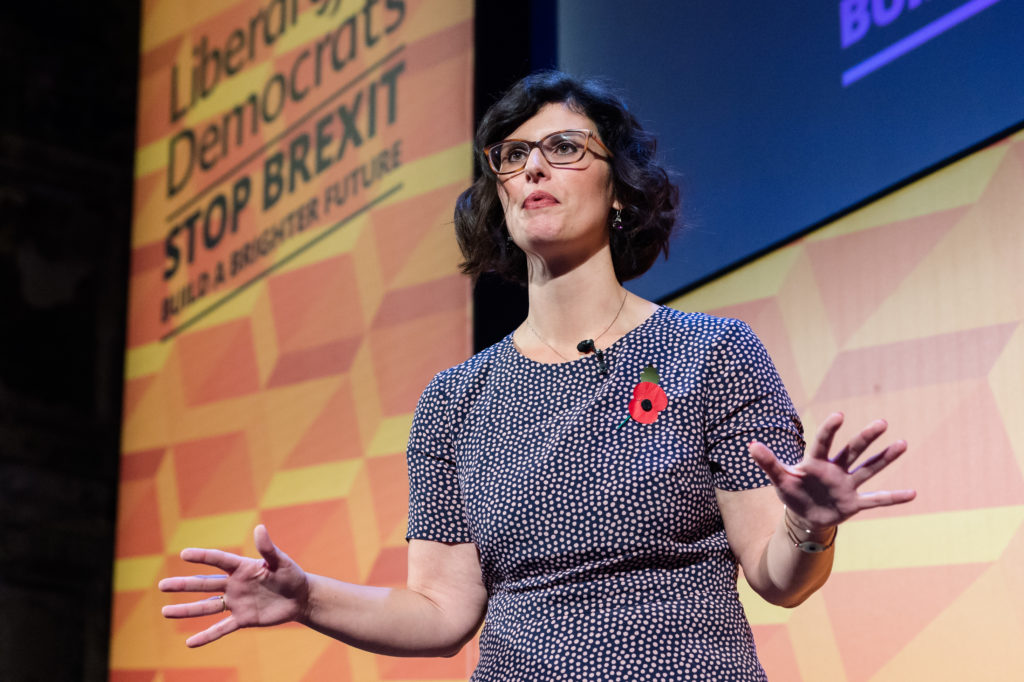
Layla Moran. (WIktor Szymanowicz/NurPhoto via Getty Images)
Whittome, Nichols and Blake illustrate something more about the politics of queer youth. There is evidence that bisexual/pansexual Brits are more left-wing than their gay and lesbian counterparts.
In the Ipsos-Mori 2020 poll, the gay and lesbians split equally into thirds between Tory and Labour voters and others including the Lib Dems, SNP and Greens.
But nearly half of all voters who expressed a degree of same-sex attraction (bisexual/pansexual) went for Labour and only 25 per cent for the Tories. Similarly, gay and lesbians were split 50/50 on how they voted on Brexit, half voting to remain, half voting to leave, but bisexual voters went 57 per cent for remain against only 43 per cent for leave.
Meet the 56 LGBT+ MPs sitting in the House of Commons.
Nadia Whittome, Labour, 24 Mhairi Black, SNP, 26 Jacob Young, Conservative, 27 Charlotte Nichols, Labour, 28 Elliot Colburn, Conservative, 28 Olivia Blake, Labour, 30 Antony Higginbotham, Conservative, 30 Gary Sambrook, Conservative, 31 Paul Holmes, Conservative, 32 William Wragg, Conservative, 33 Angela Crawley, SNP, 33 Dan Carden, Labour, 34 Lloyd Russell-Moyle, Labour, 34 Stewart McDonald, SNP, 34 Cat Smith, Labour, 35 Mark Fletcher, Conservative, 35 Kieran Mullan, Conservative, 36 Hannah Bardell, SNP, 37 Wes Streeting, Labour, 37 James Murray, Labour, 37 Chris Clarkson, Conservative, 38 Layla Moran, Liberal Democrat, 38 Stephen Morgan, Labour, 39 Luke Pollard, Labour, 40 Stephen Doughty, Labour, 40 Damien Moore, Conservative, 40 Lee Rowley, Conservative, 40 Rob Roberts, Conservative, 41 Stuart McDonald, SNP, 42 Peter Gibson, Conservative, 45 Alyn Smith, SNP, 47 Conor Burns, Conservative, 48 Daniel Kawczynski, Conservative, 48 Iain Stewart, Conservative, 48 Mark Menzies, Conservative, 49 Stuart Andrew, Conservative, 49 Martin Docherty-Hughes, SNP, 49 Peter Kyle, Labour, 50 Gerald Jones, Labour, 50 Kate Osborne, Labour, 54 Joanna Cherry, SNP, 54 Neale Hanvey, SNP, 56 Steve Reed, Labour, 57 David Mundell, Conservative, 58 Chris Bryant, Labour, 58 Angela Eagle, Labour, 59 John Nicolson, SNP, 59 Ben Bradshaw, Labour, 60 Crispin Blunt, Conservative, 60 Mike Freer, Conservative, 60 Nick Gibb, Conservative, 60 Nigel Evans, Conservative, 63 Nia Griffith, Labour, 64 Nick Brown, Labour, 70 Michael Fabricant, Conservative, 70 Clive Betts, Labour, 70
Andrew Reynolds teaches politics and public policy at Princeton University and is director of Queer Politics at Princeton.
On October 6, lesbian, gay, bisexual and transgender (LGBT) activists in Tunisia raised their voices and banners in the street, amid the hundreds of demonstrators who were peacefully protesting a draft law that would drastically limit criminal accountability for the use of force by the security forces. By a cruel irony, police attacked the demonstrators, including LGBT activists, and arbitrarily arrested them.
The proposed law, if passed, would embolden security forces in their use of excessive force and send an alarming message to Tunisians, especially members of marginalized groups, already vulnerable to police misconduct, that they will not be protected from police violence.
For LGBT people, who are often excluded from government protection, the passage of this law is terrifying. Here’s why:
On August 5, Ahmed El-Tounsi, a transgender Tunisian man and founder of the trans rights organization OutCasts, thought he would bleed to death on the street.
El-Tounsi and other trans activists were walking near the French Embassy in Tunis when police officers guarding the embassy approached them and asked for their IDs. When the officers saw the mismatch between their IDs and their gender expression, and after a verbal altercation, the police physically and verbally assaulted them, the activists said.
Bloodied and humiliated, they tried to run, but additional police officers arrived and beat the activists, while inciting bystanders to join in – cursing, hitting, and dragging the activists by their clothes on the street, they told me.
“Kill them, they are sodomites,” the officers told bystanders, El-Tounsi said.
“They [private individuals] followed us into alleyways and beat us unconscious,” he said. “They snatched our phones to delete evidence of the assault, and said, ‘We will slaughter you,’ It felt like our entire country beat us that day.”
When he sought medical care at Habib Thameur Hospital, El-Tounsi was denied treatment based on his gender expression. “The doctor said, “You’re a special case, I can’t treat you here. Go somewhere else,”” El-Tounsi said.
“My chest was swollen from the beatings, I couldn’t breathe, I was bleeding profusely, I could barely stay conscious,” he said. When he went to Charles Nicole Hospital, administrative staff refused him entry after seeing his ID, and referred him to a women’s hospital, despite his self-identification as a man.
Activists took El-Tounsi to Wassila Bourguiba Hospital, which specializes in women’s health. “I’m bleeding, I’m going to die, please treat me,” El-Tounsi pleaded, but the doctor responded, “You look like a man, this is a women’s hospital.”
After he waited for hours and negotiated with the doctor, she checked El-Tounsi’s injuries while seven nurses stood around him, interrogating him about his gender identity, and addressing him with female pronouns. “They mocked me. They didn’t treat my injuries. They didn’t even give me a medical report.”
Activists turned to the courts and filed a complaint, seeking to hold police and embassy officers accountable. Several lawyers involved in the case told me that the head of a first instance court in Tunis dismissed the request to review camera footage near the embassy, which lawyers said would show the officers’ role in the assaults. The lawyers appealed in late October and await a decision.
Saif Ayadi, a social worker at Damj, a Tunis-based LGBT rights group, was there during the attacks on trans activists in August, and was among those arbitrarily arrested and beaten at the protest in October. He spoke to me about the increasing police violence against LGBT people in Tunisia, and the insurmountable dangers that would accompany the passage of the draft impunity law.
Ayadi said that in 2020, Damj provided legal assistance to LGBT people at police stations in 75 cases and responded to 98 requests for legal consultations. “These figures are five times higher than those we recorded in 2019, indicating an alarming increase in persecutions of LGBT people during the Covid-19 pandemic,” he told me.
Ayadi said that between March and September, his organization recorded 21 cases of violence against trans people in public, 10 torture cases, and 2 cases of bullying by security officers against trans people in detention facilities. There were also 12 prison sentences against trans people and gay men under articles 230, 225, and 125 of Tunisia’s penal code, which criminalize “sodomy,” “indecent behavior in public,” and “insulting a public officer,” respectively.
Tunisian law does not provide a clear or accessible path to legal gender recognition for transgender people, who face systemic discrimination compounded by the incongruity between their official documents and gender expression.
Amal Ayari, a prominent advocate for women’s and LGBT rights in Tunisia, told me, “Tunisia is considered a country where rights and freedoms are protected, but such flagrant violations of citizens’ rights show that this discourse is just slogans, and is an attempt to whitewash Tunisia’s international image.”
Instead of granting more power to the police, the Tunisian government should decriminalize same-sex conduct and protect LGBT people from discrimination and police violence. The proposed bill, Number 25/2015, a shameful step backward, should not pass.
A police officer caught in a Christmas Day bombing incident in Nashville has spoken about hoping to make it home to her wife ahead of the explosion.
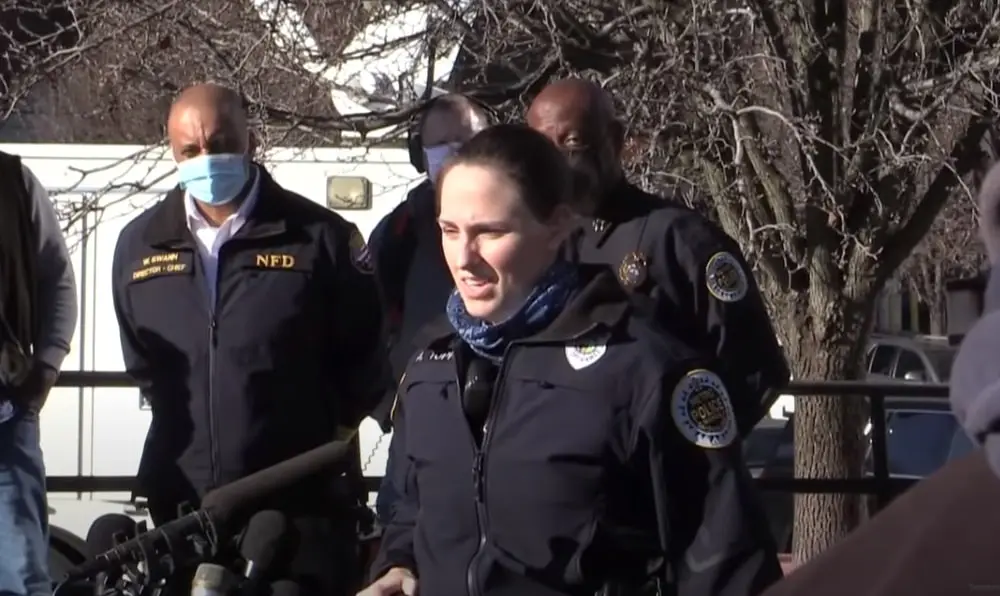
Officer Amanda Topping is among six officers from the Metro Nashville Police Department who have earned praise for their actions preventing casualties on 25 December after a camper van exploded on Second Avenue in downtown Nashville.
Bombing suspect Anthony Warner, 63, is believed to have died in the blast, which occurred after police were called to the scene – with the vehicle rigged to play an ominous automated message and the vintage song “Downtown” as it counted down to the detonation.
Three civilians were hurt in the explosion, with Topping and her colleagues hailed as “heroes” by local officials for their quick work to prevent further casualties by evacuating the area.
Speaking at a press conference on Sunday, Topping spoke about being called to the incident after an “odd” call on Christmas morning.
Topping, who has been with the department for two years, said: “We were sitting [in the station], and my wife had just called because it was toward the end of our shift, so she was seeing what time I was coming home.
“I’m talking to her, and I told her, ‘We’re about to head to this call, it’s a little strange.’ I hung up with her, and we get there but we didn’t really know. too much about it.”
After getting to the scene, she recalled: “I heard what the RV was saying, and it’s stuff that I’ll never forget – it was a female voice saying, ‘Your primary objective is to evacuate. Evacuate now.’
“I was pacing back and forth, having to turn pedestrians around… you just have a feeling, ‘Something’s not right.’ You just don’t get stuff like that.
“I was standing there by my car, and I heard [another officer] say that music just came on. I was about to get on the radio and say, ‘I know it’s not my place, but everybody’s getting out of the buildings, right?’
“I was getting really antsy… I had talked to my wife again and told her things were really strange.”
Nashville police officer Amanda topping is being hailed as a hero for saving lives after explosion (YouTube/The Tennessean)
A gay Black man in Boston, Massachusetts, who was stabbed and left in a coma for four days, is living in fear knowing his attackers are still “out there”.
Anthony Crumbley was walking home from a bar in South Boston at about 10.45 pm on 18 December when he was attacked, according toCBS Boston.
The 25-year-old said: “The two males and a female approached me and two males attacked me and stabbed me in my neck and in my stomach, and pretty much ran and left me there.”
Suffering life-threatening injuries and left the bleed out on the ground, Crumbley was taken to Boston Medical Center where he spent four days in a coma in the hospital’s ICU.
Police have released a CCTV photo of people they would like to speak to in connection with the attack, but reportedly said they have no reason to believe the stabbing was a hate crime.
Crumbley insisted: “I believe it was an attack that had to do with gay hate because, you know, I dress very femme and I’m a very outspoken person.”
Still recovering in hospital, the young gay man said he is living in fear and struggling to make ends meet after being stabbed.
He wrote on a GoFundMe page: “No one has been arrested for doing this to me and I’m scared, truthfully, knowing they are still out there on the streets and could do this to me again at anytime.
“This traumatising situation has left me hopeless, after waking up from being in a coma for four days in the ICU at Boston Medical and I’m STILL here in the ICU now writing this on my birthday, December 26th.”
Crumbley’s mother passed away one year ago, and he is the legal guardian of his 12-year-old sister.
He continued: “Before all this happened I was very energetic and outgoing, always doing what was needed to make ends meet for me and my younger sister. I just don’t know how I’m going to make ends meet now with this gained disability from my attackers.”
He said that after the attack, his left arm is now not functional because of “the severed nerves in my C6 section of my shoulder”.
He continued: “I have to figure out how I’m going to ever finish raising my sister the way she deserves and give her everything I never had… Working won’t be an option for me at the moment until I can fully recover, so even though this hurts me and is so embarrassing to say I’m asking for help from anyone and everyone who knows me personally or who this even touches the slightest.”
Anyone with information is asked to call Boston Police at 617-343-4742.
California is now reporting the highest number of new daily COVID-19 cases per capita in the country.
Last week, the state reported the nation’s fourth highest number of daily COVID-19 cases per 100,000 residents over a seven day period, but California jumped to first place when the U.S. Centers for Disease Control and Prevention updated its case per capita tracker Saturday.
According to the CDC update from Saturday, California has reported an average of 100.5 daily COVID-19 cases per 100,000 residents over the past seven days, which places it comfortably ahead of second-place Tennessee, which saw an average of 89.6 daily cases per 100,000 residents over the same time period.
California’s daily case-per capita figure is actually down from the 109.3 mark it was at last week, which is likely due to reporting delays caused by the Christmas holiday. For reference, Oklahoma recorded the worst spread in the country last week with an average of 151.4 daily COVID-19 cases per 100,000 residents, and Tennessee was the second-worst with an average of 138.
California’s number has risen dramatically in recent weeks. To put the surge in perspective, when SFGATE last reported on California’s case rate in comparison to other states on Nov. 17, the Golden State was recording 21 new daily cases per 100,000.
The Golden State is in the midst of its worst surge ever, and last week the test positivity rate — another key data point for measuring the pandemic — hit 12%. That’s more than double what it was a month ago. In California’s summer surge, the positivity rate peaked at 7.6%.
To show how the pandemic in California compares with what’s unfolding in other states, we’ve put together a list of the 10 states with the highest case rates, using data from the Centers for Disease Control and Prevention and the number of total cases and deaths from state public health departments. See data on all 50 states at COVID.CDC.gov.
LGBT+ campaigners have claimed a victory over Donald Trump, after the president sought to ban forms of diversity training among federal contractors and grantees.
Under the controversial executive order signed by Trump in September, organisations in receipt of federal funds are prohibited from training involving so-called “divisive concepts such as critical race theory, white privilege, systemic racism, or implicit or unconscious bias”.
As Trump issued the order, the White House lashed out at a “destructive ideology… grounded in misrepresentations of our country’s history and its role in the world”, as it barred federal contractors from teaching that white people bear collective responsibility for slavery.
Subsequent guidance issued by the Trump White House instructed federal agencies to clamp down on training about intersectionality – the idea that the intersections of race, class, gender and sexual orientation create intersecting layers of privilege and discrimination.
Judge hits pause on Donald Trump’s diversity training ban
While the executive order is already likely destined for the bonfire when Joe Biden and Kamala Harris take office next month, a challenge brought by LGBT+ groups has secured a preliminary injunction to prevent the Trump administration from implementing it and cutting funding for federal contractors.
District court judge Beth Labson Freeman ruled on 22 December that a challenge on the grounds of free speech was likely to succeed, noting that “the executive order restricts a federal contractor’s ability to use its own funds, to train its own employees, on matters that potentially have nothing to do with the federal contract”.
The Trump administration had sought to argue it would be in the “public interest” to ban such training, but the judge hit out their claims as a “gross mischaracterisation of the speech [the groups] want to express and an insult to their work of addressing discrimination and injustice towards historically underserved communities”.
The challenge was brought by a coalition of LGBT+ and civil rights groups, including the the Los Angeles LGBT Center, the Santa Cruz Diversity Center, the AIDS Foundation, and LGBT+ elder advocacy group SAGE.
Injunction will allow LGBT+ groups to continue providing diversity training
“This injunction could not come at a more crucial time,” said SAGE CEO Michael Adams. “We have already had trainings cancelled because of the threat of this executive order, trainings that are integral to SAGE’s ability to do its work on behalf of LGBT+ older adults in a meaningful and impactful way that recognises explicitly the impact of systemic racism, sexism, and anti-LGBT+ bias on our communities and the country writ large.”
Dr Ward Carpenter of Los Angeles LGBT Center said in a statement: “President Trump’s executive order struck at the very heart of our country’s core principles, limiting freedom of speech and curtailing efforts to explore root causes of inequality.”
Ward added: “We applaud the court’s decision to halt this mean-spirited and destructive executive order, and we look forward to a new administration that will actually support efforts to address systemic discrimination and promote equality.”
A Democratic politician has resigned from his leadership role on Providence City Council after he was recorded referring to a Black transgender activist as “it”.
Recordings surfaced last week of councilman Michael Correia, who represents ward 6 of Providence in Rhode Island, mocking trans activist Justice Gaines.
The recording sees Correia and an unnamed staffer mocking and misgendering Gaines over a run for city council, with the councilman saying: “[She’s] still working on developing [her] breasts and everything.”
Asked what Gaines would be called if elected, Correia responds: “An it. It.”
The Democratic lawmaker notably failed to apologise in his initial statement,claiming the secret recordings were a “grave intrusion of privacy” and had been taken out of context. He also suggested it was illegal to record someone without their consent in Rhode Island, which it is not.
Michael Correia ‘regrets’ causing hurt with ‘flippant’ remarks.
However, after a wave of anger in the city and calls from colleagues for him to step aside, Correia has since resigned from his position as the council’s president pro tempore.
Michael Correia, who represents ward 6 of Providence in Rhode Island (Providence City Council)
Correia said in a Facebook post: “As someone who has spent the greater part of my adult life serving my community and city, I regret that my words may have hurt anyone in the LGBTQIA community, my friends, family colleagues and constituents in that community.
“I know that LGBTQIA people struggle, face discrimination and abuse and to think that I may have somehow contributed to that sentiment is unacceptable and for that I truly apologise.
“I would like to personally apologize to Justice Gaines for any hurt that I may have inflicted on her. My words were flippant and inappropriate as a leader and as a person.
“Anyone who knows me knows that I may from time to time try to joke around but I would do anything to help someone who needed it regardless of who they are or their station in life. There is no place for discrimination in our city and again I apologize to Justice for anything I have done to hurt her.”
Correia also called for “sensitivity training” to be offered to city council members and council staff “so that we can collectively understand the importance of a safe and respectful environment”.
Despite resigning from his leadership role, Correia will remain a member of the city council.