Enneagram Workshop: Navigate Life By The Numbers! August 23 in Sebastopol


Democratic lawmaker Scott Wiener has been threatened with “public execution” by far-right conspiracy theorists after trying to fix a disparity in California’s sexual offence laws.
One of California’s most prominent LGBT+ officials, the state senator has faced a torrent of threats after putting forward a bill to fix a loophole that leads to discrimination against LGBT+ teens.
Under current state law it is a crime to have sex with someone under the age of 18, but judges have a discretionary power to keep teenagers off the sex offenders’ register for having sex with people of a similar age, such as a 17-year-old and an 18-year-old.
However, the powers only apply to “penile-vaginal intercourse”, which means that LGBT+ teens are liable to be added to the sex offenders’ registry for having consensual sex, where straight teens are not.
Wiener’s bill to fix the issue has led to him being smeared a a “paedophile” by followers of QAnon – the far-reaching but unfounded conspiracy theory that, among other things, claims Donald Trump is at war with an elite, international ring of Satan-worshipping child sex traffickers.
An online pile-on against Wiener, which disturbingly mirrors far-right smear tactics against other gay politicians worldwide, has led to a stream of death threats and harassment towards the lawmaker from trolls
One message received by Wiener reads: “You’re dead. Dead. Dead. Dead. I’ll publicly execute you. I’m gonna embarrass you. Paedophile.” Another threatens: “I’ll come cut your head off and deliver it to your mom if you even considering introducing your ‘bill’. Got it?”
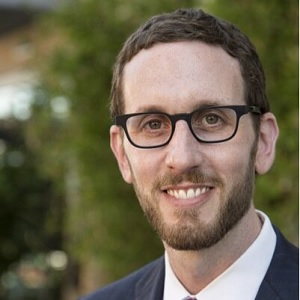
In a Facebook post, Wiener wrote: “This week, I’ve been the target of violent, homophobic, antisemitic attacks from the QAnon/anti-vax right, including death threats.
Stars you didn’t know are LGBT+Celebs you didn’t know have an LGBT siblingThe stars who went gay for pay
“This is happening because I’m authoring SB 145, legislation to end discrimination against LGBTQ youth on the sex offender registry.
“Currently LGBTQ young people are forced onto the sex offender registry in situations where straight youth are not. This discrimination is a relic of times when gay sex was illegal. The bill is supported by major LGBTQ, civil rights, and law enforcement groups.”
Wiener wrote: “I have thick skin — politics has a way of giving you that — but this has been scary, particularly with the assassination of a federal judge’s son last week.
“There is so much misinformation about SB 145 — similar to misinformation about COVID, vaccines, masks, and the like — and it’s hard to track where it starts. Those who think homophobia and antisemitism are over are not paying attention.”
The state senator is now afraid for his safety after his personal information was posted online.
He tweeted: “It’s been a dark week and today I found out that my personal information has been doxxed online by a prominent QAnon follower.
“Thank you so much to everyone for the videos of support. It means so much to me, and it’s an honour to serve this community.”
A trans asylum seeker has been violently murdered in Guatemala, after fleeing gang-related persecution in El Salvador.
The 27-year-old, who has not been named to protect her family, died last weekend.
The United Nations Refugee Agency (UNHCR) said that her violent death “highlights the need for effective protection to be granted to people forced to flee their countries, including members of the LGBT+ community”.
UNHCR added that the woman had fled gender-based violence and persecution by gangs in her native El Salvador and applied for asylum in Guatemala in 2018.
“We express our deep condolences to the family and loved ones of this woman who was trying to rebuild her life in Guatemala after being forced to flee her country due to violence and persecution,” said Giovanni Bassu, UNHCR regional representative for Central America and Cuba.
The UNHCR urged Guatemala to bring those responsible for the killing to justice.
Stars you didn’t know are LGBT+Celebs you didn’t know have an LGBT siblingThe stars who went gay for pay
In neighbouring El Salvador, three policeman were jailed last month for the killing of trans woman Camila Díaz Córdova – the country’s first-ever conviction for a homicide where the victim was transgender.
Trans people in Central American countries face widespread discrimination, harassment and violence, with UNHCR partner COMCAVIS Trans saying that “the majority of LGBT+ people – particularly transgender women – are often initially forcibly displaced within their own country, escaping gang threats, murder attempts, and physical and sexual violence”.
“Many often endure years of violence and persecution before seeking asylum in other countries,” COMCAVIS Trans said.
In Guatemala, a homophobic president who is opposed to LGBT+ rights was sworn in in January.
Alejandro Giammattei, who is against same-sex marriage and abortion, gained a surprise victory in the August 2019 election.
He replaced outgoing president Jimmy Morales and will hold office or a four-year term.
The 63-year-old won the election last year for Vamos, a political party founded in 2017 by politicians, businessmen and military officers with a focus on battling poverty.
He promised yesterday to bring forward legislation that would declare street gangs terrorist groups and said he would promote the rule of law. He also committed to increasing employment.
A grandfather who came out as gay at 90 has told other older people who are in the closet that it’s “never too late” to be their authentic selves.
Kenneth Felts kept his sexuality hidden all his life, but that changed when memories of his first love flooded back as he sat down to write a memoir earlier this year.
He went on to come out to his lesbian daughter before revealing his sexuality to the world.
Now, he is urging other older LGBT+ people to consider coming out of the closet.
“I know I’m in an unusual position and I just came out just like that,” Felts told USA Today.
“I hadn’t even planned on it or no, nothing, but I would think that if a person is contemplating coming out, they first need to check on what support systems are available to them.”
He said he has been heartened by the wave of love and support he was met with when he came out as gay, and told other older queer people that they should expect the same.
“It’s amazing how much love there is out in the community,” he said.
“And they’re going to share it with you. They’re going to pour it on you by the bucket full.
“I got memo after memo telling me how they are supporting me and they love me. Never expected that. I didn’t expect any kind of response like I’ve been getting.67 Colorized Photos Captured Way More Than ExpectedPromoted by History Daily

“And so I think other people will kind of have the same experience that they might be surprised just how many people support them.”
He concluded: “It’s never too late to come out.”
I got memo after memo telling me how they are supporting me and they love me.
Kenneth Felts also opened up about the moment he and his old flame Phillip “hit it off real good” when they were working together.
The pair started “going out for coffee” and then stated dating, before they moved in together.
The couple lived in bliss for nine or 10 months, but the relationship crumbled one Sunday morning when they visited a church.
Felts’ “Christian values” came back to him and he began to wonder if what he was doing was really OK.
Their relationship lasted just one more month, before Felts decided to live as a straight man.
“And I left and have actually been kind of looking for Phillip ever since then.”
Heartbreakingly, Felts’ search for Phillip ended in tragedy last month when he finally tracked him down, only to discover that he had already passed away.
Stars you didn’t know are LGBT+Celebs you didn’t know have an LGBT siblingThe stars who went gay for pay
He told Newsweek in July that a woman who lived on the East Coast contacted him in an effort to track down his first love.
“But she discovered a week or so ago that he had passed away around two years ago. So it’s very difficult and very painful,” Felts said at the time.
“To me, he died less than two weeks ago. I posted what I felt was an obituary for him online and people have been overwhelmingly supportive, saying how sorry they are that I missed seeing him.
“But it still hurts.”
The heartbroken 90-year-old added: “In all the relationships I’ve had since Phillip, nothing has ever measured up to him, and I don’t anticipate that anything ever will.”
He said he is “more concerned” with the “quiet aspects of a relationship” such as holding hands and “being close”.
“I’d like to have a boyfriend; companionship and somebody there when the days get longer,” he wrote.
Three people in Sonoma County were detained by Immigration and Customs Enforcement this week, according to the North Bay Organizing Project, which runs a 24-hour emergency hotline for undocumented immigrants caught up in apprehension operations.
Susan Shaw, director of the local advocacy nonprofit, said ICE detained one person Tuesday and two people on Thursday.
When someone alerts the group’s hotline, it dispatches observers to where federal agents are detaining someone and notifies local immigration attorneys.
ICE could not be reached to confirm its operations in Sonoma County.
Shaw said it’s unclear whether the apprehensions are part of a coordinated crackdown by ICE.
“When one person gets detained we’re very concerned, and the fact that there are three people is a serious cause for concern,” she said.
Black LGBTQ Americans are disproportionately affected by the economic downturn fueled by the COVID-19 pandemic, according to a new report.
An online survey of 10,000 people across the U.S., conducted from April to July by LGBTQ advocacy group Human Rights Campaign and PSB Insights, found that Black LGBTQ respondents fared worse than both the Black population and the LGBTQ population along every economic indicator measured.
“The data make clear what we have long known: that those living at the intersections of multiply marginalized identities face harsher consequences of the pandemic.”
ALPHONSO DAVID, HUMAN RIGHTS CAMPAIGN
“We know Black people are dying from COVID-19 at extremely alarming rates. Unfortunately, this new research shows Black people and Black LGBTQ people are suffering disproportionate economic inequities,” HRC President Alphonso David said in a statement. “The data make clear what we have long known: that those living at the intersections of multiply marginalized identities face harsher consequences of the pandemic.”
The most recent report builds on prior studies conducted by HRC and PSB Insights that found LGBTQ people — particularlytransgender people of color — are more likely to have been economically affected as a result of the pandemic.
The study found that Black LGBTQ people were more likely to have had their jobs affected by the pandemic.
“Within the LGBTQ community, many at the intersection of multiple marginalized identities are at some of the greatest risk of facing the economic fallout from COVID-19,” the report states.
Specifically, 31 percent of Black LGBTQ respondents to the survey reported a reduction in their work hours, compared to 23 percent of all Black respondents and 28 percent of all LGBTQ respondents.
Black LGBTQ people were also more likely to have lost their jobs: 18 percent of Black LGBTQ respondents became unemployed, compared to 16 percent of both all Black respondents and all LGBTQ respondents.
J. Maurice McCants-Pearsall, the HRC’s director HIV and health equity, told NBC News that Black people are overrepresented in sectors of the economy like food service and retail most likely to be affected by the economic fallout of the pandemic and most likely to be exposed to the virus.
“They are classified as essential workers, but a lot of them went without proper [personal protective equipment] and supplies,” he said. “They couldn’t afford not to show up at work, and they have to make money to earn a living for themselves and their families.”
According to the report, Black LGBTQ people are more likely to have changed the way their households are spending and to be under financial stress as a result of the pandemic.
Over one third (36 percent) of Black LGBTQ respondents reported having changed their household budgets, compared to 27 percent of all Black respondents and 30 percent of LGBTQ respondents. One in five Black LGBTQ respondents has checked to see if their bank account was in overdraft, whereas 14 percent of both all Black respondents and all LGBTQ respondents reported the same.
Black LGBTQ people were more likely to request delays in bills and rent. Twenty-one percent of the Black LGBTQ people surveyed had asked for delays in paying their bills, compared to 17 percent of Black respondents and 14 percent of LGBTQ respondents. Nearly a quarter (23 percent) of Black LGBTQ respondents had requested delays in paying their rent, compared to 12 percent of Black respondents and 11 percent of LGBTQ respondents.
The HRC study falls in line with existing research that demonstrates that Black Americans are disproportionately affected by the virus.
“Racism is a public health issue” McCants-Pearsall said. “If we don’t address structural and social racism, we can’t expect to have improved outcomes for communities of color, in particular Black communities.”
McCants-Pearsall said the U.S. can apply the lessons learned from the HIV epidemic for communities of color to the response to COVID-19.
“Communities of color, particularly Black gay men, are disproportionately impacted by HIV,” McCants-Pearsall said. “We are seeing the same situation.”
For McCants-Pearsall, better data collection is key to addressing economic and health disparities among LGBTQ people, people of color and those at the intersection of the two groups.
In a letter to Health Secretary Alex Azar, HRC joined racial justice organizations in a campaign demanding that the agency compile accurate data as it relates to LGBTQ people of color in the U.S.
“We can use that data to advocate for candidates, to argue for more resources,” McCants-Pearsall said. “It gives us the ability to show decision makers these are populations that are being disproportionately impacted. This is data that shows that we need to make sure that those resources got to those communities.”
“If we don’t have that data, we are just screaming,” he added.
When a right-wing populist party won the right to govern Poland five years ago, Piotr Grabarczyk feared “bad things” might happen to gay men like him and other LGBTQ people. He sometimes considered leaving the country, but waited.
Friends and a job bound Grabarczyk to Warsaw, the relatively liberal capital city. He trusted that Poland’s membership in the European Union would protect his community. Yet his dwindling faith finally fell away as President Andrzej Duda campaigned for reelection on an anti-LGBTQ platform — and won.
Duda, who repeatedly described the LGBTQ rights movement as a dangerous “ideology,” was sworn into his second term Thursday. Grabarczyk, 31, is now gone, along with other gay, lesbian, bisexual and transgender Poles who have emigrated to escape what they consider homophobia promoted by the highest levels of government.
“Like where’s the line? Is there a line they are not going to cross? I don’t know,” Grabarczyk said after landing last week in Barcelona, Spain, where both same-sex marriages and adoptions are legal. “That was kind of scary.”
He spoke to The Associated Press alongside his boyfriend, Kamil Pawlik, 34, who left Poland three days after Duda beat Warsaw’s mayor in a runoff last month.
While gays and lesbians have never had the legal right to marry or to form civil unions in Poland, as they can in much of Europe, many felt confident until not long ago that Polish society was becoming more accepting and that those rights would one day come.
They have instead faced a furious backlash from the Catholic Church and the government. Duda proposed a constitutional amendment to prevent same-sex couples from adopting children. Last year, the Roman Catholic archbishop of Krakow warned of a “rainbow plague,” and the ruling Law and Justice party has described LGBTQ rights as a threat to families and Poland’s Catholic identity.
While Grabarczyk, an entertainment reporter and blogger with a large YouTube following, and freelance graphic designer Pawlik are not planning marriage or children right now, the proposed adoption ban was their exit sign. They felt that it showed a determination by the authorities to put discrimination into law, as President Vladimir Putin has done in Russia.
No statistics exist on how many LGBTQ people have left Poland. Activists say some departed after Law and Justice and Duda, who is backed by the party, came to power in 2015 and created an unfriendly climate for liberals and minorities.
As Duda faced a tough electoral challenge from Warsaw Mayor Rafał Trzaskowski, the rhetoric grew harsher. He called the LGBTQ movement an “ideology” worse than communism and declared that LGBTQ was “not people.” He formally proposed the same-sex adoption ban.
After his victory, Duda apologized for language he acknowledged was sometimes too “harsh.” A prominent LGBTQ activist, Bart Staszewki, nevertheless asked on Facebook if anyone was thinking of moving away from Poland. He received hundreds of replies, mostly from people saying they were contemplating it or had already left.
Britain, Germany, the Netherlands, Spain and other European Union countries are where LGBTQ emigres are envisioning their futures. They follow generations of Poles who have fled political repression at home, including during the communist era.
The recent exodus represents “a second wave of immigration” after the significant number of Poles who moved abroad to work when Poland joined the EU in 2004, Staszewski said.
“This time, people are not looking for better paid jobs, but they are looking for dignity and respect,” he said. “People want to feel that they are protected by the government and not treated as an enemy.”
Others are vowing to stay and fight for LGBTQ rights, among them Staszewski. The 29-year-old said he is inspired by the example of his grandparents, who participated in the underground Polish resistance against the German occupation of Poland during World War II.
But escape is not a realistic option for everyone, particularly those from rural areas without money, foreign languages or other skills required to start over in a new culture.
Michał Niepielski, 57, a radio technician in Krakow who has taken a case to the European Court of Human Rights in hopes of winning the right to marry his partner of 16 years, says he knows some English and could move, but would not be able to work in his field abroad.
Speaking to the AP, Niepielski confessed that he and his partner are “very afraid” but are trying to be positive in their social media comments. The EU’s recent decision to deny small amounts of funding to Polish towns declaring themselves to be “LGBT free” gave them enough hope to keep on going, he said.
“We have sympathy with the people who haven’t come out of the closet yet and now will have to stay in the closet for a long time, perhaps until the end of their lives,” Niepielski said. “That’s a tragedy. That’s one reason we are staying.”
LGBTQ rights have continued to be a flash point since the election. The Justice Ministry awarded funding to a project designed to counteract crimes “committed under the influence of LGBT ideology.”
Three activists protesting homophobia were detained this week and charged with the crimes of insulting monuments or offending religious feeling for hanging rainbow flags on statues in Warsaw, including one of Jesus. If convicted, they could face prison.
There is no law, however, making anti-LGBTQ hate speech a crime.
Grabarczyk, who recently published an ebook of coming-out stories titled “Mom, I’m Gay. Dad, I’m a Lesbian,” said he feels guilty about leaving others behind while he and his boyfriend live in Barcelona. He recalls feeling as a teenager when Poland joined joined the European Union like he was in a new world, where borders didn’t exist and he could easily meet people of different cultures, skin colors and sexual orientations.
“For us, it was a given to live in a world like that, and it’s all crumbling down now,” he said. “So it’s only natural to seek a place where we can return to that.”
Since the Syrian conflict began in March 2011, men and boys and transgender women have been subjected to rape and other forms of sexual violence by the Syrian government and non-state armed groups, including the extremist armed group Islamic State (also known as ISIS). Heterosexual men and boys are vulnerable to sexual violence in Syria, but men who are gay or bisexual—or perceived to be—and transgender women are particularly at risk.
While women and girls are disproportionately targeted by conflict-related sexual violence (CRSV), men and boys are also impacted. However, existing services within gender-based violence (GBV) and child protection are focused almost exclusively on responding to the needs of women and girls and very little attention is paid to the needs of men and boys. Limited data and underreporting—in part fueled by stigma around male vulnerability and reluctance to talk about experiences of sexual violence or seek help for its long-term physical and psychological impact—have contributed to male survivors not receiving adequate attention and help.
This report is based on interviews Human Rights Watch conducted in Lebanon with 40 gay and bisexual men and transgender women—some of whom were perceived by perpetrators to be gay men—and non-binary individuals, as well as 4 heterosexual men. The survivors all described their experience of sexual violence in Syria. We also conducted interviews with 20 caseworkers and representatives of humanitarian organizations operating in Lebanon. While many of the men and boys and transgender women interviewed have also experienced sexual violence in Lebanon, those incidents lie outside the purview of this report.
The report finds that men and boys, regardless of their sexual orientation or gender identity, are vulnerable to sexual violence in the context of the Syrian conflict. According to interviewees, gay and bisexual men and transgender women are subject to increased and intensified violence based on actual or perceived sexual orientation or gender identity. The sexual violence described included rape, sexual harassment, genital violence (beating, electric shock and burning of genitals), threat of rape of themselves or female family members, and forced nudity by state and non-state armed groups. This violence has taken place in various settings, including Syrian detention centers, checkpoints, central prisons, and within the ranks of the Syrian army.
This report also finds that survivors of sexual violence may suffer from various psychological traumas such as depression, post-traumatic stress, sexual trauma, loss of hope and paranoid thoughts. Due to the sexual violence they have been subjected to, survivors may also suffer from physical traumas, including severe pain in their rectum and genitals, rectal bleeding, and muscle pain, and may have sexually transmitted infections (STIs), including HIV.
Men and boys, transgender women, and non-binary survivors of sexual violence told Human Rights Watch that they did not seek any medical or mental health services in Syria for a range of reasons, including shame, fear of stigma, and a lack of trust in the health care system. Syrian survivors of sexual violence who fled to Lebanon told Human Rights Watch they found limited services and inadequate support from humanitarian organizations. This is often due to lack of funding and personnel trained to respond to their specific needs. For example, there are no protection facilities in Lebanon, such as safe shelters, for men or trans women.
In 2013, the United Nations (UN) Security Council for the first time stated in Security Council Resolution 2106 that conflict-related sexual violence also affects men and boys. The United Nations Refugee Agency (UNHCR) and nongovernmental organizations (NGOs), including All Survivors Project, the Women’s Refugee Commission, Lawyers & Doctors for Human Rights and the Refugee Law Project, have provided significant documentation on the nature and extent of sexual violence perpetrated against men and boys in Syria and elsewhere, and the specific needs of male survivors. This has helped to address the dearth of research.
In March 2018, the Independent International Commission of Inquiry on the Syrian Arab Republic (the Syria COI) published a report with detailed evidence on sexual violence against men and boys in Syria. On April 23, 2019, the UN Security Council adopted resolution 2467 on conflict-related sexual violence, which recognizes that men and boys are also targets of sexual violence in both conflict and post-conflict settings. Resolution 2467 acknowledges the need for enhanced medical and mental health support for survivors of sexual violence and calls on UN member countries to ensure that survivors of sexual violence receive nondiscriminatory access to medical and psychosocial care based on their needs.
The explicit recognition and documentation of CRSV against men and boys as sexual violence is an important step to ensure provision of services tailored to the needs of all survivors of sexual violence. This moves the issue out from being considered only under the more general rubric of “torture,” under which it has previously fallen in reporting and legal analysis. This report aims to shed light on the sexual nature of crimes perpetrated against Syrian men and boys and transgender women.
In a context of shame, stigma, and silence surrounding sexual violence against men and boys—whatever their sexual orientation—and also for transgender women and non-binary people, acknowledging such violence is a prerequisite to providing adequate services and care. It is also vital in challenging the social and cultural assumptions that men are invulnerable, which often underpins the stigma experienced by male and transgender survivors. Increased research on the topic, and attention to the plight of male survivors at the UN Security Council, adds to the momentum toward more adequate service provision.
International donors, including the European Union, should urgently provide resources for tailored medical, psychological and social support programs in Lebanon for men and boys, trans women, and non-binary survivors of sexual violence, without diverting funding from services for women and girls, which is already very scarce. Without funding, humanitarian organizations and service providers in Lebanon cannot meet the needs of the full range of CRSV survivors. Service providers and humanitarian organizations in Lebanon should provide comprehensive and confidential medical and mental health services to male, transgender, and non-binary survivors of sexual violence, with staff trained to handle their needs effectively and appropriately.
Iowa students are turning to Instagram to call out teachers and peers for the routine homophobia, racism, misogyny and sexual harassment they experience everyday at school.
Submitting their stories anonymously via three Instagram accounts – dedicated to exposing anti-LGBT+ hate, racism and misogyny respectively – students have painted a damning picture of what it’s like to be a minority in the Iowa City community school district.
Their accounts reveal racist and homophobic slurs being used with abandon, students being shunned for their sexuality and rampant anti-LGBT+ bullying going unchecked by school authorities.
“Everyday I walk into school feeling like an outcast,” one writes. “I just wish students and at least teachers would see me as a normal human… But no, I can’t get through at least one week without being called a faggot or queer.”
“I had to deal with a lot of violent, homophobic bullying at Northwest Junior High,” says another. “When I was there none of the administration seemed to do anything about that despite witnessing it happen to me and other students.
“[The principal] is completely incompetent when it comes to protecting the kids that are the most vulnerable.”
Another writes simply: “Once, I wore my flag to school, and was told to burn it to the ground. That hurt.”
Black students reported being shown images of lynchings, hearing the N-word and having to endure classmates using Blackface. Multiple girls reported being sexualised, sexually harassed and even raped.
City High freshman Rachel Johnson started the @lgbtaticcsd account after seeing the stories of racism and sexual harassment in the school district on @blackaticcsd and @girlsaticcsd.
Since the account opened on July 22, Johnson and her friends have posted more than 100 stories from LGBT+ students across the district.
The submissions identify a variety of discrimination and bullying LGBT+ students face, but two patterns in particular stood out to her.
“One was just how many people talked about constantly hearing the F-slur and hearing ‘gay’ used as an insult,” Johnson told the Daily Iowan. “Just so many people talked about that and how it was just a normalised thing.”
The other trend she noticed was the name of particular teachers that recurred in multiple stories.
The posts have now gained so much traction they’ve caught the attention of teachers and administrators.
“It just makes your heart hurt for students that have either experienced those things or witnessed those things in our school community,” interim superintendent Matt Degner said.
“That’s definitely not what we want to be about, or the type of or the time of experience and climate we want to have for our students … As a human being and as an educator, I just feel bad and feel that we have a lot of work to do, and we have a lot of improvements to make so that students don’t have that experience in our schools.”
Three police officers in El Salvador have been sentenced to 20 years in prison for the murder of a transgender woman in 2019.
“20 years in prison for three PNC (National Civil Police) officers for the murder of a member of the LGBTI community,” wrote El Salvador Attorney General Raúl Melara on his Twitter account after announcing the San Salvador court’s verdict against Carlos Rosales, Jaime Mendoza and Luis Avelar for kidnapping Camila Díaz Córdova on Jan. 31, 2019.
Díaz was found hours later with various injuries to her body. She died at Rosales National Hospital on Feb. 3, 2019.
Díaz’s friend, Virginia Flores, told the Washington Blade the U.S. deported her in 2017 after she migrated because of the danger the LGBTQ community — especially trans people — face in El Salvador.
“It is personally the least that I expected, but it is still no fair. It is half justice,” said Flores. “It was immediately clear that it was a hate crime, but I am pleased that they have sentenced these killers.”
The three police officers had their first court hearing on July 5, 2019, after they were charged with kidnapping and aggravated homicide as a hate crime. The judge did not admit the aggravating circumstance in the case.
“By not admitting the aggravating circumstance, the sentence did not reach 50 years in prison,” Mónica Linares, director of Aspidh Arcoiris Trans, a Salvadoran trans advocacy group, told the Blade. “Two previous hearings removed the aggravating circumstance because of lack of evidence.”
“It is regrettable that the reform to the criminal procedure code has yet to be applied and they do not consider hate crimes as such, since society in some way continues to validate violence against trans women,” Ambar Alfaro, founder of the Feminist Association of Trans People of El Salvador, told the Blade. “The judiciary sent a very clear message to the trans community and our struggles, but we obviously celebrate the fact that this is the first case to be prosecuted and that there is a conviction, although it was not what we believe is fair.”
Aspidh Arcoiris Trans in previous press conferences has said prosecutors have not charged anyone with a hate crime based on sexual orientation and gender identity since the provision was added to El Salvador’s Penal Code in 2015.
Aspidh Arcoiris Trans since 2017 has documented more than 20 murders of trans women between 16 and 32-years-old. Aspidh Arcoiris Trans also says a trans woman’s life expectancy in El Salvador is 33 years.
Although LGBTQ activists are partially satisfied with the results of Díaz’s case, there is still a fear these officers may appeal and their sentences will be reduced. They are also worried the officers could be released from prison early because of good behavior.
“As an institution, it is gratifying that at least they sentenced the murders of Camila Díaz Córdova, a trans woman, although it does no refer to the same prosecutor who used Camila’s name each day when referring to her,” said Linares.
The prosecutor always used Díaz’s birth name to refer to her.
“It is ugly to have a fight for the recognition of trans people’s identity, while a law doesn’t exist,” said Linares. “The authorities are those who are disrespecting (us).”
Díaz’s mother, Edith Córdova, in statements to Agencia Presentes, a Latin American press agency, said justice was done for her daughter because authorities captured those responsible and they received due process. Córdova nevertheless said the sentence will not take away the pain of her loss.
“My greatest feeling is that she will never be with me again, nobody will be able to erase that from my mind and my heart,” she said. “It is something very hard for me, it is difficult to accept.”
“Camila’s case will be the first crime against a trans woman that goes to trial and ends with a conviction,” Flores told the Blade. “This sets a precedent in El Salvador, a positive step in recognition of so many hate crimes that have gone unpunished.”