An anti-gay pastor who based his campaign on opposing same-sex marriage has a strong lead in Costa Rica’s Presidential election.
The Central American country’s Presidential battle has been largely defined by a battle over same-sex marriage, with fringe evangelical Fabricio Alvarado Muñoz receiving a surge in support after running an aggressive anti-gay marriage campaign – besting a string of traditional candidates to make the run-off against centrist candidate Carlos Alvarado Quesada.
Alvarado Muñoz has vowed to withdraw Costa Rica from a pan-American human rights treaty that could require it to provide recognition to same-sex couples, while his opponent says the country should respect the human rights of LGBT people.
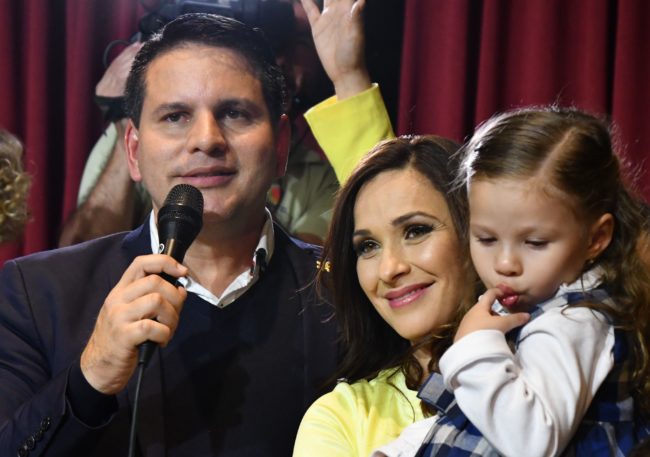
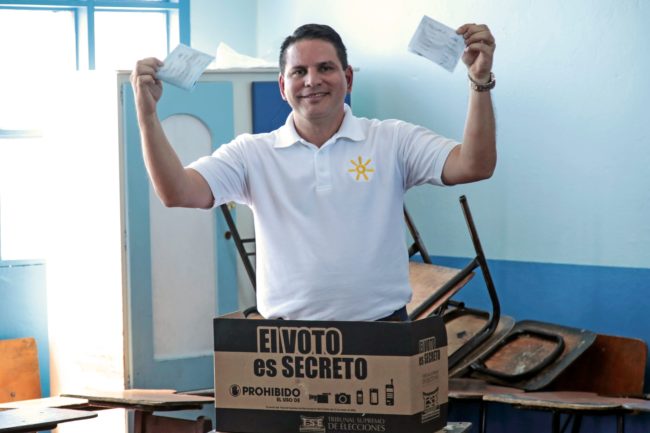
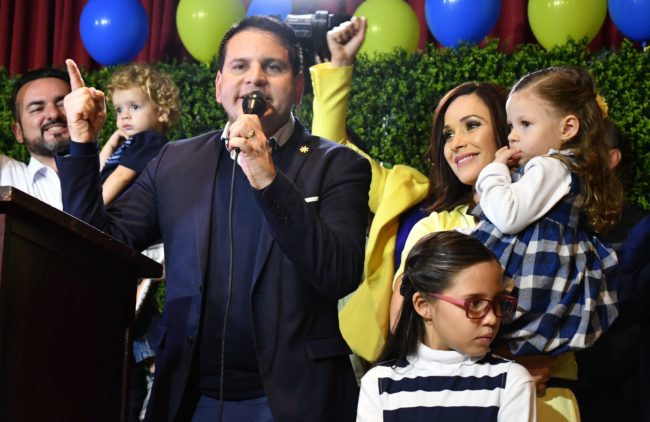
Fabricio Alvarado, presidential candidate of the National Restoration party (Photo by EZEQUIEL BECERRA/AFP/Getty Images)
Sponsored Content
Ahead of next month’s run-off election between the two candidates, polling suggests that Alvarado Muñoz has built a lead.
An Opol poll this week has Fabricio Alvarado Muñoz on 36.5 percent, while his rival Carlos Alvarado Quesada is on 27.7 percent of the vote.
CID Gallup poll found a smaller lead, with Alvarado Muñoz maintaining a 4.5 percent lead.
The key to the election will likely be voters who backed other candidates in other rounds, with a massive 35.8 percent still undecided or not planning to vote.
With less than two weeks until the April 1 election, however, the two candidates do not have long to make their pitches.
The court had found Costa Rica is in violation of its treaty obligations under the American Convention on Human Rights (ACHR) by not providing marriage equality.
The human rights court has jurisdiction over 16 countries, and six of them – Argentina, Brazil, Chile, Colombia, Mexico and Uruguay – signed a statement welcoming the news.
While Alvarado Quesada has said that Costa Rica should accept the ruling and “advance the agenda of equality”, Alvarado Muñoz has pledged to revoke the treaty altogether rather than comply.
Costa Rican frontrunner presidential candidate, Fabricio Alvarado, of the National Restoration party (Photo by JORGE RENDON/AFP/Getty Images)
Following his strong performance in the first round, he declared the results a victory for the “traditional family”.
Get a Quick and Convenient Personal Loan up to $40,000
LendingClub | Need a Loan? Get a Low Rate!
Ad by Lending Club
The candidate said: “We propose the sovereignty of the family as the fundamental basis of society.”
“Costa Rica has sent a message to traditional parties – never again will they meddle with the family.”
Meanwhile, his rival Carlos Alvarado Quesada had stood firm over his commitment to human rights laws.
He said: “The Costa Rica of the 21st century requires a government that knows how to move forward with vigor, love, happiness (and) the agenda of equality.”
While there has been much pan-American solidarity around the court ruling, notably the US has shied away from pressing Costa Rica over the issue, and recently refused to take part in a statement welcoming the ruling.
The US was the only member of the Organization of American States (OAS) LGBTI Core Group that refused to sign on to a statement supporting the court’s opinion.
The seven nations that signed the statement are Argentina, Brazil, Canada, Chile, Colombia, Mexico and Uruguay.
Fabricio Alvarado, presidential candidate of the National Restoration party (Photo by EZEQUIEL BECERRA/AFP/Getty Images)
The statement says: “Argentina, Brazil, Canada, Chile, Colombia, Mexico and Uruguay, as members of the OAS LGBTI Core Group, welcome the Advisory Opinion of the Inter-American Court of Human Rights reiterating that sexual orientation and gender identity are protected categories under the American Convention on Human Rights and affirming that States have the responsibility to recognize, guarantee and protect the rights that derive from a family bond between persons of the same sex.
“The Court’s Opinion constitutes a valuable contribution to the jurisprudence of the Inter-American Human Rights System, as it reminds States of their obligations regarding guaranteeing and protecting the rights of LGBTI persons across the region.
“Furthermore, the Court understood that a person’s full autonomy to establish a permanent and marital bond is derived from the principle of human dignity, and that such a bond deserves equal rights and protection regardless of the sexual orientation of the parties.
“Likewise, the Advisory Opinion reaffirms the rights of transgender people by affirming that the change of name, image adjustment, as well as the rectification of sex or gender references, in registers and in identity documents so that these are consistent with self-perceived gender identity, is a right protected by the American Convention. As a consequence, States are obliged to recognize, regulate and establish the appropriate procedures for such purposes.
“Without prejudice to the sovereign right of all States to adopt policies and legislation in a progressive manner and to evolve on this matter at their own pace, we agree with the Court’s view that lack of consensus on respecting the rights of certain groups that are characterized by their sexual orientation or their gender identity or expression cannot be considered a reason to deny or restrict their human rights or perpetuate historical or structural discrimination against them.
“The aforementioned members of the Core Group are optimistic that this Advisory Opinion will provide elements for States to drive legislative, administrative and public policy reforms through which progress is made in the protection and guarantee, under equal conditions, of the rights of LGBTI people.”
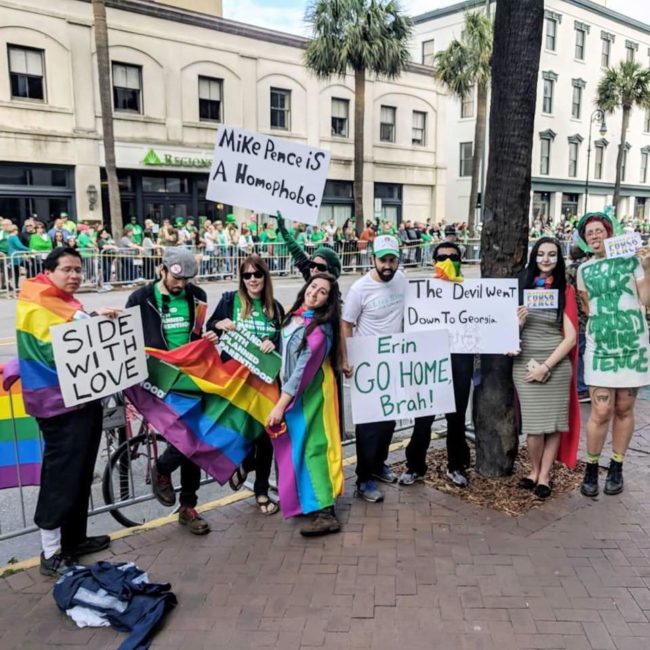
LGBT activists made sure to give Vice President a nice hospitable Southern welcome on his trip to Savannah, Georgia this week – with a sea of rainbow flags.
The Veep, who has the worst record on LGBT rights of any US leader in US history, was in town for a visit and to take part in the annual St Patrick’s Day parade.
However, the local community banded together to make sure that everywhere he went, a rainbow flag went with him.
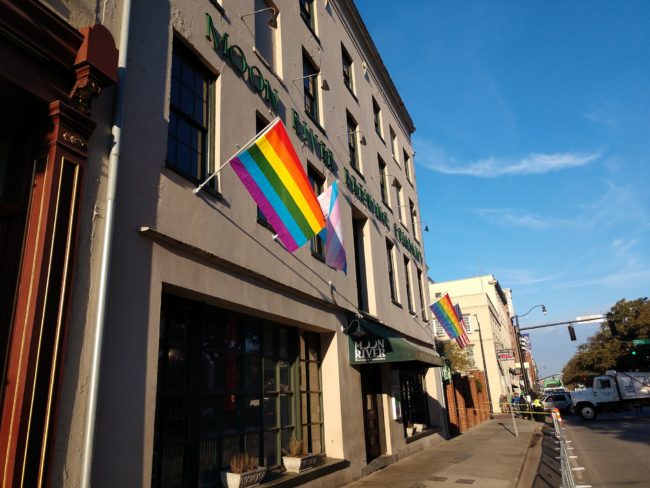
A group of protesters attended the St Pat’s parade route with rainbow flags, while even some local businesses decided to put up flags for the occasion.
Moon River Brewing Company, based in the centre of Savannah, was one of the companies that put up flags.
Owner John Pinkerton wrote: “Moon River Brewing Company is all dressed up for the unwelcome visit of the Prince of Darkness himself, Vice President Mike Pence. Please join me letting our leaders know that spending millions of our tax dollars on security for these kind of frivolous appearances.”
Addressing local leaders, he said: “Mayor Eddie DeLoach, despite my best efforts to reach you, or anybody else in your office, through numerous channels, you have failed to respond.
“How do you reconcile Pence’s long history of hateful policy and rhetoric toward African Americans, LGBT and women? Did you stop to consider the demographic of your own City?
“Let me remind you: Savannah is 55% African American. Women make up over 50% of the population, pretty much everywhere you go. And Savannah is probably (and thankfully) the gayist city in the southeast!”
According to LGBT activists, Pence spent less than an hour at the St Patrick’s Day festivities, pursued along the way by LGBT rights campaigners who “made sure there were rainbows in every photo op”.
Ahead of the event, Savannah Pride, First City Network, and Savannah LGBT Center issued a joint statement noting Pence’s record.
A group of protesters (Photo: Savannah Pride)
They wrote: “As members of Savannah’s LGBTQ community, we are troubled by our public officials’ welcoming of Vice President Mike Pence.
“Mr Pence has proved himself to be one of the most anti-LGBTQ political crusaders to serve in government. As governor of Indiana, he led a concerted effort to deny equality to LGBTQ people, opposing gay marriage and signing into law a bill that made it legal for businesses to turn away gay and lesbian customers.
“As a member of Congress, he voted against the Employment Non-Discrimination Act, the repeal of Don’t Ask Don’t Tell, co-sponsored a bill to define marriage between a man and woman, and sought to cut off HIV funding to organizations that did not encourage the reprehensible practice of gay ‘conversion therapy’.
(Photo: Savannah Pride)
“These attacks have continued with at least two dozen actions by the current administration against LGBT people, including those serving in our armed forces.
“Ordinarily, there is no place for his brand of discrimination in Savannah. However, this weekend, he will feel right at home at the largest St Patrick’s Day Parade in America that discriminates against LGBTQ organizations.
“We Savannahians are proud of our diversity, so we welcome Vice President Pence to join our interracial gay families raising adopted children, trans service members proudly defending their country, queer artists inspiring creativity, immigrant students dreaming of a bright future with a same-sex spouse, and the many other faces of the Hostess City that will be proudly lining the streets this weekend.”
The Vice President banned media from the meeting with Mr Varadkar, after the leader said he would be raising LGBT rights.
Ever the diplomat, Mr Varadkar did not detail exactly what was said afterwards – but did reveal that Pence had offered to host him and his partner in future.
A general view of atmosphere at Family Equality Council’s Impact Awards at The Globe Theatre at Universal Studios on March 17, 2018 in Universal City, California. (Photo by Vivien Killilea/Getty Images for Family Equality Council)
The importance of visibility and vulnerability dominated the 2018 Family Equality Council’s Impact Awards Gala Saturday night, March 17, at Universal Studios Globe Theatre. This year’s ceremony honored interior designers Nate Berkus and Jeremiah Brent, stars of the TLC show Nate and Jeremiah by Design and Johnson & Johnson’s Care with Pride Initiative, now in its seventh year.
“It’s more important than ever that we celebrate those who use their platform to advocate for our right to form our families, and protect our children from discrimination. Loving families like Nate and Jeremiah’s and high impact programs like Care for Pride are exactly what we need to remind our country that love wins and to remind America what real family values look like,” Family Equity Council CEO Stan J. Sloan told the Los Angeles Blade.
UNIVERSAL CITY, CA – MARCH 17: Jeremiah Brent, Nate Berkus and Armie Hammer attend Family Equality Council’s Impact Awards at The Globe Theatre at Universal Studios on March 17, 2018 in Universal City, California. (Photo by Vivien Killilea/Getty Images for Family Equality Council)
Brent told the Los Angeles Blade that he and Berkus “believe in opening up the doors and letting people know that we love the way you love…everything about us is the same, and as cliché as the saying is, love is love.” The couple didn’t set out to be role models when creating their show, he added, but simply wanted to “be honest and vulnerable” and to expose young LGBTQ viewers to a gay couple on television.
“Call Me By Your Name” actor Armie Hammer presented the couple with the Murray-Reese Family Award, describing them as having “a perfect house…and a perfect life,” adding, “there’s not a better couple in the world to receive this award.”
Berkus and Brent were repeatedly interrupted with rousing applause accepting the honor. “Both of us have always believed that visibility and vulnerability are the birthplaces of real transformation,” said Brent.
They lamented that LGBTQ history has been dominated by a societal expectation of shame, and shared that in their show, “through the exercise of design, we break down barriers and normalize the way our family exists to people in the middle of the country who may not know a family with two dads at the heart and at the helm,” said Berkus.
Visibly emotional, Brent ended the speech by mentioning the couple’s young daughter, Poppy, and telling her, “This room is full of people that care.”
Actress/singer Olivia Holt introduced the Johnson & Johnson honoree, saying the Care with Pride Initiative celebrates the LGBTQ community through social media, participation in Pride events and by donating $1 to an LGBTQ advocacy organization for every photo shared through their Create a Photo app.
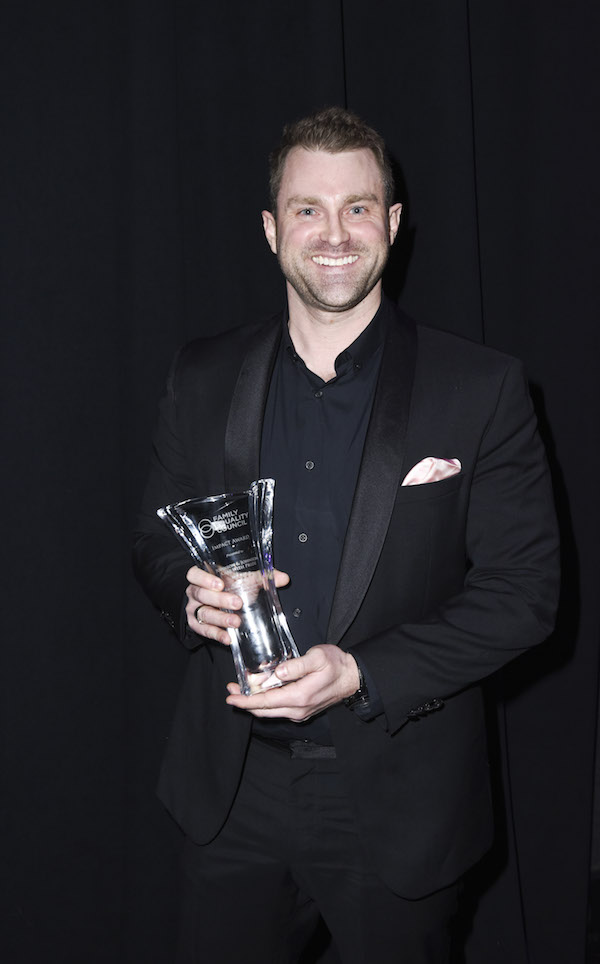
UNIVERSAL CITY, CA – MARCH 17: Reed Harris II attends Family Equality Council’s Impact Awards at The Globe Theatre at Universal Studios on March 17, 2018 in Universal City, California. (Photo by Vivien Killilea/Getty Images for Family Equality Council)
“A brand that stands for something is two times as powerful as one that doesn’t,” said Reed Harris II, accepting the award on behalf of the organization. He also shared an anecdote about an employee’s son coming out and thanked the parents in attendance for allowing their children to be vulnerable and unconditionally loved. “The qualities you embody as a family—love, acceptance, pride, togetherness—are qualities that we all need to embody as individuals and as a country,” Harris said.
Event emcee actor/comedian Alec Mapa told the Los Angles Blade that he is dismayed that “cruel, hateful laws” negatively affect families with LGBTQ parents like his own. He praised the Family Equality Council’s work in providing information and resources to those families who don’t have it.
“Love is love is love, and love is what makes a family—it doesn’t matter if it’s by blood, by adoption, gay or straight or lesbian,” actress Constance Marie said, adding that she has imparted this value of acceptance to her young daughter.
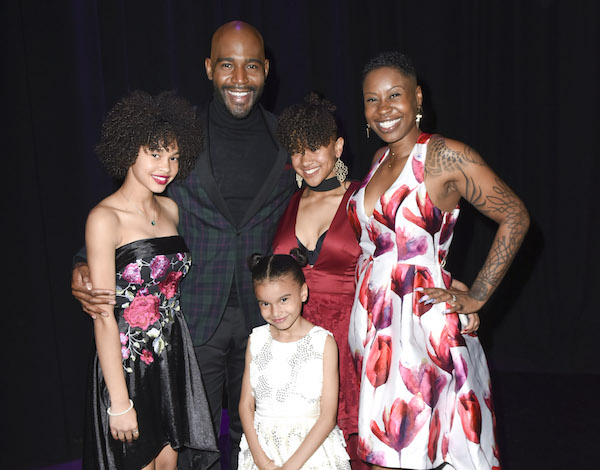
UNIVERSAL CITY, CA – MARCH 17: Lola Jessika (R), her daughters and Karamo Brown (L) attend Family Equality Council’s Impact Awards at The Globe Theatre at Universal Studios on March 17, 2018 in Universal City, California. (Photo by Vivien Killilea/Getty Images for Family Equality Council)
Queer Eye actor Karamo Brown gave a call to action in his speech, imploring that “if [Parkland student gun control advocates] can rise up and work fearlessly in the face of that terrible moment, then we have no excuse not to rise up in this moment and work just as fearlessly for a better tomorrow, too.”
Lola Jessika, in perhaps the most emotionally charged speech of the gala, shared how she used her opportunity appearing in Uber’s annual Pride commercial to be vulnerable and come out as pansexual to her family. “Embracing our vulnerability can be risky, but not nearly as dangerous as giving up on love, belonging, and joy,” she said, inviting her daughters to join her onstage as she received a standing ovation from the audience.
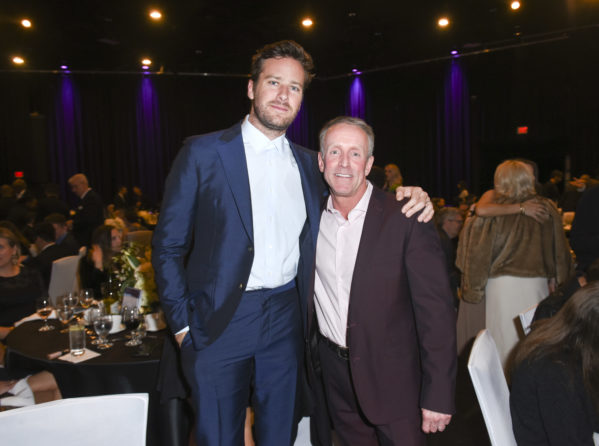
UNIVERSAL CITY, CA – MARCH 17: Armie Hammer and CEO of Family Equality Council Stan Sloan attend Family Equality Council’s Impact Awards at The Globe Theatre at Universal Studios on March 17, 2018 in Universal City, California. (Photo by Vivien Killilea/Getty Images for Family Equality Council)
In his remarks, Sloan talked about Family Equity Council’s work to fight Attorney General Jeff Sessions and discriminatory state laws that are preventing 117,000 youth currently waiting for families from being adopted by LGBTQ parents. Galvanized, the crowd donated over $378,000 to support Family Equity Council’s work for LGBTQ youth seeking families, research, advocacy, and offsetting the cost of adoption for lower income LGBTQ parents, among other initiatives.
UNIVERSAL CITY, CA – MARCH 17: A general view of atmosphere at Family Equality Council’s Impact Awards at The Globe Theatre at Universal Studios on March 17, 2018 in Universal City, California. (Photo by Vivien Killilea/Getty Images for Family Equality Council)
To end the night, singer Debby Holiday performed “Put a Little Love in Your Heart,” a song co-written by her father Jimmy Holiday for Jackie DeShannon in 1968. The song aptly represented Family Equity Council’s message: “If you want the world to know that we won’t let hatred show, put a little love in your heart.”
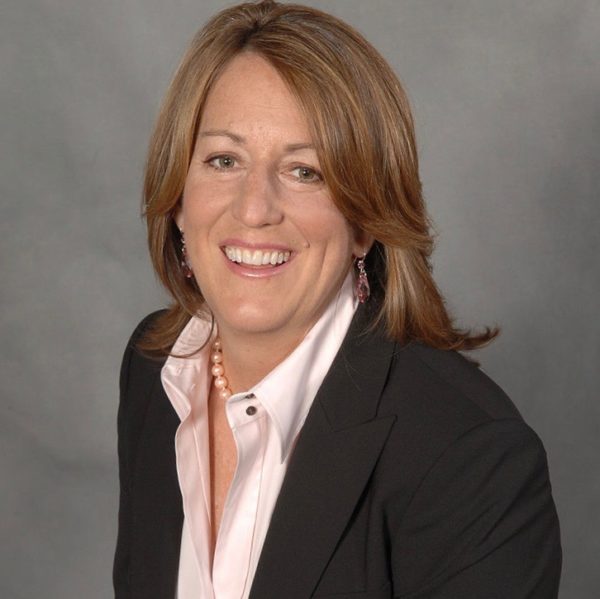
NCLR Executive Director Kate Kendell (courtesy NCLR)
LGBT politicos nationwide were struck by the March 15 announcement that National Center for Lesbian Rights executive director Kate Kendell was stepping down after more than 22 years of service advancing social and economic justice through the lens of LGBT civil rights.
“Kate literally changed the world. Her leadership in advancing the rights of LGBT people from being criminals to being able to marry has transformed the lives of millions of people. She always pushed the envelope and was a constant voice for our movement to embrace our communities’ diversity, partner with others and embrace a progressive agenda,” says Geoff Kors, Palm Springs City Councilmember, former Equality California Executive Director, and Kendell’s “brother from another mother.” “She has an ability to connect with people on our shared humanity and move them to do the right thing even when it is politically challenging.”
“We are so grateful for Kate’s decades of leadership in the fight for full LGBTQ equality and social justice,” says Equality California Executive Director Rick Zbur, noting that NCLR is currently co-representing Equality California in Stockman v. Trump, a lawsuit challenging the Trump administration’s transgender military ban. “They broke the mold when they made Kate Kendell. And while her leadership at NCLR will be missed, her legacy will live on in the work of generations of LGBTQ civil rights advocates who will stand on her shoulders.”
It is that passionate commitment to justice and human dignity that helped Kendell grow the small San Francisco-based national non-profit into a powerhouse legal advocacy legal organization.
“Kate Kendell’s charisma, passion and vision have resulted in NCLR becoming one of the most creative and effective advocacy organizations in this country. Every LGBTQ person has benefitted because of her incredible leadership,” said Donna Hitchens, the retired San Francisco Superior Court judge who founded NCLR in 1977.
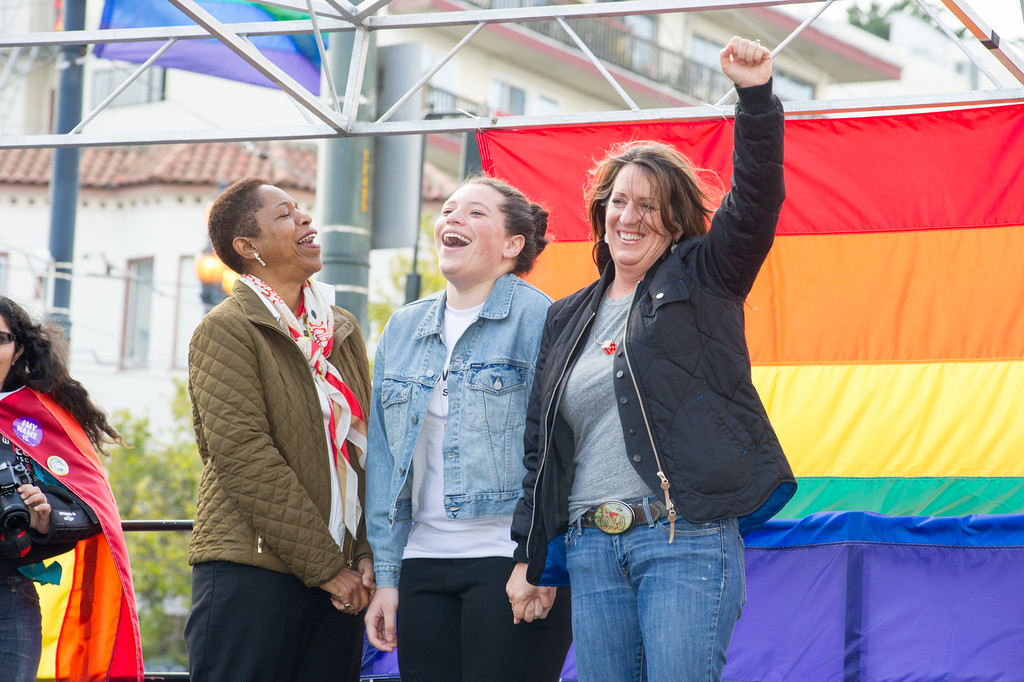
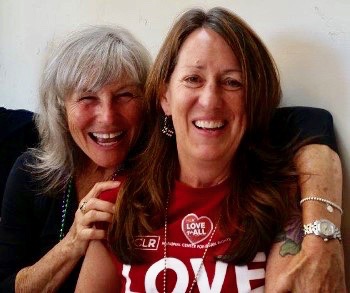
Kate Kendell, wife Sandy before Rainbow Flag (Courtesy NCLR)
“Kate Kendall is one of the most fearless and tireless advocates the LGBTQ equality movement has ever known,” says Human Rights Campaign President Chad Griffin. “Kate’s profound work is woven into the fabric of our movement and millions of Americans have felt the impact of her unwavering leadership. I am proud to call Kate a friend, colleague, and a true champion for equality.”
Even journalists pay Kendell respect. “Authentic, empathetic, fully present, flawless mix of PC and un-PC, openminded, Mormon good-girl ethics, rebellious lesbian side, a hard worker not a brander, and a fully spin-free zone. It don’t get much better,” tweeted San Diego-based semi-retired reporter Rex Wockner.
Kendell started thinking about her career trajectory a few years ago. “I’ve engaged in a fair amount of self-interrogation and reflection about when might be the right time” to leave, Kendell says in an extensive March 15 phone interview.
“It just really felt like this was the right time for me—I hit 58 next month—to pursue whatever my next chapter is,” Kendell adds. “And it’s the right time for NCLR to have a new, obviously younger leader.”
The NCLR board and management team is working on a succession plan. The search for the new executive director will officially launch on April 1.
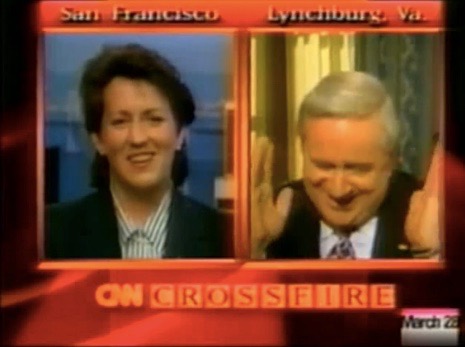
Kate Kendell debating Rev. Jerry Falwell on CNN’s “Crossfire” (Courtesy NCLR)
“I had no idea when I took the job as legal director in 1994 or even as executive director in 1996 that I would be in the role this long, that I would be a part of some of the most powerful resonant and culture-changing moments in the LGBTQ movement, or that I would be able to look back on a 22-year run with such a profound sense of gratitude and humility,” she says.
“I was lucky enough to meet Kate back in 1994, when she started as NCLR’s Legal Director after working at the Utah ACLU and we clicked right away,” Mary L. Bonauto, longtime attorney with GLAD (GLBTQ Legal Advocates & Defenders), tells the LA Blade. “For one, there were few women working in the legal organizations at that time, and we were both eager to use our legal skills to stick up for our community—for liberty, freedom and equality, even as others tried to stuff us back into the closet. And we were able to collaborate across the miles on cases and policy issues sometimes, too, including parenting cases.” NCLR’s “docket of protecting all families and children…is foundational to many of our other successes.”
Parenting issues were NCLR’s first priority as lesbian parents in heterosexual marriages came out and lost custody of their children. For generations, invisibility “protected us from the worst of this nation’s bigotry and assaultive approach to LGBTQ people. But it also rendered us unable to be our own advocates because we couldn’t be open and fight for what we wanted,” Kendell says.
”And then AIDS—which galvanized our community like nothing else could have,” Kendell continues. “And while it was never worth the death count, it still put in stark relief that being hidden, being silent, being invisible was a matter of life and death. Our visibility, our coming out, our being adamant about our own humanity and demanding that this nation recognize and honor that humanity is how we got to where we are now—in very short order by civil rights-time measurement.”
But while “the rapidity with which we’ve seen landmark change is breath-taking,” Kendell says, family issues such as adoption and child custody issues are “still a huge problem in many states.”
Some of the most heart-wrenching cases in the 1990s involved lesbian couples separating with the biological parent treating the non-biological parent as a “legal stranger” with no right to even see the child.
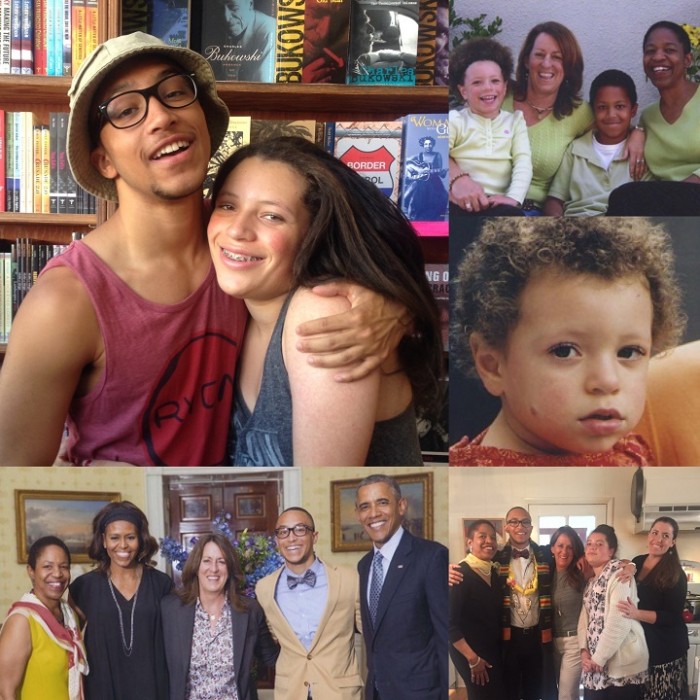
Collage of Kate Kendell and family— wife Sandy, son Julian, 20 and daughter Ariana 14. (Courtesy NCLR)
“To this day, I find it abhorrent in the extreme that there are lesbians who would use heterosexist homophobic legal arguments against not just their former partner but our entire community. It still haunts me the cases that we lost with children four, five, six-year olds being denied any ongoing relationship with their parent! Forget how traumatic and hard this is for the lesbian co-parent—as a parent myself, my kids were about the same age when we were in the thick of these cases—imagine the trauma to this child!” Kendell says. “The venality and the self-loathing and the selfishness embedded in such an action still makes my blood boil.”
Lorri L. Jean, CEO of the LA LGBT Center, says she is sad Kendell is stepping down. “Personally, she has been a valued colleague and friend and I’m going to sorely miss her indomitable presence, her support, her insight and her sense of humor,” says Jean, who also took a stand against the “legal stranger” arguments. “She has done her work with a rare and admirable combination of selflessness, courage and integrity. LGBTQ people everywhere have better lives thanks to her leadership.”
NCLR made history arguing for Sharon Smith’s right to file a wrongful death civil lawsuit after the 2001 murder of her beloved domestic partner of seven years, Diane Alexis Whipple.
Whipple, a lacrosse coach, was coming home with groceries when she was viciously attacked by two large dogs and mauled to death in her apartment hallway. Neighbors Marjorie Knoller and her husband, Robert Noel were eventually convicted of second-degree murder and manslaughter, respectively.
Smith, a vice president at a brokerage firm, filed a wrongful death suit—but California only allowed surviving spouses, children and parents to file such claims. NCLR argued to San Francisco Superior Court Judge James Robertson II that the committed couple was essentially married. Robertson agreed that limiting the right to sue to straight spouses violated the Equal Protection Clause of the state constitution.
“Up until Sharon’s case, it was virtually unheard of for a same-sex partner to be permitted to sue for wrongful death. In every prior case, the surviving partner was deemed a ‘legal stranger,’ regardless of the length or depth of the relationship,” Kendell wrote on her NCLR blog in 2011. “But that measure of vindication, while enormously important, could never bridge Sharon’s terrible loss.”
Kendell and Smith remain very close friends. “Sharon’s case really made history and changed the way people viewed our relationships,” Kendell says.
In 2004, Kendell witnessed history again. The week before Valentine’s Day when Kendell got a call from Mayor Gavin Newsom’s chief of staff saying Newsom was going to begin issuing marriage licenses to same sex couples on Monday, Feb. 9.
“At the time, I thought it was not a good idea,” Kendell says, since the marriage victory in Massachusetts prompted calls for a federal constitution ban on same sex marriage, endorsed by President George W. Bush. “It’s like a little bit of a powder keg right now,” she told him before he made it clear the action would happen “no matter what.”
Kendell talked to NCLR Legal Director Shannon Minter and Bonato, who won the Massachusetts marriage equality case. By Sunday, Kendell concluded: “You know what—game on. Let’s just do it.”
However, Monday morning it became clear that more time was needed, including for Newsom to do some homework on the movement. “He was humble enough to understand that he needed a few more days,” Kendell says.
They prepared the new proper forms then Joyce Newstadt, Newsom’s policy director, and Kendell decided the first couple to marry had to be lesbian icons Del Martin and Phyllis Lyon.
“I called Del and Phyllis’ home and Phyllis answered and I said, ‘Phyllis, I know you and Del have already done so much for the movement, but I have one more request. Would you be willing to be the first couple that would be issued a marriage license by the City and County of San Francisco because Mayor Newsom wants to begin issuing marriage licenses to same sex couples. And she said, ‘Well, just a minute. Let me ask Del.’ I heard her put the phone down and then I heard her say, her voice a little bit muffled, ‘Kate wants to know if we want to get married.’ I didn’t hear what Del said but Phyllis came back and said, ‘Del said we’ll do it,’”Kendell recalls.
The clandestine team included Kors, Newsom’s office, the City Attorney’s office—and on Thursday morning, Feb. 12, history happened.
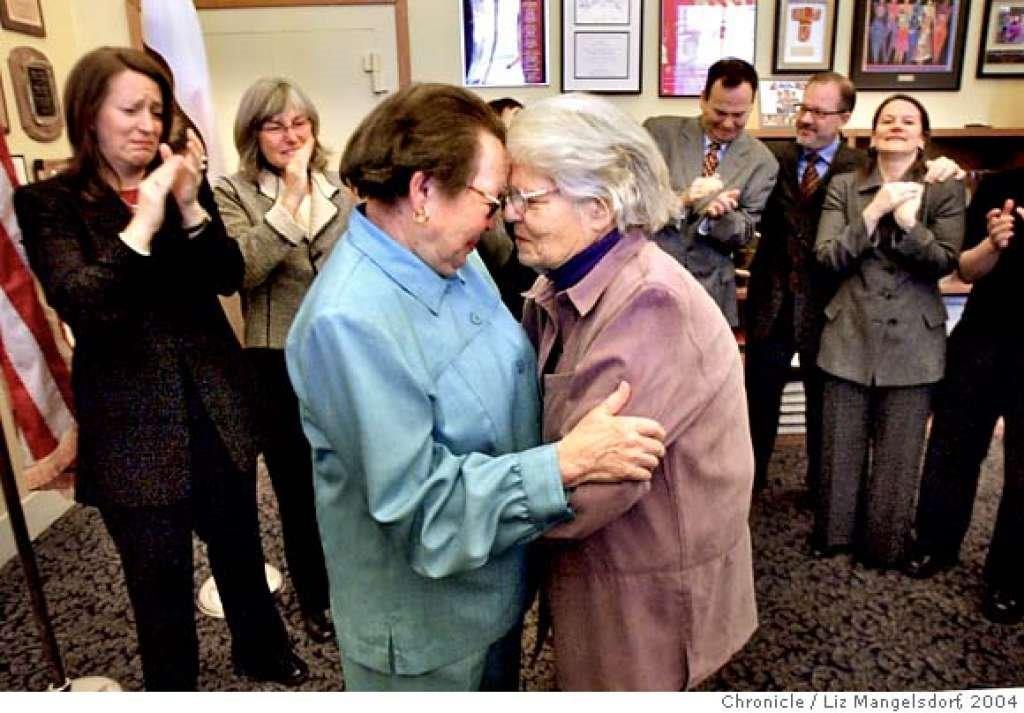
Phyllis Lyon and Del Martin marry in 2004 (Photo by Liz Mangelsdorf, courtesy NCLR)
Kendell drove the couple to City Hall in her 1972 Mercedes sedan, escorting them through the basement to avoid being seen. They waited outside Treasurer Mable Tang’s office until—“one of the greatest privileges of my life—I was there when Mable Tang did the wedding vows for Del and Phyllis and witnessed Del and Phyllis’ wedding—Feb. 12, 2004, the 51th anniversary of the day they first met.”
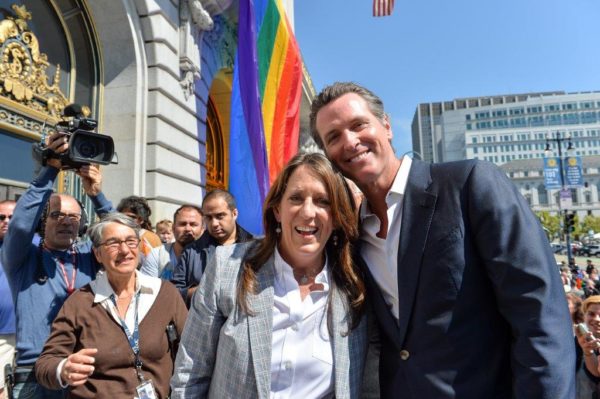
Kate Kendell and Gavin Newsom (Photo courtesy NCLR)
“In 2004—at a time when many in the Democratic Party were not ready to support marriage equality—Kate was a force whose advocacy and leadership gave us the courage to marry over 4,000 same-sex couples,” California Lt. Gov Newsom tells the LA Blade. “That’s just one in a long list of fights Kate and NCLR have taken on, and won, to benefit LGBTQ folks across the country. I am grateful for her counsel and friendship, and for her decades of bold leadership at the forefront of the movement for equality.”
“I always knew when Kate was at the table that we would be on solid ground to do the right thing,” says Newstat, now CEO of Rocket Science Associates.
Roberta Achtenberg and Kate Kendell (Photo courtesy NCLR)
“Kate is a force of nature, and her leadership of NCLR has been nothing short of brilliant! I will remember always the day we stood shoulder to shoulder with tears in our eyes and love in our hearts as Phyllis and Del said their vows and ignited the marriage revolutions! That, and so much more, our Kate has helped make possible,” says Roberta Achtenberg, former San Francisco Supervisor and historic high-ranking official in the Clinton administration.
Kendell is proud of NCLR’s role in winning the consolidated 2004 case that resulted from that event. Minter argued, In Re Marriages before the California Supreme Court, which treated the transgender NCLR attorney with dignity and respect during oral arguments. The Court ruled marriage equality was a fundamental constitutional right in May 2008.
“Shannon was an employee of NCLR before I even got to NCLR. In fact, he and I had met a couple of years prior when I was at the ACLU and he came to Utah because we were trying to get a young lesbian girl released from a psychiatric facility where she had been institutionalized by her parents when she came out,” Kendell recalls.
“Shannon and I had been through so much together and to see him standing before the California Supreme Court as our Legal Director and my partner in so much of what had been great about NCLR and my job and to be someone I had so much respect and love and affection for was just a spectacular moment. I was proud, I was moved, I was emotional. I was inspired. It was fantastic. And he was brilliant,” Kendell gushes warmly.
NCLR Legal Director Shannon Minter and Kate Kendell (Photo by Trish Tunney, courtesy NCLR)
Minter became the first individual to transition at an LGBT organization and the first full time transgender employee at a national LGBT organization.
Minter remembers Kendell’s reaction when he announced he was going to transitioning at work.
“I first talked to her about it in 1995, a time when transgender issues were not yet much on the radar of any national LGB group,” Minter tells the LA Blade. “Like most other LGB people at the time, Kate knew very little about transgender issues, but her response was always completely spot-on. She didn’t pretend to know more than she did, but she was enthusiastically supportive on both a personal and professional level from day one.
“When I actually transitioned in 1996, she sheltered me from any negative responses and offered unflagging acceptance and support,” Minter continues. “She set such a positive example for the whole movement in that regard. At the same time, she was always real, including telling me when I complained about having a hard time finding men’s shirts that fit that my arms, which were too short! I have loved teasing her about that over the years.”
He adds, “Kate has never flinched from a fight. She has empowered our staff to launch innovative new projects and then trusted them to take risks. As a result, she has nurtured some of the most impressive leaders in our community.”
One of the hardest issues was Proposition 8, the anti-gay marriage ballot initiative that passed in November 2008.
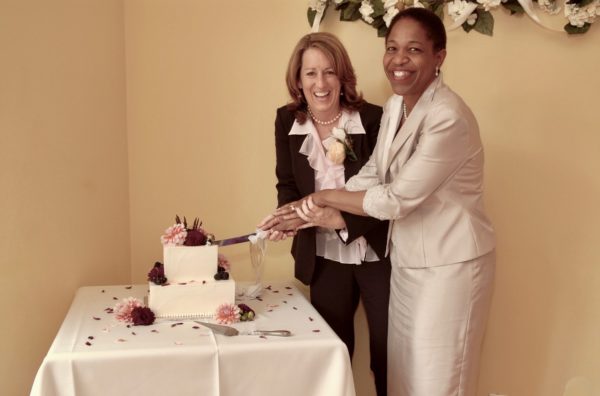
Kate and Sandy get married (Photo courtesy NCLR)
“What happened in Prop 8 was the lowest point of my career and it just followed on the heels of one of the highest points of my career,” Kendell says. “When we won marriage in California, I was ecstatic….I knew that the resonance of ending discrimination in marriage was going to be a huge lift to every other facet of the lives of queer people. And I believe that has been borne out to be true,” she says.
“I knew Prop 8 was an existential threat and I knew it had a very good chance of passage. But it was impossible to get people to focus on it because everybody was still elated that we’d won marriage and they couldn’t believe that California voters would vote to take away marriage!” Kendell says, her voice rising as if reliving the fall of 2008. “So when Prop 8 passed—I remember the entire night. I remember the growing feeling of dread and nausea. And I remember a sleepless night absolutely devastated and then having to face the next morning. It was a brutal, brutal experience” that left her seriously depressed for six months.
But there was an upside. “I believe that had it not been for Prop 8, we wouldn’t have won marriage as quickly as we did in this country. It shocked the shit out of people that we could see marriage taken away at the ballot box and it galvanized and energized a huge new generation of LGBTQ folks to engage in the fight. And that moment really changed everything, in terms of our momentum,” Kendell says.
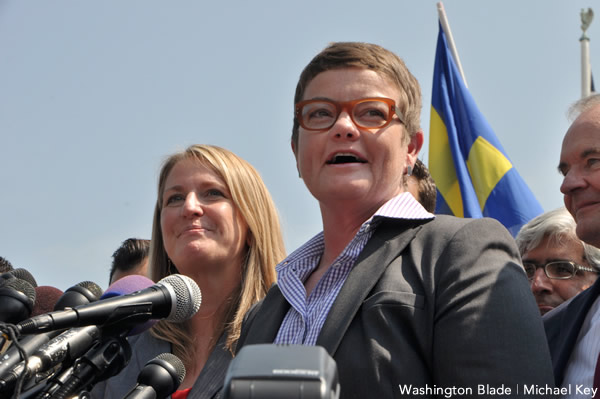
Federal Prop 8 plaintiffs Kris Perry and Sandy Stier at the Supreme Court (Photo by Washington Blade photographer Michael Key)
“We have admired her courageous leadership and ability to build support for NCLR for many years but we will be forever grateful to Kate for her unequivocal support during our challenge to Proposition 8 and subsequent friendship,” successful federal Prop 8 plaintiffs Kris Perry and Sandy Stier tell The LA Blade.
Kendell and NCLR have also worked hard on intersectional issues that “deeply impact LGBTQ people,” such as immigration, policing, criminal justice, asylum and poverty issues. “If those issues are not an essential part of every LGBTQ organization, we are doing a disservice and we are leaving people behind,” she says. “There can be no more important work for us to do than actually saving lives.”
“Kate has a clear vision of the intersections in our communities. Whether as an advocate for LGBT immigrants, same sex parents, or transgender youth, she has the best interests of all of us impacted by the range of prejudice and bigotry when she bravely steps forward time after time,” says longtime Democratic Latina politico, Gloria Nieto. “She is the definition of fierce and our communities are more fierce thanks to Kate Kendell.”
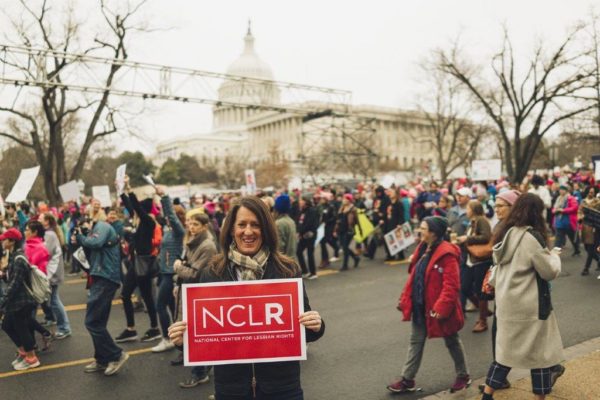
Kate Kendell at the Women’s March 2017 (Photo courtesy NCLR)
“Having worked side-by-side with Kate Kendell—including as co-counsel in a number of path-breaking cases—for three decades,” says Jon Davidson, former Legal Director of Lambda Legal, “I often have had the pleasure of seeing Kate’s inspired leadership, passion, smarts, and tenacity up close. She fought tirelessly for the full breadth of our communities, ensured that the LGBTQ rights movement incorporated essential feminist perspectives, and successfully built alliances that have been key to our success. We collectively owe her a huge debt of gratitude, as we certainly would not have made the progress we have but for her many years of hard work.”
Kendell feels that the fight for social justice and intersectionality is “baked into DNA” at NCLR. And while the Right “is still going to fight us at every turn,” her 22 years have taught her that “people are generally good and want to be good but are stopped by being scared.” So, she says, “it’s important to meet people where they are, even when that’s difficult.”
The stakes now are high. “We are in a fight about who we are as a nation,” Kate Kendell says. “But I do have hope. Like Harvey Milk said, we have to give them hope. Because if we lose hope, we concede ground to our enemy. And I do not concede!”
The Sonoma County Commission on Human Rights will hold public meetings in each of the five districts throughout the year. The goal is to increase visibility and awareness of the commission, build bridges with existing organizations, and provide a platform for the public to access information and participate in discussion on issues that are of interest to communities. The Commission’s first road show meeting was in Petaluma in January and focused on Housing. The next meeting will be an Education Forum in Sonoma Valley on Wednesday March 28th at the Sonoma Springs Community Hall, 18627 Sonoma Highway, from 5:30-7:30pm.
Speakers will include Raquel Mack, founder of Save Your VI on civil rights protections for students; Mick Gardner, Executive Director of Restorative Resources on interventions in the school to prison pipeline; Socorro Shields, Director of Education for the California Collaborative for Educational Excellence; and Jacquelyn Torres, Sonoma Valley High School student and Junior Human Rights Commissioner on the Education Gap affecting Latino students. There will also be a Q & A and public comment session. Spanish translation via headset will be provided.
The Commission on Human Rights is an appointed advisory board to the County Board of Supervisors. The mission (role) of the Sonoma County Commission on Human Rights is to provide leadership, guidance, and assistance in insuring that all members of our community – especially those among us who are marginalized or disadvantaged – enjoy the full range of human rights to which every person is entitled.
Last year, the Irish prime minister was welcomed by the U.S. president and vice president with open arms — and with open coverage by reporters — ahead of the annual St. Patrick’s Day festivities.
But this year, Vice President Mike Pence’s breakfast with new Irish Prime Minister Leo Varadkar will be closed to the media — at the request of the vice president. In a departure from the recent past, reporters were told Friday’s event to be attended by Pence and Varadkar will be private and the media won’t be invited.
Pence also had a St. Patrick’s Day breakfast in March 2017 with Enda Kenny, the Irish prime minister at the time. The difference this year could possibly be Varadkar’s visibility as an openly gay man as well as Pence’s long record of opposing issues important to the gay and lesbian community.
People are speculating whether issues such as gay and lesbian rights and Pence’s stance on gay-conversion therapy might be discussed at their meeting. For instance, the Human Rights Campaign, an LGBTQ civil rights advocacy group, sent a tweet questioning the motive for banning the media from the Pence-Varadkar event.
That the request for a private meeting came from the Pence camp, as reported by Irish media, was confirmed Thursday by a source at the White House. Pence and Varadkar had both been in attendance at three meetings Thursday in Washington that were open to the media.
Alyssa Farah, press secretary for Pence, released a statement Thursday about the Friday breakfast:
“The Vice President and the Prime Minister met and spoke together at multiple events today. Tomorrow’s informal breakfast is setup like every breakfast the Vice President has had with a foreign leader following their meetings at the White House.
“The press will be in attendance to cover the Prime Minister’s arrival and the Vice President greeting him.”
The media, however, will not be allowed inside the vice president’s residence to cover the breakfast.
According to the Irish Examiner, Varadkar said he would have preferred that his meeting with Pence would be open to the public, but added that a private session may allow for more “frank conversation.”
Varadkar who is the taoiseach of Ireland — a role which comprises the titles of prime minister, chief executive and head of government — also is the first Irish government minister of Indian descent. He took office in June.
Last year, Kenny joined the vice president for an open breakfast with several dozen other invited people, before meeting later in the day with the president in the Oval Office.
Pence, who is of Irish descent, and his wife, Karen, spoke to the media at last year’s festivities, where Pence expressed his excitement over being able to invite a “special guest to the White House” — in reference to Kenny.
But it’s different this year — and Varadkar’s comments in recent days to the media may be a reason why.
When asked whether he would talk to Pence about the vice president’s stance on gay-conversion therapy, Varadkar told an Irish publication, TheJournal.ie, on Wednesday that if given the chance he would talk about “the wider issue” of gay rights.
“I am told Vice President Pence is not a supporter of conversion therapy even though some people have mentioned he is,” Varadkar said, according to TheJournal.ie. “But I imagine I will have the opportunity, I am going to be meeting him over breakfast on Friday morning, so if I have the opportunity I will certainly be mentioning the wider issue of equal rights and freedoms for LGBT citizens.”
U.S. Olympic figure skater Adam Rippon accused Pence of being a supporter of gay-conversion therapy in an interview with USA Today in the days leading up to the Winter Olympics in South Korea.
The issue of gay-conversion therapy has dogged Pence since a statement was posted on his campaign website during his run for Congress in 2000. Gay-conversion therapy is a now-discredited practice that once used psychiatric treatments — and electric shocks — to try to persuade a person to change his or her homosexual orientation.
Although it doesn’t use the words “conversion therapy,” gay rights groups say the wording used by Pence nearly two decades ago is language that both supporters and opponents of the practice would recognize as a clear reference.
Here’s what the campaign statement said in part: “Resources should be directed toward those institutions which provide assistance to those seeking to change their sexual behavior.”
Pence’s office later said the campaign statement from 2000 was meant to indicate support for groups promoting “safe sexual practices.”
“The vice president has never supported conversion therapy and doesn’t support it now. Any reports to the contrary are patently false,” spokeswoman Alyssa Farah said in February. “He’s been abundantly clear on the matter.”
But Pence, who previously has suggested homosexuality is a choice, declined to say whether or not he believes conversion therapy has merit.
The Oregon Supreme Court on Thursday took the unusual step of suspending a sitting state court judge — Vance Day of Salem — for three years.
The high court found that Day, first appointed in 2011 to the bench in Marion County Circuit Court, committed “willful misconduct” and made “willful misstatements” to investigators to cover up the truth.
Day acted with prejudice against same-sex couples by deciding he wouldn’t marry them and he instructed his staff to employ a scheme to avoid “public detection” of his plan, the Supreme Court said.
The court singled out as “exceptionally serious misconduct” false claims by Day that he didn’t know a man he supervised on probation was a felon. Day allowed the man to handle a gun twice in his presence even though Day had told him in court that he was forbidden from handling firearms, the court found.
The court also found that Day lied about being assaulted by a referee or sports official at his son’s Chemeketa Community College soccer game.
“We conclude that a lengthy suspension is required, to preserve public confidence in the integrity and impartiality of the judiciary,” the court’s opinion said.
Day’s pattern of making “false statements” suggests that he “is not trustworthy,” the court said.
Janet Schroer, an attorney for Day, said she was still reading and digesting the 91-page opinion. She said she had no immediate comment for her client, but planned to have one soon.
Day has been a lawyer in Oregon since 1991. He was appointed to the judgeship by then-Gov. John Kitzhaber and elected to a full six-year term in November 2012, meaning his term would have expired later this year in any case.
But a three-year suspension is a grave dishonor in the legal profession and he won’t be able to run for re-election during that time. He also won’t be paid for the remainder of his term.
Going forward, the Oregon State Bar could seek to have Day disbarred as a lawyer or otherwise disciplined.
Day has been fighting accusations of judicial unfitness since as early as 2013.
The Oregon Commission on Judicial Fitness and Disability recommended Day’s removal from office in a scathing report in January 2016. The commission found that he had “engaged in a pattern of dishonesty” to hide a wide array of misdeeds.
Among the commission’s findings:
Day refused to marry same-sex couples; Day included a portrait of Adolf Hitler as part of a “Hall of Heroes” artwork display he erected in the Marion County Courthouse; Day shoved his judicial business card at his son’s soccer referee in an attempt to intimidate the referee into backing off; and Day wrongfully allowed a felon to handle a firearm.
ADVERTISING
In that last case, the Supreme Court found that Day had invited a felony drunken driving defendant, who was under Day’s supervision in a veteran’s court program, to his son-in-law’s home in November 2013. Once there, Day asked the felon if he could find a gun hidden in a secret compartment of some cabinetry, the Supreme Court said.
Day gave the felon his permission to handle the gun, after the felon found the secret compartment, the court said.
In January 2014, Day and his son also showed up to the felon’s home. Day gave the felon permission to handle a gun that his son brought with him — and the OK to teach his son how to target shoot with it later that day, according to the Supreme Court’s summary of the case.
During oral arguments before the state Supreme Court last June, Day’s lawyers defended his actions on many fronts. They said their client didn’t want to marry same-sex couples because of his deeply held religious beliefs and that Day’s beliefs are constitutionally protected. Day’s lawyers also acknowledged that he had made some mistakes but none that warranted removal from the bench.
Day hadn’t been hearing cases since November 2016, when he was arraigned on felony and misdemeanor accusations that he provided a gun to a felon on two occasions and used his position to obtain a benefit in 2013 and 2014. Day is scheduled to go to trial in April and has vigorously denied he committed any crimes.