Art and Wine Auction STARTING May 1st on Give Butter – extending through the event on May 18th- Rick Love auctioneer and Emcee. AUCTION WITH MORE THAN 30 PIECES OF ART and PREMIER WINES AVAILABLE TO VIEW SOON ON GIVEBUTTER.
March 31 marks the International Day of Transgender Visibility, a moment to celebrate the achievements and resilience of trans people around the world, while acknowledging the ongoing challenges they face in enjoying the full range of their human rights.
Today, Human Rights Watch is publishing a map that tracks some of these gains in Mexico, and highlights areas where there is still work to be done. The map shows that 22 out of Mexico’s 32 states have legislated to create an administrative procedure for legal gender recognition for trans people. This allows them to modify their identity documents to accurately reflect their gender identity.
The recognition of one’s gender identity is a human right. Without it, for many trans people, any request for documents is fraught with the potential for discrimination, violence, and humiliation. Human Rights Watch has documented such violations in schools, medical clinics, and the labor market in the Mexican states of Guanajuato and Tabasco.
In Mexico, the judiciary has played a crucial role in recognizing this right. In a landmark ruling in 2019, the Supreme Court laid out clear guidelines to states on legal gender recognition. The court extendedthis right to all children in 2022. The Inter-American Court of Human Rights also found that states have an obligation to guarantee a simple and accessible procedure for trans people, including children, to have their gender legally recognized.
In Mexico, states have the authority to determine their laws in civil, family, and registration matters, which include implementing reforms for gender recognition. But in some states, political inaction has hindered progress. Eight states in Mexico have no procedure for gender recognition. Two others have procedures in practice, but not yet enshrined in law.
Even in states with gender recognition, more needs to be done. Only seven states extend legal gender recognition to children. Only three have explicitly recognized non-binary identities in their legislation.
Decision-makers in all remaining Mexican states should create legal gender recognition procedures so that trans people can enjoy their full human rights. Mexico has a real opportunity to serve as a model of progress and inclusion in this challenging landscape for the LGBT rights movement.
Marriage equality is officially the law of the land in Colorado after Democratic Gov. Jared Polis signed a law repealing a provision in the state constitution that banned marriage between same-sex couples.
Polis, an out gay man, signed SB25-014 into law Monday, also known as the Protecting the Freedom to Marry act. The bill repeals the provision in Colorado statute that states that marriage is valid only if it is between a man and a woman, which has been unenforceable since the 2015 U.S. Supreme Court decision Obergefell v. Hodges.
“Colorado is for everyone, no matter who you are or who you love. Last November, the voters got rid of outdated language in our constitution that banned same-sex marriage,” Polis said in a statement. “This is a long overdue step in the right direction and today’s law I’m signing ensures that Coloradans can marry who they love in our Colorado for all.”
Colorado voters approved an amendment to the state constitution in 2006 that stated only the union of one man or one woman could be considered a valid or recognized marriage. Voters later passed an amendment to overturn the ban in 2024 with 63 percent in favor.
The new law ensures that even if the Supreme Court reverses Obergefell, marriage equality will still be legal in Colorado. Marriages between same-sex couples would still be recognized federally under the Respect for Marriage Act, which mandates that the federal government recognize same-sex and interracial marriages, and that all states recognize those performed in other states. However, the act does not require states to allow marriages between same-sex couples, allowing them to enact bans.
While the Supreme Court has made no official move to reconsider marriage equality, nine states have recently introduced resolutions asking the court to hear the case again, citing similar constitutional amendments banning marriage between same-sex couples that were nullified by Obergefell.
Democratic State Senator Jessie Danielson, who introduced the bill in tandem with Democratic Representatives Brianna Titone and Lorena García, said in a statement that the law is especially important now as marriage equality comes under attack.
“The freedom to marry who we love is a fundamental right,” Danielson said. “I cannot sit back and allow Coloradans to have their marriages and families put at risk. It’s especially important now, as the Trump Administration attacks the LGBTQ community, to secure everyone’s right to live safely in our state, and marry whomever they love.”
The Supreme Court of the United States is scheduled to hear oral arguments in Mahmoud v. Taylor on Tuesday, April 22, 2025.
Mahmoud v. Taylor is about a small number of LGBTQ-inclusive children’s books included in the classrooms of Montgomery County (Maryland) Public Schools. The books were chosen and evaluated by education professionals. Six parents (three couples) sued the school district board of education claiming their religious freedom was violated by not having an option to opt out their children from classrooms where the books might be part of curriculum, including when offered as nonmandatory supplemental learning materials.
Context to know and report:
In 2022, Montgomery County Public Schools (MCPS) in Maryland expanded their curriculum book collection with nine inclusive picture books for children. An MCPS committee selected the titles and completed the necessary evaluation forms, which were then reviewed by a content supervisor, according to district protocol.
The school board stated in legal filings, “the books are made available for individual reading, classroom read-alouds, and other educational activities designed to foster and enhance literacy skills.
A district official said the books were to be integrated “into the curriculum in the same way that other books are used, namely, to put them on a shelf for students to find on their own; to recommend a book to a student who would enjoy it; to offer the books as an option for literature circles, book clubs, or paired reading groups; or to use them as a read aloud.”
The district’s communications director, Jessica Baxter, said the books tell “joyful stories of folks who happen to be part of the LGBTQ+ community,” and that they “celebrate and positively portray LGBTQ+ identities.”
Three couples filed a lawsuit against MCPS in 2023, objecting to the books and claiming the district infringed on their religious rights by not allowing them to opt out their children from potential exposure to the books.
The plaintiffs are represented by Becket, formerly known as Becket Fund for Religious Liberty, a legal group with an anti-LGBTQ history that includes representing a school that fired a 15-year veteran teacher for being gay and marrying her partner of 25 years. Southern Poverty Law Center describes Becket as a “hardline” group that promotes legislation and lawsuits to justify anti-gay discrimination. Becket has also vigorously pursued banning access to abortion and access to contraception.
People of faith support LGBTQ people and equality, and LGBTQ people are also people of faith. 67% of adult Americans say being LGBTQ should be accepted by society, including 59% of religiously-affiliated adults.
Two-thirds of U.S. Catholics, Protestants and other Christians oppose using religious beliefs as an excuse to discriminate against LGBTQ people.
24% of all LGBTQ parents live in the Northeast U.S., which encompasses Maryland. 31% live in the U.S. South. Approximately 5 million children in the U.S. are being raised by an LGBTQ parent. 20% of LGBTQ people in Maryland are raising children.
PEN America has documented more than 16,000 book bans in public schools nationwide since 2021, predominantly targeting books by and about LGBTQ people and books about people of color and race and racism. In its latest report Cover to Cover in February, the organization found 29% of all banned titles during the 2023-2024 school year featured LGBTQ+ characters, people, or themes.
PEN America has tracked tactics used to ban books across the country. Religious freedom arguments are the latest way to try to get books, especially with LGBTQ themes and characters, banned. Mahmoud v. Taylor has the potential to dramatically escalate book bans across the country by giving legal cover to discriminatory censorship, particularly targeting LGBTQ narratives.
The American Library Association (ALA) tracked414 book ban attempts against public school and library materials, encompassing 1,128 unique titles, in the first eight months of 2024.
The U.S. Supreme Court agreed to hear the plaintiffs’ appeal after their requests to force the school district to provide opt outs while the case was being litigated lost in both the lower federal trial and appellate court. Federal Court of Appeals Judge Steven Agee noted there was no “evidentiary link showing that the Storybooks are being implemented in a way that directly or indirectly coerces the Parents or their children to believe or act contrary to their religious faith.”
The Supreme Court reached out to take this case at a very early stage and potentially decide it on a group of parents’ claims despite the fact that the case had not yet proceeded to the point where there was a record of how the books were actually being used in the classroom.
The authors and illustrators of books at issue in this lawsuit issued a statement in support of inclusive books: “We stand in support of the Montgomery County School District. We oppose censoring or segregating books, like ours, that feature LGBTQ+ people. All families deserve to be seen and heard. To act otherwise is harmful and sends a devastating message to students: that their lives and families are so offensive and dangerous that they can’t even be discussed in school.”
The books include the picture book Uncle Bobby’s Wedding, a celebration of family featuring a girl who finds that her favorite uncle’s marriage means she’s gaining another uncle, not losing one. The book was selected as a best picture book honoree by Kirkus Reviews. Author Sarah Brannen told Mombian’s Dana Rudolph: “Children need to see themselves in books. The books in the lawsuit need to be in the school and accessible to all the children in the school, without interference… we all know by now that banning books is the first step toward banning people.”
The authors of Jacob’s Room to Choose (about making schools and restrooms safe for all children) wrote in Time: “We believe that people have a fundamental right to practice and express their faith, but not when it harms others. Allowing families to opt their children out of reading our books hurts the children whose lives and families are reflected in those books. “Opt-out” policies starkly communicate to classrooms of children that behaving decently to all human beings is optional and tells kids who are different that they and their families don’t merit the respect of all their classmates.”
There has been prior precedent in the federal circuit courts ruling in favor of access to inclusive books. For example, in 2008, The U.S. Supreme Court declined to hear an appeal by two Lexington, Mass., couples, leaving in place a First Circuit Court of Appeals decision that, like four other federal circuit courts of appeals, held that participation in public school instruction cannot alone burden the right to free exercise of religion absent some “coercive effect.” The First Court held that merely exposing a child to ideas that conflict with the religious beliefs of their parents “does not inhibit the parent from instructing the child differently.”
Opt-out policies are costly for taxpayers, student education, and schools: “The administrative burden of having to notify parents, collect their responses, answer any questions they may have about the material, and determine what the opted-out students will do during class time when the LGBTQ books are read may dissuade schools from including LGBTQ books in the first place.”
Center for American Progress: Book bans “require tens of thousands of hours from teachers, librarians, and administrators to review the books and implement a system of censorship—all at a time when school resources are already stretched thin, and states across the country are facing teacher and staff shortages.”
First Book Research & Insights: A poll of 1,500 teachers and librarians revealed “book bans are negatively impacting their ability to teach,” undermine their expertise, and “contribute to a sense of erasing people and history.” Of the respondents, “72 percent noted that when students’ access to books is restricted, their reading engagement declines.”
EveryLibrary Institute: Polling and surveys reveal “a significant majority of the public opposes book bans, with a substantial majority of voters in some surveys supporting state legislation to protect individuals’ rights to read freely. Some surveys show that as many as three-quarters of voters believe that ensuring people have access to diverse books is essential. More than half of Americans appear to feel that book bans infringe on their right to make decisions for their children.”
ADDITIONAL RESOURCES
GLAAD offers the Book Bans: A Guide for Community Response and Actiontoolkit to inform the public about book challenges. This resource includes guidance on ways to organize, engage with the media, and prepare for public hearings.
The American Library Association (ALA) website features a banned books portal to share their research and data on book bans, spotlight each year’s most challenged books, and offer book résumés to help people in their efforts to defend the right to read.
PEN America tracks book bans in schools throughout the country and shares their findings in a report. Banned in the USA: Beyond the Shelves details the efforts to remove books from school libraries, shows where book challenges are occurring, and explores the subject matter of censored titles. PEN America’s Index of School Book Bans lists books banned in the 2023-24 school year.
The National Coalition Against Censorship’s Youth Censorship Database of K–12 student censorship incidents includes book challenges in schools and libraries, as well as censorship of student art, journalism, and other types of student expression in schools.
“We pulled all nonessential funding from the Department of Corrections in Maine, because they were allowing a man in a woman’s prison,” Bondi told Fox News.
Bondi did not provide an amount during the interview, but Fox News reported it would be $1.5 million.
The inmate Bondi was referring to is Andrea Balcer, who was sentenced to 40 years in prison in 2018 for the murder of her parents and family dog. Balcer’s attorney argued that she was going through a gender identity transformation and that her parents were not accepting. Balcer had no criminal record before the killings on Oct. 31, 2016, at her family home in Winthrop, Maine. She was 17 at the time.
Balcer is currently incarcerated at the Maine Correction Center’s Women’s Center, according to the Maine Department of Corrections’ online inmate database.
“We will pull your funding, we will protect women in prison, we will protect women in sports, we will protect women throughout this country,” Bondi said in the interview.
The Maine Department of Corrections released a statement Tuesday saying, in part, that it is “evaluating the impacts to services from these funding terminations.”
The department noted that the funding will affect three grant programs: Improving Substance Use Disorder Treatment and Recovery Outcomes for Adults in Reentry; Second Chance Act Addressing the Needs of Incarcerated Parents and Their Minor Children; and Smart Probation: Innovations in Supervision Initiative.
Advocacy groups criticized the move.
“If the federal government truly cares about women, all women, they would not withdraw funding for essential programs that lead to public safety in our communities,” Jan Collins, assistant director of the Maine Prisoner Advocacy Coalition, said Tuesday.
Maine has already been a target of an attempt to pull federal funding. The Department of Agriculture has paused federal funding for certain state educational programs over the state’s compliance with Title IX, the law that prohibits sex-based discrimination in education.
At issue is Maine’s allowing of a transgender athlete to participate in women’s sports. It comes after a public confrontation between Maine Gov. Janet Mills and President Donald Trump, which ended in Mills telling the president, “We’ll see you in court.” The federal government then launched an investigation into Maine’s policies, which found that Maine Department of Education, the Maine Principals’ Association and a high school in the state were in violation of Title IX.
Last week, the federal government issued a “final warning” to the state, saying it will send the case to the Justice Department if all parties do not sign an agreement by April 11.
Equality California released the following statement from Executive Director Tony Hoang in response to two anti-transgender bills—AB 89 by Assemblymember Kate Sanchez (R-Rancho Santa Margarita) and AB 844 by Assemblymember Bill Essayli (R-Riverside)—failing to advance out of the Arts, Entertainment, Sports and Tourism Committee on Tuesday by a 2-6 vote on each:
“Instead of tackling the real problems in our state like high inflation and rising healthcare costs, Assemblymembers Sanchez and Essayli continue to waste time and taxpayer money using transgender youth as political pawns in a shameful display of divisive politics and a thirst for attention.
AB 89 and AB 844 are part of the nationwide coordinated effort led by extremists in Washington D.C. to sow fear and misinformation about transgender people—in particular youth—and attempt to erase them from virtually all areas of public life.
Participation in sports provides kids with invaluable life skills such as teamwork, leadership, discipline, and cooperation—fundamental lessons that every young person deserves to experience. Beyond the field, sports also contribute significantly to students’ well-being, fostering better mental health, boosting academic performance, and enhancing self-esteem and confidence.
Local schools and athletic associations across California have policies in place that ensure a level playing field for all students while protecting transgender youth. These protections have existed for years without issue and have allowed the small number of transgender athletes in California to play school sports alongside their teammates – just like everyone else.
If these members and their counterparts were truly committed to addressing the inequities and safety concerns women face—in sports and everyday life—they would be joining the frontlines in the fight for equal pay, stronger protections against domestic violence and stalking, and expanded healthcare resources.
We are pleased these bills have failed and are thankful to those lawmakers who opposed this dangerous legislation in committee, particularly to the committee chair, Assemblymember Chris Ward, for his leadership.”
Equality California continues to partner with the Legislative LGBTQ Caucus and other legislative partners to ensure that the LGBTQ+ community is treated with the dignity and respect they are entitled to. We are committed to continuing the fight to build a world that is healthy, just, and fully equal for all LGBTQ+ people, and discriminatory bills such as this one have no place in California.
###
Equality California is the nation’s largest statewide LGBTQ civil rights organization. We bring the voices of LGBTQ people and allies to institutions of power in California and across the United States, striving to create a world that is healthy, just, and fully equal for all LGBTQ people. We advance civil rights and social justice by inspiring, advocating and mobilizing through an inclusive movement that works tirelessly on behalf of those we serve. www.eqca.org
Resolution Calls Out Closures of CDC and NIH Programs, Loss of Grants, and Global Funding
The West Hollywood City Council has formally voiced opposition to reported cuts to HIV prevention and treatment programs by the second Trump administration, citing concern for the local and global impact of dismantling key public health efforts.
At its regular meeting on Monday, April 7, 2025, the Council unanimously adopted a resolution condemning the federal government’s rollback of HIV/AIDS research, prevention, and treatment initiatives and reaffirmed the city’s ongoing commitment to supporting vulnerable communities.
According to the resolution, the Trump administration has begun dismantling or defunding programs under the Centers for Disease Control and Prevention (CDC), the National Institutes of Health (NIH), and the U.S. Agency for International Development (USAID). These programs have historically played a central role in combating the HIV epidemic both domestically and abroad.
In early April, the HIV + Hepatitis Policy Institute issued a statement confirming that entire divisions within the CDC focused on HIV prevention had been shuttered, including offices responsible for public health campaigns, data modeling, and behavioral research. The NIH, according to the same release, terminated at least 20 research grants, many of which focused on high-risk populations such as transgender people, children, and BIPOC communities.
West Hollywood officials said these moves are especially damaging to the city and its history of HIV/AIDS activism. The city, incorporated in 1984 at the height of the AIDS crisis, has long been recognized as a leader in addressing the epidemic through community services, medical support, and public awareness campaigns.
“We are proud of the role that West Hollywood has played in addressing HIV/AIDS,” the Council stated in its resolution. “In the 1980s, as gay men in our community were getting sick and dying all around us, the City responded with resources, creativity, and most importantly, with compassion.”
Officials also cited the reversal of progress made under the federal “Ending the HIV Epidemic” (EHE) initiative, first introduced during Trump’s initial term in 2019. That initiative has led to notable progress, with CDC data showing a 21% decline in new infections in targeted jurisdictions between 2018 and 2022.
In contrast, the recent administrative shift has reportedly halted public data collection related to transgender populations and suspended HIV public awareness efforts while also threatening funding for organizations that include diversity, equity, or inclusion in their programming.
The resolution approved by West Hollywood City Council includes a formal letter to President Donald J. Trump, with copies sent to Health and Human Services Secretary Robert F. Kennedy Jr., Secretary of State Marco Rubio, Senators Alex Padilla and Adam Schiff, U.S. Representative Laura Friedman, and other federal and state leaders.
The city noted that HIV/AIDS continues to disproportionately affect communities served by West Hollywood and reaffirmed its commitment to offering support through its Human Services Division, which funds HIV-related programs and services throughout the region.
For more information about local HIV and AIDS resources, residents are encouraged to visitwww.weho.org/humanservices or call (323) 848-6510.
A Florida school district said it won’t renew the contract of a teacher who used a student’s preferred name, instead of legal name, without parental permission, in violation of state law.
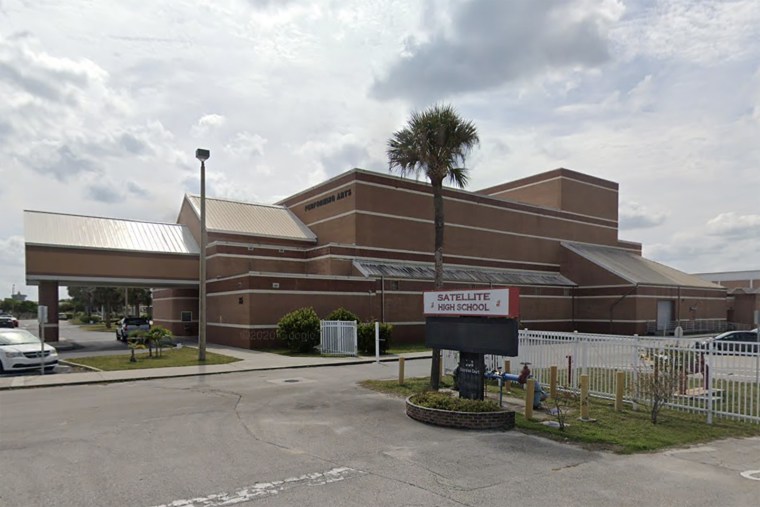
Melissa Calhoun is a literature teacher at Satellite High School in the coastal city of Satellite Beach, Florida. According to her LinkedIn profile, she’s worked for the Brevard County Public Schools district for the past 12 years.
Unless the state intervenes, Calhoun, who did not immediately return requests for comment, could be one of the first educators to lose a job under Florida’s Parental Rights in Education law, or what critics call the “Don’t Say Gay” law.
Brevard County Public Schools conducted an investigation after receiving a complaint from a parentwho said Calhoun had used a name other than their child’s legal name without the parent’s permission, according to a statement shared by Janet R. Murnaghan, a spokesperson for the district.
“This directly violates state law and the district’s standardized process for written parental consent,” the statement said. “Based on the teacher’s own admission that she knowingly did not comply with state statute she received a letter of reprimand. Teachers, like all employees, are expected to follow the law.”
Satellite High School in Brevard County, Fla.Google Maps
Since the state will be reviewing Calhoun’s teacher certificate based on the complaint, the district said it will not renew her annual contract, which expires in May, until the issue is resolved.
“We’re here to really show support for Ms. Calhoun and to show that we are not OK with what is going on,” sophomore Brianna Knight told WESH. “We truly are upset that we are losing such a positive teacher.”
Calhoun’s supporters also started a petition asking the Brevard County School Board to reinstate her. As of Friday afternoon, it had garnered more than 22,000 signatures.
Republican Gov. Ron DeSantis signed the Parental Rights in Education law in March 2022. At that time, it prohibited “classroom instruction by school personnel or third parties on sexual orientation or gender identity” in kindergarten through third grade “or in a manner that is not age-appropriate or developmentally appropriate for students in accordance with state standards.”
A year later, he signed an expanded version of the measure that prohibits sexual orientation or gender identity instruction in prekindergarten through eighth grade, restricts reproductive health education in sixth through 12th grade, and bars schools from requiring students or employees to refer to each other with pronouns that do not align with their assigned sex at birth. It also prohibits transgender school employees from sharing their pronouns with students, among other restrictions.
In July 2023, a few months after DeSantis signed the expanded measure, the Florida Board of Education passed new rules to ensure schools were following the law and to “strengthen and enhance the safety and welfare of students in K-12 public schools and protect parental rights.”
Among those rules was a requirement that school districts receive parental permission before staffers can call a student by anything other than their legal name, including a nickname, even at the student’s request.
At a school board meeting this week, several parents spoke both in favor of and against the district’s decision not to renew Calhoun’s contract.
“There was no harm, no threat to safety, no malicious intent,” one parent of a student in the district who also said she was one of Calhoun’s colleagues said during the meeting, WESH reported. “Just a teacher trying to connect with a student, and for that, her contract was not renewed despite her strong dedication and years of service. I ask you, how can we justify this?”
School board member Katye Campbell said during the meeting that people might think the rule is “silly,” but that it’s important.
“The parents are the number one decision-makers for their children,” Campbell said, The Washington Post reported. In response to a question about students’ rights, she said the district shouldn’t interfere in families’ decisions “unless we legally have a reason to.”
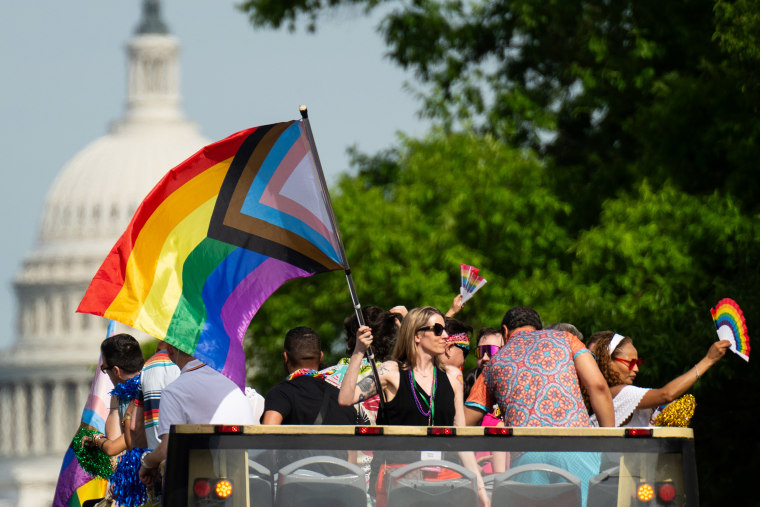
The organizers of WorldPride in Washington, D.C., may issue a warning to transgender people from other countries about traveling to the capital for the event as the Trump administration targets the trans community with policies like the military ban on transgender servicemembers and requiring passports to match a person’s sex at birth.
“It’s possible that we may actually issue a statement telling trans folks internationally not to come, or if they come, they come at their own risk,” Capital Pride Alliance Executive Director Ryan Bos said.
The Trump administration said it only recognizes two unchangeable sexes: male and female.
Pride in Washington, D.C., on June 8, 2024. Bill Clark / CQ-Roll Call, Inc via Getty Images file
“This is something that my community faces every day, is worrying whether or not this space is gonna be safe for them,” Advocates for Trans Equality Senior National Organizer Devon Ojeda said.
Ojeda said he and his trans friends often worry about being targeted or harassed, and he understands if people decide not to attend WorldPride out of safety concerns. But, he added, it’s also important for the community to come together.
“I also am in the mindset of always continuing to be in these spaces — to say I am trans, I am visible. You’re not going to take that away from me,” he said.
Organizers of this year’s WorldPride — an international celebration that is held in a new location about every two years — expect about 2 million people to attend this year’s event in D.C., which will run from May 17 to June 8.
Extensive safety measures for the event include fencing, security checks, police officers and web surveillance to monitor for online threats.
Russia’s General Prosecutor on Thursday banned the Elton John AIDS Foundation from operating in the country, claiming it’s part of an effort “by the ‘collective West’ to discredit traditional values and escalate social tensions” in Russia.
The ban stopped short of deeming the foundation an “extremist” group under the umbrella of a 2023 order by Russia’s Supreme Court designating the so-called “international LGBT social movement” as an “extremist organization.”
That declaration paved the way for increased persecution of LGBTQ+ activists throughout the country and abroad, adding to “gay propaganda” laws that were already erasing LGBTQ+ identity from public life in Russia.
The Elton John AIDS Foundation is registered in both the U.S. and Britain as non-governmental organizations. Both NGOs are now officially designated as “undesirable organizations” in Russia. The designation exposes foundation staff and partners to potential criminal prosecution.
John established his namesake foundation in 1992 to increase access to health care related to HIV/AIDS and address anti-LGBTQ+ stigma associated with the disease. The foundation has raised more than $600 million to support over 3,100 projects in 95 countries, including Russia.
According to Rospotrebnadzor, the Russian federal agency for public health and consumer rights, more than 1.2 million people in the country carry the HIV virus, the highest per capita rate in Europe.
John has a large fan base in Russia, where he’s performed multiple sold-out concerts. He’s also been outspoken about what he calls unacceptable discrimination against gay people by Russian authorities.
In 2014, John published an open letter condemning Russia’s “gay propaganda” law, enacted the year before and expanded in successive legislation.
“When a musician plays along with the promoters of democracy, you get propaganda,” the General Prosecutor’s office said in an overtly political statement announcing the ban of the NGOs, posted to its official Telegram channel and reported by Reuters. “And if Elton John is at the piano, it is not just anti-Russian propaganda.”
In a separate statement on its website, the prosecutor’s office pointed to the foundation’s promotion of “non-traditional sexual relationships, Western family models, and gender reassignment.”
The statement also accused the foundation of taking part in what it called a coordinated Western campaign to “denigrate Russia” over its war in Ukraine, referred to by its official designation as a “special military operation.”
President Vladimir Putin has portrayed the battles against both Ukraine and the “international LGBT social movement” as twin fronts in an existential struggle with a decadent West.