It is 18 years today since the controversial and homophobic legislation known as Section 28, introduced under Margaret Thatcher, was repealed in England and Wales.
The clause – an amendment to the Local Government Act 1988 – banned local authorities and schools from promoting homosexuality and was brought forward by Thatcher’s government.
The legislation has been labelled “toxic and regressive” by deputy leader of the Liberal Democrats Ed Davey, who introduced the clause that led to its repeal, and told PinkNews that Section 28 left young people feeling “alone and vulnerable”.
“I am proud to have moved the clause that abolished Section 28 once and for all. But we still have so far to go,” Davey said, in 2019.
“From trans rights, to tackling the persistent discrimination faced by the LGBT+ community: the fight is far from over.”
Section 28 was introduced by Margaret Thatcher amid renewed anti-gay sentiment
More than three decades have passed since Thatcher’s government introduced the anti-LGBT+ legislation, but its shadow still looms over schools and local authorities in the UK today.
The legislation meant that councils were prohibited from funding of books, plays, leaflets, films, or other materials showing same-sex relationships, while teachers weren’t allowed to teach about gay relationships in schools.
This clause was the Conservative government’s vitriolic and traditionalist response to calls for equality from lesbian and gay rights activists in the late 1980s.
The homophobic legislation Section 28 was introduced by Margaret Thatcher in 1988. (AFP via Getty/ GERRY PENNY)
Thatcher captured these venomous anti-gay views in her infamous speech at the 1987 Conservative Party conference, which was met with rapturous applause.
“Children who need to be taught to respect traditional moral values are being taught that they have an inalienable right to be gay,” she said. “All of those children are being cheated of a sound start in life. Yes, cheated.”
LGBT+ activists railed against the legislation – but the government didn’t listen
On the day the clause was passed in the House of Lords, a group of lesbians abseiled into the House of Lords in protest, making national news broadcasts.
The legislation – so loathed, so reviled by supporters of LGBT+ equality – caused 20,000 Mancunians to take to their city’s streets to march against it. It also prompted Sir Ian McKellen to come out publicly as gay.
Section 28 was introduced following a difficult period for the LGBT+ community in the UK. There had been some progress, but the outbreak of HIV/AIDS led to the widespread demonisation of gay and bisexual men in the 1980s.
The Conservative Party capitalised on this anti-gay sentiment. In the run-up to the 1987 general election, they issued posters claiming that the Labour Party wanted LGBT+ friendly books like Young, Gay and Proud and The Milkman’s on His Way to be read in schools.
Children who need to be taught to respect traditional moral values are being taught that they have an inalienable right to be gay. All of those children are being cheated of a sound start in life. Yes, cheated.
In 1987, a British Social Attitudes Survey found that three-quarters of the population thought homosexuality was “always or mostly wrong”. Just 11 per cent said it was “never wrong”.
Just before the general election of 1987, the Earl of Halsbury introduced theLocal Government Act 1986 (Amendment) Bill, also known as an act to refrain local authorities from promoting homosexuality.
Owen Franken/Corbis via Getty
This bill was successfully passed through the House of Lords, and even passed the first stage on the way to becoming law in the commons, but it went no further. Section 28 was not dissimilar to the legislation that the Earl of Halsbury tried to introduce.
The anti-LGBT+ legislation left teachers afraid to broach LGBT+ issues in schools.
Soon after the Tories were re-elected, Tory MP David Wilshire put forward an amendment to the new Local Government Bill – known first as Clause 27, and later as the notorious Clause 28 – based on the Earl of Halsbury’s Bill, which was subsequently passed through Parliament.
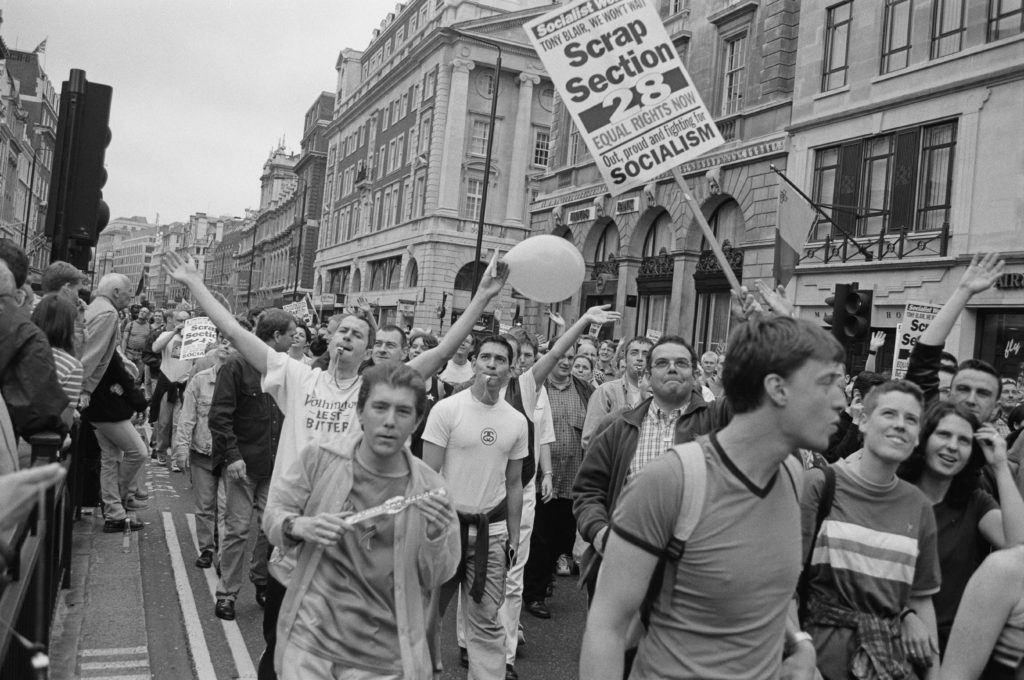
Marchers at the Lesbian, Gay, Bisexual, and Transgender Pride event, Piccadilly, London, 4th July 1998. One marcher is holding a Socialist Worker placard, calling for the scrapping of Section 28. (Steve Eason/Hulton Archive/Getty Images)
The night before Section 28 became law, a group of lesbians famously stormed the BBC’s Six O’Clock News in protest.
The effects of Section 28 soon became apparent, with some schools and councils shutting down LGBTQ+ youth support groups – and many teachers too afraid to teach about same-sex relationships.
The legislation was ultimately repealed in 2003, and David Cameron issued an apology for the harm it had done in 2009 – but despite this, its implications are still felt far and wide and teaching around LGBT+ issues still remains a taboo topic in many schools.
This year, Thatcher was portrayed by queer icon Gillian Anderson in the most recent series of The Crown. However, proving that Section 28’s horrific history can be all too easily forgotten, the show skipped over the issue entirely.
A settlement was reached Thursday in the nearly decade-old case of a Christian flower shop owner in Washington state who refused to provide a same-sex couple flowers for their wedding despite the state’s anti-discrimination laws.
The U.S. Supreme Court left intact the state court rulings against Barronelle Stutzman, the owner of Arlene’s Flowers in Richland, in July. Shortly afterward, Stutzman petitioned for a rehearing.
Stutzman withdrew her petition Thursday and agreed to pay a settlement of $5,000 to the couple, Robert Ingersoll and Curt Freed.
“We took on this case because we were worried about the harm being turned away would cause LGBTQ people. We are glad the Washington Supreme Court rulings will stay in place to ensure that same-sex couples are protected from discrimination and should be served by businesses like anyone else,” the couple said in a statement. “It was painful to be turned away and we are thankful that this long journey for us is finally over.”
The case dates to 2013, when Stutzman refused to provide flowers for the couple’s wedding. She said it would violate her Southern Baptist beliefs and her “relationship with Jesus Christ.”
Using an argument similar to that of Colorado baker Jack Phillips in the hot-button 2018 Supreme Court case Masterpiece Cakeshop v. Colorado Civil Rights Commission, Stutzman argued that her floral arrangements are works of art and that having to create them for same-sex weddings would trample on her freedom of expression.
A lower court ruled in 2015 that Stutzman broke a Washington law that bars businesses from discriminating on the basis of sexual orientation. The state Supreme Court ruled in favor of the couple in 2017 and then again in 2019, findingthat selling flowers for a wedding “does not inherently express a message about that wedding.”
Ingersoll and Freed will donate the $5,000 to a local chapter of PFLAG, an LGBTQ advocacy group, and they also plan to match the donation, Thursday’s statement said.
Last Saturday, Que Bell led a vigil for Transgender Day of Remembrance, an annual observance to honor the memory of transgender homicide victims that began in 1999.
Bell has led these vigils before. He is the executive director of the Knights and Orchids Society, a nonprofit group based in Selma, Alabama, that supports Black transgender, queer and gender-nonconforming people, and he has been an advocate for more than a decade. But this year will be different.
“This is literally the first time that I’ll have to write down my best friend’s name for a TDOR celebration,” Bell said, using the initialism for Transgender Day of Remembrance. “It’s really going to hit differently.”
Bell’s best friend, Mel Groves, died Oct. 11 after having been shot multiple times. Groves, 25, a Black transgender man, was studying plant and soil science at Alcorn State University in Lorman, Mississippi. Just before he died, he was about to become the full-time community garden manager for the Knights and Orchids Society.
Mel Groves, a farmer from Jackson, Miss.Courtesy Mel Groves
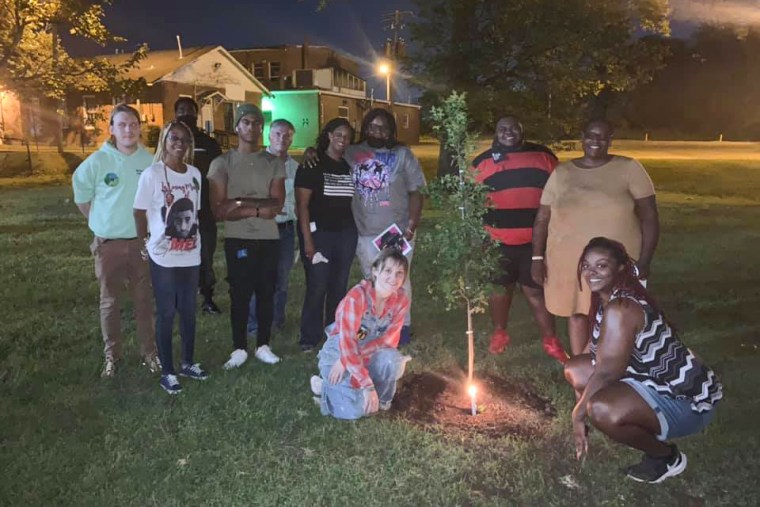
But on Saturday, Bell will light a candle in Groves’ memory.
Groves is one of at least 47 transgender or gender-nonconforming people — and one of 28 Black trans people — to have died by violence in 2021, which has surpassed 2020 to become the deadliest year on record for trans people, according to the Human Rights Campaign, which has been tracking fatal anti-trans violence since 2013. A disproportionate number of the deaths have been in the Southeast.
State legislatures across the country this year have also considered a record number of anti-transgender bills — more than 100 — many of which target trans youths, specifically trans girls. Advocates say the rhetoric coming out of legislatures is connected to the violence, because it describes transgender girls as boys and vice versa and, in many cases, characterizes trans people as “predators”on sports teams or in bathrooms.
Transgender Day of Remembrance is also known as Transgender Day of Remembrance and Resilience — the latter part an effort to remind people that while trans people face disproportionate discrimination and violence, they are also leading grassroots efforts to make things better for their communities.
Deadnaming, misgendering and clearance rates
Bell said that he and Groves’ friends and family ultimately want the person who killed Groves brought to justice but that he doesn’t have confidence in the police investigation.
When the Jackson Police Department first reported on Groves’ death, it used his legal name and misgendered him, causing local news outlets to repeat the mistakes. Groves’ loved ones had to reach out while grieving his loss to ask news outlets to update their stories to reflect who Groves actually was. Some updated their stories; others said they couldn’t change them without confirmation from law enforcement authorities or Groves’ immediate family. https://iframe.nbcnews.com/nt4ufYW?_showcaption=true&app=1
A week after Groves died, Jackson police provided the same statement to NBC News that they first issued, which used his birth name (also known as deadnaming) and misgendered him. The police department hasn’t responded to a request for comment about whether it plans to update the statement.
Bell said police officials need to be more educated about what the trans community faces; otherwise, he said, they will be unable to solve the case. He recalled one officer’s public statement that he would investigate Groves’ death just like any other.
“That is totally avoiding the issue,” Bell said. “I want you to be knowledgeable enough to know that, when something happens to trans people, how your department should be reacting to it and how you can help, versus being so defensive about acknowledging that this happened because it was a trans issue.”
Bell said police need to understand that anti-trans violence is connected to discrimination and higher rates of homelessness, among other issues that trans people face, or “we’re never going to be able to solve the problem.”
Jaida Peterson, a transgender woman, was found dead in a hotel room in Charlotte, N.C., on April 4, 2021.AP / NBC News
Anti-trans fatal violence cases nationwide appear to have a lower average clearance rate — the percentage of cases in which someone has been arrested, charged and turned over to a court for prosecution — than fatal violence cases in general, said Brendan Lantz, an assistant professor of criminology and criminal justice at Florida State University.
Lantz and his research team at the university’s Hate Crime Research and Policy Institute are creating the first database to track fatal violence against the transgender community. Although the Human Rights Campaign and other nonprofit groups track such deaths, the database Lantz’s team is creating, which will date to 2012, also tracks characteristics of the offenses, victims’ background information, perpetrators’ information, handling by police departments (including whether victims were misgendered or deadnamed) and whether cases have been solved, among other information.
Preliminary data, which Lantz said are subject to change, show that the nationwide clearance rate for fatal anti-trans violence is about 44 percent, which is well below the national average of 60 percent to 70 percent.
Early patterns also show that there’s “very likely a correlation between the prevalence” of deadnaming or misgendering by police and the likelihood of clearing a case, he said.
Evidence is important when police are trying to solve a homicide, he said, “and if we’re not even using the correct name, obtaining that evidence isn’t particularly easy to do, right?”
“Witnesses are less likely to come forward, and a lot of issues enter the equation,” he said.
Transgender rights groups say anti-trans sentiment, reflected in bills considered in dozens of states, affects how trans people are treated, including by police. Police initially misgendered victims and used their birth names in reporting on 30 of the 46 known deaths, an NBC News analysis found.
Since 2013, about 80 percent of trans people in deaths involving trans people with available data were initially misgendered by the media or law enforcement, according to a report released Wednesday by the Human Rights Campaign. An NBC News analysis of this year’s cases found that victims in 73 percent of investigations were misgendered or deadnamed by police, compared to 59 percent of cases in which someone was arrested and charged.
‘A sense of survival mode’
Trans advocates say some policymakers and national advocacy organizations are quick to suggest police reform as a solution.
But while many of them agree that improving police competence and investigations is important, they say the strategy addresses the issue only after the fact — when people have already died.
That leaves many in the transgender community feeling unsafe, which has led some of them to take their safety and well-being into their own hands.
“When you get tired of depending on a system to protect you that you know was not designed to protect you or to support you, you realize that you’re literally wasting time and resources putting money into a system that is not going to change,” Bell said. “So instead … we decided to start investing in the things that we could tangibly change.”
Advocates like Bell say community organizations should be given more resources and support, because they know how to best keep their people safe and help them thrive — by providing them with gender-affirming health care, as the Knights and Orchids Society does, or housing, as a number of trans-led groups across the country do.
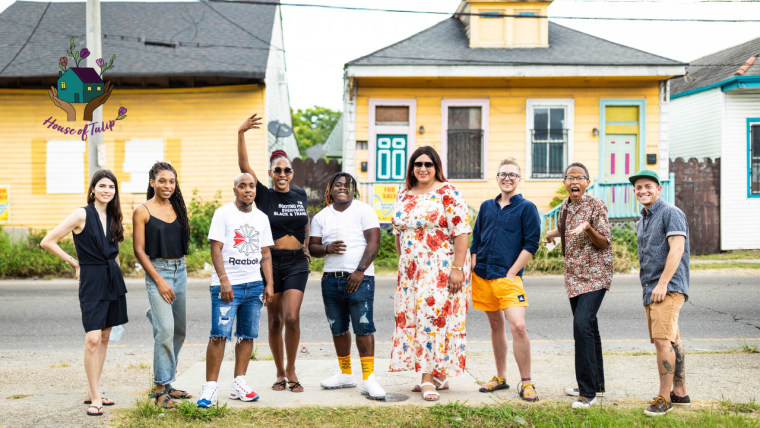
Mariah Moore, a national trans rights activist and a co-director of the House of Tulip, a nonprofit collective creating housing solutions for trans people in Louisiana, said: “It’s so important that we support community-led initiatives, because those folks leading those initiatives are actually folks who have that lived experience and are able to speak to the needs and actually distribute those resources directly to impacted community members.”
Trans United Leading Intersectional Progress, or TULIP, is a nonprofit collective creating housing solutions for trans people in Louisiana.House of Tulip
Bell echoed that sentiment with respect to funding for nonprofit groups. He said that many people support and know of national advocacy organizations but that the groups aren’t providing emergency housing or money for trans people.
“I’m committed to this work to always keep trans folks safe,” he said, adding that he has been evicted twice in the past because he has provided a place for people experiencing homelessness to stay, some of them as young as 13.
“That comes out of a sense of survival mode,” he said. “I don’t have a lot, but what I do have I want to share with the folks who are like me who also don’t have.”
In neighboring Georgia, Toni-Michelle Williams, the executive director of the Atlanta-based Solutions Not Punishment Collaborative, a Black trans- and queer-led organization that builds community safety through organizing and leadership training, said the group has supported more than 160 people through its Taking Care of Our Own Fund, which provides funding for emergency bail, housing, health care and other needs.
The group provided the support with less than 3 percent of $15 million, Williams said, which represents this year’s budget increasefor the Atlanta Police Department.
“Just imagine what we could do for our communities — Black trans and queer folks, sex workers, formerly incarcerated people — with at least 3 percent of that funding,” she said. “I definitely just want to encourage people to continue to push and to join our side around what it means to reallocate funding from these large institutions that have so many resources. Our communities are in need of them.”
Looking ahead, Bell said he’s determined “not to lose another Mel.”
“I want to do everything I can to make sure that we don’t have any more Mel Groves — that we don’t have another person who slips through the cracks, that for whatever reason we have the resources to make sure that folks have a fighting chance,” he said.
A memorial was held for Mel Groves in Jackson, Miss., in October.Courtesy TC Caldwell/The Knights and Orchids Society.
He added that he feels as though he has done a disservice to trans people who have been killed in the past. “Because what I don’t want people to remember about Mel is that he was the 39th person murdered,” Bell said. “And that’s often what happens when we lose somebody, is that the tragedy of their death is highlighted over their legacy, their purpose and all the good things that they have contributed to the world during their time.”
He wants people to remember that Groves was a promising scientist and that his professors bragged about him and his research after his death. He loved Nat King Cole, he had a smile that made people want to talk to him, and he always offered to share food with his friends.
People living with HIV could be at long last “liberated” from a “burdensome” daily pill regimen, as a new long-lasting injectable is approved for use in Britain.
In news dubbed “brilliant” by a leading HIV activist, the NHS has been given the go-ahead to roll out injections taken every two months to manage the virus.
Currently, people living with HIV are offered antiretroviral medicines that must be taken every day to suppress the virus – usually one to four daily pills. Effective treatment reduces a person’s viral load – the amount of virus in their blood – to an undetectable level.
When the virus is undetectable, it cannot be transmitted, and a person with HIV can live a long, healthy life.
The new treatment approved by England and Wales’ National Institute for Health and Care Excellence (NICE) and the Scottish Medicines Consortium on Thursday (18 November) is a combination of two jabs taken every two months.
Around 13,000 people will be eligible in England, NICE estimated.
HIV jabs will do away with the ’emotional burden’ of daily pills, says leading activist
Many people struggle to take the tablets they need to keep HIV at bay, Matthew Hodson, executive director of HIV outreach charity NAM aidsmap, told PinkNews. The stigma around HIV can discourage people, while others may simply forget.
“Taking daily pills becomes an emotional burden,” Hodson said, “a constant reminder that their health is at risk without medication.
“For some, who are unable to be open about their need for HIV treatment, it can create considerable obstacles to necessary adherence required for HIV medication to be effective.
“For many, a switch to injections just six times a year will be a liberation.”
HIV works by slipping into the human genome and tricking the machinery of white blood cells into making copies of HIV. As white blood cells are the body’s natural defenders, this weakens people’s immune systems.
The two injectables, cabotegravir and rilpivirine, work by suppressing how many HIV particles are in the blood, their viral load. It makes the viral load so low that the virus cannot be detected or even transmitted between people.
The jabs are just as effective as currently available oral drugs, clinical trial results have shown.
Both medicines have been licensed by the Medicines and Healthcare products Regulatory Agency, which carries out safety checks on drugs that pass clinical trials.
Now that they have been recommended by NICE draft guidance , they can receive crucial funding from local health authorities.
“It is important that HIV treatment continues to adapt and innovate to ensure that as many people as possible can benefit,” Hodson added.
“Effective treatment means we can now enjoy the same life expectancy as those without the virus and we can no longer pass HIV on during sex; getting treatment to all people with HIV in a way that supports our circumstances holds the key to ending this epidemic.”
Hodson said he hopes such innovation can be brought to pre-exposure prophylaxis, or PrEP, the drug which when taken correctly prevents people from acquiring HIV.
“Many of the barriers to effective PrEP use are down to the need for daily pills – or the two-one-one on-demand strategy for cis men who can plan their sexual activity,” he explained.
“Injectables, implants and even very long-lasting pills are all in the pipeline, and these could have a huge impact on our ability to prevent HIV.”
As state legislatures around the country pursue anti-LGBTQ legislation in what advocates have said is the “worst year” for LGBTQ rights in modern history, a report released Thursday highlights how cities are quietly moving the needle in the opposite direction.
In their 10th annual Municipal Equality Index, or MEI, two LGBTQ advocacy groups, the Human Rights Campaign and the Equality Federation, evaluated 506 municipalities — including the country’s 50 state capitals and its 200 largest cities — on how lesbian, gay, bisexual, transgender and queer people are included in their local laws, policies and services.
They found that over the last decade, the average MEI score rose 44 percent to 85 points this year from a score of 59 points in 2012, the report’s inaugural year.
“I literally gasped when I did the math,” said the founding author of the MEI, Cathryn Oakley, the state legislative director for the Human Rights Campaign. “The things that those points represent, they’re things that matter for people’s lives.”
To boost their scores, cities would have had to implement or improve upon any of the MEI’s 49 criteria, which include nondiscrimination protections, pro-LGBTQ policies or benefits for municipal employees and city leaders.
But while the report shows an expansion of LGBTQ rights in cities and towns around the country, its findings coincide with the pursuit of hundreds of bills that target LGBTQ people in state legislatures.
The bulk of the state legislation proposed this year has been aimed at transgender minors, including bills that seek to prohibit trans students from competing on school sports teams that align with their gender identities and those that restrict transition-related health care.
Other bills include a requirement that parents sign off on any mention of gender identity or sexual orientation in school curriculums.
Twenty-five anti-LGBTQ bills have been signed into law, including measures in Tennessee, Texas and Arkansas, according to the Human Rights Campaign.
Oakley reasoned that the divide between state legislatures and city governments comes down to the motives of city officials compared to those of state officials, which she described as “less aspirational” and “practical.”
“They’re used to coming up with pragmatic solutions that are going to benefit people now,” she said of city officials. “They don’t get as bogged down in the hyperbole and misinformation.”
This year, city officials across the country have continued to advance LGBTQ rights as the wave of anti-LGBTQ legislation makes its way through state legislatures.
In May, the Pittsburgh City Council passed a bill that adds LGBTQ-owned businesses to the list of minority- and women-owned businesses eligible for government aid and support. The City Council in Columbia, South Carolina, passed a ban on conversion therapy for minors in June. And several cities in North Carolina passed nondiscrimination ordinances throughout the year, with Raleigh doing so just last month.
Thursday’s report also found that cities in states with anti-LGBTQ laws or without LGBTQ protections have still moved the needle on queer rights. It found that 72 cities earned MEI scores over 85 points this year, despite hailing from states without nondiscrimination statutes that explicitly protect sexual orientation and gender identity.
Other highlights from the report include a rise in the proportion of municipalities scoring a perfect 100 — 22 percent this year, compared to 8 percent in 2012 — and a year-over-year rise in the average score of every region of the country.
However, Gabriele Magni, an assistant professor of political science at Loyola Marymount University in Los Angeles, who was not involved with the report, argued that because the study pools data from cities with big populations, which generally have large pockets of Democratic voters, the findings may be somewhat skewed.
“We should be happy, but we should not be complacent about this. This is probably further evidence of the increasing divide between cities and rural areas when it comes to LGBTQ rights,” Magni said. “Cities governed by Democrats are making progress. State legislatures where rural areas have more voice, where Republicans have more power, they’re going in the opposite direction.”
Eight cities in the report, including Florence, Alabama; Jonesboro, Arkansas; and Southaven, Mississippi, scored an average of zero points.
A lawsuit filed Tuesday challenges North Carolina’s requirement that transgender individuals who want to update their birth certificate undergo “sex reassignment surgery.”
Lambda Legal, a leading LGBTQ civil rights group, filed suit in the U.S. District Court for the Middle District of North Carolina on behalf of three transgender North Carolinians: Lillith Campos, a 45-year-old woman who lives in Jacksonville, and two minors — “C.B.” a 16-year-old boy from Chapel Hill, and “M.D,” a 14-year-old girl from Carrboro. (The names of the two minors have been altered in court documents to protect their privacy.)
Lillith Campos.Lambda Legal
“As someone who can’t afford surgery, it’s demoralizing and dehumanizing that my birth certificate doesn’t reflect who I am,” Campos said at an online news conference Tuesday morning. “Having incorrect documentation makes me feel like a second-class citizen.”
She added that the current policy forces trans people to out themselves, “even if they don’t feel safe doing so.”
According to the filing, a birth certificate that aligns with an individual’s gender identity “is a critical and ubiquitous identification document,” vital to accessing employment, education, housing, health care, banking, credit, travel and many government services.
For children, lawyers for the plaintiffs argue, birth certificates are often the only form of government identification they have, and are required for enrollment in school, recreational sports and summer camp.
“My daughter is a 14-year-old girl and the state’s requirement for surgery is unrealistic and creates a barrier for my child to have a normal childhood,” M.D.’s mother, Katheryn Jenifer, said at the news conference.
“Not having an accurate birth certificate has exposed my daughter to discriminatory treatment and exclusion in school, sports and other places,” she added. “No child should go through life knowing the state doesn’t recognize her as who she is.”
Jenifer said M.D. saw the case as a chance “to be the voice for kids like her that maybe don’t have support like she does.”
“She knows this could bring unwanted attention,” she Jenifer added, “but she feels it’s important enough that she wants to be a part of it.”
While the state imposes a surgical requirement, designated as “sex reassignment surgery,” the suit maintains it doesn’t provide a legal definition for the phrase.
“The decision is left to the subjective whims of each clerk,” it reads, resulting in “arbitrary and discriminatory enforcement of the statute — rendering the statute unconstitutionally vague.”
Lambda Legal Senior Attorney Omar Gonzalez-Pagan called the surgical requirement “inconsistent with standard medical practice” and said it presented “a significant barrier — sometimes insurmountable — to many transgender people, particularly those who may not be able to afford gender confirmation surgery, or who may not want or need it.”
The litigants argue the surgical requirement violates their constitutional guarantee of equal protection under the 14th Amendment, as well as their First Amendment guarantee to freedom of speech.
Rather than financial compensation, Gonzalez-Pagan said, they’re seeking an acknowledgement that the surgical policy is unconstitutional and a requirement that the state allow trans people to update their birth certificate without surgery.
In addition to attorneys with Lambda Legal, the plaintiffs are being represented by the North Carolina firms Baker Botts LLP and Brooks Pierce McLendon Humphrey & Leonard LLP.
Mandy Cohen, the secretary of the North Carolina Department of Health and Human Services, has been named as a defendant, along with Assistant Secretary of Public Health Mark Benton and ClarLynda Williams-DeVane, state registrar and director of the North Carolina State Center for Health Statistics.
The North Carolina Department of Health and Human Services declined to comment on the lawsuit.
According to Lambda Legal, 34 states allow individuals to update the sex designation on their birth certificate without surgical intervention.
In fact, surgery is not required to update the gender marker on a North Carolina driver’s license, just a form from a health professional affirming their client’s gender identity.
Fourteen states still have a surgical requirement to change gender markers on birth certificates.
West Virginia requires a court order to amend the gender designation on a birth certificate, according to the National Center for Transgender Equality. The state’s Vital Registration office will not issue a new birth certificate, instead striking through the existing name and gender and typing the new information above.
Tennessee law specifically prohibits amending sex on a birth certificate “as a result of sex change surgery,” a policy Lambda Legal is also currently challenging. Like transgender North Carolinians, though, trans residents in Tennessee can change the listed gender on their driver’s licenses and state identification cards without surgery.
In an email to NBC News, Gonzalez-Pagan said the decision of when and where to bring a challenge “depends on multiple factors, including our assessment of the law and whether we have encountered people affected by these policies that are willing to step up and take on such a challenge.”
The goal, he added, is to eradicate each of these barriers one by one “and to have one victory build upon the other.”
North Carolina has been a nexus point for LGBTQ equality in recent years: In 2016, after Charlotte passed an ordinance expanding its existing nondiscrimination protections to include gender identity and sexual orientation — including allowing transgender people to use the bathroom that aligns with their gender identity — the state’s General Assembly held a special session to pass House Bill 2, nicknamed the “bathroom bill.”
That measure prevented any municipality in the state from adding sexual orientation or gender identity to nondiscrimination laws, effectively blocking Charlotte’s efforts and sparking national boycotts that were projected to cost the state billions in lost revenue.
HB 2 was eventually repealed in 2017 as part of a compromise that placed a three-year statewide moratorium on nondiscrimination ordinances. Since then, Charlotte and several other cities have updated their nondiscrimination policies to include LGBTQ people.
And just last month, the state’s lieutenant governor, Mark Robinson made national headlines and faced calls to resign after a video surfaced showing him describing the LGBTQ community as “filth.”
“There’s no reason anybody anywhere in America should be telling any child about transgenderism, homosexuality — any of that filth,” Robinson, the state’s highest Republican executive officeholder, said in a clip from a June speech at a Baptist church.
A group of students passionately protested after a transgender classmate reported an alleged assault – only for the police to claim no assault took place.
Students gathered outside of Berlin High School in Berlin, Wisconsin on 9 November after a 14-year-old transgender boy was allegedly cornered in the boy’s bathroom by fellow students and told to pull down his pants and lift up his shirt.
According to local news reports, the pupil also said that he’d been sexually assaulted “several times” in the same bathroom over the past couple of weeks but had been “afraid to come forward right away”. He told Action 2 News: “They were surrounding the stall door and one was recording through the peek hole, and they saw my bottom half and after that I stood in the stall crying.”
Police in the small town, which has a population of just 5,524, have since come under fire after their investigation found that the student was not assaulted.
“After multiple interviews and examining the associated evidence of the alleged assault, our investigation discovered no physical assault or attack against the alleged victim took place,” the Berlin Police Department told Action 2 News.
Unsatisfied with the police response, the trans pupil’s friends and supporters then staged a viral walkout the following day, with senior Amber Olmstead explaining to Action 2 News: “We sat there for a while and we were trying to get our questions answered, and we were kind of getting blown off and they were trying to get us inside, but we wanted this to be public, we wanted people to see us, hear us.”
Another student, Autumn Peterson, said: “There’s been a big past of assault and homophobia in our school, and it just needs to come to an end.”
The viral video in support of the transgender teen, which has over 300,000 likes on TikTok and over 8,000 comments, shows a crowd of teenagers chanting “trans lives matter” and waving placards while Donald Glover’s protest anthem “This Is America” plays in the background.
One commenter said: “F**k. That poor kid. That is still my worst fear and to face that as a child must have been devastating, I hope he’s alright.”
A second person commented on the video saying: “These stories are really tough on me having been the recipient of an assault that nearly left me dead back in the late 80s I had hope that by the time I was 60 these would be rare.
“This has to stop, but the propaganda regarding anyone that can be ‘othered’ needs to stop first.”
In a statement to Action 2 News, superintendent Carl Cartwright wrote: “The Berlin Area School District is aware of a student walkout in response to allegations of a student assault at the high school. The Berlin Area School District is committed to the success of all students in a safe learning environment and we take such allegations seriously.
“The school district is cooperating with local law enforcement who are investigating this situation. The district is also conducting its own investigation. Because of the ongoing investigations, the district is unable to provide additional details at this time.”
Berlin Police are asking anyone to call them at (920) 361-2121 if they have direct information about a recording taken in the bathroom.
Police and school administrators are grappling with an apparent hate crime and a rise in incidents of racism and anti-LGBTQ discrimination at Monroe High School, located about forty minutes Northeast of downtown Seattle.
The latest incident occurred last week in the school’s parking lot just before lunchtime. Mobile phone video footage circulated on Snapchat, TikTok and Instagram showed a white student repeatedly calling a Black student the ‘N’ word in a confrontation, and at one point, the white student hits the Black student in the head with a plastic water bottle.
Monroe police spokesperson, Commander Paul Ryan told media outlets that the confrontation was brief and that a student tried to deescalate it before the school resource officer stepped in.
The Everett and Snohomish County newspaper, the Daily Herald, reported that in a letter/emails sent to parents last Wednesday evening, Monroe High’s principal Brett Wille stated that the school administration is working with Monroe police on their investigation.
“It is with great sadness that I write to let you know about an incident that occurred today at Monroe High School involving racial slurs and aggression towards a Black/African American student,” Wille wrote. “This incident occurred in the parking lot during lunch time and was witnessed by a handful of other students, was video recorded, and was possibly shared on social media. It also resulted in additional police presence on campus and we are partnering with law enforcement in their investigation of this incident.”
“I am writing to you today in response to a recent incident of racial harassment and assault of a Black student at Monroe High School. We are devastated that hatred and intolerance has manifested itself in our school district. We recognize that this incident causes our underrepresented and traditionally marginalized students and families to be fearful, angry, and to question their own sense of belonging in our school community. My heart goes out to these students and families and I commit that, as a system, we will continue to learn and grow together.”
Blasko then cited the District’s policy; “The Monroe School District will provide equal educational opportunity and treatment for all students in all aspects of the academic and activities program without discrimination based on race, religion, creed, color, national origin, age, honorably-discharged veteran or military status, sex, sexual orientation, gender expression or identity, marital status, the presence of any sensory, mental or physical disability, or the use of a trained dog guide or service animal by a person with a disability.“
He added, “These words are meaningless unless the reality of our environment is reflective of anti-discrimination. The incident this week demonstrates that we must continue to come together to learn, grow, and commit ourselves as a community to do better.”
However, according to the Daily Herald;
Racism has been an ongoing issue in Monroe schools. A survey conducted by the student-led Monroe Inclusion Collective found that, out of 89 respondents, over 57% had experienced racism in the district. Similar amounts reported experiencing anti-LGBTQ+ discrimination or sexism.
Those incidents were most likely to occur outside the classroom but on school grounds, as is the case with the most recent episode. And almost 82% of respondents said they did not report their experiences to school leadership. Their reasons included not trusting staff and a lack of representation among leadership.
Of those that did report racism or other discrimination, again nearly 82% said they didn’t feel safe after doing so.
Students presented the survey’s findings to the Monroe School district Board this past January.
“All of those students and their families have continually expressed ongoing issues of bullying and harassment and various types of incidences that just haven’t been adequately addressed by the district,”
“What will ultimately decide whether we progress or not is going to likely be the students themselves,” Ryan said. “The students will have a powerful ability to put pressure within this system to say we don’t accept this anymore.”
Same-sex married couples may get a tax break from Democrats’ $1.75 trillion social and climate spending plan.
The latest iteration of the Build Back Better Act would let taxpayers who were legally married under state law before 2010 claim federal tax benefits that are unavailable under current rules.
Essentially, the revision would let couples file amended tax returns for years as early as 2004. They could file a joint federal return as a married couple, and claim refunds and credits that may result in a net tax benefit.
“It’d be pretty significant for some folks,” said Jeffrey Levine, an accountant and certified financial planner at Buckingham Wealth Partners in Long Island, New York.
Democrats’ legislation, which the House aims to pass this week, may change, and its ultimate success isn’t guaranteed.
United States v. Windsor
The current gap in tax rules for some same-sex married couples dates to a Supreme Court decision in 2013, United States v. Windsor, which struck down part of the Defense of Marriage Act.
The ruling required the federal government to recognize same-sex marriagesin states where they were legal.
Following the Windsor case, the IRS issued guidance that let taxpayers amend their tax returns with respect to their marital status, but only generally back to 2010, according to a Nov. 3 summary of the Build Back Better Act.
However, same-sex marriage was legal in five states (Connecticut, Iowa, Massachusetts, New Hampshire and Vermont) plus Washington, D.C., before 2010, according to the Pew Research Center. (Massachusetts became the first state to legalize the unions, in 2003, after its Supreme Judicial Court ruled that the state constitution gives gay and lesbian couples the right to marry. The U.S. Supreme Court later legalized same-sex marriage nationwide, in 2015, in Obergefell v. Hodges.)
Gay and lesbian couples who legally wed before 2010 would be able to file an amended tax return if Congress passes the Build Back Better Act with the provision intact.
“This is a fair thing to do,” said Steve Wamhoff, director of federal tax policy at the Institute on Taxation and Economic Policy. “People were married [but] the federal government wasn’t recognizing their marriages.”
While fair in terms of tax policy, it’s questionable whether many couples would make the effort to redo their tax returns and take advantage of new rules, Wamhoff said.
Marriage penalty
It’s also not a given that all married couples would benefit from filing a joint return instead of as single taxpayers.
Same-sex couples who’d benefit most from new rules would likely be those in which one spouse is a high earner and the other has little to no income, Levine said.
That’s largely due to the so-called marriage penalty, which is most common when each spouse earns a similar income.
For example, in 2004, single taxpayers were in the 28% tax bracket if their income exceeded $70,350. However, instead of a level twice that amount, married couples filing a joint tax return hit the 28% rate once income exceeded $117,250.
That basically meant married couples jumped into that tax rate more easily with respect to their income. (There’s still a marriage penalty, but a federal tax law in 2017 temporarily eased it.)
Married couples may also be able to claim certain tax benefits unavailable to single filers, Levine said.
For example, if a higher-earning spouse had paid for medical or education expenses for the other spouse pre-2010, the high earner couldn’t claim medical or education tax breaks for those costs on their individual return, Levine said. They’d perhaps be able to do so on a married-joint return.
The Papua New Guinea government should seriously address the criticisms of its human rights record and scores of recommendations raised by United Nations member countries, Human Rights Watch said today. Papua New Guinea appeared before the UN Human Rights Council for its Universal Periodic Review (UPR) in Geneva on November 4, 2021.
“UN member countries rightly criticized Papua New Guinea’s record on gender-based violence, retention of the death penalty, and laws that criminalize same sex relations,” said Elaine Pearson, Australia director at Human Rights Watch. “The UN review made it clear that the Papua New Guinea government hasn’t followed through on some of its key past pledges to the UN Human Rights Council.”
The Universal Periodic Review, which began in 2006, is a comprehensive review of the human rights record of each UN member country every five years. The country under UN review, along with local and international organizations, has the opportunity to submit reports to the Council to inform the review process. Human Rights Watch submitted an assessment of Papua New Guinea’s record in March.
At the review, other countries praised Papua New Guinea for the establishment of a special parliamentary inquiry into gender-based violence and for the establishment of an anti-corruption commission since the last review in 2016.
The Papua New Guinea government reported that, of 161 recommendations made in 2016, it had accepted 108.
However, more than 15 nations questioned Papua New Guinea’s retention of the death penalty, from Finland to Spain, Iceland to Fiji. The Papua New Guinea government has increased the number of crimes punishable by death in recent years to include robbery and murder following accusations of sorcery and rape. To the extent that international law permits the death penalty it is only for the most serious crimes following full due process. Robbery is not one of the most serious crimes.
Even though Papua New Guinea’s last execution was in 1954, Papua New Guinea officials rejected the calls to end the death penalty. They said that it was an integral component of their justice system. The use of the death penalty has widespread international condemnation, and the UN General Assembly states that there is no evidence that it is an effective deterrent.
“It’s disappointing to see the Papua New Guinea government’s support for the death penalty, which is clearly out of step with the rest of the Pacific and certainly most of the world,” Pearson said.
Several countries raised Papua New Guinea’s failure to reduce incidents of gender-based violence, and the lack of female representation in politics. More than 1.5 million people experience gender-based violence in the country each year, and prosecutions and convictions remain low. Italy and Cyprus also pressed the government about sorcery-related violence and urged the government to take steps to prevent such attacks and to prosecute offenders. Between May and June, groups of men violently attacked at least five women they accused of “sorcery.” One of the women was killed.
Other concerns included inequality and discrimination experienced by lesbian, gay, bisexual, and transgender people in Papua New Guinea. Many countries, including New Zealand, Montenegro, France, and Argentina, said that the government should decriminalize same-sex relations.
Some countries urged Papua New Guinea to increase access to education for all children, including children with disabilities. International human rights law makes clear that all children have a right to free, compulsory primary education. The Papua New Guinea government admitted that it does not provide schools close to all rural communities, but said it now has a policy of free education, which was not in place earlier in the year.
India said that the government should improve access to health care for children in rural communities, and two countries urged the government to raise the age of criminal responsibility from the current age of 10.
The US and Zambia urged Papua New Guinea to investigate instances of police brutality.
“Women and girls continue to face enormous danger from the scourge of gender-based violence and sorcery accusations,” Pearson said. “The Papua New Guinea government should demonstrate that it is serious about tackling these issues by prosecuting offenders and holding abusers to account.”