Major aid donors have said they will investigate and take action against anti-LGBT ‘conversion therapy’ practices at clinics run by groups they fund, in response to findings from an openDemocracy investigation
A new undercover investigation by the global news outlet openDemocracy reveals how health facilities in Kenya, Tanzania and Uganda have provided, or provided referrals for, controversial anti-gay ‘conversion therapy’ to “quit” same-sex attraction
Undercover reporters were told by some staff at these facilities that being gay is “evil”, “for whites”,caused by peer pressure, and a mental health problem, and told to give a gay teenager a sleeping pill to prevent him from masturbating
Major aid donors mentioned in our investigation include USAID,The Global Fund and the US government programme PEPFAR. Another implicated clinic in Tanzania is run by MSI Reproductive Choices, a UK-based NGO
During a six-month investigation, our undercover reporters found staff at health centres across Kenya, Tanzania and Uganda who offered help to “quit” same-sex attraction – including at clinics run by aid-funded groups that specifically reach out to LGBT patients.
‘Conversion therapy’ describes a range of practices – from talk therapy to physical ‘treatments – that attempt to change or suppress a person’s sexual orientation or gender identity. It is “ineffective” and “harmful,” according to human rights groups, and has been condemned by more than 60 associations of doctors, psychologists and counsellors worldwide.
In almost all cases, the ‘treatments’ identified by our undercover reporters consisted of ‘talk therapy’ counselling sessions. In Uganda, one counsellor also recommended “exposure therapy” with “a housemaid [he] can get attracted [to]’’, and told our undercover reporter to give a gay teenager a sleeping pill to prevent him from masturbating.
‘Conversion therapy’ is banned in some countries, including Brazil, Ecuador and Malta. President Biden has pledged to end these practices within the US; a proposed ban in the UK was included in the Queen’s speech this year; and Canada’s lower house has just passed a bill banning it, which is now waiting for approval in the senate.
Facilities where our investigation found support for these practices include:
Uganda:
An HIV clinic at Kampala’s Mulago Hospital – Uganda’s largest public hospital – run by the Most At Risk Populations Initiative (MARPI), which received a $420,000 USAID grant in 2019, ending in September. (It is unclear if any money went to this specific clinic). The Swiss-based Global Fund, which combats AIDS, TB and malaria, funds both Uganda’s health ministry and a local NGO, which in turn fund the Mulago clinic
Three hospitals in the Uganda Catholic Medical Bureau (UCMB) network. This network received more than $1m from USAID between 2019 and this April (it is unclear whether the specific hospitals identified in our investigation received any of this money)
Tanzania:
A clinic in Mwenge, Dar es Salaam that is run by MSI Reproductive Choices (formerly Marie Stopes International), a UK-based NGO that provides sexual and reproductive healthcare services around the world. In its latest annual report (2019) the organisation reported more than £1.4m in income from UK aid for projects in Tanzania.
Kenya:
A clinic inside the main office in Nairobi of LVCT Health, an HIV and AIDS care organisation, which currently has an $8m grant (which began in 2016 and ends in September) from the US government programme PEPFAR, for work with marginalised communities of sex workers, gay men and trans people in Kenya
In response to this investigation:
Kaajal Ramjathan-Keogh, Africa director at the International Commission of Jurists human rights organisation said that such efforts to ‘cure’ homosexuality are “inherently degrading and discriminatory”
Yvee Oduor of the Gay and Lesbian Coalition of Kenya said that aid donors should “redirect funding […] We already have clinics and health centres run by LGBTQI+ people all over the country. Why not fund these community initiatives?”
A spokesperson for MSI Reproductive Choices said: “We have launched an investigation and will take immediate action against anyone found to be involved in this abhorrent practice”
A US embassy spokesperson in Uganda, Anthony Kujawa, said: “USAID does not fund or promote anti-LGBTQI ‘conversion therapy’ and will investigate any report that a USAID funded partner is doing so”
A spokesperson for the Global Fund said that the organisation “takes seriously the matters raised” by our investigation’s findings and that it “will look into them”
An LVCT Health spokesperson said “we are investigating the matter and will address it conclusively”, including “urgent retraining and sensitisation of our staff”
PEPFAR, MARPI and UCMB did not respond to openDemocracy requests for comment
Notes to editors:
openDemocracy is a global news outlet based in London, UK, with reporters and editors internationally including in East Africa
It’s been 13 years since Thomas Beatie sat down for his first TV interview and told Oprah — and the world — how he could possibly be pregnant, as a man.
Today, the concept of a transgender man giving birth is hardly novel, although research, education and awareness are still severely lacking. But society has come a long way, and so has Beatie. The father of four, now a stockbroker in Phoenix, spoke to TODAY Healthabout how he thinks the trans community benefited from the media attention his pregnancy garnered, and how he and his family are doing today.
“When my story came out, there wasn’t a single person in the public eye as a transgender man — most people had never heard of it,” Beatie, 47, said. “It was a first exposure for a lot of people. And then on top of that, they can give birth! I think exposing the importance of fertility for trans people was a huge eye-opener.”
Thomas Beatie and Nancy Beatie at home May 29, 2008 in Bend, Ore.Kristian Dowling / Getty Images file
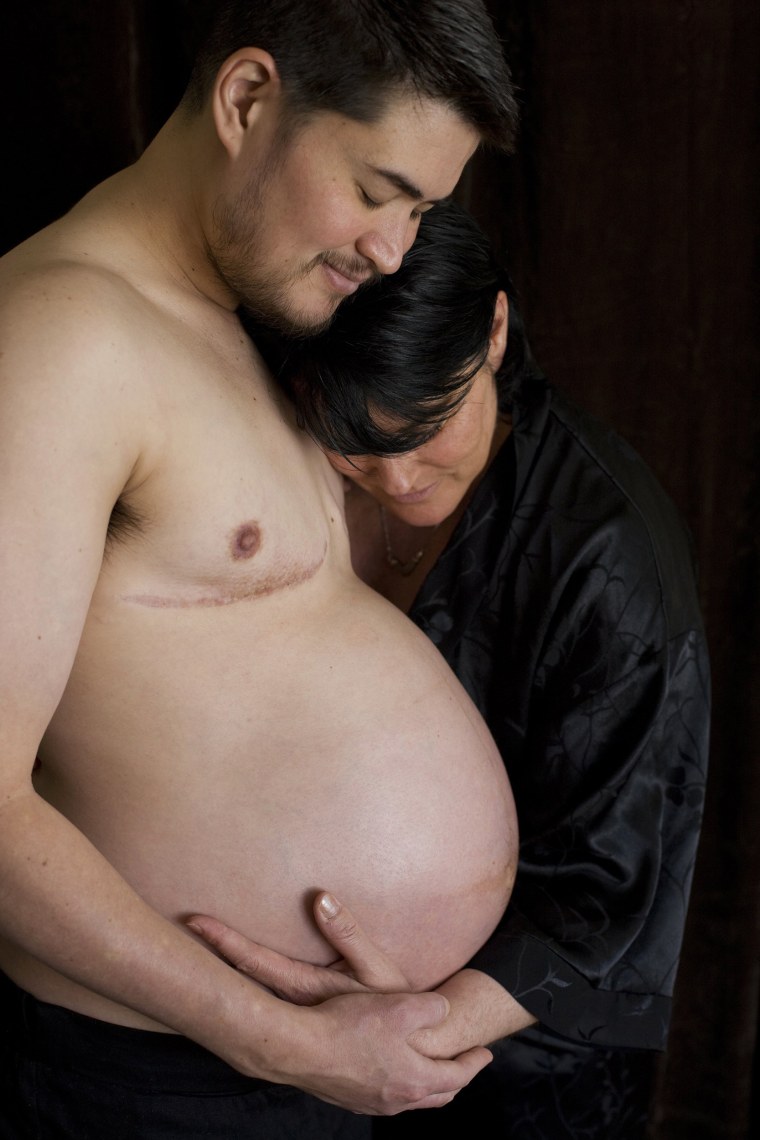
In 2008, after he wrote an essay for The Advocate about his pregnancy — a piece he wrote, he said, because he was desperately seeking advice from anyone who had been in his shoes, and fearful that his daughter would be taken away by authorities — Beatie’s story spread around the world. Photos of Beatie cradling his stomach — a bare, enlarged, pregnant stomach — went viral. Requests for TV and magazine interviews rushed in. He wrote a book about his experience titled “Labor of Love,” became the subject of multiple TV specials and even went on to star in a French reality show.
“Everything was a whirlwind,” he said. “But I still don’t regret it.”
After having his first child, Susan, in 2008, Beatie went on to give birth to two more children with his then-wife, Nancy Beatie. The couple separated in 2012, and in 2016 Beatie married his second wife, Amber, who worked at the daycare his children attended. They had a baby together in 2018, to whom Amber gave birth.
Today, Beatie and his family live a relatively quiet life in Phoenix, although Beatie occasionally takes on public-speaking jobs or small acting roles (maybe you saw him as an extra in a U-Haul commercial). His older children — now 11, 12 and 13 — split their time between his house and their mom’s house, about 10 miles away. When they’re all home, they swim together in their pool, play checkers and test out new recipes.
“We’re on this keto kick right now, so we’re trying to make cool dishes together,” Beatie said. “We’re going to make some healthy ice cream.”
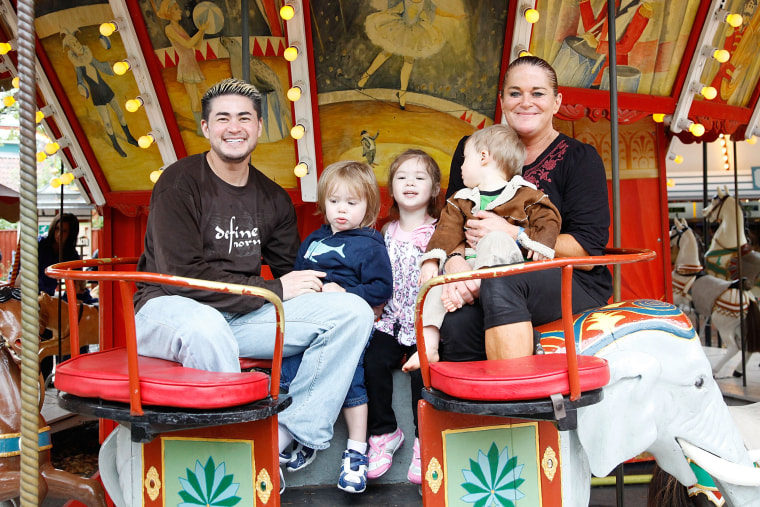
Beatie and his ex-wife with their three children at an amusement park in Sweden in 2011. Today the children are 11, 12 and 13.Christopher Hunt / Getty Images file
Yet, more than a decade after his first pregnancy made national headlines, Beatie said he still hasn’t been able to fully shake the “pregnant man” moniker.
“I thought I melted back into society, that I could just walk down the hall and be anonymous,” he said, referring to the halls of his financial office building. But soon enough, word got out about his public past, he said. Not that he minds, exactly.
“I don’t see anything wrong with being a pregnant man,” Beatie said. “I was so proud to be a dad, and I’m still proud to be a dad. I’m so proud that I was the one to bring my kids into the world. It’s kind of like a badge.”
Mostly, he marvels at how much the world, while still very much flawed, has changed since his story was in the spotlight. This was a time before most people understood the concept of gender identity and what it means to be transgender, let alone etiquette for speaking to or about someone who’s part of the trans community. Beatie recalled being misgendered and “deadnamed” by the media and being the butt of talk show jokes. When Beatie sat down for an interview with Barbara Walters, the news icon referred to one of his maternity photos as a “disturbing image.”
“It was really hard when my story came out,” Beatie said. “People were saying things on TV and in the media that if they came close to saying today, they would be immediately fired. I’m just in shock about how wild, Wild West it was back then.”
Despite the challenges of sharing his story and the fame it spawned, Beatie does not regret talking about his pregnancy experience publicly and said he hopes by doing so that he made things a bit easier for the trans men who came after him.
“I wanted to make sure that for my family, and for other people, that this was going to be something that’s doable, that our laws would respect it,” Beatie said. “So I did feel an obligation to continue to fight. I wasn’t about to lay down and say, ‘All right, fine, call me a woman.’”
Yet he acknowledges that even if public perception of his personal experience has shifted, there is still plenty more work to be done to support trans people hoping to start families — more training among health care providers, equitable access to fertility treatments and parental leave, for starters.
“I think a lot of people are still pigeonholed, thinking that if you want to be transgender, you have to completely get rid of all your (reproductive) organs,” Beatie said. “There needs to be discussions about fertility, preservation. Being transgender, you shouldn’t have to lose your right of having a family. You’re entitled to be happy and have a family and be respected.”
Representatives from Northern Ireland’s six biggest political parties have committed to outlawing conversion therapy and improving access to trans healthcare.
Political figures convened virtually on Thursday evening (1 July) for the PinkNewsVirtual Summer Reception in Belfast, which was hosted in partnership with Citi and The Rainbow Project.
Leaders from across the political spectrum were questioned on their commitment to LGBT+ rights at the event by John O’Doherty, director of The Rainbow Project.
Kicking off the discussion, O’Doherty asked political leaders how much longer trans people in Northern Ireland will have to wait to access healthcare at home, referencing ongoing issues with the Brackenburn Clinic in Belfast.
Naomi Long, leader of the Alliance Party, said the trans community needs a service “that actually meets their needs, and that currently isn’t the case”.
Doug Beattie, leader of the Ulster Unionist Party (UUP), drew attention to the high rates of depression and suicidal ideation experienced by trans people – but he pointed out that much of these issues are caused by lack of access to vital healthcare.
He also acknowledged that an ongoing review of trans healthcare in the region is taking too long.
“The trans community need to see light at the end of the tunnel,” he said, adding that he will encourage health minister Robin Swann to accelerate work on introducing a “fit for service” healthcare system.
Cllr Malachai O’Hara, deputy leader of the Green Party Northern Ireland, said trans youth are spending so long on waiting lists that they often become adults in the interim, meaning they then have to join a new waiting list.
He said the provision of trans healthcare in Northern Ireland has “gotten worse” in recent years and said the current service is “not fit for purpose”. O’Hara went on to criticise the parties in Northern Ireland’s Executive, saying they have given “years of platitudes” on trans healthcare but there has been “very little action”.
O’Hara went on to note that there are trans and non-binary people who are no longer alive because of a “failure to act” on healthcare.
Paula Bradley, deputy leader of the DUP, said the issue of trans healthcare comes up “time and time again”, but admitted that the problem has only “steadily gotten worse”.
Making friends is a lot harder in your adult years than it was in high school and college, and it’s even harder if you’re looking specifically for gay friends. But commenters chimed in with advice after one Reddit user asked for “specific, actionable, constructive advice” for befriending other gays, and many of their tips honed in on the two Gs: groups and Grindr. Read on for their responses, edited for clarity.
“Work and Reddit. … I’ve met one person off Reddit, but he actually knows quite a bit of people, so I’ve been meeting some of his friends little by little.”
“Usually making one friend will lead you to meeting their friends and basically a chain reaction, if you’re lucky. The usual [advice] is [to] join clubs or group activities, even online ones in your area. I used to go to the bars alone, have a drink or two, and basically just talk to strangers. Maybe someone was alone or someone saw me alone. Sometimes I’d run into someone I hadn’t seen in ages and made friends with their friends. It’s best to not go in with high expectations. A couple of times, it was a dud, but I was happy to leave the house.”
“Find your local LGBT center and volunteer and go to events. There are other queer folk looking for friends.”
“Most of the gay friends I have came from Grindr. The only ones that have stayed are the ones that I didn’t hook up with. My roommate got on Facebook, and it suggested to him a lot of the local gays, and he got to know them that way, just by randomly adding them and messaging them on Facebook. He is braver than me in that respect.”
“Reach out to people that you find interesting! My current best friend and I met after he randomly reached out to me on Facebook 3 years ago. Yes, it started out as flirty but turned into a beautiful friendship. Also, join groups. I have a really good friend in Texas I talk to and FaceTime a bunch. We met through the comment section on a post in the Facebook group we were both in. Granted, we are in different states, but I love having her. I also have another gay friend in Texas I met through the same way! Otherwise, hobbies and common interests. Start a new hobby and find people in your community that are also into that hobby. The more you frequent the same place, the higher the chances of running into the same people and becoming friends. Anyway, I need to take my own advice because I need more friends, but I hope this helps.”
“Back when I was a teenager — 32 now — I used to go to gay chatrooms online and talk to gay guys in my local area. Met up with them, and from then on, I’ve met more gay friends. I guess nowadays an online chatroom is equivalent to Reddit, Tinder, Grindr, etc. Or you can go to gay clubs and bars by yourself, if that’s your thing. I know being there by yourself can be a bit weird and intimidating at times, but people would usually try to talk to you, especially if you’re on your own in there.”
“Oddly, Grindr. Just separated ones I was trying to hook up/date [from] other bottoms I just became friends with.”
A gay man who came out aged 90 has offered powerful words of advice to LGBT+ people who are still in the closet.
Kenneth Felts captured the hearts of queer people across the world in 2020 when he shared his story, proving that it’s never too late to come out.
Felts, who is from Colorado, knew he was gay when he was just 12 years old – but he pushed his feelings down and married a woman, not believing that living his truth was an option.
His coming out last year was ultimately a positive experience that allowed him to live his life openly and authentically.
Speaking directly to queer people who are still in the closet, Kenneth Felts told CBS New York: “You’ll be very surprised about the response.”
He continued: “The world is full of love, and you’re entitled to some of it, and people are going to give it to you if you take the chance, if you come out and say ‘here I am.’”
Kenneth Felts went on to reflect on his marriage to a woman, which he admitted “was not a good one”. He spent the entire marriage trying to appear as straight as he possibly could.
“It was just constant alertness,” Felt said. “I was being very careful and dressing very conservatively all the time because I never wanted people to know that I was gay. I didn’t want to be outed because I could lose custody of my daughter.”
It was ultimately a cancer diagnosis that spurred Felts on to start writing his memoirs, which helped Phillip swim back into focus.
He was Felts’ first love, and the pair had a vibrant, loving relationship before he left to marry a woman.
Tragically, he learned upon his coming out last year that Phillip had since died, meaning the men never got to reunite.
Despite the pain that came with that revelation, Kenneth Felts is still glad he came out when he did. Doing so has allowed him a greater freedom in his personal life.
“It was a huge experience of freedom. I wasn’t looking over my shoulder worried about who’s wondering if I’m gay or not,” he said.
Sadly, Felts decision to come out as gay during the coronavirus pandemic has meant that he can’t attend Pride marches and take a more active role in the LGBT+ community – however, he hasn’t let that stop him from celebrating his identity.
His Facebook page shows numerous images of him wearing a rainbow coloured hoodie, and he has raised funds for LGBT+ causes in the year since he came out.
Mumsnet users are encouraging teachers to out trans pupils to their parents, saying that children are being “harmed” by school staff who protect their privacy.
The Mumsnet discussion began with a 3 July post by “Libby55”, who says they work in a school: “Advice: schools socially transitioning children without parental knowledge or consent.” It’s had more than 400 responses.
In the post, Libby55 says pupils at the school they work in have changed their names and pronouns without telling their parents. Libby55 claims that teachers not telling parents this information is a “safeguarding issue” that is “harming children”.
“I’m looking for an organisation that specifically campaigns against schools harming children in this way,” Libby55 says. “I have to do something: I can see children being harmed.”
They then ask: “If any of you know of a teacher’s group that is lobbying against the practice of socially transitioning children without parents’ knowledge or consent, please let me know. I would like to get involved.”
In the hundreds of responses that follow, Mumsnet users says it is “outrageous” and “sinister” that schools would protect pupil’s privacy, and suggest “leaking” the information about trans pupils on social media.
Several suggested that Libby55 contact anti-trans groups Safe Schools Alliance (SSA) or Transgender Trend, while others commended them for “protecting children from the falsehood that they are the opposite sex”.
Confirming they would contact SSA, Libby55 thanked Mumsnet users for their help and claimed that “for the majority of children” using their chosen name and pronouns “brings about a steep downhill decline in their mental health”.
One study of young trans people found that a trans person who is regularly called their chosen name has “a 29 per cent decrease in suicidal ideation, and a 56 per cent decrease in suicidal behaviour”.
Some Mumsnet users disagreed with Libby55, and pointed out that outing trans pupils to their parents would be harmful and could put them at risk.
“Um, what does the child have to say about you doing this?” one Mumsnet user wrote. “You can’t just be giving this kind of information to their parents without their knowledge. That is the whole point of safe-guarding. You are putting this child in danger right now.”
Sabah Choudrey, joint head of youth work at national trans charity Gendered Intelligence, told PinkNews that sometimes “school is the safest place for a young person to explore who they are”.
“‘Outing’ trans youth to their parents against their will may put them at risk of harm and isolation from a supported environment and trusted people,” Choudrey said.
“There are many reasons why families wouldn’t understand in the first instance, but there is support available for families too. But not all families are supportive or understanding of young people having space to explore their identity, and a small minority will unfortunately never come to be supportive or understanding of their child’s identity or exploration.
“Schools have a duty to safeguard all youth, because every young person deserves the right to choose who they are and the right to safely express themselves.”
What is outing?
Outing is the act of disclosing an LGBT+ person’s gender identity or sexual orientation without their consent, which can breach their privacy and put them at risk of violence or abuse.
Young trans people in the UK are particularly at risk, with research from LGBT+ charity Stonewall finding that more than four in five young trans people have been called names or verbally abused, while three in five have experienced threats or intimidation and more than a third have been physically assaulted.
A person’s trans status is private, regardless of their age. According toStonewall, schools should not share information that could reveal a pupil’s trans status to others, including their parents, except when there is a safeguarding risk or when the young person has given their permission for information to be shared.
Trans students’ right to privacy
In the US, it’s illegal for a teacher to share a student’s LGBT+ identity with their parents or other school staff, because it’s a violation of the student’s privacy and “can open an LGBT+ child to hostility, rejection, and even violence from their parents”, according to civil rights group ACLU.
Trans adults with legal recognition of their gender have similar protection in the UK, where officials who disclose someone’s trans status without consent would be breaking the law in most circumstances.
While trans under 18’s do not have access to legal gender recognition, they are still protected from discrimination based on their social transition under the Equality Act 2010. This means teachers and school staff should use a pupils chosen name and pronouns – not to do so because they have changed gender could constitute direct gender reassignment discrimination, according to guidance from the Equality and Human Rights Commission.
And young trans people have a right to privacy under the Human Rights Act, just like all young people.
Justine Roberts, Mumsnet founder, told PinkNewst: “We’ve had a careful look at the discussion. It’s clear that the person who started it is mindful of their confidentiality obligations and does not intend to ‘out’ any children. They clearly state, ‘I wouldn’t recommend telling the parents. Even if we believe that the school isn’t following safeguarding procedures, we still need to go through the proper channels.’
“This is a discussion in which a teacher is asking for signposts to further information, and does not in any way advocate breaching the confidence of children under their care.”
Gendered Intelligence runs support groups for young trans people and their families. You can find more information here.
Sometimes, Noel Arce has trouble remembering his dads.
Not his biological parents — he never met them: His birth mother gave him up as an infant, and he never knew who his birth father was.
But in 1988, he and his brother, Joey, were taken in by Louis Arce and Steven Koceja, a gay couple from Manhattan. Louis was a social worker, and Joey, 2, and Noel, about 10 months old, were in the foster care system.
The boys had been surrendered at New York City’s Metropolitan Hospital. “Our mother and dad were heroin addicts, and they couldn’t really care for us,” Noel said.
During the week, the brothers and Angel, an HIV-positive 3-year-old, lived with Louis and Steven in their Manhattan apartment, and on weekends, they went to the couple’s house in the scenic town of Rosendale, New York, about two hours north.
“It felt very normal, my childhood,” Noel said. “Like the world operated with moms and dads, and two dads and two moms.”
Noel was always free to be himself growing up — to play with Barbie dolls and dress up in frilly costumes. His dads loved to make home movies; in one, Joey and Angel are playing with Tonka trucks and Noel is picking flowers.
“I was very feminine. I’d always participate in girly things, and my dads embraced that in me,” he said. “That really helped me in my development as a child,”
As he got older, Noel realized that was a unique experience.
“I hear people’s stories of coming out and being rejected, being thrown out. That experience for most gay men is a very hard one,” he said. “I’m very blessed to not have had that.”
Louis Arce with his children Joey, Angel and Noel.Courtesy Noel Arce
The time they had together was special, but it was all too brief. Joey and Noel’s adoptions were finalized in 1993. On June 18, 1994, Steven, 32, died of AIDS-related complications. Five days later, Louis, 47, succumbed to the disease.
Noel was just 7 at the time.
Now 33, he says some of the memories of his time with Louis and Steven are fuzzy. He compares them to a train leaving the station, getting smaller and smaller as it pulls away.
Some moments, though, are crystal clear.
“When I look at some of the photos I have, I can remember the day the picture was taken,” he said. “When I see the bedroom, I can remember being there, I remember certain smells — what was cooking that day. And I remember all the Barbies I had.”
One memory in particular stands out: Noel had just turned 6, and, as usual, the family was making a video. “It was like a horror movie, but, you know, silly,” he said. “I dressed up as a witch, and my brother was, like, a devil. And my dad was videoing it, and we were all having so much fun.”
As an adult, he says, he’s better at holding onto the memories. “But I don’t remember the end. I don’t remember them being sick. I don’t remember visiting them in the hospital.”
When Louis and Steven knew their time was running out, they recorded special videos for the boys.
Steven J. Koceja.Courtesy Noel Arce
“There’s a video of them talking to us — explaining how much they loved us,” Noel said. “And there’s videos Louis made for each of us individually. In the video for me, he says, ‘Noel, I know you’re gay.’ And he gives me his thoughts and advice about facing life. I’m so lucky to have that.”
He watched that video for the first time a year after his dads died and, unsurprisingly, didn’t really understand it. About two years ago, he watched it again.
“It was the first time I had an emotional reaction — where I cried,” he said of watching the video.
After Louis and Steven died, Louis’ brother Robert and his wife, Tina, took in the three boys.
When Louis and Steven started to get sick, they had asked Robert and Tina to become the boys’ guardians and started transitioning care.
“Sometimes we’d come over for longer visits,” Tina said. “Other times it would just be the kids and us. We talked to them about what was going to happen, but how do you prepare a child for that?”
She and Louis had known each other since they were kids themselves. “He always, always wanted children,” she said. But, he was an HIV-positive man at a time when treatment options were minimal to nonexistent.
“I said to him, ‘Why would you do this to these kids — taking them in, knowing you have a death sentence, that you’ll disappear on them?” And he said, “Who would know better than me what they’ll face?”
Bringing the boys into the family “changed our whole dynamic forever,” she said. “I was done raising kids by that point, and then there I am, taking these” children in.
But she got much out of the experience, too, she’s quick to add, “maybe even more than the kids.”
“I became involved in AIDS care. I traveled. I met people I never thought I would. I fought for them,” she said. “The man upstairs knew what he was doing bringing us together. It was amazing how my life turned around. If it wasn’t for our family, I don’t know what I’d do.”
Noel, who lives with Robert and Tina in Suffolk County, New York, said he and Joey, who lives nearby, are still very close. Sadly, he doesn’t know what became of Angel, whom he said developed serious emotional problems in adolescence and had to be taken out of the family.
“I don’t know if he’s alive,” he said. “Back then, AIDS was a death sentence. But with the way medication is today, I hope he’s OK — and that he’s happy.”
Noel’s mother was HIV-positive when she was pregnant, and he tested positive for the virus at birth. Eventually, though, he developed his own antibodies and was determined to be HIV-negative.
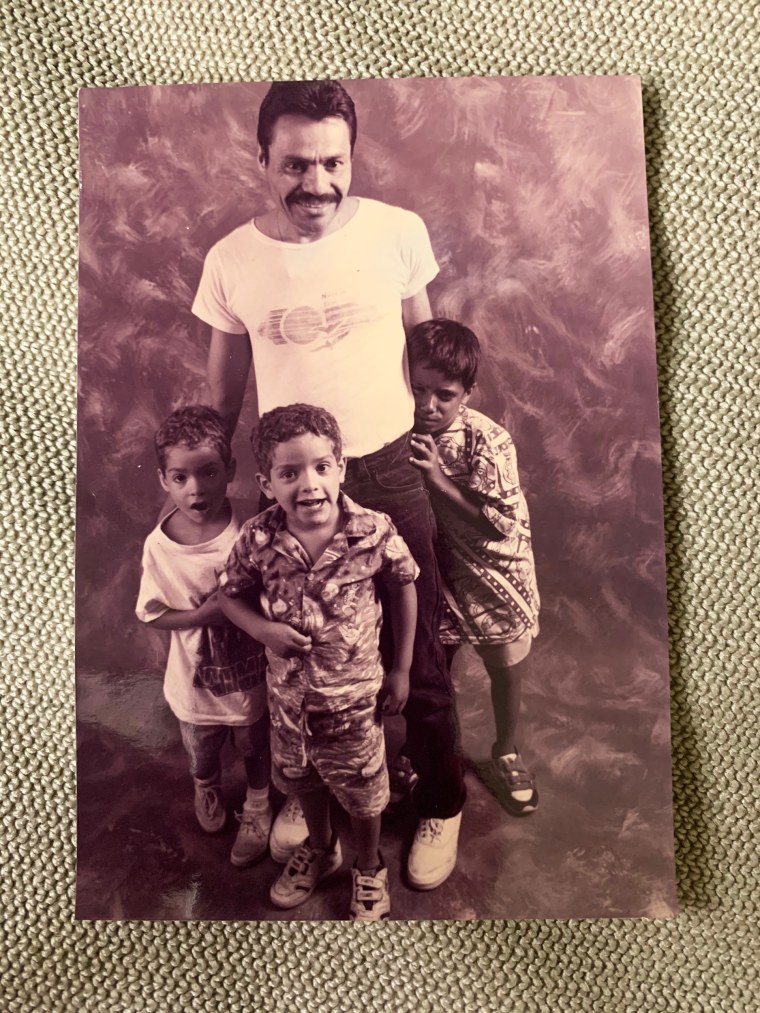
In April, Noel shared a photo of Joey, Angel, Louis, Steven and himself on the AIDS Memorial Instagram, a page dedicated to sharing stories of those lost to the pandemic.
“We weren’t with Louis and Steven very long before they passed,” he wrote in the accompanying caption. “They never got a chance to see the men we are today but they cared for us very much and gave us a life that we wouldn’t have known otherwise. It’s incredible even now, after all these years, I can still feel what it felt like to be loved that much.”https://iframe.nbcnews.com/VhRU9be?app=1
The black and white image included in the Instagram post was from an early ‘90s photo shoot for “Living Proof: Courage in the Face of AIDS”, a collection of portraits published in 1996 by photographer Carolyn Jones of people from all walks of life living with HIV/AIDS.
“I remember the family well,” Jones said of the shoot. “There were not that many families photographed for “Living Proof,” so they are easy to remember. Those three little boys were priceless together. It felt as though they had all somehow miraculously found one another, and there was a lot of love wrapped up in that photo.”
Noel’s post has received hundreds of comments and more than 15,000 likes.
He doesn’t remember how he first came across the AIDS Memorial Instagram account, which NBC News reported on in December for World AIDS Day.
“I think a friend of mine followed that account, and it got recommended to me,” he said. “But when I saw it, I was like, ‘Wow, all these people are telling their stories.’ And I just kind of felt compelled to tell my story, too.”
The response was tremendous, Noel said, adding that it has been particularly meaningful to see comments from people who hadn’t been directly affected by the AIDS devastation of the 1980s and ‘90s.
“I guess I thought that AIDS was a conversation people weren’t having anymore. That no one cared,” he said. “With young people today, they think, ‘Oh, we have medications, we have Truvada, and [HIV] isn’t something to really worry about, right?’ My fear is that it’ll completely be forgotten. But the page keeps it alive. It makes people remember our history and the people who fought for what we have now … And who even died in the process.”
Noel doesn’t know much about how Louis and Steven were able to take in HIV-positive boys in the late ‘80s. “I do know that they fought for us quite a bit,” he said. “I can only imagine how hard it was at that time.”
He has shared other family photos of his dads, his brothers and himself on social media. It’s comforting, he said, but it also churns up immense feelings of loss.
“God really handed me the courage to look at those pictures again,” Noel said. “It had been years — there’s a lot of pain attached to them. But it was a great childhood, it was. I look back now, and I’m like, ‘Wow, I was so lucky.’”
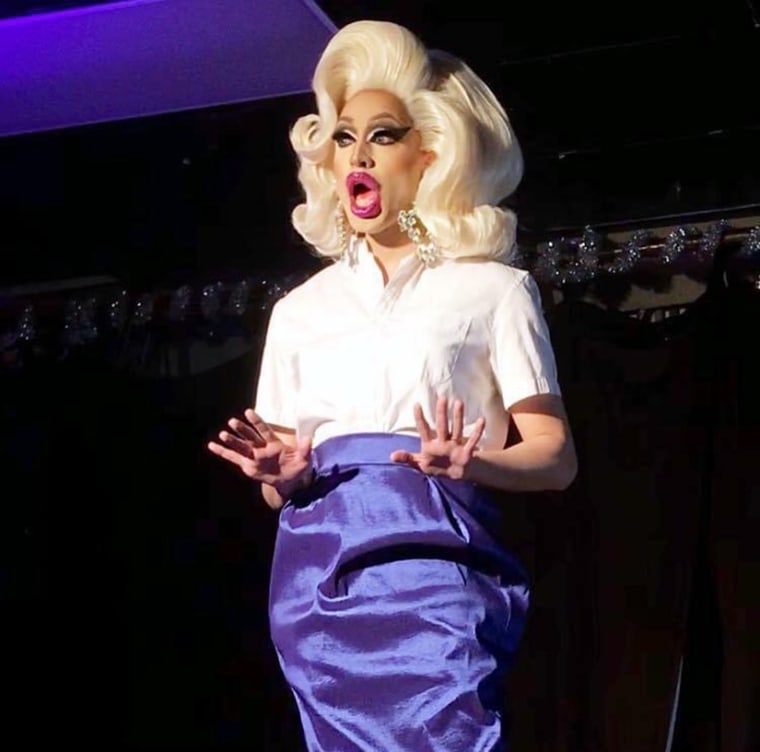
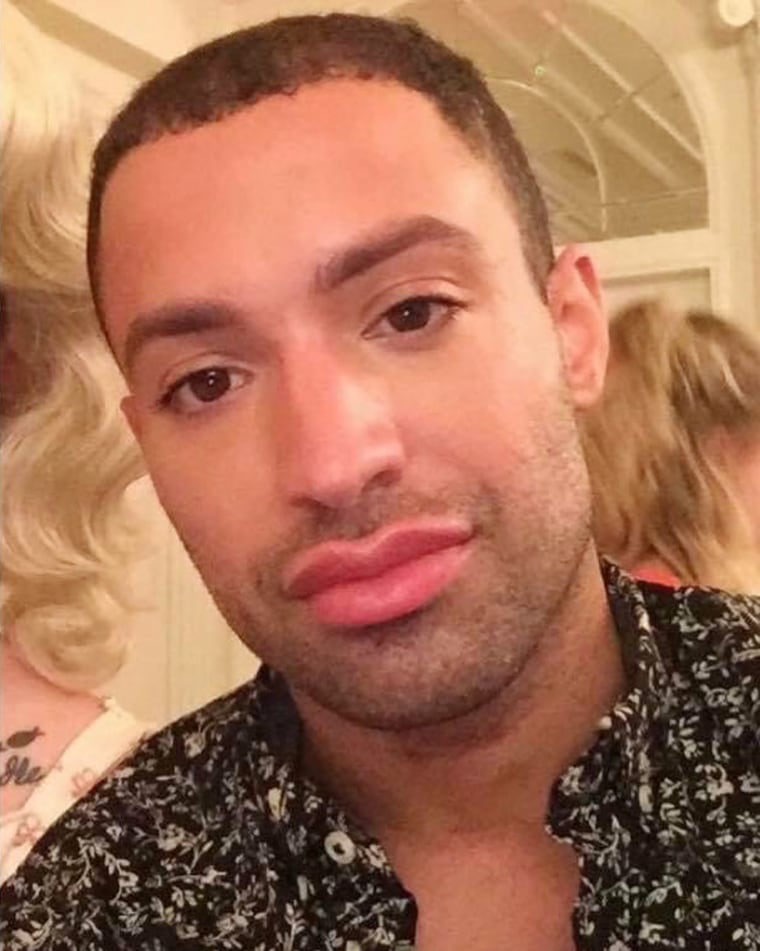
For the past 13 years, Noel has worked in drag, as Violet Storm, playing clubs in Manhattan and out on Long Island. The pandemic put a pause on gigs, but more recently he’s been able to perform again.
Noel Arce during a drag performance as Violet Storm.Courtesy Noel Arce
Knowing his dads were gay, Noel often wonders what they would think of his drag. “Not whether they’d approve of it, because of course they would,” he said. “But, would they think I’m funny? That I’m pretty? Would they like my show?”
He has a lot of questions about his dads that can’t really be answered.
“Like, how did they meet? I want to know the whole love story — I want to hear about those crazy feelings you have when you first meet someone,” he said. “What bars did they go to? Did they have a favorite drag queen? What kind of homophobia did they face back then?”
Tina has been a fount of information about his dads, “but this isn’t really stuff she can tell me.”
He recalled doing a show at the historic Stonewall Inn and wondering if Louis and Steven had gone there back in the ‘80s and ‘90s.
“Every time I do a show, I think, ‘Were my dads here? Did they like this bar? Who did they see perform?’ Sometimes I cry when I think about it,” Noel said. “But they give me a lot of courage, too. Before I go on, I get really, really nervous. And there’s a moment where I have to go on, and I think, ‘I’m just going to back out. I’ll leave. I just can’t do this.’ My heart is racing, I’m so nervous, and then I think of my dads, and I’m like, ‘Just do it. Just let it happen.’”
Noel Arce.Courtesy Noel Arce
While Noel still has a lot of unanswered questions about his dads, he has learned a bit more because of the AIDS Memorial Instagram: Writer and artist Timothy Dean Lee, who follows the page and frequently comments on posts, knew Louis and Steven back in the day.
“When I read Noel’s tribute it was overwhelming,” Lee told NBC News via email. “It gave me answers to what had happened to Louis and Steven — and to the boys. I couldn’t stop crying.”
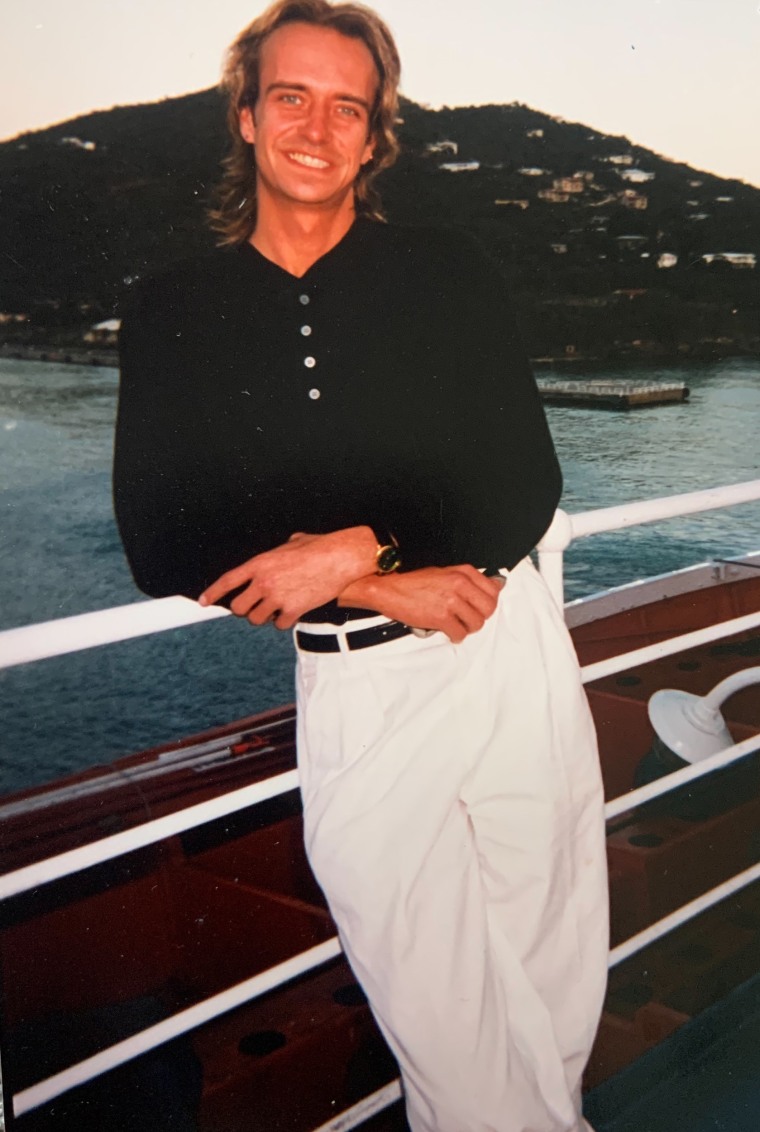
Lee had met Louis in the 1980s as a graduate student at New York University, where he was studying art therapy and child psychology. He’d often find himself in New York Family Court, where Louis was working as a social worker.
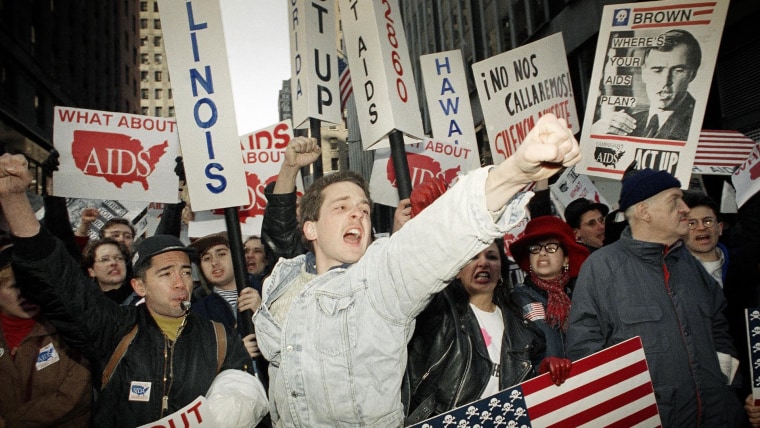
He’d also see Louis at meetings of the AIDS Coalition to Unleash Power, or ACT UP, and protests — and, on occasion, bump into Steven and Louis at the Paradise Garage “dancing the night away.”
“I remember when Louis told me that they were going through the process of adopting the boys,” Lee said. “I knew that adopting for a straight couple was challenging enough, but for a gay couple the challenges were all-consuming. But that certainly didn’t stop Louis and Steven.”
Being a social worker, Lee said, Louis knew the “ins and outs” of the system.
“He was driven. He knew the three boys needed a stable home and love, and he and Steven were more than willing to embrace them as part of their family.”
The last time Lee remembered seeing Louis was about 1990 on the street in the West Village.
“I asked him if he and Steven ever were able to adopt the boys,” he said. “He explained they were still officially foster parents, but they were determined to adopt all three.”
“Louis pulled out his wallet and showed a picture of the kids, saying ‘Yep, Tim, that’s my family.’”
From the first U.S. Supreme Court ruling to address homosexuality to the first bisexual “Bachelorette,” here are 10 historic LGBTQ milestones from around the world.
Kathy Kozachenko
First out gay person elected to office in the U.S.
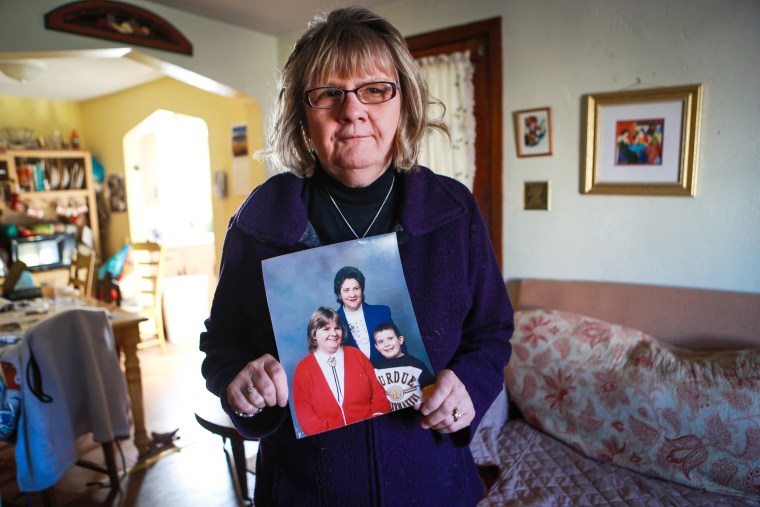
Kathy Kozachenko holds a photo of her son and her partner at her home in Pittsburgh in 2015.Chris Goodney / Bloomberg via Getty Images
Three years before Harvey Milk was elected to the San Francisco Board of Supervisors, out lesbian Kathy Kozachenko was voted onto the Ann Arbor City Council in Michigan on April 2, 1974.
Kozachenko was just 21 and a student at the University of Michigan, a hotbed of anti-war protests and activism supporting racial justice, women’s rights and other causes.
Her sexual orientation didn’t seem to be an issue with voters, and “gay liberation was not a major issue in the campaign,” Kozachenko said in her victory speech, Bloomberg reported.
“This year we talked about rent control. We talked about the city’s budget. We talked about police priorities, and we had a record of action to run on,” she said at the time.
Kozachenko only served one two-year term and eventually moved to Pittsburgh, where she remained involved in gay activism and met her longtime partner, MaryAnn Geiger.
“I am so proud of all the activists that came after me,” Kozachenko told NBC News last year. “The people that pushed and pushed and pushed for gay marriage, the transgender people that have pushed for their rights … I’m grateful for the chance that I was able to play a small part in this.”
‘Wings’ (1927)
First male-male kiss in a Hollywood movie
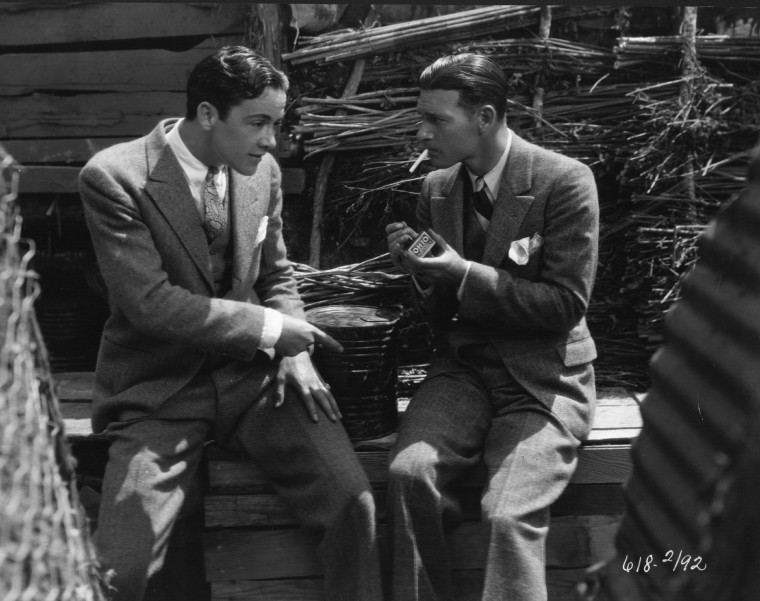
Charles “Buddy” Rogers and Richard Arlen during the filming of “Wings” in 1927.Hulton Archive / Getty Images
William A. Wellman’s silent film “Wings,” the first movie to win the Academy Award for best picture, follows Jack (Charles Rogers) and David (Richard Arlen) as they enlist in the Army Air Service during World War I and bond during basic training before being shipped off to France.
While they’re ostensibly romantic rivals for “it girl” Clara Bow, neither “shows as much love for her … as they do for each other,” queer writer Kevin Sessums wrote, according to the LGBT History Project blog.
In the pre-Hays Code film’s climax, Jack accidentally shoots down David, who has commandeered a German biplane. Running to his dying friend’s side, Jack takes David in his arms and begs forgiveness. As the camera zooms in, the two stroke each other’s hair tenderly and Jack declares, “You know there is nothing in the world that means so much to me as your friendship.”
The men share a lingering closed-lip kiss before Jack takes his final breath.
“While the relationship is referred to repeatedly as a friendship, the acting and directing of the film make it obvious that the men’s feelings were romantic,” wrote culture critic and curator Francesca Seravalle. “A swell of romantic string instruments plays in the background as Jack mourns over Dave’s still body. The directing choices made by Wellman humanized both characters and allowed the audience to experience the tragedy without exploiting the perceived exoticness of a relationship between two men.”
One, Inc. v. Olesen
First U.S. Supreme Court ruling to address homosexuality
Founded in 1952, ONE, Inc. was one of the earliest gay rights organizations in the United States and the first to have its own offices.
An accompanying magazine, One Magazine, started publication in 1953 — selling through subscriptions and at Los Angeles newsstands — and is considered the first mass-produced gay publication in America.
In October 1954, L.A. Postmaster Otto K. Olesen refused to deliver the magazine, declaring it “obscene, lewd, lascivious and filthy.” ONE sued but lost the case and a subsequent appeal — a panel of federal judges declared “Sappho Remembered,” a lesbian love story that ran in one issue, “nothing more than cheap pornography calculated to promote lesbianism.”
Founding editors Dale Jennings and Don Slater appealed all the way to the Supreme Court, which, surprisingly, agreed to hear their case.
On Jan. 13, 1958, without even hearing oral arguments, the justices issued a terse, one-line ruling reversing the 9th U.S. Circuit Court of Appeals decision and affirming that the mere subject of homosexuality was not obscene.
In a Washington Post op-ed in 2014, Brookings Institution fellow Jonathan Rauch called One, Inc. v Olesen “the seminal gay rights case in America — the one that extended First Amendment protection to gay-related speech.”
Marcia Kadish & Tanya McCloskey
First same-sex couple legally married in the United States
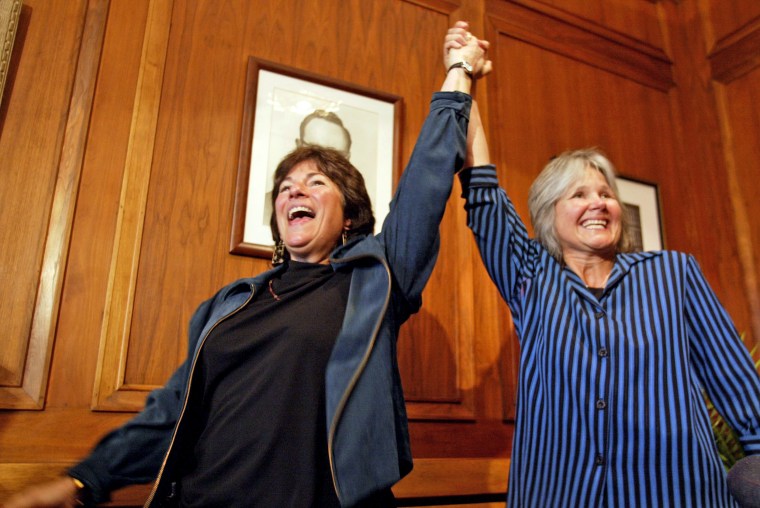
Marcia Kadish, left, and Tanya McCloskey after being pronounced wife and wife at Cambridge City Hall in Massachusetts on May 17, 2004.Dina Rudick / Boston Globe via Getty Images
On Nov. 18, 2003, Massachusetts became the first state to recognize same-sex marriage when, in Goodridge v. Department of Public Health, the state Supreme Court ruled it could not “deny the protections, benefits, and obligations conferred by civil marriage to two individuals of the same sex who wish to marry.”
“Recognizing the right of an individual to marry a person of the same sex will not diminish the validity or dignity of opposite-sex marriage,” wrote Chief Justice Margaret Marshall, “any more than recognizing the right of an individual to marry a person of a different race devalues the marriage of a person who marries someone of her own race.”
The first licenses were issued on May 17, 2004, and McCloskey and Kadish, who had already been together nearly 20 years at that point, picked theirs up a few minutes after midnight. With a waiver that allowed them to skip the traditional three-day waiting period, the women exchanged vows later that morning at Cambridge City Hall.
“We felt we were married already,” Kadish told NPR’s “Morning Edition” in 2019. “This was just making it legal.”
At least 78 same-sex couples married in Massachusetts that day — the same day President George W. Bush called for a congressional amendment banning same-sex marriage.
“The sacred institution of marriage should not be redefined by a few activist judges,” Bush said in a statement. “All Americans have a right to be heard in this debate.”
It wasn’t until 2015 that McCloskey and Kadish’s union was recognized federally, when the U.S. Supreme Court effectively made same-sex marriage the law of the land in Obergefell v. Hodges.
By that time, McCloskey had been diagnosed with endometrial cancer. The disease spread quickly, and she died on Jan. 6, 2016.
“We wanted to lead by example, not that we were leaders of anything,” Kadish told NPR. “We just wanted to make sure that the world saw the most positive side of being a gay couple.”
One day before the first Christopher Street Liberation Day march in New York, the Windy City hosted the world’s first Pride march on June 27, 1970 — albeit a much smaller one than the Big Apple’s. The half-mile procession officially went from Washington Square Park to the Water Tower at the bustling intersection of Chicago and Michigan avenues, but many participants continued down to the Civic Center plaza (now Daley Plaza).
Once there, about 150 people listened to speeches at the plaza before doing a “chain dance around the Picasso statue as the marchers shouted, ‘Gay power to gay people,’” the Chicago Tribune reported.
Chicago Gay Liberation, which organized the event, chose the date because the Stonewall uprising had started on the last Saturday in June the year prior. The members also wanted to reach the biggest crowd of shoppers on Chicago’s Magnificent Mile.
Today, the Chicago Pride Parade takes place on the last Sunday of June, drawing more than 800,000 people to North Halsted Street, long known as “Boystown.”
Jóhanna Sigurðardóttir
First out LGBTQ prime minister
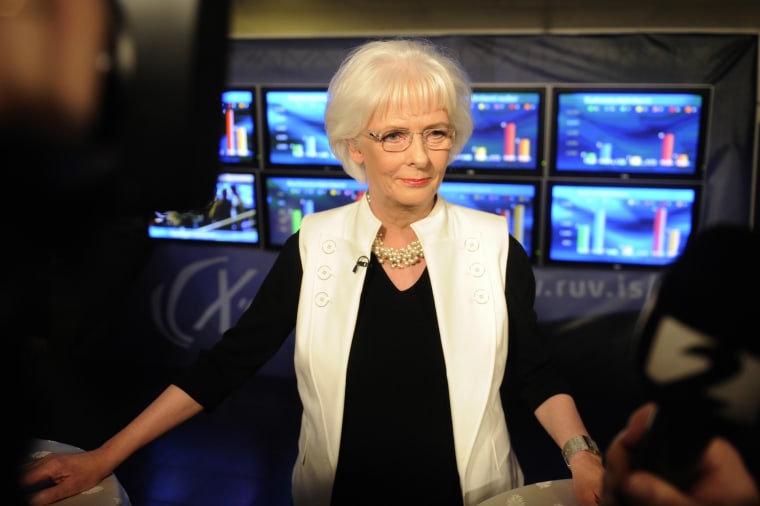
Jóhanna Sigurðardóttir speaks with the media after winning the elections on April 25, 2009 in Reykjavik. Olivier Morin / AFP via Getty Images
While gay finance minister Per-Kristian Foss was briefly in charge of Norway in 2002 when both the prime minister and foreign minister were traveling abroad, Iceland’s Jóhanna Sigurðardóttir is the world’s first openly LGBTQ elected head of state.
A former flight attendant, Jóhanna was first elected to the Althingi (Iceland’s parliament) in 1978 as part of the Social Democratic Party. Throughout her career, she has also served as deputy speaker of the Althingi, vice chair of the SDP and minister of social affairs.
On Feb. 1, 2009, Jóhanna was formally sworn in as Iceland’s first female prime minister and the first out LGBTQ world leader in modern history. She served from 2009 to 2013, steering the country’s economy “back on solid footing” after the massive financial crisis, according to Britannica, with the country’s GDP growing 3 percent in both 2011 and 2012.
She and girlfriend Jónína Leósdóttir entered into a civil union in 2002. In 2010, when Iceland recognized same-sex marriage midway through Jóhanna’s tenure, the pair became one the first same-sex married couples in the country.
Society for Human Rights
First officially recognized gay rights group in the U.S.
German immigrant Henry Gerber launched the Society for Human Rights out of his Chicago home in 1924 and received an official charter from the state of Illinois, making it the first incorporated group devoted to gay rights in the U.S.
Stationed in his former homeland during World War I, Gerber witnessed Berlin’s thriving gay subculture and was influenced by the work of pioneering sex researcher Magnus Hirschfeld.
Returning to the States, he took a job with the post office and founded the society out of his apartment at 1710 N. Crilly Court in Chicago’s Old Town Triangle neighborhood.
But the organization lasted less than a year, disbanding in 1925 after police raids on both a member’s home and Gerber’s apartment. Gerber was fired from the post office and eventually moved to New York, where he continued advocating for gay rights until his death in 1972.
In 2015, Gerber’s Chicago home was designated a National Historic Landmark by the National Park Service.
Renée Richards
First transgender tennis player to compete in the U.S. Open
Dr. Renée Richards reaches for a backhanded return during a match with Australia’s Lesley Hunt in the $100,000 Women’s Professional Tennis Tournament at Walter Brown Arena.Bettmann / Bettmann Archive
Renée Richards was set to play in the 1976 U.S. Open until officials learned she was assigned male at birth and attempted to ban her from competing.
Richards had been a tennis prodigy from a young age, playing in the men’s Open several times and even making the semifinals in 1972. A successful ophthalmologist, she medically transitioned in 1975 and began living as Renée Richards (the name Renée meaning “reborn”).
She kept a fairly low profile — entering a 1976 competition as Renée Clark — but her transition was “outed” in a local news report by San Diego reporter Dick Carlson, father of Fox News pundit Tucker Carlson. Fans rooted against her, with shirts reading “Go away, Renee,” and late-night talk show hosts made crude jokes.
When Richards entered the Tennis Week Open in 1976, 25 of the 32 women in the competition withdrew.
To keep Richards off the court, the United States Tennis Association started demanding a chromosome test for all female players. She challenged that policy in a case that went before the New York Supreme Court.
Mirroring arguments made by groups seeking to ban transgender athletes today, the USTA argued it was trying to maintain “fairness” in the face of “as many as 10,000 transsexuals in the United States and many more female impersonators or imposters” who would be eager to snatch “millions of dollars of prize money.”
Billie Jean King, who had played doubles with Richards, testified that she “does not enjoy physical superiority or strength so as to have an advantage over women competitors in the sport of tennis.”
In a landmark victory, the court ruled in Richards’ favor.
“When an individual such as plaintiff, a successful physician, a husband and father, finds it necessary for [her] own mental sanity to undergo a sex reassignment, the unfounded fears and misconceptions of defendants must give way to the overwhelming medical evidence that this person is now female,” Judge Alfred Ascione wrote in the majority opinion.
Two weeks later, Richards played in the 1977 U.S. Open, where she lost to Wimbledon champ Virginia Wade in the first round. She did reach the doubles finals with Betty Ann Stuart, but the pair lost to Betty Stöve and a fiery new upstart named Martina Navratilova.
Four years later, Renée Richards retired from professional tennis at age 47. She continued her thriving ophthalmology practice and even coached Navratilova to two wins at Wimbledon.
Karl M. Baer
First person to surgically transition
Born in 1885 to a Jewish family in Arolsen, Germany, Baer was assigned female at birth, though the midwife told his father the baby’s body had “such strange” characteristics it was impossible to determine the gender.
In his 1907 autobiography, “Memoirs of a Man’s Maiden Years,” published under the pseudonym N.O. Body, Baer wrote about being ostracized at school and feeling ill at ease in his assigned sex.
While he is often referred to as transgender, today Baer would more accurately be considered intersex.
“I was born as a boy and raised as a girl,” he wrote. “One may raise a healthy boy in as womanish manner as one wishes and a female creature in as mannish; never will this cause their senses to remain forever reversed.”
In 1904, Baer moved to Hamburg to work as a social worker with the Jewish organization B’nai Brith. It was there that he began living as a man.
“I introduced myself as a man, never as a woman,” Baer wrote. “What am I really? Am I a man? Oh God, no. It would be an indescribable delight if I were. But miracles don’t happen anymore these days.”
Two years later, Baer was in a trolley accident in Berlin. He was rushed to the hospital, where doctors realized his ID listed him as female despite his presenting as male. They connected him with Magnus Hirschfeld, who diagnosed him as “a man who was mistakenly identified as a woman.”
With a permit from the Prussian Interior Ministry, Baer underwent a multistage gender confirmation procedure, Haaretz reported, though the exact details of the surgery are unknown. He was released from the hospital in December 1906 with a medical certificate identifying him as male. The following year, court clerks in Arolsen issued him a new birth certificate.
Others had transitioned socially before, but Baer “was unusual in that he used medical technology and surgical means to change his gender,” transgender historian Iris Rachamimov told Haaretz.
Brooke Blurton
First bisexual “Bachelorette”
Brooke Blurton on June 19, 2019 in Perth, Australia.Faith Moran / GC Images
Since “The Bachelor” debuted on ABC in 2002, the marital-minded franchise has spawned multiple spinoff series and over 30 international editions. But it wasn’t until the upcoming season seven of “The Bachelorette Australia” that producers tapped an out member of the LGBTQ community to headline the show: 26-year-old Brooke Blurton, who is bisexual.
For the first time in the franchise’s history, the star will choose among both men and women during the rose ceremony.
“I am not too sure if Australia is ready for it,” Blurton, who previously appeared on the Down Under versions of “The Bachelor” and “Bachelor in Paradise,” told The Daily Telegraph. “I certainly am. If it makes people feel uncomfortable in any way, I really challenge them to think about why it does.”
Blurton, a Noongar Yamatji woman from Western Australia, will also be the first Indigenous woman on the show.
“We are a nation of people from so many different backgrounds, so many different cultures and so many different experiences, yet we all have one thing in common — we all want to be loved in a way that is meaningful to us,” “Bachelorette” host Osher Günsberg said in a statement. “I can’t wait to get started on helping our Bachelorette Brooke find that kind of love.”
Trafalgar Square’s fourth plinth will welcome an artwork featuring casts of the faces of 850 trans people.
For the artwork, 850 Improntas (850 Imprints), Mexican artist Teresa Margolles will cast the faces of 850 trans people in London and beyond.
The proposed sculpture would highlight people whose “lives are often overlooked”, many of them sex workers, forming one of the world’s highest-profile public art commissions.
The casts will be arranged around the fourth plinth to create a Tzompantli, a skull rack from Mesoamerican civilisations used to display the remains of war captives or sacrifice victims.
Due to London’s weather, Margolles expects the casts to wear away and eventually disintegrate, leaving behind “a kind of anti-monument”, she told the Guardian.
The current artwork featured at Trafalgar Square’s fourth plinth is Heather Phillipson’s The End – a giant replica of whipped cream topped with a cherry, a fly and a drone – which will be on display until September 2022.
Following that will be a sculpture by Samson Kambalu, which is inspired by a 1914 photo of African independence hero and preacher John Chilembwe with English coloniser John Chorley. The sculpture will highlight Chilembwe, making him larger-than-life while Chorley remains life-size, who is wearing a hat in an act of defiance of a colonial rule that forbade Africans from wearing hats in front of white people.
Kambalu and Margolles’ artworks were chosen by the Fourth Plinth Commissioning Group after a public vote of nearly 17,500 people.
Ekow Eshun, the chair of the group, said it received more public votes than ever.
A gay dad has emphatically shut down homophobes who think queer people shouldn’t be parents after his son qualified for the Olympics.
Jerry Windle is the proud father of Jordan Windle, a 22-year-old diver who recently qualified for the men’s diving team for the Tokyo Olympics.
Tragically, both of Jordan’s biological parents died when he was just a baby. Jerry later adopted him in Cambodia and nursed him back to health after he had suffered from malnutrition, scabies and intestinal parasites.
Jordan later started diving at the age of seven – and he is now set to achieve a lifelong dream of representing the United States at the Olympics.
“Although there have been some people who didn’t think a gay person could raise a well-balanced, mentally healthy child or should be allowed to raise children; our story is definitive proof that that assumption is purely wrong and is a fallacy,” Jerry told Queerty.
“Jordan is a humble, kind, generous, and nurturing human being who knows and believes all humans are created equal and every human being deserves to be happy, to love and be loved unconditionally – PERIOD.
For the most part, the diving community has been incredibly supportive of our family. In fact, I’ve had many of Jordan’s friends tell him that he had the best dad in the world – and I suppose I’m one of the ‘cool dads’!” he added.
Gay dad Jerry Windle reflected on the sacrifices his son made to achieve his dream
Elsewhere in the interview, Jerry reflected on the personal sacrifices Jordan has made to get to where he is today.
“He has worked tirelessly for 15 years chasing his dream; he has given up high school dances, prom, football games, homecoming, etc, to achieve his goal.
“I have never pushed Jordan in his sport. This has been his journey, and I am so proud to have been able to give him the opportunity, and to be there to support him.
“I never wanted Jordan to feel pressure from me as many athletes do. I’ve always supported his decisions as it relates to his journey chasing the Olympic Dream.”