Escalating the fight over Chick-fil-A’s religious rights, Texas Attorney General Ken Paxton sued San Antonio on Monday as part of his investigation into the city’s decision to reject the chicken chain as an airport vendor.
The lawsuit, filed in state district court in Travis County, seeks a court order requiring San Antonio to turn over emails and other internal communications in which council members and city employees discussed the Chick-fil-A contract with each other and outsiders.
On Monday, Paxton repeated allegations that San Antonio politicians had engaged in religious discrimination, adding that Chick-fil-A’s leaders are “well-known for their personal belief in the Christian faith and traditional understanding of marriage.”
Last month both chambers of the Texas legislature passed the so-called “Save Chick-Fil-A” bill which would ban local governments from taking “any adverse action” against businesses based on their support for a religious group. Gov. Greg Abbott is expected to sign the bill. Also last month the Trump administration’s FAA opened its own probe.
On Wednesday (5 June), the Trump Administration implemented a new policy ending research done by government scientists using fetal tissue. This severely limits research done on HIV.
According to the Washington Post, the Administration also canceled a university’s multi-million dollar laboratory contract. The university used fetal tissue in testing new HIV treatments.
‘Promoting the dignity of human life from conception to natural death is one of the very top priorities of President Trump’s administration,’ the Department of Health and Human Services (HHS) said in a statement.
The tissue used in such research comes from elective abortions. Many scientists and researchers say there are no other alternative approaches to the research at this time.
This is political, not scientific
The HHS’ decision is a political one. It stems from the lobbying of the anti-abortion bloc, who cite moral qualms with using fetal tissue in research.
Trump’s Administration first threatened this research last December.
It then suspended a study looking into a ‘cure’ for HIV because of its use of human fetal tissue.
‘This is a pro-life, pro-science administration,’ HHS Assistant Secretary for Health Brett Giroir told Rep. Mark Meadows (R-NC) at the time.
Currently, funding for nongovernmental research using fetal tissue will not be disturbed. Going forward, however, the HHS said applications for federal funding will face an ethics review.
The reason for the review is due to ‘the serious regulatory, moral, and ethical considerations involved’.
A continuing epidemic
Globally, 36.9 million people were living with HIV in 2017. That same year, 1.8 million people became newly infected and another 940,000 died from AIDS-related illnesses.
In the US, 1.1 million people currently live with HIV.
Since the peak of the epidemic in the mid-1990s, both new infections and related deaths have decreased. Still, it has taken the lives of over 35 million people worldwide since then and continues to be a worldwide health crisis.
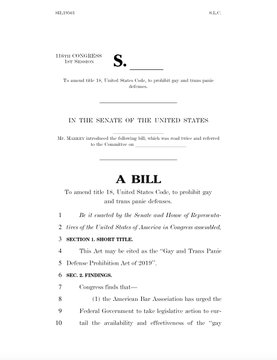
Two Democrats, Sen. Edward Markey (D-MA) and Rep. Joe Kennedy III (D-MA)introduced the Gay and Trans Panic Defense Prohibition Act of 2019 on Wednesday (5 June).
This is the politician’s second attempt at banning the use of gay and transgender panic defenses in the court system.
They introduced the same bill last year, but it never received a vote in the Senate or House. Consequently, it never had a chance to become law.
Markey and Kennedy are trying again with the same bill to amend title 18 of the United States Code.
In a tweet, Markey wrote: ‘So-called “gay and trans panic” defenses can excuse violent crimes by blaming a victim’s sexual orientation or gender identity for a defendant’s attack.’
The bill would ban the use of ‘these hateful defenses’ in federal courts nationwide.
Someone’s identity is not reason to attack them
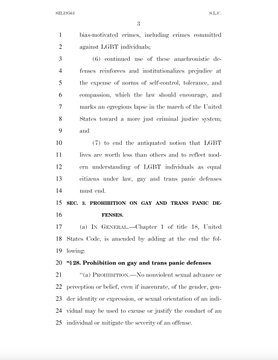
As in the last iteration of this bill, the act states: ‘No nonviolent sexual advance or perception or belief, even if inaccurate, of the gender, gender identity or expression, or sexual orientation of an individual may be used to excuse or justify the conduct of an individual or mitigate the severity of an offense.’
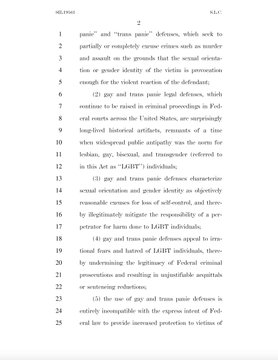
In the language of the bill, such defenses characterize LGBTI people’s identities as ‘objectively reasonable excuses for loss of self-control’. They also ‘appeal to irrational fears and hatred of LGBT individuals’.
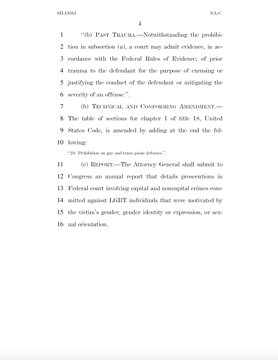
Finally, the bill also demands the Attorney General submit an annual report to Congress about court cases involving crimes against LGBTI people where the motivation seemed to be the victim’s sexual orientation or gender identity.
Panic defense is an outdated notion
Markey and Kennedy, with the reintroduction of this bill, seek to ‘end the antiquated notion that LGBT lives are worth less than others and to reflect modern understanding of LGBT individuals as equal citizens under law’.
One of the most well-known cases of the gay panic defense was the murder of Matthew Shepard in 1988.
More recently, an Ohio man used the defense to try and get off death row — but the Ohio Parole Board stayed his execution date of 18 July.
A Texas man, meanwhile, was found not guilty of manslaughter and murder after using the defense.
Only four states have outright banned the defense, including California, Illinois, Rhode Island, and most recently, Nevada. This bill, however, would ban it across the country.
‘Gay and trans ‘panic’ defenses have long stood as a symbol of dangerous and outdated thinking,’ said D’Arcy Kemnitz, Executive Director of the National LGBT Bar Association. ‘The Gay and Trans ‘Panic’ Defense Prohibition Act would protect LGBTQ+ lives and send a clear message that hate has no place in the federal courtroom.’
It’s been fifty years since police officers raided the Stonewall Inn — the legendary Christopher Street gay bar — and Corey Johnson thinks it’s about time that the NYPD apologize to the LGBTQ community for the raid, which gave birth to the modern-day LGBTQ rights movement. “The NYPD in the past has apologized for other incidents that have occurred, so I think the NYPD apologizing on this would be a very, very good thing, and it’s something they should do,” Johnson, who is openly gay, told 1010 WINS.
“I would love for it happen this month and I will bring it up to the police commissioner,” Johnson said. “I will have a conversation with the NYPD commissioner about it because I think it would be an important step toward further healing and reconciliation and recognizing what happened in that crucial moment, and not just in American history, but New York history in June of 1969.”
YouTube have insisted that a right-wing influencer who targeted a journalist for years with homophobia did not violate the website’s hate speech policies.
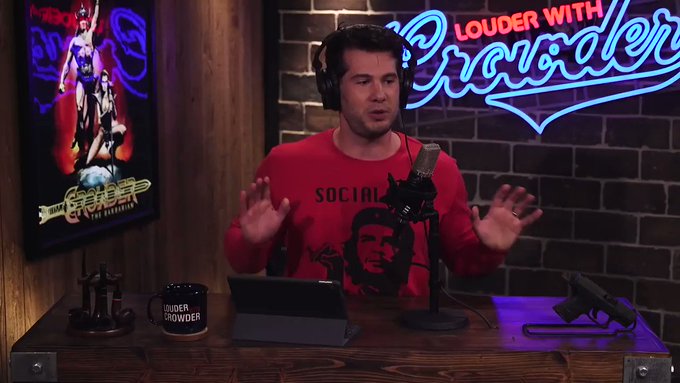
Carlos Maza, a videographer for US news site Vox, publicly complained about the persistent abuse from a right-wing YouTuber, Steven Crowder.
The Twitter thread went viral, prompting the Google-owned platform to review Maza’s claims. However, the company concluded that Crowder’s comments did not violate guidelines.
What happened?
In a winding Twitter thread posted last week (31 May), Maza sketched out a situation that has spanned years involving homophobic and racist epithets thrown in videos.
This included when the host attacked Maza as a ‘gay Mexican,’ ‘lispy queer,’ and a ‘token Vox gay atheist sprite.’
‘Since I started working at Vox,’ Maza wrote, ‘Steven Crowder has been making video after video “debunking” Strikethrough.
‘Every single video has included repeated, overt attacks on my sexual orientation and ethnicity.
‘I’ve been called an anchor baby, a lispy queer, a Mexican, etc. These videos get millions of views on YouTube.
‘Every time one gets posted, I wake up to a wall of homophobic/racist abuse on Instagram and Twitter.’
Moreover, Mazos compiled an extensive report cataloguing Crowder’s actions, including a compilation video, and the times he had red flagged it to YouTube. Crowder, who has over three million subscribers, is also behind the ‘socialism for fags’ t-shirts.
‘Videos […] posted don’t violate our policies’
The pressure piled online, spurring YouTube to issue a public statement on Twitter.
YouTube said: ‘Thanks again for taking the time to share all of this information with us. We take allegations of harassment very seriously–we know this is important and impacts a lot of people.
‘Our teams spent the last few days conducting an in-depth review of the videos flagged to us, and while we found language that was clearly hurtful, the videos as posted don’t violate our policies.’
However, YouTube’s harassment an cyberbullying policy explicitly bars ‘content that makes hurtful and negative comments/videos about another person.’
In addition, the twitter account added: ‘As an open platform, it’s crucial for us to allow everyone–from creators to journalists to late-night TV hosts–to express their opinions w/in the scope of our policies.
‘Opinions can be deeply offensive, but if they don’t violate our policies, they’ll remain on our site.’
Harassment is ‘never ok’
Furthermore, a Google spokesperson gave Gay Star News background behind the investigation.
They explained that, in the videos flagged by Maza, ‘Crowder has not instructed his viewers to harass Maza on YouTube or any other platform and the main point of these videos was not to harass or threaten, but rather to respond to the opinion.’
But while the company did not directly comment on Crowder or his followers’ activity, they did express that ‘certain behavior,’ such as ‘doxxing’ and ‘encouraging viewers to harass,’ is ‘never ok.’
Carlos Maza slams YouTube
Following the investigation, Mazos hit out at the site.
He said: ‘I don’t know what to say. YouTube has decided not to punish Crowder, after he spent two years harassing me for being gay and Latino.
‘To be crystal clear: YouTube has decided that targeted racist and homophobic harassment does not violate its policies against hate speech or harassment.
‘That’s an absolutely bats**t policy that gives bigots free license.’
Moreover, Maza called out at the platform for sporting a rainbow-striped logo to celebrate Pride month.
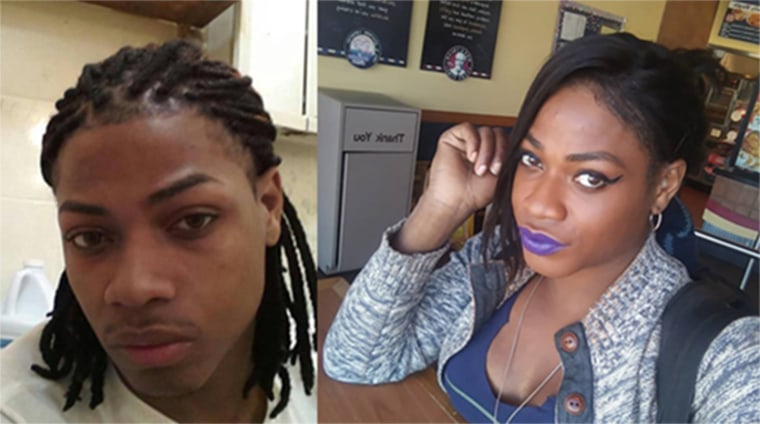
The body of a black transgender woman pulled from White Rock Lake in northeast Dallas on Saturday evening “showed obvious signs of homicidal violence,” the Dallas police chief said.
Jason Haslett aka Chynal Lindsey.Dallas Police Dept.
“We are concerned,” Dallas Police Chief U. Reneé Hall told reporters at a news conference Monday. “We are actively and aggressively investigating this case and we have reached out to our federal partners to assist us in these efforts.”
Police released photos of Lindsey, who was also known as Jason Haslett, “as a female and as her born gender” at her family’s request, Hall said. Normally, the department would not do so, she said.
Lindsey is at least the sixth black transgender woman who has been killed nationwide in 2019, according to the Human Rights Campaignadvocacy group.
Less than two weeks ago, Dallas police announced they were investigating if the shooting deaths of two transgender women and the stabbing of a third, who survived, are connected. In those incidents, two of the victims had been in a similar part of Dallas, and all three either got into a car with someone or allowed someone into their car before the attacks.
Muhlaysia Bookervia Facebook
Muhlaysia Booker, 23, was found shot to death May 18. Police have not identified a suspect in her slaying.
Booker’s death came little more than a month after she survived a brutal beating in Dallasfollowing a minor traffic accident that was captured on cellphone video and went viral. Edward Thomas, 29, was charged with assault in the April beating. He is not being held in jail, and police have said there is no evidence connecting him with Booker’s killing.
On May 21, police said that Booker’s slaying was one of those that bore similarities to recent attacks on transgender women in Dallas.
“These cases, although not directly related at this time, do have some similarities the public needs to be aware of,” Maj. Vincent Weddington told reporters at a news conference that day.
Weddington said police were working with federal law enforcement officers to determine if any of the attacks should be considered hate crimes.
In October 2018, a transgender woman was found shot to death in a vehicle parked in southeast Dallas, police said.
In April, a woman survived after she was repeatedly stabbed in south Dallas. She provided information about her attacker, but police have not released a detailed description of the man.
Philippines President Rodrigo Duterte has claimed he was once gay but “cured” himself of homosexuality in controversial remarks made during a trip to Japan.
According to Rappler, a Filipino news publication, Duterte mocked his political opponent Senator Antonio Trillanes IV by saying his movements show he is homosexual. Duterte also reportedly “confessed” that he was gay before he met his ex-wife Elizabeth Zimmerman.
“Good thing Trillanes and I are similar. But I cured myself,” Duterte said during a speech on Thursday, Rappler reported. “When I began a relationship with Zimmerman, I said, this is it. I became a man again.” He subsequently added: “Duterte is gay. So I am gay, I don’t care if I’m gay or not.”
RELATED: In 2017 Duterte called the head of the Commission on Human Rights a “gay pedophile” for objecting to police killings of teenagers. That same year Duterte ordered police to shoot any “idiots” who resist arrest. Also in 2017, Duterte imposed martial law and “joked” that soldiers are now allowed to rape up to three women. Duterte has bragged of “personally” murdering suspected criminals and has compared himself favorably to Adolf Hitler, saying that he would happily execute millions of drug users. Trump has praised Duterte’s “unbelievable job” in giving police and vigilante squads free rein to murder suspected drug users and dealers and invited him to visit the White House. An estimated 6000 Filipinos have been slain in the streets on Duterte’s orders.
Caster Semenya will be allowed to run in races of all distances without taking testosterone-reducing medication until at least June 25, a Swiss court has ruled.
Semenya, 28, is appealing an International Association of Athletics Federations (IAAF) decision that required her to take medication to suppress her hormone levels for races between 400m and a mile, according to her lawyer.
As part of her appeal, her legal team asked for a suspension of the IAAF ruling while they appeal it.
The Swiss Federal Supreme Court granted this request and has temporarily suspended the IAFF regulation made on 1 May 2019 that limited the testosterone levels of female athletes. The suspension will remain in place until Semenya’s appeal has been finalised.
The Swiss court, in a statement to BBC Sport, said it had “super-provisionally instructed the IAAF to suspend the application of the ‘Eligibility Regulations for the Female Classification for athletes with differences of sex development’ with respect to the claimant, until the decision on the request for issuance of provisional measures.”
It added: “At present, it is not known when the Swiss Federal Supreme Courts will issue an interlocutory order concerning these provisional measures.”
Semenya’s lawyer, Dorothee Schramm, said, “The court has granted welcome temporary protection to Caster Semenya.”
“This is an important case that will have fundamental implications for the human rights of female athletes,” she said.
The IAAF now has until June 25 to respond to Semenya’s case.
Imposing testosterone treatment on Semenya is ‘humiliating,’ says UN
The landmark ruling on May 1 that said female athletes would have to undergo testosterone restrictions if their natural testosterone levels were higher than “female levels.”
The Olympic 800m champion had been challenging the implementation of rules that would limit the testosterone levels of female athletes.
An IAAF statement in February explained the proposals: “If a DSD athlete has testes and male levels of testosterone, they get the same increases in bone and muscle size and strength and increases in haemoglobin that a male gets when they go through puberty, which is what gives men such a performance advantage over women.
“Therefore, to preserve fair competition in the female category, it is necessary to require DSD athletes to reduce their testosterone down to female levels before they compete at international level.”
Therapy that seeks to change minors’ sexual orientation or gender identity is now illegal in Colorado. Gov. Jared Polis, the first openly gay man ever elected governor in the U.S., signed the ban into law on Friday.
“Colorado has joined a growing list of states that have banned so-called conversion therapy. It’s a horrific practice that has long been widely-discredited by medical and mental health professionals and has scarred many survivors for life,” Polis said in a statement emailed to NBC News. “Today Colorado took an important step forward in recognizing our diversity as a strength. These bills truly underscore the idea that Colorado is a state where everyone can be their true selves and live the life they want.”
Colorado is now the 18th U.S. state — and the fourth this year — to ban the controversial practice. Just this week, Maine’s governor signed a ban.
Research shows so-called conversion therapy, which treats being gay or transgender as a mental illness, increases the risk of suicide, drug abuse and depression among teens. A long list of health associations, including the American Medical Association and the American Psychological Association, have spoken out against the practice, which is also known as “reparative therapy” or “ex-gay therapy.”
In the statement shared with NBC News, Polis said he’s thrilled to launch LGBTQ Pride Month in June by outlawing what he called a “tortuous practice” harming children.
Polis also signed into law on Friday a bill making it much easier for transgender Coloradans to update the gender on their birth certificates, identification documents and driver’s licenses.
Daniel Ramos, executive director of One Colorado, a statewide LGBTQ advocacy group, applauded the “strong bipartisan support” both bills received, which he said “further demonstrates that LGBTQ equality should be a nonpartisan issue.”
“Colorado will continue to make history as our country’s first openly gay Governor, Jared Polis, signs our pro-equality agenda into law to send a strong message that Colorado is a state that is open to all,” Ramos continued.
A transgender woman from El Salvador seeking asylum in the U.S. died on Saturday in a Texas hospital four days after being released from custody, officials and advocates said.
Johana Medina Leon, 25, complained of chest pains and was brought to Del Sol Medical Center in El Paso, Texas, on Tuesday, Immigration and Customs Enforcement said. That same day, ICE said she was processed for release on parole. Medina Leon died on the first day of pride month.
“This is yet another unfortunate example of an individual who illegally enters the United States with an untreated, unscreened medical condition,” said Corey A. Price, field office director for ICE Enforcement and Removal Operations (ERO) in El Paso.
Del Sol Medical Center in El Paso, Texas, U.S.Dan Dalstra / Reuters file
Allegra Love, the executive director of the Sante Fe Dreamers Project, a nonprofit that provides free legal service to immigrants, said Medina Leon did nothing “illegal” when she fled to the U.S following Department of Homeland Security protocol
“She didn’t violate a single law coming to the U.S. to ask for political asylum,” Love said.
Medina Leon, who was known to friends as Joa, had been detained in the U.S. since mid-April. On May 18, Medina Leon received a positive credible fear finding, ICE said. Advocates told NBC News Leon was seeking asylum in the U.S. as a transgender woman.
Medina Leon was being held at Otero County Processing Center, a private detention center in New Mexico where the ACLU and the Santa Fe Dreamer Project recently alleged poor treatment of and “unconscionable conditions” for LGBTQ immigrants. In a letter sent to ICE, the groups said “ICE’s practices at Otero have created an unsafe environment” for the LGBTQ detainees in Otero.
Medina Leon fell while in ICE Custody, where she also tested positive for HIV.
In a Facebook post about Medina Leon’s death, Diversidad Sin Fronteras, an advocacy group for LGBTQ refugees, said that Medina Leon had pleaded to ICE for medical attention. She “became extremely ill and unconscious” the group said.
Kris Hayashi, the executive director of the Transgender Law Center, said in a statement the group is “devastated and outraged, but not surprised” by the news of Leon’s death.
Referring to the deaths of both Hernandez and Medina Leon, Hayashi wrote, “these deaths are a direct result of U.S. government policy, and will continue unless we force dramatic change.”
In the wake of Hernandez’s death in ICE custody, activists and advocates have been sounding alarms on the treatment of LGBTQ migrants in ICE Custody.
When a spokesperson for Diversidad Sin Fronteras visited Medina Leon in the hospital, she said we was deeply cornered about the young women’s fate. “I said that what happened a year ago to Roxana in the month of May could happen to JOA right in there. And it did.”
Love, of Sante Fe Dreamers Project, told NBC News, “I give an interview a week about the medical conditions for trans women,” which she described as alarming and dangerous.
“If anyone wants to pretend to be shocked, did you miss a year ago when a trans woman died in custody in Albuquerque?”