A drag show at a Woodland bar celebrating the end of Pride month was disrupted Thursday night after a group showed up yelling homophobic slurs and threatening safety.
The owner of Mojo’s Lounge and Bar had canceled the event earlier in the evening due to safety concerns. Threats toward the venue and performers scheduled to be at the event had been circulating on social media for several weeks after details were picked up by a hateful group on social media, according to the owner.
As the group yelled hateful language, patrons waited as police surrounded the bar. At some point, someone deployed pepper spray. Thursday night investigators are still working to figure out where it came from.
The inaugural Concert Series at 6th Street Playhouse features Shana Morrison & Caledonia on Saturday, July 30 at 8:00pm. Shana Morrison’s musical style has been called pop with a side of blues and a side of rock, but she has never shied away from including other ingredients, like country, R&B, and jazz into the mix. Her material is ever-changing, but what always remains the same is Shana’s unique and wide-ranging voice. Her dynamic and charismatic talent has earned the attention of national newspapers and magazines as well as airplay on major radio stations.
The daughter of legendary Northern Irish musician Van Morrison, Shana began performing with her group Caledonia in the San Francisco Bay area in 1996, releasing their debut CD on her own label, Belfast Violet Records. Since 2002, Shana has toured internationally, including numerous concert dates with her father. She has shared billing with the likes of Bonnie Raitt, John Lee Hooker, and Dr. John, and has played for a variety of festival audiences, including the San Francisco Blues Festival and the Cork Jazz Festival. Her set list always includes some of Van Morrison’s greatest hits. Patrons can select their own seats onlinefor this special concert. Tickets are $30 Advance and $35 Day-of-Show.
Shana Morrison & Caledoniaare perform on Saturday, July 30, 2022in the GK Hardt Theatreat 6th Street Playhouse
Nearly a dozen anti-LGBTQ bills are scheduled to go into effect today in states across the U.S. Alabama, Florida, Indiana, South Dakota, Tennessee, and Utah will all see restrictions placed on trans athletes, bans on LGBTQ topics in public schools, and other laws.
More than 300 anti-LGBTQ bills have been introduced in state houses across the county this year. Over two dozen have passed, and ten of those go into effect today—a grim record for 2022. According to the Trevor Project, July 1 represents the single day when the most anti-LGBTQ bills will be implemented this year.
“We’ve already seen the impact of debating bills targeting our young people,” Sam Ames, director of advocacy and government affairs for The Trevor Project said. “85% of transgender and nonbinary youth say recent debates about state laws restricting the rights of transgender people have negatively impacted their mental health. And now, LGBTQ youth will have to face the reality of these harmful bills being enacted into law, waking up to find they are no longer able to say who they are at school, safely use the bathroom, or play sports with their friends.”
One of the laws taking effect today is Florida’s infamous HB 1557, commonly known as the “Don’t Say Gay” bill for its ban on any mention of LGBTQ issues, people, or history in kindergarten through third grade. The bill, which Gov. Ron DeSantis (R) signed into law earlier this year, has provided a template for similar laws across the U.S., some of which go into effect today as well.
But new polling data released this week by The Trevor Project and Morning Consult finds that most Florida voters oppose banning or limiting LGBTQ content in public schools. They’re also less likely to vote for candidates who support criminalizing gender-affirming care for trans youth.
Florida’s so-called “Stop Woke Act” also takes effect today. The law aims to limit the instruction of topics related to the history of racism in the U.S.
Florida’s new laws may be the most high-profile, but they certainly aren’t the only anti-LGBTQ laws taking effect today. In Alabama, HB 322 will restrict transgender students from using bathrooms and locker rooms that align with their gender identity and ban instruction of LGBTQ topics in schools, similar to Florida’s law.
Bans on transgender women and girls competing in sports take effect in both Indiana and South Dakota. South Dakota’s HB 1012 will also place restrictions on LGBTQ topics in higher education.
In Tennessee, a total of three anti-LGBTQ laws take effect today. Two are aimed at limiting trans participation in sports, while a third restricts LGBTQ materials available in schools. And yet another law banning transgender women and girls from participating in sports takes effect today in Utah.
“Pride Month may be over, but the fight goes on,” Ames said. “We enter July with a reminder that the LGBTQ community is part of a legacy of resistance and resilience. And we call on every elected official, company, community member and leader who wore a rainbow flag yesterday to make good on that commitment today. It will take each of us working together to build a safer, more affirming world for LGBTQ youth.”
All LGBTQIA+ youth, families, adults, and elders are welcome at Social Saturdays, which are a recurring series of monthly events taking place throughout Sonoma County where we are seeking to bring together members of our community across generations, particularly gender expansive youth, teens, and adults.
Our July gathering will be a casual event where we will provide art activities, games, and snacks for folks who are interested. Feel free to bring a blanket, lawn chairs, or a picnic, and join us for a relaxing afternoon!
We will have $50 gift cards available at the picnic to families for whom financial barriers such as the cost of gas, a meal, or missed work would otherwise prevent them from attending. If you feel your family could benefit from this support, please fill out the form at the following link:
We at Positive Images and North Bay LGBTQI Families are still very aware of and concerned about the spread of COVID-19. Masks and social distancing are strongly encouraged at this event, and we will have masks on hand for those who may need them.
Todos los jóvenes, familias, adultos y ancianos LGBTQIA + son bienvenidos en esta reunión, que es parte de una serie recurrente de eventos mensuales que se llevan a cabo en todo el condado de Sonoma, donde buscamos reunir a miembros de nuestra comunidad a través de generaciones, particularmente jóvenes, adolescentes y adultos con género expansivo.
Nuestra reunión de julio será un evento informal en el que ofreceremos actividades artísticas, juegos y bocadillos para las personas interesadas. ¡Siéntase libre de traer una manta, sillas de jardín o un picnic, y únase a nosotros para una tarde relajante!
Tendremos tarjetas de regalo de $ 50 disponibles en la reunión para las familias para quienes barreras financieras como el costo de la gasolina, una comida o el trabajo perdido les impedirían asistir. Si cree que su familia podría beneficiarse de este apoyo, complete el formulario en el siguiente enlace:
En Positive Images y North Bay LGBTQI Families todavía estamos muy conscientes y preocupados por la propagación del COVID-19. Se recomiendan encarecidamente las máscaras y el distanciamiento social en este evento, y tendremos máscaras a mano para quienes las necesiten.
Even after five years of living together in the Pacific resort city of Acapulco, something as simple as holding hands or sharing a kiss in public is unthinkable for Dayanny Marcelo and Mayela Villalobos.
There is an ever-present fear of being rejected or attacked in Guerrero, a state where same-sex relationships are not widely accepted and one of five in Mexico where same-sex marriage is still not allowed.
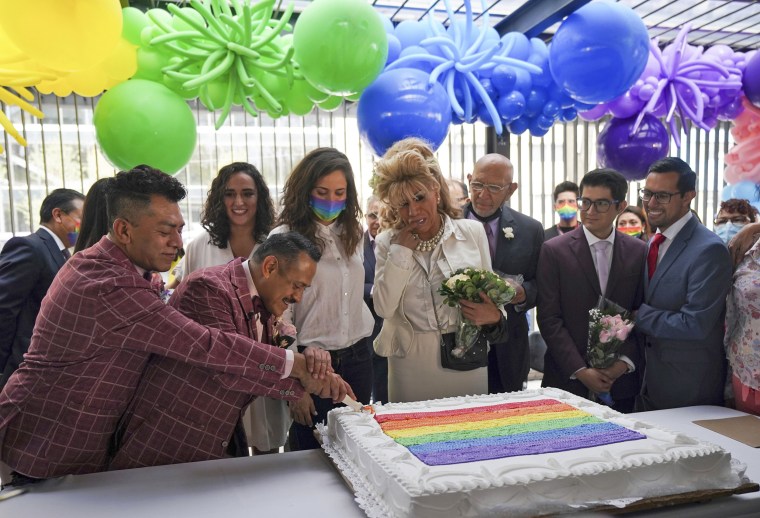
But this week they traveled the 235 miles (380 kilometers) to Mexico’s capital, where the city government hosted a mass wedding for same-sex couples as part of celebrations of LGBT Pride Month.
Under a tent set up in the plaza of the capital’s civil registry, along with about 100 other same-sex couples, Villalobos and Marcelo sealed their union Friday with a kiss while the wedding march played in the background.
Their ability to wed is considered one of the LGBT community’s greatest recent achievements in Mexico. It is now possible in 27 of Mexico’s 32 states and has been twice upheld by the Supreme Court.
Just married same-sex couples cut a cake during a mass wedding ceremony in Mexico City on June 24, 2022. Fernando Llano / AP
Mexico, Brazil and Argentina top Latin America in the number of same-sex marriages.
Mariaurora Mota, a leader of the Mexican LGBTTTI+ Coalition, said the movement still is working to guarantee in all of Mexico the right to change one’s identity, have access to health care and social security and to let transsexual minors change their gender on their birth certificates.
Walking around Mexico City a day before their wedding, Marcelo and Villalobos confessed to feeling strange holding hands in the city streets. Displays of affection between same-sex couples in the capital are commonplace, but it was difficult to shed their inhibititions.
“I feel nervous,” said Villalobos, a 30-year-old computer science major, as Marcelo held her hand.
Villalobos grew up in the northern state of Coahuila in a conservative Christian community. She always felt an “internal struggle,” because she knew she had a different sexual orientation, but feared her family would reject her. “I always cried because I wanted to be normal,” she said.
A majority of Americans favor protecting transgender people from discrimination, but a rising share say a person’s gender is determined by their sex assigned at birth, and most support trans sports bans, a new poll from the Pew Research Center found.
The survey of more than 10,000 adults, which was conducted May 16-22 and published Tuesday, found that 60% say a person’s gender is determined at birth, up from 56% in 2021 and 54% in 2017.
Views on gender identity differ by age groups and even more sharply by political affiliation. Half of adults ages 18 to 29 say someone can be a different gender than the one assigned to them at birth, compared with about 4 in 10 of those ages 30 to 49 and about a third of those 50 and older, the report found. Democrats and those who lean toward the Democratic Party were four times more likely than Republicans and conservative-leaning people to say that someone’s gender can be different than the one assigned to them at birth.
The new poll also shed light on how people in the United States feel about one of the most politically debated issues regarding trans people — whether they should be allowed to compete on sports teams that correspond with their gender identity. Nearly 6 in 10 (58%) support policies that would require transgender athletes to compete on sports teams that match the sex they were assigned at birth, the survey found.
Of the hundreds of anti-LGBTQ bills filed in recent years — over 670 since 2018, according to an NBC News analysis — measures that would limit trans people’s participation in sports have been among the most popular and politically contentious in the nation’s state legislatures. Eighteen states have enacted the bills into law within recent years, with Louisiana doing so earlier this month.
Proponents of transgender sports bans say they are protecting fairness in women’s sports, arguing that trans girls and women have inherent advantages over cisgender girls and women.
Critics say the measures are less about protecting women’s sports and more about discriminating against trans people.
Kentucky’s 2022 Teacher of the Year, who is gay, says he is leaving the K-12 classroom “to make the most difference, and the discrimination and lack of support prevent me from making that difference.”
After 17 years being a public school teacher, Willie Carver Jr. said he decided to leave the classroom and take a position at the University of Kentucky in student support services.
Carver, who had been teaching high school in Montgomery County, told the Herald-Leader that “vocal anti-LGBTQ extremists at school board meetings (and on social media) have been personally attacking me and my former students.” Carver said he had been unable to find support from his school administration.
As voters head to the polls today for primaries in 5 states and the District of Columbia, a record number of LGBTQ candidates for federal office are bringing the prospect of equal representation in Washington ever closer to reality.
A record 104 LGBTQ candidates have mounted campaigns for House or Senate seats this year, with 57 candidates still in the running.
Currently, 11 out LGBTQ lawmakers serve in Congress, including Sens. Tammy Baldwin (D-WI) and Kyrsten Sinema (D-AZ), plus nine members of the House, all running for reelection.
Nine more LGBTQ candidates for House seats are in competitive races. Wins in their states would bring total LGBTQ representation in the House to 4%, or about half of the estimated population of LGBTQ people in the US.
Those nine include 4 women, 2 Latinx candidates, and an LGBTQ immigrant.
Here’s a breakdown:
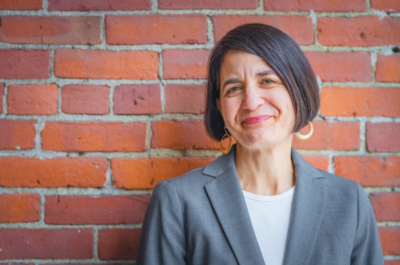
In Vermont, state senator Becca Balint is facing off against three other Democrats in the August 9 primary for a shot at an open seat representing Vermont’s At-Large Congressional District. Balint is the first woman and first out gay person to serve as the Vermont Senate President Pro Tempore, and would be the first out LGBTQ person and the first woman elected to Congress from Vermont.
In North Carolina, County Commissioner Jasmine Beach-Ferrara, won the Democratic primary handily and faces off against Republican Chuck Edwards for a seat currently occupied by primary loser Madison Cawthorn.
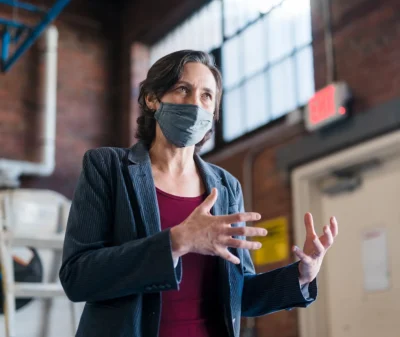
Beach-Ferrara is an ordained minister in the United Church of Christ and the founding Executive Director of the Campaign for Southern Equality (CSE) and would be the first out LGBTQ person elected to any federal position from North Carolina.
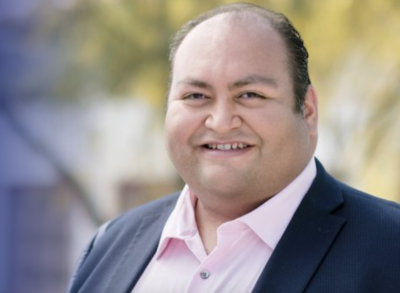
In Arizona, state representative Daniel Hernandez faces off against two other candidates in the Democratic primary in August for an open seat in Arizona’s 6th congressional district.
Hernandez attended the University of Arizona and interned for then-Congresswoman Gabby Giffords, whom he was with the day she was shot; he was the first to administer first aid to the Congresswoman before the EMTs arrived. He was named a national hero by President Obama.
Hernandez would be the second Latinx out LGBTQ member of Congress.
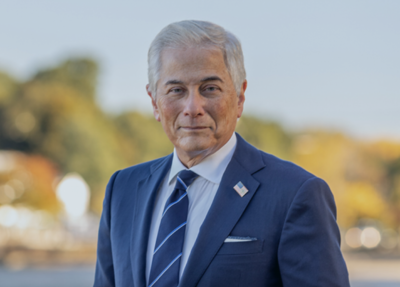
In New York, former Congressional aide and businessman Robert Zimmerman will face off against five other Democrats for an open seat in the August 23 primary in Long Island’s 3rd congressional district.
Zimmerman has been honored by the LGBTQ Network of Long Island and Queens and the Long Island Progressive Coalition, in addition to serving as President of Great Neck B’nai B’rith and the American Jewish Congress Long Island Division.
The Empire State’s congressional delegation currently includes three LGBTQ members: Ritchie Torres, the first out LGBTQ Afro-Latinx person elected to the U.S. Congress; Mondaire Jones, one of the first two Black gay men, along with Torres, elected to Congress; and Sean Patrick Maloney.
Zimmerman would be the first out LGBTQ member of Congress from Long Island.
In California, two-term Long Beach mayor Robert Garcia is running for an open seat to represent the city in Congress from California’s 42nd district. Garcia was re-elected to a second term as mayor by almost 80% of the vote in 2018.
Garcia immigrated to the United States at age 5 and holds an M.A. from the University of Southern California and an Ed.D. in Higher Education from Cal State Long Beach, where he also earned his B.A. in Communications. He won an open primary in June with 46% of the vote, 20 points higher than his general election opponent for the seat, Republican John Briscoe.
Garcia would be the first out LGBTQ immigrant elected to Congress.
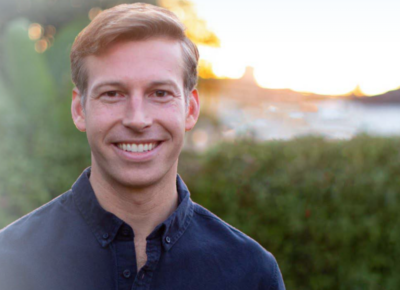
Also in California, former federal prosecutor Will Rollins is running to represent Riverside County in the state’s 41st district against Republican Congressman Ken Calvert in the 42nd district. Rollins won the Democratic primary June 7.
Rollins earned a bachelor’s degree from Dartmouth in 2007 and a law degree from Columbia Law School in 2012. As an Assistant U.S. Attorney, he helped prosecute some of the insurrectionists who attacked the U.S. Capitol on January 6th.
Rollins’ election would make him the second out gay man from California to serve in congress, after incumbent Mark Takano, from the same district; Takano is running in 2022 for a seat in the state’s 39th following re-districting.
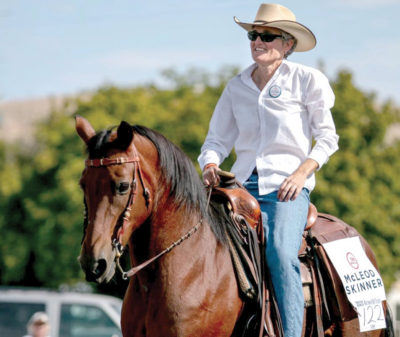
In Oregon, Jamie McLeod-Skinner is running as the Democratic nominee for an open seat representing the state’s 5th district, after winning a primary in May 15 points ahead of her opponent. She faces Republican Lori Chavez-DeRemer in the general.
McLeod-Skinner currently serves as an elected board member of the Jefferson County Education Service District. This is her second run at Congress, after a change-making grassroots campaign for Oregon’s second district in 2018, resulting in the largest voter swing (+26) of all congressional races that year.
McLeod-Skinner would be Oregon’s first out LGBTQ member of Congress.
In Maryland, former Assembly member Heather Mizeur is running to represent the state’s 1st Congressional District. Mizeur faces one other opponent in Maryland’s July primary to face off against Republican incumbent Andrew Harris in the general.
In the Maryland Assembly, Mizeur took a leading role in passing marriage equality, banning fracking, enacting criminal justice reforms, and expanding health insurance for children, women, and families.
Mizeur would be the first out LGBTQ member of Congress from the state.
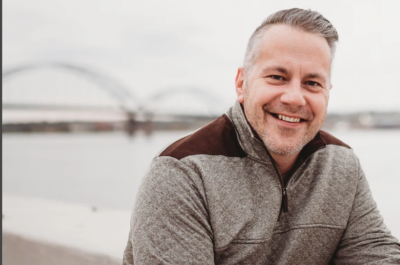
In Illinois, popular TV meteorologist Eric Sorensen is running against five opponents in the Democratic primary for an open seat to represent the state’s 17th congressional district.
Sorenson says he was pushed out of his first television gig in Texas, with a copy of his contract sitting on his boss’s desk and the “morals clause” highlighted.
Sorenson would be the first out LGBTQ person elected to Congress from Illinois.
Thomas wrote that, even though the Constitution doesn’t explicitly mention abortion rights, the Supreme Court “erroneously” decided in the 1973 Roe v. Wade decision to treat abortion as a fundamental right that should be free from government interference, something known in legal terms as “substantive due process.”
Thomas wrote, “We should reconsider all of this Court’s substantive due process precedents. We have a duty to ‘correct the error’ established in those precedents… For that reason, in future cases, we should reconsider all of this Court’s substantive due process precedents, including Griswold [the case that granted the right to contraception] Lawrence[the case that struck down anti-sodomy laws], and Obergefell [the case that legalized marriage equality].”
In response, Obergefell made a statement, saying, “Clarence Thomas is a Supreme Court justice appointed by humans, he is not the Supreme Deity. The millions of loving couples who have the right to marriage equality to form their own families do not need Clarence Thomas imposing his individual twisted morality upon them. If you want to see an error in judgment, Clarence Thomas, look in the mirror.”
Now that Roe v. Wade has been overturned, 17 states have “trigger laws” that could immediately outlaw abortion. Some of those states will do that by defining life as beginning at fertilization. This re-definition is likely to impact the ability of infertile and LGBTQ people to have children via in vitro fertilization (IVF), the fertility treatment that implants eggs with sperm for implantation in a gestational parent.
IVF usually involves fertilizing multiple eggs to increase the likelihood of the treatment being successful. Once the gestational parent becomes pregnant through IVF, medical professionals discard any extra fertilized eggs.
“Without the protections of Roe v Wade, it is possible that state lawmakers may feel empowered to create barriers for people to access medical procedures like IVF – which is deeply troubling for LGBTQ+ people and anyone who needs access to IVF to expand their family,” Shelbi Day, Chief Policy Officer at the nonprofit organization Family Equality, told LGBTQ Nation.
Hate crimes driven by homophobia and racism resulted in a 33% surge in reported incidents in California last year, following a similar spike in hate-driven attacks the year prior and confirming what officials have been hearing anecdotally since the pandemic began, the state’s attorney general said Tuesday.
Attorney General Rob Bonta said that crimes against Black people were again the most prevalent in 2021, climbing 13% from 2020 to 513 reported incidents. Hate crimes motivated by sexual orientation bias increased nearly 50% to 303 incidents while crimes against Asian Americans were up 178% to 247 incidents.
“One hard truth in our state, just as we see across the nation, is that the epidemic of hate we saw spurred on during the pandemic remains a clear and present threat,” said Bonta, a Democrat, at a news conference. “Each of these incidents represents an attack on a person, a neighbor, a family member, a fellow Californian.”
The 1,763 hate crimes reported in 2021 was the sixth highest tally since the department began collecting and reporting data statewide in 1995. It is also the highest since 2001, when 2,261 hate crimes fueled by the 9/11 terrorist attacks were reported in California.
Last year’s annual report showed a similarly high increase — 31% — with anti-Black bias making up the bulk of incidents in a state where African Americans are 6% of the population. The 2020 report also showed a startling increase in bias crimes against Asian Americans following the emergence of the coronavirus in China.
Video of assaults on Asian Americans, particularly seniors, went viral last year with San Francisco police in January reporting an astonishing 567% increase in reported crimes from the previous year. The initial count showed 60 victims in 2021, up from nine in 2020. Half of last year’s victims were allegedly targeted by one man.
Still, not all criminal attacks carry a hate crime charge since prosecutors need to prove the suspect was motivated by bias. In San Francisco, for example, the 2021 death of an 84-year-old Thai grandfather is headed to trial although the district attorney’s office has not filed hate crime charges in that case.
Officials say reported hate crime statistics may be far lower than actual numbers, but add they’ve taken steps to encourage reporting by victims. Nationally, hate crimes rose to the highest level in more than a decade in 2019, according to an FBI report.
Community leaders who joined Bonta at Tuesday’s press conference urged people to report crimes and to seek resources such as mental health services. Cirian Villavicencio, commissioner with the California Commission on Asian and Pacific Islander American Affairs, said hateful attacks against the Asian American and Pacific Islander community are not new.