A Democratic politician has resigned from his leadership role on Providence City Council after he was recorded referring to a Black transgender activist as “it”.
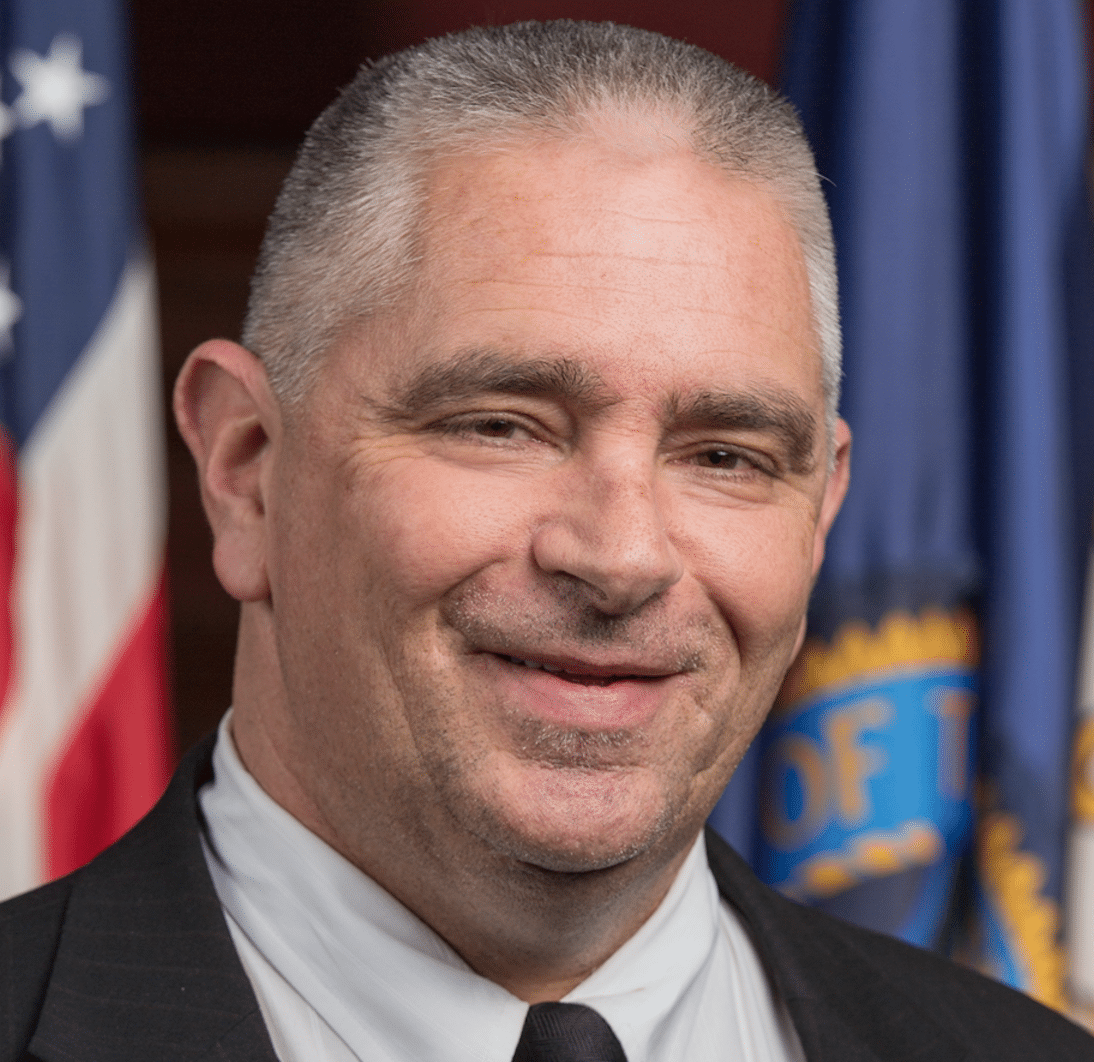
Recordings surfaced last week of councilman Michael Correia, who represents ward 6 of Providence in Rhode Island, mocking trans activist Justice Gaines.
The recording sees Correia and an unnamed staffer mocking and misgendering Gaines over a run for city council, with the councilman saying: “[She’s] still working on developing [her] breasts and everything.”
Asked what Gaines would be called if elected, Correia responds: “An it. It.”
The Democratic lawmaker notably failed to apologise in his initial statement,claiming the secret recordings were a “grave intrusion of privacy” and had been taken out of context. He also suggested it was illegal to record someone without their consent in Rhode Island, which it is not.
Michael Correia ‘regrets’ causing hurt with ‘flippant’ remarks.
However, after a wave of anger in the city and calls from colleagues for him to step aside, Correia has since resigned from his position as the council’s president pro tempore.
Michael Correia, who represents ward 6 of Providence in Rhode Island (Providence City Council)
Correia said in a Facebook post: “As someone who has spent the greater part of my adult life serving my community and city, I regret that my words may have hurt anyone in the LGBTQIA community, my friends, family colleagues and constituents in that community.
“I know that LGBTQIA people struggle, face discrimination and abuse and to think that I may have somehow contributed to that sentiment is unacceptable and for that I truly apologise.
“I would like to personally apologize to Justice Gaines for any hurt that I may have inflicted on her. My words were flippant and inappropriate as a leader and as a person.
“Anyone who knows me knows that I may from time to time try to joke around but I would do anything to help someone who needed it regardless of who they are or their station in life. There is no place for discrimination in our city and again I apologize to Justice for anything I have done to hurt her.”
Correia also called for “sensitivity training” to be offered to city council members and council staff “so that we can collectively understand the importance of a safe and respectful environment”.
Despite resigning from his leadership role, Correia will remain a member of the city council.
Romania’s Constitutional Court this week struck down a law parliament adopted in June 2020 that would have, among other things, banned “activities aimed at spreading gender identity theory or opinion” in educational settings. This is a positive development as the law violated Romania’s international human rights obligations, including those undertaken as a party to the Istanbul Convention on violence against women and the European Convention on Human Rights.
The law defined “gender identity theory” as a belief that “gender is a concept that is different than the biological sex and the two are not always the same.” The fact that gender is distinct from sex is a truism in social science and widely accepted, including by the World Health Organization and the World Medical Association.
A ban on discussing gender in education settings would unjustifiably limit students’ and teachers’ rights to free expression and to information, including about gender. The law also threatened the right to health, particularly for transgender, non-binary, and intersex children, for whom denying access to information about gender could have pernicious physical and mental health consequences. In inflicting a disproportionate discriminatory impact on transgender, nonbinary, and intersex people, the ban also violated the core principle of equality based on sex. Notably, the European Court of Human Rights has on multiple occasions affirmed the obligation to protect transgender people from discrimination.
This ruling, while not available yet in full, will reverberate beyond Romania’s borders. Politicians and idealogues peddling vague notions of a threat posed by “gender identity theory” or “gender ideology,” span other countries in the region, including Hungary, Poland, Bulgaria, and elsewhere, such as in Brazil. Courts and legislators should seek to curtail policies based on this dangerous rhetoric, first propagated by the Vatican and now sustained by those who seek to undermine the rights of girls, women, and lesbian, gay, bisexual, transgender, and intersex (LGBTI) people. Governments around the world should be trying to counter gender stereotypes and gender-based discrimination, instead of passing laws to muzzle discussions of gender in education spaces. This ruling from Romania’s highest court is a step in the right direction.
Bella Pugh, a Black gender non-confirming teen, was shot to death after a Christmas party erupted into a night of violence earlier this month.
The 19-year-old was slain at a residence in Rosedale Avenue in Prichard, Alabama on 13 December.
Reports suggest that after Pugh was shot, party-goers waited 20 minutes before calling emergency services. Some did nothing, others took out their mobile phones and recorded.
Pugh’s mother Tiffany told Fox10 News that it was their rainbow-coloured jumpsuit that led to their murder, saying: “If [they] wasn’t wearing that dress [they] would still be alive.”
At least two other people attending the party were also injured, according to the Prichard City Police Department.
Officers added that a suspect, James Lee James Jr, turned himself in for questioning 16 December, NBC15 News reported.
He was later charged with murder and two counts of second-degree assault – however, authorities said that they are not investigating Pugh’s death as a hate crime. Their family disagree with the decision.
Tiffany believes Pugh “was killed because of what [they] was wearing, not because of who [they] was or what [they] did.”
“I loved [them] with everything in me, that’s why [they] could shine like [they] did. Everything I had I poured into [Bella].”
Pugh’s father Antonio Ruggs reflected: “Love your kids for who they
“Because you know one day they could be here, the next day they can be gone,” he added, according to MyNBC15.
With each year, the number of trans people murdered rises.
Pugh’s death is yet to be officially counted by monitoring group Human Rights Campaign, which has tracked a record number of murders of trans people in 2020.
With days left until the year ends, HRC’s count stands at 41 trans and gender non-conforming people murdered, more than any other on record.
Rising higher and higher each year, 2020 surpassed last year’s total in August.https://lockerdome.com/lad/13296932562903654?pubid=ld-5883-3439&pubo=https%3A%2F%2Fwww.pinknews.co.uk&rid=www.pinknews.co.uk&width=572
Activists say these numbers almost certainly fail to grasp the true scale of the problem. Local officials are not required to report killings to a centralised database, and the police and press often misgender trans and gender non-conforming victims.
Enter your email to receive a daily roundup of the top
High-profile Ugandan LGBT+ rights lawyer Nicholas Opiyo was “violently arrested” on money laundering charges in what activists have said was “an attack on human rights defenders”.
Opiyo is well-known for representing LGBT+ people in the harshly anti-LGBT+ African country. He was arrested in a restaurant in Kampala on Tuesday (22 December), according to Chapter Four Uganda, a human rights organisation of which he is executive director.
Four other lawyers were also arrested: Anthony Odur, Herbert Dakasi, Simon Peter Esomu and Tenywa Hamid.
The organisation said it was deeply concerned about the “abduction and incommunicado detention” of Opiyo.
He was reportedly arrested by more than a dozen plain-clothed men with guns at Lamaro Restaurant in the suburb of Kamwokya. He was subsequently handcuffed and blindfolded alongside the four other lawyers.
‘Brutal abduction’ of human rights advocate Nicholas Opiyo condemned.
“Chapter Four is further concerned about the safety and well-being of Mr Opiyo, considering that he is being held outside of the protection of the law,” Chapter Four said in a statement released Tuesday.
“We condemn this brutal abduction and we call upon our colleagues and partners to condemn this arbitrary violation of his personal liberty, incommunicado detention, and call for his immediate unconditional release.”
Advocates for Nicholas Opiyo were granted access to see him at 11am on Wednesday (23 December).
“I feel OK health-wise – but my captors have not told me what I am being charged with. I have done nothing wrong, and of that I am absolutely sure,” Opiyo told activists.
They should have summoned him to the police to record a statement. Instead, he was violently arrested and detained incommunicado.
Chapter Four condemned the “high-handed and brutal” arrest, saying the country’s constitution is clear that a person charged with a criminal offence should be informed immediately of the charges levelled against them.
“Nicholas Opiyo is a fearless defender of human rights. His bold, unapologetic conviction and tireless work towards upholding and defending the constitutionally guaranteed rights for all is what the country needs,” said Angelo Izama, a board member with the organisation.
“We must fight against any efforts to crucify him on the altar of evolving political circumstances because wherever human beings exist – so will inalienable human rights.”
Opiyo appeared in court on Thursday (24 December) where he was remanded custody. His case was adjourned to 28 December.
The San Francisco Gay Men’s Chorus has gone virtual this holiday season and has added an inclusive twist to the Christmas classic “Silent Night.”
During its annual holiday concert, which will be held on Christmas Eve, the 300-member chorus will perform “Silent Night” while using American Sign Language, so the deaf and hearing-impaired community can enjoy the performance.
The chorus released a preview video of what’s to come during its 30th annual holiday celebration.https://www.youtube.com/embed/ycYIksZ5_nU
The chorus’ annual holiday concert began in 1990 in an effort to bring cheer to those who had been impacted by the AIDS epidemic.
As for the “Silent Night” performance, artistic director Timothy Seelig said it was inspired by past inclusivity efforts by other choruses.
“I wish I could take credit for this inspiration, but it actually came from the Seattle Men’s Chorus in the mid 1980s. It was first included as a way to include the deaf community in the concert experience,” Seelig told NBC News in an email. “It quickly swept through choruses everywhere and is a cherished tradition for all.”
The New York City Gay Men’s Chorus has also been incorporating American Sign Language into its performances since the ’80s.
“They are a world-class organization, and I try my best to make sure that my interpretations are up to their level to make sure that the deaf audience is getting the same quality the hearing audience is getting,” Tom McGillis, who has been signing for the New York chorus since 1988, told NBC News in 2016.https://www.youtube.com/embed/6V_wwJZ7-4k
The San Francisco Gay Men’s Chorus gained national recognition for its talents last year in the award-winning documentary “Gay Chorus Deep South,” which followed the group as it traveled through the South in 2017 to promote a message of acceptance and unity. The film, directed by David Charles Rodrigues, won the documentary audience award in the 2019 Tribeca Film Festival and is now being shown on on Pop, Logo and Pluto TV.
LGBTQ Southerners have often faced social and political hardships across the Bible Belt. One Arkansas city last year attempted to enforce LGBTQ protections, but it was ultimately ruled it could not enforce its ordinance banning discrimination based on sexual orientation or gender identity.
Circumstances like this are among the reasons why Seelig found it important for the chorus to embark on the journey after the 2016 election.
“We felt things were going to get much worse for the LGBTQ community, especially in states with the most egregious discriminatory laws already on the books. It was important for us to reach out to bring uplifting and unifying music to our brothers and sisters in the South,” he said.https://www.youtube.com/embed/IGN_NDfo5gw
In the wake of the pandemic and the surge of Covid-19 cases, Seelig said the San Francisco chorus will emerge resilient.
“From its courageous beginning one October night in 1978, the chorus has been at the forefront of the fight for equality for all — whatever direction that took,” Seelig said. “The chorus is now experiencing its second pandemic in its 43 years. We will come out of this one stronger and more committed to the work before us.”
The San Francisco Gay Men’s Chorus annual holiday concert, “Home for the Holidays,” will take place on Thursday, Dec. 24, at 5 p.m. PST/8 p.m. EST.
“Club Kid Killer” Michael Alig — the famously flamboyant party promoter who ended up busted for murder — has been found dead of a suspected drug overdose in his Manhattan apartment, officials said Friday.
The 54-year-old former scene fixture and convict was discovered by a friend just before midnight Christmas Eve in his Washington Heights pad, authorities said.
Detectives recovered several zip-lock plastic bags, possibly containing heroin, from the home, as well as drug paraphernalia, officials said.
Growing up in a military family in Atlanta, Joshua Gravett said he knew he wanted to follow in the footsteps of his father, Eddie, and older brother, Justin, both sergeants first class in the Army. There was just one problem: He was gay.
Despite the military’s policy at the time of prohibiting gay men and lesbians from serving openly, Gravett, then just 17, enlisted in the Army in 2003 and kept his sexuality a secret for eight years.
Army Sgt. 1st Class Joshua Gravett honored at the Mets’ first Pride Night in 2016.Kathleen Malone-Van Dyke
“You can’t have any type of relationships whatsoever. I wouldn’t be seen with anybody else that could be considered gay,” Gravett said, noting that just being suspected of being gay could get you kicked out.
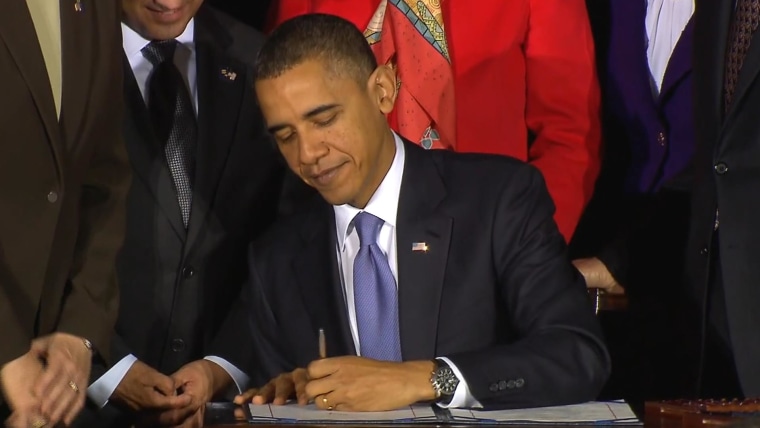
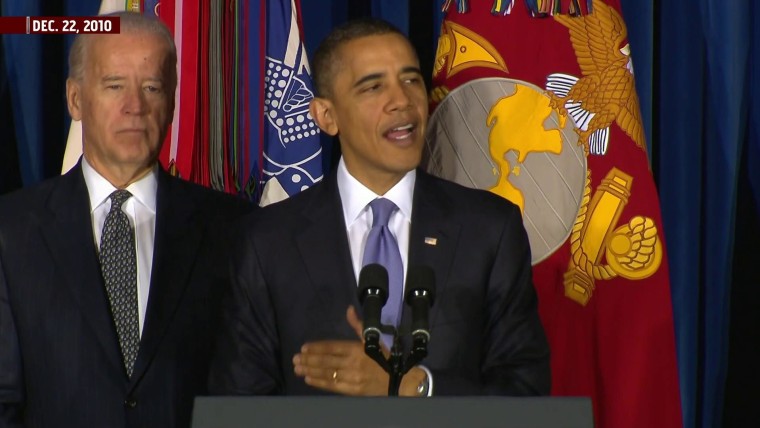
President Barack Obama signed a bill setting in motion the repeal of “don’t ask, don’t tell” on Dec. 22, 2010, but it wasn’t until after the policy was officially repealed in 2011 that Gravett finally started to come out to his friends and family. He also recalled the relief he felt just being able to put a photo of his partner on his desk at Fort Bragg, North Carolina, and bring a same-sex date to a military formal.
“I could just be myself without risking the loss of my career that I had already put almost a decade into,” Gravett, now 35 and a sergeant first class stationed in Texas, told NBC News. “It was like a huge weight lifted off me.”
Gravett recalled being “happy” the day President Barack Obama signed the repeal bill but said he “still couldn’t be out until it took effect” nine months later.
“It was almost like finding out you are getting promoted, but it isn’t real until it actually happens,” he said.
An estimated 13,000 service members were discharged in the 17 years the policy was in effect, according to data the military provided to The Associated Press.
A decade after the demise of “don’t ask, don’t tell,” much has changed for LGBTQ Americans, but several gay service members and military experts say the policy’s dark shadow still lingers.
A defunct policy’s lingering shadow
When President Bill Clinton signed “don’t ask, don’t tell” into law in 1993, it was a compromise between the White House and Congress to end the existing policy of outright banning gay service members that had dated to World War II. Under the new policy — which passed 77-22, with bipartisan support — gay men, lesbians and bisexuals were in theory permitted to serve in the military, but they would be “separated from the armed forces” if they revealed themselves to be homosexual or bisexual, tried to marry a person of the same sex, or there was evidence they had engaged in same-sex sexual activity.
Gravett said the policy has left a “hurtful” legacy, and he mentioned being a part of several Facebook groups where former service members lament losing their military careers because of “don’t ask, don’t tell” and not being able to serve again.
He also noted that many service members who were ousted under the policy are not aware that they may be able to seek remedies from the military.
“Most people that got out under ‘don’t ask, don’t tell’ can get their discharges upgraded from general discharge to honorable discharge,” he said, encouraging those who haven’t tried already to do so.
Jennifer Dane, an Air Force veteran, was investigated under the military’s “don’t ask, don’t tell” policy in 2010.Courtesy Jennifer Dane
Jennifer Dane, a Texas native who joined the military at 22 and served as an intelligence analyst in the Air Force from 2010 to 2016, said that when it comes to “don’t ask, don’t tell,” there are “still unintended consequences that aren’t even explored to the fullest, even 10 years later.”
Dane, now 33, said she was stationed in Tucson, Arizona, when she was investigated under “don’t ask, don’t tell” after reporting that she has been sexually assaulted by an airman. Over the course of the investigation, Dane said her sexuality came to light, which turned the investigation toward her. The investigation stopped after Obama signed the repeal bill, according to Dane.
Now the executive director of the Modern Military Association of America, a nonprofit that advocates for LGBTQ veterans and their families, Dane said she would like to see some of these past “wrongs” caused by the policy “written right,” like a public apology from the government or even just “making sure that we don’t do policies that are harmful” again.
Dane added that some LGBTQ veterans who were discharged under “don’t ask, don’t tell” still do not get access to medical care, the GI Bill and military pensions. This does not include the emotional trauma that service members endured under the policy, she added.
Aaron Belkin is the founder of the Palm Center, an independent research institute in San Francisco that focuses on LGBTQ military issues. His organization helped make the case for the repeal of “don’t ask, don’t tell.”
“We did 10 years of research into that question of whether it’s true that gay lesbians hurt the military, and what our research found was that it’s discrimination that hurts the military, not gays and lesbians,” Belkin said.
Belkin, Dane and Gravett all drew parallels between the former ban on gays and lesbians serving openly in the military and the current ban on transgender service members from doing so.
“The Trump administration’s transgender ban is ‘don’t ask, don’t tell for transgender troops, and the similarities are striking,” Belkin said. His organization, using 2016 data from the Department of Defense, estimates there are currently 14,700 transgender service memberson active duty or in the reserves.
‘A new era of LGBTQ rights’
One of the thousands of currently serving transgender service members is Iowa native Samuel Payntr. Now 22, Payntr began serving openly as a transgender man in the Navy at 19 when he got to his ship stationed in Norfolk, Virginia. He began hormone treatment the day before the ban on trans troops serving openly took effect on April 11, 2019. He said that while some were accepting of his transition, others weren’t sure how to respond, because it was seen as a “gray area” at the time.
“I had to really be careful about what I said around some people regarding my personal life and my sexual orientation in my transition, because there were quite a few people that had very negative remarks,” said Paytnr, who is able to serve openly as transgender because he joined the military before the transgender ban was reinstated. “I’ve had some kind of bad things happen, but the good kind of always outweigh the bad with the people that did support me.”
Transgender individuals with no history or diagnosis of gender dysphoria are technically still allowed to join the military and serve under the policy, though they must do so as their birth sex. Payntr explained that some hormone treatments make some service members ineligible to serve, adding he knows both trans service members who were terminated after the ban went into effect and those who were not depending on their diagnosis.
“Luckily, depending on the command we were at or the branch we were in, we had the people who were very knowledgeable in our transition defend us and be like, ‘No, this does not affect your service,’ and that’s literally what happened to me and quite a few other people that I know that are in the Navy who are transitioning,” he said.
In his policy platform, President-elect Joe Biden stated that he will “reverse the transgender military ban.” And since the ban was enforced as a presidential directive, Biden would be able to reverse it unilaterally. Payntr expressed optimism that Biden will make good on this promise.
At the 2020 International LGBTQ Leaders Conference this month, Biden honored Speaker Nancy Pelosi, D-Calif., for her work in repealing “don’t ask, don’t tell” a decade ago and appeared to hint at a future repeal of the current trans military ban.
“I can’t wait to work together with you again and to continue to fight for full equality and usher in a new era of LGBTQ rights and the entire movement,” said Biden, who takes office on Jan. 20.
The newly engaged couple Kasey Mayfield and Brianna May did not expect to ignite an online backlash when they shared on Facebook a recent email exchange that Mayfield had with an employee at a North Carolina wedding venue.
In the exchange, Mayfield mentions potential wedding dates, the estimated number of guests and the “other bride.” In response, the venue informed her that The Warehouse on Ivy in Winston-Salem does “not host same sex marriage ceremonies.”
Brianna May, left, and Kasey Mayfield shortly after their engagement.Chelsea Clayton
“If you’re wondering how wedding planning is going…thanks so much to The Warehouse on Ivy for letting us know we’re not welcome,” May captioned the photo of the exchange, which had over 1,400 shares on Tuesday.
“I was kind of speechless,” Mayfield said of reading the email. “I just had to like hand the phone over to Bri when I got it.”
“I had hoped that this wouldn’t happen in North Carolina, but I thought there was a chance it may. I didn’t expect it from a venue in Winston,” added Mayfield, 25, who has lived in the area for the past 10 years. May, 29, was born and raised in Winston-Salem.
The couple met on the dating app Bumble over two years ago and got engaged last month while listening to their favorite album, “Golden Hour” by Kacey Musgraves. They had only just started planning for their wedding, which they hope to hold in the fall of 2022. Mayfield said she and May first heard of The Warehouse on Ivy through the online wedding resource Wedding Wire.https://www.facebook.com/v2.10/plugins/post.php?app_id=&channel=https%3A%2F%2Fstaticxx.facebook.com%2Fx%2Fconnect%2Fxd_arbiter%2F%3Fversion%3D46%23cb%3Df3dc6d7212d2b2a%26domain%3Dwww.nbcnews.com%26origin%3Dhttps%253A%252F%252Fwww.nbcnews.com%252Ff330e4902461704%26relation%3Dparent.parent&container_width=480&href=https%3A%2F%2Fwww.facebook.com%2Fbrianna.may.395%2Fposts%2F10220437554034235&locale=en_US&sdk=joey&show_text=true&width=auto
‘Christian values’
The venue did not tell May and Mayfield why it does not host same-sex marriage ceremonies. However, in an email exchange with NBC News, the same email account, which lists the sender’s name as Daniel Stanley, confirmed the couple’s assumptions surrounding the decision.
“We will allow anyone of any color, race, religion or belief to use our venue at any given time,” the email stated. “Although we love and respect everyone in our community, their own decision making and beliefs, we also strongly believe in our Christian values.”
Multiple attempts to confirm that the statement was sent by Stanley, whose LinkedIn account says he’s the venue’s director, were ignored, as were questions surrounding the venue’s ownership.
According to North Carolina incorporation filings, The Warehouse on Ivy is owned by STC Properties of Forsyth County and lists Thomas Collins and Scott Sechler as the company’s managers. Reporting from The Winston-Salem Monthly, which features interviews with the Sechler family about the recently opened venue, confirms Sechler’s ownership.
Multiple attempts to reach Sechler and Collins were unsuccessful, and by Monday the venue had taken down its Facebook and Instagram pages.
‘Free to discriminate’
The issue of where anti-discrimination laws begin and First Amendment and religious liberty rights end remains something of an open question legally — and much of it depends on state law.
In the high-profile 2018 case Masterpiece Cakeshop v. Colorado Civil Rights Commission, the Supreme Court narrowly ruled in favor of Christian baker Jack Phillips, who refused to make a cake for a same-sex wedding. But instead of answering the fundamental question of whether it is legal to discriminate based on sexual orientation, the high court simply found that Phillips’ concerns weren’t fairly considered by Colorado officials.
In a similar case, the Washington Supreme Court ruled in 2019 that Arlene Stutzman, owner of Arlene’s Flowers, was in violation of that state’s anti-discrimination law for refusing to provide flowers for a gay couple’s wedding ceremony. The shop has appealed, for the second time, to the Supreme Court. Its petition is pending.
With no explicit state protections and no federal legislation banning anti-LGBTQ discrimination in public accommodations, a state like North Carolina leaves little room for legal recourse, according to Paul Smith, a Georgetown Law School professor who argued the landmark 2003 LGBTQ rights case Lawrence v. Texas before the Supreme Court.
“The only shot would seem to be finding a state law that prohibits sex discrimination in the provision of goods and services and then convincing North Carolina to read ‘sex discrimination’ in its law as broadly as the majority did in Bostock [v. Clayton County, Georgia],” Smith said, referring to the landmark ruling this year that found that Title VII of the Civil Rights Act of 1964 offered workplace discrimination protections on the basis of sexual orientation and gender identity.
Rick Su, a law professor at the University of North Carolina, was even less optimistic when it comes to the state.
“North Carolina has no state law on public accommodations not related to disabilities and no anti-discrimination laws protecting LGBT identity,” Su told NBC News. “Given there is no federal law protecting LGBT [people] either, this would mean that the wedding venue is free to discriminate.”
There are, however, two things that could potentially change this in the near future: the Equality Act and Fulton v. City of Philadelphia. The former is proposed federal legislation that would add LGBTQ protections to existing federal civil rights law. It passed in the House last year, and President-elect Joe Biden has said he would like to sign it within his first 100 days in office.
The latter is a case before the Supreme Court that will determine whether a government-funded, religiously affiliated child welfare agency can circumvent local nondiscrimination laws and refuse to work with LGBTQ people. If the justices issue a broad ruling in the case, it could have far-reaching implications, according to legal experts.
A silver lining
Mayfield said she and May “aren’t considering legal action at this time,” but she added that they are “urging our friends to email legislators to help try and pass discrimination laws for LGBTQ people.”
In addition to advocating for legislative action, the couple also wants to get the word out to the local LGBTQ community about The Warehouse on Ivy’s policies.
“We have a lot of gay friends in our circle, so I wanted to hopefully save people the time and, kind of, hurt and energy, from getting rejected based on our sexual orientation,” May said of their decision to go public about the ordeal.
In addition to receiving “kind and encouraging words” in response to her now-viral Facebook post, May said she’s also received some helpful wedding tips and offers.
“We’ve gotten so many wonderful recommendations for other vendors and venues, and we’ve had people offering services,” she said.
Summing up the experience — from the venue’s rejection to the viral social media response to the messages of support — Mayfield said it’s all been “definitely overwhelming, but in a good way.”
Friends of Stumptown Present “Season of Lights Ride”
December 18, 19, 20 and December 25, 26, 27 from 5:30 pm to 8:30 pm
So you can drive around with your family and friends safe in your car. You will vote on the best place on the Friends of Stumptown Facebook Page. Post your pictures and vote for your favorite place. Don’t forget to look for Santa! He will be giving out treats somewhere on the route each night of this event!
Guerneville 14935 Old Cazadero Road 15880 Wright Drive 14611 River Road, Guerneville 17809 Beach Avenue 15460 Drake Road 5 and 10, 16252 Main Street 16386 Cutten Drive 14700 Orchard Lane 14226 Cherry Street 14291 Laurel Road Corner of Laurel Rod and Old Cazadero Road 17627 Orchard Avenue 16205 First Street (Smart Pizza, Hernandez Realty and Shakedown) 16440 4th Street
Behind the Bank on Church Street (16290 Main Street) Come see all the trees decorated by different businesses, including Boon Brand 5&10 King’s Sport and Tackle Big Bottom Market Russian River Art Gallery River Queen The Sisters of Perpetual Indulgence The Guerneville Bank Club Main Street Bistro Blue Door Art Gallery Rio Rio Vintage Clothing & Art Equality Vines Visiting hours for the garden will be Wednesdays through Sundays from 4-7.
Rio Nido 14746 Rio Nido Road 14745 Rio Nido Road 15120 Rio Nido Road 16343 Rio Nido Road 14750 Eagles Nest Lane
Monte Rio 21517 Highland Terrace
Special THANK YOU to Russian River Chamber of Commerce and The County of Sonoma for helping make this event happen and keeping us safe! Thank you also to Karin Moss for all you’re doing to help our community.
If you see a house that’s not on the list take pictures and post. We want to see all the great houses!
More than 40 groups that vehemently oppose LGBT+ rights are fundraising on Amazon, despite the online shopping giant’s pledges to support equality.
An investigation by openDemocracy found that the US AmazonSmile platform – that lets Amazon customers donate to charities as they shop online – has hosted groups that have intervened in court cases opposing equal marriage, described COVID-19 as “the consequential wrath of God” and punishment for sins including society’s “proclivity toward lesbianism and homosexuality”, and attacked TV shows for increasing “social acceptance of homosexuality”.
Among the anti-LGBT+ group hosted on AmazonSmile are Focus on the Family, American Family Association and the Billy Graham Evangelistic Association.
Amazon has made record profits this year amid the coronavirus pandemic, with profits 50 per cent up on last year. It is unclear how much money the groups have raised using AmazonSmile, but Amazon says the programme has facilitated $215 million in such donations since its launch in 2013.
Human rights activists are now calling on Amazon to immediately take down the anti-LGBT+ groups.
Evelyne Paradis, executive director of the LGBT+ advocacy group ILGA-Europe, told openDemocracy: “Companies, if they really walk the talk, shouldn’t be giving their platform to organisations that are working to limit the rights of other people.”
It’s good that Amazon has a diversity of groups on its platform, she said, but “they shouldn’t be giving space to any organisation […] that is actively fuelling hatred and/or working against the rights of other people”.
“It’s disappointing to see organisations that campaign against LGBT equality platformed on AmazonSmile,” said Robbie de Santos, associate director of campaigns and communications at Stonewall. “We have raised our concerns with Amazon and will continue our work until every LGBT+ person is free to be themselves worldwide.”
An Amazon spokesperson said: “Charitable organisations must meet the requirements outlined in our participation agreement to be eligible for AmazonSmile. Organisations that engage in, support, encourage, or promote intolerance, hate, terrorism, violence, money laundering, or other illegal activities are not eligible.
“If at any point an organisation violates this agreement, its eligibility will be revoked.”