Idaho governor Brad Little, the person responsible for some of America’s most transphobic laws, has appealed to the Supreme Court to avoid paying for a transgender inmate’s gender confirmation surgery.
Little filed a petition after being ordered to provide surgery for 31-year-old Adree Edmo, a trans woman who is being housed in a men’s facility in Idaho.
She is serving 10 years for sexually abusing a 15-year-old boy when she was 22, and is not eligible for parole.
Edmo was diagnosed with gender dysphoria while in prison and her condition has grown so severe that she has reportedly attempted to castrate herself twice.
Denying trans woman surgery ruled ‘cruel and unusual’.
Last year a court of appeals upheld a previous ruling that denying Edmo the surgery constitutes cruel and unusual punishment.
But Little is appealing the ruling for a second time as he insists that he “should not have to pay for a procedure that is not medically necessary”.
He has vowed to “vigorously litigate” the ruling by taking it to the country’s highest court after the Ninth Circuit Court refused his request to hear the case for a third time.
“The Ninth Circuit’s decision goes against the text and original meaning of the Eighth Amendment and contradicts more than four decades of Supreme Court precedent,” Little said in a release.
“We will vigorously litigate the Ninth Circuit’s unprecedented ruling at the Supreme Court because the taxpayers of Idaho should not have to pay for a procedure that is not medically necessary.”
The state of Idaho is currently being sued by two human rights organisations thanks to a virulent anti-trans campaign spearheaded by Republican governor Brad Little.
In the midst of a pandemic, the governor signed two laws that campaigners say effectively make transgender people second-class citizens.
The first, HB509, bans transgender people from changing the gender on their birth certificates, flouting a previous a federal court ruling on the issue.
It asserts that the state will prohibit any changes to gender markers and only recognise a so-called “biology-based definition of sex” based on “immutable biological and physiological characteristics, specifically the chromosomes and internal and external reproductive anatomy”.
The second bill, HB500, bans schools and colleges from letting transgender girls from taking part in girls’ sports.
Under the “mean-spirited” law, girls whose sex is “disputed” will be required to subject themselves to invasive testing to show medical evidence of their “internal and external reproductive anatomy”.
In addition, pupils who believe they have been “disadvantaged” by their transgender classmates will be able to sue their schools for damages.
The Bay Area Reporter’s online fundraising appeal has been extended for another month, due to a matching offer from an anonymous donor.
The paper launched the Indiegogo campaign in early April because the coronavirus pandemic has caused grave economic losses for the LGBT publication, which saw a drastic drop off in advertising.
As of Wednesday, May 6, just over $24,000 of the paper’s $30,000 goal has been raised.
“We have extended the deadline because an anonymous donor has pledged to pay for transaction fees if we achieve our goal and to match contributions beyond it until June 1,” publisher Michael Yamashita wrote in an update. “So the amount raised above $30,000 will be doubled to support journalism at San Francisco’s independently owned, legacy LGBTQ+ community news source.”
Yamashita pointed out that over the years, the B.A.R. has focused on stories that mainstream media did not consider important: anti-gay discrimination in employment and housing; bias and fear of people with HIV/AIDS; victims of abuse and anti-gay violence; the plight of at-risk youth; and the unmet needs of LGBT elders.
“We’ve also supported thousands of LGBT artists through the years, with lively features, reviews, and nightlife coverage,” he wrote. “Our publication has given voice to the vulnerable and is a record of our history. But only with your help can we continue to play this unique role.”
Alis Nicolette Rodriguez is bracing themself, nervously looking over their shopping list and preparing in case someone tries to bar their way at the grocery store. It has happened before.
To keep crowds thin during the coronavirus quarantine, Colombian capital Bogota — like some other places in Latin America — has specified that men and women must go out on separate days. That has turned a routine food shopping trip into an outing fraught with tension for social work student Rodriguez, who is transgender and nonbinary.
From Panama to Peru, transgender people say gender-based quarantine restrictions have exposed them to discrimination and violence from people questioning their right to be out.
In Bogota, women can only go out on days with even-numbered dates and men on odd, while transgender people are allowed to choose.
However, rights group Red Comunitaria Trans said it had received 18 discrimination complaints since the measure began. One of those complaints was from a transgender woman in southern Bogota stabbed by a man who said she was out on the wrong day, a case also reported in local media. The woman is recovering from her injuries.
“The last time I went out things happened that were really tense,” said Rodriguez, 20, who uses neutral pronouns and began hormone treatments four months ago. “My features are still very masculine so people still say ‘I see the body of a man’ and they deny who you are.”
Rodriguez said the previous Sunday an employee stopped them at a grocery entrance and a police officer asked to see their identification, although the mayor’s office has told police not demand ID to prove gender during the quarantine.
A spokeswoman for Bogota’s government department for women confirmed the police do not have the right to question anyone’s gender identity.
In response to questions about the accusations of discrimination, Bogota’s Metropolitan Police sent Reuters a publicity video of officers and members of the transgender community speaking to store employees, explaining that transgender people can choose their shopping day.
Rodriguez was eventually allowed into the store, but at the check-out one cashier asked another why “this man” had been able to shop, they said. Being nonbinary complicates the choice about which day to go out, said Rodriguez, who has chosen the women’s days.
“If you don’t go out with make-up on, with a skirt… If you don’t comply with those stereotypes and gender roles then you can’t identify yourself or be in a public space,” said Rodriguez, who was wearing pink eye shadow and a sparkly silver jacket.
Afraid to report discrimination
Juli Salamanca, communications director for Red Comunitaria Trans, said the coronavirus pandemic had left transgender people particularly exposed.
“They’re trying to protect themselves from the violence of the police, the violence of the supermarkets, the violence of society in general,” Salamanca told Reuters, referring to the physical and emotional toll of discrimination and prejudice.
She said some transgender people may be afraid to report discrimination because of previous police abuse.
Colombia’s second-largest city, Medellin, has restricted outings based on ID numbers rather than gender, a valid alternative to enforce social distancing, Salamanca said.
Colombia is not the only Latin American country where restrictions have stoked fear among transgender people.
The Panamanian Association of Trans People has received more than 40 discrimination complaints since restrictions began in April, director Venus Tejada said, including problems getting into supermarkets or buying medicine.
Transgender people who are immunocompromised are particularly worried, according to Tejada, and some with HIV fear additional discrimination because of their illness.
“If they need anything we’ve advised them to ask a neighbor or someone else to get it,” Tejada said.
In Peru, the government canceled restrictions based on gender after just over a week, as retailers struggled to control crowds on women’s days and LGBT groups complained of discrimination.
Back in Bogota, Rodriguez is piling a shopping cart with items. They avert their eyes when two police officers walk into the store.
The officers escort out an older man who is violating the rules and then stare briefly at Rodriguez before leaving.
Joe Biden has reaffirmed his commitment to LGBT+ healthcare, vowing to make PrEP and gender affirming surgeries covered by insurance plans.
The presumptive Democratic nominee described gender affirming surgeries as “medically necessary” as he vowed to reverse Donald Trump’s attacks on trans and non-binary people during a virtual town hall event with the Human Rights Campaign on Wednesday (May 6).
He also pledged to remove the price barrier which prevents many people from accessing PrEP.
“As president, I’m going to protect and build on Obamacare with a public option,” Biden said.
“That’s the fastest way to get to universal coverage. Reverse Trump’s actions and restore Obamacare protections for LGBTQ Americans.
“And cover PrEP so that people at high risk of getting HIV and AIDS, HIV/AIDS, do have – don’t have to choose between covering their rent and staying alive.
“And make sure insurance companies treat gender confirmation surgery as a medical necessary, which it is.”
Joe Biden wants to reinstate Obama-era LGBT+ healthcare protections.
The presidential hopeful said that he would reinstate the LGBT+ protections Trump had scrapped to ensure that no one is refused healthcare on the basis of their sexuality.
“Trump has been trying to gut these protections since he took office,” Biden said.
“Anyone involved in patient care, from the board of directors to a receptionist in charge of scheduling, could put their beliefs above your healthcare.”
Biden has long been outspoken in his support for LGBT+ healthcare, and his campaign platform To Advance LGBTQ+ Equality in America and Around the World calls for full coverage of care related to transitioning.
In January he stated that trans rights “is the civil rights issue of our time” and said “there is no room for compromise”.
His words and actions earned him the endorsement of the Human Rights Campaign, which gave him their backing on the eight-year anniversary of him coming out in support of same-sex marriage.
“His dedication to advancing LGBTQ equality, even when it was unpopular to do so, has pushed our country and our movement forward,” HRC president Alphonso David said in a statement.
Lyon-Martin Health Services in San Francisco has served the health needs of lesbians, transgender women and other underserved women in the Bay Area since 1979. Named after pioneering lesbian activists Phyllis Lyon and Del Martin, the clinic had until recently been seeing 3,000 patients a year for such needs as physical exams, gynecologic services and consultations for gender-affirming surgeries.
Now, however, it is fighting to keep its doors open amid the coronavirus pandemic. Thanks to emergency funding from the city and private donors, it will be able to operate until July 1 without deep cuts to its services — which now include screening for COVID-19 — but its future is uncertain after that.
“The city needs to see how long COVID is going to play out,” J.M. Jaffe, the transgender health manager at Lyon-Martin, told NBC News. “They wanted to do a short-term contract so that we could re-evaluate what the situation will be in two months. I think they were just wary to make a commitment to continue to support us, but we did get kind of like a wink and a nod that they would like to support us to the end of the calendar year.”
Lyon-Martin Health Services is one of over 200 LGBTQ health clinics across the United States that provide affirming and competent care to lesbian, gay, bisexual, transgender and queer patients. And like Lyon-Martin, a number of these centers are struggling to adjust to — and in some cases survive — the new normal spawned by the global pandemic.
‘A gap of a support network’
Approximately 13 percent lesbian, gay and bisexual individuals in the U.S. reported getting their regular health care from an LGBTQ-centered clinic, according to a 2019 study from UCLA’s Williams Institute. A separate study found nearly 40 percent of transgender people reported having been to an LGBTQ clinic in the previous five years.
“We provide services to a population that may not seek care elsewhere or even if they do seek it elsewhere, they may not get what they need,” Jaffe said.
Jen Kates, director of global health and HIV policy at the Kaiser Family Foundation, said if some of these clinics do not survive the pandemic, the void will be felt deeply, especially in areas of the country where LGBTQ people face high levels of discrimination.
“It leaves a gap of a support network, but also may not provide another opportunity or option in some communities to get nondiscriminatory care, which is a concern,” she told NBC News.
LGBTQ discrimination in health care is not uncommon. A 2018 studyfrom the liberal Center for American Progress found 8 percent of lesbian, gay, bisexual and queer people and 29 percent of transgender people reported that a doctor or health care provider had refused to see them because of their sexual orientation or gender identity. The study also found that 9 percent of LGBQ people and 21 percent of trans people reported having a health provider use harsh or abusive language when treating them.
The Callen-Lorde Community Health Center in New York City, the epicenter of the U.S. pandemic, is doing all it can to stay open and provide patient care amid stay-at-home orders and declining revenues.
The COVID-19 crisis has forced the center, which sees over 17,000 patients annually, to pivot to virtual health care and cut a number of services, leading revenues to plummet nearly 60 percent, according to Executive Director Wendy Stark. But with many of their patients not feeling comfortable seeking care elsewhere, Stark said she and her team are “being innovative” to stay open.
“We have lived through traumas and pandemics. We know how to take care of ourselves and each other.”
CALLEN-LORDE EXECUTIVE DIRECTOR WENDY STARK
Callen-Lorde is currently helping clients by providing a number of online services, including video visits for primary medical care, behavioral health and counseling, along with legal aid and insurance consultation services by phone. The center’s in-person services include appointments for those who do not have access to smartphones or internet connections, and those who are pre-authorized for in-person visits.
The clinic is also working to protect its own front-line workers, approximately 20 percent of whom contracted the coronavirus, according to Stark. She said regular floor nurses are now “acting as intensive care unit nurses,” and everyone’s “being stretched to their maximum clinical capacity” and “having to learn on the spot.”
“I’m sure, deeply rewarding but also deeply frightening,” she added.
While providing health services, Stark and her team are also applying for “every possible” relief fund or grant available to help make it through the crisis.
“We are shapeshifters,” she said. “We have lived through traumas and pandemics. We know how to take care of ourselves and each other.”
In Philadelphia, the Mazzoni Center, which typically sees over 7,500 patients a year, is also trying to adapt. This has meant a combination of limiting in-person appointments on a case-by-case basis, implementing and expanding its remote health care offerings and finding ways to continue as many community programs as possible online.
Larry Benjamin, a spokesperson for the center, said the clinic has had to furlough some staffers and reduce the hours of others to keep it viable “in the short term”.
The center is still allowing abbreviated in-person appointments for things like HIV services and gender-affirming care, but Benjamin said staffers have been careful to ensure “the risks associated with exposure to the coronavirus” from patients to staff and vice versa don’t outweigh the benefit of in-person visits. Behavioral health services, such as medication management, support groups and counseling services, are being offered exclusively online, as are counseling for COVID-19 stressors. Most community programs have also been moved online, but those that cater to the “most vulnerable clients” and their basic needs, like food and shelter, are still operating in-person, according to Benjamin.
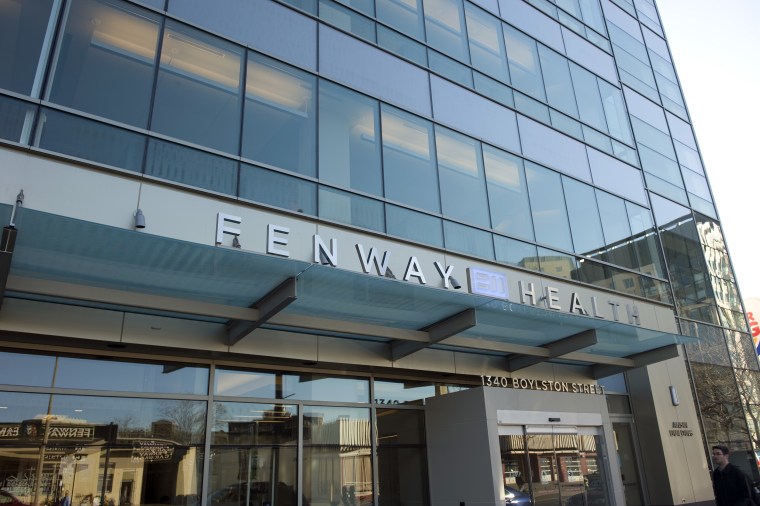
Fenway Health in Boston.Courtesy of Fenway Health
Fenway Health in Boston, which saw 33,500 patients in 2019, has also seen a loss in revenue amid the pandemic, leading it to furlough some staffers and operate at an “unsustainable deficit,” according to Chris Viveiros, a spokesperson for the center. To help weather the storm, he said the center has increased its virtual offerings.
“Some medical patients have chosen to reschedule nonurgent appointments, but we have ramped up our medical telehealth capacity so that we can provide care remotely to patients who don’t require an in-person visit,” he said. “We have also moved our behavioral health and addiction and wellness care to telehealth.”
Fenway Health has also changed its Access Drug User Health program from being held in drop-in centers to having staff visit at-risk people in the community to limit contact.
There have been some drawbacks to Fenway’s remote health services: Some patients are sheltering in place with unsupportive people and have nowhere to privately participate in a video visit, while others may be skeptical of a new platform for accessing health services altogether.
“Many of our community served have a history of medical mistrust and ongoing mistrust of the health care system due to structural discrimination and victimization,” explained Dr. Alex Keuroghlian, director of the Fenway Institute’s National LGBT Health Education Center and Massachusetts General Hospital’s Psychiatry Gender Identity Program.
However, Keuroghlian said there have been some silver linings to Fenway’s new remote offerings. Primarily, many patients are able to access health care from the safety and comfort of their own home without having to venture outside, potentially exposing themselves to anti-LGBTQ abuse — or the coronavirus.
“By and large, I have found it has worked really well,” he said. “I’ve had almost no no-shows in my schedule, and patients are answering the phone very appreciative that we can give them care despite what’s happening.”
On May 6, 2012, Vice President Joe Biden declared on NBC’s “Meet the Press” that he supported the legalization of same-sex marriage — getting out ahead of his boss, Barack Obama, on one of the most volatile political issues of the day.
The largest national LGBTQ rights organization, the Human Rights Campaign, formally endorsed Biden for president on Wednesday, the eighth anniversary of that event.
“Joe Biden is the leader our community and our country need at this moment,” HRC President Alphonso David said in a statement. “His dedication to advancing LGBTQ equality, even when it was unpopular to do so, has pushed our country and our movement forward.”
The endorsement itself is no surprise, given the antipathy that most LGBTQ activists have toward Biden’s rival, President Donald Trump. But the timing is a way of highlighting Biden’s bona fides among activists who gratefully remember his 2012 role.
Obama had taken office in 2009 as a self-described fierce advocate for gay rights, yet for much of his first term, he drew flak from activists who viewed him as too cautious and politically expedient. They were frustrated he wouldn’t endorse same-sex marriage — Obama cagily said he was “evolving” on the issue.
That changed swiftly after Biden told “Meet the Press” that he was “absolutely comfortable” with same-sex marriage. Three days later, in a White House interview with ABC News, Obama followed suit.
Biden, a Democrat, subsequently has entrenched himself as a stalwart ally of the LGBTQ rights movement, including periodic appearances at Human Rights Campaign fundraising dinners. He is scheduled to participate in a livestreamed conversation with the organization’s president on Wednesday evening.
Since Trump succeeded Obama in 2017, his Republican administration has taken multiple steps to slow or reverse gains by LGBTQ Americans. For example, it has restricted military service by transgender people and argued in a Supreme Court case that the federal civil rights law doesn’t protect LGBTQ people from discrimination at work.
Along with its endorsement of Biden, the Human Rights Campaign is releasing new details about its 2020 election strategy — identifying voters who support LGBTQ rights, then working to maximize their turnout. Texas is a new addition to the list of targeted states, along with Arizona, Michigan, Nevada, Ohio, Pennsylvania and Wisconsin.
If you’ve recently been laid off or are struggling to make ends meet during the coronavirus pandemic, we have compiled a list of local food banks and nonprofits in Sonoma County that are providing free meals and groceries.
Santa Rosa City Schools
Santa Rosa City Schools is offering a drive-thru meal service for students on Mondays and Wednesdays from 11:30 a.m.-1 p.m. at nine locations throughout the city. Students ages 18 and under from any school district are eligible to receive two breakfasts and lunches on Monday and three breakfasts and lunches on Wednesday. For more information, visit srcschools.org/freemeals.
Redwood Empire Food Bank
The Redwood Empire Food Bank is providing food to residents in need without proof of income, Food Connections manager Maria Fuentes said. Residents can visit the office (3990 Brickway Blvd., Santa Rosa) for a box of dry goods or to be directed to a pick-up location. Coronavirus concerns have forced some pick-up locations to close and others’ hours to be extended, so visit getfood.refb.org for an updated list. Additional questions can be directed to 707-523-7900.
The food bank also has partnered with local school kitchens to provide families lunch and care packages with groceries. The meals can be picked up from any of the participating schools, but children must be present to receive food. Click here for a list of participating schools and here for a map to see where they’re located.
Catholic Charities
Catholic Charities of the Diocese of Santa Rosa is continuing its food distribution programs for anyone who needs help feeding their family throughout the pandemic. Go here for a list of days, times and locations. Go here for more information and a full list of resources.
Salvation Army
Salvation Army is providing food to any resident in need Monday-Thursday from 10 a.m. to noon during the pandemic, said Santa Rosa Salvation Army Capt. Rio Ray. To receive food, go to the parking lot of the Corps Community Center (93 Stony Circle, Santa Rosa) with a valid ID. Families are limited to picking up groceries once per week. For more information, call 707-542-0981.
Windsor Service Alliance Food Pantry
The Windsor Service Alliance Food Pantry (8987 Windsor Road, Windsor) is doling out fresh produce and packaged groceries to Windsor residents on Fridays from 2-5 p.m. Go here or call 707-838- 6947 for more information.
Boys & Girls Clubs of Sonoma-Marin
Boys & Girls Clubs of Sonoma-Marin are providing grab-and-go lunches for children who live in west county. Meals can be picked up at Guerneville Elementary School (14630 Armstrong Woods Road, Guerneville) from 11:30 a.m.-1 p.m. on Mondays, Wednesdays and Fridays. Children must be present to receive the meals. For more information, go here.
Rotary Clubs of Santa Rosa, Petaluma and Rohnert Park
Several Rotary Clubs in Sonoma County are offering drive-thru meal services every Saturday at noon for both laid-off and employed hospitality and service workers in need. Meals can be picked up at these locations: Rohnert Park-Cotati Regional Library (6250 Lynne Condé Way, Rohnert Park), the Multicultural Child Development Center (1650 W. 3rd St., Santa Rosa) and the Petaluma Community Center (320 N. McDowell Blvd., Petaluma).
Ceres Community Project
Ceres Community Project is providing meals and food assistance to Sonoma and Marin County residents who are facing serious medical and financial challenges. Residents must meet several qualifications to receive assistance, such as being without a caretaker to provide meals. If you meet Ceres’ qualifications, call the client intake line at 707-829-5833, ext. 201. It may take up to three weeks to receive meals. The organization is working to expand its capacity.
Food For Thought
Food For Thought provides weekly groceries and frozen meals to people living with HIV and other serious illnesses in Sonoma County. Go here for more information. To apply for assistance, contact client services director Nina Redman at NinaR@FFTfoodbank.org or 707-887-1647 ext. 119.
Friends in Sonoma Helping
Friends in Sonoma Helping will provide Sonoma Valley families in need with groceries twice per month. To receive groceries, first call 707-996-0111 between 9 a.m.-noon on weekdays. For more information, go here.
How: Appointments are required. No drive-up testing. Residents can go to https://lhi.care/covidtesting or call 1-888-634-1123 to schedule an appointment.
Where: Santa Rosa High School and the Petaluma campus of Santa Rosa Junior College.
Who: All Sonoma County residents are eligible, regardless of age, economic or immigration status, or health symptoms.
California will move into Stage 2 of the state’s reopening plan by the end of this week, Governor Gavin Newsom announced during a press conference Monday.
“On Friday I said we were days not weeks from announcing modifications to the stay-at-home order, and today we are announcing our efforts to update the stay-at-home guidelines and begin the process of moving to Stage 2,” he said.
The new guidelines for Stage 2 — which allow for the return of retail, manufacturing, and other “low-risk” businesses — will be released Thursday, and businesses can start reopening Friday if new physical-distancing measures are implemented.
“As early as by end of this week, you will have the capacity as retailer to begin to reopen for pickup: clothing, bookstores, music shops, sporting goods, florists as Mother’s Day approaches and other sectors within that retail sector,” Newsom said.
However, these activities are still prohibited under the Bay Area’s updated shelter-in-place order, and Newsom said the region “has the right” to enforce its stricter order that allows for the return of outdoor businesses and activities, but not retail.
“The Bay Area has guidelines that are a little more strict,” he said. “If they choose to not come into compliance, they have that right.”
In a Monday afternoon press conference, San Francisco Mayor London Breed acknowledged Governor Newsom’s announcement but said the city is currently focused on observing the social distancing success of outdoor businesses that have been allowed to reopen to inform whether San Francisco will take further steps to reopen.
“The health directive has everything to do with limiting our ability to be in contact with people so we can avoid not only transmitting the virus, but we also realize there are a number of people out there struggling financially,” Breed said. “If there is a way to accommodate the public health goal of keeping people safe while allowing businesses to operate but to operate differently with certain guidelines, we can definitely work together to achieve that goal and get to a better place.”
Breed added that San Francisco would be working with the governor towards a Phase 2 plan, and identifying retailers that could be open in collaboration with local health officers. Specifically, she mentioned that the city was looking at options for restaurants and gyms.
“Can we say definitively those businesses will be open Friday? No we can’t,” she said. “It’s important we rely on the facts, the data, that we rely on the advice of our county health officers so as we push to do these things, we do so responsibly. And we want to also give businesses time to know exactly what’s expected and to know what are the things they need to prepare for as they reopen.”
Newsom also stated that rural counties have the right to move “deeper” into Phase 2 and reopen restaurants, offices, shopping malls and other businesses if they meet criteria the state releases Thursday. The governor also stated there could be “unfortunate consequences” for businesses that reopen across the state without receiving approval, but did not elaborate on what those consequences might be.
Today, the Bay Area permitted outdoor businesses such as construction, landscaping and golf courses to reopen, but left retail off the list. The local order provides that if any provision comes into conflict with the state order, the stricter order will apply.
Pat and Paulette Martin, both 68, live in Harlem, New York City. They have been together four and a half years and were married in April 2018. “All is well,” said Pat in a recent Zoom call, smiling of the lesbian couple’s time in coronavirus lockdown. “Well, we haven’t murdered each other yet anyway!”
Paulette said the couple was “blessed” to have a courtyard to relax and get some air in and do some gardening. Pat said: “Isolation is the problem. Quite a few of our friends have lost partners, so they are not as blessed as we are. We can still go out. But hearing the constant sirens of ambulances wears on your nerves, it really does. You watch the Doomsday news and it becomes a bit much. That’s the main thing of feeling isolated. You feel so alone.”
The couple—who tell their lockdown stories, along with other LGBTQ seniors below—are among 5,000 New York City seniors who are members of SAGE, the country’s oldest and largest LGBTQ elder advocacy organization, founded in 1978. SAGE is “very actively engaged” with calling 3,000 of its constituents and organizing meal deliveries to those who need them.
“The two major issues facing LGBTQ elders right now are isolation and food,” said Michael Adams, SAGE’s chief executive officer. “Older LGBTQ people have been told they are a high-risk group and to shelter in place. Many can’t go shopping or get food to eat. It’s a complete vicious circle, which for many people feels inescapable at this point. We used to provide a hot meal every day at our center. Now that isn’t available, and people are understandably afraid to go out and do shopping.”
The situation is worse for those on lower incomes, he said, whose local neighborhoods perhaps don’t have a supermarket.
The organization has launched SAGE Connect, a volunteer-run telephone support system to ensure LGBTQ seniors feel connected to the outside world.
“Over and over again, what we’re hearing from them that the person calling them is the only human voice they’re hearing all week, other than what they’re hearing on TV or online,” Adams said. “This is the only human contact that many of them are having. That is a powerful and deeply troubling reality.”
“LGBTQ elders are absolutely suffering and in many ways are at the epicenter of this pandemic, and not just because of their age,” said Adams. “Those with underlying health conditions are at greater risk for COVID-19. HIV leads to compromised immune systems; smoking rates are higher with LGBTQ older adults, which can lead to compromised lungs. Twenty-five percent of the LGBTQ elders SAGE works with don’t have any emergency contact other than SAGE.
“The other major issue is a lot of LGBTQ seniors are already socially isolated,” said Adams. “They don’t have anyone to rely on. Twenty-five percent of the LGBTQ elders SAGE works with don’t have any emergency contact other than SAGE. Being an older LGBTQ person, having underlying health conditions, and being isolated is a huge triple whammy.”
Eleven SAGE members have died since March 16, a SAGE spokesperson said. “Only a handful have been confirmed as COVID-19 related. The others were not able to obtain the test because of the limitations of testing.”
The organization believes that currently “10 or so” members have been told by their health-care provider that they are possibly positive and that they should self-quarantine. The organization has lost contact with some of its constituents who are not answering their phones or responding to emails. SAGE does not know if this is related to COVID-19.
“For many of those getting sick, they’re not getting tested because tests are hard to access and people are afraid to leave their homes to get tested,” said Adams. “It’s hard to know if they have COVID-19 or something else.”
Isolation is particularly acute for LGBTQ seniors, Adams said. “They are four times less likely to be parents than older Americans in general. Whereas most older Americans have adult children, they do not. They are twice as likely to grow old living alone without partners or spouses than older Americans in general. Because of discrimination and bias, LGBTQ elders are more likely to be disassociated from their families of origin than older Americans in general.”
“The traditional family structure is missing for many of our folks,” Adams said. “When folks are younger in the LGBTQ community, they deal with that by forming ‘families of choice.’ But there’s a limitation to that when you’re 75, 80, 90, and it’s harder to form such support networks.”
LGBTQ seniors may not feel safe where they reside in private or public housing, or within the residential care system. Adams said some “go back into the closet” in fear of homophobia and mistreatment by neighbors or nursing staff. “You can understand why,” said Adams. “There is a lot of discrimination still going on.”
I’m used to doing my own thing. This makes me feel isolated in the sense of a lack of activity.
Even in progressive urban centers like New York City, Adams said, LGBTQ seniors may go to a senior center to build new relationships but experience homophobia from other seniors. “At SAGE, they are embraced for who they are,” he added.
Ellen Ensig-Brodsky, who is 87 and lives in New York City, told The Daily Beast: “If you sit alone in a one-room apartment, it’s isolated. I’m still very active. I live in the center of New York City, down the block from MoMA, Carnegie Hall, and Broadway. I’m used to doing my own thing. This makes me feel isolated in the sense of a lack of activity.”
Ensig-Brodsky has a daughter, son, and grandchildren, whom she keeps in touch with by phone, and she is also in regular touch with members of the women’s group she belongs to at SAGE.
“I am fortunate to be speaking to people and feel closer to people perhaps than those who do not have that kind of interaction in this horrible period,” she told The Daily Beast. “If someone is not part of a family group, or a group like the one I’m in at SAGE, I would think it would be extremely lonesome.” (More of Ensig-Brodsky’s story is below.)
At Stonewall House in Brooklyn, New York City’s first LGBTQ senior living residential housing, which opened last year, 100 out of the 145 apartments are occupied, after the full moving-in process was put on hold following the outbreak of the coronavirus. That freeze will remain in place until the city gives the green light. Residents are being cared for by SAGE staff and having their meals delivered.
Being locked down has been tough for the residents, Adams said, especially those who moved to a new neighborhood to be there and are now “basically trapped indoors,” without access to their previous support networks.
SAGE has moved many of the meetings previously held in its New York HQ online. In the first couple of weeks, SAGE hosted a grab-and-go meal distribution at its Seventh Avenue base. But it was deemed too risky, health-wise, to continue, for both staff and clients. Adams has been “heartened” to see the elders supporting each other.
New York City has initiated a home delivery program for older adults, acknowledged Adams, though “several hundred SAGE constituents” were among those who had “fallen through its cracks.” Since then the organization has moved to introduce “a hodgepodge of strategies” to ensure its members are fed. The organization has an affiliates’ network in 30 other American cities doing some version of what it does in New York.
Adams said those people wanting to support LGBTQ seniors could volunteer to help with SAGE’s programs and virtual classes, or simply donate to SAGE. The organization, he said, isn’t in danger of closing but—like so many other advocacy organizations—is facing “very serious financial challenges.”
At a virtual hearing held last week on the coronavirus’ disproportionate impact on communities of color, Adams, speaking about LGBTQ seniors of color and LGBTQ seniors generally, presented eight recommendations to New York City lawmakers.
Among the recommendations was: ensuring virtual support programs received proper funding; that the city and state’s severe budget shortfalls did not affect the care and support of LGBTQ elders; that there should be ongoing financial support of all those services deemed “essential” to LGBTQ elders; that there should be funding of volunteering programs to shop and run errands for older adults; and ensuring the provision of proper internet access for older people.
An executive budget meeting is scheduled for May 21, and then the New York City Council and Mayor Bill de Blasio will likely agree on a budget in late June.The thing at the back of your mind is ‘How many years do I have left?’
Adams told The Daily Beast one story of an older lesbian who had fractured her clavicle in the middle of the night and had no one to turn to, and was too frightened of going to the hospital. She went online and figured out how to make a sling. “It shows the isolation but also the resilience many older LGBTQ people have.”
The virus has raised other urgent questions for LGBTQ seniors: the quality, as well as quantity, of the life they have left. Kevin Burns, 71, from Albany, told The Daily Beast: “The thing at the back of your mind is ‘How many years do I have left?’ It’s complicated. In your seventies, you are hoping to do things, because in your eighties you may have to slow down. For the last couple of months, we have lost this time, and we are thinking, ‘How much more time are we going to lose?’”
LGBTQ seniors speak out on life under lockdown
Ellen Ensig-Brodsky: “There is an openness and truthfulness. We know about each other”
For Ellen Ensig-Brodsky, despite the isolation that LGBTQ seniors endure, “in some ways, LGBTQ people share connections that most straight people do not, which is extremely important, especially in periods like this. There is an openness and truthfulness. We know about each other.”
This forging of connections is rooted in history, she said. “Go back 40 years, and it was very different then than it is now. Back then you didn’t say you were gay or lesbian. You hid it, and you met in places that were hidden. My family knows now, and it’s no big deal. But years it ago it would have been. And look at geography. You might feel OK being out in New York City, but not the Midwest.”
Ensig-Brodsky does not have a partner presently, “but my family is made up of ex-partners and we are in touch.” That group of friends includes the surviving wife of a now-deceased ex-husband, whom her children encouraged her to go stay with so both women could have company. Ensig-Brodsky did so for three and a half weeks, then returned to the city.If you reach out, it will give you a sense of connection, and you may be helping someone else.
“I prefer being in back in my own apartment,” she said. “I can dance, listen to music, watch TV. I’m happier here even though I am alone.” It helped, she said, that she was brought up as an only child, reliant on her own company. She goes for walks, does errands, and then—just as she did the day before we spoke—“didn’t get out of my pajamas and stayed in bed all day, nibbling away at all kinds of goodies.”
Ensig-Brodsky laughed. “I was a medical nutritionist, and I have not been following what I preached. I would lose my job if I saw what I was eating!”
She is looking forward to normality returning. “I need a haircut, and a lot of women feel that way. But when will those theater and concert venues be able to open?”
Other older LGBTQ people, Ensig-Brodsky said, should reach out to others by calling or email. “If you reach out, it will give you a sense of connection, and you may be helping someone else. It creates a pathway to the future and shows who’s there for you.”
Pat and Paulette Martin: “We felt it was time for us to take responsibility for ourselves”
Pat and Paulette Martin, who first met at SAGE Harlem, said LGBTQ seniors faced special issues living under lockdown.
“We were told from the beginning that coronavirus especially affected their age group,” said Paulette. “Our immune systems are weaker, the virus attacks organs and blood. So because you’re older you have this worry it’s just going to come and get you. So you isolate.
“Where the older LGBTQ community is not being understood is that we are from a generation where we were attacked for who we were, we didn’t get services or medical care because of our sexuality. You have that experience embedded long before this came along. A lot of people I know feel this.” Right now, speaking to friends face to face via Zoom is important, she said, and better than just phone calls.
Just as SAGE’s Michael Adams said, food is a huge issue, said Paulette, not just because of the difficulty of accessing it and the fear of going to a grocery store. “We give food bank details to as many people as we can. Older people have dietary restrictions, and so even if we are getting fresh food or food parcels or other items, sodium affects blood pressure, or if you have cancer you shouldn’t be eating processed food.
“Older people get very anxious about their medications too,” said Paulette. “Right now, they can’t go out and pick them up, and are relying on others to deliver them. This whole situation is taking away a lot of our independence in a lot of areas, and we are frustrated by that. Going for walks was a form of exercise before this, and now some people feel they can’t do that.”
There are, said Pat, “layers of frustration,” made more acute by being an LGBTQ senior of color, “the triple-edged sword of ‘you’re a person of color, you’re gay or lesbian, and you’re a senior.’ There’s a fear of going out. Will you be accosted? Police are accosting African Americans with masks on because they think we are up to something. Going out is a realistic fear for us.”
Both women are determined to take back, and exercise, power for themselves. They recently set up the Masculine Identified Lesbians of Color Collective, which includes African American, Latino, and a “few white women also.”
“We are coming together as a social justice group,” said Pat. “We feel for a long time we have been pushed to the side. Back in the day, clubs and bars in the 1970s and ’80s were primarily for white lesbians, and if we went we were refused entry or if we were given entry to a free club, all of a sudden there was an admission cost. If you look now, most of the LGBTQ organizations of substance who have money and get all the publicity are headed by white folks. So we came together because we felt it was time for us to take responsibility for ourselves.”
The group, comprising women of all ages, has members from New York, New Jersey, Washington, Chicago, North Carolina, South Carolina, and California.
Pat hopes the older women in the group can be role models for younger women, who may only have male relations—a father, brother, or uncle—to emulate. “A lot of them don’t know how to go to a doctor and say, ‘I’m a lesbian, sleeping with women. This is what I need.’ We need to be role models and teach these younger lesbians about self-care, how to run their own businesses, and share experiences. The buck stops here. We can no longer rely on anyone else to do it. We have to do it for ourselves.” Start every day with a prayer, whatever your spiritual belief is. Then take a shower. Don’t put on pajamas. Put on clothes. Do a skincare routine. Exercise.
Paulette said this was a good time to look at how, as a couple, you can “enrich” your relationship and work on things that are not right in it, in areas like communication and finances. “It’s hard to do,” she admitted, “so set some ground rules. But it’s better to try changing something than staying stuck with old stuff.” The key, said Pat, “was looking at how you can move forward in unity, while remaining individuals.”
To get through this time, Paulette recommended other LGBTQ seniors initiate a routine. “Start every day with a prayer, whatever your spiritual belief is. Then take a shower. Don’t put on pajamas. Put on clothes. Do a skincare routine. Exercise. It’s so important. Have breakfast, coffee, or whatever your morning beverage is. Journal. Read. Turn off the TV news. Reach out to people. Take your eyes off yourself and cast them to someone else.”
Pat added that if you have ever dreamed of doing anything, like running your own business, now is the time to get those plans down on paper. “Create a bucket list. Think about life, not death.”
Kevin Burns: “The virus is cheating us of our remaining time”
Kevin Burns, 71, from Albany, New York, considers himself lucky. He has his own home, and while he lives alone, he feels very connected to a wide circle of friends and family. He has enjoyed Zoom cocktail hours, and his regular trivia quiz group has been meeting the same way. Being at home “hasn’t been a terrible strain.” It’s been good to see familiar faces, albeit virtually.
He is one of the “Vintage Pride” group of those LGBTQ people aged 55 and older belonging to Albany’s Pride Center of the Capital Region. The LGBTQ center is closed now, and Burns knows many people for whom their pot-luck lunches were their only social outlet.
Kevin Burns
He goes to the grocery store roughly once a week, shopping at special senior hours. He misses the gym and hanging out with friends. “Not having those benchmarks in a typical week to look forward to takes quite a mental adjustment. Just as everybody is finding, every Tuesday evening is now like every Friday evening. There’s no difference.”
Having spoken to friends, Burns said the psychological impact of the coronavirus on LGBTQ elders has been pronounced.
“As many years as we hope we have, they are running down, and now we are deprived of what we enjoy doing even if it’s once a week, or whatever the time frame is and whatever the activity is. The virus is cheating us of our remaining time. For me, personally, spring was a time to travel. Not being able to do that is a minor glitch compared to other people’s suffering. But as seniors, we all have things we look forward to. This current situation means we can’t do anything. How long will this go on? How long will older people be told they cannot go out, or do things?”
Burns and his friends presume this spring and summer are now a diary-date tundra. No dinners, no holidays, no Broadway trips, no Tanglewood, no Williamstown Theatre Festival, no trips to the Cape or Maine before the main holiday season begins. “I know this may sound frivolous. I know people are suffering. But these are just the things I did and am missing. I know I am lucky, and am thankful for that.”People talk about the danger of underlying issues. We all have the same underlying issue: It’s age!
“You can watch a DVD and get takeout, sure,” he said. “But when you’re a senior, you’re isolated anyway. Now you’re more so.”
Every senior Burns knows is being scrupulous about wearing a mask and washing hands. He laughed. “People talk about the danger of underlying issues. We all have the same underlying issue: It’s age! It’s kind of infuriating to do what we’re told and then see younger people hanging out together not wearing masks when I go out walking. I’m not making judgments, but are they going into stores, or seeing grandparents afterwards? Please think about those people. I’ve heard them complaining about wearing the masks and saying they can’t breathe in them. Well, wait till you’re 70-something!”
On the other hand, Burns said, it has been heartening to have younger people in his life reaching out to him and doing things to make sure he knew he is included in Zoom chats they are setting up.
Whatever opens up, whenever it opens up, Burns said he and his friends won’t be going anywhere until they feel assured about a vaccine or proper and accessible medical treatment. “If it takes another six months, that’s really tough, but if it means whatever is left of our lives is spent in relative good health, minus COVID, then it’s worth waiting.”
“Reach out and find other people,” Burns advised his fellow LGBTQ seniors. “I had never hosted a Zoom meeting. I didn’t know how to do it. It took a few steps, trial and error, but it paid off for me and my friends because now we can get together. It was a lot easier than I thought. Motivate yourselves to reach out.”