Friday, November 15th, 7-9 pm. Occidental Center for the Arts’ Book Launch Series. Ashes in A Coconut,gripping debut novel by Sonoma author, Bo Kearns. Presentation with selected readings, slide show of Bali, Q&A, book sales/signing. Free admission, all donations gratefully accepted. Indonesian treats by donation, beer/wine for sale. OCA: 3850 Doris Murphy Court, Bohemian Hwy at Graton Rd. and is accessible to people with disabilities. For more info: 707-874-9392 or occidentalcenterforthearts.org
A new report from the Williams Institute at the UCLA School of Law found the relatively high rate of poverty in the LGBTQ community is not evenly distributed, with bisexual women and transgender people shouldering a disproportionate poverty burden.
When grouped together, almost 22 percent of lesbian, gay, bisexual and transgender people reported earning less than the federal poverty level of $12,490 per year for a single-person household. The cisgender straight community, on the other hand, reported a poverty rate of almost 16 percent.
When researchers separated the L, G, B and T, however, they found cisgender (or non-transgender) gay men and lesbians reported similar levels of poverty to their heterosexual counterparts, while bisexual women and transgender people (of all sexual orientations) had a poverty rate of almost 30 percent.
The study found gay men had the lowest rates of poverty at 12 percent, followed by cisgender lesbians at 18 percent. These percentages were statistically indistinguishable from the poverty rates of their heterosexual male and female counterparts at 13 and 18 percent respectively. Overall, for gay and straight people, women face higher rates of poverty than men. Bisexual men reported a poverty rate of almost 20 percent, significantly less than their bi women counterparts.
Bianca Wilson, one of the study’s authors, said researchers have some hypotheses for why poverty levels are elevated in these communities, including that they could be due to “experiences of discrimination, maybe the impact of minority stress, the impact of mental health concerns that come from experiencing discrimination. However, how that explains the particularly high rate among bisexual women is not clear.”
Robyn Ochs, a bisexual activist, said it doesn’t surprise her that bisexual people report higher levels of poverty, because it’s “pretty typical, historically, for bisexual people’s experience to be lumped in with gay and lesbian experience.”
“Bisexual people have a much harder time finding community and safe space,” Ochs explained, “even when there’s an established LGBTQ community, it’s often not fully inclusive of bisexual-identified people.”
During the Obama administration, Heron Greenesmith, a bisexual activist and researcher, participated in several White House summits devoted to issues specific to the bisexual community.
“The news is that we have been talking about this for years with empirical, peer reviewed data on national data sets, and nothing has increased the programs and services dedicated to alleviating poverty where it really matters in the LGBT community,” Greenesmith said.
Ochs noted that a fraction of 1 percent of all funds designated for the LGBTQ community is earmarked for bisexual issues specifically, according to a report by Funders for LGBTQ Issues. Greenesmith said that this lack of funding results in “a lack of structure in bi communities, which produces a lack of leaders” that can advocate for community needs.
Overall, Greenesmith said she thinks biphobia is a major component of many disparities the report unearthed.
“It can have different names, you can call it bi erasure,” Greenesmith said. “As I research the right as well, I am finding more and more data to show that sexual fluidity, as can be exemplified by the existence of bi folks, makes people really confused and nervous.”
As for the high rate of poverty among the transgender community, Gillian Branstetter, media relations manager for the National Center for Transgender Equality, found the Williams Institute figures “deeply unsurprising.”
“It’s quite simple: If you do not have stable access to housing, you are more likely to face violence. If you do not have gainful employment, you’re more likely to face violence. And the prejudice and bias that denies so many people access to these opportunities leaves them exposed to any number of risk factors, including poor health and positive HIV status, as well as abusive situations like intimate partner violence,” Branstetter said.
“It shows the massive potential for harm posed by the three Title VII cases before the Supreme Court to allow employers to avoid any consequences for discriminating against transgender people,” Branstetter added. “It is not merely a philosophical, etymological matter of the definition of sex — it is literally the right of equal economic opportunity for every member of society that’s in front of the Supreme Court right now.”
The burden of LGBTQ poverty is also uneven across location, according to the report. While straight people face poverty in urban and rural areas at roughly the same rate (approximately 15 percent), rural LGBTQ people have a poverty rate of 26 percent compared to their urban peers at 21 percent.
Study author Bianca Wilson says that with so many unknowns presented by the data, her next project at UCLA’s Williams Institute will be a qualitative study that will interview subjects and attempt to answer why certain groups within the LGBTQ community are so disproportionately impacted by poverty.
A gay police officer has won $19 million in damages from his employer, after he was told to “tone down” his sexuality.
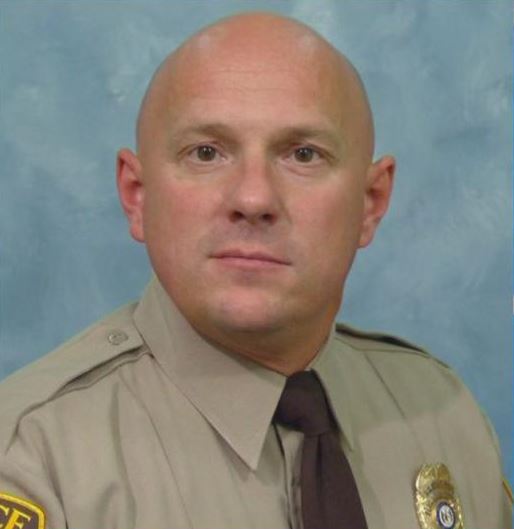
Sgt. Keith Wildhaber, an officer within Missouri’s St. Louis County Police Department, had filed a lawsuit in 2017 after he was passed over for promotion to lieutenant despite 15 years’ service.
Police officer was told his sexuality is a ‘problem’
According to Wildhaber’s lawsuit, a member of the St. Louis County Board of Police Commissioners had told him: “The command staff has a problem with your sexuality. If you ever want to see a white shirt [be promoted], you should tone down your gayness.”
The officer alleged he was passed over 23 times for promotion, and also said that when he filed a discrimination complaint, he was transferred in retaliation.
Sgt. Keith Wildhaber, an officer within Missouri’s St. Louis County Police Department
On Friday, a jury in St. Louis County Circuit Court sided with Wildhaber, after a hearing that saw testimony from senior police officials repeatedly contradicted by other evidence.
According to the St Louis Post-Dispatch, a police captain denied having ever met one witness who accused him of making homophobic remarks about Wildhaber, before photos emerged of them in a “friendly embrace.”
Police force will see ‘changes’ after discrimination case
County Executive Sam Page said in a statement: “Our police department must be a place where every community member and every officer is respected and treated with dignity.
“Employment decisions in the department must be made on merit and who is best for the job. ”
Page said that there would be “leadership changes” on the police force, starting with “the appointment of new members to the police board, which oversees the police chief.”
The St. Louis County Police Union said: “While we are extremely embarrassed of the alleged actions of some of our Department’s senior commanders, we look forward to the healing process that can begin to take place now that this has been heard in open court.”
A new LGBT+ Muslim Pride festival is just £400 away from reaching its crowdfunding goal.
Imaan, Europe’s biggest charity sporting LGBT+ Muslims, is trying to raise £10,000 to put on an event which will “provide a space for LGBTQI Muslims from across the UK to be empowered, engaged and to make no apologies for being practising Muslims and LGBTQI people”.
With a day left until the campaign ends on Tuesday afternoon, October 29, the crowdfunder is £403 short of its goal.
Imaan posted on Twitter: “With now just 1 day left – dare we dream we can do it? The pressure’s too much!! PLEASE chip in anything. A LIKE/SHARE IS A FREE WAY TO HELP.”
Imaan originally sought to raise £5,000 for the event, a target it smashed in September.
The crowdfunder was extended to £10,000 in order to “produce a bigger, bolder, more exciting event and subsidise a number of places for those who cannot afford to attend”.
New Pride festival will provide a safe space for LGBT+ Muslims.
A spokesperson from Imaan told PinkNews that the festival, which will be held in London in spring 2020, aims to show that people can be both LGBT+ and Muslim.
“Often LGBTQI Muslims are caught in the middle of Islamophobia and homophobia, so we want to provide a safe and inclusive space where people feel like they do not have to choose between identities and that they can be LGBTQI and Muslim without pressure from those who say otherwise,” they said.
Imaan will also be recruiting volunteers to support the festival and will be calling on both LGBT+ and Muslim organisations for practical support.
Often LGBTQI Muslims are caught in the middle of islamophobia and homophobia, so we want to provide a safe and inclusive space where people feel like they do not have to choose between identities.
Plans for the festival come at a time when reported incidents of both Islamophobia and homophobia in the UK have spiked in recent years.
In March, it was reported that Islamophobic incidents in the UK rocketed by nearly 600 percent in the week after a terror attack on mosques in Christchurch, New Zealand, which killed 51 people.
And, in June, a Guardian investigation revealed that hate crimes against LGBT+ people have more than doubled in the past four years.
Imaan praised for setting up LGBT+ Muslim Pride festival.
Campaigners from LGBT+ faith organisations have praised Imaan for working to setup the festival.
Matt Mahmood-Ogston, who set up the Naz and Matt Foundation, which works to tackle homophobia triggered by religious and cultural beliefs, praised Imaan for creating the “fabulous” new event.
“The launch of the festival will create an exciting new platform that will inspire hearts, and help many more people understand and celebrate the beauty of LGBTQI+ Muslim culture,” Mahmood-Ogston told PinkNews.
“Too often members of the community, and many of the LGBTQI+ Muslims who come to our charity for support, are forced into choosing between their religion and their queer identity.
“This festival will become a safe place – an event to look forward to – where this choice never has to be considered. We can’t wait for the festival to begin!”
Apicha Community Health Center wanted to run advertising on Instagram (which is owned by Facebook) to promote public awareness of PrEP, a drug which can prevent HIV transmissions.
Despite Facebook’s newly-relaxed rules around political advertising, the New York-based centre – which serves people of colour and the LGBT+ community – was told that it could not run the adverts because it “hadn’t been authorised to run ads about social issues, elections or politics”.
“They said the copy was the problem but were unable to tell us what part of the copy was too political,” Phillip Miner, Apicha’s director of grants and communications, told Vice.
Since PrEP was introduced in the US in 2012, rates of HIV transmissions among white, black and Latinx men who have sex with men in New York has fallen almost consistently. But among Asian and Pacific Islanders (API) men, the number of new cases has remained stubbornly static.
In an attempt to change this, the Apicha Center’s Instagram account has been posting content created by and featuring API men which talks about PrEP.
It wanted this content to form the basis of a paid advertising campaign, which would have meant that API men who don’t follow its account would see the posts in their feeds.
Miner told Vice that Instagram offered to authorise the campaign if they could authorise every employee who uses its social media accounts through Facebook. This wasn’t possible due to privacy concerns for one member of staff.
The company quietly withdrew a policy of banning false claims in advertising – including in political advertising – in early October, sparking concerns that it could be used to deceive voters.
Zuckerberg appeared visibly shaken on Wednesday, October 23, as Ocasio-Cortez asked him whether she would be able to “pay predominantly black zip codes advertise them he incorrect election date” or “run advertisements targeting Republicans in primaries saying that they voted for the Green New Deal”.
Zuckerberg said that adverts which could cause census or voter suppression would not be allowed, but did not say whether mistruths would be taken down.
“So, you won’t take down lies or you will take down lies? I think that’s just a pretty simple yes or no,” Ocasio-Cortez asked.
In response, Zuckerberg obfuscated, citing “context”.
A day of calm winds and an intense air attack aided firefighters battling the Kincade Fire Monday to gain a foothold on the western edge of the massive blaze, allowing evacuation orders for nearly a dozen communities including Guerneville and Sebastopol to be downgraded to warnings.
The Sonoma County Sheriff said residents of the far western reaches of the massive evacuation zone that extended from Geyserville, Healdsburg and west to the Pacific Ocean at the height of the firefight over the weekend could return home.
Officials said residents could return to their homes unimpeded by law enforcement officers patrolling the area.
“This means that you can return home now at your own risk,” the sheriff’s department said in a news release. “This area is still at risk from the Kincade Fire, and much of this area does not have power or natural gas due to the power shutoff. Remember, if you hear the hi-lo sirens, it’s time to evacuate.”
“There will still be more peace officers in your neighborhood,” authorities said. ” You do not need to check in with anyone and you do not need a peace officer escort.”
Here are the areas where the evacuation order has been downgraded to an evacuation warning.
ZONE 7
Jenner
Bodega Bay
Bodega
Occidental
Monte Rio
Rio Nido
Duncans Mills
Cazadero
Guerneville
Forestville
Graton (west of Highway 116 only)
Zone 8
Sebastopol
Twin Hills
Western unincorporated Santa Rosa
The situation was much improved than over the weekend when strong winds drove the massive wildfire beyond containment lines, growing to 66,231 acres – 103 square miles – by early Monday and destroying 96 structures, including 40 homes.
Cal Fire said there were 4,000 firefighters manning the lines early Monday and they were being assisted by troops from the California National Guard. Nearly 80,000 homes were being threatened by the blaze.
“The fire was extremely active during the day yesterday (Sunday),” Cal Fire Battalion Chief Mike Blankenheim told reporters at a Monday news conference. “The fire more than doubled in size and that did present some challenges for us. The priorities for today (Monday) are we are going to work on the Mt. St. Helena area in the northeastern corner (of the fire.) Working in the Mark West area and the Shiloh area.”
“The fire made it that far south last night,” he added. “We are going to be really aggressive today, working on perimeter control.”
Cal Fire Monday AM update on Kincade Fire:
Firefighters had the blaze 10 percent contained before Sunday’s howling winds whipped it further out of control, expanding the evacuation area from Geyserville to the Pacific Ocean and driving some 180,000 residents from their homes.
Local residents filled evacuation centers from Petaluma all the way to San Francisco, waking Monday morning hopeful their homes would not be damaged or destroyed by the blaze.
By sunrise, containment had tumbled to five percent, but firefighters were able to save homes in Windsor from mass destruction.
“We had a very scary day today,” Windsor Mayor Dominic Foppoli told KPIX 5 Sunday night. “We could have lost a lot of homes in Windsor…Thanks to the absolute valiant effort by first responders…They have been able to save pretty much all of Windsor.”
Sonoma County Sheriff Mark Essink said with the intensity of the fire fight in Windsor on Sunday, had the area not been evacuated far in advance, there would have loss of lives.
“Yesterday in the northeastern area of Windsor, we had a very aggressive fight of the fire by our partners at Cal Fire,” Essink said. “Had that area not been evacuated those firefighters would not have been as effective they were…We had a lot of success yesterday in Windsor…The northern area of Windsor was saved by their efforts.”
Around Healdsburg, several buildings were damaged or destroyed including the more than 100-year-old Soda Rock Winery that was turned into a smoldering pile of ruins with just the front brick wall still standing early Monday.
Two firefighters were injured Sunday fighting the blaze, Cal Fire Division Chief Jonathan Cox said during an afternoon press conference. One suffered minor burn injuries, but another suffered significant burn injuries and had to be airlifted to the UC Davis Medical Center.
Around 10:15 p.m. Sunday evening, the fire flared up again in the area of Markwest/Larkfield Wikiup, where mandatory evacuations had previously been issued.
Deputies used Hi-Lo sirens to warn residents on Faught Road from Shiloh to Old Redwood Hwy in Larkfield-Wikiup. The fire’s movement over the Shiloh Ridge was threatening homes and residents in Napa County by Monday morning.
“If in this area, you need to leave immediately!” the Sonoma County Sheriff asserted to people that hadn’t yet left.
Firefighters were racing from one spot fire to another along the roads surrounding the ridge, trying to limit damage and the blaze’s advance.
Essick said the magnitude of this event struck him while visiting evacuation shelters.
“There is certainly a sense of fear out there,” he said. “A lot of people have questions about what’s going on…Ladies and gentleman, we are doing the right thing by keeping you out of these evacuated areas.”
San Francisco Mayor London Breed issued a proclamation Sunday evening, declaring a local emergency to provide shelter for Kincade Fire evacuees. The city will open a temporary disaster shelter to help those displaced by the fire at the Cathedral of St. Mary of the Assumption at 1111 Gough Street.
“San Francisco stands with our neighbors to the north and is ready to help in every way we can,” said Breed. “Our City departments are working in unison to provide shelter and care to those who have been displaced, while first responders continue to fight the fire in Sonoma County.”
More than 200 law enforcement officers were patrolling the evacuation zones for safety and to prevent looting. Essick said there was one arrest Sunday of a suspicious person in one of the evacuation zones who could not provide a location for where they were headed.
At an evacuation center at Napa Valley College, Francisco Alvarado, 15, said he, two younger brothers and his parents decided to leave their Calistoga home in advance of evacuation orders. Two years ago, the family had to flee, but in the middle of the night.
“I’m pretty mad that we have to keep evacuating,” he said. “I just want to be home. I’m trying to leave here tomorrow; I want to sleep in my bed.”
Hundreds of people arrived at the Sonoma County Fairgrounds in Santa Rosa by Sunday. Some came from nursing homes. More than 300 people slept in an auditorium filled with cots and wheeled beds. Scores of others stayed in a separate building with their pets.
Among them was Maribel Cruz, 19, who packed up her dog, four cats and fish as soon as she was told to flee her trailer in the town of Windsor, about 60 miles (100 kilometers) north of San Francisco. She also grabbed a neighbor’s cat.
“I’m just nervous since I grew up in Windsor,” she said. “I’m hoping the wind cooperates.”
More than 39 million people in the U.S. are age 65 years or older including 2.4 million people who identify as LGBTQ+, according to the American Psychology Association.
As the baby boomer generation ages, the senior population will increase from 12.8 percent to an estimated 19 percent in 2030. Psychological service providers and care givers for older adults need to be sensitive to the histories and concerns of LGBTQ folks and to be open-minded, affirming and supportive towards LGBT older adults to ensure accessible, competent, quality care. As GBTQ people age, they find themselves facing unique challenges, including access to information and resources, as well as isolation and loneliness. That’s where Living Out Palm Springs comes in.
“Knowing that too many LGBTQ seniors live in unsafe or even openly hostile environments, we wanted to address this issue that is near and dear to us by creating a safe and beautiful community for those 55 and over. The Living Out development will be the first of its kind in the Southern California area,” said Living Out co-founder and creator Loren S. Ostrow. “Living Out Palm Springs was designed by, invested in and created by members of our community who recognize the unique needs we face as we begin the next chapters of our lives.”
Los Angeles-based real estate development company KOAR International LLC, announced recently that Living Out Palm Springs – an active retirement community designed to meet the unique needs of LGBTQ adults – will break ground this fall.
Living Out Palm Springs will provide a safe, supportive and enriched environment in which LGBTQ seniors can live openly and thrive, according to a press release. LGBTQ seniors currently face very limited options for welcoming and inclusive senior living environments. Living Out communities will celebrate the LGBTQ aging experience in a way that has yet to be realized. Living Out Palm Springs will be ideal for seniors who live in, travel to or would like to have a second home with resort-like amenities in the celebrated desert community of Palm Springs.
The Pride LA spoke with Ostrow on what residents can expect. Check it out:
Can you introduce yourself?
My name is Loren Ostrow. I am a real estate attorney and developer. I have served on the Board of Directors of the Los Angeles LGBTQ Center for more than 20 years, the National LGBTQ Task Force for nine years and the Board of Trustees of Congregation Kol Ami in West Hollywood. My business partner of 40 years, Paul Alanis, has been an extraordinary ally over our four decades of association.
Luann Boylan recently joined us Marketing Director for the Living Out project. LuAnn has served with Loren on the LGBTQ Center’s Board for over 27 years.
In one sentence what is Living Out?
Living Out is a luxury condominium community for active LGBTQ 55+ persons in Palm Springs; a community designed to provide LGBTQ seniors a safe, welcoming, inclusive experience where they can live comfortably out as an LGBTQ person.
Can you elaborate more?
Living Out is a nine-acre oasis designed to provide its residents with a five-star, resort-style living experience in historic Palm Springs. Architecturally, Living Out is authentic to its surroundings, referencing the iconic Mid-Century Modern style for which Palm Springs is famous. Our homes feature open floor plans, large lanais, elegant appointments and an exceptional attention to detail, all wrapped in magnificently landscaped grounds and stunning desert mountain views.
At the heart of the Living Out concept is the element of community and we have incorporated opportunities throughout the property for people to come together and enjoy “being home.” Some of the amenities we are providing that encourage the building of community include:
Resort-style lagoon pool
Lap pool and spa
4 pickleball courts
2 bocce ball courts
Putting green
Community BBQ and fire pit areas
Lushly landscaped dog park
Casual dining restaurant
Piano bar
Private screening room
State-of-the-art gym
Game room
Card room
Community gathering room
Grab-and-go coffee shop and community workspace
In short, Living Out has been designed to be the home you have always wanted and the community every LGBTQ person deserves.
Why is there a need for such housing in Palm Springs?
While straight individuals have many opportunities available to them for retirement communities, LGBTQ 55+ people have virtually no opportunities to live openly and comfortably. Unfortunately, one hears stories of LGBTQ individuals and couples being ostracized or discriminated against in the broader retirement world, often being forced back into the closet.
While Palm Springs is one of the most supportive environments for LGTBQ people in the country, as one ages the sense of loneliness can be palpable and I hope to provide a community within a community where people can live comfortably and safely.
What is the story behind the creation of Living Out?
I have been thinking about this issue for over 30 years knowing that the LGBTQ community would age as does the general community. Having served on the Board of the LA Center since 1993, I have seen the glaring disparities in the opportunities for LGBTQ people to live in safe, inclusive environments as they age.
Of course, there are non-profit agencies, like the Center, that provide services for LGBTQ seniors who are less financially able to provide for themselves. However, it occurred to me, there are very few options available to members of our community who are financially independent and would like to live in an LGBTQ-focused community that is supportive of and, in fact, celebrates living authentically. Living Out has been designed to be that option.
In what ways does Living Out create an inclusive and safe environment for LGBTQ+ seniors?
Celebrating living authentically is the core concept of Living Out, not a byproduct or an afterthought. To create an environment where that concept can be realized requires infusing all of our efforts with a consciousness about what it means to be inclusive and what it takes to feel safe. That has been made possible, in part, by having Living Out envisioned by, designed by, and invested in by members of the LGBTQ community who recognize the unique needs our community faces as we begin the next chapter of our lives. This consciousness translates into creating living and community spaces that are open, inviting and purposefully designed to support the concept of community, while offering the safety of knowing you are in an environment that is not “in spite of you” but is “because of you.”
What’s in store for Living Out’s future?
Living Out Palm Springs will break ground in December of this year and will take approximately 18 months to complete, making our move-in date as early as June, 2021 but no later than September, 2021. And, as Palm Springs is being completed, Living Out is exploring and developing other venues for active LGBTQ seniors across the country.
This year not only marks the 50th anniversary of the 1969 Stonewall uprising, but the 25th anniversary of LGBTQ History Month. Founded by a Missouri high school history teacher in 1994, the month of October was chosen as a time to reflect on the changemakers who fought for equality—which is especially relevant when LGBTQ-inclusive books can be frequently challenged or even banned.
In honor of this annual celebration, here are 16 books to help understand the important historical moments that have informed the modern LGBTQ rights movement.
A thorough introduction to the history of the gay and lesbian civil rights movements, this book chronicles the early struggles of LGBTQ individuals from the 1950s to present day using a compilation of enlightening interviews with politicians, military officials and members of the community.
A blend of investigative reporting and vivid storytelling, this account follows the rise of the AIDs epidemic using the narratives of doctors who were on the front lines of the outbreak, politicians and scientists who ignored it, and the real people who were affected by government’s negligence.
3. “Love Wins” by Debbie Cenziper and Jim Obergefell
“Love Wins” details the the personal moments and conversations between the team of legal professionals, activists and individuals who successfully showed the world that everyone deserves the right to marry who they love while simultaneously honoring a dying man’s last wish.
Inspired by the 2012 documentary by the same name, “How to Survive a Plague” recreates how a handful of shunned activists and AIDs-infected individuals researched AIDs and possible cures in a desperate attempt to save their own and their loved ones’ lives.
This semi-autobiographical account follows Cleve Jones as he explores his identity as a gay man in the 1950s, discovers a community and a cause through his mentor, Harvey Milk, and copes with the ravaging effects of the AIDS epidemic.
A celebration of intersectionality, black lesbian poet and feminist Audre Lorde analyzes the presence of ageism, sexism, racism, classism and homophobia in her own life through a collection of lyrical essays and speeches.
In lurid detail, Heinz Hager unfolds the true story of Josef Kohout — a man who was imprisoned in a Nazi concentration camp for being gay — and effectively reminds the world of the torture gay individuals suffered at the hands of the Nazi regime.
With the help of declassified documents and interview with military officials, David Johnson argues that Senator Joseph McCarthy was just as guilty of promoting anti-Communism paranoia as he was inspiring policies that considered homosexuality a threat to national security.
Published in 1987, Russo’s analysis of the portrayal of homosexuality in film has laid the foundation for the how we evaluate LGBTQ representation in film today and has supported the argument that representation matters.
In this account, Leslie Feinberg scours history to reveal possibly gender-nonconforming and transgender individuals that traditional historical accounts have often ignored or misrepresented.
Take your child on a whimsical adventure to a pride parade in this colorful children’s book, which also includes creative ways to introduce your child to LGBTQ history and other topics about gender and sexual orientation.
From the transsexual and transvestite communities during the post-World War II era to trans radicalism and social change in the ’60s and ’70s and the gender issues that took hold in the ’90s and ’00s, “Transgender History” details the most significant events, people and developments for trans communities in the U.S.
In “Black of Both Sides,” C. Riley Snorton details the intersection of black and trans identities from the mid-19th century to today, and in doing so, highlights the lives of integral black trans figures like Lucy Hicks Anderson and James McHarris, who have often been overlooked.
McRuer draws on queer and disability studies in “Crip Theory” to present a more nuanced view of LGBTQ people with disabilities and examine how certain bodies are deemed normal versus abject by society.
In “Real Queer America,” Allen, a transgender reporter, looks at the unique challenges, triumphs and narratives of LGBTQ people living in the U.S.’s most conservative counties.
16. “The Stonewall Reader” by Edmund White (foreword) and The New York Public Library (edited)
This anthology — a collection of essays and articles from The New York Public Library’s archives — was released in conjunction with the 50th anniversary of the Stonewall uprising and chronicles the fight that sparked the modern LGBTQ rights movement.
Idaho officials have made it more difficult for young transgender people to change the sex listed on their birth certificates despite a U.S. court ruling that appears to ban such obstacles.
The Idaho Department of Health and Welfare released comments from the public Wednesday on a temporary rule requiring people younger than 18 to get approval from medical or mental health professionals before requesting the change.
Many of the comments said they wanted the conservative state to go back to banning all gender changes on birth certificates.
Dani Martin, a transgender resident of Idaho, was one of two plaintiffs who sued the state in order to obtain a birth certificate matching her gender identity. A federal judge ruled in her favor in March 2018.Lambda Legal
A federal judge ruled last year that an Idaho law barring transgender people from changing their birth certificates violated the Equal Protection Clause of the U.S. Constitution.
“Any new rule must not subject one class of people to any more onerous burdens than the burdens placed on others without constitutionally appropriate justification,” U.S. Magistrate Judge Candy Dale wrote.
Health and Welfare’s board of directors complied with the order and changed the state’s rules last year. But this May, the board approved the temporary rule requiring anyone under 18 to get approval before requesting the change.
The requirement “advances the public health, safety, and welfare of minors because it ensures the decision to amend the sex designation is informed and supported by independent professional judgment,” the department said in documents justifying the change.
Because of a unique set of circumstances involving Idaho’s obscure rule-making process, that temporary rule went into effect July 1.
Thousands of rules touching on just about every aspect of daily life were set to expire earlier this year after lawmakers killed a bill reauthorizing them at the end of the legislative session in April. Republican Gov. Brad Little used his executive authority to give rules he wanted to keep temporary status on July 1.
The Idaho Legislature convenes in January, and lawmakers will again consider approving or rejecting rules, including the one on transgender birth certificates.
The newly released public comments are part of that process.
“Your gender is what you were born as biologically. How you self-identify is irrelevant,” Georgia Ryan of Blanchard wrote in one comment that was submitted.
Between April 2018 and September, 121 people, including 20 minors, applied to change the gender on their birth certificates, Health and Welfare spokeswoman Niki Forbing-Orr said. They ranged from 7 to 78.
She said five minors applied after the July 1 rule change, but she didn’t have information about the status of those applications.
Peter Renn of Lambda Legal, the law firm that represented two transgender women whose lawsuit led to the court ruling, said Idaho could be straying from its legal obligations.
“The court recognized that the government shouldn’t be in the business of putting up senseless roadblocks for transgender people seeking to correct their birth certificates,” he said Thursday in a statement to The Associated Press.
The Idaho attorney general’s office had no comment, spokesman Scott Graf said.
After Idaho lost the lawsuit forcing it to change the birth certificate law, it paid $75,000 in court-ordered attorney fees to the winning side.
Colombia’s capital city elected its first female mayor Sunday in what is being hailed as an important advancement for both women and LGBTQ rights.
Claudia López won the race for mayor of Bogota on a platform promising to combat corruption and advance equal rights for minority communities.
The Alianza Verde candidate captured over 1.1 million votes, or about 35 percent of the vote, defeating runner-up Carlos Galán by 2.7 percentage points.
With her victory, López also becomes the first openly lesbian mayor of a capital city in Latin America, a region slowly advancing in improving LGBTQ rights but where long-standing cultural biases and inequality remain barriers.
“This is the day of the woman,” she said to a jubilant crowd. “We knew that only by uniting could we win. We did that. We united, we won and we made history!”
She vowed to continue uniting Colombians across the political spectrum and work to improve daily life issues like public transportation.
Many in the LGBTQ community praised López’s victory as an important step forward in a country where gay and lesbians still confront harassment. Earlier this year, a man was caught on camera pushing and screaming profanities at two gay men in their early 20s hugging and holding hands at an upscale mall in Colombia’s capital.
Blanca Duran, a former city politician, told the El Espectador newspaper that with López’s win, Bogota is “setting an example for the country.”
“It is showing that it is a city with respect, with diversity, in which we can advance rights,” she said.
Centrist and progressive party candidates won several important posts in Colombia’s local elections, the first since the signing of an historic peace accord with leftist rebels.
Conservative former President Álvaro Uribe acknowledged his party’s setback, stating on Twitter that “I recognize the defeat with humility.”