Philippines President Rodrigo Duterte has claimed he was once gay but “cured” himself of homosexuality in controversial remarks made during a trip to Japan.
According to Rappler, a Filipino news publication, Duterte mocked his political opponent Senator Antonio Trillanes IV by saying his movements show he is homosexual. Duterte also reportedly “confessed” that he was gay before he met his ex-wife Elizabeth Zimmerman.
“Good thing Trillanes and I are similar. But I cured myself,” Duterte said during a speech on Thursday, Rappler reported. “When I began a relationship with Zimmerman, I said, this is it. I became a man again.” He subsequently added: “Duterte is gay. So I am gay, I don’t care if I’m gay or not.”
RELATED: In 2017 Duterte called the head of the Commission on Human Rights a “gay pedophile” for objecting to police killings of teenagers. That same year Duterte ordered police to shoot any “idiots” who resist arrest. Also in 2017, Duterte imposed martial law and “joked” that soldiers are now allowed to rape up to three women. Duterte has bragged of “personally” murdering suspected criminals and has compared himself favorably to Adolf Hitler, saying that he would happily execute millions of drug users. Trump has praised Duterte’s “unbelievable job” in giving police and vigilante squads free rein to murder suspected drug users and dealers and invited him to visit the White House. An estimated 6000 Filipinos have been slain in the streets on Duterte’s orders.
Caster Semenya will be allowed to run in races of all distances without taking testosterone-reducing medication until at least June 25, a Swiss court has ruled.
Semenya, 28, is appealing an International Association of Athletics Federations (IAAF) decision that required her to take medication to suppress her hormone levels for races between 400m and a mile, according to her lawyer.
As part of her appeal, her legal team asked for a suspension of the IAAF ruling while they appeal it.
The Swiss Federal Supreme Court granted this request and has temporarily suspended the IAFF regulation made on 1 May 2019 that limited the testosterone levels of female athletes. The suspension will remain in place until Semenya’s appeal has been finalised.
The Swiss court, in a statement to BBC Sport, said it had “super-provisionally instructed the IAAF to suspend the application of the ‘Eligibility Regulations for the Female Classification for athletes with differences of sex development’ with respect to the claimant, until the decision on the request for issuance of provisional measures.”
It added: “At present, it is not known when the Swiss Federal Supreme Courts will issue an interlocutory order concerning these provisional measures.”
Semenya’s lawyer, Dorothee Schramm, said, “The court has granted welcome temporary protection to Caster Semenya.”
“This is an important case that will have fundamental implications for the human rights of female athletes,” she said.
The IAAF now has until June 25 to respond to Semenya’s case.
Imposing testosterone treatment on Semenya is ‘humiliating,’ says UN
The landmark ruling on May 1 that said female athletes would have to undergo testosterone restrictions if their natural testosterone levels were higher than “female levels.”
The Olympic 800m champion had been challenging the implementation of rules that would limit the testosterone levels of female athletes.
An IAAF statement in February explained the proposals: “If a DSD athlete has testes and male levels of testosterone, they get the same increases in bone and muscle size and strength and increases in haemoglobin that a male gets when they go through puberty, which is what gives men such a performance advantage over women.
“Therefore, to preserve fair competition in the female category, it is necessary to require DSD athletes to reduce their testosterone down to female levels before they compete at international level.”
OUTwatch – Wine Country’s LGBTQI Film Festival and Sonoma County Pride will again team up to present collection of short films,“Don’t Blink! It’s Love: Short Films for All” Sunday, June 9 at 2 p.m. at Third Street Cinema in Santa Rosa. OUTwatch is determined to bring the best of International LGBTQI Cinema to the North Bay. “Don’t Blink! It’s Love: Short Films for All” will be an integral part of this year’s Pride celebration, that will happen in Santa Rosa. OUTwatch will showcase seven entertaining and engaging short films, including three thought-provoking documentaries.
The seven short films that will be screened are: Happy Birthday Marsha A fictional film that imagines transgender rights pioneer Marsha P. Johnson in the hours leading up the the Stonewall protest. Marguerite An aging woman and her nurse develop a friendship that inspires her to unearth unacknowledged longing that helps her make peace with her past. Femme Rejected for not being ‘masculine’ enough, a young gay man journeys toward self-acceptance with the help of a fabulous drag performer. My Own Wings An exploration of intersex identity and intersex people who are born with a variation from the standard concept of ‘male’ and ‘female.’ Pink Boy Six-year-old Jeffrey loves wearing dresses and performing dance routines, but how will his butch lesbian mom keep him safe in rural Florida. Grace and Betty When 23 year-old-old Grace decides to come out to her grandmother Betty, she discovers something she wasn’t expecting. I Have Something to Tell You A photographer creates an acclaimed portrait series when he shoots his friends’ reactions to his telling them a longheld secrete.
Now in it’s seventh year, OUTwatch is one of the fastest growing film festivals in the North Bay. This year’s festival will happen in October at Rialto Cinemas in Sebastopol. Films will be announced and tickets and festival passes will become available in September. For more information go to: www.outwatchfilmfest.org.
If you would like more information about this topic or to schedule an interview with Co-producers Gary Carnivele, Jody Laine and Shad Reinstein, please call Shad at 707.360.5919 or email shad@outwatchfilmfest.org.
Calendar Listing
Sunday, June 9 , “Don’t Blink! It’s Love: Short Films for All” presented by OUTwatch – Wine Country’s LGBTQI Film Festival and Sonoma County Pride will happen Sunday June 9, 2019. 2 p.m. The program is comprised of seven important films. Admission: $10. Address: Third Street Cinema 620 3rd Street, Santa Rosa, CA 95404. Web site: www.outwatchfilmfest.org.
When the first Los Angeles Pride parade hit the streets of Hollywood in 1970, the world was experiencing a crisis of contradictions. When it came to gay identity, things were changing. The Stonewall Riots of the year before gave way to protests all across the country, led by people who were sick of being treated like second-class citizens. The Black Cat demonstration in L.A. in 1967, along with the Cooper Donut riot of 1959, laid the groundwork for a new generation of activist gays who weren’t content to be shoved around, targeted and violently harassed by the police. – Advertisement –
Christopher Street West was formed, in part, as a response to the need for action and visibility. At a time when gay sex was still illegal in most parts of the country and the AIDS epidemic was still a decade away, America was trying to figure out how gayness, and openly gay identities, fit into its identity as a free speech-loving, yet vocally conservative, country. So the parade happened in Los Angeles, and then in New York. But these celebrations, as the surviving images show, were full of queens, leather daddies, go-go boys and folks generally unconcerned with respectability politics. Perhaps it was for this reason that the Pride parade was never televised. It couldn’t have been treated with the same level of interest, the same pomp and glamour and bizarre gaudiness as a Macy’s day parade.
Today is another era, of course, and while the people currently running our country may wish to harken back to a simpler, straighter, whiter time that never, in fact, existed in America, the people who live here are ready for this yearly celebration of gayness to be broadcast out to the world. Or at least, to greater Los Angeles.
In a historic deal with Southern California news station KABC, Christopher Street West has signed onto a three-year contract to televise the L.A. Pride festival, as well as the famous West Hollywood parade.
The live coverage of the parade will be co-hosted by the beloved (yet controversial) Raven-Symone, along with KABC regulars Ellen Leyva and Brandi Hitt for a special two-hour broadcast on June 9.
A protestor fights against the controversial Briggs Initiative, a measure that would have made it illegal for LGBTQ+ teachers to work in schools, in 1978.
“I am honored to be a part of this year’s Pride celebration,” Community Grand Marshall Phill Wilson said to CSW. “The LGBTQI community has come a long way in the last 50 years. It has not been without heartache, pain, sacrifice, and growth. I am humbled to be among such a powerful and diverse group of grand marshals. Together we represent how much stronger we are when we celebrate all of what we are.”
The Los Angeles LGBT Center, which celebrates its 50th anniversary this year with the opening of a new Senior Campus, will take the role of Organizational Grand Marshal.
“We are humbled and honored to have Phill Wilson and the Los Angeles LGBT Center serve as the Grand Marshals for LA Pride 2019.” said Estevan Montemayor, CSW Board President, in a press release. “Together, these people and the organizations they represent have made an indelible and important mark on the LGBTQ+ community that has improved and enriched the lives of many individuals who have faced so much adversity. Our grand marshals inspire us, empower us and are examples of how to unite our community. We are so excited that KABC is here to increase the awareness of our grand marshals and LA Pride.”
There’s no denying that the queer community has come a long way since the early days of the parade, when you could still get booked for a blow job. With queer and trans rights currently under attack by the Trump administration, the show of support, optimism and pride might be just what the community needs to see on small screens everywhere.
“We’re proud to bring the L.A. Pride Parade celebration to viewers across Southern California,” Cheryl Fair, president and general manager of KABC, told Deadline. “Our collaboration with LA Pride is a commitment to reflecting and serving the diverse communities that represent our audience.”
Last weekend’s Pride kickoff events–Sonoma County Pride parade, festival, park celebration, our youth leaders awareness raising performance, & our Napa sock-hop themed youth dance–were huge successes & so much fun. And the fun continues this week (& all month long)!
Los eventos del finde pasado que iniciaron nuestras celebraciones del Orgullo LGBTQ–el desfile del Condado de Sonoma, el festival y celebración en el parque, el espectáculo que presentaron nuestrxs líderes jóvenes para aumentar conciencia, y nuestro baile juvenil en Napa con el tema de la decada de los 50–fueron grandes éxitos y muy divertidos. ¡Y siguen las oportunidades para divertirnos esta semana (y por el resto del mes)!
Tuesday, June 4:10:15a – 12:00p, “LGBT Seniors Pride Breakfast” at Queen of the Valley Community Outreach, 3448 Villa Lane, Suite 102, Napa (completely free, LGBT seniors)Wednesday, June 5:7:00p, “The Look of Love: Kellie Fuller Sings the 60s” at Blue Note Napa, 1030 Main St, Napa (benefit, all ages)Thursday, June 6:5:00p – 9:00p, “Napa Pride Kickoff at the Q” at The Q Restaurant and Bar, 3900 Bel Aire Plaza, Suite D, Napa (no entrance fee, benefit, all ages)Saturday, June 8:doors, 7:00p, show, 8:00p, “Drag Queens of the Valley Benefit Show” at JaM Cellars Ballroom at Margrit Mondavi Theater, 1030 Main St, Napa (benefit, 18+)Sunday, June 9:doors, 11:00a, show, 12:00p, “Drag Queens of the Valley Drag Brunch Pajama Party” at JaM Cellars Ballroom at Margrit Mondavi Theater, 1030 Main St, Napa (benefit, 18+)Reply to this email or call LGBTQ Connection for questions / Para preguntas responda a este email o llame a LGBTQ Connection: Sonoma County events 707-579-4327 or Napa County events 707-251-9432.
Therapy that seeks to change minors’ sexual orientation or gender identity is now illegal in Colorado. Gov. Jared Polis, the first openly gay man ever elected governor in the U.S., signed the ban into law on Friday.
“Colorado has joined a growing list of states that have banned so-called conversion therapy. It’s a horrific practice that has long been widely-discredited by medical and mental health professionals and has scarred many survivors for life,” Polis said in a statement emailed to NBC News. “Today Colorado took an important step forward in recognizing our diversity as a strength. These bills truly underscore the idea that Colorado is a state where everyone can be their true selves and live the life they want.”
Colorado is now the 18th U.S. state — and the fourth this year — to ban the controversial practice. Just this week, Maine’s governor signed a ban.
Research shows so-called conversion therapy, which treats being gay or transgender as a mental illness, increases the risk of suicide, drug abuse and depression among teens. A long list of health associations, including the American Medical Association and the American Psychological Association, have spoken out against the practice, which is also known as “reparative therapy” or “ex-gay therapy.”
In the statement shared with NBC News, Polis said he’s thrilled to launch LGBTQ Pride Month in June by outlawing what he called a “tortuous practice” harming children.
Polis also signed into law on Friday a bill making it much easier for transgender Coloradans to update the gender on their birth certificates, identification documents and driver’s licenses.
Daniel Ramos, executive director of One Colorado, a statewide LGBTQ advocacy group, applauded the “strong bipartisan support” both bills received, which he said “further demonstrates that LGBTQ equality should be a nonpartisan issue.”
“Colorado will continue to make history as our country’s first openly gay Governor, Jared Polis, signs our pro-equality agenda into law to send a strong message that Colorado is a state that is open to all,” Ramos continued.
A transgender woman from El Salvador seeking asylum in the U.S. died on Saturday in a Texas hospital four days after being released from custody, officials and advocates said.
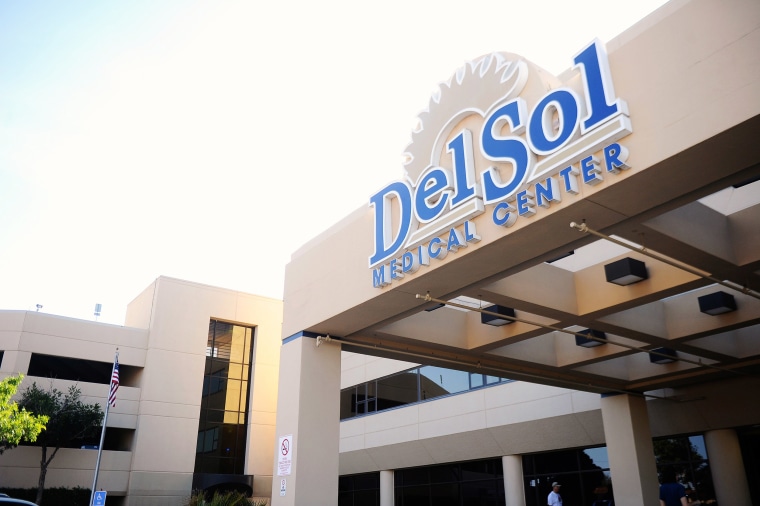
Johana Medina Leon, 25, complained of chest pains and was brought to Del Sol Medical Center in El Paso, Texas, on Tuesday, Immigration and Customs Enforcement said. That same day, ICE said she was processed for release on parole. Medina Leon died on the first day of pride month.
“This is yet another unfortunate example of an individual who illegally enters the United States with an untreated, unscreened medical condition,” said Corey A. Price, field office director for ICE Enforcement and Removal Operations (ERO) in El Paso.
Del Sol Medical Center in El Paso, Texas, U.S.Dan Dalstra / Reuters file
Allegra Love, the executive director of the Sante Fe Dreamers Project, a nonprofit that provides free legal service to immigrants, said Medina Leon did nothing “illegal” when she fled to the U.S following Department of Homeland Security protocol
“She didn’t violate a single law coming to the U.S. to ask for political asylum,” Love said.
Medina Leon, who was known to friends as Joa, had been detained in the U.S. since mid-April. On May 18, Medina Leon received a positive credible fear finding, ICE said. Advocates told NBC News Leon was seeking asylum in the U.S. as a transgender woman.
Medina Leon was being held at Otero County Processing Center, a private detention center in New Mexico where the ACLU and the Santa Fe Dreamer Project recently alleged poor treatment of and “unconscionable conditions” for LGBTQ immigrants. In a letter sent to ICE, the groups said “ICE’s practices at Otero have created an unsafe environment” for the LGBTQ detainees in Otero.
Medina Leon fell while in ICE Custody, where she also tested positive for HIV.
In a Facebook post about Medina Leon’s death, Diversidad Sin Fronteras, an advocacy group for LGBTQ refugees, said that Medina Leon had pleaded to ICE for medical attention. She “became extremely ill and unconscious” the group said.
Kris Hayashi, the executive director of the Transgender Law Center, said in a statement the group is “devastated and outraged, but not surprised” by the news of Leon’s death.
Referring to the deaths of both Hernandez and Medina Leon, Hayashi wrote, “these deaths are a direct result of U.S. government policy, and will continue unless we force dramatic change.”
In the wake of Hernandez’s death in ICE custody, activists and advocates have been sounding alarms on the treatment of LGBTQ migrants in ICE Custody.
When a spokesperson for Diversidad Sin Fronteras visited Medina Leon in the hospital, she said we was deeply cornered about the young women’s fate. “I said that what happened a year ago to Roxana in the month of May could happen to JOA right in there. And it did.”
Love, of Sante Fe Dreamers Project, told NBC News, “I give an interview a week about the medical conditions for trans women,” which she described as alarming and dangerous.
“If anyone wants to pretend to be shocked, did you miss a year ago when a trans woman died in custody in Albuquerque?”
Transgender activists Marsha P. Johnson and Sylvia Rivera will be commemorated with a monument in the city of New York.
It may be placed down the street from the Stonewall Inn, where the 1969 Stonewall Riots took place led by Johnson and Rivera.
The two transgender women of colour led the uprising against homophobic police raids, an era-defining moment in the struggle for LGBT equality.
Rivera and Johnson also later co-founded the organisation STAR, or Street Transvestite Action Revolutionaries, a group dedicated to helping homeless young drag queens and trans women of colour.
The monument will mark the 50th anniversary of the Stonewall Riots and it is proposed for the Ruth Wittenberg Triangle in Greenwich Village, the New York Timesreported.
It will also be one of the world’s first monuments dedicated to transgender people.
New York’s first lady, Chirlane McCray, told the newspaper: “The LGBTQ movement was portrayed very much as a white, gay male movement.
“This monument counters that trend of whitewashing the history.”
Marsha P Johnson
The Stonewall Riots
On June 28 1969, the police stopped by The Stonewall Inn on the grounds of checking for alcohol law violations and other transgressions, which is something they did regularly.
What actually occurred was police intimidation and demands for payoffs in return for not arresting or publicising the names of customers.
Johnson, known for her fierce activism and advocacy of homeless queer people and sex workers, was one of the first to resist police intimidation at the bar, and Rivera is rumoured to have thrown the first bottle.
The riot reportedly broke out when lesbian activist Stormé DeLarverie was attacked by police for saying her handcuffs were too tight.
Other Stonewall customers threw bottles, coins and other items at the officers as tensions boiled over when those inside the bar were dragged outside by police.
Both Johnson and Rivera, instrumental in the LGBT rights movement, are credited with playing major roles in the backlash against police brutality at the Stonewall Inn.
Bud Light has released a limited-edition rainbow coloured aluminium bottle to raise funds for GLAAD to celebrate World Pride.
The bottles will be available in bars across the United States during the month of June, and Bud Light will donate $1 to GLAAD for each case sold up to $150,000.
Bud Light debuted the bottles at the GLAAD Media Awards, which took place last weekend in New York City. The campaign marks the latest in a 20 year partnership between Bud Light and GLAAD.
Bud Light is ‘for everyone to enjoy’
Andy Goeler, vice president of marketing for Bud Light, said the company has been supporting the LGBT+ community since the 1980s.
“The way we see it, our beer is for everyone to enjoy, so we are looking forward to seeing Pride bottles at bars throughout the month of June and beyond,” he said.
“With the release of these new bottles, we hope to create something that everyone can feel proud to hold during Pride month that also makes a positive impact for GLAAD’s initiatives and the LGBTQ+ community overall.”
“The way we see it, our beer is for everyone to enjoy, so we are looking forward to seeing Pride bottles at bars throughout the month of June and beyond.”
– Vice president of marketing for Bud Light, Andy Goeler
Meanwhile, Zeke Stokes, chief programs officer for GLAAD, welcomed the initiative.
‘Bud Light stood with the community at a time when many brands did not’
“For twenty consecutive years, Bud Light has partnered with GLAAD in its mission to accelerate acceptance of LGBTQ people.
“Bud Light stood with the community at a time when many brands did not, and their continued outspoken support sets the bar for other global brands.”
The bottles will make an appearance at The Governors Ball Music Festival in New York City.
Limited edition bottle released to raise funds for GLAAD and to mark World Pride
This is not the first time the beer brand has come out in support of the LGBT+ community. In 2013, the company supported the introduction of same-sex marriage in the US.
In 2016, the company released an advert which featured Amy Schumer and Seth Rogen which celebrated same-sex marriage.
A number of brands have appealed to the LGBT+ community with pride themed goods
A number of brands have tapped into Pride in recent years. Last month, beer company DC Brau announced that they will be releasing a limited edition can that honours Marsha P. Johnson for Washington DC Pride.
Johnson was an Arican-American transgender woman and drag performer who played a key role in the 1969 Stonewall Riots.
Meanwhile, Converse last month announced the release of its Pride collection for 2019. The soles of the shoes feature the rainbow colours, and the shoe also features the transgender flag colours.
Maine banned gay conversion therapy for minors on Wednesday, joining more than a dozen other states that have outlawed the controversial practice.
Democratic Gov. Janet Mills signed the bill Wednesday, and it will take effect 90 days after the Legislature adjourns next month.
Conversion therapy aims to change a person’s sexual orientation or gender identity. Under the new law, professionals, including school psychologists, pharmacy technicians and social workers, who have advertised, offered or administered conversion therapy to a child could face discipline from licensing boards.
Maine joins 16 other states and the District of Columbia that have banned the practice. Supporters decry it as a harmful and note the American Psychological Association opposes the therapy.
“Conversion therapy is a harmful, widely discredited practice that has no place in Maine,” Mills said. “By signing this bill into law today, we send an unequivocal message to young LGBTQ people in Maine and across the country: We stand with you, we support you, and we will always defend your right to be who you are.”
A law against conversion therapy was signed recently in Massachusetts, while states including North Carolina are considering such legislation this year.
“With this law, Maine is taking seriously its responsibility to ensure youth and parents who seek support are not subjected to fraudulent and dangerous practices under the guise of therapy,” said Mary Bonauto, the Civil Rights Project director for GLBTQ Legal Advocates & Defenders.
Maine’s former Republican governor vetoed a similar measure last year, but the bill has gained momentum this year under a Democratic-led Legislature. Republicans argued that the bill was unnecessary, while also contending that it would prevent parents from seeking religious counselors for their children.
“There have not been any recorded cases of this happening in Maine,” said state House Republicans spokesman John Bott.
Republicans failed to pass an amendment to exclude talk therapy and counseling from counting as conversion therapy.
Maine’s law exempts treatment that offers acceptance, support and understanding while being neutral on sexual orientation and gender identity.