Marvel has revealed its first ever drag queen superhero in an X-Men series.
Shade is a mutant who is also a drag queen, and she’s already a big hit with the fandom.
The superhero sashayed her way into the world with a single panel appearance in last month’s Iceman #4.
Fans are already creating fan art of Shade | Photo: Twitter
But many Marvel fans wondered whether it was just a drag queen posing as a mutant or not?
Writer Sina Grace, who’s out, has now revealed that Shade is a mutant and will be appearing in future issues of the comic.
‘I really wanted this series to push readers to new and better stories about the whole queer experience and how it applies to being both a mutant and a superhero,’ Grace told The Advocate.
‘There’s a million different queer perspectives and we’re only scratching the surface.’
Who wants a Shade action figure? | Photo: Twitter
Iceman is Marvel’s only solo series featuring a queer lead. Bobby Drake, the character, came out in 2015 and had his own solo series in 2017. However, this was canceled due to poor sales.
But due to fan demand, a new monthly comic was created in 2018.
‘My goal with this new Iceman series is for for everyone, myself, the readers, the characters involved in the comic book, to have fun,’ declares Grac
Shade’s mutant power is teleport. She can open pocked voids that allows her to step into and out of her handheld folding fan.
A debut collection of linked short stories about love, loss, and intimacy, Oranges is a gentle look at what it means to come of age and grow older as a gay man in the Midwest. The slim collection of nine tales sketches the life of Michael Dolin, a civil lawyer who grew up closeted in Mason City, Iowa, before finding self-respect in Minneapolis as an adult. In spare prose, author Gary Eldon Peter portrays Michael’s lifelong journey toward inner peace with care and compassion.
The first story, “Blankets,” opens the collection with the protagonist at his most vulnerable. A recent college graduate, Michael struggles to balance his attempts to study for the LSAT with the demands of his job at a local hospital, where he cares for acutely depressed patients and dreams of finding stability. The aspiring lawyer also has just moved into the home of his partner, Kevin, who is living with HIV in the eighties. How the couple’s relationship will grow is by no means certain, but the intimate moments the two men share at their kitchen table are among the most memorable in the story, which, as with the other tales, unfolds in a series of succinct vignettes.
The rest of the collection focuses on either Michael’s adolescence or his mid life. In “The Bachelor” and “Donny,” Peter fully renders the confusion and turmoil that accompany Michael’s teenage realization that he’s gay. By contrast, in “Skating,” “Oranges,” and “Sun Country,” the author sympathizes with an adult Michael’s efforts to help care for Kevin, his mother, and his father, all of whom are ailing and nearing their deaths. Across stories Peter switches from first to third person and moves around in time, but his primary concern always is to flesh out Michael’s interiority.
“Wedding,” the final story, ends the collection on an uplifting note. The story explores Michael’s relationship with his new partner Stephen as the couple prepares for and attends the wedding of his nephew Jason. For much of the story, Michael frets over the idea that his sister Susan, Jason’s mother, will react negatively to his male partner’s appearance at her son’s wedding, but his worrying amounts to very little. Knowing how lonely Michael has been since Kevin’s death, Susan deals with the unfamiliar experience as best as she can, even if she doesn’t quite welcome Stephen into the family with open arms. The two men end the night dancing in their hotel room, optimistic about the future.
Warmhearted and thoughtful, Peter is at his best when he’s attending to the nuances of Michael’s close relationships. Whether charting Michael’s clumsy interactions with his father at a retirement home or detailing the sundry ways he tries to brighten Kevin’s last days, the author manages to make each relationship feel fresh and distinct from the rest. The best stories in the collection are those that show Michael successfully closing the distance between him and a loved one, after a period of emotional or physical separation.
As sweet as the stories are, they sometimes enter the realm of the saccharine. Conflict rarely erupts across these tales, often appearing only as a distant threat. The stories also tend to be a bit too well plotted, and the endings are uniformly forward looking and hopeful, even in the face of great loss. Time and time again, Michael finds himself in the difficult position of having to comfort his loved ones as they approach death, but the author rarely dwells in his protagonist’s pain or frustration. A little more anger would have heightened the realism of these slice-of-life stories
In spite of some blemishes, Oranges is still promising as a debut collection. Peter is talented at honing in on small moments that reveal character, and he sensitively captures the quietude of life in the Midwest. It’s not difficult to see why the collection won the Many Voices Project competition in Prose, hosted by Minnesota-based New Rivers Press. From his straightforward language to his penchant for precious endings, the author brushes aside cleverness and cynicism at every turn, and his stories earnestly depict an endless longing for human connection against the backdrop of a placid landscape.
We are living in a golden age of lyric, hybrid forms. Following in the queer lineage of Maggie Nelson’sBluets, Dionne Brand’s The Blue Clerk is a fascinating collections of prose poems and hybrid poetry.
The Blue Clerk is a timely book. Self-identified as an “Ars Poetica in 59 Versos,” The Blue Clerk follows the narrative arc of a speaker/poet and an omniscient clerk—who may be the poet/speaker’s archivist, confidant, guide, or Maker, depending on where one finds themselves in the story. Captivating us with a similarly rich landscape of hues (including the fascination with indigos/blues found in Nelson’s book), this collection interweaves the personal with global in a world that feels simultaneously familiar, dissimilar, futuristic, and as old as time.
Starting at something that could perhaps be a shipyard, or Ellis Island, or a stormy dock anywhere in the world, we as readers traverse through a lush landscape similar to the worlds of Gabriel Garcia Marquez (who is referenced), Jorge Luis Borges (who is also referenced), and Andrea Barrett (who is not referenced, but seems to exist in the same canon). And then, when we’ve gotten comfortable with a land of bygone days, we are startlingly drawn to an aching present—
In this city, you fall in love at Chester subway, it’s not a beautiful subway so your love makes it so. But its ugliness may doom your love, and you know it by you love anyway.
This is a tender, present moment, but also timeless. In fact, one of the most remarkable components of this manuscript may be that Brand has managed to make an entire gamut of time itself “timeless,” portraying moments as precious and beautiful, while also as hard as flint. Which is not only challenging to do well, but also intuitive to the way we emotionally function as people. While there are queer themes in the book, I would argue that the queerest thing about The Blue Clerk is exactly that: the skewed, nonlinear spectrum of time.
It takes a truly gifted writer to not only write about the queer experience as identity, but to also skillfully and astutely motion to the entire concept of temporal universality. The Blue Clerk may be one of the best collections of prose poems I’ve read in a long while.
An archivist is a professional obsessive with an impossible task: to collect, preserve and organize everything within one’s chosen bounds. Julietta Singh is not an archivist in the typical sense: on the contrary, she says, she has “a long history of becoming discomfortingly overwhelmed in spaces that contain masses of information.” Instead, the obsession that propels No Archive Will Restore You is the idea of the archive itself, and what it might mean to behold one’s own body—in this case, a queer, multiracial one marked by experiences ranging from bulimia to childbirth—as an archive worthy of passionate study.
Her starting point is a quote lifted blithely out of context from the Italian Marxist Antonio Gramsci, who maintained that the first step in developing a coherent philosophy was to assess oneself as “a product of the historical process to date which has deposited in you an infinity of traces,” which must be inventoried to achieve self-knowledge. Singh is somewhat more interested in the deposits left by her personal history than by Gramsci’s great river of world history, but she dips into broader forces as well: the body can be shaped by many things, not all of them strictly physical. She speaks with rare candor about the material conditions of her labor as an academic within a system that churns out legions of “underpaid adjunct laborers without access to healthcare, facing our mid-30s without a clear sense of what it had all been for.” There is a riff on the politics of vegetarianism, and a thread tracing how the wellness industry and medical establishment converge to steer women toward natural remedies and psychological explanations for life-threatening conditions.
This is not even a quarter of the ground Singh wanders across—impressive in a book that barely crests the hundred-page mark. (At times I did wish she’d dwell longer in one spot, sometimes with the desire to forestall the occasional lapses into theory-as-poetry but generally because even her briefest asides are compelling.) One obvious predecessor for the book’s digressive form is Maggie Nelson’sThe Argonauts, which No Archive both references and closely follows in its blend of the academic and the couldn’t-be-more-personal. Which is not to say confessional. No Archive moves so briskly between subjects that the larger narrative of Singh’s life emerges only in flashes, and even major events can blur at this speed. Undescribed family trauma and an unexplained injury, for instance, haunt these pages like a kind of muscle memory.
If Singh glances away from such details, it may be to avoid framing No Archive as solely a catalog of damage. Early on she rejects the idea of focusing on the bodily “imperfections” that women in particular “see magnified so acutely that when we look at ourselves we see not body but flaw… I do not want to gather a body archive strictly in order to convert culturally produced deficiency into historical value; to begin to love in other words, what I have been trained to perceive as a flaw.” She’s after something messier: a portrait of the body as not so much vulnerable as permeable, continuously exchanging signals and material with the world around it.
That exchange produces joy as well as pain. Singh describes finding both inspiration and animal satisfaction in the birth and parenting of her daughter, produced and raised in partnership with a queer best friend. The book is dedicated to Singh’s romantic partner, the trans filmmaker Silas Howard, who shows up here as the object of a rapturous new love forced by distance to progress largely via text message. (Singh amusingly dissects the “biochemical desire” for an iPhone’s chime to supply a fix of attention, and “the private drama that unfolds in me each time I send a text message and receive an emoji response.”)
It’s perhaps a measure of Singh’s commitment to the instability of our embodied selves that she ends a long section on her blissful relationship by fast-forwarding to its end so she can address her partner’s next partner: “I want to articulate to her my devastation in advance. But also, and crucially, to welcome her lovingly into this genealogy of womanliness to which she will belong.” What might happen to our various relationships should we adopt Singh’s view of the body as unbounded and bountiful archive? Maybe something like this remarkable renunciation of ownership, this invitation to discover novel forms of community among our shifting selves.
Jeanne Winer’s second novel, Her Kind of Case, is an authoritative, grounded, and deeply human legal thriller. Crime fiction in part stems from the 19th century social novel, so it’s always a treat to read a contemporary novel that sheds light on a contemporary social issue: in this case, the complicated origins of homophobic violence and how our legal system handles teenagers involvement in such violence.
Winer’s Lee Isaacs is a 59-year-old criminal defense lawyer in Boulder, Colorado. She’s seasoned, savvy, and winding down a stellar career. She’s also a loner, still grieving the death of her husband. A difficult case falls in her lap: a sixteen-year-old skinhead, Jeremy, has confessed to participating in the horrible beating death, a “boot party,” of a young gay man. His earnest aunt believes that he’s innocent, that he was incapable of such violence, but nearly all the evidence, most of all the confession, point to a different conclusion. Furthermore, Jeremy seems uninterested in defending himself. An enthusiastic practitioner of Tae Kwon Do, Isaacs thrives on competition, always pushing herself physically and mentally. She’s intrigued by the case, because it seems impossible to win. Once she meets Jeremy, though, she senses there’s more to him than the evidence suggests; ultimately she defends him because she wants to understand him.
An attorney with thirty-five years of experience in criminal defense,Winer portrays lawyers and the machinery of the court system in precise detail, but never bogs down the momentum of the story with unnecessary exposition. She has a good instinct for when to dramatize courtroom scenes and when to offer summary, a key skill for legal thriller writers. She creates tension by fleshing out all the complex personalities of all the primary players, from to Jeremy to Carla Romano, the lead investigator, to Mark and Bobby, a gay couple and her best friends, who object to her defending a violent homophobe, to Dan Andrews, the DA, her legal opponent. Her relationship with Dan, in particular, is a blend of mutual respect and sparring, an echo of her Tao Kwon Do matches. As result, it’s one of the most compelling relationships in the book.
In a less compelling version of this story, Winer would’ve made Lee a young, hot twenty-something lawyer with something to prove, the DA would’ve been cocky and despicable, the defendant a pawn, and the plot run-of-the-mill. Writing Lee as a seasoned professional woman was a refreshing and dynamic choice. She’s equal parts wise, passionate, intense, and compassionate. (Please, writers and publishers, more characters like this, please!) Her relationship with Jeremy in particular is touching, not purely because she connects with him, but because he plays a role in her healing from the lost of her husband. In the most unlikeliest of ways, they need each other. As I was reading, I was reminded that the legal profession and justice system, however imperfect, is about people.
In my review of Queer Games Studies, I approached the idea of queer games studies as a chance overlap of queer theory and games studies. With a breadth of scope, the lens of queer theory could obviously be applied to many mediums, (board, card, and video) games included. In the introduction to Queerness In Play, the editors present the idea that queer theory and games studies are both studies in the negotiation of spaces and situations, elaborating:
In both queerness and games, the idea of boundless freedom is a mirage, but also for both, there is meaning in exploring the possibilities that occur within the boundaries, especially when that exploration allows to us to see the ways in which those boundaries can be tested, expanded or reconfigured.
It makes sense to examine the rules of one world, to see the expansion of possibility in another.
Where Queer Games Studies, a prior collection of studies and essays taking a snapshot of the field, was something of a hub or a showcase of the many different areas to explore within the young but growing field, this collection has a slightly tighter focus. As the title Queerness In Play implies, the studies and essays presented are interested in both sides of the screen and the interaction between the two. Even when taking a close look at characters in virtual spaces, authors are also shedding light on players’ actions with and towards them inside games and reactions to and conversations around them outside of the games.
Sorted into four parts, “Queer Foundations,” “Representing Queerness,” “Un-gendering Assemblages,” and “No Fear of a Queer Planet: Gaming and Social Futures,” the book examines present, past and potential states of play, players and player avatars.
The first section includes two examinations of games studies itself. Sarah Evans, in “Queer(ing) Game Studies: Reviewing Research on Digital Play and Non-normativity,” presents research into the amount of work regarding queerness in games studies has been published, and in “Envisioning Queer Game Studies: Ludology and the Study of Queer Game Content,” Evan W. Lauteria makes a case for the importance of applications of queer theory in game studies.
“Representing Queerness” examines both characters that players can control and those they encounter and interact with, ranging from those that explicitly identify/are identified to be within the LGBTQ assemblage to those that provide space to examine queer themes. In the former category, there is a look at the portrayal of two characters, Ellie and Bill, from The Last Of Us, a discussion of the lack of same-sex romantic relationship options in the life-simulation game Tomodachi Life, and an examination of how androgyny is ‘allowed’ in protagonists while, in contrast, gender-variance is portrayed in a villainous light. As for queer subtext, there is a survey of gender performance of the various heroes of the Final Fantasy series, an analysis of the reveal of Samus’ appearance underneath the armor in Metroid in relation to similar ‘revelation’ narratives in other media, and a discussion of the discussion surrounding Zelda’s gender identity as Shiek in The Legend of Zelda: Ocarina of Time(and other appearances).
The latter half of the book focuses on the players and the act of play as well as the changing environments for play. Where “Un-gendering Assemblages” takes a look at individual roles and play, “No Fear of a Queer Planet: Gaming and Social Futures” considers gaming communities, small and large.
“Cues for Queer Play: Carving a Possibility Space for LGBTQ Role-Play” looks at the various paths and hurdles for queer roles and queer players in table-top, video game (offline and online), and real-life roleplaying games. Nathan Thompson looks at the gay MMORPG ‘mod’ scene in “‘Sexified’ Male Characters: Video Game Erotic Modding for Pleasure and Power” and how it provides a digital mirror to real-life politics of desire. “Let’s Come Out! On Gender and Sexuality, Encouraging Dialogue, and Acceptance,” presents a case study using a board game, Let’s Come Out!, which requires players to roleplay certain identities, to encourage discussion and self-reflection about assumptions and actions.
“The Abject Scapegoat: Boundary Erosion and Maintenance in League of Legends” examines the gender policing of an e-sports player amongst the game’s players and media. “Outside the Lanes: Supporting a Non-normative League of LegendsCommunity” looks a how members of an LBGTQ friendly e-sports club at a college attempt to create an inclusive space and time. “Out on Proudmoore: Climate Issues on an MMO” discusses the creation and social maintenance of the titular LGBT-friendly server in the massively popular game, World of Warcraft.
This collection does a lot to make it recommendable for those interested both queer and game studies. It provides various angles to understanding queerness using the stories and characters presented in games. It showcases an impressive effort of in-depth research as well an appropriate familiarity with the medium. And, it situates its discussion within appropriate contexts, often in the form of player discussion.
However, I must note the reliance on using or examining popular series, something which arguably leads to a slightly inaccurate picture of queer representation in games. It makes sense to use popular series and games to write about: authors are limited by both publishers’ and readers’ varying levels of knowledge regarding video games. Additionally, more popular games reach wider audiences which in turn provide more things to analyze. However, in a time when indie games can sometimes take up equal mindshare as mainstream “triple A” games, it seems odd that those made by smaller studios, like Undertale or Dream Daddy, aren’t discussed alongside other games.
Media is often a mirror for audiences, presenting a version of the world on screen, on canvas or on the page. Unlike most other media, however, games allow for (increased) interaction with the creation. In addition to the work itself and the reaction to it, another facet to be studied are the actions one can take in relation to it. And, in the case of online gaming, the media is less a separated reflection, but an extension of the tangible world.
As the games industry continues to grow and the field of queer games studies continues to widen, solid foundational texts are needed. Queerness In Play is a deeply researched guidebook whose authors deftly navigate multiple contexts and whose editors understand that game studies is not just an examination of other worlds but our own as well. And while it can only cover so much ground, it also does an effective job of inspiring future work.
Queerness In Play
Edited by Todd Harper, Meghan Blythe Adams, and Nicholas Taylor
Palgrave Macmillan
Paperback, 9783319905419, 300 pp.
October 2018
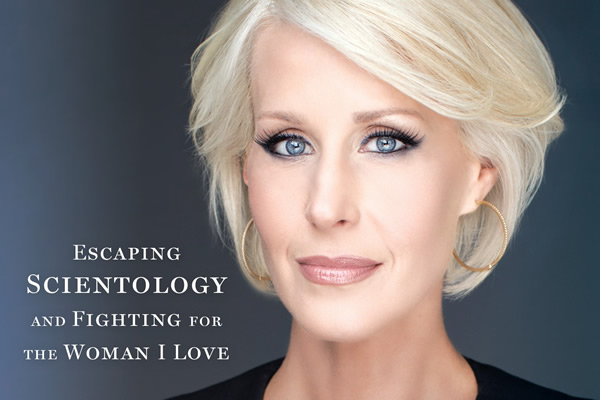
For most of her young life, Michelle LeClair was a worrier.
She had to be: her mother was somewhat of a free spirit who married often and “was gone a lot.” For that, LeClair grew up as the Independent Responsible Child; the one who, as a teen, wanted a job so she could pay for her own car, as she recalls in the new memoir “Perfectly Clear.”
And so LeClair’s mother helped her get a job selling L. Ron Hubbard training materials for Sterling Management, an organization run by Scientologists. It didn’t take long before LeClair surprised everyone, herself included, by excelling beyond expectations.
Her success and her mother’s influence led the Church to invite LeClair to one-on-one member counseling, ostensibly to determine her “purpose on earth,” but also to lead her deeper inside Scientology. Church members offered her their friendship, but LeClair noticed that she was asked nearly constantly for more money. As her career rose, so did the Church’s requests for donations and soon, she was writing astoundingly frequent five-figure checks to the organization.
And it might’ve continued so, if not for one thing.
As a teenager, LeClair fooled around once with a female friend, which she had to confess to a fellow Scientologist, information that went into a file. Even after LeClair married and had children, her long-ago fling was flung in her face repeatedly, particularly after she tried to divorce her abusive husband. Scientology has long considered homosexuality repugnant, she was reminded, and that nagged at her enough to make her question this faith in which she’d been raised.
She questioned even deeper when she fell in love with a woman named Charly.
Halloween is long over. The decorations have been put away. But if you didn’t get scared enough then, “Perfectly Clear” will finish the job perfectly.
It starts with the opening pages, in which author Michelle LeClair is arrested for a crime that never happened, fabricated, she says, by Scientology members. It’s a small story compared to what else follows, but its heart-pounding presence in the front of the book takes readers by the scruff and shakes us.
That leaves a lingering feeling of alarm that continues to run in and out of the rest of this memoir as LeClair (with Robin Gaby Fisher) lets readers see what she did not. We’re privy to the manipulation she recalls but didn’t notice then, the pressure she felt but dismissed and the dawning fear that she could never get away.
That makes for an excellent real-life love story wrapped up in a psychological thriller that’ll also make you pick your jaw off the floor about every third page.
Recently, at a talk on queer literature, a panelist said it was time to move past first love and coming out narratives. I almost exploded on the spot. How do you get tired of first love stories? How do you get tired of coming out?
I’m writing from a room full of bookshelves bowing under the weight of coming out stories, some recent, some old, all necessary. I’m thinking of Benjamin Alire Saenz’ Aristotle and Dante Discover the Secrets of the Universe, of Chinelo Okperanta’s Under the Udala Trees, of Audre Lorde’s Zami. Even David Levithan’s Two Boys Kissing, which comments that some of its protagonists have never had to come out because they were always out, is a coming out story.
I’m trying to explain the outrage I feel, a week after National Coming Out day, when inevitably someone on my social media feed, someone from some alternate futurity where there is no Trump and no fuckery and it’s all cupcakes 24/7, tells me we have to move beyond coming out.
I admit to a bias towards these books. I admit to a bias towards books about first queer loves and coming out. To me, the appeal of the queer first love story is that it contains within it a narrative of becoming. Queer love in this world is not just about loving or who you love. It’s about who you are: a discovery of a world, beyond the veil of the dominant paradigm, that you always suspected existed, but were too afraid to trust.
It’s Harry Potter: the owl shows up at your window and says guess what, you’re not going to Muggle School, you’re going to Hogwarts, and although there is all the suffering in the world ahead, we get to do things differently there. We get to redefine desire, time, and family. It’s Narnia: if you just get through this closet, I promise you’ll find a world of possibility. At least it’s Xena and we get to band together.
The trajectory of queer first love stories is the trajectory of infinite potential and adventure. It may be fantasy, but it’s the kind of fantasy that makes the world a little more bearable. The day you get tired of the coming out story is the day you get tired of realization, of becoming, of creation and becoming with others. I don’t know what you read about when you get tired of becoming. Maybe you read about ennui. I’m told there’s a lot of footnotes and tennis involved.
I need queer first love narratives. Maybe you do too: we read and write and cling to these books so hard because of what we can’t do with them: we can’t throw them into a time portal at our younger selves at a time when we most needed them, maybe with a little note attached saying, “you’ll get through this. It gets better for some but not for everyone. Look out for one another. Remember to floss.”
We read write them for others and for our younger selves, these books that we needed, that could have changed our lives. We read and write them as guidebooks for the poor lost selves we were: What is queerness? How do I do queer love? What time do I show up? What are the steps, where do I put my feet? We read them for joy and we read it for healing, for the if only and for the yes please, both to revisit those first loves and to live through characters who are either braver than we were or had more room to navigate their desires.
I love queer first love and coming out books with the wonder and passion and bitter fury of Molly Grue when she sees her first unicorn: where were you when I needed you? I need them in the world and I don’t think we’re done with them and if you’re writing one right now and need a pep talk, come find me—I’ll tell you how much your work matters.
I’m opening with this because I’d like to flag my tendencies, as a reader reviewing a novel of first queer love that usurps my notions of the coming out narrative. This novel troubled and stayed with me and I want to explore why.
Juno’s Swans by Tamsen Wolff is not a traditional queer “first love” novel. It’s not a story about becoming and it doesn’t contain bromides about the magic of new love. What it offers instead is a story about the limits of love: both the crash at the end of a first love, and the tunnel vision infatuation can give, the kind where everything outside that adoring gaze becomes flattened.
Juno’s Swans gives us Nina, a high school senior washed ashore from a summer in Cape Cod in which she went to an acting residency, fell madly in love with Sarah, and had her heart broken. It gives us the moment of falling in love and the knowledge that it must end. It also gives us richly drawn characters and complex situations: her best friend Titch, who is awkward and difficult in all the best ways; an older English professor who enters into a sexual relationship with Nina, then a high school junior; a half-absent mother; another older male acting teacher who also enters into a relationship with his teenage female student (unequal power dynamics and predation are a frustratingly under-explored topic in the book—I counted four such relationships). The novel gives us a particular moment in space and time: early 1980s and the early HIV/AIDS years, New York. It gives us magnificent clear prose and dialogue. It gives us all of those things, but the novel’s preoccupation is unapologetically with Sarah and Nina’s love for her.
Juno’s Swans soars when it recognizes and illuminates the tunnel vision of love, the before and after, and the struggle of conveying it:
the worst of it is that this connection doesn’t come often, sometimes doesn’t come at all, and once it has, it colors everything. If you don’t know what I am talking about, I don’t know whether to say, I hope you never do, or Whatever you do, never settle for anything less.
Wolff’s prose is so engaging, it makes Nina engaging, despite her focus on Sarah, who is perhaps the least interesting character in the book.
Where it dips or maybe succeeds a little too well is where it gives us the limits of love: not only the end of Sarah’s love for our narrator Nina, which is sad, but Nina’s inability to see the world beyond. Outside their love affair, Nina’s grandmother is dying, Professor Pedophile is sending her increasingly desperate love letters, her best friend Titch is icing over. Outside, people in their circle are contracting what is then labeled Kaposi’s Sarcoma, and appearing at the novel’s margins with lesions and sunken eyes. There isn’t really a coming out because Nina doesn’t seem to notice the closet, or a world beyond.
Sometimes that love-myopia leaves me confused about the details and logistics: how do Nina and Sarah, high school-aged, live together as lovers over the course of the summer? How do they know how share a living space and make their lovers three course dinners? Nina’s single-minded focus on Sarah leaves big questions unexplored (in the absence of exploration, the subject of older men in power dating teenagers felt normalized—like Alan Bennett’s The History Boys, but without the puns). Nina’s bad case of loving Sarah renders HIV/AIDS–mentioned but not really digested—more like epoch scene setting, a walk-on subplot. I wanted the novel to take on those subjects. I wanted those cultural complexities and cruelties and limits of the world to be part of the adventure, part of the with of Nina’s becoming.
Without Nina’s ability to see what’s beyond her love, and without the novel’s willingness to explore that deficits of that spotlight, some of the novel’s metaphors go rogue—like the title, Juno’s Swans–a reference to Celia and Roselind’s closeness. Was that for Nina and her love Sarah? Was that for Nina and her dropped friendship with Titch? In the bounce of the reference, I couldn’t help but think of another mythological swan, Leda’s, in which an older male god abuses a power dynamic, like the professors in this story, and no one seems to mind.
And maybe that’s the heart of this novel: how infatuation can expand us so much in one direction, it limits us in others. It specializes us. It makes us miss the wildness of the world beyond. I want to find Nina in a year, or five, or ten, and say: now tell me the story of that summer. Now tell me who you’ve become. And what house you’ve been sorted into. And what it is to reach through a closet into a cold world that goes on forever and that we make together, and alone. How do we survive? Someday, I might need to know.
In Conversation: Gar McVey-Russell & Philip Robinson
Philip Robinson is an award-winning poet, writer and activist. His writing of poetry spans forty-nine years. Robinson is anthologized in several gay/queer literature’s front-runners: In The Life, A Black GayAnthology, The Road Before Us: 100 Gay Black Poets, The Last Closet: real lives oflesbian and gay teachers, and When The Drama Club is Not Enough.
Philip Robinson also has two of his own books of poetry, We Still Leave a Legacy and in The TrenchesThe Voice of A Guidance Counselor. Philip is a long-term volunteer @ AIDS Action Committee (AAC) of Massachusetts on their Bayard Rustin Community Breakfast Committee. This iconic event will celebrate its 30th year in 2019.
Philip Robinson and Gar McVey-Russell both began writing in the 1980s, Philip poetry, Gar fiction. Their writing spans from the beginning of the AIDS epidemic and the Black Gay arts movement to the age of RuPaul’s Drag Race, and greater visibility of black queer folks from the entire spectrum of gender and sexual identity. In this discussion, both writers discuss their beginnings, influences, and where their writing stands today.
Gar McVey-Russell
Gar: Philip, your writing dates back to the 1980s, a period of great significance for Black Gay literature. I came out in the late 80s, so your voice was among those that provided me a safe space in which to explore my sexuality. What can you tell me about that time? Who influenced you and guided you in your writing?
Philip: I had the distinct honor to have met and become close and dear friends with two extraordinary writers, the late Thomas Grimes (Milking Black Bull: 10 Gay Black Poets,Poets on the Horizon) and author of numerous plays and the late Roy Gonsalves (PERVERSION and Other Countries: Black GayVoices). These two individuals, soul-mates as well, changed my life through their love of the written word and ammunition of love in their delivery.
My literary “girlfriend” the late Joseph Beam took twenty-nine of us black gay writers and put us into a literary first, In The Life: A Black Gay Anthology. The outgrowth of this book came about because Beam felt a frustration with gay literature that had no message for and little mention of Black gay men. “The bottom line” he wrote, “is this: We Black gay men who are proudly gay. What we offer is our lives, our love, our visions.…We are coming home with our heads held up high.”
So Gar, is there a particular audience you are trying to capture through your writing?
Philip Robinson
Gar: I write stories that I would have wanted to read in my late teens or early 20s, when I was struggling with my sexual orientation. I didn’t read any gay fiction growing up. I think I was too scared to go there. But I was hungry for it. In Invisible Man by Ralph Ellison—a book that has stayed with me for decades—he includes a brief passage about gay nurses at the teaching hospital at the protagonist’s black college, and the secret lives that they live. Honey, I must have read that passage a half-dozen times! Sadly, the gay nurses never came up again. So I hope my writing will speak to others who are dealing or have dealt with issues of race and sexuality.
At the same time, I’m still naive enough to think that everyone, regardless of background, will want to read it, should read it. Case in point, a reader who identified herself as a straight white woman wrote a very lovely review of my novel on Good Reads. She wrote that she could identify with my story easily, because it deals with belonging. I think it’s important for all of us to find each other’s humanity. Really, it’s the only way in which humanity will survive.
Philip you have written a lot about the AIDS epidemic. How challenging is it to write about all whom you’re lost to AIDS? Has time permitted you the ability to do so?
Philip: In the beginning stages of this pandemic known as HIV/AIDS, I, like many others were at a precipice. It felt like I had been taken to the end of a long deserted road with no directions as to where to turn. I couldn’t begin to grasped the magnitude of personal friends I knew who had contacted the virus. I almost felt like I was witnessing a tremendous encroachment in my space, our sacred world, known as a community. People in rapid succession were being taken to the hospital, seen by doctors who themselves were confronted with this medical uncertainty, and in so many cases, these same folks were dead within months of their diagnosis.
In the late 1980s, I took the opportunity to channel my frustration, the intense pain, unanswered questions by volunteering at the AIDS Action Committee (AAC) of Massachusetts. I had heard about this new organization founded by Larry Kessler that was attempting to find ways to help us who were thirsty for information. Somewhere in that pursuit I was hoping to hear that this sudden departure from our norm, was an aberration of sorts.
Long-time social activist, and staff member at AIDS Action Committee, Harold DuFour-Anderson, presented a great concept to the AAC staff to start an annual Breakfast honoring the principles of the legendary black gay community organizer of his time, the late Bayard Rustin. In its design, the Bayard Rustin Community Breakfast (BRCB) was created to recognize the roles of lesbian, gay, bisexual and transgender people from communities of color in the fight against AIDS epidemic.
As a writer, I often siege the opportunity to write about the insurmountable pain that surrounds me. The AIDS epidemic became that unspeakable malaise. There was this vulnerable cloud that casted a mask over us. So, I wrote to escape the suffering. I wrote about people I had met through our monthly readings together.
So, in my need to find solace, in 1988, I wrote this poem, We Still Leave a Legacy. In this particular piece I attempted to capture the dismay, a sense of silence, but also a degree of hope and determination. I needed to believe no one’s life is in vain. I firmly understood that yes, people die, but their legacies will live on. This was one way to cope with the vast loss. It was clear to me we needed to pay homage to those who came before us. In a spiritual way, we created our sense of hope, to diminish the fear.
What influenced you to write your new book, Sin Against the Race? What are some of the themes that are pronounced in this piece of work?
Gar: I just went to a screening of Tongues Untied recently at Oakland’s new LGBTQ Center in the Lakeshore district. It’s been a while since I had seen it. But scene after scene, I saw parts of my book—it influenced and informed me that much. For instance, there’s a scene when Marlon talks about how he learned about his identity behind the epithets thrown at him (faggot, motherfucking coon). I have a scene where my protagonist Alfonso says, that it doesn’t matter if he’s called a nigger or a faggot, the pain is the same.
So one of the major themes of the work deals with homophobia in the black community. It took me a while to realize that this is where I wanted to go. I needed to time to find that voice and give it permission to speak. I felt like I had to fight some internal barriers—there’s a strong sense in the community about not airing our dirty laundry. As the story evolved, and became, I think, more nuanced, then I felt better about this theme being my center. One thing I ended up doing is tackling the issue inter-generationally. So we see instances of homophobic tendencies in Alfonso’s father and grandfather, two political icons lionized by the larger community. We also see folks Alfonso’s age, Leon and his love interest Jameel, maintain a homophobic front to “keep it real.”
Those of us who are black and queer still live behind two veils sometimes, and we encounter a lot of the problems W.E.B. DuBois discussed over a century ago to this day. I’d say the difference now is that we’re a little less invisible than we used to be. That’s cause for hope.
“‘I want to sleep with a woman,’ I said. ‘But I don’t want to leave you.’”
That’s the salvo that ignites the central drama of Leah Dieterich’s new memoir, Vanishing Twins: A Marriage. At the time, she thinks of herself as “straight but interested in women,” having spent her college years making out with girls at frat parties on the pretext of male titillation. As a young wife, she’s still inclined to link her queer desire to a man: “I could still be just like him—a straight person who wanted to sleep with women,” she thinks. “It let me become more me without becoming less him.”
Make no mistake: Dieterich hears your yikes and raises it. This is a book about the pursuit of coupledom past the point where the culturally acceptable search for a soulmate leaves off. Starting with a childhood spent staring into the ballet studio mirror, Leah keeps watch for the twin she believes she ought to have had. Her vigilance roves through realms interpersonal, artistic, and even medical. Vanishing Twin Syndrome is the relatively common phenomenon of a twin pregnancy collapsing into one, and Dieterich reports from her reading that “if the less viable twin is not consumed, it ‘exists in a kind of limbo, compressed by the other to a flattened, parchment-like state known as faetus papyraceus.’”
There is something uncanny about twinship, of course; creators throughout the ages have mined it for camp or horror. An obsession with finding or transforming oneself into a twin is routinely painted as narcissistic, incestuous even. Dieterich plays with all these connotations in due time. “The idea of lovemaking in the womb got me hot,” she says at one point, and whether that line makes you guffaw or gag may indicate how much patience you’re likely to have with Vanishing Twins.
By that late passage, Dieterich has revealed that she’s a bit slyer than she comes across in the first act. No amount of mirror-gazing will produce self knowledge on its own, and adolescent Leah does not dig deep. She gets into journalism because majoring in nutrition requires chemistry, then switches to advertising because interviewing sources is too hard. Of a new friend/crush, she chirps, “I always liked girls with thick hair; I felt I had more in common with them than girls with thin hair.” When she meets her future husband, Eric, she marvels at a series of less-than-astounding coincidences: they’re both left-handed, both the products of long marriages, and both interested in art and being very thin. Still, those points of connection are enough to spark a passionate marriage.
Getting married doesn’t force Leah to grow up; when Eric goes out of town without her, she has her mother put her up in a hotel across the street, where “there’s always someone on duty at the front desk if anything goes wrong.” But getting restless in her marriage does. After the couple fail to find a willing party for a threesome, Eric agrees to open their relationship—which is convenient as his ascendant art career takes him to far-flung residencies.
Dieterich outlines the fraught dynamics of a newly open relationship with merciless precision. “I didn’t want to give him ground rules because I worried that if something was off limits for him, it would be off limits for me too,” she recalls. Leah gets what Eric indignantly calls a “lesbian haircut” and becomes enmeshed in a long-distance relationship with a Spanish filmmaker, trading emails about their periods and photos of the moon. Eric, meanwhile, discovers dancing, Marx, and other willing women. During their instant messenger dates, Leah tries to hide her alarm:
I punctuated my responses with exclamations. Whoa! Oh wow! Haha! I wanted to be supportive in the way he had been with me. I wanted to look excited. And I was, at an atomic level. It felt like everything inside me was dividing and dividing. Like it was all going to come apart.
In such disintegration lies room for redefinition, and Dieterich describes that messy process with a level of intimacy that often amounts to bravery. The marriage at the heart of Vanishing Twins may snap back into its original shape eventually, but from the inside it feels bigger than before.
Vanishing Twins: A Marriage
By Leah Dieterich
Soft Skull Press
Paperback, 9781593762919, 304 pp.
September 2018