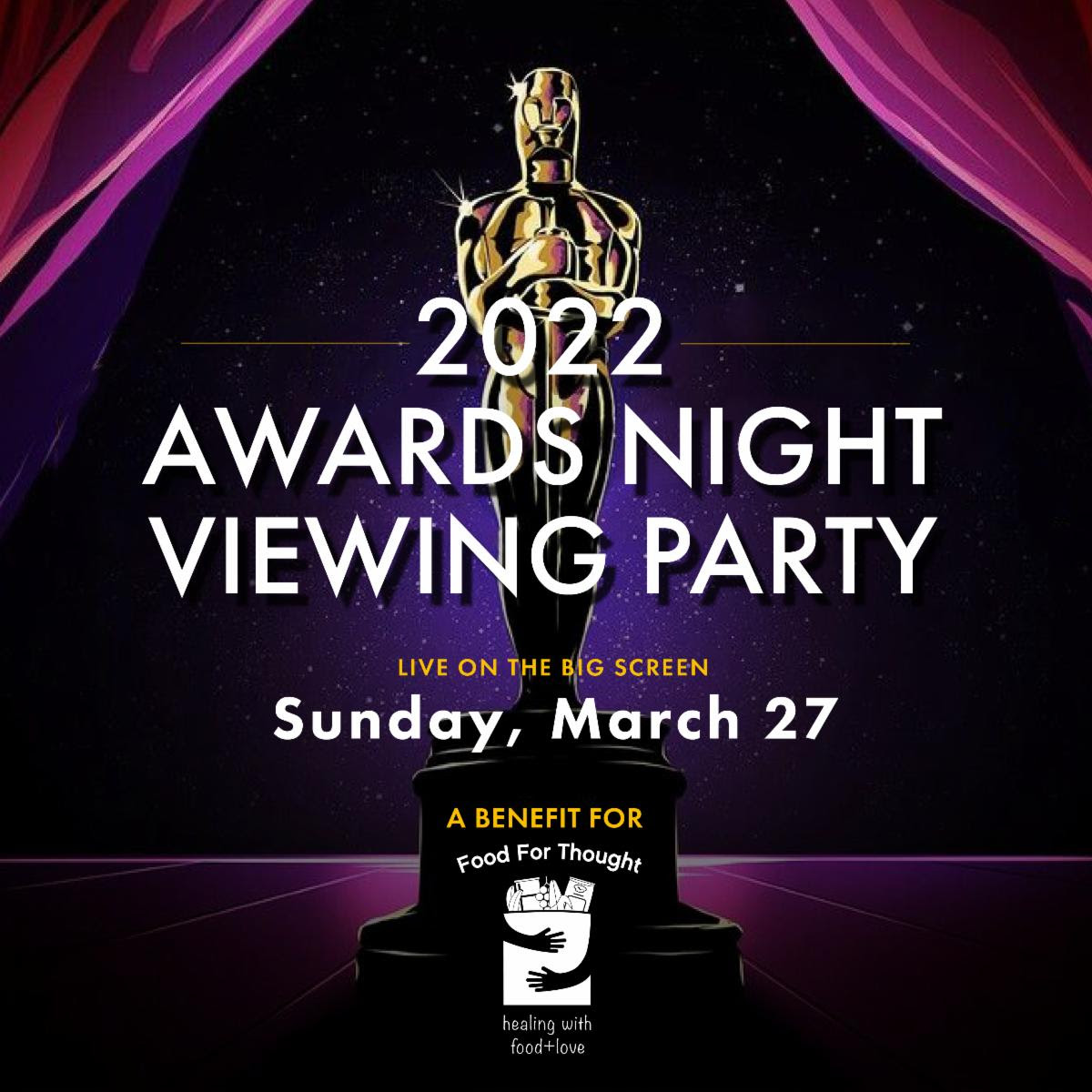
Ready for some glitz and glamour? Rialto Cinemas in Sebastopol is inviting you to celebrate Hollywood’s biggest awards night in style while raising funds for Food For Thought! It’s time to hit the red carpet and join us for a fabulous evening as we view the annual awards ceremony LIVE on the big screen.
Sunday, March 27, 2022Red Carpet 4:00 p.m.Show Begins 5:00 p.m.$50 per person
Tickets include passed appetizers and two drinks per person exclusively served inside the viewing room! Prizes offered for best dressed and best decorated mask.
Showtimes: (707) 525-4840 If you are having a ticketing problem please call (707) 829-3921
Vaccination Required
Proof of Covid-19 Vaccination Required Beginning Wednesday, September 15
Effective September 15 Rialto Cinemas will require proof of vaccination for all customers, guests, vendors and employees ages 12 and above.
The health and well-being of our patrons and our community at large is a priority for us. We believe this step will help keep our patrons and staff safer and allow for us to remain open through this current wave of the pandemic.
For proof of vaccination, we will accept one of the following:
your physical vaccination card
a clear, legible photo of your vaccination card
a digital vaccination record – CA residents may obtain a digital vaccine record at My Vaccine Record
if you are legally exempt you must provide a letter of declination signed by letter holder and if applicable a licensed medical provider AND a negative Covid-19 test taken within three days prior – visit our website for more details
AND a government issued photo identification that matches the name on the vaccination card
Saturday March 5 @ 7:30 pm.Dgiin at Occidental Center for the Arts. Sonoma County’s premier gypsy flamenco band is back on our stage! led by multi-talented siblings Mimi and Gabe Pirard, along with a fantastic ensemble of musicians. Get ready to de-stress and dance to the spellbinding sounds of Dgiin! $25 General/$20 for OCA Members. Tickets/Info @ www.occidentalcenterforthearts.org. OCA is following Sonoma County Health guidelines for masking and capacity. Fine refreshments including wine and beer available. Art Gallery exhibit ‘Celebration of Black History” will be open for viewing. OCA is a nonprofit performance and fine arts organization accessible to persons with disabilities. Become an OCA Member and get discounts/free admission. Occidental Center for the Arts, 3850 Doris Murphy Ct. Occidental, CA. 95465, 707-874-9392.
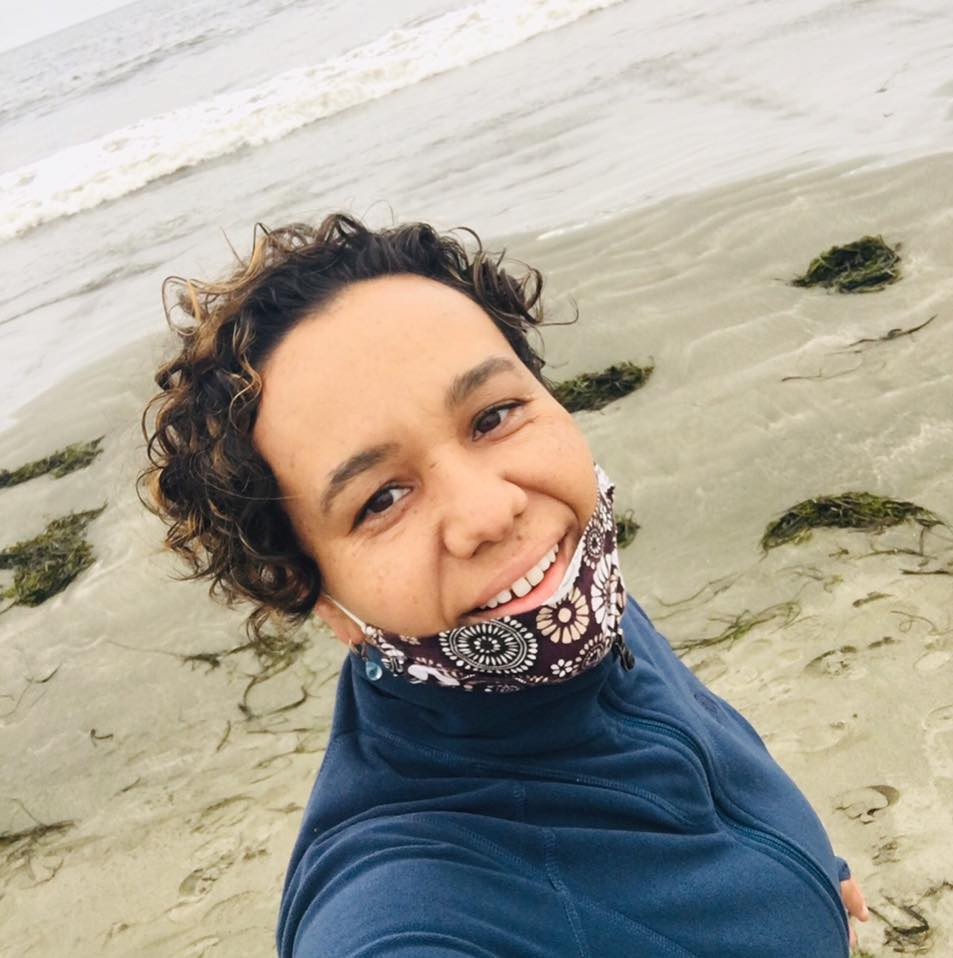
. A relatively recent newcomer to the West Coast, Rachel spent a decade in New York City working as a dance artist. Originally from Ireland, she has taught and performed in the UK, US, India, Costa Rica, and Austria. Recent work in Sonoma County includes Dancing Lessons at Cinnabar, Barely A Person (a film exploring postpartum depression) for Heroines, Harlots and Harpies at Cloverdale Performing Arts Center, Fairy Worlds for Shakespeare in the Cannery, Equus, and A Little Night Music at 6th Street. She is the founder of the expandance technique, a somatic movement practice. Learn more about Rachel’s company at expandance.com
Q. It’s been more than 50 years since HAIR was first produced, and the US and the world have seen major cultural changes. How do you think this play stands up to the test of time? What aspects of it are still relevant and how?
Much of it is still relevant, unfortunately. We’re still living in a white supremacist, capitalist culture, and there are still wars globally, so this show is important because it talks about these things and yet there’s also hope and humor there. This show reflects a time when many of these issues were coming to a greater level of consciousness in American society, and there is a resurgence of the same in the last few years. It’s interesting to see some of the ways we’ve evolved in our thinking since that time, and some of the ways we’re still struggling to.
Q. How has the Omicron surge affected your rehearsal process? What challenges have been presented and how did you manage them?
Even with stringent Covid protocols in place, (including masks, twice or thrice weekly testing, sanitizing, distancing etc) during the first couple of weeks of rehearsal back in January, I don’t think I had more than half the cast at a time in rehearsals, and I really felt for the cast. It was also definitely a challenge choreographically, as so many of the dance numbers in this show require the whole cast. But the last few weeks things have been better *knock on wood!* It’s been helpful having a strong dance captain in Peri Zoe who I can trust to get people up to speed as needed. And I think we’re all just so happy to be back working again, and that gratitude carries us through the challenges.
Q. What are the strong suits of your actors in terms of choreography?
Their willingness and work ethic. They’ve been so open at everything I’ve thrown at them, which has been great. Between them they bring some pretty diverse skills to the show, so that’s been fun to work with.
Q. What do you think are the aspects of the play that will most appeal to our audience?
The music, the dancing, the passion, the risqué bits!
Q. How has your background in choreography prepared you for your work on this play?
I’ve been choreographing for over two decades now, and for a lot of that, improvisation has been an important part of how I work; not only in the choreographic process as a tool for creation but also as an art form in itself, and as a tool within performance. One of the original tenets of my dance company, expandance, was to include moments of improv among set choreography in all our shows. And with a lot of musicals, there often isn’t the space for that – every beat has a set movement. Hair is special because it presents so many opportunities for the actors to improvise movement between the set stuff. And these parts get rehearsed as much as the set movement, to the point where it feels as organic as anything else. It gives the actors a bit more freedom to embody their characters within the structure of the dancing, and I think that reflects Hair’scall for freedom and connection.
Q. What has been the most enjoyable part of your experience rehearsing the play so far?
It’s been an honor getting to know new, awesome people. This cast has a diverse spectrum of lived experience – from BIPOC to LGBTQI communities, from theater newbies to Equity actors, from classically trained singers to yoga practitioners to circus professionals – and it’s been incredible to meet all these folks, witness their magic, and learn from each other. Cast members have brought conversations regarding race, history, consent, communication, etc. to the table. As a queer immigrant mom, I feel grateful to connect and learn from everyone in different ways throughout this process. Also, getting to meet and work with Aja has been awesome, and I hope we get to collaborate again.
Q. What project have you either just done or going to do (or both) that you’d like our audience to know about?
I’m working on codifying the expandance technique, which involves synthesizing 15 years of movement practice and somatic exercises into readable, shareable documentation. So that’s my main project at the moment, outside of teaching and parenting duties. I’m excited to get to know the theater community in the area better and potentially explore work with directors and theaters around the County.
Chase Joynt’s follow up to his exceptional No Ordinary Man (co-directed with Aisling Chin-Yee) about the life of jazz musician Billy Tipton, is the equally thrillingly and similarly genre-defying feature Framing Ages—expanding upon his own 2019 short—which just had its world premiere in the NEXT lineup at Sundance. It’s a fitting section of the festival for the film to play given that it not only poses questions about what is next in the evolution of the representation of trans lives on screen, but also continually challenges broader notions about storytelling and form.
Agnes is the pseudonym of a trans woman who sought gender affirming surgery in the late 1950s, taking part in research interviews conducted by sociologist Harold Garfinkel at the University of California, Los Angeles (UCLA). Garfinkel would go on to write about his conversations with her as a case study, which became widely known when it was published in 1967’s Studies in Ethnomethodology. Agnes would later admit to fabricating elements of her medical history in order to gain the health care she needed. In the process of doing his own research on Agnes in the UCLA archives in 2017, Chase discovered a rusted cabinet containing case files on numerous other gender non-conforming folks who had also been interviewed by Garfinkel.
This isn’t a biographical documentary about his work at UCLA, instead it takes the radical approach of using the framing device of a contemporary TV talk show, inspired by The Mike Wallace Interview, with Joynt taking on the role of host and interrogator (asking Garfinkel’s questions), while some of toady’s most prominent trans creatives embody the case study subjects.
Artist Zackary Drucker takes on the rather enigmatic Agnes who doesn’t have any other gender non-conforming people in her life, but has a longterm boyfriend and works as a secretary. While Angelica Ross inhabits Georgia, a religious trans woman from the South who although is happily married talks about the discrimination she faces from police and her difficulty in finding employment. Silas Howard portrays World War II vet Denny who has steady work and wife, and is invasively questioned about using shared toilet facilities. We hear Henry, embodied by Max Wolf Valerio, discuss the difficulties that having official identification that does not match his gender identity has caused him, detailing an incident where a police officer pulled him over and scratched off the paint he’d put on his driver’s license to cover the prohibitive ‘F’. Trans teenager Jimmy, as played by Stephen Ira, brings a playful humour to many of is answers and exudes a relaxed confidence in himself and his gender identity that suggests a certainty that he is right and the rest of the world is wrong. We also learn the detail that his mother accompanied him to the session, a possible sign of her acceptance. Some of the most fascinating moments in the film come while Jen Richards is playing Barbara. Whereas Agnes describes being isolated from other trans people, Barbara, as interpreted by Richards, has a sense of joy as she discusses being part of a network of trans women which she describes as being “like a club”.
Cinematographer Aubree Bernier-Clarke captures each of these talk show performances in crisp black and white. While recreations are often used to pad out or to provide a visual element in other documentaries, here they form the heart of it; compelling, nuanced and emotionally rich, they offer a glimpse into the inner lives of these subjects with the actors mining the transcripts for subtext and exploring the nuance of what’s spoken and deliberately left unsaid. Brought to life in this way, I wanted to hear these transcripts in their entirety and to know every detail about these people. The TV talk show format is effective in exploring the wrestling power dynamic of cis interviewer and trans subject, while also acknowledges the importance of the talk show, for better or worse, in the history of trans visibility.
We also see brief out of character interactions between Joynt and the actors before the interviews begin, as they discuss a line in the script or consider how the scene might play out. These are “off camera” moments in a film where the cameras are never really off, but rather the frame shifts to capture another layer of meaning and another aspect of creating the film. In an insightful parallel, each performer is interviewed as themselves by Joynt about their participation in Framing Agnes, what it means to them to embody these gender non-conforming folks from the past and, as we also saw in No Ordinary Man, how the experiences of these case study subjects relate to their own lives. Angelica Ross for instance finds connections with Georgia, while voicing her initial reluctance about taking part in the project and her frustration with the way that her own story often gets framed as “exceptional”, just as Christine Jorgensen’s and Agnes’ stories were before her. While Max Wolf Valerio reflects on the way that Henry wrote about his own post-World War II life, just as Valerio has with works such as The Testosterone Files and continues to do so with his poetry.
While what the actors bring from the own lives allows them to fully inhabit these voices from the past, the film also raises questions about what assumptions we bring with us when we encounter historical trans folks. In reading and interpreting these medical transcripts from over half a century ago what imaginative license do we use and what do we ultimately want to get from these figures to help us navigate our own lives today? The dichotomy of medical and societal categorization that both affirms existence and places people in potentially restricting boxes is also examined. These questions emerge as the film progresses and are explicitly voiced by the eloquent Jules Gill-Peterson, Associate Professor of History at Johns Hopkins University and author of Histories of the Transgender Child in an insightful and stimulating interview which is used extensively throughout the film. While the acting performances are extraordinary, and there’s so much power in even brief moments, such as an intimate exchange of glances between Angelica Ross as Georgia and Brian Michael Smith in church, these recreations are interrogated for what is being brought to them from our present day perspective.
Joynt and his collaborators begin by asking who Agnes was, her place in history, and how she should be framed now, and expand their own frame to question what we might hope to gain by looking back and how much of ourselves we might project on to those we discover, while continuing the conversation about trans visibility sparked by Disclosure. It is a declaration that it’s not enough for gender non-conforming people to tell their own stories, but new forms must be forged in which to do so. The result is an exhilarating endeavor, cerebral, but accessible and often deeply moving, that continually demands its viewer to be an active participant.
By James Kleinmann
Framing Agnes world premiered in the NEXT section at the 2022 Sundance Film Festival. For details of further screenings head to Festival.Sundance.org.
Saturday February 26 @ 7:30 pm. Sha’Motown! at Occidental Center for the Arts. Come join us as we celebrate Black History Month with an exciting live music homage to Motown’s greatest superstars and song hits! This amazing, award winning band features the refreshingly angelic songstress Ariel Marin, plus the musical arrangements of platinum producer James “Jae-E ” Earley. Get your dancing shoes ready! $30 General/$25 for OCA Members. Tickets/Info @ www.occidentalcenterforthearts.org. Proof of Covid vaccination is required, masking indoors as per County health order. Audience capacity will be limited to 65%. Fine refreshments available. OCA Art Gallery exhibit ‘Celebration of Black History” will be open for viewing. OCA is accessible to persons with disabilities. Become an OCA Member and get discounts/free admission. Occidental Center for the Arts is a non-profit performing and fine arts venue staffed by volunteers. 3850 Doris Murphy Ct. Occidental, CA. 95465, 707-874-9392.
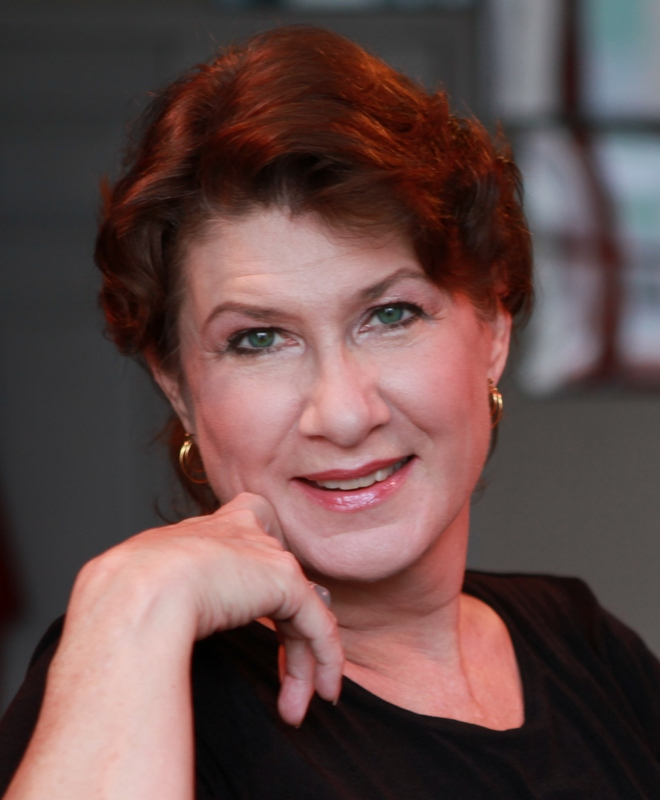
Aja Gianola-Norris is a Sonoma County-based director, whose passion is “empowering and connecting our community through music and theater.” She’s directed or music directed over 85 musicals, including The Hunchback of Notre Dame, Les Misérables, Grease, Joseph and the Amazing Technicolor Dream Coat, and The Wiz, to name a few.
In this interview she answers a few questions about her process, her work on this production and how HAIR, the musical, is still relevant and powerful more than 50 years after its original production.
Q. It’s been more than 50 years since HAIR was first produced, and the US and the world have seen major cultural changes. How did you adjust your direction (if any) to address those changes?
A. It is so interesting how the bulk of the HAIR’s script is still relevant and holds meaning in 2022. There are some lines that we chose to drop, as they had outdated humor or used words that have shifted in our culture, so that the majority of our audience will receive the original message or intent.
Q. How has the Omicron surge affected your rehearsal process? What challenges have been presented and how did you manage them?
A. Oh my! I thought it was hard to learn a big musical before – add pandemic-related twice-weekly testing, masking in rehearsals, and actors Zooming in when they are under the weather – and man, it seems extra chaotic and challenging.
But on the flip side, absence makes the heart grow fonder! We performers have been asked to forgo our hearts and theater these past two years, and it has made us all extremely thankful and humbled at this chance to be allowed to sing and dance together. Also, when we do take off our masks it is amazing to simply see each others’ faces!!
Oh and there are plenty of good jokes we make about working a show with nudity–being naked while wearing a mask!! Ha!
Q. What are the strong suits of your actors?
A. Kindness! Thoughtfulness and respect in how they learn/come together with the racially difficult/triggering material. They have an insatiable appetite to thoughtfully grow their characters and present a beautiful story of a tribe of hippies living, loving and playing–a snapshot of life in the summer of 1969.
Q. What has been the most enjoyable part of your experience rehearsing the play so far?
A. This is my first production with 6th Street and I adore the collaborative spirit and professionalism of the production team uniting to present a powerful piece of art to SoCo. I love how the theater strongly embraces diversity and equality. The playhouse has supported me as a director and as a woman of color, and in new practices that have been asked for through my work. The staff and crew at 6th Street are brave and work very hard to keep theater alive and progressive, despite the many hardships of a pandemic and the new AB5 law.
I encourage and ask audiences who come and are affected by this show to make their voices heard and share with 6th Street what you gained from the experience.
But my heart MOST enjoys the process of working with those passionate actors!
They are life-affirmingly rooted in this unique and perfect art of musical theater.
Q. What projects do you have coming up that you’d like our audience to know about?
A. I am super excited to be in the cast of 9 to 5, The Musical at 6th Street in late spring!
I have an extensive list of shows I still want to direct or perform in and I eagerly await local theaters announcing their upcoming seasons.
Q. What do you think are the aspects of the play that will most appeal to our audience?
A. I don’t know….the love? … the dancing? The singing is so good! The story is powerful.
Q. How has your background in theater prepared you for directing this play?
A. Having been a performer I have a deep understanding of the pragmatic details, which allows me to help cultivate healthy singing, dancing and exploring. We’ve all had experiences that were wonderful, so I adopt those experiences into my tool kit as a director.
There are also non-theater experiences that contribute to my skill set as a director. My work as a business owner has taught me the incredible value of communication, scheduling and preparation. Parenting gives me empathy and the ability to work with the whole person. Also being bi-racial has allowed me an unique authentic tie to two American cultures and perspectives.
———-
6th Street Playhouse’s production of HAIR is directed by Aja Gianola-Norris, with music direction by Lucas Sherman, and choreography by Rachel Wynne.
HAIR features book and lyrics by Gerome Ragni and James Rado with music by Galt MacDermot.
6th Street’s production of HAIR features a diverse cast of actor/singers, many of whom will be familiar to local audiences, including Gillian Eichenberger, Serena Elize Flores, David Lee Hall, Ezra Hernandez, Keene Hudson, Jamin Jollo, Lindsay John, Tyehimba Kokayi, Nicole MacDonald, Theo Olson, Jourdan Olivier-Verde, Noah Sternhill, and Peri-Zoe Yaldrim-Stanley. There will also be a featured performer – Lynnea Mackey – who won a walk-on role in the production in the 6th Street Applause Gala auction.
HAIR has a special sneak peek performance Friday, Feb 11 at 7:30 pm, and formally opens on Sat, Feb 12 at 2 pm, with a run that extends through March 6. Performances are Thursday, Friday and Saturday at 7:30 pm, and Saturday and Sunday 2 pm matinees.
DISCLAIMER: Audience discretion is strongly advised. HAIR contains adult language and situations that may be deemed offensive, objectionable, profane, upsetting, even vulgar by some members of our audience. The musical HAIR, from its inception in the late 1960’s, has always intended to shatter boundaries in the theatrical art form and those aspects of this work of art have not abated over time. There is one brief scene involving nudity wherein all performers onstage are adults aged 18 or older.
NO PHOTOGRAPHY OR RECORDING ALLOWED WHATSOEVER: There is no recording, photography or image-capturing allowed whatsoever during the performance of HAIR. This is strictly prohibited, and anyone found to be doing so will have their device confiscated. Confiscated devices will be returned to their owners and the end of the performance after any photos or video related to the performance have been deleted.
We’re offering you a SNEAK PEEK at HAIR
Get half-price tickets to the Feb 11 special preview!
50% OFF WITH THE DISCOUNT CODE SNEAKPEEK The cast of HAIR (book and lyrics by Gerome Ragni and James Rado with music by Galt MacDermot) is already thrilling themselves and the rest of the crew with their passionate and beautiful portrayal of a movement that changed the world. Don’t miss this glorious rock musical, a joyous celebration of youth and a poignant journey through a tumultuous 1960s America. This exuberant story about a group of teenagers searching for truth, peace and love in a Vietnam War era retains its power and relevance, 50 years after its original production. HAIR features an eclectic score filled with classics, including “Aquarius,” “Let the Sun Shine In,” “Hair,” and “Easy To Be Hard.” 6th Street’s production of HAIR features a diverse cast of actor/singers, many of whom will be familiar to local audiences, including Anne Clark, Gillian Eichenberger, Serena Elize Flores, David Lee Hall, Ezra Hernandez, Keene Hudson, Jamin Jollo, Lindsay John, Tyehimba Kokayi, Nicole MacDonald, Lynnea Mackey, Theo Olson, Jourdan Olivier-Verde, Noah Sternhill, and Peri-Zoe Yaldrim-Stanley. HAIR’s formal preview is Feb 12 at 2 pm, but you get a chance to see it before everybody else doesAT HALF PRICE ON FEB 11 ONLY! Tickets are regularly $22 – $38 which means your special prices WITH DISCOUNT CODE SNEAKPEEKare $11 to $19 (plus ticketing charge)
DISCLAIMER: Audience discretion is strongly advised. HAIR contains adult language and situations that may be deemed offensive, objectionable, profane, upsetting, or even vulgar by some members of our audience. The musical HAIR, from its inception in the late 1960’s, has always intended to shatter boundaries in the theatrical art form and those aspects of this work of art have not abated over time. There is one brief scene involving nudity wherein all performers onstage are adults aged 18 or older. NO PHOTOGRAPHY OR RECORDING ALLOWED WHATSOEVER: There is no recording, photography or image-capturing allowed whatsoever during the performance of HAIR. This is strictly prohibited, and anyone found to be doing so will have their device confiscated. Confiscated devices will be returned to their owners and the end of the performance after any photos or video related to the performance have been deleted.
Welcome to May We Present…, a column from Lambda Literary that highlights authors with recent or forthcoming publications. This November, we’re featuring Nefertiti Asanti and their new poetry collection, fist of wind, published on October 29th by Foglifter Press. fist of wind centers the simultaneously magical and mortal Black body as a site of healing and transformation from pain, ranging from larger forms of structural, communal, and intergenerational pain to the personal pain of menstruation out of which the collection was born.
With fist of wind, Asanti became the first winner of the Start A Riot! Chapbook Prize, a prize for local emerging queer and trans Black writers, indigenous writers, and writers of color, created by Foglifter Press, RADAR Productions, and Still Here San Francisco. The win was well deserved, as fist of wind is a breathtaking and candid lyrical testimony, one that might be thought of as an exceptional exploration in translation. Asanti masterfully translates the physical into the textual and, through the reader, back into the physical again. Through bold engagement with form and space, Asanti translates the dynamic qualities of the spoken word into the written word without losing its sense of embodiment. Reading fist of wind becomes a transfixing, corporeal undertaking, one that everyone should experience at least once.
Below, Nefertiti Asanti elaborates on the most difficult tangible sensation to put into words, how poetry interacts with other forms of text, and the last thing she read that surprised her.
When did you realize you had to write fist of wind?
When I started writing toward fist of wind, I was actually writing toward stopping some pain. I was living alone in Brooklyn in a basement-level apartment I could barely afford after resigning from the first full-time job I’d ever had. I was living alone, and I was in pain, physical pain as a result of my period. I had cramps, debilitating cramps that demanded my attention once they hit and kept hitting.
One day it was just out of control—the pain was so uncomfortable and relentless and beyond me, something inside me was like, “This don’t belong to me; this ain’t mine,” so I prayed a spell into it. Eventually, the pain subsided and along with it went the idea of the pain being a singular thing that I owned, that owned me.
During that time, I wrote what I called “full moon lunes,” three-line, three-syllable, three-word per line poems that were prayers to my womb to welcome healing and expel the pain I’d absorbed from being Black and bleeding and alive and the un/healed histories of my ancestors, lineage, and community. As a person who absorbs so much of what’s around me, it was important that I let go of what I could in a form that echoed the physical boundaries pain can create and transcend them. At least two pieces in fist of wind are in lunes or borrow from the form. I wrote fist of wind because I wanted to have conversations with other Black people about periods and healing from violence, whatever the source.
The brilliantly funny queer comedian Robert White who made it to the finals of Britain’s Got Talent flippantly explained his Asbergers away by claiming he is a genius. He played the line for laughs although, by the time he finished his act, I had totally come to agree.
White’s appearance on TV is part of a visible dialogue about the sheer potential that people on the spectrum can achieve if their parents refuse to accept the traditional medical advice of just writing them off at childhood. Up to very recently once a child had been diagnosed with Aspergers they were actively encouraged to place them in a special residential home and literally walk away knowing that their child could never amount to anything.
Luckily for six-year-old Kyle Westphal when his parents learned he was on the Autism spectrum they went against all medical advice and refused to accept they could never develop a real connection to him. As they watched him withdraw from their world and all that was around him they desperately searched for an alternative means to enable Kyle to start to relate them
They are the real heroes of this heart-string-pulling film that documents the journey the entire family , and a host of volunteers undertook for Kyle to have a real connection with them. They came upon an experimental project which they soon embarked on which immersed them all in an intense one-on-one program with them joining Kyle in his unique behaviors The emphasis was not to punish or forbid him from constantly wrapping himself up in blankets and his favorite piece of fabric but to join him and encourage him and to slowly develop him to adopt other activities that would path a way into some more social behavior.
The documentary tracks this exceptional journey and the sheer patience and commitment to the lengthy process which is a story of extraordinary love the like of which is way too rare.
Now twenty years later and Kyle has achieved his lifetime ambition of becoming a fashion designer in which his tutors acknowledge how very talented he is at. It’s an art form that encourages individuality and uniqueness that so suits a very happy Kyle and gives him a sense of fulfillment none of us could have imagined at the start if his journey
Except maybe his parents as they look back and see how by ignoring the traditional medical advice and let the Kyle who always found comfort in his favorite fabric to making it his real purpose in his life.
We viewed this fascinating and eye-opening documentary by Dan Crane and Kate Taber recently at DOC NY Festival,and the new good news is that Greenwich Entertainment will be giving it a full release in February 2022. Make a note as you really shouldn’t miss it.
Long-running “Jeopardy!” champion Amy Schneider lost in an episode that aired Wednesday, ending the second-longest winning streak in the quiz show’s history.
Schneider, an engineering manager from Oakland, California, was defeated by Rhone Talsma, a librarian from Chicago, who raked in $29,600 in the latest game, besting Schneider, at $19,600.
She left the show with nearly $1.4 million in winnings and had no regrets about the streak’s end.
Almost all of Schneider’s wins had been in 2-to-1 blowouts going into Final Jeopardy, meaning the final questions figured only in how much prize money she would score.
But Wednesday’s game was unusually close. Schneider led Talsma by $27,600 to $17,600 heading into the last question, under the category “Countries of the World.”
The show wanted to know which is the only nation that ends its English spelling with an “h” and is also among the world’s top 10 most populous countries.
Talsma correctly asked, “What is Bangladesh?” while Schneider came up blank. His winning bet of $12,000 and her losing wager of $8,000 meant a new champion was suddenly crowned.
“It’s really been an honor,” Schneider said. “To know that I’m one of the most successful people at a game I’ve loved since I was a kid and to know that I’m a part of its history now, I just don’t know how to process it.”
Talsma’s quick trigger was key to his staying close throughout the game, Schneider said.
“I had thought that Rhone was going to be tough going into it,” she said in a statement released by the show.
“I loved hanging out with him, we had great conversation before the taping, but I could tell that he was here to play and that he was going to be good. I still came very close to winning, but I did feel like maybe I was slipping a little bit. And once it was clear that he was fast on the buzzer, I knew it was going to be a battle all the way.”
Rhone Talsma, a librarian from Chicago, finished in first place with $29,600.Casey Durkin / Sony Pictures Television
For much of the Double Jeopardy round, it looked as though Schneider would cruise to another easy win. At one point, she was up by $24,400 to $5,800 over Talsma.
But then Talsma nailed a late Daily Double, correctly naming the Greek goddesses of vengeance, the Furies. He doubled up from $7,800 to $15,600 and put himself in position to overtake Schneider in Final Jeopardy.
Just after the game, Schneider praised Talsma for taking the huge gamble on that Daily Double.
“It’s the right thing to do but I’ve seen several contestant not be able to pull the trigger on that,” she told the winner.
With nothing to lose, Talsma said he didn’t think twice.
“I’m just playing for fun, I was just going to go big. Wow,” he said.
When Talsma, sporting distinctive neon-framed glasses, took the “Jeopardy!” stage in Culver City, California, he had no idea he’d be facing down one of the winningest contestants in the show’s history.
“I’m still in shock,” Talsma said of his victory. “This is my favorite show. … I was so excited to be here, and I just wanted to do my best. I did not expect to be facing a 40-day champion, and I was excited to maybe see someone else slay the giant. I just really didn’t think it was going to be me, so I’m thrilled.”
Schneider’s success was particularly celebrated by the transgender community, as she became the first transgender contestant to make it to Tournament of Champions, which will be played this fall, and is now the highest-earning female competitor in “Jeopardy!” history.
She won $1,382,800, good for No. 4 all time in regular season play, trailing only Jennings ($2.5 million), James Holzhauer ($2.4 million) and Matt Amodio ($1.5 million).
Jennings, who splits “Jeopardy!” hosting duties with former “Blossom” and “Big Bang Theory” actor Mayim Bialik, presided over Schneider’s winning streak.
“It was just so amazing to watch; like I couldn’t believe what I was seeing,” Jennings told Schneider on stage after the game. “It was an honor to be here.”
Set amongst the bustling crowds and underground karaoke clubs of Tokyo, WEST NORTH WEST explores themes of gender, sexuality, nationality, and religious identity through the complex desires of three women. The film is now featuring on PeccadilloPOD, a new On-Demand platform for LGBTQ+ cinema.
Beautiful Kei (Hanae Kan) works at a cocktail bar, and her girlfriend Ai (Yuka Yamauchi) works as a model. Fearing she’ll be ostracized by society, Kei chooses not to admit her sexual orientation to anyone, and, as a result, she becomes distressed and lonely. One day, randomly in a café, Kei meets Naima, (Sahel Rosa) a very religious Iranian student studying art in Japan. Despite their vast cultural differences Kei and Naima begin to enjoy each other’s company. Passionate Ai quickly becomes jealous of them and their budding relationship. Kei gradually becomes pessimistic as she thinks about a future with Ai, and Ai worries that she will lose Kei. In the meantime, Naima is having a hard time understanding what Kei wants despite growing closer to her. All three of them are embarrassed and insecure but eventually, they begin to share their emotions.
Actor turned award-winning director, Takuro Nakumura’s feature film takes us on a slow journey through modern-day relationships in Tokyo. Dark and gloomy cinematography complements a melodrama told through dialogue, the actors’ expressions, and long silences rather than action-packed scenes. We follow the three young women as they tentatively navigate their way through their developing relationships with each other, often inconclusively. The slow-burn scenes are intimate and intriguing, and sometimes confusing, reflecting today’s life for many early 20 somethings who don’t fit into a stereotypical relationship box.
Sahel Rosa gives a very convincing performance as the studious, very religious, Iranian Naima who has never even worn make-up before she encounters the very sophisticated Japanese Kei. Hanae Kan (Kei) and Yuka Yamauchi (Ai) are also strong actors with great chemistry, and the three hold our attention for the two-hour running time of the film. Director Nakumura wants us to appreciate that ultimately there are actually only very small differences between characters of different sexualities and different cultural backgrounds. This he achieves. A good film for the long winter evenings right now.

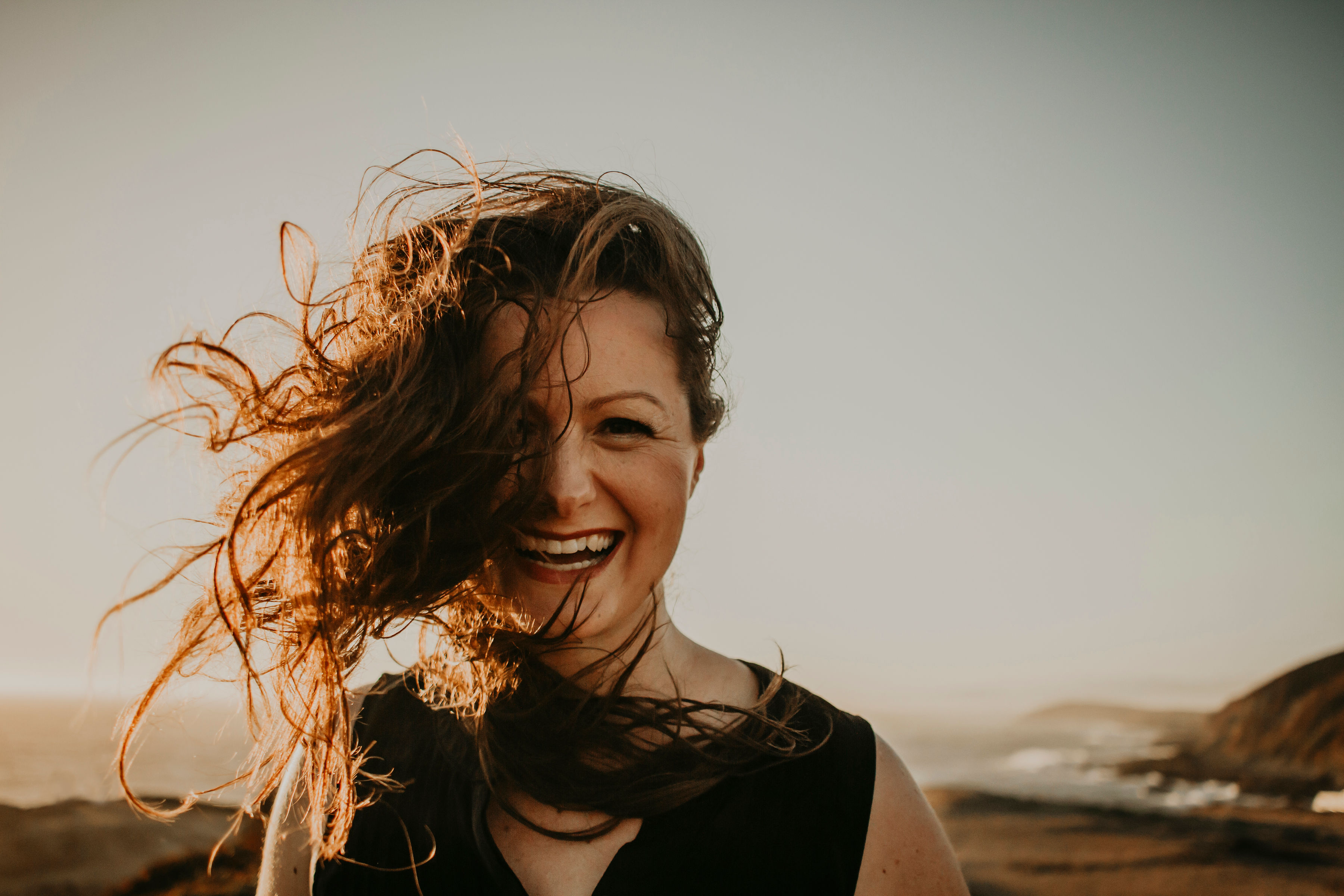
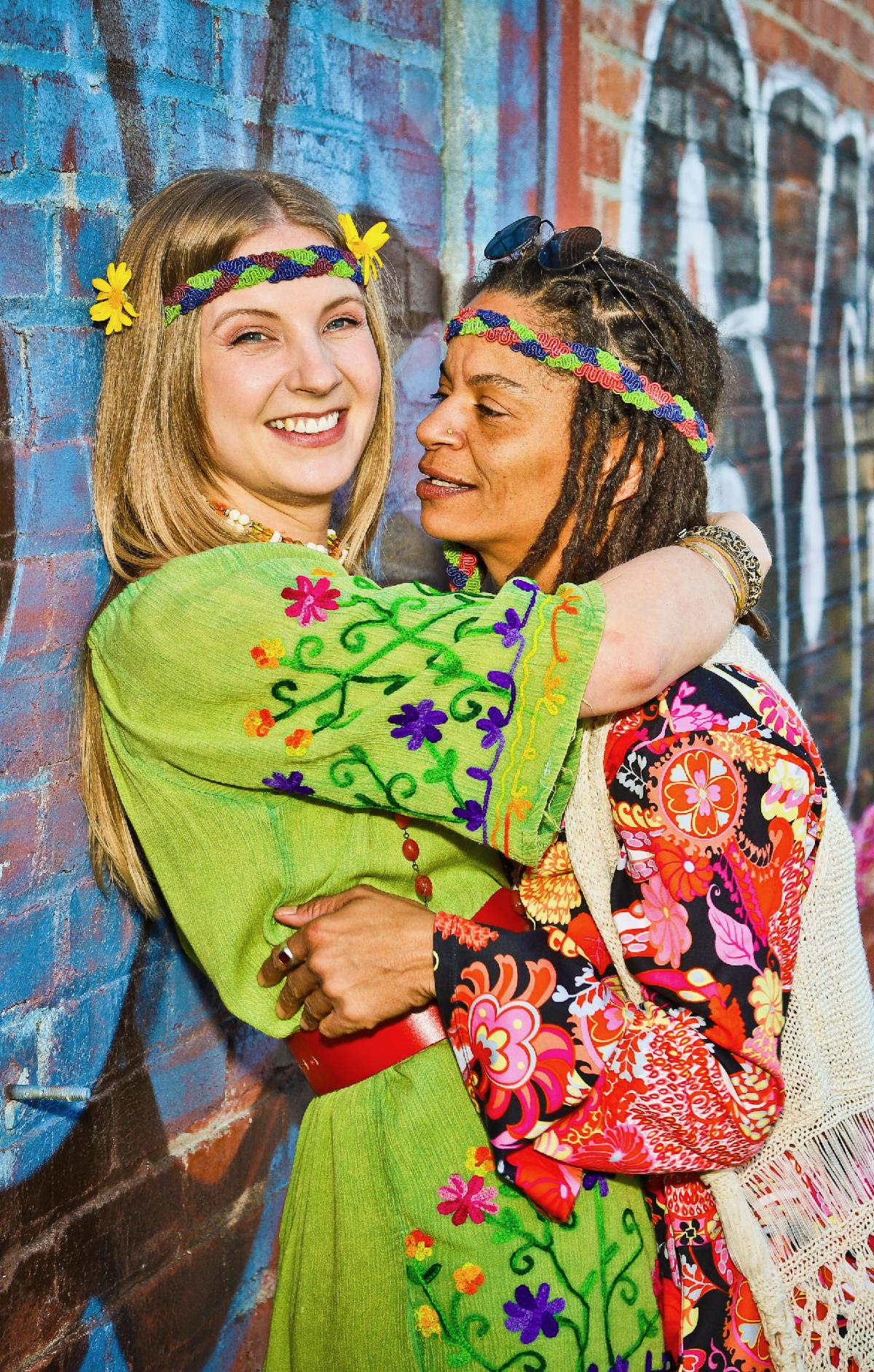 Gillian Eichenberger (Sheila) & Nicole MacDonald (Linda)
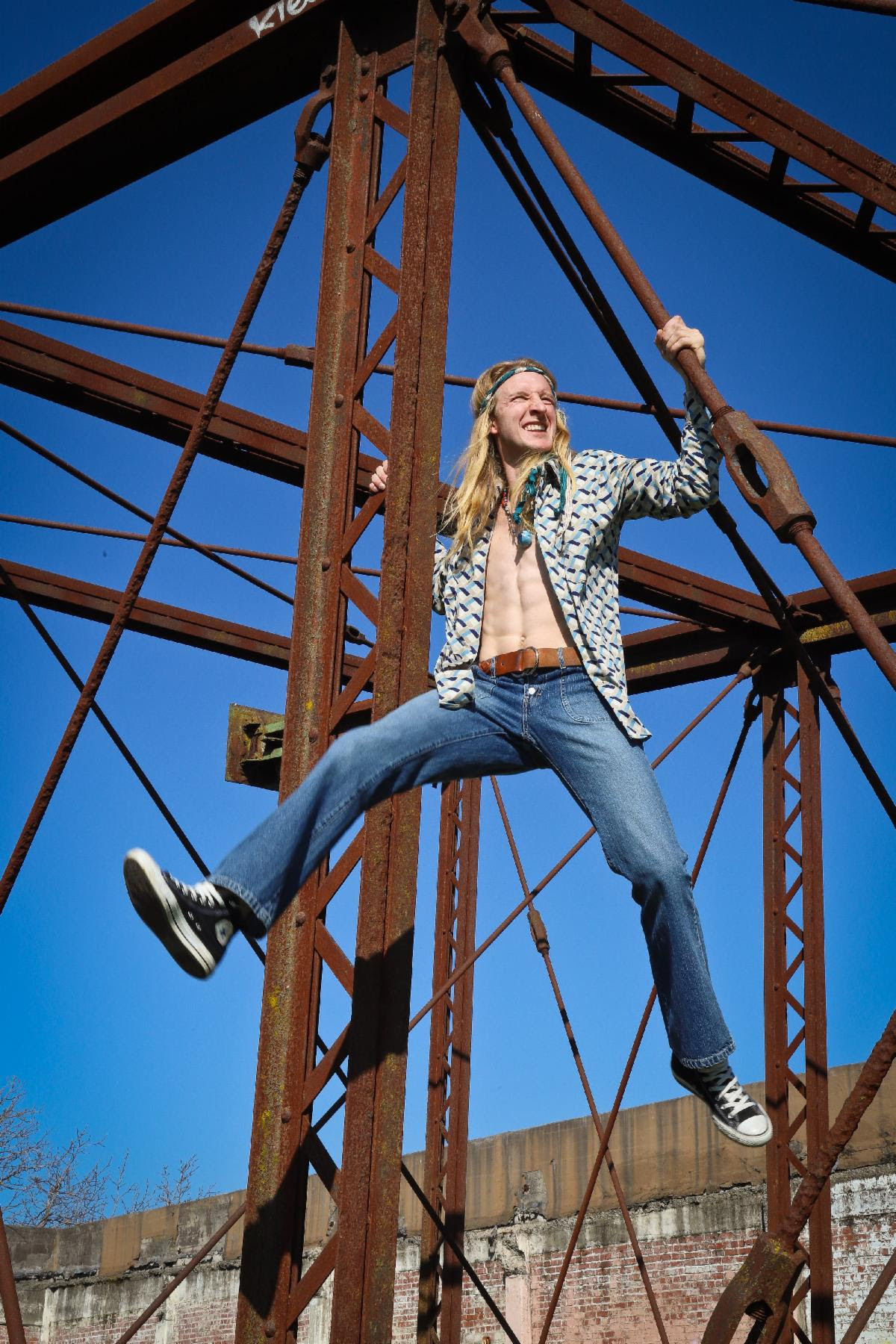 Jamin Jollo – Claude