The current presidential administration has ended funding for the Center for HIV/AIDS Vaccine Development (CHAVD), a move that researchers say will likely set efforts to end HIV globally back by a decade.
The two teams leading the $258 million vaccine program at Duke University and the Scripps Research Institute were informed of the move on Friday, May 30, by officials at the National Institutes of Health (NIH), The New York Times and CBS News reported. A senior NIH official told the Times that the agency’s leadership had reviewed the program and “does not support it moving forward.”
The Department of Health and Human Services (HHS) has also instructed NIH not to fund HIV vaccine research in the next fiscal year, with some exceptions, CBS News said.
An HIV vaccine has proved elusive, both aforementioned news outlets reported. But Dennis Burton, an immunology professor with the Scripps team, told CBS that researchers have “begun to see light at the end of the tunnel after many years of research.”
“This is a terrible time to cut it off. We’re beginning to get close. We’re getting good results out of clinical trials,” Burton said.
“The HIV pandemìc will never be ended without a vaccine, so kìlling research on one will end up kìlling people,” John Moore, an HIV researcher at Weill Cornell Medical in New York, told the Times. “The NIH’s multiyear investment in advanced vaccine technologies shouldn’t be abandoned on a whim like this.”
While a senior NIH official told the Times that the agency expects to shift its focus away from vaccine research and “toward using currently available approaches to eliminate HIV/AIDS,” the president’s second-term administration has essentially reversed course on the president’s first-term plan to end HIV by 2030.
Following the president’s January executive order calling for a 90-day hold on all U.S. foreign aid, the administration shut down United States Agency for International Development’s operations, including those of the President’s Emergency Plan for AIDS Relief (PEPRAR). In February, the State Department backtracked slightly, announcing that the program to prevent HIV in low- and middle-income foreign countries could provide PrEP medications to pregnant and breastfeeding women, but not to LGBTQ+ people and other high-risk groups for contracting HIV.
HHS spokesperson Emily Hilliard told CBS News that “critical HIV/AIDS programs will continue” under HHS Secretary Robert F. Kennedy Jr.’s proposed new agency, the “Administration for a Healthy America.” But as the Times notes, details about the new agency are scarce.
Meanwhile, Scripps Research’s Burton warned that shutting down crucial HIV vaccine research would have consequences that linger for years, even if a subsequent administration were to restore funding. “This is a setback of probably a decade for HIV vaccine research,” he told CBS.
While the Times notes that clinical trials based on CHAVD’s work may continue if NIH continues funding for its HIV Vaccine Trial Network, a spokesperson for pharmaceutical and biotech company Moderna said that the agency also paused funding for its own clinical trial for an HIV vaccine last week. Mitchell Warren, executive director of the HIV prevention organization AVAC, warned that even if funding for clinical trials is maintained, research out of the Duke and Scripps programs is crucial to developing vaccine candidates for those trials.
“As they take a wrecking ball to HIV treatment & prevention, they’re now ending the work to create an HIV vaccine,” California state Sen. Scott Wiener (D) wrote in a Bluesky post responding to the news of the CHAVD funding cut. The current presidential administration, he added, “truly [doesn’t] care if HIV surges. They don’t care if people die.”
The White House’s recently released 2026 budget proposal, sent to Congress last Friday, includes steep cuts to healthcare programs within the CDC and the National Institutes of Health (NIH). These programs include research into LGBTQ+ communities and HIV prevention initiatives.
The 40-page document was sent out by Office of Management and Budget Director Russell Vought to be reviewed by Congress. The president has vowed to reduce wasteful government spending and waste during his second term. Despite this, his proposed budget appears to relinquish funding from public health programs that help citizens, while also increasing our nation’s military budget by 13% (which many argue is overfunded) and increasing funding towards Immigration and Customs Enforcement (ICE) and Homeland Security.
This increase in military and law enforcement spending can be seen as quite alarming, given the administration’s authoritarianism. If enacted, this budget plan would particularly harm LGBTQ+ people and those who rely on Medicaid by slashing HIV prevention and research programs, transgender healthcare access, and widespread diversity, equity, and inclusion initiatives.
Despite losing out on 26% of its budget, the Department of Health and Human Services (HHS) did get one budget increase of $500 million towards the nonspecific aim to “Make America Healthy Again” (MAHA), a key focus of HHS Secretary Robert F. Kennedy Jr.
The MAHA plan seeks to merge several existing agencies within the HHS while also terminating programs that help LGBTQ+ people. These include the Ryan White HIV/AIDS programs within the Health Resources and Services Administration (HRSA) and LGBTQ+ youth programs and crisis lines from the Substance and Mental Health Services Administration (SAMHSA).
The Ryan White HIV/AIDS programs are initiatives meant to educate the public on HIV prevention to end new transmissions. The programs would lose a reported $74 million in federal funding.
Other key department threats include replacing funding for STI prevention at the CDC with a $300 million grant program, and making it clear in the proposal that LGBTQ+ health priorities will be disregarded entirely.
The National Institutes of Health (NIH) will lose $17 billion. Administration officials have justified the dramatic NIH cuts, citing the institutes’ research into trans people as a reason. However, the NIH would still retain $27 billion for research that “would align with the president’s priorities.”
A common theme among budget cuts repeatedly revoke funding for any groups that allegedly support “gender ideology.”
Other cuts include a 35% reduction to the Office for Civil Rights’ budget and eliminating fundamental equity programs for small businesses and Department of Justice grant programs.
The Supreme Court seemed likely to uphold a key preventive-care provision of the Affordable Care Act in a case heard Monday.
Conservative justices Brett Kavanaugh and Amy Coney Barrett, along with the court’s three liberals, appeared skeptical of arguments that Obamacare’s process for deciding which services must be fully covered by private insurance is unconstitutional.
The case came before the Supreme Court after the appeals court struck down some preventive care coverage requirements. It sided with Christian employers and Texas residents who argued they can’t be forced to provide full insurance coverage for things like medication to prevent HIV and some cancer screenings.
The appeals court’s ruling took explicit aim at the H.I.V. drug regimen known as pre-exposure prophylaxis, or PrEP, saying the law’s requirement that it be fully covered violated the religious freedom of a plaintiff in the case, Braidwood Management.
The company’s owner, Dr. Steven F. Hotze, a well-known Republican donor and doctor from Houston, has previously challenged the Affordable Care Act on other grounds.
The case stems from a lawsuit filed in 2020 by Dr. Hotze and other Christian business owners and employees in Texas; they maintained that the preventive care mandate violates their constitutional right to religious freedom by requiring companies and policyholders to pay for coverage that goes against their faith.
Last Monday, the U.S. Supreme Court will hear Kennedy v. Braidwood Management, a case which The Advocatefirst broke news of in 2022, that could dismantle one of the most widely used and life-saving provisions of the Affordable Care Act: the guarantee that insurers must cover preventive services—like HIV prevention medication, cancer screenings, and maternal health care—at no cost to patients.
While the case began as a religious objection to PrEP coverage by a group of conservative Christianbusiness owners in Texas, it’s evolved into a full-blown challenge to the ACA’s preventive care mandate. A ruling against the government could jeopardize no-cost access to cancer screenings, STI testing, contraception, diabetes care, and more.
What exactly is the Supreme Court being asked to decide?
At the center of the case is whether the U.S. Preventive Services Task Force—a nonpartisan body of health experts that recommends what services insurers must cover under the ACA—was constitutionally established. The plaintiffs argue that because the Senate doesn’t confirm its members, its authority is invalid.
José Abrigo, HIV project director and senior attorney at Lambda Legal said the case is “about whether science or politics will guide our nation’s public health policy.”
“The plaintiffs in this case are not challenging the medical effectiveness of PrEP or other preventive services—they are attacking the legitimacy of the U.S. Preventive Services Task Force, an expert, nonpartisan body created by Congress to make evidence-based recommendations about what kinds of care should be covered,” Abrigo told The Advocate. “Allowing ideological or religious objections to override scientific consensus would set a dangerous precedent.”
He noted that similar tactics are being used to try to dismantle access to gender-affirming care and warned, “We cannot afford to repeat those mistakes.”
Who is behind the Braidwood case?
The lawsuit is being spearheaded by Jonathan Mitchell, a former Texas solicitor general and architect of some of the most extreme legal strategies targeting marginalized communities in recent memory. Mitchell is perhaps best known for writing Texas’s Senate Bill 8, the 2021 law that effectively banned abortion and deputized private citizens to enforce it with lawsuits.
In the Braidwood case, Mitchell represents a group of Christian employers who argue that covering PrEP encourages “homosexual behavior” and thus violates their religious freedom. He has made clear that his goal is not only to challenge individual mandates but to dismantle the federal government’s ability to enforce health care protections more broadly.
LGBTQ+ legal experts say this case fits a pattern. Mitchell has openly stated his goal is to unwind decades of civil rights and privacy protections rooted in Supreme Court precedents, many of which form the legal basis for LGBTQ+ equality.
Isn’t this just about PrEP?
No—and that misunderstanding is precisely what advocates say is most dangerous. Although the case started as a challenge to HIV prevention drugs, its outcome could affect everyone.
“It would be a serious mistake to think this only affects LGBTQ people,” Abrigo said. “The real target is one of the pillars of the Affordable Care Act: the preventive services protections. That includes cancer screenings, heart disease prevention, diabetes testing, and more. If the plaintiffs succeed, the consequences will be felt across every community in this country by anyone who relies on preventive care to stay healthy.”
“This case exemplifies the other side’s tactic of using marginalized communities as wedge issues to attack all of our rights,” he added. “We as a country are only as healthy as our neighbors, and an attack on one group’s rights is an attack on all.”
What would happen if the Court rules against the government?
A ruling favoring the plaintiffs could strip insurance coverage mandates for a wide range of preventive services recommended by the USPSTF, leaving insurers to decide whether they’ll cover services and at what cost to the patient.
“Losing these protections for full coverage of PrEP and other preventive services would have an enormous impact on all Americans, including LGBTQ+ individuals,” said Jeremiah Johnson, executive director of PrEP4All.
“Over 150 million people could suddenly find themselves having to dig deep into already strained household budgets to pay for care that they had previously received for free,” he said. “Even small amounts of cost-sharing lead to drops in access to preventive services. For PrEP, just a $10 increase in the cost of medication doubled PrEP abandonment rates in a 2024 modeling study.”
The ruling could also come at a particularly pivotal time. “Loss of PrEP access would be devastating with so much recent progress in reining in new HIV infections in the U.S. This would also be a particularly disappointing time to lose comprehensive coverage for PrEP with a once-every-six-month injectable version set to be approved this summer,” Johnson said.
Why hasn’t this case gotten more attention?
Johnson said the lack of widespread coverage may be because of how the case was initially framed.
“It’s possible this case hasn’t received more widespread coverage because it started as an attack on LGBTQ+ communities,” he said. “But Braidwood has been a bit of a Trojan horse scenario: an attack on a subset of the population has morphed into something much broader that threatens preventive health care access for over 150 million Americans.”
“If mainstream media outlets treat this case as primarily an LGBTQ+ issue and fail to alert more Americans to the threat this case poses to them, the general public may end up paying a very steep price.”
What do PrEP users say is at stake?
The ruling is personal for Michael Chancley, communications and mobilization manager at PrEP4All. He’s been on PrEP for over a decade and has helped others access it, too.
“A big part of what PrEP4All has done is fight for the access to PrEP for uninsured individuals,” Chancley said in a video released by the group. “If the ruling is upheld by the Supreme Court… now we’ll have to also fight for people who actually are paying into insurance because their insurance companies may revoke the right for them to be able to access these preventive care services.”
Chancley said he’s often heard people say, “I wish I had access to PrEP. I wish somebody had taught me about PrEP. I wish I knew how to get PrEP,” only after receiving a positive HIV test result.
Jason Watler, an HIV activist and Medicaid recipient, said PrEP “has changed and revolutionized my life in a way where I am able to have less anxiety.”
“I’m also taking back the narrative that society has placed onto Black and brown queer and trans folks,” he said. “This would have a really, really negative effect if this actually backfires.”
Edric Figueroa, a program director at the Latino Commission on AIDS, said the financial impact would be immediate and devastating. “What’s at stake is the cost for my preventive medication would go up,” he said. “And I would have to make the decision between staying on PrEP and paying for it myself, or not using it and using that money for my savings, for my rent.”
He noted that the outcome of the case reaches beyond HIV prevention. “This isn’t just an LGBTQ issue. Preventive care saves lives, period, and we need to value public health over any ideology and protect the ACA.”
The Supreme Court is expected to issue a ruling by the end of June. The Biden administration initially defended the ACA’s preventive care mandate in court, but the case has continued under the Trump administration, which supports the legal challenge.
HIV advocates and public health experts are raising alarms after the Trumpadministration moved to remove all members of the Presidential Advisory Council on HIV and AIDS — a group that for three decades has provided critical guidance on federal HIV prevention, treatment, and care policy.
The decision, first reported by Reuters, comes amid sweeping cuts at the Department of Health and Human Services under Health Secretary Robert F. Kennedy Jr., including layoffs of 10,000 federal health employees and the closure of half of HHS’s regional offices. The Trump administration eliminated several offices within HHS dedicated to infectious disease prevention, and the U.S. Centers for Disease Control and Prevention has cut five branches of its HIV prevention division, affecting about 150 staff.
The removal of PACHA members comes at a time when HIV remains a significant public health challenge in the U.S., particularly for Black and Latine Americans, gay and bisexual men, and people living in the South.
About 1.2 million people in the U.S. are living with HIV, and roughly 13 percent of them don’t know their status, according to HIV.gov. In 2022 alone, an estimated 31,800 people in the U.S. acquired HIV. Nearly 70 percent of new infections were among Black and Latine people, and the South accounted for roughly half of all new cases.
This shift comes after the Biden-Harris administration had significantly expanded the federal government’s HIV response. In 2024, the White House highlighted a 12 percent decrease in new HIV infections nationwide from 2018 to 2022, driven in part by a 30 percent decrease among people ages 13 to 24. Federal efforts also led to a 16 percent decline in new infections in the South during the same period — a region long hit hardest by the epidemic. The administration also proposed a $9.8 billion National PrEP Program to expand access to HIV prevention medications for uninsured and underinsured individuals.
Now, HIV advocates fear that progress could stall — or reverse.
Current PACHA members told The Advocate they had not received formal notice of their removal but learned of the administration’s plans through media reports.
“My initial reactions are sad and disappointed,” said Dr. Philip Chan, a PACHA member and infectious disease physician at Brown University. “PACHA has been vital to advising HHS on the HIV response here in the U.S. It was great to be able to address HIV care and prevention issues at the national level — and I think just sad to no longer be part of that group.”
Chan told The Advocate that beyond the removal of PACHA members, the administration’s broader cuts to HIV prevention programs and research are deeply concerning. He said the administration recently canceled two of his NIH research grants — including one focused on HIV prevention among Black gay men.
He described a recent patient encounter that illustrates the real-world impact of what’s at stake. Chan said he recently had to deliver an HIV diagnosis to a Black gay man in Rhode Island who had previously been taking PrEP but lost access to the medication after losing his health insurance. In the short time he was off PrEP, the patient contracted HIV.
“It breaks my heart that we’re still seeing preventable HIV cases,” Chan said. “We have all the tools to end HIV. It just makes me sad to see a lot of this infrastructure being systematically dismantled across the country.”
Dr. Jirair Ratevosian, a current PACHA member and associate research scientist at the Yale School of Nursing, echoed those concerns, telling The Advocate the move risks sidelining science and community voices at a critical time.
“Every member of this PACHA accepted the call to serve with a deep commitment to improving the health and well-being of all Americans — especially the communities affected by HIV,” Ratevosian said. “Disrupting this work risks sidelining science and community voices at a critical moment in the fight to end the epidemic, both in the U.S. and globally. There remains a readiness to work in partnership with this administration to ensure that progress is not lost.”
Adrian Shanker, a former PACHA member and former deputy assistant secretary for health policy in the Biden administration, said that removing the council members is “devastating.” He explained that while PACHA members serve at the pleasure of the HHS secretary, the council’s charter allows members to serve up to four years — with flexibility for the secretary to divide that into terms of varying lengths, such as two two-year terms or a three-year term followed by a one-year renewal.
“PACHA is not a partisan council — its members are scientists, prevention advocates, and people living with HIV,” Shanker said. “It would have been wise for the administration to talk to PACHA before making such drastic and dangerous decisions.”
Carl Schmid, executive director of the HIV+Hepatitis Policy Institute and a former PACHA co-chair, said he wasn’t surprised by the removal of PACHA members.
“The real question is how quickly will they appoint new members and who will they be?” Schmid said.
Schmid said he is concerned about the broader direction the administration is taking on HIV policy.
“So far, this administration has moved quickly in decimating many parts of our nation’s HIV response, and we are afraid that there will be more cuts on the way,” Schmid told The Advocate. “We understand they will be forming an HIV component of the new administration for a Healthy America that will combine HIV prevention and treatment programs. In doing so, they must reiterate a commitment to ending HIV and provide the proper leadership, funding, and community input — including a new PACHA.”
HHS did not respond to The Advocate’s request for comment. However, a spokesperson for the agency told Reuters that removing PACHA members is common practice when a new administration takes office. The spokesperson added that HHS intends to continue receiving advice and recommendations on HIV policy and said the administration believes a new streamlined structure will be better positioned to address the epidemic.
The shake-up comes as the Trump administration is also reportedly preparing to eliminate all federal funding for domestic HIV prevention programs — a move experts have described as “catastrophic” and potentially devastating for public health. As The Advocate previously reported, the plan shutters the CDC’s HIV prevention division entirely and halts federally funded prevention efforts across the country, undoing decades of progress and leaving uninsured and marginalized communities without access to testing, PrEP, and lifesaving care.
During Trump’s first term, the administration launched the Ending the HIV Epidemic initiative, which contributed to a 12 percent decrease in new HIV infections between 2018 and 2022, according to HHS data. However, advocates fear that the latest actions could undo that progress.
“We are getting so close to ending the epidemic,” Chan said. “It would be sad to see us take a step back here when we’ve had so much good momentum and progress.”
Mass layoffs across the US Department of Health (HHS) could have “dangerous” effects on the prevention of HIV and sexually transmitted infections (STIs), not-for-profit groups have warned.
More than 10,000 HHS positions have reportedly disappeared since Robert F Kennedy Jr, better-known as RFK Jr, became secretary of health. Among them are positions in the Office of Infectious Disease and HIV/Aids Policy, as well as at the world-famous Centers for Disease Control and Prevention (CDC).
Other key areas affected include jobs in STI and HIV response teams, the dismantling of the PrEP Implementation Branch, and cutbacks on HIV awareness campaigns.
RFK Jr is notorious for his conspiratorial views on healthcare and medical treatment, especially when it comes to LGBTQ+ care. The vaccine sceptic once claimed that chemicals in the atmosphere could be turning children trans.
His latest move, which comes as part of a series of firings and cuts to federal funding by the Trump administration, was branded “irresponsible” by experts and civil rights groups, who warned that it was likely to have dangerous effects.
The Human Rights Campaign (HRC) urged the government to reconsider, arguing that the plans would have “devastating consequences” for public health, particularly in the LGBTQ+ community, which have been “historically side-lined” when it comes to healthcare.
The advocacy group warned that actions such as further dismantling PrEP distribution branches would reduce access to vital information and resources about the preventative drug, which, it claimed, could risk “higher HIV rates”.
The cuts to the CDC would potentially cause vital data on HIV treatment to disappear and significantly delay “access to newer, more-effective treatments, particularly for marginalised groups”.
Matthew Rose, a social-justice advocate at HRC, branded the HHS cutbacks “irresponsible and dangerous” and risked more than just people’s jobs.
You may like to watch
“[The layoffs] are a direct blow to the health and well-being of LGBTQ+ communities around the nation,” he said. “Without vital surveillance, prevention programmes that expand access to PrEP, and data collection, we risk undoing years of progress in the fight against HIV and STIs.”
US could lose ability to ‘prevent HIV cases’
Elsewhere, the HIV+ Hepatitis Policy Institute warned that the US risked losing its ability to prevent further cases “in just a couple days”.
The organisation’s executive director, Carl Schmid, told the Washington Blade: “The expertise of the staff, along with their decades of leadership, has now been destroyed and cannot be replaced. We will feel the impacts of these decisions for years to come and it will certainly translate into an increase in new HIV infections and higher medical costs.”
Analysis of international HIV aid cuts in the US, France, the UK, Germany and the Netherlands showed that global cases could increase by 10 million by 2030, while HIV-related deaths might rise by 2.9 million by the start of the next decade.
Researchers at the Burnet Institute, in Australia, have cautioned that global infection rates could rocket if further cuts are made.
Anne Aslett, the chief executive of the Elton John Aids Foundation, said that if HIV funding was cut further, “millions more people will get sick, and health budgets will simply not be able to cope.”
Rebecca Denison expected to have a short life. She’d acquired HIV as a college student in the 1980s, she told the audience at an infectious disease conference in San Francisco earlier this month, and got an official diagnosis in 1990. “Back then,” she said matter-of-factly, “It was understood we were all going to die.” Within six years, that all changed. A new generation of drugs called protease inhibitors, when combined with other drugs, made the virus virtually undetectable in people with HIV, giving them a much greater chance of living to old age.
“Your work saved my life,” Denison, now an advocate for HIV-positive women, told the room.
She’s not alone. Over the last three decades, the development of preventative medicines along with better testing and treatment have cut new annual HIV infections by a staggering 60 percent globally. Now, a strategy of taking drugs before an HIV encounter—pre-exposure prophylaxis, or PrEP—can reduce the risk of transmission during sex by up to 99%.
Then, last year, scientists unveiled another, critical development: In a clinical trial of more than 5,000 girls and young women in Africa, a twice-annual shot called lenacapavir, administered as PrEP, blocked HIV infection for 100 percent of the more than 2,000 participants who’d received it. Shortly after, in a 3,000-person, multi-gender study across seven countries, 99.9% of participants who got lenacapavirdid not acquire HIV. A drug that worked this well (and required an injection just once every six months, no less) had never been seen before.
“It’s like, ‘Oh my god,’ we might have this tool that can really put an end to HIV.”Anna Katomski, a former program analyst at the United States Agency for International Development (USAID)
“I was sobbing,” Anna Katomski, a former program analyst at the United States Agency for International Development (USAID), recalls when she first saw the results presented at a conference. Lenacapavir isn’t a vaccine; such a thing has eluded scientists for decades. But as Science put it in an article naming the drug its 2024 “Breakthrough of the Year,” it may be the “next best thing”—a long-lasting, injectable, highly efficacious preventative. “There was just such a feeling of optimism,” Katomski says, adding, “It’s like, ‘Oh my god,’ we might have this tool that can really put an end to HIV.”
But now, that’s all at risk. As Denison warned in her speech at the conference in San Francisco, Robert F. Kennedy Jr., who once said that HIV was caused by the “gay lifestyle” and “poppers,” now heads the Department of Health and Human Services;thousands of government workers, including Katomski, have seen their jobs terminated or funding cut; and the so-called “Department of Government Efficiency,” led by tech billionaire Elon Musk, shuttered USAID, a decision that officialssay will hamper the country’s ability to fight malaria, polio, tuberculosis, HIV/AIDS, and other diseases across the world. The clawbacks don’t end there: Last week, the Wall Street Journal reported that the Trump administration is considering cutting funds at the Centers for Disease Control and Prevention (CDC) for domestic HIV prevention, too.
Particularly worrisome for HIV researchers is the threat to PEPFAR — the US President’s Emergency Plan for AIDS Relief — a program created in 2003 by Republican President George W. Bush to bring HIV treatments to the world, largely delivered through USAID. On January 20, President Donald Trump issued an executive order to “reevaluate and realign” the country’s foreign aid policies and called for a 90-day review of related programs. Shortly after, the Trump administration ordered the shutdown of operations at USAID, including work on PEPFAR. The administration has since backtracked, issuing a waiver allowing some PEPFAR programs to continue, including PrEP for pregnant and lactating women, but not for other “key populations” like LGBTQI people and sex workers, says Nidhi Bouri, the former deputy assistant administrator for Global Health at USAID. With foreign aid now under review through April 19, PEPFAR’s future is unclear.
This is a program that, throughout its 20-plus-year history, has saved an estimated 26 million lives. “It is the greatest act of humanity in the history of fighting infectious diseases that the world has ever known,” former PEPFAR head John Nkengasong recently told Science magazine.
Without a renewal of US aid, the world could see more than six times more new HIV infections by 2029.
So, what would it mean to walk away from this great act of humanity? In short, says Monica Gandhi, who directs the University of California, San Francisco-Bay Area Center for AIDS Research, it would be a “disaster.” Without a renewal of US aid, UNAIDS Executive Director Winnie Byanyima told the Associated Press last month, the world could see more than six times more new HIV infections by 2029, and a ten-fold increase in deaths to more than six million. Quite literally, it’s death by a thousand cuts.
Gandhi also worries about the possibility of HIV gaining resistance to drugs. As she explains, effectively treating HIV requires daily, combination antiretroviral drugs. Without reliable access to clinics and aid, she warns, people may try to stretch their pill supply, taking medicine less often or sharing with family members. “If you do this kind of rationing, what it leads to is drug resistance.”
And PEPFAR isn’t the only HIV program at risk. Several high-profile studies have also shut down in response to Trump’s order. One set of trials known as the MATRIX Study,a $125 million endeavor funded by USAID, was designed to evaluate new HIV prevention products for women, including a dissolvable vaginal film, dissolvable vaginal insert, and a vaginal ring meant to prevent pregnancy and HIV transmission. Catherine Chappell, an assistant professor and OB/GYN at the University of Pittsburgh who helped lead the trial for the vaginal ring, says Trump’s order meant her Phase I clinical trial was abruptly ended mid-data-collection. “We had participants in South Africa that still had these [placebo] rings in their vaginas,” she says. Chappell worries that dropping the study midway through could have “irreparably damaged” researchers’ relationship with the community. “It is just completely unethical,” she says.
Similarly, Katomski, the former USAID analyst, had been in the midst of data analysis on the MOSAIC study, a three-part trial intended to evaluate various forms of PrEP (oral, injectable, and vaginal ring) in women and girls. When the study stopped, so did Katomski and her colleagues’ analysis and data dissemination to partners and participants. “It not only is such a violation of ethics codes that we follow as researchers,” she says, “but also, from a scientific standpoint, it’s just such a waste of US taxpayers’ dollars.” Before losing her job at USAID, Katomski’s research division was considering trials for lenacapavir, the 2024 “breakthrough” drug. “All of that’s just been cut off,” she says.
It’s unclear how, exactly, this recent shift in priorities happened. Over the last 20 years, PEPFAR has seen wide, bipartisan support. In a 2023 op-ed published in The Hill, a group of senators, including Lindsey Graham (R-S.C.), one of Trump’s most vocal supporters, urged the reauthorization of PEPFAR, writing, “We must come together once again to reauthorize PEPFAR and work to end AIDS as a public health threat by 2030. Now is the time to remind the world what American leadership can accomplish when we put our minds and hearts to it.” Even former Sen. Marco Rubio, now Trump’s Secretary of State—who oversaw the purging ofUSAID—praised the agency’s work on “more than two dozen occasions” over the years, according to fact-checking site PolitiFact, “from hurricane relief to battling infectious diseases to aiding refugees.”
In short, after decades of research, science delivered the most effective, preventative HIV drugs the world has ever seen—and the US is throwing up its hands and abandoning efforts to share them with those most in need. That isn’t just a moral failing, experts say, it also goes against the country’s self-interest. For decades, officials have seen foreign disease prevention as a form of “soft power”—it engenders trust within the global community, while ensuring fewer infections both abroad and ultimately, at home. “When you prevent disease transmission, whether that be HIV, whether that be tuberculosis, whether that be malaria, in one area of the world,” Katomski says, “it prevents that disease from coming back to the United States.”
All of this is to say, now is a uniquely bad time to walk away from HIV research and aid. As Anthony Fauci, the former head of the National Institute of Allergy and Infectious Diseases, told conference attendees via video in San Francisco, “We can end the global HIV epidemic. We have the resources to do so.”
“Now is not the time to pull back,” he said, “for history will judge us harshly if we squander the opportunity that is before us.”
The Trump administration is preparing to eliminate all federal funding for domestic HIV prevention programs, a move that health experts say will undo decades of progress in combating the epidemic. The decision, which could be announced within the next 48 hours, would shut down the Centers for Disease Control and Prevention’s HIV prevention division and halt all federally funded prevention efforts, according to multiple sources familiar with the matter.
TheWall Street Journal was the first to report on the development, citing sources within the Department of Health and Human Services who say the move is part of a broader restructuring effort targeting federal public health programs.
When asked for comment, HHS Deputy Press Secretary Emily Hilliard told The Advocate that no decision had been made. “HHS is following the Administration’s guidance and taking a careful look at all divisions to see where there is overlap that could be streamlined to support the President’s broader efforts to restructure the federal government. This is to ensure that HHS better serves the American people at the highest and most efficient standard,” she said.
Additionally, an HHS official told The Advocate that if this decision is made, this work would be continued elsewhere at HHS.
“We are so close in the United States to ending the HIV epidemic, and it’s within reach in many ways,” Adrian Shanker, who was deputy assistant secretary for health policy in the Biden administration, told The Advocate. He now leads Shanker Strategies LLC, a consulting firm focused on advancing LGBTQ+ health and nonprofit development. “It takes continued investment, not pulling back from it. And it’s shocking and horrifying to hear that the Trump administration’s CDC is looking at devastating cuts to domestic HIV funding — cuts that wouldtake us backward instead of forwards in our domestic fight to end the HIV epidemic in the United States,” Shanker said.
20 years of work will be erased
For organizations on the front lines of the HIV epidemic, the stakes couldn’t be higher.
Stacie Walls, CEO of the LGBT Life Center in Norfolk, told The Advocate that her Virginia organization relies on federal HIV prevention funding to provide free testing, access to pre-exposure prophylaxis, and linkage to treatment.
“We have spent 20 years building these HIV and STI prevention programs to keep our community healthy,” Walls said. “The cuts to these programs would undo 20 years of work. People come to us for free testing. We link them to care, and they’re able to get treatment. Without these programs, that all disappears.”
The vast majority of people who rely on these services, she said, are uninsured and would have nowhere else to go.
“It’s already difficult to find providers who offer nonjudgmental, affirming care,” Walls said. “Without us, people won’t be able to go anywhere else to get this kind of treatment.”
Beyond HIV and STI testing, organizations like the LGBT Life Center provide comprehensive services addressing housing instability, nutrition, and mental health challenges — all issues that disproportionately affect marginalized communities.
“When people come here, they’re getting more than just an HIV test,” Walls said. “They’re getting support for homelessness, food insecurity, and other challenges. The return on investment in public health is immeasurable.”
The danger of this move
Jirair Ratevosian, an associate research scientist at Yale University and a global health expert, warned that the move would lead to more infections, greater economic strain, and increased health care costs over time.
“This is a dangerous move,” Ratevosian told The Advocate. “Putting prevention programs on hold today means paying a much higher price tomorrow — in lives, economic stability, and public health.”
Ratevosian emphasized that scientific advancements have brought HIV prevention to a turning point, with long-acting PrEP options expanding access.
“This was our chance to take HIV prevention to a whole new level, and instead we’re hitting the brakes,” he said. “This isn’t just bad policy — it’s a direct threat to public health.”
While he acknowledged that reviewing government programs for efficiency is reasonable, Ratevosian stressed that a wholesale elimination of prevention efforts defies logic.
“It’s reasonable to look for ways to improve HIV outcomes,” he said. “But stopping prevention altogether? Exactly at a time when we should be accelerating? This is how we risk losing hard-earned progress.”
The bipartisan approach to HIV prevention now at risk
Shanker noted that HIV prevention has long been a bipartisan issue, with previous administrations recognizing its importance.
The Trump administration’s sudden reversal, he said, defies public health logic. “We are close, but we’re not there yet,” Shanker said. “And it’s not the time to cut these programs.”
“This isn’t just about HIV,” Walls said. “It’s about public health, it’s about unemployment, and it’s about people who have built their careers serving the community losing everything overnight. It’s painful to watch this being dismantled.”
For many experts and advocates, the sheer scale of the proposed cuts is staggering. In recent days, the Trump administration and Elon Musk’s Department of Government Efficiency have cut programs across the federal government, often because they included keywords that indicated diversity, equity, inclusion, accessibility, or LGBTQ-related programs.
“I can’t speak to the inner thinkings of the Trump administration,” Shanker said. “But I can say that ending the HIV epidemic has been and should continue to be a priority for all Americans, regardless of their political party. It’s unthinkable that the Trump administration would even consider such cuts.”
Cutting HIV prevention won’t save money — it will cost more
For those who see these cuts as a way to save taxpayer dollars, Ratevosian pushed back, emphasizing that the long-term costs will be far greater.
“When we prevent an HIV infection, we save hundreds of thousands of dollars in health care costs down the road,” he explained. “Keeping people HIV-negative protects not just those at risk but the entire public health system.”
Beyond public health, he pointed out that HIV prevention contributes to economic stability and workforce productivity.
“A healthier nation drives economic growth,” Ratevosian said. “And if we stop investing in prevention now, it’s only going to cost us more to get back on track later.”
Doctors from Harvard Medical School today challenged the removal of their articles from the Patient Safety Network (PSNet), a government-run website for doctors and medical researchers to share information about medical errors, misdiagnoses, and patient outcomes. The papers were removed as part of a takedown of information that the government contends promotes “gender ideology,” including any articles containing certain prohibited terms, including “LGBTQ” and “trans[gender].”
“Here in Massachusetts, we deeply understand that academic research and knowledge-sharing is essential to our economy and for the health care of all people,” said Rachel Davidson, staff attorney at the ACLU of Massachusetts. “Our clients were given an impossible choice between removing their article from PSNet entirely or censoring parts of it. This is an intentional erasure of knowledge, an attack on the integrity of scientific research, and an affront to the public’s need for accurate, adequate health information.”
The suit argues that the government violated the First Amendment by imposing a viewpoint-based and unreasonable restriction on the doctors’ participation in a forum the government has opened to private speakers. It also argues that the government violated the Administrative Procedure Act, including by removing articles without a reasoned basis. OPM, AHRQ, and HHS are named in the suit.
The Centers for Disease Control and Prevention on Friday is scrubbing a swath of HIV-related content from the agency’s website as a part of President Donald Trump’s broader effort to wipe out diversity, equity and inclusion initiatives across the federal government.
The CDC’s main HIV page was down temporarily but has been restored. The CDC began removing all content related to gender identity on Friday, according to one government staffer. HIV-related pages were apparently caught up in that action.
CDC employees were told in a Jan 29. email from Charles Ezell, the acting director of the U.S. office of personnel management, titled “Defending Women,” that they’re not to make references or promote “gender ideology” — a term often used by conservative groups to describe what they consider “woke” views on sex and gender — and that they are to recognize only two sexes, male and female, according to a memo obtained by NBC News.
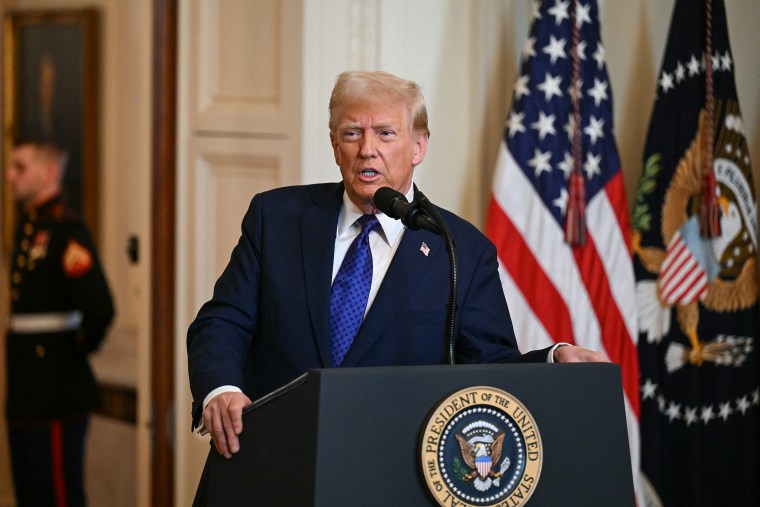
President Donald Trump speaks before signing the Laken Riley Act in the East Room of the White House in Washington, DC, January 29, 2025. Perdo Ugarte / AFP / Getty Images
Employees initially struggled with how to implement the new policy, with a deadline of Friday afternoon, the staffer said. Ultimately, agency staffers began pulling down numerous HIV-related webpages — regardless of whether it included gender — rushing to meet the deadline. It was unclear when the pages might be restored.
“The process is underway,” said the government agency staffer, who requested anonymity for fear of repercussions. “There’s just so much gender content in HIV that we have to take everything down in order to meet the deadline.”
The White House did not immediately respond to requests for comment. Communications representatives within the CDC’s HIV and STD prevention departments did not return requests for comment; last week, the Trump administration ordered all employees of HHS, which includes the CDC, to stop communicating with external parties.
Trump’s sweeping executive order to wipe out DEI programs across the federal government threatens to upend the CDC’s efforts to combat HIV among Black, Latino and transgender people — groups disproportionately affected by the virus — according to public health experts.
The executive order, signed by Trump last week, proclaims that the U.S. government will recognize only two sexes — male and female — and end what it characterizes as “radical and wasteful” DEI spending. It also requires that the government use the term “sex” instead of “gender.”
These sweeping directives from the Trump administration, health experts say, threaten to dismantle the CDC’s HIV prevention division, as addressing disparities based on race, sex or gender identity is fundamental to HIV prevention work. The virus has long disproportionately impacted various minority groups, including Blacks and Latinos, gay and bisexual men and transgender people.
Separately, a website that provides technical assistance and training resources to agencies and clinics that receive funding from the Ryan White HIV/AIDS Program, which is run by HHS and provides safety-net funding for the care and treatment of low-income people with HIV, has also been pulled down this week, replaced by a note that says it is “under maintenance.”
An archived version of the site indicates it was active as recently as Jan. 24 and rendered inactive by Jan. 29.
“How can we work on preventing HIV among the populations who are most at risk for it if we can’t talk about it?” said the government worker. “This essentially shuts our entire agency down. We are scrambling to figure out what to do.”
Since Trump’s inauguration, an NBC News analysis found, the administration has scrubbed dozens of webpages that mention diversity, equity, inclusion, gender or sexuality from the sites of federal health agencies like the National Institutes of Health, Food and Drug Administration, CDC and Department of Human and Health Services.
Reproductiverights.gov, the HHS website that provided information about access to reproductive care, including abortion, in the U.S. is among the sites that are now offline. The FDA’s Office of Minority Health and Health Equity website has also been purged, and the NIH’s Office of Equity, Diversity and Inclusion website now redirects to a page on equal employment opportunity.
The formation of the CDC’s HIV prevention division dates back to the early 1980s, as the agency responded to the emerging AIDS epidemic.
The agency is responsible for tracking HIV infections across the U.S., conducting research — in some cases with outside groups — that inform HIV transmission efforts, and also launching initiatives to promote testing and prevention, such as the use of the HIV prevention pill, known as PrEP.
Prioritizing local control of HIV prevention efforts, the CDC provides millions of dollars of grants to state and local health departments and nonprofits to conduct much of the on-the-ground efforts to surveil and combat the virus.
The bulk of federal spending on HIV research, including on experimental vaccines, treatments and cure therapies, comes from the NIH. It remains unclear whether such funding is at risk as the Trump administration exerts its influence across the nation’s health agencies.
But Trump’s pick to lead HHS, Robert F. Kennedy Jr., has said he wants to impose an eight-year “break” on infectious disease research to prioritize studying chronic health conditions, such as obesity and diabetes.
While HIV is an infectious disease, it is also considered a chronic health condition, thanks to effective antiretroviral treatment that has extended the life expectancy of people on such medication to near normal. People with the virus are at higher risk of various other chronic health conditions associated with aging, including cardiovascular disease and diabetes. The NIH has devoted considerable resources to seeking means to mitigate these intersecting health risks.
The annual HIV transmission rate peaked in the mid-1980s at an estimated 135,000 cases per year and plateaued at about 50,000 cases during the 1990s and 2000s, according to the CDC. In recent years, as PrEP has become more popular, HIV has declined modestly, including a 12% drop between 2018 and 2022, to an estimated 31,800 new cases. But such progress pales in comparison to the steep recent declines seen in many other wealthy Western nations.
In 2022, the most recent year for which granular data are available, Blacks and Latinos accounted for 37% and 33% of new HIV cases, despite being just 12% and 18% of the U.S. population.
About two-thirds of new cases occur among gay and bisexual men, who are just 2% of the adult population. While research indicates that transgender women in particular have a high HIV rate, the CDC’s routine HIV surveillance reports do not break down the data according to gender identity.
HIV advocates expressed concern that the Trump administration’s anti-DEI efforts would hamstring the CDC’s efforts to combat HIV and jeopardize hard-fought gains.
“An HIV prevention policy that does not tailor outreach, programs, and services to the communities most in need could increase stigma, make outreach and engagements more challenging, and affect trust,” Lindsey Dawson, an associate director at KFF, a nonprofit group focused on health policy, wrote in an email.
Politics have collided with HIV prevention and advocacy since the dawning of the epidemic.
During the 1980s, activists excoriated President Ronald Reagan for his administration’s slow response to the burgeoning AIDS crisis that was decimating the gay community.
In 1987, Congress passed the Helms Amendment, derisively known as the “No Promo Homo” bill, which prohibited the CDC from creating HIV educational materials or developing programs that would “promote or encourage, and condone homosexual activities.”
Carl Schmid, executive director of the HIV+Hepatitis Policy Institute, said that during George W. Bush’s presidency, researchers and organizations writing applications for federal grant funding for HIV-related matters had to avoid making any reference to gay people or condoms.
The iron-fisted impact of Trump’s anti-DEI order, however, appears to be a league unto itself, HIV prevention experts said.
“Many programs that support disadvantaged groups in the United States are in the crosshairs of the administration,” said Dr. Jeffrey Klausner, an infectious disease expert at the University of Southern California and a veteran of the fight against HIV. “I am very worried about HIV prevention in the United States. We have had tremendous success in the United States brought about by career, highly dedicated NIH and CDC scientists who then transferred their discoveries to the private sector for sales and implementation.”
The government employee called Trump’s order “demoralizing.”