The LGBTQ+ community is under siege, facing an onslaught of attacks across our nation. Underscoring the urgency of this crisis, the Human Rights Campaign declared a state of emergency for LGBTQ+ Americans for the first time in its history. Discriminatory policies and the looming threat of violence have forced many transgender individuals to flee their homes.
Behind this assault on LGBTQ+ rights lies a relentless wave of far-right Christian messaging. Despite claims that these policies aim to protect children or safeguard the integrity of women’s sports, the truth is that this surge of hate is rooted in the belief that being LGBTQ+ is somehow ungodly.
As a Black queer reverend who hails from a small town in Texas, I am intimately familiar with this messaging. It permeates every aspect of society, making it impossible to confront the anti-LGBTQ+ movement without addressing this fundamental belief head-on.
Years of rigorous religious study have led me to a profound realization: The Bible does not explicitly discuss homosexuality or transgender people. Rather, every discriminatory interpretation targeting the LGBTQ+ community is a product of cultural biases and historical conditions. In fact, the more I delved into scripture, the clearer it became to me that Jesus, in essence, was queer.
Before exploring the texts, it is crucial to recognize that extremist Christianity lies at the core of nearly every anti-LGBTQ+ effort. For example, a prominent pastor in my home state of Texas, known for protesting LGBTQ+ events, declared that those who practice such lifestyles are opposed to God and will face eternal damnation. Likewise, State Rep. Randy Fine of Florida, a key figure behind the banning of gender-affirming care for minors, asserted that God does not make mistakes with our children.
An investigation by the Associated Press recently revealed that a significant number of anti-trans bills originate from far-right groups rooted in Christianity, such as the Family Research Council.
It is astounding that the actual Bible text provides no solid support for the generally held anti-LGBTQ+ viewpoint. It is only an extrapolation that influential people have used to further their own agendas.
In my biblical exploration, I discovered that Jesus embodies queerness. Queerness extends beyond gender and sexuality; it is fundamentally about being at odds with the world around you. This resonates strongly with Jesus, who was consistently cast out and demonized by society.
Consider when Jesus returned to his hometown of Nazareth and preached in the synagogue. Those who initially embraced him turned against him and even attempted to cause him harm. Jesus also frequently clashed with religious leaders who eerily resemble those who currently assert with unwavering certainty that being LGBTQ+ is a sin. On one occasion, the Pharisees sought to destroy him after he healed a man with a withered hand on the Sabbath.
Furthermore, the Bible teaches us that Christ encompasses all things. If this holds true, then Christ is also trans, gay, straight, Black, white, and much more. In this light, queerness is not just something to be accepted—it is divine.
Ultimately, the Bible does not provide a clear and universal directive on matters of sexuality. However, it does unequivocally instruct us to love everyone, particularly the vulnerable and marginalized.
Therefore, it is incumbent upon us, as people of faith, to challenge the prevailing narratives that seek to marginalize and harm the LGBTQ+ community. We must reclaim the true gospel—love, life, and the pursuit of justice.
In the face of adversity, we should stand as allies and advocates for the rights of LGBTQ+ individuals. It is time to dismantle the harmful interpretations and cultural biases that have been erroneously associated with our religious texts. We must reject the misguided notion that being LGBTQ+ is somehow incompatible with our faith. On the contrary, embracing diversity and celebrating the uniqueness of every individual is a reflection of the divine within us.
In this critical moment, we have an opportunity to reclaim and redefine the narrative. Let us recognize the LGBTQ+ community as beloved children of God, deserving of dignity, respect, and equal rights. Together, we can create a society that affirms the inherent worth of every individual, regardless of their sexual orientation or gender identity.
It is in this pursuit that we honor the true essence of our faith and create a world where every individual can live authentically, free from fear and prejudice.
Rev. Karmen Michael Smith is the Director of the Center for Community Engagement and Social Justice at Union Theological Seminary.
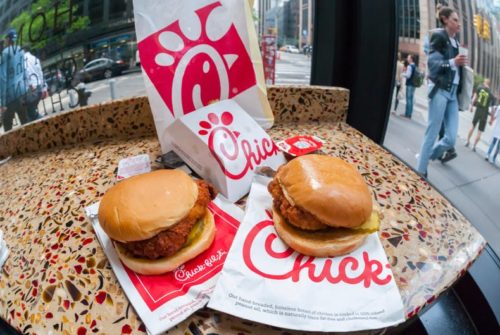
Chick-fil-A is one of the top 10 largest fast-food chains in the U.S. with a widely loved offering of chicken sandwiches and an estimated 2022 revenue of $6.4 billion, according to Zippia.com. However, the company has also had a long history of supporting anti-LGBTQ+ causes.
Here’s an overview of its queerphobic actions and how social pressure has caused the company to shift its attention away from anti-LGBTQ+ efforts in recent years.
A history of Chick-fil-A’s controversial actions
Since 2003, the WinShape Foundation, a charity co-founded by Chick-fil-A’s now-deceased founder S. Truett Cathy and his wife Jeanette Cathy, has donated over $1 million to groups that actively oppose same-sex marriage, including Phyllis Schlafly’s Eagle Forum; the anti-LGBTQ Christian group Focus on the Family; the SLPC-certified hate group Family Research Council; the now-defunct ex-gay therapy group Exodus International; the exclusively for-heterosexuals-only Marriage & Family Legacy Fund; and the Fellowship of Christian Athletes (FCA), a religious groups whose “sexual purity policy” prohibits any homosexual acts.
In 2009, Chick Fil-a doubled that amount to $2 million. In January 2011, Chick-fil-A co-sponsored a marriage conference with the Pennsylvania Family Institute, a group that opposes expanded LGBTQ+ civil rights. In 2012, Chick-fil-A executives promised to stop supporting anti-LGBTQ organizations.
However, The Chick-fil-A Foundation’s IRS filings from 2015 revealed that the foundation donated $1 million to the FCA; $200,000 to the Paul Anderson Youth Home, a Georgia-based residential home for troubled youth which said that child abuse causes homosexuality; and $130,000 to the Salvation Army, a religious international charity that has long opposed same-sex marriage and anti-LGBTQ housing discrimination protectionswhile supporting religious exemptions from LGBTQ+ anti-discrimination laws. In 2017, Chick-fil-A’s donations to these groups equaled nearly $2 million.
Dan Cathy’s statements against same-sex marriage
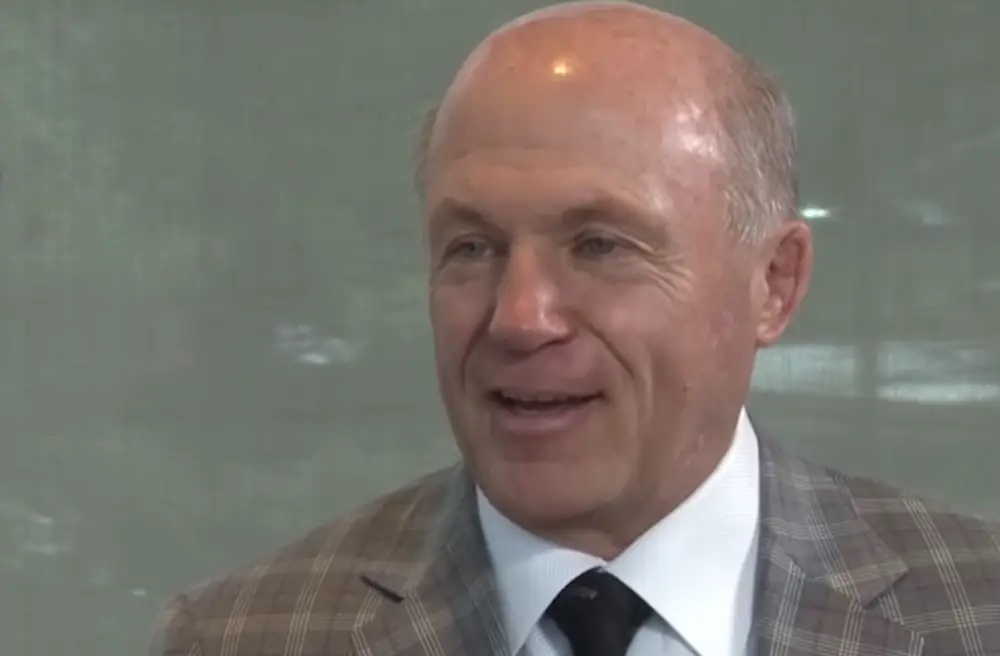
YouTube screenshotDan Cathy
In 2012, Chick fil-A’s then-president and chief operating officer Dan Cathy made repeated comments against same-sex marriage. On June 16, 2012, Cathy said on The Ken Coleman Show that the United States was “inviting God’s judgment” upon it by redefining marriage to include same-sex spouses. “I pray God’s mercy on our generation that has such a prideful, arrogant attitude to think that we have the audacity to define what marriage is about,” Cathy said.
In a July 2, 2012 interview with Biblical Recorder, Dan Cathy said he was “guilty as charged”when asked about Chick-fil-A’s “support of the traditional family.” In June 2013, the day the U.S. Supreme Court struck down Section 3 of the so-called Defense of Marriage Act (DOMA), Cathy tweeted (and quickly deleted), “Sad day for our nation; founding fathers would be ashamed of our gen. to abandon wisdom of the ages re: cornerstone of strong societies.”
By 2014, Cathy said it was a “mistake” to involve his company in the public debate against same-sex marriage. Nevertheless, even into 2021, Cathy — who still serves as the company’s chairman — continued using his money to fund the National Christian Charitable Foundation and its “dark money operations” supporting anti-LGBTQ+ legislation.
Chick-fil-A’s corporate policies and employee treatment
Shutterstock
Chick-fil-A’s current statement on Diversity, Equity and Inclusion (DEI) says that the company doesn’t allow employment discrimination or harassment based on “sexual orientation, gender, gender identity, gender expression,” or other personal characteristics, like religion.
Despite this, in 2002, a Muslim employee of a Houston location sued the chain, alleging that he had been fired for refusing to pray to Jesus with other employees — the company settled the suit out of court. In 2022, a transgender female Chick-fil-A employee sued the restaurant chain after her co-worker allegedly began making violent, racist, and queerphobic threats.
LGBTQ+ Chick-fil-A employees have variously spoken out for and against the company. One anonymous gay worker discouraged boycotts, noting that they would mostly harm the chain’s LGBTQ+ employees, but also accused the restaurant’s anti-gay and Christian supporters of being self-righteous, arrogant, and blind to LGBTQ+ suffering.
Several gay employees said some customers offered homophobic words of support for the business while other people yelled at employees for supporting a homophobic company. Others said that their Chick-fil-A co-workers and supervisors didn’t tolerate homophobic behavior from colleagues.
Chick-fil-A’s philanthropy shifts show the power of consumer advocacy
Twitter/Greg AbbottTexas Gov. Greg Abbott (R) surrounded by Chick-fil-A
Chick-fil-A’s supporters have encouraged the company to embrace its anti-gay social stances, while its critics have urged the company to turn away from its anti-LGBTQ+ practices.
In 2012, gay activists and allies staged a national boycott of the chain after one location donated food to a seminar hosted by the anti-gay Pennsylvania Family Institute. To combat the boycotts, former Arkansas Gov. Mike Huckabee (R) declared August 1, 2012 as Chick-fil-A Appreciation Day.
In support of the day, Huckabee wrote, “Let’s affirm a business that operates on Christian principles and whose executives are willing to take a stand for the godly values we espouse…. Too often, those on the left make corporate statements to show support for same-sex marriage, abortion, or profanity, but if Christians affirm traditional values, we’re considered homophobic, fundamentalists, hate-mongers, and intolerant.”
The chain said the day’s resulting sales helped set a record for profits.
On August 3, 2012, however, gay rights activists around the nation held kiss-in protests in opposition to the restaurant’s anti-LGBTQ+ donations and Dan Cathy’s views against same-sex marriage. Some of the protests occurred inside and outside of the restaurants. Other LGBTQ+ allies encouraged people to donate money that they would’ve spent at the restaurant to queer organizations like GLAAD.
Chick-fil-A announced in 2017 that that would be the last year in which it would donate to the Paul Anderson Youth Home. In a November 18, 2019 interview, Chick-fil-A president Tim Tassopoulos said the company would no longer donate to the FCA and The Salvation Army. Tassopoulos also said Chick-fil-A would continue to donate to “faith-based [and] non-faith-based” groups.
In response to Tassopoulos’s announcement, the Christian consumer organization 2nd Vote denounced and boycotted Chick-fil-A for pledging not to donate to anti-LGBTQ+ organizations. The American Family Association also circulated a petition which stated, “It looks like you (Chick-fil-A) are abandoning Christian values and agreeing with homosexual activists who say believing the Bible makes you a hater. Please clarify that you still hold to biblical teachings regarding human sexuality, marriage, and family, and reinstate these Christian ministries.”
In a statement released in 2020, the Chick-fil-A Foundation announced that it would donate $9 million equally to promote youth education through Junior Achievement USA, combat youth homelessness via the LGBTQ+-inclusive charity Covenant House International, and fight hunger by giving to local food banks in cities where it opened new locations.
The anti-LGBTQ+ Family Research Council (FRC) criticized Chick-fil-A for publicly withdrawing its support from the FCA and Salvation Army and announcing its support for Covenant House International, something the FRC called “an endorsement of an LGBT agenda.”
Assessing Chick-fil-A’s progress & its potential for change
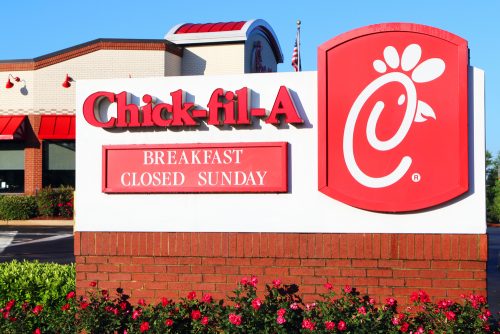
ShutterstockFast food chain Chick-fil-A is owned by religious conservatives and closed on Sundays.
While Chick-fil-A’s donation strategy has changed for the time being, it still carries an image of being anti-gay. This image has led city airports and college campuses to protest the openings of new Chick-fil-A restaurants. In response, conservative politicians have continued to defend the company’s Christian beliefs.
Apart from rehabbing its public image, the company could do more to welcome its own LGBTQ+ employees.
In 2019, the LGBTQ+ rights organization the Human Rights Campaign (HRC) and the queer media watchdog group GLAAD both said that they wanted Chick-fil-A to implement fair hiring practices, transparency about donations, and proof that Chick-fil-A has actually stopped donating to anti-LGBTQ+ organizations.
The company could certainly do more to become more LGBTQ+-inclusive. The company has never participated in the HRC’s Corporate Equality Index measuring the company’s own queer-inclusive workplace policies. The company also has no internal employee resource groups for addressing the needs of LGBTQ+-identified team members. It’s unclear if the company offers LGBTQ+-inclusive anti-discrimination training or equal employee benefits, like parental leave and domestic partner benefits, regardless of workers’ sexual orientations or gender identities.
Other businesses have contrasted themselves with Chick-fil-A to highlight their own inclusive business practices and the importance of informed consumption and supporting LGBTQ+-friendly businesses.
In June 2021, for instance, Burger King launched the Ch’King sandwich, which closely resembled Chick-fil-A’s trademark chicken sandwich. In a June 3, 2021 tweet, Burger King wrote, “The #ChKing says LGBTQ+ rights!” It also announced that it would donate 40₵ to the HRC for every Ch’King sandwich sold (with a maximum donation of $250,000).
In September 2022, Alexandre’s Bar in the Dallas gayborhood of Oak Lawn announced the sale of its own “Chick-fil-gAy” sandwich that was only available on Sundays (the day on which all Chick-fil-A locations are closed).
Recent polling shows that 70% of non-LGBTQ+ Americans believe that companies should publicly support the queer community through inclusive policies, advertising, and sponsorships — this belief held especially true for younger consumers. In short, Chick-fil-A could invest in its future by continuing to distance itself from its past anti-gay actions.
Diversity is delicious, homophobia is not
Chick-fil-A has given to groups that oppose LGBTQ+ identities and civil rights. Its current chairman, Dan Cathy, has also made several statements against same-sex marriage. This has tarnished the company’s image, even as it has gradually distanced itself from these positions.
While the company remains very successful, its recent changes in donation and anti-discrimination policies show the impact that consumers have made by advocating for LGBTQ+ rights and supporting inclusive business practices. LGBTQ+ people and allies support and remain loyal to companies that support their queer employees and the larger queer community. It pays to research and patronize such supportive businesses so we can all put our money where our mouths are.
More than half of LGBTQ+ social media users are turning their backs on mainstream platforms over toxicity and safety concerns, a new report indicates.
Communia – the world’s first social media platform for women and marginalised genders – published its “exposé on women’s and marginalised genders’ social media experiences” report on Monday (10 July).
The research, which was conducted between 20-22 June 2023, surveyed 2,058 women and marginalised genders – including 237 LGBTQ+ people – in the UK who are current or past users of social media.
The survey saw almost two in three (60 per cent) of LGBTQ+ respondents state that they are turning their backs on mainstream social platforms due to safety concerns or toxic environments.
Just over a third (34 per cent) of straight respondents said the same.
Further findings show that almost half (46 per cent) of LGBTQ+ respondents feel unsafe online, compared to just under a third (29 per cent) of straight respondents.
Almost a quarter (24 per cent) of respondents said they felt unsafe online due to leaving a digital footprint and data privacy.
Just under three-quarters (73 per cent) of LGBTQ+ users said they had been a victim of online abuse – more than double the proportion among straight respondents.
The survey also found more than half of the queer respondents (59 per cent) had considered cosmetic surgery as a result of social media, while more than four in five (85 per cent) said social media makes them feel less confident in their life choices. Only 54 per cent of straight respondents said the same.
The LGBTQ+ community also ranked highest for having had a partner control or try to control their digital interactions, with 61 per cent answering “yes” compared to 27 per cent of straight respondents.
‘Take important steps to improve the digital world’
Communia’s founder, Olivia DeRamus, said of the findings: “This survey should encourage big tech companies, the UK government, and consumers themselves to take important steps to improve the digital world and make it safe from predatory behaviour, hate speech, trolling, and other forms of abuse.
“I encourage the broader tech community to emulate Communia’s safety and digital well-being strategies. Suggestions include: making it as easy as possible to report abuse, verifying users’ identities, banning those who spread hate at the first incident, and uncensoring the words women need to talk about our own experiences.”
The billionaire, who bought Twitter in October 2022, quietly dropped the platform’s policyprotecting trans people from deadnaming and misgendering in April 2023.
Following his takeover, transphobic remarks were found to have risen by at least 1,458 times per day across the remainder of last year. Additionally, racist, anti-Black comments increased to a height of 3,876 times a day.
A federal judge has blocked a Wisconsin school district from requiring transgender students to use bathrooms and locker rooms that match the sex they were assigned at birth while a lawsuit plays out against the school.
U.S. District Judge Lynn Adelman said Thursday that the Mukwonago Area School District must allow a transgender student to use facilities that align with their gender identity, temporarily blocking a policy approved last month by the school board, the Milwaukee Journal Sentinel reported.
The order comes in a lawsuit brought anonymously by an 11-year-old transgender student and her mother. The judge ruled that the school’s policy was causing emotional and mental harm to the student, who was described as a boy at birth but has identified as a girl since she was three years old.
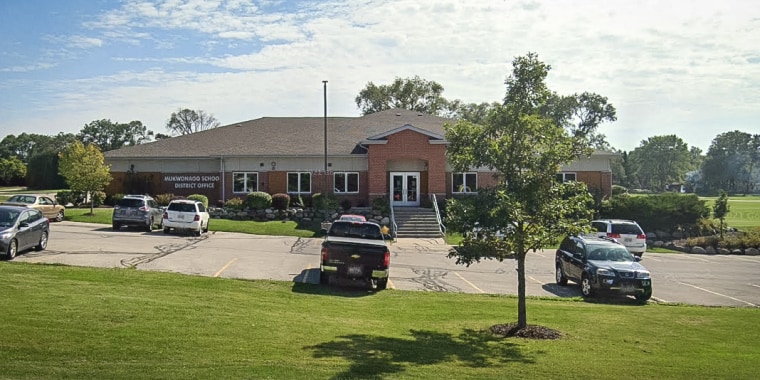
Mukwonago Area School District offices in Mukwonago, Wisc.Google maps
According to court documents, school officials have monitored which bathrooms the student uses and forced her to go to boys’ bathrooms or gender-neutral bathrooms at Mukwonago High School, where she is enrolled in summer school classes.
Adelman ruled that the student’s case was likely to succeed at trial, citing a similar case in Kenosha in 2017, in which a judge held that a school could not block a transgender student from using bathrooms that matched their gender identity.
The Village of Mukwonago is located in conservative Waukesha County, a Milwaukee suburb that has been key to Republican victories in the state. Across the country, Republican lawmakers have passed measures in recent years to restrict which bathrooms transgender students can use in public schools and universities.
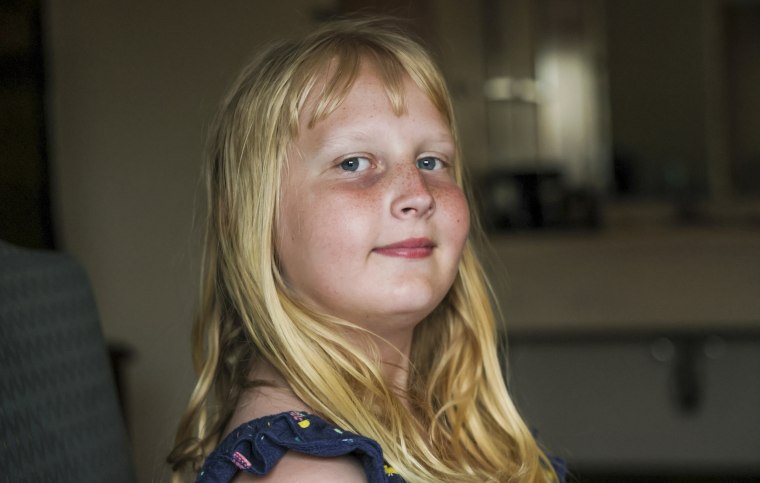
On an early morning in June, Flower Nichols and her mother set off on an expedition to Chicago from their home in Indianapolis.
The family was determined to make it feel like an adventure in the city, though that wasn’t the primary purpose of the trip.
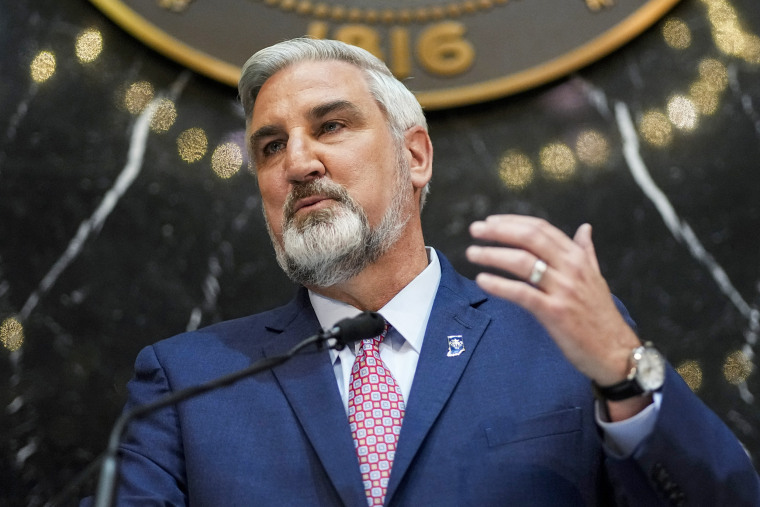
The following afternoon, Flower and Jennilyn Nichols would see a doctor at the University of Chicago to learn whether they could keep Flower, 11, on puberty blockers. They began to search for medical providers outside of Indiana after April 5, when Republican Gov. Eric Holcomb signed a law banning transgender minors from accessing puberty blockers and other hormone therapies, even after the approval of parents and the advice of doctors.
At least 20 states have enacted laws restricting or banning gender-affirming care for trans minors, though several are embroiled in legal challenges. For more than a decade prior, such treatments were available to children and teens across the U.S. and have been endorsed by major medical associations.
Indiana Gov. Eric Holcomb in Indianapolis on Jan. 10.Darron Cummings / AP file
Opponents of gender-affirming care say there’s no solid proof of purported benefits, cite widely discredited research and say children shouldn’t make life-altering decisions they might regret. Advocates and families impacted by the recent laws say such care is vital for trans kids.
On June 16, a federal judge blocked parts of Indiana’s law from going into effect on July 1. But many patients still scrambled to continue receiving treatment.
Jennilyn Nichols wanted their trip to Chicago to be defined by happy memories rather than a response to a law she called intrusive. They would explore the Museum of Science and Industry and, on the way home, stop at a beloved candy store.
Preserving a sense of normalcy and acceptance, she decided — well, that’s just what families do.
Navigating new laws
Families in Indiana, Mississippi and other states are navigating new laws that imply or sometimes directly accuse them of child abuse for supporting their kids in getting health care. Some trans children and teens say the recent bans on gender-affirming care in Republican-led states send the message that they are unwelcome and cannot be themselves in their home states.
For parents, guiding their children through the usual difficulties of growing up can be challenging enough. But now they are dealing with the added pressure of finding out-of-state medical care they say allows their children to thrive.
In the Nichols family alone, support took many forms as they traveled to Chicago: a grandmother who pitched in to babysit Flower’s 7-year-old brother, Parker, while their father Kris worked; a community of other parents of trans kids who donated money to make the trip more comfortable.
“What transgender expansive young people need is what all young people need: They need love and support, and they need unconditional respect,” said Robert Marx, an assistant professor of child and adolescent development at San José State University. Marx studies support systems for LGBTQ and trans people aged 13 to 25. “They need to feel included and part of a family.”
In Indiana, rancorous legislative debates, agitated family relationships and exhaustive efforts to find care have drawn families to the support group GEKCO, founded by Krisztina Inskeep, whose adult son is transgender. Attendance at monthly meetings spiked after the state legislature advanced bills targeting trans youth, she said.
“I think most parents want to do best by their kids,” Inskeep said. “It’s rather new to people, this idea that gender is not just a binary and that your kid is not just who they thought at birth.”
The perceptions of most parents, Marx said, don’t align neatly with the extremes of full support or rejection of their kids’ identities.
“Most parents exist in a kind of gray area,” Marx said. “Most parents are going through some kind of developmental process themselves as they come to understand their child’s gender.”
‘This is just like who I am’
On June 13, Flower and Jennilyn set off on their trip, unsteady but hopeful. They brought a care plan from Indiana University’s Riley Children’s Hospital, the Hoosier State’s only gender clinic.
At the time, the pair worried whether Chicago providers could meet their request for full-time support or as a backup if Indiana’s ban went on hold. They considered whether they could make the drive every three months, the necessary interval between Flower’s puberty blockers.
The decision for Flower to start puberty blockers two years ago wasn’t one the family took lightly.
Jennilyn recalled asking early on whether her daughter’s gender expression was permanent. She wondered if she had failed as a mom, especially while pregnant — was it an incorrect food? A missed vitamin?
Ultimately she and Kris dismissed those theories, ungrounded in science, and listened to their daughter, who recalled the euphoria of wearing princess dresses at an early age. Flower cherished a Little Red Riding Hood cape and felt certain of her identity from the start.
Flower Nichols in Chicago on June 13.Teresa Crawford / AP file
“I remember that I really disliked my name,” Flower said of her birth name. “This is just like who I am. It’s all that I have a memory of.”
Conversations between Flower and her mother are often marked by uncommon candor, as when discussing early memories together at an Indianapolis park.
“Before I knew you and before I walked this journey with you,” Jennilyn told her, “I would not have thought that a kid would know they were trans or that a kid would just come out wired that way. I always thought that that was something adults figured out, and so there were times that it was really scary because I didn’t know how the world would accept you. I didn’t know how to keep you safe.”
Now, Jennilyn said, her worries have shifted to Flower’s spelling skills and how she’ll navigate crushes.
Flower, for her part, appreciates being heard. She said she and her parents make medical decisions together because, “of course, they can’t decide on a medicine for me to take.”
“At the same time, you can’t pick a medicine that we can’t afford to pay for or that, you know, might harm you,” Jennilyn responded.
“That’s what I really like about her,” Flower said, of her mother. “She leaves a lot of my life up to me.”
‘They’re ripping our lives apart’
In Mississippi, a ban on gender-affirming care became law in the state on Feb. 28 — prompting a father and his trans son to leave the state at the end of July for Virginia. There, he can keep his health care and continue to see doctors.
“We are essentially escaping up north,” said Ray Walker, 17.
Walker lives with his mother, Katie Rives, in a suburb of Jackson, the state capital. His parents are divorced, but his father also lived in the area. Halfway through high school, Walker is an honors student with an interest in theater and cooking. He has a supportive group of friends.
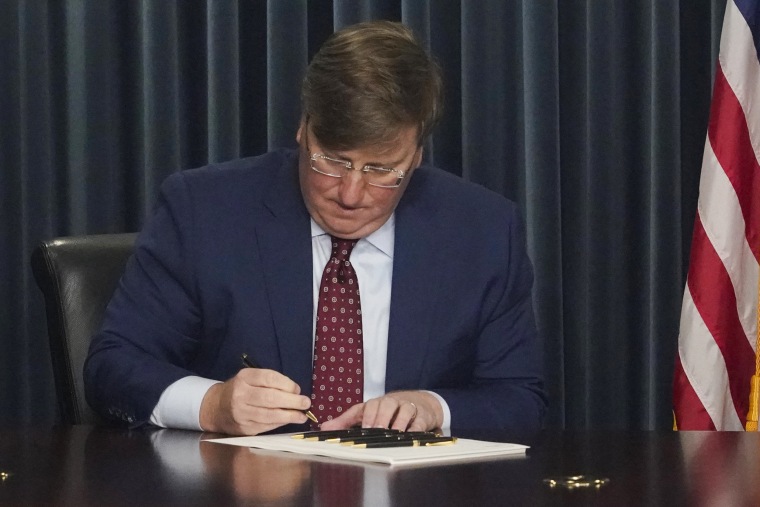
When Mississippi Republican Gov. Tate Reeves signed the bill banning hormone therapy for anyone younger than 18, he accused “radical activists” of pushing a “sick and twisted ideology that seeks to convince our kids they’re in the wrong body.”
Mississippi Republican Gov. Tate Reeves signs Mississippi House Bill 1125 to ban gender-affirming care in the state for anyone younger than 18 on Feb. 28 in Jackson.Rogelio V. Solis / AP file
The state’s largest hospital halted hormone treatments for trans minors months before Reeves signed the ban. That hospital later closed its LGBTQ clinic.
After that clinic stopped offering its services, Walker and other teenagers received treatment at a smaller facility in another city, but those services ended once the ban took effect.
As access to gender-affirming dwindled and was later outlawed, Walker’s father, who declined to be interviewed, accepted a job in Virginia, where his son could keep his health care. Walker plans to move in with his father this month. Rives, however, is staying in Mississippi with her two younger children.
Walker’s memories of the anguished period when he started puberty at 12 still haunt him. “My body couldn’t handle what was happening to it,” he said.
After a yearslong process of evaluations, then puberty blockers and hormone injections, Walker said his self-image improved.
Then the broad effort in conservative states to restrict gender-affirming care set its sights on Mississippi. The path toward stability that Walker and his family forged had narrowed. It soon became impassable.
Ray Walker, 17, left, and his mother, Katie Rives, discuss his moving to Virginia for continued gender-affirming care on June 28 in Madison County, Miss.Rogelio V. Solis / AP file
“I was born this way. It’s who I am. I can’t not exist this way,” Walker said. “We were under the impression that I still had two years left to live here. The law just ripped all of that up. They’re ripping our lives apart.”
The family sees no alternative.
“Mississippi is my home, but there are a lot of conflicting feelings when your home is actively telling you that it doesn’t want you in it,” Walker said.
As Walker’s moving date approaches, Rives savors the moments the family shares together. She braces for the physical distance that will soon be between them. Her two younger sons will lose Ray’s brotherly presence in their daily lives.
She still feels lucky.
“We know that’s an incredibly privileged position to be in,” Rives said of her son moving to Virginia. “Most people in Mississippi cannot afford to just move to another state or even go to another state for care.”
‘She belongs’
Flower, initially dispirited by the debates at the Indiana Statehouse, brightened after her parents took her to her first Pride march on June 10 in Indianapolis.
She tied a transgender pride flag around her shoulders and covered her pink shirt in every rainbow heart-shaped sticker she could find. She gripped a sign that read: “She belongs.”
Her favorite activities are often less inflected with politics than her status as a soon-to-be teenager. She’s a Girl Scout who enjoys catching Pokemon with her brother. Before the trip, she zipped around an Indianapolis park on a pink scooter, her hair tangled by the wind.
Flower Nichols and her mother, Jennilyn, in front of the Museum of Science and Industry in Chicago on June 13.Teresa Crawford / AP file
Prior to entering Chicago’s Museum of Science and Industry, Flower used a women’s bathroom. At a diner in the city, she ordered a mint chocolate chip milkshake and a vegan grilled cheese. Jennilyn created an itinerary to make their experience as joyful and uncomplicated as possible.
“First of all, we’re going be able to chill at the hotel in the morning,” Flower said. “Second of all, there’s a park nearby that we can have a lot of fun in. Third of all, we might have a backup plan, which is really exciting. And fourth of all: Candy store!”
The doctor’s appointment the following day, initially intimidating, soon gave them another reason to celebrate: If care was not available in Indiana, they could get it in Chicago.
“Indiana could do whatever the hell they’re going to do,” Jennilyn said, “and we can just come here.”
Kansas Attorney General Kris Kobach (R) has filed a lawsuit to force the state government to discriminate against trans people on their driver’s licenses and birth certificates.
The suit asks the court to demand the Department of Revenue’s Division of Vehicles comply with S.B. 180, a sweeping new anti-trans law that, among other things, bans trans people from updating the gender marker on their birth certificates and driver’s licenses.
This is Kobach’s latest move in an ongoing battle between himself and the state’s Democratic Gov. Laura Kelly.
In April, Kelly vetoed S.B. 180, but the state’s Republican-led legislature overrode her veto to pass the bill. Once the bill took effect on July 1, Kelly directed state agencies to continue to allow transgender citizens to change the gender markers on their birth certificates and driver’s licenses in defiance of Kobach.
A banner at the top of the Department of Revenue’s website declares that the “enactment of Senate Bill 180 on July 1 will not impact the longstanding procedures for obtaining, renewing, and updating a Kansas driver’s license as they pertain to gender markers.”
Kobach – who also lost to Kelly in the 2018 gubernatorial race – also filed a motion in June to end a 2019 consent decree settling a 2018 lawsuit brought by four transgender residents who claimed that the state’s refusal to correct birth certificates violated their constitutional right to equal protection.
In conjunction with that motion, Kobach announced that trans people who already had a birth certificate or license changed could keep the documents but that the state’s data would revert back to their sex assigned at birth.
Prior to Kobach’s announcement, legal experts had assumed that the state would not move to change gender markers that had already been updated under the 2019 consent decree, leading many transgender Kansans to rush to update their documents before the law was scheduled to take effect.
Kobach’s current lawsuit against the Department of Revenue blasts Kelly, declaring she “cannot pick and choose which laws she will enforce and which she will ignore.”
“She does not possess the power that English monarchs claimed prior to the ‘Glorius Revolution’ of 1688,” the suit continues, “namely, the power to suspend the operation of statutes.”
Yet Kobach has also been accused of failing to enforce the law in his attempt to retroactively remove gender markers from the documents of trans citizens who received their licenses before the law took effect.
American Civil Liberties Union of Kansas executive director Micah Kubic told KMUW that S.B. 180 does not require the measures Kobach has announced. “These are of his own volition and interpretation, driven by his own extreme ideological perspective, not by requirements of the law, the constitution, or the best interests of Kansans.”
“The laws should not be considered retroactive,” UMKC Law School professor Steve Leben told KCTV5 News. “The law itself says it’s effective July 1, takes effect and it’s enforced from that date.”
Kobach also argues in the lawsuit that the state has already been using sex and gender synonymously since state statute says driver’s licenses must reflect an individual’s “gender” but the actual documents issued use the word “sex.”
Today, only three days after Kobach filed the lawsuit, District Judge Teresa Watson ordered the Kansas Department of Revenue to immediately stop allowing gender changes. The order will last up to two weeks but can be extended as the hearing goes on.
S.B. 180 has been characterized as a “women’s bill of rights” by Republican supporters who claim it is necessary to keep transgender women and girls out of women’s restrooms and locker rooms. In addition to legally defining “sex” in terms of reproductive biology, the law also bans trans people from accessing facilities that correspond with their gender identity in schools, prisons, women’s shelters, rape crisis shelters, and locker rooms.
Days after the Supreme Court’s ruling that businesses can deny same-sex wedding services if it clashes with their religious views, new data says most American voters disagree with that position. Last week, the nation’s high court sided with a Colorado business owner who argued a state non-discrimination law could not compel her to make same-sex websites.
The survey, conducted by Data for Progress, found 65% of voters believe businesses should not be allowed to turn away customers who are of a particular sexual orientation because of the business owner’s personal beliefs.
Many anti-LGBTQ bills introduced and passed in state houses in recent years were pushed by the Alliance Defending Freedom, a Christian legal advocacy group. In the 303 Creative v. Elenis case, the CEO and president of the ADF argued before the high court on behalf of the web designer.
Per the poll’s crosstabs, 64% of Republicans “strongly agree” or “somewhat agree” that businesses should be able to refuse services for same-sex marriages.
For Democrats, the number is 19%.
Around 40% of Republicans also say that businesses should be able to refuse services for interracial marriages and interfaith marriages.
For Democrats, that number is 15%.
Asked about baby showers for unwed mothers, 35% of Republicans says businesses should be able to refuse to provide services.
A transgender woman and former inmate who was held in solitary confinement for six years is suing the Missouri Department of Corrections (MODOC) for what is described as its “unconstitutional and discriminatory policy against people living with HIV.”
The plaintiff, identified only as Jane Roe, claims in the lawsuit filed last week she was held in solitary confinement between 2015 and 2021 at the Jefferson City Correctional Center (JCCC) because she was living with HIV. She is represented by Lambda Legal, the MacArthur Justice Center, and the law firm Shook, Hardy & Bacon
“No person should be subjected to the inhumane and devastating effects of long-term solitary confinement, conditions that Ms. Roe faced every day for more than six years,” Richard Saenz, Lambda Legal senior attorney, criminal justice and police misconduct strategist, said in a statement. “We filed this lawsuit to hold the Missouri Department of Corrections accountable for its use of an unconstitutional and discriminatory policy that singles out people living with HIV.”
“Ms. Roe was trapped in isolation with no way to challenge her conditions,” MacArthur Justice Center attorney, Shubra Ohri, said. “Six years of that led Ms. Roe to self-harm, suicidal ideation, and actual suicide attempts. This tracks with widespread consensus among the human rights experts, psychologists, physicians, and mental health authorities who say solitary confinement is torturous and should be abolished.”
“We seek justice for our client who endured six years of unwarranted solitary confinement. We will work to prevent this from ever happening to another human being,” Gregory Woo, a Shook partner, said in a statement.
The lawsuit, Roe v. Precythe, et. al., was filed in the U.S. District Court for the Western District of Missouri, and claims “MODOC’s policy on incarcerated people living with HIV lacks any consideration of modern medicine and does not engage in individualized assessments.”
The lawsuit alleges that MODOC’s policies and actions violated Roe’s Eighth and Fourteenth Amendments, the Americans with Disabilities Act, and Section 504 of the Rehabilitation Act. Roe claimed she was denied the services, programs, and activities offered to other inmates because of her HIV status. Roe is seeking policy changes by MOCOD, monetary damages, and other unspecified relief.
If you are having thoughts of suicide or are concerned that someone you know may be, resources are available to help. The 988 Suicide & Crisis Lifeline at 988 is for people of all ages and identities. Trans Lifeline, designed for transgender or gender-nonconforming people, can be reached at (877) 565-8860. The lifeline also provides resources to help with other crises, such as domestic violence situations. The Trevor Project Lifeline, for LGBTQ+ youth (ages 24 and younger), can be reached at (866) 488-7386. Users can also access chat services at TheTrevorProject.org/Help or text START to 678678.
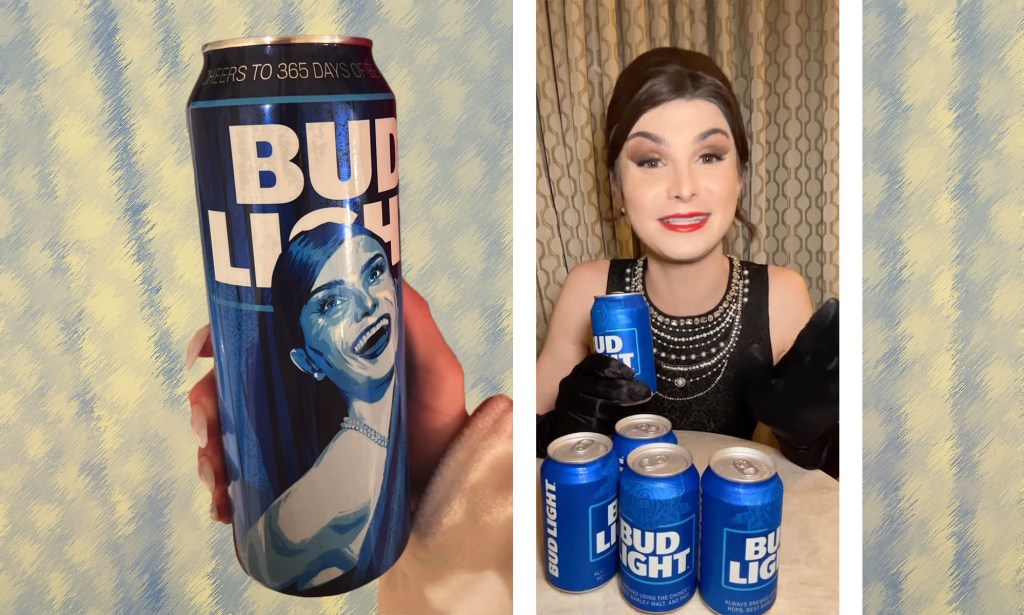
The bar where police raids sparked the 1969 Stonewall uprising has revealed why it stopped serving Bud Light – and it has nothing to do with calls for a boycott over the beer brand’s collaboration with trans influencer Dylan Mulvaney.
Co-owners of New York’s Stonewall Inn, Stacy Lentz and Kurt Kelly, have revealed that the bar turned its back on Bud Light’s parent company, Anheuser-Busch, in 2021.
At that time, the bar staged a “Keep Your Pride” campaign, which involving refusing to serve products of companies that claimed to be allies of the queer community but which also donated funds to anti-LGBTQ+ individuals.
“The reason we did that… was because they were out there waving the rainbow flag very vehemently, then turning around and contributing to anti-LGBTQ legislators, which can’t happen,” Lentz told Newsweek. “Our communities are fed up with that.”
Lentz said Bud Light’s collaboration with Mulvaney, who has 12 million followers on TikTok, “makes sense” and warned other businesses: “If you don’t market to Gen Z, then in 20 years or 30 years, your business will not exist because Gen Z is all about equality. Your consumer is ageing out.”
The backlash to the collaboration “was ridiculous,” and “the fact that they catered to it was alarming,” she added.
“But at the same time, they at least made an effort. I thought it was a great campaign.”
Dylan Mulvaney was the victim of a transphobic backlash over her social media collaboration with Bud Light. (Credit: Getty Images)
Anheuser-Busch faced a deluge of attacks from anti-trans people after they sent Mulvaney a single personalised can to celebrate the first anniversary of her “Days of Girlhood” TikTok series.
However, despite Target, Bud Light and Innocent Drinks being among the brands to face boycott calls over LGBTQ+ inclusion, stats show that most Americans appreciate and value queer people being featured in advertising.
According to GLAAD’s Accelerating Acceptance survey, 75 per cent of straight people feel comfortable seeing LGBTQ+ in advertising, while 60 per cent of heterosexuals agree that seeing queer people in ads makes them more comfortable with those who are different to themselves.
On Wednesday, Democratic North Carolina Gov. Roy Cooper vetoed a trio of anti-trans bills passed by wide margins in the Republican-controlled state House and Senate. The three bills would ban gender-affirming care for minors, prohibit trans athletes in school sports, and limit classroom discussions about gender and sexuality.
Despite the governor’s vetoes, prospects for killing the legislation are poor. Republicans hold veto-proof majorities in both state chambers.
Cooper condemned the bills as “a triple threat of political culture wars” and accused Republicans of “scheming for the next election” at the expense of vulnerable children.
“A doctor’s office is no place for politicians,” said Copper, echoing a popular line of defense among Democrats defending trans minors. “North Carolina should continue to let parents and medical professionals make decisions about the best way to offer gender care for their children.”
“Ordering doctors to stop following approved medical protocols sets a troubling precedent and is dangerous for vulnerable youth and their mental health,” Cooper said, referring to H.B. 808, which would ban puberty blockers and hormone therapy for trans youth in the state.
Cooper also vetoed H.B. 574, a ban on athletes competing on middle school, high school, and college sports teams that align with their gender identity. A “student’s sex shall be recognized based solely on the student’s reproductive biology and genetics at birth,” the bill reads. Sports teams would be designated for males, men or boys; females, women or girls; or coed or mixed by those strict gender definitions.
The third bill vetoed by Cooper, S.B. 49, would ban instruction on “gender identity, sexual activity, or sexuality” in kindergarten through fourth grade and require parents to be notified “prior to any changes in the name or pronoun used for a student in school records or by school personnel.”
Cooper denounced that measure as hampering “the important and sometimes lifesaving role of educators as trusted advisers when students have nowhere else to turn.”
Conservatives in North Carolina were trailblazers, pioneering the transphobic moral panic that has swept red states in the last two years.
In 2016, the state’s notorious “bathroom bill,” which banned trans people from public restrooms and shut down local efforts to enact anti-discrimination measures, cost North Carolina millions in lost business and was a national embarrassment. The law was partly repealed in 2017.
While Cooper’s vetoes will likely be overridden, activists hold out hope the courts will intervene, as they did then, on at least some of the legislation.
More than 20 states have enacted bans on gender-affirming care for minors, but almost all face court challenges. In June, a federal judge struck down Arkansas’ ban as unconstitutional, and federal judges have temporarily blocked bans in Alabama, Indiana, Kentucky, and Tennessee. Plaintiffs in Florida won a reprieve when a federal judge there blocked enforcement for three minor children.