Multiple people attacked ex-gay bar owner, Jorge Sarmiento, 42, and his 80-year-old partner, Gerard Argiud, in their Atlántida home, according to reports.
In April 2017, unknown assailants strangled a trans woman, who also performed in drag,to death.
Sherlyn Montoya’s body was wrapped in sacks in a small alley in the northern part of the capital Tegucigalpa.
Human Rights Watch has updated our marriage equality map, which provides an overview of countries with marriage equality, civil unions or registered partnership; links to the relevant legislation; and, where possible, a brief explanation of the path – legislative, judicial, or other – that these countries took to achieve marriage equality or to provide for same-sex civil unions or registered partnership.
As legal situations change in countries, this map will be further updated.
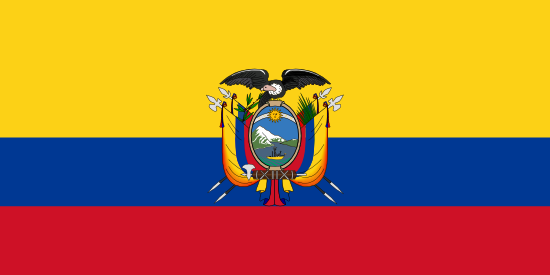
In 2001, the Netherlands became the first country to open civil marriage to same-sex couples. Other countries followed. Today there are 28 countries with marriage equality—most recently, Austria, Ecuador and Taiwan– with Costa Rica expected to join the list soon.
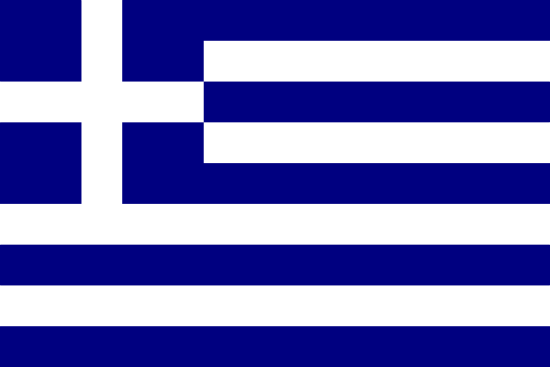
An additional fourteen countries have made civil unions or registered partnerships available for same-sex couples. In some cases, civil unions or registered partnership provide all the same rights and responsibilities of civil marriage and differ in name only; countries with such laws include Croatia, Greece, Slovenia and Switzerland. In other cases, civil unions provide some, but not all, of these rights.
In 2018, the Inter-American Court of Human Rights issued an advisory opinion on the interpretation of the Inter-American Convention on Human Rights in respect of marriage equality. The Court encouraged member states to take actions towards eliminating discrimination and achieving marriage equality.
There are causes to celebrate during Pride Month, as laws and policies continue to improve LGBT rights around the world.
We hope this map will assist those who are looking for this type of information. We decided to only mark independent countries on our map and not overseas territories, regions, departments or possessions. That’s why we did not include Bermuda, Greenland or Aruba for instance. If you have additional information, you can contact Human Rights Watch via lgbt@hrw.org
Recognition of same-sex relationships
Click on each country for a snapshot of current legislation. For more information and Human Rights Watch reporting on LGBT rights, click on the country name in the black pop-up box.
According to The Guardian, the group are the first of 15 LGBT+ refugees finally coming to London after they were accepted onto a resettlement scheme, which is supposed to be faster than the lengthy asylum process, more than two years ago.
During that time, they have been waiting in Turkey where, although being gay is legal, homophobic and transphobic abuse are common and the government ruled that the group were in danger in the country.
Members of the group received death threats and were having to hide in safe houses to avoid violence, the newspaper reported.
The four refugees are in a “state of joy,” and the 11 others are expected to follow soon.
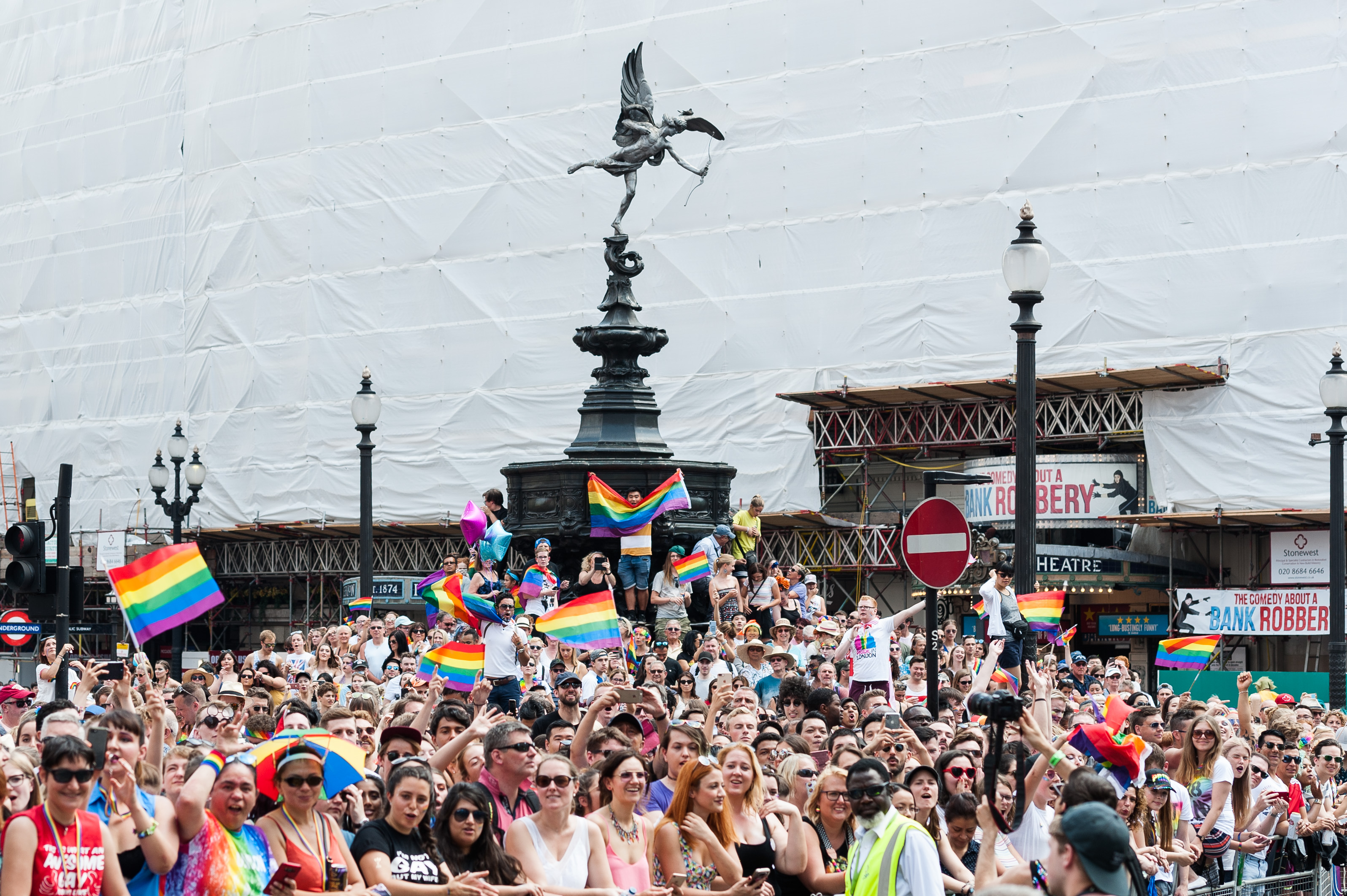
They will be able to openly express being LGBT+ for the first time. (Wiktor Szymanowicz / Barcroft Media via Getty)
The refugees “will proudly march with Pride for the first time in their lives”
Toufique Hossain and Sheroy Zaq, solicitors who launched the legal action, told The Guardian: “These men have been forced to conceal an enormous part of their identity, not just in their country of origin but also in Turkey.
“The detriment they suffered as a result of their sexuality in Turkey simply could not go on any longer; we had to ensure that their resettlement was expedited through legal channels.
“We are elated that they will at last be able to be open about their sexuality in all walks of life, just in time for Pride.”
The refugees were offered housing by the borough of Hammersmith and Fulham, and the leader of the council also told the publication: “No one anywhere should ever face death threats because of their sexuality.
“I’m so happy that we have been able to provide safe refuge for these young people and that tomorrow they will proudly march with Pride for the first time in their lives.”
The Gay Liberation Front, the U.K.’s long running activist collective, has released new demands for their continued fight.
The collective was founded in London nearly 50 years ago, following the 1969 Stonewall riots in New York, and staged the first Pride in London. Now, in honor of the 50th anniversary of the iconic throwing of the first brick by Marsha P. Johnson, the collective wants to reignite the spirit of rebellion in Pride.
On June 17, a cross-generational group made up of original members of the Gay Liberation Front and younger activists took to Trafalgar Square to recreate the first Pride in London and “to remember and reinvigorate the fires that fought back against centuries of oppression and seemingly overwhelming odds” as Ted Brown (original and presently active Gay Libertion Front member) stated. Brandishing banners replicating those from the 1970 protest and chanting the collective launched is aptly titled: “A NEW AGREEMENT ABOUT PRIDE EVENTS FOR A NEW WORLD AGE” – a 7-point intervention aimed at making Pride safe, accessible and inclusive.
The intervention demands are based in a historical valuing of the movement as well as an understanding of the intersection of numerous struggles which come to the attention of LGBTQ+ activists in modern day U.K. and the world.
1. Pride is FREE: Pride organizers who want ticketed events must arrange free Pride marches as well. No one should be denied entry to Pride because they don’t have enough money.
2. Pride is always a protest as well as a celebration. We’ve a whole world yet to change and we’ve hardly begun.
3. LGBT+ community groups actively engaged in grassroots LGBTQIA+ empowerment programs, or key allies such as the miners in the 1980s, always to head Pride marches.
4. Arms dealers and other corporations who trade with nations in violation of the U.N. International Charter on Human Rights are never again to be allowed to sponsor or have floats at Pride marches. Individual LGBT employees of such corporations are welcome as always, but not marching in groups sporting corporate logos.
5. The target is to be vehicle-free: No diesel-powered vehicles unless for mobility or safety reasons.
6. Full accessibility and reminders to LGBT-friendly venues near the March that full accessibility is the target.
7. Gay Liberation Front to lead Pride in London in 2020.
The U.K., even with the Equality Act of 2010 which protects all people against discrimination, has seen a rise in hate crimes over the past five years. On June 7, a lesbian couple was beaten on a bus by a group of young men for refusing to kiss in front of them. Stuart Feather, author of “Blowing the Lid: Gay Liberation, Sexual Revolution and Radical Queens” and original Gay Liberation Front activist, and firebrand of the struggle stated, “Gay Liberation will always be a socialist movement by virtue of its demand for social change.”
Noting the value in cross-generational collaboration in activism and paying it forward, Nettie Pollard said, “We did what we did to rescue ourselves, but we always thought of you as well — you who would come out after us, and will come out until the world ends.”
The initiative was supported by Queer Tours of London, a collective of LGBTQ+ activists based in London and around the world whose work merges research, education, entertainment and radical activism in order to advocate for social justice and preservation of queer histories as inscribed in the streets of London. With the fight for global decriminalization of queer livelihoods in Commonwealth states progressing — Botswana being the most recent state to abolish colonial laws — the 2022 celebrations of the 50th anniversary of Pride in London are set to be another monumental landmark in the expansive history of the Gay Liberation Front. On the build up calendar is a series of tours curated and guided in collaboration with the Gay Liberation Front featuring original members who show that they’re still packing in some fighting spirit.
“We believe that communities are empowered when they are represented,” said the contest’s organisers, Stardom Space and Project PoSSUM (Polar Suboribital Science in the Upper Mesosphere).SPONSORED CONTENTM
“Our goal is to train and fly a member of the LGBT+ community as a scientist-astronaut.”
The chosen astronaut would serve as “an ambassador” to the science, technology, engineering and math (STEM) industries, according to the contest website.
It states that currently, more than 40 percent of LGBT+ people in STEM are not out, with queer students less likely to follow academic careers than their straight peers.
“Astronauts inspire our youth, represent limitless possibilities, and serve as ambassadors to STEM,” Out Astronaut said.
“Astronauts inspire our youth and represent limitless possibilities.”
—Out Astronaut
The contest is in its first phase, with applications open to scientists or students aged 18- to 39-years-old who are residents of the US, Canada, Mexco, the Caribbean or Central America.
After applications close on July 15, 12 finalists will be chosen and put forward for a social media vote.
The final winner will be chosen by Out Astronaut and announced on September 8. They will receive a full scholarship to attend the Advanced PoSSUM Academy, with lodging and a round-flight trip included.
Out Astronaut is currently seeking funding for the second page of the project–which would see the top four contestants attend a year-long applied astronautics programme, and a third and final phase which would send one LGBT+ scientist into space.
Who was the first gay astronaut?
While there have been no openly LGBT+ astronauts up until now, one notable space explorer was revealed to have been queer following her death.
Sally Ride became the United States’ first woman in space on June 18, 1983, but kept her sexuality private until her death in 2012.
Nepal made history on Saturday (29 June) when hundreds marched through the capital Kathmandu to celebrate LGBTI pride.
More than 300 people donned colorful face paint, carried rainbow umbrellas, and waved flags according to local media.
Although Nepal has held LGBTI pride events in the past, this was the first march through the city in June. Hundreds of LGBTI rights supporters, for example, attend the Gai Jatra festival each year in August.
Queer Youth Group (QYG) and Queer Rights Collective organized the event.
Attendees of the first pride parade in the capital of Nepal Kathmandu. (Photo: Queer Youth Group) 4
‘I feel like these are my people. I know they won’t judge me and I can fully be myself here, attendee Jyoti Shrestha told South Asia Time.
‘People here don’t know the specific terms used and although they know we exist, there is still taboo surrounding this topic,’ Shrestha also said.
One pride attendee shared footage of an apparent confrontation with police on Twitter.
User Shubha Kayastha told pride attendees to take down their rainbow flags outside the designated area.
The mountainous South Asian country legalized gay sex in 2007, and theoretically has laws to protect LGBTI equality. It also recognizes a third or ‘other’ gender marker in citizenship documents.
But, local activists have warned, that is not always the case in practice.
‘There has always been a romanticization of Nepal as being one of the more tolerant countries in Asia; however, the ground reality is very different’ organizer Rukshana Kapali told South Asia Time.
A new criminal code enacted in August last year fails to guarantee equal marriage, for example.
Police pushed back crowds celebrating Istanbul’s 17th gay pride march on Sunday, an event Turkish authorities had banned for the fifth year in a row.
The rally, on a side street off Istanbul’s main pedestrian avenue, drew several hundred people who cheered and waved rainbow flags. Chants of “shoulder to shoulder against fascism” and “we will not be quiet” were heard among the crowd.
“There is a massive police presence all around the city to prevent the celebration of Pride, but despite that, activities are still going on,” DW’s Turkey correspondent Dorian Jones reported, noting also that riot police officers were backed up with water cannon.
Police with dogs allowed rally leaders to make a short statement to the media before officers dispersed the crowd with tear gas, blocking the street. Istanbul Pride organisers said they would continue to fight to get sexual orientation and gender identity recognised in Turkish laws.
Amnesty International said the authorities had rejected all suggested locations for the rally by deeming the LGBT+ community “societally objectionable”. In 2014, up to 100,000 people attended a Pride march in Istanbul, but police have tried to block the events since.
The Scottish government is to draft a bill calling for a statutory declaration application process to change gender following a consultation to reform the Gender Recognition Act.
Under the new proposals, trans men and women would not have to provide psychiatric and medical reports to legally change their gender.
The SNP Government ordered a review of the Act because trans people complained the process to legally change gender is complicated, time-consuming and intrusive.
The Gender Recognition Act is a 2004 act that allows people in the UK to change their legal gender.
Speaking at Holyrood in Edinburgh, the Scotland capital Social Security Secretary Shirley-Anne Somerville, delivered the update.
Nicola Sturgeon, the SNP leader, has previously stated: ‘As an ardent, passionate feminist, and have been all my life, I don’t see the greater recognition of transgender rights as a threat to me as a woman or to my feminism.’
Responding to the news, Becky Kaufmann, Justice Policy Officer at Scottish Trans Alliance, said, ‘We warmly welcome that the draft bill will remove the offensive and intrusive requirement that trans women and trans men provide psychiatric and medical reports in order to change their birth certificates. It is important because trans women and trans men will no longer have to depend on a tribunal panel of strangers to decide the reality of their own lives.’
‘Detrimental to the quality of debate’
James Morton, Scottish Trans Alliance Manager, furthermore said: ‘It has already been sixteen months since the initial consultation on Gender Recognition Act reform closed. The delay in publishing a draft bill has been very detrimental to the quality of debate in some parts of the media and on social media.
‘It is vital that the Scottish Government publish the draft bill as soon as possible to enable appropriate scrutiny of the exact details rather than further unhelpful speculation. Long delays between announcements and actions embolden those who are prejudiced against trans people, and create intense distress for many vulnerable trans people.’
‘Current outdated, intrusive and medicalised process’
Colin Macfarlane, Director, Stonewall Scotland commented: ‘We are pleased to see the Scottish Government’s commitment to introducing a system of self-determination to our country’s gender recognition laws.
‘The proposals outline the Government’s intention to replace the current outdated, intrusive and medicalised process in favour of one that ensures trans people are respected. When delivered, the new system will demonstrate that the Scottish Government recognises trans people for who they are, marking an important step towards trans equality.
‘It’s important the second round of public consultation doesn’t delay legislative progress and instead focuses on making the system of self-determination work effectively for trans communities in Scotland. The Scottish Government has already done a full comprehensive public consultation on the principles of reforming the Gender Recognition Act that ended in March 2018. The original consultation received over 15,000 responses with nearly two-thirds of Scottish people (65 per cent) supporting a system of self-determination. This shows clear public support for reform and bringing Scotland’s gender recognition laws in line with international best practice.
‘While it’s great the Scottish Government plans to simplify the process of getting a Gender Recognition Certificate, it is disappointing to see that recognition for under 18s is not included in this bill. For a government that has prided itself on empowering 16- and 17-year-olds to exercise their judgment in areas like voting, it’s a shame they have not removed restrictions imposed on trans young people.
‘In addition, we welcome the Scottish Government’s move to create a working group to address non-legislative ways of recognising non-binary identities. However, this needs to be backed up by a commitment to review the need for legal gender recognition. For non-binary people, not having any legal recognition means they are currently forced to identify as something they are not and this needs to change.
‘It’s absolutely vital the Scottish Government makes an explicit commitment to uphold their 2016 election manifesto to pass legislation before the 2021 election. Any further delay will allow more fear and misinformation to spread and that will profoundly impact on trans people’s quality of life in Scotland. Trans people have suffered for far too long from inequalities that can be easily removed.
‘We look forward to working with the Scottish Government to take action and show that Scotland is a country where all LGBT people can be accepted without exception.
Arabian people are more accepting of honor killingsthanhomosexuality, according to the largest and most in-depth survey undertaken of the Middle East and North Africa.
Honor killings, an act of killing of a family member for allegedly bringing dishonor onto the family, is, to those surveyed, more acceptable than being LGBTI.
Among the 250,000 interviewed by the BBC News Arabic team, many more than in 2013 identified as non-religious, and acceptance of a female prime minister was also great.
What did the survey say?
The BBC’s Arab Barometer research network team asked populations across Algeria, Morocco, Sudan, Jordan, Tunisia, Lebanon, and Palestinian territories from the West Bank various questions about politics, morality, and more.
However, disturbingly, the survey found that between the countries, the majority consider honor killings more acceptable than homosexuality.
Overall, acceptance of homosexuality was low or extremely low across the Arab region.
Across various patches of the Middle East and North Africa, honor killings were considered more acceptable than being gay | Graph: Josh Milton / Gay Star News | Source: BBC News / Arab Barometer
In fact, the only country which was more accepting of homosexuality than killing a member of family was Sudan. 14% of those surveyed believed honor killings to be acceptable, whereas 17% believe homosexuality to be acceptable.
Distressingly, Jordan had the biggest divide. While just 7% of those surveyed from the Western Asia country accept homosexuality, 21% found honor killings more palatable.
Lowest support for homosexuality was found in the Palestinian territories (West Bank) where just 5% accepted homosexuality. Just over 8% of citizens in the landlocked region support honor killings, in contrast.
Overall, the project interviewed 25,407 people face-to-face in 10 countries and the Palestinian territories.
While the Arab Barometer is a research network based at Princeton University. They have been conducting surveys like this since 2006.
As the survey was of Arab world opinion, it did not include Iran or Israel.
The first Pride to be held in the Eurasian country of Georgia is taking place in its capital, Tbilisi, this week. Recent violence and threats against the organizers of Tbilisi Pride and their supporters have put the almost week-long series of events from June 18-23 at risk of being canceled.
On Monday, Georgia’s Ministry of Internal Affairs (MIA) met with Tbilisi Pride organizers and the country’s ombudswoman and asked that the event be canceled, an organizer told the Washington Blade. This meeting follows a weekend when organizers were threatened by hooligans and a Georgian millionaire began calling for groups to form against those who would participate in pride.
In defiance of the threats, organizers on Tuesday released a statement confirming they will continue to go ahead with the Pride schedule and calling on people in Georgia to attend to preserve a democratic system.
Tbilisi Pride is scheduled to include a conference and play and will end in a dignity march in the city’s center.
The government told Pride organizers last month they may not be able to provide the needed security that this weekend’s march would need. The discussion came after threats were received by the organizers on social media. After Pride was announced, far-right groups in Geogia began posting anti-LGBTI posts on Facebook, according to the Atlantic Council’s Digital Forensic Research Lab. This may have exasperated the already low acceptance of LGBTI people in the country.
“MIA representatives informed us that law enforcement agencies would not be defending LGBT community’s freedom of assembly due to what they see as increased risks and threats coming from radical groups,” Tbilisi Pride’s team said in May.
Georgian President Salome Zourabichvili said last week, “I am everyone’s president, regardless of [sexual orientation] or religious affiliation. No human should be discriminated against. I must also emphasize that our country is dealing with enough controversies and doesn’t need any further provocation from any side of the[LGBTQ] debate.”
Tbilisi Pride Co-founder Tamaz Sozashvili responded to the statement on Twitter, writing that it was a “shame” that Zourachichvili “says that our right to practice the right of [peaceful assembly] and organize [the] first-ever [Tbilisi Pride] is provocation!”
“How can [she] consider peaceful citizens and aggressive fundamentalists as equal sides?”
On June 14, LGBTI rights supporters attempted to gather in front of a government building to urge the Georgian government to guarantee protection to marchers at pride. A mob of anti-LGBTI protesters moved around the activists, trying to attack them through a police barricade and throwing eggs and other items at the activists. Georgian authorities said they detained 28 people who attempted to break through the barricade and get to the activists.
Levan Vasadze, a millionaire who is known to be close to the powerful Georgian Orthodox Church, has called for groups to prevent Pride. According to OC Media, Vasadze is a representative for the U.S.-based World Congress of Families, a Southern Poverty Law Center-designated hate group, in the country.
“We will organize ourselves into citizens’ brigades … and they will unite in a legion,” Vasadze said at a rally on June 16, local media reported. “Among us are lots of people with military experience, famous athletes, rugby players, wrestlers … if the propagandists of perversion attempt to hold some sort of demonstration, we will break through any police cordon.”
Vasadze also threatened Western diplomats to avoid involvement, according to Eurasianet.
In response to the comments by Vasadze, the Georgian government opened an investigation looking into the organizing of the anti-pride units.
The State Department told Voice of America it was concerned at the threats of violence against LGBTI people planning to attend Tbilisi Pride.
Writing in an op-ed, LGBTQ activist and Tbilisi Pride organizer Giorgi Tabagari said, “I see Tbilisi Pride as an opportunity to unite people against hatred, to stand up against inequality, and to send a message to everyone that we need to start doing something about our future.”
Organizers announced Tbilisi Pride in February. Last year, activists had to cancel events scheduled in Tbilisi after anti-LGBTQ groups threatened the rallies. In 2013, participants at a gathering against homophobia were forced to run after a group of priests and scores of anti-LGBTQ protestors surrounded them.
In its recent yearly benchmarking tool of LGBTI rights, international rights group ILGA-Europe ranked Georgia 30 percent out of 100.