Deb Price, a trailblazing lesbian journalist who helped open America’s eyes to LGBT+ lives, has died aged 62.
Price made history when she started writing a column for the Detroit News in 1992 exclusively focusing on gay issues, becoming the first columnist nationwide to do so.
The legendary journalist died on 20 November in Hong Kong from interstitial pneumonitis, an autoimmune condition that causes damage to the lungs.
Price’s wife, Joyce Murdoch, told the Bay Area Reporter that she was diagnosed with the condition 13-years-ago and that it “gradually diminished her lung capacity”.
Murdoch said Price “lived life fully” and continued working at the South China Morning Post right up until she was hospitalised in September as her condition worsened.
There has been an outpouring of grief after trailblazing lesbian journalist Deb Price died.
There has been an outpouring of grief from those who knew and loved Price, with many former co-workers and editors praising her as a trailblazing figure unafraid to tackle LGBT+ issues in her work.
Bob Giles, the editor and publisher who commissioned Price’s first gay-themed column, told the Detroit News: “She gave us a stack [of columns] that were really well done and they seemed to fit into the idea that it was a changing world and Deb had a capacity for expressing that.”
Reflecting on her incredible legacy, Joshua Benton, founder of the Nieman Journalism Lab at Harvard University, wrote on Twitter: “I am very sorry to report the death of Deb Price, a tremendous journalist, a Nieman Fellow (Class of 2011), and a real trailblazer for LGBTQ people in newsrooms and around the country.”
Benton said it was “hard to overestimate” how significant her column was.
“This was long before the internet gave Americans a window into any topic or community they wanted. Most people got a huge share of their information about the world from the local daily and local TV news.
“Most Americans in 1992 said they didn’t know a single gay person. Then suddenly there was Deb, on the breakfast table next to the sports section.
“She wasn’t just running in New York City and San Francisco, either – she was reaching people in red states too.”
Your brave work impacted many in ways you might never have imagined. A life well-lived.
Benton shared images of just some of the abuse Price received in letters to the editor written in response to her column, with one reader saying she was “breaking God’s laws”, while another said the newspaper was “morally wrong” to publish her words.
However, he also shared letters written to the editor showing the love LGBT+ readers showed her, while other straight readers thanked the newspaper for educating them on a topic they had not previously understood.
Dana Nessel, attorney general of Michigan, also mourned Price’s death, writing on Twitter: “I was one of your regular readers. Thank you for making me feel less alone and hopeful for a world that might one day embrace LGBTQ people instead of loathing us.
“Your brave work impacted many in ways you might never have imagined. A life well-lived.”
Nate Hurst, a political journalist, also heaped praise on Price’s legacy, writing: “Deb Price was the first coworker I came out to – before I had the courage to tell my friends and family. She also showed me the ropes on Capitol Hill. Deb was a fierce reporter, a humble trailblazer, and an unstoppable force for good in the world.
“She is very much missed.”
Price and her wife later compiled her columns and published them in a book titled And Say Hi to Joyce. They dedicated the book to “all the gay readers who’ve put 25 cents in a newspaper box and found nothing reflecting their own lives inside.”
Speaking to Associated Press in 1992 about her first column, Price said she asked readers how she should “introduce Joyce” to others. A reader suggested that she should introduce Joyce as her “partner in perversity”.
“I think it’s really important for me to remember (and) for other people to remember that if there weren’t hostility and if there weren’t misunderstandings about gay people, there would be no point in doing this column,” she said at the time.
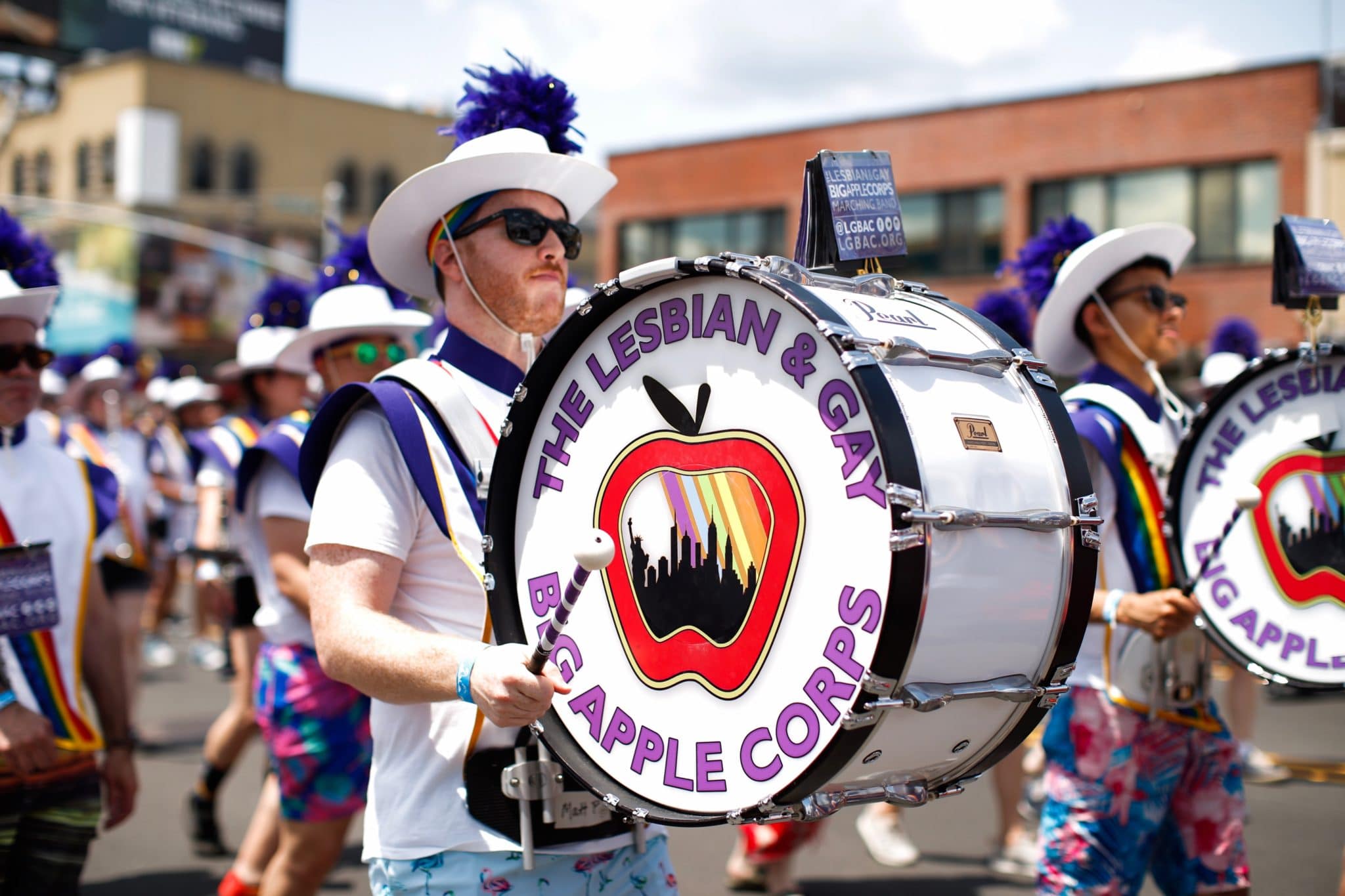
The Macy’s Thanksgiving Day Parade has been running for 96 years, but 2020 saw the first-ever performance for an all LGBT+ marching band.
The Lesbian and Gay Big Apple Corps (LGBAC) was formed in 1979, a decade after the Stonewall uprising, and has been applying to take part in the New York parade for years.
However this year, because of the COVID-19 pandemic, Macy’s Thanksgiving Day Parade organisers made the decision to limit the number of participants and only select local bands from New York and the tri-state area to perform.
The restrictions meant that the LGBAC finally got their chance to perform in the parade, watched by more than 20 million people across the country, with one band member describing the opportunity as “bucket list material”.
The all-queer band performed “Dancing Queen” by ABBA.https://platform.twitter.com/embed/index.html?creatorScreenName=lilylwakefield&dnt=true&embedId=twitter-widget-0&frame=false&hideCard=false&hideThread=false&id=1331995857156263936&lang=en-gb&origin=https%3A%2F%2Fwww.pinknews.co.uk%2F2020%2F11%2F28%2Flgbt-marching-band-macys-thanksgiving-day-parade-lesbian-gay-big-apple-corps%2F&siteScreenName=PinkNews&theme=light&widgetsVersion=ed20a2b%3A1601588405575&width=500px
The marching band’s artistic director Marita Begley told NBC New York: “There are families out there in middle America, throughout the country, that are going to see this and it’s going to give hope to young people who are questioning their sexuality, their gender.”
Founding band member Joe Avena added: “People will see that we’re part of them, and part of their lives, and part of what they love.”
Members of the Lesbian and Gay Big Apple Corps march the Annual Mermaid Parade Held In Coney Island on June 22, 2019 in New York City. (Kena Betancur/Getty)
Begley, who joined the LGBT+ marching band in the 1980s, described the LGBAC’s brand of “quiet activism” in an interview with The Atlantic.
She said: “We were quiet activists. No one would invite ACT UP to their parade. But small towns were inviting the Lesbian and Gay Big Apple Corps to march in their Fourth of July parade.”
Begley described attending local parades, and how it would slowly dawn on those watching that the marching band had all LGBT+ members. Some, she said, would give a thumbs down, but others just kept clapping.
She said: “It was almost subversive to use the most mom-and-apple-pie, all-American of mediums, the marching band, to open minds. It really is.”
A gay staffer has been appointed to a powerful role by president-elect Joe Biden.
The incoming leader, who this week received the official go-ahead for his transition to power, has been hard at work setting up the team of top officials who will fill his White House.
As he makes a number of cabinet posts and high-profile appointments, Biden has tapped a prominent gay staffer for an important role.
Gay staffer Carlos Elizondo tapped for top White House role
Carlos Elizondo has been named the social secretary for the incoming White House, after previously filling a similar role for Biden for all eight years of his vice presidency under Barack Obama.
The role places him in charge of planning, coordination and execution of official social events at the White House.
Biden said in a statement dated Friday (20 November): “I’m proud to name additional members of our team who will help deliver the change America needs in these difficult times. Their dedication to overcoming the challenges facing our country today are rooted in their diverse backgrounds and experiences. They will serve the American people and help build back better, creating a more just, equitable, and united nation.”
Incoming White House chief of staff Ron Klain added: “To bring president-elect Biden and vice president-elect Harris’ agenda to life you must have a boundless team of experts ready for day one.
“Today’s appointees are respected leaders who will bring a commitment to serving the American people each and every day. They will support our work to build an administration and White House that represents America and delivers results.”
Joe Biden’s incoming White House social secretary Carlos Elizondo
Elizondo, who has previously worked in events at Georgetown University and Walt Disney World, currently lives with his partner in Washington DC.
Joe Biden administration could have a number of high-ranking LGBT+ staffers
The staffer is likely to be far from the only out figure in a senior White House role. Karine Jean-Pierre, currently chief of staff to vice president-elect Kamala Harris, could become the first out lesbian and first Black woman to be named White House press secretary.
Dr Rachel Levine, Pennsylvania’s secretary of health and one of the most senior trans officials in the US, has also been touted as an outside chance at a healthcare role.
Meanwhile, former presidential hopeful Pete Buttigieg is said to be in the running for a potential cabinet appointment, though several of the higher-ranking roles he was initially touted for, such as ambassador to the United Nations, have since been filled with picks prioritising policy experience.
Mauree Turner made history this month by becoming the country’s first openly nonbinary state legislator. Turner, 27, was elected to represent District 88 in the Oklahoma House of Representatives on Nov. 3 with more than 70 percent of the vote and assumed office last week. Turner is also thought to be the first Muslim lawmaker to serve in the Oklahoma Legislature.
Turner, who uses both they/them and she/her pronouns, grew up in Ardmore, a city of 25,000 people that sits smack in between Oklahoma City to the north and Dallas to the south. Turner said their childhood was relatively idealistic: They had a supportive and involved mother and grew up singing in the choir and participating in their school band. They attended college at Oklahoma State University and then spent time organizing for various civil rights projects in Oklahoma, including an American Civil Liberties Union criminal justice reform campaign.
“While I never wanted to be in politics in this aspect, community organizing is always about answering a call to action, and that’s what my community was doing,” Turner said.
Turner hopes their election victory and presence in the Legislature will help LGBTQ people in Oklahoma and beyond see themselves reflected and represented.
“I’m still reading so many messages from folks around the world that are just happy to have some sort of representation,” said Turner, whose district represents central Oklahoma City. “We’ve been able to create a space where folks can not only see themselves but also feel a little more empowered to show up, either fully as themselves or even just a little more fuller.”
Former Houston Mayor Annise Parker, CEO of the LGBTQ Victory Fund, a national organization that trains and advocates for LGBTQ political candidates, called Turner a “trailblazer,” saying, “Their courage to run openly will inspire more nonbinary people to pursue careers in elected office.”
“Of all the states to achieve a milestone political moment for nonbinary people, few would have thought it would be Oklahoma, where there are so few LGBTQ elected officials,” Parker said in a statement. “But Mauree ran a tireless campaign focused on the issues that matter to their district while also being authentic and open about who they are.”
As for the issues that matter to Turner, their campaign platform focused on criminal justice reform and more access to health care and public education.
Criminal justice is an issue that’s particularly personal for Turner.
“My father and my grandfather were incarcerated up until I was ’round 12 or 13,” they said. “That was all I knew growing up — going to see my dad or granddad in prison or jail.”
Last year, Gov. Kevin Stitt released nearly 500 inmates in the largest commutation in U.S. history. But this month, to Turner’s dismay, Oklahomans voted against State Question 805, which sought to end sentence enhancements for repeat nonviolent offenders, by 61 percent to 39 percent.
“It was devastating for a lot of reasons for me on a personal level, and I think for Oklahoma’s growth as a whole,” Turner said. “Honestly, I don’t blame the people in how the vote ended up. What I blame is institutions that benefit from keeping Oklahomans incarcerated.
“Right now in Oklahoma, we’ve got mothers sitting in prison for 30-plus years because they wrote bad checks to be able to provide food for their families,” Turner said.
Another more local issue Turner is focused on in District 88 — one of the most liberal districts in deep red Oklahoma — is power lines. An ice storm last month left many in their district without power for weeks. Turner noted that power lines are underground in many more affluent districts but not in District 88, which Turner said is unacceptable. Turner wants to get those power lines underground in the next 10 to 15 years.
Turner said they think part of their campaign’s appeal was their belief in “people- and community-based solutions.” Now that they’re in office, Turner is starting to lay the groundwork for what they hope will be a long and successful political career.
“Politics is a place where you figure out not necessarily what you can and can’t do but what is within your bandwidth in the immediate [future] and what is in your bandwidth to do in the long run,” they said. “You have to continuously figure out what helps you continuously show up to this work in the best version of you, so that you have that longevity of being able to do this work.”
LGBT+ Native American young people are more likely to be at risk of suicide, new data has warned.
New research from the Trevor Project shows that LGBT+ youth from American Indian and Alaskan Native backgrounds are 2.5 times more likely to report a suicide attempt in the past year, compared to their LGBT+ peers.
American Indian and Alaskan Native youth who reported facing discrimination were also at greater risk of suicide, but supportive families and LGBT-affirming schools can reduced the suicide risk by nearly 60 per cent.
LGBT+ American Indian and Alaskan Native youth are also significantly more likely to experience housing instability, food insecurity and foster care.
Nearly half of the American Indian and Alaskan Native LGBT+ youth identified as transgender, non-binary, or questioning their gender, while 20 per cent identified as Two-Spirit.
Amy Green, director of research at The Trevor Project, said: “It is apparent that exposure to both LGBTQ-based stigma and racism has compounding effects and places American Indian/Alaskan Native youth who are Two-Spirit/LGBTQ at greater risk for suicide.
“Further, the disproportionality in reports of foster care, housing instability, and food insecurity highlights the devastating impact of historical oppression and trauma on American Indian/Alaskan Native youth.
“There is an urgent need to de-colonise systems that perpetuate the oppression of American Indian/Alaskan Native people.
“The Trevor Project will continue to advocate for intersectional programs and practices and increased investment in suicide prevention initiatives and research that specifically consider the unique needs of American Indian/Alaskan Native youth.”
The Trevor Project added: “To reduce suicidality, there is not only a need to make existing programs and practices more affirming of AI/AN and Two-Spirit/LGBTQ identities, but also to include key individuals in the lives of these youth such as community leaders, family members, and youth themselves in the development of suicide prevention initiatives.
“Our research team is committed to the ongoing dissemination of data that allows Trevor and others to better understand and address the needs of these youth.
“Further, our crisis services team works 24/7 to provide culturally-informed and affirming support to youth in crisis over the phone, online, and through text.”
Donald Trump-appointed judges reverved a vital ban on therapists offering conversion therapy – a denounced and debunked pseudosicenfitic practise – Friday (November 20), branding the ban “unconstititional”.
Also called reparative therapy, medical organisations across the world have widely rejected the treatment as traumatising and psychologically scarring, especially to minors.
In fact, the American Academy of Paediatrics warned against it as early as 1993. They said it reinforced anxiety and shame.
But in a tightly divided court in Florida, the 11th US Circuit Court of Appeals sided with two therapists who sought to argue that bans in the city of Boca Raton and Palm Beach County violated their free speech rights.
As NBC Newsreported, judges voted 2-1 against the conversion therapy ban. Both judges are appointed by Trump and are members of the conservative Federalist Society.
While Obama-appointed circuit Judge Barbara Martin dissented from the conservative majority, instead stressed the importance of protecting LGBT+ youth from a “harmful theraputic pratcise.”
In contrast, circuit Judge Britt Grant said that as much as enjoining the laws would allow “speech that many find concerning, even dangerous”, the First Amendment “does not allow communities to determine how their neighbors may be counseled about matters of sexual orientation or gender.”
As a result, the courts favoured conversion therapists Robert Otto and Julie Hamilton in a ruling that effectively dissolves the some 21 bans on the practice across cities and counties in Florida. Both said their clients often had “sincerely held religious beliefs conflicting with homosexuality.”
Also called reparative therapy, medical organisations across the world have widely debunked and rejected the treatment as traumatising and psychologically scarring, especially to minors.
In fact, the American Academy of Paediatrics warned against it as early as 1993. They said it reinforced anxiety and shame.
The practise, which has been around more than a century, has many techniques. Most commonly, talking therapy.
However, some physicians who practise the therapy are known to use shock treatments and induce associative nausea in patients, according to a 2018 study by the Williams Institute of the School of Law at the University of California, Los Angeles.
Despite such denouncement and discrediting, the ‘therapy’ has remained common in patches of the US.
Though, the impact of the practise is immeasurable, an estimated 698,000 LGBTI+ adults in the US have received conversion therapy, according to research.
Pride Media’s Out magazine is thrilled to release the 2020 Out100 presented by Lexus. The list remains the largest annual portfolio recognizing members of the LGBTQ+ for their ground-breaking, ripple-inducing, and culture-shifting impact nationwide. The coveted and anticipated Out100 issue features four covers including trailblazing actor Wilson Cruz, activist and BLM organizer Janaya Khan, actor and director Joe Mantello, and artist and icon Janelle Monáe.This year’s honorees make up one of the most diverse lists in Out magazine’s history, spanning several generations and a multitude of intersections from 18-year-old rap sensation Kidd Kenn and 99-year old trans WWII U.S. Navy fighter pilot Robina Asti to MSNBC journalist Rachel Maddow, who in a year of political tension was a voice of reason for the LGBTQ+ community. From fashion legend André Leon Talley, headlining musician Lizzo, comedian Wanda Sykes, actors Jeremy Pope and Cheyenne Jacksonto modeling industry heavyweight Ivan Bart, the creators of Queer Eye, and Joe Biden and Kamala Harris’s very queer team Jamal Brown, Reggie Greer, and Karine Jean-Pierre, inclusivity and progress are the driving force behind this year’s list. Each honoree represents not just the past but also the future. Leading into 2021, the LGBTQ+ community as a whole will undoubtedly reap the benefits of their accomplishments. This year might have brought an onslaught of challenges, but it also welcomed new opportunities to reflect about what matters to the LGBTQ+ community and what lies ahead in the fight for equality and justice. Now more than ever, it’s vital to recognize the powerful voices leading the charge and sounding off the new vanguard of queer leaders. In a year of Pride celebrated at home instead of in the streets, community support from company partners like Lexus, Citi, Gilead, McDonald’s USA, Truly Hard Seltzer, and Stoli® Group USA, LLC has never been more importantor helpful in amplifying these powerful Out100 voices moving the LGBTQ+ community forward. “Community building has been the bedrock of the LGBTQ+ rights movement, and part of that is understanding the fact that we are not and have never been monolithic. All of us have a story and role to play in this fight. All of our experiences and lived realities are different, special, and integral in building a better world — together. The Out100 list is a representation of this journey. For 26 years, it has stood the test of time and continues to empower the next generation of LGBTQ+ thought leaders, artists, and professionals to create a more inclusive future for all of us.” — David Artavia, Editor in Chief, Out
This year, Out’s nationally recognized and respected Out100 issue extends beyond the brand’s print and online properties with two exciting virtual events. On Friday, November 20, the cofounder of Black Lives Matter Canada, Janaya Khan, will moderate a dynamic “How Do We Come Back From This?” symposium on what moving out of the last four years looks like for culture, politics, the movement, and ourselves, including Emmy-winning creator of Transparent Joey Soloway, trans activist Ashlee Marie Preston, and PR strategist Kelly Bush Novak. On Saturday, November 21, the Out100 culminates in the first-ever 2020 Out100 Virtual Honoree Induction Ceremony, live at 5 p.m. Pacific (8 p.m. Eastern) at Out.com/Out100Live, and available on all Revry live channels and on-demand at 6 p.m. Pacific (9 p.m. Eastern) at watch.revry.tv.
The 2020 Out100 Virtual Honoree Induction Ceremony will feature appearances by 2020 Out100 Honorees: Cover stars Wilson Cruz and Joe Mantello. In the “Television” category: Theo Germaine, David Collins, Michael Williams & Bob Eric (Scout Productions), Brandon KyleGoodman, Cheyenne Jackson, Jamal Sims, Jeremy Pope, Shakina, and Jo Ellen Pellman. In the “Fashion and Beauty” category: Patrick Church, Patrick Starrr, and Ivan Bart. In the “The Firsts” category: Shevrin Jones, Paris Barclay, Sharon-Franklin Brown, and Kierra Johnson. In the “Advocacy” category: Mark S. King, Rashad Robinson, Queen Jean, Cody Renard Richard, Scott Wiener, Mary Trump, Rachel Levine, Malcolm Kenyatta, Tiffany Caban, and Ritchie Torres. In the “Biden’s Team” category: Jamal Brown and Reggie Greer. In the “Thinkers” category: Andrew Gelwicks. In the “All Stars” category: Thomas Beattie. In the “Film” category: Brigette Lundy-Paine, and Gerard Bush & Christopher Rens. In the “Innovators” category: Richard Gray.*And Special Guest – Mel C
Tune in and follow the conversation on social media: #Out100 “Now more than ever, it’s important to highlight the monumental achievements the LGBTQ+ community has made against the backdrop of a giant cultural shift and an evolving landscape of entertainment, politics, social justice, industry, and so much more. This list is critical. Before I was in charge of Out, I long dreamed of making it on the list myself. I never did, but it still pushed me to do better.” — Diane Anderson-Minshall, CEO & Editorial Director, Pride Media Diane Anderson-Minshall, David Artavia, and the entire family at Out express their deepest gratitude to those involved in making the Out100 issue and the Out100 Virtual Honoree Induction Ceremony an experience to never forget, with a special thank-you to the presenting sponsor Lexus for all their contributions. Find out who made this year’s Out100 list exclusively at Out.com/Out100. The full list drops Thursday, November 19tht. The Out100 print issue will be available on newsstands December 1st, 2020. Subscribe today. For More Information, Assets, and Interview Avails, please contact: JB@PotentPR.com
About Pride Media Pride Media is the largest publisher of LGBTQ+ content in the U.S., including Out, The Advocate, PRIDE.com, Out Traveler, and Plus. With over 53 years of award-winning editorial spanning digital, print, social and experiential, our content shapes the LGBTQ+ landscape—serving as the go-to destination for our audience across entertainment, news & politics, LGBTQ+ rights, travel, wellness, finance, food & spirits, and fashion. By covering every aspect of the LGBTQ+ experience, Pride Media’s brands use the power of words to inspire the full spectrum of lesbian, gay, bisexual, transgender, and queer people to live life with pride.
GLAAD, the world’s largest lesbian, gay, bisexual, transgender, and queer (LGBTQ) media advocacy organization, released the findings of its 2020 Post-election Poll of LGBTQ registered voters, including a phenomenol turnout of the LGBTQ vote, a surge of first-time LGBTQ voters, an overwhelming vote for President-elect Joe Biden, with votes motivated by three top issues urgently demanding a more robust response from our nation’s leaders: COVID-19, healthcare and racial justice.
The poll, conducted November 9-14 with 800 LGBTQ respondents by Pathfinder Opinion Research, found that 93% of respondents who reported being LGBTQ registered voters said they voted in the 2020 general election. 25% voted for the first time. Among all LGBTQ voters, 81% voted for President-elect Biden and 14% for President Trump. Among first-time LGBTQ voters, 86% voted for President-elect Biden, 10% for President Trump.
Among LGBTQ adults, 78% rated President-elect Biden “excellent or good” in addressing LGBTQ issues during the campaign. 80% rated President Trump “not so good or poor” in addressing LGBTQ issues during the campaign. 59% of LGBTQ voters said they didn’t see election-related news coverage of LGBTQ issues during the Presidential campaign, an absence GLAAD repeatedly raised before and after debates and town halls and addressed in multiple stories across the media.
As for the election result itself, two-thirds said Biden’s win made them feel optimistic for the future. But a majority of respondents expressed concern that a conservative Supreme Court could severely impact progress on issues such as marriage equality, abortion rights and employment protections.
“With this Supreme Court being packed with conservative judges, it is concerning to say the least,” says Sarah Kate Ellis, CEO of GLAAD, whose Trump Accountability Project indicates the president “attacked the LGBTQ community 181 times since he took office, or about once a week.”
Ellis is concerned religious rights will be used by the Supreme Court as a way to rule against LGBTQ Americans’ civil rights. She pointed to Fulton v. City of Philadelphia, a case currently before the Supreme Court involving a city agency that denied LGBTQ couples the ability to serve as foster parents on the grounds of religious beliefs.
Karine Jean-Pierre could become the first out lesbian and first Black woman to be named White House press secretary.
The political heavyweight served as Kamala Harris’ chief of staff during the Biden-Harris campaign, and has now been tipped for a permanent role in the new administration.
NBC’s White House correspondent Geoff Bennett tweeted Wednesday (18 November) that Jean-Pierre has “emerged as a top candidate” for press secretary, citing multiple sources.
Symone Sanders, TV pundit and a senior advisor to the campaign “has also been discussed” for the role, he added.
“No final decisions have been made, officials stress, as the emerging West Wing leadership also considers how to structure the communications office in a rapidly-changing media environment,” Bennett added.https://platform.twitter.com/embed/index.html?creatorScreenName=PinkNews&dnt=true&embedId=twitter-widget-0&frame=false&hideCard=false&hideThread=false&id=1329069612911239171&lang=en-gb&origin=https%3A%2F%2Fwww.pinknews.co.uk%2F2020%2F11%2F19%2Fpolitical-trailblazer-karine-jean-pierre-tipped-to-be-first-ever-black-and-lgbt-white-house-press-secretary%2F&siteScreenName=PinkNews&theme=light&widgetsVersion=ed20a2b%3A1601588405575&width=500px
Were Karine Jean-Pierre to clinch the role, she would be the first Black woman in the role as well as the first out LGBT+ press secretary.
Many will recognise her from a viral video in which she jumped to protect Harris after an animal rights activist attempted to grab her microphone during a campaign event in 2019.
A seasoned campaigner, activist and strategist, she has previously worked on presidential campaigns for John Edwards, Martin O’Malley and Barack Obama.
She also served on Obama’s White House staff as a regional political director, and was hired to Harris’ team in August, becoming the first Black person to serve as a presidential candidate’s chief of staff.
She is well-known as a political pundit thanks to numerous appearances on NBC News and MSNBC, and has long been a vocal advocate for LGBT+ rights and equality.
Karine Jean-Pierre fought Trump for the sake of her daughter.
In 2011 she spoke about her experiences working in politics as an openly gay woman.
Shortly after she left her position in the Obama administration, she told The Advocate: “What’s been wonderful is that I was not the only; I was one of many.
LGBTQ candidates once again made history in terms of the overall number elected to Congress and state legislatures across the country. However, many of them had to contend with homophobic and transphobic attack ads this election cycle.
“There is little doubt that millions of dollars in homophobic and transphobic attacks ads devastated our candidates in key swing districts during the final weeks of their campaigns,” said Annise Parker, president of the LGBTQ Victory Fund, which trains and advocates for queer candidates at all levels of government. “Bigoted politicians and operatives who thrive in the politics of hate were able to peel away support from voters who don’t yet know our community.”
Bigoted ads did not spell defeat for all LGBTQ candidates they targeted, but even the candidates who overcame the attacks did have to invest resources to respond to them.
Impacts ‘hard to quantify’
When it comes to homophobic and transphobic political attacks, “it is hard to quantify the effects,” according to Gabriele Magni, an assistant professor of political science at Loyola Marymount University in Los Angeles.
“When you have an incumbent president who is such a polarizing figure, it becomes harder to disentangle what is the effect the homophobic attack ad and what is the effect of having Donald Trump on the ballot,” he said.
He also explained that “voter suppression efforts that target constituents that are generally most supportive of Democratic candidates,” also hurt LGBTQ candidates, as the lion’s share of them run as Democrats (at least 90 percent, according to LGBTQ Victory Fund’s estimate).
Whether a candidate won or lost may not be indicative of the impact of the bigoted attacks either, as Magni said the bar tends to be higher for LGBTQ candidates who make it to the general election, so “the exceptional quality of some of these candidates allowed them to overcome the negative effects of some of these attacks.”
Nonincumbents and purple districts
Homophobic and transphobic attacks produced mixed impacts on congressional races, with nonincumbents and those in purple districts most likely to suffer defeat.
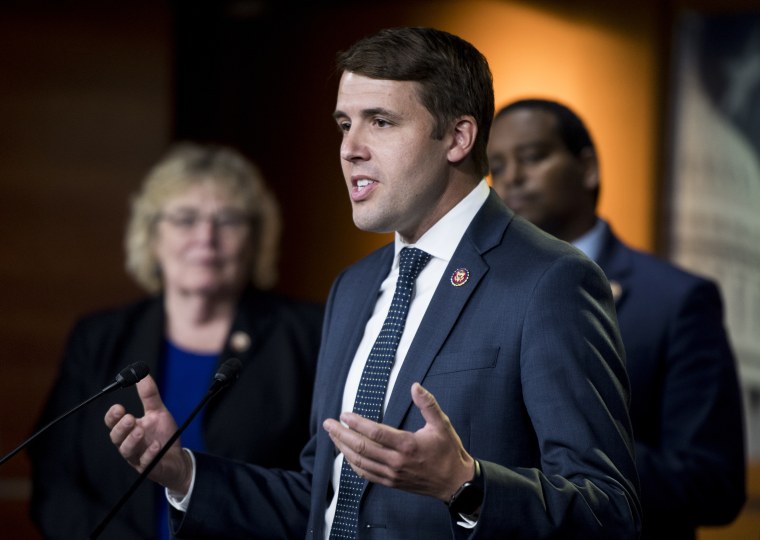
In New Hampshire, Democrat Chris Pappas — who in 2018 became the first openly gay man to represent the state in Congress — was able to stave off what supporters called homophobic challenges to his integrity to win re-election against Republican challenger Matt Mowers.
During a debate Oct, 21, Mowers brought up Pappas’ alleged relationship with a lobbyist and accused the candidate of impropriety. Pappas denied the claim, and in a statement after the debate, he said Mowers’ behavior was “despicable” and that he had “crossed a line.”
Rep. Chris Pappas, D-N.H., speaks during a news conference on Sept. 27, 2019.Bill Clark / CQ Roll Call via AP
Mowers’ campaign manager, John Corbett, called the homophobia claims “untruthful accusations” designed to divert public attention from policy issues and obscure Pappas’ relationship with the lobbyist.
“Matt Mowers learned the hard way that his desperate homophobic dog whistle attacks cost him votes amongst Republicans and independent voters in the closing days of the campaign,” Lucas Meyer, campaign manager for Pappas, said in an email to NBC News after his election victory. “Granite Staters saw right through his baseless attacks and rejected his blatant bigotry that he made the focus of his closing message.”
While Pappas was in a purple district, which President Donald Trump carried in 2016, he had the advantage of incumbency this year. “Homophobic attacks are less effective against well-known candidates, because voters already know them,” Magni said.
Nonincumbent congressional hopefuls in purple districts had a tougher time trying to flip red to blue districts.
Two races for which LGBTQ advocates and Democrats had high hopes — Gina Ortiz Jones and John Hoadley — did not pan out.
Hoadley lost against incumbent Republican Rep. Fred Upton, who voted against the Equality Act last year and for a constitutional amendment banning same-sex marriage in 2004 and 2006.
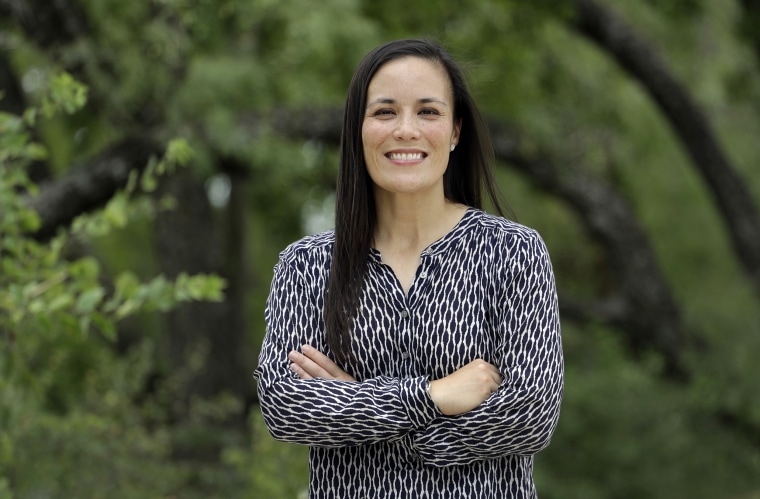
Texas Democrat Gina Ortiz Jones, who ran for a House seat in 2018 and 2020, in San Antonio, Texas, on Aug. 10, 2018.Eric Gay / AP file
Former U.S. Air Force Capt. Jones lost to Republican Tony Gonzales, a Navy veteran, failing to flip Texas’ 23rd Congressional District for Democrats.
The National Republican Congressional Committee (NRCC) spent millions of dollars on attack ads against both of these candidates.
“If you are running for congress as a nonincumbent,” Magni said, “not so many people know who they are.” This means that voters may “rely more heavily on stereotypes or homophobic tropes,” especially in the context of Covid-19 in which personal contact is even more limited.
By contrast, derogatory comments directed at Rep.-elect Ritchie Torres did not harm his chances of becoming the first Afro-Latinx LGBTQ person elected to Congress. He easily won the general election for his congressional seat against his Republican opponent in one of the most progressive districts in the country. Magni said the attacks are “less consequential” in heavily Democratic districts like New York’s 15th.
Hateful messages
Magni explained that the diverse candidate pool, with many women, people of color and transgender candidates are “especially vulnerable targets” for anti-LGBTQ messaging.
Jenna Wadsworth, an outspoken progressive, lost her bid for North Carolina’s agriculture commissioner. In October, Wadsworth became the target of online vitriol after she posted a video asking viewers if Donald Trump’s diagnosis with Covid-19 was their “favorite or most favorite October surprise.”
Wadsworth, who described animosity toward her prior to the video as “minimal,” quickly became inundated with thousands of messages on social media.
Many of the hateful messages, however, were not about Wadsworth’s controversial remarks about Trump’s health — they were about her being unfit for office because of her sexual orientation, gender identity and sex.
“That does a lot to you emotionally, psychologically. It’s very draining,” she said.
Some of the messages made Wadsworth fear for her physical safety. “I received gang rape threats after that video,” Wadsworth said. “Until election night, I was not able to stay in my own home for three weeks.”
Magni described North Carolina as a “deeply divided state when it comes to LGBTQ attitudes” and added that part of the electorate “is receptive to these kinds of attacks.”
Wadsworth, who at 31 would have been the youngest LGBTQ statewide elected official in the country’s history, lost the race and said she believes her campaign suffered due to the bigoted attacks. She said she has not decided what is next for her politically.
Unexpected boost?
Several candidates experienced an unexpected boost in support and financing as a result of homophobic and transphobic attacks.
Shevrin Jones easily won his race for Florida Legislature last Tuesday to become Florida’s first LGBTQ state senator.
In August, a blood bank rejected Jones when he sought to donate plasma after recovering from Covid-19 because he is in a same-sex relationship. A robotext, whose sponsor remains unknown, was sent to voters saying Jones was “discriminated against for recent homosexual contact,” and linked to ShevJones.com, which is not Jones’ website and does not appear to ever have had any information on it. Jones was also the subject of a homophobic flyer with a photo of himself and his partner on vacation and asked, “Is this who you want for your next state senator?”
Shevrin Jones.Greg Reed Photography
The attacks did not stop Jones, and paradoxically may have helped in terms of support and funding.
“We raised over $1 million,” Jones said. “When those attacks were coming people just gave more.”
Brianna Titone, who won her bid for re-election to the Colorado Statehouse, experienced several transphobic attack ads.
The group Take Back Colorado released a Facebook ad this month that misgendered Titone and referred to her by her “deadname,” the name she used before her transition. The ad also claimed Titone has “always supported violence” and sexualizes children. Then Republican state Rep. Stephen Humphrey voiced a robocall paid for by the Colorado Family Values Victory Fund attacking Titone’s gender identity.
Magni said transgender candidates may be more likely to become the target of attacks because “public support for trans rights is still lower” than for lesbian and gay rights.
Titone triumphed over the attacks, which led to increases in volunteer support and campaign contributions. “The attacks I had to endure didn’t create any obstacles for me that I didn’t already have,” she told NBC News. “If anything, it helped me with raising money and it convinced some people to support me based on the ads.”
She also feels that her attackers were emboldened by the Trump administration that has “given permission to be rude.”
“I’m curious to see how my new colleagues will treat me. Will they be towing the line of those messages, or will they realize that that is not productive and move away?,” she said.
Omar Leos, who won his race for North East School District board in San Antonio, had a similar experience.
“I think it helped energize the campaign. It mobilized more people to come out to volunteer and it definitely helped me financially too,” Leos told NBC News.
“In my personal opinion, it backfired on them,” Leos said.
Texas Family Action, a political action committee affiliated with the conservative San Antonio Family Association, sent a mailer to voters in Leos’ district describing him as being “‘married’ to same-sex man” and noting he has “no children” in the school district. In contrast, the mailer described Leos’ opponent, Ione McGinty, as a “wife and mother of 6.”
While Leos still won, Magni said that such attacks can “force the campaign to redirect the resources and shift media focus,” he said. “The campaign has to respond.”
Leos did say the homophobic attacks prompted him to shift his campaign message to highlight the unwillingness of his opponent to be an advocate for LGBTQ students.
“Before on my signs was ‘Keep Omar Leos,’” he said. After the homophobic attacks he shifted his message to “A voice for all.”
“I’m a voice for all students, for all people,” Leos said.
‘Soldier on’
There is no reason to believe LGBTQ candidates have seen the last of homophobic and transphobic attacks, but Magni said a swift response by candidates and their allies is important to prevent their opponents from defining the narrative of the campaign.
LGBTQ candidates also need to remember that they are targets because they are strong candidates who have the potential to win, Magni added.
“That should encourage them to soldier on and to keep in mind the ultimate goal — that is, that they are running to serve their constituents.”