This week Trump welcomed his new White House press secretary Kayleigh McEnany, a combative TV pundit with a long history of anti-LGBT+ comments.
McEnany has previously worked as Trump’s spokesperson for his re-election campaign and as a pro-Trump commentator on CNN during the 2016 presidential election.
She’s frequently appeared on television to defend him and his policies, revealing some particularly unsavoury views as she does so.
The LGBT+ advocacy group GLAAD has compiled a list of her most egregious comments, which include opposing a bill to ban conversion therapy and repeatedly framing the issue of transgender bathroom access as a “predatory” threat to women and girls.
McEnany has previously argued that the Supreme Court’s ruling on marriage equality is a threat to religious rights, and described late justice Antonin Scalia’s criticism of a pro-marriage equality ruling as “awesome“.
And she dismissed claims of LGBT+ discrimination prior the Supreme Court ruling as nothing more than “farcical blabber.”
“Throughout her career, Kayleigh McEnany has used her role as a commentator to attack LGBTQ people through the press,” GLAAD president and CEO Sarah Kate Ellis said in a statement.
“Whether it be her opposition to marriage equality or her attacks on transgender people, McEnany has shown that she knows how to, and even enjoys using the media to spread dangerous, anti-LGBTQ messages to wide audiences.
“Unfortunately, in her new role as press secretary, she will have the power to continue doing so, but now with the White House name attached to hers.”
McEnany has already come under fire for her early statements on the coronavirus, which dangerously downplayed the risk.
“We will not see diseases like the coronavirus come here, we will not see terrorism come here,” she boldly stated on Trish Regan Primetime. “And isn’t that refreshing when contrasting it with the awful presidency of President Obama?”
Since McEnany made the comments on February 25, over 402,000 people in the US have been infected with the coronavirus and nearly 13,000 have died.
Despite her rocky start, she won’t have to try too hard to do better than her predecessor Stephanie Grisham, who didn’t conduct a single press briefing during her nine-month tenure.
As coronavirus continues its spread across the world, it takes with it a disgusting wave of anti-Asian racism. But the LGBT+ Asian community is fighting back.
Asian LGBT+ activists spoke to the Bay Area Reporter about the current situation and the action they’re taking as they attempt to take care of themselves, as well as their communities.
Amazin LeThi is a queer Vietnamese athlete and founder of LGBT+ advocacy organisation the Amazin LeThi Foundation. She was the first out athlete to compete for Vietnam at the South East Asian Games and is using her platform to speak out against coronavirus fuelled racism.
She said: “Obviously, there has always been racism toward the Asian community, but we’ve never seen anything that has been so quick and so globally widespread as this.
“Sometimes it just feels like they just consider the whole continent of Asia, China. They just see an Asian person and because the coronavirus came from Asia, we are all part of the problem.
The coronavirus may have come from China, but in terms of how it’s being spread across the world, it’s everyone. It’s a global virus.
Gerald Esguerra, head of the Filipino LGBT Europe Out&Proud advocacy committee in Amsterdam, said: “It’s alarming in a way and it’s kind of weird, right?
“We lost humanity. It doesn’t necessarily mean that if you’re Asian you are carrying the virus.”
Esguerra has noticed increased racism in Amsterdam, a city he says is usually very welcoming. Wanting to support his community, he has been working on setting up virtual programmes to help queer Filipinos in Europe and in the Philippines.
In terms of the perpetrators, he added: “The only way that we can win this is through proper education and information dissemination to people.”
Social distancing leaves LGBT+ Asian communities vulnerable.
Glenn Magpantay, executive director of the National Queer Asian Pacific Islander Alliance, is using online resources to tackle the effects of racism as social distancing continues, creating a “series of virtual community sessions”.
He said: “Social distancing and rise in anti-Asian violence have left the LGBTQ+ API [community] disproportionately vulnerable and our community is hurting.
“The online course includes skill building and support groups and is working hard to support our community leaders who are supporting their communities.”
Even Asian communities who are in self-isolation are still at risk of race-based hatred.
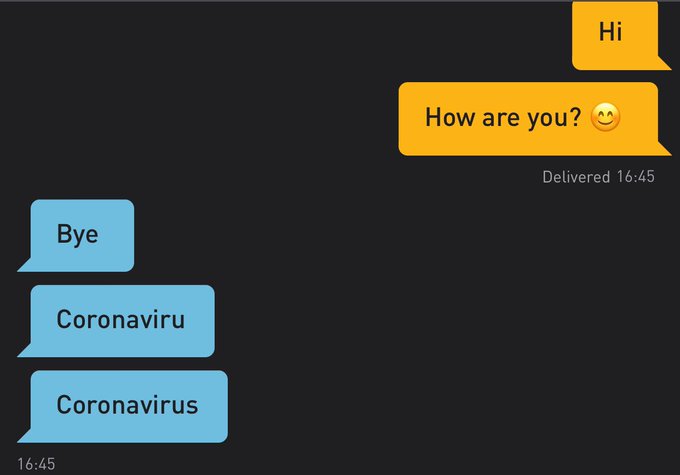
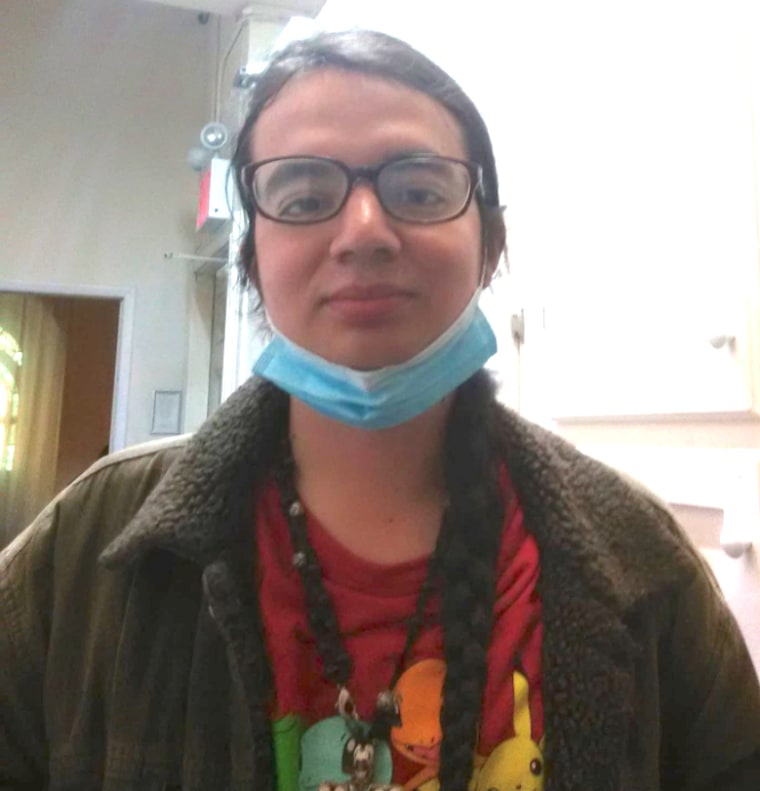
Got this reply on Grindr after all he had was my photo and my greeting. There’s so much I wanna say…
1. Not surprised. These apps have always been hostile spaces. Many Bumble, Tinder, Hornet, etc, users have no idea, because POC are never given space to talk about #racism.
Founding San Francisco Bay Times contributor, pioneering lesbian, and civil rights activist Phyllis Lyon has died at age 95, according to Bay Times columnist Kate Kendell, who was mentored by Lyon and served as the former executive director of the National Center for Lesbian Rights. Lyon died on the morning of Thursday, April, 9 of natural causes.
Lyon was born in Tulsa, Oklahoma, on November 10, 1924. After earning a degree in journalism from the University of California, Berkeley, she worked as a reporter and journalist for several years. In 1950, she met Del Martin and the two became partners a few years later. In 1955, the couple moved to a Castro Street apartment and, with three other lesbian couples, helped to found the Daughters of Bilitis, which was the first lesbian civil and political rights organization in the U.S.
After moving to a home in Noe Valley, which remained their longtime permanent residence, they began publication of The Ladder in 1956. It was the first nationally distributed lesbian publication in the country, and continued until 1972.
In 1964, Lyon and Martin helped to found the Council on Religion and the Homosexual with Glide Memorial Methodist Church. This was the first group in the U.S. to use the word “homosexual” in its name. Three years later, they became the first lesbian couple to join the National Organization for Women, and subsequently helped to expand that influential organization’s policies to include lesbian rights.
The couple in 1972 were among the first members of the Alice B. Toklas Democratic Club. That same year, they authored the groundbreaking book Lesbian Woman, which is considered to be a foundational text of lesbian feminism. This work was followed by Lesbian Love and Liberation, published in 1973.
In 1978, the pair chaired San Franciscans Against Proposition 6 (Briggs Initiative). With Cleve Jones and numerous other LGBTQ community leaders, they also became founding contributors of the San Francisco Bay Times. The following year, activists founded Lyon-Martin Health Services and named it after them. Now a program of HealthRight 360, Lyon-Martin Health Services continues to provide specialized, non-judgmental healthcare to women and to LGBTQ individuals.
Lyon and Martin were early supporters of now Speaker of the House Nancy Pelosi when she was first elected to the House of Representatives in 1987.
The film Last Call at Maud’s, released in 1993, chronicled the lives of Lyon and Martin, along with other Bay Area-based lesbian community leaders and members. The 2003 documentary No Secret Anymore: The Times of Del Martin and Phyllis Lyon as well as the book and film Different Daughters: A History of the Daughters of Bilitis and the Birth of the Lesbian Rights Movement are among other works that highlight their achievements.
The couple in 1995 served as delegates to the White House Conference on Aging. In 2000, they made the brave decision to sign on as a plaintiff couple in In re Marriage Cases filed against the California law enacted by the passage of Proposition 22. On February 12, 2004, launching the “Winter of Love,” Martin and Lyon were issued a marriage license by the City and County of San Francisco after then mayor Gavin Newsom ordered that marriage licenses be given to same-sex couples who requested them.
The marriage license of the devoted couple, along with those of several thousand other same-sex couples, was voided on August 12 of the same year by the California Supreme Court. It took four more years before Lyon and Martin could be legally wed yet again. The mayor presided over the memorable ceremony that took place on June 16, 2008, making them the first same-sex couple to be married in San Francisco after the California Supreme Court decision concerning In re Marriage Cases legalized same-sex marriage in the state. Martin passed with Lyon by her side just four years later.
It was not until June 26, 2015, that the U.S. Supreme Court struck down all state bans on same-sex marriage, thereby legalizing it in all fifty states.
After Martin’s passing, Lyon remained very active in the San Francisco LGBTQ community by lending her support to numerous organizations, promoting civil rights causes, and attending numerous events, including those produced by “Betty’s List” and the San Francisco Bay Times. She was thrilled when the play The Daughters, based on her and others’ lesbian activism, held its world premiere at the San Francisco Playhouse on October 9, 2019.
Lyon celebrated her 95th birthday on Sunday, November 10, 2019, with Kendell and Rocket Science Associates CEO Joyce Newstat. It was a joyous day for all that was commemorated with a special issue of the San Francisco Bay Times. As Kendell shared, “We drove, ate, laughed, talked. And felt grateful every second.”
On the occasion of Lyon’s final birthday, numerous friends paid tribute to her for the San Francisco Bay Times. Those tributes may be found at: https://bit.ly/3bTzXDV
Kendell shares that the family wishes to thank the devoted caregivers and community members whose devotion and commitment gave Lyon joy and security in her final years.
Survivors are her beloved sister Patricia Lyon, her devoted daughter Kendra Mon, son-in-law Eugene Lane (dubbed by Lyon an honorary lesbian), granddaughter Lorri Mon, grandson Kevin Mon, his wife Ellen, and Lyon’s great granddaughter Kexin Mon.
The family requests that gifts in honor of Phyllis be made to the Lyon-Martin Health Clinic: https://bit.ly/3b8C1bv
An “out and proud gay law enforcement deputy” from Florida who died of complications from coronavirus is being remembered by as a “protector of the LGBT+ community”.
Deputy sheriff Shannon Bennett was 39 when died on April 3, just a week after testing positive for COVID-19.
He had left work on March 23 feeling unwell, and went to the hospital the following day where he was tested for coronavirus.
Tributes pour in for Florida police officer who died of coronavirus.
Florida’s Broward Sheriff’s Office, where Bennett worked for more than a decade, led tributes to the late deputy.
“Deputy Shannon Bennett was a 12 year veteran of the Broward Sheriff’s Office; an out and proud gay law enforcement deputy; a school resource officer who protected and mentored the young students at Deerfield Beach Elementary; a man in love whose wedding was to be held later this year,” colleagues wrote in a Facebook post.
“We love and will miss you, Deputy Bennett. Thank you for your bravery, your kind heart, and your service. Rest In Peace.”
“During the Stonewall Pride fest in Wilton Manors, he never participated in the drinking aspect, the fun part of it,” he said.
“He always wanted to be in uniform, on the street, protecting his community. And he was very proud of that fact, that that’s what he did on most weekends.
Whenever they closed down Wilton Drive, he was there, in uniform, protecting us.
After the 2016 Pulse nightclub shooting in Orlando, Florida, Bennett took to parking his patrol car outside bars and clubs in the gay area of Wilton Manors to show that they were protected.
“Shannon Bennett was the kind of guy who would put his family first, his friends second, and himself last,” Martin told local media.
A second police officer from Broward Sheriff’s Office, Jose Diaz Ayala, subsequently also died of complications from the disease.
According to the current shelter in place order we are to leave our homes solely for the purposes of providing or receiving essential services. While we all still need to feed ourselves, trips to the grocery store are not what they once were before the inception of the coronavirus. With this in mind, we hope that the following advice collected from the County of Sonoma and local grocers may be of help to facilitate your safe food shopping while helping to decrease the spread of COVID-19.
Limit or avoid all trips to the grocery store
Staying home means staying safe and keeping other people safe: plan ahead by making a detailed list of your food needs. Go to the store only when absolutely necessary. This can be a good time to shop for your pantry and freezer. Try to buy enough food to last for two weeks.
But, you think, what good are grocery lists when many items on your list may be sold out? All the more reason to plan for alternative choices. You can even Google ingredients to see what the world’s collection of recipes can do for the foods you may already have on hand. (Remember to check dates on food items you may have at home. This is not a good time to risk food borne illnesses.)
If you would like to avoid the grocery store all together, several grocery chains — including Safeway and Raley’s — offer no-contact pickup and delivery. Simply order online and pickup your order at a specified parking location in the store’s lot, or have your groceries delivered to your own doorstep. Instacart is another option for home grocery delivery. Because these services are likely to be in high demand right now, make sure to stay on top of your food supply so that you can order a week before you run out.
Wash your hands, wear a mask and don’t touch your face
Experts also advise shoppers to wash their hands before they shop and immediately after. Soap, water and thorough washing is the gold standard for fighting off viruses. And don’t touch your face (wearing a mask or face covering will help prevent you from doing so).
Most stores provide wipes for cart handles and freezer doors — but it’s also a good idea to bring your own.
Don’t bring the family
During a shelter in place order, any trip outside the home can seem like a potential excursion. But while a family trip to the store may sound appealing, it is not a good idea during the coronavirus pandemic.
Write a shopping list together and then send only one person from each household to the store — this reduces the amount of people in the store, making it easier to maintain social distancing, thus decreasing the risk of getting and spreading the virus.
Go when it is less crowded
As more people are unable to work or are working from home, the natural rhythm of grocery stores has shifted. Still, by and large, there are generally less people early in the morning and later at night. If you arrive at a store which is packed with people, come back at another time. A Google search of a particular store can give you an indication of the current foot traffic in a pop-up box.
Several local grocery stores have implemented seniors-only hours: this is a time for older adults and people with underlying medical conditions to shop away from crowds during the coronavirus pandemic.
You may also consider shopping in a small market close to home to reduce the number of people you’re around.
Keep the distance
Local grocers are finding a need to constantly remind people to pay attention to the 6-foot distancing marks. Let’s help them help us. This includes keeping your distance from grocery store workers.
Grocery clerks, while they go about performing an essential service for us, are particularly exposed during the coronavirus pandemic. Try not to crowd the store personnel when asking about the availability of your favorite ice cream.
Get in and get out
Again, plan your shopping trip in advance. Have a list on hand and keep yourself and grocery workers safe by getting your goods quickly. This is not a time to be browsing the store while googling Ina Garten recipes. The people in the line that wraps around the building will appreciate your quick and efficient shopping efforts.
Treat fresh produce like dog poop
Grab that beautiful kohlrabi using a produce bag as a glove, the same way dog walkers pick up their dogs’ waste. Then turn the bag inside out to contain it. Watch this video from Oliver’s for a demo. And don’t touch items you are not purchasing or contemplate purchasing. If you must knock on that melon, put a bag over your fist. Then knock gently.
Wipe down your debit, credit or membership card
Wipe cards down before and after presenting them to the cashier. When possible, pay with your phone so there’s no exchange with the cashier.
Reusable bags are a new no-no
To fight cross-contamination, stores are not accepting your reusable bags for packing groceries. Those bags that you’ve finally remembered to start bringing, they have to stay home for now.
Consider disinfecting food packaging and washing fresh produce
When you return home, take off your shoes, hang up your coat and wash your hands with soap and water for at least 20 seconds.
Currently there is no evidence to support transmission of COVID-19 associated with food, according to the CDC. It may, however, be possible for a person to contract COVID-19 by touching a surface or object that has the virus on it and then touching their own mouth, nose, or eyes. Unpack your groceries at the door and keep those grocery bags outside to use for garbage or put straight in the recycling. Then use sanitizing wipes or a bleach solution to clean food packaging, or dispose of packaging when possible.
Remember to wash your hands again for 20 seconds after you’ve unpacked your groceries and sanitized packaging.
As always, you should handle and prepare food safely. The FDA recommends following the usual best practices for handling food, such as cooking foods to their proper temperature and washing produce thoroughly.
Really clean up
Once you’re done unpacking your groceries, keep your shoes and outerwear by the door, wipe off surfaces and, if you’re really concerned about getting sick, it might be worth throwing your clothes in the wash and taking a shower.
Thank your grocery workers with your actions
They’re here for us in our time of need. Being cooperative and kind and giving them their 6 to 10 feet of space is a great way to thank them.
Be gentle on yourself
For doing this tiring work of staying safe and keeping other people safe, reward yourself with a binge watch, hot tea or a video chat. Forgive yourself if you haven’t used the lockdown as the chance to take up knitting, study physics or launch your career as a stay-at-home filmmaker. Being vigilant about safety is hard work.
The whole world thanks every one of you for your efforts.
Finding a secure place to live has not been easy for Nez Marquez, 23, who has experienced homelessness for the past five years. Born in Mexico and raised in New York, he left home at 18 because his family did not accept his gender identity and sexual orientation, he said.
Marquez is staying at Sylvia’s Place, an emergency shelter for LGBTQ young adults on the bottom floor of a Manhattan church. He said shelters that specifically cater to lesbian, gay, bisexual, transgender and queer people are safer for him because he has been subjected to homophobic attacks at general-population shelters. But now, in addition to anti-gay violence and the inherent dangers of life on the streets, Marquez has another fear: the coronavirus and its ripple effects.
Nez Marquez, 23, is staying at Sylvia’s Place, an emergency shelter in New York City for LGBTQ teens and young adults.Courtesy of Nez Marquez
“I’ve been worried about not having housing,” Marquez said in an interview. “If where I’m staying shuts down, I’ll be out of options.”
Not only does he worry about being “forced to live in a homophobic environment,” but he also has a congenital lung issue, putting him at higher risk for adverse outcomes if he were to get COVID-19, the illness caused by the coronavirus.
LGBTQ youth and young adults, like Marquez, make up a disproportionate number of homeless young people, and this vulnerable demographic is facing unique hardships amid the global health crisis. With countrywide shutdowns of schools and youth programs, diminished office hours at LGBTQ community centers and, for many of them, unsupportive family members, these young Americans and the organizations that serve them are forced to find new ways to get and provide support.
Increase in needs, decrease in services
LGBTQ adults make up an estimated 4.5 percent of the U.S. population, but recent studies have found that 20 percent to 45 percent of homeless youth identify as LGBTQ, and among young adults ages 18 to 25, LGBTQ people have a 2.2 times greater risk of homelessness than their non-LGBTQ peers, according to a new research brief by the Williams Institute at UCLA Law.
Many homeless LGBTQ young adults rely on the approximately 260 LGBTQ community centers across the U.S. for their vital needs and general well-being. During the pandemic, however, many of the centers are reducing their hours and services or closing their doors completely to protect staff and visitors.
“Our clients rely on nonprofits to provide health care, and a lot of those places have closed or shut down hours.”
KATE BARNHART, NEW ALTERNATIVES EXECUTIVE DIRECTOR
New York City’s LGBT Community Center, at the center of the pandemic in the U.S., closed its Manhattan location and suspended its in-person operations indefinitely on March 13. It is providing some services remotely, such as individual counseling sessions, 12-step support groups and youth social programs. Similarly, the Los Angeles LGBT Center has canceled all nonessential meetings and limited its youth programs to lunch services and critical needs while keeping its housing center open.
Detroit’s Ruth Ellis Center, which includes drop-in services, a health clinic and an overnight shelter, has also reduced some of its services. Before the coronavirus crisis, the drop-in center offered hot meals and showers daily and professional skills training three days a week. Now, the center is open only to distribute groceries from its front doors on Mondays and Wednesdays from 3 p.m. to 5 p.m. Staff members are still doing videoconference appointments for behavioral health and primary care.
“The need for services is increasing, and the availability of services is decreasing,” said Kate Barnhart, executive director of New Alternatives, a New York City-based nonprofit for LGBTQ homeless youth.
Barnhart said the pandemic has further complicated her clients’ already inconsistent access to care, particularly when it comes to their health needs.
“Our clients rely on nonprofits to provide health care, and a lot of those places have closed or shut down hours,” she said, saying a client of hers recently ran out of psychiatric medication when all her go-to medical providers were closed because of the crisis.
Barnhart said a third of her clients are living with HIV, and she fears what will happen if they are unable to get their daily medication.
For LGBTQ youth and young adults who are able to find beds at one of the few overnight shelters across the country that cater to them, there is a different set of challenges and risks.
Brad Schlaikowsky, co-founder of Courage MKE, a Milwaukee organization that operates a group home for LGBTQ youth, said soap, hand sanitizer and other hygiene products — many of which are crucial to help prevent contraction of the coronavirus — have been hard to come by for people who are housing insecure. Due to the contagious nature of the virus, his organization is not accepting food and clothing donations.
“This is a huge expense on the budget, and it’s hitting everyone hard right now,” Schlaikowsky said. “The best way people can help any organization is through financial support.”
The Centers for Disease Control and Prevention recommends that everyone physically distance themselves from others by about 6 feet to reduce the chance of contracting the virus. The CDC has issued interim guidelines for the country’s thousands of homeless shelters if someone does get sick, including confining symptomatic clients to individual rooms or moving them to alternative facilities if possible. However, at many shelters, the guidance is impractical.
“We don’t have a private room,” said Wendy Kaplan, director of Trinity Place Shelter, an LGBTQ youth shelter in New York City. “It’s unrealistic, out of touch and makes us feel like the government isn’t able or prepared to protect some of our most vulnerable members of society.”
‘Serious implications’ for mental health
In addition to the physical well-being of LGBTQ homeless youth and young adults, there are also concerns about the unique mental health challenges they may face.
The Trevor Project, a national nonprofit that focuses on LGBTQ youth in crisis, released a white paper Friday outlining the “serious implications” the COVID-19 crisis could have on the mental health of lesbian, gay, bisexual, transgender and queer young people. The organization cited the physical distancing, economic strain and increased anxiety related to the pandemic as being among the most worrisome problems.
“For a lot of LGBTQ young people, the main sources of support that they get are at their schools, at clubs, at community centers, at physical spaces that they no longer have access to.”
AMIT PALEY, TREVOR PROJECT CEO
“LGBTQ young people … are already at risk of discrimination and isolation, which can impact their mental health,” Amit Paley, the organization’s CEO, said Tuesday in an interview with MSNBC. “For a lot of LGBTQ young people, the main sources of support that they get are at their schools, at clubs, at community centers, at physical spaces that they no longer have access to. … Not being able to connect with some of those really important, positive influences in your life can be extremely challenging for LGBTQ youth right now.”
Paley said the Trevor Project, which operates a 24/7 crisis hotline, has had a steep increase in the number of LGBTQ youth who have been reaching out.
“We saw nearly twice the level of young people reaching out, and we know that this pandemic is having an impact, that young people are not sure where they can turn to for support,” he said.
‘It’s most important they know they’re not alone’
Local and national organizations that serve LGBTQ homeless youth are working to acclimate to the new normal, developing innovative pathways to accommodate the changing and expanding needs of this vulnerable population.
Lilianna Angel Reyes, director of the Ruth Ellis Center’s drop-in service, said staff members at the Detroit facility “aren’t waiting for people to create a solution.”
“They’re creating them, and we’re helping [our clients] be the healthiest they can,” she said.
With schools closed, staff members at the center’s group home, Ruth’s House, have developed an educational curriculum for their residents, who are ages 12 to 17. And at the drop-in center, which typically caters to teens and young adults ages 13 to 30, staffers have turned the large open space into a makeshift classroom for their group home residents.
Reyes said the Ruth Ellis Center is a safe space that “can be built anywhere” — including online, where the center has ramped up its presence. Staffers are now offering some services through digital video platforms, like its tobacco cessation program for transgender women, and clients can connect with staffers on social media, including Facebook Messenger and Snapchat.
Reyes said that overcoming obstacles and a lack of resources “isn’t new” for the youth and young adults whom the Ruth Ellis Center serves and that this may ultimately help them get through the pandemic and its ripple effects.
“Most of our youth have had long histories of trauma, and they’re extremely resilient,” she said.
Trinity Place Shelter, which caters to LGBTQ New Yorkers ages 18 to 24, is typically open only in the evening and overnight, but during the pandemic, it is operating 24 hours a day. The extended hours give the center’s 10 residents a place to socially distance, three meals a day and somewhere to wash their hands.
“The less time they’re on the subway and out interacting with the public, the safer they are,” the Rev. Heidi Neumark, the shelter’s executive director, said in an interview.
Neumark, who is a pastor at Trinity Lutheran Church, which houses Trinity Place Shelter, said that now it is “particularly important that we offer a lot of extra reassurance.”
“Most of the young people are here because they have been rejected by their families and do not have the support system and comfort that some people can count on,” she said.
While Milwaukee schools and most of the city’s youth programs are closed, Courage MKE has tripled the number of onsite staff members working at its group home, Courage House, the only LGBTQ youth shelter in Wisconsin. The increase is intended to help ensure that the organization’s clients get the extra support they need during the pandemic while also keeping burnout low and morale high among the staff.
“We’re 24/7 for the next 30 days, and it’s not always sunshine and daisies, so we want to protect them, too,” Schlaikowsky said of his staff.
Download the NBC News app for full coverage and alerts about the coronavirus outbreak
Schlaikowsky said Courage MKE’s staffers are also trying to keep a brave face on for the youth and young adults they serve.
“If we show fear, it will rub off on the kids and make their anxiety even higher,” he said.
In addition to getting help, Courage MKE’s clients are helping others by preparing sandwiches for people in the community in need of food. Schlaikowsky said that making 300 peanut butter and jelly sandwiches has been an effective distraction for the organization’s clients and that feeding others has been an affecting way to thank the broader community for all the support it has given the nonprofit since it launched in 2015.
In his interview on MSNBC, Paley of the Trevor Project spoke directly to LGBTQ young people, telling them they “are deserving of love and respect” and are not alone. He also stressed that “social distancing is not the same as social isolation.”
“There are places you can reach out to for support,” he said. “There are always organizations like the Trevor Project that are here 24/7.”
The Trevor Project provides multiple round-the-clock services for LGBTQ youth in need, including TrevorSpace, a social networking site specifically for LGBTQ youth, and a network of trained crisis service counselors who can be reached through TrevorChat, TrevorText and TrevorLifeline (1-866-488-7386).
In its new report, the Trevor Project also encourages LGBTQ young people who are in distress because of the negative social impacts of physical distancing to participate in shared activities online, like gaming, watch parties and physical activity classes.
As for Nez Marquez, he has been staying indoors most of the day at his shelter, which is offering extended hours. He said that while his circumstances were not ideal before the coronavirus emerged, he longs to return to his pre-pandemic life.
“I was applying for housing, I was applying for jobs and had interviews, and I can’t do that anymore,” Marquez said. “I just can’t wait for this to be over and I can go back to my life to do what I need to do.”
Forty-one years ago yesterday, on April 2, 1974, out lesbian Kathy Kozachenko made history as the first openly gay person elected to political office in the US.
Then a 21-year-old University of Michigan student, she was part of the now-defunct left-wing Human Rights Party, which consisted mostly of college students and recent graduates.
“This is the first time in the history of the U.S. that someone has run openly as a gay person and been elected to public office,” Kathy Kozachenko said during her 1974 victory speech, which was unearthed by Bloomberg.
“Gay liberation was not a major issue in the campaign — both candidates in this ward said they supported gay rights, but 10 years ago, or even three years ago, lesbianism would have meant automatic defeat.
“This year we talked about rent control. We talked about the city’s budget. We talked about police priorities, and we had a record of action to run on.
“Many people’s attitudes about gayness are still far from healthy, but my campaign forced some people at least to re-examine their prejudices and stereotypes.”
Kozachenko’s political career was short-lived – after two years on the city council, she decided not to run for a second term.
“As hard as we tried to make our organization representative of and inclusive of individuals beyond students — to be a voice for working people, people that were on welfare but trying to move beyond welfare, people of color — we weren’t really able to go beyond being a student organization,” she said of the Human Rights Party.
“So the viability of the organization as a vehicle for change, I could see that it wasn’t going to be long term, and I wanted to see where else I could be effective.”
But she was the first of many openly gay public officials in the US.
Since equal marriage was legalised in 2015, a “rainbow wave” of LGBT+ lawmakers were elected.
Today, 855 out LGBT+ political leaders sit in elected office, according to the Victory Institute.
“We need you to run for office and be the next historic first,” she said.
“We’ve seen that we cannot be complacent, that we need even more LGBTQ candidates to run. LGBTQ candidates from all walks of life, with diverse backgrounds, with diverse perspectives.
“We need more LGBTQ candidates of color, more trans candidates, more womxn candidates, more LGBTQ immigrant candidates, more intersex candidates, more LGBTQ candidates with bold ideas who will keep pushing our movement forward.”
Kathy Kozachenko said that she is “so proud” of all the activists who came after her.
“The people that pushed and pushed and pushed for gay marriage, the transgender people that have pushed for their rights and for understanding of who they are.
“I think none of this would have happened without the energy and activism of many, many people not giving up, and I’m very grateful for that, and I’m grateful for the chance that I was able to play a small part in this.”
An estimated 75 percent of Americans are now living under stay-at-home orders because of the coronavirus, which may be one big reason why we’re typing the following phrases into Google as fast as our malnourished fingers will allow it: “Is it safe to order food delivery?” And: “Is it safe to eat takeout during covid?” And countless variations of each.
People clearly want answers. Let’s get you some before you’re forced to binge-watch “Schitt’s Creek” with a cold can of baked beans.
Naturally, these queries can be answered from any number of perspectives: Are food delivery and takeout safe for the person ordering them? For the crews preparing the food? For the delivery drivers? None are easy to answer definitively, but there are ways customers and companies can reduce the risks.
– Are food delivery and takeout safe for the person ordering?
The Centers for Disease Control and Prevention has been consistent on its messaging from the start of the outbreak: There’s no evidence that the coronavirus can be transmitted through food. It is “generally thought to be spread from person-to-person through respiratory droplets” from coughing or sneezing, the CDC notes. Our foodstuffs may be safe, but what about the packaging? The public has been especially concerned about disease transmission via inanimate objects since the New England Journal of Medicine published a study in mid-March that said the coronavirus was detectable on cardboard, plastics and other materials for many hours, and even days, after it was applied to the surfaces.
Within days of the study, medical professionals were suggesting we take extra, extra precautions to protect us from potentially harmful packages and containers we bring into the house. But recently in a Washington Post op-ed, Joseph G. Allen, an assistant professor of exposure and assessment science at Harvard University’s T.H. Chan School of Public Health, provided some much-needed perspective:
“In the epidemiological world, we have a helpful way to think about it: the “Sufficient-Component Cause model.” Think of this model as pieces of a pie. For disease to happen, all of the pieces of the pie have to be there: sick driver, sneezing/coughing, viral particles transferred to the package, a very short time lapse before delivery, you touching the exact same spot on the package as the sneeze, you then touching your face or mouth before hand-washing.”
In terms of takeaway, you can replace “driver” with “person packing your meal.” Either way, when you bring outside meals into the house, you should remove the food from the bags/packaging/containers and put it on clean dishware (and use your own utensils). If you want, you can use gloves to open the packaging/containers. When finished, you should throw away the materials or thoroughly clean and recycle them. You should immediately wash your hands for 20 seconds with soap and hot water before eating. (If you don’t have soap and hot water available, a hand sanitizer with at least 60 percent alcohol will suffice.) You should also clean and disinfect all surfaces where the packaging materials were placed. And don’t touch your face at any point.
In the months since the coronavirus outbreak began, more science has emerged on how it spreads. One study has suggested that the “digestive system other than the respiratory system may serve as an alternative route of infection,” which means that, theoretically, the virus could be transmitted via people who haven’t adequately washed their hands after using the bathroom.
“We can reasonably surmise that some transmissible virus happens from a stool, but we have no evidence to suggest that it is a major route of transmission,” says William Hanage, an associate professor of epidemiology at the Center for Communicable Disease Dynamics at the Harvard T.H. Chan School of Public Health. “My judgment would be that the role of this in transmission is dwarfed by the contribution that is made by people who don’t even realize they are infected yet.”
“People should just wash their hands regularly and, in particular, when they’re preparing food,” Hanage adds.
What can you do to protect yourself from this potential route of transmission? Experts say the best way is to patronize only those restaurants/takeaways that you know and trust. But you can also track down city and county health inspection reports. They’re widely available online, whether in Los Angeles, New York, Washington or other jurisdictions. But be cognizant that reports may be old and outdated or may feature violations that have already been remedied by restaurant operators.
Recently, a story out of Skagit County, Wash., raised fears that the coronavirus may be transmitted through the air without an infected person coughing or sneezing. To date, however, the World Health Organization is sticking to its warning that the coronavirus is primarily transmitted via droplets from coughing and sneezing, largely downplaying the transmission through smaller air droplets, though not without considerable pushback from the public health community.
Restaurants and delivery services alike are keeping these concerns in mind. Delivery companies such as DoorDash, Postmates and Uber Eats offer “contactless” options in which a driver will drop off your order on the porch or some other designated area. Similarly, some restaurants and coffee shops allow customers to pick up their orders from a counter, thereby avoiding contact with an employee (though maybe not with fellow customers).
Whether or not you select the contactless option for takeaway, it’s paramount to keep at least six feet away from both employees and other customers to prevent the spread of the virus. It may be easier to maintain this distance during nonpeak hours, when there are fewer customers in the restaurant or takeaway area.
“You are already doing your bit by getting food from takeout” and delivery, says Hanage, the associate professor of epidemiology. “If you take those additional steps, then you’re doing more. You’re reducing the risks yet more.”
– Are food delivery and takeout safe for the crews preparing and packaging orders?
This is an almost impossible question to answer. Every restaurant is different: Some need only a few employees to operate now, while some still have a full crew. Some have tight kitchens; some have spacious ones. Some employees can walk to work, and some have to take public transportation, which exposes them to more people who may be carrying the virus. The best thing to do is to talk to the managers of your favorite restaurants and ask how they keep their employees safe. But do so politely, with real empathy. The pressures placed on restaurateurs right now may already be too much to bear.
As the National Restaurant Association points out, the industry already “follows strict local public health guidelines. To meet these guidelines, restaurants have safety protocols and best practices in place.” On top of municipal health codes, many chefs and restaurant owners have doubled their efforts to maintain healthy workplaces, requiring more frequent cleaning of work surfaces, changing out gloves repeatedly and other new protocols.
Last month, President Donald Trump signed the Families First Coronavirus Response Act, which provides paid sick leave for employees who are quarantined or are experiencing coronavirus symptoms and seeking a medical diagnosis. The act also covers employees who are taking care of someone under quarantine or a child out of school or day care because of the outbreak. Companies with more than 500 employees are exempt, presumably because 89 percent of workers at larger business have access to some kind of sick leave.
The new law should help keep restaurant employees – who historically work while ill because they have no paid sick leave – at home when they are not feeling well. Perhaps this is so obvious that it doesn’t bear repeating, but customers should not visit restaurants for takeout if they’re not feeling well, either. The coronavirus is not a one-way pandemic.
Despite all of the precautions and new measures, however, countless restaurants have still opted to close down entirely, because they couldn’t make enough money to keep the business afloat or because remaining open would put their employees (and their families) at risk. Or both. Some employers just didn’t think the risk was worth the return.
– Is food delivery safe for drivers?
The Families First Coronavirus Response Act covers gig workers such as food delivery drivers, who are not considered employees of their particular companies. As The Post’s Heather Long reported, gig workers will get these sick leave benefits “in the form of a tax credit.”
But major delivery companies, such as DoorDash and Uber Eats, have also created assistance programs that will cover up to two weeks of sick leave for qualified workers who have been diagnosed with the coronavirus, placed in quarantine or asked to self-isolate. A DoorDash representative said the company’s program would continue regardless of the federal tax credit. Some companies, such as DoorDash and Uber Eats, are also providing drivers with disinfectants, gloves, wipes and/or hand sanitizers, though some Dashers (as the drivers are called for DoorDash) have complained about the company’s shipping fees.
Customers who order delivery meals should request the contactless option. It’s good for both customer and driver. The latter encounters dozens of people a day, and every door bell they ring could bring them face to face with an infected customer. But if you insist on meeting with the driver, wash your hands thoroughly first with soap and hot water for 20 seconds. Wear a mask, if you have one.
Put the driver at ease, and let them know you want to protect their health, too. And don’t forget to tip well.
Two days ago, an emergency-room doctor called Frank Gabrin died in his husband’s arms due to complications from coronavirus – just a week after showing symptoms.
Gabrin, 60, who worked at hospitals in New Jersey and New York, had been on the frontlines for two weeks as the number of COVID-19 cases rapidly increased.
According to Gabrin’s husband, Arnold Vargas, shortages of personal protective equipment had meant he was forced to reuse face masks and hospital gowns between treating patients.
“He was a person who just wanted to help people,” Vargas told Chris Cuomo, who also tested positive for COVID-19 this week, during an emotional interview on CNN’s ‘Cuomo Prime Time’.
Gabrin died suddenly on Tuesday after waking up with chest pains and unable to breathe.
“He had a lot of coughing and two days ago he was very sick,” Vargas said through tears.
On Tuesday, Gabrin woke up saying, “Baby, I can’t breathe,” Vargas said.
He had first shown symptoms about a week previously, but had not been tested for the virus.
Dr. Frank Gabrin had been treating coronavirus patients on the front lines. He died in his husband’s arms just days after showing symptoms.
The global death toll from the crisis currently stands at more than 50,000 people, with Spain accounting for a fifth of those who have died from the disease.
Lyons said: “He didn’t expect this to happen as it was coming up. He really didn’t. He was working hard, we were talking every day.
“I was saying, ‘How is it going?’ He said, ‘It’s busy, but it’s manageable.’
“And it went from manageable to unmanageable overnight. I think that’s what happened, and even then he looked for ways to make it work, even when he knew [his immune system] was compromised.”
A two-time cancer survivor, Vargas said his husband told him: “I can handle this. I survived cancer and this is just the coronavirus.”
After holding his husband while he died, Vargas is now showing symptoms of coronavirus himself.
“It’s a big thing we’re asking [health care workers] to face,” Lyons said.
“It’s like asking soldiers to go to the front line and giving them nothing to do their job.”
Multiple people who had been at the party later posted on social media confirming that they, or someone they knew who had also attended, had been diagnosed.
Over the weekend, a second person has died after contracting the virus at the festival.
Ron Rich, 65, who lived in Fort Lauderdale, Florida, was a musician and formerly a high school band director.
He was also a prominent figure in the local LGBT+ community, volunteering for Outshine Film Festival, Lambda Legal and the National LGBTQ Task Force.
The National LGBTQ Task Force wrote on Facebook on Tuesday, March 31, that it was “mourning the passing of a loyal volunteer, Ron Rich, who succumbed to COVID-19 over the weekend”.
It continued: “Ron was a familiar face to the guests who attended the Task Force Gala, Winter Party Festival and our Fort Lauderdale house parties over the past five years as his big smile and warmth had him mostly serving on our hospitality team… He will be missed.
“We extend our condolences to his family and friends.”
His friends took to social media to express their grief after his death.
Onre Soto wrote: “I’m heartbroken by the news I got last night… My best friend Ron Rich passing Saturday night.
He was truly honest [and] sincere… We [are] all grieving for his family. I will miss you forever, until we meet again.”
Another friend, Theo Vernon, wrote: “I am devastated this morning. My good friend Ron Rich has passed away due to the COVID-19 virus.
“I student taught at Grissom under him and worked with him my first year teaching at Grissom high school in 1985. He was an amazing mentor, musician and we became great friends.”
Israel Carreras passed away last week after attend the Winter Party.
Israel Carreras, 40, who had no prior health conditions, was the first person to pass away after contracting coronavirus at the Winter Party.
Carreras’ partner, Franco Conquista, told WSVN: “He started to feel sick after the event. We went together.
“I went to his place, taking care of him for two days, and I also had it. He couldn’t breathe, so he wanted to go to the hospital, and then, he was at the hospital for four or five days.
“Then, they put him to sleep because he was really agitated, and then, he never woke up again.”
Conquista added that he was currently at home in isolation, grieving his partner, and called for others to stay at home.
He said: “This poor boy was only 40 years old. It can kill anybody, so just stay home and think of other people.”