Former county clerk Kim Davis, who refused to issue marriage licences to same-sex couples in Kentucky, must pay more than $260,000 in legal fees and expenses after one couple sued her.
That’s on top of the $100,000 in damages already awarded to David Ermold and David Moore.
The gay couple took the former Rowan County clerk to court in 2015 after she declined to issue them a marriage licence.
Davis’ legal woes began that year when she started denying marriage licences to queer couples – despite a landmark Supreme Court ruling that legalised same-sex marriage across the US.
Now, Davis must pay an additional $246,026 in attorney fees and $14,058 in expenses.
Michael Garland, part of the legal team representing Ermold and Moore, told USA Today in September that his clients “couldn’t be happier” with the ruling.
Davis’ legal team argued that the fees and costs sought by the couple’s attorneys were excessive, but Bunning disagreed. The judge said Davis must pay the fees and costs because the couple prevailed in their lawsuit, the Lexington Herald-Leader reported.
It’s likely that attorneys for Davis will appeal against the decision.
Davis drew international media attention when she was briefly jailed in 2015 over her refusal to issue marriage licences to same-sex couples. She argued that doing so would violate her religious beliefs as a Christian as well as “God’s definition of marriage”.
Jorge Giovani Estevez, 33, was arrested Wednesday and charged with one count of battery with prejudice, according to arrest records shared by the Miami Police Department. Daiken Fernandez, 25, was arrested the same day and charged with two counts of felony battery with prejudice, the records show.
Efforts to reach Estevez and Fernandez on Tuesday were unsuccessful, and their defense attorneys have not yet been announced.
The incident took place Nov. 26 in Miami’s Wynwood neighborhood, which is known worldwide for its art galleries and colorful street murals. In video footage obtained last month by NBC South Florida, two men can be seen attacking the two women and their male friend, who reportedly tried to intervene.
“This group of guys, basically, they just started screaming stuff at us, anti-lesbian comments … and he used a profanity word,” one of the victims, who asked that her name not be published because of fears of retaliation from her attackers, told NBC South Florida in a video interview last month.
She added that she was punched in the face three times and that her injuries may require surgery.
The beatings caused the other woman — who also asked that her name not be published for the same reason as her friend — to fall, strike her head and lose consciousness, she said.
“I definitely felt targeted for sure; I mean they were definitely trying to hate on the fact that we were gay,” she told NBC South Florida. “I don’t understand to this day why.”
Miami Police Chief Manuel A. Morales told NBC South Florida that such encounters are rare in the city and will not be tolerated.
“We need to respect one another and respect the rights of our fellow citizens to actually live life in a safe and happy way,” he said.
Estevez was released on a $5,000 bond and Fernandez was released on a $7,500 bond, according to a spokesperson for Miami-Dade State Attorney Katherine Fernandez. The men are set to be arraigned Jan. 26, the spokesperson added.
If convicted, the pair could face up to 15 year prison sentences for each of the felony counts against them, according to NBC South Florida.
Moms for Liberty backed candidates are facing blistering defeats in Philadelphia, despite holding their annual conference there.
In July, Moms for Liberty hosted their annual conference in Philadelphia, the largest city in Pennsylvania.
Moms for Liberty, which now has branches across 48 states, with over 300 local chapters, focuses on opposing the mention of LGBTQ+ rights, race and ethnicity, critical race theory and discrimination in school curriculums.
Residents from Philadelphia and the surrounding suburbs held counter-protests linked to the Moms for Liberty Summit.
In continued protest they are now voting Moms for Liberty endorsed candidates out of school boards across the region.
Nationally, the group backed more than 130 candidates running for local officers in 2023 and lost nearly two-thirds of their races, according to an analysis from Indivisible.
In the Philadelphia suburbs, Democrats running for school boards in Central Bucks and Pennridge school districts swept all their races defeating Moms for Liberty backed candidates.
Democrat Karen Smith officially took up the role at Central Bucks School Board on 4 December, during a ceremony in which she took her oath on a pile of six books that have been opposed by Republicans for their LGBTQ+ themes.
Smith was one of five Democrat candidates who beat opponents endorsed by the notoriously anti-LGBTQ+ group Moms for Liberty, who have been waging war on school boards across the US.
Following being sworn in, the school board voted to repeal the district’s policies banning books, marginalising LGBTQ+ students and teachers and banning transgender athletes from sports, as reported by The Keystone.
At the time of Moms for Liberty’s conference, The Keystone spoke with parents about Moms for Liberty harming the Central Bucks and Pennridge school districts.
Kate Nazemi, a parent living in the Central Bucks School District, said: “In our school district, we’re really seeing several different outside influencers impacting education policy for our kids, and we’re seeing teachers, many parents and students’ needs and wants being pushed aside in favour of partisan policies that don’t reflect the local needs of the community,”
Jane Cramer, who lives in the Pennridge School District, said: “Right now in Pennridge, our students have lost a lot of their rights. It’s been a slow process, but the past few months, it’s really escalated.”
Seattle has canceled a proposed plan to build a playground at a nude beach following backlash from the city’s LGBTQ+ community.
As The Seattle Times reported, funding for the proposed $550,000 project to build a children’s playground at Denny Blaine Park, a grassy lawn overlooking a secluded beach on Lake Washington, came from an anonymous donor. At a community meeting earlier this month, Seattle Parks and Recreation Deputy Superintendent Andy Sheffer said that the project would address a lack of playgrounds in the neighborhood without using public funds.
But opponents countered that a playground would jeopardize the beach’s status as a queer haven, where members of the LGBTQ+ community swim and sunbathe in the nude. While public nudity is legal in Washington state, it can be considered “indecent exposure” under certain circumstances, the Times noted, and opponents of the project feared the playground would be used as an excuse to target LGBTQ+ people.
Some even alleged that the purpose of the project was to displace the LGBTQ+ community, despite Seattle Parks officials’ insistence otherwise.
“It’s hard to even come up with a different reason beyond the one that feels most obvious, which is that this is someone trying to shut down the nude beach,” 30-year-old Milo Kusold told the Times.
“If you have a person who’s not in the community showing up with their kids, and there are people around who are naked, they’re probably going to call the cops,” Kusold continued. “This is kind of the weaponization of children to try to exclude or harm the queer community. This is just another example.”
An online petition opposing the playground garnered over 9,000 signatures, and the December 6 meeting was packed with members of the LGBTQ+ community who opposed the project, many of them holding signs that read “Don’t Displace Historic And Diverse Community,” “Gay Buns Over Shady Funds,” and “Save Denny Blaine.”
“I’m a Black transgender man and a homeowner in the city. Denny Blaine is the only park that I feel safe to swim in,” said Vince Reiman, a Seattle native. “When I transitioned, I thought that I would never be able to swim in Lake Washington again… Denny Blaine is my miracle.”
“After hearing from many community members who participated in the community process on the proposed play area project at Denny Blaine Park, Seattle Parks and Recreation has decided not to move forward with the play area project at Denny Blaine,” spokesperson Rachel Schulkin said in a December 8 statement. “While this area of our city still lacks accessible play equipment for kids and families, we understand the feedback that this particular park is not the best location, and we will evaluate other location alternatives.”
“Many members of the public spoke to the importance of this space and use as a beach, and the cohesion it has brought within the LGBTQIA+ community,” Schulkin’s statement continued.
According to the Times, Schulkin would not say whether the funds pledged by the anonymous donor would be used to construct a playground at another location. In response to the paper’s public records request to find out who the donor is, the city said that it would provide records identifying the donor in late February.
Sophie Amity Debs, an organizer with the “Save Denny Blaine” campaign, said that opponents of the playground project were “ecstatic.”
“We came away from the meeting feeling like there was absolutely no way they were going to go ahead with it,” Debs said. “I’m glad the parks department listened to the community.”
LGBTQ+ parents have existed for as long as LGBTQ+ people have been around. That is to say, forever.
We haven’t been visible until recent decades and haven’t had any rights until recent years, but we have been here. We have been able to have biological children as bisexual and transgender parents, as well as lesbian and gay parents (from various situations, including relationships before coming out). Before there were any legal rights, we’ve had step-children and children in different configurations of chosen family. And now, we can legally adopt and foster in every state.
But it’s been a long road to get here, and we still don’t have equality.
A brief history of queer parenthood
We know that queer people have existed all through history, so it’s not a stretch to imagine we’ve parented from ancient times, though the records don’t exist. In recent centuries, Oscar Wilde (1854-1900)’s wife forced him to give up parental rights to their two sons after the indecency trials for his queerness. Audre Lorde(1934-1992) was proudly lesbian, but before she was with her female life partner for over 20 years, she had two children with an out gay husband. Bisexual icon Josephine Baker (1906-1975) adopted twelve children from nine countries and cited being too busy with motherhood as her reason for turning down Coretta Scott King’s offer to become a new figurehead of the Civil Rights Movement after Dr. Martin Luther King’s assassination.
Other queer historical figures had children within their straight-passing marriages, like Eleanor Roosevelt (1884-1962) and Abraham Lincoln (1809-1865). In one story of a documented transgender parent, American jazz musician Billy Tipton (1914-1989) adopted three children with one of his wives. The adoptions and the marriage weren’t legally recognized, and according to all five women who married him at different times and all three children, none of them knew of his trans identity until he passed away.
Wilde’s loss of custody and the lack of legal recognition over Tipton’s adopted children are indicative of the landscape of LGBTQ+ parentage rights in the 19th and 20th centuries. In cases documented as early as the 1950s in the U.S, a parent’s homosexuality was routinely used to take away custody of their children in a divorce because it was considered a mental illness to be gay or transgender. One mother lost custody because she “associated with female homosexuals and refused to change her ways.” In another, a wife’s “strange passions” made her an “unfit mother.” In another, a judge decided that a heterosexual environment was in “the best interests of the child.”
In the mid-1950s, the nation’s first lesbian rights organization, the Daughters of Bilitis, held the first known official discussion groups about lesbian motherhood. Group co-founder Del Martin (1921-2008) was divorced from a husband before her 50-year partnership with Phyllis Lyon (1924-2020), which was foundational to the lesbian rights movement.
Martin’s ex-husband retained primary custody of their daughter, Kendra. Martin went on to co-found another group, the Lesbian Mothers Union, with Pat Norman and others in 1971 in California. Chapters popped up around the country throughout the 1970s. The group helped lesbian mothers in their custody battles by raising legal fees, putting them in touch with sympathetic witnesses, and trying to change the perception of lesbians as deviants who could not provide a moral home for children.
The movement for queer women to start inseminations from sperm donors grew in the 1970s. Because clinics only served married women, they had to find sperm donors outside of fertility clinics by using friends, helpful queer men, or strangers (the Sperm Bank of California became the first in the country in 1982 to serve single people and queer women). On top of that, there were no legal protections against the donors claiming parental rights, and the co-parents who didn’t give birth had no legal claim to their child.
Adoption also started to become an option in a few areas around that time. In 1978, New York became the first state not to reject applications for adoption based on sexual orientation. One year later, a gay couple in California became the first same-sex couple to jointly adopt a child. A single gay man had already adopted a child in California in 1968.
The 1970s began a positive turning point in custody cases, with openly LGBTQ+ parents winning for the first time. In 1973, a transgender parent won his right to retain custody of his child in Colorado, the first known court opinion involving a trans parent. In 1974, a New Jersey court affirmed that a gay father’s sexual orientation was not a reason to deny him child visitation. It was the first time a U.S. court acknowledged the constitutional rights of LGBTQ+ parents. In 1976, Washington, D.C. became the first jurisdiction in the country to prohibit judges from making custody decisions based solely on sexual orientation.
With self-inseminations and the growth of visibility of the LGBTQ+ rights movement, the “gayby boom” began. The term appeared in print in a story in Newsweek in 1990. It noted that the AIDS epidemic was the top issue for the LGBTQ+ community, but that family issues like child custody and marriage equality were starting to be added to the agenda.
It goes on: “Many are already living the settled-down life of their ‘breeder’ peers. That includes children–either through adoption, artificial insemination or arrangements between lesbians and gay ‘uncles.’ There are an estimated 3 million to 5 million lesbian and gay parents who have had children in the context of a heterosexual relationship. But in the San Francisco area alone, at least 1,000 children have been born to gay or lesbian couples in the last five years.”
The children’s books Heather Has Two Mommies and Daddy’s Roommate came out in 1989 and 1990, adding to the visibility of LGBTQ+ families.
Transgender men’s pregnancies started to make the news as sensationalist headlines in the 2000s, but today the field of trans fertility is growing with studies, trainings, and resources.
When marriage equality isn’t enough
Around the turn of the century, civil unions began popping up, then marriage state by state until there was federal recognition of these marriages in 2013. And finally, the Supreme Court granted national same-sex marriage rights in 2015. These relationship protections helped couples with children achieve legal rights for both parents. But it wasn’t automatic. National LGBTQ+ legal organizations still advise that a birth certificate is not enough to prove parentage or custody and recommend that non-biological parents go through a second-parent adoption as they did before marriage legalization.
Earlier this year, for example, an Oklahoma judge ruled that a nongestational mother who was on her child’s birth certificate, married to the child’s other mother, co-created the child, co-raised the child from birth, and had given the child her last name had no parental rights to the child — but the sperm donor did as the biological father.
“LGBTQ+ parents and our children are most definitely under attack, both as part of the general attacks on LGBTQ+ people right now and in terms of specific attacks on our families,” says Dana Rudolph, founder and publisher of the two-time GLAAD Media Award-winning site, Mombian and creator of LGBTQ Families Day.
She doesn’t see this as a moment of losing rights, but rather as ongoing inequality, since full equality for LGBTQ+ parents has never been reached.
“LGBTQ+ parents and our children have more visibility than ever, in our communities and workplaces, in the news, and in books and other media for children,” Rudolph says. “Despite current attacks on our families in many places, I think that broadly speaking, we have achieved greater acceptance over the past decades, making it easier to be visible.”
Nevertheless, bans of books showing LGBTQ+ families, state laws allowing discrimination against LGBTQ+ people in adoption and foster care, anti-trans laws, and outdated state parentage laws, all leave LGBTQ+ parents at risk.
But LGBTQ+ parents’ numbers are growing. One in three LGBTQ+ people has had a child at some point in their life and as many as six million Americans have an LGBTQ+ parent. Half of LGBTQ+ millennials are actively planning on having a first or additional child. And there are many famous LGBTQ+ parents today – including Lance Bass, Karamo Brown, Andy Cohen, Anderson Cooper, Elton John, Melissa Etheridge, Tan France, Miss Major Griffin-Gracy, Patrick Harris & David Burtka, Jesse Tyler Ferguson & Justin Mikita, Ricky Martin, and Wanda Sykes – who are doing wonders for visibility.
They all stand on the shoulders of the parents who came before and fought for the rights we have today to be able to adopt, appear on birth certificates, partner with surrogates, get married, and more. Today, we’re more visible and protected than ever today, even if we still have further to go.
months ahead. In a world where the fight for equality and acceptance continues, one crucial area that demands our attention is the rights and well-being of the LGBTQ+ community. With more than 71 percent support for marriage equalityand more than 7.2 percent of American adults identifying as LGBTQ+, according to Gallup, the journey towards a more inclusive society is ongoing, and each of us holds the power to contribute to this crucial cause. New Year’s resolutions often focus on personal growth and improvement, but they can also be a powerful tool for social change, especially in championing LGBTQ+ rights.
This community, diverse in its nature, faces unique challenges ranging from discrimination and social stigma to legal barriers and health disparities.
In 2023, Republican state legislatures passed dozens of laws that attack the rights of the LGBTQ+ community, with particular vigor in legislation targeting transgender people.
We can create a ripple effect of positive change by actively promoting equality and understanding. Whether through educating ourselves, advocating for inclusive policies, or simply being an ally, every action counts. Embracing such resolutions not only benefits the LGBTQ+ community but also enriches everyone’s lives, fostering a culture of empathy, respect, and unity.
To guide and inspire these efforts, here is a list of 24 resolutions that can be adopted in 2024 to support the LGBTQ+ community. These resolutions are designed to be practical, impactful, and achievable. They encompass a range of activities, from personal education and advocacy to community engagement and political activism. This list serves as a starting point for individuals looking to make a meaningful difference in the fight for LGBTQ+ rights, ensuring that the upcoming year is marked by personal growth and a deeper commitment to social justice and equality.
Educate Yourself
Commit to learning more about LGBTQ+ history and issues.
Support LGBTQ+ Businesses
Make an effort to buy from businesses owned by LGBTQ+ individuals.
Advocate for Inclusive Policies
Work towards implementing inclusive policies in your workplace or school.
Attend Pride Events
Show your support by participating in Pride parades and events.
Volunteer for LGBTQ+ Organizations
Offer your time to local LGBTQ+ charities or groups.
Challenge Homophobia and Transphobia
Speak out against discrimination and hate speech.
Support LGBTQ+ Artists and Creators
Promote and support the work of LGBTQ+ artists and creators.
Support LGBTQ+ Youth
Mentor or support programs that assist LGBTQ+ youth.
Donate to LGBTQ+ Causes
Financially support organizations fighting for LGBTQ+ rights.
Educate Others
Share your knowledge about LGBTQ+ issues with friends and family.
Promote Gender-Neutral Language
Use inclusive language in your daily life.
Respect Pronouns
Always use the correct pronouns for everyone you meet. A helpful resource on the importance of pronouns is pronouns.org.
Participate in Advocacy Campaigns
Join campaigns fighting for LGBTQ+ rights.
Create Safe Spaces
Ensure your environment is welcoming to all LGBTQ+ individuals.
Support Mental Health Initiatives
Advocate for and support mental health services for the LGBTQ+ community.
Engage in Political Advocacy
Contact your representatives to support LGBTQ+-friendly legislation.
Support Trans Rights
Specifically, advocate for the rights and needs of the transgender community.
Participate in Research and Surveys
Help gather data to support LGBTQ+ causes.
Celebrate All Identities
Recognize and celebrate the diversity within the LGBTQ+ community.
Join LGBTQ+ Groups and Networks
Become an active member of LGBTQ+ networks in person or online.
Share LGBTQ+ Media and Literature
Promote books, movies, and shows accurately representing LGBTQ+ experiences.
Be a Visible Ally
Wear symbols or messages that show your support for the LGBTQ+ community.
Encourage Inclusive Health Care
Advocate for healthcare policies and practices that are inclusive and sensitive to the needs of the LGBTQ+ community, ensuring access to quality health care for everyone, regardless of their gender identity or sexual orientation.
Support Inclusive Education
Advocate for LGBTQ+ inclusive curricula in schools.
A federal judge on Friday temporarily blocked key parts of an Iowa law that bans some books from school libraries and forbids teachers from raising LGBTQ+ issues.
Judge Stephen Locher’s preliminary injunction halts enforcement of the law, which was set to take effect Jan. 1 but already had resulted in the removal of hundreds of books from Iowa schools.
The law, which the Republican-led Legislature and GOP Gov. Kim Reynolds approved early in 2023, bans books depicting sex acts from school libraries and classrooms and forbids teachers from raising gender identity and sexual orientation issues with students through the sixth grade. Locher blocked enforcement of those two provisions.
The judge said the ban on books is “incredibly broad” and has resulted in the removal of history volumes, classics, award-winning novels and “even books designed to help students avoid being victimized by sexual assault.” He said that part of the law is unlikely to satisfy the constitution’s requirements for free speech.
Other news
In barring the provision barring any discussion of “gender identity” and “sexual orientation” in elementary school, Locher said the way it was written it was “wildly overbroad.”
Reynolds said in a statement that she was “extremely disappointed” by the ruling.
“Instruction on gender identity and sexual orientation has no place in kindergarten through sixth grade classrooms,” Reynolds said. “And there should be no question that books containing sexually explicit content — as clearly defined in Iowa law — do not belong in a school library for children. The fact that we’re even arguing these issues is ridiculous.”
Educators lauded the decision, however.
“When education professionals return to work next week, they can do what they do best: take great care of all their students without fear of reprisal,” Mike Beranek, president of the Iowa State Education Association, said in a statement.
The judge let stand a requirement that school administrators notify parents if their child asks to change their pronouns or name, saying the plaintiffs did not have standing.
Iowa’s measure is part of a wave of similar legislation across the country. Typically backed by Republican lawmakers, the laws seek to prohibit discussionof gender and sexual orientation issues, ban treatments such as puberty blockers for transgender children, and restrict the use of restrooms in schools. Many have prompted court challenges.
Opponents of the Iowa law filed two lawsuits. One is on behalf of the organization Iowa Safe Schools and seven students, represented by the American Civil Liberties Union of Iowa and Lambda Legal. The other is by the Iowa State Education Association, publisher Penguin Random House and four authors.
The first lawsuit argues the measure is unconstitutional because it violates students’ and teachers’ free speech and equal protection rights. The second, which focused more narrowly on the book bans, argues the law violates the First and 14th amendments.
Lawyers for both lawsuits said the law is broad and confusing.
At a Dec. 22 hearing, Daniel Johnston of the Iowa attorney general’s office argued that school officials were applying the book ban too broadly. When deciding whether to remove books, educators shouldn’t focus on the idea of a sex act but instead look for text or images that meet Iowa’s definition of a sex act, Johnston said.
When a celebrity comes out publicly as lesbian, gay, bisexual, transgender or queer, it may no longer warrant a Time magazine cover or a prime-time television interview, but it’s nonetheless a meaningful revelation for the individual sharing their story and an important milestone for the community as a whole.
Psychologist Robert Eichberg, who co-founded National Coming Out Day with activist Jean O’Leary in 1988, spoke about the broader impact of a person coming out of the proverbial closet three decades ago: “Most people think they don’t know anyone gay or lesbian, and in fact everybody does. It is imperative that we come out and let people know who we are and disabuse them of their fears and stereotypes,” Eichberg said in a 1993 interview, according to his New York Times obituary.
National Coming Out Day is celebrated annually on Oct. 11, a date that was chosen to mark the anniversary of the 1987 National March on Washington for Lesbian and Gay Rights, which drew hundreds of thousands of people to the nation’s capital. But lucky for us, LGBTQ people — celebrities or not — come out 365 days a year.
While it would be impossible to honor them all, here are just a few of the countless queer people who came out in 2023.
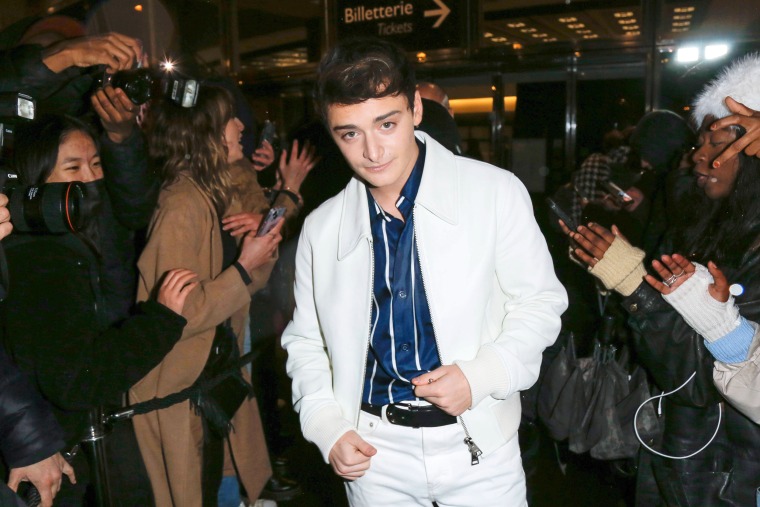
Noah Schnapp
Noah Schnapp in Paris, on Jan. 19.JM Haedrich / SIPA via AP file
“Stranger Things” star Noah Schnapp came out as gay in a TikTok video posted in January. In a written message that appeared on the video, the 19-year-old actor revealed that when he “finally told my friends and family I was gay after being scared in the closet for 18 years,” their response was simply: “We know.”
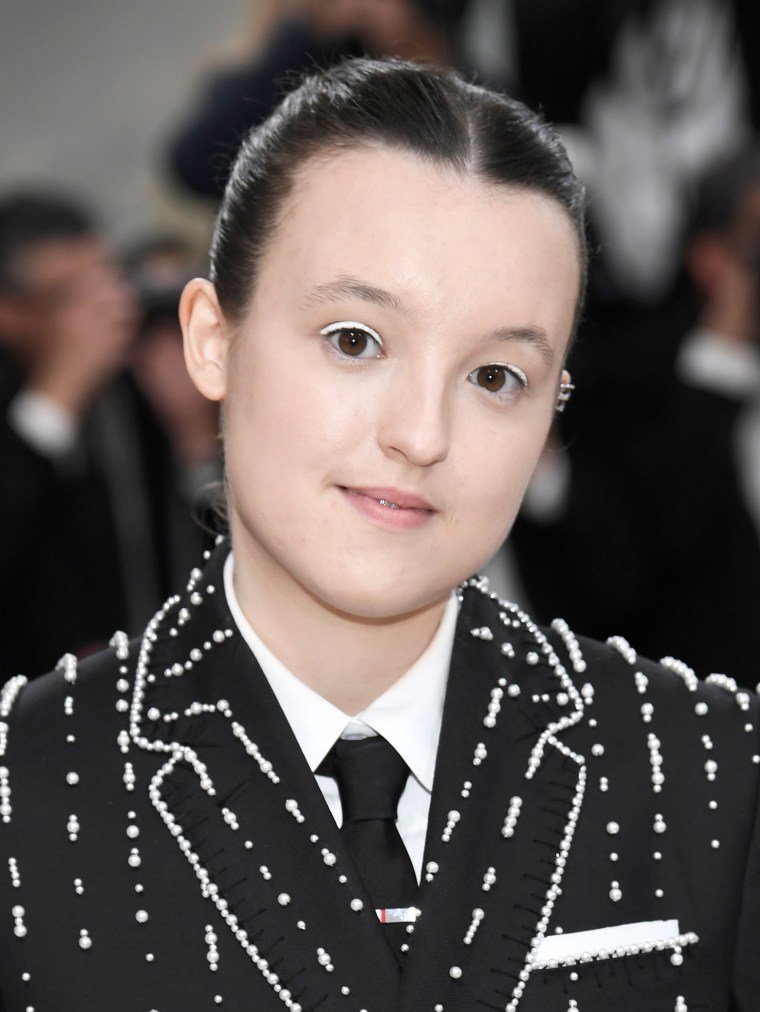
Bella Ramsey
Bella Ramsey in New York City, on May 1.Evan Agostini / Invision/AP file
“The Last of Us” star Bella Ramsey came out as gender-fluid in an interview published in The New York Times in January. The actor, who first rose to fame in HBO’s hit series “Game of Thrones,” told the paper that her “gender has always been very fluid” and said if she sees “nonbinary” as an option on a form, she will tick it. However, she added, “Being gendered isn’t something that I particularly like, but in terms of pronouns, I really couldn’t care less.”
Jakub Jankto
Jakub Jankto of Cagliari during a match in Turin, Italy, on Aug. 21. Jonathan Moscrop / Sportimage/Cal Sport Media via AP file
Czech Republic soccer player Jakub Jankto came out as gay in a video shared on social media in February. “I am homosexual, and I no longer want to hide myself,” he said in the video, which has nearly 18 million views on X, formerly known as Twitter.
Sparta Prague, the professional club Jankto was playing for at the time, retweeted the video, saying, “You have our support. Live your life, Jakube. Nothing else matters.”
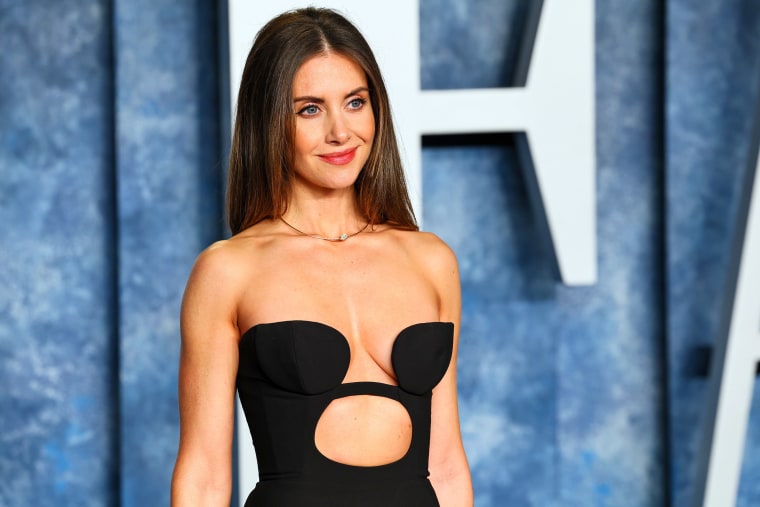
Alison Brie
Alison Brie attends the Vanity Fair Oscar Party in Beverly Hills, Calif. on Mar. 12.Leon Bennett / FilmMagic via Getty Images file
“Freelance” and “GLOW” star Alison Brie came out as bisexual in a video for BuzzFeed News in February, where she and her husband, Dave Franco, were reading thirsty social media posts from fans about each other. At one point, Brie reads a tweet to her husband: “Listen, I am bisexual for a reason, and that reason is strictly to be used in a threesome by Dave Franco and Alison Brie.” Brie and Franco high-five, and then Brie says, “That’s also why I’m bisexual.” Franco responds, “You’ve been waiting for this tweet from someone you don’t know who they are or what they look like?” Brie shrugs and says, “Yeah.”
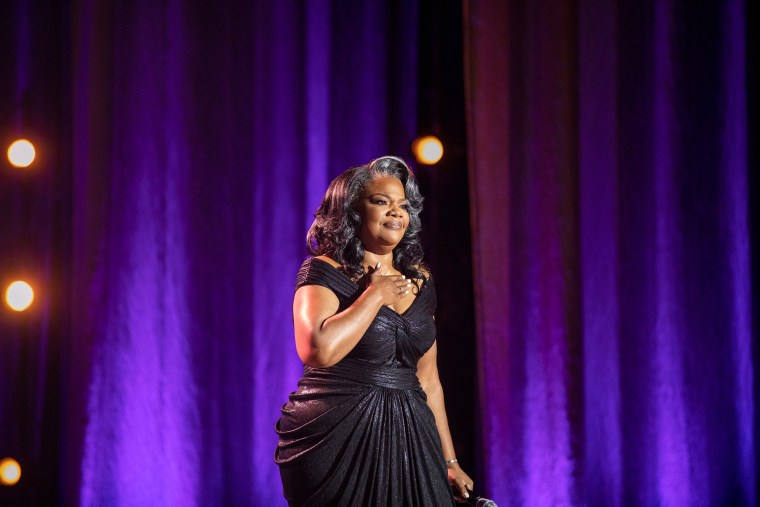
Mo’Nique
Mo’Nique appears in “My Name is Mo’Nique” in 2022.John Washington Jr.
Comedian and actor Mo’Nique came out as queer in her Netflix comedy special, “My Name Is Mo’Nique,” which debuted in April. She told a tearful story about how she never came out to her grandmother due to her grandmother’s tense relationship with Mo’Nique’s Uncle Tina, who was assigned female at birth but presented masculine, according to the Gay Times. Later in the special, Mo’Nique revealed that she came out to her husband, Sidney Hicks: “I said, ‘Daddy, I want to be with another woman sexually.’ And he look at me, so beautifully and so patient and so loving, and said, ‘B—-, me too.’”
Chloe Veitch
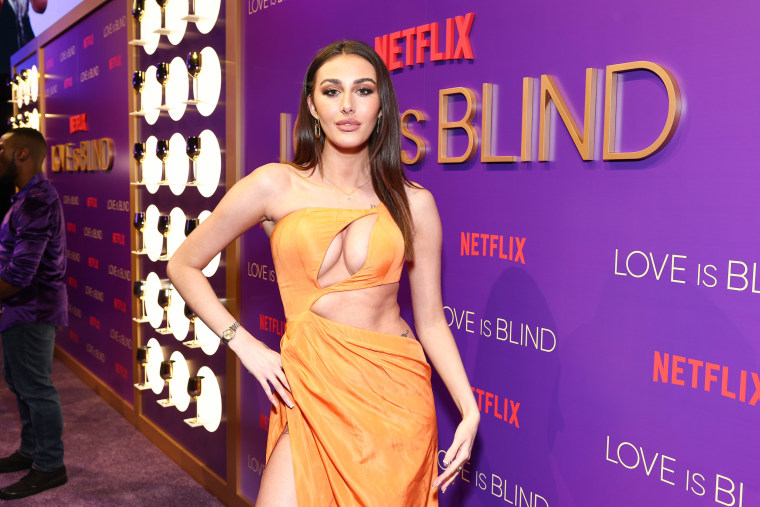
Chloe Veitch at the VIP Watch Party and Celebration for “Love Is Blind: The Live Reunion” in Los Angeles on April 16.John Salangsang / Variety via Getty Images
Chloe Veitch, the star of Netflix’s reality series “Too Hot To Handle,” came out in April in an interview with The Sun. She said “doing breath work forced me to dig deeper.” She added, “I realized, ‘This is what’s bothering you — you’re bisexual and you haven’t told anyone.’ I’ve definitely been battling it, to be honest. I mean, being in and out of little flings with girls. I felt like it was my dirty little secret so it has taken the weight off my shoulders.”
Lauv
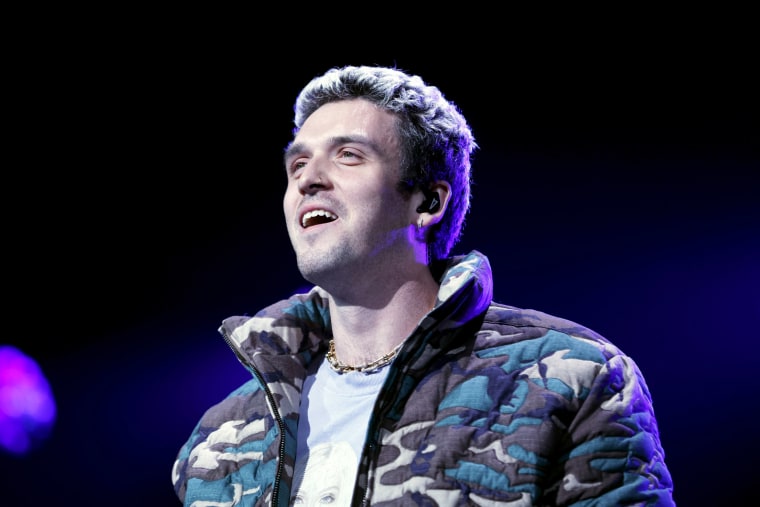
Lauv performs during the iHeartRadio Jingle Ball in Washington, D.C., in 2022.Tasos Katopodis / Getty Images for iHeartRadio file
Lauv, the singer-songwriter known for his song “I Like Me Better,” came out in a TikTok in June. The video shows Lauv in what appears to be the back of a car under the text, “When ur dating a girl but ur also a little bit into men.” He added in the caption, “Does it have to be that big of a deal? i havent done much aside from kiss so tbh don’t wannna jump the gun but tbh i feel things and i dont wanna pretend i dont.” Many of his fans were supportive in comments, with one writing, “Lauv is lauv is lauv.”
Miss Benny
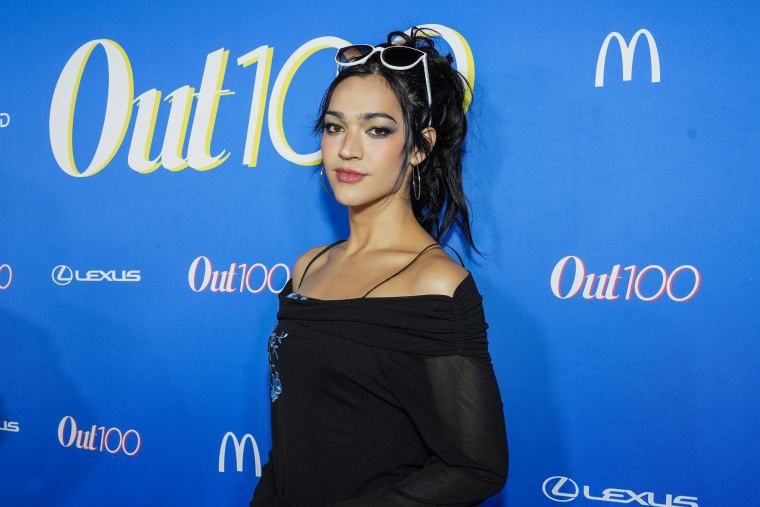
Miss Benny attends The Out100 Party in Hollywood, Calif. on Nov. 9.Presley Ann / Getty Images for Out.com file
The lead of Netflix’s show “Glamorous,” which also stars Kim Cattrall, came out as a transgender woman in a June essay for Time magazine. Miss Benny revealed that her character, Marco, would also transition in the show. She said she was afraid to come out as herself on a show featuring a trans character at a time when dozens of states have considered bills to restrict trans rights. “But then I am reminded that this fear is exactly why I wanted to include my transition in the show: Because I know that when I was a terrified queer kid in Texas, it was the queer joy I found in droplets online that guided me to my happiness,” she said.
Adore Delano
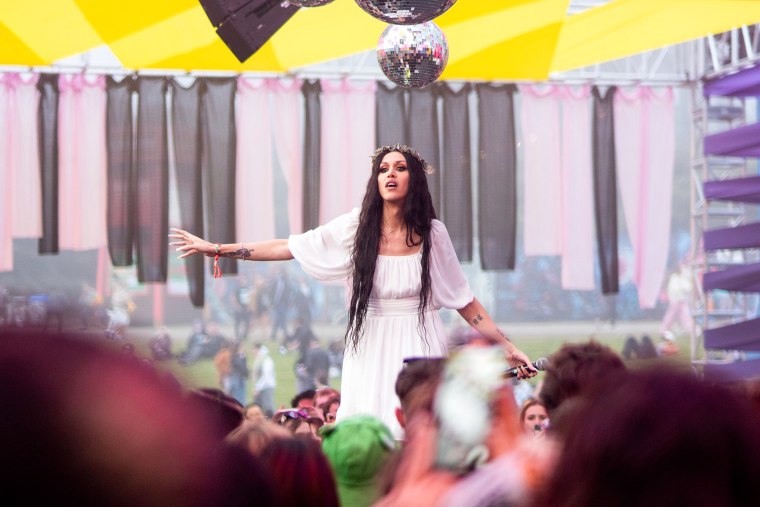
Adore Delano performs in San Francisco, on Aug. 12.Annie Lesser/imageSPACE / imageSPACE/Sipa USA via AP file
Former “RuPaul’s Drag Race”contestant Adore Delano came out as transgenderin July. In a video shared with her millions of Instagram followers, Delano said she initially came out as trans when she was a teenager but went back in the closet when she competed on “American Idol” in 2008.
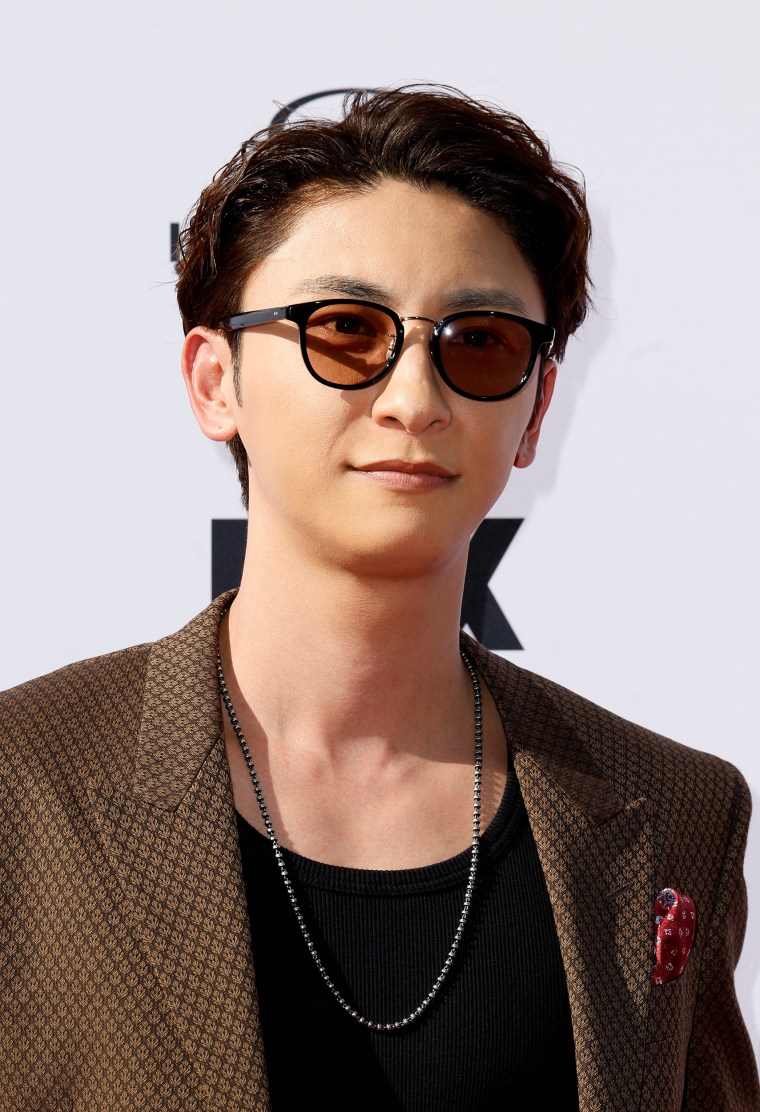
Shinjiro Atae
Shinjiro Atae in Hollywood, Calif., on March 27.Frazer Harrison / Getty Images file
Japanese pop star Shinjiro Atae came out as gay at a fan event in Tokyo in July. “For years, I struggled to accept a part of myself … But now after all I have been through, I finally have the courage to open up to you about something,” he told his fans, according to the AP. “I am a gay man.” Atae, who is now based in Los Angeles, performed for 15 years in the popular group AAA before taking a break in 2020.
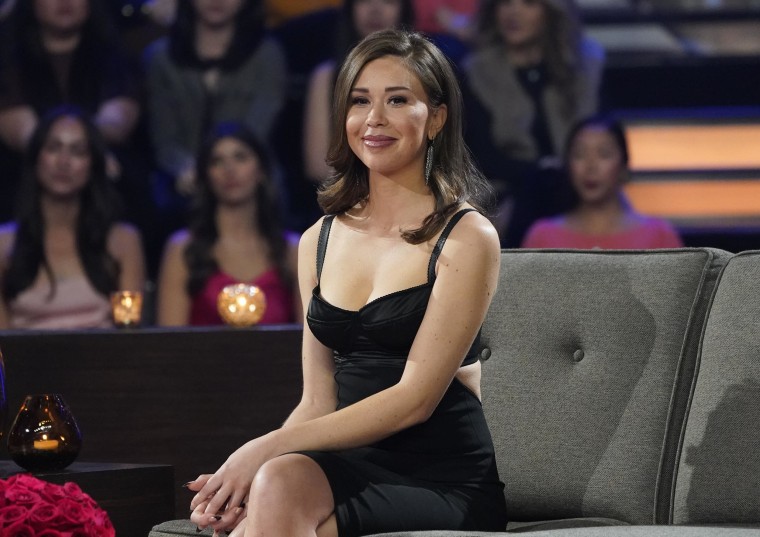
Gabby Windey
Gabby Windey on “The Bachelor.”Craig Sjodin / ABC via Getty Images file
Former “Bachelorette” star and Denver Broncos cheerleader Gabby Windeyrevealed that she’s in a relationship with writer and comedian Robby Hoffman. In an Instagram post shared in August, Windey included several photos of herself and Hoffman and cheekily wrote, “Told you I’m a girls girl!!”
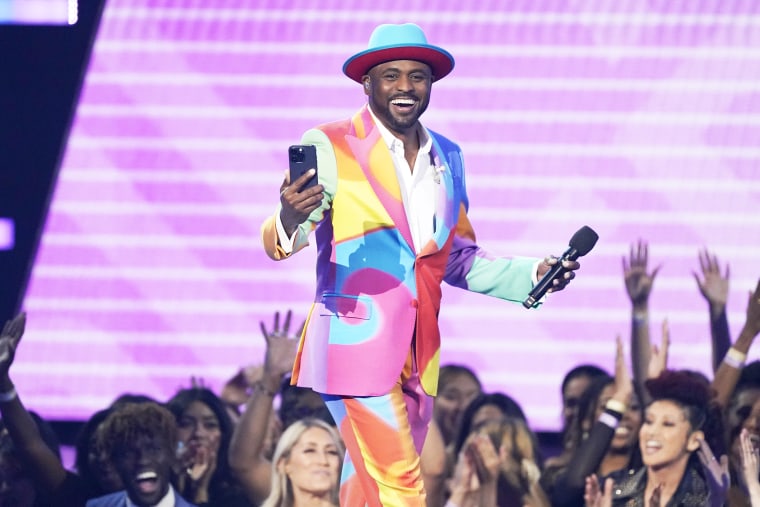
Wayne Brady
Wayne Brady at the American Music Awards, in Los Angeles, in 2022.Chris Pizzello / Invision/AP file
“Let’s Make a Deal” host Wayne Brady came out as pansexual in an interview with People magazine that was published in August. LGBTQ media advocacy group GLAAD defines pansexual as a descriptor for someone “who has the capacity to form enduring physical, romantic, and/ or emotional attractions to any person, regardless of gender identity.”
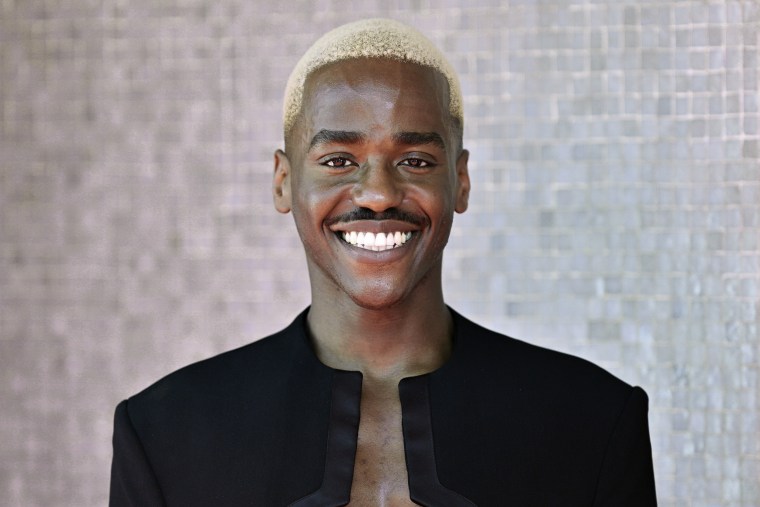
Ncuti Gatwa
Ncuti Gatwa in London in 2022.Samir Hussein / WireImage
“Sex Education” star Ncuti Gatwa came out publicly as queer in an interview with Elle UK published in August. Gatwa, who played one of the Kens in this summer’s wildly popular “Barbie” blockbuster, shared a touching story about meeting “another queer Rwandan person” at Manchester Pride several years ago. At the time, he told the magazine, “I thought I was the only one in the world.”
Joe Locke
Joe Locke in London on July 13, 2023.Fred Duval / SOPA Images/Sipa USA via AP file
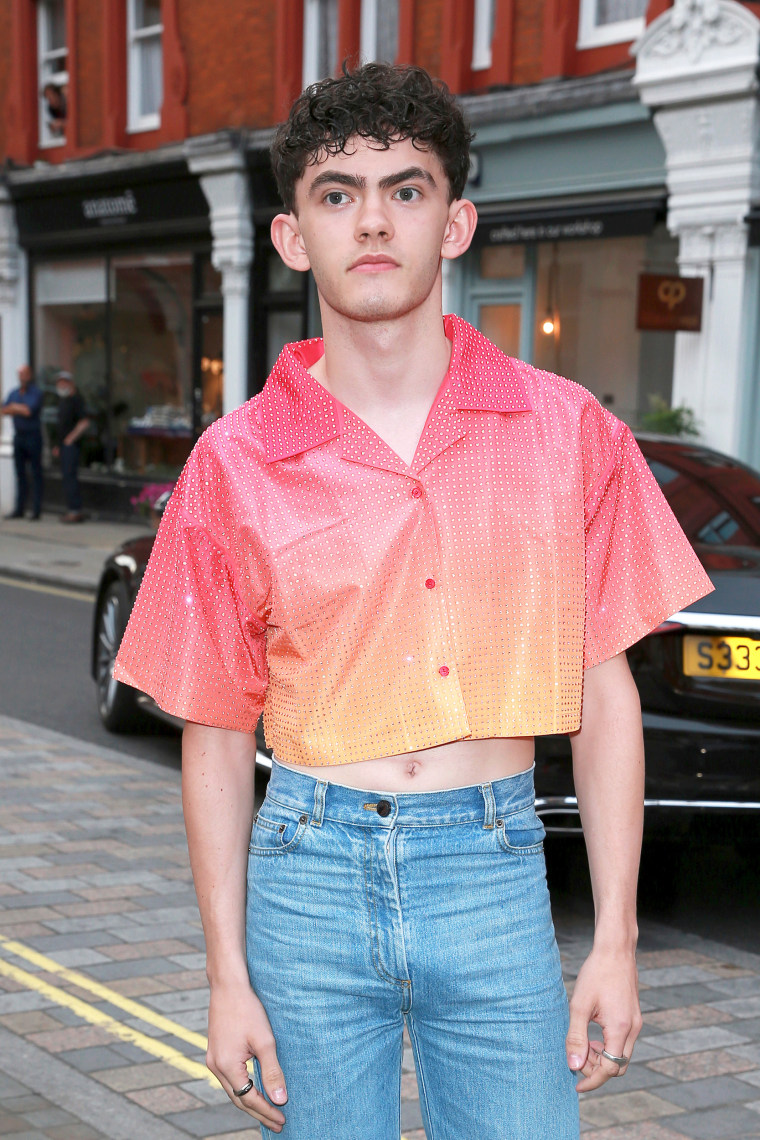
“Heartstopper” star Joe Locke plays an openly gay teenager who faces bullying for who he is in the popular coming-of-age series based on Alice Oseman’s graphic novels, but Locke didn’t publicly discuss his sexuality until August.
“People have assumed and written it,” he told Teen Vogue of his sexuality, “and I haven’t ever corrected anyone because I haven’t felt the need to. But I’ve never specifically stated my sexuality.”
He told the magazine that he can’t recall when he first knew he was gay, but that he’s been openly gay since he was about 12.
Sufjan Stevens
Sufjan Stevens.Colin Young-Wolff / Invision / AP file
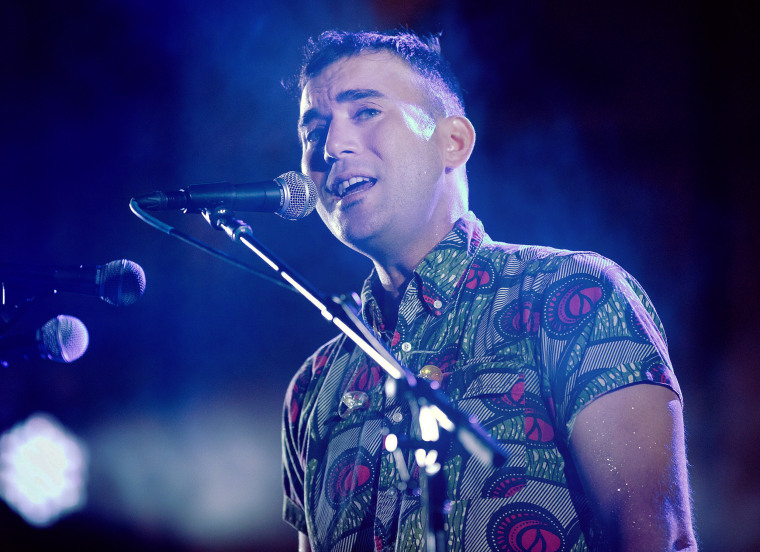
Singer-songwriter Sufjan Stevens seemingly came out in an Instagram post in October about his late partner, Evans Richardson, to whom he dedicated his latest album, “Javelin.” Stevens wrote that Richardson, who died in April, “was one of those rare and beautiful ones you find only once in a lifetime — precious, impeccable, and absolutely exceptional in every way.”
Jade Jolie
Jade Jolie at the Los Angeles premiere of “The Boulet Brothers’ Dragula: Titans” in Hollywood, Calif. in 2022.Araya Doheny / Getty Images file
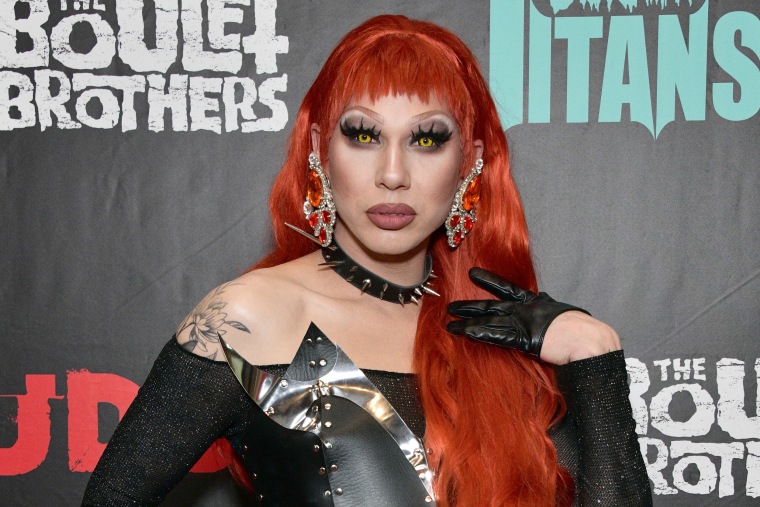
“RuPaul’s Drag Race” Season 5 contestant Jade Jolie came out as transgender in a short post on X in October, writing, “Deciding to choose myself and move forward with my transition.”
Che Flores
Che Flores referees a basketball game in Phoenix on Nov. 21.Chris Coduto / Getty Images file
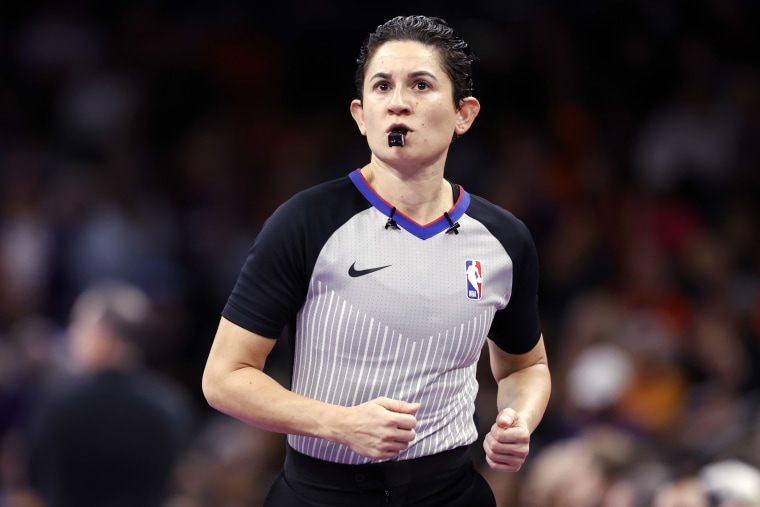
Che Flores became the NBA’s first out nonbinary and transgender referee after coming out in October. Flores, who uses they/them pronouns, told GQ being misgendered as she/her “felt like a little jab in the gut,” and that after coming out they could be more comfortable in the world and at work. “I just think of having younger queer kids look at somebody who’s on a high-profile stage and not using it,” Flores told GQ. “And I’m not using the league to an advantage in any way. This is just to let young kids know that we can exist, we can be successful in all different ways.”
Karan Brar
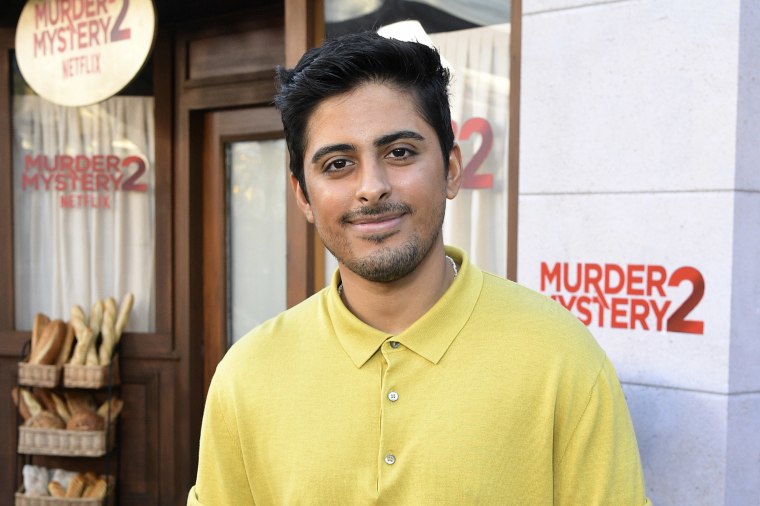
Karan Brar at the premiere of “Murder Mystery 2” in Los Angeles on March 28.Charley Gallay / Getty Images for Netflix file
Karan Brar, who starred in the comedy “Diary of a Wimpy Kid” and the Disney Channel’s “Jessie,” penned an emotional essay for Teen Vogue in November in which he came out as bisexual. He wrote that his yearslong struggle with his sexuality and grief over the loss of his friend and fellow Disney star Cameron Boyce led him to develop a “deeply unhealthy relationship with alcohol” until he checked himself in to an inpatient treatment center in 2020. “I still keep things close to the vest online, but the gap between who I am and who I appear to be is shrinking,” Brar wrote. “It’s not closed yet, and it may never be.”
Billie Eilish
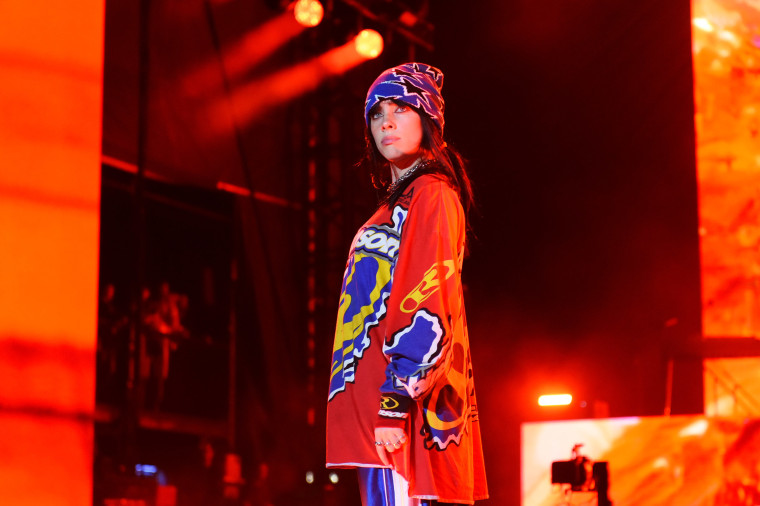
Billie Eilish performs in Leeds, England on Aug. 25.Matthew Baker / Getty Images for ABA file
Singer-songwriter Billie Eilish said she was surprised when she found out people didn’t know she isn’t straight. The 22-year-old described being attracted to women in a November interview with Variety, saying of women, “I’m attracted to them as people. I’m attracted to them for real.” Earlier this month, she told Variety at an event that she didn’t intend for her comment to be major news. “But I kind of thought, ‘Wasn’t it obvious?’ I didn’t realize people didn’t know,” she said. “I just don’t really believe in it. I’m just like, ‘Why can’t we just exist?’ I’ve been doing this for a long time, and I just didn’t talk about it. Whoops.”
Jeanne Hoff, a trailblazing transgender psychiatrist, died at her home in San Francisco at the age of 85 this past October.
Born to a working-class St. Louis family in 1938, Hoff received a master’s in science from Yale and a medical degree from Columbia University, the Advocatenotes. A doctorate in solid state chemistry at University College in London and training and residency as a psychiatrist at the Washington University School of Medicine in St. Louis followed, according to Gay City News.
Hoff had already begun her own transition in 1976 when she took over the New York practice of Dr. Harry Benjamin, the German-American endocrinologist and sexologist who coined the term “transvestite” in 1910 and later began referring to patients as “transsexuals.”
Hoff is considered the first openly transgender psychiatrist to treat trans patients—including punk rock singer Jayne County. She was a member of the Harry Benjamin International Gender Dysphoria Association, which later became the World Professional Association for Transgender Health.
In 1978, she was the subject of an NBC documentary, Becoming Jeanne: A Search for Sexual Identity, which documented her own gender-confirmation surgery.
In a remembrance published by Gay City News earlier this month, Andy Humm, who knew Hoff personally, wrote that she “was a very serious person — though with a great sense of humor and warmth.”
Hoff, Humm wrote, was adamant that a person’s gender did not determine their sexuality and “took other psychiatrists to task when they would help a man transition to be a woman and then insist that as a woman, the patient had to form intimate relationships with men and not be ‘gay.’”
“Dr Hoff knew that erotic attraction was independent of gender identity and that there are, of course, trans women who are lesbians,” Humm wrote.
Humm knew Hoff through the Catholic LGBTQ+ group Dignity/New York. “Her fierce courage was unique at a time and in a Church institution that was and still can be so homophobic,” Rev. Bernárd Lynch, who also knew Hoff through the group, told Humm. “Yet she found warmth, companionship, and support from many. Jeanne inspired us by being herself — sparing no price and counting no cost in her integrity.”
In her 2018 book, Histories of the Transgender Child, historian Jules Gill-Peterson wrote that “Hoff cared deeply about the well-being of her clients.”
“Her work demonstrates a level of empathy entirely absent from transsexual medicine since its advent—not to mention its predecessors in the early twentieth century—an ethic of care that, although greatly constrained by the material circumstances and history of psychiatry and endocrinology, was also entangled with her situated perspective as a trans woman,” Peterson wrote. “It is important to underline that Hoff represents yet another trans person who took an active and complicated role in medicine, rather than being its object.”
During one poignant moment in Becoming Jeanne, Hoff was asked by Dr. Frank Field, who cohosted the film with Lynn Redgrave, how she wanted people to accept her.
“Well, it may not be necessary for you to go to a lot of trouble to learn about accepting transsexuals if you have a general principle, and that is: mind your own business, I suppose,” she responded. “If you are meddling in the life and freedom of someone else, you ought to do so very cautiously and make sure that you’re entitled to do so and that they’ll be better off for your having been there.”
“So if you take the position that people are all right until they have proved that they’re not, you’re not likely to harm them,” she added. “I’ll do my best to justify that confidence.”
Three LGBTQ+ advocacy groups in western North Carolina have fired an opening salvo in their effort to overturn the state’s discriminatory Don’t Say Gay law.
The Campaign for Southern Equality, Youth OUTright WNC, and PFLAG Asheville have joined forces to challenge the Buncombe County School District (near Asheville) over SB49, enacted in August after North Carolina Republicans overrode a veto by Democratic Governor Roy Cooper.
The Don’t Say Gay legislation, also known as the Parent’s Bill of Rights, bans instruction on “gender identity, sexual activity, or sexuality” in kindergarten through fourth grade and requires parents to be notified “prior to any changes in the name or pronoun used for a student in school records or by school personnel,” with some discretion accorded to school administrators.
The law went into effect immediately with its passage, and in the months since, school districts across the state have been grappling with how to implement it.
In a complaint addressed to the Title IX Coordinator for Buncombe County Schools, the three groups allege SB49 violates the education provisions of Title IX.
“The policies passed by the Buncombe County Board of Education to comply with the state law SB49 (alternately called the ‘Don’t Say LGBTQ’ law and the ‘Parents’ Bill of Rights’) create a hostile educational environment for LGBTQIA+ students, families, staff and faculty,” the complainants write, “and in doing so violate Title IX and Buncombe County Schools’ obligation to provide every student with a safe and non-discriminatory school environment.”
The complaint cites Title IX’s ban on sex discrimination in educational programs that receive federal funding, which includes discrimination based on sexual orientation or gender identity.
In October, the Campaign for Southern Equality addressed their allegations over Title IX to the North Carolina Department of Public Instruction, which responded, “Absent a determination by USED Office of Civil Rights or a court order affirming your position, neither the State Board nor DPI can knowingly fail to comply with a duly enacted state law.”
The groups’ strategy then moved to obtain just such a determination from a local official entrusted with enforcing Title IX. In Buncombe County, that responsibility falls to Shanon Martin, Title IX Coordinator for Buncombe County Schools.
“We request that, should these allegations of a Title IX violation be confirmed, the Buncombe County Schools Title IX Coordinator instruct the Superintendent to delay all implementation of the SB49-related policies passed on December 7, 2023, until such time as the federal complaint against DPI and SBE has been resolved,” the complaint to Martin reads.
Craig White, supportive schools director at Campaign For Southern Equality, told Blue Ridge Public Radio that his team expects to file a federal complaint in January.
Rob Elliot, chairman of the policy committee for the Buncombe County Board of Education, said figuring out how to enforce SB49 has been “very stressful” and a “noisy, big, complex legal discussion.”
“We don’t exist just under the confines of this one new law, Elliot said. “This doesn’t define our entire world. We exist under a whole universe of federal law and state law, all of which we have to abide by as well.”