Join Positive Images LGBTQIA+ Center and North Bay LGBTQI Families for a Social Saturday: Intergenerational Gathering on February 10th from 12-3pm at Guerneville Library!
All LGBTQIA+ youth, families, adults, and elders are welcome at Social Saturdays, which are a recurring series of monthly events taking place throughout Sonoma County where we are seeking to bring community across generations, particularly gender expansive youth, teens, and adults.
At our February gathering we invite you to come join us at the library for art activities, music, storytime readings and games. There will be a special storytime with Frida and Friends where they read a variety of stories of different genres in both English and Spanish!
********** Acompañe a Positive Images LGBTQIA + Center y North Bay LGBTQI Families para un sábado social: Reunión intergeneracional el 10 de Febrero 12-3p en la biblioteca de Guerneville!
Todes les jóvenes, familias, adultes y ancianes LGBTQIA + son bienvenides en esta reunión, que es parte de una serie recurrente de eventos mensuales que se llevan a cabo en todo el condado de Sonoma, donde buscamos reunir a nuestra comunidad a través de generaciones, particularmente jóvenes, adolescentes y adultes con género expansivo.
En nuestra reunión de Febrero los invitamos a que se unieran con nosotres en la biblioteca para actividades artísticas, música, lecturas de cuentos y juegos. Habrá unos cuentos especiales con Frida y sus amigues! Elles leerán una variedad de cuentos de diferentes géneros en inglés y en español!
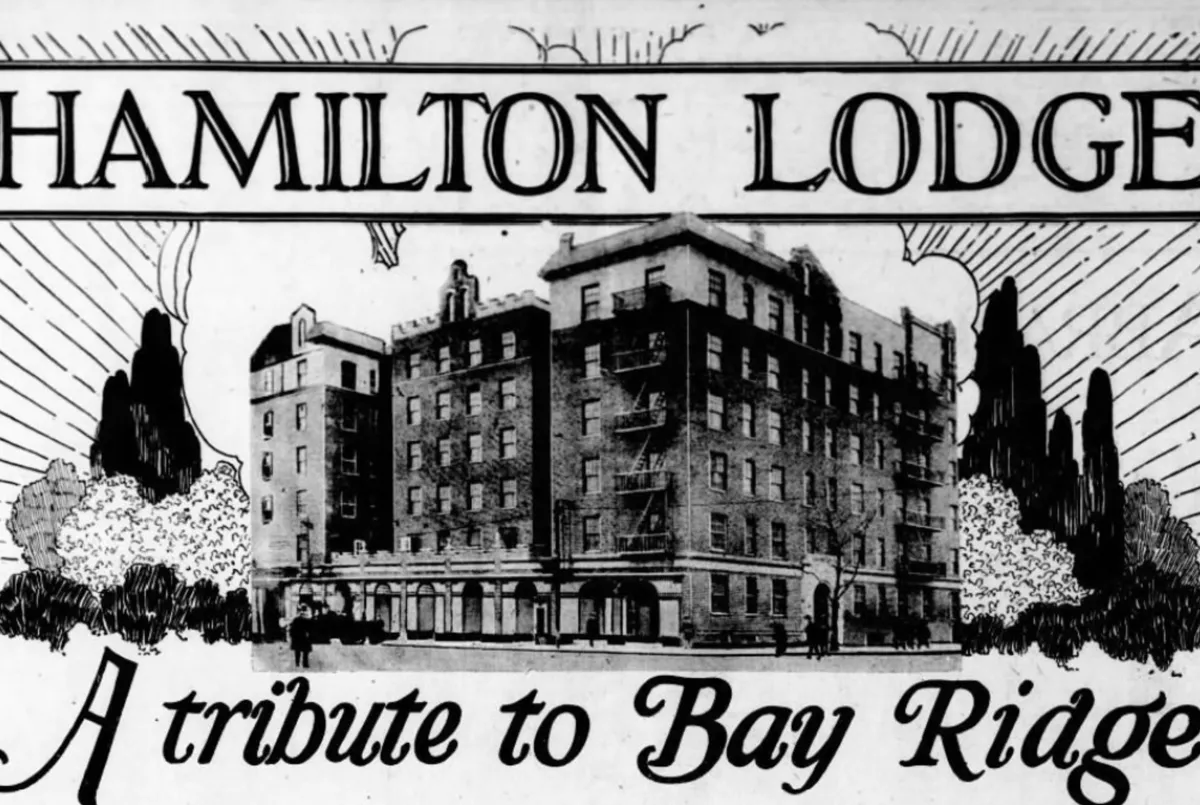
Rockland Palace was filled to capacity. The venue at 155th St. and 8th Ave. in Harlem saw nearly 8000 guests that night. It was March 6, 1936, and the Palace was hosting its 68th annual Hamilton Lodge “Odd Fellows” Ball, an event it had hosted since its inception in the 1860s.
Not since 1929 had the ball seen this much action, and visitors came from as far as Chicago, Atlanta, and Memphis to witness the spectacle. Ed Bonelli and his 20-piece Lido Society Orchestra provided a soundtrack for the festivities, and during intermission, the Smalls Paradise floor show entertained the anxious crowd. This night was set to be the biggest yet, and all the ball’s participants picked out only their most extravagant outfits for the occasion.
This night would be different, however, because a Black queen took home the top prize for the first time in the nearly 70 years that the balls had been taking place. Sporting a grayish-blonde wig and a white tulle gown designed for the occasion by Dan Hazel, Jean La Marr, won the pageant by popular choice, walking away with a grand prize of 50 dollars. Entertainer Ethel Waters presented La Marr’s award, and Black Harlem basked in the historic occasion, erupting in excitement at the victory of one of their very own.
That night, the Hamilton Lodge served its original purpose as the black Queens took center stage.
Hamilton Lodge 710 is the first example of a venue hosting drag parties, events, and masquerades. Billed initially as being of the “Grand United Order of Odd Fellows,” the lodge was a creation of a well-to-do class of African-Americans that sprang up in New York in the mid-19th century. The club’s story begins in 1842, when the Philomathean Institute, an organization of free black men in New York, petitioned for a lodge of Odd Fellows.
A Fraternal organization with origins in 18th century England, the order of Odd Fellows believed in and advocated for “Odd” Fellowship. This belief championed a non-partisan view of fellowship involving individuals of all races, ethnicities, and sexualities. When their request was denied in New York due to their race, Peter Ogden, a black sailor, went to England to receive formal permission from the board to begin the organization. Of the 22 separate lodges launched under Peter’s leadership, Hamilton Lodge 710 of the Grand United Order of Odd Fellows officially opened its doors in February 1844.
Though law enforcement historically sought to end such masquerades, police officers in Harlem worked to officiate the balls.
Though it’s unclear why the Lodge began hosting drag balls and masquerades, the more progressive stance about members of the Lodge may have attracted individuals to the organization in search of a place where their identities were not explicitly taboo. By the late 1860s, balls were well underway, and newspapers noted the occasions for not only their “bizarre” nature, but their organization and formality.
In a March 1886 article in the New York Freeman, the writer commended the masquerade as credible and organized. Prof. Green, described as wearing a gaudy Turkish dress, commented on not only the formality of the reception, but its diversity.
The writer’s allusion that the costumes at that year’s event, eclipsing those at similar white events, points to the presence of other houses and organizations that may have held drag balls in New York in the latter 19th century. The New York Freeman’s categorization of the ball as the “event of the season” and the generally positive tone of the paper also shed light on why New York was the perfect city for Hamilton Lodge to spread its wings fully. Coming into the 20th century, on the heels of the Great Migration, Lodge 710 was well underway to becoming the place to be as far as Drag Balls were concerned.
The arrival of millions of African-Americans to New York to escape growing persecution in the Jim Crow South spelled prosperity for the Lodge. Its location was perfect as the Harlem Renaissance came underway. The cultural zeitgeist that swept through black Harlem promoted an atmosphere where for the first time, queerness was not forced into the closet but allowed room to breathe, grow and even prosper.
This culture birthed performers like Gladys Bentley, an openly lesbian blues singer who sang explicitly about sex with other women in a white tux and top hat. The Ubangi Club of Harlem featured a full chorus line of drag queens, and openly gay writer Richard Bruce Nugent wrote and published his book Smoke, Lilies, and Jade, which dealt candidly with bisexuality and interracial romantic desire.
Beyond the Harlem renaissance, relaxed social mores were a fixture of the 1920s following prohibition-era restrictions. People rebelled openly against society’s long-held notions of sex, sexuality, and race. Hamilton Lodge, described as an “ultra-modern” structure offering a sweeping view of Lower Manhattan, an entrance of tri-colored marble, and two passenger elevators of the “latest” safety devices, became the perfect venue for the change sweeping the nation.
By the mid-1920s, New York papers like the New York Age regularly covered the Lodge’s events. Hamilton Lodge attracted an incredibly diverse crowd of individuals, and in a March 5, 1927, article, it was noted that “Nordic contestants mixed freely with their dark skin brethren.” Asian participants also took part in the festivities. The formality of the balls at Hamilton Lodge is perhaps best noted by the police presence at the events. Though law enforcement historically sought to end such masquerades, police officers in Harlem worked to officiate the balls. They arrested troublemakers and kept angry and boisterous crowds at bay.
By the mid-30s, a new administration began looking to end the famed ball. Officers, who once helped officiate the balls, began arresting participants and guests on charges of indecency, vagrancy, or female impersonation.
As the 20s drew to a close, thousands of people from all over the United States made a yearly trek to Harlem in March to experience the balls in person. Despite Hamilton’s black origins, most of the ball’s participants were noticeably white by that point. In an era where women like Mae West, Clara Bow, Greta Garbo, and Jean Harlow graced a silver screen out of reach for black women, their likeness permeated the ball’s aesthetic.
The Afro-American paper noted in April 1932 that Black queens preferred blonde wigs. This Eurocentric ideal of beauty made it so that, though routine participants, black Queens were typically shut out from winning pageants. After a nearly 70-year-long rivalry between Black and white queens for the trophy, Jean La Marr’s win represented a significant victory in the pageant’s history. Described as brown-skinned with almond-shaped eyes, a stunning smile, nifty feet, and very effeminate mannerisms, Jean La Marr took home first prize in 1936, and black Harlem was understandably prideful.
1936 wasn’t just significant because of La Marr’s win, but because, by the mid-30s, a new administration in New York concerned with vice began looking to end the famed ball. Officers, who once helped officiate the balls, began arresting participants and guests on charges of indecency, vagrancy, or female impersonation. In a country reeling from the effects of the Great Depression, events full of men parading as women became public indecency and had to be put to an end. Following the election of a new district attorney, the Harlem Lodge held its final drag ball in 1937.
The Hamilton Lodge Ball was a beacon of black creativity, freedom, and expression in post-slavery America. The lodge fostered an atmosphere where Black drag queens could find solace in the company of others like themselves. The Hamilton Lodge of Odd Fellows, a black fraternity built on the idea of an accepting and diverse fraternity, was the perfect vessel for creating solidarity where people of a colorful array of identities and personalities could carve out a reality where they could be themselves unapologetically.
Two gay elders have opened their home and lives to a slew of foster children since they retired. So far, they have fostered 33 kids and have no intention of stopping any time soon.
Their first placement was a six-year-old boy and his nine-year-old sister. The siblings stayed with the couple for a year.
Swiis Foster Care clients Barney and Rajainder spoke to Pink News about the challenges and rewards of being foster parents.
“As the main carer, I decided that emergency and respite care would be more suitable to our lifestyle. Obviously, emergency and respite care entails a high turnover of placements, which can last anywhere from 24 hours to a few months,” Barney told the outlet.
“We have cared for children and young people from the age of six to 17 years old over the past four years, so needs, routines, interventions, and boundaries change constantly.”
He added, “Whatever the day brings, providing a constant calm, safe, and caring environment is paramount.”
The rewards are obvious, they say. The goal is to provide the children with the safety and encouragement to handle the adversity life has thrown at them.
“Some children and young people come to us in a state of chaos, with low self-esteem and confidence, and they leave with increased confidence and self-esteem, having learned age-appropriate, independent living skills to help them move further in life,” Barney said.
They encouraged other queer couples to consider becoming foster parents too. There are approximately 391,000 children in foster care in the United States, and every state needs loving individuals who are willing to open their homes to kids in need.
“I can only assume that many from the LGBTQ+ community who are concerned that their sexual orientation or identity would be a barrier to fostering associate their concern with negative attitudes that still exist in society,” Barney said.
“For us, the positive outcomes that can and have been achieved for the vulnerable children and young people we have cared for far outweigh any concern we have for narrow-minded, intolerant individuals.”
Rivule Sykes announced their candidacy Monday for U.S. House in the Fifth Congressional District of Louisiana, launching a campaign that they say aims to bring “people’s attention to the issues we all face together.”
As a transgender woman who is a member of Gen Z, Sykes says they understand how both groups are “uniquely” challenged in the country today. With previous experience in property management, working as a resident assistant, and being a lighting designer technician, they also have a deep interest in the policies affecting the average American worker.
“There are broad common ground issues that are affecting all of us. Living through or the threat of poverty and income inequality, workers’ rights, the industrial prison complex, corporate greed, and lack of access to health care, to name a few,” they tell The Advocate, adding, “So when we talk about those issues, I can add in how LGBTQ+ people are often uniquely affected by them.”
While Gen Z are proven to be more progressive than previous generations, candidates still regularly struggle to reach younger voters. Part of this, Sykes says, is because they don’t see themselves represented. There is currently only one Gen Z member of Congress, and many racial/ethnic groups are disproportionately underrepresented across the nation. Beyond that, many of them do not see themselves economically represented.
“Gen Z and Alpha are facing a future of such wealth inequality across the board. Millennials as well. Over half of each of those generations that are working age still live with family, as do I technically,” Sykes explains, continuing, “I’ve had my viewpoints completely invalidated by people who don’t think I’m responsible or ‘grown up’ just because I don’t own my own house yet. And that is harmful to not only our generation but our democracy.”
Sykes’s platform aims to bridge these gaps, focusing largely on worker’s rights and economic growth through policies that benefit people before profit. Their plans for housing and urban development policies include affordable housing, anti-gentrification, and homeownership assistance programs.
They are also a proponent of universal health care and expanded access to mental health services. Sykes promotes education funding and development, including teacher support programs. Their advocacy for workers’ rights doesn’t stop at educators — the candidate is also in favor of raising the minimum wage and developmental programs that would support small businesses.
Hailing from the small towns of Hammond and Holden, Sykes has firsthand experience of wealthy state policymakers overlooking rural and low-income communities. They say that this “lack of diverse representation affects all of us,” as “when the majority of politicians come from wealthy backgrounds, they are less likely to vote in favor of policies that will help the most poor and vulnerable of our generation.”
“There needs to be diversity in our representation when it comes to who forms our policy,” they continue. “While older politicians are valuable for the experience they have and the knowledge of our systems, we need younger policymakers to inform on new perspectives and bring energy for action and change.”
Sykes is an advocate for systemic change in both government and the criminal justice system. Alongside transparency and restrictions on lobbying, they also seek the abolition of bail and the private prison industry in Louisiana in favor of restorative justice systems. Their lobbying restrictions are particularly significant, as Sykes cites the practice as one of the causes behind young people’s disillusionment.
“Some of the traditional action that we’ve been told is effective just isn’t getting through to our politicians, and that’s because of corporate lobbying,” they explain, adding, “So, we’re seeing that inequality not only in wealth but also in representation of voice.”
Sykes is running in the state’s Fifth Congressional District, which is currently represented by Republican U.S. Rep. Julia Letlow. Louisiana elections use the majority-vote system, meaning candidates all compete in the same primary regardless of party, and a candidate can win outright if they receive over 50 percent of the vote. If a candidate does not win at least half of the votes, the top two advance to the general election.
Sykes is running as a third-party candidate in “a traditionally heavily Republican district.” Because of this, they say that “knowledge of electoral politics would inform my chances of getting elected as slim to none.”
While they are aware it’s an uphill battle, they believe that the purpose of political campaigns goes beyond winning and losing — instead, they can serve as an opportunity to shed a light on important issues while uplifting marginalized voices.
“That is one of the biggest reasons I am running, even if I don’t get elected. We need more representation in our choices,” Sykes explains. “But I do feel like I have a lot of those unique perspectives. And I feel like I am well informed on a lot of the issues we are facing collectively. And collectively, the majority of us are working class and poor, and we need more people in Congress who understand that struggle.”
They add, “At the end of the day, my campaign isn’t about electing me, it’s about bringing people’s attention to the issues we all face together, and coming together to form community-focused solutions that won’t leave anyone behind.”
Marching into a gay bar to issue citations feels a bit vintage in 2024. Nevertheless, over the weekend, the Joint Enforcement Team (JET), which is a coalition of Seattle Police, Fire, the state Liquor and Cannabis Board (LCB), and others, entered two gay bars, The Cuff Complex and The Seattle Eagle, and started looking around.
And what did they find? A bartender’s exposed nipple and a few people wearing jockstraps, offenses that law enforcement can cite you for in Washington if you’re also selling alcohol.
At 12:30 on Saturday morning, a 10-member JET crew filed into Cuff, according to owner Joey Burgess. They came in with flashlights, scaring some patrons who left in a hurry. Inside, they saw the offending nipple, a violation of state law the JET may penalize in some way.
A group of Capitol Hill gay bars and clubs are teaming up with neighborhood queer community leaders Dan Savage and Terry Miller in calling for the state’s liquor control board and Seattle Police officials to explain what they say was a weekend crackdown reminiscent of historical harassment of Seattle’s LGBTQ friendly venues.
Ownership at the bars including The Cuff, Queer/Bar, Massive, and The Eagle along with Savage and Miller say that citations issued over weekend over clothing and decency violations at a handful of clubs recorded by the Washington State Liquor and Cannabis Board and so-called Joint Enforcement Team inspectors were targeted.
The group is asking for the community to demand the liquor control board explain its actions.
Join the Sonoma County Library for eventsthroughout the month of February, from bilingual kids’ yoga to African music with Keenan Webster. All events are free and you don’t need a library card to attend; registration is required for select events. See some of our February events below!
All Ages
Join us at the Petaluma Regional Library on Saturday, February 17, at 10:30am to explore African music with Keenan Webster! Keenan demonstrates and entertains with instruments of the Mandinka and Mende-speaking peoples of West Africa. This event is co-sponsored with Petaluma Blacks for Community Development.
Kids
Body Percussion Learn how to make music on your body with different kinds of gentle claps, snaps, taps, and slaps! Led by Phoenix Song. For grades K-6. Available at two locations: Central Santa Rosa and Windsor.
Bilingual YogaYoga is a fun way to improve children’s physical and mental well-being. Classes are held in Spanish and English by instructor Sara Gagnon. For ages 4-11. Please bring your own yoga mat or towel, and pre-register online to receive a reminder email. Available at six libraries: Windsor, Guerneville, Rincon Valley, Northwest Santa Rosa, Cloverdale, and Roseland.
Teens
Free Your VoiceLearn how to release stress and increase joy, power, and connection through your voice in this playful workshop with Phoenix Song. No singing experience/ability required! For grades 7-12. Free your voice at two locations: Healdsburg and Windsor.
Bilingual Paint PartyFollow along with step-by-step instructions in Spanish and English to learn painting skills and practice new vocabulary. For grades 7-12. Advance registration required. Get your paint on at four libraries: Petaluma, Healdsburg, Rohnert Park-Cotati, and Cloverdale.
Adults
Welcome in the lunar new year with a virtual lecture presented by the Asian Art Museum. Join us on Saturday, February 17, at 11:00 am to explore the traditions and symbolism that enrich this celebration each year.
Charged Particles Jazz TrioEnjoy this trio’s funky Latin jazz repertoire, blending in elements of classical music and complex orchestration with freewheeling improvisation. At three libraries in February: Sonoma Valley, Guerneville, and Cloverdale.
Thank you for being a member of the Sonoma County Library community. Visit us online or in person at one of our branches. Be sure to check out open jobs at Sonoma County Library here. Questions? Please call your local library branch or click here to send us a message. Eventos de febrero Únete a la Biblioteca del Condado de Sonoma para eventosdurante todo el mes de febrero, desde yoga para niños bilingüe hasta música africana con Keenan Webster. Todos los eventos son gratuitos y no necesitas una tarjeta de la biblioteca para asistir; Se requiere inscripción para eventos seleccionados. ¡Conoce algunos de nuestros eventos de febrero a continuación!
Para todas las edades
¡Únete a nosotros en la Biblioteca Regional de Petaluma el sábado 17 de febrero a las 10:30 am para explorar la música africana con Keenan Webster! Keenan nos mostrará y entretendrá con instrumentos de los pueblos mandinga y mende de África Occidental. Este evento es co-patrocinado por Petaluma Blacks for Community Development.
Para niños
Percusión corporal¡Aprende a hacer música en tu cuerpo con diferentes tipos de ejercicios tactiles como aplausos y chasquidos gentiles! Dirigido por Phoenix Song. Para los grados K-6. Disponible en las bibliotecas Central Santa Rosa y Windsor.
Yoga para niños bilingüeYoga es una forma divertida de mejorar el bienestar físico y mental de los niños. Las clases serán en español e inglés por la instructora Sara Gagnon. Para edades 4-11. Por favor trae tu propia toalla o un tapete de yoga, y regístrate en línea para recibir un recordatorio por correo electrónico. Disponible en las bibliotecas de Windsor, Guerneville, Rincon Valley, Northwest, Cloverdale, y Roseland.
Para jóvenes
Libera tu vozAprende a liberar el estrés y aumentar tu felicidad, poder y sentido de conexión a través de tu voz en este taller divertido con Phoenix Song. ¡No necesitas tener experiencia ni habilidad para cantar! Para los grados 7-12. Libera tu voz en las bibliotecas de Healdsburg y Windsor.
Fiesta de pintura bilingüe para jóvenesSigue las instrucciones paso a paso en español e inglés para aprender habilidades de pintura y practicar vocabulario nuevo. Para los grados 7-12. Se requiere inscripción previa. En las bibliotecas de Petaluma, Healdsburg, Rohnert Park-Cotati y Cloverdale.
Para adultos
Dale la bienvenida al año nuevo lunar con una conferencia virtual presentada por el Museo de Arte Asiático. Acompáñanos el sábado 17 de febrero a las 11:00 ampara explorar las tradiciones y el simbolismo que enriquecen esta celebración cada año.
Trío de jazz Charged Particles Disfruta del repertorio lleno de ritmo de jazz latino de este trío, que mezcla elementos de música clásica y orquestación compleja con improvisación libre. En las bibliotecas de Sonoma Valley, Guerneville y Cloverdale durante el mes de febrero.
U.S. Rep. Mark Pocan, chair of the Congressional Equality Caucus, is demanding to know if the right-wing group known as the Fellowship Foundation, a.k.a. the Family, is supporting Uganda’s Anti-Homosexuality Act.
The act, passed last year, provides for a sentence of life in prison for consensual same-sex relations and the death penalty in certain circumstances. It also requires that citizens report anyone they suspect has violated the law. It replaces a similar law that was passed a decade ago, although without the death penalty provision, and was struck down by Uganda’s highest court, not because of its content but because of the manner in which it was adopted. The new law is being challenged in court as well.
The Fellowship Foundation, while based in the U.S., has been cozy with anti-LGBTQ+ African leaders for years, but there is particular concern about its work in Uganda. “Since the passage of [Uganda’s] first Anti-Homosexuality Act a decade ago, there have been numerous reports linking both bills, their authors, and the larger movement to further criminalize LGBTQI+ people in Uganda to the Fellowship Foundation/the Family, and its associates,” Pocan wrote in his letter, released Tuesday and addressed to the foundation’s president, Katherine Crane.
“At Uganda’s National Prayer Breakfast in 2023, which the Fellowship Foundation helped support — including by flying in Rep. Tim Walberg to speak — speakers called LGBTQI+ advocates ‘a force from the bottom of Hell,’ said they would ‘destroy’ ‘the forces of LGBTQ,’and spoke in support of the Anti-Homosexuality Act,” Pocan continued. “In addition, Rep. Walberg told the participants to ‘stand firm’ in response to international pressure against Uganda, though he later said his statement was not in support of the Anti-Homosexuality Act, as imposing the death penalty against LGBTQI+ people is antithetical to Christian values. President Museveni later said at the breakfast that there are Americans who ‘think like us,’ illustrating how proponents of the Anti-Homosexuality Act in Uganda point to certain Americans’ statements to justify their own support for this draconian law.”
Walberg is a Republican member of the U.S. House from Michigan. Pocan, a gay man, is a Democratic member from Wisconsin.
Pocan noted that there have also been concerns about the foundation’s U.S. National Prayer Breakfast, which has caused that to split into two events.
Pocan asked Crane to provide information on the foundation’s communications with Ugandan officials regarding the Anti-Homosexuality Act; whether the foundation supports or opposes the law and, if it opposes the measure, if it will publicly announce its opposition to it and other bills that criminalize LGBTQ+ people, especially those that impose the death penalty; the foundation’s financial support for advocacy activities in Uganda and what other countries the foundation provides similar support in; and if members of the new National Prayer Breakfast board are affiliated with the foundation.
He asked for replies no later than February 28.
Another U.S.-based nonprofit, Family Watch International, has been accused of ties to the Ugandan law and other aanti-LGBTQ+ legislation in Africa as well.
Iowa lawmakers on Wednesday declined to advance a bill that would have stripped gender identity from the state’s civil rights law, a proposal that opponents said could have subjected LGBTQ Iowans to discrimination in education, housing and public spaces.
The bill has been floated in recent years without success but reached the first step in Iowa’s lawmaking process Wednesday, when it was rejected by three members of a House Judiciary subcommittee. As they discussed the measure, LGBTQ advocates outside the room cried out: “Trans rights are human rights.” Two of the subcommittee members are Republican and one is a Democrat.
Not every state has explicit protections for a person based on their gender identity, but opponents of the bill suggested that removing such already existing protections from a state’s anti-discrimination law would have stood out in an already historic period of anti-trans laws in Republican-led statehouses.
Republican House Majority Leader Matt Windschitl — who is not a member of the subcommittee and didn’t take part in the vote — said Wednesday that he doesn’t think it would be the “wise choice” to break open established civil rights code “whether you agree with all of it or not.”
“Taking that protection away would then be an opportunity to discriminate against one of those protected classes,” he said of how the bill would be perceived.
LGBTQ Iowans and allies who descended upon the Iowa Capitol to protest the bill far outnumbered those in support, though the testimony initially alternated between pro and con. Some trans Iowans in the room shared personal testimony about discrimination they’ve faced and fears of being further marginalized.
Iowa’s civil rights law protects against discrimination in employment, wages, public accommodations, housing, education and credit practices based upon certain characteristics of a person. That includes gender identity, as well as someone’s race, color, creed, sex, sexual orientation, religion, national origin and disability status.
Sexual orientation and gender identity were not originally included in Iowa’s Civil Rights Act of 1965. They were added by the Democrat-controlled Legislature in 2007, with about a dozen Republicans across the two chambers joining in favor.
State Rep. Jeff Shipley, who authored the bill discussed on Wednesday, gave an impassioned introduction in which he argued that there is no objective criteria to evaluate gender identity and that there is a “viciously hostile” culture around the protection of these individuals over others. Shipley said the latter was made clear by the protesters shouting expletives and giving him the finger as he left the room.
As written, the bill would have amended the civil rights law’s definition of disability, a protected status, to include the psychological distress that some transgender people experience, known as gender dysphoria, or any another diagnosis related to a gender identity disorder.
Those individuals would be protected, but advocates Wednesday made clear that being trans is not a disability and that a broad swath of transgender Iowans who do not experience gender dysphoria would be left exposed.
“I am not disabled,” said Annie Sarcone, a transgender Iowan and director of the Des Moines Queer Youth Resource Center. “Shame on the Iowa Legislature for trying to pull something like this. For being the only state to take things this far.”
Iowa’s Republican-controlled statehouse has passed multiple bills that Republican Gov. Kim Reynolds signed into law targeting LGBTQ Iowans in recent years, including prohibiting transgender students from using public bathrooms that align with their gender identity, banning gender-affirming care for transgender minors and prohibiting transgender females from participating in girls high school and women’s college sports.
Those measures are part of a wave of laws recently passed in conservative states across the country that have led the Human Rights Campaign to declare a state of emergency for LGBTQ Americans.
About half of U.S. states include gender identity in their civil rights code to protect against discrimination in housing and public places, such as stores or restaurants, according to the Movement Advancement Project, an LGBTQ+ rights think tank. Some additional states don’t explicitly protect against such discrimination, but it is included in legal interpretation of the statutes.
Federal protections against employment discrimination on the basis of gender identity were reinforced in a landmark U.S. Supreme Court case in 2020, when conservative Justice Neil Gorsuch wrote for the majority that discrimination because of LGBTQ+ status was an extension of sex-based discrimination.
Iowa’s Supreme Court expressly diverged from the federal high court in a 2022 ruling.
Kat Klawes had no choice but to fight for transgender rights as a teen growing up in Milwaukee, Wisconsin.
A young Klawes often fought for the world to believe one of her mothers is a transgender woman.
Klawes grew up knowing one of her mothers was trans, often fighting for the world to know it as well. But for years, she tells GLAAD, she had to pretend her mother didn’t exist, with adults in her life repeatedly telling her that she had fabricated the story of her mother and her mother’s transness.
Fast forward to present day, Klawes is taking back the narrative, owning her story and correcting the record. In January, she joined fellow Wisconisites and local LGBTQ activists at the Milwaukee LGBT Community Center in a gathering with local leaders convened by the GLAAD Media Institute. Like her, many of the LGBTQ advocates said that they struggle with access to LGBTQ community, extracurriculars, medical care, and basic needs in Wisconsin.
“We didn’t talk about trans people,” Klawes told GLAAD.
“I remember on the playground one day in second grade, I told one of my friends about my other mother. She then ran and told the teacher who came up to me and made me apologize for ‘lying.’”
This broke Klawes’ heart. She had lost access to her family in the ways many LGBTQ youth are today with “Don’t Say Gay or Trans” laws, history, sports, and book bans, and trans healthcare bans. “As a child, I looked to my local libraries for resources,” she shared. “In middle school I read the book Luna by Julie Anne Peters. It was the first time in my life that I didn’t feel alone.” She said the public library book helped her to “better understand her queerness” and her mother.
Last year, there were 3,362 school book bans nationwide, including 43 in Wisconsin, according to the nonprofit PEN America. While Wisconsin is not in legislative session in 2024, the state will have elections.
Voters know Wisconsin for its tight elections. In 2024 there will be elections for State Senate and State Assembly. The general election is on November 5. A primary is August 13, and the filing deadline is June 3.
“Wisconsin is quite rural,” said Alaina Landi, the communications and marketing director of the Milwaukee Gay Football Club. “Milwaukee and Madison, I’d say, are really safe havens for the LGBTQ community and most people with a marginalized identity.”
Landi is fighting to make community gatherings – in particular with a focus on sports. Already, 23 states have anti-trans sports bans, according to the Movement Advancement Project. Meanwhile, Wisconsin’s anti-LGBTQ politicians hope to be the twenty-fourth.
Back in October, the Wisconsin State Assembly passed “new restrictions on who can play sports” for public schools, private schools in the parental choice program, UW System schools and technical colleges.
“We’re going to veto every single one of them (the bills),” said pro-LGBTQ Wisconsin Gov. Tony Evers in a hearing regarding the bills.
Nonetheless, the possibility of anti-LGBTQ laws passing alone has an impact on LGBTQ populations throughout the state.
Erik Czech-Swanson, founder of LGBT Waukesha, said he relates to the isolation Landi and Klawes discussed with GLAAD. The GLAAD Media institute alum drove about 40 minutes to meet with Wisconsin advocates.
Just west of Milwaukee, Waukesha County is quite rural, making it difficult for LGBTQ people to find each other to organize as a community.
“LGBT Waukesha was founded out of a need for more visibility for the LGBTQIA+ community in Waukesha County,” said Czech-Swanson. “Around me, still, we feel very disconnected in the community where I am at.”
With LGBT Waukesha, Czech-Swanson hopes to change that.
“As we head into the new year, be there for each other,” said Czech-Swanson. “There is so much going on specifically targeting LGBTQ youth and it’s been really disheartening for a lot of them to hear the [anti-LGBTQ] messages going around. It’s really important for us to make sure that they understand that they are welcome and that they have a future.”
With that said, Czech-Swanson says to “be a voice for yourself,” and to “check in on everyone; make sure you’ve got your safety in numbers.”
You can check your voter registration at GLAAD.org/vote.
Hear from other Wisconsin LGBTQ advocates Court Hellendrung, founder of CHOSEN, and Kristina Arnold, a transgender spokesperson for FORGE.
More on the GLAAD Media Institute: Using the best practices, tools, and techniques we’ve perfected over the past 30 years, the GLAAD Media Institute turns education into armor for today’s culture war—transforming individuals into compelling storytellers, media-savvy navigators, and mighty ambassadors whose voices break through the noise and incite real change.