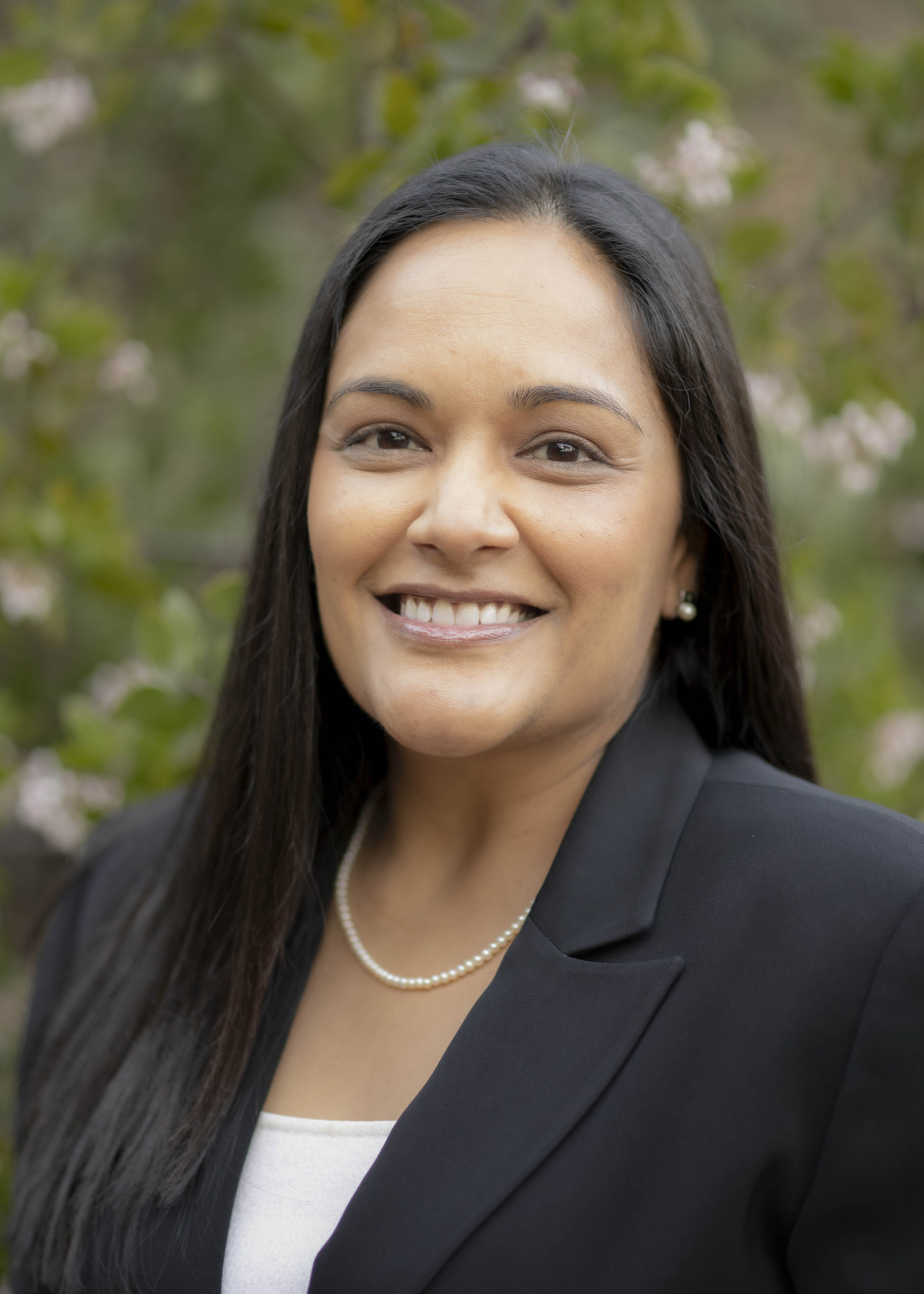
Kinna Patel Crocker, of Sonoma County, has been appointed to serve as a Judge in the Sonoma County Superior Court. Crocker has been a Sole Practitioner since 2013. She was an Associate at Terre Family Law from 2011 to 2013, at Lozano Smith from 2010 to 2011 and at Northern California Family Law Group from 2004 to 2008. Crocker earned a Juris Doctor degree from the University of San Francisco School of Law. She fills the vacancy created by the retirement of Judge Arthur Wick. She is a Democrat.
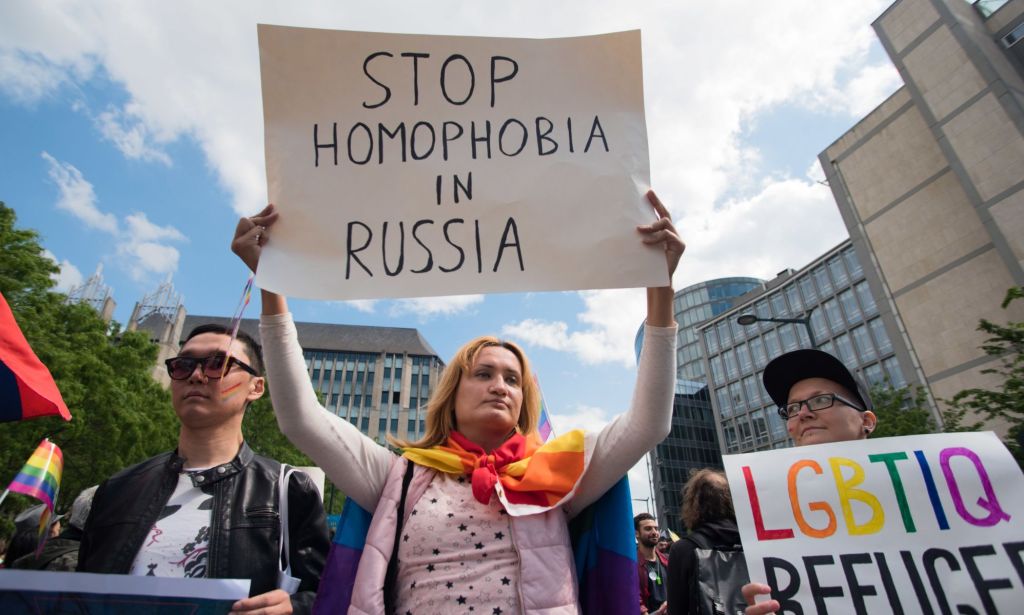
Max and Sasha are just two of the many LGBTQ+ people who have joined the mass exodus fleeing Russia to avoid violence, discrimination and war.
Now, the queer Russian-Ukrainian couple are left with the scars of living under Vladimir Putin’s repressive regime.
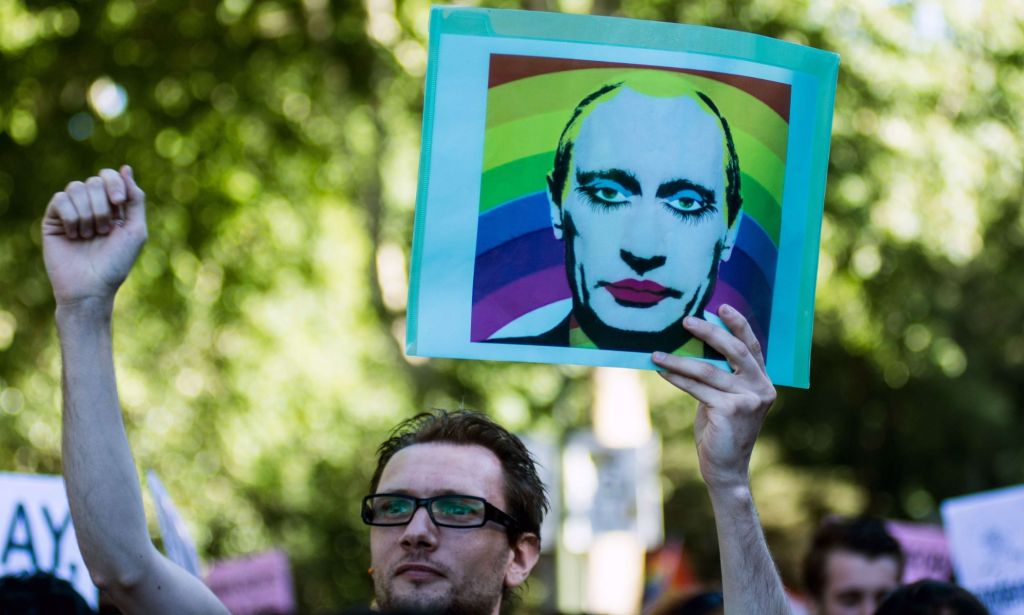
Putin’s obsession with rejecting what he sees as Western “degradation” has led to Russia toughening anti-LGBTQ+ legislation in recent months. At the same time, the Kremlin has clamped down on free speech, human rights and dissent as the war in Ukraine drags on.
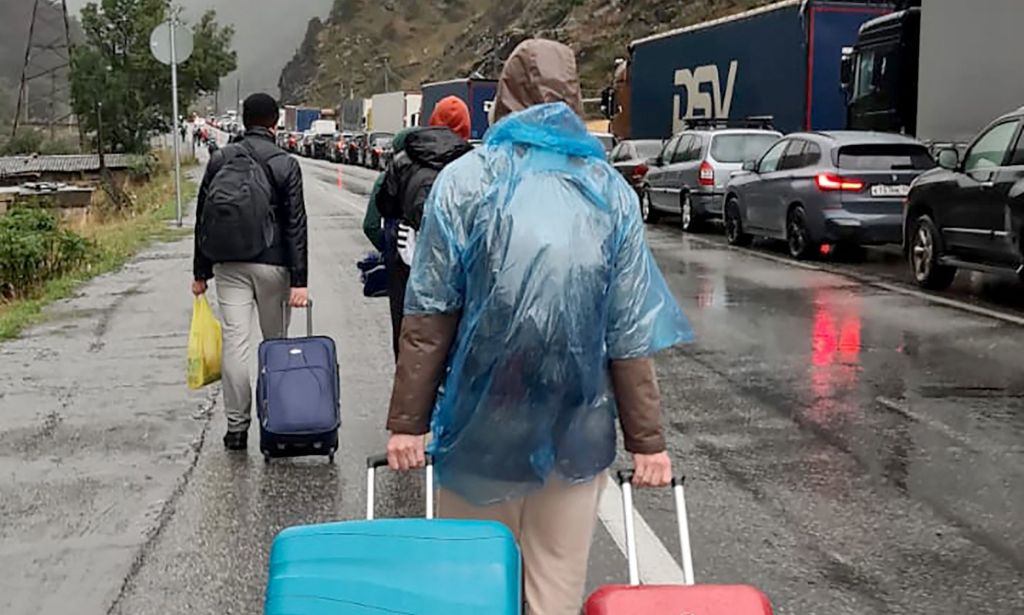
Max and Sasha fled Russia this time last year. They joined the hundreds of thousands of people trying to find safety in other countries bordering the huge nation.
They made it to the the Latvian border, hitching a ride with a stranger.
When the queer couple got to the crossing, guards confronted them, demanding to know why they were leaving Russia.
Unable to reveal their real reasons, they had “full-on panic attacks just trying to hold back tears” as they waited hours to be let them through, the pair tell PinkNews.
“When we got there and we gave our passports, the guard looked at Sasha’s, and he was like: ‘I can’t see the visa, so what are you doing? What are your plans? What are you thinking? What are you doing there?’” Max, who is Ukrainian, recalls.
“We were like: ‘There are some people waiting for us there’. We were trying to say at least something. You’re completely stunned… we were standing there trying not to cry because they took our passports.
“We were like: ‘What next? What are they doing with our passports? They’re not letting us go’.”
A growing number of people, like Max and Sasha, have left Russia via land border crossings into other countries. (Getty)
Several countries – including Latvia, Lithuania, Estonia, Poland and Finland – have put in place measures to restrict the entry of Russian citizens, limiting the chances for people to use them as safe havens.
At one point, the border guards let Sasha, who is Russian, through but said that Max couldn’t join him. However, the couple knew they had to stay together so they regrouped in Russia and used “some other ways to cross the border”.
‘The scariest thing was that people were delusional about Russia’
Eventually, they made it into one of the Baltic states and began the process of applying for asylum. But they encountered difficulties with access to resources because of their differing citizenships, given the ongoing war.
Max feels he has a “lot of privilege as a Ukrainian” because he can travel, and it’s “easier” to find a job. Sadly, he can’t share that same level of support with Sasha because the pair aren’t married yet.
The LGBTQ+ community in Russia has faced a growing crackdown by authorities, which has only increased in ferocity since Russia’s invasion of Ukraine. (Getty)
The queer couple’s asylum application was initially denied because the person reviewing it argued that it’s merely “hard” for gay people in Russia – refusing to recognise the very real abuse LGBTQ+ people face.
“The arguments were: ‘It’s hard for gay people in Russia, but you did go to work. You did finish at school’,” Max explains.
“We were basically going around the streets, pretending we are someone who we are not. No matter how [hard] we try, people always figure everything out.
“We were standing near a subway station and hearing a guy talk to his wife like: ‘Oh my God, you won’t believe it. I’m standing next to the most disgusting f*****s. Come save me. They’re gonna rape me right now’. People don’t understand that it’s not possible to get any proper help.
“At [one] point, we were shot at. There were four guys passing us by in a car. They stopped to ask if we’re f*****s, and we said ‘no’. They said: ‘We saw you guys kiss’. We weren’t kissing.
“When we were talking about this in our [asylum] interview, they were like: ‘Why didn’t you go to the police?’ It’s pointless, you’ll leave the police station feeling worse.”
Sasha and Max, who have since been granted asylum after appealing the first ruling, say that people react with shock when they discover the true level of discrimination and violence LGBTQ+ people face in Russia.
“I think the scariest thing was, when we arrived, that people were delusional about Russia,” Sasha says. “They don’t know anything, what happens there and how it happens, which also affected our case.
“They don’t understand that, if you go to the police, you can be assaulted or even killed there, and no one will know. People have no idea what it is like… I was so scared after all that, that while being [in the country that last year], I wouldn’t go out of my house because I was so scared of people, men specifically.”
Anti-LGBTQ+ ideology has been a central axis of political propaganda in Russia over the past decade
Sasha and Max still feel the impact of the Russia’s oppressive anti-LGBTQ+ laws, which have led to hate and violence on the streets. As they put it: “You left Russia, but Russia never left you.
“It’s been a year, and when we got the asylum status approved, it was a relief, but I did not feel safe,” Sasha says. “It’s still hard for me to get out of the house. I’m still wearing a hat outside when I dye my hair.
“Yes, I understand that I don’t live in danger any more. I’m not in Russia. A rational part of me knows I’m not there, and it’s not as scary as I think it is outside [and] I can express myself with clothing more.”
It’s been a year since Max and Sasha fled anti-LGBTQ+ persecution in Russia, but Sasha says it’s “still hard for [him] to get out of the house”. (Getty)
Anna-Maria Tesfaye, the co-founder of LGBTQ+ not-for-profit organisation Queer Svit, says many LGBTQ+ people think they can “leave this bulls**t behind” when they flee Russia, but they realise they are still “mentally” trapped in the country’s politics of terror.
“You finally have the ability to think because you’re not in Russia any more,” she says.
“You don’t need to do anything, then it hits you. You understand that maybe you’re out of Russia, but you’re in Russia mentally. A lot of people understand that it’s probably post-traumatic stress disorder.”
Max and Sasha say they still “scan every corner [and] every street” for “scary-looking people” and the police because of their Russian experiences.
The pair are feeling a “little more freedom” in their new home, but it’s still difficult to live fully in the moment given the hate they endured.
Two lower courts in Nepal have denied a couple recognition of their marriage, in defiance of the Supreme Court’s recent interim order to register same-sex marriages while legislative change is pending. The couple – Maya Gurung and Surendra Pandey – are considering seeking redress at the Supreme Court.
Gurung, a transgender woman who is legally recognized as male, and Pandey, a cisgender man, held a Hindu wedding ceremony in 2017, and first attempted to register their marriage in June at the Kathmandu District Court, following the Supreme Court’s order. When that court rejected their registration, saying it did not need to recognize a couple that was not one legal male and one legal female, they appealed to the Patan High Court.
In their ruling, the high court judges said that because the Supreme Court order named the Prime Minister and Council of Ministers, it was the responsibility of the federal government to change the law before the lower courts could register such marriages.
Nepal’s civil code currently only recognizes marriages between one man and one woman. The Supreme Court attempted to rectify that by ordering the creation of an interim registry for nontraditional marriages until parliament changes the law. The two lower courts are now reversing the logic by claiming that the national law must be changed first.
Nepal’s Supreme Court has a globally-recognized record of rulings upholding the rights of lesbian, gay, bisexual, and transgender (LGBT) people, although implementation has been piecemeal. In 2007, the court ordered the government to form a committee to study same-sex marriage. In 2015 that committee recommended the government “grant legal recognition to same-sex marriage on the basis of the principle of equality.” However, successive governments failed to bring legislation to the parliament, leading to further court rulings. Earlier this year the court ordered the government to recognize the marriage of a Nepali man who had married a German man.
In fifth grade, Stella Gage’s class watched a video about puberty. In ninth grade, a few sessions of her health class were dedicated to the risks of sexual behaviors.
That was the extent of her sex education in school. At no point was there any content that felt especially relevant to her identity as a queer teenager. To fill the gaps, she turned mostly to social media.
“My parents were mostly absent, my peers were not mature enough, and I didn’t have anyone else to turn to,” said Gage, who is now a sophomore at Wichita State University in Kansas.
Many LGBTQ students say they have not felt represented in sex education classes. To learn about their identities and how to build healthy, safe relationships, they often have had to look elsewhere.
New laws targeting LGBTQ people have been proliferating in GOP-led states. Some elected officials, including candidates for the Republican presidential nomination, have been pushing to remove LGBTQ content from classrooms.
Sex education curriculum varies widely. Some groups including Planned Parenthood have called for sex education to be inclusive of LGBTQ students, but some states outright forbid such an approach.
The penal code in Texas, for one, still says curriculum developed by the Department of State Health Services must say homosexuality is not acceptable and is a criminal offense, even though such language was deemed unconstitutional by the U.S. Supreme Court in 2003. Attempts in the Legislature to remove that line from state law have failed.
In practice, LGBTQ students say they have looked elsewhere for sex education. Some described watching their peers turn to pornography, and others said they watched videos on YouTube about how to tell if someone is gay and how to flirt with people of the same sex.
Gage grew up in Oklahoma before her military family relocated and she spent her eighth and ninth grade years in a U.S. Department of Defense school in the Netherlands. She then finished high school in Kansas, where she began to recognize she wasn’t attracted only to men.
Not seeing a safe outlet at her high school to explore who she was, she went online to research for herself the history of the LGBTQ community in the U.S.
“I started to realize there is a huge portion of our history that is conveniently left out. But that history is important to queer youth,” she said. She never really questioned gender or social norms, she said, until she started to learn about discrimination others have faced throughout history. “We have such rigid boxes that we expect people to fit into. If you didn’t fit, you were called slurs. I wasn’t really aware that if you strayed from those norms that people would feel you were attacking their way of life.”
Still, the internet contains vast amounts of false information. Some advocates worry students turning to the internet to fill gaps in sex education will struggle to find their way through the morass.
“Any time you have a political controversy, there is a greater potential for a lot more disinformation to be generated,” said Peter Adams, senior vice president of research and design at the News Literacy Project.
When schools address sexuality, it is often in the context of disease prevention or anti-bullying programs. School can be a difficult place if your identity is seen only in such negative ways, said Tim’m West, a former teacher and now executive director of the LGBTQ Institute at the National Center for Civil and Human Rights in Atlanta. West can relate: He grew up in Arkansas as a queer Black kid and preacher’s son and was constantly made to feel ashamed.
“What if you are a boy in high school that knows you like boys, and you sit in a divided room and listen to a teacher explain how not to have sex with girls. You would be sitting there rolling your eyes, because that is not your issue. But you also haven’t been given any instructions on how to protect yourself should you experiment with a person of the same gender,” West said.
Students need more applicable sex education regardless of their gender identity or expression, said Gage, who volunteers with a youth justice advocacy group and is also president of the Planned Parenthood Generation Action Chapter at Wichita State.
“We all have to make large decisions for ourselves about our sexuality and reproductive health. Those decisions should be grounded in knowledge,” she said.
Growing up in Washington, D.C., Ashton Gerber had more sex education classes than most. But Gerber, who is transgender, said the lessons weren’t all that applicable to their experience.
“Even if you can have sex education every day of the year, there is always going to be something that gets left out,” said Gerber, who is a student at Tufts University in Massachusetts. Gerber said educators should point students to trusted online resources so they can do their own research.
Not knowing who you are is a horrible feeling many LGBTQ students wrestle with, Gage said. But equally horrible is not feeling accepted once you do understand your sexual identity.
“Had I known then what I know now, I would have felt safe and confident coming out sooner,” Gage said. “No one should feel like they don’t understand themselves because we are forced to conformity in a world that doesn’t care. We can all be inclusive.”
Marina Machete became the first transgender woman to win Miss Portugal last week, making her one of two trans contestants so far to compete for Miss Universe later this year.
Machete, a 28-year-old flight attendant, thanked her supporters for the “positive and empowering” messages she has received since being crowned Thursday.
“To all of you watching, I just want to say that, just like the universe, your possibilities in life are limitless,” she said in a video shared on Instagram over the weekend. “So don’t limit yourself to any dream that you have.”
She added that she is excited to meet the other delegates at the 72nd Miss Universe pageant in El Salvador in November.
“Yes I’m trans and I want to share my story but I’m also Rikkie and that’s what matters to me,” she wrote in an Instagram post at the time. “I did this on my own strength and enjoyed every moment.”
“I thought we were really accepting … in the Netherlands, but the hate comments show the other side of our society. I hope that’s a wake-up call,” she told Reuters at the time. “For now, I fully ignore it. I focus on the good things coming my way.”
It appears that Machete and Kolle will be the only transgender contestants among the 90 women who will compete for the crown on Nov. 18. There are two more qualifying pageants — in Mongolia and China — before the Miss Universe pageant next month, and no local reporting has identified any trans contestants.
In 2021, Kataluna Enriquez became the first trans woman to compete in the Miss USA pageant after she was crowned Miss Nevada, though she did not go on to compete in that year’s Miss Universe pageant. In February, Daniela Arroyo González became the first trans woman to compete in Miss Universe Puerto Rico, where she finished within the top 10 finalists, according to her Instagram.
However, not all pageants have been open to including trans women.In July, more than 100 transgender men entered the Miss Italy pageant after the pageant’s organizer said Miss Italy wouldn’t allow trans women to compete.
Turkey’s President Tayyip Erdogan said on Saturday he did not “recognize LGBT” and vowed to combat “perverse” trends which he said aimed to destroy the institution of family in the country.
Turkey’s government, led by Erdogan and his Islamist-rooted AK Party, has toughened its stance on LGBTQ freedoms in recent months, particularly while campaigning for this year’s elections in May.
Homosexuality is not a crime in Turkey, but hostility to it is widespread, and police crackdowns on Pride parades have become tougher over the years.
Speaking at an AK Party congress in Ankara, Erdogan, who has frequently labeled members of the LGBTQ community as “deviants,” said neither his party, nor their nationalist MHP allies, recognized the LGBTQ community.
“We do not recognize LGBT. Whoever recognizes LGBT can go and march with them. We are members of a structure that holds the institution of family solid, that strongly embraces the family institution,” he said.
“We will dry the roots of sneaky acts aiming to destroy our family institution by supporting perverse political, social and individual trends,” he told tens of thousands of flag-waving and chanting supporters.
After the United Nations General Assembly in New York last month, Erdogan complained that he was uncomfortable with the use of what he described as “LGBT colors” at the U.N., which at the time was decorated with bright colors promoting the Sustainable Development Goals.
An LGBTQ+ youth center in Spokane, Washington was vandalized three nights in a row last week, after already experiencing vandalism of its Pride mural a month ago.
On Thursday night, the sign for the Odyssey Youth Movement (OYM), located in the South Perry neighborhood, was covered in paint, as was the nearby rainbow crosswalk. The following evening, the windows and doors were covered in anti-LGBTQ+ hate speech. And finally, on Saturday night, a black pick-up truck left rubber tire treads across the rainbow crosswalk.
This isn’t the first time that 4-H has faced trouble over LGBTQ+ issues.
“We’re all saddened to hear that someone continues to vandalize the new rainbow crosswalk and Odyssey Youth facility,” Michelle Weaver, president of the South Perry Neighborhood and Business Association, told local news outlet KHQ.
“Hate runs counter to our values here in the Perry District. Our diversity is one of the things that makes the Perry District such a great place to be,” Weaver added. “Unfortunately, people fear that which is different from themselves and it leads to hate. I’m hoping whoever did this can be open to the fact that we all work hard, contribute to our communities, pay taxes, raise families, and have dreams and aspirations just like they do, no matter who we love and how we identify.”
Ian Sullivan, OYM’s executive director, said the acts “are designed to make LGBTQ+ youth and young adults feel unwelcome and othered in their own community.”
Spokane Police are investigating the crimes.
“With stuff like this continuing, as it’s been here the entire time… the call is to our government,” said Spokane NAACP president Kurtis Robinson. “‘What are you doing about this’ besides saying you ‘don’t like it’ and ‘it’s bad’… Do some work. Put some protections up… It’s not a question of if it’s happened. It’s the question [of] when is this going to happen again.”
On the 60th anniversary of the March on Washington this summer, a few Black queer advocates spoke passionately before the main program about the ongoing struggle for LGBTQ rights. As some of them got up to speak, the crowd was still noticeably small.
Hope Giselle, a speaker who is Black and trans, said she felt the event’s programming echoed the historical marginalization and erasure of Black queer activists in the Civil Rights Movement. However, she was buoyed by the fact that prominent speakers drew attention to recent efforts to turn back the clock on LGBTQ rights, like the attacks on gender-affirming care for minors.
And despite valid concerns around the visibility of Black queer advocates in activist movements, progress is being made in elected office. This month, Sen. Laphonza Butler made history as the first Black and openly lesbian senator in Congress, when California Governor Gavin Newsom appointed her to fill the seat held by the late Dianne Feinstein.
Rectifying the erasure of Black queer civil rights giants requires a full-throated acknowledgment of their legacies, and an increase of Black LGBTQ representation in advocacy and politics, several activists and lawmakers told The Associated Press.
“One of the things that I need for people to understand is that the Black queer community is still Black,” and face anti-Black racism as well as homophobia and transphobia, said Giselle, communications director for the GSA Network, a nonprofit that helps students form gay-straight alliance clubs in schools.
“On top of being Black and queer, we have to also then distinguish what it means to be queer in a world that thinks that queerness is adjacent to whiteness — and that queerness saves you from racism. It does not,” she said.
In an interview with the AP, Butler said she hopes that her appointment points toward progress in the larger cause of representation.
“It’s too early to tell. But what I know is that history will be recorded in our National Archives, the representation that I bring to the United States Senate,” she said last week. “I am not shy or bashful about who I am and who my family is. So, my hope is that I have lived out loud enough to overcome the tactics of today.”
“But we don’t know yet what the tactics of erasure are for tomorrow,” Butler said.
Butler is a bellwether of increased visibility of queer communities in politics in recent years. In fact Black LGBTQ political representation has grown by 186% since 2019, according to a 2023 report by the LGBTQ+ Victory Institute. That included the election of now-former New York Representatives Mondaire Jones and Ritchie Torres, who were the first openly gay Black and Afro-Latino congressmen after the 2020 election, as well as former Chicago Mayor Lori Lightfoot.
These leaders stand on the shoulders of civil rights heroes such as Bayard Rustin, Pauli Murray, and Audre Lorde. In accounts of their contributions to the Civil Rights and feminist movements, their Blackness is typically amplified while their queer identities are often minimized or even erased, said David Johns, executive director of the National Black Justice Coalition, a LGBTQ civil rights group.
Rustin, who was an adviser to the Rev. Martin Luther King, Jr. and a pivotal architect of the 1963 March on Washington for Jobs and Freedom, is a glaring example. The march he helped lead tilled the ground for the passage of federal civil rights and voting rights legislation in the next few years.
But the fact that he was gay is often reduced to a footnote rather than treated as a key part of his involvement, Johns said.
“We need to teach our public school students history, herstory, our beautifully diverse ways of being, without censorship,” he said.
An upcoming biopic of Rustin’s life will undoubtedly help thrust the topic of Black LGBTQ political representation into the public conversation, said Shay Franco-Clausen, a commissioner of Alameda County in California.
“I didn’t even learn about those same leaders, Black leaders, Black queer leaders until I got to college,” she said.
The film, titled “Rustin,” debuts in select theaters Nov. 3 and Netflix on Nov. 17.
Some believe the erasure of Black LGBTQ leaders stems from respectability politics, a strategy in some marginalized communities of ostracizing or punishing members who don’t assimilate into the dominant culture.
White supremacist ideology in Christianity, which has been used more broadly to justify racism and systemic oppression, has also promoted the erasure of Black queer history. The Black Christian church was integral to the success of the Civil Rights Movement, but it is also “theologically hostile” to LGBTQ communities, said Don Abram, executive director of Pride in the Pews.
“I think it’s the co-optation of religious practices by white supremacists to actually subjugate Black, queer, and trans folk,” Abram said. “They are largely using moralistic language, theological language, religious language to justify them oppressing queer and trans folk.”
Not all queer advocacy communities have been welcoming to Black LGBTQ voices. Minneapolis City Council President Andrea Jenkins said she is just as intentional in amplifying queer visibility in Black spaces as she is amplifying Blackness in majority white, queer spaces.
“We need to have more Black, queer, transgender, nonconforming identified people in these political spaces to aid and bridge those gaps,” Jenkins said. “It’s important to be able to create the kinds of awareness on both sides of the issue that can bring people together and that can ensure that we do have full participation from our community.”
Black LGBTQ leaders are also using their platforms to create awareness about groundbreaking historical figures, especially Rustin. Maryland Delegate Gabriel Acevero and several LGBTQ advocates fought to get the only elementary school in his district named after Rustin in 2018. He has also urged Congress to pass legislation to create a U.S. Postal Service stamp depicting Rustin.
“Black queer folks have contributed to so many movements that we do not get acknowledgment for,” Acevero said. “And this is why we should not only ensure that our elders get their flowers, but we should push to have their names and statues built … so that they are not forgotten.”
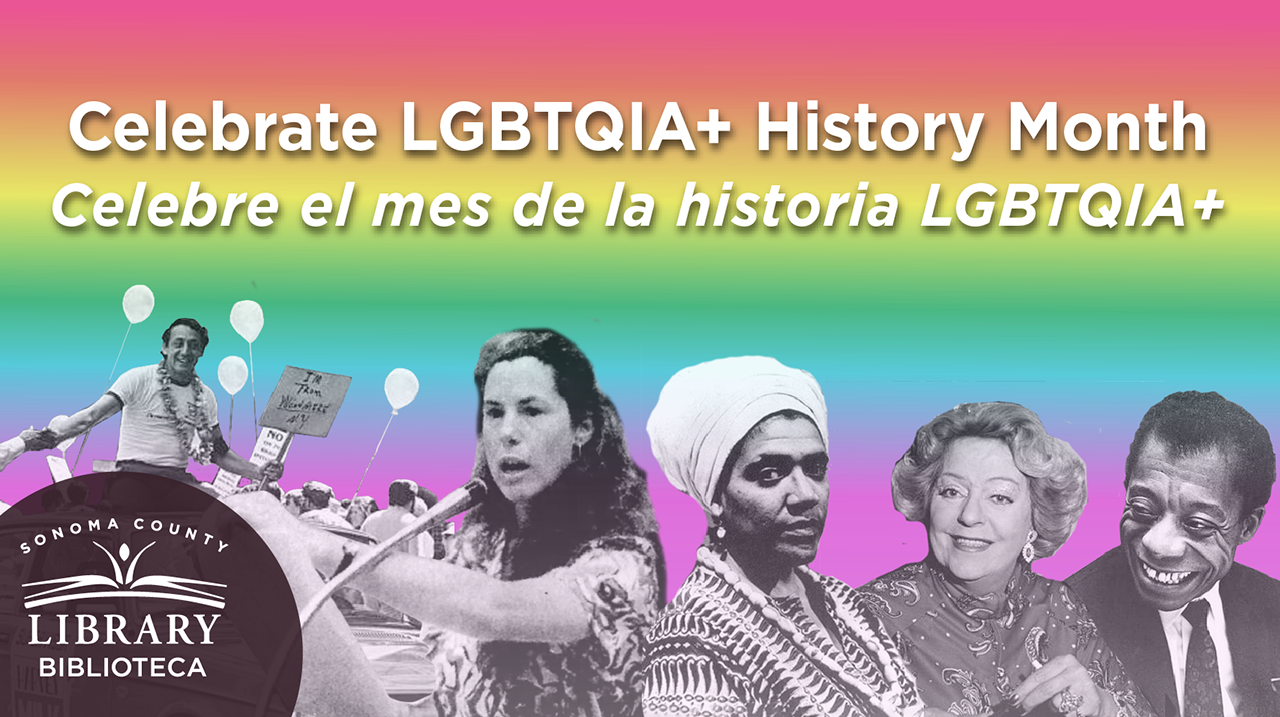
Remembrance. Resistance. Resilience. October is LGBTQIA+ History Month, an annual tribute to the rich and diverse history of LGBTQIA+ communities. This month-long commemoration, conceived by high school teacher Rodney Wilson and fellow educators in 1994, aligns with National Coming Out Day on October 11. Join us throughout the month for eventsand resourcesthat inform and inspire. Together, we continue to shape a future characterized by acceptance, love, and unity.
Events for Everyone
For families. Celebrate family, diversity, and community at our Family is a Rainbowstorytimes. Join us for an hour of stories, crafts, and exploring what it means to be a family. At three library locations: Rincon Valley, Central Santa Rosa, and Cloverdale. Recommended for ages 0-6.
For teens (Grades 7-12).Drop in any Friday at the Cloverdale Library for the Pride (un)Book Club for Teensand talk about what you’ve been reading. In this club, there is no assigned book! Read whatever you like in books that center LGBTQIA+ voices. Not sure what to read? Ask a librarian! This is a safe and inclusive place for LGBTQIA+ teens (and allies) to connect and de-stress. Snacks, tea, and hot chocolate provided.
For adults. Join the Guerneville Library LGBTQIA+ Book Clubto read and discuss booksthat center on LGBTQIA+ voices. Meetings occur on the second Saturday of the month, and print copies of the books are available in the branch a month in advance.
But wait, there’s more! See the full list of events, books, resources, and more here.
Share Your Story
Celebrate LGBTQIA+ history and share your story with Here + Queer, Sonoma County, an archive project that collects and amplifies the histories of Sonoma County’s LGBTQIA+ communities. We accept digital content in the form of personal narratives, essays, anecdotes, photographs, creative works, audiovisual material, and more. Submissions from all ages, backgrounds, and time periods in Sonoma County history are welcome. Anonymous submissions are supported. Find out more here.Make History
A Notice from Your Library
All library branches will be participating in the Great California ShakeOut on October 19, 2023. Please be aware that we will perform an earthquake drill at 10:19 am PT.
Thank you for being a member of the Sonoma County Library community. Visit us online or in person at one of our branches. Be sure to check out open jobs at Sonoma County Library here. Questions? Please call your local library branch or click here to send us a message. Conmemoración. Resistencia. Resiliencia. Octubre es el Mes de la Historia LGBTQIA+, un tributo anual a la rica y diversa historia de las comunidades de LGBTQIA+. Este mes de conmemoración, concebida por el profesor de secundaria Rodney Wilson y otros educadores en 1994, se alinea con el Día Nacional para Salir del Clóset, el 11 de octubre. Únase con nosotros durante todo el mes paraeventos yrecursos que informan e inspiran. Juntos, seguimos dando forma a un futuro caracterizado por la aceptación, el amor y la unidad.
Eventos para todos
Para familias. Celebre la familia, la diversidad y la comunidad con nuestros cuentos Family is a Rainbow. Únase con nosotros durante una hora de historias, manualidades y exploración de lo que significa ser una familia. En tres bibliotecas: Rincon Valley, Central Santa Rosa y Cloverdale. Recomendado para edades de 0 a 6 años.
Para adolescentes (grados 7-12). Visíte la la Biblioteca de Cloverdale cualquier viernes para asistir al el club de Pride (un)Book Club para jóvenes y hable sobre lo que ha estado leyendo. ¡En este club no hay ningún libro asignado! Lee lo que quieras en libros centrados en las voces LGBTQIA+. ¿No estás seguro de qué leer? ¡Pregúntale a un bibliotecario! Este es un lugar seguro e inclusivo para que los adolescentes (y sus aliados) LGBTQIA+ se conecten y se liberen del estrés. Se proporcionara bocadillos, té y chocolate caliente.
Para adultos. Únase al Club de Lectura LGBTQIA+ de la biblioteca de Guerneville para leer y discutir libros que se centran en las voces LGBTQIA+. Las reuniones se llevan a cabo el segundo sábado del mes y las copias impresas de los libros están disponibles en la biblioteca con un mes de anticipación.
¡Espera hay mas! Vea la lista completa de eventos, libros, recursos y más aquí.
Comparte tu historia
Celebre la historia LGBTQIA+ y comparta tu historia con Here + Queer, Condado de Sonoma, un proyecto de archivo que recopila y amplifica las historias de las comunidades LGBTQIA+ del condado de Sonoma. Aceptamos contenido digital en forma de narrativas personales, ensayos, anécdotas, fotografías, trabajos creativos, material audiovisual y más. Se aceptan presentaciones de todas las edades, orígenes y períodos de tiempo de la historia del condado de Sonoma. Se admiten envíos anónimos. Descubra más aquí.Haga historia
Un aviso de su biblioteca
Todas las bibliotecas participarán en el Great California ShakeOut el 19 de octubre de 2023. Tenga en cuenta que realizaremos un simulacro de terremoto a las 10:19 a.m., hora del Pacífico.
Gracias por ser miembro de la comunidad de Bibliotecas del Condado de Sonoma. Visítenos en línea o en persona en una de nuestras sucursales. Asegúrese de consultar los trabajos disponible en la Biblioteca del Condado de Sonoma aquí. ¿Preguntas? Por favor llame a su biblioteca local o haga clic para mandar un mensaje.