Legendary transgender perfomrer and singer Bambi Lake tragically passed away after being diagnosed with cancer, the Bay Area Reporter reports. Lake was 70.
Lake was a beloved performer in the Bay Area, and a mainstay in San Francisco’s queer underground scene. She was a sex worker, a porn actor, a cabaret artist, a songwriter, and a member of the legendary San Francisco theater group The Cockettes.
Lake’s friend, Birdie Bob Watt, called Lake a trailblazer. “She’s been inspirational to a lot of people as far as her ability to navigate her own path,” Watt said. “…In telling her story she gave a lot of other people power, as well as giving power to herself.”
In the 1990s, Lake co-authored a memoir titled The Unsinkable Bambi Lake with Alvin Orloff, the manager of Dog Eared Books Castro. Shealso released a solo album, Broadway Hostess, in 2005. Her show The Golden Age of Bambi Lake was a sold out hit at the popular nightclub Oasis.
In 2015, trans filmmaker Silas Howard made a short documentary about her, Sticks and Stones: Bambi Lake in 2014. Howard remembers her as being an unforgettable and unmatched figure in queer culture.
“An elusive and unstoppable force, Bambi lived for the stage, as it was one of the few places she was not only seen but revered for her talent and vulnerability,” Howard told Out. “She survived the AIDs pandemic, battles with houselessness and addiction, and lived to the age of 70s as a trans woman. A pioneer, an icon, a paradox, an overwhelming presence, a miracle to behold. She was fearlessly out as a trans woman when that term was not even in the popular lexicon.”
Howard also remembered her one-of-a-kind style. “She did it with a style which mixed DIY punk aesthetics with 1940s Hollywood glamour, a touch of Haute Couture and blatant sexuality,” he said. “She did it with a brash, confidence. In telling her story she gave a lot of other people power, as well as giving power to herself.”
Lake will be sorely missed, not just in San Francisco, but across the global LGBTQ+
Today we’re excited to announce the launch of the Spanish version of our website. This has been part of our new strategic plan that we have been working on as we move forward into a new year. It is vital that we are able to reach out and communicate with our Latinx community that we serve here in Sonoma County.The challenges that this community faces in dealing with HIV and more is a key issue for us here at Face to Face and we are thrilled to be able to find more ways that we can share the work we do here with them. While this is just one step in the process we hope that it leads to more understanding of the key issues that the population faces.
We will continue to strive to do more outreach via our social media channels moving forward.
Greetings!Hoy nos complace anunciar el lanzamiento de la versión en español de nuestro sitio de web. Esto ha sido parte de nuestro nuevo plan estratégico en el que hemos estado trabajando a medida que avanzamos hacia un nuevo año. Es vital que podamos acercarnos y comunicarnos con nuestra comunidad Latinx a la que servimos aquí en el condado de Sonoma.Los desafíos que enfrenta esta comunidad para lidiar con el VIH y más es un tema clave para nosotros aquí en Face to Face y estamos encantados de poder encontrar más formas en que podemos compartir el trabajo que hacemos aquí con ellos. Si bien esto es solo un paso en el proceso, esperamos que conduzca a una mayor comprensión de los problemas clave que enfrenta la población. Continuaremos esforzándonos por hacer más divulgación a través de nuestros canales de redes sociales en el futuro.
Sincerely/Atentamente,Sara Sara BrewerExecutive Director/Directora EjecutivaFace to Face
The EU has unveiled its first ever plan to tackle LGBT+ discrimination following increasing calls for action over the rise of homophobic rhetoric in Poland.
The European Commission’s unprecedented five-year strategy details a number of targeted actions, including legal and funding measures, aimed at addressing the inequalities still faced by LGBT+ Europeans.×
It includes plans to extend the list of EU crimes to cover homophobic hate speech, ensure that LGBT+ concerns are better reflected in policy-making, and propose new laws to guarantee same-sex parenthood will be recognised across the 27 member nations.
“This is not about ideology. This is not about being men or women. This is about love,” said commission vice-president Vera Jourova. “This strategy is not against anyone. This does not put anyone on a pedestal. But it is about guaranteeing safety and non-discrimination for everyone.”
The commission said some progress is being made toward equality, but acknowledged a 2019 European Fundamental Rights survey that found 43 per cent of LGBT+ people still feel discriminated against, compared to 37 per cent in 2012.
Coronavirus lockdowns are thought to be worsening the situation by forcing some young people to remain in places where they might face violence, hostility and bullying or suffer anxiety or depression.
Although the strategy doesn’t specifically mention Poland, commissioner for equality Helena Dalli made clear that the country’s extreme anti-LGBT+ policies are in direct opposition to the EU’s “core values”.
“Today, the EU asserts itself, as the example to follow, in the fight for diversity and inclusion,” she declared in a statement on Thursday (12 November)
“Equality and non-discrimination are core values and fundamental rights in the European Union. This means that everybody in the European Union should feel safe and free without fear of discrimination or violence on the grounds of sexual orientation, gender identity, gender expression or sex characteristics.
“We are still a long way away from the full inclusion and acceptance that LGBTIQ people deserve,” she admitted.
Member countries that don’t have equality strategies were prompted to adopt one suited to the needs of their citizens, with the reminder that the commission will be monitoring their progress and reviewing the situation in 2023.
LGBT+ asylum seekers are often subjected to bias and derogatory remarks from interpreters, a report has warned.
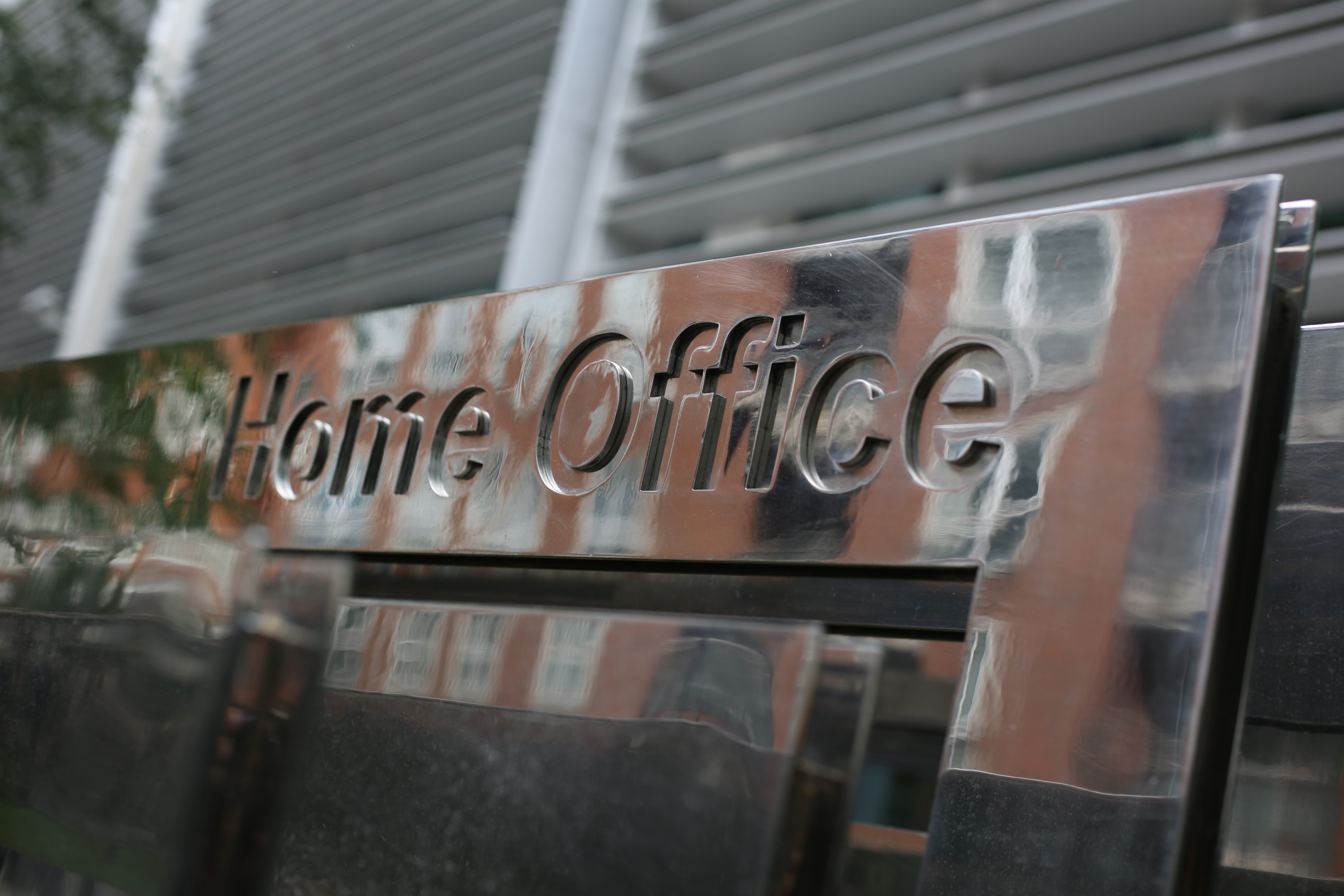
The report from the Independent Chief Inspector of Borders and Immigration, published on Wednesday (November 11), flagged concerns about the way people seeking asylum on the grounds of sexual orientation and gender identity are treated during Home Office processes.
According to the report, stakeholders had raised concerns that “interpreter bias” has a large impact on applications among LGBT+ asylum claimants.
It warns: “One [stakeholder] argued that this was particularly prevalent in LGBTQI+ claims, with applicants reporting interpreters using derogatory slang and making judgements, which impacted the confidence of applicants.
“Another referred to reports from LGBTQI+ applicants about interpreters ‘mistranslating, rebuking or judging people, or being dismissive of their fears such as the death penalty’.
“There were concerns that applicants could feel inhibited about talking about their claim which could affect the decision.”
According to the report, the Home Office’s Asylum Operations unit had “confirmed stakeholders’ concerns, commenting that with some LGBTQI+ claims they could ‘feel the tension’ between the applicant and interpreter.”
Interpreters have used derogatory slang and made judgements about asylum applicants’ sexual orientation or gender identity (Peter Macdiarmid/Getty)
While some Home Office decision makers were aware that some interpreters were “fairly old guys who have their views”, the report says that they concluded they should “try and ignore it” and not “cause trouble”.
The report continues: “In some instances, applicants expressed discomfort about disclosing LGBTQI+ issues to interpreters from the same culture and some decision makers had witnessed applicants’ discomfort because the interpreter… simply summarised the applicant’s words rather that interpreting them verbatim.
“Applicants also raised this issue, saying that the bias stemmed from the interpreters’ religious beliefs.”
With interpreters often their only way of communicating with Home Office staff, LGBT+ asylum seekers who experience problems have few ways to make their concerns heard.
The report recommends the Home Office should give an official within the Borders, Immigration and Citizenship System ownership of language services, and should “publish and resource a comprehensive programme of improvements to the provision and use of language services, with clear timelines and deliverables.”
The Canadian province of Nova Scotia has announced that it will cover the cost of top surgery for non-binary people through its Medical Services Insurance (MSI).
Nova Scotia’s insurance programme is “designed to provide eligible residents with coverage for medically required hospital, medical, dental and optometric services”.
n June, 2019, the Nova Scotia government announced it would begin covering top surgery for trans women, having previously only provided it for trans men.
But now, effective 2 November 2, non-binary residents will also be able to access surgery for free.
According to CBC, the change came after Sebastian Gaskarth, who is non-binary, filed a complaint with the Nova Scotia Human Rights Commission in 2019 after they were denied surgery.
Gaskarth said they feel “relieved” and “really happy” about the change, and added: “It just affirms who I am as a person and for [whoever] else needs the surgery as well.”
They said that the decision was not just about surgery, but also about MSI publicly acknowledging that gender is not binary.
“Which is huge,” they said, “which will hopefully propel MSI and other organisations to start to be more inclusive and to see things beyond the binary.”
However, they told local radio station NEWS 95.7: “I’m happy that I’m able to share my story, but I would hope that MSI, moving forward, would be more proactive in changing and supporting trans individuals so it’s not a matter of people having to go through this process to human rights complaints to make sure that they are getting the support that they need.”
Community legal worker Mark Culligan told CBC that the change was a “real milestone”, and said: “The previous coverage was based on the understanding that transitioning happens from male to female, from female to male, and what was unique about Sebastian’s case was that they were asking for a surgery that more accurately reflected their identity as a non-binary individual.”
At the time, Patricia Arab, the minister of internal services, said: “A priority for our government is making sure we are as inclusive and diverse as possible, and making sure all our residents feel safe and that they have a place here.
“This isn’t the last step in the conversation but it’s certainly a significant move to make sure that we have a safe and inclusive community here in our province.”
A month after Lauren mustered the courage to tell her mother she is lesbian, the 26-year-old Shanghai resident came out to a stranger who knocked on her door.
She told the young man, one of 7 million conducting China’s once-in-a-decade census, that she and her girlfriend lived together.
Where the questionnaire asked for “relationship to head of household,” the man ticked the box for “other” and wrote “couple.”
The interaction with the receptive census taker was affirming, Lauren told Reuters, even if the handwritten note may not be reflected in the final results. Lauren asked to be identified by only her first name due to the sensitive nature of LGBTQ issues in China.
China decriminalized homosexuality in 1997, but activists are still fighting for the legalization of same-sex marriage.
As the world’s most populous country attempts to capture demographic shifts, some LGBTQ couples are seeking recognition in the national census.
The information collection officially began on Nov. 1, with preliminary surveys underway in the weeks prior.
The National Bureau of Statistics told Reuters that any additional information beyond the predefined responses for the “relationship to head of household” category would not be recorded.
Shortly after that mid-October census visit, Lauren saw on her social feed posters urging same-sex couples to tell census takers: “They are not my roommate, they are my partner.”
Peng Yanzi, director of LGBT Rights Advocacy China, the NGO behind the campaign, said he hopes same-sex couples can gain visibility in the eyes of their neighbors and the government alike.
“These census takers may have never met, or even heard of, gay people, so if we have the opportunity to talk to them, they can better understand the LGBT community,” he said.
“We are a part of China’s population.”
While it remains difficult to come out in China, where many LGBTQ people refer to their romantic partners as roommates or friends, activists say there is a growing acceptance of gay couples.
“But the system hasn’t kept up with the times,” Peng said.
Lauren, who works at a tech company in Shanghai, said she felt comfortable speaking honestly about her relationship, but fears it may not be as safe for LGBTQ couples in more conservative areas to do so.
“I still wouldn’t dare,” one user of the Twitter-like Weibo commented on a post about the campaign.
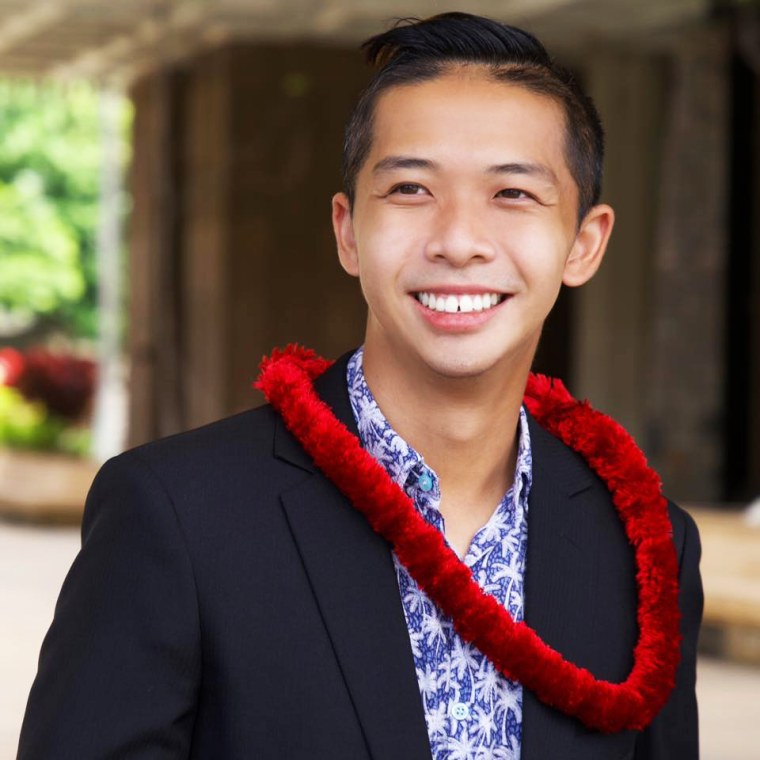
Adrian Tam, a 28-year-old gay Asian American son of immigrants, defeated a leader of the Hawaii chapter of the Proud Boys, a far-right extremist group, to become the only openly LGBTQ person in Hawaii’s Legislature.
Tam, a first-time candidate, took 63 percent of the vote against Nicholas Ochs.
“It feels really good to know that someone who is openly LGBT can win,” Tam told NBC Asian America. “There was a time when people like me could not win. I’m glad that I can bring that representation to the capital.”
Tam described what was a nerve-wracking election season, from trying to connect with voters amid coronavirus, to narrowly taking down longtime incumbent Tom Brower in the August Democratic primary, to facing an overwhelming amount of hate from Ochs and his supporters in the general election.
“It’s almost to a harassment level,” Tam said, noting that Ochs’ supporters bombarded his campaign’s social media to the point where the messages from his own voters were drowned out.
Ochs told NBC News he also faced harassing messages from Tam’s supporters and that he was disappointed the two didn’t get a chance to debate. He said that he is not racist.
Ochs’ campaign page was removed by Facebook in September for posts that violated the platform’s terms of service and community standards, local station KITV reported. He has been criticized in the past for offensive posts toward Black, Jewish and LGBT communities. Facebook did not respond to NBC News’ request for comment.
Tam said part of his job now is to serve even those who directed hate toward him and his allies.
“I wanted our community to come together,” he said. “I wanted to let everyone know that I’m a public servant that will work with everyone. My office door will always be open to them and their families.”
Tam’s agenda includes recovery from the coronavirus pandemic, strengthening the nontourism economy and improving resources for the homeless. Hawaii has the third-highest rate of homelessness in the country, according to a 2019 study, and Tam says the problem is especially prevalent in his district.
“We needed new leadership,” Tam said. “It was time for change, and I wanted to step up to the plate.”
Annise Parker, president of the LGBTQ Victory Fund, a political action committee that supports LGBTQ people running for office, said that when there are no LGBTQ elected officials in a state, “it has consequences, both in policy and how young LGBTQ people view themselves.”
“Adrian will ensure LGBTQ people are considered and prioritized in the state capitol and will inspire more LGBTQ people to run and serve,” Parker said in a statement.
Tam reflected on the record number of LGBTQ and people of color elected to local and national government across the U.S.
“I’m glad that our Congress is slowly coming together and starting to look like the population of America,” he said.
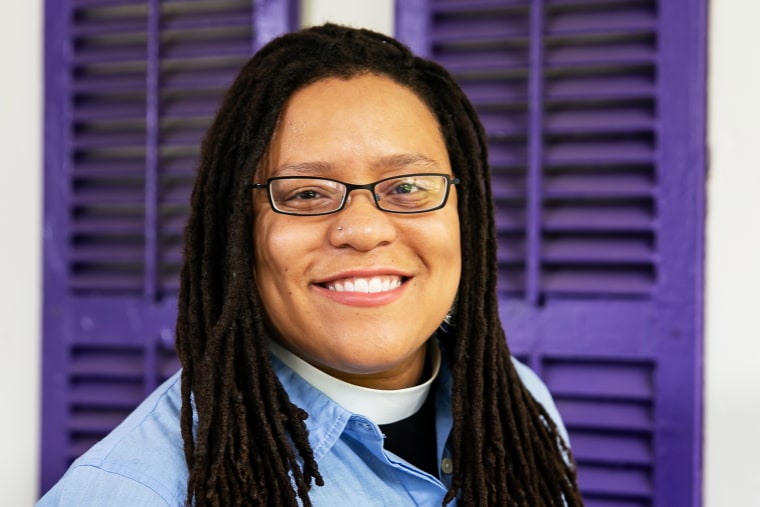
Kimberly Jackson, an Episcopal church leader in Atlanta, made history last week when she was the first Black lesbian elected to Georgia’s state Senate. She was excited about winning — and doing so with 80 percent of the vote — as well as making history. Then her election win got even sweeter.
Shortly after Election Day, a constituent approached Jackson at the gym and informed her that part of her district intersects with one represented by Karla Drenner, Georgia’s first openly gay state representative, who has been in the state House of Representatives for nearly 20 years.
“People are excited about that,” Jackson told NBC News shortly after Election Day. “I’m also incredibly humbled and really grateful for the people of District 41 for trusting me to do this work.”
Kim Jackson, Democratic candidate for Georgia State Senate District 41.Cindy M. Brown / Kim Jackson Campaign
Jackson’s victory was one of many for queer people of color last week, and that her district overlaps with Drenner’s underscores the increasing LGBTQ representation being seen across the country.
Jackson was one of at least 40 lesbian, gay, bisexual, transgender and queer people of color who won elections in state legislatures last week, and one of at least 16 nonincumbents. Their wins will bring LGBTQ representation in state legislatures to more than 150, for now, with only Louisiana, Mississippi and Alaska having never elected an out state representative (though there are currently three uncalled Alaska races that could change that), according to the LGBTQ Victory Fund.
Jackson told NBC News that she expects to draw experience from the LGBTQ Caucus in the Georgia House of Representatives, and expects her election to have tangible change in the state Senate. She said that by just being elected, it could help reduce the number of anti-LGBTQ pieces of legislation that get introduced, since lawmakers will have to debate Jackson’s rights to her face.
“I’m a firm believer of everyone being represented at the table.”
SHEVRIN JONES
She’s also keenly aware that her state is about to become the center of the political universe for the next two months as one of Georgia’s U.S. Senate races is going to a runoff on Jan. 5, and the other could also be headed for a runoff. The outcome could determine which party controls the Senate. Georgia is on track to vote for a Democratic candidate for president for the first time since 1992, and that statewide support will influence the 2021 legislative session in Atlanta, according to Jackson.
“What it means on a state legislative level is that Republicans know that we’re coming, and they’re going to have to learn how to work with us and how to have conversations with us,” Jackson said. “I think that the General Assembly already has some really good bipartisan work that takes place, but they’ll have to get more used to talking to Democrats, having to build relationships with people who most often don’t look like them, or love like them.”
In neighboring Florida, Shevrin Jones, 37, joined Kimberly Jackson in making political history. Jones, who had been serving in the Florida House of Representatives since 2012, was elected to and seated in the state Senate last week, making him the first LGBTQ representative in Florida’s Senate.
After his victory, Shevrin told NBC News he and his partner had bought a French bulldog puppy to celebrate, and he said he plans to hit the ground running in the state Senate introducing bills to help small businesses in minority communities survive Covid-19; help modernize the state’s unemployment system so constituents get the benefits they need; and work on overhauling police to build on calls for change sparked by protests this summer across the country.
“I’m a firm believer of everyone being represented at the table, and it is not to say that the current LGBTQ allies can’t speak up for us, or speak for me, but it’s better to have someone from the community at the table,” Jones said. “I can tell you from experience what it means to be discriminated against. I can tell you from experience my story, which can help … move, whether it’s legislation, whether it’s to move the agenda or a particular item.”
Jones, who said his victory “feels amazing,” will be joined in the Florida state Legislature by Michelle Rayner, who made history on Election Day as the first Black LGBTQ woman elected to the state House.
In the northeast, Tiara Mack made history as the first Black LGBTQ member elected to the Rhode Island State Senate. Mack told NBC News that she would introduce herself to residents in her district as: “Tiara Mack, a queer Black, formerly low-income educator and activist.”
“All of those identities are political, whether or not we see them,” said Mack, who unseated an incumbent who represented the district for 15 years.
Adrian Tam, candidate for Hawaii State House District 22.Courtesy Adrian Tam campaign via Facebook
In Hawaii, Adrian Tam became the first openly gay Asian American representative in the state, overcoming alleged harassment in the process. Tam’s opponent in the race was Nicholas Ochs, a leader of the local chapter of the far-right group Proud Boys.
Cisgender people of color were not the only ones to make gains in state legislatures. In Kansas and Oklahoma, trans and nonbinary people of color made history by being elected to their state’s legislature.
Mauree Turner, who is Black and Muslim, won a seat in the Oklahoma House of Representatives, becoming the first nonbinary person elected to any state’s legislature.
Stephanie Byers, a member of the Native American Chickasaw Nation, won a seat in the Kansas House of Representatives, becoming the first transgender woman of color elected to any state legislature in the U.S.
“We never know until we try, and we can step up there and make a difference,” Byers told NBC News when asked if she was surprised by her victory.
Two of Election Day’s biggest history-makers were Ritchie Torresand Mondaire Jones, both New York Democrats who became the first openly gay Black Americans every elected to Congress.
Torres, the youngest member of the New York City Council, won a deeply blue district in the Bronx with over 88 percent of the vote, while Jones was elected in a district just north of New York City with 54 percent of the vote, with 72 percent of ballots counted.
“Tonight we made history,” Torres tweeted on election night, calling it “the honor of a lifetime to represent a borough filled with essential workers who risked their lives so that New York City could live” during the pandemic.
Jones told NBC News he’s excited to serve in Congress along with Torres.
“He’s a tremendous candidate and a good friend,” he said. “This is a chance for us to be the role model we looked for growing up — for queer youth and especially queer youth of color.”
While the two men will be the first LGBTQ Black members of Congress, they won’t be the first people of color to serve. They’ll be joining Reps. Mark Takano, D-Calif, an Asian American who in 2012 became the first person of color to serve in Congress, and Sharice Davids, D-Kan., who in 2018 became the first openly gay Native American member of Congress.
On the local level, Todd Gloria, who is half Native American and part Filipino, Puerto Rican and Dutch, became the first LGBTQ person elected mayor of San Diego. The mayor-elect, who is currently a member of the California state Assembly, will soon join Chicago’s Lori Lightfoot as the only LGBTQ people of color holding mayorships in major U.S. cities.
“It is an uphill battle for LGBTQ people of color to be in a position to run for high-level office, much less win, so Todd’s victory is a pivotal moment for San Diego and the country,” former Houston Mayor Annise Parker, who is currently president and CEO of the LGBTQ Victory Fund, said in a statement. “Todd shattered a rainbow ceiling and is now the second-highest ranking LGBTQ mayor in the country. His voice and his impact on critical issues — and especially civil rights — will extend far beyond the boundaries of his city and state.”
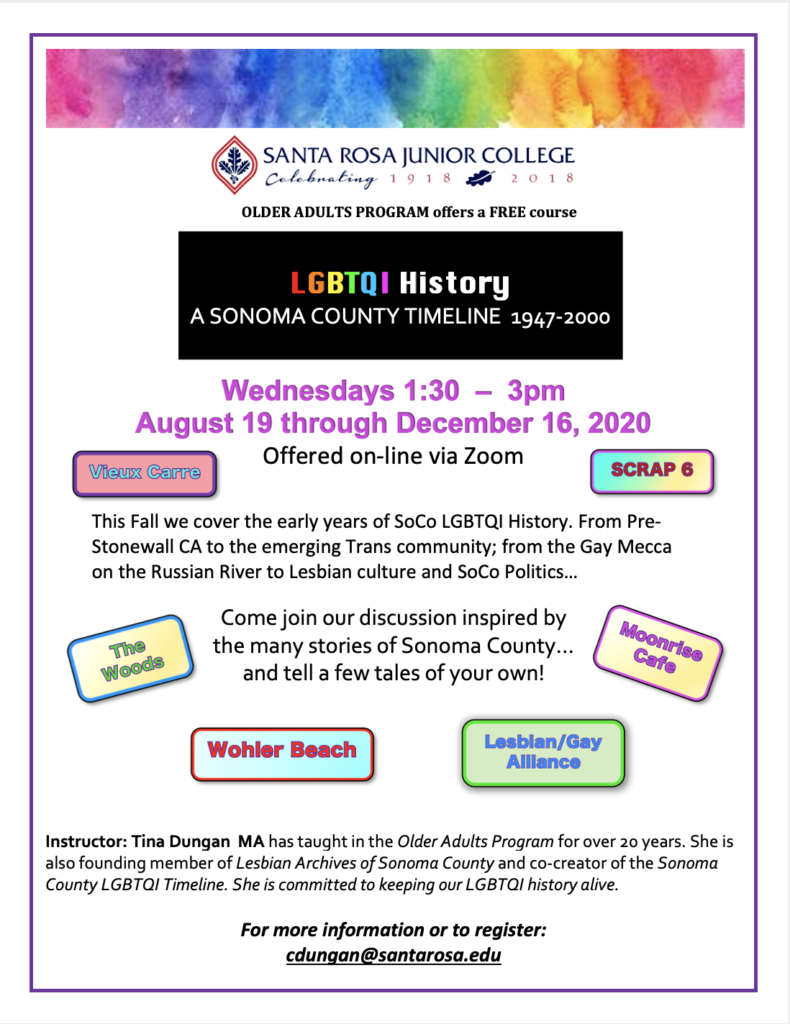
LGBTQI History: A Sonoma County Timeline 1947-2000.Wednesdays 1:30-3pm. Online via Zoom. 11/18 we will be talking about the AIDS epidemic in Sonoma County with Steven DiVerde and Jude Mariah.
Please contact me to enroll in this FREE class and receive a Zoom invite: cdungan@santarosa.edu
The Oxford English Dictionary definition of the word “woman” has been updated to reflect LGBT+ relationships following complaints that it was sexist.
The world-famous dictionary previously described women as “a man’s wife, girlfriend or lover”. This has now been amended to acknowledge the fact that a woman can be “a person’s wife, girlfriend, or female lover”, rather than only a man’s.
Other terms have been identified as “derogatory”, “offensive” or “dated”, such as the words “b***h”, “bint” and “besom”, which are listed as synonyms for woman.
The changes came after a petition was launched earlier this year by campaigner Maria Beatrice Giovanardi to get rid of all phrases and definitions that discriminate against or patronise women.
t gained more than 34,000 signatures and included the leaders of Women’s Aid and the Women’s Equality Party among the signatories.
Speaking to PinkNews in March, Giovanardi said she had been “astonished” to realise that the Oxford Dictionary used derogatory synonyms and misogynistic examples that perpetuate negative female stereotypes.
“By contrast, for the word man, the examples and synonyms are exemplary, demonstrating intellect and social status,” she noted.
“I felt I needed to point out the obvious – that not describing men and women in an equally respectful way, disadvantages women because it perpetuates negative stereotypes that present women as lesser beings, which in turn influences the way women are talked about and treated.
“This is just one of many examples of everyday sexism and how mainstream culture frequently dehumanises women by portraying them as sex objects or subordinate to men.”
In a statement to The Telegraph, publisher Oxford University Press said the dictionary is “driven solely by evidence of how real people use English in their daily lives”.
It added: “We have expanded the dictionary coverage of ‘woman’ with more examples and idiomatic phrases which depict women in a positive and active manner.
“We have ensured that offensive synonyms or senses are clearly labelled as such and only included where we have evidence of real world usage.”