The NBA has fined basketball star Anthony Edwards $40,000 for using an anti-gay slur.
The player for the Minnesota Timberwolves found himself in hot water earlier this month after a video on his Instagram story depicted him mocking a group of men standing on the sidewalk. The video has since been deleted, but Edwards could reportedly be heard saying, “look at these queer a** n****rs.”
After backlash, he tweeted an apology, writing that what he said “was immature, hurtful, and disrespectful.”
“I’m incredibly sorry,” he continued. “It’s unacceptable for me or anyone to use that language in such a hurtful way, there’s no excuse for it, at all. I was raised better than that!”
NBA Communications confirmed Edwards’s fine in a statement released on social media which said he had used “offensive and derogatory language” and that “Edwards has acknowledged that his actions were inappropriate.”
Players have been fined before for using homophobic language.
In 2021, Brooklyn Nets star Kevin Durant was fined the largest amount permissible by the NBA for his direct messages to actor and comedian Michael Rapaport.
He used derogatory remarks — criticized as homophobic by some and acknowledged as “inappropriate” by Durant — toward Rapaport. As a result, the NBA announced a $50,000 fine levied against Durant, reportedly the most allowed under the collective bargaining agreement.
A week after the death of a trans man at the hands of a 20 year-old assailant, soccer fans in Germany rallied in support and mourning for the victim at a match in Bremen.
The Bremen team superfans, or ultras, unfurled massive banners at the 60-minute match reading “Queerphobia kills!” (“Queerfeindlichkeit tötet!), “Against all transphobia!” (“Gegen jede Transfeindlichkeit!”) and “Rest in peace Malte.”
Twenty-five-year-old Malte C., identified by police only with his first name and initial in keeping with privacy rules, died a week earlier from injuries sustained at the Christopher Street Day parade in Münster, the city’s annual Pride march held the previous weekend.
According to witnesses, Malte intervened when his attacker started hurling homophobic slurs at a group of women parade-goers. He was struck twice in the face and fell to the ground, hitting his head. He never regained consciousness.
Police apprehended the suspect at Münster’s central train station based on photos and video provided by witnesses, on the same day Malte succumbed to his injuries. The suspect is being held in investigative detention on suspicion of bodily harm resulting in death.
Community leaders in the German city reacted with shock to the violent attack. Roman Catholic bishop Felix Genn called it “barbaric” and an “insane act.”
“Intolerance, exclusion, and hatred must have no place in our society,” he said in a statement.
The German government’s Commissioner for the Acceptance of Sexual and Gender Diversity, or so-called queer commissioner, Sven Lehmann, shared the bishop’s shock.
“Malte has died following a hate attack at the CSD Münster,” he wrote on Twitter. “I’m stunned and sad. My condolences and deep sympathy go to his family and friends. Violence against queer people is a threat that we must all stand up to.”
The soccer demonstration in Bremen came just days after another violent attack on a trans person, when a 57-year-old trans woman was assaulted on a tram in the same city.
Soccer ultras have been outspoken in support of LGBTQ and trans rights. In the U.S., ultra fan group The Uproar, supporters of the North Carolina Courage, rallied against re-signing Jaelene Daniels, who refused to wear the team’s rainbow jersey, while Prideraiser, a coalition of independent soccer ultras, raises money for local LGBTQ charities annually for Pride Month.
Los Verdes, ultras for Austin FC, collaborates with the team’s goalkeeper, Brad Stuver, to fundraise for organizations including Playing for Pride and the Transgender Education Network of Texas.
The Human Rights Campaign announced Tuesday that Kelley Robinson will serve as its ninth president — the first Black queer woman to lead the nation’s largest LGBTQ advocacy organization.
Robinson, the executive director of Planned Parenthood Action Fund, said she was honored to lead HRC and its 3 million member-advocates during “a pivotal moment in our movement for equality for LGBTQ+ people.”
“We, particularly our trans and BIPOC communities, are quite literally in the fight for our lives and facing unprecedented threats that seek to destroy us,” Robinson said in a statement Tuesday, using an acronym for Black and Indigenous people of color. “The overturning of Roe v. Wade reminds us we are just one Supreme Court decision away from losing fundamental freedoms including the freedom to marry, voting rights, and privacy.”
She continued, “We are facing a generational opportunity to rise to these challenges and create real, sustainable change. I believe that working together this change is possible right now. This next chapter of the Human Rights Campaign is about getting to freedom and liberation without any exceptions — and today I am making a promise and commitment to carry this work forward.”
Robinson began her career in 2008 as an organizer for Barack Obama’s presidential campaign in Missouri, and she has worked in advocacy ever since, according to the HRC. Prior to becoming the executive director of the Planned Parenthood Action Fund, the advocacy and political arm of the reproductive health care nonprofit group, she served as its national organizing director and as director for youth engagement.
Morgan Cox and Jodie Patterson, board chairs for the Human Rights Campaign and its foundation, said in a joint statement that Robinson was at the center of fights to stop the repeal of the Affordable Care Act and defund Planned Parenthood.
“These past months have reminded us why equality and liberation work is so important and we believe Kelley Robinson is the exact person to help us lead the fight for all LGBTQ+ people around the world,” Cox and Patterson said.
Get the Morning Rundown
Get a head start on the morning’s top stories.SIGN UPTHIS SITE IS PROTECTED BY RECAPTCHA PRIVACY POLICY | TERMS OF SERVICE
A report released in August 2021 by the New York Attorney General’s Office alleged that David was involved in efforts to discredit a woman who accused then-New York Gov. Andrew Cuomo of sexual harassment. David allegedly consulted with the governor’s office in December 2020, while president of HRC, the report said.
However, HRC conducted an internal investigation and found that David’s “conduct in assisting Governor Cuomo’s team, while president of HRC, was in violation of HRC’s conflict of interest policy and the mission of HRC,” the group said last year.
In February, David sued the organization in federal court, alleging that he was underpaid and then terminated “because he is Black.” He also claimed that there is a culture of racism in the organization.
Joni Madison, HRC’s interim president, said in a response that David’s complaint “is riddled with untruths” and described it as retaliation for his firing, which HRC said was the result of his own actions.
Sharply rising cases of some sexually transmitted diseases — including a 26% rise in new syphilis infections reported last year — are prompting U.S. health officials to call for new prevention and treatment efforts.
“It is imperative that we … work to rebuild, innovate, and expand (STD) prevention in the U.S.,” said Dr. Leandro Mena of the U.S. Centers for Disease Control and Prevention in a speech Monday at a medical conference on sexually transmitted diseases.
Infections rates for some STDs, including gonorrhea and syphilis, have been rising for years. Last year the rate of syphilis cases reached its highest since 1991 and the total number of cases hit its highest since 1948. HIV cases are also on the rise, up 16% last year.
And an international outbreak of monkeypox, which is being spread mainly between men who have sex with other men, has further highlighted the nation’s worsening problem with diseases spread mostly through sex.
David Harvey, executive director of the National Coalition of STD Directors, called the situation “out of control.”
Officials are working on new approaches to the problem, such as home-test kits for some STDs that will make it easier for people to learn they are infected and to take steps to prevent spreading it to others, Mena said.
Another expert said a core part of any effort must work to increase the use of condoms.
“It’s pretty simple. More sexually transmitted infections occur when people are having more unprotected sex,” said Dr. Mike Saag, an infectious disease expert at the University of Alabama at Birmingham.
Syphilis is a bacterial disease that surfaces as genital sores but can ultimately lead to severe symptoms and death if left untreated.
New syphilis infections plummeted in the U.S. starting in the 1940s when antibiotics became widely available. They fell to their lowest ever by 1998, when fewer than 7,000 new cases were reported nationwide. The CDC was so encouraged by the progress it launched a plan to eliminate syphilis in the U.S.
But by 2002 cases began rising again, largely among gay and bisexual men, and they kept going. In late 2013, CDC ended its elimination campaign in the face of limited funding and escalating cases, which that year surpassed 17,000.
Get the Morning Rundown
Get a head start on the morning’s top stories.SIGN UPTHIS SITE IS PROTECTED BY RECAPTCHA PRIVACY POLICY | TERMS OF SERVICE
By 2020 cases had reached nearly 41,700 and they spiked even further last year, to more than 52,000.
The rate of cases has been rising, too, hitting about 16 per 100,000 people last year. That’s the highest in three decades.
Rates are highest in men who have sex with men, and among Black and Hispanic Americans and Native Americans. While the rate for women is lower than it is for men, officials noted that it’s has been rising more dramatically — up about 50% last year.
That ties to another problem — the rise in congenital syphilis, in which infected moms pass the disease on to their babies, potentially leading to death of the child or health problems like deafness and blindness. Annual congenital syphilis cases numbered only about 300 a decade ago; they surged to nearly 2,700 last year. Of last year’s tally, 211 were stillbirths or infant deaths, Mena said.
The increases in syphilis and other STDs may have several causes, experts say. Testing and prevention efforts have been hobbled by years of inadequate funding, and spread may have gotten worse — especially during the pandemic — as a result of delayed diagnosis and treatment. Drug and alcohol use may have contributed to risky sexual behavior. Condom use has been declining.
And there may have been a surge in sexual activity as people emerged from Covid-19 lockdowns. “People are feeling liberated,” Saag said.
The arrival of monkeypox added a large additional burden. CDC recently sent a letter to state and local health departments saying that their HIV and STD resources could be used to fight the monkeypox outbreak. But some experts say the government needs to provide more funding for STD work, not divert it.
Harvey’s group and some other public health organizations are pushing a proposal for more federal funding, including at least $500 million for STD clinics.
Mena, who last year became director of the CDC’s Division of STD Prevention, called for reducing stigma, broadening screening and treatment services, and supporting the development and accessibility of at-home testing. “I envision one day where getting tested (for STDs) can be as simple and as affordable as doing a home pregnancy test,” he said.
With Republicans threatening to reverse LGBTQ civil rights and generally undermine democratic elections, there’s a lot riding on the November midterms. But Voter ID laws across the nation could seriously impair transgender people from voting.
New research from The Williams Institute found that out of 878,300 eligible transgender voters in the U.S., as many as 203,700 could be blocked from voting because their government-issued IDs don’t reflect their gender identity — that’s nearly one-fourth of all eligible trans voters.
If a trans person arrives at a polling place with a government-issued ID containing an incorrect gender or name, they may be turned away by poll workers who think they’re trying to “impersonate” another individual.
203,700 disenfranchised trans voters is roughly the entire population of Salt Lake City, Utah; Little Rock, Arkansas; Amarillo, Texas; or Grand Rapids, Michigan, according to U.S. Census data.
Changing an ID isn’t always easy, and “transgender people of color, young adults, people with low incomes, and people with disabilities are more likely to not have accurate IDs for voting,” the Williams Institute wrote.
Trans people face numerous barriers to changing their ID gender markers. The process can take lots of time and money and require access to medical care that many trans people don’t have.
According to the Movement Advancement Project, 10 states require documentation from a medical provider in order to change a trans person’s gender marker; 8 states require proof of surgery, court order, or an amended birth certificate; and 10 states have “burdensome” or “unclear” policies on changing such gender markers.
Changing a birth certificate to get a new ID can also present problems: 12 states require trans people to undergo a gender-affirming surgery before officials will revise a birth certificate; 4 states don’t allow any changing of birth certificate gender markers whatsoever.
Name changes aren’t always easy either. Nine states require people to publicly post their name change requests online, something that can make them a target for harassment or violence.
An estimated 414,000 eligible trans voters live in the 31 states that predominantly have in-person voting and require voter ID. Nearly half of trans voters in those states don’t have an ID that accurately reflects their gender or name. Additionally, 64,800 eligible trans voters live in states that have very strict voter ID laws.
The exclusion of trans voters is particularly concerning as Republicans introduce anti-trans legislation across the country.
Republicans have ostensibly introduced voter ID laws as a way to stop the nearly nonexistent problem of voter fraud. But both the American Civil Liberties Union and The Brennan Center for Justice have called voter ID laws a form of “voter suppression” that mostly disenfranchises Democratic voters.
It was advertised as a “fun-filled afternoon” in a Bronx library with a “local celebrity/author who encourages you to embrace your own uniqueness.”
Instead, the free event planned at the Morrisania Library starring drag artist Desmond Napoles was canceled after the teenaged celebrity received hate-filled and violent threats — a trend that has led to many other family-oriented LGBTQ events being canceled across the nation.
The nasty attacks on Desmond — a high school sophomore who likes to volunteer at the New York Public Library “because it’s really fun and it gives me something to do during the summer” — came after the Morrisania Library announced that Desmond would present two teen-focused sessions reading from their book, “Be Amazing: A History of Pride.”
In July 2022, Conservative MP Nadhim Zahawi sparked fears of a return to Section 28 when he promised to “protect” children from “radical activists”.
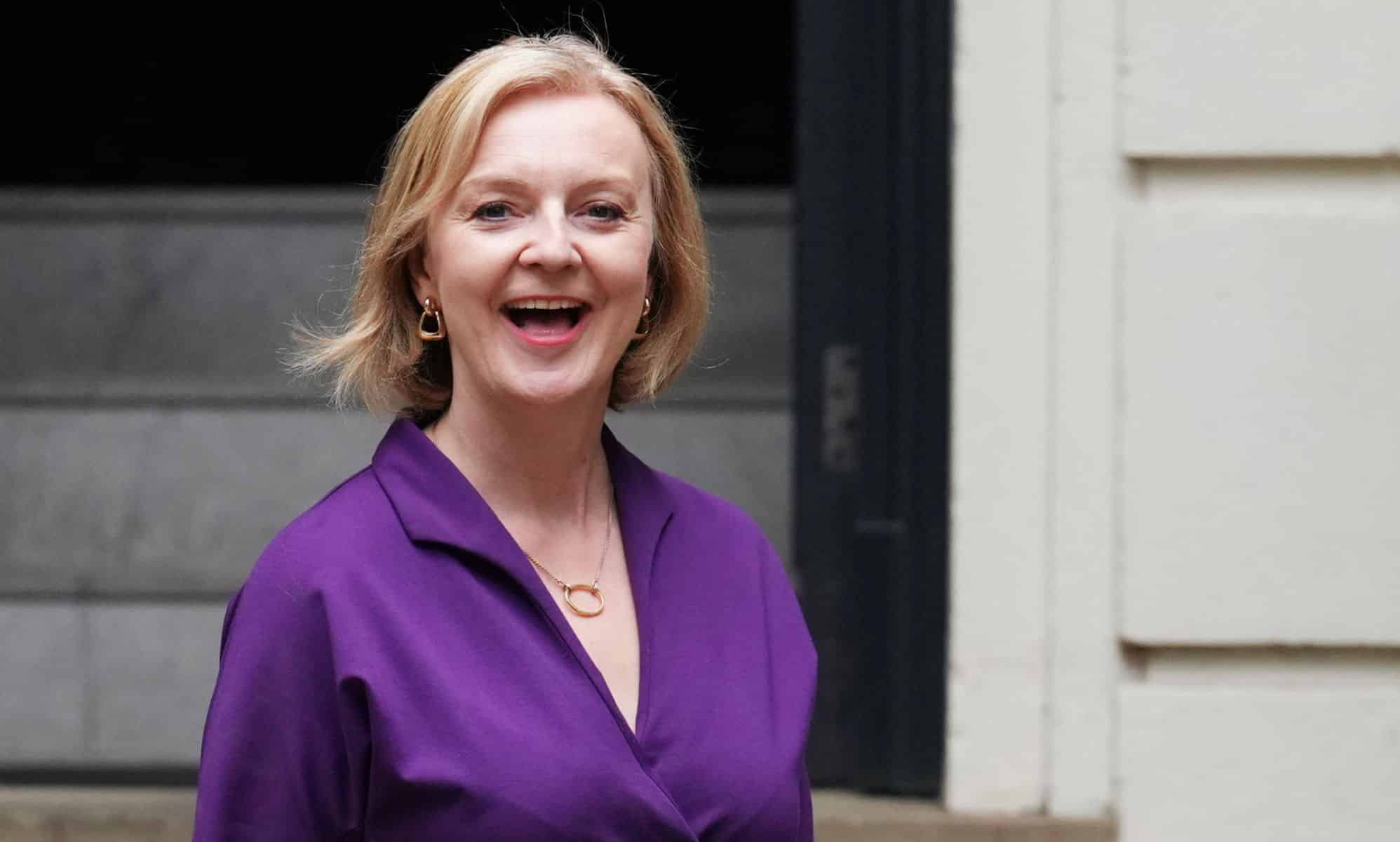
The former education secretary, currently serving as equalities minister in Liz Truss’ cabinet, made his comments while launching a failed leadership bid to become PM.
For LGBTQ+ people, alarm bells rang.
Zahawi’s suggestion that children are being subjected to “damaging and inappropriate nonsense” sounded a lot like Margaret Thatcher’s infamous 1987 speech in which she said kids were being taught they had an “inalienable right” to be gay.
Section 28, which came into effect in 1988, banned the “promotion of homosexuality” by local authorities. It gave rise to a culture of fear that stopped teachers from talking to kids about LGBTQ+ issues, and the scars run deep for queer people who grew up under its shadow.
It was repealed in Scotland in 2000, and in England and Wales in 2003.
More than 30 years on, a culture of hostility for LGBTQ+ people is threatening to boil over. Anti-trans sentiment is at an all-time high, with hit pieces appearing in the right wing press almost daily.
Comments from senior Tories such as Zahawi, Suella Braverman and Liz Truss herself have led some to question whether there could be a new version of Section 28, this time focused on trans issues, right around the corner.
UK government could ‘create an atmosphere’ that discourages LGBTQ+ inclusion
Sue Sanders is chair of Schools OUT UK, an organisation that works to eliminate prejudice from schools. She doesn’t think the Tories would be “foolish enough” to enact a new version of Section 28 – but is concerned the government might introduce guidance that could make schools a cold environment for LGBTQ+ youth.
“I think they’ll do it through producing the sort of language we’ve seen from the likes of Suella Braverman,” Sanders tells PinkNews.
LGBTQ+ advocates have called on Liz Truss to “build bridges” with the queer community after she was elected the new Conservative Party leader. (Getty)
“They’ll make statements which will cause an atmosphere and will then promote self-censorship in teachers unless we give them the resources and the confidence to say, look, you’re still legally able to do this stuff,” Sanders says.
“It’s the stirring of the atmosphere that the media and right-wing politicians do which then makes the atmosphere very unsupportive.”
‘Section 28 had a profound effect on kids and teachers’
Reflecting on Section 28, Sanders says it was “horrendous”.
It created a culture that forced teachers back into the closet and starved children of LGBTQ+ representation and discussion in the classroom.
“The trauma that both teachers and kids went through is something that some of them have not in any way recovered from,” Sanders says.
“It would have had a profound effect on kids and teachers alike… I’m sure we had suicides because of it.
“What’s needed is our teachers’ unions to be very clear and to keep sending out guidance and clarity on where they stand legally.”
Tories want to ‘cement their power’
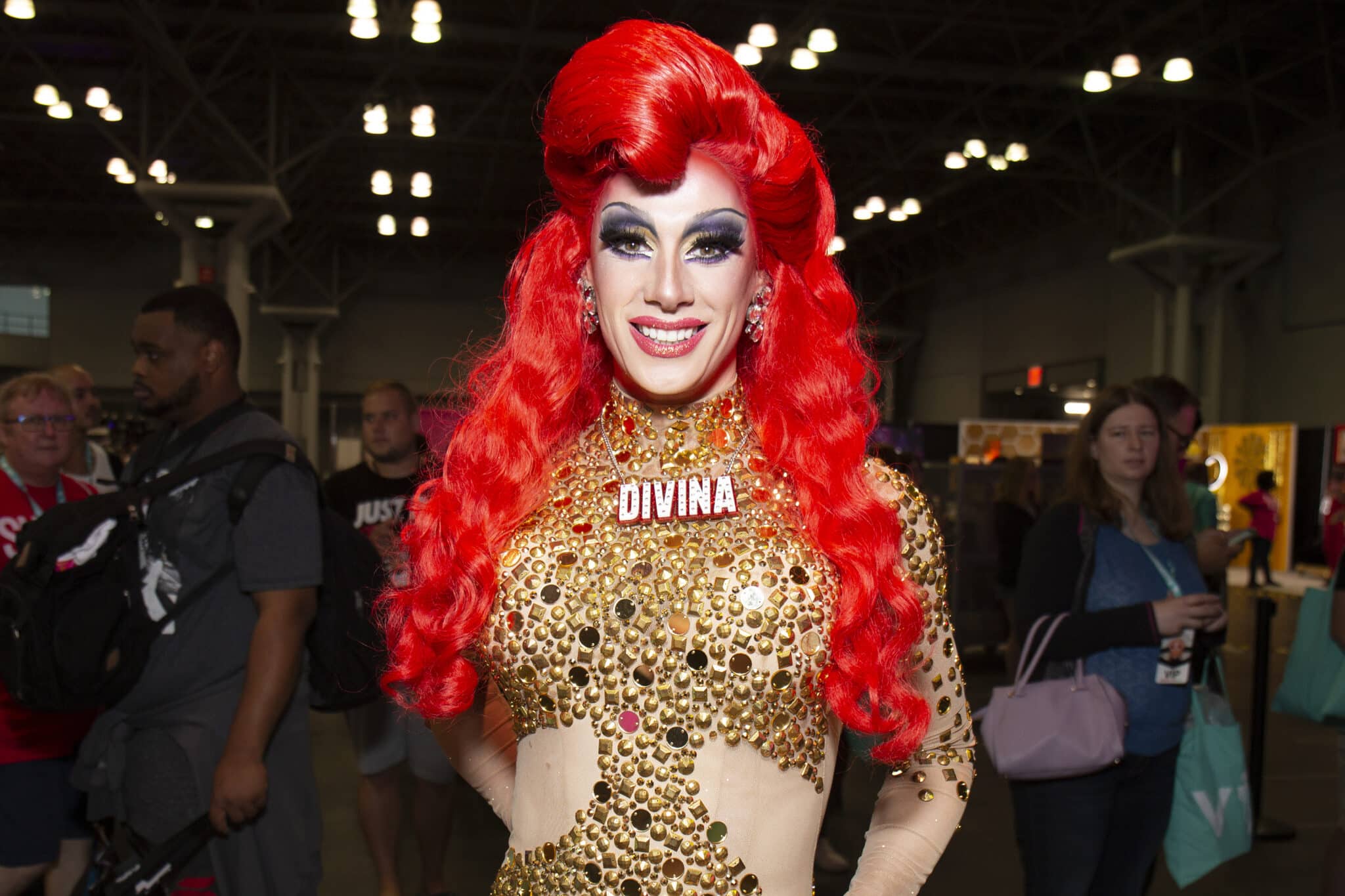
Drag Race UK star Divina De Campo grew up under Section 28. She says the UK was “incredibly homophobic” during the ’80s and ’90s, and Thatcher’s government was quick to capitalise on that.
What’s happening today around trans rights and anti-LGBTQ+ sentiment isn’t dissimilar to what happened then, de Campo says – the Conservative Party has targeted Muslims, migrants and, most recently, the trans community.
“Section 28 created a hostile environment, which is exactly what the Tory party have done again but for other people,” de Campo tells PinkNews.
She points out that the government instructed schools to not use materialsfrom organisations that oppose capitalism in 2020 – for de Campo, that suggests they could do the same with LGBTQ+ issues.
“They’ll do exactly like they did in the ’80s and they’ll use [us] to try and cement their power,” de Campo says.
Drag Race’s Divina De Campo. (Santiago Felipe/Getty)
The media and political figures are driving a moral panic about trans people because it pays to do so, de Campo says. The media is trying to create an “emotional reaction”, whereas the government is listening to the wrong people.
“Rishi Sunak and Liz Truss have both said, ‘Is a trans woman a woman? No.’ They very clearly said that.
“For 20 years we’ve operated under a system where trans women are women so there’s plenty of data about whether trans people are a danger to society in the way they’re being painted and the fact is, no, and we’ve got plenty of evidence about whether self-ID is a danger to women and the answer is no.”
‘Show solidarity, just like we did with the miners’
De Campo says the solution is solidarity – people from marginalised backgrounds need to come together and fight the oppression that’s coming from government. It’s the best way to avoid a repeat of Section 28 in the future.
“If we’re not going to see it get as bad as it was then, now is the time for us to organise,.
“We need to do exactly like we did before. It becomes about solidarity with other groups – showing solidarity with the Muslim community, with the Jewish community, with working class people who are all going to be struggling a lot through the winter and through next year.”
She continues: “It’s going to become about writing to your MP, showing solidarity, just like we did with the miners – just like how it worked before. That’s what we’ve got to do.”
Few have confidence in Truss
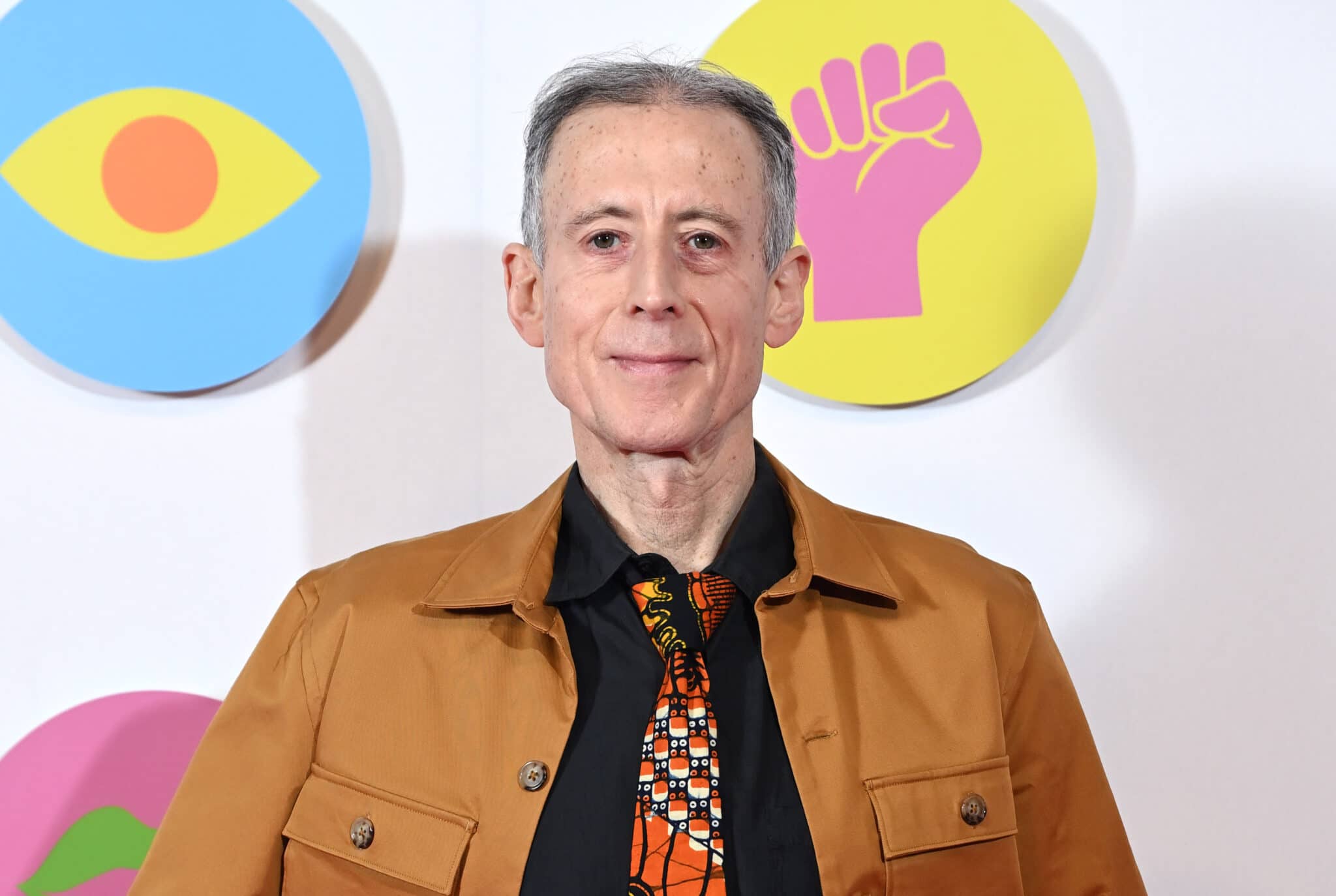
It’s vital we avoid a new version of Section 28 because its effects were so far-reaching, according to LGBTQ+ rights activist Peter Tatchell. It had a “devastating effect” on LGBTQ+ teenagers and caused many to suffer from anxiety, depression and self-harm.
The problem is that avoiding Section 28-like policies could be difficult under a government that’s decidedly right-wing.
LGBTQ+ activist Peter Tatchell. (Karwai Tang/WireImage)
“The Tories have shifted to the right under Liz Truss,” Tatchell tells PinkNews.
“They are waging a culture war against our community and see political mileage in appealing to their conservative bases.”
He says the future for LGBTQ+ rights in the UK right now is “gloomy”.
“Regression seems more likely than progress. We’ve already witnessed more than four years of delay in banning conversion therapy and trans people will not be protected if the legislation finally gets tabled. Reform of the Gender Recognition Act has been kicked into the long grass, despite a majority of those who responded to the public consultation urging change.
“The government wants to deport LGBTs and other refugees to Rwanda, even though it is not safe. There are rising levels of anti-LGBT+ hate crime and no serious government action to remedy it.”
Tatchell has “no trust or confidence” that anything will improve for LGBTQ+ people under Truss’ rule.
“She’s appointed a cabinet dominated by homophobes, including some who oppose marriage equality and trans rights.”
Much is uncertain for LGBTQ+ people right now, but one thing is certain: queer people are facing into a dark period, and they’re going to have to fight hard to protect their hard-won rights.
More than 1,600 books were banned in over 5,000 schools during the last school year, with most of the bans targeting titles related to the LGBTQ community or race and racism, according to a new report.
It found that there were 2,532 instances of individual books’ being banned, which affected 1,648 titles — meaning the same titles were targeted multiple times in different districts and states.
Books were banned in 5,049 schools with a combined enrollment of nearly 4 million students in 32 states, the report found.
Because PEN America stuck to documented cases of bans, which included reports to the group from parents and school staff members and news reports about book bans, the report says its data most likely undercounts the true number of bans.
Suzanne Nossel, the CEO of PEN America, said the recent efforts to ban books are a new phenomenon that has been led primarily by a small number of conservative advocacy groups that believe parents don’t have enough control over what their children are learning.
“We all can agree that parents deserve to and are entitled to a say over their kids’ education,” Nossel said at a news conference PEN America hosted Monday. “That’s absolutely essential. But fundamentally, that is not what this is about when parents are mobilized in an orchestrated campaign to intimidate teachers and librarians to dictate that certain books be pulled off shelves even before they’ve been read or reviewed. That goes beyond the reasonable, legitimate entitlement of a parent to have a give-and-take with the school — things that are enshrined in parent-teacher conferences and PTAs.”
Preliminary data released Friday by the American Library Association, or ALA, found that the number of attempts to ban or restrict library resources in schools, universities and public libraries is on track to exceed the record counts of 2021.
From Jan. 1 to Aug. 31, the ALA documented 681 attempts to ban or restrict library resources, with 1,651 library titles being targeted, compared to 729 attempts for all of last year, with 1,597 books targeted.
The PEN America report said nearly all of the book bans — 96% — were enacted without schools or districts following the best practice guidelines for book challenges outlined by the ALA and the National Coalition Against Censorship.
Before the wave of book bans, parents would sometimes raise concerns to their children’s schools or teachers about books their children brought home, said Jonathan Friedman, PEN America’s director of free expression and education programs.
But now, conservative groups and parents are Googling to find books that have any LGBTQ content, and then a conservative group adds it to a list of inappropriate books, Friedman said.
“They complain about the books online, the books go on a list, the list takes on a sense of legitimacy, and then it being on the list leads a school district to react to that list and take it seriously,” Friedman said, adding that in nearly all of the cases, the cycle happens without respect for process or policy.
Friedman pointed to a case in Walton County, Florida, where a popular children’s book called “Everywhere Babies” landed on a banned books list last spring. A few of the illustrations include what could be interpreted as same-sex couples, but they are never identified as such in the text. The Florida Citizens Alliance, a conservative nonprofit group focused on education, included it in its 2021 “Porn in Schools Report.”
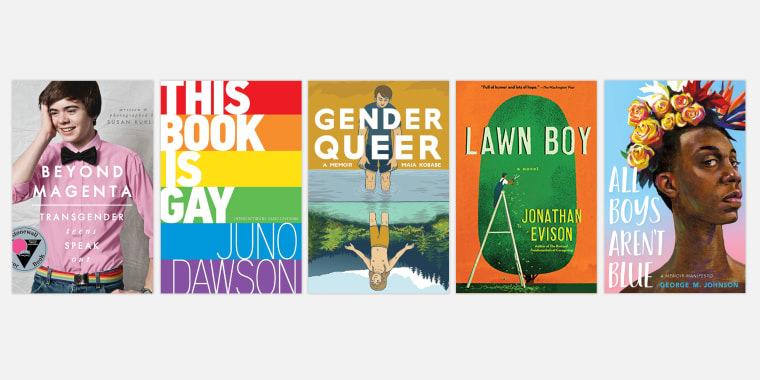
The five LGBTQ books on the ALA’s list of the Top 10 Most Challenged Books of 2021. Candlewick Press; Hot Key Books; Oni Press; Algonquin Books; Farrar, Straus and Giroux
Of the 1,648 titles that were banned last year, the report found, 41% explicitly address LGBTQ themes or have protagonists or prominent secondary characters who are LGBTQ, and 40% include protagonists or secondary characters of color.
More than one-fifth (21%) directly address issues of race and racism, and 22% include sexual content of varying kinds, including novels with some level of description of sexual experiences of teenagers; stories about teen pregnancy, sexual assault and abortion; and informational books about puberty, sex or relationships.
The report estimates that at least 40% of the bans listed on PEN America’s Index of School Book Bans are connected to proposed or enacted legislation or to political pressure from elected officials to restrict the teaching of certain concepts.
PEN America also found at least 50 groups involved in pushing for book bans, 73% of which have formed since last year. One of the largest is Moms for Liberty, a group advocating for parental rights, which lists more than 200 local chapters on its website.
Tiffany Justice, a co-founder of Moms for Liberty, said teachers should value parents’ input.
“I mean, there’s not two sides to this issue,” Justice said in an interview on “CBS Saturday Morning.” “There are moms who love their kids, who don’t want pornography in school, and then there are people who do want pornography in school. I think that the book issue has been used to try to marginalize and vilify parents. And the truth is there is no place for pornography in public schools.”
The 50 groups identified by the report have been involved in at least half of the book bans enacted last year, and at least 20% of the bans can be directly linked to the actions of the groups, the report found.
The most frequently banned books were “Gender Queer: A Memoir,” by Maia Kobabe, followed by “All Boys Aren’t Blue,” by George M. Johnson, and “Out of Darkness,” by Ashley Hope Pérez, the report found.
Pérez said what’s striking about her book’s being banned in 24 school districts is that it was published in 2015 and wasn’t challenged until last year. She said that some right-wing groups have used words like “pornographic,” “inappropriate,” “controversial” and “divisive” to describe the banned books and that the books they describe are most often by or about nonwhite people and other minorities.
“The books are a pretext. It is a proxy war on students who share the marginalized identities of the authors and characters in the books under attack,” she said at Monday’s news conference. “It is a political strategy. The goal is to stir up right-wing political engagement by drawing still brighter lines around targeted identities.”
She said banning books harms students in a few ways. When a student shares a gender or sexual identity with a character in a book and that book is banned, it “sends the message that stories about people like them are not fit for school.”
By giving into their demands, schools give conservative groups an unearned legitimacy, she said.
“When school leaders cave to these pressures, they elevate the questionable judgment of a handful of parents over the professional discretion and training of librarians and educators and, above all, above the needs of students,” she said.
A Black trans woman says her housing complex discriminated against her family and refused to respect her gender identity.
Shayla Anderson and her husband have filed a lawsuit accusing the Grand Fountain apartment complex in Richmond, Texas of discrimination.
“I went to her office, and she said, ‘I’m not going to speak with you about this,’” Anderson told KPRC. “‘I’m not going to speak with you about this, sir.’”
“She took my womanhood and crushed it by calling me sir.”
From there, Anderson reached out to the company in charge of the apartment complex, SunRidge Management Group, who never got back to her.
After filing a complaint with the U.S. Department of Housing and Urban Development, Anderson then posted a video of the property manager approaching her husband and son while they played basketball and accusing them of not living in the building.
The building then demanded Anderson remove the video before issuing their family an eviction notice, despite the fact that they hadn’t received any warnings.
Anderson said she had not been paying rent, but that her lawyers had advised her to stop due to the lawsuit.
In a statement, SunRidge denied all claims of discrimination and stated, “We adhere to the highest standards of managing the Grand Fountain community and comply with all fair housing laws.”
But Anderson is not backing down.
“Because, you’re a big corporation you can’t treat the little people wrong,” she said. “We have a voice as well.”
“A lot of people say, ‘Well, why don’t you move? Why don’t you get out of there?’ Because then I give them the power.”
A Lakota two-spirit person was found dead of gunshot wounds outside Rapid City, South Dakota in August. Acey Morrison, 30, was among at least 30 trans or gender-nonconforming people to die in violent circumstances in the U.S. in 2022.
Morrison’s murder was reported early Sunday morning, August 21, by the owner of the mobile home she occupied in the Country Village Estates RV park.
Morrison came from a large family in South Dakota and Nebraska and worked at the local Walmart and Sam’s Club.
In a tribute published in Native Sun News Today, her family wrote: “Acey was what we call our two-spirit relative. To those she held in her heart and to those who held her in their hearts, seeing her in her wholeness.
“She always had her natural ways in being there for those she loved. She used laughter as medicine and chose self-love to heal wounds. She was the one to open her home up to you, give you her lasts, then inspire you to keep going, ‘this too shall pass.’”
“We will remember her as who she was to each of us: authentic, and unapologetic.”
The Human Rights Campaign reported 50 violent fatalities among trans and gender non-conforming people in 2021, including those who identified as two-spirit. The 2015 U.S. Transgender Survey indicates American Indian and Alaskan Native experienced a physical attack at more than twice the rate of all U.S. respondents, 19% to 9%.
A 2021 report by the Sovereign Bodies Institute and the California Rural Indian Health Board revealed among a small population of Native LGBTQ2S+ people, 90% reported experiencing two or more forms of violence.
Morrison’s family tribute ended: “She navigated this life through her big dreamer eyes and was always headed for the brighter days. So with that, we will remember her as who she was on her brightest days. We wish her healing and that our love be with her on her journey to the other side.”