Donald Trump‘s Department of Education has unveiled a new policy that will make workers of LGBTQ+ nonprofits ineligible for student loan forgiveness.
The department will publish a rule tomorrow in the Federal Register that would allow the Secretary of Education, Linda McMahon, to disqualify government and nonprofit employers that do not align the Trump administration’s agenda from participating in the Public Service Loan Forgiveness (PSLF) program.
While no specific organizations have yet been named publicly as ineligible for PSLF under the rule, LGBTQ+ organizations operating as 501(c)(3) nonprofits are likely to be targeted. Even large legal groups like the American Civil Liberties Union or Lambda Legal working to legally protect gender-affirming care could be misconstrued as the “subsidization of illegal activities.”
“This is a direct and unlawful attack on nurses, teachers, first responders, and public service workers across the country,” Democracy Forward and Protect Borrowers said in a joint statement. “Congress created the Public Service Loan Forgiveness (PSLF) program because it is important for our democracy that we support the people who do the hard work to serve our communities.”
“This new rule is a craven attempt to usurp the legislature’s authority in an unconstitutional power grab aimed at punishing people with political views different than the administration’s,” it continued. “In our democracy, the president does not have the authority to overrule Congress. That’s why we will soon see the Trump-Vance administration in court.”
The Public Service Loan Forgiveness (PSLF) program forgives the student loans of those who work for federal, state, tribal, or local government, or for non-profit organizations, after they’ve made payments for ten years (120 payments). The program was created as part of the 2007 College Cost Reduction and Access Act and signed into law by President George W. Bush as a way to encourage students to pursue careers in public service.
Trump signed an executive order in March that drastically limits who qualifies for PSLF, preventing forgiveness for people who work at organizations that engage in the supposed “subsidization of illegal activities, including illegal immigration, human smuggling, child trafficking, pervasive damage to public property, and disruption of the public order.”
The order directly singled out organizations that assist trans people, including with gender-affirming care, which it falsely refers to as “child abuse, including the chemical and surgical castration or mutilation of children.”
More than one-third (35 percent) of LGBTQ+ adults ages 18 to 40 — an estimated 2.9 million — held more than $93.2 billion in federal student loans at the beginning of the Biden Administration, according to a March report from the Williams Institute and the Point Foundation, including over half (51 percent) of trans adults, 36 percent of cisgender LBQ women, and 28 percent of cisgender GBQ men.
Luis Vasquez, Senior Legal Writer for the Human Rights Campaign, told The Advocate that “this rule is simply about bullying LGBTQ+ people and nonprofits and other progressive groups and making life more difficult for those who Donald Trump dislikes.”
“The result is that it would keep talented people from pursuing careers in public service, fearing that they may suddenly lose eligibility for this program on a whim,” Vasquez said. “The administration is once again going beyond what Congress has authorized, pursuing a discriminatory policy without legal basis. This hurts innocent people and should be rescinded immediately.”
Standing at the corner of Cedar Springs and Oak Lawn Blvd in Dallas for over 150 years, Oak Lawn United Methodist Church has served Texans of faith, including members of the LGBTQ community. Through its inclusive efforts, the church is a leader in providing resources for all Texans. And through a sign of symbolic strength, the church continues to commit to standing up for equality.
On Oct. 9, Texas Governor Greg Abbott ordered all decorated crosswalks across the state to be removed within 30 days or risk losing essential funding from the state’s transportation department. The rainbow crosswalks are a major pillar of the community across Houston, Dallas, Austin and more, and have been in place as early as 2017 as a visible and popular show of support for LGBTQ Texans in their hometowns.
In Dallas, the rainbow crosswalk was privately funded by the North Texas LGBTQ Chamber of Commerce through private donations and fundraising efforts in 2020. The crosswalks, which underwent a recent redesign that was also privately funded, are maintained by small business owners across Dallas’ LGBTQ neighborhood in Cedar Springs.
Though City of Dallas officials and local advocates continue to explore options to keep the crosswalks in place, members of the community have already begun to mobilize in response to Abbott’s efforts. Last Saturday, local community leaders, including Cece Cox from Dallas’ Resource Center and out State Representative Venton Jones, organized a rally at the city’s historic intersection of Cedar Springs and Oak Lawn to speak out against the removal. On Tuesday morning, Oak Lawn United Methodist Church coordinated its own response.
Robert Garcia Sr. and Robert Garcia Jr., father and son and heads of security at Oak Lawn United Methodist Church, are leading the project to paint the stairs leading up to the church in LGBTQ pride colors. This project, Garcia Jr. said, is an opportunity for the church to show its solidarity and commitment to all Texans of faith, including members of the LGBTQ community.
“We’re trying to show them you can take away the colors here, but you can’t take it away from our church,” Garcia Jr. said.
Garcia Sr., who has family members who attend Sunday services, said the church community welcomes him and his family with open arms. Literally.
“You come in here and you’re family. Gay, straight, trans, Black, white,” Garcia Sr. said. “There are hugs everywhere. We’re not shaking hands here. Just hugs here and open doors.”
Earlier this week, Houston staged a sit-in protest as officials removed the rainbow crosswalk in Houston’s Montrose District. Less than a day later, the crosswalk colors returned, chalked in by residents. In Austin, drag artist and activist Brigitte Bandit and other organizers held a photoshoot on their crosswalk, and with help from Austin’s Fire Department, removed red paint thrown onto the crosswalk by protesters.
Though the crossroads on Cedar Springs may face an uncertain future, for Oak Lawn United Methodist Church, pride will not be erased. No matter what.
“If you like it, great! If you don’t, turn around. Look away,” Garcia Sr. said. “It’s as simple as that.”
Dr. Richard Isay is a modern hero who opened up the world of psychoanalysis to the LGBTQ+ community. He suffered through what we would call conversion therapy today, but after realizing it didn’t help, Isay fought for psychoanalysis to better serve the queer community.
Not only did he open the profession to gay people, but he also convinced psychoanalysts to stop treating queerness as a problem rather than an innate part of being human. And above all, he convinced the most homophobic psychological professional society to not just change its ways but become the first mental health organization to support gay marriage.
Isay was born in 1938 and attended college in the late 1950s. In his book Becoming Gay, Isay describes an infatuation with a fellow student, “Bob,” but felt it was just “a passing phase that would soon be replaced by an equally passionate interest in girls.” He dated women “infrequently” due to a lack of attraction and threw himself into his studies, partially as a cover for not dating.
“Although Bob and I engaged in casual sexual play, I did not label myself ‘homosexual.’ I did view my attraction to him as a serious neurotic problem since I was uncertain that I fell into the category of those ‘normal’ adolescents who simply had occasional thoughts about other boys,” he wrote.
Isay was very interested in the mind. He knew he wanted to be an analyst since his sophomore year of college, according to the 1994 book Gay Soul: Finding the Heart of Gay Spirit and Nature by Mark Thompson. The interest wasn’t despite his concerns about his “neurosis,” but rather because of it, fearing he had “something terribly wrong.”
It’s important to note that psychoanalysis is different than other forms of psychotherapy. The kind of therapy most people today are familiar with is based on helping the client get out of harmful thought patterns—it’s the realm of CBT and worksheets. Psychoanalysis is the realm of Freud and focuses more on reconciling conflicting desires to change. Psychology Todayuses a helpful swimming metaphor to explain the difference:
“If you have fallen into a pool or were hit hard by an ocean wave, then you will have to overcome your fear of drowning and learn how to swim. Psychotherapists can help with both. Once you see this fear for what it is (a fear, not a fact) and learn to swim, then you will be more capable of managing your life when you find yourself in water again… [but] some people need an approach that helps them face and work with the fact that, at least in part, they don’t want to learn to swim. They may be frightened of moving forward or do not want to do the hard work it would take. Some might even fight to stay where they are because it suits them in some unconscious way to be drowning.”
As part of his training, Isay started seeing an analyst himself. For the next 10 years, he was subjected to a psychoanalytic version of conversion therapy. He said his analyst had figured out the root cause of his homosexuality, and how to “cure” it: “By becoming aware of the childhood fear of my father’s rage over my closeness to my mother, I would become less frightened of the mortal consequences of my heterosexual desire.”
He even married a woman, Jane, who was a book editor with an interest in psychology; the couple had two children. In 1979, he met his future husband, artist Gordon Harrell, and a year later, he came out to Jane.
“He sat down on the bed and said, ‘I have something I need to tell you.’ He took a deep breath. ‘I’m homosexual.’ At that moment, I saw my future collapse before my eyes. I got the chills and ran to take a hot bath. It gave me time to think and warmed me, but not for long. We spent the night talking and lamenting. On the plane home, we held each other and sobbed and planned. By the time we landed, we had decided to keep his sexual orientation a secret and stay married for the sake of the children,” Jane Isay wrote in a 2011 essay for The New York Times.
While as far as his children and close family knew, he was straight, Isay became a gay activist in his professional life. Isay was involved with the American Psychoanalytic Association (APsaA), and in 1983, he courted controversy with a presentation to the organization titled “New Perspectives on Homosexuality,” where he argued against conversion therapy. He later became APsaA’s first openly gay member, leading some of his colleagues to stop referring patients to him.
In 1986, he wrote an influential book about how psychoanalysts should handle queer patients: Being Homosexual: Gay Men and Their Development. Isay was one of the first to argue that, to paraphrase Lady Gaga, baby, we were born this way. Though the American Psychiatric Association (APA) had stopped considering homosexuality a disease in 1973, the APsaA hadn’t caught up yet, and its analysts commonly still treated being gay as a symptom of arrested development and something to be “cured.”
In addition, the APsaA had homophobic policies. When Isay started his career, gay people couldn’t become analysts at all. Even as that changed, queer analysts were still blocked from training others or advancing in the profession, according to the BMJ. In 1991, Isay ended up threatening to sue the APsaA with the help of the ACLU. APsaA backed down, though for years there seemed to be hard feelings between the organization and Isay. In a 1996 New York Timesarticle, Isay called APsaA “one of the most prejudiced and biased institutions in the country — like the CIA, the FBI, and the military.”
In the same article, APsaA member Dr. Roger McKinnon tried not to give Isay credit for making APsaA change its policy.
“Yes and no. Yes, in that he has been an advocate of it. No, in that he has made pejorative depictions that exaggerate the state of affairs,” McKinnon told the Times.
In his personal life, he came out to his children and divorced Jane in 1989. He was one of the first people in New York state to have a legal same-sex marriage when he wed Harrell in 2011, according to Gay Star News. Always ahead of the curve, he was fighting for gay marriage as early as 1989, far before the issue hit the mainstream. And by 1997, the APsaA had come around, supporting same-sex marriage following Isay’s policy proposal, becoming the first mental health organization to do so. In 2019, the APsaA also became the first mental health organization to apologize for its past homophobia.
Isay died of cancer in 2012. His passing received national coverage due to the impact he had on how the medical establishment saw gay life. Isay was proud to be gay, as he told Thompson in Gay Soul: “Being gay is an adventure because there are no guidelines for living our lives. We make them up as we go along. Sometimes I wonder what will happen when society is more accepting. Will we then become bound by convention? Life wouldn’t be as challenging. I like being a renegade.”
Throughout Ali’s childhood in Iraq, he was repeatedly bullied by students and teachers for what he described as his feminine behavior. During his pre-teen and teenage years, men sexually assaulted him, but he couldn’t report it to the police for fear that he’d be thrown into jail for years since Iraq has criminalized homosexuality.
Ali was afraid to come out or talk about these assaults to his family. Although he wasn’t sure if his father knew he was gay, his dad knew other LGBTQ+ people from his travels abroad for work. His father used to tell him, “One day, we’re gonna go to travel to Europe or America and have a good life,” adding, “You’re gonna be safe and you’re gonna be happy.” But then his father died of a heart attack in 2014, and Ali’s abusive older brother (10 years his senior) assumed control of the family, making Ali terrified for his future.
In November 2023, Ali went out with another man for ice cream. While they were out in the rain, five Iraqi police officers suddenly surrounded and arrested them, believing they were romantically involved. Though Ali lied and told the officers they were just cousins, the officers accused them of being prostitutes and slapped, kicked, and hit them in the streets, eventually taking them to the police station.
At the police station, they took Ali’s phone and found images of male models and some men kissing. Police said that the images confirmed Ali’s intent to conduct sex work. They forced him to sign a confession that he had had sex with another man; one officer tried to coerce Ali into performing oral sex; and the police eventually threw him in jail, leaving his family with no clue as to his whereabouts.
In the remote jail, far from the city where Ali lived, he shared a cold, small, crowded cell with about 15 other people, ranging in age from 15 to 60. The police took Ali’s clothes and gave him dirty ones to wear, along with a small blanket.
“Everyone’s sleeping next to each other [on the floor] so close, and it was just so scary,” he told LGBTQ Nation. “Like, I was thinking an animal can’t even live there.” One guard suggested that he tell other inmates that he was arrested for using counterfeit money, because if he admitted he was gay, they might mistreat him.
“I was ultimately released, but I was terrified for my safety because the police had my home address and personal information and had accused me of being gay. I believed I could be imprisoned at any time,” Ali said in a court documentexplaining his situation. “After my arrest, I knew I had to leave the country to survive. I did not feel that I could trust anyone.”
Ali’s experiences mirror that of other LGBTQ+ Middle Easterners who are entrapped, harassed, detained, and tortured under suspicion of being queer. Ali considered taking his own life to escape the persecution, but he couldn’t go through with it.
A second chance, but with the U.S. government working against him
Ali eventually applied for aid under the U.S. Refugee Admissions Program (USRAP), a 1980 federal program that has helped millions of refugees fleeing persecution in their home countries to relocate safely in the United States and build lives, families, and businesses.
Refugee processing and resettlement are lengthy processes requiring participation from numerous governmental and nongovernmental entities. Ali, like thousands of refugees, first underwent extensive security checks and referrals before being approved under USRAP and resettling into a single apartment in the United States.
“When I learned I would be resettled in Dallas, I was so excited that I began screaming with happiness and jumping and dancing,” Ali said.
It’s hard to know exactly how many LGBTQ+ people seek asylum in the U.S., but a 2021 study by the Williams Institute estimated that 11,400 LGBTQ+ individuals did so between 2012 and 2017. Approximately 4,385 of them made asylum claims specifically related to their LGBTQ+ status.
I am very concerned that if people back in Iraq learned about my sexual orientation and my interactions with the police, my family would be in danger.Ali, a gay Iraqi refugee currently living in Dallas, Texas
He came to the U.S. with only $120 to his name. Upon arrival, Catholic Charities provided him with a case manager and financial assistance for his first three months, as well as help in finding other programs to assist him in getting a job and obtaining basic necessities. Ali soon applied for a matching grant program that would cover one year of rent and utilities and provide him a monthly allowance, as well as a Refugee Cash Assistance program to provide a monthly stipend for six months and potentially longer.
However, by early February, he was notified that both programs had shut down due to an executive order signed by Donald Trump on January 20, entitled “Realigning the U.S. Refugee Admissions Program.” The order claimed that federally funded programs for admitting refugees aren’t in the country’s best interests because they “compromise the availability” of “taxpayer resources” for American citizens.
Trump’s order effectively halted refugee admissions indefinitely, ending USRAP and freezing millions in congressionally appropriated USRAP funding. Trump’s order threw Ali’s life into disarray, stranded thousands of other refugees and separated families who had already been approved under USRAP, and ended the funding of various groups and charities that used federal funding to provide vital survival benefits to refugees.
Ali learned that the case manager helping him secure benefits had been laid off after Trump’s order, and his apartment managers told him he might be evicted if he couldn’t pay the rent. Running out of food, he subsisted on peanut butter.
In response to the chaos, the International Refugee Assistance Project (IRAP) filed Pacito v. Trump on February 10 in the Western District of Washington. The case is a class action lawsuit filed on behalf of the individuals and major resettlement agencies harmed by Trump’s order. It asserts that, by indefinitely ending USRAP, Trump and federal agencies exceeded their lawful authority and violated both federal law – and rulemaking procedures required under the Administrative Procedure Act – as well as the Constitution. The lawsuit seeks to block the order, restore funding, and enforce long-established protections for refugees.
NEW YORK, NEW YORK USA – March 15, 2025: Pro-Immigration sign at a Stop the Cuts rally against DOGE cuts to federal funding in Lower Manhattan. | Shutterstock
In March, a district court agreed with IRAP’s lawsuit and granted a preliminary injunction against Trump’s order, writing, “The results have been harrowing.” The court noted that refugees have few (if any) rights – they have no right to work; limited access to healthcare, housing, or education; and often face discrimination.
Luckily, a charity helped Ali find a job at a local coffee shop, and he also secured a second job at a local mall. He had learned English, he said, by watching old episodes of Keeping Up with the Kardashians, a reality TV show about an ethnically Armenian celebrity family living in the United States. Now, he has made several good friends and has started building a community by attending a local church.
But other individual refugees who had been approved to come to the U.S. under USRAP after years of processing have either been stranded in the U.S. without homes or work or else trapped in their home or host countries as their scheduled flights to the U.S. were abruptly canceled, the district court wrote in its May decision. This has left the refugees vulnerable to physical danger and financial hardship without stable housing, income, basic necessities, alternative paths to refuge, or access to integration services that would help them become self-sufficient.
Furthermore, Trump’s order effectively defunded congressionally mandated resettlement-support services, making them unable to pay their employees and keep their offices open and undermining decades of work building up infrastructures, relationships, and the associated goodwill to facilitate refugee integration in local communities. The order required these services to furlough or lay off hundreds of staff all over the United States, threatening their continued existence.
The courts are trying to restrain Trump, but he has other plans
In April, the Ninth Circuit Court of Appeals granted the federal government a partial emergency stay of the district court’s injunction. While the appeals court has required the government to reinstate resettlement and placement services to refugees for 90 days after their admission into the United States, the court also appointed a magistrate judge to help review individual cases of refugees harmed by Trump’s order, while IRAP’s class action suit continues to be heard by the courts.
“Iraq is a very unsafe place for LGBTQ+ people,” Ali said in his court filing. “When I speak to people back in Iraq, I hide the fact that I’m gay and that the police arrested and abused me for being gay… I am very concerned that if people back in Iraq learned about my sexual orientation and my interactions with the police, my family would be in danger.”
I want to help everyone in my situation because it is difficult for me now, and I know there are other refugees who recently arrived and are struggling even more than me. Ali, a gay Iraqi refugee currently living in Dallas, Texas
Ali also worries that, if he criticizes the Trump Administration for ending USRAP, conservative organizations could somehow locate his name and personal information for harassment or violent retaliation. If his name is made public, it could make it even more difficult for him to find employment or could lead to other kinds of anti-immigrant and anti-gay discrimination.
Ali understands that, in this case, he’s not only representing himself, but thousands of other refugees nationwide and across the world. “I want to help everyone in my situation because it is difficult for me now, and I know there are other refugees who recently arrived and are struggling even more than me.”
The Trump Administration is considering a radical overhaul of USRAP that would continue to largely defund the program and reduce the number of refugees allowed annually into the U.S. from 125,000 (the number established by former President Joe Biden) to 7,500. Trump’s plan would give preferred relocation assistance to English speakers, white South Africans, and Europeans who have left their countries after making anti-immigrant statements or supporting anti-immigrant political parties, The New York Times reported on October 15.
“[Trump’s plan reflects] a preexisting notion… as to who are the true Americans,” said Barbara L. Strack, a former chief of the refugee affairs division at Citizenship and Immigration Services during the Bush, Obama and Trump administrations. “And they think it’s white people and they think it’s Christians.”
In a statement, IRAP wrote, “These actions reflect a broader pattern of President Trump attempting to strong-arm other branches of government into rubber-stamping his political agenda, sidestepping the checks and balances Congress established to ensure refugee policy serves humanitarian – not partisan- ends. Such departures from established process and principle undermine the United States’ legal obligations and moral leadership, sending a dangerous message that access to refuge may depend on identity rather than need.”
Hate crimes against LGBTQ+ people are rising around the world as politicians target them through legislation and rhetoric.
Anti-LGBTQ+ hate crimes have increased in the past five years across the United States, the United Kingdom, and Europe, according to a new report by the Institute for Strategic Dialogue, with transgender and gender nonconforming people particularly affected. The spike may in part be attributed to world governments passing anti-LGBTQ+ policies, which has “escalated internationally in tandem with political rhetoric.”
Some of the high profile incidents cited in the report include the mass shooting at the LGBTQ+ bar Club Q in Colorado that left five dead, the 2023 murder of a woman in California who was not LGBTQ+ because she flew a rainbow flag in her store, and the arrests of 20 members of the white supremacist group Patriot Front in 2023 who intended to riot at a Pride event in Idaho.
“These threats come from across the spectrum of ideological extremism, but frequently from groups that also pose a threat to the state and are openly opposed to democratic norms,” the report notes.
In the U.S., hate crimes against LGBTQ+ people remained high despite an overall decrease in violent crime. Out of 11,323 single-bias incidents the FBI reported in 2024, 2,278 (17.2 percent) were based on sexual orientation and 527 (4.1 percent) were based on gender identity. Hate crimes based on sexual orientation were the third-largest category, with crimes based on race, ethnicity, or ancestry being first and religiously motivated crimes second. Gender identity bias was the fourth-largest category.
Threats and harassment against school board officials in the U.S. also increased by 170 percent from the previous year in November, 2024 to April, 2025, the ISD report notes. Many of these threats were explicitly motivated by an anti-LGBTQ+ bias, with the perpetrators objecting to age appropriate queer books or content in public schools.
“LGBTQ+ individuals, who gained unprecedented civil rights in previous decades, are now increasingly targeted by online and offline hate, political rhetoric, censorship and legislation,” the report states. “A series of actions have sought to exclude LGBTQ+ people and culture from public life, ranging from book bans to a spread of legislation restricting trans people. In tandem, terror attacks (or the threat of terror attacks), violent extremist activity, and hate crimes targeting LGBTQ+ individuals have increased or remained consistently high since 2020.”
As the federal government remains closed for business, LGBTQ+ community centers and nonprofits with food pantries are preparing to fill the hole that will be left when SNAP benefits end.
The Supplemental Nutrition Assistance Program (SNAP) is the largest anti-hunger program in the U.S. After it runs out of funds on November 1, over 42 million people will be left wondering where their next meal is coming from. As they turn to food banks, those nonprofits will be left wondering how to provide for the sudden influx of people needing aid.
The “Pride Pantries” at the LGBT Life Center in Virginia already provide assistance to about 650 households a month, or roughly 1,700 people, which amounted to around 285,000 lbs of food distributed in 2024. CEO Stacie Walls suspects that this year it will “definitely be over that based on the trend we’ve had for the last few months.”
“These are individuals and households that are already marginalized and already living close to the edge of not having access to food at all,” Walls tells The Advocate. “It’s not just young families with children. One of the things that may be assumed is that these are individuals who aren’t working, who aren’t trying to contribute. The reality is most of the people who use it are either elderly or are working and just don’t have enough to make it through the month.”
About 15 percent of LGBTQ+ adults — nearly 2.1 million people, including 250,000 transgender individuals and 1.3 million lesbian and bisexual women — received SNAP benefits in the past year, according to a recent report from the Williams Institute, compared to 11 percent of non-LGBTQ+ adults.
Almost 70 percent of LGBTQ+ adults who received SNAP benefits had household incomes under $35,000, 66 percent were living with a disability, and 49 percent had a child under 18 living in their household. Over 90 percent of LGBTQ+ adults who received SNAP were either currently working (42 percent), had worked in the past year (6 percent), were students (8 percent), homemakers (9 percent), retired (5 percent), or were unable to work (21 percent).
“We know individuals that we serve in the queer community already don’t have stable housing, don’t have stable employment, don’t have stable family support that they can depend on,” Walls says. “They need our services. And this federal shutdown is requiring the nonprofits and the community-based organizations in this country to carry this load on behalf of the government.”
The Center’s food pantries are U.S. Department of Agriculture (USDA) food distribution centers, which are supplemented with frozen meals and donated by local churches or with the Center’s own food drives. It does not receive federal grants, and it does not get the food directly from the USDA — the pantries are maintained through the Center’s general operating funds.
Still, the Trump administration’s drastic cuts to federal aid have impacted all nonprofits, and significantly reduced SNAP before the federal government shut down. The Budget Reconciliation Bill, Donald Trump‘s so-called “Big Beautiful Bill,” forced an estimated seven million people to either lose their SNAP benefits or see their benefits greatly reduced.
For the Center, there’s “not enough food that comes from the food banks in the USDA program,” Walls says, as “those programs were being cut well before the shutdown started. They’re already operating with less resources than they were a year ago.”
There’s still a way for SNAP benefits to continue even as the government remains shut down. A coalition of 25 states and the District of Columbia have filed a lawsuit against the Trump administration demanding that it continue supporting SNAP through November using a contingency fund. Meanwhile, Virginia has announced it will use state money to fund SNAP benefits for its residents on a weekly basis (as opposed to monthly), which other states could also pursue.
Until governments step up, nonprofits will be filling in the holes. For those in need, most LGBTQ+ community centers have food banks, and “most food banks have no eligibility requirements, including ours,” Walls says. That means there’s “no income requirement for people to come to the food,” and for those run by queer organizations, there’s “no proving you’re part of the community.” If people can’t make it to a pantry, they can still try contacting them about possible deliveries.
For those wanting to get involved, Walls stresses that it “doesn’t always mean a cash donation” — these centers rely on volunteers who make the deliveries, which can require some physical labor, but also on those who can manage data collection and administrative work. Any ability could be beneficial, and will be needed even once the federal government reopens.
And when the shutdown ends, nonprofits want their communities to remember who was really there for them in a time of crisis.
“If you’re sitting up in Congress and you have food on your table, and you’re not worrying about where your next meal comes from, I think that you’re not representing your entire community if you’re not recognizing that there are people in every single community that struggle with food insecurity,” Walls says. “You cannot take care of your health, you cannot go to work every day, you can’t do any of that if you’re hungry.”
“It makes you angry because this is something that could have been prevented,” she adds.
For those impacted by food insecurity, visit Feeding America to find a pantry near you.
Hannah Caldas has been banned by World Aquatics for five years for refusing to take part in a gender-verification test, but she says if the suspension is the price she has to pay to “protect my most intimate medical information” then she is “happy to pay”.
Caldas, who also goes by Ana, took part in the World Aquatics Masters Championships in Doha in 2024, finishing first in her age category in the women’s 100m freestyle, and also competed in the Spring Nationals run by US Masters Swimming (USMS) in San Antonio, Texas in April, winning several events.
In response to the Masters Swimming competition, anti-trans Republican governor Ken Paxton launched an investigation into the organisation and claimed in a suit it violated the state’s Deceptive Trade Practices Act by allowing trans participation.
Paxton’s office sought $10,000 for each alleged trade practice act violation, according to coverage at the time by the Texas Tribune, and the governor labelled Masters Swimming’s policies “insane” and said it “cowered to radical activists pushing gender warfare”.
In August, USMS declared Caldas is eligible to compete in the female category, with a report into her eligibility stating the “documents the swimmer submitted all demonstrate that she was assigned the female sex at birth and that she identifies as female, although she swam in the male category at USMS events 2002-2004”.
However, World Aquatics have ruled the 48-year-old will be suspended for five years until October 2030 and her swimming results from the previous three years – between June 2022 and October 2024 – have been disqualified after she declined to take a gender verification test.
In a statement attributed to a New York Aquatics press release, Caldas declined because “chromosomal tests are invasive and expensive procedures”.
“My life and privacy have been invaded enough”
“My insurance refuses to cover such a test because it is not medically necessary,” she said. “No US state requires genetic tests for recreational sports events like these.
“Not even US Masters Swimming, the national governing body for recreational adult swimming in the US, demands this for any of its events.”
You may like to watch
Caldas continued: “I understand and accept the consequences of not complying with a World Aquatics investigation.
“But if a five-year suspension is the price I must pay to protect my most intimate medical information, then it’s a price I am happy to pay—for myself, and for every other woman who does not want to submit to highly invasive medical testing just to swim in an older-adult competition.”
She added she had been “swimming in sanctioned events for over 30 years” and is “prepared to let it all go”.
“My life and privacy have been invaded enough,” she explained “It is time to prioritise my health and personal safety.”
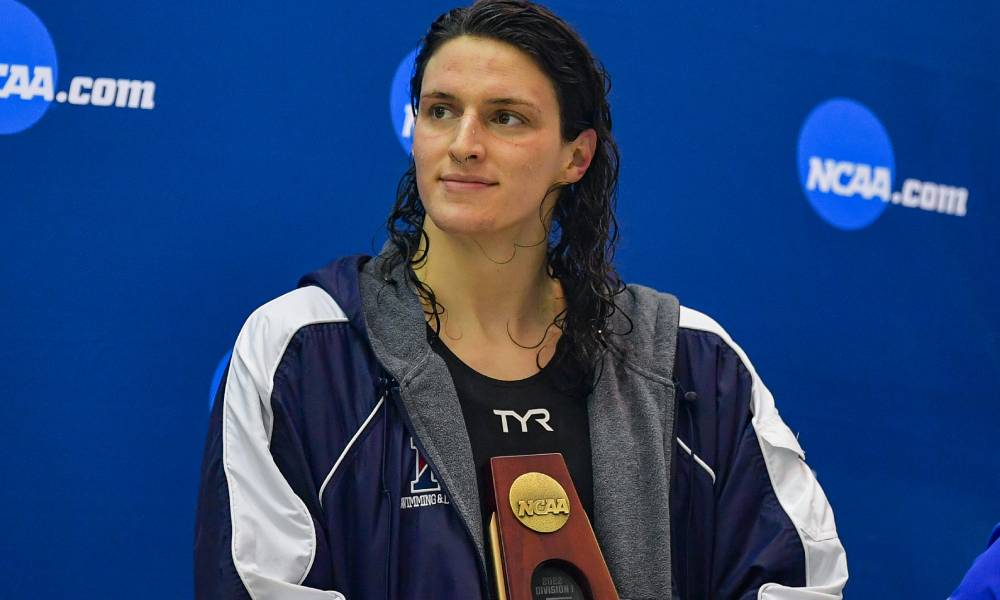
Lia Thomas reacts after finishing tied for 5th in the 200 Freestyle finals at the NCAA Swimming and Diving Championships on 18 March 2022. (Rich von Biberstein/Icon Sportswire via Getty)
Back in 2022 World Aquatics voted to implement rules which ban trans women from competing in elite races if they have undergone any male puberty.
It was under this policy that trans former University of Pennsylvania swimmer swimmer Lia Thomas, who made history in 2022 as the first trans woman to win a National Collegiate Athletic Association swimming championship, was banned by the swimming body.
Thomas filed a legal dispute against World Aquatics policy with the International Court of Arbitration for Sport (CAS) in Switzerland in September 2023.
However, the court rejected her claim that the policy was discriminatory.
As reported by the BBC the ruling outlined that Lia Thomas was “simply not entitled to engage with eligibility to compete in WA competitions” as someone who was no longer a member of USA Swimming – “let alone compete in a WA competition” – and hence was “not sufficiently affected” by the rules to be able to challenge them.
World Aquatics welcomed the court’s decision and said the ruling was a “major step forward in our efforts to protect women’s sports”.
The U.S. Supreme Court is set to consider whether to hear a challenge that could reopen the question of who can get married. The challenge to marriage equality is being brought by Kim Davis, the former Kentucky county clerk who in 2015 defied a federal court order to issue marriage licenses to same-sex couples.
As SCOTUSblogreports, the justices will privately discuss Davis’s petition on November 7. Davis, who was briefly jailed a decade ago after citing “God’s authority” in refusing to issue licenses to a gay couple, is now asking the high court not only to reverse her loss in the lower courts but to overturn Obergefell v. Hodges, the 2015 decision that established a constitutional right to marry for same-sex couples nationwide.
A Gallup poll from May 2024 found that 69 percent of U.S. adults support legal same-sex marriage—close to the record high of 71 percent. Sixty-four percent said same-sex relations are morally acceptable. Support remains strongest among Democrats at 83 percent and independents at 74 percent, while only 46 percent of Republicans back marriage equality, reflecting the enduring partisan divide.
Earlier this year, the U.S. Court of Appeals for the 6th Circuit rejected Davis’s claim that her refusal was protected by religious freedom, ruling that she acted as a government official, not a private citizen. A jury had previously awarded $50,000 each to the couple, David Moore and David Ermold, who were denied a license.
Several members of the court have recently commented on the 2015 marriage equality ruling, offering clues to how they might view Davis’s petition. Justice Clarence Thomas has long urged the court to revisit major decisions, such as Obergefell v. Hodges, arguing in a concurrence in the court’s 2022 Dobbs ruling that struck down Roe v. Wade, that such rulings expand constitutional rights beyond what the framers intended. He and Justice Samuel Alito have both raised concerns that Obergefell diminished protections for people who oppose same-sex marriage on religious grounds.
Justice Amy Coney Barrett recently noted in an interview with The New York Times that marriage equality now carries “very concrete reliance interest,” meaning millions of Americans have built their lives and legal relationships around it. In her September book, Listening to the Law: Reflections on the Court and Constitution, Barrett described the “rights to marry” as “fundamental,” Newsweekreports.
According to SCOTUSblog, if the justices decline to take up the case, that decision could be announced as soon as November 10. But if they agree to hear it, the case would mark the court’s most direct confrontation with Obergefell in years and a potentially seismic moment for LGBTQ+ rights in the post-Roejudicial era. If the court agrees to hear it, oral arguments could be scheduled for the spring, with a decision possible by June. If the justices decline to take up the case, the lower-court rulings against Davis will stand.
Dallas Cowboys wide receiver CeeDee Lamb refused to wear a rainbow armband during a game, Olympian Mollie O’Callaghan pledged to no longer compete if trans swimmer Lia Thomas is allowed to, and singer Sam Smith took issue with conjoined twins Abby and Brittany Hensel, as two individuals, using they/them pronouns.
You might have seen these divisive posts on Facebook, you might even have been outraged by them or shared them, but they’re not real – they are anti-LGBTQ+ disinformation falsely framed as legitimate news content.
You only need to make a cursory Google search to see the claims can be easily disproven.
Sports editor David Evans, writing for Sportscasting, concluded the story about Lamb was fabricated because there is absolutely no source for his alleged quote nor did any reputable sports outlet run coverage on it.
Swimming Australia swiftly issued a public statement declaring the comments attributed to O’Callaghan, and subsequently fellow swimmer Kyle Chalmers, were fake.
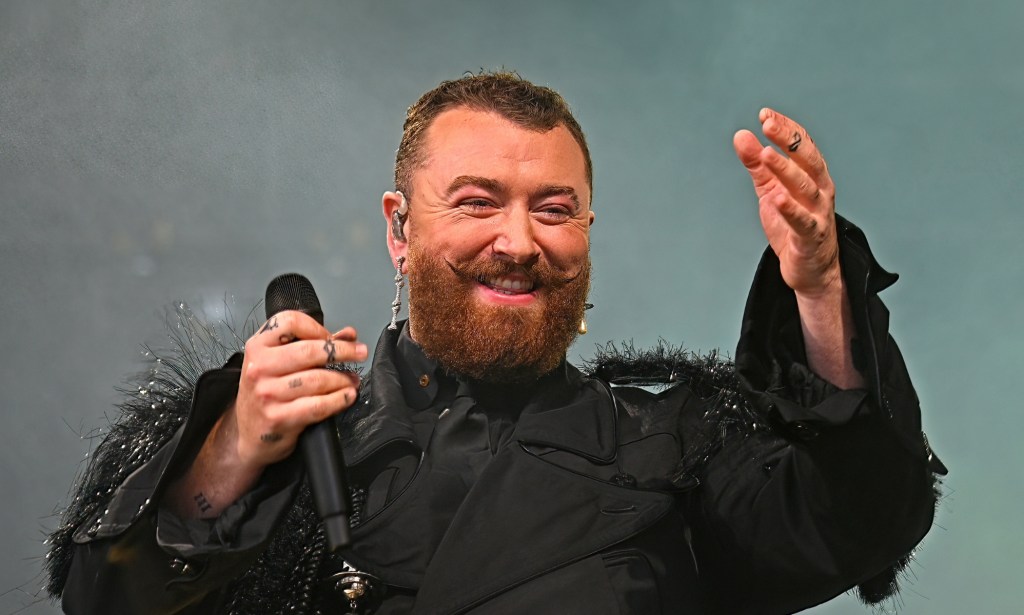
Sam Smith has been the subject of online misinformation, claiming they are semibisexual. (Didier Messens/Getty)
As important as it is for those impacted by fabricated content to clarify when a piece of information is absolutely not real, the simple fact is that the truth alone is not enough to rectify the power of fake news in this predominantly digital-first era we live in.
At a time when social media fact-checking and moderation is in decline, algorithmic rules govern our social media feeds – often reinforcing our own unconscious biases and echo chambers – and the lines between reality and fantasy are increasingly being blurred by AI, it is more and more difficult for many people to consistently tell fact from fiction.
A user who viewed such fake anti-LGBTQ+ posts as referenced earlier and instantly believes it to be true, perhaps because of their own prejudices and/or lack of skills at verifying the validity of media, would be unlikely to purposefully seek out any fact-checking. They would not think they need to – they saw it on Facebook, you see, so it must be true.
A more discerning user, however, might instantly be able to tell the post is nothing more than clickbait and/or engagement farming, or at the very least it is misleading and perhaps twisting someone’s original words.
Indeed, there are large swathes of the population who believe they are good at spotting fake news but studies frequently find they are often overconfident and still extremely susceptible to it.
They, as much as those who come to their social media feeds with already prejudiced opinions towards LGBTQ+ folks, are being targeted by bad actors seeking to weaponise anti-LGBTQ+ content to sow division in society.
These bad actors create content with the purpose of reaching average people in a society, honing in on their fears and anxieties about the state and future of their community, outraging them and, ultimately, shifting their opinions on queer rights, legislation enacted by their government, the trustworthiness of their elected leaders and undercutting democracy as a whole.
Misinformation and disinformation – two distinctly different but intertwined concepts – are certainly nothing new and have been a part of the media ecosystem as long as verifiable news has been.
While misinformation refers to the spread of falsehoods via genuine misunderstanding or mistake, disinformation is far more sinister and instead refers to the process by which entirely false information is created, propagated and disseminated on purpose, with the aim of pushing a particular narrative or agenda to achieve a set of political goals.
Anti-LGBTQ+ disinformation, on the other hand, includes the far-right “groomer”conspiracy theory which inherently links LGBTQ+ people to vile child abuse, claims pushed by Donald Trump that school teachers are performing gender-affirming surgeries on pupils in classrooms, and the recent posts above falsely attributed to notable athletes and other famous names.
In recent months, there has been an increasing number of posts appearing on social media – namely Meta platforms Facebook and Instagram – which are stylised to look like the image-based breaking news posts often used by media organisations, despite the fact they are being posted by the furthest thing from a news source.
The posts are usually overlaid with a quote or headline and captioned with some sort of breaking news kicker and the start of what looks like copy for a published news story.
In many cases, the same post – using the same image and caption – is shared across various different pages for maximum reach.
Many of the posts consistently appear to be about trans rights, namely the hot button issue of trans inclusion in sports or specific gender identities, with many referencing trans American swimmer Lia Thomas.
In 2022, Thomas made history as the first trans woman to win a National Collegiate Athletic Association swimming championship. She has since become a key figure in the right’s war against trans athletes.
PinkNews was unable to verify who was behind the Facebook pages which are sharing the current wave of anti-LGBTQ+ disinformation.
Foreign Information Manipulation and Interference
However, similar tactics have been used by bad actors in the past and in national security circles as Foreign Information Manipulation and Interference (FIMI), which the EU defines as a “pattern of behaviour that threatens or has the potential to negatively impact values, procedures and political processes” wherein such activity “often seeks to stoke polarisation and divisions inside and outside the EU while also aiming to undermine the EU’s global standing and ability to pursue its policy objectives and interests”.
The report found that anti-LGBTQ+ FIMI is politically motivated and seeks to harden public opinion in opposition to LGBTQ+ rights, along with sowing divisions in communities and undermining democracy.
“The reach of FIMI cases targeting LGBTIQ+ goes beyond this community,” the report reads. “According to the evidence collected during the investigation, FIMI actors aimed to provoke public outrage not only against named LGBTIQ+ individuals, communities, or organisations – but also against government policies, the concept of democracy as such, and local or geopolitical events.
“While undermining LGBTIQ+ people was a common theme in many of the FIMI cases identified, the overarching narrative in many of them was that the West is in decline.
“By leveraging the narrative of decline, FIMI threat actors attempt to drive a wedge between traditional values and democracies.
“They claim that children need to be protected from LGBTIQ+ people, that LGBTIQ+ people get preferential treatment in sports and other fields – to the detriment of others – and that Western liberal organisations or political groups are demonstrably weak because they surrender to “LGBTIQ+ propaganda”.”
Fake content “keeps debates falsely alive”
Speaking to PinkNews, Dr Dani Madrid-Morales – lecturer in journalism and global communication at the University of Sheffield and co-Lead of the university’s Disinformation Research Cluster, said the style of anti-LGBTQ+ posts currently being shared on Facebook are “a very common approach that different actors use”.
Madrid-Morales noted that whilst political actors certainly use these coordinated strategies for a particular end goal, they are also used by isolated individuals who “benefit economically from creating this content that is highly polarizing [and] that’s likely to get a lot of engagement”.
He went on to explain that the content, of course, has a negative impact on the community it is focused on directly but “more broadly, it sort of keeps these debates sometimes falsely alive in the sense that in the political arena”.
“By keeping these debates really highly active on social media, certain groups benefit from being able to say, ‘oh, look, people are really interested in us talking about this’, because a lot of people on social media are discussing these topics and sometimes it’s very artificially inflated.
“We’ve seen that before with other topics, for example health disinformation and anti-vax campaigners, where they create false information.
“They use amplification techniques on social media to get that widely spread, and then they create the false illusion that’s a topic that people are really concerned about when in reality it’s not.”
On Highway 90, between the shrimp boats and the neon of the casinos, there’s a quiet kind of resistance. The type that pulses under dance floors, tucked behind unmarked doors. Gay bars on theMississippi Gulf Coast don’t wear their pride like big-city clubs. They don’t have rainbow flags stretching across intersections or drag brunches advertised on billboards. They live low to the ground, out of sight but very much alive.
They’ve had to. In places like Biloxi, Gulfport, and D’Iberville, being queer has never been entirely safe. But the bars? They were the closest thing to it.
I remember my firstgay bar like I remember my first kiss: dark, sweaty, full of fear yet still, somehow, holy. It was a place called Sipp’s in Gulfport, wedged between a pawn shop and a seafood restaurant that closed after Katrina. I was nineteen and shaking. My friend Rachel had dragged me there with promises of karaoke and cheap beer. I didn’t know who I was yet, but I knew I wanted to be in a room wheremen danced with men without apology, where drag queens called you “baby” with the weight of both insult and blessing.
Inside, the music was too loud, the drinks too weak, and the air full of something electric. Something like freedom. There were older lesbians at the bar playing pool, a few kids from the local community college doing shots in a circle, and a queen named Miss Mahogany twirling on stage like she was auditioning for the very last chance to be seen.
For those of us growing upqueer in Mississippi, these places weren’t just nightlife. They were sanctuaries. They were family reunions for people whose families no longer spoke to them.
But even inside, the fear never entirely left. Everyone I knew had a code. We scanned parking lots before leaving. We never used real names with strangers. We whispered pronouns like secrets. Because we knew Mississippi didn’t love us. Not really.
And sometimes, it killed us.
An hour from those coast bars, Mercedes Williamson was seventeen in 2015 when she was murdered in Lucedale. Her name wasn’t in the headlines for long. Most papers called her a “teenager from Alabama,” or simply “a murder victim.” Some didn’t mention she wastransgender at all. Others deadnamed her, erasing her even in death.
Her killer was Joshua Brandon Vallum, who belonged to the Latin Kings gang. He knew she was trans; they had been romantically involved. Vallum panicked when other gang members found out. He lured her into the woods, beat her with a hammer, then stabbed her to death. He later admitted he was afraid of what the gang would do to him.
So instead, he did it to her.
Mercedes was the first known victim whose murder was prosecuted under the federalHate Crimes Prevention Act for a crime against a transgender person. That fact—the “first”—should shame us all. She lived just a county away from where I danced under strobe lights, thinking I was safe.
There’s a kind of grief that sits in your throat when you read stories like hers. Not because they’re new, but because they aren’t. Because every queer person in Mississippi carries a list. Whether we say it out loud or not, it’s essential to be aware of their experiences. A mental roll call of names like Mercedes’s. These are names that never made it to the memorials or the national news. Names said in whispers, or not at all.
Thebars tried to drown that grief in beats per minute and dollar shots. But it never left us.
There was a drag show in her Mercedes’s memory at a small club in Biloxi. Someone stapled her photo to the wall near the DJ booth. Miss Mahogany wore black that night and ended her set in tears, raising her arms toward the ceiling and saying: “This one’s for the girls who don’t get to finish becoming.”
The bars have shifted over the years. Just Us Lounge in Biloxi is still open. Joey’s is gone. New bars open under new names with different rules, but the soul remains. Some are quieter now. But they still exist. Which, in Mississippi, is radical.
Because the danger is still here, too.
It’s in the legislation that erases trans healthcare. It’s in thepreacher’s sermon about “God’s design.” It’s in the Facebook comment sections. It’s in the boy at the bar who buys you a drink and asks, after you’ve smiled, if you’re “one of the real ones.”
It’s in the memory of Mercedes, and in the knowledge that justice, when it comes, is too late.
Gay bars in Mississippi don’t promise safety. They never did. What they offer is something more fragile and more powerful: presence. A room where people refuse to disappear. A place where being seen fully, glitteringly, and defiantly is the only requirement for entry.
Sometimes I think of Mercedes walking into a bar like that. Ordering a cranberry vodka. Laughing. RequestingBeyoncé on the jukebox. Telling someone her name. And I wonder how different the world might’ve been if someone had just listened. Believed her.
Loved her loudly.
I don’t go out much these days. The bars are smaller. The music is louder than I remember. But sometimes, on a Friday night, I’ll drive down Highway 90 and pass a bar with the rainbow light barely flickering above the door. And I think of all the people who made that possible. All the ones who didn’t make it. And I’ll whisper their names like a liturgy.
Because we are still here. Because we still dance. Because sometimes, survival looks like a song you only sing in the dark, but you sing it anyway.
And sometimes, that’s enough.
Mark Burr is a queer Korean American poet from Ocean Springs, Mississippi.