In a memo sent to school administrators on Thursday, Education Commissioner Manny Diaz Jr. said the new federal protections under Title IX “are not binding law, do not create any new legal obligations, and should not be treated as governing law.”
“The Department will not stand idly by as federal agencies attempt to impose a sexual ideology on Florida schools that risk the health, safety, and welfare of Florida students,” the memo continues.
“As we celebrate the 50th Anniversary of this landmark law, our proposed changes will allow us to continue that progress and ensure all our nation’s students — no matter where they live, who they are, or whom they love — can learn, grow, and thrive in school,” U.S. Education Secretary Miguel Cardona said in June.
Diaz claims that allowing transgender girls to use the restrooms and locker rooms of their gender and to participate in school sports as their gender would jeopardize “the safety and wellbeing of Florida students” and risk violating Florida law. In 2021, Florida Gov. Ron DeSantis (R) signed a bill to ban transgender girls from playing school sports.
“While Governor DeSantis and Commissioner Diaz are intent on weaponizing state agencies in their war on transgender youth, the fact remains: the U.S. Department of Education has said unequivocally that students are to be protected from discrimination based on sexual orientation and gender identity,” Equality Florida press secretary Brandon Wolf said in a statement.
“The DeSantis Administration repeatedly puts the political ambitions of the Governor over the wellbeing of Florida’s students and the result is a state that is increasingly more hostile toward and unsafe for young people. LGBTQ students exist. The federal government has recognized that they are protected from discrimination. Even as the Governor attempts to bolster his right-wing bona fides by hurtling our state toward full-tilt authoritarianism, school districts across Florida should remain committed to protecting all students.”
DeSantis has declared an all-out war on Florida’s LGBTQ community. In March, he signed the state’s “Don’t Say Gay” bill into law, prohibiting any mention of LGBTQ topics in schools.
Last month, he signaled that he is open to using Florida’s child protective service laws to terminate the parental rights of adults who take their kids to see drag shows, and his administration is trying to get a drag bar’s liquor license revoked for allowing children to attend a drag show.
As cases of monkeypox surge around the globe, four pioneers of the AIDS activist movement watch in awe and with a sense of nostalgia.
Some of the similarities between the two viruses speak for themselves. Like the HIV strain that started the AIDS pandemic in the late 1970s, the current monkeypox outbreak has emerged from sub-Saharan Africa and has been found overwhelmingly in men who have sex with men who live in the world’s metropolises. And while epidemiologists have not reached a complete understanding of how the current outbreak of monkeypox spreads, recent research points to sexual transmission.
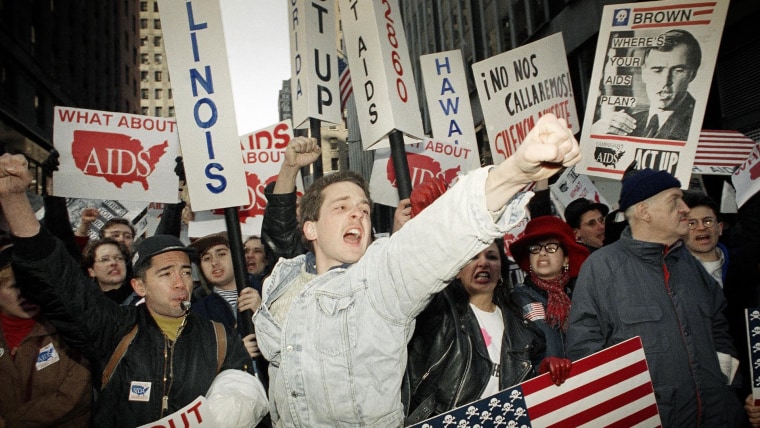
Four pioneering AIDS activists of the 1980s and ‘90s contend that there are other, consequential yet less obvious parallels playing out in real-time.
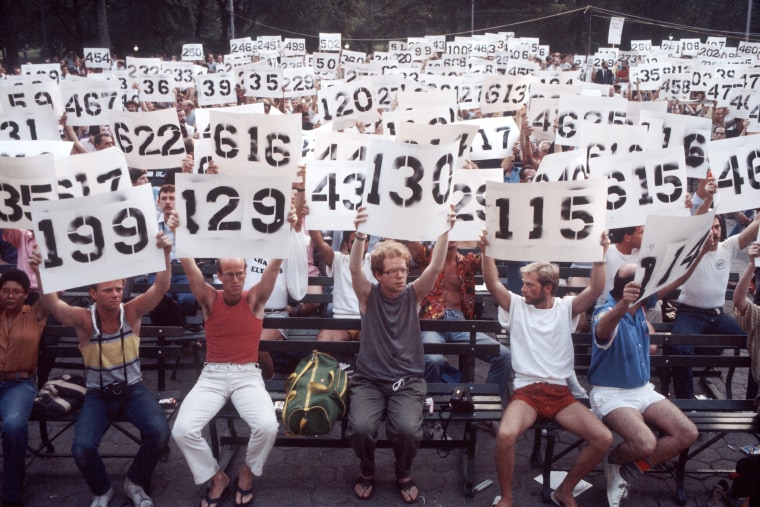
People hold up signs representing the number of AIDS victims in a demonstration in Central Park in New York City on Aug. 8, 1983. Allan Tannenbaum / Getty Images file
As in the early days of the AIDS crisis, they argue, government messaging around the outbreak has been flawed, gay men have been blindsided and public health officials have failed to defeat a severe disease plaguing the LGBTQ community.
“It feels like déjà vu,” said gay rights activist Peter Tatchell, who was a leading member of the Gay Liberation Front in the United Kingdom. “The lessons from the AIDS crisis and Covid have clearly not been learned.”
Public health officials around the world were slow to combat AIDS when it first began to emerge in men who have sex with men during the late 1970s. It wasn’t until June 5, 1981, that the United States released the world’s first government report on the infectious disease in the Morbidity and Mortality Weekly Report, a government bulletin on perplexing disease cases.
“In the period October 1980-May 1981, 5 young men, all active homosexuals, were treated for biopsy-confirmed Pneumocystis carinii pneumonia at 3 different hospitals in Los Angeles, California,” the report read. “Two of the patients died.”
Three years later, the U.S. government announced the development of an AIDS test, in addition to a vaccine, which never came to fruition. By 1985, an estimated 12,000 Americans had died of the disease.
Similarly, activists argue that the global response to tame monkeypox has been too slow to curb ballooning case numbers — more than 20,500 cases of the current monkeypox outbreak have been reported globally across 77 countries and territories since the start of May, according to the Centers for Disease Control and Prevention.
No one has died from monkeypox outside the 11 African nations where the infectious disease has become endemic since it was discovered in 1970. However, a substantial proportion of patients infected with monkeypox have been hospitalized for severe pain caused by pimple-like sores that commonly develop.
Since the first cases were discovered in May, the United States has distributed nearly 200,000 Jynneos vaccines — a two-dose vaccine to prevent smallpox and monkeypox — to the most at-risk population, which falls far short of its roughly 3.8 million gay men. In France, only an estimated 6,000 people have been vaccinated across more than 100 vaccine centers in recent weeks, French Minister of Social Affairs and Health François Braun said on Monday. And in the United Kingdom, health officials ordered an additional 100,000 vaccine doses last week to keep up with burgeoning demand.
Last Saturday, the World Health Organization declared monkeypox a public health emergency of international concern, a designation reserved for the most threatening global disease outbreaks, after initially forgoing to do so last month. More than two months after the first U.S. case of monkeypox was detected in mid-May, on Thursday public health officials in New York City issued a declaration that the infectious disease posed an imminent threat to public health, and officials in San Francisco declared a state of emergency.
“What’s interesting is that many of the scientists and clinicians who were trained during the AIDS epidemic or were there at the beginning, people like Tony Fauci, know this history, but the response to monkeypox has been alarmingly slow and chaotic,” said Gregg Gonsalves, who joined Act Up — the leading group that fought for action to combat AIDS — in 1990 and is now a professor of epidemiology at the Yale School of Public Health. “As an individual, it’s like, ‘Three strikes you’re out, man.’ HIV, Covid and now monkeypox? How many times can you make the same mistakes over and over again?”
Representatives from the National Institute of Allergy and Infectious Diseases, which Dr. Anthony Fauci has directed since 1984, and officials from the White House, where Fauci serves as the chief medical adviser to the president, did not immediately respond to NBC News’ requests for comment.
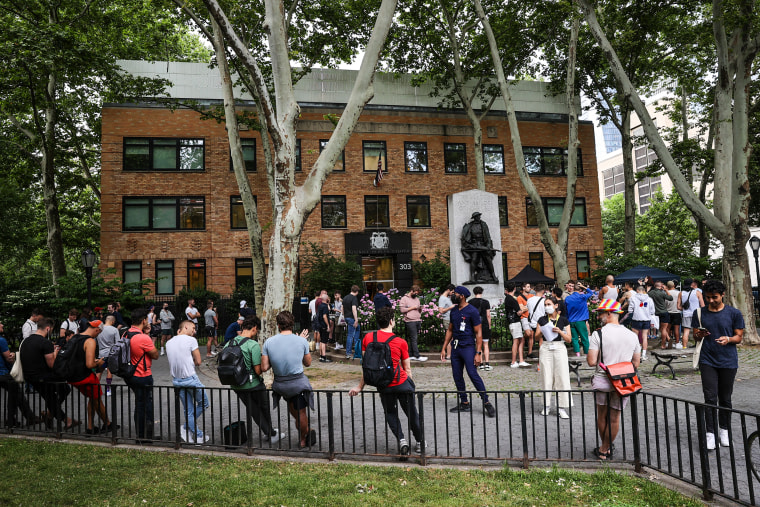
Images of men waiting in long lines outside clinics around the world to get vaccinated, technical issues with online vaccine portals and reports that accused the U.S. government of developing a “wait-and-see” response to the outbreak — reportedly calling for shipments of vaccines only as cases surged in the last handful of weeks — have piled on to activists’ fears that the public health response to monkeypox is shaping up to be a repeat of its flawed strategy to combat AIDS.
People lined up outside a Department of Health and Mental Hygiene clinic on June 23, in New York.Tayfun Coskun / Anadolu Agency via Getty Images
Although the virus started spreading in May, the U.S. didn’t order more doses of the monkeypox vaccine to add to its stockpile until June. Regulators also had not finished inspecting a key Denmark facility manufacturing monkeypox vaccines until July, leaving 1.1 million ready-to-distribute doses stuck in Europe.
“Just like during the AIDS pandemic, it seems that some governments care very little so long as monkeypox is just affecting men who have sex with men,” said Tatchell, who was turned away from a hospital in London that had run out of monkeypox vaccine last Sunday. “What other explanation can there be? Governments should have been rolling out emergency vaccination programs for gay and bisexual men two or three weeks ago.”
Some veteran AIDS activists also argue that as during the AIDS crisis, the messaging to combat monkeypox has not been tailored enough to reach the LGBTQ community.
Ron Goldberg, an early AIDS activist who joined Act Up in 1987, points to the “America Responds to AIDS” public service announcement campaign, which the government launched at the height of the crisis in the late 1980s. Many of the commercials featured heterosexual couples and displayed messages including “AIDS Is Everyone’s Problem.”
“At that time, they were so afraid of talking about gay sex, or anything like that, they had to bland out the message when they were trying to give some information,” Goldberg said. “If it’s happening within a certain population, you have to direct your messaging to that certain population.”
Activists have largely applauded public health officials’ efforts to not link monkeypox directly to the LGBTQ community — as many believe they did with AIDS — and thereby create stigma. However, some argue that repeated statements from public health officials that “anyone can get monkeypox” mirrors AIDS messaging that “anyone can get the AIDS virus” and also circumvents efforts to alert the demographic most at risk.
Research overwhelmingly suggests that the current outbreak of monkeypox is being driven overwhelmingly by men who have sex with men. A study in the New England Journal of Medicine published last week found that of the 528 cases of monkeypox researchers analyzed, 98% were found in men who identified as gay or bisexual. Another recent report by the the British Health Security Agency finding that of the 699 monkeypox cases for which there was available information, 97% were in gay, bisexual or other men who have sex with men.
“The numbers are there,” said Didier Lastrade, who founded the first French chapter of Act Up in 1989. “We shouldn’t shy away from this. … We’re big people, we’re grown-ups, we can take it. The stigmatization is happening either way.”
On Thursday, the WHO recommended that gay and bisexual men limit their number of sexual partners to protect themselves from monkeypox and contain its spread.
But compiled with two years of pandemic isolation and big summer events, such as last weekend’s annual Pines Party on Fire Island, some activists fear it will be difficult to get gay and bisexual men to curtail their sexual behaviors.
“You want to be able to reach people in their 20s and 30s and say, ‘Look, this is no joke. You’ve all seen the pictures. You’ve all had friends who have had monkeypox. You don’t want it,’” Gonsalves said.
More broadly speaking, Lastrade argued, the advent of pre-exposure prophylaxis, the HIV prevention pill (also known as PrEP), along with scientific proof over the past decade that treating HIV can prevent transmission, have caused gay and bisexual men to fall asleep at the wheel when it comes to their sexual health.
“The new generation totally forgot about the story of AIDS. I keep on writing books about AIDS but nobody reads them,” said Lastrade. “When s— happens, they forget their reflexes that we used to have because it was a question of life or death.”
Regardless of the messaging, with a lackluster global vaccine rollout, the activists fear the virus will become an infectious disease the LGBTQ community has to permanently live with, as it did with AIDS decades ago.
“Many people are saying we’re past the point of containment, that we already missed our chance,” Gonsalves said. “If that’s true, that is incredibly serious because this disease doesn’t necessarily kill, but the enormous suffering and expense of all of this is going to put a burden on many, many people, many, many health systems and many, many communities who have been already plagued.”
South Carolina became the seventh state last month to permit health care providers to decline to serve people if they feel doing so would violate their religious beliefs.
As a result, more than 1 in 8 LGBTQ people now live in states where doctors, nurses and other health care professionals can legally refuse to treat them, according to the Movement Advancement Project, an LGBTQ think tank. In addition to South Carolina, Mississippi, Alabama, Arkansas, Tennessee, Ohio and Illinois have similar measures in effect.
“The conflict between patient needs and religious directives has been a serious problem in the past, and I don’t see any sign of that issue being resolved quickly and easily.”
JENNY PIZER, LAMBDA LEGAL
Advocates and legal experts say the laws will further raise the barriers to health care for lesbian, gay, bisexual, transgender and queer patients.
“We often are worried that the expansion of religious rights in these contexts will be taken as a license to discriminate,” said Jenny Pizer, the law and policy director for the LGBTQ legal advocacy group Lambda Legal.
Proponents of such legislation, however, say the measures don’t allow providers to discriminate against or target LGBTQ people.
South Carolina state Sen. Larry Grooms, who supported his state’s law, the Medical Ethics and Diversity Act, told NPR in June that “it’s based on procedure, not on patients.”
“This is America, where you should have the freedom to say no to something you don’t believe in,” he told NPR.
Although “religious freedom” or “conscience” measures, as they’re often called, don’t explicitly list LGBTQ people among those who may be refused treatment, advocates say that in practice they are affected disproportionately.
Ivy Hill, the community health program director for the Campaign for Southern Equality, which promotes LGBTQ equality across the South, said transgender people are among those who will be the most negatively affected.
“When we have laws in place that make it easier for providers to discriminate, of course it’s not going to do anything but make it worse,” said Hill, who uses gender-neutral pronouns. “The people who are already on the margins of the margins are going to be the ones who are most deeply impacted by stuff like this.”
Even before the new law went into effect,they said, many trans people they work with in South Carolina struggled to find gender-affirming health care providers in the state willing to help them gain access to hormone therapy, leading some of them to travel to North Carolina to get care.
Hill said doctors usually don’t tell trans people that they won’t treat them for religious reasons, which makes it hard to know how often it happens. Research has found that LGBTQ people, particularly transgender people, are more likely to face medical discrimination.
A study published in 2019 found that 16 percent of LGBTQ adults, or about 1 in 6, reported experiencing discrimination in health care settings. A 2020 survey from the Center for American Progress, a liberal think tank, found that 16 percent of LGBTQ people, including 40 percent of transgender respondents, reported postponing or avoiding preventive screenings because of discrimination.
Maggie Trisler, who works in tech, said she had a great relationship with her primary care provider in Memphis, Tennessee, for about a year and a half in 2016 and 2017. He asked her in-depth questions about her health and the band she plays in, and he said he was going to take his wife to see her play.
Then, in March 2017, Trisler came out to him as transgender, and she said he suddenly became very cold and told her he doesn’t “know anything about the standards of care” for transgender people. He began to blame pain she was having on her weight, she said.
“It suddenly went from the best doctor-patient relationship I’ve ever had to just the absolute least helpful, most frustrating that I’ve had,” she said.
Three months later, Trisler said, the doctor effectively — although not explicitly — told her he couldn’t see her anymore.
“He did say that he was deeply uncomfortable treating me with [hormone replacement therapy], he wasn’t comfortable providing HRT, and if I was seeking that elsewhere, then maybe I should seek medical care elsewhere,” she said.
Trisler added that she was lucky to have good insurance and that it was easy for her to change doctors, although she acknowledged that she is “coming from a rather privileged position” and that what was just a nuisance for her could have been a “critical roadblock” for others.
While LGBTQ people have long faced barriers to health care because of religious refusals, Pizer said, such religious objections can violate both state and federal law in some cases.
Pizer pointed to a 2005 case in which the North Coast Women’s Medical Care Group in Southern California denied infertility treatments to her client Guadalupe “Lupita” Benitez because she is a lesbian. The providers argued that it was within their religious rights to refuse to offer treatment to Benitez, but the California Supreme Court decided that religious rights protected under California law don’t excuse violations of the state’s nondiscrimination law.
The court found that when doctors are “practicing in a particular field and offering services generally, according to patient needs in their field, they can’t pick and choose among patients in ways that violate the nondiscrimination law,” Pizer said.
Pizer said the problem with laws like South Carolina’s Medical Ethics and Diversity Act is that they use broad language that doesn’t give examples of situations in which a religious objection in medicine would violate medical standards or federal law. Many hospitals, including some that are religiously affiliated, receive federal funding. As a result, if they were to provide fertility treatments to heterosexual people and not to LGBTQ people, they would violate Section 1557 of the Affordable Care Act, which the Biden administration hopes to strengthen to better protect access to abortion and gender-affirming services.
Pizer said the issue is becoming more prominent and contentious as Catholic-affiliated institutions control an increasing proportion of the U.S. hospital system. As NBC News reported recently, more than 1 in 7 U.S. hospital patients are cared for in Catholic facilities.
“The conflict between patient needs and religious directives has been a serious problem in the past, and I don’t see any sign of that issue being resolved quickly and easily,” Pizer said. “A hospital that’s operating in a community to serve the community more broadly should not be imposing their religious beliefs on people that are not part of that faith or that are at the hospital for medical services, not religious services.”
In March 2020, when the COVID-19 pandemic was ravaging the world, a poster appeared in several places in Hyderabad, India. The poster warned, “Do not allow Kojjas, Hijras [an Indian transfeminine community] near the shops. If you talk to them or have sex with them, you will be infected with CoronaVirus. Beat & drive them away or call 100 [the emergency police contact in India] immediately. Save people from CoronaVirus Hijras. [sic]”
Several transgender-rights activists took note, and eventually, the police responded by removing the posters and launching a probe to identify the miscreants. But, this was not the first time that marginalized communities – especially queer and trans communities – were wrongly held responsible for the spread of a global pandemic and had violence instigated against them.
Unfortunately, it wasn’t the last time either. With the monkeypox virus (MPXV) having recently been declared a Public Health Emergency of International Concern by the World Health Organization (WHO), queer people are once again being discriminated against and stigmatized. Experts believe this will prevent successful public health interventions from controlling the spread of the disease.
Monkeypox Is Not A “Gay Disease”
MPXV is a viral disease that spreads through close contact. According to the Centers for Disease Control and Prevention (CDC), the infection spreads through:
Direct contact with MPXV rash, scabs, or body fluids from a person with MPXV,
Indirect contact, i.e., by touching objects or surfaces that have been used previously by somebody with MPXV,
Through respiratory droplets and secretions.
Although MPXV is not as infectious as COVID-19, more than 16,000 cases have been recorded worldwide, and the number continues to grow.
A July 21 paper published in the New England Journal of Medicine, which analyzed demographics of MPXV infections from April to June 2022, reported that “98% of the persons with infection were gay or bisexual men.”
Similarly, in a tweet dated July 23, WHO chief Tedros Adhanom Ghebreyesus mentioned that “this…outbreak is concentrated among men who have sex with men, especially those with multiple sexual partners.” Ghebreyesus added, “That means that this outbreak can be stopped with the right strategies in the right groups.”
Does this mean queer men are at a higher risk of MPXV infections? Gagandeep Kang, an acclaimed virologist at the Christian Medical College, Vellore, India, told LGBTQ Nationthat ‘men who have sex with men’ are not the only group affected by the disease. “If MPXV was a ‘gay’ disease,” she added, “children would not be infected – which they have been in previous outbreaks of MPXV and this one.”
Kang pointed out that while the MPXV virus has been detected in the semen of affected individuals, it is “not strictly speaking a sexually transmitted disease. It is more of the respiratory and skin-to-skin contact routes that lead to transmission.”
A report by The Mint suggests that most MPXV cases are reported in queer men because of the “demographic’s positive health-seeking behavior.”
Adding to Kang’s comments, Aqsa Shaikh, an associate professor of community medicine at the Hamdard Institute of Medical Science and Research (HIMSR), New Delhi, India, and a public health researcher, told LGBTQ Nation that the data on which current conclusions about MPXV transmission are based is a “very weak level of evidence in epidemiological studies.”
Further, Shaikh cautioned that it is essential to distinguish between “association and causation.”
“Just because two things occur together does not mean one causes the other,” she said. So, according to Shaikh, even if we were to go by the reports that say queer men are disproportionately affected by MPXV, it does not mean “having gay sex or being a man who has sex with a man increases your risk of transmission of the disease.”
However, none of this has stopped people from wrongly touting MPXV as a disease that disproportionately affects queer men. For instance, Muqtada al-Sadr, an influential Shia cleric in Iraq, took to Twitter on May 23 to suggest that MPXV resulted from same-sex behavior.
He also called MPXV “homosexual-pox” and asked that queer people “repent”, Middle East Eye reported.
Al-Sadr is not the only one guilty. Stand-up comedian Dave Chappelle has also been accused of calling MPXV a “gay disease”.
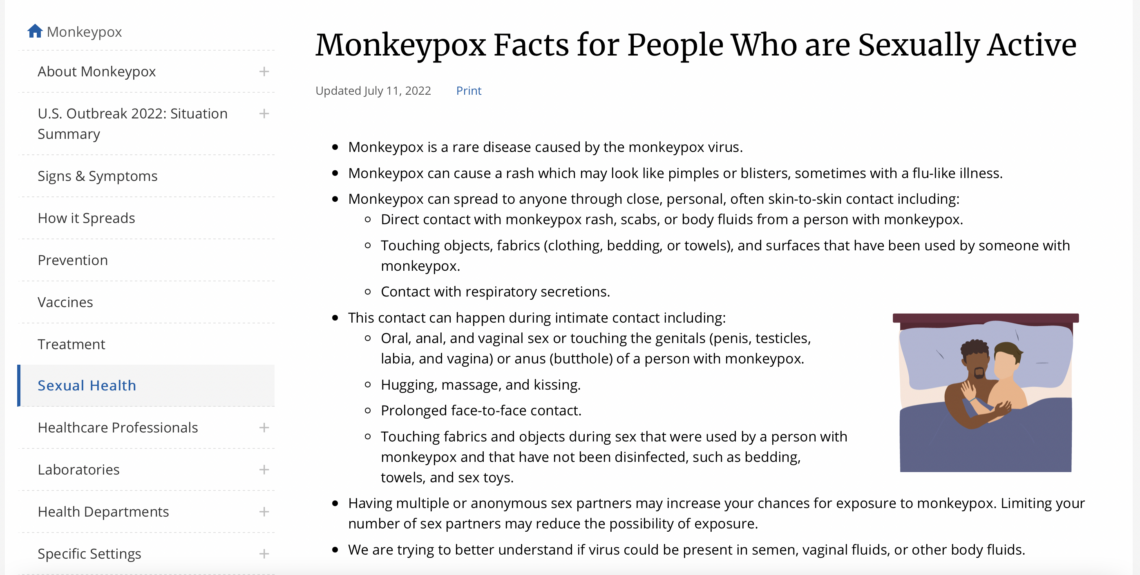
Interestingly, the CDC page on “Monkeypox Facts for People who are Sexually Active” mentions that “[the disease] can spread to anyone through close, personal, often skin-to-skin contact” [emphasis added]. However, the representative picture on the page shows two presumably male bodies in a sexualized position.
A screen grab of the CDC page as of July 25 2022
Remember COVID, AIDS, and SARS
Shaikh alluded that MPXV being portrayed as a ‘gay disease’ is one example of several instances where entire communities have been wrongly shown as carriers of disease and death. As an example, she pointed out how the SARS-COV-2 virus – the causative agent of the COVID-19 pandemic – was colloquially referred to as the ‘Wuhan virus’ in the initial days of the pandemic. This subjected Chinese people to discrimination and xenophobia.
Similarly, Muslims in India were subjected to severe discrimination and islamophobia when a large international gathering of Islamic preachers – the Tablighi Jamaat – in the country’s capital was blamed for a sudden rise in COVID-19 cases across the country. The Printreported, “For days, ‘Tablighi virus’ and ‘Corona Jihad’ trended on Twitter.” A politician from India’s right-wing Hindu-fundamentalist ruling party warned people not to buy vegetables from Muslims.
Perhaps one of the worst instances where queer and transgender persons were stigmatized and discriminated against while losing their lives to deliberate queer- and transphobia was when the HIV/AIDS infection was first identified worldwide.
It has been well-documented how queer and transgender people – along with other marginalized groups like people of color, sex workers, and migrant workers – were portrayed as the key carriers of the virus.
Further, as The New Statesmanhas reported recently, “there was little public will to tackle the virus until people realized that HIV infected everyone, including heterosexuals [sic], equally.”
Shaikh told LGBTQ Nation that this ostracization of marginalized groups negatively affected public-health interventions to control the spread of HIV.
“It doesn’t help because queer and trans people are already stigmatized, and they eventually go further into hiding,” she said, talking about how such stigma discouraged people from getting tested.
Discrimination against queer and trans people resulting from their stigmatization during the early years of the HIV/AIDS pandemic has left marks that are difficult to erase even today.
Science Over Stigma
Shaikh and Kang agree that touting MPXV as a ‘gay disease’ endangers both queer and non-queer people. In the case of queer people, Kang told LGBTQ Nation, “stigmatization leads to lack of or delayed access to care.” On the other hand, she added, “If MPXV is labeled as a ‘gay disease’, then straight people will consider themselves not at risk and be at a higher risk.”
According to Shaikh, tagging MPXV as a ‘gay disease’ is a “distraction.”
“Rather than researching MPXV, we appear to be keener to prove whether it is a ‘gay disease’ or not. A lot of crucial time and resources that could have been utilized in other aspects of epidemiology are getting wasted in this debate,” she said.
A bakery in a Chicago-area suburb that has been the target of vandalism and harassmentdue to a planned family-friendly drag event has now been ordered to stop hosting public events.
“I feel like this is discrimination and a conspiracy to interfere with my business,” Sac said. “Unfortunately, when the attention waned from all the hate this week, they shifted gears and started victim blaming me after we were attacked by a known domestic terrorist who committed hate crimes against us just one week ago.”
Sac says she was first informed that her business was not zoned for entertainment purposes at a Thursday meeting, which she described as “very threatening.” She says city officials also expressed concerns over public resources being used to protect UpRising Bakery after it was the target of a hate crime late last month.
“This issue is about a business conducting activities it was never permitted to conduct,” Village of Lake in the Hills officials said in a statement. “This zoning designation prohibits entertainment in large part due to the close proximity to residential neighborhoods and shared tenant parking.”
“We dispute the letter’s characterization of UpRising programs as ‘entertainment events’ that are prohibited in a B-2 zoning district,” writes senior staff attorney Rebecca K. Glenberg. “Even if that characterization is correct, however, the Village’s sudden determination to enforce the code against UpRising or Ms. Sac based on their exercise of First Amendment rights constitutes unconstitutional retaliation.”
UpRising Bakery became the target of repeated harassment last month after announcing a planned “child-friendly” drag event. “One morning I came in and there was a bag of feces outside,” Sac told Chicago’s ABC7 News. “There was a letter taped to the door that said pedophiles work here.”
The event had to be cancelled after the bakery was vandalized. On July 23, Lake in the Hills Police arrested 24-year-old Joseph I. Collins after he allegedly shattered windows and spray-painted hateful messages on the bakery.
Michigan’s Supreme Court has ruled that businesses, landlords, and others cannot discriminate based on sexual orientation or gender identity, even though the state’s civil rights legislation doesn’t specifically mention those categories.
The landmark 5–2 decision establishes that the bans on discrimination on the basis of “sex” in the state’s 1976 Elliott-Larsen Civil Rights Act (ELCRA) cover sexual orientation and gender identity.
In 2015, Michigan Democrats introduced bills that would have added explicit protectionsfor sexual orientation, gender identity, and gender expression into the ELCRA. The bills were blocked by Republican leaders. Michigan’s Supreme Court declined to hear an appealfrom Fair and Equal Michigan to have the 1976 law revised to include protections against anti-LGBTQ discrimination in 2021.
Writing for the majority this week, Justice Elizabeth Clement, a Republican, said, “Discrimination on the basis of sexual orientation necessarily constitutes discrimination because of sex.”
“Regardless of whether one defines ‘sex’ expansively or narrowly, the result of the textual analysis is the same: discrimination on the basis of sexual orientation necessarily involves discrimination because of sex in violation of (state law),” Clement continued.
“Our residents deserve to live in a state that recognizes the value of diversity and rejects the notion that our own civil rights law could be used as a tool of discrimination. This ruling is not only a victory for the LGBTQ+ community, but for all Michigan residents, and one that’s long overdue,” said Michigan Attorney General Dana Nessel in a statement.
Arguing before the court in March, Nessel and the American Civil Liberties Union cited the U.S. Supreme Court’s 2020 ruling in Bostock v. Clayton County which affirmed that Title VII’s ban on employment discrimination due to sex also protects LGBTQ people.
The case before the state supreme court involved two Michigan businesses that refused to serve LGBTQ people: Rouch World, a wedding venue that refused to host weddings for same-sex couples, and Uprooted Electrolysis, a hair removal service that refused to serve a transgender client.
The Michigan Civil Rights Commission voted in 2018 to interpret the state’s ban on discrimination on the basis of sex to include discrimination against LGBTQ people. Following Michigan Department of Civil Rights investigations, both businesses filed lawsuits claiming that serving LGBTQ violated their religious freedoms.
In 2020, a Michigan Court of Claims judge held that ELCRA does not cover protections for gay and bisexual people due to a previous state supreme court decision in Barbour v. Department of Social Services, where the court ruled that the state’s ban on discrimination because of sex does not ban discrimination against gay and bisexual people. In his summary judgement, however, Judge Christopher M. Murray said that following Bostock Michigan’s civil rights legislation was similar enough to apply the same reasoning to the case involving anti-transgender discrimination.
“We are encouraged that the Michigan Court of Claims has ruled the word ‘sex’ in ELCRA encompasses gender identity, but we will continue to argue that the U.S. Supreme Court was right to conclude, as did the Michigan Civil Rights Commission, that ‘sex’ in this context is also inclusive of sexual orientation,” Michigan Department of Civil Rights Chair Stacie Clayton said at the time.
This week’s ruling establishes that ELCRA covers discrimination against lesbian, gay, bisexual, and queer individuals as well as transgender people.
Morning turned into afternoon. A scorching sun blanketed the concrete of the local sports hall belonging to the community of Zolochiv, a frontline village just minutes from the Russian border.
There, over the course of several hours, the International Committee for the Red Cross, with the help of local residents, unloaded over 20 tons of supplies for the besieged townsfolk. The town’s mayor, Viktor Kovalenko, who for the preceding five months valiantly rallied the community against Russian aggression, oversaw the delivery.
An unassuming bisexual journalist who had returned to the city where she was born just days prior reported on the mission. Natalie Vikhrov shadowed Kovalenko and his team, covering the delivery and interviewing members of the community’s health, humanitarian, and security apparatuses. She was there, next to the mayor, as the Red Cross pulled away and the Russian rockets fell.
As Kovalenko barked out orders and headed into the bomb shelter to help lead the response against the early afternoon attack, she stayed by his side.
As a bisexual woman, Vikhrov has learned how to “make tough decisions.” Born in Kharkiv when Ukraine was still a part of the Soviet Union, Vikhrov’s working class parents made the decision to leave for Adelaide, Australia when she was 8 years old. As the USSR crumbled around them, her parents “wanted a better life for me and my sister.”
Now comfortable with using both queer or bisexual to describe her sexuality, in high school “it didn’t click,” for her that she was sexually different in any way.
“We didn’t have the access to the resources and communities that we have now, as a teenager in Adelaide I didn’t feel I had access to anything that helped me figure out my sexuality,” Vikhrov told LGBTQ Nation.
Coming out “gradually” in her mid 20’s, Vikhrov also found her career goals change in the last year of college when a professor suggested she look into journalism as a profession. She began to pursue a master’s degree in Journalism, eventually taking a position with The Bunyip, a South Australian newspaper.
Remaining with them for almost five years, covering local community and political affairs, the daughter of both Ukraine and Australia “always wanted to cover international news and foreign affairs, but it felt like a distant dream.”
Although coming from Kharkiv and speaking Russian at home as a child, Vikhrov didn’t “have many memories of my childhood in Kharkiv” and ultimately felt “more Australian than Ukrainian.”
Then in 2014 the Maidan Uprising swept across Ukraine, Vikhrov got her first “taste of reporting on foreign affairs” when she left Australia for London to report on the story. With support from the paper, she moved there in 2015. In London, for the first time, she came out as bisexual, moving past the transitory wording of “bicurious.”
For Vikhrov there just wasn’t ”a reason to come out earlier.”
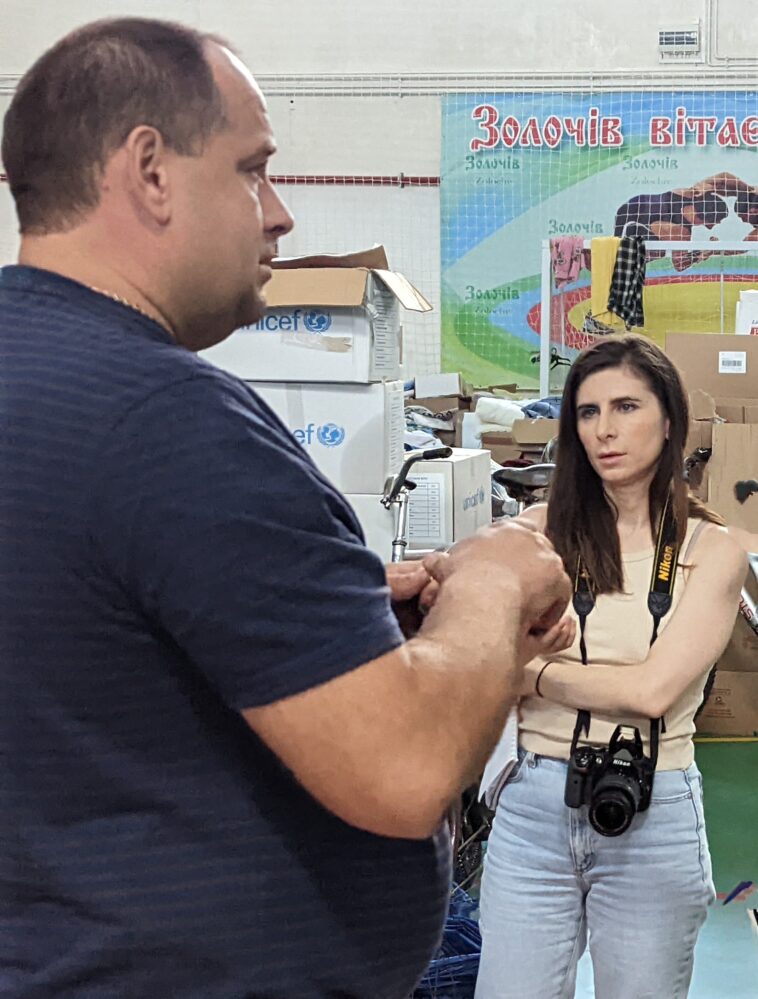
Natalie Vikhrov, interviews Sergy, who runs the Humanitarian Aid center in Zolochiv.
“Not every person’s experience is linear,” she said. “When people know their sexuality quite clearly, it is a different experience than being bisexual. For me [labels] are to explain to the world that I’m interested in both men and women. It’s just to notify people that I date women too. It’s more for other people, but labeling myself is for the outside world vs anything it did for my own self.”
“You continue the process of coming out with every new person you meet, and every new place you go. It’s completely valid for people to understand their sexuality and explore it.”
Vikhrov’s journey accelerated in the middle of 2016 when she made the leap from London to Kyiv, taking employment with the Kyiv Post, and bringing her back to live in her native nation for the first time since she left more than two decades prior.
Once she had full-time employment in Ukraine secured, Vikhrov began to look more closely at the LGBTQ community in Ukraine and “felt there was a gap in coverage.”
“I wanted to fill that gap,” she said, so she became a freelancer. It allowed her to explore the trials, tribulations, and victories of Ukrainians who weren’t as commonly visible in the media.
Having seen friends get physically hurt at the hands of anti-LGBTQ activists over the years, Vikhrov is “quite aware that there is still work to be done” for queer acceptance but acknowledges that “Ukraine needs to focus efforts on the war at the moment.”
Three days after the full-scale invasion commenced, she left the capital for Moldova before arriving in London once more, noting she “didn’t have security, a driver, a team behind me. I’m a freelancer on my own.” Yet, once more she returned to Ukraine, arriving again in May.
Why did she come back?
“I did it because it’s my job and because it was something I felt I need to do. I’ve been covering this country for years and I wanted to show what was happening here, what Ukrainians were going through.”
She then shared what has been the key driver of her life’s philosophy, and what originally led her overseas.
“I believe in approaching things that scare you, and part of why I ended up here was because I took a direction that scared me, and that’s important.”
A Republican lawmaker attended his gay son’s wedding just three days after joining the majority of his GOP colleagues in voting against a House bill that would codify federal protections for same-sex marriage.
The gay son of Rep. Glenn Thompson, R-Pa., confirmed to NBC News on Monday that he “married the love of [his] life” on Friday and that his “father was there.” NBC News is not publishing the names of the grooms, neither of whom is a public figure.
Thompson’s press secretary, Maddison Stone, also confirmed the congressman was in attendance.
“Congressman and Mrs. Thompson were thrilled to attend and celebrate their son’s marriage on Friday night as he began this new chapter in his life,” Stone said in an email, adding that the Thompsons are “very happy” to welcome their new son-in-law “into their family.”
Gawker was the first to report on the nuptials in an article published Thursday, the day before the ceremony, though it was not reported whether the lawmaker would attend.
In an email last week to the local newspaper Centre Daily, Stone called the Respect for Marriage Act “nothing more than an election-year messaging stunt for Democrats in Congress who have failed to address historic inflation and out of control prices at gas pumps and grocery stores.”
Thompson, who represents the state’s 15th congressional district, was one of 157 House Republicans who voted against the bill on Tuesday. However, 47 of his GOP colleagues joined Democrats to pass the bipartisan measure following fears that existing same-sex marriage protections could be in the crosshairs of the conservative-leaning Supreme Court.
The Respect for Marriage Act is now being considered by the Senate, where 10 GOP lawmakers must join all 50 Democrats to send the legislation to the desk of President Joe Biden. One of five Republican senators who has already confirmed a yes vote on the bill is Rob Portman of Ohio, who declared his support for same-sex marriage in 2013 after his son came out as gay.
The bill comes at a time when 71% of Americans, including a majority of Republicans, supports same-sex marriage, according to aGallup poll last month.
More than 20 Republican attorneys general filed a lawsuit Tuesday against President Joe Biden’s administration over a Department of Agriculture school meal program that prohibits discrimination based on sexual orientation and gender identity.
The challenge, led by Tennessee Attorney General Herbert Slatery, claims that the federal government is attempting to force states and schools to follow anti-discrimination requirements that “misconstrue the law.”
The coalition of attorneys general are hoping for a similar result to a separate challenge from earlier this month when a Tennessee judge temporarily barred two federal agencies from enforcing directives issued by Biden’s administration that extended protections for LGBTQ people in schools and workplaces.
The judge sided with the attorneys general, ruling that the directives infringed on states’ right to enact laws, such as banning students from participating in sports based on their gender identity or requiring schools and businesses to provide bathrooms and showers to accommodate transgender people.
“This case is, yet again, about a federal agency trying to change law, which is Congress’ exclusive prerogative,” Slatery said in a statement. “The USDA simply does not have that authority. We have successfully challenged the Biden Administration’s other attempts to rewrite law and we will challenge this as well.”
In May, the USDA announced that it would include discrimination based on sexual orientation and gender identity as a violation of Title IX, the sweeping 1972 law that bars sex-based discrimination in “any education program or activity receiving Federal financial assistance.” The directive requires states to review allegations of discrimination based on gender identity and sexual orientation, as well as update their policies and signage.
The agency warned that states and schools that receive federal funds, which include the national school lunch program overseen by the USDA, have agreed to follow civil rights laws. Although the agency says it wants voluntary compliance, it also has promised to refer violations to the Department of Justice. It is not clear whether the federal government would hold back funding for school meal programs as part of its enforcement.
The directive followed a landmark civil rights decision by the U.S. Supreme Court in 2020 that, under a provision called Title VII, protects gay, lesbian and transgender people from discrimination in the workplace.
According to the lawsuit, the attorneys general allege that the USDA’s new directive is based on a “misreading” of the Supreme Court’s ruling and did not provide states and other groups the opportunity to provide public comment.
The attorneys general involved in the lawsuit filed Tuesday are from Alabama, Alaska, Arizona, Arkansas, Georgia, Indiana, Kansas, Kentucky, Louisiana, Mississippi, Missouri, Montana, Nebraska, Ohio, Oklahoma, South Carolina, South Dakota, Tennessee, Texas, Utah, Virginia and West Virginia.
A spokesperson for the USDA did not immediately return a request for comment.
Either America is a country where fundamental rights are guaranteed, or we are a nation where your rights depend on who you are and your zip code. Those are the stakes right now, as an emboldened far-right political movement attacks federal protections for the rights to vote, access abortion care, marry the person you love, and more.
It’s a critical step forward, then, to see the U.S. House’s strongly bipartisan passage of the Respect for Marriage Act. The bill, which heads to the Senate, would ensure federal recognition of marriages between same-sex couples and interracial couples.
The bill’s passage comes after Justice Clarence Thomas’s chilling sentences declaring not just the Obergefell ruling ensuring the freedom to marry but also Griswold’s guarantee of contraception and Lawrence’s right to consensual same-sex relationships to be “demonstrably erroneous decisions.” He all but invited challenges to these historic precedents.
The Respect for Marriage Act evokes an earlier time in the long fight to win marriage equality. I have been replaying vivid memories of traveling the South a decade ago with our team at the Campaign for Southern Equality, standing with hundreds of same-sex couples who courageously requested marriage licenses in their hometowns to call for marriage equality, knowing they’d be denied. We worked with families in small towns like Morristown, Tenn., and cities like Mobile, Ala. I think about those who were plaintiffs in lawsuits striking down marriage bans in state after state. Those brave efforts worked — changing hearts, minds, laws, and our nation. Public support for the freedom to marry has grown steadily to now-historic levels, with polling tracking support at 71 percent. So many Americans have a close friend or family member who is LGBTQ+ and show their support everywhere from the kitchen table to the voting booth.
Despite this resounding public support, the LGBTQ+ community has been subject to a ceaseless assault from a far-right, Christian nationalist movement that exerts tremendous political power at every level of the American government. This movement has, through a mix of methodical strategy and deliberate chaos, seized the reins of the U.S. Supreme Court and almost every state legislature in the South. If they prevail in having Obergefell or other landmark precedents revisited or overturned, so many families and marriages would be at risk.
We must all be clear-eyed that we are entering a new chapter in the movement for LGBTQ+ equality. We’re already seeing the damage, especially in the South, which has been and will likely continue to be the epicenter for these attacks. Nearly every Southern state has passed laws targeting transgender youth for discrimination and exclusion. Parents who advocate for their trans children are being investigated as “child abusers.” The Texas attorney general has vowed to defend a 50-year-old law criminalizing homosexuality. A South Carolina congressional candidate called for LGBTQ+ people to be charged with treason. Even simple civic affirmations of LGBTQ+ people, such as Pride Month proclamations, are being censored.
We must harness the power of the supermajority of Americans who support LGBTQ+ equality. A record number of communities in the South have passed nondiscrimination ordinances, there is strong bipartisan support for LGBTQ+ protections, and countless Southern families are responding with love when a child comes out. For me, this is a source of very real hope.
The variety of hope I feel is not the buoyant stuff made of easy promises of what can be. It is, rather, hope that’s like a muscle you train until it’s strong enough for the work ahead, the kind made of prayer, grit, and crystal-clear resolve.
The stakes for our country could not be higher. Now is the time for us to take swift action in every part of our lives:
Individuals should take legal steps to protect themselves and their families and make concrete, detailed plans around access to health care, including transgender health care and reproductive health care.
Communities should mobilize funding, volunteers, and infrastructure for frontline work to support communities under attack.
At the state level, we should focus efforts on repealing “latent” laws, from so-called sodomy laws to marriage bans, that could be revived to challenge LGBTQ+ people.
Nationally, we must demand that Congress codify in federal law the freedom to marry who you love, abortion access for all, and the right to contraception — including urging the Senate to pass the Respect for Marriage Act.
We know what is possible if we prevail — and we also know what happens if we do not. This work is our charge. It is the work of our lifetimes. And it will take all of us.
Rev. Jasmine Beach-Ferrara is the executive director of the Campaign for Southern Equality. She and her family live in Asheville, N.C.