The US Department of Justice is to review Trump-era policies on housing trans inmates in federal prisons.
After the Donald Trump administration, like it sought to across housing, health and education, rolled back trans rights when it comes to the prison system, the Biden administration might just change that.
The federal Bureau of Prisons, the agency that cares for incarcerated Americans, saw its policies pulled into the spotlight when the leader of an anti-government militia, who is trans, was sentenced to 52 years for helming the 2017 bombing of a Minnesota mosque.
Emily Hari, sentenced Monday (13 September), will now see which of the 122 federal prisons she will carry out her jail time decided by the Bureau of Prisons Transgender Executive Council.
The council consists of psychologists, prison experts and correctional officials, but they are currently using a Trump-era manual when it comes to housing trans inmates – meaning that Hari may be forced to serve her prison sentence in a men’s prison.
Under the Trump administration, the Bureau can only assign trans people to the correct prison “in rare cases”, according to the Associated Press.
This was an about-turn from the Obama era, where the council was advised to “house by gender identity when appropriate”.
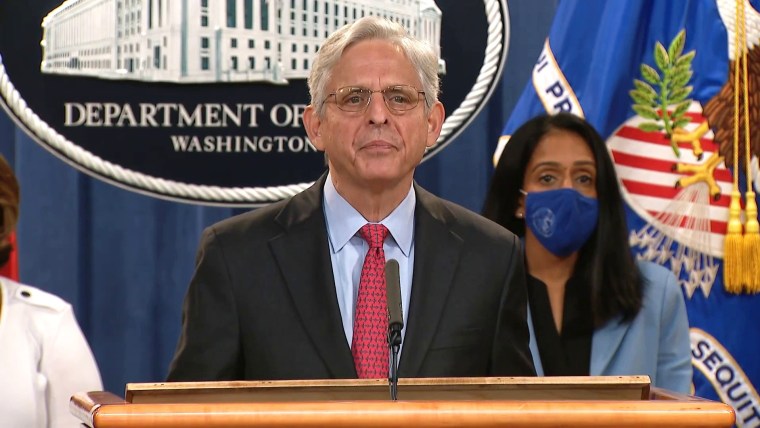
Justice Department officials told the news agency that they are looking into reviewing these policies, “including providing gender-affirming housing where appropriate”.
“[The Bureau of Prisons] is in the process of reviewing the current version of its policy regarding transgender inmates,” they added.
The council will now decide where Hari is housed, where factors such as her health and safety, history of disciplinary action and the security level of the prison itself are considered.
Of the 156,000 federal prisoners in the US, only 1,200 are trans – a number, while small, is a damning indictment of the higher incarceration figures for trans Americans.
According to Lambda Legal, an LGBT+ advocacy group that provides legal advice, nearly one in six trans Americans – and one in two Black trans people – have been in prison.
Inside, they face disproportionate levels of violence and abuse, both at the hands of fellow inmates and, at times, prison staffers, the group added.
In one harrowing case, a trans military veteran in New York sentenced to a month in jail found herself transferred to a men’s prison in 2019. There, she faced weeks of verbal and physical humiliation.
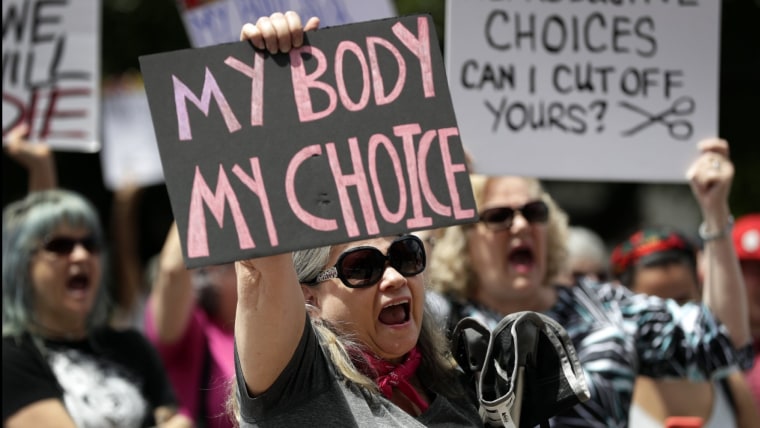
The Supreme Court allowed a Texas law to go into effect this month that bans abortions after six weeks of gestation.
In the recent legislative session, Texas lawmakers introduced a slew of bills that sought to limit transgender people’s bathroom access and prohibit changes to birth certificates. Many of the bills take aim at young trans people’s access to health care and participation in high school sports. Similar bills have been introduced in at least 19 other states.
Though seemingly unrelated, some LGBTQ rights advocates and abortion rights advocates see parallels.
“The barrage of policy attacks on transgender youth flows from the same hateful, coercive ideology spurring on attacks against abortion rights and voting rights. These attacks on personal liberties are not — and have never been — happening in a vacuum, but rather each as part of a conservative campaign of control,” Ruth Dawson, principal policy associate for the Guttmacher Institute, an abortion-rights research group, told NBC News in an email. “LGBTQ justice and sexual and reproductive health care are inextricably linked, because they both involve individuals’ autonomy in their most intimate decisions.”
‘A coordinated attack’
Abortion rights advocates and LGBTQ advocates pointed out similarities among recently introduced bills.
“The bills themselves share the same kind of idea. They are really restrictive infringements on bodily autonomy, on individual rights and the state taking an aggressive, moralizing police role,” Jules Gill-Peterson, a history professor at Johns Hopkins University, said.
The bills misinterpret or misrepresent medical data, she added, and “claim to do things they don’t, like protect women and children.”
For example, Arkansas passed a law in March that bans access to gender-affirming care for transgender minors, including reversible puberty blockers and hormones. However, puberty blockers have been used for a variety of medical purposes in cisgender young people for decades, said Kara Mailman, senior research analyst at abortion-rights organization Reproaction.
Proponents of the law argued that transition care for minors is “experimental” and that trans minors often change their minds about their genders and detransition later in life. Medical experts say neither of those claims are backed by scientific evidence.
Major medical organizations — including the American Medical Association, the American Academy of Pediatrics, the Endocrine Society and the American Psychological Association — support gender-affirming care for trans minors and oppose efforts to restrict access. And research has found that access to gender-affirming care such as puberty blockers reduces the risk of suicide among trans youths.
“So much of what they claim is dangerous is heavily tested and extremely safe,” Mailman said.
The same groups pushing for limitations on abortion are also advocating for new laws that limit transgender people’s access to health care, Sasha Buchert, senior attorney at the LGBTQ rights group Lambda Legal, said. “It’s a coordinated attack.”
Gill-Peterson agreed. “Anti-trans and anti-abortion legislation are often very similar in terms of the literal bills that come to state legislative floors. They are part of the same political strategy, and they are being funded and ghost-written by the same kinds of groups.”
This year, the conservative organizations Heritage Foundation, Alliance Defending Freedom and Family Policy Alliance partnered in an initiative, Promise to America’s Children, that opposes the Equality Act and provides lawmakers with socially conservative model legislation.
One piece of legislation listed on the site as exemplary is California’s “Protecting Children From Experimentation Act of 2021,” a bill that would criminalize providers of “gender reassignment medical interventions on minors” with up to five years in prison.
The site invites visitors to sign a “promise” that includes “protecting” children’s minds, bodies and relationships to parents: “We believe that America’s children are the nation’s greatest resource. While a culture — and sadly, a government — around us seek to sexualize children for the sake of a political agenda, we seek to protect children and nurture their minds, bodies, and relationships,” the website states.
Among signatories to the promise are Republican lawmakers from over a dozen states.
The Heritage Foundation, Alliance Defending Freedom and Family Policy Alliance did not immediately respond to requests for comment.
‘Political grammar’
Proponents of laws restricting abortion and transgender rights present them to the public in a similar manner, according to Gill-Peterson. She said anti-trans bills employ the same “political grammar” tried and tested in anti-abortion politics, which is defense of “an imaginary child in danger.”
“We have seen this since the Reagan revolution,” she continued, “that the unborn child becomes the rallying cry to restrict rights.”
Texas’ new law, for example, refers to “protecting the health of the woman and the life of the unborn child” in its justification.
Gill-Peterson said the groups and politicians advocating for the bills find them to be politically expedient. “Is this a good bill for fundraising? Is it good for the base? Does it turn out the vote? Does it distract people from other issues?”
She described the manipulation of the image of the child in the anti-trans laws as “particularly cruel.”
“This rhetoric of child protection is being used to support politics that target children for severe harm,” she said.
For example, a bill in Texas would classify any gender-affirming care as child abuse, and a Tennessee bill would prohibit several kinds of gender-affirming care for minors, including simply talk therapy.
Nine states — eight this year — have banned trans athletes from participating on the sports teams that align with their gender identity.
The final version of Florida’s Fairness in Women’s Sports Act, which Gov. Ron DeSantis, a Republican, signed in June, omitted requirements that transgender athletes in high schools and colleges undergo testosterone or genetic testing and submit to having their genitalia examined.
While such legislation purports to be about child protection, Gill-Peterson said, those who are most affected by the law are the most marginalized, with already precarious access to resources.
“It’s no question that a lot of these clinics, especially Planned Parenthood, are also offering gender-affirming care services,” said D. Ojeda, a policy advocate at the National Center for Transgender Equality. “I think that is why the opposition have targeted these two issues.”
Gill-Peterson also sees the spate of anti-trans bills as part of a more widespread political scapegoating of transgender people.
“There is a lot more social stigma and violence directed at trans people right now,” she said.
“Anti-trans politics is a major plank of ethnonational, authoritarian political movements around the world,” she said, citing examples from Brazil, Poland and Hungary.
In June, for instance, Hungary’s Parliament passed legislationbanning content in schools deemed to promote homosexuality and transgender issues.
‘War of attrition’
Alex Petrovnia, director of the TransFormations Project, said his trans rights organization is tracking at least 77 anti-trans bills, including over two dozen bills in Texas.
“We expect to see a lot more bills in 2022,” he said.
“They are playing a war of attrition; they are unrelenting. The goal of this is to outlast people. Unless we continue to fight these, the bills will slip through, and we won’t notice,” Petrovnia said. “It’s not about one fight; it’s about 77 this year.”
In the face of an overwhelming number of bills, some advocates and progressive academics are calling for LGBTQ rights and abortion rights groups to work together.
“We cannot address these injustices as if they are siloed; it is crucial that we see and fight these attacks for what they are — part of a broader pattern of coercive, conservative ideology,” Guttmacher’s Dawson said.
One way to do this is to ensure the language used to describe issues is as inclusive as possible, according to Reproaction’s Mailman.
“We’ve used women-centered language for so long,” Mailman said. “Trans people are also part of the community that has abortions. It has kept a lot of trans people from feeling at home in these abortion spaces.”
Ojeda said passage of the Equality Act would help both the trans rights and abortion rights movements.
The Equality Act is a piece of federal legislation that prohibits discrimination based on sexual orientation and gender identity in numerous arenas, including employment, housing, education, public accommodations, credit and jury service.
Ojeda said it would be “vital in combating these terrible bills at the state level,” adding that the Equality Act “would be an ultimate line of defense.”
In fact, on Wednesday, a coalition of 47 women’s rights and abortion rights groups — including NARAL Pro-Choice America, National Women’s Law Center and Time’s Up Now — announced “unequivocal support for the federal Equality Act” with a statement of solidarity. The groups also pushed back on “false claims that women’s rights groups are divided” over the legislation.
“As women and girls continue to face discrimination and harassment that interferes with their ability to live safely and securely, and as states mount unprecedented attacks on women’s rights and the rights of transgender students, federal legislation protecting people of all genders could not be more important than it is right now. That is why we, the undersigned, express our unequivocal support for the Equality Act,” a statement issued by the groups said in part.
Gill-Peterson said that the impending legal fight over Texas’ abortion bill is an opportunity to rethink strategy around abortion and trans rights and to think more expansively about how to ensure everyone has access to the health care they need.
“Even if we restore the previous norm around abortion access, it will not have solved the prior problems of income inequality and racial discrimination in health care” that prevent many people from accessing abortion services, Gill-Peterson said. “What would it look like for people in favor of abortion rights and in favor of trans rights to combine their visions for reproductive freedom, health care justice and racial justice?”
German authorities have compensated nearly 250 people who were prosecuted or investigated under a Nazi-era law criminalizing homosexuality that continued to be enforced enthusiastically after World War II.
The Federal Office of Justice said Monday that, up to the end of August, 317 people had applied for compensation and it had been paid out in 249 cases. So far, it has paid out nearly 860,000 euros (just over $1 million).
Fourteen applications are still being processed, 18 were rejected and 36 were withdrawn, the office said. The deadline for applications is July 21 next year.
German lawmakers in 2017 approved the annulment of thousands of convictions under the Paragraph 175 law, which remained in force in West Germany in its Nazi-era form until homosexuality was decriminalized in 1969. They cleared the way for payments of 3,000 euros per conviction, plus 1,500 euros for every year of jail time those convicted started.
In 2019, the government extended compensation to people who were put under investigation or taken into investigative custody but not convicted. It offered payments of 500 euros per investigation opened, 1,500 euros for each year of time in pre-trial custody started, and 1,500 euros for other professional, financial or health disadvantages related to the law.
The law criminalizing male homosexuality was introduced in the 19th century, toughened under Nazi rule and retained in that form by democratic West Germany, which convicted some 50,000 men between 1949 and 1969.
Homosexuality was decriminalized in 1969 but the legislation wasn’t taken off the books entirely until 1994.
In 2000, the German parliament approved a resolution regretting the fact that Paragraph 175 was retained after the war. Two years later, it annulled the convictions of gay men under Nazi rule but not the post-war convictions.
The compensation also applies to men convicted in communist East Germany, which had a milder version of Paragraph 175 and decriminalized homosexuality in 1968.
In all, some 68,300 people were convicted under various forms of Paragraph 175 in both German states.
In the early hours of Friday, June 11, three men were assaulted and subjected to homophobic abuse near a pub in Liverpool, England, by a group of teenagers, one of whom had a knife, according to police.
“Due to the abhorrent verbal abuse the victims were subjected to, we’re treating this as a hate crime,” Detective Inspector Chris Hawitt said in a statement at the time, calling the attack “despicable” and saying the Merseyside Police would not “tolerate people being targeted in this manner because of their sexual orientation or gender identity.”
A few weeks after the incident, the Merseyside Police released a report saying that the “increase in incidents involving LGBT+ victims has, sadly, mirrored an increase in crime experienced as lockdown restrictions were eased.”
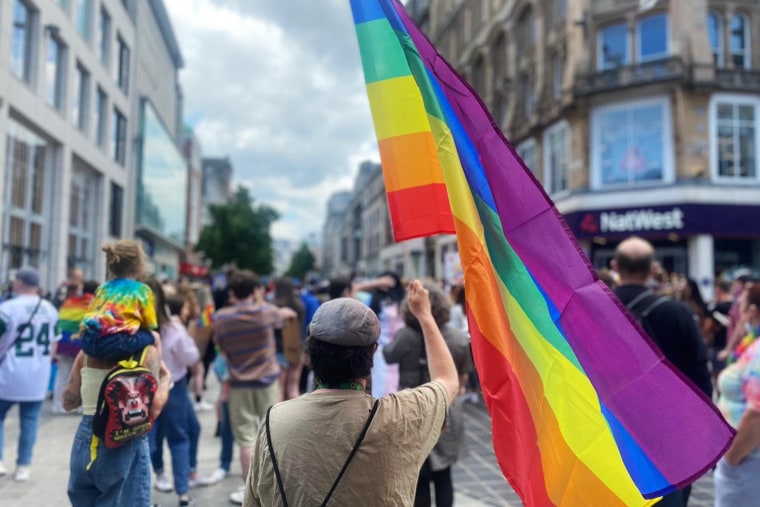
The LGBTQ community organized a rally with the help of people who work in nearby bars and several organizations after three men were assaulted and subjected to homophobic abuse near a pub in in Liverpool, England, in June 2021.Stefan Price / LCR Pride Foundation
In response, the local LGBTQ community organized a protest rally. People who work in nearby bars and several organizations helped put it together, according to the Liverpool-based LGBTQ organization LCR Pride Foundation.
“Hate crime is still a shock,” said Andi Herring, the foundation’s CEO and co-founder. “For me it’s determination that these people won’t win, and we’ll carry on doing what we said and tackle it.”
The Liverpool assault is one in a string of anti-gay hate crimes that happened over the summer in the United Kingdom.
West Midlands Police arrested three men last month after a same-sex couple was attacked in the Gay Village of Birmingham, England. Police said two men, both in their 30s, were attacked Aug. 15 with bottles after being subjected to homophobic abuse. One was left unconscious and the other suffered “nasty cuts,” according to a police report.
Crimes based on sexual orientation and gender identity have increased almost every year since at least 2015, according to government data from England, Wales and Scotland. In England and Wales, sexual orientation hate crimes rose by 19 percent and anti-transgender crimes by 16 percent from March 2019 to March 2020. In Scotland, the number of hate crimes related to sexual orientation rose by 5 percent from April 1, 2020, to March 31.
The U.K. government, in a statement last year, attributed the uptick to better crime recording by law enforcement and improved identification of what is considered a hate crime. The police also report spikes in hate crimes after major political or terrorist events.
While some British LGBTQ activists agreed that queer people are more comfortable reporting hate crimes to police than they were in the past, they said the isolation from the pandemic and the increase in political hate speech and violence are energizing people with anti-gay feelings.
“If there are people in power who are bigoted … that legitimizes people to be hateful in their everyday life,” said Rebecca Crowther, policy coordinator at the Equality Network in Edinburgh, Scotland.
Crowther said that in addition to the mental health toll the pandemic-related lockdown had taken on people, she has witnessed a rise in hate crimes in Scotland, adding that mistrust between the community and the police still exists.
After an attack involving two men in Edinburgh in July, three men were arrested and charged in connection with the alleged assaults and homophobic crime, according to Police Scotland.
“It’s become the ‘Twilight Zone’ up here,” Crowther said.
Herring said he also attributes the increased hate-crime numbers to more survivors understanding what a hate crime is and a growing confidence that they will get the support they need after reporting.
In the same month, the U.K. government scrapped plans to allow transgender people to self-identify and announced that a medical diagnosis of gender dysphoria was required to legally transition. The government also said it planned to open three gender clinics in 2020.
Eighty-five percent of British people surveyed said they would be supportive if their child, sibling or close relative came out as lesbian, gay or bisexual, and 71 percent said they would feel the same about a family member coming out as transgender or nonbinary, accordingto an August YouGov survey. Seven percent of people in Britain identify as LGBTQ, the survey reported.
Crowther said visibility and allyship affects a community’s friendliness toward LGBTQ people. When Edinburgh bars and public spaces shut down because of the pandemic, residents saw less LGBTQ markers like rainbow flags, according to Crowther.
“It sends a message to the wider public that you are a welcoming space and won’t tolerate hate,” Crowther said of LGBTQ equality symbols.
As the countries reopen, Herring said combating anti-gay sentiments should happen all year around. He said everyone has a responsibility to report hate crimes they witness.
“I can see everything moving in the right direction,” Herring said about ongoing education efforts and Liverpool venues that want to become official safe spaces for the LGBTQ community. “It’s not just a reaction to one crime; it’s about the bigger picture.”
A university that fired a professor after she came out as trans must reinstate her with tenure, a US appeals court has ruled.
The trans English professor, Rachel Tudor, won her sex discrimination lawsuit against Southeastern Oklahoma State University, claiming she was denied tenure and ultimately fired after she came out.
The university had argued that the hostility engendered by the six-year legal battle with Tudor, and the school’s concerns about her work, meant it shouldn’t have to reinstate her – but three judges at the 10th US Circuit Court of Appeals unanimously rejected that argument, according to Reuters.
The court said that because Tudor won her 2015 discrimination lawsuit it was clear that she would have been granted tenure if she wasn’t trans, ruling out the university’s arguments about her academic record.
“A tenured university professor holds an insular position that can effectively operate without the need for extensive collaboration with colleague or schools administrators,” circuit judge David Ebel wrote.
That amount was reduced to $300,000 by a judge in 2018, who cited the caps on damages under Title VII of the Civil Rights Act 1964. The same judge, district judge Robin Cauthron in Oklahoma City, also awarded Tudor $60,000 in “front pay” to reflect her lost future earnings – despite her seeking more than $2 million in front pay.
In 2018, Cauthron denied Tudor’s request to be reinstated to her job with tenure, accepting the school’s claim that many other faculty members opposed her return and that it did not have the funds to pay her salary. Tudor appealed this decision, and the 10th Circuit ruling said her evidence was clearly sufficient for a jury to rule in her favour.
The panel of judges referred to evidence of the school’s dean and vice president making comments about Tudor’s appearance and lifestyle, the fact that a faculty committee had voted to grant her tenure, and testimony from experts affirming that Tudor is more qualified than other, tenured, professors in her department.
And the judges also agreed with Tudor that there was not the kind of “extreme hostility” that would make her reinstatement impossible.
“There are plenty of workarounds and solutions making reinstatement possible in cases where some animosity exists, such as a remote office, a new supervisor, or a clear set of workplace guidelines,” the judges wrote.
Forcing non-binary students to choose “male” or “female” on application forms leaves schools and colleges at “massive risk” of legal action, an expert has warned.
The forms that students pursuing further education must complete force them to choose a binary sex option – and non-binary students to misgender themselves.
This includes on the individualised learner record (ILR) that further education providers must fill in with a student’s information so they can access funding.
This is a policy set by the Education and Skills Funding Agency (EFSA), an “arms-length” official body sponsored by the Department of Education.
But the practice puts further education institutions at “massive risk” of legal action under the Equality Act 2010, said Emma Lambert of independent provider Dynamic Training.
“The ESFA’s old fashioned attitude to gender identities not only risks damaging the provider reputation, but it will undoubtedly end up in complaints and possibly legal action, which will be left with the provider to deal with,” Lambert told FE Week.
Dynamic Training, which provides apprenticeships for NHS nurses and skills courses for the Greater London Authority, asks its learners which pronouns they use and manually enters these into the documents.
However, Lambert explained, “there’s no way on the ILR system you can put anything other than male or female”.
She said she is “frustrated” by the lack of action from EFSA on this both because of the risk to providers and because she thinks “it’s wrong anyhow” not to allow students to select the correct gender for themselves.
Lambert added that Dyamic Training has raised this with EFSA multiple times, but only received non-committal answers.
Further education is the band describing education for students in the UK who are over the age of 16 but before degree-level, or higher, education.
Non-binary recognition part of ‘societal change’
While the Equality Act 2010 specifically protects those undergoing or proposing to undergo some form of gender reassignment, whether that protection extends to non-binary trans people has been unclear – until recently.
Last year, a landmark case won by a non-binary person against Jaguar Land Rover affirmed that non-binary and genderfluid people are protected from discrimination under the “gender reassignment” provision of the Equality Act 2010.
This progress, 11 years since the Equality Act was introduced, means it “seems timely for those characteristics protected by law to be reviewed and expanded in light of over a decade of societal change”, said Association of Colleges boss David Hughes.
Hughes added that while EFSA and the Department of Education are “working within limitations”, the challenge of including non-binary gender options on forms should not be “insurmountable”.
PinkNews contacted EFSA and the Department of Education for comment.
The Ugandan government has made the absurd, offensive claim that some LGBT+ asylum seekers fleeing the country are merely faking their sexuality to live in Western nations.
Homosexuality is illegal and punishable by life imprisonment in Uganda, which has some of the strictest anti-LGBT+ laws in the world. Most queer Ugandans survive by staying under the radar, and many who manage to escape fear death if they return.
Yet foreign minister general Jeje Odongo cast doubt on the legitimacy of queer asylum claims by pointing out that many male gay asylum seekers have wives and children.
“These Ugandans who went out on the pretext of being homosexuals. Now their lie is catching up with them because when they settle, they ask to bring their wives and children,” he said, according to Daily Sabah.
“It is unfortunate that some people who are not gays pretend to be gays so that they get citizenship in countries which sympathise with them. Such people will make developed countries lose trust in all Africans.”
The fact that many gay asylum seekers have wives is hardly surprising in a country where so many gay men are closeted, and societal pressure to marry and have children is strong.
None of this precludes a person from identifying on the LGBT+ spectrum, but Ugandan reverend Solomon Male saw it as undeniable proof that queer refugees’ sexuality is “fake”.
“All those are economic gays. Homosexuality is a business to most Ugandans who claim to be gays,” he told Anadolu Agency (AA). “It is all about getting money. Some people earn by calling themselves gays or working with organisations that deal with them.”
He alleged that some prominent lawyers were making lots of money by preparing fake documents, and claimed that pretending to be gay was now the “easiest” way to get a European visa.
This characterisation was countered by Frank Mugisha, director of Sexual Minorities Uganda, the country’s most prominent LGBT+ rights group.
He said there was nothing surprising about gay men marrying and having children as sexuality can be flexible; it’s also the case that many returning Ugandans may lie about their sexuality to avoid persecution.
“Someone might be sexually straight today and then the next day he might be gay and vice versa,” he said. “Because they leave Uganda as gays after being persecuted by [the] state and Ugandans, so they want to come back as different people who are no longer gays.
“The fact that the laws against gays still exist makes them come back with wives and children to live freely.”
The exact number of LGBT+ Ugandan refugees worldwide is hard to determine. In 2016 the office of the United Nations High Commissioner for Refugees issued a report saying 500 Ugandans had applied for asylum in Kenya based on their sexuality.
But LGBT+ activists say those estimates were too low because most refugees were categorised as having fled or claimed asylum for different reasons.
Health insurer Aetna Inc has been sued for allegedly discriminating against beneficiaries that are lesbian, gay, bisexual, transgender and queer by requiring them to pay more out of pocket for fertility treatments.
In a proposed class action filed Monday in federal court in Manhattan, plaintiff Emma Goidel said she and her spouse were forced to spend nearly $45,000 for fertility treatments as a result of Aetna’s policy, which required same-sex couples to pay for fertility treatment out of pocket before becoming eligible for coverage.
A spokesperson for Aetna, which was acquired by CVS Health Corp in 2018, did not immediately respond to a request for comment.
Goidel is covered through her spouse by Aetna’s health insurance plan for Columbia University students, which provides broad coverage for intrauterine insemination (IUI) or in vitro fertilization (IVF) treatments, according to the complaint.
However, while couples that can try to get pregnant through heterosexual intercourse can receive coverage simply by representing that they have tried for six or 12 months, depending on age, couples that cannot conceive through intercourse because of their sexual orientation or gender identity must first pay out of pocket for six or 12 months of IUI, according to the complaint.
Goidel alleges that beginning last year, she and her spouse paid for four unsuccessful IUI cycles, and one unsuccessful IVF cycle, before becoming pregnant through a fifth IUI cycle, all of which Aetna refused to cover.
She said she chose IUI despite previous failures in part because of the higher cost of IVF.
“Ms. Goidel has endured great emotional distress in having to choose a course of treatment based on cost, rather than based on her personal and medical circumstances in consultation with her doctor,” she said.
“Aetna’s discriminatory policy is an illegal tax on LGBTQ individuals that denies the equal rights of LGBTQ individuals to have children,” Goidel alleged. “At best, these individuals incur great costs due to Aetna’s policy language. At worst, these exorbitant costs are prohibitive and entirely prevent people who are unable to shoulder them — disproportionately LGBTQ people of color — from becoming pregnant and starting a family.”
The lawsuit cited a report from New York’s Department of Financial Services in February explicitly stating that policy’s like Aetna’s violated state law.
Goidel is bringing claims under the Affordable Care Act’s anti-discrimination provisions and New York state and city human rights laws, seeking to represent a class of people covered by Aetna student health plans in New York.
The case is Goidel v. Aetna Inc, U.S. District Court, Southern District of New York, No. 21-cv-07619.
Almost anyone who has ever purchased a home would agree – it is a very special and meaningful moment in life. For most of us, and often perhaps especially for those in the LGBTQ community, a home can be a place of refuge – a place where you can be part of a community and a neighborhood of others to whom you feel connected. It can be a place of support, celebration, and a starting point from which to thrive and grow with others you care about.
Understandably, then, the idea of losing that home that you love so much can be overwhelming, to say the least. Unfortunately, that’s exactly the predicament that many homeowners found themselves in as a result of the recent pandemic and all that has accompanied it.
Until recently, under the Cares Act, homeowners across the country who found themselves in a difficult financial position as a result of the pandemic and were having difficulty making their mortgage payments were offered two types of protection: first, a foreclosure moratorium that prohibited banks from foreclosing on homes, and secondly, the right to request and receive a forbearance, which would permit homeowners to temporarily stop making mortgage payments. Both gave homeowners the option to breathe a little easier as they tried to navigate all of the unanticipated life changes that accompanied the pandemic.
Recently, however, after being extended several times, the federal moratorium on mortgage foreclosures ended. Understandably, many homeowners, including many in the LGBTQ community who relied upon the moratorium may now find themselves feeling overwhelmed and anxious about what this means from a practical perspective. Does it suddenly mean that homeowners will find themselves faced with thousands of dollars of overdue payments that had been on hold for more than a year?
If you find yourself asking this question, know first, that you aren’t alone. It’s estimated that around 1.75 million homeowners, or approximately 3.5% of all homes, are in some stage of the foreclosure process with their bank. While it’s understandable to wonder and feel worried, try not to panic. While the end of the foreclosure moratorium does mean that lenders can proceed with foreclosures, LGBTQ homeowners who find themselves in a difficult situation can still reach out for help, and there are resources available.
The Consumer Financial Protection Bureau has advised that those who received forbearance under the Cares Act and who are still experiencing financial hardship as a result of the pandemic may have the opportunity to ask for and receive an extension. The federal government has also offered a series of measures that are intended to help prevent foreclosures, including:
• Providing qualifying homeowners with what roughly amounts to a 25% reduction in monthly principal and interest payments;
• Continuing the requirement that mortgage servicers give those borrowers who can resume payments the option of moving missed payments to the end of the mortgage at no additional cost;
• Offering assistance to those who are making less than they did before the pandemic, which will help them to seek work and catch up on missed tax and insurance payments.
It’s also important to keep in mind that ultimately, banks don’t currently have much incentive to foreclose on those homeowners who are behind on their mortgages. Housing prices have been steadily rising, meaning that few homeowners owe more on their mortgage than the overall value of their homes. As a result, banks are often more likely to restructure a loan, or possibly place missed payments on the back end of a mortgage. In some circumstances, a bank may attempt a forced sale instead of a foreclosure – allowing the bank to get some of its money back, and the homeowner to receive the equity they built in the home, and to move forward without a negative mark on their credit report.
In addition to helpful options offered by the government, LGBTQ homeowners facing foreclosure should reach out to their local communities and explore options that may be available there as well. Talk to realtors who know the community well and who may be aware of local assistance, counseling, or other resources. Reach out to family and friends who have been through this situation before. Don’t be afraid to ask for help. Sometimes, we all need it.
Lastly, it’s important to remember that any legal proceeding takes time – typically, a foreclosure proceeding takes at least 120 days per federal law, as well as additional time for court proceedings. For that reason, instead of panicking, remember that you have time to plan. Reach out to family and friends for leads on places that you may be able to rent or stay at while you work to get back on your feet financially. Take advantage of any offers that your bank or lender may make to work through your current financial issues and come out in a better place on the other side, if possible. Most of all, remember that this time, like all difficult times in life, is temporary. You will find a way forward, and there is a better and brighter chapter ahead. At GayRealEstate.com, we’re here to help you get there.
At GayRealEstate.com, helping the LGBTQ community through every aspect of the real estate experience is our passion. In many cases, this means offering assistance with the home buying and selling process and connecting LGBTQ home buyers and sellers across the country with realtors who know and love their communities, and who can ensure that the buying and selling process is the best it can possibly be. In other cases, it means being there for our LGBTQ communities across the country and helping existing homeowners continue to love and live in the homes that they own. Whatever your real estate needs, we would welcome the opportunity to speak with you and learn how we might be able to help. Contact us at any time.
Jeff Hammerberg is founding CEO of Hammerberg & Associates, Inc. Reach him at 303-378-5526 or jeffhammerberg@gmail.com.
Las Vegas Raiders star Carl Nassib has made history as the first openly gay player to play during an NFL game.
Nassib contributed to the Raiders nail-biting 33-27 win over the Baltimore Ravens on Monday (13 September).
Nassib, who came out publicly as gay in June, told reporters that he was happy the team got to win on the “day I kind of made a little bit of history”.
“I had a lot of people come before me in the LGBTQ community that helped me get to where I am, and I’m super thankful for that,” Nassib said, USA Todayreported.
He added that the atmosphere in the stadium that night was absolutely “bananas” and said the team “loved the enthusiasm from fans”, according to CNN.
“This was my first experience of Raiders fans – by far the best NFL fans I’ve ever seen,” the defensive lineman added.
Nassib caused a game-changing fumble which clinched the win in overtime, helping the Raiders earn their third straight season-opening win.
Raiders’ head coach Jon Gruden hinted there was every chance that Nassib could play in future games. According to USA Today, he said Nassib had a “great training camp”, and the team will “need him here obviously as we move forward” in the season.
Nassib caused a game-changing fumble which clinched the win in overtime, helping the Raiders earn their third straight season-opening win.
Raiders’ head coach Jon Gruden hinted there was every chance that Nassib could play in future games. According to USA Today, he said Nassib had a “great training camp”, and the team will “need him here obviously as we move forward” in the season.
Last month, Carl Nassib opened up about how his teammates reacted to him coming out. He described how he got a “great” reception from his fellow players, adding he knew their reaction was “going to be good”.
“I had zero stress about that,” Nassib told reporters. “Absolutely no worries about that.”
He received “nothing but love and support” from his “great teammates”.
“Football players get a bad rep, but we’re humble, hardworking, accepting people, and this is a great example of that,” Nassib added.