Mike Heath, a long–time anti-LGBTQ activist in Maine who now runs Helping Hands Ministries, has been a regular participant in Dave Daubenmire’s daily program. On Friday, Daubnemire turned the mic over to Heath so that he could announce his plans.
“I’m going to do a world tour,” Heath announced. “The theme is ‘Faggots are Maggots.’ The tour is inspired by the work of Donald Trump. This isn’t satire. I’m serious. I started supporting Donald Trump early in the 2016 primary for one reason: He insults his enemies. He makes things personal that deserve to be personal.
“The decades of leftists being the only ones allowed to make everything personal are over. It’s long past time for WASP manners to take a back seat to the truth. Long past time. Faggots are indeed maggots. Maggots consume the rancid flesh of rotting dead things. Faggots are no different.”
Heath last appeared on JMG in 2016 when his Maine group launched a campaign to recriminalize homosexuality.
From a statement by the National Institutes of Health:
The National Institute of Allergy and Infectious Diseases (NIAID), part of the National Institutes of Health, has stopped administration of vaccinations in its HVTN 702 clinical trial of an investigational HIV vaccine. This action was taken because an independent data and safety monitoring board (DSMB) found during an interim review that the regimen did not prevent HIV. Importantly, the DSMB did not express any concern regarding participant safety.
The Phase 2b/3 study, named HVTN 702 or Uhambo, began in 2016 and is taking place in South Africa. It was testing an investigational prime-boost vaccine regimen based on the only vaccine regimen ever to show protection from HIV—the regimen tested in the RV144 clinical trial in Thailand led by the U.S. Military HIV Research Program and the Thai Ministry of Health. For HVTN 702, the vaccine regimen was adapted to the HIV subtype Clade C most common in southern Africa, where the pandemic is most pervasive.
“An HIV vaccine is essential to end the global pandemic, and we hoped this vaccine candidate would work. Regrettably, it does not,” said NIAID Director Anthony S. Fauci, M.D. “Research continues on other approaches to a safe and effective HIV vaccine, which I still believe can be achieved.”
“There’s absolutely no evidence of efficacy,” says Glenda Gray, who heads the study and is president of the South African Medical Research Council (MRC). “Years of work went into this. It’s a huge disappointment.” The efficacy study, which began in October 2016, is known as HVTN 702. It enrolled 5407 sexually active, HIV-uninfected men and women between 18 and 35 years of age at 14 sites across the country.
Researchers randomly assigned half of the participants to receive a pair of HIV vaccines used in a one-two punch called a prime boost, whereas the other half received placebo shots. The trial was supposed to last until July 2022. But on 23 January sneak peaks at the data to evaluate safety and efficacy informed Gray and the other leaders of the study that it was “futile” to continue. There were 129 infections in the vaccinated group and 123 in those who received the placebo.
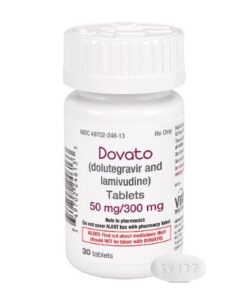
Historically, HIV treatments have included three or more medications (oftentimes combined in one pill) to keep HIV suppressed and help people living with HIV reach and maintain undetectable viral loads. In the spring of 2019, the U.S. Food and Drug Administration (FDA) approved the complete regimen combo pill Dovato (dolutegravir + lamivudine), manufactured by ViiV Healthcare, giving clinicians for the first time a two-drug option to treat individuals just beginning HIV treatment.
“I’m concerned that this will lead to massive amounts of Dovato use, two-drug therapy, that will bite us down the road,” said Gandhi, who is medical director of Ward 86. “We have lots of experience with three drugs, and there is a concern about resistance with a two-drug regimen.”
(Photo: ViiV Healthcare)
Gandhi explained that lamivudine (3TC), the NRTI in Dovato, has a low barrier to resistance—meaning that it’s easy for a person to develop resistance to the effects of 3TC so that the drug no longer works. When this happens if a person is taking Dovato, the person is effectively on dolutegravir monotherapy. And, people taking only dolutegravir can develop resistance mutations that would rule out future treatment with dolutegravir and, likely, other integrase inhibitors. Dolutegravir monotherapy, Gandhi said, is “a terrible idea.”
“If you lose [develop resistance to] dolutegravir after some time, you’ve just lost the entire first-line class of drugs that we have to treat HIV [INSTIs],” she said.
Drug resistance can be transmitted (i.e., it’s possible for a person who has never taken HIV medications to already have a resistance mutation), so HIV clinicians test for resistance mutations prior to starting therapy. If a person has a resistance mutation, HIV providers can tailor the drug treatment to work around resistance. Resistance can also develop if someone taking HIV medication isn’t adherent to treatment—for instance if they forget to take or aren’t able to take medications every day as prescribed.
For these reasons, Gandhi urges clinicians to consider adherence when prescribing two-drug regimens—knowing that “we’re just not that good” at estimating how adherent a person can be.
“I would be more comfortable at this point giving people a chance to adhere and do well with a three-drug regimen, and then maybe downgrading them to a two-drug regimen if they are adherent,” said Gandhi. “Patients should be aware of the importance of adherence, which is true of any regimen, but particularly true with a two-drug therapy. I wouldn’t want them to miss any doses. And I would want them to talk to their provider about how to take medication, so that they both could be reassured.”
Gandhi said she worries that health care providers who do not specialize in HIV treatment may miss some of these nuances with the new DHHS guidelines—opting to prescribe a two-drug regimen out of concerns over toxicities in regimens with three drugs.
“Young healthy people probably aren’t going to get toxicities with TAF or abacavir (the third drug in the combo pills Biktarvy and Triumeq, respectively). I think it’s interesting that we are talking about two-drug therapy now due to concern about toxicities. For example, NSAIDS (e.g., ibuprofen) can cause renal issues, but we don’t even think twice before putting people on long-term NSAIDS if they’re young and not at risk of renal toxicity. You want to tailor your toxicity concerns to risk factors of that individual. If they have risk factors for cardiovascular disease, you should be concerned about abacavir. If they have risk factors for renal toxicity, you should be concerned about TAF,” said Gandhi
FDA approved Dovato for the initial treatment of HIV based on the results of the GEMINI 1 and 2 studies, which enrolled over 1,400 people starting HIV treatment for the first time. The studies found that 86% of individuals had undetectable viral loads <50 copies after 96 weeks (compared to 89.5% of people taking a three-drug regimen of dolutegravir + TDF/FTC). 85% of participants were men and two-thirds were white.
Although these study results show that dolutegravir + lamivudine can be a successful treatment option for some, Gandhi said that she questions the extrapolation of one phase 3 study to the entire population of people living with HIV.
“People who get into clinical trials are often very rarified populations. They are adherent, they come in for clinical trial visits. They are often white and they are often men. We need some real-world studies, some demonstration projects, that include women and people who may have adherence difficulties,” said Gandhi.
Also new in the DHHS guidelines is a recommendation that HIV treatment be started immediately or as soon as possible after diagnosis, to decrease the time required to achieve viral suppression and reduce risk of HIV transmission, a recommendation Gandhi supports and said she was pleased to see.
The challenges—and opportunities—of two-drug regimens
Here’s a low-down on HIV drug resistance, including what it is and how you get tested for it. Also, get advice from HIV clinicians on prevention and what to do if you do develop HIV drug resistance.
—
San Francisco AIDS Foundation receives funding from corporate partners including those in the pharmaceutical industry. Editorial decisions on our blog and website are made independently. For more information about SFAF funding, please refer to our financial and tax documents.
EMILY LAND, MAEmily Land is the editor-in-chief of BETA blog and content marketing manager at San Francisco AIDS Foundation.
Arielle Clark, 28, grew up in a sober household in Louisville, Kentucky, and was never drawn to alcohol. But when as a teenager she began her process of coming out, alcohol suddenly became ubiquitous in her social life.
“When I was growing up and I was kind of figuring out my sexuality, all of a sudden I was inundated with alcohol,” Clark told NBC News.
Going to Kentuckiana Pride, her home state’s largest gay pride celebration, at 16 was Clark’s “LGBT puberty” moment, she said. While she witnessed the heavy presence of alcohol at the event, she felt accepted. Her next milestone, friends said at the time, would be turning 21 and being able to go to the gay bars.
Clark quickly realized that alcohol use — and, in many cases, dependence — were large parts of the LGBTQ social scene that she had been introduced to. She eventually decided gay bars were not for her, but she had a hard time finding a social alternative.
Arielle Clark, a 28-year-old Kentucky native, is trying to find a brick-and-mortar for her tea shop, which would be the first sober, LGBTQ space of its kind in Louisville.Savannah Eadens / Louisville Courier Journal
That’s when she got the business idea for Sis Got Tea, a tea shop that she hopes will provide a safe, alcohol-free social space for Louisville’s black queer community that is accessible to people with disabilities. While she continues to fundraise for the shop’s brick-and-mortar space, she has been hosting pop-up events around the city that aren’t centered on alcohol.
“It took until my mid- to late-20s to finally find a group of black, queer women where I could finally relax my shoulders, and I really want to provide that for the community,” Clark said.
Sis Got Tea, which Clark hopes will open later this year, will be among a new wave of queer, alcohol-free social spaces and traveling events that have popped up over the last few years and serve as alternatives to gay bars. While sober social spaces and events have become popular among younger Americans more broadly, they are particularly noteworthy within the LGBTQ community — where substance abuse is disproportionately high and gay bars have long served as unofficial community centers and safe havens.
‘Third spaces’
Indiana resident Morgan Roddy has been making chocolate truffles and desserts for more than a decade. With the support and encouragement of her wife, Roddy opened the high-end chocolate shop Queer Chocolatier in Muncie, Indiana, in 2017.
She said she decided to make the name of her shop explicitly LGBTQ after the state’s governor, Mike Pence, was elected vice president. She feared his anti-gay track record would force some people to go deeper into the closet — so she wanted to come further out.
“I knew there would be a lot of people who would feel safer if they were quiet about their sexual orientation,” she explained. “I decided to take space and hold it for those who would be feeling vulnerable in these times.”
For Roddy, keeping Queer Chocolatier alcohol-free is a commitment to keeping the space accessible to patrons of all ages and those recovering from substance abuse. She also believes it will foster a better environment for political discourse and community activism.
“As a queer woman with a masters in sociology, ‘third spaces’ are places where ideas are shared and relationships are built,” Roddy said. “Without alcohol, there’s less pressure to engage in sex-centered conversations or hookup culture as well. Allowing for people to thrive and flourish in third spaces without alcohol has the potential to bring about some truly radical changes.”
Across the country in Portland, Oregon, Ori Gallery in 2018 launched a creative and community-organizing space for trans and queer artists of color. The gallery was founded by Maya Vivas, a ceramic and performance artist, and Leila Haile, a tattoo artist and community activist.
Aside from offering a rotating gallery space, Ori Gallery also offers free or low-cost workshops and organizes meetups for LGBTQ artists of color.
Ori Gallery was not originally intended to be a sober space — people are still allowed to consume alcohol at private events — but since the gallery’s organizers prioritize youth in their programming, alcohol is not provided at the venue’s regular events. Maintaining alcohol-free environments is often a way of ensuring that queer spaces are accessible to young people under 21.
In Los Angeles, Cuties has become a popular destination for daytime socializing among the city’s LGBTQ community. Virginia Bauman, the venue’s queer owner, opened the café in 2017 after a successful IndieGogo fundraising campaign. Bauman said she wants Cuties to serve as a casual space that can reduce isolation and promote greater connectivity within the community.
“Having spaces that are accessible from an economic standpoint where people can just be for long periods of time … without having to justify their existence, or without having to justify why they’re there, is one of the biggest opportunities that I still see for queer communities,” she explained.
The absence of alcohol sales, which produce relatively high profit margins, can be a financial obstacle, according to Bauman. In order to compensate, Cuties started a fundraising campaign to bring in additional money to help keep the venue afloat.
‘We’re tapping into a need’
In a number of cities across the U.S. — and beyond — LGBTQ event organizers and online communities are bypassing the overhead of a physical space altogether and are focusing on intentionally alcohol-free social gatherings that are not dependent on a specific location.
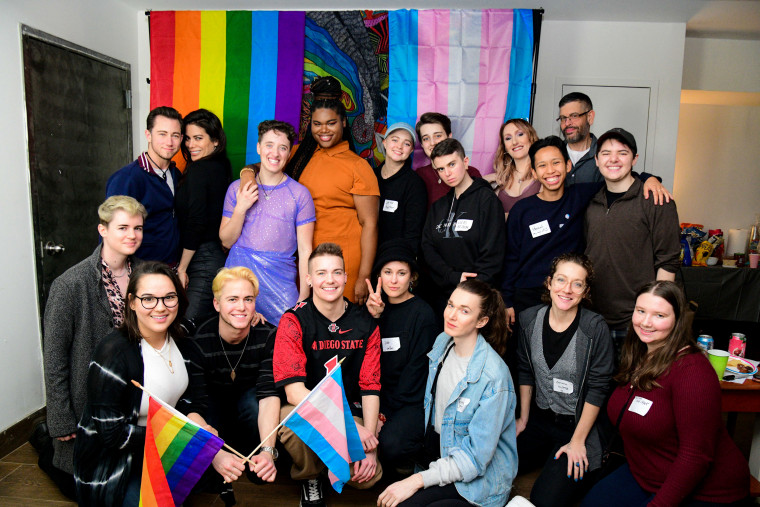
Photographer and queer activist Cyrus Golestan is the co-founder of Trans in the Wild, a nonprofit that provides resources to New York’s LGBTQ community. Last month, he hosted his first alcohol-free party in an apartment building basement in Brooklyn. The idea was to “overcome winter gloom” with “sober fun,” according to the party’s promotional flyer.
“We used to have so much fun as kids without any type of substances,” Golestan, 29, said. “Why can’t we just get together and play?”
Cyrus Golestan, second from left in the front row, at an alcohol-free social event he hosted in Brooklyn, New York, on Jan. 11, 2019.Courtesy of Cyrus Golestan
After posting the promotional flyer, Golestan said he received an influx of positive messages. Many of those who wrote to him expressing interest in the party told him they “do partake in alcohol sometimes” but were “excited that this is a healthier option,” he said.
Golestan said he does not identify as sober, but he recognizes how he has used alcohol in the past to cope, especially during his college years before coming out as trans.
“I was trying to be something that I wasn’t,” Golestan said. “Being closeted even from yourself is this really stressful thing that alcohol let me escape from.”
Golestan’s experience of using alcohol to cope with isolation is not unique. A study published last October in the journal Psychiatric Services found LGBTQ stressors, like discrimination and stigma due to one’s sexual orientation or gender identity, “contribute to the development of substance use disorders among some LGBTQ young adults” between 21 and 34.
Golestan’s first sober party attracted over 30 people, which he considered a success, so he is already in the planning stages for the next one on Feb. 22.
Last month, a new alcohol-free LGBTQ social meetup also debuted in Chicago. Aptly named the Chicago Queer Sober Social, the event was organized by Powerbabe, a sober queer community founded by two tech professionals, Phoebe Conybeare, 30, and Hollie Lambert, 28, who have both been sober and in recovery for two years.
The event, which is scheduled to take place monthly, is not part of a structured recovery program and is marketed simply as an alcohol-free social community. Conybeare said she and Lambert saw the need for a safe space for those who decided to abstain from alcohol for any number of reasons.
“Most sober spaces online and IRL catered to a cisgender, heterosexual and monogamous crowd or were program-based,” Chicago Queer Sober Social’s Facebook page says. “Most queer social events were focused on bars and parties where drugs and alcohol would be present.”
The group’s first event was held in a coffee shop and drew over 100 attendees. Given its success, the next Chicago Queer Sober Social, scheduled for Feb. 18, will be held in a larger venue.
“People were extremely grateful for the space — many were thanking us throughout the night and excited about attending future events and offering to help us organize,” Conybeare told NBC News. “We now have a small list of volunteers just from our first event. Response from the community has been incredibly supportive, and we’re so glad we’re tapping into a need.”
In North Texas, KT Kershen, 27, who has been sober and in recovery for four years, said she started an alcohol-free social group last year due to a “personal need for connection and a sense of community.”
“The experience of intense loneliness that comes at the intersection of being both queer and sober drove me to create a space for myself and for others like me,” she said, noting that as a queer atheist woman she felt like “an outside” in the 12-step Alcoholics Anonymous program.
Kershen said Queer Sober Society initially started as an online group for North Texan LGBTQ people in recovery, but she said it has since morphed into an in-person meetup that connects at least once a month. The group organizes mocktail parties, game nights, bowling outings and other alcohol-free events.
“It is my hope, and I am going back to school to get a bachelors in psychology to prepare for it, that Queer Sober Society will one day be a nonprofit organization that provides a safe space for folks like me,” Kershen said.
The United Kingdom is also seeing queer sober parties pop up. Misery, a queer sober collective focused on mental health and healing, launched in 2019 and hosts events in London and Berlin. Queers Without Beers, which started in 2018, started as an online community and then started organizing sober meetups in different U.K. cities, including monthly pop-up “bars” in London, Bristol and Manchester.
“Everyone is welcome,” Laura Willoughby, the founder of Queers Without Beers, said. “We have people who are going through traditional recovery, the local muslim LGBT group, students who have never really drunk as well as people looking to cut down or just socialize without the pressure of needing to drink all evening.”
‘The possibilities are endless’
Arielle Clark, who in November exceeded her $10,000 fundraising goal for a physical Sis Got Tea space in Louisville, said she’s encouraged by the queer, alcohol-free events she has heard about popping up across the U.S. and abroad.
While she looks for a permanent home for Sis Got Tea, aiming for a 2020 debut, she said she plans to continue hosting pop-up events to provide options for those who don’t want their social life centered on alcohol.
“As we move further into creating these sober spaces, I think we’ll identify more needs within the LGBTQ+ community that intersect with sobriety,” Clark said. “The possibilities are endless.”
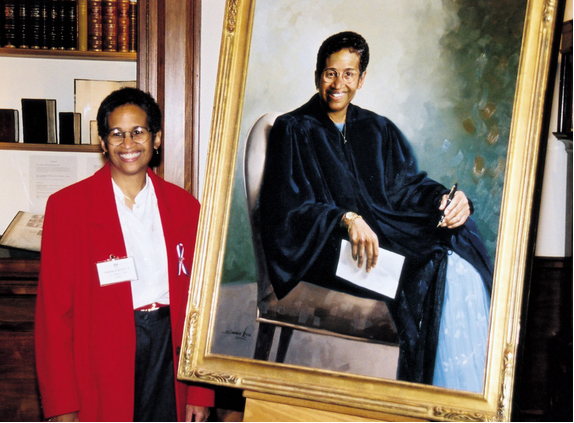
The Southern District of New York confirmed the death of U.S. District Judge Deborah Batts to NBC News on Monday. Batts was assigned a fraud case against Avenatti, one of three federal cases the high-profile lawyer is facing, a spokesman for the U.S. Attorney’s Office told NBC News.
Judge Deborah Battsmwas the 1st openly-gay black woman on the federal bench. She was a trailblazer. She was a member of the @lgbtbarny for many years. Her decades of service are an inspiration to the diverse LGBT legal professionals this bar represents. She will be deeply missed.
Batts was a well-respected prosecutor who became the first openly LGBTQ person to serve in the federal judiciary. She was nominated by President Bill Clinton in 1994 after having served nearly 15 years as an assistant U.S. attorney.
Batts, an alumna of Harvard Law School, also served as an adjunct professor at Fordham University’s School of Law.
Colleen McMahon, chief U.S. district judge for the Southern District of New York, called Batts in a statement Monday “a trailblazer in every respect: an openly gay African-American woman who became a United States District Judge after a distinguished career as a federal prosecutor and law professor.”
“She will be remembered by her colleagues for her devotion to the work of the court, for her mentorship of a cadre of young lawyers of all backgrounds, and for her infectious smile and extraordinary collegiality,” McMahon said.
Federal prosecutors accused Avenatti in May of pocketing almost $300,000 that was supposed to go to Daniels as part of a book deal. Prosecutors alleged that Avenatti used the money instead to pay for his own luxuries, such as monthly payments on a Ferrari.
Avenatti pleaded not guilty. His fraud case has not yet been reassigned, the U.S. Attorney’s Office said.
“Deborah Batts was a trailblazer for women and the LGBTQ community — and above all else a champion for justice,” de Blasio wrote. “On behalf of the city she served, I offer our deepest condolences to her family, friends and all who knew and loved her.”
Homophobic and transphobic bullying are commonplace in Britain’s school, nearly 4,000 LGBT+ youth, have said according to a glaringly obvious study.
In the hallways and cafeterias of schools up and down Britain, half of queer young people reported facing abuse from fellow pupils, research from the British LGBT Awards published yesterday found.
Moreover, just one in four LGBT+ people under the age of 25 said they felt able to come out in school, and eight in 10 pupils were pelted with verbal abuse.
Research leads called the findings of the report “startling”, noting that as much as progress is going ahead in some areas, “there are still many barriers left.”
Around seven in 10 LGBT youth fear coming out, study says.
The findings comes as the government examines reforms to the sex and relationship curriculum to become more LGBT-inclusive.
Every primary school child will learn about different types of families, including those with same-sex parents, while secondary school students will learn about sexual orientation and gender identity.
Gavin Williamson has pledged his support for schools teaching the new LGBT-inclusive relationship education curriculum. (Getty)
But protests in Birmingham presented a relentless test for lawmakers and activists in favour of inclusive education reforms. Parents carried placards and even pulled children from primary schools which taught LGBT+ lives in the classroom.
Among the 3,795 surveyed, around 70 per cent are fearful of coming out. A unnerving statistic that comes as nine in 10 of participants believe LGBT-inclusive education should be on the national curriculum.
Furthermore, outside of the classroom, nearly three in 10 participants said they had been the victim of cyberbullying.
British LGBT Awards founder Sarah Garrett said in a statement: “As we know, the current generation of young people are vastly different to those before them.
“Their input into this important survey has revealed some startling results and shows that young LGBT+ people in Britain today face new and greater challenges than before.
“Although great strides have been made, there are still many barriers that the LGBT+ community face, which have been highlighted by these results.”
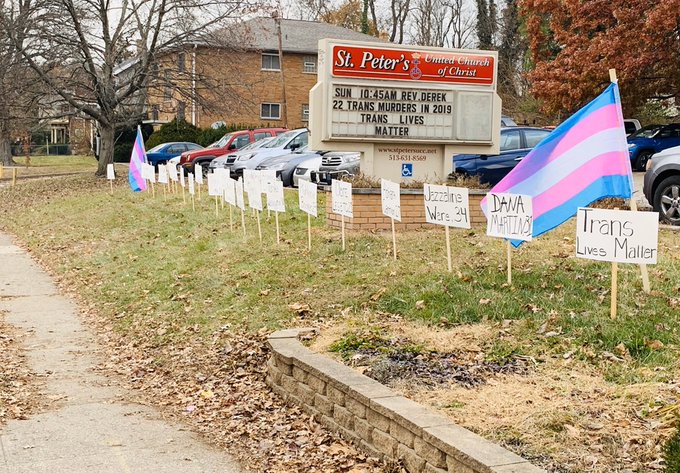
A reverend in Ohio revealed a thief has stolen part of his church display honouring the trans people who were killed in 2019.
St Peter’s United Church of Christ in Cincinnati, Ohio, describes itself as a “100 per cent hate free zone”.
According to its website, the church welcomes everyone into its community “no matter your faith background, sexual orientation, gender identity [or] race”.
But Terry told Fox 19 that on Saturday, February 1, he noticed that the two trans Pride flags that made up part of the display were missing. After checking the church’s security footage, he realised they had been stolen.
Terry added that the church has had problems with vandalism in the past, and said: “Anytime you make a stand for anything, there’s always someone who has a different perspective or different idea.
“And so, like I said, this has happened to us before, so I get it, but of course I was angered. I was upset.”
He said he is not sure of the thief’s reason for stealing the flag, but added: “It’s still stealing. It’s still wrong.
To whomever stole our Trans flags at @Stpeterscinci: God saw you and so did our cameras. Once the ground is softer we will have permanent flag poles installed and pride flags will wave 20 feet in the air. When you go low we will go high. #carryon
One such group, Equality Federation, said it is currently tracking about 226 bills — including more than two dozen introduced in January alone and some still active from previous legislative sessions — that have the potential to negatively affect lesbian, gay, bisexual, transgender and queer people.
“The targeting of kids is really unique this year … It’s really shocking, the depth of attack on trans youth.”
ROSE SAXE, ACLU
David Topping, the organization’s director of advocacy and civic engagement, told NBC News that since the 2015 landmark Supreme Court decision Obergefell v. Hodges, which made same-sex marriage legal across the United States, there’s been a “huge rash of anti-LGBTQ legislation.”
“It feels like every state Legislature, every year, is trying to push some kind of anti-LGBTQ agenda,” Topping said.
Jenny Pizer, law and policy director at the civil rights group Lambda Legal, said this year, while the sheer number of bills can seem eye-popping, she’s worried about more than just the quantity.
“Numbers are only one measure of how intense or threatening one legislative session might be,” Pizer said. She said she and other LGBTQ advocates are also considering other variables, such as the content of the bills, whom they target and how likely they are to succeed.
Trans rights: ‘A social and political wedge’
Pizer said that since 2016 — when more than 250 anti-LGBTQ state bills were introduced in state Legislatures across the country — the trend has been to use transgender people as “a social and political wedge.”
Freedom for All Americans, a bipartisan group focused on securing LGBTQ nondiscrimination protections nationwide, is currently tracking 44 bills it considers anti-LGBTQ that have been introduced since November. Of those bills, the organization said 42 target transgender individuals.
This year, the focus of much of this legislation has been transgender youth, particularly measures that would prohibit minors from receiving transition-related health care and those that would ban trans youth from participating on sex-segregated sports teams that align with their gender identity.
“The targeting of kids is really unique this year,” said Rose Saxe, deputy director of the American Civil Liberties Union’s LGBT and HIV Project. “It’s really shocking, the depth of attack on trans youth.”
In the current legislative session, over a dozen states have introduced bills that would impact transgender minors.
Anti-LGBTQ ‘testing grounds’
Many of the state bills involving transgender youth are strikingly similar, and both Pizer and Saxe said this is due, in part, to the influence of national conservative groups.
Pizer specifically named Project Blitz, a coalition of Christian organizations, which she said uses some conservative states as “testing grounds” to see which bills gain the most traction.
“If they have success in a very conservative environment, sometimes they get picked up elsewhere,” Pizer said.
Saxe said this “harmful” legislation is also “shopped around” by organizations including the Alliance Defending Freedom and the Heritage Foundation. She pointed to the slew of bills this session about transgender students and sports, noting this topic was a big issue that surfaced last year in the Heritage Foundation’s materialsopposing the Equality Act.
“That’s a theme they’ve been working with for a while now,” Saxe said of trans sports bills.
Requests for comment to the Congressional Prayer Caucus Foundation and the National Legal Foundation, which are both part of Project Blitz, and the Alliance Defending Freedom and the Heritage Foundation did not receive responses.
Echoing Pizer, Saxe added “there are a handful of states that are ‘bad innovators’” for anti-LGBTQ legislation. Tennessee is among them, she said.
Last week, Tennessee became the first state this year to pass anti-LGBTQ legislation into law when its Republican governor, Bill Lee,signed a bill that permits adoption agencies that use taxpayer money to refuse to work with families that “violate the agency’s written religious or moral convictions or policies.” This means, for example, that a state-funded agency could refuse to place a child with same-sex parents.
With his signature, Lee made Tennessee the 11th state to permit state-licensed welfare agencies to refuse to place children with LGBTQ families. Similar religious refusal bills are under consideration in Kentucky and Missouri.
Tennessee is also considering HB 1572, a bill that, like others in Alabama, Georgia, Indiana, Iowa, Missouri, New Hampshire and Washington, would prohibit transgender student athletes from competing on teams consistent with their gender identity.
South Dakota is another “testing ground” state, according to Pizer. Three bills advocates have deemed anti-LGBTQ have already been introduced in the state this session, and one passed the lower chamber last week with a wide majority.
Last Wednesday, the South Dakota House passed HB 1057, a bill that would make providing certain forms of gender-affirming medical care to minors — including the prescription of puberty blockers, which a study recently linked to lower suicide risk for trans people — a Class 1 misdemeanor, which in South Dakota carries a penalty of up to one year imprisonment and up to $2,000 in fines.
“Traction is concerning because it makes it more likely other states will go down that route,” Saxe said of HB 1057’s quick success in South Dakota.
Another South Dakota bill, SB 88, would “require parental notification of self-injurious behavior expressed during counseling sessions.” Pizer said this bill could compel counselors, school psychologists and social workers to “out” transgender youth to their parents.
A third bill, HB 1215, seeks to prohibit the state from “endorsing or enforcing certain policies regarding domestic relations,” including issuing marriage licenses to same-sex couples. The bill prohibits 10 other items including the passage of nondiscrimination laws on the basis of sexual orientation, the banning of conversion therapy, “drag queen story time” in public libraries and altering gender markers on birth certificates.
Pizer called HB 1215 “a random grab-bag of anti-LGBT attacks.”
“It reveals a toxic mix of unhinged, unabashed ignorance and cruelty,” she said. “Parts of the bill are obviously unconstitutional. Where the U.S. Constitution has been definitively interpreted as protecting the freedom to marry for straight, gay and bi people alike, states cannot override that fundamental federal constitutional right with a statute.”
Rep. Tony Randolph, HB 1215’s sponsor, could not be reached for comment.
Topping said that the introduction of legislation like HB 1215 is “always a huge fight for the community, but that “partners on the ground have beaten these bills every year for the past five years.”
At least three more states introduced bills this session that would impact transgender young people in other ways. Iowa, Arizona and Kentucky introduced proposals that would restrict sexual education material to exclude information on gender identity, require public school teachers to use the pronoun associated with the sex listed on a child’s birth certificate and limit bathroom access for transgender students, respectively.
Advocates’ next steps
Despite the slew of bills targeting LGBTQ rights in the current legislative session, Saxe does not predict another year like 2016, which is thought to be a record year for the introduction of anti-LGBTQ state legislation. With the change in administration, she said “opponents of LGBTQ equality” are currently “really focused on the federal regulatory gains they could get,” and are less focused on the states as they were four years ago.
Nonetheless, Saxe said, she remains worried. “Even though there is a smaller number of bills, I am more concerned than ever about our ability to stop them,” she said.
Using a mix of lobbying, organizing and public education, Saxe said she and her team are working with national and local advocacy groups across the U.S. to show “the harm of these anti-LGBTQ measures” and the “real-life implications of these bills.”
“We are trying to bring attention to these attacks on LGBTQ people, and to lift up the experiences and stories of trans, gay, lesbian and bisexual people,” she said.
As scientists report tentative success in treating coronavirus patients with HIV drugs, health officials fear that misinformation about the virus could spark a run on medications.
Last month clinical trials in Wuhan, China, began treating coronavirus patients using a combination of two anti-HIV drugs, lopinavir and ritonavir, which are sold under the brand name Kaletra by AbbVie.
The treatment showed promising results, and on Sunday doctors in Thailand confirmed that one patient who was given a mixture of flu drugs and the lopinavir-ritonavir combination had “vastly improved”.
But the global panic over the virus has been accompanied by a wave of misinformation as alarmist news stories claim that the virus has been genetically engineered to include ‘pieces of HIV’.
With a vaccine still potentially years away, many on social media have been spreading the idea that antiretrovirals can combat the virus, even though additional studies are still needed to determine if this could be a standard practice of care.
This has raised concerns that “everybody will buy them and there will not be enough for HIV people”, said Dr Sylvie Brand of the World Health Organisation (WHO).
At a press conference on Tuesday she expressed concern that this “infodemic” could cause people to panic-buy the HIV drugs and ignore the WHO’s recommendations.
“There is a kind of sense of panic, so we try to clarify what we know about the science, what is still unknown and to provide a recommendation that can help people protect themselves and their families,” she said.
The WHO’s current recommendations include frequently washing hands with soap and water or an alcohol-based hand rub, coughing or sneezing into a tissue or an elbow and maintaining a distance of at least three feet from people who appear to be sick.
“[There’s] a lot of concern about the availability of drugs. So we are trying to address those concerns and clarify to people that we are just at the phase of clinical trials, and when we have more evidence, then we will issue a recommendation on treatments,” Briand said.
With a mortality rate of around 2 per cent, the death toll from the coronavirus outbreak has continued to climb and has now almost reached 500. However the number of people in China recovering from the virus is also rising, suggesting that the treatment plan may be working.
n a speech touting economic growth and promising “the best has yet to come,” President Trump in the State of the Union address Tuesday renewed his pledge to beat HIV by 2030.
Trump made a call to beat HIV/AIDS to cheers from lawmakers in the joint session of Congress during a portion of speech dedicated to health initiatives under his administration.
“We have launched ambitious new initiatives to substantially improve care for Americans with kidney disease, Alzheimer’s and those struggling with mental health,” Trump said. “And because Congress was so good as to fund my request, new cures for childhood cancer, and we will eradicate the AIDS epidemic in America by the end of this decade.”
The cross-agency initiative under the Department of Health & Human Services seeks to eliminate at least 90 percent of new HIV infections in the United States within 10 years with a PrEP-heavy focus on diagnosis, treatment, prevention and response.
Trump renews his call to beat HIV one year after announcing his plan in last year’s State of the Union address. The administration’s subsequently sought in its budget request a $300 million increase in HIV/AIDS fund to implement the initiative (although the request significantly slashed global HIV/AIDS programs). Congress agreed to those funds in the fiscal year 2020 budget approved late last year.
The Partnership to End HIV, STDs & Hepatitis said in a statement after the State of the Union the coalition of groups — AIDS United, NASTAD, the National Coalition of STD Directors, NMAC and the AIDS Institute — applaud Trump’s “commitment to this issue and stand ready to work with the administration to end the HIV epidemic in the United States by 2030.”
“The progress we’ve made as a country is encouraging, but we know the most difficult work still lies ahead,” the statement says. “We have the tools to end HIV once and for all, but we must back it up with sound and sensible policies that expand access to stigma-free care, lift up vulnerable populations like our Black and Latinx communities, protect LGBTQ individuals from discrimination and address rising STD and viral hepatitis rates. Only then will we rise to the challenge and truly eradicate this epidemic.”
But Trump’s call to beat HIV/AIDS has fallen on skeptical ears to those keeping tabs on his anti-LGBTQ record, including administrative actions enabling anti-LGBT discrimination in the name of religious freedom.
Trump made a reference to his support for religious freedom in the State of the Union address without enumerating specific actions that have enabled anti-LGBTQ discrimination.
“My administration is also defending religious liberty, and that includes the constitutional right to pray in public schools,” Trump said. “In America, we don’t punish prayer. We don’t tear down crosses. We don’t ban symbols of faith. We don’t muzzle preachers and pastors. In America, we celebrate faith, we cherish religion, we lift our voices in prayer, and we raise our sights to the Glory of God.”
Trump’s speech, which lasted slightly more than one hour, ignored the pending impeachment trial. The U.S. Senate was expected this week to acquit Trump on charges he improperly withheld U.S. funds to Ukraine in exchange for investigations into his potential political opponent, Joseph Biden.
A key portion of the speech was Trump declaring he’d bestow the Medal of Freedom to Rush Limbaugh, a longtime conservative talk radio show host who recently announced he was diagnosed with lung cancer. A stanch critic of Presidents Clinton and Obama and defender of President George W. Bush and Trump, Limbaugh also made known his opposition to LGBTQ rights.
LGBTQ advocates were unimpressed with the speech. Also apparently displeased was House Speaker Nancy Pelosi (D-Calif.), who appeared to rip a copy of Trump’s speech at the end of the State of the Union address.
Sharon McGowan, legal director at Lambda Legal, said in a statement Trump “doubled down on his agenda of hate and division” in the State of the Union address.
“Filled with blatant lies and race-baiting rhetoric, tonight’s speech must be a call to action for all people who believe in our shared humanity and the right of every person to equal justice and dignity under law,” McGowan said. “By weaponizing religious liberty arguments, this administration has relentlessly attacked not only the LGBT community, but also women, communities of color and religious minorities. And by using tonight’s State of the Union to bestow the Presidential Medal of Freedom on Rush Limbaugh, President Trump displays his utter disdain for the overwhelming majority of our country who neither look like him nor share his cynical world view.”