The US’s largest interdenominational Christian seminary is embroiled in a second discrimination lawsuit over its expulsion of a student for being in a same-sex marriage.
Two former students, Nathan Brittsan and Joanna Maxon, are each suing the Fuller Theological Seminary for $1 million, claiming that the college violated anti-discrimination laws.
The suit is believed to be the first of its kind, and its outcome could have wider implications for Christian colleges and universities who receive government funding.
Maxon launched legal action in November, saying that disciplinary proceedings were initiated against her when the school’s financial aid office flagged information from her tax returns which showed she had a same-sex spouse.
On January 7 she was joined by Brittsan, who is also a baptist pastor. He alleges that he was dismissed from the Christian school in 2017 when administrators learned of his same-sex marriage from a request to change his surname.
Brittsan later disclosed his marriage to another dean and a professor, but the suit says that he “was not informed that this discussion was actually part of an initial inquiry or investigation by Fuller into Nathan’s perceived community standards violation”.
The seminary’s community standards state that “sexual union must be reserved for marriage, which is the covenant union between one man and one woman, and that sexual abstinence is required for the unmarried”. It adds that premarital, extramarital, and homosexual sex are “inconsistent with the teaching of scripture”.
But even if the school is able to prove that Brittsan and Maxon engaged in the prohibited form of sexual conduct, the lawsuit argues that it had no right to discriminate against them under Title IV of the Civil Rights Act.
While certain religious colleges are eligible to apply for exemptions from Title IV, Fuller has not received such an exemption.
@MAKERSwomen Hello, I wanted to share with you this post from Joanna Maxon who posted this on what would have been her graduation day from @fullerseminary had they not kicked her out.
In addition to this, the information on Maxon’s tax returns was protected by the Family Educational Rights and Privacy Act, which prohibits the data being shared without the student’s consent or used for something the student didn’t authorise.
When Brittsan twice appealed his expulsion, the seminary actually disputed his enrolment. When he requested to see his disciplinary records, which were needed for him to appeal to the school’s Board of Trustees, the seminary disputed that they were required to release the records.
The Council of the District of Columbia on Tuesday introduced legislation that would strip gendered and “patriarchal” terms from the D.C. code and replace them with gender-neutral language.
The Gendered Terms Modernization Amendment Act of 2020 would change instances of “he” or “she” in the law books to “the individual” or “they.” The bill was introduced by David Grosso, an at-large independent member of the council who has been a leader on LGBTQ legislation during his council tenure.
“We believe very strongly that language matters, that it actually holds power, and that the language of our laws matters,” Grosso told NBC News. “And it’s incredibly important that people feel included in the District of Columbia code to the fullest extent.”
The 43-page bill contains a list of “suggested” terms, Grosso said, “because for me it’s important that we have a hearing and listen to the public fully on what they think we should change it to as well.”
“His” would become “the individual’s,” “men” would become “individuals” or “humans,” “brother” and “sister” would become “sibling” and so on.
“Although we have done a lot of research and a lot of work on this, it is not something we should put out there and say: ‘We’ve got all the answers,’” Grosso said.
Among dozens of other proposed changes, the bill supports modifying the D.C. Charter and Home Rule Act so, for example, “chairman” of the District of Columbia Council would become “chairperson.” Modifications to the Charter and Home Rule Act would need to be approved by Congress.
The bill is co-sponsored by 10 of the 13 council members, and was introduced on a tense day during which member Jack Evans offered his resignation instead of facing a disciplinary hearing over an alleged ethics violation.
D.C. is not the first city to undergo a “linguistic cleansing,” according to Fern Johnson, a Clark University English professor. In a recent interview with the Atlanta Journal Constitution about the efforts of Berkeley, California, to make its city code more gender inclusive, she said “Albuquerque, Detroit, Memphis, Minneapolis, New York and Seattle have all made language less gender-specific, but these changes are usually incremental and happen without much fanfare.”
The broadening use of gender-neutral language in everyday vernacular and official documentation is accelerating. In 2017, the Associated Press Stylebook endorsed the use of the singular pronoun “they,” and this year, “they” was Merriam-Webster’s “word of the year” because of high public interest in the word’s definition and use as a singular pronoun.
A 14-year-old transgender boy is suing New York state over its policy barring minors from changing the gender marker on their birth certificates.
“Possessing accurate identification documents that are consistent with a person’s gender identity — a person’s core internal sense of their own gender — is essential to their basic social and economic well-being,” the lawsuit, filed Tuesday by the LGBTQ legal advocacy group Lambda Legal, states. “Access to employment, education, housing, health care, banking, travel and government services all hinge on having appropriate and accurate personal documentation that reflects a person’s true identity.”
Since 2014, New York state has allowed transgender adults to change the gender marker on their birth certificates. However, the policy does not extend to those younger than 18. Tuesday’s lawsuit claims this policy “violates the United States Constitution’s guarantees of equal dignity, equal protection of the laws, fundamental rights to privacy, liberty, and autonomy, and freedom of speech.”
Omar Gonzalez-Pagan, one of the Lambda Legal attorneys working on the case, said the state’s existing policy could also put transgender youth in harm’s way.
“Studies show that having inaccurate identification documents exposes transgender people to discrimination, harassment and violence,” he said in a statement. “Moreover, transgender minors suffer from higher levels of anxiety, depression and suicide rates when they don’t have a supportive environment.”
In a statement emailed to NBC News on Tuesday, a spokesperson for Gov. Andrew Cuomo, one of the defendants listed in the suit, touted New York state’s record as a leader in LGBTQ rights and said the lawsuit was currently being reviewed.
“From passing GENDA, to outlawing conversion therapy and eliminating the so-called ‘trans panic’ defense, New York has always been at the forefront of protecting and advancing the civil rights of transgender and gender nonconforming people,” Peter Ajemian, senior deputy communications director for the governor’s office, stated. “We are deeply sympathetic to the situation as it has been described to us and are reviewing this lawsuit.”
The teen at the center of the lawsuit, referred to only as M.H.W., was born in Ithaca, New York, but now resides in Houston, where he attends high school. In a statement released Tuesday, M.H.W. pleaded with the state to change his birth certificate gender marker from female to male and “respect my identity.”
“I am a boy. It’s frustrating to see New York State deny me the opportunity to correct my birth certificate, which I need for so many important facets of my life,” he stated. “Having an inaccurate birth certificate can cause the disclosure of my transgender status when I enroll in college classes or when I get my driver’s license, and expose me to possible harm.”
M.H.W.’s mother, Jennifer Wingard, is listed along with her son as a plaintiff. Wingard said she just wants “what is best” for her son.
“Our son is a boy, but New York State refuses to recognize him as such,” Wingard said in a statement. “We have been able to update our son’s other identity documents, such as his passport and social security records. So we were shocked when the only remaining roadblock came from New York State.”
Currently, at least 28 states allow transgender adults to change the gender marker on their birth certificates, though some of them require proof of sex reassignment surgery or a court order to do so, according to the LGBTQ think tank Movement Advancement Project. A number of these states, including California, Colorado, Connecticut, New Jersey, Massachusetts, Pennsylvania and Washington permit trans minors to do so as well, according to Lambda Legal.
Authorities are searching for a suspect after a transgender activist was found shot and killed in McAlester, Oklahoma, while on his way to pickup a taxi fare.
Dustin James Parker, 25, was found dead Wednesday with the windows of his car shot out after a 911 caller told police they heard gunshots in the early morning, according to NBC affiliate KJRH.McAlester Mayor John Browne assured the community that law enforcement was doing all it could to locate a suspect in Parker’s death.
“McAlester lost a supremely nice person who had such a positive outlook in his life,” Browne said in a statement. “He loved his job especially that it allowed him to help people. His passing is a loss for our community.”
Rover Taxi owner Brian West, 42, told NBC News Saturday that Parker was the first employee hired for the company, which launched in September. Parker, married with four children, had struggled previously juggling multiple jobs.
“I called him and said I have this idea I want you to help me build this and he did,” West said.
The two friends knew each other for about a year and worked together to launch a McAlester chapter of Oklahomans for Equality in May. Despite their short time together, West said that Parker felt like family.
“You couldn’t ask for a better friend, you couldn’t ask for a better husband, you couldn’t ask for a better employee,” West said. “He was an all around awesome person.”
Human Rights Campaign said in statement that it suspects Parker may be the first violent death of a transgender or gender non-conforming person in the new year. HRC has tracked violent deaths of at least 25 transgender or gender non-conforming people in 2019.
The organization has documented more than 150 killings of trans and gender-nonconforming individuals since the beginning of its “Violence Against the Transgender Community” project
“We say ‘at least’ because too often these stories go unreported — or misreported,” HRC said Thursday. “These victims are not just numbers or headlines. They were real people worthy of dignity and respect, of life and love.”
A new cure strategy designed to harness the power of the immune system to achieve HIV remission in people living with HIV will begin at the University of California, San Francisco in 2020. The study was described and announced at the amfAR 2019 HIV Cure Summit held on November 21, 2019.
“This is kind of an unprecedented human clinical trial, putting together a lot of things that we think will optimally stimulate the immune system,” said Rachel Rutishauser, MD, PhD, from UCSF and Zuckerberg San Francisco General Hospital. “The main clinical outcome will be to understand the proportion of people who are getting the vaccine in the combination trial who achieve post-treatment control [of HIV].”
This small pilot study will enroll 20 people living with HIV who have been on stable, continuous antiretroviral therapy for 12 or more months.
To measure the safety of the cure strategy, the study will assess adverse events that may include lab toxicities or clinical symptoms. To measure efficacy, the study will measure the proportion of study participants who do not experience viral rebound (i.e., who have suppressed viral loads without HIV medication) 24 weeks after the treatment is administered.
The treatment involves a combination of therapies meant to boost the immune system’s CD8 T-cell response to identify and kill off latently HIV-infected cells and reduce the size of the HIV reservoir.
“The advantage of CD8 T-cells is they can recognize infected cells specifically, and they can actually kill them,” said Rutishauser.
During stages 1 – 3 of the study (lasting 24 weeks), participants will receive a “prime-boost” DNA plasmid vaccine to elicit an initial CD8 T-cell response along with a boosting agent. (This is the same vaccine being tested in a prevention vaccine study by the HIV Vaccine Trials Network.)
In stage 4 of the study, participants will receive two immunomodulatory agents: a toll-like receptor-9 (TLR9) agonist and broadly neutralizing antibodies (bNAbs). The TLR9 agonists are expected to broadly activate the immune system—by getting the virus to come out of latently-infected cells and “present” itself to the immune system, boost the response of CD8 T-cells, and also increase the effectiveness of natural killer (NK) T-cells which kill off HIV-infected cells. Broadly neutralizing antibodies will also be given during this stage to reduce the size of the HIV reservoir.
The last stage of the study includes a treatment interruption, with a final dose of broadly neutralizing antibodies being given right as treatment is stopped.
“The broadly neutralizing antibodies should control the virus on their own. But as they wear off, you give the virus a chance to sort of come out but be partially controlled by the broadly neutralizing antibodies. And our hope is that we’ve created an immune response that will then outpace the virus or sort of beat the virus as it’s coming out of latency,” said Rutishauser.
Established in 2015 with a five-year, $20 million grant, the amfAR Institute for HIV Cure Research brings together collaborative research teams with the goal of establishing a scientific basis for a cure by the end of 2020. Find out more about the road to an HIV cure in this video by amfAR.
The government is giving trans people a special health card that will give them access to an existing government health insurance scheme, which was introduced in 2015 to provide health cards for those earning less than $2 a day, although trans people will not face that financial test.
Prime minister Imran Khan said that his government was “taking responsibility” for trans people, who say they are routinely denied treatment and can face harassment or ridicule from hospital staff and patients.
“It is part of a grand programme to provide health insurance not just to the poor but the vulnerable sections of society, including … transgender (people),” said Mirza.
“Any person who identifies as transgender is eligible for this health insurance programme,” he told the Thomson Reuters Foundation.
Trans people have historically faced severe discrimination in healthcare settings, with doctors denying trans people treatment when they could not decide whether to treat them in a male or female ward.
The health ID cards giving access to the free healthcare scheme will be immediately available, but only to trans people who have registered as trans on their other identity documents.
Pakistan officially recognised transgender people in 2012, adding a third gender option to forms and official documents.
The 2017 national census counted Pakistan’s trans population for the first time, recording 10,418 trans people in a population of about 207 million, though charities estimate there are at least 500,000 trans people.
“The scheme is good but healthcare providers need to be sensitised,” said Zehrish Khan, project manager for trans rights group Gender Interactive Alliance. “Many of us resort to drugs and alcohol because we need psychiatric help and empathy to overcome the continuous harassment we face.”
Aisha Mughal, a trans rights expert, said about 2,500 trans people were currently registered under the government’s third gender option, which means that the new free healthcare is not readily accessible.
“Only a few transgender people know about this and the first step is to spread the word,” Mughal said. “It is just the beginning.”
A battle against an outdated colonial law has finally come to an end, after the court of appeals in Belize unanimously upheld a 2016 ruling that a ban on gay sex is unconditional.
Belize, a small Anglophone Caribbean nation tucked into the eastern flank of Guatemala and Mexico, has been a battleground for LGBT rights for more than a decade.
It’s been a battle that started in 2010 and ended in 2019, rounding off the decade with a win for LGBT+ activists who tirelessly worked to get the ban dropped.
Their efforts proved successful in 2016. But soon after, both Belize’s government and the Catholic Church attempted to appeal the ruling.
However, on December 30, 2019, a three-judge appeal panel all rejected the appeal, cementing anti-discrimination protections for queer people conclusively, The Gleaner reported.
Upholding of ruling against gay sex ban branded a ‘renewal of hope’ by the campaign’s founder.
On the ruling, justice Samuel Awich said that the chief justice did not exceed the court’s power when he assigned the meaning “sexual orientation” to the word “sex” in the anti-discrimination Section 16 of the constitution.
He added: “Consensual sexual intercourse between adult gays or between adult lesbians in private does not harm the fundamental rights and freedoms of others, nor does it intolerably harm contemporary public interest.”
Caleb Orozco, a gay Belizean behind the fight to legalise gay sex.
The other two appeal court judges on the panel were justices Murrio Ducille and Lennox Campbell.
Behind the battle to strip the gay sex ban was activist Caleb Orozco, who welcomed the court of appeal’s ruling.
“I have proven as a citizen that our fundamental rights have value and can be upheld by our courts, and that any alienated section of society can stand on principle and can go to court and use the fundamental rights to ensure that the state leaves no one behind,” he said.
“Today is a renewal of hope in the substance of the chief justice’s decision in 2016, which still stands.”
A 10 year battle for equality in Belize.
In 2010, Orozco’s legal team walked into the Belize Supreme Court Registry armed with a stack of papers that incited the first challenge in Caribbean history to the criminalisation of gay sex.
Stretched across three years, the Supreme Court first heard the case in 2013, but it took justices a further three years to reach a verdict.
Activists were speechless when the case finally came to an end as the ban was finally overturned. Orozco was later honoured with the David Kato Awardfor his efforts.
Many Caribbean activists hope that as more nations turn the tides against homophobic colonial traditions, it’ll create a domino effect.
Last year, a gay man caused shockwaves in the tiny Caribbean island of Dominica after he filed legal action against the county’s laws banning gay sex.
A similar battle has been waged in Africa, as though the continent has a rich queer-positive history, colonialism wove anti-LGBT laws into many African country’s penal codes.
In the push and pull between campaigners and lawmakers, the track record for change in Africa has been spotty and sluggish. Last year, Botswana courtsvoted to shelve the federal ban on gay sex.
Friday was historic moment for transgender rights in Chile because the country’s Gender Identity Law came into force.
Trans people who are at least 18 and single can now change their name and legal gender with a simple procedure in the country’s Civil Registry. Teenagers who are between 14-18 can do so in court, but the new law does not include trans children and adolescents who are under 14.
“Today alone we have 136 people who will complete their procedure throughout Chile,” Justice and Human Rights Minister Hernán Larraín told local media.
“There was an invisible reality here; people who had a gender identity different from their biological sex and who could not exercise their rights,” Larraín added.
Daniela Vega celebrates new law
Another 921 people are already registered to exercise the right to their identity in the next few days. Daniela Vega, a trans actress who starred in “A Fantastic Woman,” a Chilean movie that won an Oscar in 2018, shared a message on her Instagram page to celebrate.
“I dedicate this day to the beautiful conquest of ruling the name,” she wrote. “I dedicate this day to those who did not see it arrive. To their bodies, dignified by the memory of rebellion.”
“Finally, today, to have the right to live the name previously denied, to govern time dressed as testimony, to belong,” added Vega. “Future body, white canvas of new struggles, of new utopias, of movement, of dignity.”
Paula Denmark and Alejandro Berrios, who lamented Chilean laws that excluded trans children, began the process that led to Sunday’s historic milestone.
“I feel that I was born again, with the identity that I always had, but that it was always denied,” said Denmark after she legally changed her identity. “I feel happy and able to take this step.”
Alessia Injoque, president of Fundación Iguales, a Chilean LGBTQ organization, will also change her identity in the next few days. Injoque said, “we are aware that this is only a first step.”
“We are indebted to the children, who were left out of the law,” said Injoque. “There are also debts to the trans community in education, health and work.”
Prosecutors had asked Clark County Judge David Gregerson to order no bail, or a minimum $6 million bail, for David Bogdanov, of Vancouver, but the judge said the lower amount was appropriate because Bogdanov has no prior criminal history.
Nikki Kuhnhausen.Vancouver Police Dept.
Bogdanov, 25, was arrested Dec. 17 and charged with second-degree murder in the death of 17-year-old Nikki Kuhnhausen.
Kuhnhausen disappeared June 6 and her remains were discovered in a remote area of Larch Mountain on Dec. 7 by someone gathering bear grass.
Prosecutors recently added a hate crime charge because they believe Bogdanov strangled Kuhnhausen after learning she was transgender, The Columbian newspaper reported.
A large crowd turned up for the bail hearing and rallied outside the courthouse to show support for Kuhnhausen’s family and to raise awareness of the dangers that face transgender youth. So many people attended the hearing that some had to watch the hearing from a second room through a closed-caption TV system.
Hundreds of people also attended a Dec. 20 vigil for the teen at Vancouver United Church of Christ in Hazel Dell.
In court documents, Vancouver police say Kuhnhausen and Bogdanov met in downtown Vancouver on June 6 and he and his brothers invited her to a bar for a drink. Bogdanov told detectives he gave her his coat because she was cold and after one drink, he let her keep what was left in a bottle of vodka before she returned home.
Kuhnhuasen did go home, but went out again to meet Bogdanov several hours later. At some point, court documents say, she told Bogdanov she was assigned male at birth.
In an Oct. 2 interview with police, Bogdanov said at that point he asked Kuhnhausen to get out of his van and he never saw her again.
He told detectives he was “shocked,” “uncomfortable,” and “really really disturbed” to learn that Kuhnhausen was transgender, according to the affidavit. Detectives wrote in court documents that they believe that is when Bogdanov killed the teen.
Cell phone records show Bogdanov was in the Larch Mountain area later in the day on June 6.
A medical examiner ruled the teen’s cause of death was asphyxiation.
Giaura Fenris, a transgender woman, was on the dating app Grindr looking for people to chat with and meet when a user whose profile picture was of a cute nurse messaged her. After some pleasantries, however, Fenris realized the hunky health professional wasn’t there for a hookup.
She said he asked her “a couple of questions, nothing too invasive” and then revealed he was an employee at a nearby health clinic in Brooklyn, where she lives. He then offered her a sexually transmitted infection testing appointment and help getting health insurance.
“I was like, ‘Oh, that’s great. Please sign me up right away,’” Fenris told NBC News.
Giaura Fenris.Courtesy Giaura Fenris
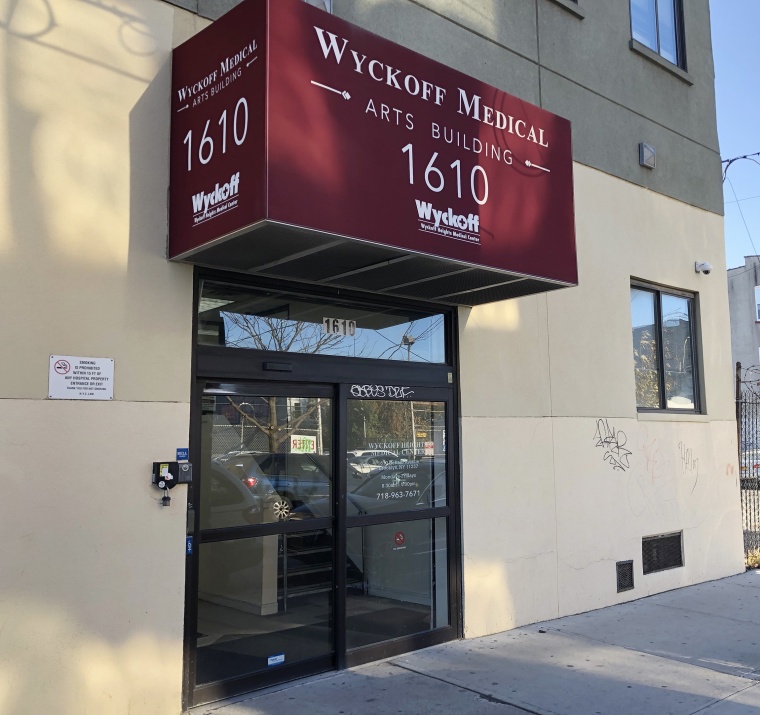
Wyckoff Heights Medical Centeris thought to be the first health center in New York City — and perhaps beyond — to incorporate gay dating apps such as Grindr, Jack’d and Scruff into its sexual health efforts. The center’s method differs from the usual sexual health advertisements one can see on the apps. Staffers interact with other users with their own account like a regular user would — except they offer sexual health services. The center says the innovative approach is working: Since its launch in 2016, the program has attracted more than 300 clients to the facility.
Most of these clients are black and Hispanic gay men and trans women, groups that are disproportionately affected by HIV. Gay and bisexual men comprised 70 percent of the new HIV diagnoses in the U.S. in 2017, and of those gay and bisexual men diagnosed with HIV, 37 percent were black and 29 percent were Hispanic, according to the Centers for Disease Control and Prevention.
The program’s launch
The program was started by Anton Castellanos-Usigli, who had just finished his master’s degree in public health at Columbia University when in 2015 he was recruited by Wyckoff Heights Medical Center.
“The center hired me precisely because they wanted to increase the number of gay and bisexual Hispanic clients,” Castellanos-Usigli, who had migrated from Mexico in 2013, said. This client population, he added, “is one of the populations who needed these services the most.”
Wyckoff Heights Medical Center in Brooklyn.Arno Pedram
Shortly after being hired, Castellanos-Usigli recalls thinking to himself, “You are young, you’re Hispanic yourself, where do you talk to other gay guys about sex? Grindr!”
So in February 2016, he created a profile with the image of a good-looking nurse in medical clothing and started to chat with people on Grindr. After opening up with pleasantries, he shifted the conversation to offering sexual health services.
Andrew Gonzalez, a program manager at the center, said responses vary from those “who are very grateful” for getting health information and a clinic appointment through the app to those who are disappointed the cute nurse isn’t a potential date.
“Sometimes people aren’t quite ready to receive the information and pursue testing services,” Gonzalez said.
However, Gonzalez said, oftentimes those who are successfully contacted through gay dating apps go on to tell their friends about the center’s services.
“So, essentially, we’re providing these people the tools … to educate and inform other community members about services,” he said.
‘We have to treat the whole person’
Through Grindr and other gay dating apps, the center brings clients into its Status Neutral program, which aims to keep HIV-positive patients at an untransmittable viral load and protect HIV-negative patients against infection through condoms, regular testing and PrEP or preexposure prophylaxis.
Since its launch, the center has standardized the practice and tracked its results. Between 2016 to 2018, the strategy attracted 233 new clients — 67 percent of them Hispanic, 17 percent black and over half uninsured, according to Castellanos-Usigli. He said a higher-than-average percentage (5 percent) of these new clients were diagnosed with HIV, and they were connected with medical care. More than 60 percent of the 233 new clients, he added, were referred to PrEP for HIV prevention. Twenty-nine patients received personalized cognitive counseling, an evidence-based intervention to reduce risks for gay and bisexual men who have casual sex without condoms.
“A lot of times, people come in for testing, and they have greater needs than testing,” Laurel Young, the program’s interim director, said. “If we treat a person … we have to treat the whole person, not just the symptoms.”
Young said the facility’s Status Neutral program combines traditional medical care with help in navigating health insurance, employment, job access, housing and legal support. That way, she added, patients can address other factors such as poverty, immigration status or homelessness that have an impact on their health.
When Fenris, now 30, first walked into the center in February 2017, she was burdened by several issues that were negatively affecting her physical and mental health. She moved to New York the year prior to escape a living situation in another state that she said was stifling her transgender identity, and she had just had an incident with a hookup that led her to start post-exposure prophylaxis (PEP), a one-month treatment to resist HIV infection right after potential exposure. She also had a history of depression for which she had stopped taking medication, and she was about to lose her insurance.
During her first visit to Wyckoff Heights Medical Center, staffers tested Fenris for HIV, started her on HIV-prevention medication, helped her find new insurance and referred her to mental health services. The center also helped her create a plan to secure financial stability and manage her increased rent payments.
‘Cultural competency and humility’
Wyckoff Heights Medical Center serves a diverse and at-risk population, and because of this, staffers say hiring and training decisions are crucial.
“Having staff members that identify with populations we serve accompanied with cultural competency and humility trainings help best serve the population to decrease stigma,” Gonzalez said.
This was part of the reason the center hired Castellanos-Usigli back in 2015 — and Fenris last year. Fenris, a trans Latinx, was hired by the center in May 2018 as a consultant and peer educator. She works within the clinic’s Substance Abuse and Mental Health Services program and its Status Neutral program, ensuring patients are getting the care they need.
“Today, I made sure that a trans patient had a gender-affirming procedure, that they were referred to with their pronouns, that they go to their appointments and helped setting up transportation,” Fenris said recently.
Trans people in particular face barriers in health care: A 2016 studyon the barriers to transgender health care in New York found 48 percent of trans respondents “felt that the organizations that provided the care they needed were not transgender sensitive.”
Wyckoff’s commitment to being accessible, culturally sensitive and having a diverse staff representing the community it serves addresses those barriers head on.
Since Wyckoff Heights Medical Center launched its innovative program in early 2016, at least one other community health clinic has launched a similar program. CAMBA, in Brooklyn, has seen similar success using gay dating apps to reach individuals at high-risk of HIV infection: From 2017 to 2018, 65 percent of its clients linked to PrEP or PEP services were reached through apps apps like Grindr.
Castellanos-Usigli believes his data “speaks to the power that this strategy has” and he hopes to convince other agencies to adopt it.