Starbucks fired a trans woman from her supervisor job after a police officer was given an order labelled “pig”.
Lola Rose, a trans college student, said she was “made to be a martyr” after the incident went viral and is now considering legal action,
She had been working as a shift supervisor at a Starbucks in Glenpool, Oklahoma, on Thanksgiving morning, when a police officer was handed a muffin with “pig” on the label.
Rose told The New York Postthat she’d noticed the label and intervened, thinking, “No, that’s not right.”
“I jumped into action, apologised, then I thanked him for his time and for his service,” she recalled.
Police officer told Starbucks manager ‘pig’ label ‘no big deal’.
Rose said that the officer told her it was “no big deal” and that he was a friend of the employee, who had written the label to prank a co-worker.
“The barista was trying to play a joke on her co-worker to see if this co-worker would call these drinks out [as ‘Pig’],” Rose said.
She was unaware that five cups handed to the officer also had “pig” written on them. These made it back to the station, after which chief of police Johnny O’Mara called to make a complaint.
Rose said she tried to rectify the situation by apologising, thanking the chief for his service and offering to buy food for the entire police department.
O’Mara reportedly declined the offer and instead shared a picture of a cup to Facebook, writing: “What irks me is the absolute and total disrespect for a police officer who, instead of being home with family and enjoying a meal and a football game, is patrolling his little town.”
Trans manager left wondering how she’ll pay for rent and medical treatment.
After the incident Rose spoke to her direct managers and filed a report. The following day she was fired, nine months into the job.
She said that she was “hysterical” as she was reliant on the job to pay for rent and to cover the cost of her hormone therapy.
The company is renowned for giving trans employees comprehensive healthcare insurance and offering college students tuition assistance. Rose had applied more than five times before she secured her “dream job.”
“My whole world crashed in front of me,” she told the Post.
“It was supposed to be my guardian angel. They were supposed to be there for me as much as I am there for them but it’s gone because a small-town officer was offended by something and posted to Facebook.”
Starbucks told the Post that a shift supervisor is no longer working for the company following an admission of involvement in the incident.
A gang of teenage boys were sentenced to 13 years after luring gay men they met on Grindr into a city park before robbing and humiliating them in a homophobic attack.
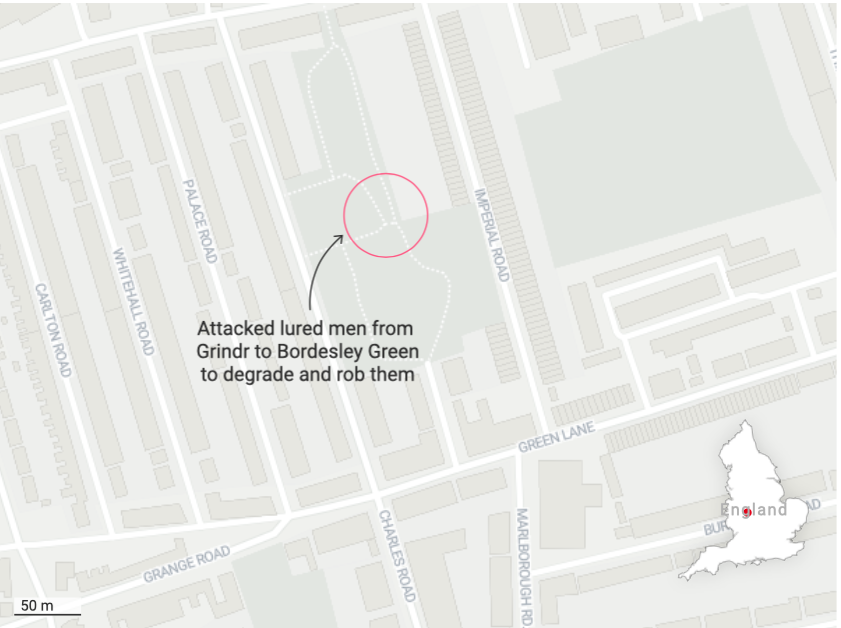
By using fake Grindr accounts, the teens would target gay men and tempt them into Bordesley Green in Birmingham, England, reported Birmingham Live.
The four victims were left fearing for their life after the teens tied them up, urinated on them and robbed them in a string of attacks from January 5 to March 29.
One Grindr victim was gagged before being forced to walk in dog excrement.
Three victims were bound by their hands and feet and two were urinated on.
In one attack, gagged with a pair of socks, the victim was forced to walk through dog excrement in a deluge of degrading acts.
One victim was told he deserved to be attacked and robbed because he was a “white man responsible for attacks on Muslims in New Zealand”.
The string of attacks occurred in a city park in England in the first quarter of the year. (PinkNews)
Moreover, one man’s torture lasted for around two hours, and one attacker used a screwdriver to repeatedly stab his jacket.
He was then threatened to have the weapon be stabbed in his eye, spat on, urinated on, tied up and his trousers pulled down as the gang snapped photos of his genitals as they demeaned him.
Mohammed Khan, 18, of George Road, Hay Mills and Mohammed Umar, 18, of Denville Crescent, Bordesley Green, had previously admitted conspiracy to rob and conspiracy to commit a burglary.
Qaasim Ahmad, 18, of Heather Road, Small Heath, was found guilty of those charges and also conspiracy to falsely imprison.
The men ‘deliberately degraded and humiliated’ the victims, says judge.
Kham and Ahmad were both sentenced by the Birmingham Crown Court to 13 years and four months detention.
While Umar was given a sentence of 11 years and three months.
Judge Heidi Kubic QC, as she passed the sentence, said: “You deliberately degraded and humiliated your victims.
“They had the courage to come forward and publicise their ordeal
“I am quite satisfied all four men were targeted because they were gay men.
“You had set up fake Grinder accounts to lure them to secluded areas.
“You subjected your victims to serious physical assaults and you threatened them with various weapons, including a large hunting knife, a screw driver and you used a metal bar to inflict injuries.”
The courts heard that the men dragged their victims into the park bushes. One victim was threatened with having their face superimposed on a video of a paedophile.
The U.S. Supreme Court on Monday refused to hear an appeal by a convicted murderer who filed a civil rights lawsuit because Texas prison officials denied her request to be considered for gender reassignment surgery.
The justices let stand a lower court’s decision to reject the claim by inmate Vanessa Lynn Gibson that denying the surgery request violated the U.S. Constitution’s Eighth Amendment prohibition against cruel and unusual punishment.
Gibson, 41, who is transgender, was assigned male at birth and has lived as a female since age 15. Gibson was incarcerated in 1995 for aggravated assault, then was convicted of murdering a fellow inmate in 1997. She is eligible for parole in 2021.
Court papers said Gibson was diagnosed in 2014 with gender dysphoria, which medical experts define as distress from the internal conflict between physical gender and gender identity. She has suffered from severe depression, engaged in self-mutilation and attempted suicide several times, court papers said.
Gibson was provided with hormone therapy, but Texas has no policy allowing for “irreversible surgical intervention,” according to the state.
Gibson sued in federal court claiming that by refusing to conduct a medical evaluation for gender reassignment surgery prison officials were deliberately indifferent to her serious medical needs, a form of banned cruel and unusual punishment.
The Supreme Court in 1976 ruled that a deliberate indifference to serious medical needs of prisoners violates the Eighth Amendment because it is an “unnecessary and wanton infliction of pain.”
The New Orleans-based 5th U.S. Circuit Court of Appeals in March rejected Gibson’s claim. In the decision, Judge James Ho, an appointee of President Donald Trump, said it is not cruel to deny a treatment that no other prison provides.
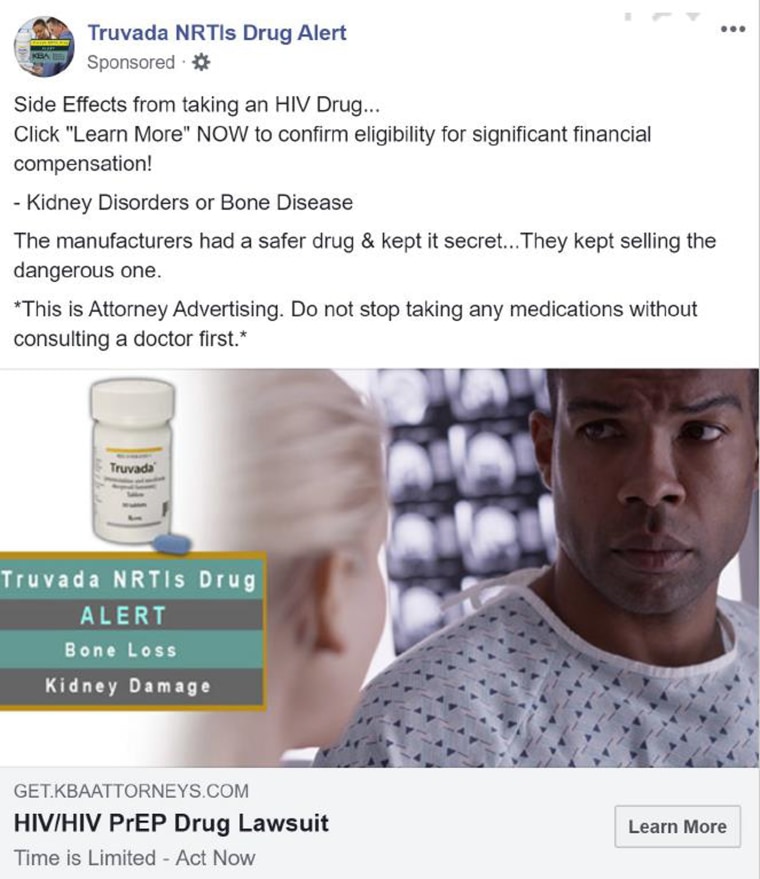
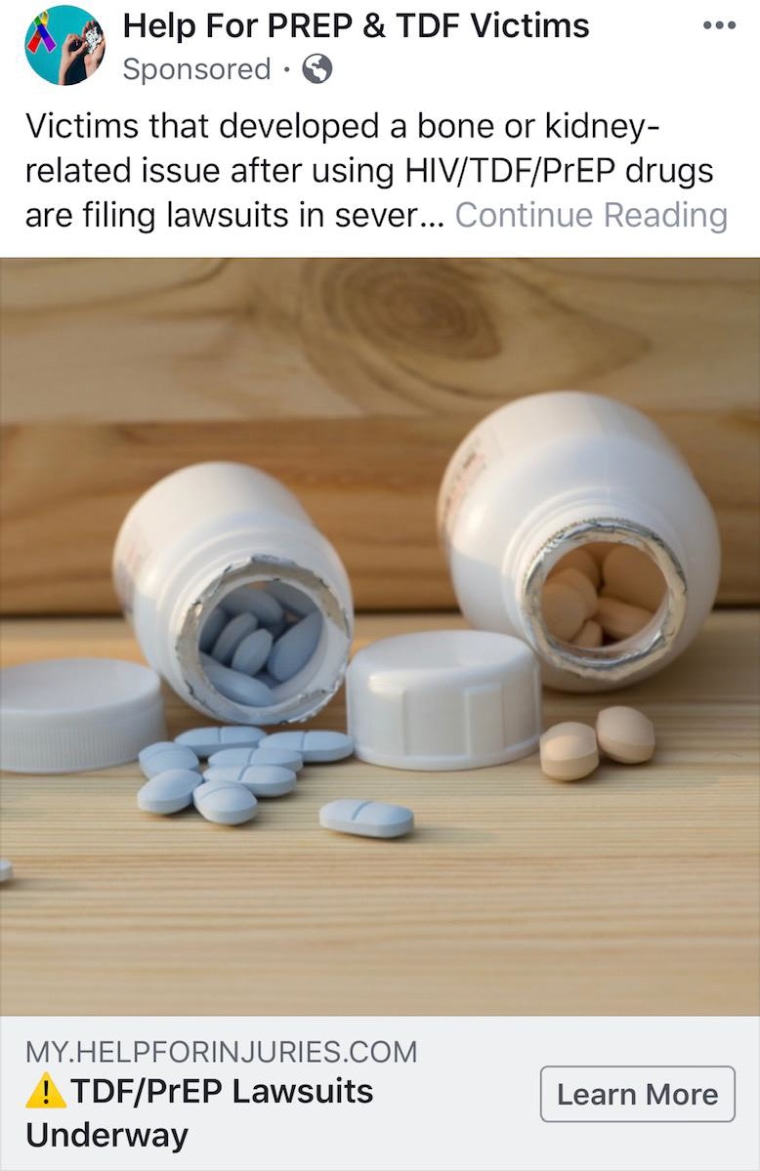
More than 50 LGBTQ, HIV and public health organizations have signed an open letter calling on Facebook to remove “factually inaccurate” advertisements placed by law firms that “suggest negative health effects” of HIV-prevention medication Truvada, a type of pre-exposure prophylaxis, or PrEP.
“The advertisements are targeting LGBTQ Facebook and Instagram users, and are causing significant harm to public health,” the letter states. “The law firms’ advertisements are scaring away at-risk HIV negative people from the leading drug that blocks HIV infections.”
The ads were bought by various law firms looking to use the platform’s targeted advertising capabilities to recruit gay and bisexual men for a class-action lawsuit against Gilead Sciences, the pharma giant that manufactures Truvada, a once-a-day pill that when taken regularly is 99 percent effective at preventing HIV transmission, according to the Centers for Disease Control and Prevention.
Courtesy of GLAAD
The open letter, signed by groups including ACT UP New York, amfAR and University of Chicago Medicine, claim the ads are misleading because they give the impression that PrEP may be generally harmful, when the side effects the ads warn against are primarily an issue with long-term treatment for people already living with HIV.
In a statement emailed to NBC News, a spokesperson for Facebook said the company values its “work with LGBTQ groups” and both welcomes and seeks out their input.
“While these ads do not violate our ad policies nor have they been rated false by third-party fact-checkers, we’re always examining ways to improve and help these key groups better understand how we apply our policies,” the spokesperson wrote.
‘Ambulance chasers’
The class-action lawsuit for which the law firms are trying to recruit clients was originally filed in May 2018 and claims patients who experienced certain side effects, including kidney damage and bone density loss, from Truvada could have avoided them had Gilead not intentionally delayed the release of a safer version of the drug, which it shelved in 2004.
Peter Staley, a longtime HIV activist and co-founder of PrEP4All, a coalition working to expand access and use of PrEP medications, said that he began seeing the advertisements on his own social media platforms in September and was immediately concerned.
“For the last six months, they’ve been targeting gay men on Facebook and Instagram with visuals about PrEP, the word PrEP and the blue pill, which is very iconic now for PrEP users,” Staley said. “They’re scaring the s—out of anybody who’s seeing them.”
Gay and bisexual men are likely being targeted because men who have sex with men comprise 70 percent of new HIV transmissions in the U.S. annually, according to the CDC.
Staley said the law firms that took up the case last year aren’t to blame for the misleading ads. Instead, he said, it’s the flurry of smaller “ambulance chasers” eager to get in on a potentially big payday.
“We think that they are causing hundreds of HIV infections, based on the reports that we’re getting from doctors. The clinics on the front line, they really say that these have a real impact,” he said.
‘A pretty significant chilling effect’
Demetre Daskalakis is the deputy commissioner of disease control at the New York City Department of Health and Mental Hygiene, and he also runs his own practice where he specializes in infectious diseases like HIV/AIDS. He told NBC News that he’s seen the impact of the ads first-hand, and that his colleagues across the country have, too.
Courtesy of GLAAD
“We’re all seeing and hearing the same thing, which is that this has a pretty significant chilling effect on trying to get folks on to pre-exposure prophylaxis, especially in communities that already have a baseline issue with medical trust,” Daskalakis said. “I’ve had my patients coming in to see me saying, ‘Hey, should we be switching me off of Truvada on to something else?’ It’s really frustrating.”
The U.S. is behind in the fight to prevent HIV using PrEP: Only about 18 percent of the 1.2 million Americans who might benefit from the medication actually received a prescription for it last year, according to a recent CDC report.
Staley said the reasons for this gap include the unusually high cost of the medication in the U.S. (about $2,000 for a 30-day supply), the lack of trust in the relatively new medicine and misinformation.
“Our worst nightmare is coming true, because these ads are definitely sending us back,” said Staley, who has been on the front-lines of the movement since the early days of the HIV/AIDS epidemic.
Politicians enter the controversy
Following the release of the open letter Monday, a number of lawmakers have joined the call for Facebook to remove the ads.
On Tuesday, New York Gov. Andrew Cuomo, a Democrat, issued a statement urging Facebook to remove the “deceptive” ads.
“Health officials and federal regulators have been clear that Truvada — or PrEP — is safe and effective,” it reads. “This ad campaign is putting New Yorkers in danger and jeopardizing the great strides our state has made in helping end the AIDS epidemic.”
That same day, presidential candidate Sen. Elizabeth Warren, D-Mass., took to Twitter to condemn the ads.
“Facebook is allowing entities to target misleading and false ads about HIV prevention drugs to LGBTQ+ communities and others. This can have serious public health consequences” she wrote. “Facebook needs to put the safety of its users above its own advertising profits.”
Signatories demand review of Facebook’s ad policies
GLAAD, the national LGBTQ advocacy organization that spearheaded the campaign to remove the controversial ads, is a member of Facebook’s Network of Support, a group of LGBTQ organizations that the social media giant consults on how to improve user experience. Rich Ferraro, GLAAD’s chief communications officer, said his organization initially tried to address the issue directly with Facebook but was met with resistance and an obtuse fact-checking system outsourced to third-party organizations.
“Facebook is clearly hiding behind their third party fact-checking agencies, but those agencies might not … have expertise in LGBTQ issues,” he said, adding that one of the fact-checking agencies, CheckYourFact.com, is part of The Daily Caller, an online outlet founded by right-wing pundit Ben Shapiro that has published a number of anti-LGBTQ articles and op-eds.
Ferraro said Facebook’s wide reach and targeted advertising capabilities make it even more important for the social media company to carefully vet the ads on its platform.
“This isn’t just an ad on a local news station or in a national newspaper,” he said. “The ambulance chasing law firms and the personal injury law firms behind these ads are able to target LGBTQ users and people who might be at risk for contracting HIV and who should be on PrEP.”
In addition to removing the ads, the open letter’s signatories are demanding that Facebook improve transparency with users — and the LGBTQ community in particular — around its policies for reviewing ads that contain potential misinformation. They are also asking the company to commit to a review of their current advertising policies “to prevent false or misleading public health statements from reaching users.”
Ferraro said he’s hopeful that Facebook will agree to the open letter’s demands, but he added that the fact that a public campaign was necessary at all is a troubling sign.
“This is one of the first public actions that GLAAD has taken against a social media company,” he said, noting that the organization’s work typically takes place “behind the scenes.”
“Social media is becoming home to anti-LGBTQ organizations and misinformation, and GLAAD is going to be holding them accountable in very public ways in the future,” he added.
A groundbreaking testicle transplant operation has taken place, raising hopes of potential future operations for transgender patients.
Several of the world’s leading experts in genital surgery performed the pioneering operation for an unnamed cisgender man in Belgrade, Serbia.ADVERTISING
The man was born without testicles due to a rare condition, leaving him reliant on injections to receive testosterone, similar to transgender men.
The six-hour operation saw a testicle transplanted from the patient’s twin brother, which will allow him to produce his own testosterone.
The two brothers, who now have one testicle each, are both doing well, transplant surgeon Dr Dicken Ko told The New York Times.
Testicle transplant surgery raises ethical questions over children.
The surgery, which is just the third known transplant of its type, could also have broader applications for transgender people, cancer patients and accident victims.
Testicle surgeries could present future ethical questions
However, testicular transplant surgery may also raise ethical questions in future, as patients who receive transplanted testicles may one day be able to father children who would genetically be descendants of the donors.
Dr Ko said: “The offspring is technically whose child? It raises much debate in the literature of medical ethics.”
Trans women’s genitals could be transplanted onto men.
Dr Branko Bojovc of Harvard Medical School told the New York Times that his surgical team has already received inquiries from transgender men hoping for a penis or testicle transplant.
Lead surgeon Dr Miroslav Djordjevic told the newspaper that he had developed a plan for performing penis transplants that could help transgender patients.
He said that the genitals of transgender women, which are currently often discarded during gender confirmation surgery, could potentially be repurposed for transplants.
The surgeon added: “We have to do this as soon as possible, to stop putting healthy organs in the garbage.”
The patient, a young cisgender US army veteran who lost his genitals during combat, received genitals from an unrelated deceased donor.
In that case, doctors decided not to transplant the donor’s testes due to the ethical concerns about potential children.
Transplant procedures have more potential complications outside of identical twins due to the prospect of organ rejection, but immunosuppressant drugs can lower the risk.
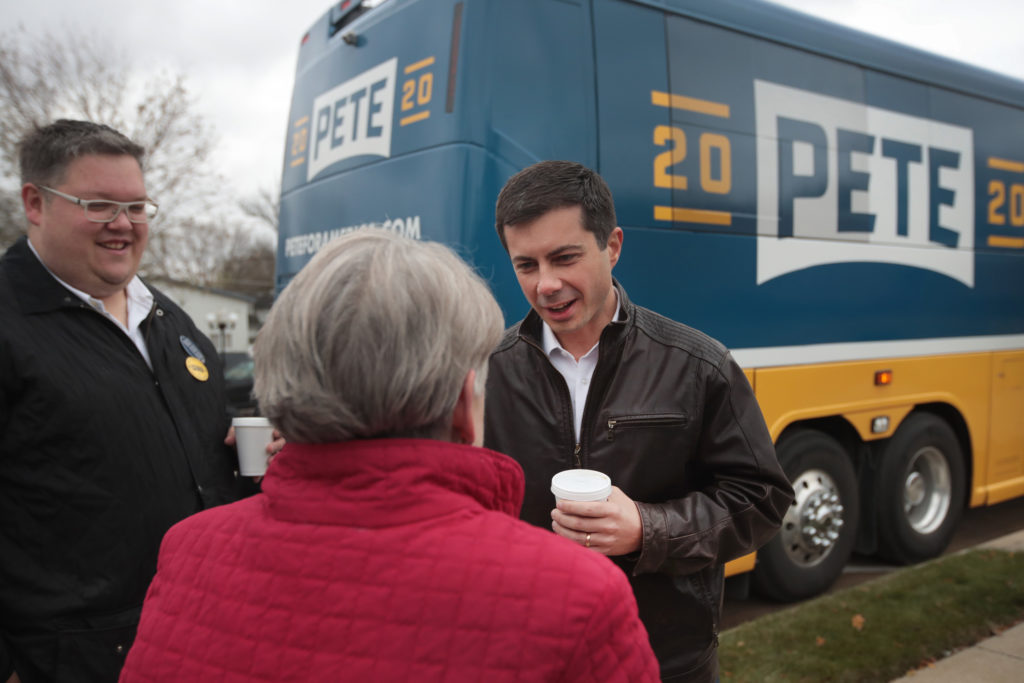
Democratic candidate Pete Buttigieg is soaring in popularity in the Republican-dominated state of Arizona, with a new poll putting him neck-and-neck with Donald Trump.
Alongside his fellow Democratic hopeful Joe Biden, Buttigieg is in a statistical dead heat with Trump, suggesting that even staunch Republicans in Arizona are beginning to turn their backs on the party.ADVERTISING
Buttigieg has 43 per cent support, compared to Biden’s 44 per cent and Trump’s 46 per cent, the latest poll shows. This represents a decrease in support for Biden, who led Trump 49 percent to 44 percent in the state based on a May poll.
The South Bend, Indiana mayor however, has increased his support by six points, disproving the critics who predicted his sexuality meant he would struggle to make inroads in strongly conservative states.
Buttigieg, 37, has also carved out a lead in Iowa after an “aggressive” campaign trail aimed at the rural midwestern state’s older, moderate voters in small towns.
Last month he shot ahead with 25 per cent support – a nine point lead over Elizabeth Warren, who is the next highest Democratic candidate – in Iowa.
Pete Buttigieg visits Iowa residents during a campaign stop on November 4, 2019 in Britt, Iowa. (Scott Olson/Getty)
Only 30 per cent of respondents said that their minds are made up and a lot could change before the Iowa caucuses next February, but if Buttigieg’s lead continues he could stand a real chance against Biden and Warren.
Although Iowa’s demographics aren’t representative of the rest of the country, the state is significant as it’s often thought to set general trends for presidential elections.
It’s not all been plain sailing for Buttigieg though – he attracted some scornlast week after a picture of him volunteering for the notoriously ‘homophobic’ charity Salvation Army was circulated online.
And an internal focus group recently revealed findings that suggest Buttigieg’s sexuality could be “a barrier” for many black voters, particularly with black men who were “deeply uncomfortable even discussing it” in the study.
The report concluded: “Their preference is for his sexuality to not be front and centre.”
We are on the verge of a historic moment: The Board of Supervisors will vote on Tuesday 12/10 on a resolution to halt any future investments in Wells Fargo or BNP Paribas, naming them as primary funders of the private corporporations responsible for detaining immigrant children separated from their families.
Please come out on Tuesday 12/10 at 8:30. The item will be considered 8:45, after a presentation by the Treasurer Erick Roeser. As in 1985, when the Board considered a resolution to divest from South African Apartheid, the county treasurer is feigning ignorance of the options to invest wisely and ethically. (See the Close to Home article below.) If this resolution passes, the county will be on track to take up socially responsible investment policies AND put an end to county funding of immigrant camps.
Lynda Hopkins, who is putting forward the resolution, has reminded us that the board responds to public pressure, so we must bring it on!!! See you there! We’ll have talking points for everyone who wishes to make a public comment. Bring posters or signs!
This year’s Miss Universe pageant will include the first openly gay contestant in the competition’s 67-year history, who bravely came out despite homosexuality being illegal in her home country.
Swe Zin Htet is the reigning Miss Myanmar and she came out publicly on a beauty blog just a week before she is due to take part in the final of the pageant on Sunday (December 8).
The 21-year-old, who has chosen preventing child abuse as her cause to advocate for during the contest, told People: “I have that platform that, if I say that I’m a lesbian, it will have a big impact on the LGBTQ community back in Burma.
“The difficult thing is that in Burma, LGBTQ people are not accepted, they are looked down on by other people and are being discriminated against.”
Although Htet has been out to those around her for some time, and has been in a relationship with the famous Burmese singer Gae Gae for three years, she said telling her family she was a lesbian was difficult.
She continued: “At first, they were mad. They didn’t accept me. But later, when they found out more about the LGBTQ community, they started to accept me.”
(swe_zin_htet/ Instagram)
Paula Shugart, Miss Universe president, also told People: “We are honoured to give a platform to strong, inspirational women like Miss Universe Myanmar, who are brave enough to share their unique stories with the world.
“Miss Universe will always champion women to be proud of who they are.”
The Miss Universe pageant has had a controversial past and was previously owned by Donald Trump, but it has been breaking new ground recently.
Last year, the competition featured its first-ever trans contestant Angela Ponce.
Addressing the Trump administration’s anti-trans record, Ponce said at the time: “More than a message to him, it would be a win for human rights. Trans women have been persecuted and erased for so long.
“If they give me the crown, it would show trans women are just as much women as cis women.”
Although it’s positive news that more people feel able to select their correct gender identity when trying to find a date, the company’s attempts to include the trans community have recently been criticised as “virtue signalling”.
Trans people told PinkNews that Tinder condones “discrimination” against trans people using the app, partly because of poor customer support for trans people who have been banned.
Trans people said that they had been banned two hours after changing their gender on the app to trans, and after being invasively questioned by cis men about their genitals – and all the trans people PinkNews spoke to knew multiple other trans people who’d been banned, too.
In September 2019, Hustlers star Trace Lysette was abruptly banned. And Peppermint, from RuPaul’s Drag Race, also reported being banned in May 2019.
A Tinder spokesperson told PinkNews in a statement: “Tinder has been at the forefront of pioneering inclusive features that ensure our members can be their authentic selves on our platform.
“We recognise the transgender community faces challenges on Tinder, including being unfairly reported by potential matches more often than our cisgender members.
“This is a multifaceted, complex issue and we are working to continuously improve their experience.”
The Stonewall riots of 1969 are often cited as the moment that gave rise to the modern LGBT+ rights movement. It was a seminal moment for LGBT+ people in the United States – but it wasn’t the first time gay people had protested against mistreatment.
Three years before the Stonewall riots kicked off, gay people in cities across the United States gathered to protest against their exclusion from the armed forces. The protests had been a long time coming. The US armed forces introduced a policy during World War II which excluded gay people from serving. They were often discharged by doctors for displaying “homosexual tendencies.”
“The discharge policy increased fear, reinforced hostility and prejudice, encouraged scapegoating and witch hunting, and helped to solidify gay men and women into a political movement against the military’s exclusion of homosexuals,” writes Alan Berube in Coming Out Under Fire.
The protests of 1966 came at a politically charged moment in time. As the Vietnam War gained steam, many gay people were starting to ask the question: why should they want to serve in the armed forces in the first place? The fight for inclusion had started to be seen as “old fashioned” by the “baby-boom generation of gay activists” who were questioning why gay people would want to serve in the face of war, according to Berube.
A ‘loose confederation’ of gay groups was formed to protest the armed forces’ exclusionary policies.
Despite reservations from some sections of the community, there was ample support for protests against the armed forces’ exclusionary policies. The idea of gay people mobilising was first conceived at the National Planning Conference of Homosexual Organizations in Kansas City. More than 40 gay activists attended the meeting and discussed how they could improve the standing of gay people in America. Out of this emerged the Committee to Fight Exclusion of Homosexuals from the Military, a “loose confederation” of homosexual groups across the US. They came up with a plan to launch the biggest ever gay demonstration the world had seen.
The government’s categoric rejection of all persons it knows to be homosexual is un-American and based on ignorance and superstition.
On May 21 that year, gay people gathered and protested against discriminatory military policies in Los Angeles, New York, Philadelphia, San Francisco and Washington D.C. The protest on Armed Forces Day was “the largest group of homosexual protestors” gathered up until that point in the United States, Josh Sides writes in Erotic City: Sexual Revolutions and the Making of Modern San Francisco.
Gay activists at the protests did not shy away from speaking out about their exclusion from public life. Activist Don Slater was asked by a Newsweek reporter why they were protesting, according to a contemporary report in Tangentsmagazine.
“Who wants to be drafted? Surely not the homosexual,” Slater replied. “But the government’s categoric rejection of all persons it knows to be homosexual is un-American and based on ignorance and superstition. Homosexuals are asking for equal rights and benefits from their country. At the same time they recognize their equal duties and responsibilities.”
Meanwhile, Cecil Williams addressed the crowd at the San Francisco demonstration, and said: “There is a homosexual revolution here and across the land. We protest against the Armed Forces’ policy of discharging ‘discovered’ homophiles under less than honorable conditions.”
Taking part in protests in 1966 was ‘a daring adventure’ for LGBT+ people.
The protests did not come without risk for the gay people taking part. Writing in a letter at the time, Del Martin – one of the founders of the protests – wrote: “This is quite a daring adventure for us. It is not like any other civil rights demonstration – having no popular support and being somewhat hazardous, if not disastrous, to the individual who reveals himself.”
While the protest did not encourage the military to overturn its discriminatory policy, it did raise the profile of gay people significantly. Media outlets across the country covered the protests. They were picked up by newspapers such as the San Francisco Chronicle, the New York Times, the Los Angeles Times and Newsweek. While not all the coverage was positive – the San Francisco Chronicle ran the story with the headline “Deviates Demand the Right to Serve” – it gave gay people a platform they had previously not had access to.
Bob Ross, secretary of the Tavern Guild, wrote that the public response to the protests was “favourable.”
“This was the communitys [sic] first try at demonstrating nationwide, and we understand that reaction was quite favourable across the country… we must move forward now, there can be no turning back.”
It is now more than 50 years since the protests took place – but that doesn’t mean the battle is over. In 1994, the Clinton administration introduced the infamous “Don’t Ask, Don’t Tell” policy, which encouraged gay people to stay in the closet while serving in the military. That policy was finally repealed in 2011.
Furthermore, a longstanding ban on trans people serving in the military was lifted by the Obama administration in 2016. However, current US President Donald Trump quickly reversed that decision, and reintroduced the ban.
The legacy of those activists who fought for their inclusion in the armed forces in 1966 lives on because the fight is not yet won for LGBT+ people.