The governor of New York has called for an investigation to be launched after a same-sex couple was reportedly denied a marriage license.
Dylan Toften, from the town of Root, posted on Facebook that he and his partner were rejected for a lisence by the town clerk, Laurel “Sherrie” Eriksen.
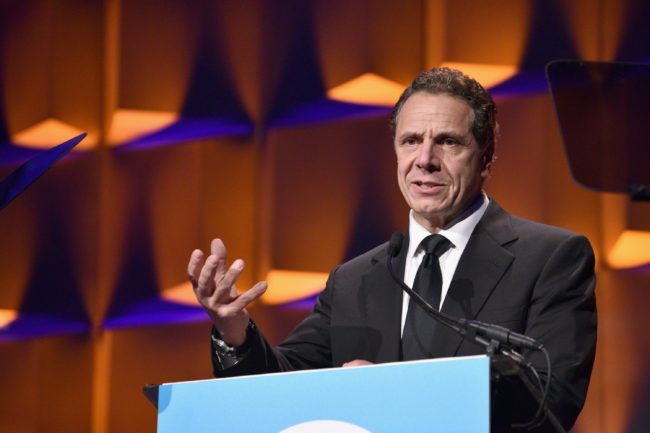
The incident was confirmed by the town attorney Robert Subik, who told local newspaper the Daily Gazette that the licence was not granted because the couple did not make an appointment and because of the clerk’s religious beliefs.Governor Andrew Cuomo has called for the incident to be investigated in a statement posted on his official website.
Same-sex marriages have been legally recognised in New York state since 2011 (Theo Wargo/Getty)
“The denial of a marriage license to a same-sex couple yesterday in Montgomery County is an unconscionable act of discrimination that goes against our values as New Yorkers,” he wrote.
“Personally I cannot believe that this could happen anywhere in this country, let alone in the State of New York. Marriage equality is the law of the land, and it has been in New York since we were the first big state to pass the Marriage Equality Act in 2011. I am directing an investigation into this incident to ensure that it never happens again.
“On behalf of all New Yorkers, I would like to congratulate Dylan Toften and his future husband on their marriage. I invite them to come to Albany, and I would be happy to offer my services as an officiant at their wedding.”
Subik told the newspaper in an email: “She has a religious objection and has referred the matter to her deputy clerk, who has no such objection and will issue the license when they make an appointment.”
Governor Cuomo (Photo by Bryan Bedder/Getty)
“The clerks are both part-time and don’t man the office Monday through Friday. Of course, the two men are free to go to another jurisdiction to obtain their license.”
Same-sex marriage have been legally recognised in the state of New York since 2011 and has been legal across the US since 2015.
The results from the poll, published by Gallup, mark the highest level of support the firm has ever recorded in more than 20 years of asking US citizens about their views on the issue.
In 1996, when Gallup first surveyed Americans on same-sex marriage, only 27 percent were in support.
The data showed that 83 percent of those who classed themselves as Democrats said they support legally recognised same-sex marriage – compared to less than half (44 percent) of Republican respondents.
The LGBT Foundation said there has been a recent rise in cases of shigella among men who have sex with men.
Shigellosis, or shigella, is an intestinal infection caused when bacteria found in poo gets into your mouth.
Last month, health officials in San Diego issued an advisory over the sexual transmitted infection. It said that gay and bisexual men, homeless individuals, and people with compromised immune systems could be at an increased risk for the intestinal disease.
In 2017, San Diego recorded the highest number of cases in 20 years, including a disproportional increase in the gay and bisexual community and among the homeless population.
How do you get it?
Shigella can be caught from rimming, oral sex, or putting your fingers in your mouth after handling used condoms, douches or sex toys, the LGBT Foundation says.
Signs of infection include having an upset stomach, fever, stomach ache, and diarrhoea which might have blood in it.
These symptoms can last for around a week. Shigella is closely related to the E.coli bacteria.
Disease and infections magazine outbreaknewstoday.com reported that the number of cases typically increases in the late summer and fall.
How to lower risk of shigella infection
The LGBT Foundation says you can lower your risk of infection by washing your hands, bum and genitals after sex.
You could also use dental dams, condoms, and fisting gloves to protect you when having oral sex, fisting, and fingering.
It is also recommended that you change condoms between partners, and between anal and oral sex, whether they’re on a penis, hands, or sex toys.
Hygiene as prevention: Wash often and don’t re-use condoms. Photo: Mark Johnson
Shigella treatment
Shigella is treated with a course of antibiotics, the Foundation says. However, the US Centers for Disease Control and Prevention warned last month of an increasing number of antibiotic-resistant shigella infections.
If you think you have shigella, go to a sexual health (GUM) clinic or your GP and explain your symptoms. You may also want to say that you think you may have picked up an infection from sex.
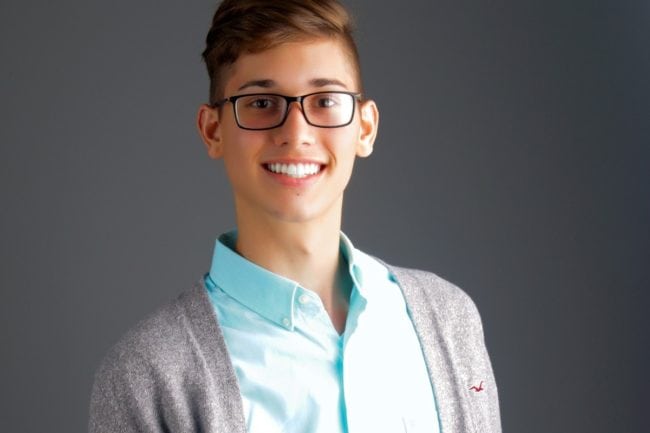
Seth Owen was sent to gay ‘conversion’ therapy by his parents (gofundme)
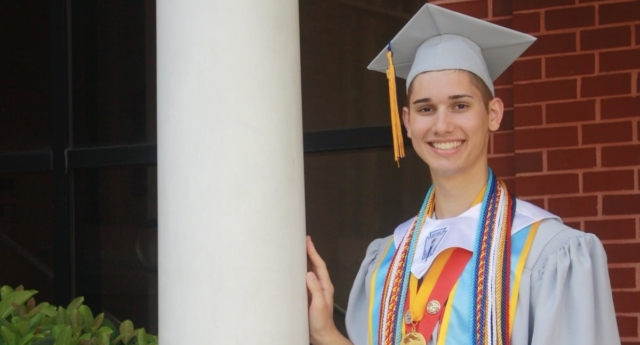
A gay teenager whose parents sent him to ‘conversion’ therapy and forced him out of their home will be able to go to college after his teacher raised more than $70,000 in six weeks.
Seth Owen, 18, is set to achieve his “life goal” of attending Georgetown University, thanks to his former biology teacher Jane Martin and the more than 1,100 donors who have contributed to his cause.
Seth was $20,000 short from reaching his “life goal” (gofundme)
This was after Seth’s Southern Baptist parents discovered he was secretly gay.
“I was writing a paper, and my dad decided to check my phone late in the evening,” he told NBC
“He found a damning photograph of me and another guy. Nothing inappropriate, but it clearly indicated that I was gay.”
After his parents interrogated him about his sexuality until 4:30am, it wasn’t long before he was forced into therapy aimed at changing his sexuality.
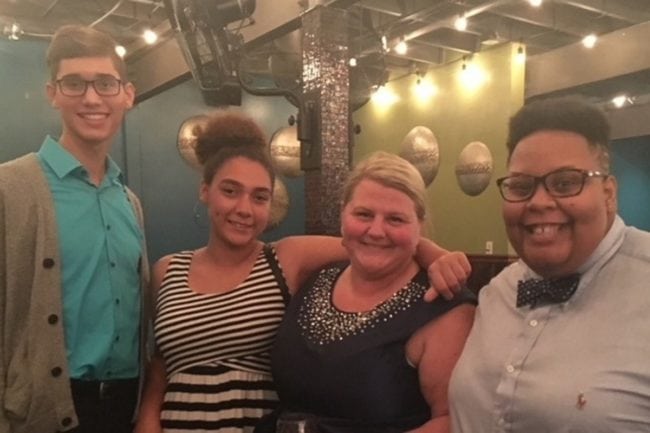
Seth, Martin and his wife (gofundme)
“They sent me to a Christian counsellor,” he said. “It was clear that their intent was for me to walk out of therapy straight.”
He added: “It was not like a conversion camp, but it was definitely awkward conversion therapy where they tried encouraging stereotypical masculine tasks and things like that.”
Seth convinced his parents to let him leave the therapy after a few months, but in February, during his crucial senior year, their vocal intolerance reached new levels.
“I mean, there was just incident after incident,” he said. “They talked very negatively about the LGBTQ+ community. They said that gay people would not serve in the church.
“Then they were talking about transgender people as though they weren’t human, and that really, really bothered me.”
Jane Martin with her wife (jane martin/facebook)
After numerous arguments, his parents gave him an ultimatum: go to their anti-gay church, or leave their home.
He couldn’t choose any other option but to leave – but he still had hope that his parents wouldn’t go through with it.
“The worst part was I was packing my bags, and I was walking out the door, and I was hoping that my mum would stand in my way,” remembered Seth.
“I was hoping that she would say: ‘I love my child more than I love my religion.’”
She didn’t, meaning that the teenager had to spend the next months sleeping at friends’ houses and working full-time to support himself while he completed high school with a 4.16 GPA.
And when the Georgetown acceptance letter came through, there was more pain in store for Seth, who realised that his financial aid package had been put together with the expectation that his family would contribute.
“I started to cry, because I realised there was no way that I could go to college,” said the 18-year-old. “Georgetown was my only option, because I had already denied my other acceptances.”
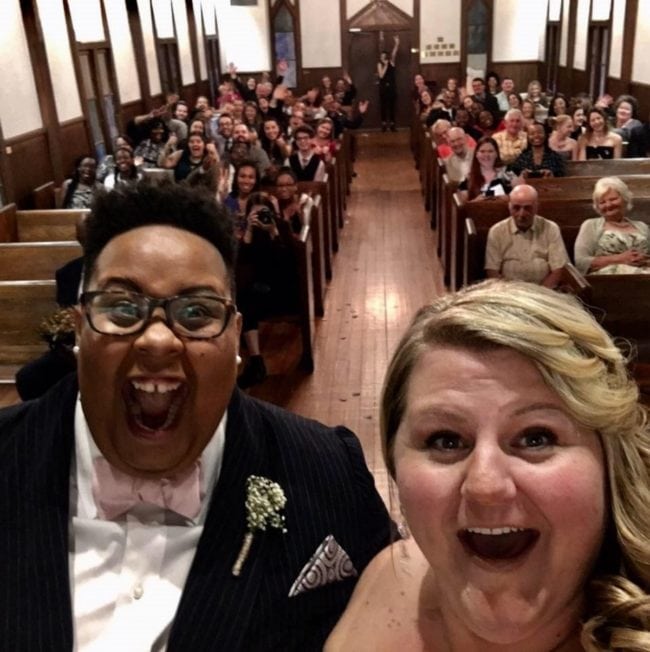
It was then that his former teacher and mentor Martin, whose same-sex wedding Seth attended as the ring bearer, stepped in.
On June 18, she started a GoFundMe page with a target of $20,000 and the message that “I know the goal seems unrealistic and the circumstances aren’t ideal, but I also know communities can make the impossible possible.
“It’s Pride Month and rainbows abound around the world. Help me bring a rainbow in the midst of Seth’s storm.”
The community responded – and how. The goal has been smashed more than three times over as people have rushed to help Seth live out his dream.
There have been nine gifts of $1,000 or more – plus a $500 donation from Martin herself – but the figure has been reached through community spirit.
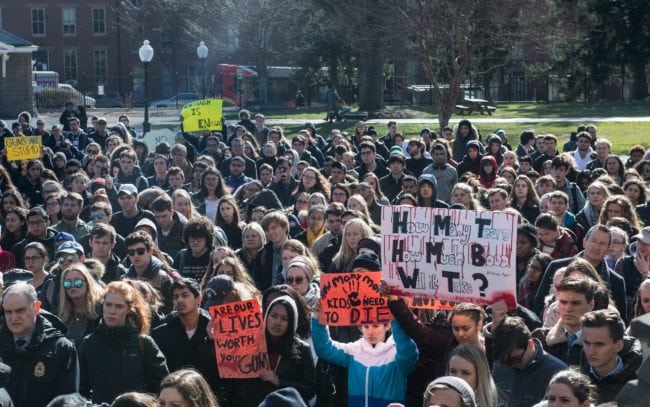
Students protesting at Georgetown (NICHOLAS KAMM/AFP/Getty)
“After we had hit $2,000, Seth was just like, ‘I’m so surprised that people, like, actually care about me,’” Martin said.
“He has had so much support and so many people reach out and say ‘You’re not alone,’ and ‘It gets better,’ all of the things that we all need to hear when we’re queer teenagers and are suffering,” she added.
“I’m just excited for him to have this community literally come around and put all of our arms together and bring him up and raise him up for the first time.”
Seth responded to the tsunami of support on the GoFundMe page, writing: “I simply cannot say thank you to you all enough. My dreams have come true because of you all.
“Through this entire process of sharing my story, I have been shown by an abundance of loving and generous people that Jacksonville is a place of growth and support.
“I appreciate that you all have given me the reassurance to live authentically and the ability to continue to be relentless and tenacious in pursuing my dreams,” he added.
“Your passionate response to my situation reassures me that Jacksonville (and our country) will not tolerate injustices towards the LGBTQ+ community.
“Since this story became public, I have had numerous people reach out to me and say that they are going through similar situations.
“Unfortunately, this is still a problem in Jacksonville (and across the country) for many people, not just me.
“So, I ask that you all continue to be allies in whatever capacity, not just for the LGBTQ+ community, but for all marginalised groups.”
The teenager said he was “forever grateful to you all for making my lifelong dream of attending college possible.”
Next month, he will move to Washington DC to join Georgetown’s Class of 2022.
Last month, San Francisco’s LGBT+ community held a celebratory funeral for trans student Daine Grey, who took his own life, after crowdfunding more than $25,000 – including a donation from celebrity chef Nigella Lawson – to pay for the costs.
A Fortune 500 company has named an openly gay woman to the role of president and CEO.
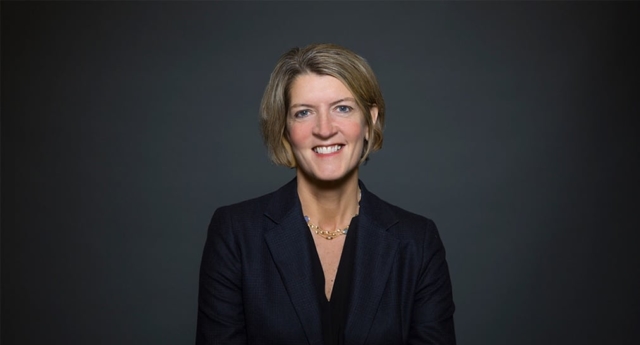
Effective August 1, Beth Ford will take the reins of food and agricultural cooperative Land O’Lakes, Inc., ranked 216 in the annual ranking of the largest companies in the US compiled by the American publication Fortune.
She joined the company in 2011 and has more than 20 years’ experience specifically in the areas of technology and research and development. The company statement announcing her appointment on Thursday made no reference to her appointment breaking new ground for the LGBT+ business community, although it stated that the new CEO is married to a woman: “Ford and her spouse, Jill Schurtz, have three teenage children and live in Minneapolis.”
Chief Executive Officer of Time Inc., Laura Lang speaks during a Fortune 500 event on May 7, 2012 in New York City (Jemal Countess/Getty Images for Time)
Ford joins a small club of openly gay business leaders running a Fortune 500 company. “By Fortune’s count, Ford will be the third openly gay CEO of a Fortune 500 company and the first woman,” the publication wrote—Apple’s Tim Cook and the Dow Chemical Company’s Jim Fitterling being the other two.
“Ford said it didn’t even come up in her discussions with the board. But she conceded that ‘it’s not nothing,’” Fortune’s article read.
“If it gives someone encouragement and belief that they can be their authentic self and live their life and things are possible, than that’s a terrific moment,” Ford told the publication, adding that she remembers what it was like not to be out in her workplace when she was in her 20s.
“I think I’ve been fortunate since my mid-30s of being just who I am,” Ford said, adding: “Work is hard enough, and then when you have to feel as though you can’t be who are, that’s got to be incredibly difficult.”
Apple’s Tim Cook and the Dow Chemical Company’s Jim Fitterling are the only other two openly gay business leaders running a Fortune 500 company (Andrew Burton/Getty Images)
In a separate statement to CNN, Ford said: “I am extraordinarily grateful to work at a company that values family, including my own.”
The LGBT+ rights group congratulated Ford on her appointment. “Her authentic leadership as an out lesbian is well-known in the LGBT corporate community, and the fact that she is assuming this role as an out lesbian sends an especially powerful message,” says Deena Fidas, HRC director of workplace equality, told CNN.
“This is not a story of someone getting into the higher echelons of leadership and then coming out, this is someone walking into this role with her full self,” Fidas added.
Los Angeles businessman David Cooley was flying from New York back to LA when he and his partner, who had already been seated in their assigned premium seats “for a while,” were approached by a flight attendant.
“My companion was asked to move from his premium seat to coach, so a couple could sit together,” Cooley wrote in a Facebook post about the incident. “I explained that we were a couple and wanted to sit together. He was given a choice to either give up the premium seat and move to coach or get off the plane.”
Cooley and his partner “could not bear the feeling of humiliation for an entire cross-country flight” so they left the plane.
“I cannot believe that an airline in this day and age would give a straight couple preferential treatment over a gay couple and go so far as to ask us to leave,” he wrote. “I have never been so discriminated against while traveling before.”
When contacted by GSN, Alaska Airlines said the businessman and his partner were “mistakenly assigned the same seats as another couple in Premium Class.”
“We reseated one of the guests from Premium Class in the Main Cabin,” the airline’s statement read.
In his posts on Twitter and Facebook, Cooley — owner of the popular West Hollywood club The Abbey — implored his followers to boycott Alaska Airlines and Virgin Airlines, the company it just purchased. He noted that they booked flights through Delta, who he called an “LGBT friendly airline” worthy of patronage.
Attorney General Jeff Sessions has created a religious liberty task force to “protect and promote religious liberty.” Speaking from the Justice Department in Washington, Sessions said the task force, which he will chair, is to help implementation of the religious liberty memo he signed in October.
That 25-page memo outlines 20 guiding principles that federal agencies can use to protect religious liberty in employment, contracting and programming. The task force will facilitate compliance with the October memo, address new or recurring issues with implication of the memo and facilitate interagency coordination regarding the memo.
The full text of Sessions’ remarks has been posted to the DOJ’s website. An excerpt:
A dangerous movement, undetected by many, is now challenging and eroding our great tradition of religious freedom. There can be no doubt. This is no little matter. It must be confronted and defeated. This election, and much that has flowed from it, gives us a rare opportunity to arrest these trends. Such a reversal will not just be done with electoral victories, but by intellectual victories.
We have gotten to the point where courts have held that morality cannot be a basis for law; where ministers are fearful to affirm, as they understand it, holy writ from the pulpit; and where one group can actively target religious groups by labeling them a “hate group” on the basis of their sincerely held religious beliefs.
In recent years, the cultural climate in this country—and in the West more generally—has become less hospitable to people of faith. Many Americans have felt that their freedom to practice their faith has been under attack. And it’s easy to see why. We’ve seen nuns ordered to buy contraceptives.
We’ve seen U.S. Senators ask judicial and executive branch nominees about dogma—even though the Constitution explicitly forbids a religious test for public office. We’ve all seen the ordeal faced so bravely by Jack Phillips. Americans from a wide variety of backgrounds are concerned about what this changing cultural climate means for the future of religious liberty in this country.
President Trump heard this concern. I believe this unease is one reason that he was elected. In substance, he said he respected people of faith and he promised to protect them in the free exercise of their faith. He declared we would say “Merry Christmas” again.
The Portland Mercury reported that after being threatened by police in the Russian North Caucasus region, near the border of the notoriously anti-gay Chechnya, Dmitri (a pseudonym to protect his identity) decided to flee to the US in spite of knowing neither English nor any people in the states.
“Most asylum seekers fly to the United States on a tourist visa and then, once they arrive, request asylum,” reporter Katie Herzog wrote. “But Dmitri had applied for a tourist visa four times before, and each time his application was rejected.”
Instead, Dmitri “took the long way,” flying from Moscow to France, Cuba and finally Tijuana, Mexico, where he surrendered himself to authorities who detained him. In the past, most asylum-seekers were granted a bond hearing every six months, but in February, Herzog noted, the Supreme Court reversed the decision that gave that entitlement. Asylum-seekers can now be held indefinitely while awaiting hearings, “even if they haven’t committed a crime.”
“The implications of this policy are playing out most visibly on the southern border” with Donald Trump’s family separation policy. In Dmitri’s case, however, it led to him being sent to the Northwest Detention Center in Tacoma, Washington — a place he’d never heard of prior to surrendering to agents at Tijuana.
Herzog noted that although only 37 percent of immigrants nationwide have attorneys due to their cases taking place in civil (rather than criminal) court, Dmitri got lucky and found a lawyer “through fellow detainees at the prison.” He spent five months at the Northwest Detention Center before his hearing, where Portland-based Judge Richard Zanfardino teleconferenced in to preside over his case.
In most cases, the report noted, queer and transgender Russians are able to get asylum in the US because judges “understand that being LGBTQ could get you murdered in Russia.” Zanfardino, however, did not agree with that general consensus and argued that it’s not illegal to engage in homosexual activity in Russia.
Russian law, the judge wrote in his decision, “does not criminalize an individual for being homosexual but instead criminalizes speech considered pro-LGBTI” — leaving out that it is illegal to be out of the closet in the country. Herzog wrote that Zanfardino also denied the claim because Dmitri “also denied the claim because Dmitri had secretly dated men in the past without suffering physical harm.”
Kimahli Powell, the director of the Rainbow Road organization that helps queer and trans people get to safety around the world, said Zanfardino is “is basically condemning [Dmitri] to violence” with the ruling.
The bisexual Russian’s lawyer plans to appeal the claim, a process that could take between six months to a year. When and if that appeal is denied (which is likely, Herzog wrote), the attorney will then take the case to federal court.
In the meantime, Dmitri will remain in a prison where he said he is very cold, playing cards and learning English.
A St. Louis County senior community has denied housing to a married lesbian couple who have been together for nearly four decades because of the couple’s sexual orientation, according to a lawsuit filed Wednesday in U.S. District Court.
Mary Walsh, 72, and Bev Nance, 68, both of Shrewsbury, say the Friendship Village senior living community, which has locations in Sunset Hills and Chesterfield, denied occupancy to the couple to live at the Sunset Hills community in 2016 because their relationship violated its cohabitation policy that defines marriage as “the union of one man and one woman, as marriage is understood in the Bible,” according to the lawsuit.
The policy, the suit says, violates the Fair Housing Act and the Missouri Human Rights Act. It names Friendship Village and its parent company FV Services Inc. as defendants. The couple is represented by the San Francisco-based National Center for Lesbian Rights, the American Civil Liberties Union and the Washington D.C.-based firm Relman, Dane & Colfax.
An Indiana man who was headed toward L.A. Pride two years ago in a car filled with weapons, explosives and high-capacity magazines was sentenced to seven years in state prison on Thursday, officials said.
James Wesley Howell, 22, pleaded no contest to possession of an explosive chemical, malicious possession of a destructive device and illegal weapon activity, according to a news release issued by the Los Angeles County district attorney’s office.
Santa Monica police arrested Howell on June 12, 2016. Inside his car, police found three rifles — including an Anderson Manufacturing AM-15 .223 caliber rifle that police described as an assault weapon — and two 30-round magazines.
In addition to the guns, Howell was also driving with a full five-gallon container of gasoline and a 25-pound container of “Shoc-shot,” a commercially sold two-component explosive that detonates when hit by a high-velocity rifle round, Santa Monica police said at the time.
“The amount of explosives in the container would have posed a grave danger to both persons and property had the explosives been detonated, either intentionally or accidentally,” Santa Monica Det. Derek Leone wrote in a court filing in 2016.
Howell also had a black hood, a Taser, handcuffs, a Buck knife, a security badge and additional ammunition for the guns, court records show.
His arrest created a massive panic as it came just hours after the Pulse nightclub shooting in Orlando, Fla., that claimed 49 lives. Santa Monica police also mistakenly tweeted that Howell intended to harm people at L.A. Pride.
It was later revealed police did not actually know why Howell was headed toward the event.
Howell had no ties to California, and told police he was fleeing from potential criminal charges in his home state. He was later charged with molesting a 12-year-old girl in Henryville, Ind., court records show.
Investigators have not said what they believe Howell’s intentions were. The status of his criminal case in Indiana was not immediately clear, and the district attorney’s office did not immediately respond to additional questions.
The U.S. House of Representatives Wednesday afternoon unanimously passed a resolution that condemns hate crimes and urges the Dept. of Justice to “investigate all credible reports of hate crimes and incidents and threats against minorities.”
The resolution is non-binding and was first introduced in 2017. H. Res. 257 was originally sponsored by Rep. Barbara Comstock, a Republican of Virginia.
The resolution specifically mentions people of the Jewish and Islamic faiths, and Hindu and Sikh Americans, all of whom “have been the target of hate-based violence targeting religious minorities.”
It also notes “there has been an increase in White supremacist activity on college campuses across the United States,” and acknowledges “victims of crimes motivated by their offenders’ anti-Black or anti-African-American bias.”
The resolution does not mention LGBTQ people, who are among the groups most-targeted in bias crimes.
The FBI reports that in 2016, there were 6,063 single-bias incidents reported. Rep. Comstock chose to leave out the anti-LGBT bias crimes which account for about one out of every five of those hate crimes.
The resolution was attacked in 2017 by the far right wing Breitbart website, which suggested that if passed it “could end up landing you in federal court for espousing a politically incorrect opinion,” which is false.
Rep. Comstock in November will face Democratic State Senator Jennifer Wexton. Hillary Clinton won the district in 2016 by 10 points, and it is considered a top race to watch.