Researchers have taken a giant leap in the search for an HIV cure by discovering a way to identify the virus even as it is camouflaged among other cells.
HIV spreads by invading and multiplying within white blood cells, which fight disease and infection. One of the main roadblocks in developing a cure has been finding a way to isolate and kill the virus without also killing white blood cells and harming the body’s immune system.
Researchers from the Peter Doherty Institute for Infection and Immunity in Melbourne, Australia have now cultivated a method to identify the virus among white blood cells, as demonstrated in a recent paper published in Nature Communications, isolating the virus for potential treatment.
The technology involves mRNA — molecules isolated from DNA that can teach the body how to make a specific protein — which were also used in the COVID-19 vaccines. By introducing mRNA to white blood cells, it can force the cells to reveal the virus.
Using mRNA in this way was “previously thought impossible,” research fellow at the Doherty Institute and co-first author of the study Paula Cevaal told The Guardian, but the new development “could be a new pathway to an HIV cure.”
“In the field of biomedicine, many things eventually don’t make it into the clinic – that is the unfortunate truth; I don’t want to paint a prettier picture than what is the reality,” Cevaal said. “But in terms of specifically the field of HIV cure, we have never seen anything close to as good as what we are seeing, in terms of how well we are able to reveal this virus.
A cure is still years away, as Cevaal said it would still need to be tested on animals and then humans to see if it can be done safely on living beings before they can test whether or not a potential treatment would even work. However, she added that that “we’re very hopeful that we are also able to see this type of response in an animal, and that we could eventually do this in humans.”
Laws banning gender-affirming care for transgender youth in the United States are inflicting severe harm on young people and their families, Human Rights Watch said in a report released today. Since 2021, 25 states have enacted sweeping bans targeting this best-practice medical care, replacing gradual, evidence-based treatments with blunt and politically driven restrictions.
The 98-page report, “‘They’re Ruining People’s Lives’: Bans on Gender-Affirming Care for Transgender Youth in the US,” documents the devastating consequences of these bans for transgender youth, including increased anxiety, depression, and, in seven reported instances, suicide attempts. Human Rights Watch found that these laws contribute to an increasingly hostile, anti-trans climate, compelling youth to hide their identities and socially withdraw. The bans also destabilize health care systems and undermine civil society and create geographic and financial challenges in accessing care. The impact has intensified since early 2025, when the administration of President Donald Trump took a series of executive actions escalating federal attacks on transgender rights.
“US officials have cut off transgender youth from essential, life-affirming care, throwing them instead into the crosshairs of a cultural war,” said Yasemin Smallens, LGBT Rights Officer. “Families are being pushed to the brink, forced to navigate impossible barriers to care, while the federal government intensifies its assault on transgender rights.”
Human Rights Watch interviewed 51 people in 19 states who have been affected by these legislative bans, including transgender youth, parents, health care providers, and advocates. Human Rights Watch also consulted 32 LGBT rights organizers and conducted an additional round of interviews after President Trump’s inauguration to document the impact of his administration’s new policies.
More than 100,000 transgender youth live in states with legislative bans on gender-affirming care for youth. Six states classify providing this care as a felony and eight state laws include vague “aiding and abetting” provisions that could penalize providers for making referrals or refilling prescriptions. The Trump administration has further attempted to restrict access through a January 28 executive order, which while not fully enforced, has caused some clinics to halt services in states where the care remains legal. A case challenging Tennessee’s ban, Skrmetti v. United States, is before the US Supreme Court, with a decision expected in June.
Families affected by bans said that their children lost access to medical care with little or no notice and often without alternative options. Eleven families said they were compelled to travel out of state to consult physicians or obtain prescriptions. Several youth said they were unable to begin care due to legal barriers combined with geographic and financial obstacles. One family relocated to another state.
“I want [lawmakers] to know they’re ruining people’s lives,” said an 18-year-old trans woman whose care was interrupted by a state ban. Youth who have retained access to care said the hostile legal and political environment has exacerbated their feelings of anxiety, depression, and isolation.
State bans have compelled many health care providers to shut down or curtail services. People interviewed reported instances in which providers or institutions ceased services more than may have been legally required. State bans have had a cascading negative impact on health care systems, Human Rights Watch found, as providers in states with bans reported difficulty retaining existing providers and recruiting new doctors.
Every health care provider interviewed said that they had experienced targeted anti-trans harassment. Providers said their institutions have increased their security budgets, diverting funds that could be used for patient care. Civil society organizations reported facing similar threats, alongside rising costs for safety measures.
In Texas, affected individuals described the state’s extreme targeting of transgender people, including a 2022 directive that classified certain forms of gender-affirming care for youth as “child abuse.” As a result, some families reported avoiding health care interactions altogether to protect their children, whose transgender identity, if disclosed, could trigger child abuse investigations. In April 2025, President Trump issued a proclamation asserting that parents who affirm their child’s gender identity are committing abuse.
“People are scared they’re going to lose their kids,” one advocate said. “You don’t have to legislate it if you scare people so much that they self-police.”
“The rhetoric in these legislative sessions suggests you just walk in and they’re handing you hormones and blockers,” one father said. “None of that happened. In the first year or more, not one prescription was written. They [doctors] said, ‘We’re here to listen to you and react based on what you think your needs are.’ Which was incredible as a parent. It puts you at ease … It’s a slow, methodical process.”
The US has international legal obligations to protect the rights of transgender youth, including access to gender-affirming care, as part of its obligation to guarantee the rights to health, nondiscrimination, family integrity, and personal autonomy.
“These laws are upending lives, driving young people into crisis, compelling families to uproot their lives, and fueling anti-trans hostility,” Smallens said. “Lawmakers should repeal these bans, ensure access to care, and protect transgender youth and their families so they can live safely and with dignity.”
Members of Macon’s LGBTQ community gathered inside The Tubman Museum of African American Art, History, and Culture on June 5 to celebrate the start of Pride season and the induction of three local advocates at the forefront of activism, art, and education who have contributed significantly to LGBTQ visibility and progress.
Portraits of Marques Redd, co-founder and co-executive director of Rainbow Serpent, Richard Frazier, artistic and executive director of Theatre Macon, and Dr. Thomas Bullington, senior lecturer of English and Liberal Arts at Mercer University, were among 21 influential Macon LGBTQ leaders featured in the Pioneers and Trailblazers exhibit. Created in partnership with Storytellers Macon, inductees also shared their journeys of self-acceptance and advocacy throughout the evening.
Richard Frazier shares his story as a theatre professional in Macon and his journey toward self-acceptance as a gay man of mixed-race heritage during the Pioneers and Trailblazers Photo History Exhibit. (Image: Darian Aaron)
“We’ve been doing this exhibit for the past four years,” said DeMarcus Beckham, co-founder and special events chair of Macon Pride. “Each year, we add two to three individuals who we feel have contributed not just to Macon but our region’s history and the preservation of our communities’ civil rights.”
Since 2019, Macon Pride has hosted its annual Pride festival during the last week of September, and this year, the tradition will continue in addition to special programming throughout the month of June. For inductee Richard Frazier, the availability of multiple events created specifically for LGBTQ Maconites and their allies not only represents a thriving queer community but also creates a different narrative of life as a queer person in a small Southern town.
“Macon is an interesting community because it is a small town, but it’s not a small town in the way that I think people think it is,” Frazier said. “The culture here and the amount of emphasis that our community places on the arts and on creating community for everybody really sets it apart, I think, from most small towns, specifically in Georgia. It has a big city feel where you never know who you’ll get to meet, but it also has this lovely sense of community,” he said.
Multimedia artist and scholar Marques Redd shares his story of reconciling his sexuality with his faith and the affirmation he received through discovering untold stories of queerness in art during the Pioneers and Trailblazers Photo History Exhibit. (Image: Darian Aaron)
Macon native and inductee Marques Redd works to advance Black LGBTQ culture by exploring multimedia art, traditional African spirituality, and emerging tech. He tells GLAAD that the existence of an organization like Macon Pride would have significantly impacted his life during his formative years.
“When I was growing up, such an organization did not exist, and I think that really left a gap for people and the community,” Redd said. “There were no obvious places where people could turn for support, community, help, or fellowship.”
This year and every year going forward, Beckham says organizers want to be intentional about Macon Pride being an organization available to the community every day of the year.
Attendees inside the atrium of the Tubman Museum for Macon Pride’s Pioneer & Trailblazers Photo History Exhibit. (Image: Darian Aaron)
“Having local Pride, there’s a responsibility to show that we have a community here,” Beckham said. “We will hold space. We are your doctors, we are your lawyers, we are the people who are your community servants.”
Like Redd, whose family owned the now-closed Miracles Art Gallery in the 1990s, which housed one of the largest collections of Black art in the Southeast, in addition to his LGBTQ portrait, Redd has also curated a special exhibit of his family’s impressive Black art collection on the second level of the Tubman Museum simply titled “Miracles.”
“Multiple parts of my life are coming together in such a beautiful way, and I’m just excited to share this with everybody,” Redd said.
Beckham beams when discussing the Tubman Museum’s support of the queer community by hosting the LGBTQ photo exhibit and the opportunity provided in the space to celebrate the intersecting identities of the artists and art within its walls.
“To host an event in one of the largest African American museums in the southeast is baffling,” he said. “People will be able to see community spaces like this opening up for [LGBTQ] individuals and for us to have those conversations about intersectionality.”
Inductee Richard Frazier tells GLAAD that the evening was a reminder “to keep spreading love and to keep creating spaces where people feel safe and welcome,” specifically in places where the opposite experience is often expected.
“You can be your most authentic self even in this small town, and you don’t have to go somewhere else to be a part of a larger community or a safe space,” Frazier said. That’s something that I’ve really appreciated about what Macon Pride has done.
Dr. Thomas Bullington poses with a “Shade” fan before the start of Macon Pride’s Pioneer & Trailblazers Photo History Exhibit. (Image: Darian Aaron)
“This goes beyond anything that I could have imagined as a child and a young teenager,” Redd said. “It’s really thrilling to see, and it shows that times are changing. It’s taken community-wide pressure and organizing to make this happen, and I think it shows the power of what we can do when we all come together.”
At least six more Pride-related events are scheduled in Macon in June before more than 4,000 attendees from over 13 different counties in Georgia descend on Macon for the major Pride celebration. Beckham wants folks to know that Pride in Macon is more than “standing on a float dancing to Lady Gaga songs.”
“It’s an opportunity to find resources in your community and to find connections with other people like you,” he said. “But [it’s an opportunity] also to challenge norms because we are here. We have always been here and will continue to hold up space. And as long as there’s breath in my lungs, Macon Pride will exist, and we will have a community here.”
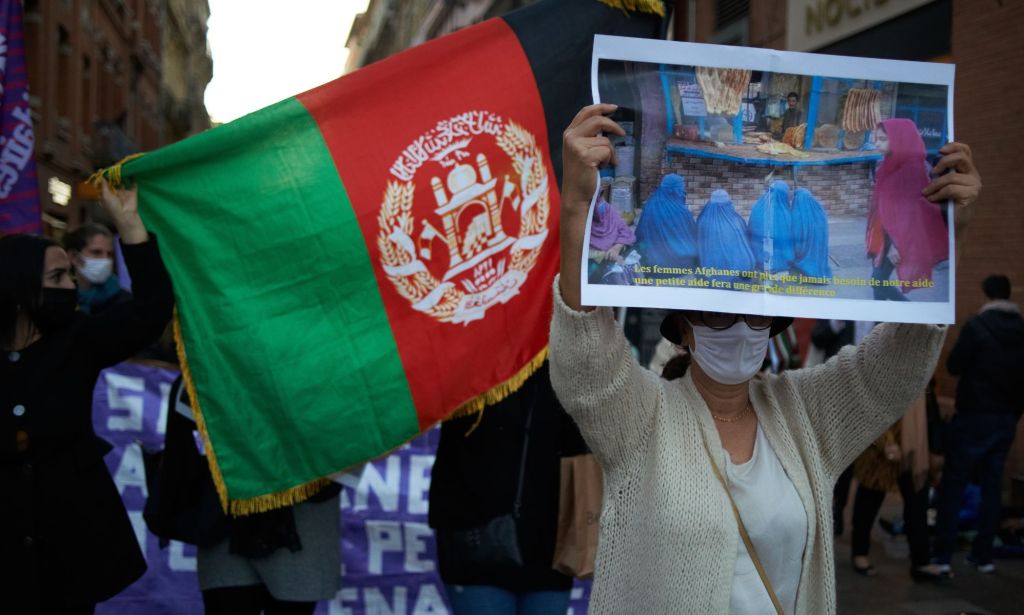
A human rights group has warned a travel ban on 12 countries imposed by Donald Trump will disproportionately affect LGBTQ+ people and other vulnerable groups.
The 78-year-old US president signed a proclamation in the early hours of Thursday (5 May) banning travel to the US for nationals of several countries.
Countries whose citizens are now banned from entering the US are Afghanistan, Myanmar, Chad, Congo-Brazzaville, Equatorial Guinea, Eritrea, Haiti, Iran, Libya, Somalia, Sudan, and Yemen.
The White House cited several national security concerns in a statement after Trump signed the travel ban, claiming it would help protect the US from “foreign terrorists.”
But the proclamation was described as “truly punitive” by Human Rights First attorney, Robyn Barnard, who said the US is trying to punish the countries on the travel ban list.
Speaking to BBC World Service, Barnard, who describes herself as an “immigrant several times over,” said the travel ban mirrors an executive order signed during Trump’s first term in 2017 which banned citizens from Iran, Iraq, Libya, Somalia, Sudan, Syria, and Yemen for 90 days.
“There is no clear thread between each,” she said, noting the only “commonalities” between the two travel bans are that several of the countries have “restrictive policies against women and girls and [LGBTQ+] individuals and others,” the travel ban will make it impossible for these discriminated-against groups to “reunite with loved ones in the US”, in the words of Human Rights First.
She continued: “It really feels like it’s about punishment and creating more chaos and dysfunction in our immigration system.”
LGBTQ+ people, women, and girls would be disproportionately affected by the travel ban, experts have said. (Getty)
Hours after Trump signed the travel ban, the US president wrote on his Truth Social platform: “We don’t want them.”
You may like to watch
He cited a recent attack in Boulder Colorado in which 45-year-old Mohamed Sabry Soliman threw a set of Molotov cocktails into a crowd of protestors, injuring at least 15 people, according to AP.
Mr Soliman, who was being held by Colorado Police on a $10 million cash-only bond, is an Egyptian national; a country which does not appear on Trump’s travel ban.
Regardless, Trump wrote that the attack “underscored the extreme dangers posed to our country by the entry of foreign nationals who are not properly vetted,” as well as those who “come here as temporary visitors and overstay their visas.”
On the same day, the president also signed an executive order restricting the right for foreign students to study at Harvard University under temporary visas.
The New York Times’ coverage of transgender people and issues has been critiqued for years by trans people, the broader LGBTQ community, and allies. Now instead of directly addressing the critiques, meeting with the community harmed by the coverage, or forthrightly fixing its errors in reporting and news gathering, the Times is deploying its most distrusted and discredited reporters in a new project designed to profit off its inaccurate and biased coverage.
The project is a multi-episode podcast on transgender health care that was repeatedly shopped around by the Times’ sales office, with “sponsorship opportunities” in the tens of thousands of dollars. The podcast promos say the episodes will explore the “political fight” around essential health care for transgender people. The promos did not say if the Times would acknowledgehow Times coverage fueled the “political fight,” or how its stories are repeatedly cited to justify harmful policies and legislation that criminalizes the care and bans access to it.
Transgender contributors for the New York Times and advocacy groups have tried for years to get the Times to listen to the community it is covering and harming; to hire transgender people on its staff; and to stop its inaccurate, biased reporting. The Times continues to perpetuate the same mistakes and the same harm:
Reporters have betrayed the trust of LGBTQ families who regret speaking with the Times. The Times’ most popular podcast, The Daily, issued a call out to listeners last week asking for their experiences with transgender health care, which suggests the new podcast project did not have the audio needed from the people whose opinions matter most.
The Times continues to recycle its inaccurate and biased reporting to support preconceived notions and its fully misguided commitment to inaccurate “both sides” journalism. A recent story managed to quote transgender legal experts and medical providers (trans voices in stories about trans people are rare in the Times’ reporting), but was backfilled by several paragraphs of inaccurate previous reporting, including unchallenged anti-trans voices.
The Times’ coverage has been cited by multiple anti-LGBTQ politicians to justify legalizing discrimination and criminalizing support for transgender people, a fact the Times itself has never covered. A recent example: a wildly inaccurate and graphic Department of Justice memo seeking to criminalize health care providers included as its number one citation an inflammatory article from the New York Times boosting the debunked theory about the rise in transgender youth, alongside dubious sources including The New York Post, Fox News, and error and animus-filled documents from the Trump White House.
When there is news of legitimate research and reports that support medically necessary, mainstream care, and detail the benefits of it, the Times has failed to cover it. The Times has covered Utah’s legislative attacks against the transgender community in more than half a dozen stories, but did not cover the Utah legislature’s study finding that transgender health care benefits trans youth.
The Times leadership has repeatedly refused to acknowledge the harms and impact of its reporting. Publisher AG Sulzberger told shareholders in April that he believes the reporting has been “fair and respectful.” Spokespeople and staff have claimed it is “empathetic.” These are not words the transgender community and families use to describe the coverage, nor reflect how they feel about it.
In 2022, The Times dedicated more than 15,000 words’ worth of front-page stories “asking whether care and support for young trans people might be going too far or too fast.”
A 2024 Media Matters and GLAAD analysis found that a majority (66%) of Times news stories about trans people did not include even one trans voice. This problem continues on the Opinion page, where columnists who are not trans or queer are regularly given numerous columns to denigrate transgender youth and their right to best-practice healthcare which is supported by every major medical association.
The Timesobscures sources’ identities, leading readers to believe a source is simply an “everyday person,” when they in fact are working directly with anti-trans activists and extremist organizations.
The Times leads with an outsized focus on so-called “regret” for gender-affirming healthcare, when the reality is, the regret rate for knee surgery is higher than gender-affirming care. Notably, puberty blockers, which have been used for decades in non-transgender kids, are portrayed as dangerous for transgender kids, despite being backed by the American Medical Association, the American Academy of Pediatrics, and more. The Times has interviewed Dr. Hilary Cass of the UK, amplifying the false accusation that U.S. medical associations are overly political, yet failed to challenge or note her direct cooperation with Florida Governor DeSantis’s administration and its harmful and inaccurate testimony to support state medical care bans.
Families with trans kids regret speaking to the Times. Multiple families have come forward to express their regret in speaking with the Times and call out the fact that their personal stories were spun and twisted including a family member who says the Times used their audio without their permission. One parent says the Times captured audio from them outside a courtroom, which the reporter knew was a public space and therefore fair game for the Times’ purposes, further poisoning the Times’ reputation with unwilling sources.
On February 15, 2023, after years of unsuccessful behind-the-scenes conversations with Times journalists, a coalition of more than 100 LGBTQ organizations, leaders, and notables, sent an open letter to the Times calling out the paper’s coverage of trans people for what it is: biased and inaccurate. The coalition letter called for the paper to stop printing biased stories immediately, meet with leaders from the trans community within two months, and hire four trans journalists within six months. Two years later, the coalition has yet to directly hear from the Times, and none of the asks have been met. The Times has not found just 30 minutes in the past two years to simply speak with trans leaders. The coalition has offered multiple times to set up the meeting. In 2024,the Times hired one transgender columnist at the Opinion page.
That same day in 2023, in a wholly separate effort, more than 180 of the Times’own freelance contributors signed on to a separate letter, imploring the Times to change course with its biased trans reporting. As news of the contributors’ letter grew, more than 1,200 Times contributors, and even Times staffers, in addition to 34,000 media workers signed on too. It was reported that at least some of these journalists were reprimanded by the Timesafter publicly critiquing the coverage.
The coalition of 100+ LGBTQ organizations, leaders, and notables continues to call out biased, inaccurate coverage of transgender people, regularly speaking out on social and earned media, as well as via mobile billboards in front of the Times’ headquarters. In 2024, the largest LGBTQ organization in Missouri issued an Action Alert warning community members to not speak to the New York Times, highlighting the regret local families felt after speaking to Times reporter Azeen Ghorayshi.
In 2025, the documentaryHeightened Scrutiny continues to call out the Times’ biased, inaccurate coverage of transgender people. Premiering at Sundance this year, the film includes interviews with journalists who are transgender and journalists who are not transgender, including Jelani Cobb, Dean of the Columbia Journalism School. The documentary features Chase Strangio of the ACLU, the first out transgender lawyer to argue before the Supreme Court, in a case now before the Court that will determine whether Tennessee’s ban on essential health care should continue—despite the same care prescribed to cisgender (non-transgender) patients without limitation. Strangio describes the new and alarming practice of inaccurate news coverage being used as citations in legal documents and briefs, including the most harmful coverage of the New York Times.
As the Democratic party argues over whether standing up for trans people is bad for their brand, Minnesota Gov. and former vice presidential candidate Tim Walz (D) has held strong in his support for the community.
During an impassioned speech at the annual California Democratic Convention over the weekend, Walz made his stance perfectly clear: “I’m just going to say it, shame on any of us who throws a trans child under the bus for thinking they’re going to get elected,” he said.
“That child deserves our support. Don’t worry about the pollsters calling it distractions, because we need to be the party of human dignity.”
Walz expressed similar sentiments in May, telling The Independent that abandoning trans people is “a mistake.”
“And here’s the thing: we need to tell people your cost of eggs, your health care being denied, your homeowner’s insurance, your lack of getting warning on tornadoes coming has nothing to do with someone’s gender.”
Many Democrats and pundits have claimed trans issues contributed to the party’s 2024 election night losses. The victories on the anti-trans right have emboldened some Democrats to begin wavering on their support for trans rights, with some – like Reps. Tom Suozzi (D-NY) and Seth Moulton (D-MA) – outright coming out in favor of anti-trans sports bans.
The debate among Democrats continues despite the fact that exit polls indicated that inflation and an unpopular incumbent president are what doomed Kamala Harris’ 107-day run for president.
During campaign season, Republicans invested about $215 million into airing anti-trans TV ads that repeated claims about Democrats wanting “boys to play girls sports” and supporting taxpayer-funded gender-affirming surgeries for inmates. One ad — aired repeatedly during football games to reach male voters and suburban women — showed pictures of Harris next to a drag queen, a trans woman, and a nonbinary person; and ended with the tagline, “Kamala is for they/them.”
Democrats largely avoided engaging with this issue. The Democratic National Convention didn’t have a transgender speaker and only mentioned trans issues once during a speech by Human Rights Campaign (HRC) President Kelley Robinson. In one of her first TV interviews, Harris briefly said that the Constitution requires the government to provide medically necessary care, including gender-affirming care, to all inmates.
But this strategy of ignoring trans people backfired, allowing the GOP to control the narrative in its claim that the Democrats are obsessed with gender and don’t care about anything besides trans rights. In reality, Democrats only spent $9 million to refute the GOP’s anti-trans attacks, rebuffing the idea that Democrats lost for embracing trans issues too tightly. Additionally, numerous trans and nonbinary candidates won historic races on Election Day, rebuffing the idea that voters are transphobic.
In his speech in California, Walz also spoke about how the Democrats can fight back against the Republican narratives of what the party is all about. “The thing that we know this is… we can do multiple things,” he said, referring to ‘those who tell us we should give up on what Republicans have decided are social issues or distraction issues.”
He emphasized that Democrats can both fight for the middle class as well as for marginalized groups and that none of this has to be mutually exclusive. “So when they try and bully us and say we shouldn’t talk about diversity, equity, and inclusion, that’s what we should be talking about because that’s how we grow,” he added.
“We’ve got a problem right now with image because we’ve allowed them to control the narrative, we’ve allowed them to define what things are, we’ve allowed them to tell us some states are red and some are blue. That is crap. Our policies improve lives; our policies grow the economy; our policies make us safer; and our policies live up to our true American values.”
He also declared, “Losing an election doesn’t mean you have the right to retreat from a fight. What it means is you get back in the fight more than ever.”
BarkBox’s CEO is “deeply sorry” for a leaked message that revealed the company’s plans to forgo advertising for its LGBTQ+ Pride collection — but they appear to have followed through on those plans.
The dog product subscription service came under fire earlier this week after a message from an employee was shared on social media, exposing the company’s intentions to “pause all paid ads and lifestyle marketing pushes for the Pride kit effective immediately.” The author referred to LGBTQ+ existence as “another politically charged symbol,” comparing it to being a supporter of Donald Trump.
“While celebrating Pride is something we may value, we need to acknowledge that the current climate makes this promotion feel more like a political statement than a universally joyful moment for all dog people,” the message reads. “If we wouldn’t feel comfortable running a promotion centered around another politically charged symbol (like a MAGA-themed product), it’s worth asking whether this is the right moment to run this particular campaign.”
“Right now, pushing this promo risks unintentionally sending the message that ‘we’re not for you’ to a large portion of our audience,” the author concluded.
After backlash online — including users unsubscribing and threatening boycotts — CEO Matt Meeker posted a statement on BarkBox’s Instagram apologizing for the message. He insisted that “the Pride Collection is still available” and that the company has “no plans to remove them,” but did not address the advertising roll back.
“I apologize. A few days go, an internal message from a BARK team member was released on social media,” Meeker wrote. “The message was disrespectful and hurtful to the LGBTQIA+ community, and as the CEO of BARK, I’m responsible for that. I do not agree with the content of the message. It wasn’t good, it doesn’t reflect our values, and I’m deeply sorry that it happened.”
Meeker added that instead of donating a portion of the profits from the Pride Collection to a “worthy organization,” BarkBox would donate “100 percent of the revenue” this year.
As of publishing, the Pride Collection does not appear on BarkBox’s home page, nor is it listed under the website’s “Monthly Themes” tab. There are no posts advertising the collection on the same company Instagram page that Meeker issued his apology on.
A spokesperson for BarkBox told The Advocate that the Pride Collection has been advertised on the website “in the yellow banner at the top of the page.” An Internet Archive snapshot of the website from yesterday shows no banner, suggesting it was added in the past 24 hours.
Collections BarkBox seemingly considers not “politically charged” include cannabis leaf merchandise for the 420 holiday, a “fleshlight” pig in a blanket toy, and a Harry Potter collection — when writer J.K. Rowling has been using her personal profits to fund legal cases tat restricted the rights of transgender people.
Jay Richards and his partner had decorated their apartment for Pride Month just hours before they received a message from their rental company telling them to take down their banners.
The couple lives in one of three apartments connected to Walker Memorial Baptist Church in Washington, D.C. which the church rent out through EJF Real Estate Services. Since WorldPride is being hosted in D.C. this year, Richards and his partner decided to show their holiday spirit by hanging rainbow flags on their gate alongside a sign reading “Happy Pride.”
It wasn’t long before the two received a message from their rental company asking them to take down the decorations. EJF wrote, via theWashington Blade: “We kindly ask that any decorations or items be removed by Tuesday, June 3, 2025, at 1:00 p.m. If items are still in place after this time, our team will remove them, and please note that a fee may apply for this service.”
The company cited a clause in their lease that prohibits exterior decorations, which the couple understood, but were still disappointed by. They asked if they could keep the decorations up until June 9, when WorldPride ends, which the company granted.
“While we remain mindful of our responsibility to both the lease and our client, we believe this is a respectful and reasonable approach,” a spokesperson for EJF told DC News Now. “EJF will not be removing the decorations ourselves and is honoring the residents’ plan, trusting they will follow through as promised.”
The couple thought that was the end of it, until a custodian from the church entered their gate Tuesday night and cut down the banners while Richards watched through the window. The Pride decorations were left on their doorstep, while the American flags they had put up alongside the rainbows were left untouched. The two then received an email from the church.
“This is not about subject matter. The mission of Walker Memorial Baptist Church is a prayerful congregation, walking in the spirit, bringing souls to Christ,” the message stated. “That is our focus. We seek unity, not division, through our lease requirement that there be no decorations on the outside of the property or common areas. In doing so, we avoid arbitrary decision-making and the need to distinguish between the content or subject matter of any decorations.”
While Richards understands that it was technically against his lease, he thought he had reached a compromise with his rental company. He now feels as if the rule was only enforced by the church because it was related to LGBTQ+ Pride.
“The email they sent me said we can’t put decorations up for any holidays,” Richards told the Blade. “But I do feel like if I had put something up for the holidays for Christmas that they wouldn’t have taken it down. But now they’re saying that no decorations can be put up.”
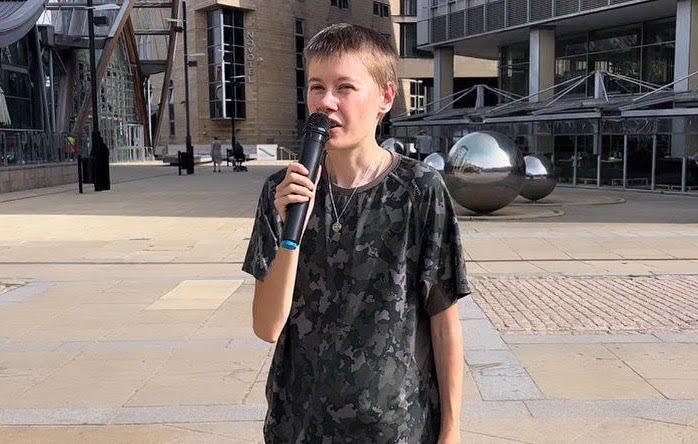
When I arrived in the UK six years ago as an asylum seeker, I was stunned by how LGBTQI+ friendly the country seemed. Compared to Ukraine and Russia – where I had previously lived – it felt almost like time travel.
I’ve known I was trans since I was four years old. But it was only here, in the UK, at the age of 24, that I finally felt safe enough to come out.
Since then, much has changed. The political climate has shifted. Laws have shifted.
In 2015, the annual Rainbow Map and Index by ILGA-Europe ranked the UK as the most LGBTQI+ friendly country in Europe. But in the latest rankings released on 14 May, the UK has fallen to 22nd place, with an overall score of just 46 per cent. That makes it the second-worst performer on LGBTQI+ rights in Western Europe and Scandinavia.
This drop isn’t abstract – it reflects growing hostility, dangerous rhetoric, and policies that especially target trans people.
The recent Supreme Court ruling that defines “woman” as “biological woman” under equality law is a particularly cruel institutional decision. Its consequences for trans, non-binary, and gender non-conforming people may not even be fully visible yet – but they will be far-reaching.
Transmasculine people like me may soon be under direct attack as well. And then, as history shows, the broader LGBTQI+ community often follows. For people already facing multiple forms of oppression – like refugees and people seeking asylum – the danger is even greater.
So as Pride Month begins, we must ask ourselves: What does Pride mean right now? How did we get here—and where do we go from here? What does this mean for LGBTQI+ refugees in particular, and why is it important for the community in general?
You may like to watch
The Cass Review: a turning point
I knew something was deeply wrong when the Cass Review was published in April 2024, and the NHS began blocking transgender youth from accessing gender-affirming care.
Outside the LGBTQI+ community, few people seemed to care. Even many liberals and left-leaning voices accepted it as “reasonable”.
But this decision has already caused immense harm. The review was widely criticised by both UK and international experts, but the damage was swift – especially for transgender kids. As a former trans child myself, I know the mental health cost of being denied gender-affirming care. I still live with that impact today.
And it always starts the same way: The first attacks come for LGBTQI+ youth, because they are not taken seriously because they are considered to be “too immature” to think for themselves. Just like refugees, who are seen as “barbarians” from less developed societies.
Those at the intersection suffer the most.
A dangerous shift in politics
Despite its history as a progressive party, many trans activists now say Labour is doing more harm to LGBTQI+ people than recent Tory governments.
Labour is even continuing the particularly dangerous for LGBTQI+ people anti-immigration policies introduced under Rishi Sunak. Prime minister Keir Starmer recently said the UK is considering sending rejected people seeking safety to third countries.
As someone who has worked with LGBTQI+ refugees globally, I can say: This is extremely risky for trans people.
Trans people seeking asylum already face daily harassment, even within refugee communities. Most third countries lack the legal protections they need. Deportation could cut them off from hormone therapy or vital healthcare.
And all this is happening as far-right movements gain more support. The rise of the transphobic, anti-migrant Reform Party, the far-right riots last summer, and increasing global conservatism are life-threatening for LGBTQI+ refugees.
“It should be not about past victories, but present dangers,” Ayman Eckford writes (Ayman Eckford)
Sometimes the threat is physical – being attacked for looking non-White and gender non-conforming. Sometimes it’s quieter but just as harmful – denial of healthcare, legal protections, or safety.
As an expert by experience for the mental health charity Rethink, I know how hard it is to access therapy even for cisgender, straight British people.
Now imagine being a trans person seeking asylum. You’re under constant pressure, facing daily dehumanization – and if you finally reach out for help?
The therapist might be transphobic. Or xenophobic. Or both.
Maybe you can’t fully express yourself in English.
Maybe the waiting list is too long.
In the end, the suicide risk for trans and LGBTQI+ refugees is terrifyingly high. And still, much of the broader LGBTQI+ movement stays silent.
Pride as Protest: What Must Be Done
So what does it mean to celebrate Pride in this context?
In recent years, Pride has become a celebration – of victories, of corporate support, of police apologies. But we must remember: Pride was born as a protest. Today, it must return to its roots. It must be about resistance.
It should be not about past victories, but present dangers.
Not “love is love,” but “the lives of our queer and trans siblings are at risk.”
I know that for many people — even some within the LGBTQI+ community — lives like mine don’t matter.
But history shows us: The erosion of human rights always begins with minorities.
Just as the attacks on trans kids marked the start of broader attacks on LGBTQI+ people in the UK, the targeting of trans refugees and LGBTQI+ people seeking sanctuary is not the end of the story of oppression —it’s only the beginning. But we may change this story, and this is what Pride Month should be about.
A trans software engineer fired by Wikipedia is speaking out after she filed a lawsuit against the nonprofit website claiming wrongful termination.
Kayla Mae said that the “bigotry” described in her suit is “organization wide” and that most of her former colleagues “are as against the problems in leadership as I was.”
“Unfortunately, I became the squeaky wheel for management to retaliate against by reporting the discrimination,” Mae wrote on Reddit, “instead of quietly leaving like others did.”
Mae was hired in 2022 by the Wikimedia Foundation, the website’s parent organization, as a software engineer in a remote role based in Texas, The Deskreported in May. Her direct supervisor was based in Kenya.
The lawsuit states that from the moment the neurodivergent, transgender woman was hired, she faced abuse and harassment by her supervisor, leading her to file complaints with Wikimedia Foundation’s human resources department.
Among other things, her supervisor asked her inappropriate questions about her sexual identity and inquired about her medical history. In emails to HR, Mae characterized other behavior by the supervisor as “transphobic microaggressions” and “ableism”. She wrote that the situation made her “dread work.”
An initial internal investigation ultimately determined that her supervisor’s actions were “inappropriate” and a violation of the organization’s policy, Mae said, but it was unclear what actions were taken against him.
After repeatedly being denied transfer to another team, Mae was asked to meet with managers so that Wikimedia could “learn more about your recent experiences.”
A week later, Mae affirmed in that meeting that her supervisor’s behavior hadn’t improved. Shortly after, she was fired, the lawsuit states.
After her dismissal, Mae filed a complaint with the Equal Opportunity Commission, alleging her firing was based on her gender identity and disability. Earlier this year, the agency granted her a Notice of Right to Sue, which paved the way for her lawsuit filed in federal court last month.
Mae said working at Wikimedia Foundation was “my dream job… and I felt unbelievably betrayed.”
“When I was fired, I received several emails from former co-workers expressing concern at WMF’s leadership, and similar stories of people terminated in suspicious ways,” she said, referring to the Wikimedia Foundation.
Mae was warned that one of her managers was “a ‘fixer’ who goes after employees that were seen as stirring the pot.”
Her lawsuit states that the Wikimedia Foundation responded to her Equal Employment Opportunity Commission complaint by saying that the organization intended to fire Mae before the meeting where she was informed of her termination over Zoom.
“In some ways, I think it was an extra f*ck you, so my health insurance would expire immediately,” Mae said in her Reddit post.
“I am very grateful that I was able to compartmentalize this process, with a splash of righteous anger keeping me going,” Mae wrote on Tuesday. “It has been exhausting for me, too, and will continue to be exhausting for however long it’s in court.”
In 2020, Wikipedia instituted a new code of conduct to battle what the organization called “toxic behavior” by some volunteers, in particular against women and members of the LGBTQ+ community.
“We must work together to create a safe, inclusive culture, where everyone feels welcome, that their contributions are valued, and that their perspective matters,” said Katherine Maher, the chief executive officer at Wikimedia.
“Our goal is all the world’s knowledge, and this is an essential step on our journey.”
A check of comments on the Glassdoor employment site reveals continued reports of dysfunction at the nonprofit.
One employee wrote that there was “no support staff” to address “leadership’s bad behavior and toxic culture.” The post was dated just months before Mae was hired.