U.S. Sen. Roger Marshall, a Kansas Republican, has introduced a bill to deny transgender identity.
Marshall Wednesday introduced the Defining Male and Female Act of 2024, which a press release from his office calls “a bill to codify legal definitions of male, female, and sex to ensure they are based on biology rather than ideology.”
It would write a binary definition of sex into federal law. “In human beings, there are two — and only two — sexes: male and female, which refer to the two body structures (phenotypes) that, in normal development, correspond to one or the other gamete — sperm for males and ova for females,” the legislation says.
“Every individual is either male or female” and “an individual’s sex can be observed or clinically verified at or before birth,” it continues. “Rare disorders of sexual development are not exceptions to the binary nature of sex. In no case is an individual’s sex determined by stipulation or self-identification.” Gender should not be used as a synonym for sex or shorthand for gender identity or expression, the bill says.
Separate restrooms, locker rooms, and other single-sex facilities according to sex assigned at birth, plus separate sports teams and leagues organized in this fashion, “do not constitute unequal treatment under the law,” it goes on.
Marshall pointed to his experience as a medical doctor as justification for the bill. “As a physician who has delivered over 5,000 babies, I can confidently say that politicizing children’s gender to use them as pawns in their radical woke agenda is not only wrong, it is extremely dangerous,” he said in the press release. “I didn’t think we would need legislation to tell us that there are only two sexes: male and female, but here we are. We must codify the legal definition of sex to be based on science rather than feelings. With our legislation, we can fight back against the Biden–Harris Administration’s assault on our children.”
Actually, transgender identity is recognized as real by major medical and mental health organizations.
Marshall’s bill will likely go nowhere in the Senate, as Democrats still control the chamber until January. U.S. Rep. Mary Miller, an Illinois Republican, introduced a similar bill in the House of Representatives in July. It was referred to the House Judiciary Committee, and there has been no further action. However, such legislation may be a harbinger of what’s to come in the new Congress, with Republican majorities in both chambers under Donald Trump’s presidency. Marshall’s bill has the backing of right-wing groups Heritage Action for America (a sister organization of the Heritage Foundation, the group behind the anti-LGBTQ+ Project 2025), Concerned Women for America, the Family Research Council, and the Alliance Defending Freedom.
This is not Marshall’s first attack on trans people or LGBTQ+ people in general. In 2023, he introduced a bill to ban gender-affirming care for trans minors nationwide and one to ban federal funding for such care for trans people of all ages. Neither bill passed. He put out similar, equally unsuccessful, bills in 2021. In 2022, he led an effort to police LGBTQ+ content in children’s TV programs, which also went nowhere, as did his plan the same year to block school meal funding in protest of the Biden administration’s support for LGBTQ+ rights.
The introduction of his latest bill came on Transgender Day of Remembrance, an annual observance that commemorates trans people lost to violence.
President-elect Donald Trump has been nominating controversial people to his second-term cabinet and it hasn’t been pretty. GLSEN, an organization that advocates for safe and inclusive schools for LGBTQ+ youth, has strongly criticized Trump’s nomination of former World Wrestling Entertainment CEO Linda McMahon as secretary of education. The nomination, announced earlier this week, was met with widespread concern from LGBTQ+ advocates and educators who fear it signals a rollback of Title IX protections and other federal policies supporting marginalized students.
In a press release, GLSEN executive director Melanie Willingham-Jaggers condemned the nomination, citing McMahon’s lack of educational experience and loyalty to Trump’s political agenda as deeply troubling.
“Donald Trump’s decision to nominate Linda McMahon, a political ally with no substantial background in education, is yet another deeply concerning move in his ongoing effort to undermine public education,” Willingham-Jaggers said in the release. “McMahon’s lack of expertise in education, paired with Trump’s focus on so-called ‘parents’ rights’ and ‘school choice,’ signals a continued push to strip critical protections for LGBTQ+ students and historically marginalized communities.”
The statement further emphasized the importance of leadership grounded in expertise. “Public education is not a performance—it is the foundation of our democracy and our nation’s future,” it read. “McMahon’s nomination instead prioritizes loyalty to Trump’s agenda over the well-being and futures of millions of students.”
Project 2025 and GLSEN’s concerns
In an interview with The Advocate, Willingham-Jaggers elaborated on the risks posed by McMahon’s nomination, linking it to broader concerns about the implementation of Project 2025, a conservative plan to overhaul federal governance in a second Trump term. The plan calls for the systematic dismantling of the education department and stripping of protections for LGBTQ+ students.
“They are coming in to slash and grab, slash and burn, drain, destroy, and break the confidence and really break the spirit of all the institutions, all the people in it, and everyone who relies on or whose life is touched by these institutions,” Willingham-Jaggers warned.
They expressed concerns that the speed of policy rollbacks could outpace public resistance. “The scariest thing I heard was it’s not the first 100 days. It’s the first 100 hours,” they said, adding that protections like Title IX could be among the first to be dismantled.
We’ve seen this movie before
Reflecting on the lessons of Trump’s first administration, Willingham-Jaggers described its approach as chaotic experimentation. “In the first Trump administration, they were just kind of smashing buttons. Nobody knew what they were doing,” they said. “It was like trying to hit the cheat code on a Nintendo game—just like, ‘Oh, would this give me 18 more lives?’”
They cautioned, however, that this time is different. “They’ve figured out what works and what doesn’t. They’ve purged the ‘immune system’ within the government that held back their worst impulses. And there are laws moving through Congress right now that will allow them to run the board,” Willingham-Jaggers added, emphasizing the urgency of resisting these efforts.
Challenging a backlash against acceptance
Willingham-Jaggers connected the current wave of anti-LGBTQ+ sentiment to the COVID-19 pandemic, noting that as children spent more time at home, some parents became exposed to how accepted their kids were in schools, GSAs, and online communities.
“It’s important for our side to know where we are right now had everything to do with young people going home during the pandemic and their parents seeing how accepted these children—that they did not accept themselves—how accepted and affirmed these kids were in school or their online community,” Willingham-Jaggers said.
This exposure, they argued, fueled backlash from some parents who resented the acceptance their children experienced elsewhere.
“It’s terrible parents of trans kids like Elon Musk and all the others who are now trying to make the world smaller for everyone’s children,” Willingham-Jaggers said. “They’re trying to make the world less accepting for everyone’s children because they saw their kids being accepted, and they said, ’No, you don’t. How dare you teach my child that they are loved, despite what I think.’”
GLSEN, however, remains committed to countering this hostility, they said.
A call to action
GLSEN called on the Senate to reject McMahon’s nomination and urged allies to rally to defend LGBTQ+ students. “GLSEN will not stand idly by while federal protections, including Title IX, are attacked or eroded,” the release stated.
“We call on the Senate to reject this nomination and demand a leader who will center equity, inclusion, and the needs of all students in their vision for education.”
The organization has also launched its Rise Up campaign, encouraging allies to actively support LGBTQ+ youth.
“Our young people are being told that they don’t exist or, if they do, it’s a mistake. That is not only not true; there are millions and millions of adults who love, appreciate, affirm, and understand that we need our young people here,” Willingham-Jaggers said.
Despite the challenges ahead, Willingham-Jaggers offered a message of resilience and determination for those advocating for inclusive education.
“Strap up, put your seat belts on, find your people, put your helmets on, and let’s go,” they said. “There are people like us at GLSEN who are in the fight, who aren’t going anywhere, and who will have your back.”
For more information on GLSEN’s Rise Up campaign, visit glsen.org/riseup.
Throughout my 78 years of life, I have felt inspired by the insightful lyrics and melodies of one of my cultural heroes: U.S. folk music singer-songwriter Woody Guthrie, whose themes include labor rights and organizing, socialism, anti-fascism, and anti-racism.
Guthrie was born and raised by middle-class parents in Okemah, Oklahoma. He first married at age 19, but he left his wife and three children at the beginning of the Midwest dust storms that signaled the Dust Bowl period. He joined the thousands of Okies who migrated to California looking for employment. Over the course of his life, he married three times and fathered eight children.
He succumbed to Huntington’s Disease in 1967. His first two daughters also died from this inherited condition.
Most people have heard his most popular song, an anthem of sorts for his United States homeland: “This Land is Your Land.”
This land is your land, this land is my land From California to the New York island From the Redwood Forest, to the Gulf Stream waters This land was made for you and me
Woody wrote this song as a subterranean challenge to the notion of the private ownership of land. A stanza that educators of young children often omit in their classrooms goes:
There was a big, high wall there that tried to stop me A sign was painted said “Private Property” But on the backside, it didn’t say nothing This land was made for you and me
The omission of this stanza whitewashes the urgency and scope of his critique at this critical juncture in U.S. history over the purpose and importance of immigration. Taken in its entirety, “This Land Is Your Land” asks us to reflect on an overarching but yet-to-be-realized mission statement of the United States. It also begs the question of whether the nation embraces the propagandist pablum we are fed and which dominant elites promote around the world – that allowing immigration jeopardizes the nation’s “identity.”
Guthrie’s second wife, Marjorie Mazia, was born Marjorie Greenblatt. Her mother, Aliza Greenblatt, was a well-known Yiddish poet. Woody, the Oklahoma troubadour, and Aliza, the Jewish poet, collaborated through the 1940s in Brooklyn. They interwove Jewish culture with music, modern dance, poetry and anti-fascist, pro-labor, and socialist activism.
Guthrie wrote songs inspired by this relationship, for he identified the problems of Jews with those of his fellow Okies and other marginalized and subjugated groups.
The Jewish Klezmer group, The Klezmatics, released Happy Joyous Hanukkah on JMG Records in 2007. The Klezmatics also released Wonder Wheel – Lyrics by Woody Guthrie, an album of spiritual lyrics put to music composed by the band.
Now, in this four-hundredth and sixth anniversary year when European-heritage people abducted, chained, brutally transported, and enslaved Africans on this land we now call the United States of America, the newly-elected president rants and “Truths” hateful diatribes against Latinx U.S. citizens and others who hope to come here.
We as a nation must decide who is welcome on this land. Is it “made for you and me,” or just “them” and not “us”?
From the day European explorers and so-called “settlers” (a.k.a. land thieves who violently displaced and committed genocidal slaughter of native peoples) stepped foot on this land, dominant Protestant Anglo-Saxons set rigid parameters defining who was to be included as “my” on this land.
In her pioneer book, Homophobia: A Weapon of Sexism, Suzanne Pharr describes a series of elements she finds common to the multiple forms of oppression. Such elements include what she refers to as a “defined norm” and a “lack of prior claim,” among many others.
Pharr explains a “defined norm” as “…a standard of rightness and often of righteousness wherein all others are judged in relation to it. This norm must be backed up with institutional power, economic power, and both institutional and individual violence.”
Another way “the defined norm manages to maintain its power and control…” and is kept exclusive is by what Pharr refers to as the element or system of “lack of prior claim.”
This, according to Pharr, “…means that if you weren’t there when the original documents [national Constitutions, corporate founding documents, the Torah, the Christian Testaments, the Qur’an, for example] were written, or when the organization was first created,” she wrote, “then you have no right to inclusion… Those who seek their rights, who seek inclusion, who seek to control their own lives instead of having their lives controlled are the people who fall outside the norm… They are the Other.”
In the original and unamended version of the U.S. Constitution, for example, since only European-heritage male landowners had the right to vote, all Others, including women and people of color (those outside the defined norm and who lacked prior claim) had to fight long and difficult battles against strong forces to gain access to the voting booth, often under the threat of violence, which was sometimes actually inflicted against them.
In fact, the framers of the U.S. Constitution decided Black people only constituted three-fifths of a full human being for census purposes.
People of goodwill, people who adhere to the idea that “all people are created equal,” people who abide by Woody Guthrie’s vision that “this land was made for you and me” have reacted with shock, grief, and anger to the domestic terrorism overtaking this land.
We place blame on patriarchal Christian white nationalism, the groups and individuals, and a former president and now president-elect who consistently promotes hatred and division, who targets people as “invaders,” “criminals,” “rapists,” “breeders,” “eaters of dogs and cats” that are overtaking this land and robbing its “good citizens” of their livelihoods.
Ironically, not having any grounding in history, Trump couldn’t possibly understand that we, the people of the United States of America, were the actual invaders trumping (pun intended) up a war to confiscate land from the proud Mexican people.
Trump’s latest trumped-up war against all Latinx people, whether U.S. citizens or not, represents his cynical reelection strategy to instill fear and loathing, to divide and conquer – a strategy with deadly consequences. For this, he must be blamed.
But what about the remainder of the citizens on this land? What part do we play in perpetuating the defined norm of patriarchal Christian white supremacy? How do we maintain the notion of a lack of prior claim to equality of opportunity and to human dignity for anyone other than this mythical “original” white American?
Woody Guthrie’s anthem certainly does not represent the United States at this critical juncture or throughout our history. Guthrie, though, constructed a platform on which he placed a beacon to guide a nation he loved toward a path of righteousness, the likes of which the world has yet to realize.
Since Trump and the GOP dominated the election, recurrent echoes have been rambling throughout my mind over Trump’s threat to deport millions upon millions of undocumented immigrants from the United States using the National Guard and military to implement his draconian policies. Guthrie’s remarkable and poignant ballads have brought me to tears during my grieving process over the possible demise of our current form of government.
His song, “Deportee,” also known as “Plane Wreck at Los Gatos,” depicts in clear and stark terms the crash of a charter plane transporting California farm workers back to Mexico, their country of origin. The crash killed 32 people, including 29 deported Mexican workers, on January 28, 1948.
Guthrie was specifically skilled at putting real human faces to issues that many people heard about in generalized terminology in the news and casual conversation.
For anyone who supports Trump’s mass deportation plans, who believes that undocumented immigrants are traveling thousands of miles through harsh conditions – many dying on their way northward – to take your jobs, to rob your homes and businesses, to rape and mutilate your mothers, wives, daughters, and sisters, to traffic in drugs and in human beings, to eat your dogs and cats, I ask you to listen to “Deportee,” a few times. It is sung by his son, Arlo Guthrie and friend, Pete Seeger.
Goodbye to my Juan, goodbye, Rosalita, Adios mis amigos, Jesus y Maria; You won’t have your names when you ride the big airplane, All they will call you will be “deportees.”
I also ask you, how many people do you personally know whose field jobs as vegetable and fruit pickers or as new roof installers in the summer’s sweltering sun were taken by Latinx immigrants?
How many people do you personally know whose families have already been or who are frightened will soon be separated and broken by family separation policies to be enacted under the Trump regime’s second term?
How many people live in your neighborhood that has become vitalized by immigrant-owned and operated small businesses and whose tax dollars are used to improve living and working conditions for all in your community?
How many people have learned about cultural and religious traditions different from your own and have made friends from other cultural and ethnic backgrounds to the benefit of all?
How many of you who reside in the United States are working for safe and humanitarian immigration policies?
Thank you, Woody Guthrie, for your legacy of intercultural understanding.
Four men became the latest victims of anti-LGBTQ+ mob “justice” in the African country of Nigeria earlier this month, after they were accused of engaging in consensual same-sex sexual activity.
As the Los Angeles Blade reports, the four young men were paraded down a street and run out of Edo State capital Benin City on November 17 wearing only their boxer shorts. The angry mob threatened to kill them if they ever returned.
Nigerian LGBTQ+ activist Samson Mikel told the Blade that queer people have become scapegoats in Benin City, which he described as “backward” and a hotbed of “scammers and other crimes.”
“The people are proud of their roughness, they are never concerned about these other crimes or how the government is impoverishing them, but will light gay men on fire the moment they think,” Mikel said.
LGBTQ+ people he insisted, simply want to “live and experience love.”
“They are not the cause of the economic meltdown in the country, neither are they the reason why there are no jobs in the streets of Nigeria,” Mikel said.
The November 17 incident is just the latest example of the epidemic of mob violence in Nigeria. Between January 2012 and August 2023, Amnesty International recorded at least 555 people who were killed by violent mobs across the country, according to a report released in October. Of those victims, 32 were burnt alive, 2 were buried alive, and 23 were tortured to death.
“The menace of mob violence is perhaps one of the biggest threats to the right to life in Nigeria,” Amnesty International Nigeria director Isa Sanusi said in a statement. “The fact that these killings have been happening for a long time, with few cases investigated and prosecuted, highlights the authorities’ shocking failure to uphold and fulfil their obligation to protect people from harm and violence.”
As Daniel Anthony wrote for LGBTQ Nation earlier this month, LGBTQ+ people are especially at risk of being targeted: “The combination of strict anti-LGBTQ+ laws, social stigma, and a flawed justice system that fails to protect minorities has created an environment where the lives of queer individuals are not only expendable but also actively endangered.”
Homosexuality is illegal in Nigeria. The country’s Same-Sex Marriage Prohibition Act, which was signed into law by former President Goodluck Jonathan in 2014, makes same-sex relationships punishable by up to 14 years in prison. In predominantly Muslim areas of northern Nigeria, homosexuality is punishable by death under Sharia law, though death penalties passed by Sharia courts must be approved by the state governor. According to Daily Trust, the punishment has never been enforced.
According to Anthony, Nigeria saw a dramatic surge in violence and mob attacks against LGBTQ+ in the six years after the Same-Sex Marriage Prohibition Act became law.
“Homophobic mobs typically operate without fear of legal repercussions, knowing that the public is on their side,” he wrote, citing a 2019 Pew Research survey that found that 87% of Nigerians oppose gay rights. “These mob attacks are often perceived not as crimes, but as acts of moral policing — methods for the community to ‘cleanse’ itself of perceived corruption.”
As one man who witnessed the “lynching” of two gay men in Port-Harcourt, Nigeria, told Anthony, “We catch homosexuals all the time and teach them a lesson they won’t forget.”
The November 17 incident also follows another similar mob attack in Edo Statelast month, in which two men were allegedly caught “engaging themselves indecently as fellow men” in a car. At least one of the men, 32-year-old Eguabor Precious, was attacked by a mob and beaten unconscious. He was reportedly handed over to police, but managed to escape. Authorities have offered “a handsome reward” for information leading to his capture.
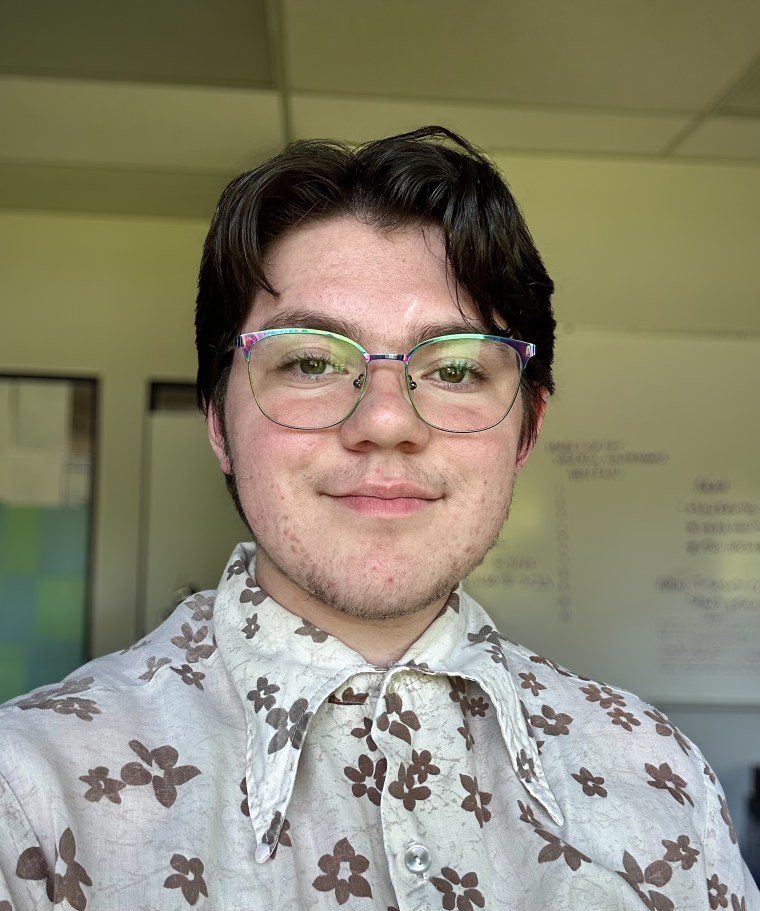
West Virginia advocate Ash Orr said he’s rushing to legally change his name and update the gender marker on his passport.North Carolina lawyer Katie Jenifer is trying to prepare one year’s worth of estrogen for her transgender daughter. Oregon comedian and writer Mx. Dahlia Belle is focused on advocating for immigrants and people with disabilities.
This trio is among nearly a dozen transgender Americans, plus the parent of a trans teen, who talked to NBC News about how they’re readying themselves for the second administration of a president-elect who has promised to restrict their ability to modify identity documents, receive transition-related health care, enlist in the military and participate on sports teams, among other things.
Though trans people told NBC News they have a variety of concerns about President-elect Donald Trump’s campaign promises regarding trans people, nearly all shared a similar message: They are better prepared than they were eight years ago.
Heron Greenesmith, the deputy director of policy at the Transgender Law Center, who uses they/them pronouns, said they felt “clear-eyed” the day after the election, whereas in 2016 they were crying and felt devastated by the election results and the effect that Trump’s policies would have on marginalized communities, including trans people.
“This time around is not going to be any different,” Greenesmith said, “but this time around, I know what to do.”
Even though trans people had their rights targeted under the first Trump administration, Greenesmith added, “we also thrived.”
“We provided safety for ourselves and mutual aid, we defended ourselves from criminalization and got ourselves out of jail when we needed to — and provided health care for folks who needed it.” said Greenesmith, who is based in Massachusetts. “We’ll do the same thing again. We got us.”
Day 1 promises
During his campaign, Trump and his supporters spent nearly $60 million on eight anti-trans network-TV ads, one of them in Spanish, between Sept. 19 and Nov. 1, according to AdImpact, a firm that tracks political ad spending.
He has supported a number of policies targeting transgender people, who make up less than 1% of adults in the U.S. At campaign rallies over the summer, he promised to take at least two actions regarding the trans community on his first day in office: undo Biden administration Title IX protections that allowed trans students to use the school bathrooms that align with their gender identities, and cut federal funding for schools “pushing critical race theory, transgender insanity and other inappropriate racial, sexual or political content onto the lives of our children.”
Trump also promised to reinstate a policy enacted during his first term that barred trans people from enlisting in the military and to institute a new policy barring transition-related care for minors nationwide. The agenda on his websitesays he would declare that any hospital or clinician that provides transgender care to minors would “no longer meet federal health and safety standards for Medicaid and Medicare — and will be terminated from the program immediately.”
The president-elect’s agenda also includes issuing guidance to federal agencies to define sex only as one’s sex assigned at birth, which would make it harder for trans people to change the gender markers on federal documents such as passports.
Plans for IDs, moving and medical care
The State Department began offering the gender-neutral “X” marker on passports, in addition to the standard “M” or “F,” in April 2022, but a new federal definition of sex could end that policy, legal experts say. If the Trump administration still allows trans people to change the gender marker on their passport, Greenesmith said, it might require them to provide proof of gender-reassignment surgery, putting gender-marker changes out of reach for the majority of trans people.
As for those who already have a passport with an “X” gender marker, if the Trump administration discontinues issuing new “X” passports, the future of those existing identity documents is unclear, according to both Greenesmith and Sasha Buchert, the director of the nonbinary and transgender rights project at Lambda Legal, an LGBTQ legal advocacy organization. There is no existing policy that would allow the government to require people to turn in “X” passports, for example.
“In response to what needs to be done in this moment, now is always a good time to update any identity documents that you need to update,” Buchert said.
A person fills out a passport application with an X gender marker at their home in Virginia in 2022.Stefani Reynolds / AFP via Getty Images
Ash Orr, who lives in Morgantown, West Virginia, and is the press relations manager for Advocates for Trans Equality, the nation’s largest trans rights organization, said the election prompted him to legally change his name. His name-change hearing is scheduled for Jan. 15, and he plans to apply to update his passport as soon as his name change is complete.
He also plans to leave his home state by the spring as a result of the election, and because West Virginia’s state politics have become increasingly conservative in recent years. He declined to share the state he and his partner are moving to due to safety concerns, noting he has received an increasing number of threats over the past two years.
“West Virginia is my home, and it has always been my home, and I’ve had to come to the realization that your home isn’t always a place where you can thrive,” Orr said, adding that he’s struggled with the feeling that he’s abandoning his community and the trans people in the state who can’t afford to leave.
Finn Franklin, a 20-year-old who is finishing his associate’s degree at Rogue Community College in Grants Pass, Oregon, said the election has affected where he plans to apply to finish a four-year degree.
“I was looking at some rural schools because I like the smaller school size,” Franklin said. But after the election, “I’m not going to be applying to schools outside of the West Coast because I don’t want to live somewhere that is not Washington, Oregon or California for the next four years. I think I want to be in a metro area because of the typical politics difference between urban and rural areas, and access to health care.”
Finn Franklin, 20, said the election has affected where he plans to apply to finish a four-year college degree.Courtesy Finn Franklin
Franklin said he receives his testosterone through telehealth offered by Oregon Health & Science University Hospital, which is in Portland, about five hours north. He’s worried about how the incoming administration could affect that treatment, as well as a top-surgery consultation he has scheduled in October 2026, because he receives health care through the Oregon Health Plan, the state’s Medicaid program. OHSU Hospital, which has a program that provides gender-affirming services to children and teens, could be affected if Trump follows through on his promise to cut Medicaid funding for hospitals that provide transition-related care to minors.
“If the funding for those kinds of things goes away, then it kind of becomes utterly inaccessible, and that’s definitely very scary,” Franklin said.
North Carolina lawyer Katie Jenifer said she is trying to secure a year’s worth of estrogen for her 17-year-old daughter, Maddie, in case Trump does issue federal restrictions that could curtail access to transition-related care for minors nationwide. Her daughter’s doctor prescribed her enough medication for a year, but their insurance will only cover one month at a time. Out of pocket, the medication costs $109 a month, but Jenifer received a coupon from the pharmacy that brings the cost down to $49 per month.
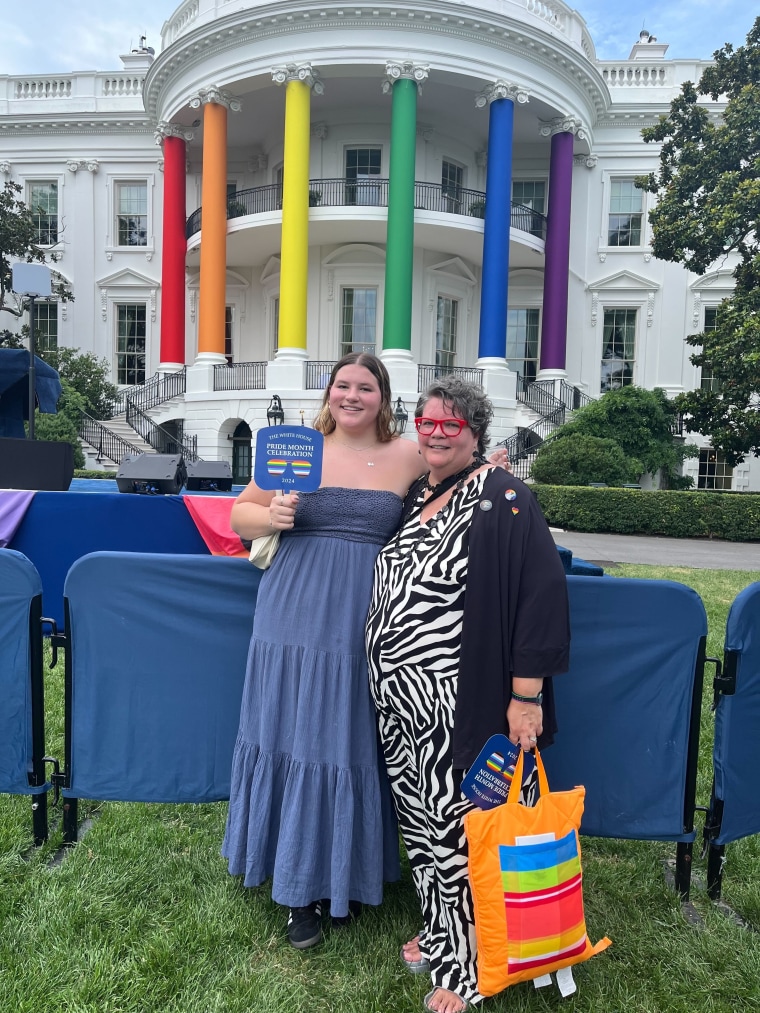
Katie Jenifer and her transgender daughter, Maddie, at the White House for a Pride Month celebration in June.Courtesy Katie Jenifer
Jenifer previously told NBC News that she had plans to move with Maddie out of the state or out of the country depending on the election outcome.
“If I can get enough medication on hand to get Maddie to 18, then we will try to stay through high school graduation in June and continue to monitor and make plans to exit soon after or before if necessary,” Jenifer said Tuesday. “If we cannot get the needed meds, then we will probably try to leave mid- to late January. Where we go will depend on my job search.”
Advocates say the election is already having an effect on LGBTQ young people, in particular. The Trevor Project, an LGBTQ youth suicide prevention and crisis intervention organization, saw a 700% increase in crisis contacts in the 24 hours after the election compared to weeks prior. About one-third (30%) of the contacts identified as LGBTQ young people who are Black, Indigenous or people of color, and more than 40% were trans or nonbinary young people, a spokesperson told NBC News.
Organizing within community
Some trans people told NBC News that after the election, they immediately started organizing with local community groups.
Orr, for example, said he planned to volunteer with Holler Health Justice, a reproductive health organization led by queer people of color, to deliver emergency contraception and other reproductive health supplies across West Virginia.
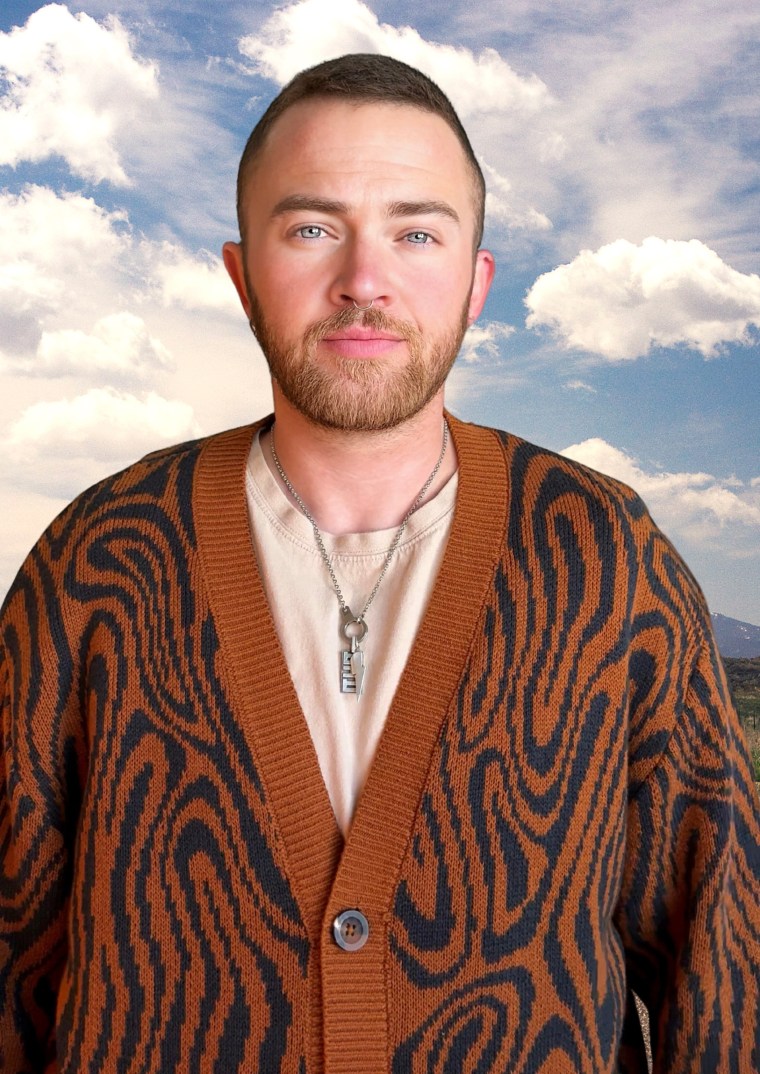
Bennett Kaspar-Williams, an entertainment lawyer based in Los Angeles who is skilled in martial arts, said he is working with other local activists to organize self-defense classes for LGBTQ people and women in response to increased fears of violence given Trump’s rhetoric about trans people.
Bennett Kaspar-Williams is organizing self-defense classes for LGBTQ people and women in Los Angeles.Courtesy Bennett Kaspar-Williams
Ahead of the 2020 election, he said, he volunteered for Democrats because at the time he was pregnant, and, as a trans man, he was afraid of what the future would look like for his child if Trump were re-elected.
“If you had told me that in four years he’s going to win again, I definitely would not have believed you,” he said. “I feel really scared for the generation of people who were waiting until they were old enough to be able to start a medical transition, who are now facing the possibility of never being able to do that at all, and what that means for them.”
Many trans people also mentioned giving directly to mutual aid groups, specifically those that support trans people of color.
Aldita Gallardo is the the director of the Action for Transformation Fund, a partnership between the Transgender Law Center and the Emergent Fund, a national rapid response fund that supports groups led by LGBTQ people of color. The $1 million Action for Transformation Fund was a pilot effort to move funds directly to trans activists working within their local communities. Gallardo noted that foundations that provide money to LGBTQ communities allocated less than 4 cents per $100 of their total giving to U.S. trans communities and issues, according to a 2021 report by Funders for LGBTQ Issues.
Gallardo, who is based in Oakland, California, said the Action for Transformation Fund, which launched in September and just made its first round of grants, wasn’t previously thinking about long-term fundraising, but that changed after the election.
“Now we see it as an opportunity to bring more dollars for the increasing amount of need,” Gallardo said. “We know that things will escalate in the four years of the administration.”
Some of the groups that were supported by the fund’s first round of grants include House of Tulip, which provides housing to trans people of color in Louisiana; Transgender Advocates Knowledgeable Empowering, or TAKE, which provides services to trans people of color in Birmingham, Alabama; and the Unspoken Treasure Society, a Black, trans-led organization in Jacksonville, Florida.
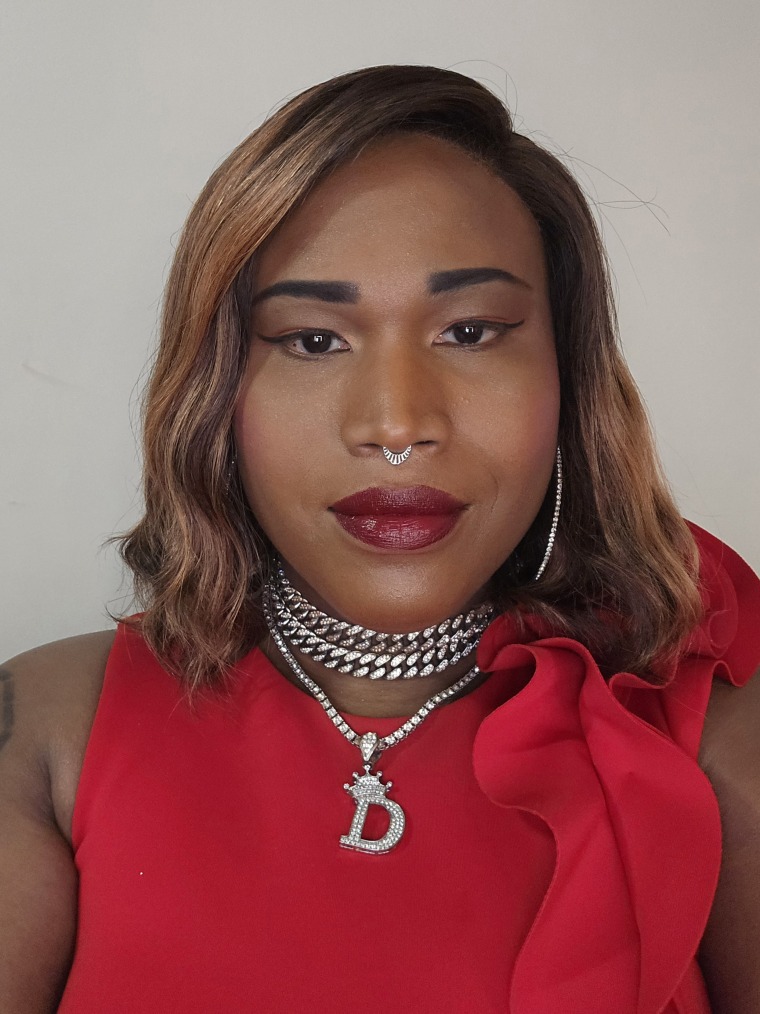
Mx. Dahlia Belle, a comedian and writer based in Portland, Oregon, who also works as a peer support operator for a trans nonprofit, encouraged trans people to support those outside of their immediate community as a second Trump administration begins. She fears her job with the trans nonprofit could “cease to exist” if Congress passes a bill that would allow Trump to target nonprofits’ tax-exempt status. If that were to happen, she could lose access to health care. Still, she said she still feels comparatively safe and privileged.
Mx. Dahlia Belle said she’s focused on advocating for immigrants and people with disabilities.Courtesy Dahlia Belle
“We as a community are facing a very real existential threat,” Belle said. However, she added, “in the grand scheme of things, the threat we are facing pales in comparison to the immediacy and severity that will be faced by immigrants and people with disabilities and people who may be in need of reproductive care.”
She acknowledged that trans people and LGBTQ people more broadly fit into all of these categories and said it’s “those intersections of identity where I feel our advocacy is most needed and needs to be focused.”
Horizons Foundation announced today the launch of a crucial, online LGBTQ Organization Directory designed to be a comprehensive and easily accessible resource for LGBTQ individuals and families, donors, and foundations across the nine counties of the San Francisco Bay Area. Access the directory at https://www.horizonsfoundation.org/org-directory/.
While the Bay Area is home to more than 100 LGBTQ nonprofits and programs, there has never existed a single online space where community members, donors, and foundations can easily search, connect with, and donate to LGBTQ services and organizations. Horizons Foundation’s new directory aims to fill this gap by providing a centralized, searchable platform for the Bay Area’s vibrant LGBTQ ecosystem.
“We created this directory based on two key findings from Horizons’ Needs Assessment of the LGBTQ Community of the SF Bay Area,” said Francisco Buchting, Horizons Foundation’s Vice President of Grants, Programs, and Communications. “First, a significant number of respondents reported feeling disconnected from the LGBTQ community; second, a critical barrier to accessing LGBTQ-friendly or culturally appropriate programs and services was a lack of awareness about what services are available or where they are located. This online directory is designed to be a new vital resource for the LGBTQ community and its nonprofit ecosystem.”
The online directory offers a range of benefits for LGBTQ organizations and those searching for them, including:
Searchable Profiles: Each participating organization has a dedicated profile page with contact information, a description of services, and a link to donate directly to the organization.
Custom Filters: The search function includes options to select specific areas of service, geographic locations, and keywords, ensuring that users can easily find the resources that best meet their needs.
Increased Visibility: Because Horizons Foundation is an expert on LGBTQ issues in the SF Bay Area and the premier resource to help inform charitable giving in our community, participating organizations will benefit from increased visibility and promotion among Horizons’ network of donors, foundations, Donor Advised Funds, and other partners, ensuring that participating nonprofit organizations receive maximum exposure.
The directory, which currently features almost 100 LGBTQ nonprofits and services in the SF Bay Area, is a free resource open to the public, and eligible LGBTQ organizations and programs can participate at no cost. As a community foundation of, by, and for the LGBTQ community, Horizons Foundation is committed to supporting queer organizations in the Bay Area, and the directory is the latest initiative in its ongoing efforts to strengthen the LGBTQ ecosystem.
Organizations and programs interested in participating in the directory can contact comms@horizonsfoundation.org.
About Horizons Foundation
Horizons Foundation is the first community foundation in the U.S. of, by, and for the LGBTQ+ community. Established in 1980, invests in LGBTQ nonprofits, strengthens a culture of LGBTQ giving, and builds a permanent endowment to secure our community’s future. We envision a world where all LGBTQ people live freely and fully. Learn more at horizonfoundation.org.
Transcendence Theatre Company today announced the complete cast and creative team for its highly anticipated Broadway Holiday production, featuring an ensemble of Broadway veterans and accomplished performers who will bring holiday magic to both Sebastiani Theatre in Sonoma and Marin Theatre in Mill Valley this December. Due to overwhelming ticket sales, Transcendence has added a 2 p.m. matinee performance on Wednesday, December 18, at the Sebastiani Theatre.The stellar ensemble features Alicia Albright (Broadway’s Frozen, Wicked), Juli Biagi (The Arvada Center’s Waitress), Melanie Fernandez (Pioneer Theatre Company’s Natasha, Pierre, and the Great Comet of 1812), Ruby Lewis (Cirque du Soleil’s premiere Broadway show, Paramour), Transcendence Theatre Company’s own Colin Campbell McAdoo,David L. Murray Jr. (Off-Broadway’s Songs for a New World), and Neil Starkenberg (Mrs. Doubtfire National Tour). Tony Gonzalez, whose credits include Broadway’s Mamma Mia!and Disney On Classic, serves as director and will also perform in the production.Alongside Gonzalez as Co-Conceiver, the creative team is led by McAdoo as Co-Conceiver and Assistant Director, Matt Smart as Co-Conceiver and Music Director, and Zachary Kellogg as Associate Music Director. The production features lighting design by Kurt Landisman at Marin Theatre and Tony Ginesi at the Sebastiani Theatre, with sound design by Nils Erickson. Sarah E. T. Jackson serves as Production Stage Manager.
Updated Performance Schedule:Marin Theatre (Mill Valley):December 12-13 at 7:30 p.m.December 14 at 2 p.m. and 7:30 p.m.December 15 at 4 p.m.Sebastiani Theatre (Sonoma):December 18 at 2 p.m. and 7 p.m.December 19 at 2 p.m. and 7 p.m**Dec 19, 7 p.m. performance is sold out
FOR TICKETSSebastiani Theatre, SonomaTickets for Broadway Holiday at the Sebastiani Theatre start at $31 and are on sale now. Group discounts of up to 20% are available for parties of 10 or more. For more information or to purchase tickets, visit BestNightEver.org or call the box office at 877-424-1414 Ext. 1.
Audiences can keep the holiday cheer going after the show with an exclusive, private event hosted by Pangloss Cellars. Gold ticket holders are invited to mingle with cast members while enjoying Pangloss wines and seasonal, light bites, crafted by their Executive Chef. Additional wines by the glass will also be available for purchase.Marin Theatre, Mill ValleyAudiences at Marin Theatre will find tickets starting at $30. Group discounts are available for parties of 8 or more (save $7 per ticket) with greater savings for groups of 15 or more (20% off). To purchase tickets or for more information visit MarinTheatre.org or call 415-388-5208. Guests can elevate their holiday cheer with Gold tickets which include pre-show and intermission exclusive access to the Holiday Lounge with beverages and holiday-themed bites.
ABOUT TRANSCENDENCE THEATRE COMPANYTranscendence Theatre Company is California Wine Country’s premiere entertainment experience, thirteen years and counting. Presenting a Broadway Under the Stars season of original outdoor musical revues each summer, an indoor holiday show every winter, and more, our mission is to create extraordinary evenings featuring the best talents from Broadway and beyond. Transcendence Theatre Company is dedicated to providing the joys and benefits of musical theatre to all through one of a kind performances, community engagements, and arts education programs. Through its Transcendence For All initiatives, the company partners with local nonprofits to make the arts accessible to youth, seniors, people with disabilities, and more. Transcendence offers free performances and workshops, as well as accessibility features at its productions. BestNightEver.orgSponsors for Broadway Holiday at the Sebastiani Theatre include Sotheby’s International Realty, Press Democrat, Friedman’s Home Improvement, Fairmont Sonoma Mission Inn, The Hanna Center, Parkpoint Health Club, Jeffrey D Bean DDS, Perry, Johnson, Anderson, Miller, and Moskowitz LLP, Amaturo Sonoma Media Group, Alan and Susan Seidenfeld Charitable Trust, Bank of Marin, and Sonoma Valley Authors Festival.ABOUT MARIN THEATREMarin Theatre was founded in 1966 and joined the League of Resident Theatres (LORT) and the National New Play Network (NNPN) in 2008. Now rechristened Marin Theatre, the company is the leading professional theatre in the North Bay and the premier mid-sized professional theatre in the Bay Area, now led by Artistic Director Lance Gardner. Marin Theatre’s 2024/25 season launched in October with the U.S. premiere of Canadian hit Yaga and continues in the new year with a roster of four more funny, engaging, entertaining, and compelling works. Season subscriptions, starting at $200, are still available. For information the public may visit MarinTheatre.orgor call 415-388-5208.
FOR CALENDAR EDITORS:WHAT: This holiday season, Transcendence Theatre Company’s Broadway Holiday, an all-new production featuring a stellar cast of Broadway veterans and rising stars, performing a mix of classic holiday tunes and showstopping Broadway numbers. Audiences of all ages are invited to celebrate the holidays with a festive blend of musical favorites, hit tunes, and hilarious holiday flair, presented with delightful choreography, breathtaking vocals, and the signature Transcendence style that has made that Sonoma-based company a Northern California favorite for over a decade.WHEN:December 12-15, 2024 at Marin Theatre in Mill ValleyDecember 18-19, 2024 at Sebastiani Theatre in SonomaSHOWS: Marin Theatre:Thursday-Friday: 7:30pm; Saturday: 2:00pm & 7:30pm; Sunday: 4:00pmSebastiani Theatre:Wednesday at 7:00pm; Thursday at 2:00pm & 7:00pmWHERE:Marin Theatre, 397 Miller Avenue, Mill Valley, CA 94941Sebastiani Theatre, 476 1st St E, Sonoma, CA 95476TICKETS:Marin Theatre:$30 Reserved*, $50 Premium*, $70 Silver*, $150 Gold* (includes access to Holiday Lounge). *Plus a $6 handling fee per total order.Sebastiani Theatre:$31 General Reserve 1, $55 General Reserve 2, $85 Premium, $155 Gold (includes post-show cheer at Pangloss).GROUPS: Marin Theatre: Groups of 8 to 15 receive $7 off per ticket. Groups of 15+ receive a 20% discount. Sebastiani Theatre: Groups of 10-19 receive $10 discount; Groups of 20-29 receive 15% discount; groups of 30 or more receive 20% discount.INFO: Marin Theatre: Information and tickets are available at MarinTheatre.org or by calling 415-388-5208 Sebastiani Theatre: Information and tickets are available at BestNightEver.org or by calling 877-424-1414 Ext. 1
Equality California released a statement from Executive Director Tony Hoang following the newly-elected Orange Unified School District Board of Education’s decision to rescind a dangerous forced outing policy that put LGBTQ+ students in harm’s way:
“We are thrilled to see the new pro-equality majority on the Orange Unified School Board take decisive action to support the well-being of LGBTQ+ students in the district. Dangerous parental notification policies which “out” LGBTQ+ youth to their parents or guardians without regard for student safety have no place in our schools.
LGBTQ+ youth and their families in Orange Unified deserve to have these important family conversations when they are ready, and in ways that strengthen the relationship between parents and child, not as a result of extremist politicians intruding into the parent-child relationship.
In September of 2023, the previous Orange Unified School Board passed a misguided and dangerous forced outing policy over the objections of students, parents and LGBTQ+ advocates. In the March 2024 Primary Election, Equality California partnered with parents and educators in the district to successfully recall two anti-LGBTQ+ board members who helped introduce the forced outing policy, Rick Ledesma and Madison Miner.
This November, Equality California was proud to endorse a slate of pro-equality candidates in the district, all of whom proved successful in their races: Ana Page, Sara Pelly, Matthew Thomas, and Sierra Vane.
Orange Unified voters have sent a clear message — attacking LGBTQ+ youth is NOT an agenda that school districts should pursue.
Equality California was also proud to partner with Assemblymember Chris Ward (AD-78) and the Legislative LGBTQ Caucus earlier this year to pass AB 1955, the SAFETY Act, which prevents such forced outing policies from being enacted. This priority legislation was signed by Governor Newsom on July 15, and will go into effect on January 1, 2025.
We will continue to stand with LGBTQ+ students across California as we continue our work to build a world that is healthy, just, and fully equal for all LGBTQ+ people.”
###
Equality California is the nation’s largest statewide LGBTQ civil rights organization. We bring the voices of LGBTQ people and allies to institutions of power in California and across the United States, striving to create a world that is healthy, just, and fully equal for all LGBTQ people. We advance civil rights and social justice by inspiring, advocating and mobilizing through an inclusive movement that works tirelessly on behalf of those we serve. www.eqca.org
Since being named President-elect Donald Trump’s pick for Director of National Intelligence, former Democratic Congresswoman Tulsi Gabbard is facing new scrutiny for her ties to an alleged cult.
As The Daily Beast notes, Gabbard became the first practicing Hindu member of Congress when she was elected to represent Hawaii’s 2nd district in 2013. But she is also reportedly connected to a fringe off-shoot of the Hare Krishna movement known as the Science of Identity Foundation. As The New Yorkernoted in a 2017 profile, Gabbard’s parents “joined the circle of disciples” surrounding the group’s founder, Chris Butler, when the family moved to Hawaii in the 1980s. As a child, Gabbard spent two years at “informal schools run by followers of Butler.” Gabbard has referred to Butler as her “guru dev” or spiritual master.
“I’ve never heard him say anything hateful, or say anything mean about anybody,” Gabbard told The New Yorker in 2017. “I can speak to my own personal experience and, frankly, my gratitude to him, for the gift of this wonderful spiritual practice that he has given to me, and to so many people.”
But former members of the Science of Identity Foundation paint a different picture of Butler, with some describing the group as a “cult.”
In a 2017 Medium post, former Science of Identity Foundation member Lalita characterized Butler as “an abusive, misogynistic, homophobic, germophobic, narcissistic nightmare.” Lalita wrote that as a child she was forced to listen to Butler’s taped lectures on topics like “how evil and out of control gay people were, how women were inferior and subhuman [sic] and should be controlled by their husbands.”
Another former member told The Independent in 2022 that new Science of Identity Foundation recruits were taught to be “highly homophobic.”
According to The New Yorker, “In the 1980s, Butler excoriated same-sex desire; he wrote, for instance, that bisexuality was ‘sense gratification’ run amok, and warned that the logical conclusion of such hedonistic conduct was pedophilia and bestiality.” However, writer Kelefa Sanneh noted, “Butler seems to have deëmphasized the issue: There is no mention of homosexuality on the foundation’s website, or in his recent teachings.”
In 2020, Butler — who is also known to followers as Jagad Guru Siddhaswarupananda Paramahamsa — addressed his position on homosexuality in a Q&A posted by the Science of Identity Foundation’s Medium account.
“I made the decision a long time ago not to put so much emphasis on sexual morality, and rather focus on God’s unconditional love for all of us, regardless of our sexuality, our tendencies, desires, faults, flaws, or sins,” he said.
However, he added, “Every scripture of every religion denounces sexual relations between people of the same sex. And it would be the height of arrogance for me to reject God’s loving guidance on this issue.”
Butler explained that his “combative” language around homosexuality in the past was due to his lack of “empathy for people’s personal challenges of dealing with their sexual desires,” and credited encountering students who he said “were struggling with homosexual tendencies” for his change in tack.
In 2017, Gabbard told The New Yorker that she had discussed same-sex marriage with Butler “perhaps a while ago” and that they disagreed on the issue.
But her positions on LGBTQ+ rights shifted dramatically during her 2012 run for Congress. As a House member, she supported the Equality Act and the repeal of the Defense of Marriage Act, and was a member of the House LGBT Equality Caucus. She apologized for her past anti-LGBTQ+ advocacy both in her 2012 run and during her 2020 presidential campaign.
Gabbard’s aunt, Sinavaiana Gabbard, told The Independent in 2022, that her niece’s 2020 campaign was largely staffed by Science of Identity members and claimed that Gabbard’s presidential bid was directly related to Chris Butler’s pursuit of political influence.
Beyond her connection to the group, Trump’s selection of Gabbard for Director of National Intelligence has shocked many political insiders on both sides of the aisle. As Politico noted, critics cite her lack of formal intelligence experience as well as her sympathetic views on autocrats like Russia’s Vladimir Putin and Syria’s Bashar al-Assad. One former senior intelligence official told the outlet that the pick was a “left turn and off the bridge.”
Donald Trump is reportedly planning to reinstate his trans military ban through executive order on his first day in office. Reports say the president-elect will not only bar trans people from joining but also that he plans to medically discharge the 15,000 trans personnel who are currently serving.
If carried out this way, the ban will be significantly harsher than the first time he banned trans people from the military in 2017, when trans people already serving were allowed to remain in their positions. Because the military is already experiencing recruitment issues, experts are worried the policy will significantly impair military readiness.
“These people will be forced out at a time when the military can’t recruit enough people,” an anonymous source told The Times.“Only the Marine Corps is hitting its numbers for recruitment and some people who will be affected are in very senior positions.”
“Should a trans ban be implemented from day one of the Trump administration, it would undermine the readiness of the military and create an even greater recruitment and retention crisis,” added Rachel Branaman, executive director of Modern Military Association of America, “not to mention signaling vulnerability to America’s adversaries.”
“Abruptly discharging 15,000-plus service members, especially given that the military’s recruiting targets fell short by 41,000 recruits last year, adds administrative burdens to war fighting units, harms unit cohesion, and aggravates critical skill gaps,” she continued. “There would be a significant financial cost, as well as a loss of experience and leadership that will take possibly 20 years and billions of dollars to replace.”
A trans officer in the U.S. Air Force who also chose to remain anonymous expressed worry about filling highly skilled positions. “There are very few members of my career field with this experience, and in the event of a large-scale contingency, it would be difficult to replace the level of experience that I bring to the table.”
Trump-Vance transition spokesperson Karoline Leavitt denied that Trump has any concrete plans to ban trans military members. “These unnamed sources are speculating and have no idea what they are actually talking about. No decisions on this issue have been made. No policy should ever be deemed official unless it comes directly from President Trump or his authorized spokespeople.”
The Obama administration opened up military service to transgender people in 2016, but in 2017, Trump announced a trans military ban via tweet. “Our military must be focused on decisive and overwhelming victory and cannot be burdened with the tremendous medical costs and disruption that transgender in the military would entail,” Trump declared.
How the ban would be implemented was unclear, since Trump had given the Pentagon no heads up that his tweet was coming.
Trump consulted no military experts before announcing the ban. Though he claimed that trans healthcare was too expensive for the military, it was revealed that the military spends $41.6 million annually on the erectile dysfunction medication Viagra, around five to 20 times what it costs to fund trans-related healthcare.
President Joe Biden reversed the ban when he took office in 2021.