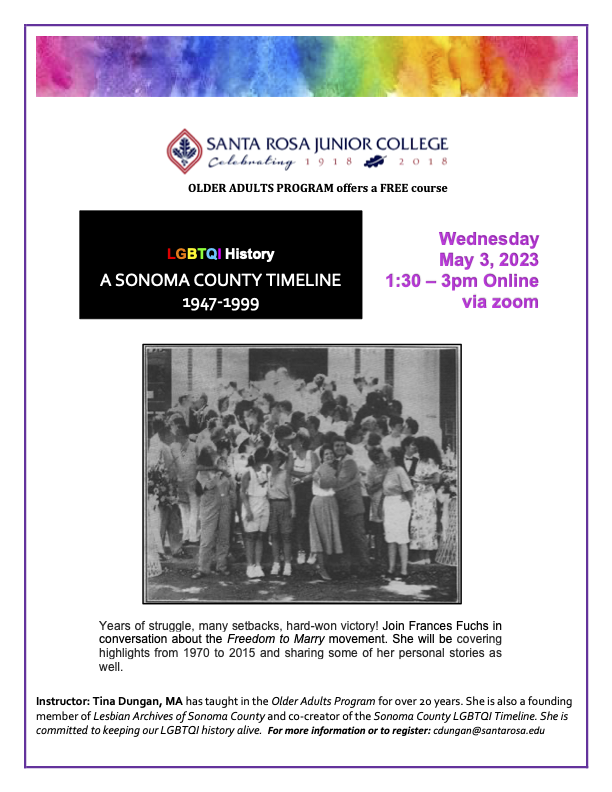
LGBTQI History: A Sonoma County Timeline 1947-2000.
Wednesdays 1:30-3pm. Online via Zoom. On May 3, Frances Fuchs will be talking with us about the Right To Marry movement in Sonoma County. Please contact me to enroll in this FREE class and receive a Zoom invite: cdungan@santarosa.edu
A new study has shown that less than half of LGBTQ+ women and non-binary people are out at work.
The research, published by myGwork, indicates that high rates of discrimination towards LGBTQ+ and non-binary professionals are preventing many from coming out in a professional environment, with just 44 per cent of LGBTQ+ women reporting that they are out at work.
The number of LGBTQ+ women and non-binary people who are out at work includes the 23 per cent who reported being out and proud in all aspects of their professional and personal lives, and the 21 per cent who say they are only out in the workplace.
The results of the survey of more than 2000 LGBTQ+ women and non-binary people has been published to coincide with Lesbian Visibility Week – a time to reflect on the progress made for LGBTQ+ women and also to acknowledge the need for further visibility for LGBTQ+ women, including in their professional lives.
Within wider society, the report reveals that less than 25 per cent of respondents are completely out and proud, and 46 per cent of LGBTQ+ women and non-binary people are only out to their friends and family members.
The report confirms that 70 per cent of respondents still encounter discrimination while they are at work – and for people of colour, marginalised communities and those from ethnic minority groups, the figures are even higher.
Gender non-conforming and queer people experience the highest rate of discrimination at work, followed by cis-gender women, gender fluid, intersex, trans women and non-binary people.
This discrimination at work is playing a factor in many lesbian and queer women believing that their sexual orientation and/or gender identity is hindering their career progression.
In fact, nearly 80 per cent of respondents across all age groups say that it’s tougher for LGBTQ+ women and non-binary people to smash through glass ceilings than straight cis-gender women. This figure is much higher for those with intersectional experiences who belong to other marginalised communities.
Marginalised groups aren’t climbing the corporate ladder
Those in ethnic minority groups say that they find it much harder to progress higher up the career ladder than their white colleagues. For example, those with Latinx (86 per cent), South Asian (85 per cent) and Middle Eastern (85 per cent) backgrounds found it the most difficult, followed by East Asian (83 per cent) and Black/African communities (81 per cent).
This is in comparison to 76 per cent of their white colleagues. These staggering data points are in despite of high rates of allyship from both men and cis-gender straight women and even more visible LGBTQ+ role models at work.
While there are a handful of notable queer women in the boardroom, the research also confirms that very few LGBTQ+ women and non-binary professionals occupy top C-suite leadership roles. Only nine per cent hold leadership roles, and only three per cent are CEOs or founders.
The report from myGwork also uncovers insights such as how the community perceives the term ‘lesbian,’ with 61 per cent of women happy to be called a lesbian, but 20 per cent saying that they are uncomfortable with that label. Additionally, an overwhelming 78 per cent would like their employers to provide menstrual leave.
The report also confirmed that LGBTQ+ women from marginalised groups are not climbing the corporate ladder compared to their White cishet colleagues. (Getty Images/PinkNews)
Business leaders need to embrace diversity and champion inclusivity
The research also provides advice on the steps organisations need to take to make the workplace more inclusive and stamp out discrimination.
Over 65 per cent say that LGBTQ+ education and training are needed within work so LGBTQ+ women and non-binary people feel safe enough to come out, stay out and work with pride.
“To create a workplace that is truly inclusive and supportive, businesses need to actively listen to and learn from their employees,” says Michelle ‘Michi’ Raymond, business development director at myGwork. “By embracing diversity and championing inclusivity, we can create a work environment that not only accepts but celebrates all identities.”
Given the fact that over 50 per cent of LGBTQ+ women and non-binary professionals are currently job hunting, the report shares tips on how to attract and retain this highly talented group of people.
73 per cent say that they would leave an employer for not providing an inclusive working environment or not doing enough to achieve proper gender equality. Offering training, being transparent about the gender pay gap and offering up employee resource groups are all ways to keep LGBTQ+ women in their current roles.
Wrapping up the report, around 33 per cent say that celebrating key awareness dates like Lesbian Visibility Week is vital.
Organisations that have more visible allies and improved inclusion policies will retain and support their valuable LGBTQ+ women and non-binary employees. These employees will be more likely to rise up the corporate ladder and be visible, out, and proud role models.
To celebrate Lesbian Visibility Week, the PinkNews Business Community will be hosting a special one-hour virtual chat with Raga D’Silva on Wednesday 26 April at 8:30am BST. Raga will talk about the importance of intersectionality, representation and the freedom to be yourself. Registration for this virtual breakfast session is open to everyone and is free. Sign up here!
Knowing your LGBTQ+ history is not only important, but it can provide great comfort and reassurance for members of the community. What’s more, it opens our eyes to the fact that, yes, queer really has always been here!
RELATED STORIES
This Week in LGBTQ Twitter: Lesbian Visibility Week brings out the TERFs
And Chelsea Manning throws shade at Elon Musk.
In honor of Lesbian Visibility Week, we thought we’d educate you on some key moments in lesbian history, from the first arrest for lesbian activity to the first televised kiss between two women.
Get the Daily Brief
The news you care about, reported on by the people who care about you.
The first conviction for lesbian activity
We’re starting off by throwing it all the way back to the 1600s.
In March 1649, there was the first known conviction for lesbian activity in North America.
Sarah White Norman and Mary Vincent Hammon were charged with “lewd behavior with each other upon a bed” in Plymouth, Massachusetts.
Hammon was under 16 and not prosecuted.
The first lesbian marriage
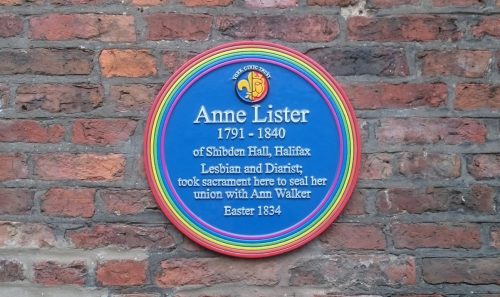
Public domainAnne Lister plaque in York
Same-sex marriage wasn’t legalized in the United States until 2015, but that didn’t doesn’t mean lesbian weddings only started happening then.
In fact, the very first marriage between two women actually happened in the 1800s.
Anne Lister (whose name you might recognize from the HBO series Gentleman Jack) was dubbed “the first modern lesbian,” and she married Ann Walker at Holy Trinity Church, Goodramgate, York in 1834.
Of course, their union was without legal recognition, given that same-sex marriage was only legalized in the U.K. in 2014. However, they took communion together on Easter Sunday and thereafter considered themselves married.
In years since, the church has been described as “an icon for what is interpreted as the site of the first lesbian marriage to be held in Britain,” and the building now hosts a commemorative blue plaque in their honor.
The word “lesbian” is used
The word “lesbian” is part of many people’s everyday vocabulary now, but do you know when it was first used?
Well, the word “lesbianism” to describe erotic relationships between women had been documented way back in 1732.
The term was first used by William King in his book, The Toast, published in England, which meant women who loved women.
The book has become notable for providing proof that the term “lesbians” was used in a sexual sense as early as the 1700s, in exactly the same way that it is used today.
Before this, the word lesbian meant “of Lesbos”, such as “Lesbian wine” or “Lesbian culture.”
The term “lesbian” is used in a medical dictionary
Then, in 1890, the term lesbian was used in a medical dictionary as an adjective to describe tribadism (as “lesbian love”).
The terms lesbian, invert, and homosexual were then interchangeable with sapphist and sapphism around the turn of the 20th century.
Arrest for lesbian partying
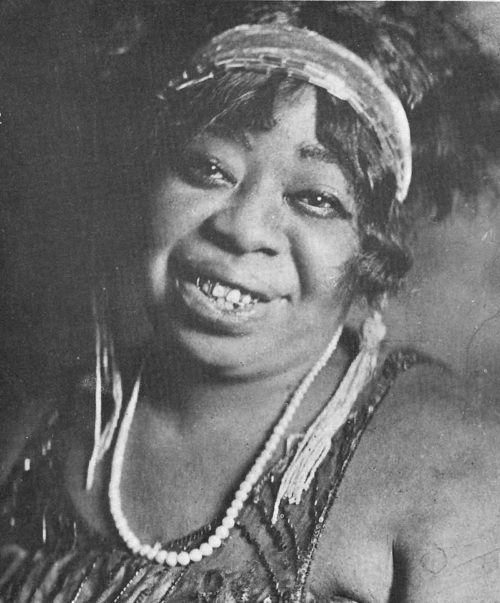
WikipediaMa Rainey
Singer Ma Rainey – the so-called Mother of the Blues – was arrested in her house in Harlem for having a lesbian party in 1925.
Her protégé, Bessie Smith, bailed her out of jail the following morning.
Both Rainey and Smith were part of an extensive circle of lesbian and bisexual African‐American women in Harlem, and the Blues scene of the Harlem Renaissance provided Black women with a space to explore their sexuality and gender. It gave them the freedom to be themselves without the white supremacist gaze, which sexualized and criminalized Black women.
Rainey wrote about speculation regarding her sexuality three years later in the song “Prove it On Me Blues,” with lyrics including: “Ain’t nobody caught me, you sure got to prove it on me.”
Publication of a groundbreaking lesbian novel
In 1928, English author Radclyffe Hall published what many consider today a groundbreaking lesbian novel, The Well of Loneliness. It follows the life of Stephen Gordon, an Englishwoman from an upper-class family whose “sexual inversion” is apparent from an early age.
The book’s release caused the topic of homosexuality to be a topic of public conversation in both the United States and England.
The formation of the first known lesbian rights organization
In September 1955, the first known lesbian rights organization in the United States was formed in San Francisco.
Daughters of Bilitis (DOB) hosted private social functions until it was dissolved in 1995. It was conceived as a social alternative to lesbian bars and clubs, which were subject to raids and police harassment, as well as general discrimination.
Throughout its 14 years, Daughters of Bilitis became an educational resource for lesbians, gay men, researchers, and mental health professionals.
RELATED STORIES
Coming out from behind the lens: How one lesbian’s photos captured the rise of gay rights
Kay Lahusen was the first photojournalist of the LGBTQ movement and she helped to document the earliest protests for homosexual rights.
While representation is well on its way now, there was a time when TV shows didn’t want to touch lesbianism with a bargepole, making the first on-screen kiss between two women all the more monumental.
Although it might surprise you to learn that it wasn’t until the nineties that two women first locked lips on American TV.
The kiss in question aired in a 1990 episode of 21 Jump Street, but the camera cut off their actual lips, meaning the actual kiss wasn’t really shown at all.
So, unofficially, the first lesbian kiss on TV is often attributed to a 1991 episode of legal drama L.A. Law, in which bisexual lawyer C.J. briefly kissed her female colleague Abby Perkins on the lips.
Sadly, romance never blossomed between the two characters, as Abby left the show and C.J ended up with a boyfriend, not to mention the network received major backlash for the scene.
Still, we’ve come a long way.
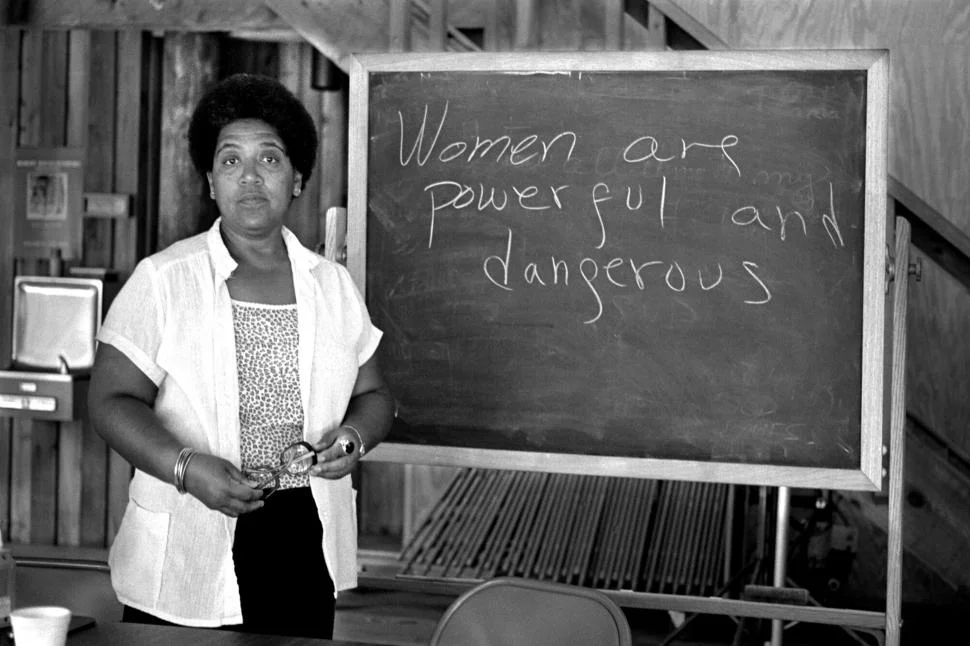
Audre Lorde is named State Poet of New York
A sign with an Audre Lorde quote at the 2017 Women’s March in Toronto
In 1991, self-described “Black, lesbian, mother, warrior, poet,” Audre Lorde became the State Poet of New York. She dedicated both her life and her creative talent to confronting and addressing various injustices, whether it be classism, homophobia, racism, or sexism.
The critically acclaimed novelist, poet, and essayist was also a co-founder of The Kitchen Table Women of Color Press, and an editor of the lesbian journal Chrysalis.
In April 1997, comedian Ellen DeGeneres came out as a lesbian on the cover of Timemagazine, stating: “Yep, I’m Gay.”
The cover coincided with the broadcast of “The Puppy Episode,” a two-part episode of the American situation comedy series Ellen.
The episode details lead character Ellen Morgan’s realization that she is a lesbian and her coming out, with the title initially used as a code name for Ellen’s coming out so as to keep the episode under wraps.
To say the moment was groundbreaking for lesbian history would probably be an understatement, as not only did it win multiple awards, Ellen became a cultural icon. DeGeneres’s career, though, suffered as the network stopped promoting her sitcom until it was ultimately canceled.
RELATED STORIES
Ellen ends her 19-year talk show by showing how far LGBTQ equality has come
“Twenty-five years ago they canceled my sitcom because they didn’t want a lesbian to be in primetime once a week. And I said, ‘OK, then I’ll be on daytime every day. How about that?’”
First lesbian elected to Congress
Campaign photoSenator Tammy Baldwin
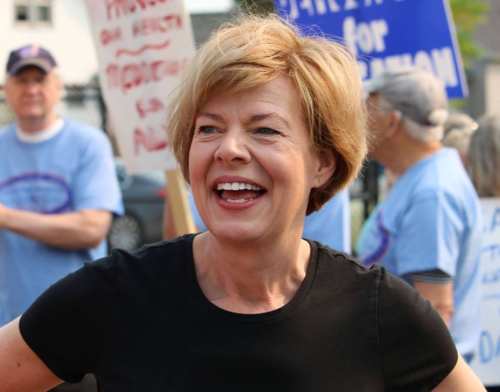
In 1998, aged 24, Tammy Baldwin became the first openly lesbian candidate ever elected to Congress, winning Wisconsin’s Second Congressional District seat over Josephine Musser.
The Democrat was also the first woman elected to either chamber in Wisconsin.
Then in 2012, she made history as the first LGBTQ+ person elected to the Senate.
Publication of When We Were Outlaws: a Memoir of Love and Revolution
Written by Jeanne Cordova, When We Were Outlaws was published in 2011.
The radical lesbian activist and pioneer’s memoir offers a raw and intimate insight into the life of a young activist torn between conflicting personal longings and political goals, at a time when the fight for gay rights and liberation for women was still fresh.
Today, When Were Outlaws is still considered extraordinary.
Lesbian history is still in the making
Looking back at these groundbreaking moments in lesbian history, we can see how far the LGBTQ+ community has come in the fight for equality and acceptance. However, we must also acknowledge that lesbian history is still in the making.
There is still much work to be done in terms of combating discrimination and bigotry and ensuring that all members of the community are treated with dignity and respect.
Let us honor the brave pioneers who paved the way for us and continue to fight for a better future for all members of the LGBTQ+ community.
By subscribing to the LGBTQ Nation newsletter, we can stay informed and engaged with the ongoing struggle for LGBTQ+ rights and contribute to the ongoing progress towards a more just and equitable society.
On Thursday, Kansas Gov. Laura Kelly (D) vetoed a slate of anti-trans bills passed by the Republican-dominated legislature.
One bill seeks to ban trans people from using bathrooms and other public facilities that align with their gender identity, and another attempts to ban gender-affirming care for trans youth. A third would ban trans students from rooming with cis students on overnight school trips, and a fourth would require trans prisoners to be housed based on their sex assigned at birth.
She was accused of using “inappropriate and uncalled-for language” while defending trans youth.
In a statement on her vetoes, Kelly blasted the bills for taking away trans people’s rights and for their potential to hurt the Kansas economy.
“Companies have made it clear that they are not interested in doing business with states that discriminate against workers and their families. By stripping away rights from Kansans and opening the state up to expensive and unnecessary lawsuits, these bills would hurt our ability to continue breaking economic records and landing new business deals. I’m focused on the economy. Anyone care to join me?”
For at least three of the four bills, the legislature appears to have enough votes to override Kelly’s vetoes. The bill on gender-affirming care is the only one that may not, as 14 House Republicans voted against S.B. 26, which would ban all forms of gender-affirming care – including reversible puberty blockers – for those under 18.
The Human Rights Campaign (HRC) praised Kelly for vetoing the legislation.
“Today, Governor Kelly did the right thing,” said HRC state legislative director and senior counsel Cathryn Oakley. “By vetoing a series of bills designed solely to discriminate against LGBTQ+ – particularly transgender – Kansans, she rejected the politics of hate and division being perpetrated by the state legislature, all while keeping her focus on the issues that really matter. She’s right that discrimination is bad for business, bad for Kansas, and bad for this nation.”
Earlier this month, the Kansas GOP succeeded in passing an anti-trans sports ban that many worry will lead to invasive and traumatic genital examinations of student-athletes.
Lawmakers overrode Kelly’s third veto of the “Fairness in Women’s Sports Act,” which bans transgender girls and women in kindergarten through college from participating in girls’ and women’s school sports.
“It breaks my heart,” Kelly said in the wake of the bill’s passage. “I’m sorry that they distracted themselves with this really awful bill.”
“It won’t increase test scores. It won’t help any kids read or write,” she wrote in her veto message. “It won’t help any teachers prepare our kids for the real world. Here’s what this bill would actually do: harm the mental health of our students.”
Kelly has long championed LGBTQ+ rights. When she first became governor in 2019, her first official act in office was to sign an executive order to restore protections for LGBTQ+ state employees.
“Discrimination of any kind has no place in Kansas,” Kelly said on her official Twitter account. “It will not be tolerated.”
As the nation’s culture wars rage on in classrooms and libraries, attempts to ban books have reached a record high, and titles with LGBTQ themes remain top targets.
In its annual book censorship report, the American Library Association documented 1,269 challenges to more than 2,500 books in 2022, the highest number of attempted book bans since the association began tracking such efforts in 2001. It was a 75% jump from 2021, which held the previous record.
Of the 13 books that made the ALA’s list of “Most Challenged Books” last year, seven titles — including three of the top four — were challenged for having LGBTQ content, the association found.
Deborah Caldwell-Stone, director of the American Library Association’s Office for Intellectual Freedom, said the LGBTQ-heavy list “sends a message of exclusion.”
“It’s a way of telling young gay and transgender persons that they don’t belong in school, that they don’t belong to the community,” she said. “It sends a message to the LGBTQ community as a whole that they’re not considered full citizens with full rights to participate in community institutions like the library.”
The ALA reported that, prior to 2020, the “vast majority” of challenges against books were made by individuals who sought to restrict access to a single book their child was reading. But the group found that 90% of last year’s challenges were directed at multiple books and nearly a fifth of them were made by “political/religious groups.”
The association cited this finding as “evidence of a growing, well-organized, conservative political movement, the goals of which include removing books about race, history, gender identity, sexuality, and reproductive health from America’s public and school libraries that do not meet their approval.”
A display of banned books at a Barnes & Noble book in Pittsford, New York, in 2022.Ted Shaffrey / AP
Just last week, the Florida Board of Education approved Gov. Ron DeSantis’ request to expand the state’s so-called Don’t Say Gay law — which restricts the instruction of sexual orientation and gender identity in the state’s public schools — to all grades. Previously, the law only explicitly applied to children in kindergarten through third grade.
Last year’s most challenged book was the award-winning memoir “Gender Queer,” which also topped the ALA’s 2021 list of most banned books.
The illustrated memoir — which chronicles nonbinary author Maia Kobabe’s journey of self-identity — has faced unparalleled pushbackfrom school boards and conservative activists around the country in recent years.
A representative for Kobabe did not immediately respond to NBC News’ request for comment.
In a previous interview with NBC News, Kobabe acknowledged that parts of their memoir may not be appropriate for elementary school children. However, the author said the book’s straightforward accounts could be used to show readers an experience growing up outside of cisgender and heterosexual norms.
“It’s very hard to hear people say, ‘This book is not appropriate to young people,’ when it’s like, I was a young person for whom this book would have been not only appropriate, but so, so necessary,” Kobabe said. “There are a lot of people who are questioning their gender, questioning their sexuality and having a real hard time finding honest accounts of somebody else on the same journey. There are people for whom this is vital and for whom this could maybe even be lifesaving.”
Other titles at the top of the 2022 list include George M. Johnson’s “All Boys Aren’t Blue,” Toni Morrison’s “The Bluest Eye,” Mike Curato’s “Flamer,” John Green’s “Looking for Alaska” and Stephen Chbosky’s “The Perks of Being a Wallflower.”
Caldwell-Stone said that the group of books — as with all books — should remain on shelves without “fear or favor.”
“Everyone is entitled to find books that reflect their interests, their experiences, their backgrounds, their identities on the shelves of a publicly funded library that’s there to serve everyone,” she said.
Lizzo brought an army of drag performers to the stage at her Knoxville, Tennessee, concert on Friday night to protest the state’s anti-drag law.
RuPaul’s Drag Race alums Aquaria, Kandy Muse, Asia O’Hara, and Vanessa Vanjie Mateo joined the singer onstage at the Thompson-Boling Arena along with over a dozen local Tennessee drag performers.
Kids need protection from poverty, not drag queens, she said.
“Support your drag entertainers!” Lizzo told the crowd at the end of the show-stopping number.
In early March, Tennessee became the first U.S. state to pass a law aimed at banning drag performances in public spaces when Gov. Bill Lee (R) signed the state’s Senate Bill 3 into law. The law would ban “male or female impersonators who provide entertainment that appeals to a prurient interest” from appearing “on public property” or “in a location where the adult cabaret performance could be viewed by a person who is not an adult.”
A federal judge in Nashville temporarily blocked the law on March 31, ruling that the law “is likely both vague and overly-broad” and that it would bar businesses that host drag performances “from engaging in protected First Amendment expression” under threat of criminal penalties.
The law has received widespread condemnation from LGBTQ+ advocates and allies. During her Friday night show in Knoxville, Lizzo explained her decision to perform in Tennessee despite calls to boycott the state.
“In light of recent and tragic events and current events, I was told by people on the internet, ‘Cancel your shows in Tennessee,’ ‘Don’t go to Tennessee,’” she told the crowd.
“Their reason was valid,” she added, telling the crowd not to boo the request. “But why would I not come to the people who need to hear this message the most? The people who need to feel this release the most. Why would I not create a safe space in Tennessee where we can celebrate drag entertainers and celebrate our differences and celebrate fat Black women?”https://www.instagram.com/reel/CrWHQziuqMc/embed/captioned/?cr=1&v=14&wp=1080&rd=https%3A%2F%2Fwww.lgbtqnation.com&rp=%2F2023%2F04%2Flizzo-brought-an-army-of-queens-to-protest-tennessees-anti-drag-law%2F#%7B%22ci%22%3A1%2C%22os%22%3A726%2C%22ls%22%3A120%2C%22le%22%3A580%7D
“Thank you so much for standing up for your rights, protecting each other, and holding the people accountable who should be protecting us,” she concluded.
Over the weekend, Lizzo posted several video clips and backstage photos from the Knoxville show, thanking all the drag performers who joined her onstage.https://www.instagram.com/p/CrWC2dpsuGl/embed/captioned/?cr=1&v=14&wp=1080&rd=https%3A%2F%2Fwww.lgbtqnation.com&rp=%2F2023%2F04%2Flizzo-brought-an-army-of-queens-to-protest-tennessees-anti-drag-law%2F#%7B%22ci%22%3A2%2C%22os%22%3A728%2C%22ls%22%3A120%2C%22le%22%3A580%7D
“Thank you so much for the platform for me and the Drag Race girls and especially for uplifting the queens on Tennessee!” Aquaria commented on one post. “Those ladies are all so strong and brave and I know tonight was definitely the best of a tricky situation for everyone. Thanks for shedding light for our friends who definitely need our hand these days. We appreciate it.”
On Twitter, Daily Wire host and professional transphobe Matt Walsh reposted video from the concert.
Lizzo isn’t the first high-profile musician to protest the Tennessee law. In March, Yo La Tengo’s Ira Kaplan and James McNew appeared in drag onstage at a show at Nashville venue The Basement East. Sheryl Crow, Maren Morris, and Hozier were among the line-up at the March 20 “Love Rising” concert benefiting Tennessee Equality Project, Inclusion Tennessee, Out Memphis, and the Tennesee Pride Chamber in Partnership with the Looking Out Foundation at Nashville’s Bridgestone Arena. Meanwhile, Madonna recently added a Nashville stop on her upcoming “Celebration” tour with opener Bob the Drag Queen specifically calling out the state’s anti-drag law and pledging a portion of the proceeds from the show to organizations advocating for transgender rights.
An eastern Ohio man told investigators that he tried to burn down an Ohio church because he wanted to prevent a drag show that was scheduled to take place there, federal prosecutors allege in newly unsealed charges.
Aimenn Penny, a 20-year-old from Alliance who is a member of a “white lives matter” group that espouses racist and neo-Nazi views, tried to burn down the Community Church of Chesterland early on March 25, authorities allege in court documents unsealed Monday. Chesterland is a small community east of Cleveland.
According to the criminal complaint, Penny said he tried to burn down the church using Molotov cocktails because he wanted to “protect the children and stop the drag show event.” He also regretted that it didn’t work, authorities said.
According to court documents, Aimenn D. Penny, 20, of Alliance, attempted to burn the church to the ground after learning the church was holding multiple drag show events the following weekend.
Penny was initially arrested and charged with federal offenses on March 31. If convicted, Penny faces a maximum penalty of up to 20 years in prison for the violation of the Church Arson Prevention Act.
Penny also faces a mandatory minimum of five years and up to 20 years in prison for the malicious use of explosive materials charge and up to 10 years in prison for the possession of a destructive device charge.
In addition, if convicted of using fire to commit a federal felony, Penny faces a 10-year mandatory prison sentence that will run consecutively with any other prison term imposed
Rep. Zooey Zephyr, the first openly transgender woman elected to the Montana Legislature, held her microphone in the air during a House session Monday as her supporters chanted “Let her speak!” from the gallery.
For the third day in a row, Zephyr’s House colleagues refused to allow her to speak on bills that would restrict the rights of transgender people. The refusal followed a comment she made last week during a hearing on a bill that seeks to ban gender-affirming care for minors.
“I hope the next time there’s an invocation, when you bow your heads in prayer, you see the blood on your hands,” Zephyr, a Democrat, said while debating the bill on April 18.
That evening, the Montana Freedom Caucus, a group of 21 Montana Republicans, called for the House to censure Zephyr and misgendered her, using the incorrect pronouns to refer to her in a statement and social media post.
“This kind of hateful rhetoric from an elected official is exactly why tragedies such as the Covenant Christian School shooting in Nashville occurred,” they also said in the statement.
Though the House did not hold a vote to censure Zephyr, two days later House Speaker Rep. Matt Regier refused to recognize Zephyr and allow her to speak on a bill that would define sex under state law as only male or female, and determined only by biology and genetics “without regard to an individual’s psychological, behavioral, social, chosen, or subjective experience of gender.”
Both the House rules committee and the full House, where Republicans outnumber Democrats by more than 2 to 1, voted to uphold Regier’s decision despite repeated protests from Democrats.
“It’s about everybody having equal access to this floor to be able to discuss and to be able to represent their community,” state Rep. Sharon Stewart Peregoy, a Democrat, said Thursday, the Montana Standard reported. “And I believe that where we’re at is we are being discriminatory.”
In a statement shared on social media after Thursday’s House session, Zephyr said, “No amount of silencing tactics will deter me from standing up for the rights of the transgender community.”
“This year, I have lost friends to suicide, and I have listened to the heart-wrenching stories of families dealing with suicide attempts, trans youth fleeing the state, and people being attacked on the side of road — all due to legislation like this,” she said in the statement.
Republicans have called on her to apologize for her remarks last week, but Zephyr said she has no intentions of doing so.
“Montana Republicans say they want an apology, but what they really want is silence as they take away the rights of queer and trans Montanans,” she said in her statement Thursday.
Republicans continued to block Zephyr from speaking Friday, including on bills unrelated to LGBTQ people. On Monday, some of her supporters delivered a petition with more than 3,000 signatures to Regier’s office, according to KTVH-TV, an NBC affiliate in Helena.
Some of Zephyr’s supporters rallied on the Capitol steps Monday and at one point displayed banners across the front steps that read “Democracy dies here.”
Republicans voted again Monday afternoon to continue to block Zephyr from speaking and, after they did, protesters in the gallery shouted “Let her speak!” until they forced the House to halt proceedings. Zephyr held her microphone in the air.
Seven people were arrested for criminal trespass, the sheriff said. Regier’s office shared a statement Monday night describing the events as a “riot.”
“House Republicans condemn violence and will always stand for civil debate and respect for our processes of government,” Regier said in a joint statement with Rep. Sue Vinton, House majority leader, and Rep. Rhonda Knudsen, speaker pro tempore. “Today’s riot by far-left agitators damages our discourse and endangered legislators and staff.”
The Montana Freedom Caucus called for immediate disciplinary action against Zephyr in a statement Monday, saying she stood on the House floor and encouraged “an insurrection.”
Zephyr said in a statement that she raised her microphone to stand in solidarity with those who “protested on behalf of their democratic right to be heard.”
“As an elected representative, I am devoted to supporting those who speak in defense of democracy, as it is my duty to ensure their voices are heard and respected,” she said.
At an All Saints Church in Pasadena lrecently, a coalition of faith communities discussed concerns about a proliferation of legislation that impacts transgender people and denounced anti-transgender agenda in a press conference.
“We are deeply concerned about the growing number of anti-transgender bills being introduced in state legislatures across the country,” said Rabbi Sharon Kleinbaum, Senior Rabbi at Congregation Beth El in Berkeley, California. “These bills are based on fear and ignorance, and they are putting transgender people at risk. We call on our elected officials to reject these hateful measures and to stand up for the rights of all people.”
Faith leaders from various denominations gathered on the national “Transgender Day of Visibility” to proclaim support for the transgender and LGBTQ community, according to Pasadena Now.
Many faither leaders spoke out, including Reverend Mike Kinman, the rector at All Saints. He quoted a Greek bishop who said, “the glory of God is a human being come fully alive.”
“We are here today to say that transgender people are fully alive, and that their lives are sacred,” Kinman said. “We stand with them in solidarity, and we will fight for their rights.”
Another leader, Jonathan Quinn, chair of the All Saints Episcopal Pasadena LGBTQ Ministry, spoke out during the gathering alongside his partner.
“I’m afraid about the free practice of religion of trans people, and how that might be affected by a lot of this new anti-trans legislation … I’m finding a lot to be afraid of these days, but as a person of faith, I believe that fear must not be given the last word. As a Christian, I believe that God created trans people to show the world their own holiness, joy and love.”
Together, the coalition called on faith leaders to speak out against anti-transgender rhetoric and policies, Pasadena Now reported.
“We urge all faith leaders to use their voices to speak out against hate and discrimination,” said Rev. Jennifer Yen, executive director of the Los Angeles Queer Interfaith Clergy Council. “We must stand together in love and compassion, and we must create a world where all people are safe and affirmed.”
This press conference gathered in response to the transgender rights under attack across the nation, including bills that would ban transgender students from using the bathrooms that correspond with their gender.
Rabbi Karen Bender said, “As a mommy, as a parent of a child that is trans, it’s my passion to walk with them, as they discover their true selves, and all I’m asking as a parent is that to allow that to happen, to have the freedom to discover who they really are.”
Equality California, the nation’s largest statewide LGBTQ+ civil rights organization, released the following statement from Executive Director Tony Hoang in response to Rep. Tom McClintock (R-CA) introducing H.R. 2640, the Border Security and Enforcement Act of 2023, which would make it much harder for immigrants to seek asylum in the US and reinstate previous provisions enforced during the Trump Administration:
“The United States has always served as a beacon of hope for immigrants seeking a better life for themselves and their families, including those who are LGBTQ+. Until our nation has a just and functional immigration system, we do not have full and lasting LGBTQ+ equality. Undocumented LGBTQ+ people and those seeking asylum face tremendous negative effects on their social well-being for being members of two marginalized groups.
Many seeking asylum do so because they are fleeing violence or persecution in their countries of origin. As we’ve seen recently in places like Uganda and Iran, LGBTQ+ people face significant danger in other parts of the world simply because of who they are or who they love. Representative McClintock’s bill seeks only to further stigmatize immigrant communities, a population already vulnerable to harassment and discrimination, and he should be ashamed for contributing to anti-immigrant narratives.
Equality California will continue our efforts to educate about the compounded disparities that LGBTQ+ immigrants and undocumented people face, and we urge the House and Senate to vote down this dangerous legislation.”
H.R. 2640 would aggressively reduce the number of people eligible for asylum by expanding a series of felonies and misdemeanors that would make most ineligible for asylum protections. It would also mandate detention for family units crossing the border without prior authorization for the duration of their legal process, including detention for minors. Additionally, the bill would mandate asylum requests be conducted at ports of entry, raise penalties for visa overstays, and crack down on immigrant workers.
###
Equality California is the nation’s largest statewide LGBTQ civil rights organization. We bring the voices of LGBTQ people and allies to institutions of power in California and across the United States, striving to create a world that is healthy, just, and fully equal for all LGBTQ people. We advance civil rights and social justice by inspiring, advocating and mobilizing through an inclusive movement that works tirelessly on behalf of those we serve. www.eqca.org