Frameline, the San Francisco International LGBTQ+ Film Festival, returns for a 47th edition June 14-24, 2023. These dates include starting one day earlier than usual, on a Wednesday, and ending one day earlier, on Pride Saturday. The in-person festival is followed by a Streaming Encore, June 14–July 2, where the majority of the festival program will be available to view online from anywhere in the US.
Frameline is the world’s largest and longest running LGBTQ+ film festival, and is expected to be the highest attended film festival in the Bay Area in 2023.
Frameline47 will include 90 screenings across San Francisco and Oakland, the highlight of which is 47 screenings at the iconic Castro Theatre over 11 days. The Castro Theatre has been Frameline’s home for over four decades and is the most important venue for LGBTQ+ film anywhere in the world.
Castro Passes are now on sale, which provide access to 45 of the 47 programs for a significant discount. Castro Passes are now available to Frameline members for $255 ($5.66 per film) until April 30, where the price increases to $280 ($6.22 per film).
Frameline will also screen 25 programs at the Roxie Theater in the Mission. In addition, Frameline is activating San Francisco’s neighborhood theatres, the 4 Star Theater, the Balboa Theatre, and the Vogue Theatre. Frameline’s mission in 2023 is to showcase cinemas across San Francisco and celebrate the vibrant film culture that we love.
Frameline also returns to The New Parkway in Oakland for 10 screenings and a party at the new LGBTQ+ bar Fluid510.
Frameline47 will include 130 films, including shorts and several World Premieres, as well as West Coast Premieres of films coming direct from Sundance, Tribeca, Berlinale, Toronto Film Festival, and more.
Director of Programming, Allegra Madsen says, “Frameline47 showcases a fantastic year for LGBTQ+ cinema. These films will excite, delight, and challenge our audiences. We’re excited to be hosting filmmakers from all over the world.”
Frameline’s Executive Director, James Woolley, states, “At Frameline we love the ‘cinema experience’ – there’s nothing as special as watching a great movie surrounded by a captivated audience. We’re celebrating San Francisco and Oakland cinemas in a way we haven’t done before. See you at the movies.”
Following the in-person festival is a Streaming Encore, from June 24 – July 2. This encore is the largest collection of films available to the public at any LGBTQ+ film festival in the world. It will be available to view anywhere in the US and is two days longer than in the 2022 edition. Streaming Passes are on sale now for $130 or $115 for Frameline Members.
A collection of titles, including the Opening Night, and a Pride Kickoff film + party, will be available for purchase from May 4.
ABOUT FRAMELINE Frameline’s mission is to change the world through the power of queer cinema. As a media arts nonprofit, Frameline’s integrated programs connect filmmakers and audiences in San Francisco and around the globe. Frameline provides critical funding for emerging LGBTQ+ filmmakers, reaches hundreds of thousands with a collection of over 250 films distributed worldwide, inspires thousands of students in schools across the nation with free films and curricula through Youth in Motion, and creates an international stage for the world’s best LGBTQ+ film through the San Francisco International LGBTQ+ Film Festival and additional year-round screenings and cinematic events. For more information on Frameline, visit www.frameline.org.
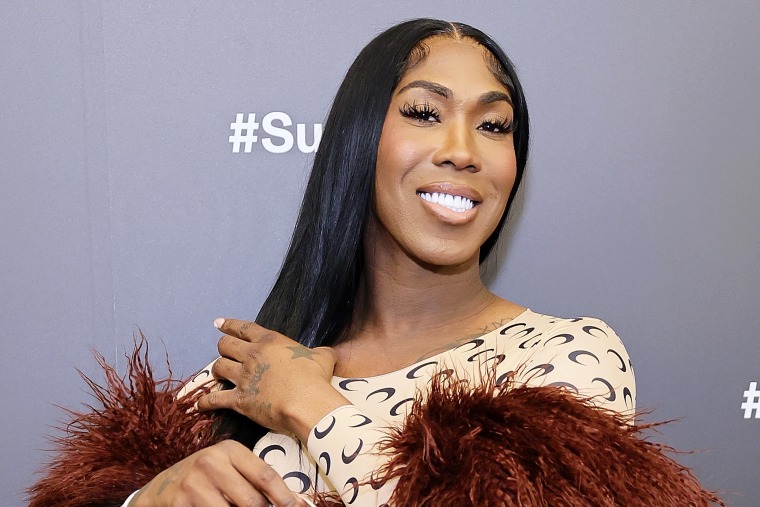
Koko Da Doll, one of the subjects of a forthcoming documentary on transgender women, was fatally shot in Atlanta this week, the film’s publicist said Friday. She was 35.
Cinetic Media, the publicity firm representing “Kokomo City,” which highlights the stories four Black transgender sex workers in New York City and Georgia, confirmed by email that Koko Da Doll was the transgender woman killed Tuesday in Atlanta.
Atlanta police and the Fulton County Medical Examiner’s Office have not publicly released the identity of the victim in Tuesday’s shooting.
The homicide is the third fatal shooting of a transgender woman in the city since the beginning of the year, the police department said in a statement Friday.
“While these individual incidents are not related, we are very aware of the epidemic-level violence that black and brown transgender women face in America,” the department said.
Koko Da Doll in Park City, Utah, on Jan. 21, 2023.Neilson Barnard / Getty Images file
Tuesday’s shooting was reported at 10:42 p.m. at an address that corresponds to a shopping center, Atlanta police said. The victim was dead at the scene, police said.
Like the two other attacks this year on transgender women — one Jan. 9 that followed a dispute and one April 11 that also followed a dispute — the case was still under investigation, police said.
Police said there’s no evidence so far to suggest the victims were targeted because of their gender.
“Our investigators have not found any indication the victim was targeted for being transgender or a member of the LGBTQ+ community and these cases do not appear to be random acts of violence,” the department said.
GLAAD announced the death of Koko Da Doll, who was also known by the name Rasheeda Williams, on Friday and stated, “Williams should be alive today.”
“All transgender people deserve to live in safety and acceptance, beloved by their families, communities, and able to contribute to a world where all are more free,” the LGBTQ advocacy group said.
The documentary’s director, D. Smith, told Variety the killing was difficult for her to process.
“I created ‘Kokomo City’ because I wanted to show the fun, humanized, natural side of Black trans women,” she said. “But here we are again.”
During its January premiere at the Sundance Film Festival, “Kokomo City” received three major accolades, including the Sundance Audience Award.
Its public release date was not available.
Producer Harris Doran said in an Instagram post Thursday that he was grief stricken, especially because Koko Da Doll was advancing her life and finding some success as a rapper.
“This tragedy is just unbearable to process,” he said. “Koko was working so hard to get out. She is brilliant in the film and when you see it, you will fall in love with her just as we all have.”
Daniella Carter, one of the other subjects of the documentary, also posted a heartfelt statement on her Instagram page Thursday.
“I’m waiting here my arms wide open, tears running down my face,” she said, “Ready for you to return even if it takes forever my sister.”
Over the centuries, lesbians and other queer women have pushed the world forward, often challenging norms and defying the expectations of their times. From 1700s England to the contemporary shores of New York’s Fire Island, these women forged new paths and made a space for others to do the same.
Some of those on this list lived at a time when there was no language for queer identity as in the present time, and often could not come out due to societal restrictions and concerns for their own safety. Like much of LGBTQ history, identifying who someone was requires squinting through the haze of the past and reading between the lines of diaries, historical records and second-hand accounts.
What is certain, though, is that queer women have always been around, even if their circumstances forced them to obscure their full selves.
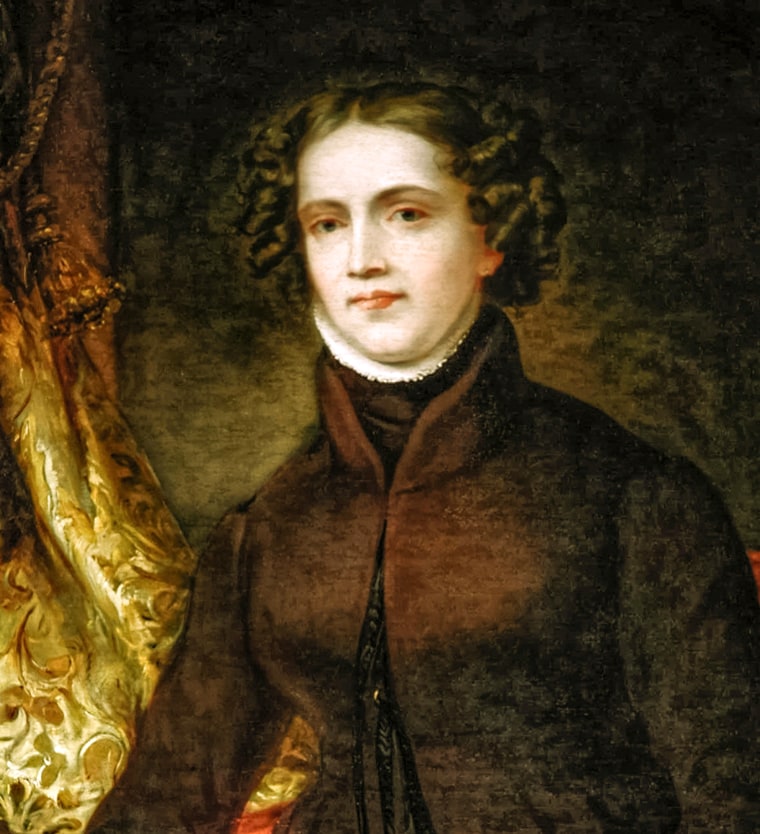
Anne Lister (1791-1840)
Anne Lister.Visual Arts Resource / Alamy Stock Photo
Anne Lister, who has been described as “the first modern lesbian,” was born in northern England and lived during the height of the Industrial Revolution. Educated, wealthy and masculine in appearance, she had relationships with women beginning at an early age and by all accounts was unabashedly queer and self-assured, navigating her way around polite society while excelling as a businesswoman. Her womanizing reputation earned her the nickname “Gentleman Jack,” the latter part being a slur for lesbian at the time, but the name was reclaimed on Lister’s behalf, thanks to the BBC-HBO series “Gentleman Jack,” which ran from 2019 to 2022.
Though she did not use the word “lesbian” to describe herself, she wrote in her diary in 1821, “I love and only love the fairer sex and thus beloved by them in turn, my heart revolts from any love but theirs.” Lister married her neighbor and fellow landowner, Ann Walker, in 1834 at a church in York, England, an event considered to be the first recorded lesbian wedding in the history of Britain. Though it is unclear exactly what transpired at the church, experts are in agreement that the pair made vows to each other and exchanged rings. There was no legal recognition of the marriage at the time, but a commemorative plaque adorns the church and celebrates their union.
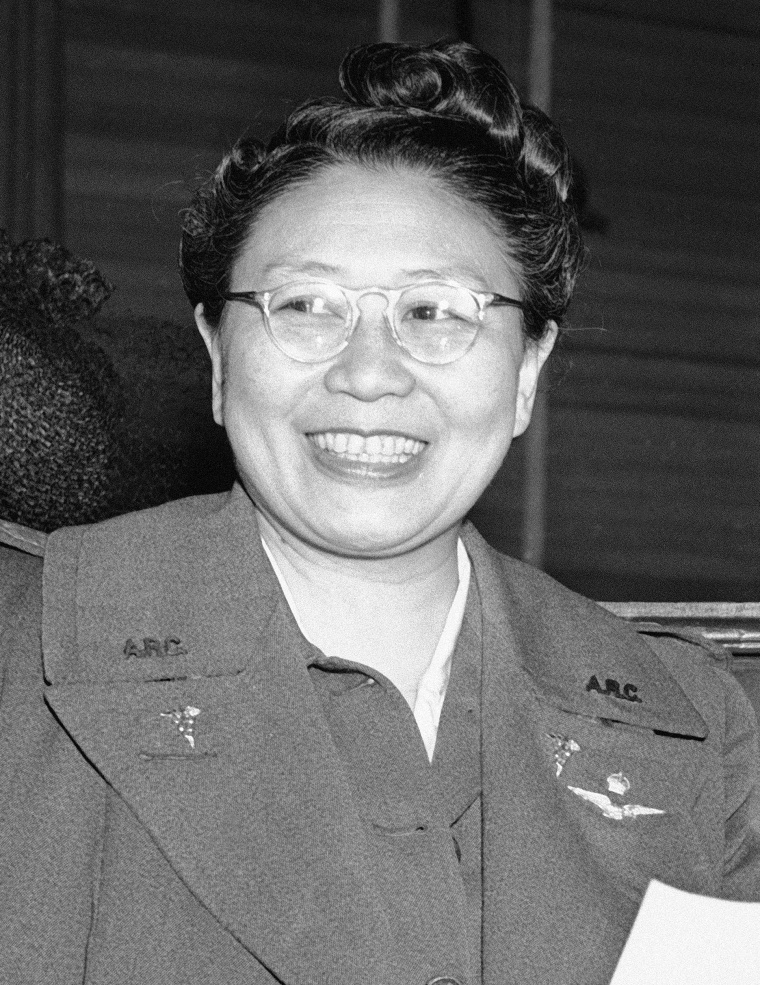
Dr. Margaret ‘Mom’ Chung (1889-1959)
Margaret Chung in 1942. AP
Dr. Margaret Chung is best known as the first Chinese American woman to become a physician — and lesser known as a queer woman who attracted a clientele of lesbian couples and women seeking birth control.
Chung graduated from medical school in 1916 and was known to wear a dark suit and carry a parakeet around in a cage dangling from her wrist. During the 1930s and 1940s, she became known as “Mom Chung” for her support of U.S. troops, “adopting” hundreds of them, sending care packages and hosting soldiers for Sunday dinners at her home in San Francisco. Although Chung never came out, she did reportedly have intimate relationships with women, and rumors of her sexuality followed her throughout her life. A plaque hanging on Chicago’s Legacy Walk, which commemorates the contributions of LGBTQ people, celebrates her life.
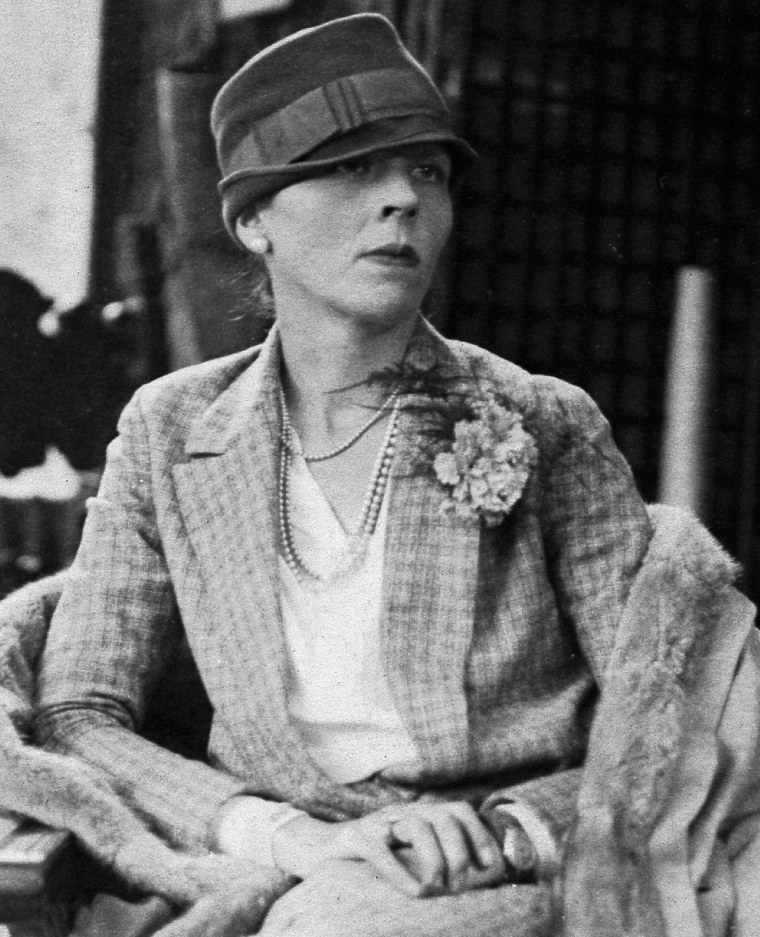
Djuna Barnes (1892-1982)
Djuna Barnes in 1930.adoc-photos / Corbis via Getty Images
Djuna Barnes was an avant-garde writer best known for her 1936 title “Nightwood,” one of the earliest lesbian novels to be published by an American writer. Barnes’ other well-known works include “Ladies Almanack,” published in 1928 and described as “a gentle satire of literary lesbians,” and the 1958 play “The Antiphon,” which The Paris Review described as a work that “concerns the war of wills within a family, primarily between a middle-aged woman and her mother.”
Barnes was a journalist before she was a novelist, poet and playwright. Her reporting stood out for being sensationalist and immersive, and she often tackled the political issues of her day. For an assignment published in New York World Magazine in 1914, Barnes submitted to being force-fed in prison, something that was being used on suffragists as they carried out hunger strikes.
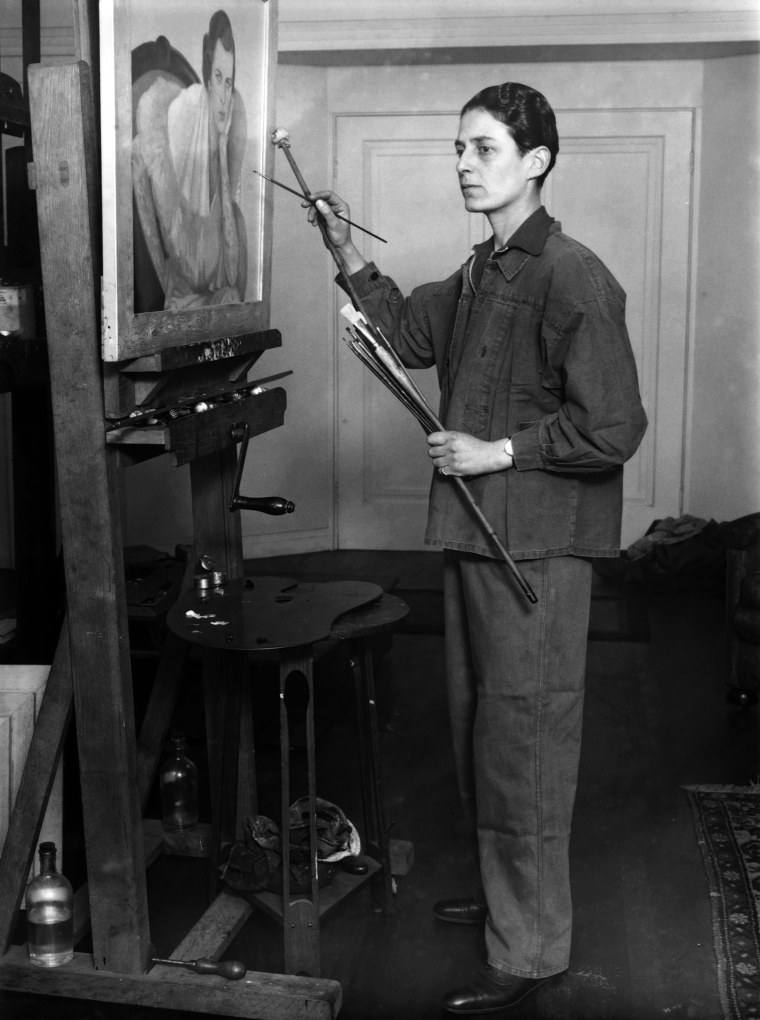
Gluck (1895-1978)
Gluck in 1932.Fox Photos / Getty Images
An artist who defied the expectations of her day, Gluck was a British painter born Hannah Gluckstein in 1895. It is not clear how she would identify using the modern day’s vernacular, or if she would’ve considered herself a lesbian, but what is known is she had her short hair cut at a gentleman’s hairdresser, wore men’s suiting, kept a dagger hanging off her belt and was referred to as “Peter” among close friends, or as “Tim” by a female lover.
Gluck came from a wealthy family, and her privilege both insulated her and offered her the freedom to live a more open life. She had relationships with several women, including a playwright and society woman named Nesta Obermer. Gluck referred to Nesta as“my own darling wife,” and “my divine sweetheart, my love, my life.” She painted a portrait of them together, which later became the cover of “The Well of Loneliness,” a novel published by British author Radclyffe Hall in 1928 that is regarded as the first lesbian novel in the English language.
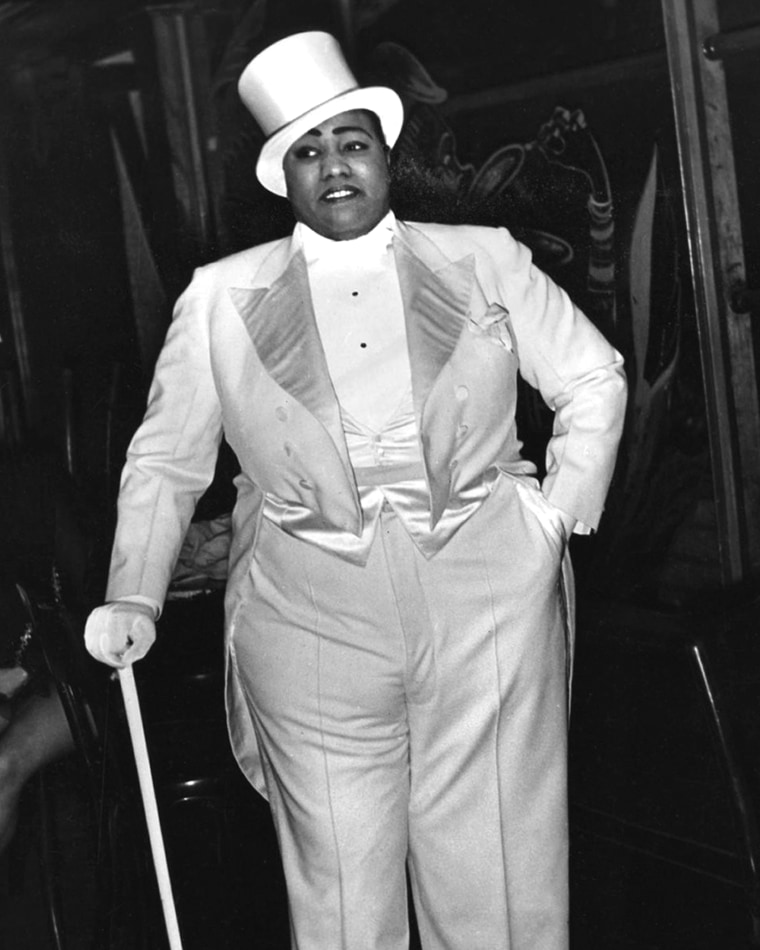
Gladys Bentley (1907-1960)
Gladys Bentley in 1930.Michael Ochs Archives / Getty Images
Gladys Bentley was a singer, piano player and entertainer who performed in the 1920s and 1930s, in the era that came to be known as the Harlem Renaissance.
Bentley was a powerful performer, and she was known for her top hat, tailored white tuxedos and risque lyrics. She did not conceal her sexuality but celebrated it, flirting with women in the crowd and incorporating a more masculine identity into her performances. She became one of the best-known Black entertainers of the time, and at the height of her fame she moved from Harlem to Park Avenue and had a team of servants. Bentley left New York in the late 1930s and performed throughout California, most notably Mona’s 440 Club, the first lesbian bar in San Francisco.
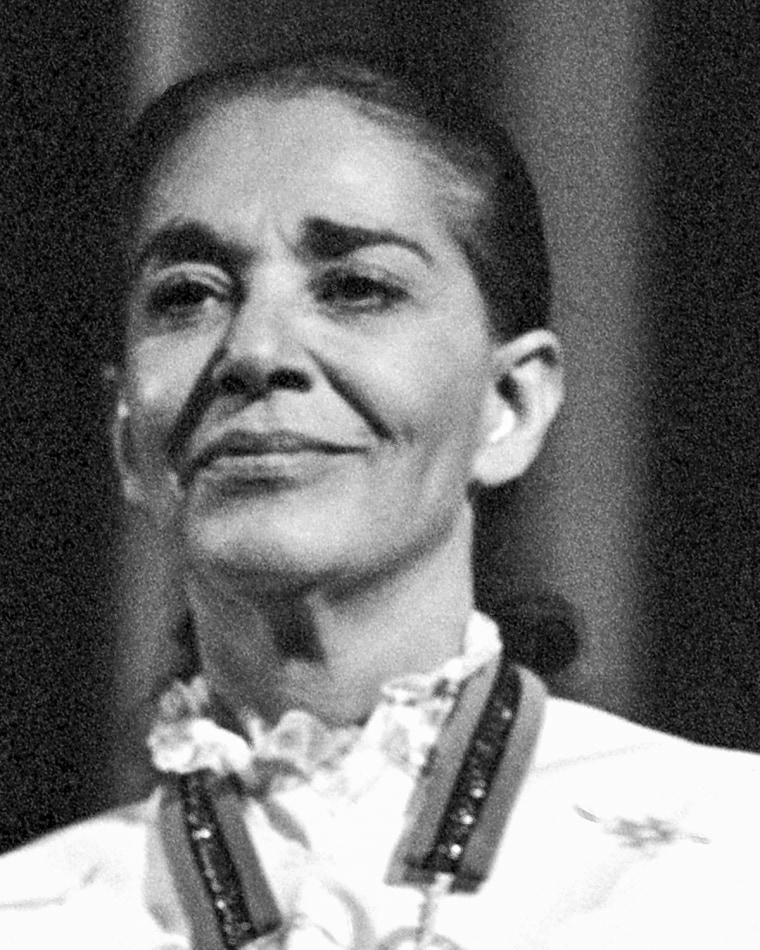
Chavela Vargas (1919-2012)
Chavela Vargas in 1973. Gianni Ferrari / Getty Images
Born in Costa Rica in 1919, Chavela Vargas was 14 years old when she fled to Mexico with dreams of becoming a singer. She became one of Mexico’s best-known female singers, achieving dominance in the world of canción ranchera, a style that often includes broken hearts and unrequited love, mournful ballads traditionally told from a man’s perspective.
Vargas rose to fame in the 1960s and 1970s, and had a reputation for being macho and drinking hard. While rumors long swirled about her being a lesbian, she didn’t come out until she was 81 years old, in an interview from the 1990s included in the 2017 film “Chavela.”
“When you’re true to yourself, you win in the end,” Vargas said.
Rosalie ‘Rose’ Bamberger (1921-1990)
In the 1950s, Rosalie “Rose” Bamberger had the idea to form a secret society for lesbians. The bars were constantly being raided, and Bamberger was looking to give women a space to meet one another that would be safe and private. She also wanted to dance without being arrested.
The first meeting was at Bamberger’s house in 1955, which she shared with her partner Rosemary Sliepen. The private club became The Daughters of Bilitis and morphed into the first lesbian rights group in the United States — and one that would eventually be surveilled by the CIA and the FBI. Though the club was Bamberger’s idea, she only lasted as a member for about six months, after a disagreement on the direction of the organization concerning her own safety as a working class woman of color.
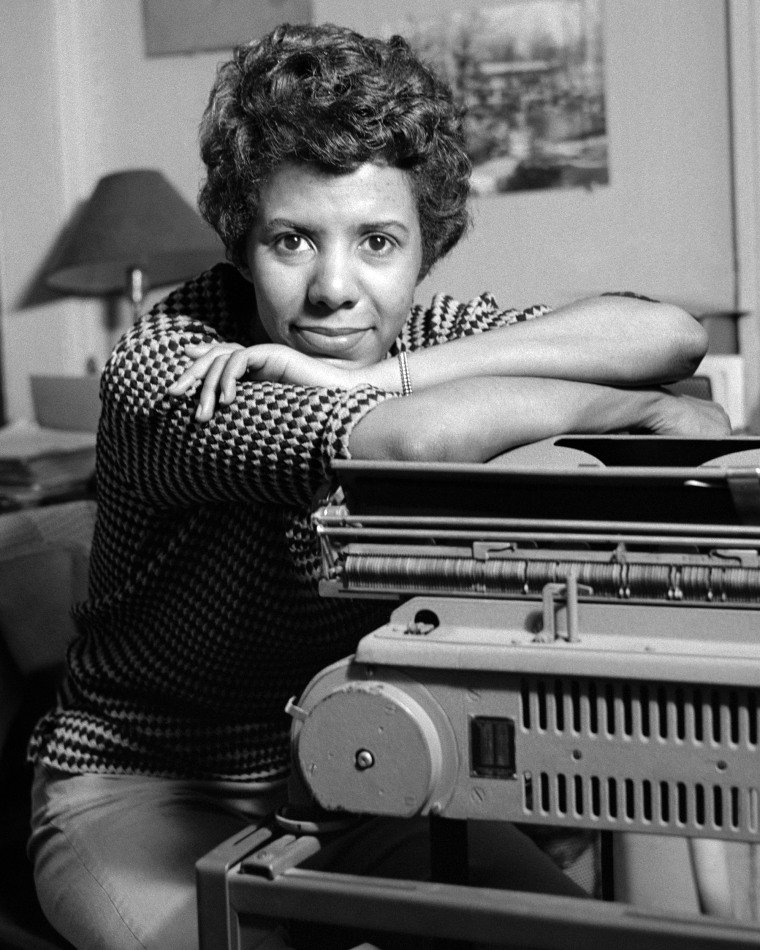
Lorraine Hansberry (1930-1965)
Lorraine Hansberry in 1959. David Attie / Getty Images
Lorraine Hansberry is best known for her 1959 play “A Raisin in the Sun,” about racial segregation in Chicago. It became the first play written by an African American woman to be produced on Broadway, and Hansberry, at 29 years old, became the first Black playwright and youngest American to win a New York Critics’ Circle Award. Activism was central to her life, and issues of racial equality, feminism and queer identity were all themes in her work.
She lived in New York’s Greenwich Village, which enabled her to have a more expansive life than was typically possible for women in the 1960s. Hansberry did not publicly come out during her lifetime, and most of what we know about her sexuality comes from her diary entries and other personal writings.
In a journal entry in 1962, she wrote, “The thing that makes you exceptional, if you are at all, is inevitably that which must also make you lonely.”
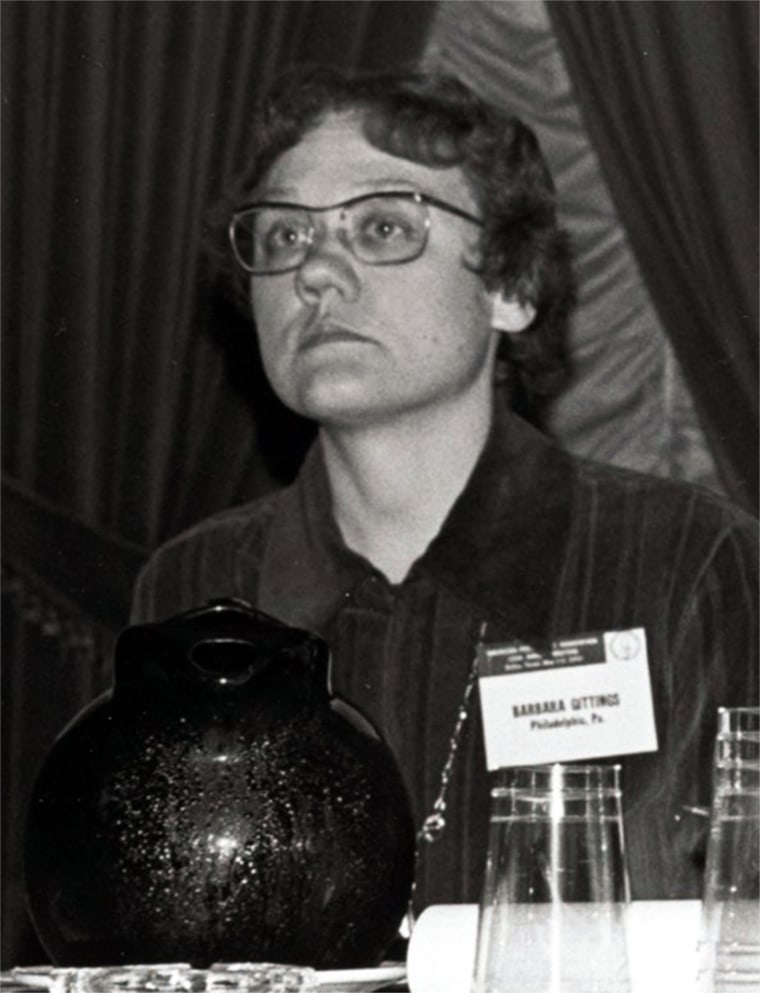
Barbara Gittings (1932-2007)
Barbara Gittings in 1972. Kay Tobin New York Public Library
Barbara Gittings, often referred to as the “mother of the LGBTQ civil rights movement,” began her activism in the late 1950s — about a decade before the first brick was thrown during the 1969 Stonewall uprising.
She founded the New York chapter of the Daughters of Bilitis and edited The Ladder, the first nationally distributed lesbian publication in America.
In the 1960s, she marched in picket lines at the White House, the State Department and Independence Hall in Philadelphia. Later, she was key in the 1973 decision by the American Psychiatric Association to end its classification of homosexuality as a mental illness. An advocate of education and books as a necessity for freedom and representation, she joined the gay caucus of the American Library Association in the 1970s. An LGBTQ library collection is named in her honor at the Independence Branch of the Free Library of Philadelphia.
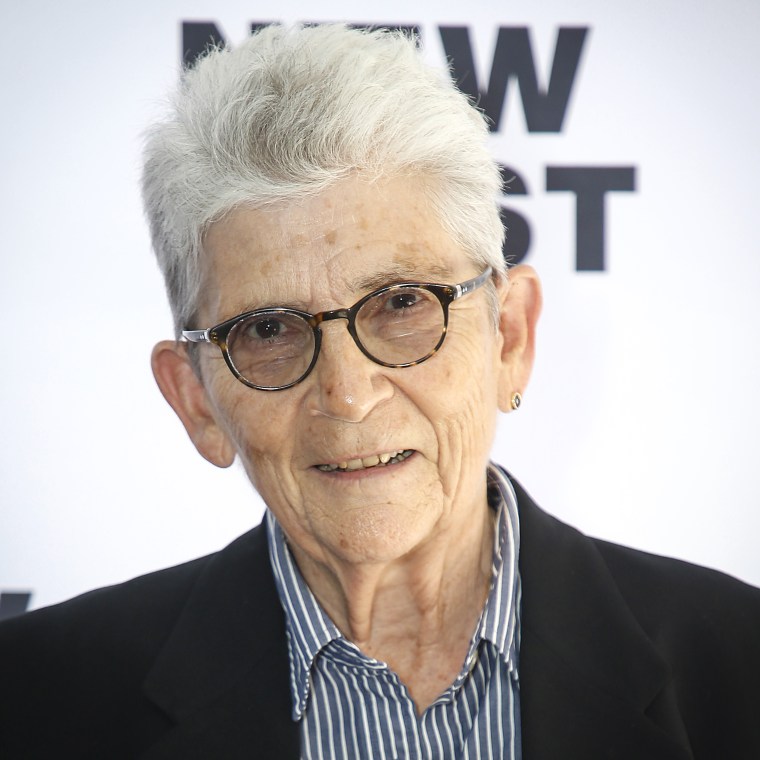
Esther Newton (Born 1940)
Esther Newton attends the screening of “Esther Newton Made Me Gay” on June 5, 2022, in New York.John Lamparski / Getty Images file
Esther Newton is an anthropologist whose 1968 dissertation was titled “The Drag Queens: A Study in Urban Anthropology,” a work that foreshadowed her career as a trailblazer questioning and challenging societal expectations of gender, sexuality and anthropological methods. Newton’s dissertation became her first book, “Mother Camp: Female Impersonators in America,” which examined the world of drag bars in the Midwest in the 1960s. It was the first anthropological study of a queer community in the U.S., and that study would lead to a lifetime of work that provided a foundation for countless LGBTQ activists and scholars.
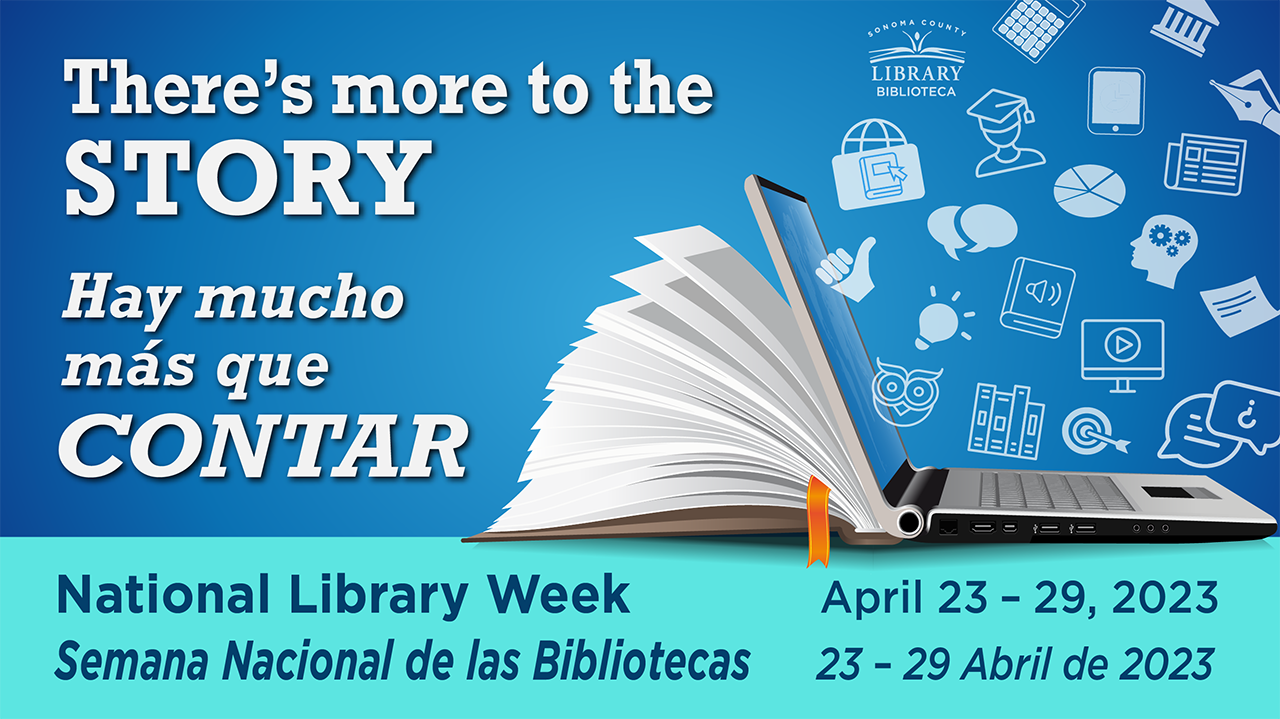
National Library Week (April 23-29) is on the horizon! Held each year in April, National Library Week is an opportunity to celebrate an audacious and remarkable idea —that information and knowledge should be accessible to anyone, anytime, absolutely free. The theme of this year’s celebration is “There’s More to the Story,” and evidence of that theme is everywhere in your local libraries. From streaming video to activities that celebrate our diversity and creativity, we meet you where you need us. Celebrate National Library Week with your library! Click here to read a note from Library Director Erika Thibault on this special week, and join us for eventsthat inspire and delight. From storytimes to book clubs, there’s something for everyone. See you soon!
Thank you for being a member of the Sonoma County Library community. Visit our online library for thousands of films, TV shows, eBooks, databases, magazines, classes, video games, and more. Be sure to check out open jobs at Sonoma County Library here. Questions? Please call your local library branch or click here to send us a message. Semana Nacional de las Bibliotecas ¡Semana Nacional de las Bibliotecas (del 23 al 29 de abril) está cerca! Celebrada cada año en abril, la Semana Nacional de las Bibliotecas es una oportunidad para celebrar una idea audaz y notable- que la la información y el conocimiento deben ser accesibles para todos en cualquier momento, absolutamente gratis. El tema de la celebración de este año is “Hay mucho más que contar,” y la evidencia de este tema se encuentra en todas las bibliotecas locales. Desde transmitir videos a actividades que celebran nuestra diversidad y creatividad, nosotros estamos preparados para apoyarlos cuando nos necesiten. ¡Celebra la Semana Nacional de las Bibliotecas con tu Biblioteca! Haz click aquí para leer un mensaje de la directora de la biblioteca Erika Thibault conmemorando esta semana tan especial y acompáñanos a los eventosque inspiran y deleitan a todos. Desde las horas de cuentos hasta los clubes de lectura, siempre habrá algo para todos. ¡Nos vemos pronto!Celebra con nosotros
Gracias por ser miembro de la comunidad de la Biblioteca del Condado de Sonoma. Visite nuestra biblioteca en línea para ver miles de películas, programas de televisión, libros electrónicos, bases de datos, revistas, clases, videojuegos y mucho más. Revise aquí los puestos disponibles en la Biblioteca del Condado de Sonoma. ¿Preguntas? Por favor llame a su biblioteca local o haga clic para mandar un mensaje.
Hungary’s president rejected a bill that would enable citizens to report anonymously same-sex families to authorities, a rare rebuke from an otherwise loyal ally of Prime Minister Viktor Orban.
The draft law approved by parliament earlier this month would allow people to report those who contest the “constitutionally recognized role of marriage and the family” and those who deny children’s rights “to an identity appropriate to their sex at birth.”
President Katalin Novak sent the bill back to parliament for reconsideration, saying that it weakens rather than strengthens constitutional protections. While lawmakers can still override Novak’s veto, her letter contains unusually sharp criticism from a member of Orban’s self-styled “illiberal” leadership.
Orbán has been clamping down on LGBTQ+ rights for more than a decade. A year after he came to power, in 2010, his party passed a new constitution that bans same-sex marriage. Later, the document was amended to bar same-sex couples from adopting children.
This has pit Budapest against Brussels, with the European Commission taking Hungary to the bloc’s highest courts for passing a law that the EU executive believes discriminates against people on the basis of their sexual orientation and gender identity.
The European Parliament and European Commission, along with more than a dozen European countries, have joined the lawsuit against the law.
It’s worth noting that after being elected, last year Novak appeared on Pat Robertson’s Christian Broadcasting Network to boast about her anti-abortion and “anti-radical gender ideology” positions.
City officials in Port St. Lucie, Florida, have canceled a planned Pride parade in anticipation of Gov. Ron DeSantis (R) signing into law a bill aimed at banning drag shows and, in the words of one state Republican, “erasing” the LGBTQ+ community. Ongoing festivities scheduled to take place this weekend will now be restricted to those who are 21 and older.
On Wednesday, Pride of the Treasure Coast, Inc., announced the move in a Facebook post, citing the current “political climate” in Florida.
Florida’s biggest LGBTQ+ organization says their state “may not be a safe place” anymore.
“After multiple meetings with city officials, it is with a heavy heart that Pride Alliance of the Treasure Coast has to announce that this weekend’s Pridefest will now be a 21 and older event,” the post read. “The city has decided that with the likelihood that the Governor will sign the latest bill into effect this evening, that we will need to be on the side of caution and has required us to make this necessary change.”
As of Friday morning, DeSantis has yet to sign the bill into law, though he is widely expected to.
“We are obviously upset and dishearten that it has come to this,” the post continued. “We also regret to announce that we will have to cancel our plans to bring back our beloved parade.”
Pride of the Treasure Coast added that they will be announcing “a family friendly Party in the Park where our youth can celebrate who they are.”
S.B. 1438, which was passed by the Florida House of Representatives in an 82–32 vote on Wednesday, prohibits government entities from issuing permits to organizations that may hold “adult live performances” in the presence of minors. The bill defines “adult live performance” as “any show, exhibition, or other presentation in front of a live audience which, in whole or in part, depicts or simulates nudity, sexual conduct, sexual excitement, or specific sexual activities… lewd conduct, or the lewd exposure of prosthetic or imitation genitals or breasts.”
While it does not specifically mention drag, Republican politicians across the country have increasingly targeted drag performances and family-friendly events like drag queen story hours, characterizing them as sexually explicit adult entertainment.
As The New Republic notes, the language of the Florida bill is so vaguely worded that Pride organizations across the state have expressed concerns that they could lose permits for their upcoming events a little over a month before the start of LGBTQ+ Pride Month in June. The American Civil Liberties Union has called the bill “an extreme governmental overreach of power.”
Friends and family are mourning Ashley Burton, a Black trans hairstylist who was murdered earlier this month.
Atlanta police reportedly found the 37-year-old’s body shortly after 4:30am on April 11 in the breezeway of her apartment complex. Investigators say she was shot inside her home before fleeing outside, where she collapsed. So far a suspect has not been named, but according to 11 Alive, police believe this was a domestic-related shooting.
One activist said she is even considering detransitioning for her own safety.
A friend told Fox 5that Burton, a South Carolina native who moved to Atlanta to pursue a career as a makeup artist and hairstylist, “was a very sweet young lady. She was very full of life really. It was always smiles and laughs with us whenever we work together.”
Burton’s mother and brother said they were unaware of any enemies she may have had and that they do not believe her gender identity had anything to do with her murder.
“Ashley was very loved all the way across the board, like from South Carolina to Atlanta,” Burton’s brother Patrick said. “The way my sibling moved in life, it was…take it or leave it. ‘This is how I am.’ You can respect it or neglect it, but Ashley put it out there and let that person know. It’s not going to be a secret.”
“I just want justice for my cousin,” she said. “I’m tired of all these incidents with transgender women just being pushed up under the rug. We are human beings.”
Burton is at least the ninth trans or nonbinary person to die by violence in the U.S. this year, according to Pittsburgh Lesbian Correspondents. The blog also notes that Burton was initially deadnamed and misgendered by both law enforcement and media following her death.
“I agree with Ashley’s cousin,” York said, “we are tired of the murders of trans women being pushed under the rug. They deserve justice, and their family, friends, and loved ones deserve closure. Local law enforcement must make solving the murders of trans people and protecting the community a priority. Our trans brothers and sisters deserve to live their lives without fear.”
Atlanta police are requesting that anyone with information about Burton’s murder call 404-577-8477.
Australian entertainer Barry Humphries, best known for his comic character Dame Edna Everage, has died aged 89. The star had been in hospital in Sydney after suffering complications following hip surgery in March. He had a fall in February.
Humphries’ most famous creation became a hit in the UK in the 1970s and landed her own TV chat show, the Dame Edna Everage Experience, in the late 1980s.
Melbourne-born Humphries moved to London in 1959, appearing in West End shows such as Maggie May and Oliver! Inspired by the absurdist, avant-garde art movement dada, he became a leading figure of the British comedy scene alongside contemporaries like Alan Bennett, Dudley Moore and Spike Milligan.
The self-described giga-star was known for her extravagant spectacles, rapier wit, rich source of double entendres, fondness for gladioli flowers and the famous greeting “Hello possums!”. Humphries also played Sir Les Patterson, an unkempt, lecherous, uncouth, drunken character who held multiple fictional diplomatic positions, including cultural attaché to the Far East and minister for the yartz (arts).
Paying tribute, Australian prime minister Anthony Albanese said: “For 89 years, Barry Humphries entertained us through a galaxy of personas, from Dame Edna to Sandy Stone. But the brightest star in that galaxy was always Barry.” A statement from Humphries’ family said: “He was completely himself until the very end, never losing his brilliant mind, his unique wit and generosity of spirit.”
In 2016, Humphries defended the philosopher and writer Germaine Greer, who described transgender women as “men who believe that they are women and have themselves castrated”. Humphries said he agreed with Greer, and mentioned Caitlyn Jenner as part of the discussion.
“I agree with Germaine! You’re a mutilated man, that’s all. Self-mutilation, what’s all this carry on?” he told The Telegraph. Three years later, Humphries claimed his position had been “grotesquely interpreted” – but didn’t not offer further clarification.
In a 2018 interview with The Spectator he also claimed that being trans is a fashion, adding: “How many different kinds of lavatory can you have? And it’s pretty evil when it’s preached to children by crazy teachers.”
Over his career, Humphries appeared in films playing characters such as the Great Goblin in The Hobbit: An Unexpected Journey and Bruce the great white shark inFinding Nemo.
He also appeared in The Rocky Horror Picture Showsequel Shock Treatment; the Spice Girls film Spice World; and had a small role in Absolutely Fabulous: The Movie.
Humphries was married four times, and had four children. His last marriage, to the actor Lizzie Spender in 1990, lasted to his death. “Why has this last marriage endured? Oh, because I’m a bit smarter now,” he once said. “The truth is I’m not a very easy person to be married to.”
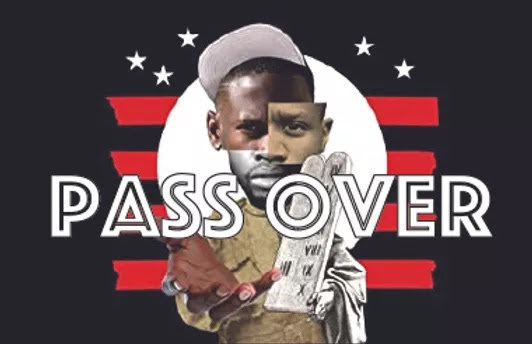
Two black men stand on an American street corner, passing the time. Woven into the familiar patterns of their small talk are their fears, dreams, and hopes for a future promised land. When their conversation is interrupted by the arrival of two strangers, everything they’ve discussed is suddenly thrown into question. With a deliberate nod to ‘Waiting for Godot,’ PASS OVER is both a joyful celebration and a powerful lament for the experience of the black man in America.Directed by Serena Elize-Flores Written by Antoinette Nwandu
A Missouri man was sentenced to nearly 22 years in prison Thursday for a hate crime after shooting a gay teen in May 2019.
Malachi Robinson, 25, shot the teen, who is referred to as M.S. in court documents, eight times after meeting him at the Kansas City Public Library and luring him into the woods under the guise of looking for a place to engage in a sexual act, according to the United States Attorney’s Office for the Western District of Missouri.
On the day Robinson met M.S., who was 16 at the time, he messaged his girlfriend about M.S. and said, “He tryna set me up on sumn now, gonna unfriend him, might shoot this boy if he try some gay shit,” according to court documents.
In the days after the shooting, Robinson told a friend in a message that he had shot someone because “he was being gay af and following me like a mf,” according to court documents. Before his arrest on June 3, 2019, Robinson Googled phrases including “how to get away with murder in real life” and the victim’s name with the word “shot,” according to the documents.
M.S. was taken to a hospital in critical condition and remained hospitalized for two weeks. The department said he has suffered “long-term effects of the shooting,” including having to undergo multiple surgeries and physical therapy. He also still has several bullets inside of him, the attorney’s office said.
As part of a plea deal, Robinson pleaded guilty to one count of a hate crime involving an attempt to kill and was sentenced to 21 years and 10 months in prison without parole, according to the plea.
“This defendant’s sentence holds him accountable for the violent and callous hate crime perpetrated against a defenseless teenager targeted because of their LGBTQ+ status,” Assistant Attorney General Kristen Clarke of the Justice Department’s Civil Rights Division said in a news release. “Recent FBI data makes clear that hate crimes targeting the LGBTQ+ community persist and this sentence should send a strong message to the perpetrators of these crimes that they will be held accountable.”
The FBI’s supplemental 2021 hate crime statistics found that hate crimes increased 11.6% nationally from 8,120 in 2020 to 9,065 in 2021. Out of over 10,500 single-bias incidents involving 12,411 victims, the majority — 64.5% — were targeted due to the offenders’ bias against their race, ethnicity or ancestry, followed by 15.9% who were targeted because of the offenders’ bias against their sexual orientation, 14.1% who were targeted because of the offenders’ bias against their religion, and 3.2% who were targeted due to the offenders’ bias against their gender identity.
Over the last two years, LGBTQ people, venues and events have increasingly become the targets of violence.