Facebook reportedly refused to take action on posts that called for the murder of LGBT+ people, according to activists.
LGBT+ activists across the Middle East and North Africa (MENA) have called on Facebook to tackle hate speech, including posts that call for the murder of queer people.
But, the platform reportedly found that they did not “contradict community standards”.
Activists and rights groups wrote an open letter to Facebook in the wake of the death of Sara Hegazy, an Egyptian LGBT+ activist who was jailed and tortured for raising a Pride flag at a concert, and then tragically died by suicide.
The letter said: “Although the MENA LGBTQI+ community has been reporting thousands of Arabic hate speech posts … most of these reports were declined because the content ‘did not contradict the Facebook community standards’.
“This is due to the lax implementation of effective anti-hate speech policies to manage the platform in our region, which makes the platform unsafe for sexual minorities.
“While the right to equal treatment and non-discrimination is a fundamental right enshrined in international treaties and covenants, it should be ensured that a mechanism exists to ensure that complaints from victims of hate speech in the region are examined without violating freedom of expression.”
If you think it’s your right to act on homosexuality, then it’s my right to throw you off the roof.
Activists provided Gay Star News with examples of posts that were reported to Facebook, including one which, when translated from Arabic, read: “If you think it’s your right to act on sodomy/homosexuality, then it’s my right to throw you off the roof.”
Another profile had a photo of a white stick figure kicking a rainbow stick figure in the stomach, with a cover photo of a burning Pride flag.
Adam Muhammed, executive director of the LGBT+ rights group ATYAF Collective in Morocco, told Reuters: “In the US and Europe, there is no room to spread hate speech against any sexual orientation, race, religion, sect or any other social group.
“We addressed a letter to Facebook asking its management to implement the same policy here as it uses in other countries.”
In response, Facebook said that it removed hate speech in more than 50 languages, including Arabic, and that 90 per cent of it was blocked before users reported it.
It added: “We know we have more work to do here and we’ll continue to work closely with members of the LGBTQI+ community in the Middle East and North Africa to develop our tools, technology and policies.”
Calls for Facebook to remove hate speech and disinformation go global.
Facebook is facing increasing pressure around the world to address hate speech and the spread of disinformation.
On June 17, civil rights groups Anti-Defamation League, the NAACP, Free Press, and Color of Change began a campaign called Stop Hate for Profitwhich urged companies to pause their advertising on Facebook and Instagram in an attempt to force them to reconsider their policies.
Stop Hate for Profit said: “What would you do with $70 billion? We know what Facebook did.
“They allowed incitement to violence against protesters fighting for racial justice in America in the wake of George Floyd, Breonna Taylor, Tony McDade, Ahmaud Arbery, Rayshard Brooks and so many others.
“They named Breitbart News a ‘trusted news source’ and made The Daily Callera ‘fact checker’ despite both publications having records of working with known white nationalists.
“They turned a blind eye to blatant voter suppression on their platform.
“Could they protect and support Black users? Could they call out Holocaust denial as hate? Could they help get out the vote?
“They absolutely could. But they are actively choosing not to do so.”
Companies including Adidas, Puma, Vans, Ben & Jerry’s, Levi’s, Verizon and Unilever have all vowed to pull advertising from Facebook during July.
In response to the mass boycott, Facebook founder Mark Zuckerberg said the company would put “warning labels” on posts, but would not stop the content being posted.
According to Out, Zuckerberg said Facebook users should be free to condemn content as “this is an important part of how we discuss what’s acceptable in our society”.
Police in Russia have detained over 30 people for protesting the arrest of Yulia Tsvetkova, an LGBT+ and feminist activist charged with spreading ‘gay propaganda’.
Yulia Tsvetkova, 27, faces a six year sentence for running a social media page called Vagina Monologues, which encouraged people to share artistic depictions of vaginas to “remove the taboo”.
She was charged with the distribution of “criminal pornography” under Russia’s gay propaganda law, which prohibits the positive depiction of LGBT+ people.
On Saturday (June 27) more than 30 people, mostly women, gathered in in central Moscow to stage separate one-person protests against Tsvetkova’s charges.
Participants stood in line to picket one at a time, with one holding a placard that read: “Today they send [us] to prison for pictures, tomorrow they will send [us] to prison for letters? Freedom for Yulia Tsvetkova!”
According to the OVD-Info group that monitors political arrests in Russia, at least 38 people were detained and taken to a police station. It was not clear if they would be charged.
Russian law usually permits single pickets to be held without permission, but in recent weeks there have been numerous cases of police arresting protesters on the grounds that they violated the ban on mass gatherings imposed during the pandemic.
Police declined to comment on the arrests when questioned by The Guardianon Saturday.
Russia is currently in the midst of a referendum a package of constitutional amendments that will take Russia’s opposition to homosexuality a step further by enshrining traditional “family values” as part of the constitution.
Among the amendments proposed by Putin is one that would legally define marriage as a union between a man and a woman. Russian LGBT+ activists fear that, if passed, it would permanently block same-sex marriage or adoption from ever being legalised in the country.
The referendum has been accompanied by a wave of homophobic rhetoric and viral campaign ads denouncing the LGBT+ community.
A Lyft passenger launched into a racist and homophobic verbal tirade against his driver simply because he was asked to wear a face mask.
A May 28 ride in Reno, Nevada, saw a passenger identified as Richard board driver Edgar’s vehicle. Edgar wore a mask while Richard, according to the dash-came footage seen by TMZ, did not.
When the driver politely asked the passenger to strap on a mask – a crucial tool in the fight to contain the coronavirus pandemic – he exploded into a racist and homophobic rant.
“You believe in that shit?” Richard asked the driver.
“Yes, I do because I have family who are sick from that [coronavirus],” Edgar replied.
Footage then shows Richard griping about the government, saying he doesn’t “trust” officials and that “it’s not the government – it’s the people who are getting sick”.
“It’s because we are really close right here in the car,” he said, before criticising Edgar for following the route to his destination as instructed by the Lyft driver app.
Eventually driver Edgar pulled over to ask his passenger to exit the vehicle. Richard refused, saying he had “a contract”.
“You represent Lyft, you little candy-ass faggot in your white glasses,” video shows him shouting.
“I should just f**king crush your f**king skull right now.”
He then mocked Edgar’s accent, calling him a “f***ing wetback [a slur used against people from Central or Latin America]” and claiming: “I’m an American, motherf***er. I fought three times in a goddamn war.
“Why are you [charging] me for a full-ride when you only gave me 100 yards of ride? How is that considered to be fair? Is that considered fair in your country?”
“Yes, because this is my country, too,” Edgar responded, before Richard finally exited the vehicle.
A representative from Lyft said of the alarming video: “The behaviour shown by the rider in this video is despicable and has no place on the Lyft platform.
“Lyft is committed to maintaining an inclusive and welcoming community, and discrimination is not tolerated.”
The necessity that comes with wearing a mask has emerged as a high water point for small pockets of Americans, roiled by state officials ordering people to wear face coverings which they see as an open challenge against the freedom and liberty they have long associated with America.
Lockdown measures have inflamed deep-seated tensions in the US. (KAMIL KRZACZYNSKI/AFP via Getty Images)
Recent weeks have brought with them footage of aggrieved supermarket tellers and security hurrying enraged customers refusing to wear masks out of stores. But with state officials and local authorities hastily loosening lockdown rules, the need to wear a mask is greater than ever before, health experts stress.
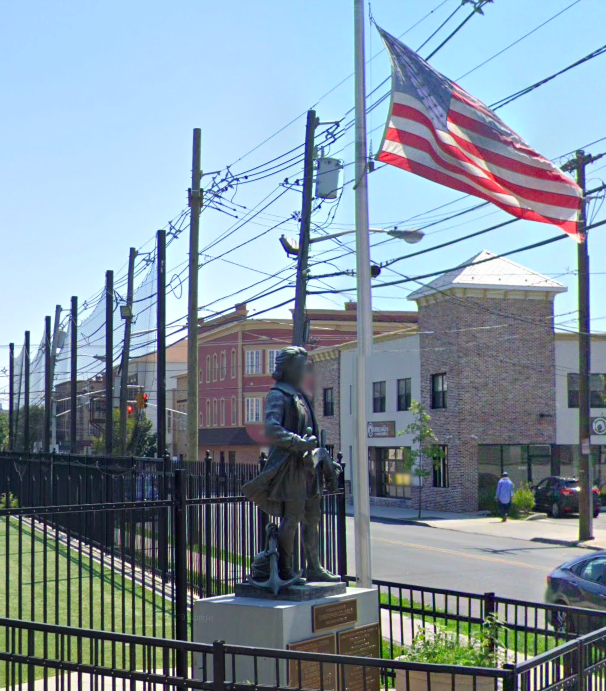
Over 3,500 people have backed a petition to replace a New Jersey city’s Christopher Columbus statue with one of Black trans activist Marsha P Johnson.
The Christopher Columbus statue has stood in Marsha P Johnson’s home town of Elizabeth, New Jersey since 1971, but petitioners say a tribute to her would be far more fitting in light of the explorer’s problematic history.
Johnson left the town in her late teens with nothing but a bag of clothes and a few dollars to her name. She moved to New York where she became one of the central figures of the LGBT+ rights movement, and many locals feel it’s time her achievements were recognised.
“I’ve always said that Marsha was more recognised in New York City and around the world than she is in her own hometown,” her nephew, Al Michaels, told CNN.
The petition was created by 19-year-old Celine Da Silva, who also grew up in Elizabeth.
“We should commemorate Marsha P Johnson for the incredible things she did in her lifetime and for the inspiration she is to members of the LGBT+ community worldwide, especially Black trans women,” she wrote on Change.org.
“It tells me that times are changing. People are becoming more accepting to people who identify as LGBT+,” she said. “It tells me that people are realising how whitewashed our history is and how some figures that we learn about, we don’t learn everything about them.”
The nearby New Jersey towns of Camden and West Orange both moved to take down memorials to Christopher Columbus earlier this month, with the mayor of Camden saying the statue had “long pained the residents of the community.”
Both communities are still working out what should be erected as a replacement. Da Silva says local minority heroes like Marsha P Johnson are the perfect choice, and plans to bring her request to the city council.
“Obviously we’re not asking the city council to consider putting up a statue. This is a demand,” said Da Silva’s boyfriend Daniel Cano, who helped form the petition.
“Ultimately, a statue is going to come up no matter what. And we’re going to honour Marsha in the way that she deserves to be honoured.”
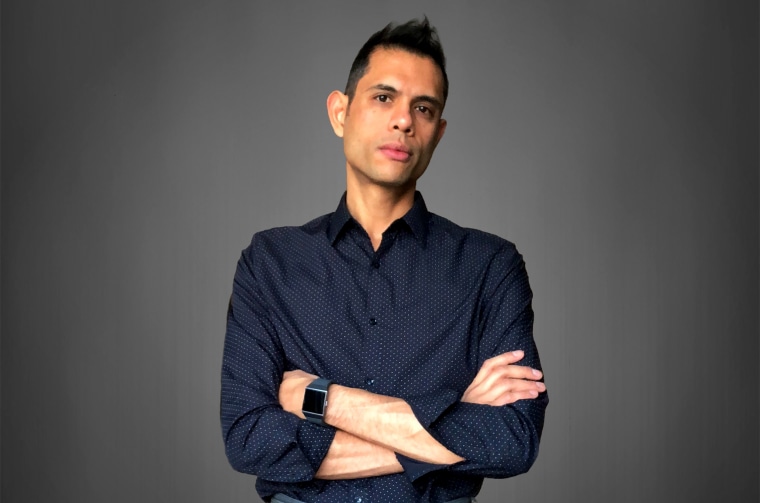
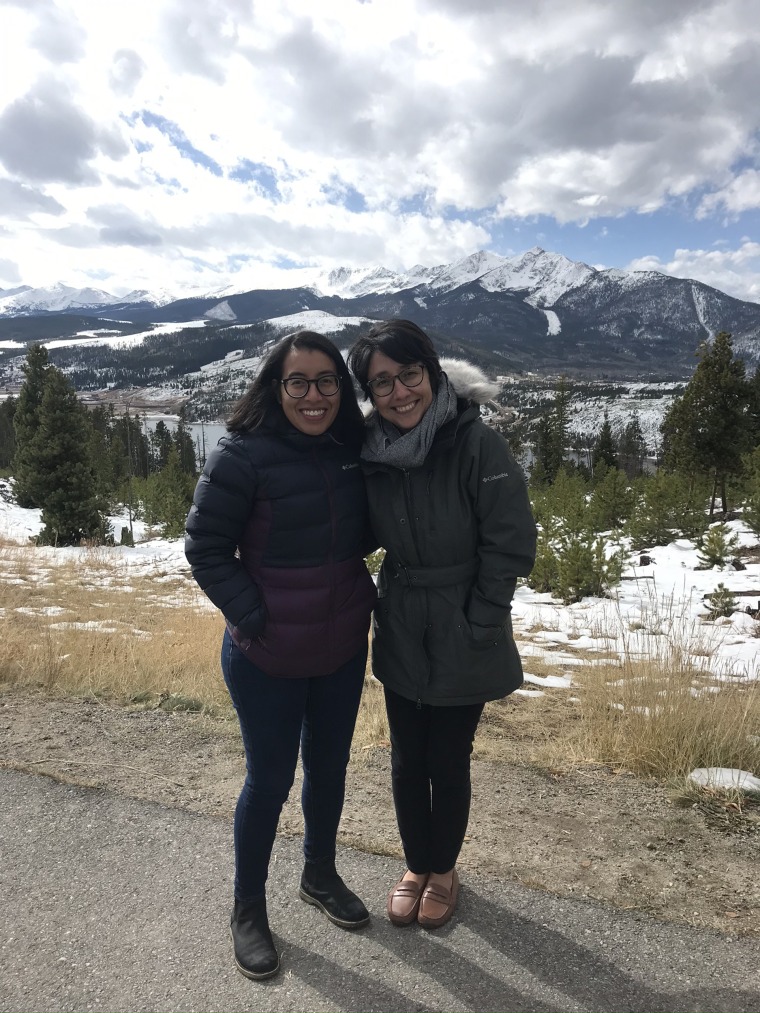
When Jun Young came out at the age of 45, he thought back to his childhood.
He was raised in a Catholic household in the Philippines, where he was taught early on that being gay was against God’s will. So when he realized around the age of 12 that he was attracted to other boys, he kept it locked away for more than three decades.
“I felt like I didn’t really have a choice,” Young told NBC Asian America. “I couldn’t really come out or accept that I was gay or even explore what that meant without giving up my faith. And my faith was so important to me and continues to be important to me.”
Jun Young is the founder of Beloved Arise, a Christian group that celebrates LGBTQ+ youth of faith. The group is hosting the first Queer Youth of Faith Day on Tuesday.Zoey Vong
Today, he sees that many LGBTQ Christian youth in the U.S. still feel reluctant to come out because of their faith — and that there are few resources to help them.
“That’s when I decided I want to help my younger self,” said Young, 47, who is based in Seattle. “What would I have wanted growing up as a teenager?”
Young this year launched Beloved Arise, a Christian group that celebrates and empowers LGBTQ youth of faith. Through online events, regular meetings, publications and social media, Beloved Arise encourages youth to be proud of being LGBTQ and to see themselves as part of “God’s creation” and worthy of celebration, the organization says.
To mark Pride Month, the group is hosting a Queer Youth of Faith Day on Tuesday to celebrate LGBTQ youth from all faiths. Along with several cosponsors, Beloved Arise will use the event to affirm youth and let them know they are loved for exactly who they are, Young said. There will also be a virtual gathering for queer youth to share their stories and to announce the winners of an essay contest held this year.
Young said he hopes the event will allow people to initiate conversations about LGBTQ acceptance with their faith communities.
Download the NBC News app for breaking news and alerts
Research from a cosponsor of the event, The Trevor Project, an LGBTQ crisis intervention and suicide prevention organization, found that 1 in 4 LGBTQ+ youth report that religion is important or very important to them. But those who hear their parents’ using religion to say negative things about being LGBTQ face a higher risk of attempting suicide.
“In some cases, that affirming adult can be a faith leader, whether that’s somebody who’s in their church, a minister, imam, rabbi,” said Casey Pick, senior fellow for advocacy and government affairs at The Trevor Project. “Having places that are explicitly LGBTQ-plus-affirming goes a long way toward healing some of the deep wounds that too many LGBTQ-plus people have associated with religion and faith.”
Maliha Khan, director of the Washington, D.C., chapter of Muslims for Progressive Values, another cosponsor, said LGBTQ people are a big part of the community her group serves, and she welcomed the opportunity to collaborate.
“We’ve seen a lot of people of faith move away from traditional spaces of worship, and oftentimes that’s because their values don’t align with what’s being taught at those spaces,” she said.
When Young decided to come out about a year and a half ago, he was a father of two children and had ended a 20-year marriage to a woman a few years earlier. While his family was accepting, he was soon removed as board president at a Christian nonprofit organization.
Young, who is now Protestant Christian, credits his decision to come out to LGBTQ-affirming theology, which he had spent some time exploring a few years ago.
The Bible is full of discussions of love and justice and standing with the oppressed and the marginalized, but he noted that only a few verses directly address same-sex acts.
“Why would I focus on that if I can lead with Jesus’ command, which is to love each other? It surprises me how we miss that so much,” he said.
When the Supreme Court ruled this month that job discrimination on the basis of sexual orientation or transgender status is illegal, it was a meaningful for Young, who has experienced that type of discrimination.
“It gives me hope that LGBTQ-plus youth will enter workplaces that are safe and inclusive to all people, including sexual minorities,” he said.
Now four months old, Young’s organization has about three dozen LGBTQ youth and allies from Hawaii to Mississippi regularly attend its weekly virtual gatherings. He estimates that 20 percent are Asian Americans and that a third are people of color.
The meetings, which typically run about two hours, offer youth a space to play games, worship and discuss topics like what it means to be LGBTQ as a Christian, said Lucy Roedel, one of the young people involved in the group.
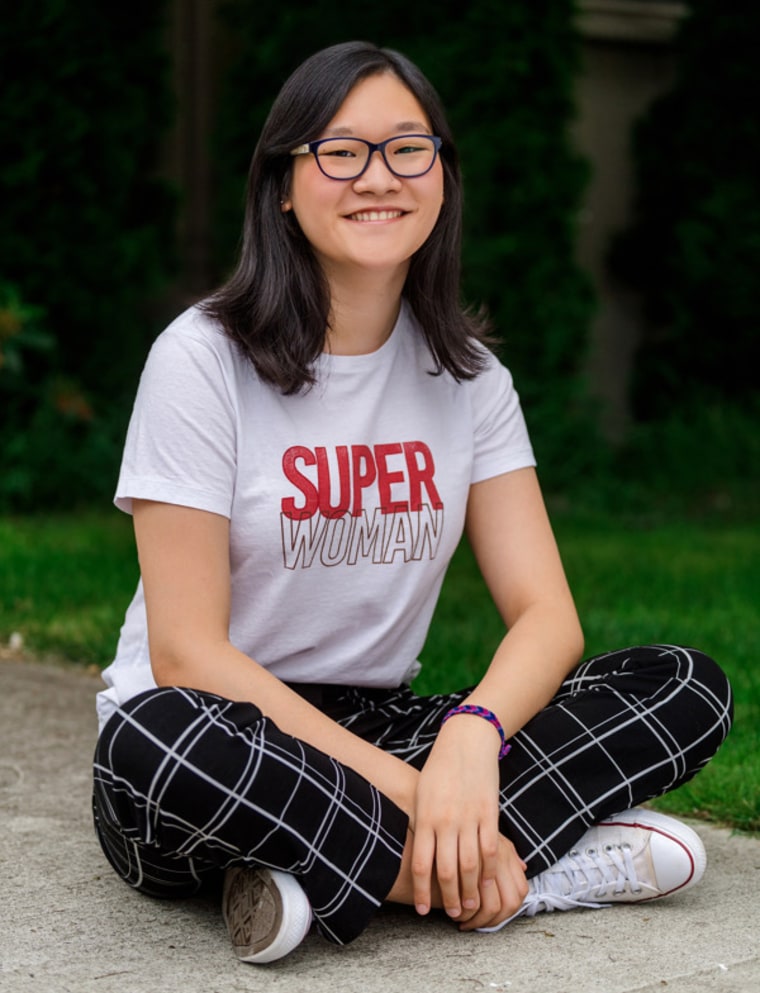
Lucy Roedel, 18, is one of the youth involved with Beloved Arise.Studio B Portraits
Roedel, 18, said having a community of LGBTQ youth and allies through Beloved Arise has become an important part of her life. Her family had always been supportive of her sexuality since she came out, she said, but she didn’t feel the same way about her faith community.
Roedel, who was raised in a Christian household in Seattle, was an active volunteer at her church until late last year, when, she said, she was required to formally agree to teach that marriage is between one man and one woman.
That led her to make the difficult decision to leave the church she had attended for her entire life, she said.
“It was very hard for me, because I had always supported my senior pastor and really liked him and liked hearing him preach,” she said. “It was earth-shattering to go from listening to him every week to not even going to church, just knowing that the church didn’t agree with who I was at all.”
Although Beloved Arise is a Christian group, Young said he someday hopes to expand it to become a multifaith organization.
“Faith is something that for a lot of people adds value to their life,” he said. “And that should never be taken away just because someone has a point of view that is not compatible with your faith.”
If LGBTQ nonprofit organizations disappeared for even a single day, hundreds of thousands of LGBTQ people — especially the most vulnerable — would be cut off from health care, shelter, food, safety, and community. Today, in the midst of COVID-19 and economic collapse, our community’s nonprofits are truly and profoundly more important than ever before.
These organizations need our help. This Pride Month, we can all step up and support these organizations for Give OUT Day, the only national day of giving for the LGBTQ community. This year, over 475 LGBTQ nonprofits are participating, spanning nearly every state, D.C. and Puerto Rico, and working in every facet of queer life, from advocacy groups to community centers to performance troupes.
In the face of an unprecedented public health and economic crisis, we see these organizations working relentlessly to keep LGBTQ people healthy, delivering food to at-risk seniors and retooling their mental health services — in a matter of days — for our new world of physical distancing. We see them providing critical services, granting stipends to those who’ve suddenly lost income and finding housing for youth who are sheltered in place in abusive homes.
As the pandemic forces many of us physically apart, these organizations are offering — virtually — a sense of community, holding online spaces for healing, performance, and connection, more important now than ever.
And as protests over police brutality and systemic racism continue to grow, we see these organizations elevating Black LGBTQ voices, taking to the streets in allyship, and loudly joining calls for racial justice.
We also see how much these organizations need your help. In fact, in a survey of nonprofits by Charity Navigator and Reuters News, 83% of respondents reported that they are suffering financially due to the pandemic.
That’s where Give OUT Day comes in — and just when it’s needed most.During all of Pride Month, until 11:59 p.m. EDT on Give OUT Day (June 30), all donations to participating nonprofits on giveoutday.org help these organizations do this critical work. But Give OUT Day donations go even further: The organizations that earn the most individual donors win additional prize grants that boost their impact.
Participating in Give OUT Day is a simple way to show your pride and make a difference. Here’s how you can take part:
Right now, visit giveoutday.org/search to select which organizations you want to support. Click “donate,” and use the shopping cart to support multiple nonprofits in a single transaction.
Go a step further and click “fundraise.” Launch a fundraiser for a favorite organization by using this toolkit, and maximize your impact by reaching out to your network.
Whether or not you have the ability to donate, share giveoutday.org on social media to encourage your friends to give, especially on Give OUT Day, June 30.
Remember, though it looks different this year, Pride isn’t canceled. Show your pride by making a gift, starting a fundraiser, and sharing about Give OUT Day. You’ll support the LGBTQ community at a time of profound need — and unprecedented action.
Roger Doughty is the President of Horizons Foundation, the organizer of Give OUT Day. Celebrating its 40th anniversary, Horizons is the world’s first community foundation of, by, and for LGBTQ people.
On her wedding day, Nicole Castillo knew that she was making a mistake. She was 20 years old, and both she and her husband knew that she was not straight.
“But at the time, it didn’t feel like it was an option to not be married, and to come out,” she said. “I was concerned about harming my family, and I stayed in that marriage for some time.”
Nicole Castillo, right with her partner Katherine Rocchio.Courtesy Nicole Castillo
It took Castillo, now 36, until her mid-20s to understand her sexual orientation. “I was from a generation with almost no LGBT visibility. I didn’t know of any gay or queer women.”
As Pride Month winds down, Latinx LGBTQ people report a mixture of optimism and concern for their communities, on issues ranging from the Black Lives Matter movement to violence against transgender people.
Latinx LGBTQ people say that they see significant progress in the struggle for equality, yet stress that the fight for their rights is far from over.
Castillo, from Colorado, said she doesn’t mind that in-person Pride celebrations have been canceled due to the COVID-19 pandemic. “The Pride events are great, but they have become very mainstream, and it sometimes seems like the important issues can get lost.”
In contrast, she noted, “the Black Lives Matter protests are the most immediate, the most raw. That feels in a way more authentic that what Pride has become.”
From Stonewall to increased visibility
The Latino LGBTQ community has a rich heritage of activism. The first openly gay candidate for public office in the U.S. was Jose Julio Sarria, who ran for the San Francisco Board of Supervisors in 1961. In New York, one of the people credited with starting the 1969 Stonewall Riots — which helped inspire the beginning of the LGBT rights movement — was Sylvia Rivera, a transgender Puerto Rican woman.
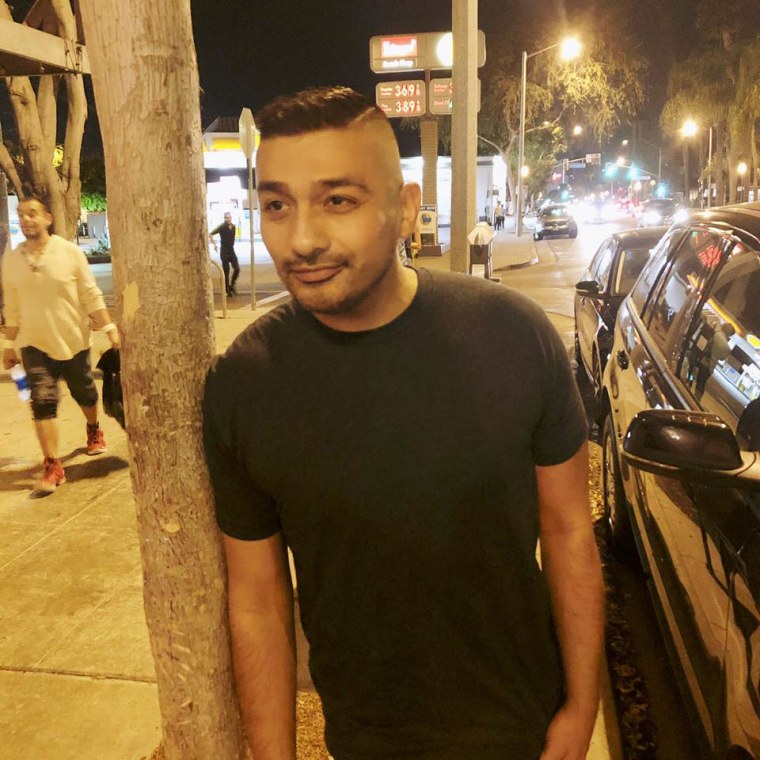
In Los Angeles, Robbie Rodriguez, 38, program director for Equality California, said that the last several years have been challenging for Latinx LGBTQ people.
“We have dealt with the very hostile Trump/Pence administration, which has not made me feel great as a Latinx gay man,” Rodriguez said. “Almost every day, the president incites fear and emboldens bigots to be open with racism, homophobia and transphobia.”
Robbie Rodriguez, of Los Angeles, works for Equality California.Courtesy Robbie Rodriguez
But Rodriguez is feeling optimistic because of two recent Supreme Court rulings, one that makes it illegal for employers to discriminate against people on the basis of sexual orientation and gender identity, and the other temporarily preserving DACA, the program that has granted deportation relief to young immigrants. “And we should look at the sense of solidarity that has developed in the community as a result of police brutality against African Americans,” he said. “I’ve been pleasantly surprised at the LGBTQ+ community showing up and showing allyship to the Black community, and lifting up their experiences.”
The visibility of Latinx LGBTQ characters in the media is heartening to Rodriguez, who recalled watching “The Real World” on MTV when he was a kid. “I watched the show with my family, and I remember seeing Pedro Zamora, who was out and HIV-positive. That meant a lot to me.”
In recent years, there has been increased Latinx LGBTQ representation on television, on shows like “Pose,” “One Day at a Time,” and “Love, Victor.” A 2019 GLAAD report found that the percentage of Latinx LGBTQ characters had increased on broadcast and cable, though the percentages on streaming dropped.
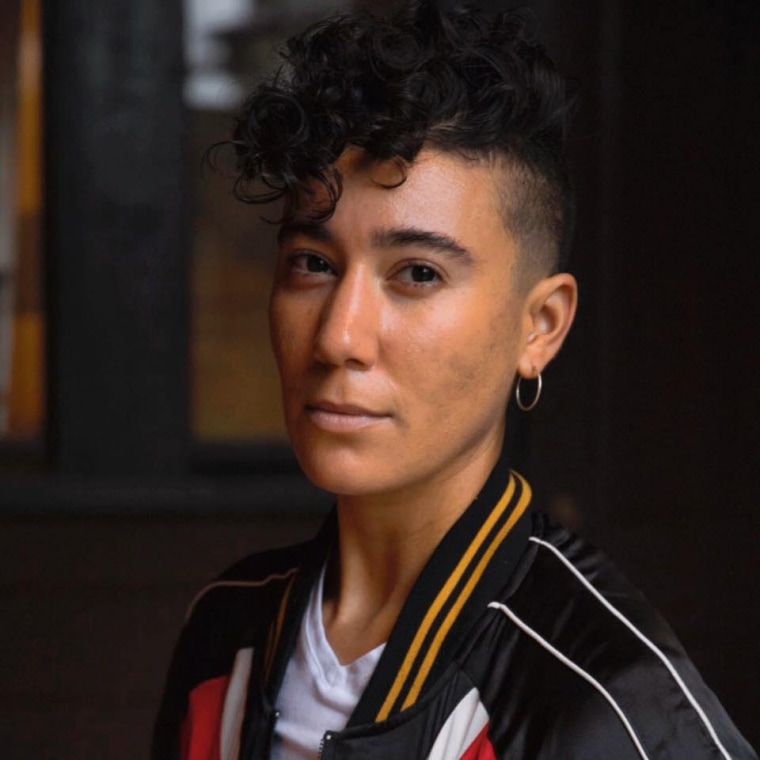
Vico Ortiz has appeared on shows like “Vida” and “American Horror Story.”Courtesy These/Thems
Vico Ortiz, a performer in Los Angeles who has appeared on shows like “Vida” and “American Horror Story,” has seen a shift in the public views of LGBTQ people—and believes that the entertainment industry plays a major role. “Having shows with queer characters is important. People who might not know any queer people see these shows, and hopefully that opens up conversations from a place of empathy and compassion.”
Ortiz, a millennial who identifies as nonbinary, describes the last few weeks as a whirlwind. “The anti-discrimination ruling at the Supreme Court was amazing, but literally two days before that, the Trump administration announced that it was taking away health care for transgender people. It’s like whiplash on your heart; we make fantastic strides, and then other stuff happens. It is frustrating; I want future queer youth not to have to deal with any of these issues.”
Ortiz noted the absence of in-person Pride events this year, but said that the Black Lives Matter movement was, for now, more important. “We might be missing some glitter parties, but we wouldn’t have Pride without riots and protests.”
Ortiz felt a heaviness on June 12, the fourth anniversary of the Pulse nightclub shooting in Orlando, Florida, that left 49 people dead. “I was also thinking of the queer people who may be isolating or quarantined with nonsupportive people.”
‘Fight harder, stronger and fiercer’
Like other Americans, Latinx LGBTQ people are facing the ongoing threat of the coronavirus. The pandemic has disproportionately affected Latinos, putting their health and economic well-being at risk.
For Dr. Rafael Campo, 55, the pandemic carries echoes of a previous health crisis that struck the Latinx LGBTQ community. Campo, who teaches and practices medicine at Harvard Medical School, graduated before drug treatments for HIV/AIDS had been developed.
“There is a sad resonance in the way that HIV/AIDS originally impacted the Latinx LGBTQ population, and what is happening with coronavirus now,” he said, pointing out parallels in the lack of government response, the lack of access to care, the stigma of infection and the health disparities. “How these two very different viruses impact communities of color is part of the symmetry.”
At times, Campo has felt beleaguered by the trials that the Latinx LGBTQ community seems to be facing. Some of his patients who survived the AIDS epidemic feel a sense of renewed trauma, because they are now at risk for COVID-19. “But there are reasons to be hopeful. The demonstrations and activism around racial justice show the strength of our communities. Adverse circumstances can really bring us together and help our communities to become stronger and better.“
“We carry pride within ourselves—and no one can take that away.”
In Puerto Rico, the human rights activist Pedro Julio Serrano, 45, is concerned with the ongoing violence against transgender people, which in his view is not getting the media attention it deserves. “All over the U.S., members of the transgender community are being killed, and this doesn’t occur in a vacuum. Trump’s bigotry and divisive language has contributed to this cycle of violence. “
Puerto Rico’s new civil code, which defines myriad aspects of everyday life, is another issue that is deeply troubling to Serrano. The update coded has been controversial because it potentially could be used to take away LGBTQ rights. “It makes us invisible,” Serrano said. “It no longer includes discrimination protections. Many legal experts say it is inconsistent and poorly written, a judicial mess.”
The Latino LGBTQ community remains committed to the struggle for full equality, Serrano said. “We are going to come back and fight harder, stronger and fiercer.”
Likewise, Serrano said that losing the in-person Pride events was just a temporary setback. “For sure, when you are with other people you feel empowered and you feel solidarity. But you cannot cancel true pride. It is the product of many victories and struggles. We carry pride within ourselves — and no one can take that away.”
Black queer trailblazers have changed the course of history with their contributions to activism, culture and the arts, but many of these pioneers are still fighting for their place in the history books. While some, like James Baldwin and Audre Lorde, have garnered some level of acclaim, many of their stories remain under-researched and untold.
When the LGBTQ community began to record its history with some level of consistency in the 20th century, most of the documented narratives were those of white and cisgender men. It took longer for women, people of color and gender-nonconforming individuals to get their due.
In recognition of Pride Month and the anti-racism protests that have swept the United States, we asked historians and scholars which Black lesbian, gay, bisexual, transgender and queer figures they would like to see uplifted and celebrated.
‘Black lesbian icon’
Mabel Hampton, a Black lesbian activist, was active during the Harlem Renaissance of the 1920s, before later going on to participate in the first national gay and lesbian march on Washington in 1979. Saidiya Hartman, a professor of English and comparative literature at Columbia University, said Hampton was a “Black lesbian icon” who witnessed a “radical transformation in the discourse around queer identity” leading to the “emergence of pride” in the years following the Stonewall riots.
“Hampton’s life bridged this really interesting period in which intimate and sexual mores were being contested in the early part of the 20th century to the total declaration of queer pride in the 1980s,” Hartman told NBC News.
As a prominent intellectual and a dancer who performed with fellow Black lesbian luminaries like comedian Jackie “Moms” Mabley, Hartman said Hampton’s experiences illustrate the “networks of sociality which sustained Black queer life.” Hampton cleaned the houses of white families in New York City to earn an income, while she and her longtime partner, Lillian B. Foster, often passed as sisters in order to access government benefits during an era where there were few protections for same-sex couples. Hartman said these “forms of subterfuge were required in order for communities to thrive.”
Perhaps most importantly, Hampton kept notebooks detailing the contributions of Black queer people to the Harlem Renaissance, names that included performers Ethel Waters and Gladys Bentleyand poet Langston Hughes. Today, those records are housed in the Lesbian Herstory Archives in New York, and Hartman said they are a testament to an oft-repeated quote from historian Henry Louis Gates that the Harlem Renaissance was “surely as gay as it was Black.”
“I value the lives and the brilliance of these everyday intellectuals who were trying to build a way of existing that was outside the norm but were also creating a path for a younger generation of radical thinkers, queer activists and feminist scholars,” she added.
Ballroom culture’s ‘great innovator’
Phil Black was another early trailblazer who helped pave the way for future generations of LGBTQ people to thrive. A drag performer, Black threw the first Funmakers Ball in November 1947, in which queer and transgender entrants, the vast majority of which were people of color, would compete in pageants that combined drag, dance and other modes of performance. Sydney Baloue, a producer of HBO Max’s ballroom competition series, “Legendary,” told NBC News that these events “helped set the groundwork” for what would become New York City’s ballroom scene, as famously depicted in the 1990 documentary “Paris Is Burning.”
“Phil Black opened up doors for people like Pepper LaBeija, Dorian Corey, Paris Dupree, Angie Xtravaganza and Avis Pendarvis, who are the mothers of the ballroom community,” said Baloue, who is currently working on a book chronicling the ballroom scene. “Black is an even greater elder in that lineage.”
In the decades following Black’s pioneering work, voguing balls became critical venues where marginalized LGBTQ people could find community. Although the pageants were rooted in what Baloue described as “creative competition,” competitors faced off against one another by forming their own “houses” — which is less a physical structure than a space where members, or “families,” can collaborate to develop a signature style. These houses emphasize the idea that an individual’s chosen family can be a space for innovation, Baloue said.
“For many of us, balls are our lifeline,” he continued. “For many of us, we’re not always understood by our biological families. It’s really important for us to have a sense of family, just like anybody else.”
Although Black’s name is largely unknown today, his role in hosting and promoting the balls — which took place at the former Rockland Palace in Harlem — briefly made him one of the most notable LGBTQ people in the world. Black was frequently featured in magazines like Jet and Ebony alongside their coverage of the ball scene, but Baloue said less attention has been paid to his presence in the archives for the same reason that Black LGBTQ people are “not put in history books in the same way that straight people and white people generally are.”
Baloue said creating space in the historical narrative for figures like Phil Black would show LGBTQ people of color that their communities have been “great entrepreneurs and great innovators in so many ways.”
“Honoring stories like his is really important,” he said. “We have a longer history than people realize.”
Pioneer of ‘nonviolent methods of protest’
Civil rights leader Bayard Rustin is best known for helping to organize the 1963 March on Washington for Jobs and Freedom, along with Martin Luther King Jr.
Umi Hsu, director of content strategy at the ONE Archives Foundation, which helps preserve LGBTQ history, said Rustin influenced King’s “nonviolent methods of protest” by telling him about the work of Mahatma Gandhi, who led the campaign for India’s independence from Britain through peaceful demonstration.
“What’s interesting about Rustin is that while he was doing such important work, he actually had a hard time as a gay man,” Hsu said. “That put him in a position where he was forced out of civil rights organizing work eventually.”
Rustin served nearly two months in jail after being arrested in 1953 for having sex in a parked car after giving a lecture in Pasadena, California. At the time, homosexuality was illegal in California. Although he was originally arrested on charges of lewd conduct and vagrancy, which were frequently used to target sex workers, he was eventually tried on a lesser crime of “sex perversion” (though earlier this year California’s governor pardoned him). Rustin had always been open about his sexual orientation, but the arrest brought renewed focus on his personal life — with Sen. Strom Thurmond, then a Democrat of South Carolina, attacking Rustin as a “sex pervert” on the Senate floor.
Rustin’s place within the civil rights movement would become a subject of contention, with NAACP Chairman Roy Wilkins urging organizers to downplay Rustin’s contributions to the March on Washington. However, Rustin would continue fighting for equal rights in the decades to come: In 1986, he spoke on behalf of a proposed bill to ban discrimination on the basis of sexual orientation in the state of New York. A version of the legislation wouldn’t pass until 2002, 15 years after Rustin’s death, and it wouldn’t include gender identity until 2019.
Hsu said Rustin’s activism is an important reminder that queer people of color experience “double the amount of oppressions but also there’s double the power when these politics are addressed.” Hsu pointed to Marsha P. Johnson, Stormé DeLarverie, Miss Major Griffin-Gracy and Sir Lady Java as Black trans and gender-nonconforming people “also working in that space” in the 1960s. Sir Lady Java, perhaps the least known of the four, was a nightclub performer who protested L.A.’s cross-dressing law. While the courts rejected her lawsuit trying to overturn the law, her efforts eventually led to the formation of the American Civil Liberties Union’s LGBTQ rights program.
“When people have a marginal status in more than one social category, it doesn’t mean that they don’t have any room to participate,” Hsu said. “It’s important to really focus on people who are intersectionally marginalized because this is where we can see the truths of how oppression systems work.”
‘First Black woman to demonstrate for gay rights’
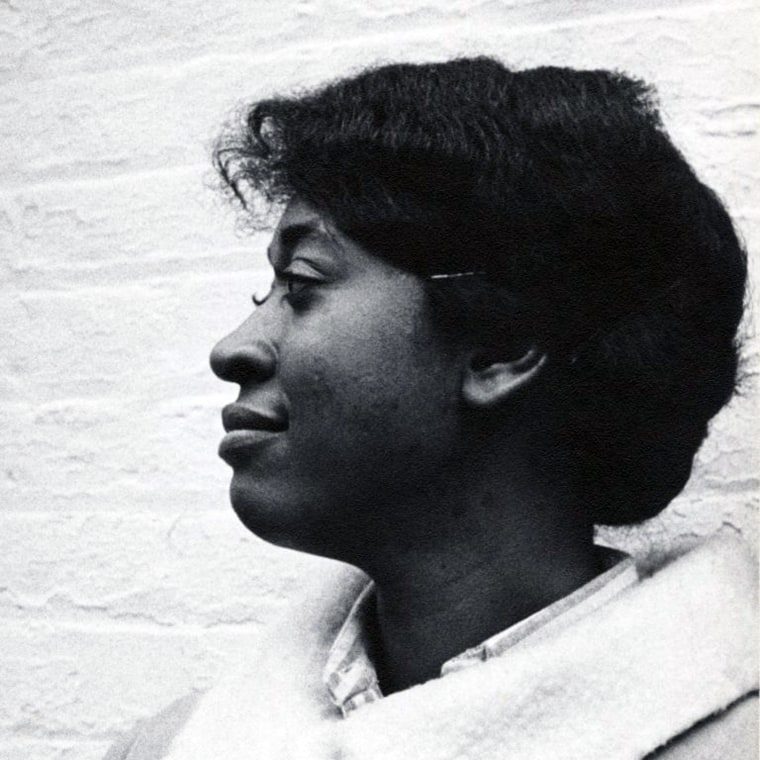
Ernestine Eppenger, known as Ernestine Eckstein in her activism work, was instrumental in lobbying gay activists to adopt the same tactics of the civil rights movement. Eckstein was vice president of the New York chapter of Daughters of Bilitis, America’s first lesbian civil rights organization, and according to Eric Cervini, author of “The Deviant’s War,” she “helped radicalize” a group that could be conservative in its tactics. The Daughters of Bilitis initially opposed picketing and preferred a “suits, ties and dresses” approach to lobbying for equality, Cervini explained.
Ernestine Eckstein in 1966.Kay Tobin Lahuse / Manuscripts and Archives Division, The New York Public Library
“Before Ernestine, the Daughters of Bilitis did not want to march for gay rights,” Cervini said. “They saw it as a threat. They thought it would provoke a backlash.”
In 1965, Eppenger joined a picket line at Philadelphia’s Independence Hall and a second demonstration months later at the White House. Although early gay rights leaders like Barbara Gittingsand Frank Kameny were present at many of these demonstrations, Eppenger was the only person of color. What was then referred to as the “homophile movement” was “overwhelmingly white,” according to Cervini. The scarcity of Black faces made Eppenger the “first Black woman to demonstrate for gay rights,” but Cervini said that racial monoculture also came with a cost.
“At the end of the day, the homophile movement did not open its arms to her and to people of color like they should have,” he said. “Because they did not put in the work to recruit a truly diverse movement in the years before Stonewall, that’s why they faded into irrelevance.”
That’s one of the reasons, Cervini said, the historic Stonewall uprising of 1969, which included transgender people and “street kids,” was such a critical turning point for the LGBTQ rights struggle.
“Finally there was a movement that was welcoming of everyone,” he said. “I like to say that Stonewall didn’t start everything, but it certainly changed everything.”
Cervini said it’s critical to uplift the work of activists like Eppenger — along with the countless other Black LGBTQ trailblazers — because so many were “pushed out of the movement,” even as they helped to transform it.
“There has been a concerted effort throughout history to forget them,” he said. “It’s our job to tell their stories, and it’s everyone else’s responsibility to learn from them, learn from our past mistakes and make history right.”
Police have launched an investigation after a vandal attacked a local LGBT+ community centre on Pride weekend, leaving staff and volunteers stunned.
At around 10.05am on Saturday (June 27), bystanders watched in horror as a man with a golf club smashed the windows of Oakland LGBTQ Community Centre in California.
Described as “a young skinny white male”, he is said to have yelled expletives while striking the building before fleeing the scene on a bike when confronted by nearby vendors.
The all-inclusive centre was founded by two gay African American men, who have described the attack as a hate crime.
“Our organisation is Black lead and queer,” they wrote on Facebook. “We have a large banner on our window that says Black LGBTQ Lives Matter Too!
“We are clear that this was a hate crime that could have caused us to be targeted because we are Black and because we are LGBTQ.”
They said the attack has “rattled” the team, but added: “We will get through this.”
One eyewitness, Cosmos Ozansi, told ABC7 News that he was setting up his jewellery stand on the street outside the centre when he saw the angry-looking man striking the windows.
“[I yelled] ‘Stop, stop!’ as loud as I could, then he saw me.” He says the man turned and rode away on his bike.
Oakland mayor Libby Schaaf was outraged by the act of vandalism. “I am furious that anyone would commit this kind of act at this sanctuary of love, pride and family,” she said.
Oakland Police say they are actively investigating the incident.
Oakland LGBTQ Community Centre has thanked those who arrived to help them clean up the mess, as well as “everyone offering support to us through this difficult and emotional time. We appreciate you so much.”
The group has requested donations via their website, and urged people to contact the local police department and ask them to make hate crimes against Black and LGBT+ people a priority in Oakland.
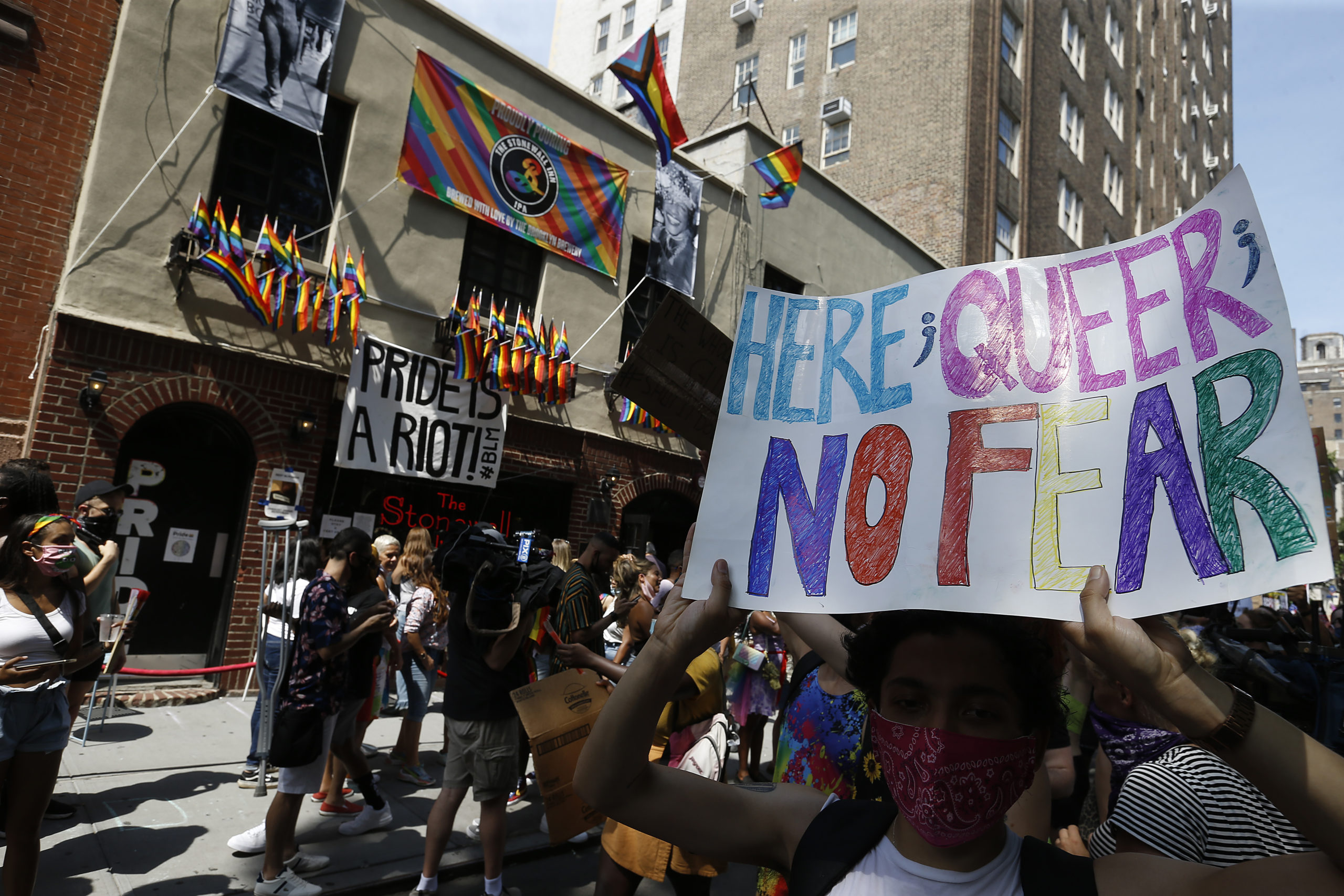
After warnings that it might shut its doors for good, people have raised $250,000 to secure the future of the Stonewall Inn.
The bar is considered the birthplace of the modern gay rights movement, and was designated a US National Monument by Barack Obama in 2016 in recognition of the 1969 Stonewall riots – which were sparked by a police raid on the venue.
But despite its central role in LGBT+ history, the owners of the still-functioning bar warned ahead of the 51st anniversary of the riots last week that a prolonged period of closure due to COVID-19 has left its future in doubt.
People donate thousands to rescue Stonewall Inn.
The business warned: “Our doors have been closed for over three months to ensure the health, safety, and well-being of patrons, staff and the community.
“Even in the best of times it can be difficult to survive as a small business and we now face an uncertain future. Even once we reopen, it will likely be under greatly restricted conditions limiting our business activities.”
Marchers congregate in front of the Stonewall Inn during the Queer Liberation March for Black Lives & Against Police Brutality on June 28, 2020. (John Lamparski/Getty Images)
Within just days, a crowdfunding campaign has already raised $256,900 to help secure the future of the bar – with more than 6,400 donors contributing an average of $40 each.
A further $39,500 has been raised online for a support fund set up for Stonewall Inn staff who are out of work during the Coronavirus pandemic.
‘We must preserve the legacy.’
Meanwhile, the pro-LGBT+ Gill Foundation, set up by software engineer Tim Gill, has pledged to match $250,000 in donations to rescue the historic venue.
In a release, co-chairs Scott Miller and Tim Gill said: “Queer people of colour – including trans women of colour like Marsha P Johnson, Sylvia Rivera, and Miss Major – led the uprisings against police brutality at Stonewall and in doing so helped spark the movement for LGBT+ equality.
“We must preserve that history and the legacy of the activists who led the charge.”
Stacy Lentz and Kurt Kelly, co-owners of the Stonewall Inn, added: “As the first and only LGBT+ National Monument, Stonewall is home not only to the history of our community, but also the history of our city and country.
“We are beyond grateful for this generous pledge that will help us keep the history alive.”
The Gill Foundation also announced it has committed $50,000 to trans groups including Trans Lifeline, the TransLatin@ Coalition, Brave Space Alliance and The Ally Coalition.