The body of a 56-year-old Australian man was found hours after he allegedly left home for a Grindr hook-up.
The unidentified Canberra man was discovered dead on February 2 by a man walking his dog in Boulee, New South Wales.
His body had been dumped in bushland a few metres away from the purple Honda Jazz he had been driving.
He had no visible injuries, and police are waiting for autopsy results to determine his cause of death.
Officers believe the man had been on his way to a Grindr hook-up, as he was known to use the app and others like it.
They will be using these apps to determine who the man was speaking with in the hours before his death.
Police urge locals and Grindr users to come forward with information.
Homicide squad commander detective superintendent Danny Doherty urged locals with any information to come forward.
“This is a small community and we hope that someone may be able to assist our investigators — either through sightings of the car, or who also may have been using dating applications to meet people in the area,” he said, according to Star Observer.
“Someone may come forward who may have knowledge of this person, this area might be an area where people have met before, they may have knowledge of this man in the car that’s important.”
The deceased was found wearing blue jeans, a sleeveless dark blue fitted t-shirt and white sneakers, and was driving a car with ACT number plates YFD 00H.
If you have any information which could assist police, contact Crime Stoppers on 1800 333 000.
While Grindr and apps like it are used safely by millions of queer people ever day, there are rare occasions where hook-ups end in tragedy.
PinkNews ran through some simple tips that users can take in order to keep themselves safe, including meeting in public and sharing your location with an app such as Find My Friends.
When Reggie Bledsoe was a student in the public schools of Newark, New Jersey, he didn’t feel represented by the people he learned about in the classroom. As a black man, he could look to civil rights leaders like Martin Luther King Jr. or Rosa Parks. But as a gay man, he knew he didn’t fit the traditional mold of a black historical figure. He said he wishes he had learned about even one black LGBTQ figure, like Bayard Rustin, King’s longtime adviser and fellow civil rights pioneer, when he was young and in need of inspiration.
“Personally and academically, it would have been so helpful seeing myself in what I was learning,” Bledsoe, who now sits on the Newark Board of Education, told NBC News. “Had I known about Bayard Rustin or [writer and activist] James Baldwin, I could only imagine where I would be and what I would do.”
Future generations of Newark students will get the chance to learn about LGBTQ historical figures — including Baldwin and Rustin (who was posthumously pardoned by California’s governor last week, 67 years after he was arrested on anti-gay charges) — alongside their heterosexual contemporaries.
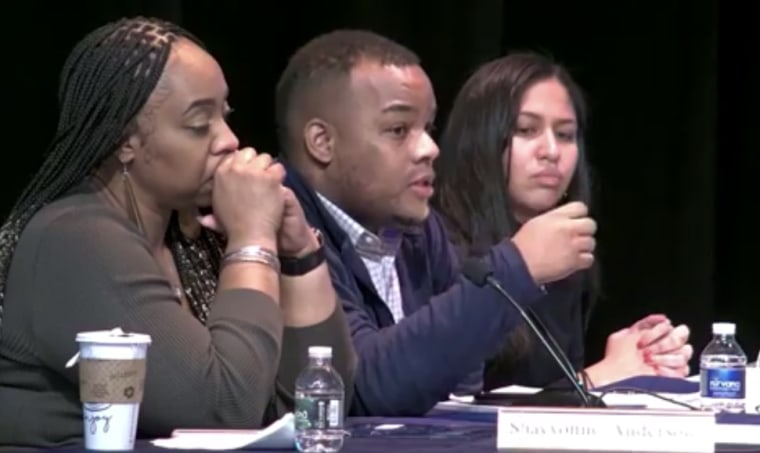
Reggie Bledsoe, center, at a meeting of the Newark Board of Education in Newark, New Jersey.Courtesy of Newark Board of Education
A year ago, New Jersey became the second state, following California, to pass a law requiring public schools to incorporate an LGBTQ-inclusive curriculum into their classrooms; Colorado and Illinois soon followed suit. And ahead of the statewide law, which goes into effect in September, the nonprofit groups Garden State Equality and Make It Better for Youth rolled out a pilot program last month in 12 public schools across the state, including Newark Arts High School, that will run until the end of the school year in June.
Implementation
Implementation of California’s 2011 LGBTQ curriculum law was slow — so much so that the state didn’t approve LGBTQ-inclusive textbooks until 2017. Wanting to learn from California’s missteps and get ahead of the conservative politicians and anti-LGBTQ groups who vocally opposed the new law, proponents of New Jersey’s LGBTQ curriculum were proactive.
“Developing curriculum for any topic is incredibly resource intensive, so we have designed a full curriculum that we’re going to continue to expand, and we’re going to get it to every public school in New Jersey that wants it completely free,” said Jon Oliveira, director of communications at Garden State Equality, a statewide LGBTQ advocacy group.
He said his organization’s goal is to ensure that an “LGBTQ-inclusive curriculum has wide adoption across the state.” Unlike California’s law, New Jersey’s mandate leaves the specific curriculum materials and lesson plans up to individual school districts, not the state.
The interdisciplinary pilot curriculum, which was written by New Jersey educators, goes beyond lessons about LGBTQ historical figures and their contributions, according to Oliveira. The program also includes a creative writing lesson for how to treat LGBTQ characters, a world languages lesson on gender-neutral pronouns and biology lessons on sex and gender diversity.
Kate Okesen, the founder of Make It Better for Youth, led the writing team for the pilot program. In March 2018, when the curriculum bill was still in committee in the Legislature, she met with a group of enthusiastic volunteer educators, many of whom are LGBTQ themselves. They gathered in the library of Red Bank Regional High School in Little Silver to discuss what obstacles schools might face if the law were passed and what they could do to help ease the transition for teachers. In those conversations, the seed of the pilot program was sown.
“That input helped me recognize … if this is not grounded in the realistic practice of a classroom teacher, we’re not going to make the progress that we want to make with the spirit of the law,” said Okesen, who has been a teacher for 22 years.
Last March, Okesen and two dozen other educators gathered again for a three-day retreat at a Unitarian Universalist retreat center right by the beach town of Barnegat, where later in the year Alfonso Cirulli, the town’s conservative Christian mayor, would call the LGBTQ curriculum law “an affront to almighty God.” This time, with the law firmly on the books, the volunteers had a more concrete goal: to outline a plan to help teachers adapt to the curriculum mandate and brainstorm a collection of lesson plans and guidelines that would become the pilot program.
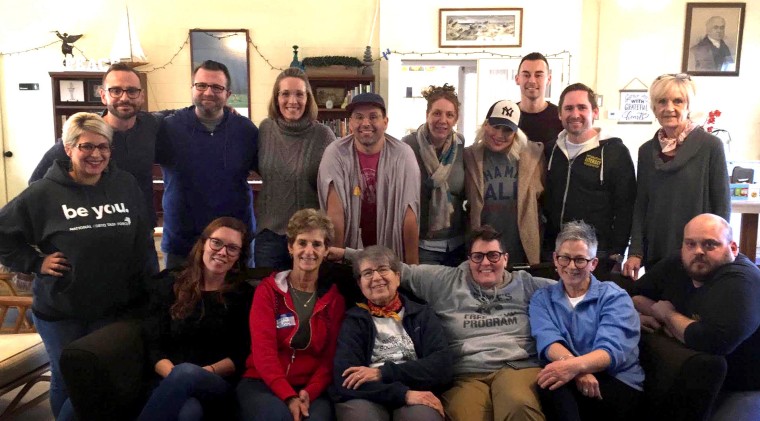
Kate Oksen (fourth from left on the couch) and other volunteer educators at a lesson-writing planning retreat for the state’s LGBTQ pilot curriculum in Lacey Township, N.J., in March 2019.Courtesy of Kate Oksen
The 12 elementary, middle and high schools from across the state were chosen based on a survey of interested schools, which gathered information on factors like administrative readiness and cultural competency training. The schools, which started incorporating lesson plans from the program last month, each have an assigned instructional coach — or “teacher leader” — who meets with teachers in the building to answer questions about implementation and to gather feedback on the lessons.
Another cohort of a couple of dozen schools, Okesen said, is also participating but without any instructional guidance or oversight.
John Bormann, superintendent of the Rumson School District, where the Forrestdale School is one of the pilot program’s 12 participating institutions, said his district is participating to better understand the requirements of the new law and what it must do to comply ahead of September, when the mandate goes into effect. However, he added, the district has not yet decided to adopt the curriculum.
“A lot of thoughtful decision-making and exploration needs to occur with our faculty and administration before lessons are rolled out to students,” he said.
Representation
At meetings of the Gay-Straight Alliance club at Haddon Heights High School in Haddon Heights, students will sometimes discuss LGBTQ history, like the 1969 Stonewall uprising, according to GSA member Lola Rossi. But Lola, a 10th grader, said this has been the only place in school where she and her peers have been exposed to this history.
“Our history, how we got to where we are, fighting for our rights,” she said, “a lot of LGBT members don’t even know about stuff like that or even current stuff that’s happening within the community.”
Haddon Heights is one of the 12 schools participating in the pilot program this term, and Lola said she’s excited that LGBTQ history is getting more attention in the classroom — for herself, her LGBTQ peers and their straight counterparts.
“What I look forward to the most is kids seeing that we’ve always been here and we’ve always been making an impact,” she said.
Nearly 65 percent of students in the U.S. reported receiving no classroom instruction about LGBTQ people, history or events, and 15 percent reported receiving only negative information about LGBTQ people in the classroom, according to a 2017 report by the LGBTQ education advocacy group GLSEN. While less than 20 percent of students reported seeing positive LGBTQ representations in the classroom, the survey found that a more inclusive curriculum could have a positive effect on LGBTQ students’ experience in school and their educational engagement overall.
Shannon Cuttle, first vice president of the South Orange-Maplewood Board of Education, who is the first elected official in the state to openly identify as nonbinary, said their experience in New Jersey public schools would have been greatly improved if they had seen LGBTQ representation in the classroom.
“Our curriculum and our classrooms should be mirrors and windows for our diverse community,” Cuttle said. “I didn’t have representation when I was in school. Curriculum like this would have been life-changing for me.”
For Cuttle, whose school district is not participating in the pilot program, making curriculum more inclusive is often just a matter of including LGBTQ representation in lessons that are already being taught.
“We’re already talking about LGBT figures in history,” Cuttle said. “Some just may not know that they are.”
That is how the pilot program approaches lessons, according to Oliveira. When learning about the civil rights movement, for instance, students will learn about Rustin, and in lesson plans about World War II, students will be taught about Alan Turing, the “father of computer science,” who helped defeat Nazi Germany by deciphering its coded messages. What’s often left out of the history books is that Turing, despite having been a war hero, was chemically castrated by the British government for being gay, and he later died by suicide.
Bledsoe, the Newark school board member, said he appreciates the pilot program’s inclusion of local LGBTQ history, as well. One of its lesson plans focuses on Sakia Gunn, a 15-year-old black lesbian from Newark whose murder in a 2003 hate crime sparked protests and prompted a statewide conversation about protecting LGBTQ people from violence.
The curriculum also includes lesson plans on Barbra Siperstein, a lifelong transgender rights activist who was the first transgender member of the Democratic National Committee’s executive committee, who died last year, and Marsha P. Johnson, an LGBTQ icon who was born in Elizabeth, New Jersey.
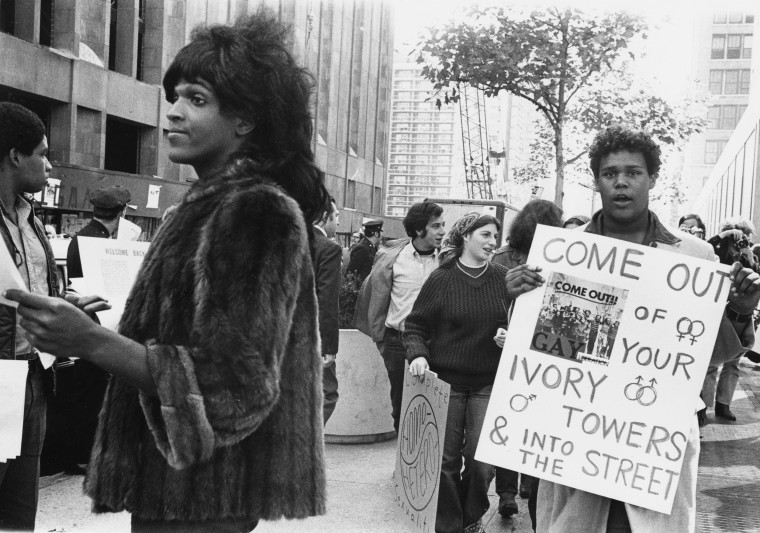
Marsha P. Johnson hands out flyers for support of gay students at N.Y.U. in 1970.Diana Davies / NYPL
“A criticism I often hear is ‘What does being LGBTQ have to do with that person’s contributions to society?'” Oliveira said. “It’s impossible for me, in my mind, to separate [Rustin’s and Turing’s] accomplishments from their identities in the lives that they lived.”
The response to the pilot program in the 12 participating districts has been a mix of enthusiastic support and vocal opposition, according to Oliveira. However, he said he’s confident that the program will be a success, and he added that opponents’ primary argument — that any mention of LGBTQ identity is inappropriate for the classroom — is increasingly falling on deaf ears.
“There are naysayers out there who have an agenda against our community, who say that stuff belongs at home, it’s a private conversation,” he said. “LGBTQ-inclusive curriculum is not talking about people’s private lives. It’s talking about people’s public lives.”
Data component
Along with helping public school teachers adapt their lessons to comply with the new law, the pilot program will also be a source of data for a research study that Oliveira and Okesen hope will make a supportive case for an LGBTQ-inclusive curriculum.
Garden State Equality and Make It Better for Youth are working with a team of researchers from Stockton University in southern New Jersey to measure the effect of the curriculum on individual student outcomes and on the cultural climate around LGBTQ identity in state public schools. Okesen said the research aspect of the pilot program is just as important as the lesson plans.
“I’m hoping that the data we collect demonstrates concretely for schools in New Jersey that the kind of visibility that’s offered by this curriculum creates positive outcomes for kids and that we see a shift in … students saying that they feel accepted and affirmed,” she said.
A best-case scenario, she said, would be for the study to make the case for an inclusive curriculum beyond New Jersey, as well.
A national model?
New Jersey is now one of four states to require LGBTQ-inclusive curriculums in public schools, up from just one before 2019. Oliveira said he thinks the sudden push for more inclusive public education is motivated in part by a resurgence of anti-LGBTQeducationpolicies at the federal level.
“The Trump administration is proof that, at any given moment, these rights can be taken away,” he said. “We have to constantly remain vigilant about moving forward, making sure these stories are told, making sure that our stories are raised and that LGBTQ youth see themselves represented in the classroom.”
Six states still have laws that restrict the mention or promotion of LGBTQ history and people in public schools, according to GLSEN: Alabama, Louisiana, Mississippi, Oklahoma, South Carolina and Texas. The laws, sometimes called “No Promo Homo” laws, forbid teachers from discussing LGBTQ identities in a “positive light” — and often effectively mean they can’t discuss LGBTQ issues at all.
But there is also a growing consensus that curriculums should be more LGBTQ inclusive, as more states, including traditionally conservative ones like Missouri, are considering laws that mirror New Jersey’s.
Oliveira hopes the ready-made curriculum his organization has helped craft will make complying with the new mandate easier for districts across the state. He said that as the push to make curriculums more LGBTQ inclusive catches on across the country, as he hopes it will, other states could benefit from the model, as well.
“We really see the work that we’re doing here as a model that we can bring to every other state in the nation that wants to do it,” he said.
Billionaire Philip Anschutz, whose portfolio includes Coachella and London’s O2 Arena, gave more than $1million to anti-LGBT+ causes in 2018, despite previously denying the donations.
As of October 2019, the 80-year-old Christian conservative was ranked by Forbes as the 41st richest person in the USA, with a net worth of $11.5billion.
Anschutz, the head of Anschutz Entertainment Group (AEG), was previously accused of making donations to anti-LGBT+ hate groups like Alliance Defending Freedom (ADF) and the Family Research Council (FRC) via The Anschutz Foundation.
The revelations originally came from a 2013 tax return released by Freedom for All Americans, a political action group that had looked at funding for a number of the most influential and powerful anti-LGBT groups in the US.
He later gave $1million to the Elton John AIDS Foundation, and said: “I support the rights of all people and oppose discrimination and intolerance against the LGBTQ community.”
While the document does not show donations to FRC and ADF, it does show that the Coachella owner’s company gave $1million to Colorado Christian University (CCU) for a new student centre.
The university threatens students with suspension and expulsion for same-sex “sexual activity” and “dressing or acting differently than the biological gender that God created a student to be”.
According to CCU’s student handbook: “Sexual intercourse and other forms of sexual contact to be the unique expression of covenanted love within heterosexual marriage and are oriented toward family life… The university will not tolerate premarital or extramarital sexual activity whether between a man and a woman or between two people of the same gender.”
It adds: “When a student decides to identify as a gender other than their biological one, by requesting a change of pronouns or surgical response to their sense that they are in the ‘wrong’ body, it is in theirs, and the university’s, best interest for them to leave the university community.
“It is also in the best interest of the university and the student for them to separate themselves from the CCU community if she or he pursues a medical course of action to physically change their biological gender to that of another sex.”
AEG also gave $20,000 to Sky Ranch Christian Camps. The camp says on its website that it believes “that God has established marriage as a lifelong, exclusive relationship between one man and one woman and that all intimate sexual activity outside the marriage relationship, whether heterosexual, homosexual, or otherwise, is immoral and therefore sin.”
It adds: “We believe that God created the human race, male and female, and that all conduct with the intent to adopt a gender other than one’s birth gender is immoral and therefore sin.”
The Anschutz Foundation told Billboard: “Presently, less than 5 percent of the average annual grants awarded by the Foundation go to conservative or faith-based organisations.”
In 2018, Cara Delevingne boycotted Coachella because it was owned by Anschutz, amid accusations of his donations to anti-LGBT+ causes.
Youth suicide rates are dropping in the U.S., but the proportion of teens who have suicidal thoughts or make an attempt remains consistently higher among sexual minorities than among heterosexual young people, two new studies in Pediatrics suggest.
One study looked at suicide rates among teens between 2009 and 2017 and found young people who didn’t identify as heterosexual were more than three times as likely as those who did to attempt suicide. A second study looked at this same connection from 1995 to 2017 and found suicidal thoughts, plans and attempts were all more common among sexual-minority youth.
“Numerous studies going back to the late 1990s have consistently shown that sexual minority youth are about three times more likely to report making a suicide attempt,” said Brian Mustanski, co-author of an editorial accompanying both studies, and director of the Northwestern Institute for Sexual and Gender Minority Health and Wellbeing in Chicago.
“The fact that societal acceptance for the LGBTQ community has improved significantly in the past decades raises the important question of (whether) these disparities in suicide attempt have shrunk over time,” Mustanski said by email. “The two studies . . . are some of the first to show that sexual orientation disparities in suicide attempts have not been shrinking over time.”
Adolescence is a time of sexual and social development when many young people may begin to recognize or express attraction to people of the same sex or identify with a gender other than their sex assigned at birth. While the risk of mental health disorders, suicide, substance misuse and other health problems spikes during adolescence, the risk can be even more pronounced for sexual minority youth, both teams of researchers note in their reports.
One of the studies, led by Julia Raifman of Boston University School of Public Health, examined almost a decade of data from youth in 10 states in the Northeast and Midwest.
During this time, the proportion of youth identifying as sexual minorities nearly doubled, from 7.3% in 2009 to 14.3% in 2017. Over the same period, the proportion of youth who reported any same-sex sexual contact climbed by 70%, from 7.7% to 13.1%, the study also found.
However, the proportion of teens who attempted suicide and also identified as sexual minorities also rose over time, from 24.6% in 2009 to 35.6% in 2017.
“There is a great deal of evidence linking stigma against sexual minority youth to suicide attempts,” Raifman said in an email. “Stigma in the form of family rejection, peer bullying, and higher-level state policies are all linked to increased suicide among sexual minority youth.”
The second study looked at more than two decades of data from youth in Massachusetts.
Lead author Richard Liu, a researcher at the Alpert Medical School of Brown University in Providence, Rhode Island, and his colleagues found that suicidal plans and attempts declined across the board, but much more steeply among heterosexual youth than sexual minority teens.
One limitation of both studies is that the results may not represent what’s happening among youth nationwide, the researchers note.
Even so, the findings suggest that at least some sexual minority youth may not be receiving the support they need, Liu said.
“I think the results of our study really highlight that we have a long way to go to reduce suicide risk in sexual minority youth,” he told Reuters Health by email.
“Interpersonal conflicts are often a trigger for suicide risk, and having supportive and accepting people in their lives is important for sexual minority youth,” Liu added. “Additionally, having family and friends to turn to when dealing with conflicts with others cab help minimize risk for mental health concerns and suicide.”
A new bill in the Ohio House would ban conversion therapy — programs intended to end same-sex attraction and make a gay person straight. The conversion therapy bill is sponsored by Rep. Mary Lightbody, a Columbus-area Democrat.
“Human beings are complex, and each individual is unique,” Lightbody said in a statement. “As children grow, we all learn about the world and develop an identity that expresses who we are at heart.”
Nineteen states and Washington, D.C. ban conversion therapy. North Carolina and Puerto Rico have partial bans. In Ohio, seven cities — Athens, Cincinnati, Columbus, Dayton, Kent, Lakewood and Toledo have banned conversion therapy.
Republicans far outnumber Democrats in both of Ohio’s legislative chambers.
A gay Missouri police officer who won a “historic” $20 million judgment in a sexual orientation discrimination lawsuit alleging he was told to “tone down your gayness” by a police commission board member has reached a settlement with St. Louis County for half the amount a jury awarded him.
The settlement in the discrimination case filed by Lt. Keith Wildhaber was announced just hours after St. Louis County Police Chief Jon Belmar said he will retire.
“I think it’s really important for those of us in St. Louis County to recognize this is a tough time for the county, but we have to recognize that discrimination isn’t right. By settling this lawsuit, the county recognizes that what Lt. Wildhaber went though was not right,” St. Louis County Executive Sam Page said at a news conference.
The constitutionality of South Florida bans on juvenile gay conversion therapy is hanging in the balance in the 11th Circuit, where attorneys jousted Tuesday over whether the bans violate therapists’ free speech rights.
At issue is a lawsuit filed by two therapists challenging local laws that prohibit them and other licensed counselors from performing gay conversion therapy on minors. The local ordinances were passed by the city of Boca Raton and surrounding Palm Beach County.
On appeal Tuesday in a special Miami hearing of the Atlanta-based 11th Circuit, the therapists’ attorney Mathew Staver urged the three-judge panel to overturn the lower court’s decision. The debate was focused on whether the gay conversion bans represent a regulation of professional medical treatment versus a curtailing of speech.
Read the full article for arguments by the good guys. Two of the three appeals court judges hearing the case were appointed by Trump. If Staver wins at this level, the issue will surely again wind up before the Supreme Court, which has twice before rejected appeals of state-level bans. Since then, however, there are two Trump-appointed justices.
FundraiserThe Edge Cares: A Benefit for the GLBT Historical Society
Tuesday, February 188:00–11:00 p.m.The Edge4149 18th St., San FranciscoFreeThe Edge is a longstanding bar in the heart of San Francisco’s Castro district, right down the street from the GLBT Historical Society Museum. With a long history of supporting local charities and bringing communities together, the Edge has recently established the Edge Cares, a weekly initiative that earmarks a percentage of Tuesday night proceeds to local LGBTQ nonprofits. The GLBT Historical Society is honored to have been selected as the Edge’s beneficiary on February 18. Join us for an evening of throwback music videos, vintage 1990s hits and two-for-one drinks.
Panel Discussion“The Rainbow Did That”: Remembering Gilbert Baker
Thursday, February 207:00–9:00 p.m.The GLBT Historical Society Museum4127 18th St., San Francisco$5| Free for membersA panel of contemporaries and friends of the late Gilbert Baker, the creator of the iconic rainbow flag, will discuss Baker’s artistic output, activism and legacy. Panelists will include activist Charley Beal, the manager of the Gilbert Baker Estate; Baker’s friend Vincent Guzzone; community activist Ken Jones; and Cass Brayton, better known as Sister Mary Media, a longtime member of the LGBTQ activist and fundraising group the Sisters of Perpetual Indulgence. Swapping stories, spilling secrets and sharing memories, the speakers will recall the life and times of a complex and deeply passionate man. This program is being held in conjunction with the exhibition “Performance, Protest and Politics: The Art of Gilbert Baker,” on display at the GLBT Historical Society Museum through April 5. Tickets are available online here.
Book LaunchFollowing Lou: Searching the Archives for Our Queer Past
Thursday, February 277:00–9:00 p.m.The GLBT Historical Society Museum4127 18th St., San Francisco$5| Free for membersLouis Sullivan (1951–1991) was a founding member of the GLBT Historical Society and a transgender gay man whose pioneering activism on behalf of trans men in the 1970s and 1980s helped shape the modern understanding of sexual orientation and gender identity. The society’s archives hold Sullivan’s extensive diaries, written between the 1960s and the 1990s, which chronicle his coming of age, coming-out as a gay trans man and work as a historian. Researcher Ellis Martin and poet and artist Zach Ozma have compiled selections from the diaries into a new book, We Both Laughed In Pleasure: The Selected Diaries of Lou Sullivan (Nightboat Books, 2019). In this discussion, Martin, Ozma and the society’s reference archivist, Isaac Fellman, will read excerpts from Sullivan’s diaries and will discuss the complex issues involved in queer historical storytelling. Copies of We Both Laughed in Pleasure will be available for purchase and signing. Tickets are available online here.
Community EventA March to Remember & Reclaim Queer Space
Saturday, February 292:00–4:00 p.m.Harvey Milk PlazaMarket and Castro Streets, San FranciscoFreeA group of LGBTQ leaders, neighborhood organizations, activists and community members will gather at Harvey Milk Plaza and march through the Castro district, laying black wreaths at the sites of former queer spaces in this historic LGBTQ neighborhood. Join drag queen Juanita MORE!, activists Ken Jones and Cleve Jones, and San Francisco District Eight Supervisor Rafael Mandelman at this event cohosted by the GLBT Historical Society, the San Francisco LGBT Center and the Castro LGBTQ Cultural District. Participants will call on elected officials, foundations and philanthropists, as well as residents and lovers of San Francisco, to both commemorate the city’s LGBTQ past and take active steps to sustain the city’s living queer heritage and culture.
Two Belfast women have become the first same-sex partners to get married in Northern Ireland. Robyn Peoples, 26, and Sharni Edwards, 27, tied the knot at 2pm in Carrickfergus, just outside Belfast, following the landmark law change last year championed by the Love Equality campaign.
“We didn’t expect to be the first couple, it’s coincidental,” said Ms Edwards. “Today is our six-year anniversary so we wanted to go ahead with a civil partnership but when the bill was passed, it was perfect timing. “It was a happy coincidence, we couldn’t be more grateful.”
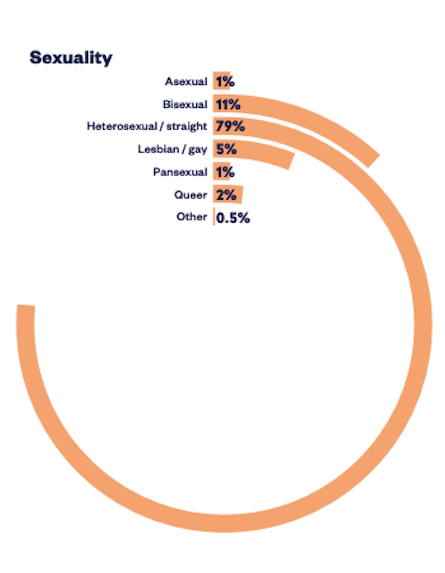
LGBT+ people make up 21 per cent of the UK gaming industry, according to an eye-opening new diversity census.
This figure is disproportionately high considering that LGBT+ people make up between three and seven per cent of the UK population – which begs the question of why LGBT+ characters are so poorly represented when it comes to blockbuster video games.
At three per cent, trans representation is also higher in the gaming industry, versus one per cent nationwide. The biggest difference was seen in bisexual people, who represent 11 percent of those in the gaming industry compared to just 0.7 percent of the national population.
Unsurprisingly, men make up the vast majority of the workforce at 70 per cent; 28 per cent are women, while two percent identify as non-binary.
Reported levels of anxiety and depression are also significantly above the national average, with the report acknowledging that the LGBT+ community tends to experience higher rates of mental health issues than the general population.
It accrued more than 3,200 anonymised responses from people (LGBT+ or otherwise) working across the UK gaming industry, posing a range of questions about the kinds of work that games industry workers do, their personal characteristics, and their backgrounds.
The results were released alongside an industry-wide diversity pledge, #RaiseTheGame, to make gaming more inclusive for minorities.
“Diversity isn’t a nicety – it’s a necessity if the industry is going to grow, thrive and truly reflect the tens of millions of people that play games every day in this country,” said Dr Jo Twist, CEO of The Association for UK Interactive Entertainment.
“A diverse industry that draws on myriad cultures, lifestyles and experiences will lead to more creative and inclusive games that capture the imagination of players and drive our sector forward.”
The pledge, which is backed by founding partners EA, Facebook, Xbox, Jagex and King, aims to recruit 200 game businesses by 2021 and improve diversity and equality across the industry.