This week, the daughters of a founder at Christian Grace College in Indiana came forward with a shocking revelation: their father had sexually abused an estimated one to two hundred male students over his 40-year career at the school.
Don Ogden, who died in 2015, was the founder of the school’s music program. His daughters, Diane and Kathleen, disclosed the abuse in a six-page statement shared with The Christian Post.
“Our father used his position, his power, his wit, and persuasion to gain the trust of young men, and later perpetrate crimes against them that would change their lives forever. We realize, looking back, that this was sadly still going on when he was 80 years old.”
Grace College in Winona Lake, Indiana officially bans LGBTQ students from attending. The school’s catalog bans “homosexual behavior” and compares it to other sins like adultery, greed, and drunkenness.
The sisters allege Ogden’s predation was an open secret at Grace. In 1993, he was arrested in Kansas for sexually assaulting a 16-year-old boy, whom he met at a mall and lured to an open field nearby, where he sexually assaulted him.
After reporting the incident to the police, the victim recanted his story and police dropped the matter, describing the encounter as consensual. The age of consent in Kansas is 16.
According to Ogden’s daughters, Grace College was aware of the charge but kept it under wraps both to protect the school’s reputation and continue to benefit from Ogden’s strength as a fundraiser.
“It is with broken hearts that my sister and I are bringing our story forward. After speaking with many Christian experts that handle abuse in Christian institutions, we were told that if there is no public confession and help for the victims given, we must go to the media. After writing eight letters over the last 16 months, we both feel, sadly, that we have absolutely no choice,” the sisters’ statement read.
A whistleblower approached the sisters in February, 2021, leading to their own investigation of their father’s crimes. The pair say they were “mortified” to learn their father’s predation on young boys had spanned more than 40 years.
Ogden “had been molesting boys for over four decades. Incidents occurred touring across the country, in people’s homes, our home, malls, youth conferences, and other places,” the daughters wrote.
Referring to her father’s arrest in Kansas, Ogden’s daughter Diane said the night he was in jail, she spoke with him on the phone, unaware this was just one incident in a decades-long pattern of abuse.
“God will use this, Daddy,” Diane told her father. “You can help someone else that gets wrongly accused someday.”
Ogden replied: “You have too much faith in me.”
“He was admitting to it but my mind would not let me believe it,” Diane said.
Her father added: “No one will want to shake my hand again.”
Sharply rising cases of some sexually transmitted diseases — including a 26% rise in new syphilis infections reported last year — are prompting U.S. health officials to call for new prevention and treatment efforts.
“It is imperative that we … work to rebuild, innovate, and expand (STD) prevention in the U.S.,” said Dr. Leandro Mena of the U.S. Centers for Disease Control and Prevention in a speech Monday at a medical conference on sexually transmitted diseases.
Infections rates for some STDs, including gonorrhea and syphilis, have been rising for years. Last year the rate of syphilis cases reached its highest since 1991 and the total number of cases hit its highest since 1948. HIV cases are also on the rise, up 16% last year.
And an international outbreak of monkeypox, which is being spread mainly between men who have sex with other men, has further highlighted the nation’s worsening problem with diseases spread mostly through sex.
David Harvey, executive director of the National Coalition of STD Directors, called the situation “out of control.”
Officials are working on new approaches to the problem, such as home-test kits for some STDs that will make it easier for people to learn they are infected and to take steps to prevent spreading it to others, Mena said.
Another expert said a core part of any effort must work to increase the use of condoms.
“It’s pretty simple. More sexually transmitted infections occur when people are having more unprotected sex,” said Dr. Mike Saag, an infectious disease expert at the University of Alabama at Birmingham.
Syphilis is a bacterial disease that surfaces as genital sores but can ultimately lead to severe symptoms and death if left untreated.
New syphilis infections plummeted in the U.S. starting in the 1940s when antibiotics became widely available. They fell to their lowest ever by 1998, when fewer than 7,000 new cases were reported nationwide. The CDC was so encouraged by the progress it launched a plan to eliminate syphilis in the U.S.
But by 2002 cases began rising again, largely among gay and bisexual men, and they kept going. In late 2013, CDC ended its elimination campaign in the face of limited funding and escalating cases, which that year surpassed 17,000.
Get the Morning Rundown
Get a head start on the morning’s top stories.SIGN UPTHIS SITE IS PROTECTED BY RECAPTCHA PRIVACY POLICY | TERMS OF SERVICE
By 2020 cases had reached nearly 41,700 and they spiked even further last year, to more than 52,000.
The rate of cases has been rising, too, hitting about 16 per 100,000 people last year. That’s the highest in three decades.
Rates are highest in men who have sex with men, and among Black and Hispanic Americans and Native Americans. While the rate for women is lower than it is for men, officials noted that it’s has been rising more dramatically — up about 50% last year.
That ties to another problem — the rise in congenital syphilis, in which infected moms pass the disease on to their babies, potentially leading to death of the child or health problems like deafness and blindness. Annual congenital syphilis cases numbered only about 300 a decade ago; they surged to nearly 2,700 last year. Of last year’s tally, 211 were stillbirths or infant deaths, Mena said.
The increases in syphilis and other STDs may have several causes, experts say. Testing and prevention efforts have been hobbled by years of inadequate funding, and spread may have gotten worse — especially during the pandemic — as a result of delayed diagnosis and treatment. Drug and alcohol use may have contributed to risky sexual behavior. Condom use has been declining.
And there may have been a surge in sexual activity as people emerged from Covid-19 lockdowns. “People are feeling liberated,” Saag said.
The arrival of monkeypox added a large additional burden. CDC recently sent a letter to state and local health departments saying that their HIV and STD resources could be used to fight the monkeypox outbreak. But some experts say the government needs to provide more funding for STD work, not divert it.
Harvey’s group and some other public health organizations are pushing a proposal for more federal funding, including at least $500 million for STD clinics.
Mena, who last year became director of the CDC’s Division of STD Prevention, called for reducing stigma, broadening screening and treatment services, and supporting the development and accessibility of at-home testing. “I envision one day where getting tested (for STDs) can be as simple and as affordable as doing a home pregnancy test,” he said.
With Republicans threatening to reverse LGBTQ civil rights and generally undermine democratic elections, there’s a lot riding on the November midterms. But Voter ID laws across the nation could seriously impair transgender people from voting.
New research from The Williams Institute found that out of 878,300 eligible transgender voters in the U.S., as many as 203,700 could be blocked from voting because their government-issued IDs don’t reflect their gender identity — that’s nearly one-fourth of all eligible trans voters.
If a trans person arrives at a polling place with a government-issued ID containing an incorrect gender or name, they may be turned away by poll workers who think they’re trying to “impersonate” another individual.
203,700 disenfranchised trans voters is roughly the entire population of Salt Lake City, Utah; Little Rock, Arkansas; Amarillo, Texas; or Grand Rapids, Michigan, according to U.S. Census data.
Changing an ID isn’t always easy, and “transgender people of color, young adults, people with low incomes, and people with disabilities are more likely to not have accurate IDs for voting,” the Williams Institute wrote.
Trans people face numerous barriers to changing their ID gender markers. The process can take lots of time and money and require access to medical care that many trans people don’t have.
According to the Movement Advancement Project, 10 states require documentation from a medical provider in order to change a trans person’s gender marker; 8 states require proof of surgery, court order, or an amended birth certificate; and 10 states have “burdensome” or “unclear” policies on changing such gender markers.
Changing a birth certificate to get a new ID can also present problems: 12 states require trans people to undergo a gender-affirming surgery before officials will revise a birth certificate; 4 states don’t allow any changing of birth certificate gender markers whatsoever.
Name changes aren’t always easy either. Nine states require people to publicly post their name change requests online, something that can make them a target for harassment or violence.
An estimated 414,000 eligible trans voters live in the 31 states that predominantly have in-person voting and require voter ID. Nearly half of trans voters in those states don’t have an ID that accurately reflects their gender or name. Additionally, 64,800 eligible trans voters live in states that have very strict voter ID laws.
The exclusion of trans voters is particularly concerning as Republicans introduce anti-trans legislation across the country.
Republicans have ostensibly introduced voter ID laws as a way to stop the nearly nonexistent problem of voter fraud. But both the American Civil Liberties Union and The Brennan Center for Justice have called voter ID laws a form of “voter suppression” that mostly disenfranchises Democratic voters.
A Black trans woman says her housing complex discriminated against her family and refused to respect her gender identity.
Shayla Anderson and her husband have filed a lawsuit accusing the Grand Fountain apartment complex in Richmond, Texas of discrimination.
“I went to her office, and she said, ‘I’m not going to speak with you about this,’” Anderson told KPRC. “‘I’m not going to speak with you about this, sir.’”
“She took my womanhood and crushed it by calling me sir.”
From there, Anderson reached out to the company in charge of the apartment complex, SunRidge Management Group, who never got back to her.
After filing a complaint with the U.S. Department of Housing and Urban Development, Anderson then posted a video of the property manager approaching her husband and son while they played basketball and accusing them of not living in the building.
The building then demanded Anderson remove the video before issuing their family an eviction notice, despite the fact that they hadn’t received any warnings.
Anderson said she had not been paying rent, but that her lawyers had advised her to stop due to the lawsuit.
In a statement, SunRidge denied all claims of discrimination and stated, “We adhere to the highest standards of managing the Grand Fountain community and comply with all fair housing laws.”
But Anderson is not backing down.
“Because, you’re a big corporation you can’t treat the little people wrong,” she said. “We have a voice as well.”
“A lot of people say, ‘Well, why don’t you move? Why don’t you get out of there?’ Because then I give them the power.”
A Lakota two-spirit person was found dead of gunshot wounds outside Rapid City, South Dakota in August. Acey Morrison, 30, was among at least 30 trans or gender-nonconforming people to die in violent circumstances in the U.S. in 2022.
Morrison’s murder was reported early Sunday morning, August 21, by the owner of the mobile home she occupied in the Country Village Estates RV park.
Morrison came from a large family in South Dakota and Nebraska and worked at the local Walmart and Sam’s Club.
In a tribute published in Native Sun News Today, her family wrote: “Acey was what we call our two-spirit relative. To those she held in her heart and to those who held her in their hearts, seeing her in her wholeness.
“She always had her natural ways in being there for those she loved. She used laughter as medicine and chose self-love to heal wounds. She was the one to open her home up to you, give you her lasts, then inspire you to keep going, ‘this too shall pass.’”
“We will remember her as who she was to each of us: authentic, and unapologetic.”
The Human Rights Campaign reported 50 violent fatalities among trans and gender non-conforming people in 2021, including those who identified as two-spirit. The 2015 U.S. Transgender Survey indicates American Indian and Alaskan Native experienced a physical attack at more than twice the rate of all U.S. respondents, 19% to 9%.
A 2021 report by the Sovereign Bodies Institute and the California Rural Indian Health Board revealed among a small population of Native LGBTQ2S+ people, 90% reported experiencing two or more forms of violence.
Morrison’s family tribute ended: “She navigated this life through her big dreamer eyes and was always headed for the brighter days. So with that, we will remember her as who she was on her brightest days. We wish her healing and that our love be with her on her journey to the other side.”
Just hours after a Montana judge blocked health officials from enforcing a state rule that would prevent transgender people from changing the gender on their birth certificate, the Republican-run state on Thursday said it would defy the order.
District Court Judge Michael Moses chided attorneys for the state during a hearing in Billings for circumventing his April order that temporarily blocked a 2021 Montana law that made it harder to change birth certificates.
Moses said there was no question that state officials violated his earlier order by creating the new rule. Moses said his order reinstates a 2017 Department of Public Health and Human Services rule that allowed people to update the gender on their birth certificate by filing an affidavit with the department.
However, the state said it would disregard the ruling.
“The Department thoroughly evaluated the judge’s vague April 2022 decision and crafted our final rule to be consistent with the decision. It’s unfortunate that the judge’s ruling today does not square with his vague April decision,” said Charlie Brereton, director of the Department of Public Health and Human Services.
Brereton said the agency was keeping the rule it issued last week in place and an agency spokesperson said the department is waiting to see the judge’s written order before considering its next steps.
ACLU attorney Malita Picasso expressed dismay with the agency’s stance and said officials should immediately start processing requests for birth certificate changes.
“It’s shocking that after this morning’s hearing the department would allege there was any lack of clarity in the court’s ruling from the bench,” Picasso said. “It was very clear that Judge Moses expressly required a reversion to the 2017 policy, and anything short of that is a continued flagrant violation of the court’s order.”
Such open defiance of judge’s order is very unusual from a government agency, said Carl Tobias, a former University of Montana Law School professor now at the University of Richmond. When officials disagree with a ruling, the typical response is to appeal to a higher court, he said.
“Appeal is what you contemplate — not that you can nullify a judge’s orders. Otherwise, people just wouldn’t obey the law,” Tobias said. “The system can’t work that way.”′
The move could leave state officials open to contempt of court charges, which in some cases can lead to jail time for offenders, Tobias said. He added that the attorneys representing the state were likely aware of the potential consequences but were “caught in the middle” between a recalcitrant agency and the judge.
The legal dispute comes as conservative lawmakers in numerous states have sought to restrict transgender rights, including with bans on transgender girls competing in girls school sports.
The Montana law said people had to have a “surgical procedure” before they could change the sex listed on their birth certificate, something Moses found to be unconstitutional because it did not specify what type of procedure was required.
Gov. Greg Gianforte’s administration then created a new rule that blocked changes to birth certificates entirely, unless there was a clerical error.
Moses said during Thursday morning’s hearing that his April ruling had been “clear as a bell” and compared the state’s subsequent actions to a person twice convicted of assault who tries to change their name following a third accusation to avoid a harsher punishment.
“Isn’t that exactly what happened here?” Moses asked. “I’m a bit offended the department thinks they can do anything they want.”
One of the plaintiffs in the case, Amelia Marquez, said she was disgusted by the state’s response.
“We have people that think that they’re above the law and don’t have to listen to the judiciary branch of our government,” she said.
After learning the state planned to defy the court order, Shawn Reagor with the Montana Human Rights Network said the organization “will not stand by while the Gianforte administration blatantly disregards rulings from the courts to continue a vindictive attack on the trans community.”
Only Tennessee, Oklahoma and West Virginia have sweeping prohibitions against birth certificate changes similar to what Montana has pursued, advocates for transgender rights say. Bans in Idaho and Ohio were struck down in 2020.
A Republican lawmaker who voted in favor of the 2021 law suggested Moses was biased in favor of the plaintiffs in the case. Moses was appointed to the court by former Gov. Steve Bullock, a Democrat.
“Like clockwork, Judge Moses issued yet another predetermined order in favor of liberal plaintiffs without thoroughly engaging with the legal issues at hand,” Sen. Greg Hertz of Polson said in a statement.
The ACLU of Montana had asked Moses to clarify his order after the state health department enacted its new temporary rule effectively banning birth certificate changes a month after Moses handed down his temporary injunction in the case. That rule was made permanent last week.
The state argued the injunction did not prevent the health department from making rules, but Moses said under case law the injunction reinstated the 2017 rules and any other changes are on hold while the case is decided.
State officials denied that the new rule preventing birth certificate changes was adopted in bad faith. Montana Assistant Solicitor Kathleen Smithgall said the state came up with the new rule to fill a gap in regulations after the 2021 law was blocked.
“Judge Moses mischaracterized the words of his own order, the parties’ motives, and the state of the law,” said Kyler Nerison, a spokesperson for Attorney General Austin Knudsen.
This is National Suicide Prevention Week, which technically means that during this week we are to raise awareness for suicide prevention. Next week is, among other things, National Child Passenger Safety Awareness Week, and the last week in September is International Deaf Awareness Week.
Since I’m partially deaf, that week means something to me, but by the time we get to the week of October 9 and National Fire Prevention Week, will anyone remember the awareness raised a month before for suicide prevention?
We’ve filled so many weeks up in the calendar that we skip from one issue to another to another and to yet another, and we forget about what we were supposed to remember from the previous month. It mimics our short attention spans. We go from one shiny object to the next without much thought for the previous one.
I guess what’s discomfiting in a way about these weeks-of is that we just pass right by something as deadly serious as suicide, which is a perfect metaphor for suicide. It’s brushed off by those who hear about one with a flippant comment like “Oh, how horrible.” Or buried deep by those who contemplate it: “I don’t have anyone to talk to about the way I feel.”
Many people don’t like to talk about suicide, because in most of our minds it’s so selfish and gruesome. When I wrote a column last December about my experiences with suicide, I heard from many readers, some who said, “I can’t believe you were so open about it. That takes bravery.”
The truth is that talking about it is less bravery and more catharsis. I spent an inordinate amount of time on that column, trying very hard to make sure that people understood that suicide is not about being selfish or gruesome. It’s more about just disappearing because staying alive is just too gruesome. Is it selfish? Perhaps, but someone who tries to die by suicide isn’t thinking about “me, me, me.” They are thinking about getting rid of “me,” because “me” just doesn’t fit in, and continuing to be “me” isn’t an option.
We too often talk about the tragedy of youths and suicide, most notably those that are LGBTQ+. And rightly so, because lost youth, particularly for young peple who can’t be themselves, is an enormous loss for the future. Youth is about hope for the future, and when one of those lights goes out, our future looks a little dimmer.
And we don’t spend enough time talking about suicide among older adults, more pointedly, LGBTQ+ elder suicide. When I wrote my column, I mostly heard from older adults, and each of them talked about being lonely, depressed, and isolated. I also heard about not fitting into a community that values youth and appearance.
While we all agree that that isn’t right, there’s no way to dismiss our obsessions with being young and pretty. Instead of marveling at those who have weathered the tropical storm of life, we avoid looking at their hunched gaits, gray hairs, and wrinkles because, well, we don’t want those attributes. The bottom line, we don’t want to get old. If it’s not in front of us, then we don’t have to think about it. So we don’t think enough about our elders — at their peril.
I reached out to Sherrill Wayland (who uses she/they pronouns), who is director of special initiatives for SAGE, America’s oldest and largest nonprofit organization dedicated to improving the lives of lesbian, gay, bisexual, and transgender older adults. We discussed efforts to help prevent LGBTQ+ elders’ suicides by helping to combat social isolation, depression, anxiety — and substance abuse that so often helps trigger suicidal thoughts.
I asked Wayland how prevalent the problem of suicide is among older LGBTQ+ adults. “It’s estimated that 39 percent have had suicidal thoughts, and among older transgender adults over 65, they have an even greater risk of suicidal ideation and depression compared to their cisgender peers. Our research shows that two out of every five have tried, which is alarming,” she said.
Overall, Wayland said that LGBTQ+ elders over 65 have higher levels of depression, anxiety, and substance abuse and suicide compared to their cisgender peers, but that until recently, we’ve only begun to seriously address the issues. “For me personally, I live in St. Louis, and 15 years ago, all we heard about was the problem of suicide among LGBTQ youth, and it was barely mentioned for older adults, and it raised my concern level,” Wayland remembered.
“It’s easy to reflect on our own youth and the difficulty of coming out or inability to come out and all the struggles we went through when we were younger,” they added. “However, for so many of us it’s harder to relate to being older because we haven’t experienced being older, so we have no idea what it’s like. We’ve been raising awareness so that the concerns of the youth are the same as the concerns for the older population.”
For older adults, the number one contributing factor is social isolation, and according to Wayland, 59 percent of LGBTQ+ elders over 65 said they lacked companionship, and 53 percent said they felt isolated from others. Further, they are twice as likely to be single and live alone. “They often feel as if there’s no one to turn to for support,” Wayland said.
“And we often forget that some older adults still hide their sexuality because they are afraid they might lose their benefits like affordable housing or risk employment discrimination, so hiding their identities is another major problem, particularly if it’s a person of color, which only increases the level of stigma they feel, and their fear of not getting the help and services they need.”
In 2019, SAGE partnered with United Way Worldwide on a hotline that provides 24/7 support in 180 languages.
“The program provides an LGBTQ+ elder looking for help with a friendly responder who is able to listen to the feelings and concerns that the individuals express,” Wayland explained. “Prior to COVID, we were receiving approximately 30-40 calls a month, and now we get over 300 calls monthly. In some ways the increase is heartbreaking and in other ways heartening since perhaps more people are realizing that they have a place to call and are receiving the resources they need during a very challenging time.”
While the hotline is a great resource, I wondered what any of us could do to help? Wayland said that the main thing we can do is to simply be there for others. “If you recognize someone in your circle of friends who might be struggling, pick up the phone and call them. Invite them to lunch, check in with them, and don’t be afraid to let them know there are programs and people to help them. We really need to be there for each other, especially as we begin to age. And if you’re younger, take the opportunity to reach out to LGBTQ+ seniors.”
Along those lines, SAGE started a program called SAGE Connect which is a phone buddy program, with volunteers who do weekly phone calls with elders. “The program is intergenerational and is a great way to make a friend and stay connected,” Wayland said. “At its heart SAGE is a community of caring activists, who come together as a community to provide hope to one another. And hope is so critical to living life.”
As I wrote in December, “Some of us live in communities or circumstances or environments that don’t allow us to be who we really are and don’t give us the opportunity to live the way we were meant to live. And what’s really sad is that so many contemplate suicide as an escape rather than a real escape that would let hope shine through.”
John Casey is editor at large at The Advocate.
If you are having thoughts of suicide or are concerned that someone you know may be, resources are available to help. The 988 Suicide & Crisis Lifeline at 988 is for people of all ages and identities. Trans Lifeline, designed for transgender or gender-nonconforming people, can be reached at (877) 565-8860. The lifeline also provides resources to help with other crises, such as domestic violence situations. The Trevor Project Lifeline, for LGBTQ+ youth (ages 24 and younger), can be reached at (866) 488-7386. Users can also access chat services at TheTrevorProject.org/Help or text START to 678678.
On August 30, middle school administrators allegedly pulled a 13-year-old transgender boy out of class so an investigator from the state’s Department of Family and Protective Services (DFPS) could ask him personal questions about his past medical history, gender dysphoria, and past suicide attempt.
The boy — given the pseudonym “Steve Koe” in court documents — was left “shaking and distressed” by the interrogation, The Washington Post reported. Worse yet, the interrogation allegedly occurred after a court told DFPS investigators to stop doing them.
ADVERTISING
Now, Koe’s story is a part of supplemental evidence being filed by the LGBTQ-advocacy organizations Lambda Legal and the American Civil Liberties Union (ACLU) in its lawsuit against Texas Gov. Greg Abbott.
In February, Abbott ordered DFPS to investigate for child abuse any parents who allow their trans children to access gender-affirming medical care. Abbott based his order on a non-binding opinion from the state’s Attorney General Ken Paxton which called such care a form of “child abuse.”
Paxton’s opinions and Abbott’s order both went against the best practices of pediatrics outlined by the American Academy of Pediatrics, the American Medical Association, and the American Psychological Association. These organizations consider gender-affirming medical care necessary in many cases, noting it reduces mental anguish and suicide risk among trans youth.
Soon after issuing his order, several DFPS employees quit and some state attorneys refusedto enforce it. The Texas Supreme Court ruled that neither Abbott nor Paxton had the authority to issue the order. Several families with trans children, represented by Lambda Legal and the ACLU also filed a lawsuit against Abbott.
The presiding district judge in the lawsuit issued a temporary restraining order, effectively stopping DFPS’ investigations while the court prepares to consider the order’s legality in December.
Koe’s story — part of supplemental evidence illustrating how state agencies are handling the alleged child abuse cases — suggested that DFPS continued its investigations of trans families, even after the court ordered it to stop. In a May briefing, state government officials noted that the judge’s ruling to temporarily stop the probes “prevents a state agency from carrying out its statutory duty to investigate reported child abuse,” the Postwrote.
Another woman, identified pseudonymously in court documents as Samantha Poe, said her 14-year-old child became the subject of a DFPS abuse investigation even though the child had received no gender-affirming medical care. The child was only “in midst of exploring what a social transition feels like,” Poe said. But DFPS opened an investigation against the child’s family in February. The stress has left the child with “suicidal ideations,” court documents state.
DFPS employees are speaking out about how Abbott’s order circumvented rule-making procedures at the state agency and made it much harder for its employees to help victims of actual abuse.
The Montana Department of Public Health and Human Services (DPHHS) has just adopted a rule change forbidding transgender people from changing the gender listed on their birth certificates.
The rule change is just the latest in an ongoing legal battle between the DPHHS, the state’s Republican-led legislature, and trans Montanans seeking government documents that display their correct gender identities.
ADVERTISING
The DPHHS’ new rule says that a person’s sex listed on a birth certificate can now only be changed if it was incorrectly entered by a “data entry error” or if “the sex of the individual was misidentified on the original certificate and the department receives a correction affidavit and supporting documents, … including a copy of the results of chromosomal, molecular, karyotypic, DNA, or genetic testing that identify the sex of the individual.”
The DPHHS implemented this rule five months after a state judge issued a ruling blocking a state law requiring state residents to undergo a non-specified “surgical procedure” before they could change the gender listed on their birth certificates.
Montana’s Republican-led legislature passed this law, S.B. 280, in April 2021. Previous to the law, the DPHHS said that transgender residents could change the gender marker on their birth certificates if they were intersex, had undergone “a gender transition,” or had a certified court order indicating that their gender had been changed.
In July 2021, two transgender state residents sued the state’s Gov. Greg Gianforte (R), DPHHS, and its director, claiming that S.B. 280 had made it virtually impossible for them to change their birth certificates, thus violating their constitutional right to privacy and due process.
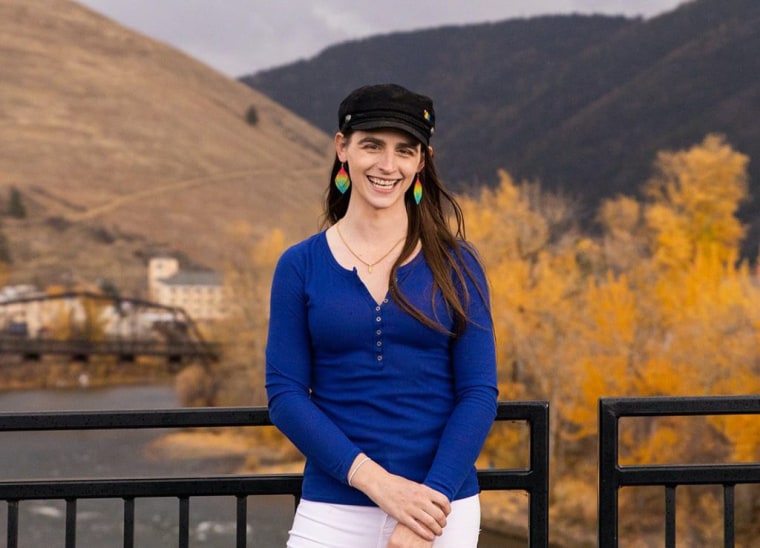
“Denying me an accurate birth certificate places me at risk of embarrassment or even violence every time I am required to present my birth certificate because it incorrectly identifies me as male,” said Amelia Marquez, one of the plaintiffs and a trans woman, in a statement.
S.B. 280 also made it impossible for many trans people to get a corrected birth certificate because such surgery is too expensive for many people, not all trans people want or need gender-affirming genital surgery, and many are not good candidates for it for medical reasons.
The state disagreed and said that S.B. 280 was necessary to maintain accurate birth records.
However, in April 2022, state Judge Michael Moses said that the law’s requirement of an unspecified surgical procedure made it impossible for anyone to follow. The judge then issued a temporary injunction against S.B. 280, essentially blocking it from going into effect.
But the state chapter of the ACLU says that Montana government officials have done nothing to comply with the judge’s order. For instance, a gender change form that DPHHS removed from its website after S.B. 280 was passed still hasn’t returned to the website.
“The fact that the state refuses to revert to the previous processes evidences its lack of respect for the judiciary and utter disregard for the transgender Montanans who seek to have a birth certificate that accurately indicates what they know their sex to be,” the ACLU said in their statement. “If the state continues to violate the preliminary injunction, we will have no choice but to seek relief from the court.”
Montana passed several other anti-LGBTQ laws in 2021, including a ban on transgender girls participating in school sports. The state also passed a law requiring schools to give 48-hours notice to parents if they are going to discuss LGBTQ people.
In July, a 35-year-old Black man from the Washington, D.C. area went from experiencing Covid-like symptoms to watching his body be overtaken by the aggravating, blistering boils of monkeypox. And yet, as he endured the agony and uncertainty that came with the disease, he said he had other, more pressing concerns.
The man, who asked to remain anonymous because of concerns related to the stigma associated with the disease, said he was alarmed by how difficult it was to find information on monkeypox and his doctor’s seeming dismissal of his concerns about his symptoms.
He said his case is an example of the concerning public health response to monkeypox, and, for the Black population in particular, follows a historical pattern of medical malfeasance and shortcomings.
The man said when he visited urgent care in early July, the doctor didn’t appear to take him seriously. “I asked if she was up on the latest CDC guidelines on monkeypox and she wasn’t,” he recalled. “So, she had to call the CDC to even get approval to administer me a test. She went on about how it would take an hour of paperwork and other stuff, so most doctors weren’t excited about giving the tests.”
The man, who is gay, said, “it was like a repeat performance” of some of the issues that came with the Covid pandemic, when Black people in many parts of the country had less access to treatment and vaccines, according to the Centers for Disease Control and Prevention.
Now with monkeypox, health care officials face the challenge of effectively communicating information about the spread of the outbreak without stigmatizing gay men. Public health officials interviewed by NBC News said managing that balance is critical to gaining public confidence to offset the intense mistrust of the medical establishment in the Black community. The poor response by health officials, the disparities in the vaccine rollout and the stigma associated with monkeypox have contributed to men questioning how the virus is spread — despite the data, experts say.
Data from the CDC found that, through July 22, 99% of cases were among men, 94% of whom reported recent sexual contact with males. The World Health Organization added that 98.7% of confirmed cases globally are in males, with 97.2% of those men reporting that they had sex with other men.
Black men across the country have been hit especially hard by the outbreak. Although Blacks make up roughly 12% of the population, they make up 38% of the most recent monkeypox cases, according to the CDC. In Atlanta, 71% of people with the infection, which can cause painful and irritating skin lesions, are Black men who have sex with men and about two-thirds of those men have HIV, according to the Georgia Health Department.
In North Carolina, one of the few states reporting on the monkeypox spread, 70% of those infected are Black men, with nearly all of the cases affecting men who have sex with men. However, only 24% of the vaccines in the state have gone to Black North Carolinians.
Those numbers worry Black gay men, as well as public health experts like Dr. Jayne Morgan, director of Piedmont HealthCare in Atlanta who hosts educational podcasts on monkeypox. She said the messaging has to be clear about who is at risk of contracting monkeypox and what preventive measures are available, all while being careful not to stigmatize specific groups of people.
Dr. Jayne Morgan.Courtesy Dr. Jayne Morgan
“We have the tools and enough information to stem this tide,” Dr. Morgan told NBC News. “Public health, like Covid, is about behavior. Monkeypox is being driven by behavior. And so behavior can also drive it in the opposite direction also.”
The 35-year-old D.C. resident, who no longer has monkeypox symptoms, called it “dangerous.”
David J. Johns, the executive director of the National Black Justice Coalition, a civil rights organization committed to empowering the Black LGBTQ community and people living with HIV/AIDS, said the attention monkeypox is receiving now is happening only because non-Black people are also impacted.
“The sad reality is that monkeypox isn’t new,” Johns said, adding that it has existed in Africa since the 1970s. “But because privileged white men from Western societies — in particular America — are now being impacted by something that otherwise only impacted disposable Africans, there is a now shift in the way that people are thinking about and talking about and are responding to a virus that has been impacting people for a lot longer than we otherwise want to acknowledge.”
Get the Morning Rundown
Get a head start on the morning’s top stories.SIGN UPTHIS SITE IS PROTECTED BY RECAPTCHA PRIVACY POLICY | TERMS OF SERVICE
Difficulty in being diagnosed and treated
The man from the D.C. area said that after a weekend of activities and attending “a crowded party” on July 10, he woke up the next day, “not feeling my best.” He was fatigued and had a fever of 102 and had trouble focusing. He left work early, believing he had contracted Covid.
He took a home test that came back negative. A test at urgent care confirmed he did not have the coronavirus. His fever eventually broke but he had a throbbing headache for days. And he said he experienced “rectal discomfort” and his blood pressure was elevated. Several days later, he began to feel better — but he noticed bumps on his face and arms.
After some resistance, the doctor finally swabbed the blisters on his face and wrists and sent him home with 800 milligrams of ibuprofen and a prescription for his anal pain. At his residence, he said he isolated himself in the attic. In the morning, he woke up to extreme throat soreness. He returned to urgent care, where the doctor again had to call the CDC to see how to treat him since he had been tested positive for monkeypox.
The physician was advised by the CDC to administer an antibiotic shot, which alleviated some of the throat pain. Meanwhile, the sores spread to other parts of his body — arms, legs, in particular.
But “it was kind of shocking,” he said, that his issues were not immediately addressed. He added he was given eight different numbers to call for assistance. “They dragged their feet the entire time.”
The man said he gave a list of the friends he had been in close contact with to the health department for contact tracing. He had already advised them to seek medical attention by the time the health department contacted them two weeks later. “And when they finally got someone, they were basically forced to say they had sex in order to get the vaccine,” he added, noting that his friends felt pressured to say they had sexual contact with him — even when some didn’t — in order to get immediate attention from health care professionals.
“When we talk about high-risk communities, we’re really talking about people who are sort of disaffected from the health care system,” Morgan said. “Stigma and discrimination for people in the LBGTQ community are already very high. And then if you add the Black race on top of that, and you have in monkeypox the same as we did with Covid — the black population is always the most vulnerable because we have the least resources, the least outreach and the most discrimination and stigma.”
In Los Angeles earlier in July, another Black man who also asked to remain anonymous because of the stigma associated with having the virus, outlined nearly identical concerns as the man in metro D.C. He, too, said he believed he didn’t contract the disease through sex. When symptoms occurred, he said he had difficulty finding a place that tested for monkeypox. And when he did locate a health center in downtown Los Angeles, the staff was “suited and booted as if I had a contagion,” he said, referring to the protective gear they wore.
Meanwhile, the disparity in those who have contracted monkeypox and those who have access to vaccines is glaring. While Black people account for about a third of monkeypox cases in the U.S., about 10% of vaccines have been administered to the group, according to the CDC.
The vaccine distribution disparities come as Dr. Rochelle Walensky, the head of the CDC, acknowledgedthat the agency must make drastic changes to respond better and faster to public health emergencies, following missteps during the Covid pandemic.
“We have learned less than nothing from Covid,” Stella Safo, a primary care physician at Mount Sinai who specializes in HIV treatment and is the founder of Just Equity for Health, told STAT News. “We’ve gone backwards.”
Dr. Tyeese Gaines.Courtesy Dr. Tyeese Gaines
Dr. Tyeese Gaines, a physician who practices emergency medicine in Illinois and New Jersey, said the more than two years of being on alert from the coronavirus pandemic has created “panic fatigue,” exasperating people to the point where they are less apt to protect themselves against monkeypox.
“We needed to tell people the reality of Covid-19,” Gaines said. “But eventually people just don’t want to hear it anymore. Some people say: ‘Oh, wow, there’s another scary virus. Let me be safer.’ But there’s still a subset of people whose response to fear is not to become more conservative or to follow whatever the rules are, but actually to act like it doesn’t exist and do the opposite.”