Popular dating services like Grindr, OkCupid and Tinder are spreading user information like dating choices and precise location to advertising and marketing companies in ways that may violate privacy laws, according to a new report that examined some of the world’s most downloaded Android apps.
Grindr, the world’s most popular gay dating app, transmitted user-tracking codes and the app’s name to more than a dozen companies, essentially tagging individuals with their sexual orientation, according to the report, which was released Tuesday by the Norwegian Consumer Council, a government-funded nonprofit organization in Oslo.
Grindr also sent a user’s location to multiple companies, which may then share that data with many other businesses, the report said. When The New York Times tested Grindr’s Android app, it shared precise latitude and longitude information with five companies.
A HIV-positive man has said he is “proud and overwhelmed” after becoming the first-ever person in Europe with HIV to become a commercial air pilot.
James Bushe, 31, wanted to be a pilot since he was a child. He began learning to fly at just 15 years old, and by the age of 17 he had his private pilot’s license – before he could even drive a car.
Five years ago, Bushe was diagnosed with HIV. In 2017, when he was offered a place on an airline’s training programme, but he was denied the medical certificate needed to obtain his commercial license because of his diagnosis.
At the time, the Civil Aviation Authority (CAA) was bound by rules from the European Aviation Safety Authority (EASA), which said that a medical certificate could not be granted to someone who was HIV-positive.
Bushe decided to fight his case, with the help of HIV Scotland, and document it anonymously on Twitter under the pseudonym “Pilot Anthony”. Two years on, he has won his case and revealed his identity, officially able to fly from Monday, January 13.
He has been training with the airline Loganair, flying alongside training captains since November 2019, but is now qualified to fly Embraer 145 Regional Jets from the airline’s base at Glasgow Airport.
According to the BBC, the CAA has changed its rules but will only allow HIV-positive people to fly in multi-pilot operations, as it said that is as far as it can go before the EASA reforms its own regulations.
James Bushe was diagnosed with HIV five years ago. (Loganair)
Bushe said: “I am proud, totally overwhelmed and so grateful to Loganair. But this is not just about me – it’s about anyone living with HIV who can now become a pilot.
“My hope now is that it triggers action not just in the UK but in the rest of Europe. Anyone who has felt restricted by the condition, who is in my situation, can now follow their dreams.”
He continued: “There is no reason in the year 2020 why a person who is HIV-positive should face barriers in any profession… Living with this condition doesn’t threaten my life or my health at all, and I cannot pass HIV on to others.
“I want to put that out there to the millions of people who are living with the same fear and stigma that I was once living with.”
Loganair chief executive Jonathan Hinkles added: “HIV is not a bar to employment in other industries and there is no reason why it should be so in aviation.”
Nathan Sparling, chief executive oh HIV Scotland, says that Bushe’s landmark win shows that whatever your status, you can follow your dreams.
“I extend my personal congratulations to James, thank him for bringing this issue into the public eye, and commend him for doing his part in fighting HIV-related stigma by waiving his anonymity,” he said.
“Without James’ determination to pursue his goals these unjust rules would still be in place, and this campaign shows that only by taking on unjust regulations and demanding change can we ever hope to change the world in which we live.”
CBS New York has confirmed that a reporter who named a man and revealed his HIV status in a dangerously misleading report has been dismissed.
The journalist was sacked after writing an article suggesting that a man put a police officer at risk of acquiring HIV by spitting in his mouth after he had been arrested for stealing a yoghurt at LaGuardia Airport.ADVERTISING
The alleged incident was described as a “HIV attack” in a tweet penned by the reporter, who also wrote that the “suspect admitted they spit into an officer’s mouth knowing they had HIV”.
“This online story should not have been published. It does not meet our journalistic standards, nor does it reflect our core values,” CBS New York told Gay City News (GCN).
CBS refuses to identify reporter who named man living with HIV.
While the “suspect” was named in the article, the author was not, with the byline left empty.
CBS New York has allowed the reporter to remain anonymous, declining a request by GCN to identify them.
“The person who wrote and published the story and social media post failed to review the copy with our news managers,” its statement continued.
“This individual is no longer employed by CBS New York.”
A spokesperson made clear that Tony Aiello, who was listed under the “filed under” section of the article, was not the journalist in question despite social media speculation. PinkNews has contacted CBS New York for further comment.
Port Authority union criticised for furthering stigma.
The article relied on quotes from the Port Authority Police Benevolent Association (PAPBA) union, which continued to connect the man’s HIV status to his arrest after the initial report.
“The problem is when a person with an infectious disease has a weapon, we have a problem with that,” the union’s public information officer Bob Egbert told GCN after the CBS story went viral.
GCN said that PAPBA has “not apologised or retracted any comments” a month after the report was first published, leading to heavy criticism from campaigners and LGBT+ groups. The union has been contacted by PinkNewsfor further comment.
Housing Works, which work to combat “the twin crises of AIDS and homelessness”, accused the union of trying to “create hysteria” around New York bail reforms which allowed the man to be released while facing charges.
Sean Strub, founder of POZ magazine, called it “a disappointing reality that HIV stigma is alive and well”.
“But when HIV stigma is perpetuated by law enforcement leadership, as in the comment from the PBA spokesperson, it is not only disappointing and irresponsible, but dangerous,” he told GCN.
“Just as bad was the CBS stations’ tweet headline referring to an ‘HIV attack’. That newsroom needs some serious remedial education, starting with a basic science course about what the actual routes and risks of HIV transmission.”
Two transgender women filed a lawsuit against the state of Florida on Monday over its ban on transgender-related health care for state workers, arguing it violates the U.S. Constitution and Title VII of the Civil Rights Act.
“We brought this lawsuit because all people need access to medical care. This is not about special treatment; this is about equal treatment,” said lead counsel Simone Chriss. “Transgender state employees are singled out and explicitly denied coverage for one reason: They are transgender. That is discrimination, and it cannot stand.”
Jami Claire.ACLU Foundation of Florida
The suit, which was brought by Southern Legal Counsel, the ACLU of Florida and Eric Lindstrom, an attorney, seeks to end Florida’s State Plan Exclusion, a rule that prohibits state employer-provided health plans from covering “gender reassignment or modification services or supplies.”
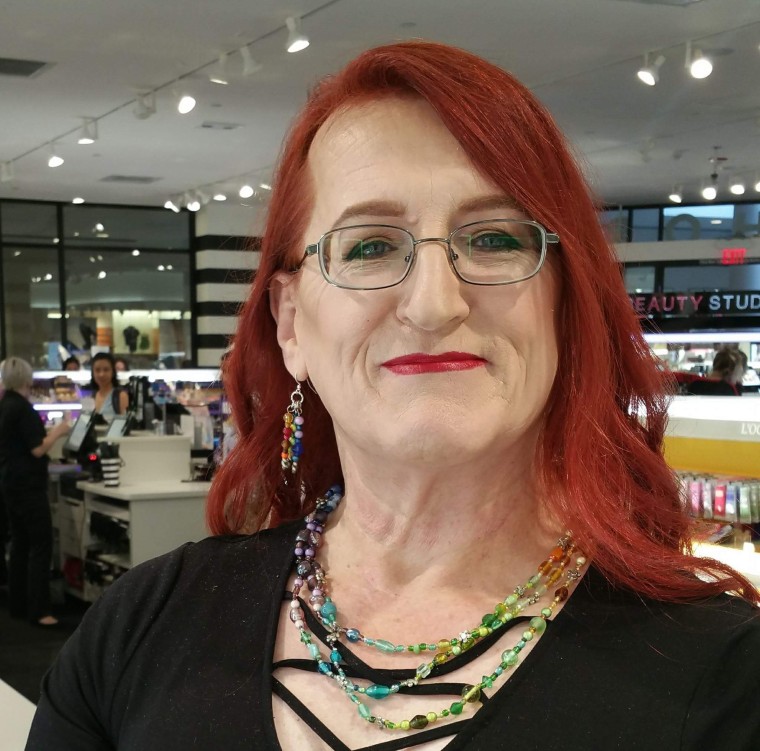
The plaintiffs, Jami Claire and Kathryn Lane, both state employees, have had to delay their transition-related care, which their suit argues worsened their gender dysphoria.
In part because many of the same private insurance plans provided by Florida to its employees would cover transition-related care if the plans were provided by nonstate employers, the suit argues that the State Plan Exclusion “constitutes unlawful sex discrimination in violation of Title VII and the Equal Protection Clause.”
“As a result of the State Plan Exclusion, nontransgender employees receive coverage for all medically necessary health care, but transgender employees do not,” the suit states.
For example, if a cisgender Florida state employee required an orchiectomy as treatment for testicular cancer, it would be covered by his state-provided plan. However, if a transgender woman sought the same surgery to eliminate testosterone production and alleviate gender dysphoria, it would not.
The plaintiffs are both employees of the state of Florida — Claire is a researcher at the University of Florida’s College of Veterinary Medicine, and Lane works in a Tallahassee public defender’s office. Both are covered by employer-sponsored health plans, but since the plans are provided by the state, they are banned from any coverage for transition-related health care.
The suit claims the plaintiffs have also faced additional financial burdens due to the state’s trans health care ban.
Claire began her transition in 1997, but was forced to pause in 2002 after her divorce affected her finances. Claire said she then attempted suicide three times.
“I literally couldn’t see a way financially forward,” she explained. “I went through 10, 14 years of hell.”
She resumed her transition 16 years later, and in 2016 fully transitioned socially. Although she has paid for her private insurance premiums through her employer, the University of Florida, Claire has been barred from any coverage of her transition-related care, and has therefore been forced to pay out of pocket for all of transition-related expenses.
Claire’s experience with her employer has been positive — Claire said the university has been understanding as she has worked through her mental health challenges. However, she said her health plan’s ban on trans-related care has made her feel like “a second-class employee.”
“I pay for my health insurance for 30 years now, but I can’t use all of it,” she said. “Everybody else pays for their insurance and they get to use it like they want, but I don’t get to use mine.”
Billy Huff.ACLU Foundation of Florida
One of the original plaintiffs in the case, a transgender man, Billy Huff, will be called as a witness instead. Huff said he left Florida for a job in Illinois, since staying in the state while subject to the State Plan Exclusion was having too great an impact on his gender dysphoria.
“Part of the impact was having to leave,” Huff told NBC News. “I left my home and my friends.”
Huff was the director of the University of Florida’s LGBTQ center, where he said he promised students that he “would be their best advocate.”
“Knowing that a lot of students that I worked for would go on to work for state offices in Florida, I thought I should try to change it if I could do something,” Huff said of his efforts to start the lawsuit.
“When I was looking to leave, I only applied at universities that were in states that covered transition-related health care,” Huff said. “That was one of my main qualifications.”
In addition, the U.S. Supreme Court is currently reviewing the question of whether Title VII of the Civil Rights Act — which “prohibits employment discrimination based on race, color, religion, sex and national origin” — affords protections to LGBTQ people through its ban on “sex” discrimination.
The US’s largest interdenominational Christian seminary is embroiled in a second discrimination lawsuit over its expulsion of a student for being in a same-sex marriage.
Two former students, Nathan Brittsan and Joanna Maxon, are each suing the Fuller Theological Seminary for $1 million, claiming that the college violated anti-discrimination laws.
The suit is believed to be the first of its kind, and its outcome could have wider implications for Christian colleges and universities who receive government funding.
Maxon launched legal action in November, saying that disciplinary proceedings were initiated against her when the school’s financial aid office flagged information from her tax returns which showed she had a same-sex spouse.
On January 7 she was joined by Brittsan, who is also a baptist pastor. He alleges that he was dismissed from the Christian school in 2017 when administrators learned of his same-sex marriage from a request to change his surname.
Brittsan later disclosed his marriage to another dean and a professor, but the suit says that he “was not informed that this discussion was actually part of an initial inquiry or investigation by Fuller into Nathan’s perceived community standards violation”.
The seminary’s community standards state that “sexual union must be reserved for marriage, which is the covenant union between one man and one woman, and that sexual abstinence is required for the unmarried”. It adds that premarital, extramarital, and homosexual sex are “inconsistent with the teaching of scripture”.
But even if the school is able to prove that Brittsan and Maxon engaged in the prohibited form of sexual conduct, the lawsuit argues that it had no right to discriminate against them under Title IV of the Civil Rights Act.
While certain religious colleges are eligible to apply for exemptions from Title IV, Fuller has not received such an exemption.
@MAKERSwomen Hello, I wanted to share with you this post from Joanna Maxon who posted this on what would have been her graduation day from @fullerseminary had they not kicked her out.
In addition to this, the information on Maxon’s tax returns was protected by the Family Educational Rights and Privacy Act, which prohibits the data being shared without the student’s consent or used for something the student didn’t authorise.
When Brittsan twice appealed his expulsion, the seminary actually disputed his enrolment. When he requested to see his disciplinary records, which were needed for him to appeal to the school’s Board of Trustees, the seminary disputed that they were required to release the records.
A 14-year-old transgender boy is suing New York state over its policy barring minors from changing the gender marker on their birth certificates.
“Possessing accurate identification documents that are consistent with a person’s gender identity — a person’s core internal sense of their own gender — is essential to their basic social and economic well-being,” the lawsuit, filed Tuesday by the LGBTQ legal advocacy group Lambda Legal, states. “Access to employment, education, housing, health care, banking, travel and government services all hinge on having appropriate and accurate personal documentation that reflects a person’s true identity.”
Since 2014, New York state has allowed transgender adults to change the gender marker on their birth certificates. However, the policy does not extend to those younger than 18. Tuesday’s lawsuit claims this policy “violates the United States Constitution’s guarantees of equal dignity, equal protection of the laws, fundamental rights to privacy, liberty, and autonomy, and freedom of speech.”
Omar Gonzalez-Pagan, one of the Lambda Legal attorneys working on the case, said the state’s existing policy could also put transgender youth in harm’s way.
“Studies show that having inaccurate identification documents exposes transgender people to discrimination, harassment and violence,” he said in a statement. “Moreover, transgender minors suffer from higher levels of anxiety, depression and suicide rates when they don’t have a supportive environment.”
In a statement emailed to NBC News on Tuesday, a spokesperson for Gov. Andrew Cuomo, one of the defendants listed in the suit, touted New York state’s record as a leader in LGBTQ rights and said the lawsuit was currently being reviewed.
“From passing GENDA, to outlawing conversion therapy and eliminating the so-called ‘trans panic’ defense, New York has always been at the forefront of protecting and advancing the civil rights of transgender and gender nonconforming people,” Peter Ajemian, senior deputy communications director for the governor’s office, stated. “We are deeply sympathetic to the situation as it has been described to us and are reviewing this lawsuit.”
The teen at the center of the lawsuit, referred to only as M.H.W., was born in Ithaca, New York, but now resides in Houston, where he attends high school. In a statement released Tuesday, M.H.W. pleaded with the state to change his birth certificate gender marker from female to male and “respect my identity.”
“I am a boy. It’s frustrating to see New York State deny me the opportunity to correct my birth certificate, which I need for so many important facets of my life,” he stated. “Having an inaccurate birth certificate can cause the disclosure of my transgender status when I enroll in college classes or when I get my driver’s license, and expose me to possible harm.”
M.H.W.’s mother, Jennifer Wingard, is listed along with her son as a plaintiff. Wingard said she just wants “what is best” for her son.
“Our son is a boy, but New York State refuses to recognize him as such,” Wingard said in a statement. “We have been able to update our son’s other identity documents, such as his passport and social security records. So we were shocked when the only remaining roadblock came from New York State.”
Currently, at least 28 states allow transgender adults to change the gender marker on their birth certificates, though some of them require proof of sex reassignment surgery or a court order to do so, according to the LGBTQ think tank Movement Advancement Project. A number of these states, including California, Colorado, Connecticut, New Jersey, Massachusetts, Pennsylvania and Washington permit trans minors to do so as well, according to Lambda Legal.
A new cure strategy designed to harness the power of the immune system to achieve HIV remission in people living with HIV will begin at the University of California, San Francisco in 2020. The study was described and announced at the amfAR 2019 HIV Cure Summit held on November 21, 2019.
“This is kind of an unprecedented human clinical trial, putting together a lot of things that we think will optimally stimulate the immune system,” said Rachel Rutishauser, MD, PhD, from UCSF and Zuckerberg San Francisco General Hospital. “The main clinical outcome will be to understand the proportion of people who are getting the vaccine in the combination trial who achieve post-treatment control [of HIV].”
This small pilot study will enroll 20 people living with HIV who have been on stable, continuous antiretroviral therapy for 12 or more months.
To measure the safety of the cure strategy, the study will assess adverse events that may include lab toxicities or clinical symptoms. To measure efficacy, the study will measure the proportion of study participants who do not experience viral rebound (i.e., who have suppressed viral loads without HIV medication) 24 weeks after the treatment is administered.
The treatment involves a combination of therapies meant to boost the immune system’s CD8 T-cell response to identify and kill off latently HIV-infected cells and reduce the size of the HIV reservoir.
“The advantage of CD8 T-cells is they can recognize infected cells specifically, and they can actually kill them,” said Rutishauser.
During stages 1 – 3 of the study (lasting 24 weeks), participants will receive a “prime-boost” DNA plasmid vaccine to elicit an initial CD8 T-cell response along with a boosting agent. (This is the same vaccine being tested in a prevention vaccine study by the HIV Vaccine Trials Network.)
In stage 4 of the study, participants will receive two immunomodulatory agents: a toll-like receptor-9 (TLR9) agonist and broadly neutralizing antibodies (bNAbs). The TLR9 agonists are expected to broadly activate the immune system—by getting the virus to come out of latently-infected cells and “present” itself to the immune system, boost the response of CD8 T-cells, and also increase the effectiveness of natural killer (NK) T-cells which kill off HIV-infected cells. Broadly neutralizing antibodies will also be given during this stage to reduce the size of the HIV reservoir.
The last stage of the study includes a treatment interruption, with a final dose of broadly neutralizing antibodies being given right as treatment is stopped.
“The broadly neutralizing antibodies should control the virus on their own. But as they wear off, you give the virus a chance to sort of come out but be partially controlled by the broadly neutralizing antibodies. And our hope is that we’ve created an immune response that will then outpace the virus or sort of beat the virus as it’s coming out of latency,” said Rutishauser.
Established in 2015 with a five-year, $20 million grant, the amfAR Institute for HIV Cure Research brings together collaborative research teams with the goal of establishing a scientific basis for a cure by the end of 2020. Find out more about the road to an HIV cure in this video by amfAR.
Prosecutors had asked Clark County Judge David Gregerson to order no bail, or a minimum $6 million bail, for David Bogdanov, of Vancouver, but the judge said the lower amount was appropriate because Bogdanov has no prior criminal history.
Nikki Kuhnhausen.Vancouver Police Dept.
Bogdanov, 25, was arrested Dec. 17 and charged with second-degree murder in the death of 17-year-old Nikki Kuhnhausen.
Kuhnhausen disappeared June 6 and her remains were discovered in a remote area of Larch Mountain on Dec. 7 by someone gathering bear grass.
Prosecutors recently added a hate crime charge because they believe Bogdanov strangled Kuhnhausen after learning she was transgender, The Columbian newspaper reported.
A large crowd turned up for the bail hearing and rallied outside the courthouse to show support for Kuhnhausen’s family and to raise awareness of the dangers that face transgender youth. So many people attended the hearing that some had to watch the hearing from a second room through a closed-caption TV system.
Hundreds of people also attended a Dec. 20 vigil for the teen at Vancouver United Church of Christ in Hazel Dell.
In court documents, Vancouver police say Kuhnhausen and Bogdanov met in downtown Vancouver on June 6 and he and his brothers invited her to a bar for a drink. Bogdanov told detectives he gave her his coat because she was cold and after one drink, he let her keep what was left in a bottle of vodka before she returned home.
Kuhnhuasen did go home, but went out again to meet Bogdanov several hours later. At some point, court documents say, she told Bogdanov she was assigned male at birth.
In an Oct. 2 interview with police, Bogdanov said at that point he asked Kuhnhausen to get out of his van and he never saw her again.
He told detectives he was “shocked,” “uncomfortable,” and “really really disturbed” to learn that Kuhnhausen was transgender, according to the affidavit. Detectives wrote in court documents that they believe that is when Bogdanov killed the teen.
Cell phone records show Bogdanov was in the Larch Mountain area later in the day on June 6.
A medical examiner ruled the teen’s cause of death was asphyxiation.
Giaura Fenris, a transgender woman, was on the dating app Grindr looking for people to chat with and meet when a user whose profile picture was of a cute nurse messaged her. After some pleasantries, however, Fenris realized the hunky health professional wasn’t there for a hookup.
She said he asked her “a couple of questions, nothing too invasive” and then revealed he was an employee at a nearby health clinic in Brooklyn, where she lives. He then offered her a sexually transmitted infection testing appointment and help getting health insurance.
“I was like, ‘Oh, that’s great. Please sign me up right away,’” Fenris told NBC News.
Giaura Fenris.Courtesy Giaura Fenris
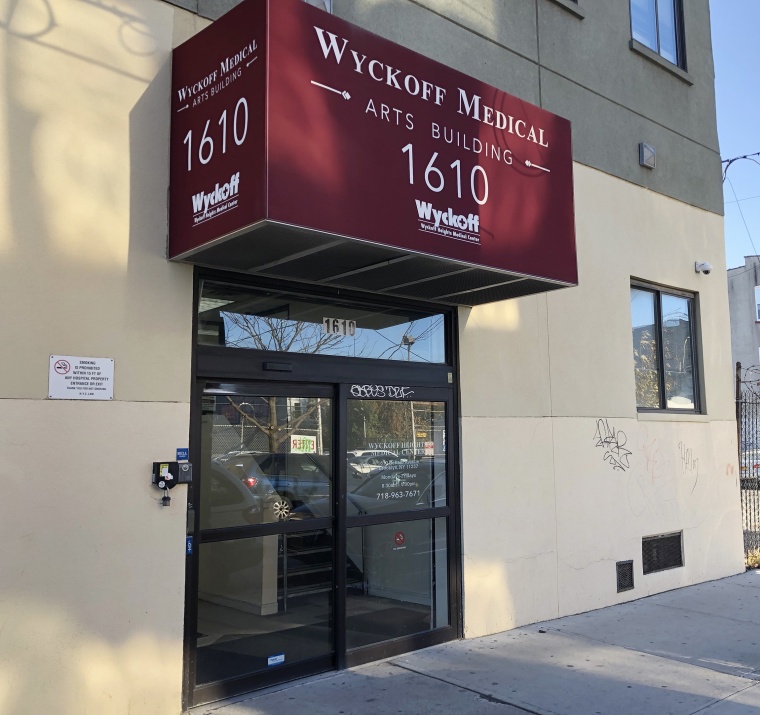
Wyckoff Heights Medical Centeris thought to be the first health center in New York City — and perhaps beyond — to incorporate gay dating apps such as Grindr, Jack’d and Scruff into its sexual health efforts. The center’s method differs from the usual sexual health advertisements one can see on the apps. Staffers interact with other users with their own account like a regular user would — except they offer sexual health services. The center says the innovative approach is working: Since its launch in 2016, the program has attracted more than 300 clients to the facility.
Most of these clients are black and Hispanic gay men and trans women, groups that are disproportionately affected by HIV. Gay and bisexual men comprised 70 percent of the new HIV diagnoses in the U.S. in 2017, and of those gay and bisexual men diagnosed with HIV, 37 percent were black and 29 percent were Hispanic, according to the Centers for Disease Control and Prevention.
The program’s launch
The program was started by Anton Castellanos-Usigli, who had just finished his master’s degree in public health at Columbia University when in 2015 he was recruited by Wyckoff Heights Medical Center.
“The center hired me precisely because they wanted to increase the number of gay and bisexual Hispanic clients,” Castellanos-Usigli, who had migrated from Mexico in 2013, said. This client population, he added, “is one of the populations who needed these services the most.”
Wyckoff Heights Medical Center in Brooklyn.Arno Pedram
Shortly after being hired, Castellanos-Usigli recalls thinking to himself, “You are young, you’re Hispanic yourself, where do you talk to other gay guys about sex? Grindr!”
So in February 2016, he created a profile with the image of a good-looking nurse in medical clothing and started to chat with people on Grindr. After opening up with pleasantries, he shifted the conversation to offering sexual health services.
Andrew Gonzalez, a program manager at the center, said responses vary from those “who are very grateful” for getting health information and a clinic appointment through the app to those who are disappointed the cute nurse isn’t a potential date.
“Sometimes people aren’t quite ready to receive the information and pursue testing services,” Gonzalez said.
However, Gonzalez said, oftentimes those who are successfully contacted through gay dating apps go on to tell their friends about the center’s services.
“So, essentially, we’re providing these people the tools … to educate and inform other community members about services,” he said.
‘We have to treat the whole person’
Through Grindr and other gay dating apps, the center brings clients into its Status Neutral program, which aims to keep HIV-positive patients at an untransmittable viral load and protect HIV-negative patients against infection through condoms, regular testing and PrEP or preexposure prophylaxis.
Since its launch, the center has standardized the practice and tracked its results. Between 2016 to 2018, the strategy attracted 233 new clients — 67 percent of them Hispanic, 17 percent black and over half uninsured, according to Castellanos-Usigli. He said a higher-than-average percentage (5 percent) of these new clients were diagnosed with HIV, and they were connected with medical care. More than 60 percent of the 233 new clients, he added, were referred to PrEP for HIV prevention. Twenty-nine patients received personalized cognitive counseling, an evidence-based intervention to reduce risks for gay and bisexual men who have casual sex without condoms.
“A lot of times, people come in for testing, and they have greater needs than testing,” Laurel Young, the program’s interim director, said. “If we treat a person … we have to treat the whole person, not just the symptoms.”
Young said the facility’s Status Neutral program combines traditional medical care with help in navigating health insurance, employment, job access, housing and legal support. That way, she added, patients can address other factors such as poverty, immigration status or homelessness that have an impact on their health.
When Fenris, now 30, first walked into the center in February 2017, she was burdened by several issues that were negatively affecting her physical and mental health. She moved to New York the year prior to escape a living situation in another state that she said was stifling her transgender identity, and she had just had an incident with a hookup that led her to start post-exposure prophylaxis (PEP), a one-month treatment to resist HIV infection right after potential exposure. She also had a history of depression for which she had stopped taking medication, and she was about to lose her insurance.
During her first visit to Wyckoff Heights Medical Center, staffers tested Fenris for HIV, started her on HIV-prevention medication, helped her find new insurance and referred her to mental health services. The center also helped her create a plan to secure financial stability and manage her increased rent payments.
‘Cultural competency and humility’
Wyckoff Heights Medical Center serves a diverse and at-risk population, and because of this, staffers say hiring and training decisions are crucial.
“Having staff members that identify with populations we serve accompanied with cultural competency and humility trainings help best serve the population to decrease stigma,” Gonzalez said.
This was part of the reason the center hired Castellanos-Usigli back in 2015 — and Fenris last year. Fenris, a trans Latinx, was hired by the center in May 2018 as a consultant and peer educator. She works within the clinic’s Substance Abuse and Mental Health Services program and its Status Neutral program, ensuring patients are getting the care they need.
“Today, I made sure that a trans patient had a gender-affirming procedure, that they were referred to with their pronouns, that they go to their appointments and helped setting up transportation,” Fenris said recently.
Trans people in particular face barriers in health care: A 2016 studyon the barriers to transgender health care in New York found 48 percent of trans respondents “felt that the organizations that provided the care they needed were not transgender sensitive.”
Wyckoff’s commitment to being accessible, culturally sensitive and having a diverse staff representing the community it serves addresses those barriers head on.
Since Wyckoff Heights Medical Center launched its innovative program in early 2016, at least one other community health clinic has launched a similar program. CAMBA, in Brooklyn, has seen similar success using gay dating apps to reach individuals at high-risk of HIV infection: From 2017 to 2018, 65 percent of its clients linked to PrEP or PEP services were reached through apps apps like Grindr.
Castellanos-Usigli believes his data “speaks to the power that this strategy has” and he hopes to convince other agencies to adopt it.
Leaders of the United Methodist Church, the second-largest Protestant domination in the nation, announced on Friday a plan that would formally split the church after years of division over same-sex marriage.
Under the plan, which would sunder a denomination with 13 million members worldwide, a new “traditionalist Methodist” denomination would be created, and would continue to ban same-sex marriage as well as the ordination of gay and lesbian clergy.
A separation in the Methodist church had been anticipated since a contentious general conference in St Louis last February, when 53 percent of church leaders and lay members voted to tighten the ban on same-sex marriage, declaring that “the practice of homosexuality is incompatible with Christian teaching.”
The plan, referred to as “Protocol of Reconciliation & Grace Through Separation,” would need to be approved by the 2020 General Conference later this year before taking effect.
The church hopes that by splitting into two denominations, it can end or greatly reduce its decades-long struggle over how accepting to be of homosexuality.
“It became clear that the line in the sand had turned into a canyon,” said New York Conference Bishop Thomas Bickerton, who was among the diverse group of 16 church leaders who worked on the proposal. “The impasse is such that we have come to the realization that we just can’t stay that way any longer.”