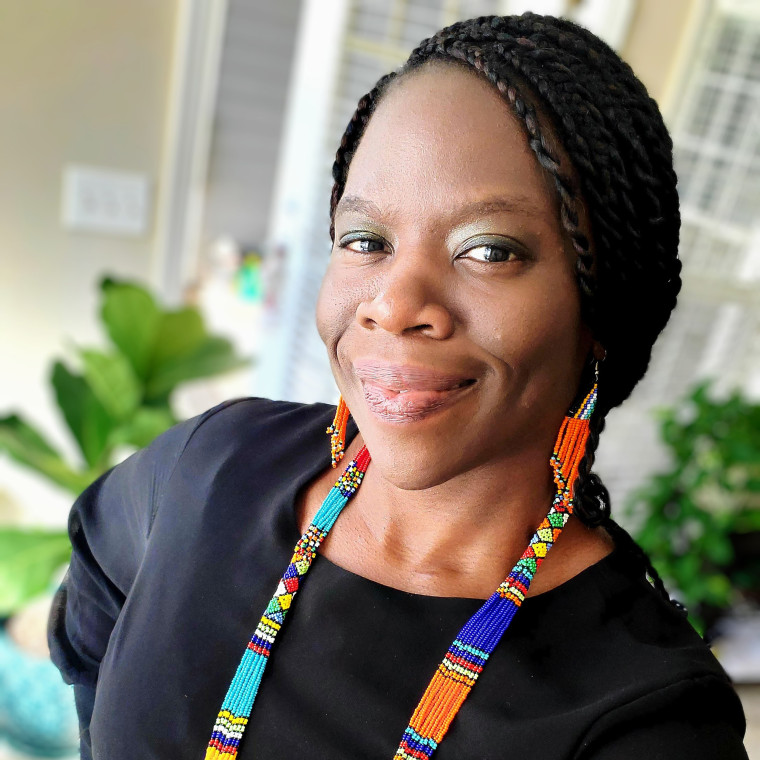
The North Face became the latest company attacked by the right for advertising to LGBTQ+ people for Pride Month, but unlike some other giant corporations, they are standing by their brand partner and issued a statement supporting LGBTQ+ equality.
Conservatives – including Reps. Marjorie Taylor Greene (R-GA) and Lauren Boebert (R-CO) – were outraged last week that the outdoors-themed drag queen Pattie Gonia made a video announcing The North Face’s “Summer of Pride” event on Instagram, part of a brand partnership. The video didn’t include any nudity, sex, or coarse language, but that didn’t stop the right from getting angry at it.
“Big name brands sexually targeting children makes me want to buy all generic brand clothing now,” Greene wrote in response to the video, adding the hashtag #BoycottGroomers, an accusation that LGBTQ+ people are child sex abusers.
“Well, I guess North Face wanted to get a taste of what conservatives did to Bud Light and Target,” Boebert wrote. “How many times do we have to explain to the woke marketing departments at these disgusting companies that America is not a nation of degenerates?”
But, unlike Bud Light and Target, The North Face isn’t backing down.
“The North Face has always believed the outdoors should be a welcoming, equitable, and safe place for all,” the company said in a statement. “We are honored and grateful to support partners like Pattie Gonia who help make this vision a reality.”
“Creating community and belonging in the outdoors is a core part of our values and is needed now more than ever. We stand with those who support our vision for a more inclusive outdoor industry.”
The North Face turned off comments on their Instagram posts about the Pride Month event but comment sections on other posts are full of anti-LGBTQ+ messages.
In April, the right attacked Bud Light for its brand partnership with transgender influencer Dylan Mulvaney, which involved a short Instagram video as well.
Anheuser-Busch, which owns Bud Light, released tepid statements about how the company “never intended to be part of a discussion that divides people” but did not stand up for Mulvaney or LGBTQ+ people more generally.
“The North Face is following hundreds of other businesses that include and stand with LGBTQ people and our allies,” said GLAAD CEO and president Sarah Kate Ellis. “At a time when over 20% of Gen Z is LGBTQ and a supermajority of Americans support LGBTQ people, The North Face’s decision should be a signal to other companies that including LGBTQ people and allies is better for business than siding with a small number of violent extremists who want to keep LGBTQ consumers and employees invisible.”
The Transgender Legal Defense and Education Fund has sued the state of Tennessee over the exclusion of transition-related care from the state’s health insurance plan.
In the suit, filed Thursday in U.S. District Court for the Middle District of Tennessee, TLDEF is representing a current participant in the plan and a former one. Gerda Zinner (pictured, left), an academic adviser at the University of Tennessee at Chattanooga, is a trans woman who was denied surgery because the state’s public employee health plan, the State of Tennessee Comprehensive Medical and Hospitalization Program, categorically excludes coverage for transgender-related health care. Story VanNess is a trans woman who was a special education teacher for Knox County Schools for five years, was enrolled in the state’s plan but was also denied coverage for gender-affirming surgery.
The state covers the same procedures for cisgender people to treat injuries, illnesses, or other conditions but excludes them for the purpose of gender transition.
“The only reason the State of Tennessee refuses to provide these women with coverage for medically necessary health care is because they are transgender,” Ezra Cukor, TLDEF staff attorney, said in a press release. “This is clearly unlawful discrimination that jeopardizes the health of hardworking state employees and their families.”
“It took years of careful consideration before I was finally in a position to move forward with surgical care, an important part of my transition,” Zinner said in the release. “Knowing that the only reason I can’t get the care that my doctors and I have decided that I need is because I’m transgender is hurtful and makes me feel second-class.”
“Working with students who have special needs was one of the greatest joys of my life, but it was excruciating to be denied coverage for needed health care simply because I’m transgender,” VanNess added.
The suit argues that Tennessee officials are violating the Equal Protection Clause of the U.S. Constitution, Title IX of the Education Amendments of 1972, and Title VII of the Civil Rights Act of 1964 by unlawfully discriminating based on sex and transgender status.
“Federal laws protect transgender people from workplace discrimination on the basis of sex,” Darren Teshima, partner at Covington & Burling LLP, which is handling the suit with TLDEF and other attorneys, said in the release. “This lawsuit seeks to ensure that the State of Tennessee and its affiliates stop wrongfully excluding medically necessary transition-related care from their employee health care plans. Covington is very proud to partner with our co-counsel and clients in this important work.”
Today, the Human Rights Campaign (HRC), GLAAD, GLSEN, Family Equality, National LGBTQ Task Force, National Center for Lesbian Rights, and National Black Justice Coalition, in partnership with more than 100 organizations, renewed their call for Target and the business community to reject and speak out against anti-LGBTQ+ extremism going into Pride Month. Additionally, the coalition stands in solidarity with the LGBTQ+ employees at companies like Target, as well as the designers of Pride merchandise, who have experienced horrendous, unhinged attacks while simply showing up to work. Harassment and threats of violence, anywhere and at any time, against good people just doing their jobs to make a living is completely unacceptable and irrational. As highlighted in the statement below, the coalition has communicated expectations that Target provide necessary security measures for employees’ safety while also showing support for the LGBTQ+ community by denouncing extremists.
The full coalition statement is as follows:
Recent pushback against businesses such as Anheuser-Busch and Target, blatantly organized by extremist groups, serves as a wake-up call for all businesses that support the LGBTQ+ community. We’ve seen this extremist playbook of attacks before. Their goal is clear: to prevent LGBTQ+ inclusion and representation, silence our allies, and make our community invisible. These attacks fuel hate against LGBTQ+ people, just as we’ve seen this year with more than 500 anti-LGBTQ+ bills that restrict basic freedoms and aim to erase LGBTQ+ people.
Extremist attacks and harassment of businesses for standing in solidarity with the LGBTQ+ community and values of diversity, equity, and inclusion have challenged Target, and businesses more broadly, to lead – to demonstrate they mean what they say when investing in and standing with LGBTQ+ people, creatives, and organizations. Businesses must continue to lead and respond with unwavering support for LGBTQ+ employees, shareholders, customers, allies – and the broader community. When values of diversity, equity, and inclusion are tested, businesses must defend them unequivocally.
Doubling down on your values is not only the right thing to do, it’s good for business. Research shows that if a brand publicly supports and demonstrates a commitment to expanding and protecting LGBTQ+ rights, Americans are 2x more likely to buy or use the brand. Americans ages 18-34 are 5.5x more likely to want to work at a company if it publicly supports and demonstrates a commitment to expanding and protecting LGBTQ+ rights.
It isn’t just LGBTQ+ consumers and communities: 70% of non-LGBTQ+ people believe companies should publicly support and include the LGBTQ+ community through practices like hiring, advertising, and sponsorships (Accelerating Acceptance, 2023).
At this moment, it’s critical that Target champions equity and inclusion as it has for over a decade. Target consistently tops the list for brands that show genuine, authentic support of the LGBTQ+ community through outreach and policies. Target received recognition for outstanding commitment to DEI from the Executive Leadership Council in 2022. It’s time to prove the recognition was earned.
When it comes to advancing diversity, equity, and inclusion, there is no such thing as neutrality.
We’re calling on Target to:
release a public statement in the next 24 hours reaffirming their commitment to the LGBTQ+ community
put Pride merchandise back on the sales floor and online in full
ensure the safety of team members who are on the front lines
Target, and all businesses, can leverage the support of LGBTQ+ organizations to navigate this hate, so that together, we can let extremists know unequivocally that, just as with every other failed anti-LGBTQ+ campaign of the past, fear will not win.
The following organizations have signed on to the statement:
AAPI Victory Alliance
Accountable For Equality
Ace and Aro Alliance of Central Ohio
Alaskans Together for Equality
All Under One Roof LGBT Advocates of Southeastern Idaho
Alliance For Full Acceptance
Arizona Trans Youth and Parent Organization
Bans Off Miami
Bayard Rustin Center for Social Justice
Black Leaders Organizing for Communities (BLOC)
Brooklyn Community Pride Center
Capital Pride Alliance
Carolinas CARE Partnership
CASA
CASA in Action
Center for Psychological Growth
Center on Halsted
CenterLink: The Community of LGBTQ Centers
Central Valley Pride
Centre LGBT+
City of Milwaukee Equal Rights Commission
Colors+
Compass LGBTQ Community Center
Delmarva Pride Center
Diverse & Resilient
Eastern PA Trans Equity Project
Emerald Coast Equality
Equality California
Equality Community Center
Equality Federation
Equality Michigan
Equality NC
Equality New York
Equality Virginia
EqualityMaine
EqualityMaine
Equitas Health
Fairness Campaign
Family Equality
Florida Freedom to Read Project
FREE MOM HUGS
Freedom Oklahoma
Freedom Virginia
Garden State Equality
Georgia Equality
GLAAD
GLSEN
GMHC
Grand Strand PRIDE
Henderson Equality Center
Hope CommUnity Center
Hudson Pride Center
I Am Human Foundation
inclusion tennessee
Indiana Youth Group (IYG)
Institute for LGBT Health and Wellbeing
InterPride
Kaleidoscope Youth Center
Lavender Rights Project
Lexington Pride Center
LGBT Center of Raleigh
LGBT Detroit
LGBT+ Family & Games
LGBTQ Center OC
LGBTQ+ Center of Southern Nevada
Live Out Loud
Los Angeles LGBT Center
Louisiana Trans Advocates
Make the Road Nevada
Massachusetts Transgender Political Coalition
Matthew Shepard Foundation
Milwaukee LGBT Community Center
MoCo Pride Center
Muncie OUTreach LGBTQ+ Center
National Black Justice Coalition
National Center for Lesbian Rights
National LGBTQ Task Force
NMAC
North Las Vegas Equality Center
North San Diego County LGBTQ Resource Center
NYC Pride
Oklahoma Progress Now
One Colorado
One In Long Beach, Inc.
OUTMemphis
OutReach LGBTQ+ Community Center
Pittsburgh Lesbian Correspondents
Point of Pride
Pride at Work – Rochester Finger Lakes Chapter
Pride Foundation
Prism Counseling & Community Services
Project Pride SRQ
Queer Northshore
QUEERSPACE collective
Qweerty Gamers
Rainbow Rose Center
Real Mama Bears
Resource Center
Rockland County Pride Center
Sacramento LGBT Community Center
Seacoast Outright
Shoals Diversity Center
Silver State Equality
SPEKTRUM Health
St. Tammany Library Alliance
Stonewall Columbus
Tennessee Equality Project
The Center: 7 Rivers LGBTQ Connection
The LGBT Community Center of Greater Cleveland
the Montrose Center
The Normal Anomaly Initiative, Inc
The Personal Stories Project
The Pride Center at Equality Park
The Sacred Cloth Project
The Spahr Center
TransFamily Support Services
Transgender Legal Defense & Education Fund
Transgender Resource Center of New Mexico
Transgender Resource Education and Enrichment Services-TREES Inc.
Transinclusive Group
TransOhio
Truth Wins Out
UltraViolet
Upstate SC LGBT+ Chamber of Commerce
Uptown Gay and Lesbian Alliance (UGLA)
Us Giving Richmond Connections
Waves Ahead Corp
We Are Family
Wisconsin Coalition Against Sexual Assault
Women’s Emergency Network
Woodhull Freedom Foundation
YouthSeen
Zebra Youth
603 Equality
###
The National Center for Lesbian Rights (NCLR) is a national legal organization committed to advancing the human and civil rights of the lesbian, gay, bisexual, transgender, and queer community through litigation, public policy advocacy, and public education. Since its founding, NCLR has maintained a longstanding commitment to racial and economic justice and the LGBTQ community’s most vulnerable. www.nclrights.org
Recent pushback against businesses such as Anheuser-Busch and Target, blatantly organized by extremist groups, serves as a wake up call for all businesses that support the LGBTQ+ community.
We’ve seen this extremist playbook of attacks before. Their goal is clear: to prevent LGBTQ+ inclusion and representation, silence our allies and make our community invisible.
These attacks fuel hate against LGBTQ+ people, just as we’ve seen this year with more than 500 anti-LGBTQ+ bills that restrict basic freedoms and aim to erase LGBTQ+ people.
Extremist attacks and harassment of businesses for standing in solidarity with the LGBTQ+ community and values of diversity, equity and inclusion have challenged Target, and businesses more broadly, to lead – to demonstrate they mean what they say when investing in and standing with LGBTQ+ people, creatives, and organizations.
Businesses must continue to lead and respond with unwavering support for LGBTQ+ employees, shareholders, customers, allies – and the broader community. When values of diversity, equity and inclusion are tested, business must defend them unequivocally.
Doubling down on your values is not only the right thing to do, it’s good for business. Research shows that if a brand publicly supports and demonstrates a commitment to expanding and protecting LGBTQ+ rights, Americans are 2x more likely to buy or use the brand.
Americans ages 18-34 are 5.5x more likely to want to work at a company if it publicly supports and demonstrates a commitment to expanding and protecting LGBTQ+ rights.
It isn’t just LGBTQ+ consumers and communities: 70% of non-LGBTQ+ people believe companies should publicly support and include the LGBTQ+ community through practices like hiring, advertising and sponsorships (Accelerating Acceptance, 2023).
At this moment, it’s critical that Target champions equity and inclusion as it has for over a decade. Target consistently tops the list for brands that show genuine, authentic support of the LGBTQ+ community through outreach and policies.
Target received recognition for outstanding commitment to DEI from the Executive Leadership Council in 2022. It’s time to prove the recognition was earned.
When it comes to advancing diversity, equity and inclusion, there is no such thing as neutrality.
We’re calling on Target to release a public statement in the next 24 hours reaffirming their commitment to the LGBTQ+ community, put Pride merchandise back on the sales floor and online in full, ensure safety of team members who are on the front lines.
Target, and all businesses, can leverage the support of LGBTQ+ organizations to navigate this hate, so that together, we can let extremists know unequivocally that, just as with every other failed anti-LGBTQ+ campaign of the past, fear will not win.
The above is cosigned by GLAAD, the Human Rights Campaign, the National Center for Lesbian Rights, the National LGBTQ Task Force, the National Black Justice Coalition, and other groups mentioned below.
Over the last year, Texas, Oklahoma, Arizona, and Utah — four states bordering New Mexico — have all banned gender-affirming care for transgender youth. Meanwhile, New Mexico passed two laws ensuring that such care will remain legal statewide and that no government entities will ever help another state prosecute someone who obtains or provides that care.
As a result, New Mexico is quickly becoming a refugee state for those escaping their state’s anti-trans policies. That creates a unique challenge for the Transgender Resource Center of New Mexico (TGRCNM). The Albuquerque-based center is the state’s only brick-and-mortar center run by trans people, for trans people.
“We’re geographically situated in between states that are struggling with treating people like human beings and allowing folks to have the bodily autonomy to take care of themselves in whatever way suits them best,” TGRCNM’s executive director T. Michael Trimm tells LGBTQ Nation. “So folks are fleeing here in droves.”
It’s difficult to quantify how many trans people have migrated to avoid trans healthcare bans. At least 17 states nationwide have passed laws restricting or banning such care for minors. Other states have also recently passed laws denying trans people restroom access, sports teams, and pronouns matching their gender identities.
While Republican legislators claim such laws are necessary to protect children from “indoctrination” and harm, opponents accuse the GOP of inserting itself between families and doctors as part of its larger culture war on queer people, leaving some no choice but to flee their home states.
New Mexico’s laws mimic those of California, Minnesota, and other “sanctuary states” which promise to protect the right to gender-affirming healthcare for youth and their families. As a result, out-of-state immigrants have increasingly sought help at TGRCNM, turning the Center into a sort of “trans Ellis Island,” Trimm says, referring to the New York center in the early 1900s that processed European immigrants and refugees.
The influx is challenging the TGRCNM to meet additional people’s needs in an already under-resourced state, Trimm adds.
Statistics suggest that trans newcomers may suffer from higher rates of poverty, familial rejection, workplace discrimination, and other oppressions that result in increased houselessness, food insecurity, and poor healthcare. As such, some newcomers may need a lot of assistance to establish new lives.
While many larger cities in surrounding states have LGBTQ+ centers with programs to help trans folks, the nearest centers focusing solely on trans people are located in Missouri and California, both over 800 miles away, leaving TGRCNM as the only nearby option for untold numbers of trans people seeking support.
“We do not feel equipped to handle the needs of these folks,” Adrien Lawyer, TGRCNM’s co-founder tells LGBTQ Nation. Trimm adds, “This is incredibly overwhelming and has continued to stretch the limits of our capacity.”
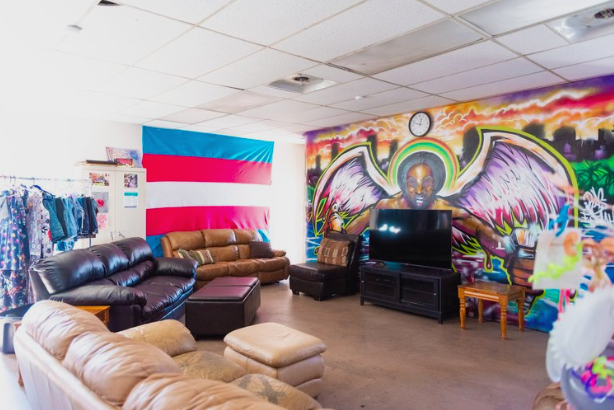
A room inside the Transgender Resource Center of New Mexico. Credit: TRCNM
The TGRCNM already offers “direct services” for trans people in need, including a drop-in center three days a week that provides showers, washers and dryers, prepared meals, an open donation clothes closet, a computer lab, a lending library, and workers who can help people access food benefits, healthcare (including STI testing, needle-exchange, and mental health counselors), legal services, as well as housing and employment assistance.
The center also offers statewide services, including assisting with name changes on government ID documents, providing trans body shaping items (like binders and gaffes), an online directory and referral for trans-friendly healthcare providers, a support program for incarcerated trans people, and also nine weekly in-person and online support groups for trans people of color, children, parents, partners, and others who live inside and outside of the state.
“We have grown so much since we started in 2007, but one of our challenges remains finding and sustaining the funding to do the statewide work that we set out to do here,” Lawyer says.
Trimm agrees.
“New Mexico isn’t the most resourced state, yet we are offering the most protections for folks,” he says. “Funding would allow us to further serve the people already in our state, who may be unintentionally harmed by the influx of [transgender and non-conforming] refugees who come to the state, occupying housing, which raises market rent for everyone.”
Lawyer says TGRCNM’s immediate mission is “to not let people die here in our local community,” but he adds that the Center doesn’t just “want to just be trying to patch up people’s bullet holes with band-aids all the time” either. The Center wants to keep shifting the state’s culture towards valuing trans lives.
Doing this requires progressive legislation to ensure that trans people will be able to thrive in peace throughout the state. Recently passed legislation has made New Mexico “the safest state in the country for LGBTQ people,” according to Marshall Martinez, executive director of Equality New Mexico.
This year alone, New Mexico passed House Bill 207, which added gender identity to anti-discrimination and hate crime laws; House Bill 31, which made it easier for trans people to legally change their names; House Bill 7, which forbids anyone from restricting access to reproductive and gender-affirming health care; and Senate Bill 13 is a “shield law” that forbids the government from assisting with any out-of-state investigations into people who provide or receive such care.
The latter two laws are especially important since Texas and other states have threatened to prosecute doctors and parents for “child abuse” if they help kids access such care. Similar laws also threaten anyone who assists in obtaining an abortion.
Martinez says New Mexico’s trans-inclusive laws passed thanks to a strong, cooperative coalition consisting of Equality New Mexico, the TRCNM, local Planned Parenthood affiliates, the American Civil Liberties Union (ACLU), the reproductive justice organization Bold Futures New Mexico, the healthcare access advocacy group Strong Families New Mexico, and a “ton of other groups.”
The coalition’s organizations regularly communicate with each other every day, he says. Throughout the year, they make sure one another’s issues are represented at meetings with community and political leaders across the vast state. Each organization also uses its pre-existing relationships with legislators to educate lawmakers about one another’s key issues, gradually introducing leaders to lawmakers over time.
These groups all share a common enemy, Martinez notes: conservatives who hate LGBTQ+ people — they’re the same ones who want to dictate people’s medical decisions, he says. As such, it made sense for the coalition members to support healthcare legislation that bundled abortion access with access for gender-affirming care.
“These are the only two health care procedures being criminalized,” Martinez says. “At the end of the day in New Mexico, either you believe that a patient can make decisions about their health care and their body or you don’t. And if you believe that, then you must believe it about everything.”
“Liberation is bodily autonomy, and bodily autonomy is the same regardless of whose body it is and what decisions you’re trying to make,” he continues. “The ability to decide whether or not I take hormones to transition my gender is equally as important as the decision I or my partner or sibling may make about having or not having children…. [It’s] the same level of bodily autonomy as being able to sue the cops when they harm you [or] violate your civil rights… which is the same as being able to make an adult decision about using cannabis.”
Under this reasoning, the coalition has helped pass other progressive laws, including ones that will enable residents to purchase a state health insurance option, enable cannabis entrepreneurs of color to benefit first from legalized sales, remove “qualified immunity” protections from abusive cops, and repeal older anti-abortion and anti-sodomy laws. Martinez doesn’t see these all as individual policy changes so much as the victories of a movement that has been successful on multiple fronts.
Granted, New Mexico’s Democratic-leaning electorate differentiates it from other states in ways that could make this strategy difficult to replicate elsewhere. New Mexico has a pro-LGBTQ+ governor, Michelle Lynn Lujan Grisham (D), and its legislature has been controlled by Democrats for almost all of the last 30 years. Its population of just over two million — 30% of which is non-white, including 21 indigenous sovereign nations — has helped Democratic presidential candidates win seven of the last eight elections.
I am deeply honored and humbled to continue serving our beautiful state as governor of New Mexico.
As I begin my second term, I will continue doing the work to ensure that the next fifty years are the greatest and most prosperous in New Mexico history – progress is our destiny. pic.twitter.com/0PPKDpHLAS— Governor Michelle Lujan Grisham (@GovMLG) January 3, 2023
But Martinez says the state’s progressive victories at least disprove the idea that religious people of color are among the most conservative. “It has proven to be incredibly untrue amongst Hispanic, Latino, and indigenous Catholics across the country,” he says.
“People in New Mexico have been learning how to live with people of different cultural and religious values and backgrounds for 200 years,” he adds. “And at the end of the day, our values have always been that we love accept and affirm our neighbors, even when we don’t understand or agree with.”
He encourages advocacy organizations in larger states not to operate from a territorial and scarcity model, one that sees other progressive causes as a potential drain on an organization’s resources or influence. In New Mexico, he says, progressive groups inquire about one another’s legislation, asking how each can help apply equal pressure on legislators over a wide range of issues. Over the years, such coalition building has made it so that New Mexican lawmakers don’t pursue bad laws, he says.
It’s likely that the state’s trans protections will eventually be legally challenged by conservatives either inside or outside of its borders. But Martinez remains confident that the laws will withstand legal challenges, especially with a broad coalition supporting them.
“We’re not doing something radically new by protecting trans people,” he says. “We’re doing what we’ve always done, which is protect people from hatred and discrimination because that’s a New Mexican value.”
Shortly after announcing his 2024 presidential campaign, Florida Gov. Ron DeSantis (R) went on Fox News and showed everyone how obsessed he is with transgender people.
“How would you address the ongoing war in Eastern Europe between Russia and Ukraine on day 1 of a Ron DeSantis presidency?” host Trey Gowdy asked.
He also said LGBTQ stands for “Let God burn them quickly.”
“First, I think what we need to do as a veteran is recognize that our military has become politicized. You talk about gender ideology, you talk about things like global warming that they’re somehow concerned, and that’s not the military that I served in,” DeSantis responded, saying absolutely nothing about Ukraine, where almost no American troops are serving. Even if the issue were primarily about U.S. military involvement, “gender ideology” would have nothing to do with anything.
But responding to the question is never the point in these campaign interviews; getting out one’s campaign soundbites is. And the military being too pro-trans (and also pro-gay and anti-racism, according to Florida Republicans) is the talking point he wanted to get out there to show that he, too, would be willing to ban trans people from serving openly in the military, just like his top rival Donald Trump did in 2017.
DeSantis isn’t the only one who is trying to work transphobia into places where it makes no sense. Yesterday, former Trump administration official and 2024 candidate Nikki Haleymade nasty comments about transgender influencer Dylan Mulvaney, blaming her for teen girls considering suicide. There is nothing to tie Mulvaney to teen suicide rates, but no one cares about facts when they’re trying to stoke a moral panic.
“Everybody knows about Dylan Mulvaney? Bud Light, right?” Haley told an audience of New Hampshire business leaders who were probably there to hear what she had to say about business and not Instagram videos. She was met with silence. “Make no mistake. That is a guy, dressed up like a girl, making fun of women. Women don’t act like that. Yet everybody’s wondering why a third of our teenage girls seriously contemplated suicide last year?”
Both Haley and DeSantis are facing an uphill battle against Trump, who is currently the top choice of over half of Republican primary voters. They have to stand out somehow instead of being one of a dozen not-Trumps – how most GOP primary candidates failed in 2016 – and they’re betting that outrage against the very existence of transgender people is how to do it.
After two years of hundreds of anti-trans bills being considered in state legislatures across the country – including bans on trans people participating in school sports, trans people being called by the correct names and pronouns, and trans youth getting gender-affirming health care – and two years where anyone flying a rainbow or a trans Pride flag risked getting labeled a “groomer” or a “pedophile,” people can be forgiven for forgetting that, as recently as 2020, anti-trans activists were trying to get the attention of the Republican Party to make transphobia a campaign issue.
That was where the country was in the middle of the pandemic. In August 2020, Terry Schilling’s small and relatively unknown anti-LGBTQ+ organization American Principles Project was forced to run its own anti-trans ads in several campaigns in an attempt to get the Trump-Pence campaign and the national Republican Party to even think this was an issue worth mentioning.
That’s not to say that Trump was pro-trans equality; his administration repeatedly attacked transgender rights as well as LGBTQ+ rights more broadly every chance they got. But they didn’t think that it was the top vote-getting issue last time around, the one issue to bring up at every campaign stop to rile up the base and get swing voters into the GOP camp.
Trump himself has been talking more about trans people at his campaign stops this past year, calling out “the perverted sexualization of minor children,” a Republican expression that covers any form of support for LGBTQ+ people.
Mike Pence, another likely 2024 candidate, has also been making transphobia a bigger part of his not-yet-a-campaign, telling people at events in Iowa that he’ll stop the “radical gender ideology” that has “invaded our schools, our colleges, and our workplaces.” Just two days ago, in an interview with Scripps News, Pence brought up his opposition to trans rights and promised to implement a ban on trans people in the military and a national ban on gender-affirming care for trans youth, saying that he would campaign on the military ban if he runs in 2024.
Even South Dakota Gov. Kristi Noem (R), who hasn’t announced her 2024 campaign yet and is speculated to be trying to get the VP slot on Trump’s ticket, ran a national ad in early 2022 touting her opposition to trans rights. “In South Dakota, only girls play girls’ sports. Why? Because of Governor Kristi Noem’s leadership,” the ad told the nation, even though she was officially just running for reelection as governor then.
The 2004 presidential election was historic in its homophobia. George W. Bush and other Republicans saw marriage equality as the top issue that could drive Evangelicals to the polls. Harold Meyerson of the American Prospect said that the GOP saw”the specter of gay marriage as a political gift from the gods.”
Twenty years later, it looks like they’re making the same bet with the basic humanity of transgender people. The Republican primary – when it’s not just Trump dunking on the other candidates who will be too afraid of his supporters to respond in kind – will be full of outlandish stories about schoolteachers secretly performing gender-affirming surgery on kids in restroom stalls, student-athletes with arms “30 feet long” setting world records in middle school, and hypnotic children’s cartoons making little boys wear dresses.
And when the primary is over, the winner will go on to attack President Joe Biden’s record of supporting trans equality through executive orders, rules, and guidelines as well as lawsuits in his first four years in office.
The LGBTQ+ organization Human Rights Campaign (HRC) kicked Bud Light parent company Anheuser-Busch off the top of its corporate equality index (CEI), citing the company’s tepid response to the Dylan Mulvaney backlash.
“When we saw the company working with Dylan, that was a good sign. It was a sign of inclusion,” HRC senior vice president of programs, research, and training Jay Brown told CNN. “What we were really disturbed by was the company’s reaction once the backlash started happening.”
There are approximately 3 million Dashers who are the public face and main workforce of DoorDash who are not considered in the CEI because DoorDash doesn’t consider them employees.
On April 1, Mulvaney posted a 50-second video to Instagram showing off some custom Bud Light cans with her face on them, a part of a brand partnership with the beer company.
But Anheuser-Busch’s weak response to the backlash led to anger among LGBTQ+ people as well. The company released a statement in April saying that it “never intended to be part of a discussion that divides people… We are in the business of bringing people together over a beer.” And Anheuser-Busch CEO Michel Doukeris downplayed the partnership on a call with investors this month, saying: “We will continue to learn, meet the moment in time, all be stronger and we work tirelessly to do what we do best: Bring people together over a beer and creating a future of more cheers.”
Meanwhile, Mulvaney said she was “having trouble sleeping” after becoming the target of so much hatred for the past month and a half, leading to criticism that Anheuser-Busch left her out to dry. Some LGBTQ+ people – including Colorado Gov. Jared Polis (D) and several bars in Chicago – have been boycotting Anheuser-Busch as a result of their response to the controversy.
And now HRC is jumping into the fray.
HRC’s Brown said that the beer company’s lackluster response couldn’t have come at a worse time, as transgender equality is being targeted in state legislatures across the country. He said that he asked Anheuser-Busch to at least release a statement in support of Mulvaney and transgender people, offer inclusion training to executives, and listen to LGBTQ+ employees, but the company hasn’t done any of those things. In fact, two of the marketing executives who worked on the Mulvaney partnership have been put on leave, which many on the right are claiming as a victory of their Bud Light boycott.
After asking to at least talk to someone at the company, Brown sent a letter informing Anheuser-Busch that they were losing their 100% rating on CEI, which rates the “Best Places to Work for LGBTQ+ Equality.”
HRC has been maintaining the CEI since 2002, when it rated policies for gay, lesbian, and bisexual employees, and has expanded it in the last two decades to include evaluations of transgender employee policies, partner benefits, and how a corporation supports an inclusive culture outside of its own workplace.
HRC gave a 100% rating to the Fox Corporation until last year when it got demoted due to Fox News’s coverage of LGBTQ+ issues.
Target is removing certain items from its stores and making other changes to its LGBTQ merchandise nationwide ahead of Pride month, after an intense backlash from some customers including violent confrontations with its workers.
“Since introducing this year’s collection, we’ve experienced threats impacting our team members’ sense of safety and well-being while at work,” Target said in a statement Tuesday. ”Given these volatile circumstances, we are making adjustments to our plans, including removing items that have been at the center of the most significant confrontational behavior.”
Target declined to say which items it was removing but among the ones that garnered the most attention were “tuck friendly” women’s swimsuits that allow trans women who have not had gender-affirming operations to conceal their private parts. Designs by Abprallen, a London-based company that designs and sells occult- and satanic-themed LGBTQ clothing and accessories, have also created backlash.
The Pride merchandise has been on sale since early May. Pride month is held in June.
Target confirmed that it has moved its Pride merchandise from the front of the stores to the back in some Southern stores after confrontations and backlash from shoppers in those areas.
Target’s Pride month collection has also been the subject of several misleading videos in recent weeks, with social media users falsely claiming the retailer is selling “tuck-friendly” bathing suits designed for kids or in kids’ sizes.
The moves come as beer brand Bud Light is still grappling with a backlash from customers angered by its attempt to broaden its customer base by partnering with transgender influencer Dylan Mulvaney. Bud Light’s parent company said it will triple its marketingspending in the U.S. this summer as it tries to restore sales it lost after the brand partnered with the transgender influencer.
Target and other retailers including Walmart and H&M have been expanding their LGBTQ displays to celebrate Pride month for roughly a decade. This year transgender issues — including gender-affirming health care and participation in sports — have been a divisive topic in state legislatures and the backlash has turned hostile.
Recently coming off of Bi+ Health Awareness Month, annually in March, we’ve been pointed to our Bi+ population who not only contend with the challenges commonly experienced by their LGTQ+ peers, but also must overcome a host of obstacles specific to their community. There has been immense progress in LGBTQ+ equality over the previous decades, yet too many Bi+ community members continue to suffer under the yoke of age-old prejudices.
While these 31 days are designated to focus on complications confronting and negatively impacting Bi+ people, as well as creating awareness around better meeting the population’s needs, our efforts to stand in solidarity with the Bi+ community cannot simply begin and end each March. More must be done for a community that our society has ignored and overlooked for decades.
According to Gallup, Bi+ people actually make up more than half of LGBTQ+ Americans, who now represent 7.1 percent of our country’s population. However, this community experiencessignificantly worse physical, mental, and social health outcomes compared to their gay, lesbian, and heterosexual peers.
Our Bi+ neighbors often experience a wider array of negative medical conditions compared to heterosexual adults that are frequently aggravated by the unique discriminations they face related to their sexual orientation. These conditions range from higher rates of elevated cholesterol and asthma, as well as increased prevalence of smoking and alcohol use that can also heighten the risk for other health problems.
Our health care system and the oft unchecked anti-LGBTQ+ biases ingrained within it make it even more difficult to address these issues. Many Bi+ people refrain from disclosing their sexual identity to healthcare practitioners based on past negative interactions with their physicians, which results in delaying or avoiding necessary appointments and procedures. Adding to the matter, 80 percent of physicians assume patients would decline to disclose their sexual identity to their doctors, making the health care process for the Bi+ more difficult.
Working at SAGE, my colleagues and I see these exact instances constantly with the Bi+ elders we engage with, along with the other elders who utilize our services and resources across the LGBTQ+ community. Bi+ elders are significantly more likely to live at or below 200 percent of the federal poverty line and more likely to have lower income levels as compared to their gay and lesbian peers. We also see higher rates of depression and worse health outcomes as well among Bi+ people, creating further complications they must navigate.
You may be asking why this is the current state of the Bi+ community in the U.S., especially for our elders. It is likely, at least in part, attributable to multifaceted discrimination. Bi+ people are at risk of marginalization by anti-LGBTQ+ sentiment while simultaneously seeing their voices and narratives erased or disbelieved within LGBTQ+-centric circles.
So while those who would oppose equal protection under the law for LGBTQ+ people — those who have found ever more vociferous champions of their prejudices among our elected officials over the past several years — do not hesitate to denigrate the BI+ community, other members of the LGBTQ+ community are necessarily creating spaces that are inclusive of Bi+ people.
We must do better — those in the community; those outside of the community; those leading our health and nonprofit organizations; those elected into office and beyond. We all must do better at standing in solidarity with communities other than our own.
Improvement in this area can begin with two crucial steps — inclusivity and increasing resources. You might assume that inclusivity wouldn’t be an issue for the LGBTQ+ community, but those same assumptions are what often lead to the sidelining of Bi+ people and their narratives. Listening to, understanding, and respecting other people’s identities and experiences is the foundation of inclusivity, and this must be remembered as more pro-LGBTQ+ programs are developed.
We must also make mental health programming more accessible for Bi+ people given that they are at greater risk of experiencing protracted isolation and loneliness. The community’s elders are more likely to experience social isolation compared to other LGTQ+ adults, and LGBTQ+ elders as a whole are twice as likely to be single and live alone when compared to their non-LGBTQ+ peers. Mental health concerns and their treatment has become more known and accepted worldwide, but this focus and investment must be nuanced to be as inclusive as possible of all demographics.
The positives here are that we have clear steps for creating more welcoming spaces for the Bi+ community, avenues to guide future research and paths for creating more accessible and comprehensive resources. However, time must not be wasted. Addressing the specific needs of Bi+ people can no longer be a second thought, as it has been for far too long.
It is long past time to critically reevaluate and rethink how we as individuals and professionals stand with Bi+ people in America and elsewhere.
Kylie Madhav is the Senior Director of Diversity, Equity, and Inclusion at SAGE where she defines the strategic vision for SAGE’s external-facing DEI work and leads in designing the organization’s DEI action plans, goals, and benchmarks.
New HIV infections continue to ebb only modestly in the United States, while many other wealthy Western nations have posted steep reductions, thanks to more successful efforts overseas to promptly diagnose and treat the virus and promote the HIV prevention pill, PrEP.
In a new HIV surveillance report published Tuesday, the Centers for Disease Control and Prevention estimated that new HIV transmissions declined by 12% nationally between 2017 and 2021, from 36,500 to 32,100 cases.
By comparison, according to estimates by the Joint United Nations Programme on HIV/AIDS, between 2015 and 2021, the annual infection rate plunged by more than 70% in the Netherlands, 68% in Italy and 44% in Australia. United Kingdom health authoritiesrecorded about 2,700 diagnoses in England in 2021 — a drop of approximately one-third since 2017 and one-half since 2015.
Experts told NBC News that the U.S. remains so far behind in combating HIV because of the nation’s lack of a national health care system and sexual-health clinic network; fragmented and underfunded public health systems; and poorer synchronization between government, academia, health care and community-based organizations.
These experts also pointed to factors such as racism, inadequate adoption of evidence-based treatment for opioid use disorder, state laws criminalizing HIV exposure and medical mistrust in people of color.
“HIV in the United States is very much a disease of those who are most disenfranchised in society,” Dr. Boghuma Titanji, an infectious disease specialist at Emory University, said.
The power of the pills
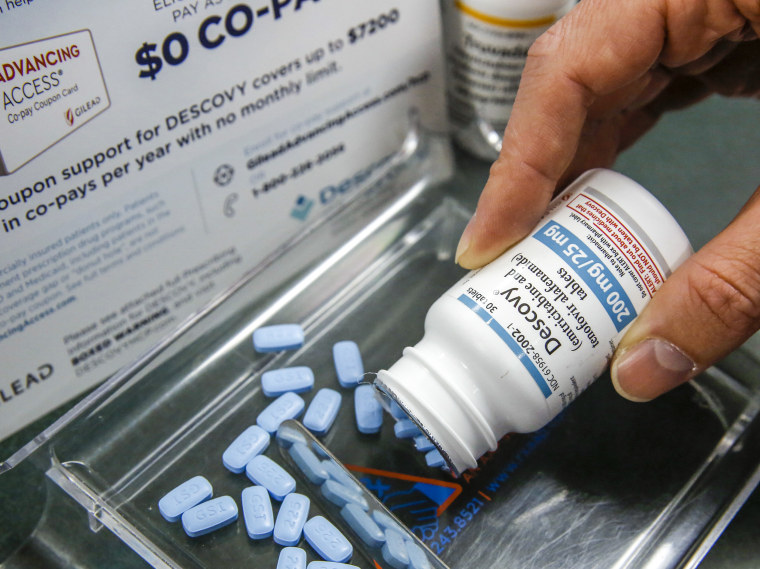
The 2010s heralded the era of so-called biomedical HIV prevention. A series of landmark studies established two critical facts: one, that fully suppressing the virus with antiretroviral treatment eliminates sexual transmission risk in addition to extending life expectancy nearly to normal, and two, that when HIV-negative people take the antiretrovirals Truvada or Descovy daily as pre-exposure prophylaxis, or PrEP, they reduce their risk of contracting the virus by 99% or more.
Accordingly, the nations that have succeeded in far besting the U.S. in reducing new infections have gotten more people with HIV diagnosed and on treatment, and have done so sooner in the course of infection. These countries have also often seen a greater proportion of those at the highest risk of HIV, namely gay men, get on PrEP.
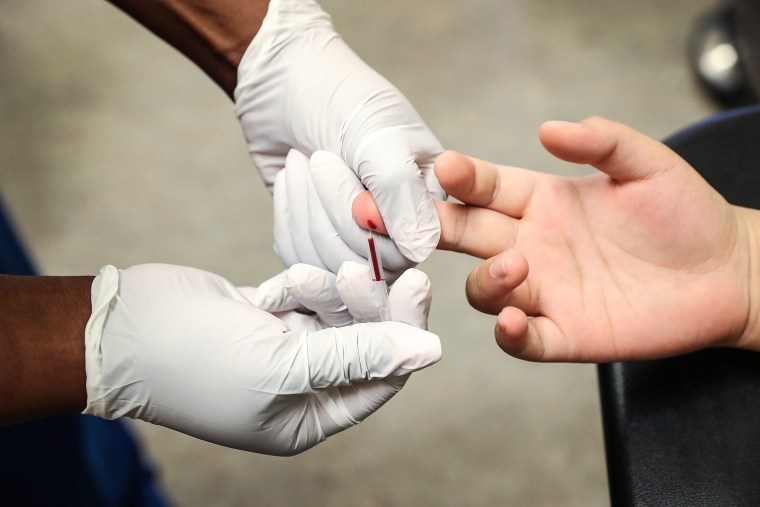
A medical assistant draws blood from a patient on National HIV Testing Day at a Planned Parenthood health center on June 27, 2017, in Miami.Joe Raedle / Getty Images file
An estimated 1.2 million Americans have HIV. According to the CDC, only 87% of them are diagnosed and just 58% are in treatment and have a fully suppressed viral load. This latter figure compares with robust national viral suppression rates, estimated by health authorities, of 82% in Australia, 83% in the Netherlands, 89% in the U.K and 74% in Italy. The rate is higher than 70% in at least 16 other European nations.
In the U.S., the virus has maintained its vastly disproportionate impact on gay and bisexual men, who, according to the new CDC report, comprise about 70% of new cases despite making up only about 2% of the adult population.
The CDC has estimated that about 814,000 gay and bisexual men are good PrEP candidates. Recent data suggested that the number of people, overwhelmingly from this population, who have ever used PrEP each year more than doubled between 2017 and 2022, to at least 318,400. However, a recent CDC study suggested that only about half that group took PrEP during any one month last year, suggesting that many people take it only temporarily.
HIV prevention drug Descovy, at Pucci’s Pharmacy in Sacramento, Calif., on Oct. 7, 2019.Rich Pedroncelli / AP file
The most recent four-year national decline was driven by an estimated one-third drop in cases among 13- to 24-year-olds, which Dr. Robyn Neblett Fanfair, acting director of the CDC’s Division of HIV Prevention, characterized as “very encouraging” on a Tuesday media call. The CDC attributes this success to progress in expanding testing, treatment and PrEP among gay and bisexual males, who comprised 80% of the cases in that age group.
But infection rates among these men’s older counterparts have remained statistically stable.
In England, vastly improved biomedical prevention among gay and bisexual men slashed their HIV diagnosis rate so drastically — by about three-quarters in a decade — that in 2022, fewer of them tested positive for the virus than heterosexuals. In the U.S., gay and bisexual men’s transmissions outnumber heterosexuals’ by more than three to one.
Dr. Chris Beyrer, director of the Duke University Global Health Institute, remarked that many of the nations that have seen such precipitous declines “don’t have to deal with the really sharp health disparities and lack of access” that have colored the U.S. HIV fight.
Persistent divides
HIV has for decades exposed racial and socioeconomic fault lines in the U.S., with the virus disproportionately affecting people of color and the poor.
Blacks and Latinos comprised a respective 40% and 29% of the most recent transmissions, despite these racial groups making up only 12% and 19% of the U.S. population. Approximately one in five new infections are among women, more than half of them among Black women.
The new CDC report reveals that such racial disparities have abated only slightly in recent years. Breaking down the transmission trajectory by race and sex showed that Black men were the only group to see a statistically significant reduction.
Estimated new infections among gay and bisexual men declined between 2017 and 2021 from 9,300 to 8,100 among Blacks and 7,800 to 7,200 among Latinos. However, these changes were not statistically significant, in contrast to the significant decline among whites, from 5,800 to 4,800 cases.
Politics and public health
Conservative politicians’ recent fervent use of anti-LGBTQ legislation and rhetoric to appeal to the Republican base threatens to further undermine efforts to combat HIV, public health experts warned.
“All of this plain hatred at the LGBTQ community is not good for ending the epidemic,” Kathie Hiers, CEO of AIDS Alabama, said.
Hiers also decried what she characterized as insufficient and poorly coordinated national support for housing among those living with and at risk for HIV. She pointed to the robust support New York provides HIV-positive homeless people as a pillar of that state’s success in fighting the virus.
About half of HIV transmissions occur in the South, which has an infection rate approximately 50% higher than in the West and Northeast, and double that of the Midwest. Southern states, dominated by Republicans, have tended to devote fewer resources to combatting the virus compared with liberal states, and cities elsewhere, such as San Francisco and New York, that have a history of beating back substantial HIV epidemics.
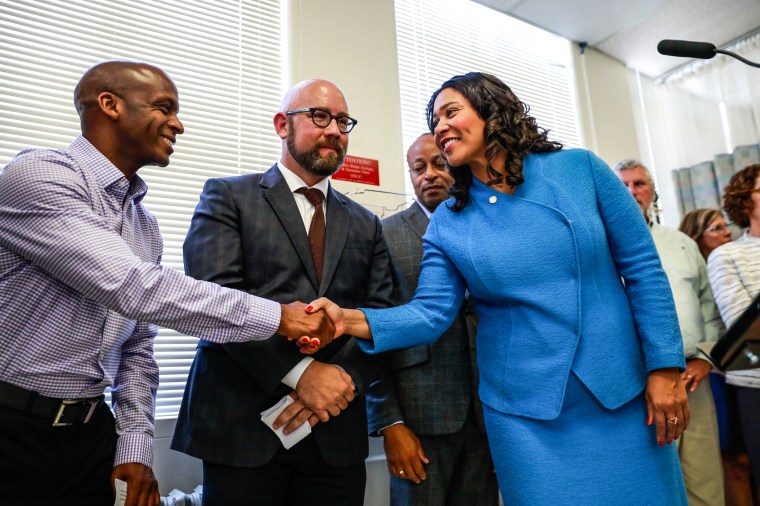
Mayor London Breed, right, shakes hands with HIV prevention expert Dr. Hyman Scott at Zuckerberg San Francisco Hospital on Sept. 10, 2019.Gabrielle Lurie / The San Francisco Chronicle via Getty Images file
Experts have long cited the refusal of most Southern legislatures to expand Medicaid under the Affordable Care Act as a major driver of regional disparities in HIV treatment and prevention.
“Medicaid expansion is a massive structural intervention to support the most vulnerable in our communities,” said Dr. Hyman Scott, an HIV prevention expert at the San Francisco Department of Public Health.
Silver linings
There is hope that the South may be turning a corner, given the CDC’s finding that it was the only region to see a statistically significant decline — of 12% — in estimated new HIV infections between 2017 and 2021.
Additionally, HIV’s decline appears to be accelerating, however marginally. The CDC previously reported the new infection rate was essentially stable during the mid-2010s and then inched 8% lowerbetween 2015 and 2019.
And while the most recent data are somewhat hazy due to a drop in HIV testing following Covid-19’s onset, an apparent sustained decline in transmissions in 2020 and 2021 represents a victory for the HIV treatment and prevention workforce. Infectious disease clinics, for example, often proved nimble in the face of the new pandemic’s disruptions by pivoting to telehealth and supplying patients with months of medications at a time.
The CDC isn’t satisfied.
“In prevention, patience is not a virtue,” Dr. Jonathan Mermin, director of the CDC’s National Center for HIV, Viral Hepatitis, STD, and TB Prevention, said during the Tuesday media call. “We can end HIV in America. We know the way, but does our nation have the will?”
Fighting for the future of HIV
The federal government is hoping that a surge in spending will be the linchpin that finally sends the HIV epidemic into a swift retreat.
In 2019, Donald Trump endorsed a plan to ratchet up federal outlays on HIV. Between the 2020 and 2023 fiscal years, this infusion of new annual funds, largely funneled to the 48 counties where about half of transmissions occur, has soared from $267 million to $573 million. Mermin called for Congress to approve President Biden’s budget request of $850 million for the 2024 fiscal year.
The expressed aim of the spending is to cause the 2017 HIV transmission rate to collapse 75% by 2025 and 90% by 2030. But as CDC surveillance quite evidently shows, the epidemic’s current trajectory is nowhere near on track to achieve such lofty goals.
Dr. Boghuma Titanji.Courtesy Dr. Boghuma Titanji
Emory’s Boghuma Titanji said that to succeed in beating HIV, the nation must address the myriad intractable social inequities that drive transmission, including poverty, racism, stigma, homophobia, homelessness and poor health care access.
Absent such progress, Titanji said, she anticipates that by the decade’s end, HIV in the U.S. will be “pretty much the same: a disease that will continue to disproportionately impact the most vulnerable communities.”