Police arrest men on suspicion of homosexuality | Photo: Facebook/Arc en ciel
25 September 2018
LGBTI groups in Senegal said an increase in arrests for alleged homosexuality is a government crackdown on the LGBTI community.
The latest arrests of two men and two women in the capital, Dakar, prompted the comments. Police arrested the four after people in their neighbourhood circulated videos of them engaged in sexual acts.
‘Acts against nature’ are illegal and punishable by up to five years in prison and fines of up to US$2,500.
The recent arrests follow the conviction of Cheikh Abdel Kalifa Karaboué for ‘acts against nature ‘for drugging and raping a coworker. Dakar’s High Court sentenced him to four years in jail and ordered him to pay the victim US$3,586 in compensation.
But LGBTI groups argued the arrests are a political ploy to appear tougher on the LGBTI community.
‘As the elections in Senegal approach, parties are making their stand against the LGBTIQ+ community by arresting members of the community,’ PanAfrica Ilga wrote in a statement. Pan Africa ILGA (PAI) is the African region of the International Lesbian, Gay, Bisexual, Trans and Intersex Association (ILGA).
‘The Senegalese candidates and government needs to be held accountable for their homophobic stance and the human rights violations being perpetrated as a platform for election. We stand in solidarity with our Senegalese comrades,’ the group said.
Senegalese LGBTI group Arc en Ciel said young LGBTI people needed training in coping with the crackdown.
‘With the approach of presidential elections, the hunt for sexual minorities begins because the government is preparing to answer those who label them pro-homosexual,’ the group wrote on Facebook.
Homosexual men are being tortured with electric shocks and beaten to death in concentration camps in Chechnya. This is the first concentration camp for homosexuals since Hitler’s camps in 1930s.
Reports have emerged that 100 gay men were detained and three killed in these camps last week. Novaya Gazeta, a Russian newspaper known for its critical and investigative coverage of Russian politics and social affairs, said that several camps have been set up in Chechnya where gay men have been forced to promise to leave the republic.
The report in Novaya Gazeta said that those arrested include well-known local television personalities and religious figures.
President Ramzan Kadyrov, a key ally of Russian President Vladimir Putin, allegedly ordered the clampdown and is known to have previously encouraged extrajudicial killings of homosexual men as an alternative to law enforcement. Kadyrov claims that there are no gay men in the republic and denies the arrests ever took place. He described the allegations as ‘absolute lies and disinformation’. He, instead, claims that such people would be killed by their own families. In some cases, gay men in prison have been released early specifically to enable their murder by relatives.
In October 2017, the BBC had reported about a young Chechen man, Maxim Lapunov, who had escaped illegal detention and torture in Chechnya. He had described being held for 12 days in a blood-soaked cell, beaten with sticks, threatened and humiliated by the police. He was released only after his family members and friends started putting up missing posters around the Chechen capital and his family reported his disappearance.
MailOnline talked to Svetlana Zakharova, from the Russian LGBT Network, who said: “Gay people have been detained and rounded up and we are working to evacuate people from the camps and some have now left the region.”
“Those who have escaped said they are detained in the same room and people are kept together—around 30 or 40. They are tortured with electric currents and heavily beaten, sometimes to death.”
A prisoner who escaped told Novaya Gazeta that prisoners were beaten to force them to reveal other members of the gay community. Another said that before being incarcerated in one of the camps, he survived by bribing Chechen police thousands of rubles every month in order to survive. By creating these camps, the survivor said, the regime had taken another step against gays.
Alexander Artemyev, from Amnesty International in Russia, told MailOnline: “We can only call on the Russian authorities to investigate the allegations. Homosexuals in Chechnya are treated very harshly and prosecuted daily, and they are afraid to talk about it.”
Artemyev said homosexuals are forced to hide or leave the country. He said they were keeping in touch with the LGBT network that helps people in Russia find shelter. People there cannot talk to anyone about it as it puts them and those they speak to in danger.
Ekaterina Sokirianskaia, Russia project director for the International Crisis Group, told MailOnline: “The story is very much developing…victims are escaping.”
A brutal campaign against LGBT people has been sweeping through Chechnya, said Tanya Lokshina from Human Rights Watch in Moscow. The climate of fear is so overwhelming that people do not dare to speak to human rights monitors or journalists even anonymously, she said. “Filing an official complaint against local security officials is extremely dangerous, as retaliation by local authorities is practically inevitable,” she said.
“It is difficult to overstate just how vulnerable LGBT people are in Chechnya, where homophobia is intense and rampant. LGBT people are in danger not only of persecution by the authorities but also of falling victim to “honour killings” by their own relatives for tarnishing family honour,” she said.
Hong Kong has made spousal visas available to same-sex couples for the first time in the wake of a court ruling—but the government has firmly ruled out permitting same-sex marriage.
Hong Kong only recognises marriage as between a man and a woman, but the international business hub has come under pressure from employers and LGBT+ activists to respect the rights of same-sex couples.
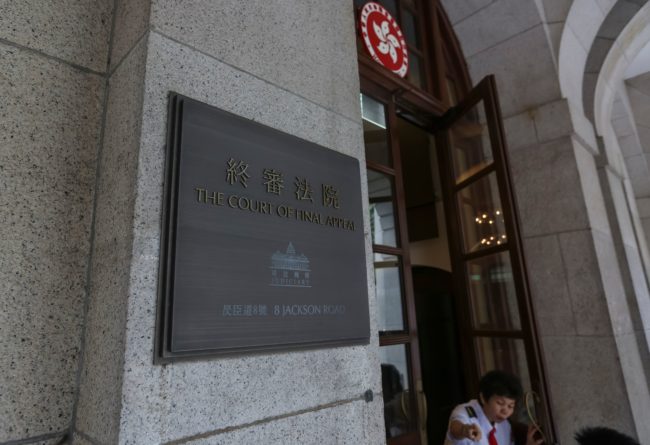
A security guard stands at an entrance to the Court of Final Appeal in Hong Kong on July 4, 2018. (VIVEK PRAKASH/AFP/Getty)
In the wake of the ruling, the government has announced a revised policy that goes into effect this week. The new policy allows the recognition of same-sex unions for visa applications, but no other element of law.
The Hong Kong government confirmed: “From September 19, 2018, a person who has entered into a same-sex civil partnership, same-sex civil union, ‘same-sex marriage’, opposite-sex civil partnership or opposite-sex civil union outside Hong Kong with an eligible sponsor in accordance with the local law in force of the place of celebration and with such status being legally and officially recognised by the local authorities of the place of celebration will become eligible to apply for a dependant visa/entry permit for entry into Hong Kong.”
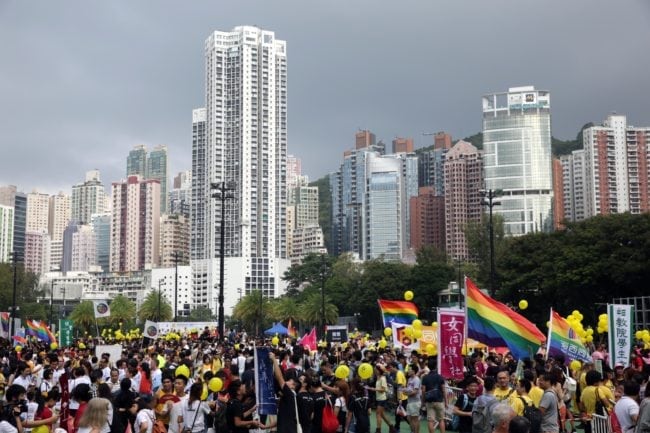
LGBT activists in Hong Kong (Isaac Lawrence/AFP/Getty)A spokesman added: “As the [court] recognised in its judgment, a valid marriage under Hong Kong law is heterosexual and monogamous and is not a status open to couples of the same sex.
“The revision has nothing to do with legal recognition of same-sex civil partnership, same-sex civil union, ‘same-sex marriage’, opposite-sex civil partnership or opposite-sex civil union in Hong Kong. Nor should there be any expectation of such plan by the Government.
“The revision does not compromise the Government’s position in any legal proceedings.”
The government stressed: “The revision concerns the immigration policy on applications for entry of non-local dependants only and it does not affect the meaning of ‘spouse’ under this Policy. It does not affect any other policies of the Government or any other rights under the existing law in Hong Kong.”
A man from North Carolina in the US could be at risk of having to leave the UK and return to the States, despite the fact that he is married to a UK citizen.
Brian Page had his latest appeal to the UK Home Office for an extension of his visa refused earlier this month, and was told that he must either leave the UK within 14 days, or apply for permission to appeal to the Upper Tribunal, the next stage of the process.
However, he has told PinkNews that he and his husband have been “cleaned out” by the legal fees up until now, having already spent over £16,000 on the application. They are now appealing to the public for help to cover the legal costs of their appeal to the Upper Tribunal.
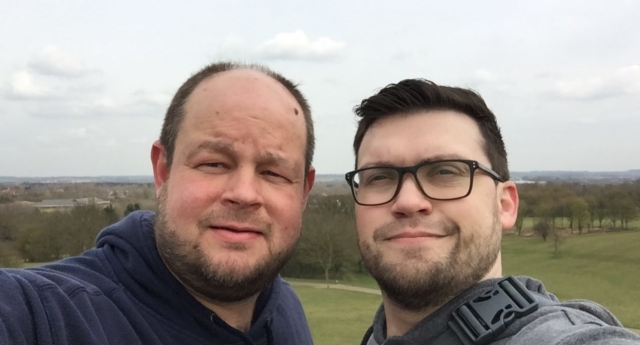
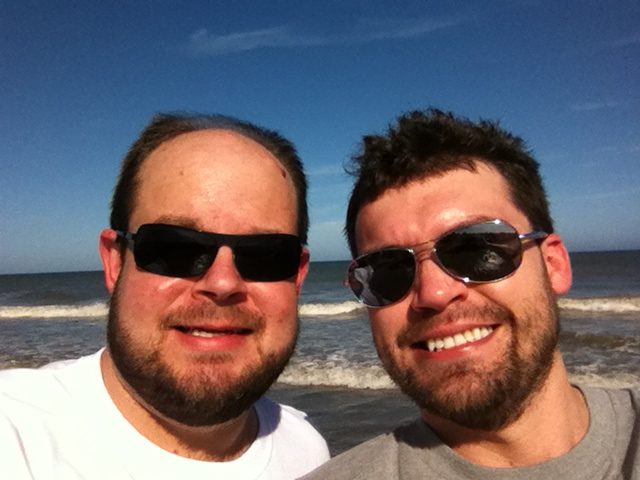
Brian and Ben Page
Their GoFundMe page is here. If they are granted permission to appeal to the Upper Tribunal, they expect the legal fees to cost in the region of £1,500-£3,000.
Speaking to PinkNews, Brian said that they had considered returning to the US – however, they were horrified to discover that when they lived there previously, Ben had inadvertently overstayed his visa by a year and a half.
They had misunderstood the terms of his visa at the time, thinking he was allowed to stay in the country for two years. They later discovered that he was actually only granted permission to stay for six months, meaning he lived in the US illegally for a year and a half.
This means that he could be subject to a 10 year ban from the US if they attempted to return there.
With Brian facing deportation and Ben not allowed to enter the United States, the couple could end up being separated by immigration laws of the UK and the US.
“We would be split up. I would be heartbroken,” Brian told PinkNews.
“When Ben’s mother passed away, he went into a deep, deep depression and it really scared me. We are both suffering from mental health issues and are both on anti-depressants, because our lives are on hold.
“We don’t know where we’re going to be in a few months time. I’m afraid to leave Ben because I don’t know what’s going to happen.”
Brian and Ben’s story began in 2012 when they met on a train in London when Brian was visiting the UK. They ended up talking and decided to stay in touch.
They got married two years later in New York after spending a period of time living together in the US.
However, tragedy hit the couple when, shortly after they got married, they found out that Ben’s mother – who was still living in the UK – was terminally ill.
They returned to the UK, with Brian on a six month visa, to spend her final months with her.
As his six-month visa came to a close, Brian’s mother-in-law’s condition was continuing to deteriorate. He then applied for an extension to the visa, which was ultimately rejected.
They now say they have been fighting the UK government to allow Brian to stay in the UK for a number of years.
They have now applied for permission to appeal their case to the Upper Tribunal, however if they are granted permission, they do not have the money to pay for legal representation.
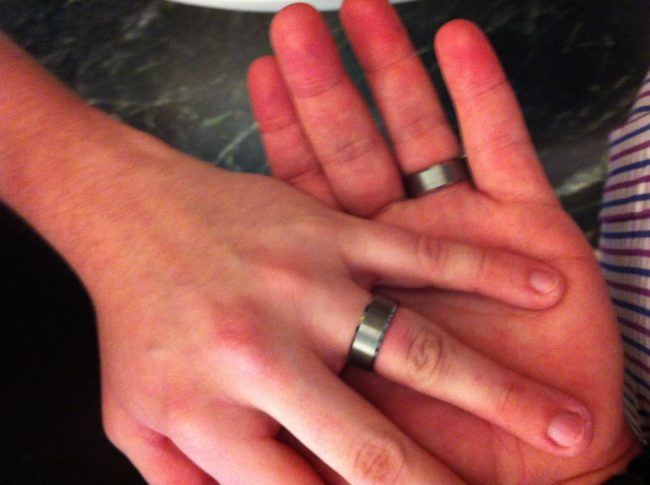
Brian and Ben holding hands on their wedding day in 2014
They also estimate that, if they were to attempt to return to the US, legal fees there could cost up to $15,000 in order to get Ben’s potential 10 year ban overturned.
The couple now say that they are in a bind – they cannot return to the US together, as Ben is not allowed in the country. They cannot stay in the UK together, as Brian’s applications to remain have been rejected.
In the most recent rejection letter, which was seen by PinkNews, the judge suggested the couple could relocate to a third country, and gave Canada as an example, while trying to settle their immigration dispute.
The rejection letter also says that during the case, it was put to Brian that he could “return to the USA to apply for entry clearance to re-enter the UK as a spouse.”
Brian says that if he were to do this, the process could take up to two years.
Brian said that he was worried about leaving Ben alone in the UK as he suffers from depression and anxiety.
“It really scares me. I’m really scared right now about what the next couple of months are going to be like,” he added.
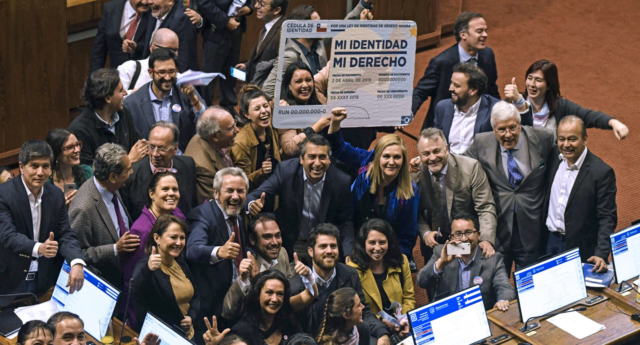
Chilean deputies for the Frente Amplio party, celebrate as they hold a giant fake Chilean Identity card reading “My identity, my right”, after voting a gender identity law, during a session at the Deputies Charmber, of the National Congress in Valparaiso, Chile, on September 12, 2018. (Francesco Degasperi/AFP/Getty)
Chile has passed a new gender identity law that will allow transgender people aged 14 years and above to change their name and gender in official documents.
The process will take place at a civil registry and will not require surgical or medical intervention, although minors will have to obtain permission from a parent or guardian and from a family court.
The law was first approved by a large majority of 26 in favour and 14 against in the Senate last week and landed in the country’s Congress on Wednesday (September 11), where it passed a 95-46 vote marking the end of a five-year-long fight by transgender rights activists.Chilean president Sebastián Piñera now has 30 days to sign the law.
“We celebrate! The Chamber of Deputies voted and dispatched the gender identity law, which we sponsored more than five years ago. A great victory for TRANS people!” the Chilean non-governmental organisation Fundación Iguales, which champions LGBT+ rights, tweeted following the vote.
One of the law’s most controversial elements was the inclusion of minors, with LGBT+ activists lamenting the age limit of 14 in the bill. The legislation originally included children younger than 14 years of age, but a vote on this provision failed to reach the necessary majority.
“Today is bittersweet since the discrimination against those under 14 will translate into more suicides,” Rolando Jimenez, one of the founders of the Movement for Homosexual Integration and Liberation, was quoted as saying in the Associated Press (AP).
Two conservative lawmakers who voted against the law have instead vowed to challenge the inclusion of any person below 18 years of age in the bill.
Sergio Bobadilla and Juan Antonio Coloma claimed the project “undermines the right of the biological identity of minors” and have said they will present that argument in front of the country’s Constitutional Court, AP reported.
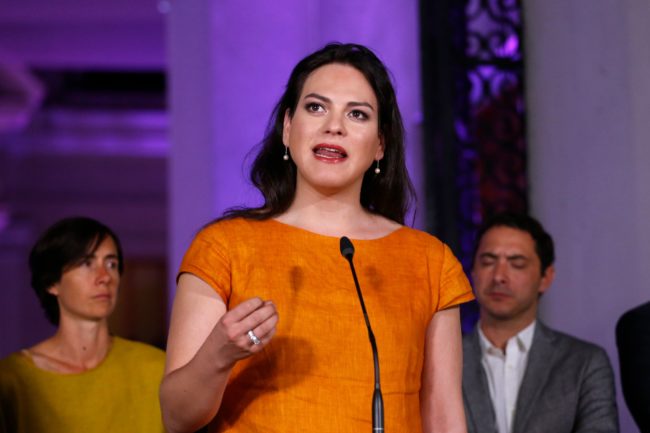
Daniela Vega, delivers a press conference after a meeting with Chilean President Michelle Bachelet on March 6, 2018. (Pablo Vera/AFP/Getty)
Chilean transgender actor and singer Daniela Vega, the star of the 2018 Oscar-winning film A Fantastic Woman, celebrated news of the vote writing a poetic post on Instagram on Thursday, in which she remembered those who have died without seeing the law becoming reality, as well as celebrating a more hopeful future.
She wrote: “The testimony and the body as a declaration of rebellion. But you cannot be rebellious without first being worthy and dignity is not a faith, it is a right. Do not fear children, there will be arms that contain your beautiful nature.
“To wall in the door is not going to darken the horizon, because it will be you, children who will govern your biography. The art, infinite key of immovable locks. The will, motor of the future that appears more hopeful today.
“There are those who did not see this day, this dawn, their bodies, dignified by the memory of rebellion, of dignity. Love, motor of experience. Love, endorsement of infinite space.
“To live, to resist, to move in the calendar. The time and objectivity of feeling it happen. To have today, the right to live in, to belong. Future body, white canvas of new struggles, new utopias, new spaces, of movement, of dignity.”
A petition to ban gay marriage has been signed nearly 3 million times
13 September 2018
Same-sex marriage could forever be in jeopardy in Romania after the senate overwhelmingly voted to allow a referendum which could change the eastern European countries Constitution.
The proposed referendum would ask Romanians whether they approved of changing the definition of unions in the Constitution. Currently, the Constitution defines unions as between the gender neutral ‘spouses’.
But a petition signed by three million people wants unions defined as between ‘a man and a woman’. If the Constitution changes to say that, it would make it almost impossible to make same-sex marriage legal in Romania.
On Tuesday the senate voted 107-13 in favor of the referendum, after the Lower House voted to approve the referendum at the end of last year.
The Coalition for Family civil groups started the petition in 2016 and got three million Romanians to sign it.
Romania’s government now has to set a date for the referendum, saying it could happen as early as 7 October.
Many LGBTI groups are trying to fight the proposed referendum, labelling it ‘completely immoral’.
Vlad Viski heads the LGBTI community group MozaiQ. He accused politicians of being ‘cowards’ for giving in to ‘conservative forces trying to marginalize the LGBT community in Romania’.
‘We will recommend our followers not to cast their vote in the upcoming referendum because human rights cannot be subject to a popular vote,’ he said.
Viski warned that if the Constitution changed it would ‘gravely’ affect democracy in Romania.
‘It will put into question the rights of all citizens,’ Viski said.
‘At the same time we will not give in to being humiliated by politicians and we will fight for our rights until the end. We urge everyone in Europe to express solidarity with the LGBT community in Romania and spread our message.’
The senate’s vote came less than two months after Romania’s Constitutional Court (RCC) rule to recognize same-sex couples.
Married couple, Adrian Coman and Clai Hamilton married in Belgium in 2010. They wanted to move to Coman’s native Romania because the country didn’t recognize same-sex relationships.
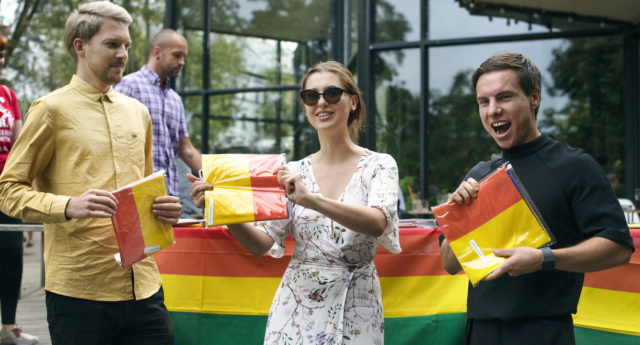
Fillmaker Romas Zabarauskas (left) and LGBT+ activists handing out free Pride flags in Vilnius on Friday. (Arcana Femina)
PinkNews Daily LGBT+ Newsletter
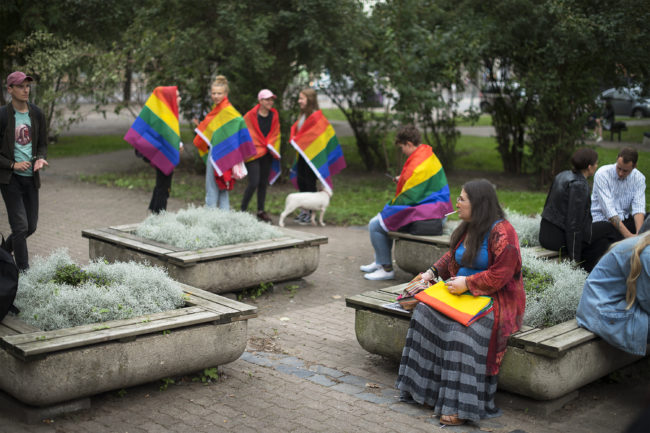
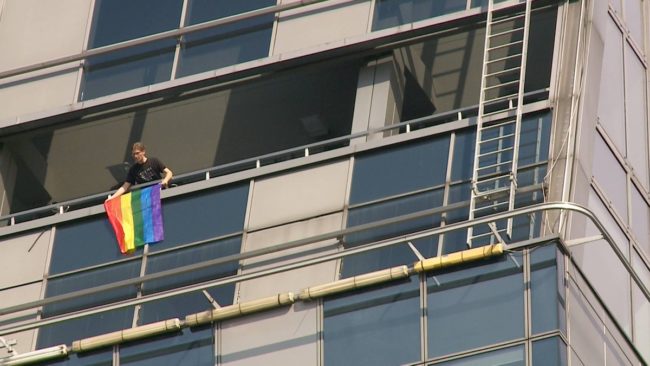
Two Lithuanians have responded defiantly to a series of arson attacks against the LGBT+ community in Vilnius—by buying 500 rainbow flags to wave around the city.
Filmmaker Romas Zabarauskas and LGBT+ rights activist Tomaš Ilja decided to fundraise thousands of euros to buy the flags after arsonists targeted the office of the Lithuanian Gay League (LGL)—the country’s only non-governmental organisation representing LGBT+ people—on August 10.
And, on September 2, arsonists set fire to the corridor outside Zabarauskas’ flat on fire in a possible homophobic incident, after the director hung a Pride flag on his balcony.
LGBT+ activists with Pride flags in Vilnius. (Arcana Femina)
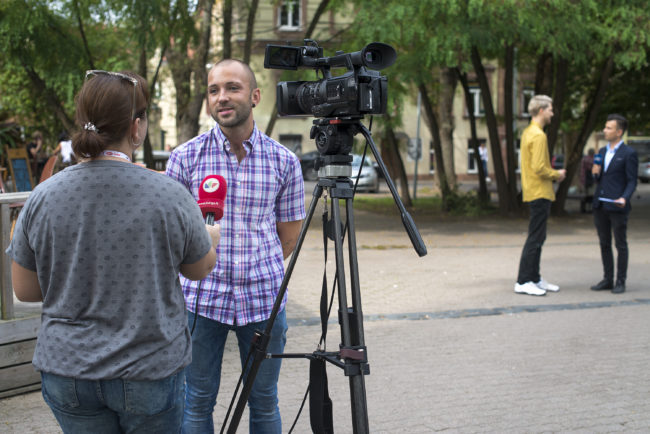
Speaking to PinkNews, Zabarauskas said that, following the arson attack outside his flat, a police offer had told him to take down his Pride flag.
“The next morning, after the initial shock, I realised that not only I won’t take the flag down, I need to do something more to send a strong message and not to give in into fear,” he explained.
“So I made this story public, emailed some people and we quickly raised enough funds to buy 500 flags.”
Zabarauskas said that supporters of his and Ilja’s initiative are posting their own Pride flags on social media using the hashtag #LGBTdraugiškaLietuva, which means “LGBT+ friendly Lithuania.”
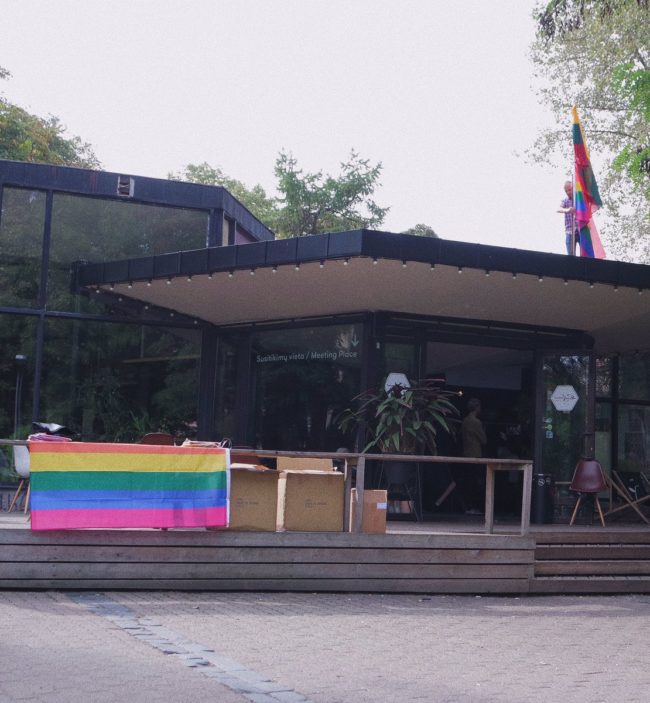
The first 400 Pride flags were handed out for free to LGBT+ supporters at the gay-friendly Paviljonas jazz club on Friday in the city.
A further 100 flags will be distributed for free during the queer festival Kreivės in Vilnius.
The initiative has been supported by politicians across the city, including Vilnius city councillor Mark Adam Harold, who attended the event on Friday and hung the Pride flag on the Vilnius City Municipality building. He has also supported the campaign on social media.
Zabarauskas also said that Vilnius city mayor Remigijus Šimašius has expressed support for the campaign. PinkNews has contacted Šimašius for comment.
Pride flags hanging from a building in Vilnius. (rzabarauskas/Twitter)
Zabarauskas continued: “Taking down a flag and hiding your true identity never makes you feel safer. Freedom of expression and acceptance do. I’m currently surrounded by rainbow flags—I can see one in each of the three buildings around mine. That makes me feel great.”
“Lithuania is a free country and we’ll defend our freedom with Pride,” he added.
LGBT+ rights activist Tomaš Ilja. (Arcana Femina)
“I care about LGBT+ visibility. I truly think it’s the main way to go if we want to achieve equality in our region. And it feels better to live your true life.”
Zabarauskas explained that he could not be certain that the arson attack outside his flat was a homophobic incident, but added that it “deserves to be investigated.”
Mark Adam Harold hanging a Pride flag on the side of the Vilnius City Municipality building. (rzabarauskas/Twitter)
He said, however, that the attack on LGL was “clearly a hate crime.”
PinkNews has contacted the police in Vilnius over the arson attack on LGL, and was directed to the Prosecutor General’s Office of the Republic of Lithuania, which has also been contacted for comment.
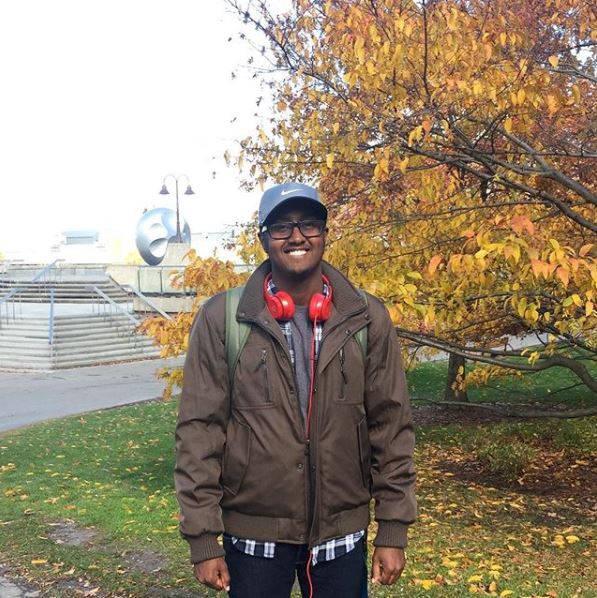
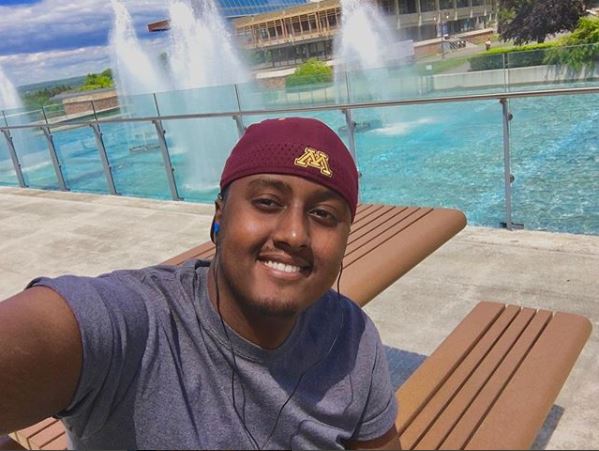
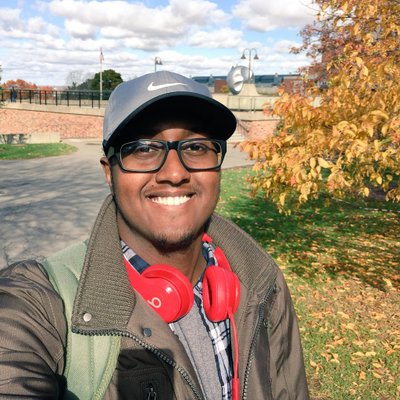
A gay student who was forced to flee Kenya after his family tried to send him to a gay conversion camp has been awarded the Colin Higgins Foundation’s annual Youth Courage Award.
Mahad Olad’s terrifying ordeal in the summer of 2017 left him with no contact with his family, who brought him to Kenya under the pretence that it was a “vacation.”
Mahad Olad (Instagram)
Receiving the Youth Courage Award also means that he will receive a $10,000 grant. The award is given to an inspiring person within the LGBT+ community who has overcome adversity brought on by their identity.
Olad, who lives and studies in New York, opened up about his ordeal of almost being sent to a gay conversion camp in his student newspaper, The Ithacan.
He went on a holiday in the summer of 2017 to Kenya with his mother, who Olad says comes from an “extremely conservative Muslim background.”
Watch PinkNews
video playing
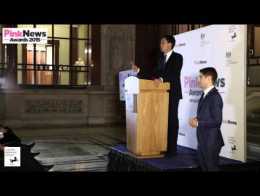
PinkNews Awards 2015: Ed Milliband wins…
27/10/15
Ask the Aunties: Should I end my secret gay…
07/09/18
Chloë Grace Moretz on ‘praying the gay away’
05/09/18
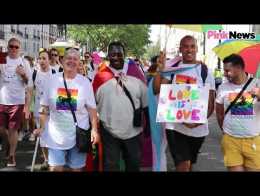
‘The only gay in Nigeria’: How I became a refugee
07/08/18
Gay poet uses blood as ink to protest…
30/07/18
However, upon arriving in Kenya, his mother told him that it was not a vacation, as he had been told, and that she had brought him there to send him to a gay conversion camp.
He was horrified to discover that his family had discovered the truth about his sexuality, which he had chosen to keep from them.
His mother asked him to withdraw from college in New York so he could be placed under the control of a group of sheiks who would reform his religious beliefs and “reorient” his sexuality.
“A few sheiks were at our hotel that night,” Olad wrote in his student newspaper earlier this year. “They briefly spoke to me about how being gay and atheist is unequivocally against my Islamic upbringing and African heritage.
“I knew that when they came back to get me the following morning, I would be forced to go with them.”
Mahad Olad (Twitter)
Olad said that the camps that operate in Kenya and Somalia are terrifying places where captives are subject to “severe beatings, shackling, food deprivation and other cruel practices.”
“Those who fail to cooperate, make adequate progress or try to escape could possibly be killed.”
Olad told his mother he was going for a walk that night and immediately called a group called the Ex-Muslims of North America, who helped him get out of Kenya and back to the United States. He is no longer in touch with his family.
Stonewall say that LGBT+ people continue to be exposed to harmful conversion therapy. A 2009 survey of over 1,300 accredited mental health professionals found that more than 200 had offered some form of conversion therapy.
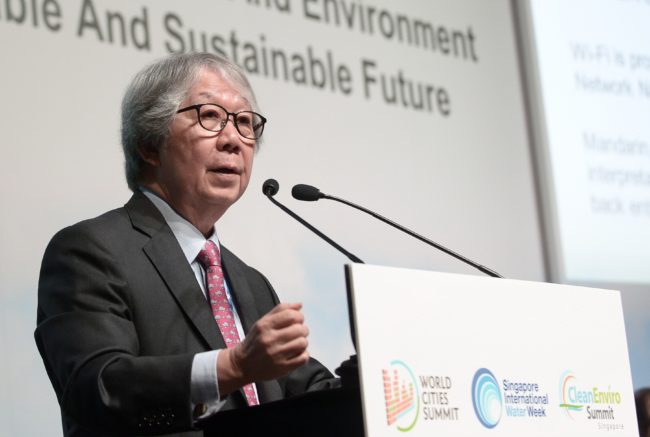
Tommy Koh, the country’s former UN ambassador, called for a class action suit to change Singapore’s Section 377A law, which, like India’s now-defunct legislation, was put in place under British colonial rule.
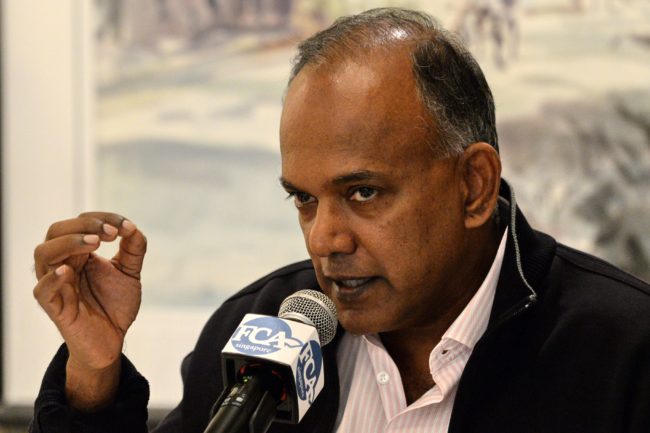
Singapore’s Law and Home Affairs Minister Kasiviswanathan Shanmugam has also raised the possibility of repealing the law, which carries a sentence of up to two years in prison and predates Singapore’s independence in 1965 by a decade.
Tommy Koh is currently serving as Singapore’s Ambassador-at-large (ROSLAN RAHMAN/AFP/Getty)
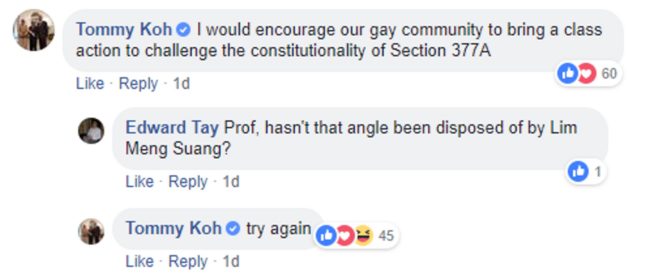
In response to a Facebook post by the dean of National University of Singapore’s Faculty of Law, Simon Chesterman, about the Indian court’s decision—which sparked joyous celebrations across the country—Koh wrote: “I would encourage our gay community to bring a class action to challenge the constitutionality of Section 377A.”
Koh responded with a simple solution, writing: “try again.”
“Try again” (Simon Chesterman/facebook)
Shanmugam, a cabinet minister, sounded sympathetic when asked about the issue on Friday.
He said, “Singapore… on this issue, it is a deeply split society. The majority oppose to any change to section 377A—they are opposed to removing it,” according to Channel NewsAsia.
“A minority—I have to say, a growing minority—want it to be repealed. The government is in the middle,” continued Shanmugam.
Singapore’s Home Affairs and Law Minister Shanmugam (ROSLAN RAHMAN/AFP/Getty)
“This issue relates to social mores, values—so can you impose viewpoints on a majority when it so closely relates to a social value system?”
But Shanmugam emphasised that the country’s founding Prime Minister Lee Kuan Yew had been “sympathetic” towards LGBT+ people and had “expressed his understanding for those who are gay.”
“The law is there but generally there have been no prosecutions for private conduct,” said Shanmugam.
“People openly express themselves as gay, you [have] got the gay parade. Police even approved a licensing for it, no-one gets prosecuted for declaring themselves as gay.
“So, really, when was the last time someone was prosecuted?”
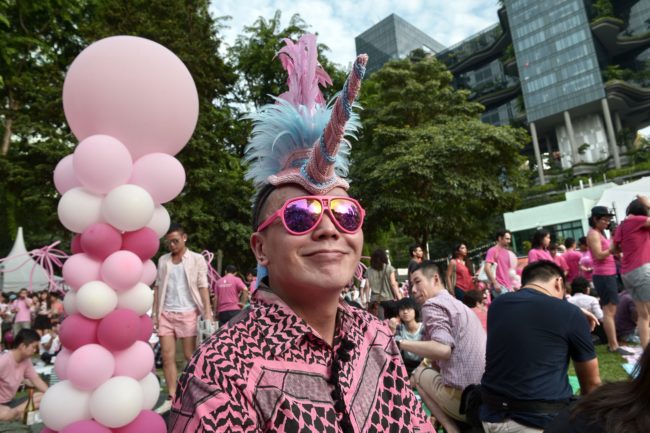
The Pink Dot Pride event attracts thousands every year (ROSLAN RAHMAN/AFP/Getty)
Shanmugam hinted at his personal acceptance of gay people, saying: “Speaking for myself, if you ask me, in a personal capacity, personal view—people’s lifestyles, sexual attitudes—(we) really should be careful about treating them as criminals or criminalising that.”
He refused to explicitly voice his support for LGBT+ equality, though, saying: “But again, it will be wrong for me to impose my personal views on society or as a policymaker.
“We live our lives, live and let live. If one side pushes, you will expect a substantial pushback.”
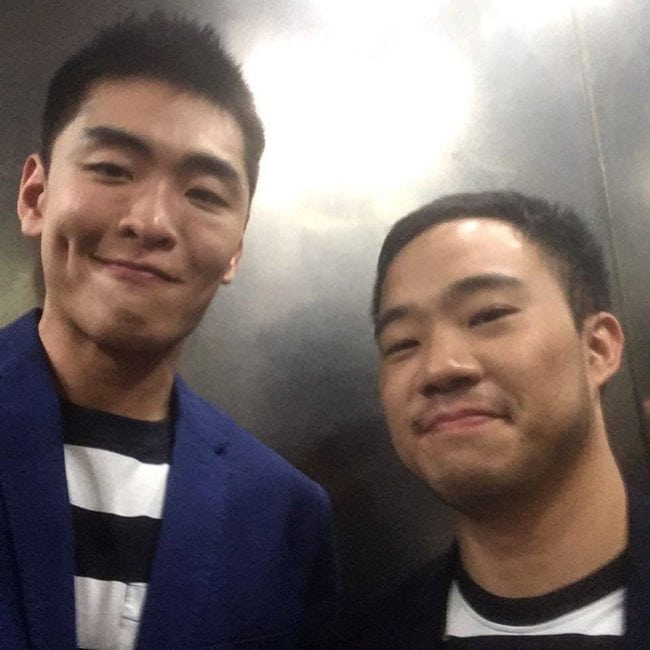
The prime minister’s nephew, Li Huanwu, came out publicly last month (Li Huanwu/facebook)
PinkNews spoke to activist Rachel Yeo last month about how life for LGBT+ people in Singapore can be difficult, with mental health issues prominent and a ban in place on positive representations of queer people in mainstream media.
Li Huanwu, the grandson of Singapore’s first prime minister and nephew of its current prime minister, came out as gay in July, but his public statement was seen as brave and unusual, rather than commonplace.